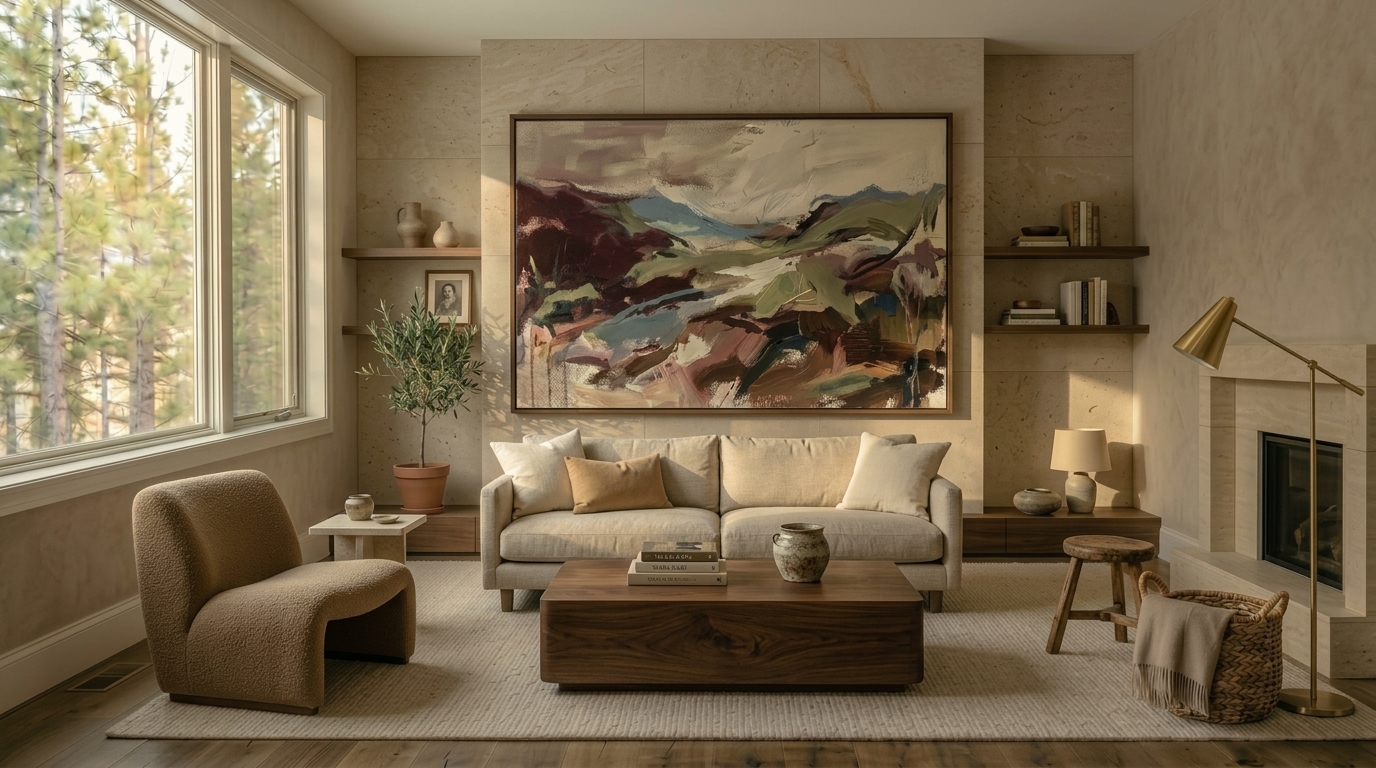
12 Minimalist Living Room Ideas for a Warm, Uncluttered Home
Minimalism often gets blamed for making living rooms feel cold, but the real problem is usually not having too little. It is removing personality while leaving behind flat white walls, undersized furniture, and several nearly identical beige surfaces.
The more interesting 12 minimalist living room ideas for 2026 take a softer approach. Keep the visual calm, but bring back warm wood, tactile fabric, substantial furniture, art, books, and objects that actually mean something. Designers are increasingly describing this direction as warm minimalism, where restraint remains important but stark white, sharp edges, and showroom perfection give way to earthy color, texture, and natural materials.
The goal is not an empty room. It is a room where fewer things have more purpose.
Build the room around warm restraint
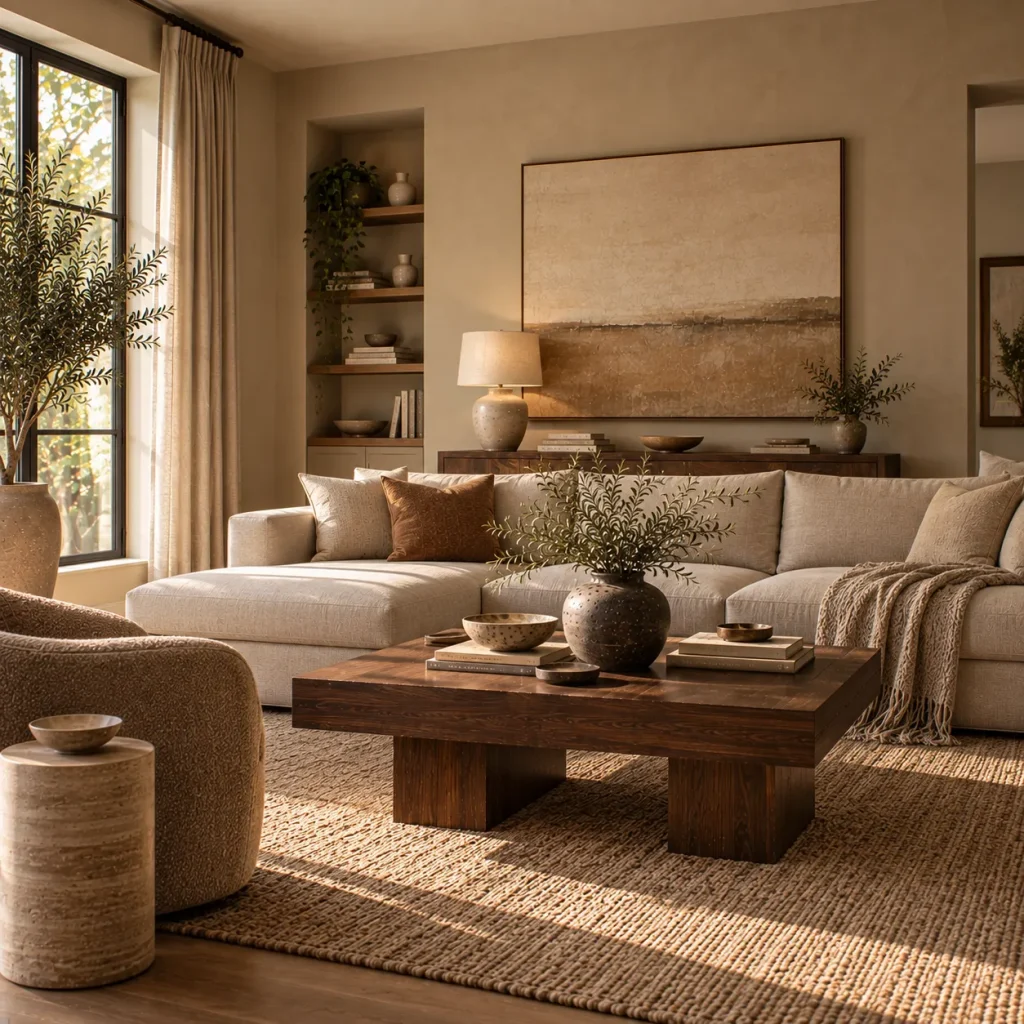
Idea 1: Replace stark white with a layered neutral palette
Minimalist does not automatically mean white.
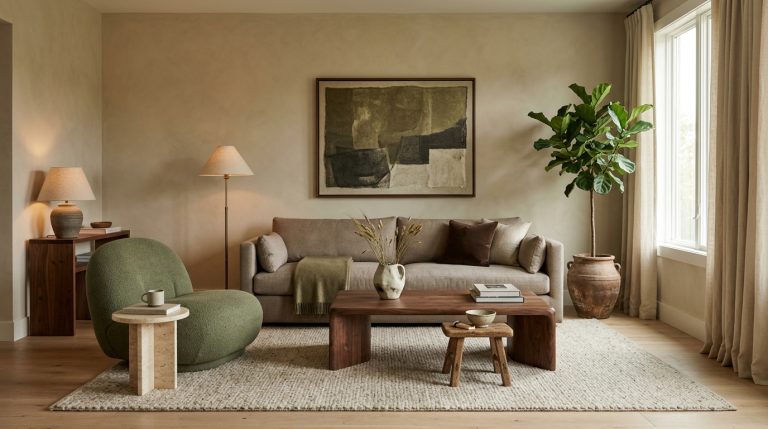
Warm ivory, parchment, mushroom, oatmeal, soft putty, and pale clay create a quieter foundation without making the room feel clinical. The most successful neutral spaces often use several related tones rather than one beige repeated everywhere.
For example, pair parchment walls with an oatmeal sofa, camel wool rug, and walnut coffee table. The differences are subtle, but they give the eye something to read.
Warm minimalism is a prominent 2026 direction, with designers favoring creamy neutrals, soft earth tones, natural materials, and subtle layers over colder minimalist palettes.
Always sample neutral paint beside your flooring. A beige with gray undertones can look surprisingly dull next to honey oak, which is why testing against these warm neutral paint colors for a cozy living room is worth doing before committing.
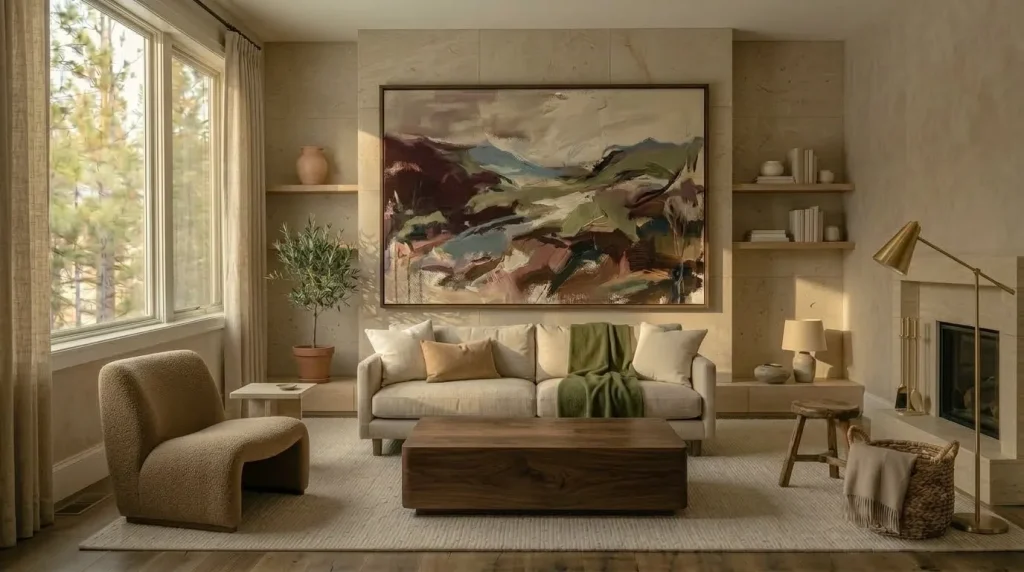
Idea 2: Give the palette one darker anchor
A room made entirely from pale colors can look washed out even when every individual item is attractive.
Add one deeper element. Walnut, espresso oak, chocolate brown, blackened metal, moss, tobacco, or warm charcoal can create enough contrast to organize the room.
Try a dark wood coffee table beneath a cream sofa, or one chocolate chair against pale walls.
Darker woods are particularly relevant in 2026. Current design coverage shows renewed interest in walnut and espresso-toned oak, often combined with plaster, stone, and softer furnishings.
You do not need to scatter dark accents around the room. One substantial anchor often works better than six little black objects.
Choose fewer pieces, but get the scale right
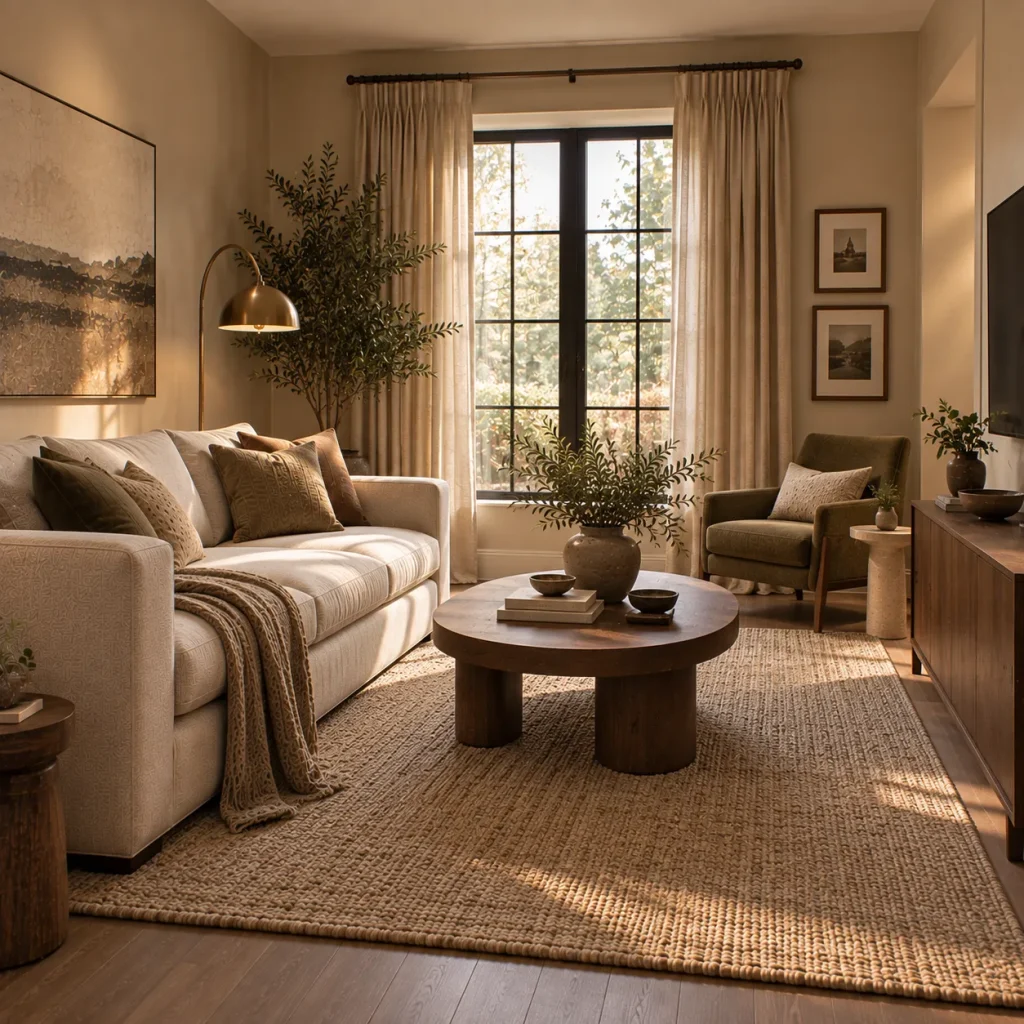
Idea 3: Stop buying miniature furniture for small rooms
One of the biggest misconceptions about minimalism is that every piece should be small.
A tiny sofa, tiny rug, tiny coffee table, and several tiny chairs often make a modest living room look fragmented. Fewer pieces at the correct scale usually feel calmer.
In a small or medium room, a sofa around 72 to 84 inches wide may work better than a combination of loveseat, chair, ottoman, and several side tables.
Then leave visible breathing space around it.
This is an important distinction. Minimalism is not about making furniture disappear. It is about reducing unnecessary competition, a principle covered in more depth in these small living room layout ideas.
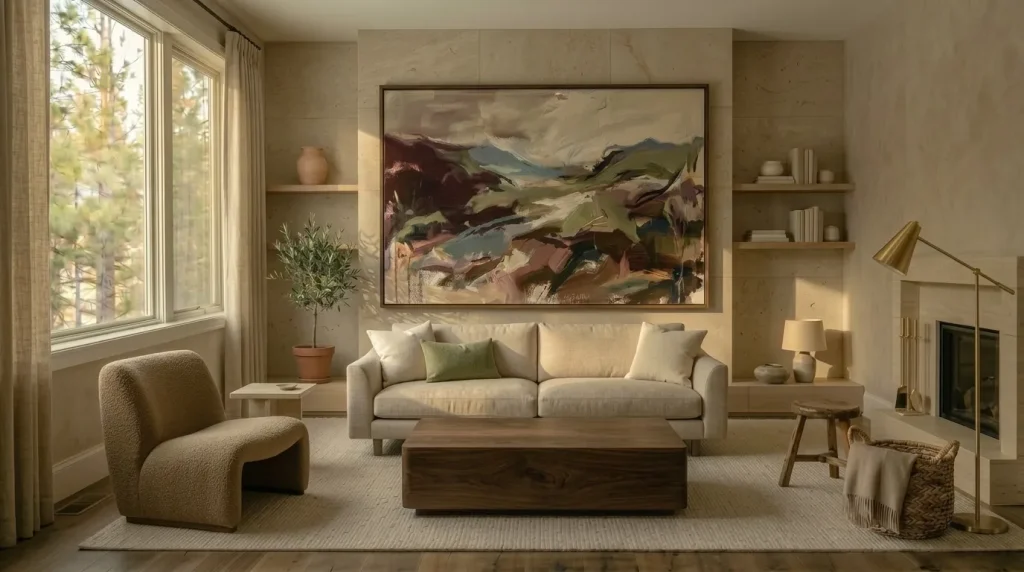
Idea 4: Choose a sofa with a strong, simple silhouette
The sofa occupies too much visual space to be treated as an afterthought.
Look for a shape with clean lines, comfortable proportions, and enough structure that it still looks intentional when cushions move around. Linen, wool blends, cotton, and textured performance fabrics fit particularly well.
A seat depth around 22 to 24 inches is a useful starting point for many households, although comfort depends on your height and sitting habits.
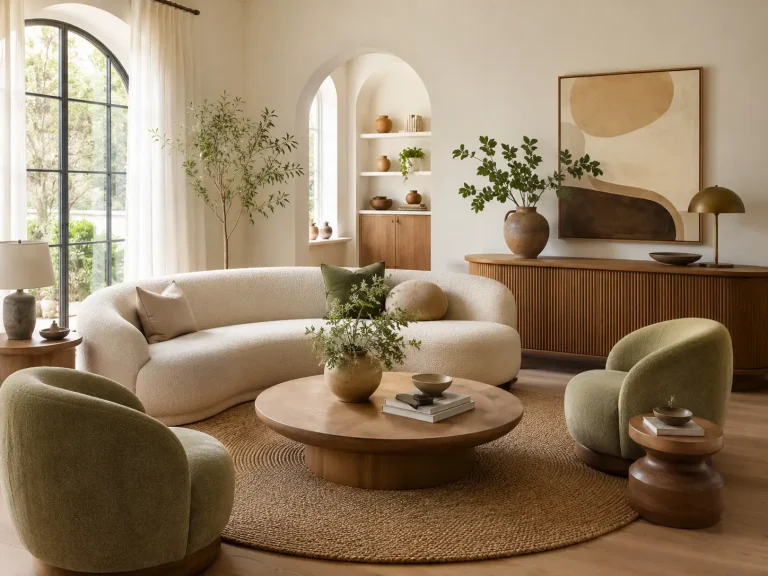
And a minimalist sofa does not need razor-sharp square arms. Current warm minimalist rooms frequently use softer curves to offset harder architectural lines.
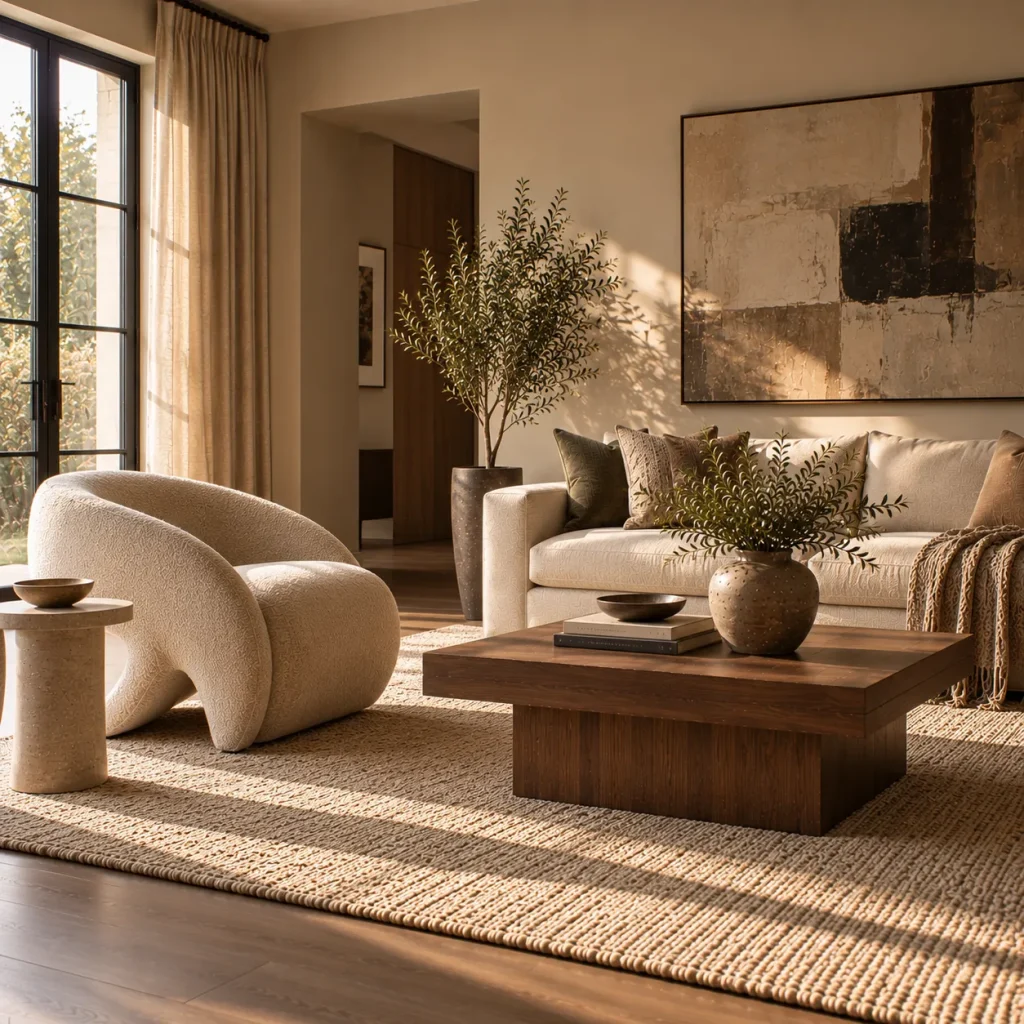
Idea 5: Use one sculptural piece instead of several decorative ones
A curved lounge chair, irregular stone table, substantial ceramic lamp, or beautifully shaped wooden stool can carry more visual weight than a collection of small accessories.
This is where minimalism becomes interesting.
If you have one unusual chair, give it room. Do not surround it with three side tables, a basket, floor sculpture, and several plants.
Sculptural forms work because you can see their outline, the same reasoning behind these curved furniture ideas for a living room.
Make texture do the work that pattern normally does
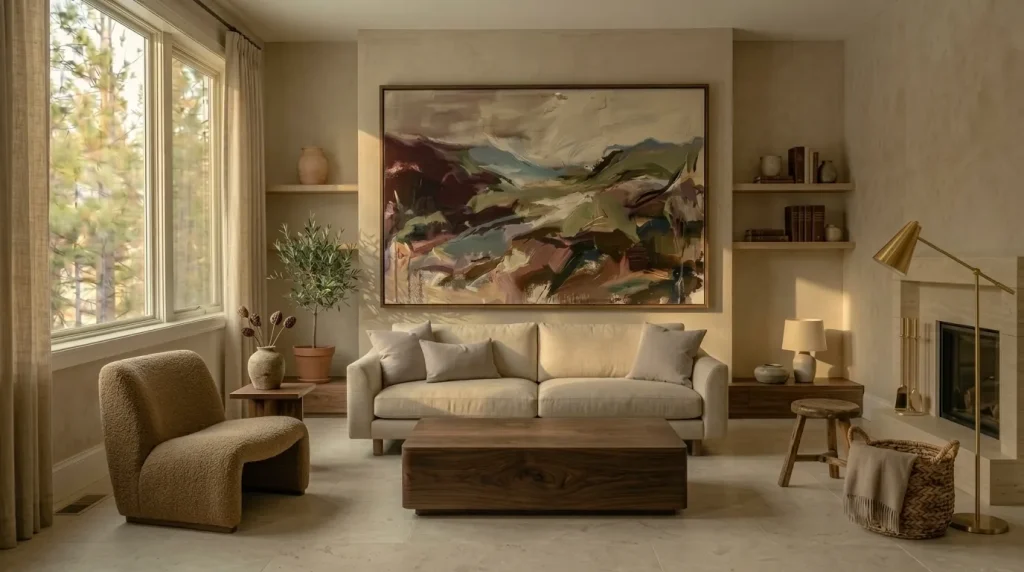
Idea 6: Build a deliberate texture scheme
A beige sofa beside a beige rug is not automatically layered simply because both fabrics feel soft.
Think in contrasts.
Combine flat linen with wool, smooth walnut with rough ceramic, honed limestone with cotton, or plaster-like walls with a more refined metal lamp.
Designers are placing unusual emphasis on complete texture schemes in 2026. The idea is to establish tactile contrast through foundational pieces before adding decorative layers.
I once worked through an illustrative neutral living-room layout where the sofa, rug, ottoman, and cushions all had nearly identical nubby cream textures. There was plenty of “texture” on paper, yet everything blended together.
Replacing the ottoman with dark wood immediately made every softer material more noticeable.
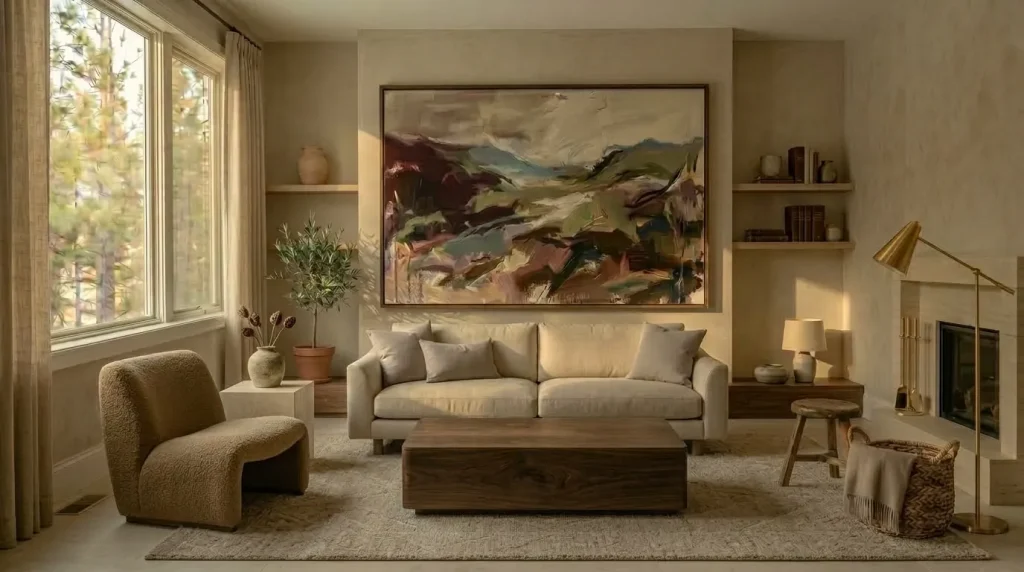
Idea 7: Use a generous rug to quiet the furniture layout
Minimalist rooms depend heavily on proportion because there are fewer decorative distractions.
A rug that is too small becomes obvious.
In many average living rooms, an 8-by-10-foot rug works more successfully than a 5-by-7 because it can connect the sofa and chairs. Where the room permits, let at least the front legs of the major seating sit on it.
Plain wool, subtle stripes, low-contrast geometrics, and softly mottled designs all work.
Do not automatically choose solid cream. A mushroom, tobacco, muted olive, or quiet patterned rug may actually produce a calmer composition if the sofa and walls are already very pale.
Use natural materials without creating an “organic” showroom
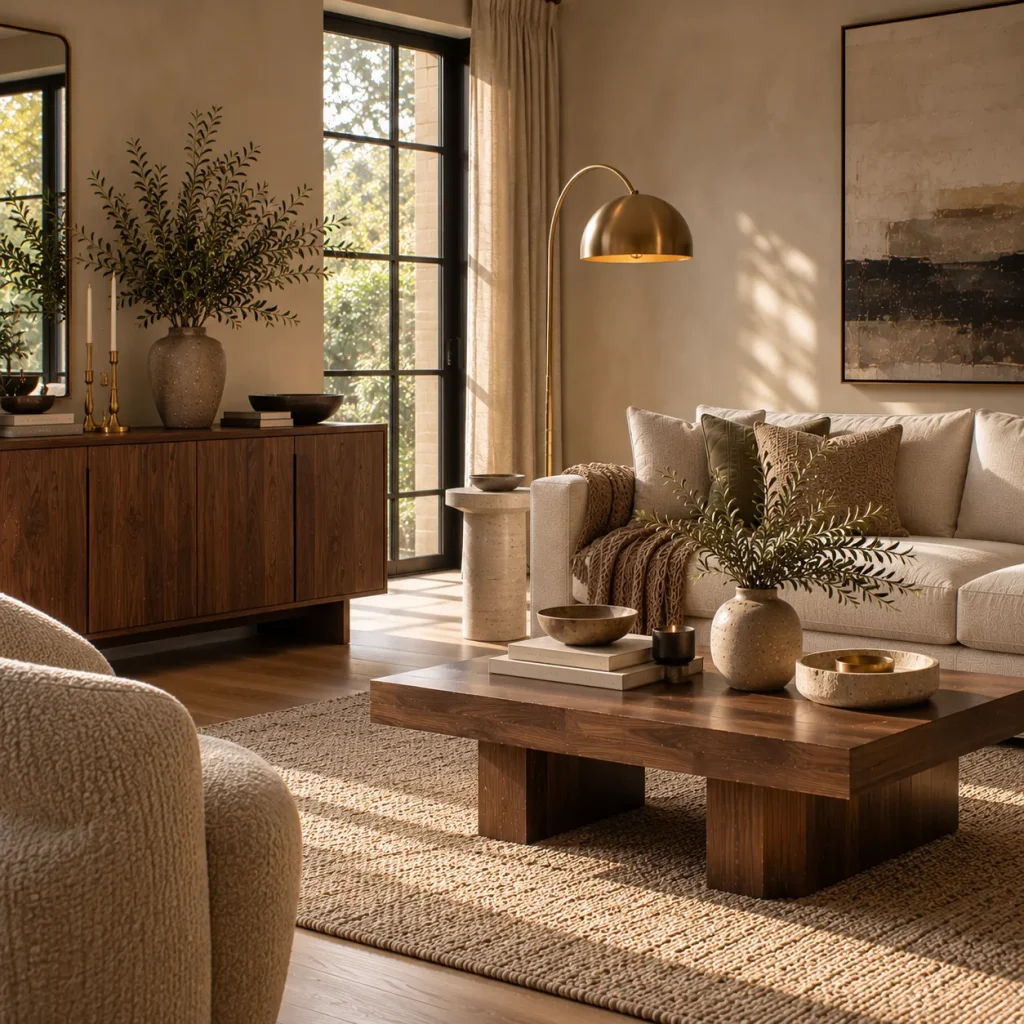
Idea 8: Mix warm wood with stone or metal
Wood is one of the easiest ways to soften minimalism, but too much of one finish can make the room look like a furniture collection.
Combine medium oak or walnut with travertine, limestone, aged brass, iron, glass, or ceramic.
A walnut console, limestone side table, and aged-brass lamp provide three distinct surfaces while keeping the palette restrained.
Current 2026 interiors are increasingly using material tension, where rough and polished finishes sit beside each other rather than everything matching perfectly.
One contrarian point is useful here. Matching every wood finish does not make a minimalist room more coordinated. Slight variation can make it feel more natural, the same layered thinking found in these organic modern living room ideas.
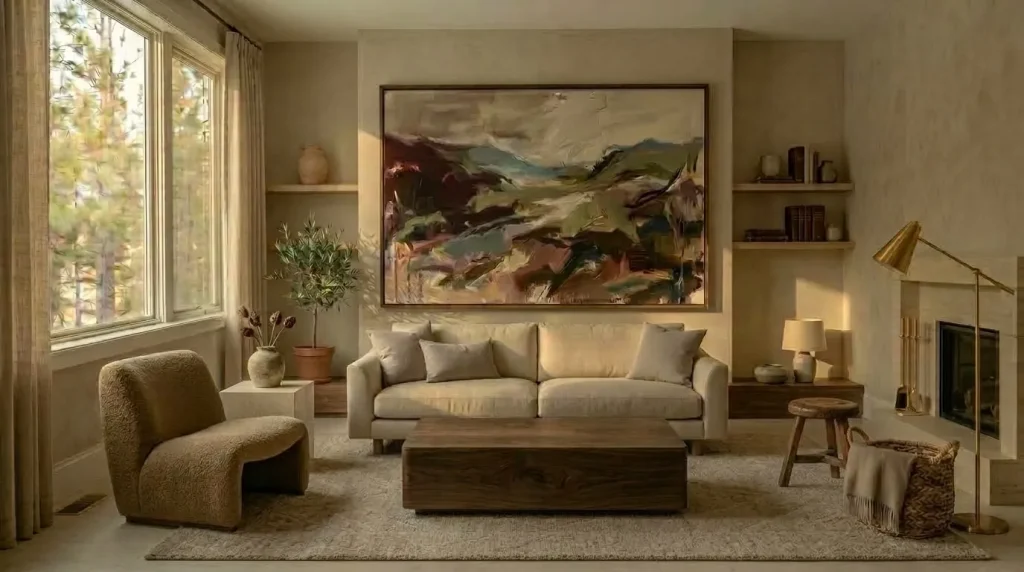
Idea 9: Add one visibly imperfect or aged object
Minimalism can feel artificial when everything is flawless.
Bring in an old stool, handmade ceramic vessel, weathered wooden box, irregular bowl, vintage lamp, or slightly worn side table.
It does not need to become rustic.
The purpose is simply to interrupt perfection. Current interiors are increasingly moving toward patina, visible craftsmanship, and designed imperfection as a reaction to sterile, overly automated-looking spaces.
A single aged object can be enough.
Keep personality instead of removing everything
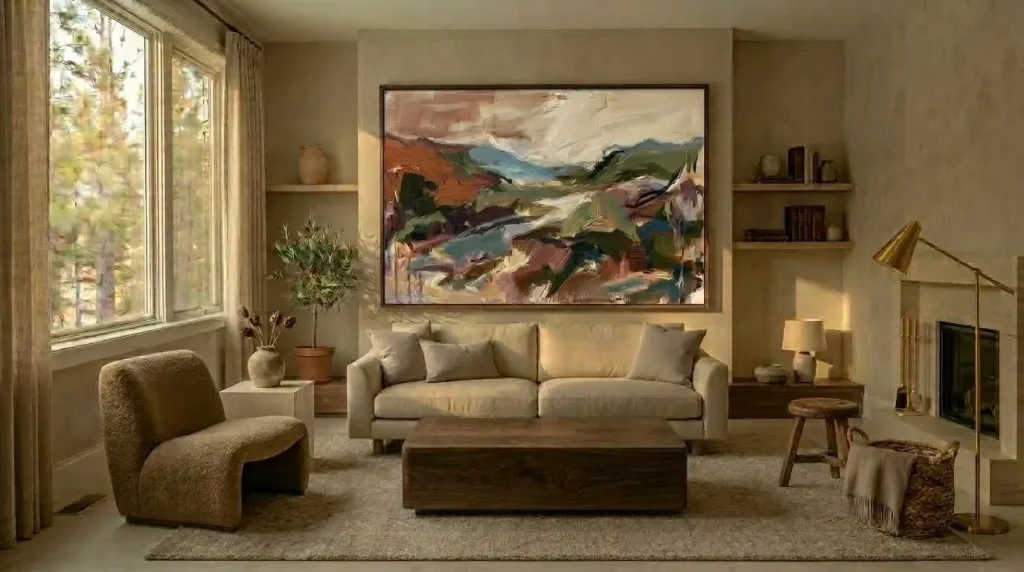
Idea 10: Hang one substantial piece of art
Bare walls are not a requirement for minimalism.
A large painting, photograph, textile, or carefully composed pair of artworks can actually make the room feel quieter because you no longer need several smaller decorative objects.
Above a sofa, artwork around two-thirds of the sofa’s width is a useful starting point, depending on the piece and wall.
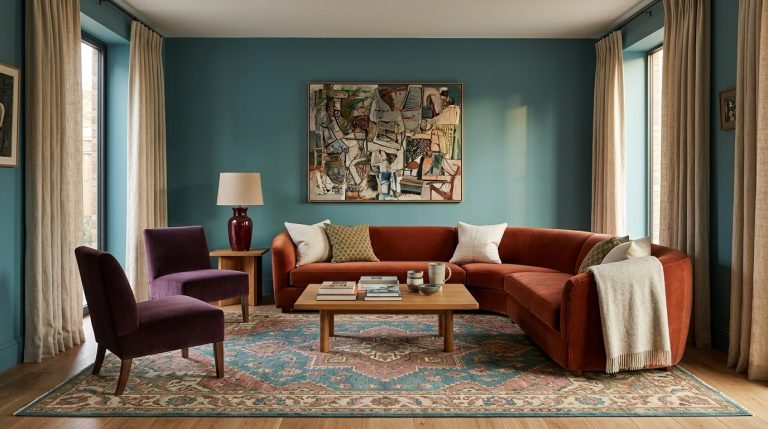
Do not choose neutral artwork solely because the living room is minimalist. Rust, deep green, blue, burgundy, or black can provide controlled contrast.
And resist matching every cushion to the painting.
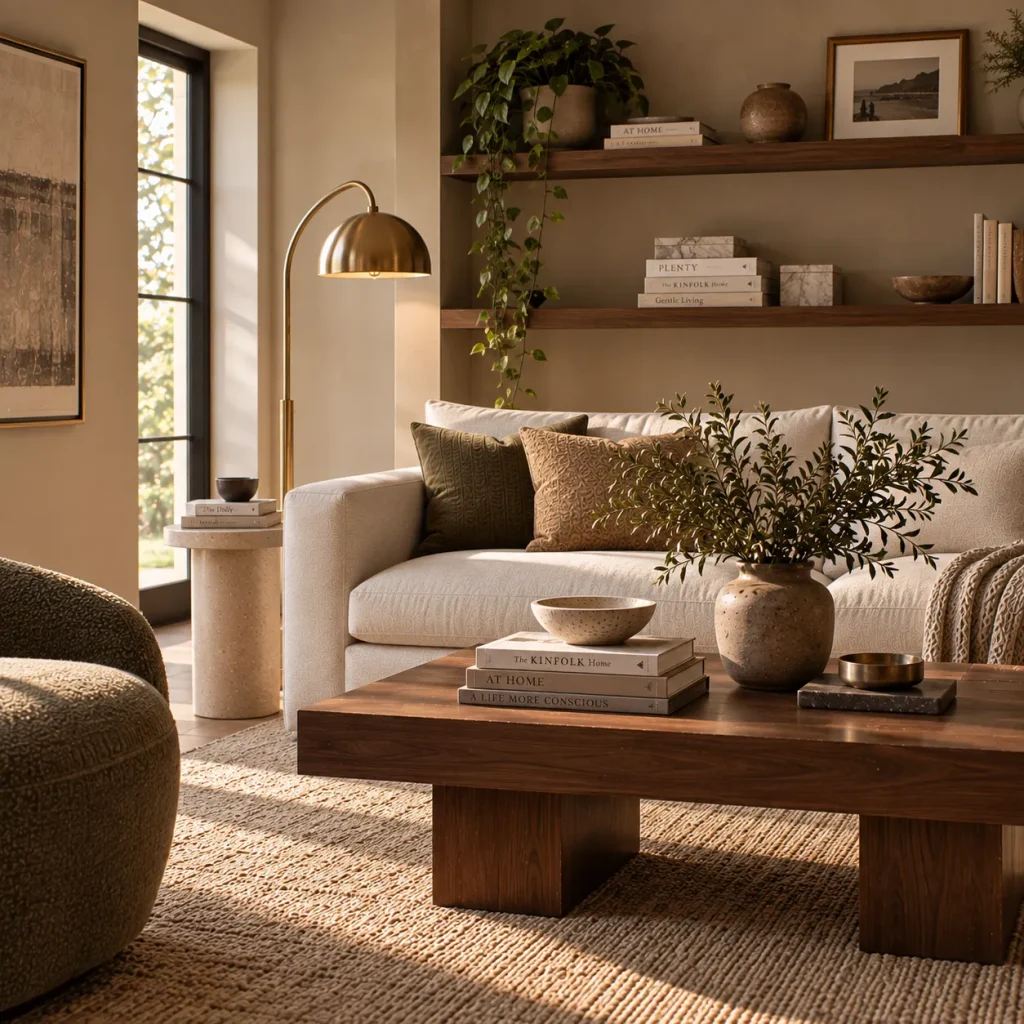
Idea 11: Keep books and personal objects, then edit them
Minimalist styling should not erase the people living in the house.
Architectural Digest’s 2026 styling coverage notes a wider shift away from interiors stripped of personal touches. Current editorial preferences increasingly favor rooms that visibly belong to real people through books, art, collections, and signs of life.
Keep the books you read. Display a ceramic piece you actually like. Leave a photograph on the shelf.
Then edit around them.
One horizontal stack of books, one framed photograph, and one ceramic object often works better than twelve decorative pieces purchased to fill the shelf.
Minimalism should reduce meaningless objects, not meaningful ones.
Let lighting soften the room
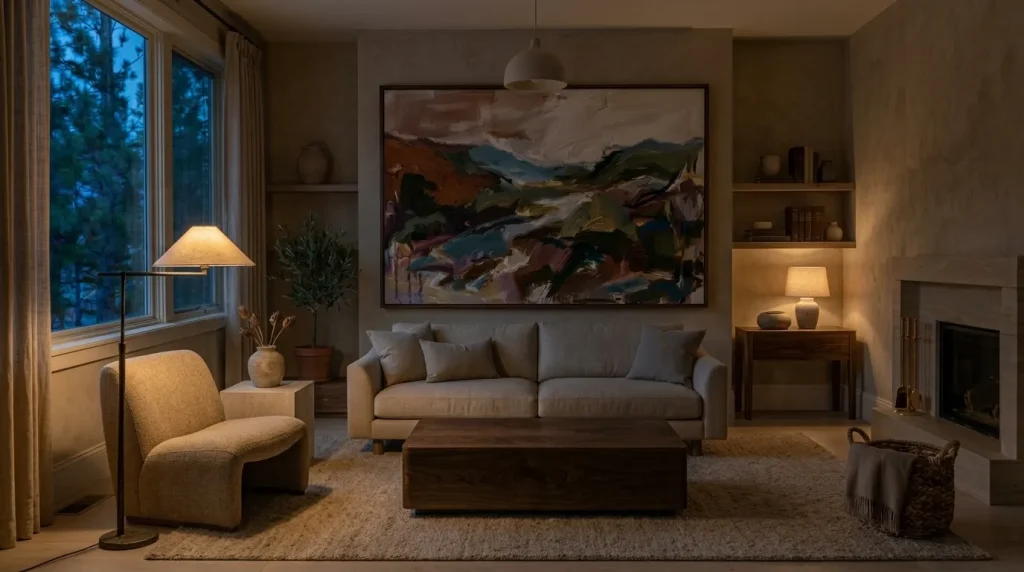
Idea 12: Create several low pools of light
One central ceiling light can make a carefully designed minimalist living room feel surprisingly harsh after sunset.
Use two or three sources at different heights. Try a ceramic table lamp, slender floor lamp beside a reading chair, and a simple pendant or ceiling fixture.
Large-scale and sculptural lighting is also gaining attention in 2026 living rooms, with designers treating fixtures as functional objects rather than background equipment.
A linen or paper shade provides soft diffusion, while aged brass, dark bronze, ceramic, or wood can add material contrast.
And you do not need several statement lamps. If the floor lamp has a dramatic shape, let the table lamp be quiet.
A simple minimalist living room formula
| Element | Strong starting point | What to avoid |
|---|---|---|
| Walls | Warm ivory, mushroom, putty | Cold white by default |
| Sofa | Simple, comfortable, properly scaled | Tiny furniture |
| Wood | Oak, walnut, darker timber | Matching every finish |
| Rug | Wool, subtle pattern, generous size | Small floating rug |
| Texture | Linen, stone, wood, ceramic | Identical cream textures |
| Decor | Art, books, meaningful objects | Empty surfaces everywhere |
| Lighting | Several warm, low sources | One harsh ceiling light |
The room does not need every item in this table. The principle is balance. Reduce quantity while increasing material and proportional quality.
What should you avoid in a minimalist living room?
Removing too much personality. A home without books, art, photographs, or evidence of daily life can feel more staged than peaceful.
Using the same beige everywhere. Calm does not require sameness. Variation in value and texture creates depth.
Choosing furniture that is too small. Minimal rooms expose poor scale quickly. Buy fewer pieces, but let them properly occupy the space.
Buying endless storage boxes to hide everything. Some belongings deserve display. Conceal actual clutter, not your entire personality.
Making every object sculptural. One unusual table or lamp is interesting. Five competing statement forms destroy the restraint you were trying to create.
Try this if your living room feels cluttered
Do not begin by buying organizers.
First, remove decorative objects from the main surfaces and group them in another room. Put back only the pieces that are useful, meaningful, or genuinely beautiful.
Next, look at the furniture. If three small tables could be replaced by one useful coffee table, simplify the furniture before worrying about accessories.
Then check the floor. A properly sized rug can make several pieces read as one seating group.
Finally, improve the lighting.
You may discover that your living room needs fewer objects but slightly larger, better-chosen pieces.
FAQ
Is minimalist living room design still popular in 2026?
Yes, but warmer minimalism is more relevant than the stark white version associated with earlier minimalist interiors. Current designers are combining restraint with earthy neutrals, natural materials, texture, curves, warm wood, and more personal objects.
What colors work best in a minimalist living room?
Warm ivory, parchment, mushroom, oatmeal, camel, taupe, chocolate brown, olive, and muted clay work well. A restrained palette can still contain darker or richer color as long as one or two shades clearly lead.
How can I make a minimalist living room feel cozy?
Use warm wood, layered lighting, wool or textured rugs, linen or soft upholstery, and one or two deeper colors. Cozy minimalism depends more on material and light than on adding extra accessories.
Can minimalist design work in a small living room?
Yes. In fact, reducing unnecessary furniture can improve circulation significantly. Use properly scaled seating, closed storage, a generous rug, and a few meaningful decorative pieces rather than filling the room with miniature furniture.
Remove what distracts, not what makes the room yours
The strongest 12 minimalist living room ideas have less to do with owning fewer possessions than with making clearer decisions.
Keep the sofa comfortable. Let the rug connect the furniture. Give warm wood and natural stone enough space to be noticed. Display art and books you care about, then remove the objects that are simply filling gaps.
If you want to make one change today, clear a single surface completely and rebuild it with only two or three things worth looking at.
That exercise usually reveals what good minimalism is really about. The room does not need to become empty. It needs enough breathing room for the furniture, materials, light, and people living there to matter.