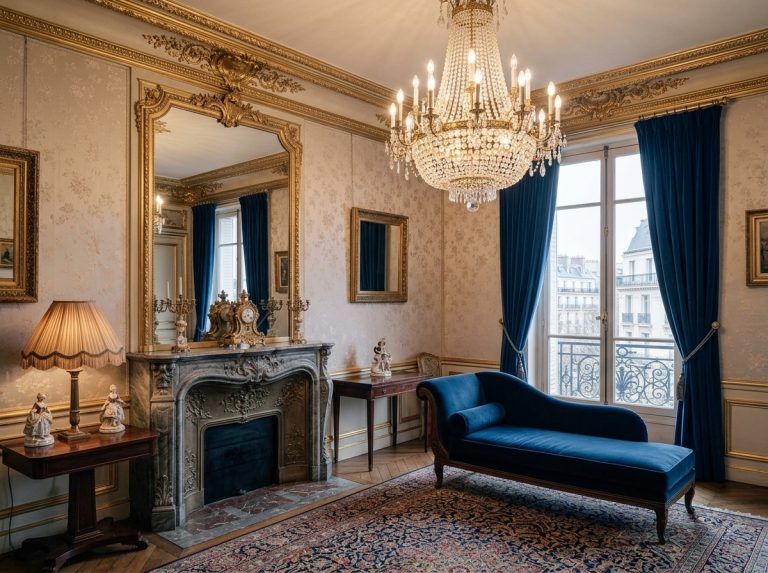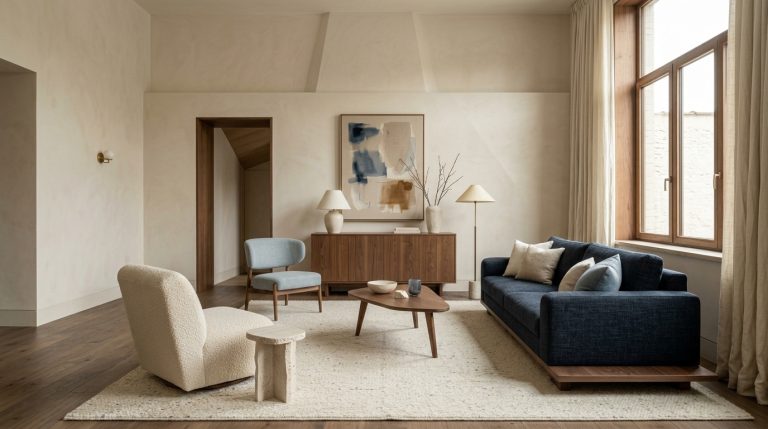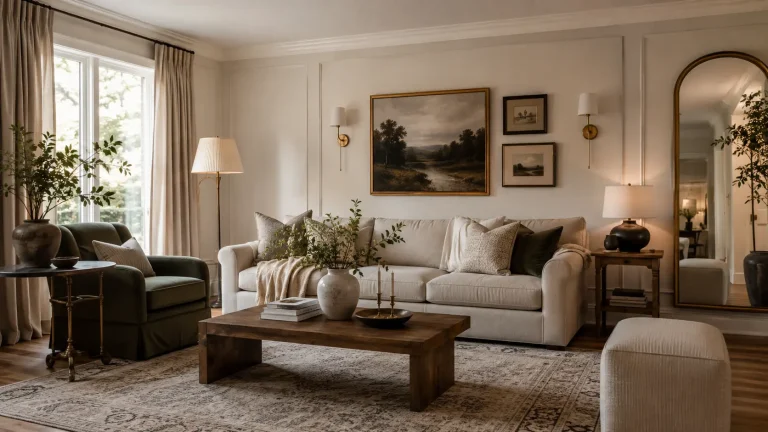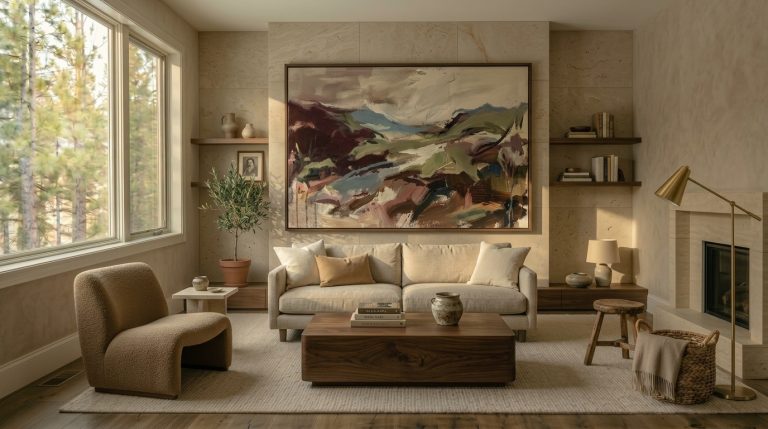
40 Purple Living Room Ideas for Elegant, Cozy and Colorful Spaces
Purple can make a living room feel serene, dramatic, playful, traditional or surprisingly earthy depending on the exact shade you choose. Lavender behaves almost like a cool pastel. Dusty mauve feels softer and more muted. Plum and aubergine bring far more depth, while violet and saturated purple create a stronger statement.
That range is why the best Purple Living Room Ideas begin with the shade rather than the word “purple.” A pale lavender wall beside cream upholstery creates a completely different room from an aubergine velvet sofa against warm greige walls. Likewise, plum with walnut feels richer and more grounded than bright violet with white lacquered furniture.
Purple also reacts strongly to light. Cooler violet shades can become bluer in north-facing rooms, while warmer mauve and plum can appear browner under warm lamps. Dark aubergine may look almost black after sunset unless lighter surfaces and layered lighting reveal its undertone.
The safest approach is to decide whether purple will be the dominant colour, a major furniture colour or an accent. Then build the rest of the palette around it rather than trying to match every object.
These 40 ideas explore soft lavender, dusty mauve, plum, aubergine and stronger violet through walls, sofas, rugs, furniture, natural materials and distinctly different living-room styles.
Start With Softer Purple Shades
1. Build a Light Lavender and Cream Living Room
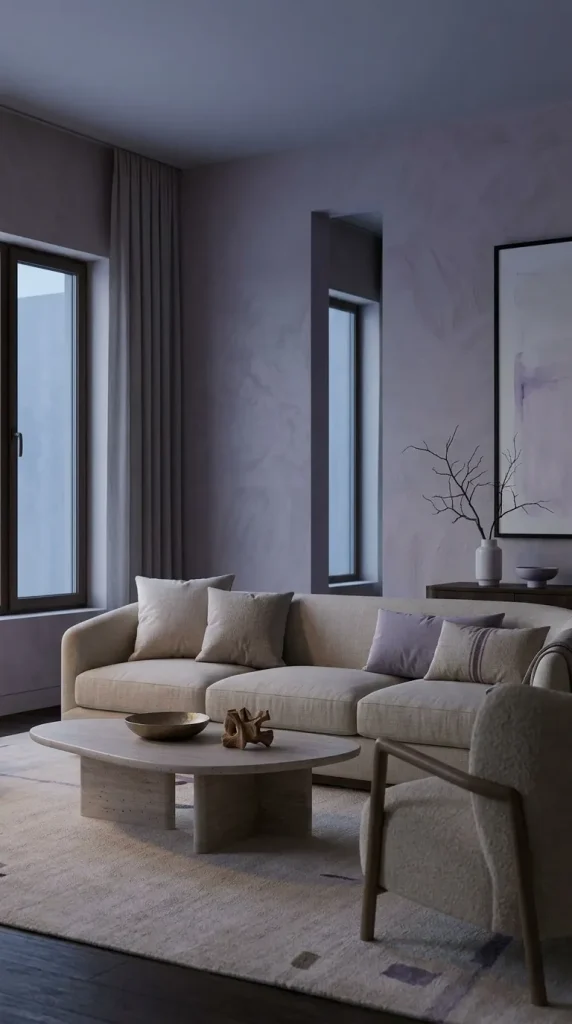
Lavender can work almost like a tinted neutral when the shade is pale enough.
Pair lavender walls with a cream sofa, ivory wool rug and pale-oak coffee table. Keep the window treatments warm white rather than adding more purple.
A small amount of black through a lamp or picture frame gives the pastel palette definition.
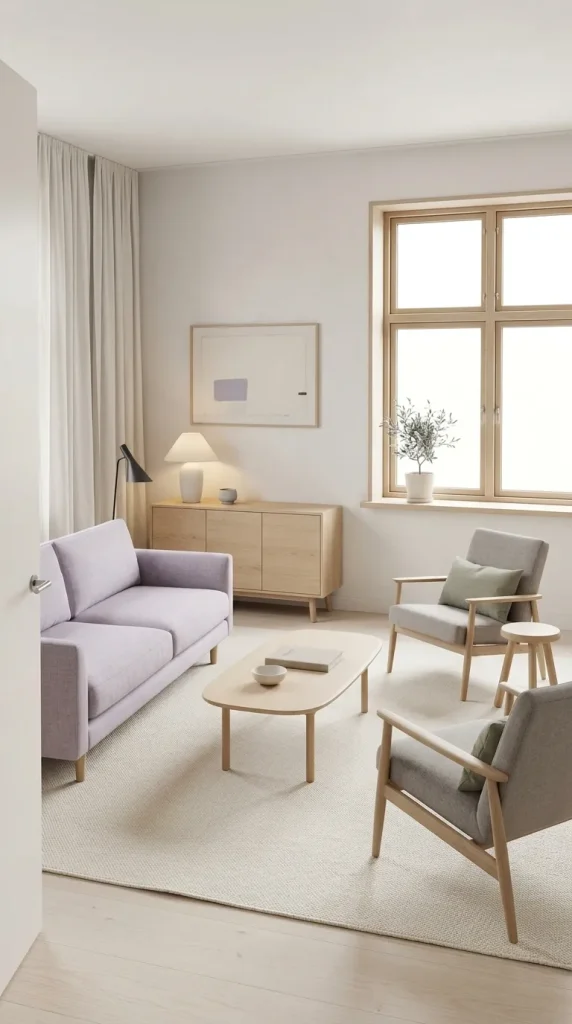
2. Pair Lavender With Pale Oak for a Scandinavian Look
Use a light lavender sofa or wall colour with pale oak, warm white and simple natural textiles.
Keep furniture clean-lined and functional rather than decorative. Soft grey or muted sage can appear in small amounts.
The restrained materials keep lavender from feeling overly sweet.
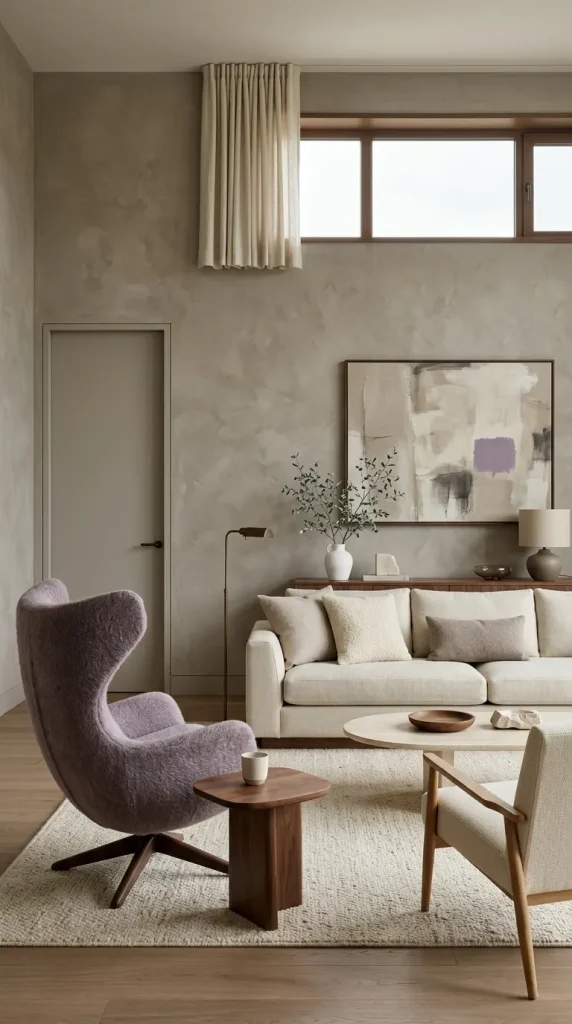
3. Use Dusty Lilac With Warm Greige
Dusty lilac works beautifully with warmer neutral backgrounds.
Try a lilac accent chair against greige walls with a cream rug and walnut side table. The greige reduces the coolness of the purple and creates a more mature result.
This is useful when you want visible colour without a pastel-looking room.
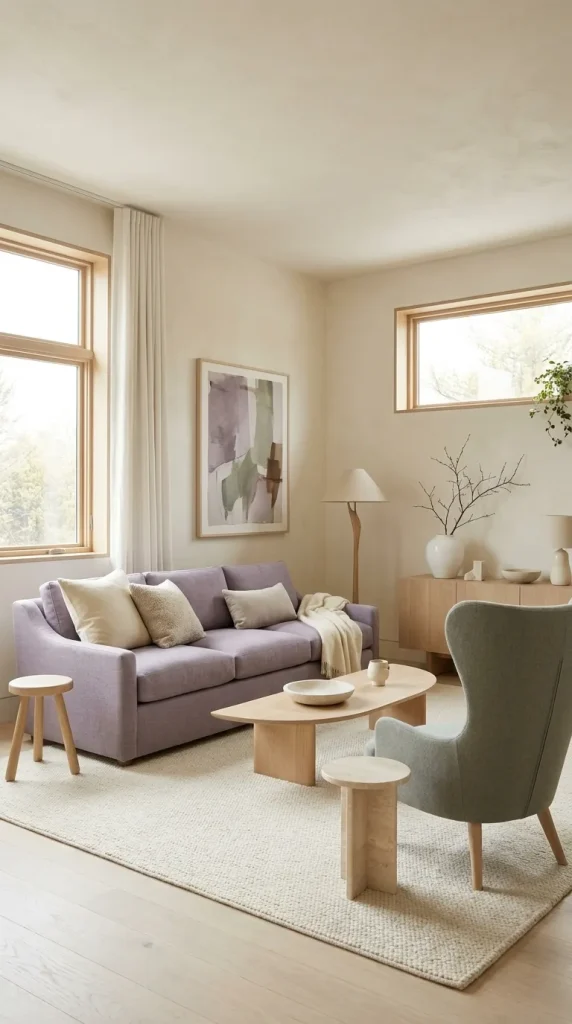
4. Create a Lavender and Sage Living Room
Sage and lavender create a soft complementary relationship.
Use muted sage through one chair or curtains and lavender through walls or upholstery. Add cream and light wood to prevent the room from becoming too pastel.
The palette can feel calm and organic when both colours remain slightly greyed.
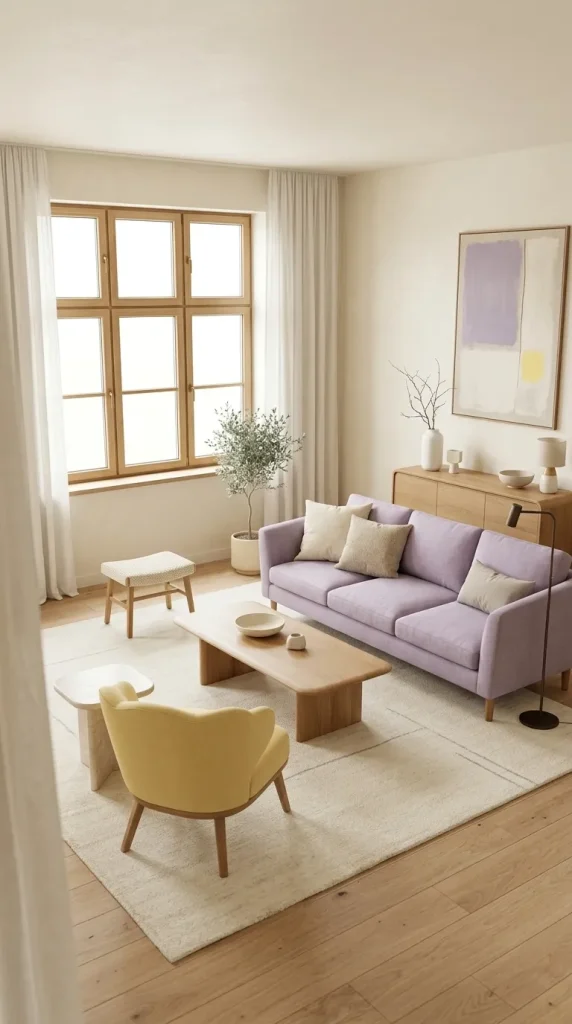
5. Pair Soft Purple With Butter Yellow
For a cheerful room, use lavender with restrained butter yellow.
A lavender sofa with one butter-yellow chair can feel playful without becoming saturated. Keep walls cream and furniture pale or medium wood.
Avoid using strong yellow across large walls unless you deliberately want a highly colourful room.
Explore Mauve and Dusty Purple
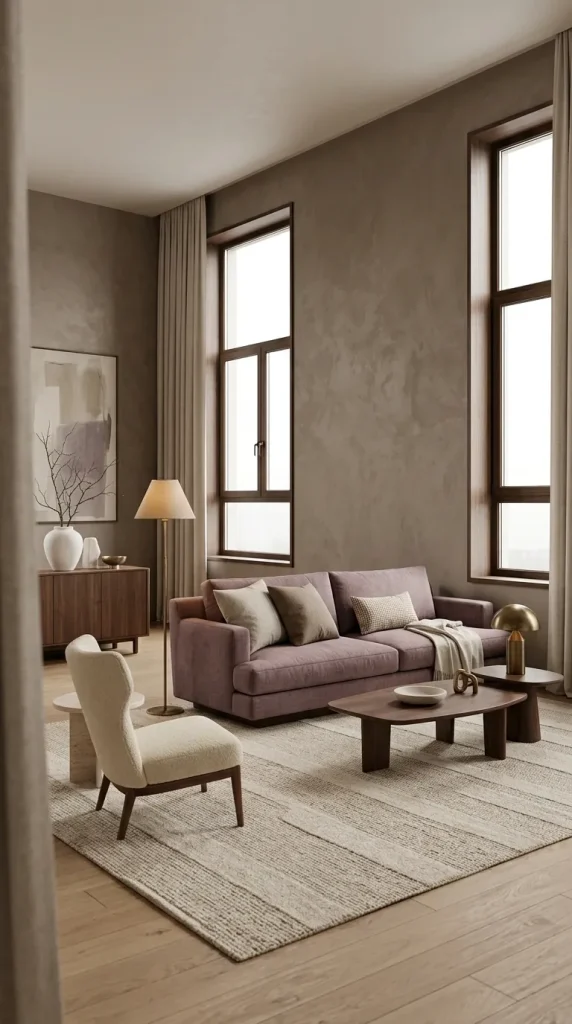
6. Build a Mauve and Taupe Living Room
Mauve often has enough grey or brown in it to work beautifully with taupe.
Use a muted mauve sofa, taupe walls and an oatmeal rug. Add walnut or aged brass for depth.
The result feels quiet and sophisticated rather than overtly purple.
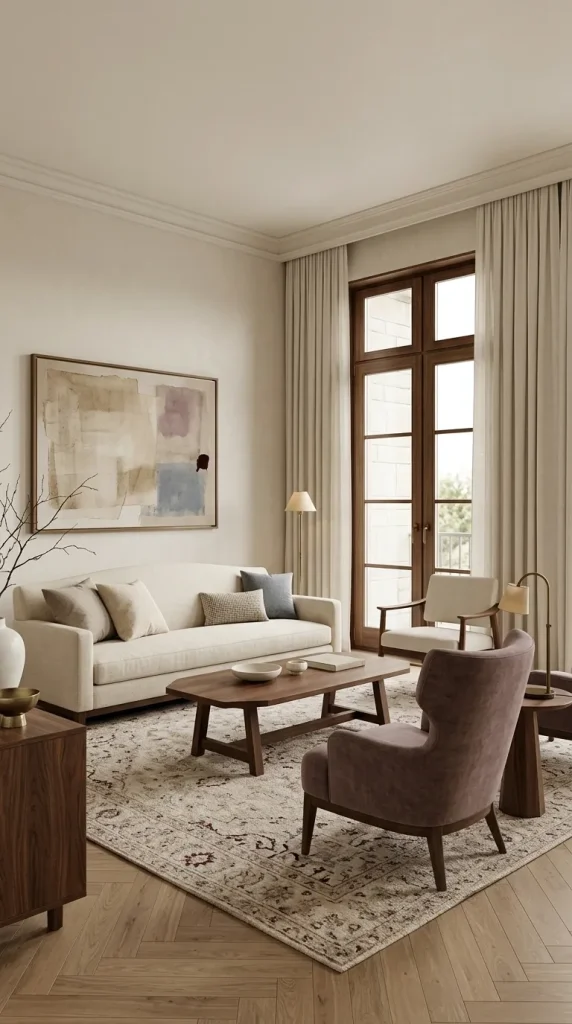
7. Pair Dusty Mauve With Walnut
Walnut gives muted purple much-needed warmth.
Use a dusty-mauve chair or sofa with walnut tables, cream curtains and a patterned rug containing small amounts of burgundy or muted blue.
This works particularly well in contemporary and transitional rooms.
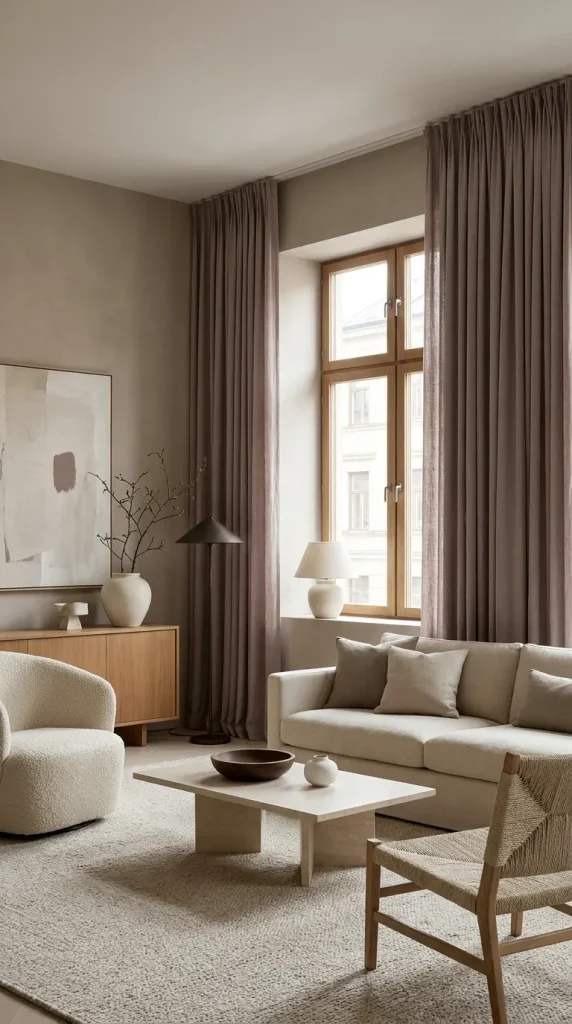
8. Use Mauve Curtains in a Neutral Room
Purple does not have to appear through paint or a sofa.
Full-length mauve curtains can create one strong vertical colour element against cream or mushroom walls. Repeat the colour only once through artwork or cushions.
This is an effective medium-commitment approach because curtains can transform the room without changing permanent finishes.
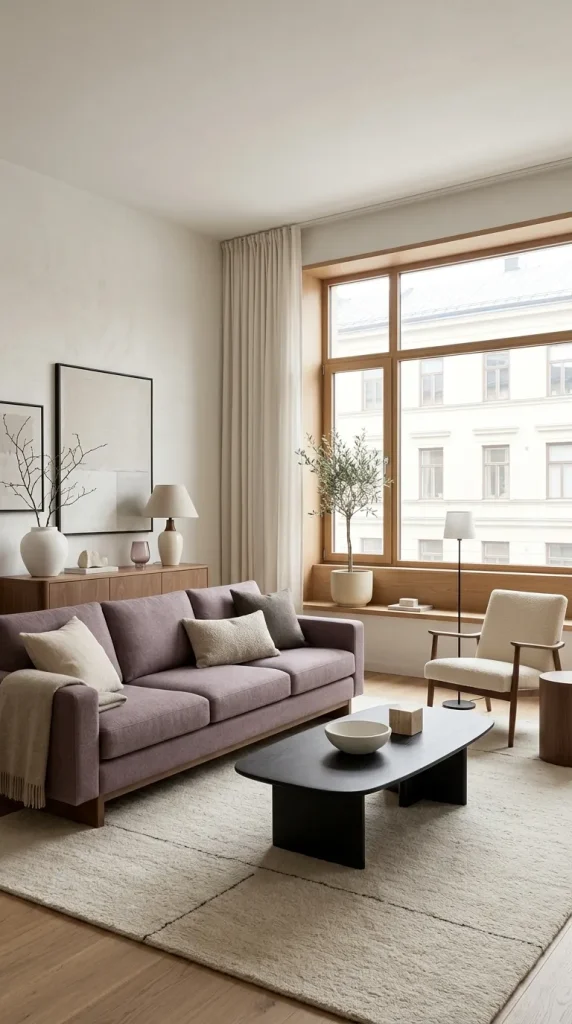
9. Pair Mauve With Black for a Sharper Look
Black can prevent dusty purple from feeling overly delicate.
Use a mauve sofa with black-framed art, a black coffee table and warm-white walls. Add wood to keep the contrast from becoming severe.
The combination feels contemporary and slightly graphic.
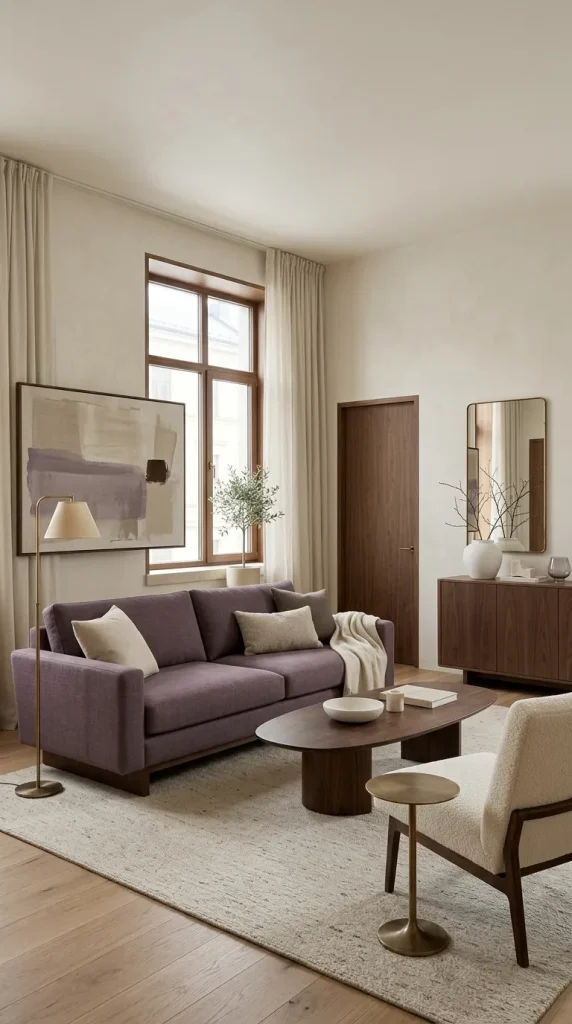
10. Add Brass to a Dusty Purple Room
Brass warms purple and gives muted mauve a more polished appearance.
Use brass through a floor lamp, mirror frame or small side table rather than every furniture base.
Cream and walnut can keep the room balanced.
Go Deeper With Plum and Aubergine
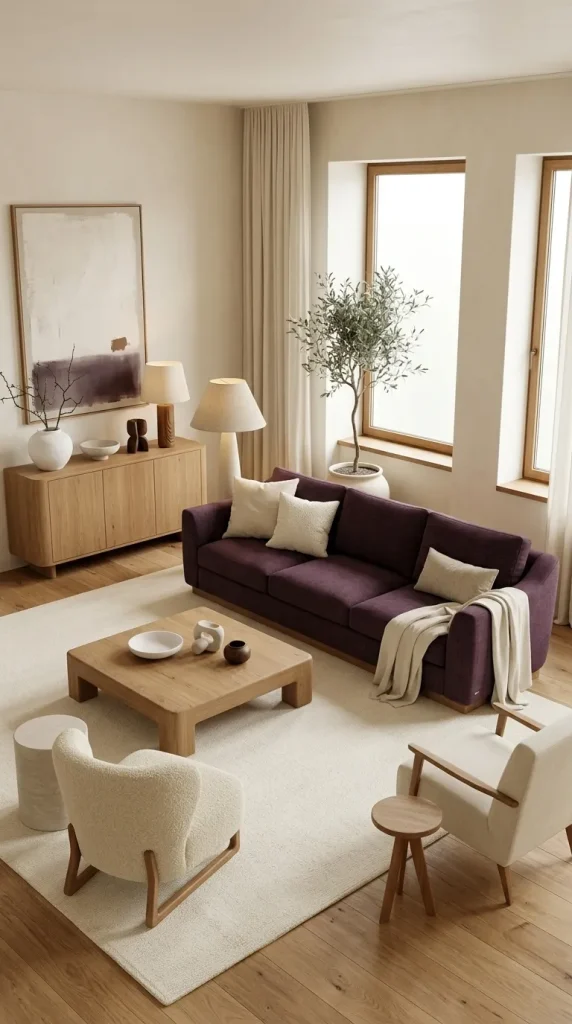
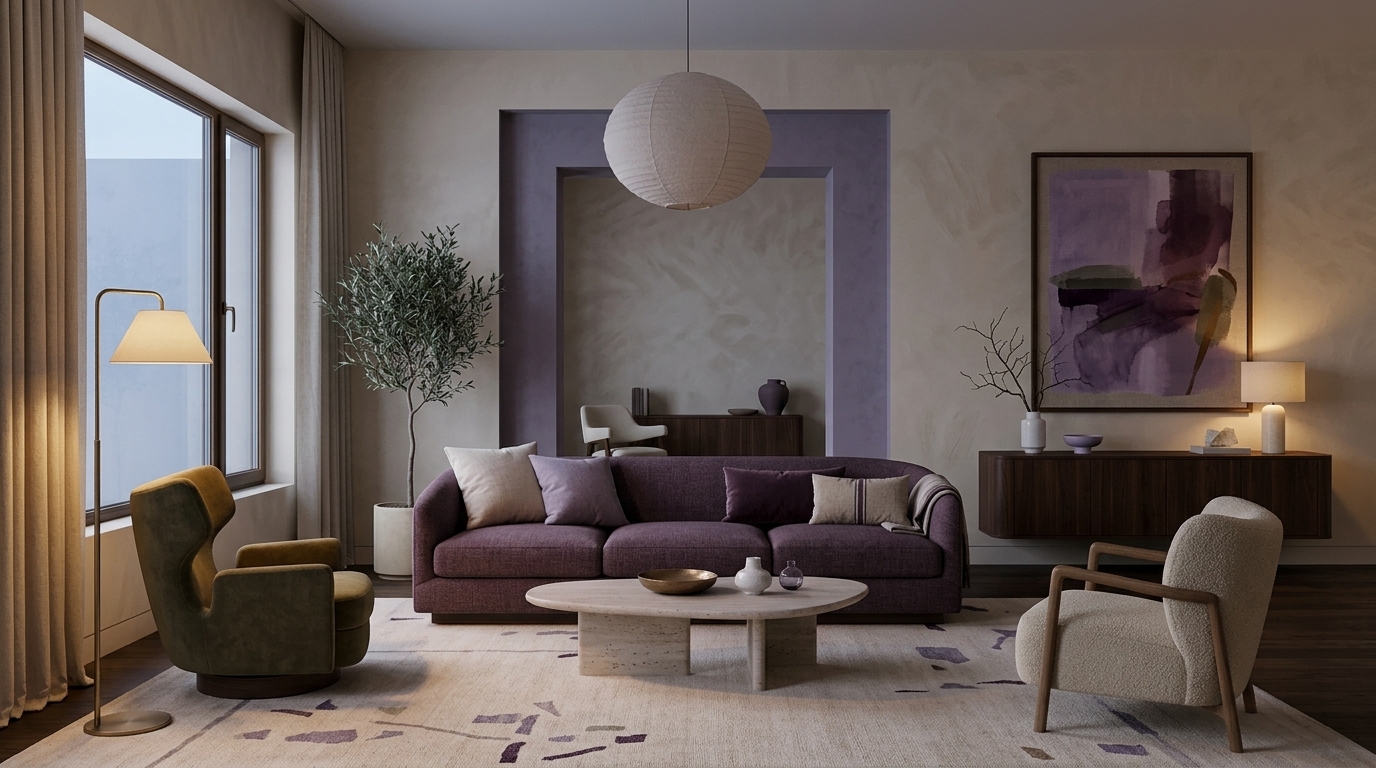
11. Pair Plum With Cream
Cream is one of the easiest colours to use with deep purple.
A plum sofa against cream walls becomes the clear focal point without making the room dark. Use an ivory rug and medium wood to add warmth.
This combination feels elegant without requiring metallic glam details.
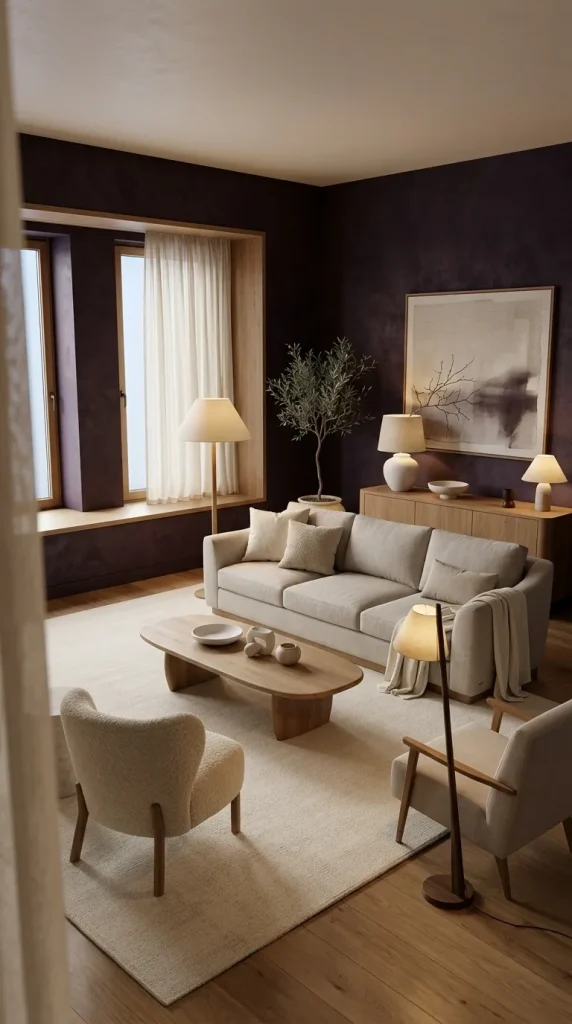
12. Use Aubergine Walls With Light Upholstery
Aubergine walls create far more drama than lavender.
Pair them with a cream or oatmeal sofa, pale rug and warm wood. Keep curtains lighter to prevent the room from becoming enclosed.
Layer several lamps because deep purple can lose its richness under weak evening light.
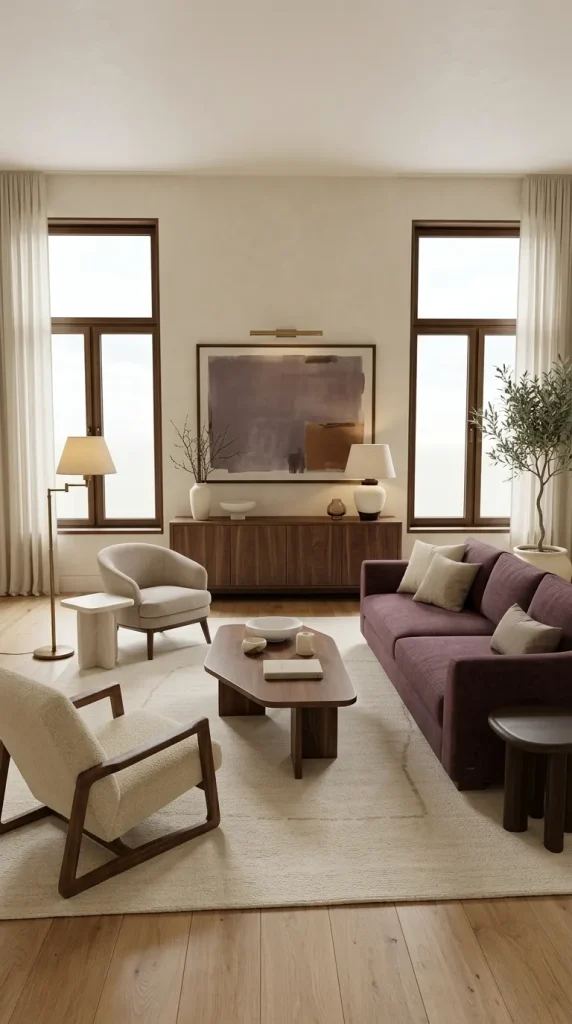
13. Create a Plum and Walnut Living Room
Plum and walnut share enough warmth to feel cohesive without blending together.
Use plum upholstery with walnut furniture and warm ivory walls. Add aged brass through one or two details.
The palette works especially well in larger rooms that can support darker furniture.
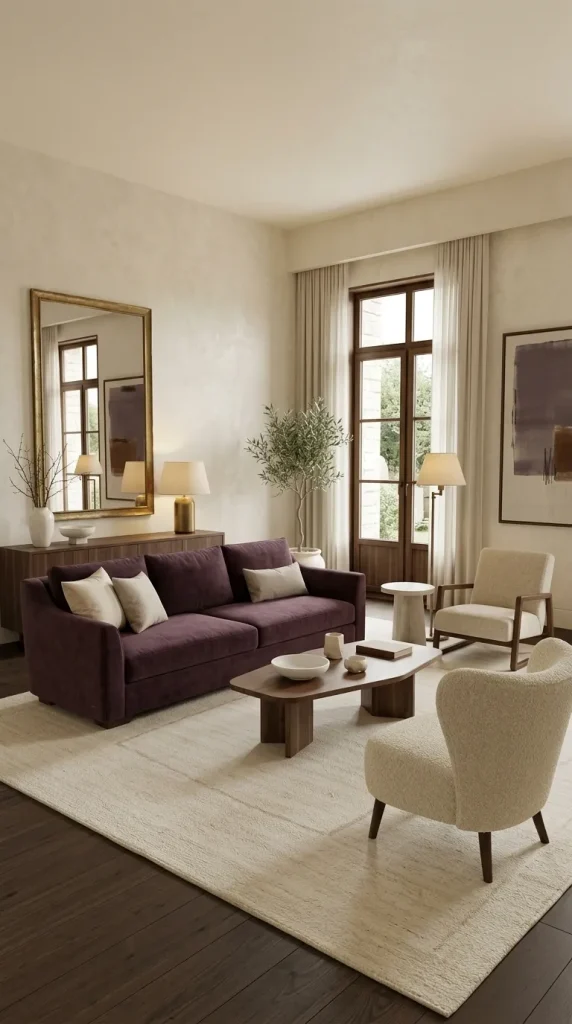
14. Pair Aubergine With Antique Gold
Deep purple and antique gold naturally create a richer interior.
Use an aubergine velvet sofa with an aged-gold mirror or table lamp. Add cream and dark wood so the metallic finish remains an accent.
Antique gold usually feels more timeless here than highly reflective yellow gold.
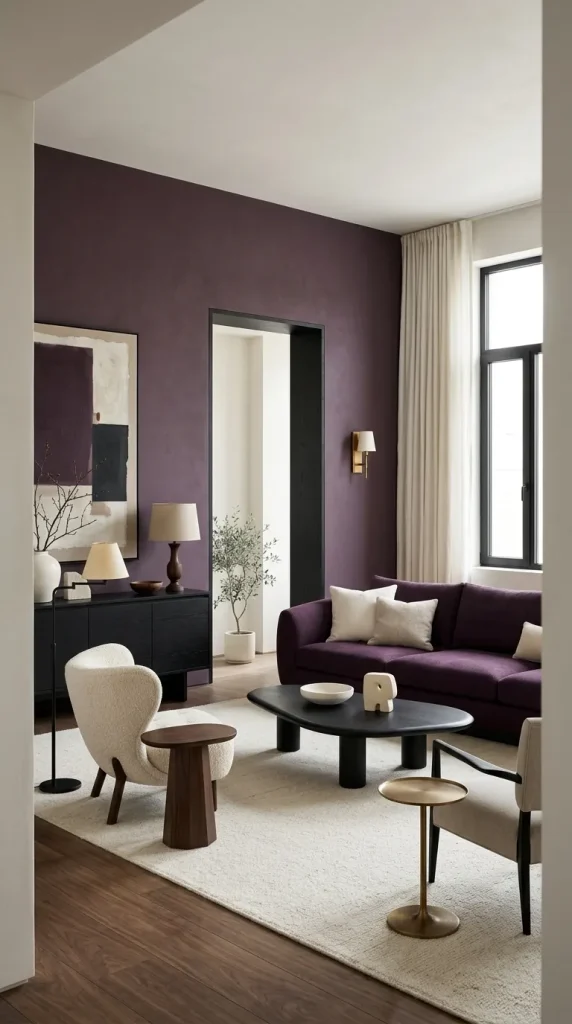
15. Build a Black, Purple and Gold Living Room
For a deliberately dramatic room, combine plum or aubergine with black and controlled gold.
Use purple as the primary colour, black for structure and gold as a smaller metallic highlight. Cream or off-white should still appear somewhere to provide relief.
Avoid making all three colours equally dominant.
Use Purple on the Walls
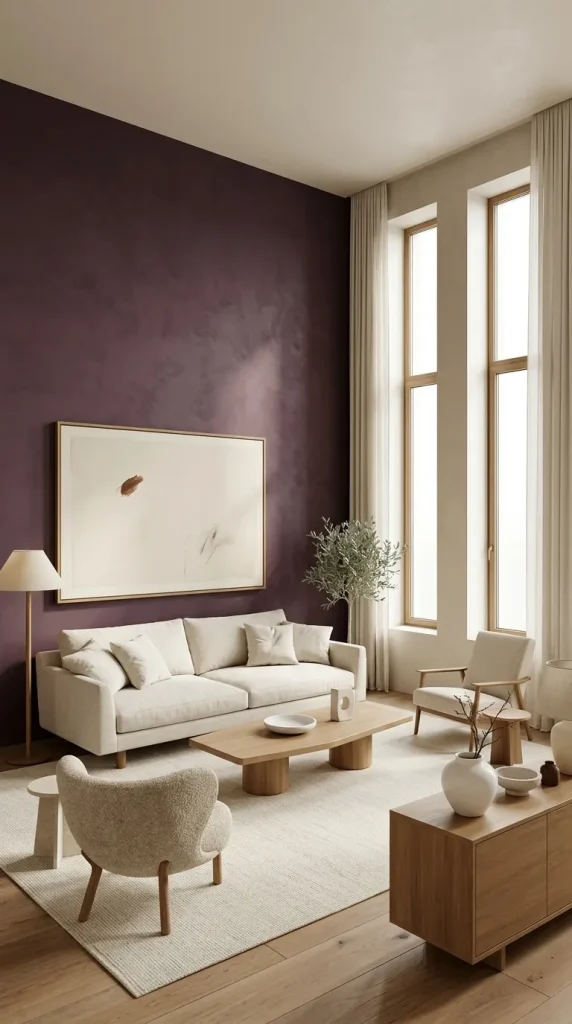
16. Paint One Plum Accent Wall
A plum accent wall is easier to control than painting every surface dark purple.
Use it behind the sofa, media unit or fireplace and keep adjacent walls warm neutral.
A cream sofa and medium wood can make the colour feel sophisticated rather than heavy.
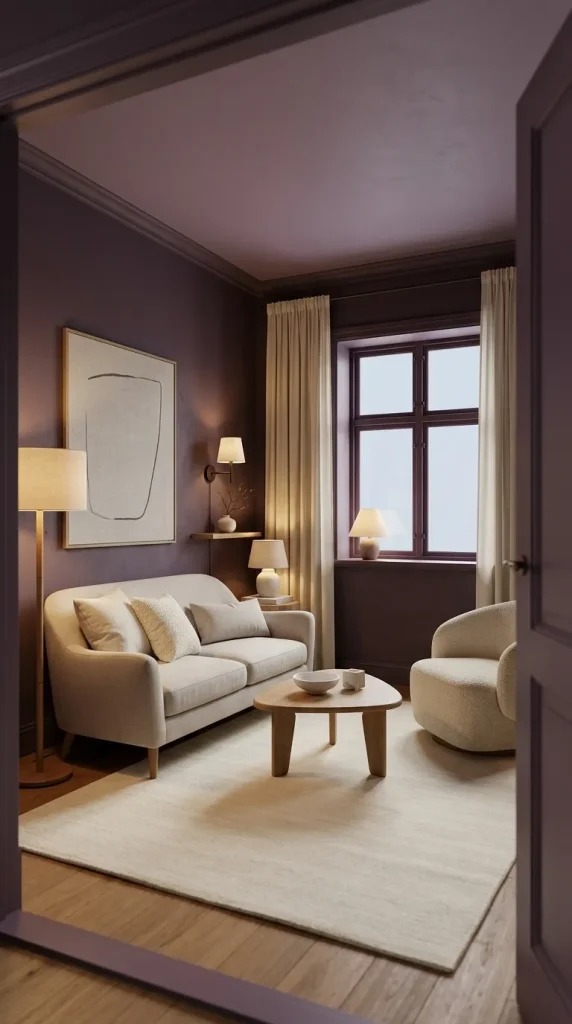
17. Colour-Drench a Small Room in Deep Purple
Small rooms do not always need pale walls.
A compact living room can feel deliberately cocooning when the walls and trim share one deep plum shade. Use pale upholstery, a light rug and multiple lamps for contrast.
The effect works best when the darkness is intentional rather than accidental.
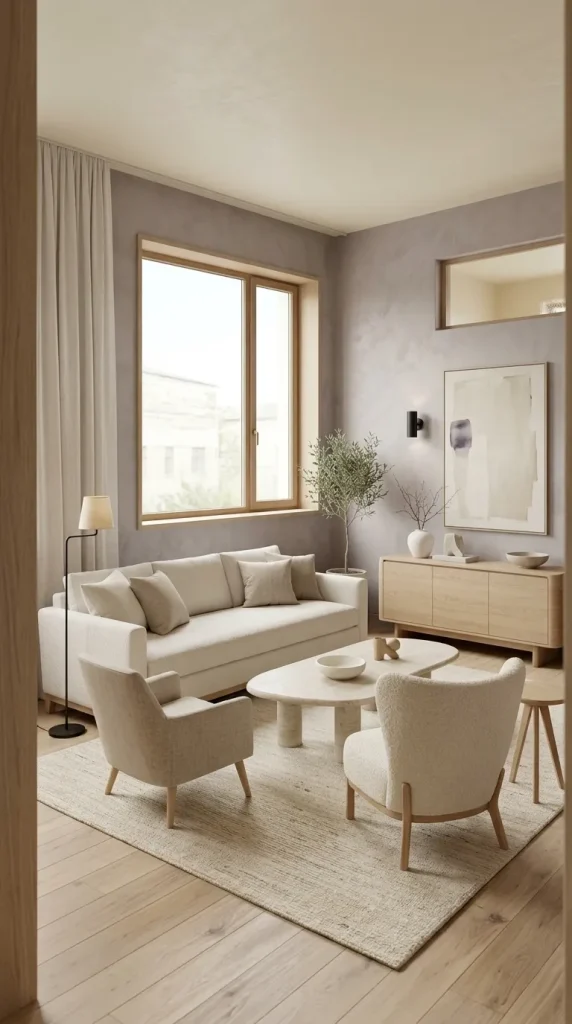
18. Use Smoky Violet Walls for a Modern Room
Smoky violet has enough grey in it to feel quieter than bright purple.
Pair it with warm-white upholstery, black lighting and pale oak. Keep accessories restrained.
This creates a sophisticated modern backdrop without the drama of aubergine.
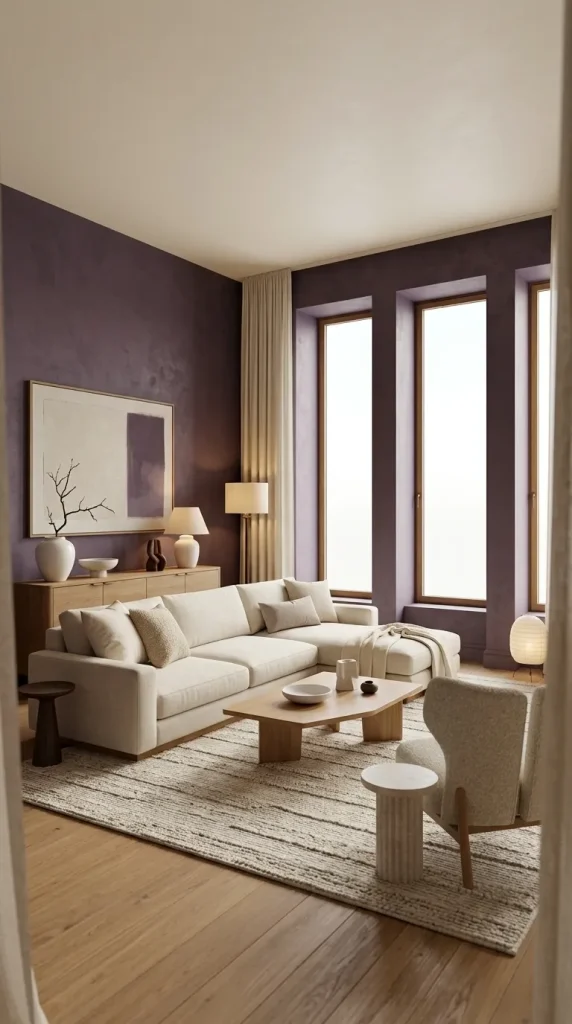
19. Pair Purple Walls With a Cream Sectional
A large cream sectional can balance substantial purple walls.
Use a textured neutral rug beneath the seating and repeat the purple only lightly through artwork.
Because the sofa occupies such a large pale area, the walls can carry more colour without overwhelming the room.
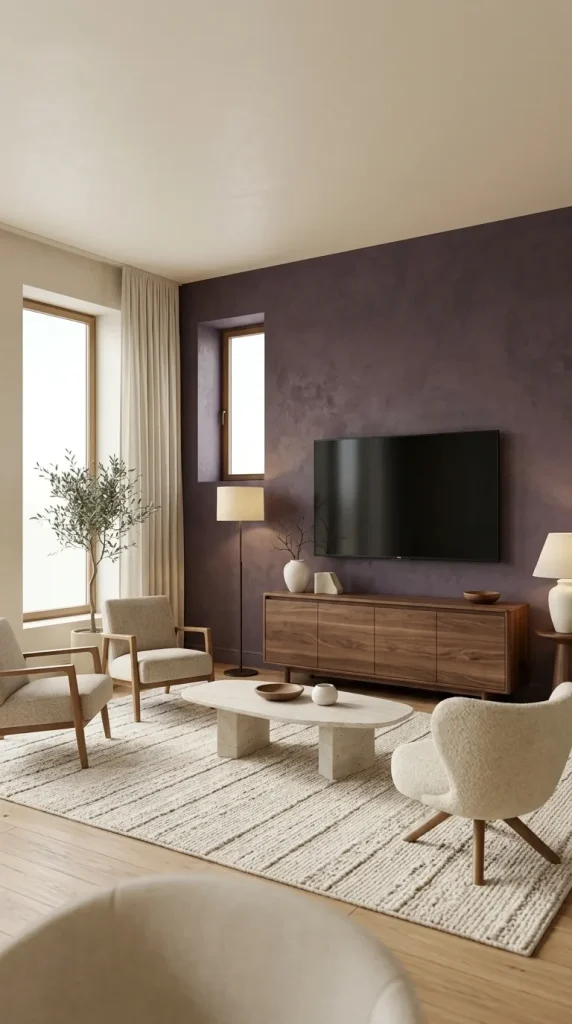
20. Use Purple on the TV Wall
Purple can work effectively behind a television when the shade is deep enough to reduce the stark contrast of the black screen.
Choose plum, smoky violet or aubergine rather than bright purple. Pair the wall with a walnut or black media console.
Keep the surrounding walls lighter unless you want a fully moody room.
Make Purple the Main Furniture Colour
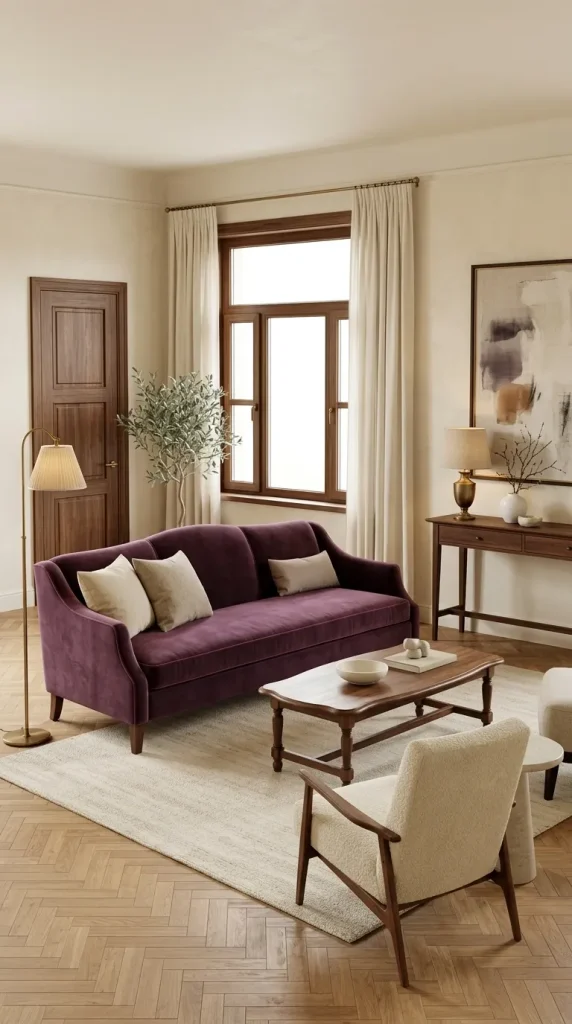
21. Use a Plum Velvet Sofa as the Focal Point
Velvet intensifies purple because its pile catches light differently from flat fabric.
Pair a plum velvet sofa with cream walls, walnut and aged brass. Use a neutral rug so the upholstery remains the main statement.
This works particularly well in elegant, eclectic and vintage-inspired rooms.
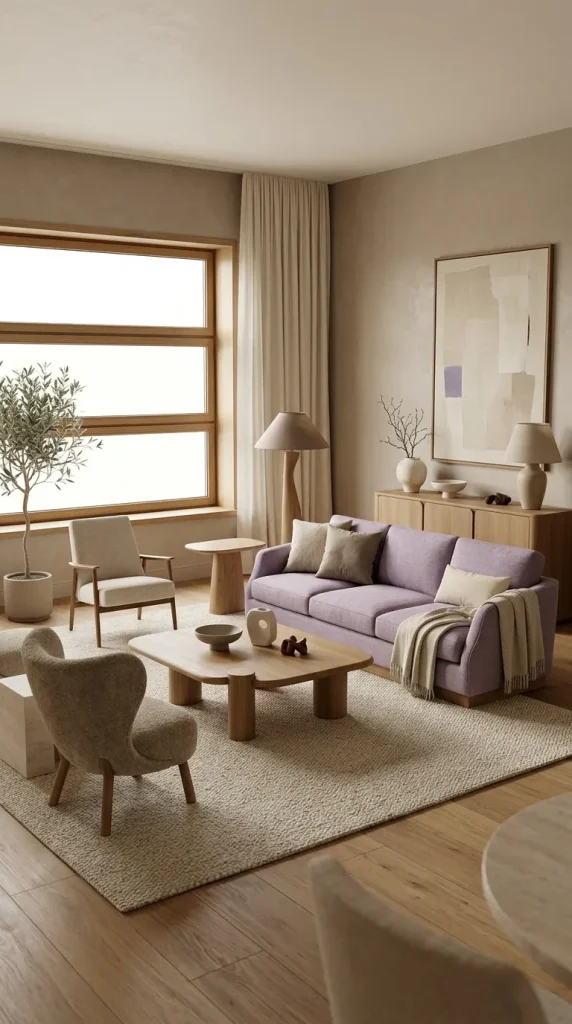
22. Style a Lavender Sofa With Warm Neutrals
A pale-purple sofa needs a warmer foundation to avoid feeling icy.
Use mushroom or beige walls, an oatmeal rug and medium-oak furniture.
The warm neutrals make lavender feel much more grounded.
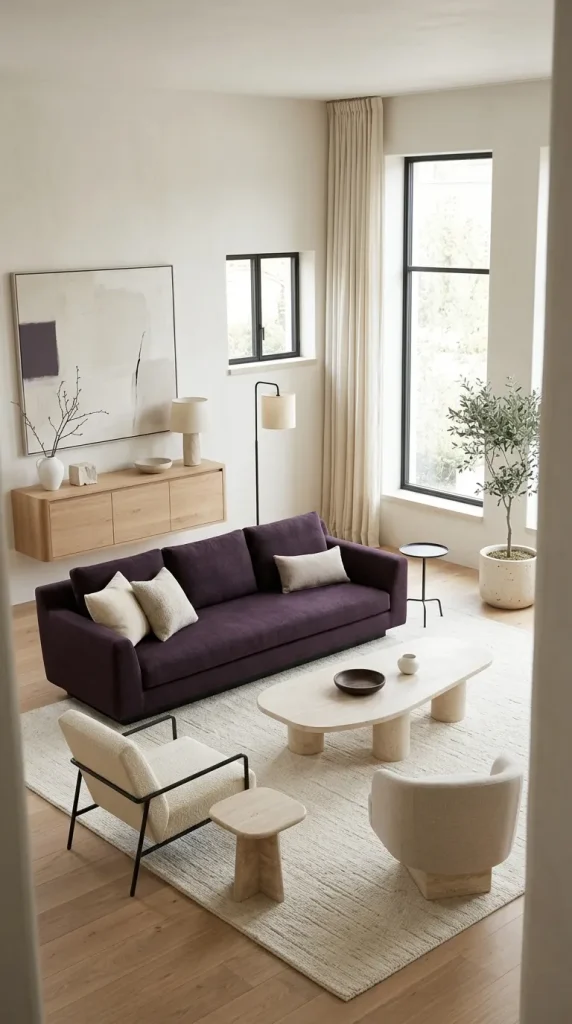
23. Pair an Aubergine Sofa With Pale Stone
Aubergine becomes more contemporary when paired with stone rather than ornate furniture.
Use a limestone- or travertine-style coffee table, cream rug and warm-white walls.
Blackened metal can add structure while keeping the room modern.
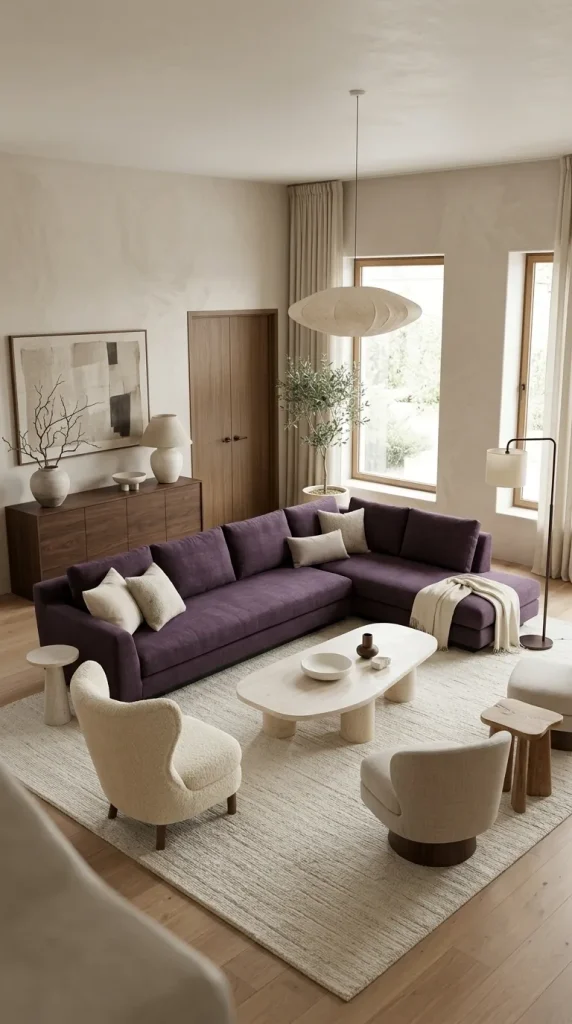
24. Use a Purple Sectional in a Large Neutral Room
A large purple sectional already introduces substantial colour.
Keep the walls and rug neutral, then choose a coffee table large enough to suit the sectional’s scale.
Avoid matching purple curtains and rugs unless you deliberately want a highly tonal room.
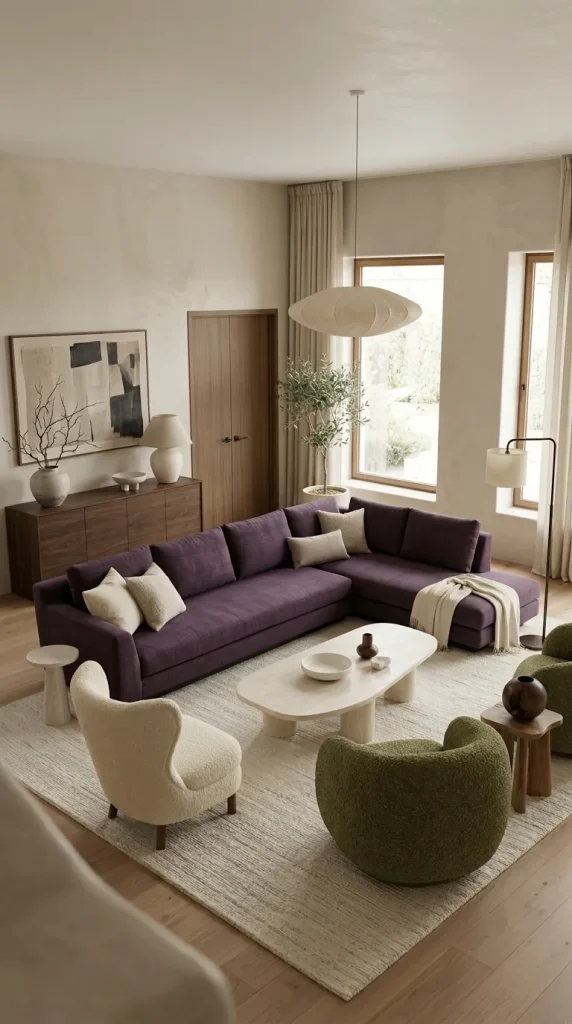
25. Pair a Purple Sofa With a Contrasting Green Chair
A green chair can prevent a purple-sofa room from becoming monochromatic.
Use olive with plum for a richer earthy result or sage with lavender for something softer.
A neutral rug helps separate the two colours visually.
Pair Purple With Stronger Colours
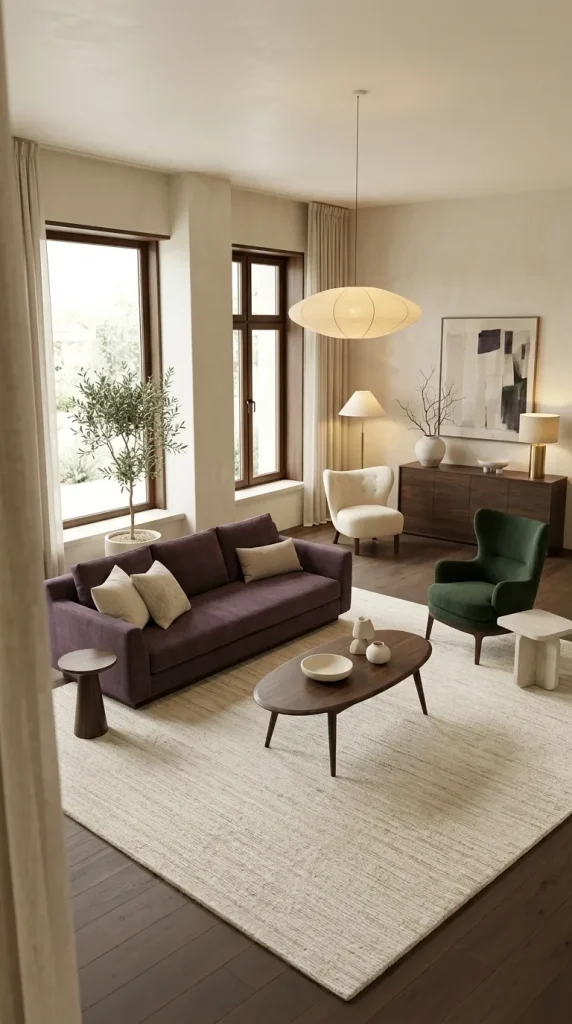
26. Combine Plum With Forest Green
Forest green and plum create a sophisticated jewel-tone palette.
Use one colour through the main sofa and the other through an accent chair or curtains. Add cream, dark wood and brass for balance.
Both colours are deep, so good lighting is important.
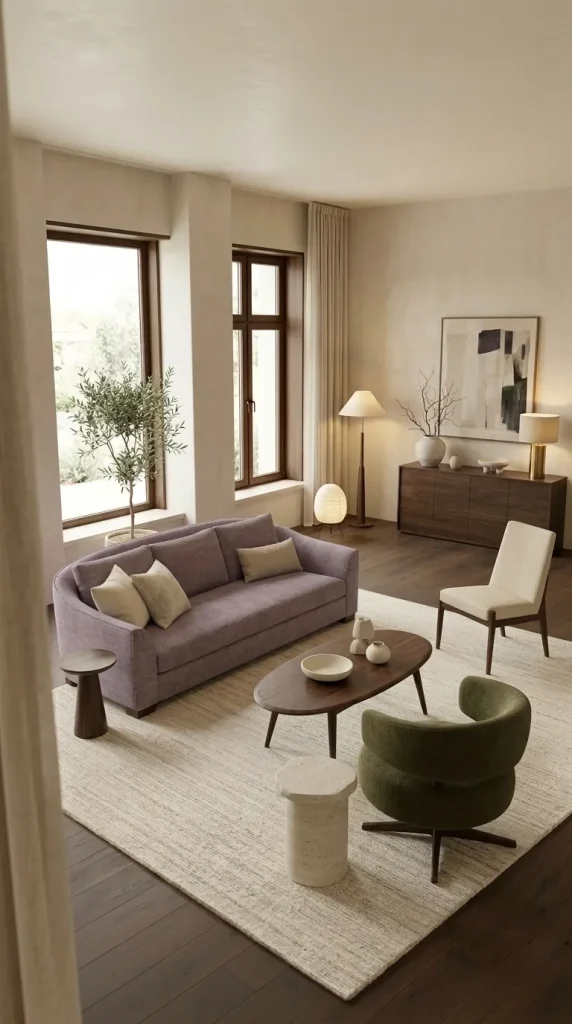
27. Pair Lavender With Olive Green
Olive brings warmth to cooler lavender.
Use olive through cushions, a rug or one chair, then add cream and walnut.
This creates a much earthier result than the more predictable lavender-and-grey palette.
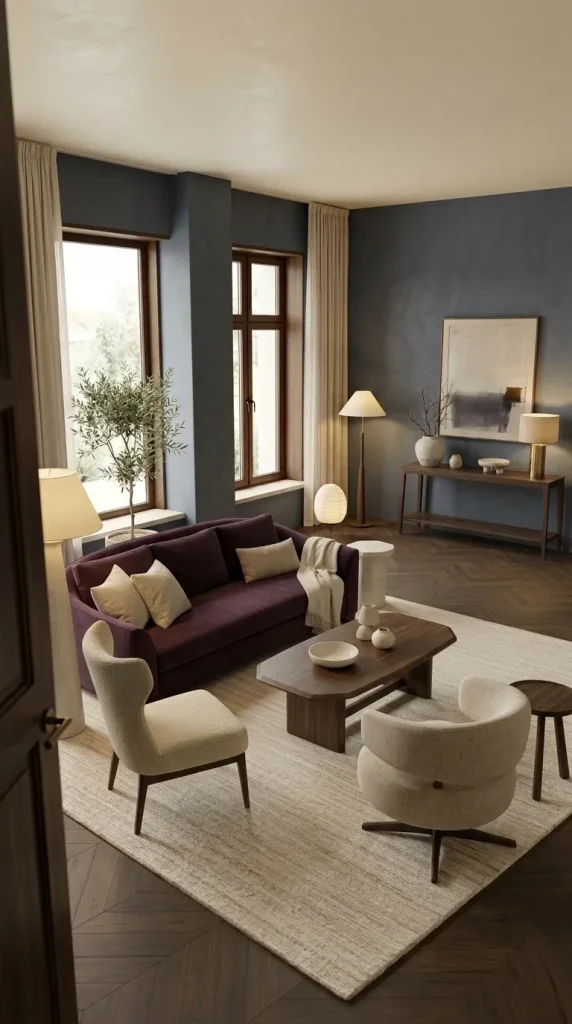
28. Use Purple and Navy for a Moody Room
Navy and purple can coexist when their depths differ enough.
Try a plum sofa against muted navy walls or navy curtains beside smoky-violet walls. Introduce cream and brass to prevent the room from becoming too dark.
This palette suits traditional, eclectic and atmospheric interiors.
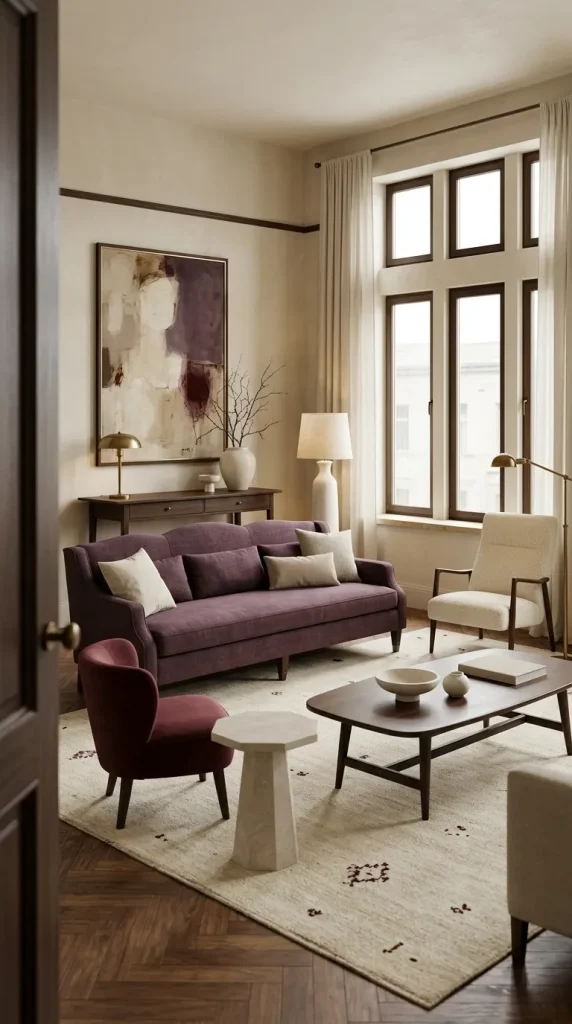
29. Pair Plum With Burgundy
Plum and burgundy create a rich analogous palette.
Use one as the main colour and the other sparingly through a rug or upholstery. Cream and walnut can separate the similar tones.
This works particularly well in vintage and dark-academia-adjacent rooms.
Combine Purple With Burnt Orange
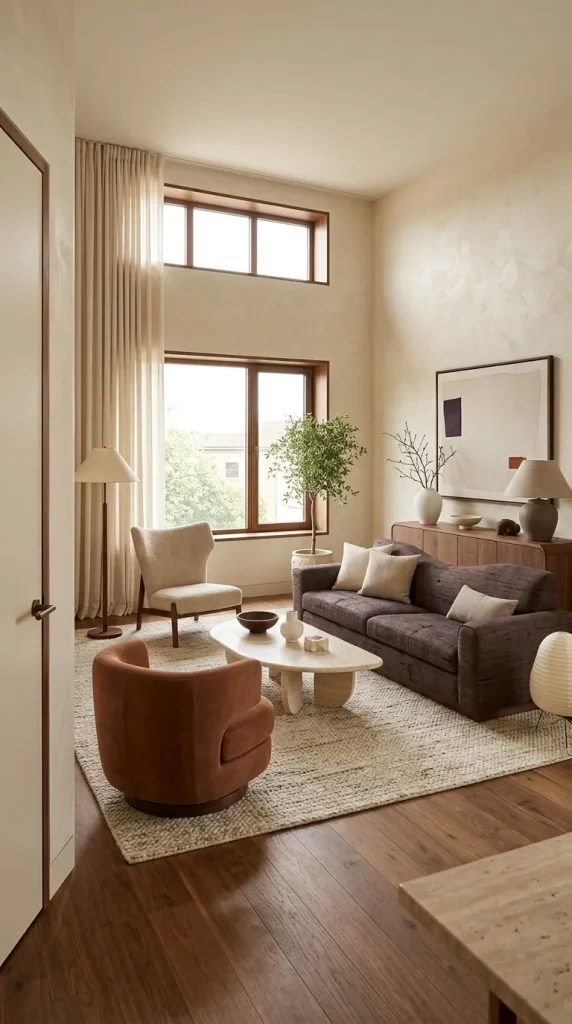
30. Combine Purple With Burnt Orange
Purple and burnt orange create much stronger contrast.
Use aubergine or plum with a rust chair, then ground the room with cream and walnut.
This can feel eclectic, retro or maximalist depending on the furniture.
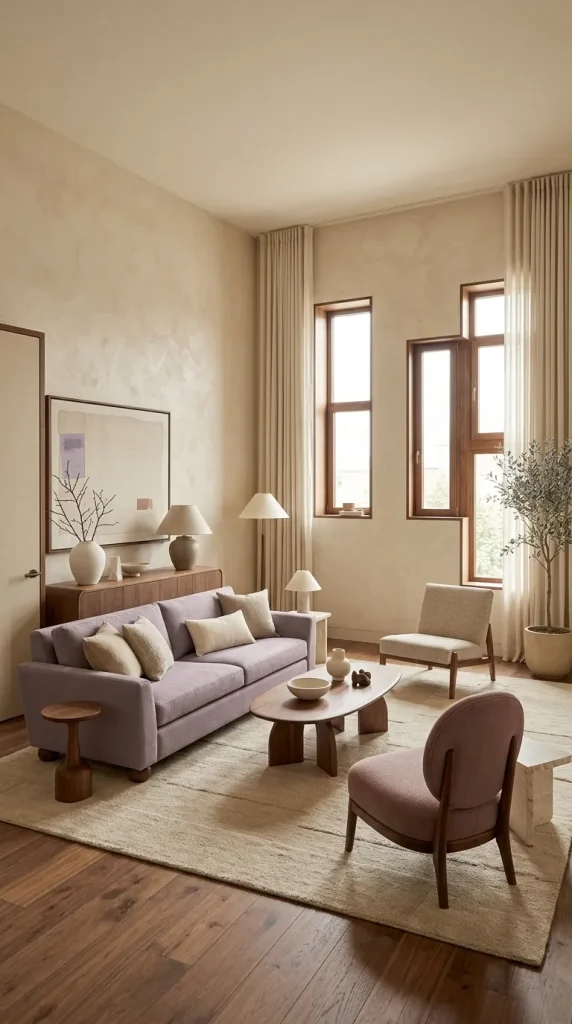
31. Pair Lilac With Dusty Pink
Lilac and dusty rose can feel soft without becoming childish when both colours are muted.
Use warm beige or walnut to give the palette maturity.
Avoid filling every textile with pastel colour; one neutral surface should remain dominant.
Use Purple With Neutrals
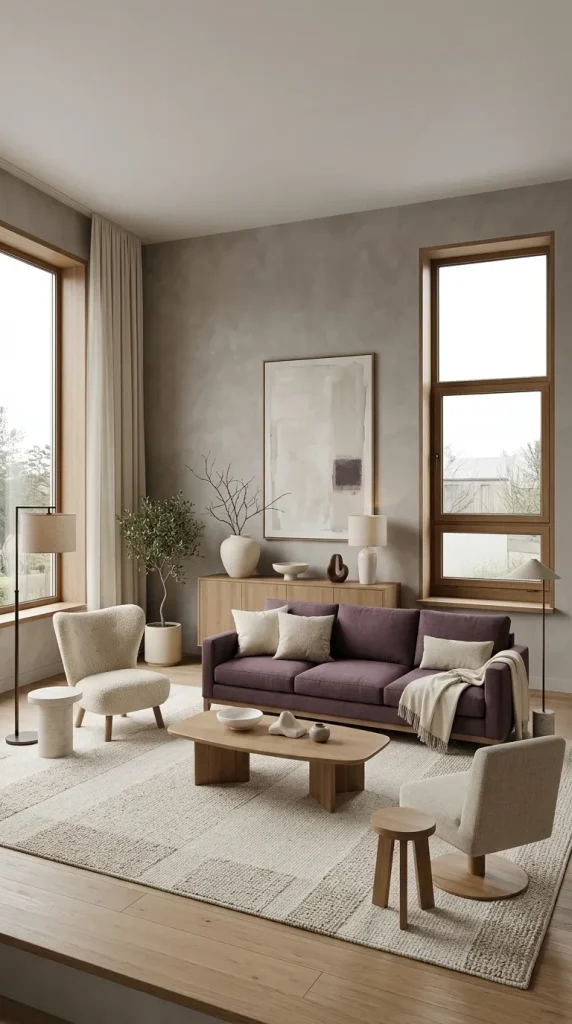
32. Pair Purple With Warm Grey
Warm grey can quiet stronger purple.
Use a plum sofa with warm-grey walls, cream textiles and medium wood. The grey should lean greige rather than blue if you want the room to feel warmer.
This is an effective contemporary palette.
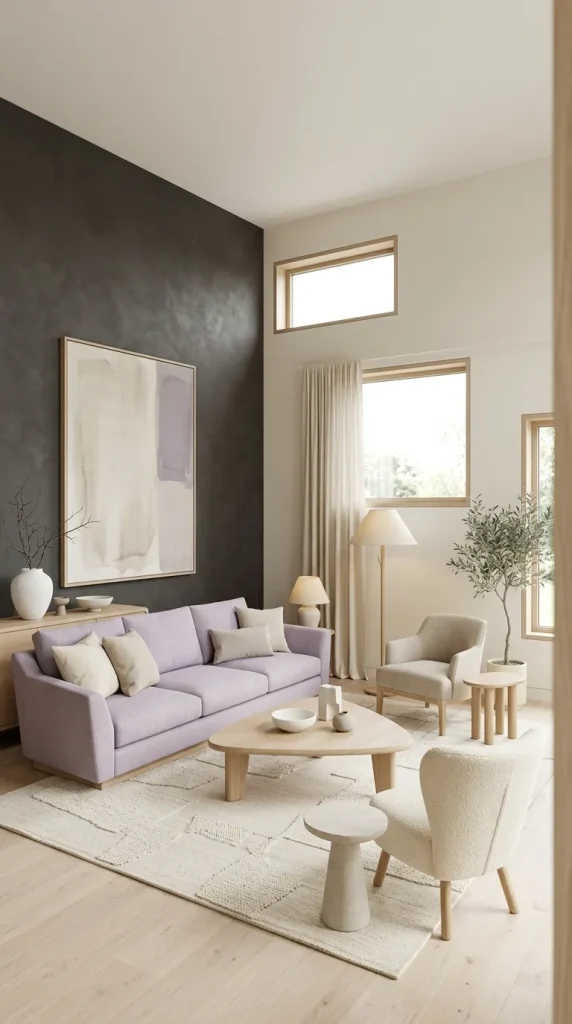
33. Combine Lavender With Charcoal
Charcoal gives pale lavender much stronger definition.
Use charcoal through one wall, rug or substantial table rather than every surface.
Cream or pale wood can prevent the contrast from becoming severe.
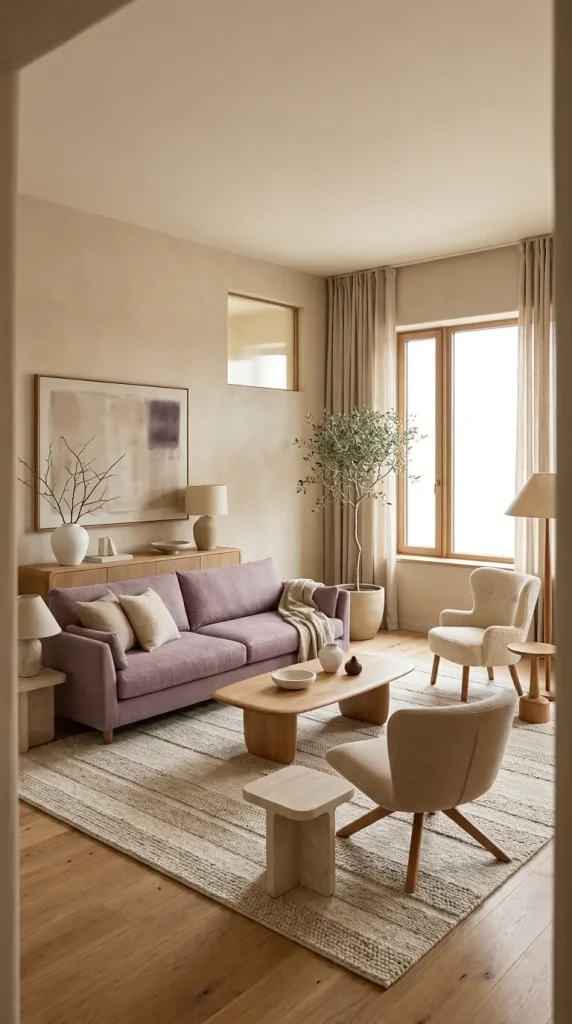
34. Use Purple With Beige for a Softer Room
Beige reduces the formality of deep purple.
Pair a plum chair or sofa with sand-coloured walls, warm linen and medium oak.
This is a particularly useful direction for readers who like purple but do not want a dramatic jewel-tone interior.
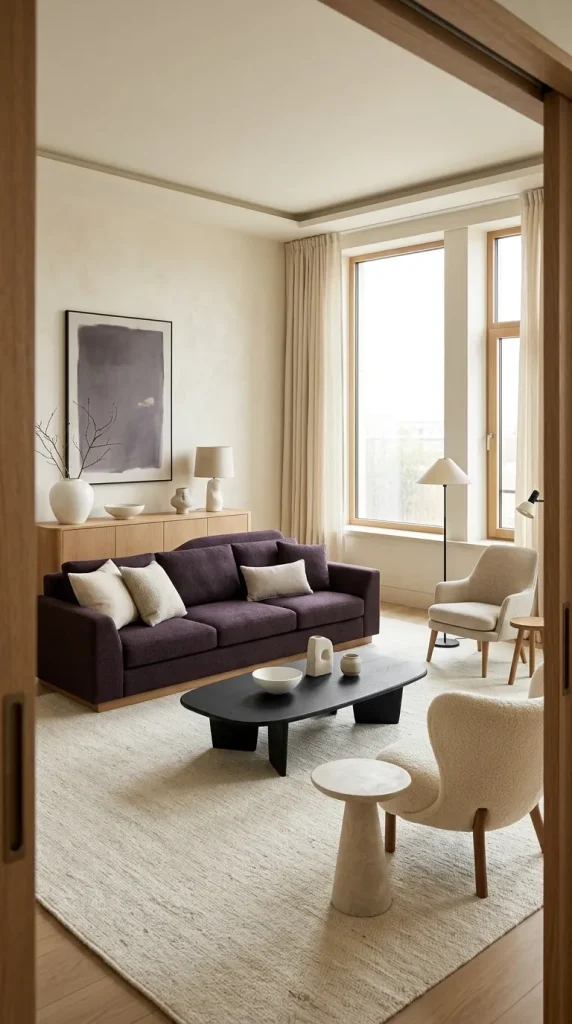
35. Pair Aubergine With Black and Cream
Black sharpens aubergine while cream provides necessary visual relief.
Use an aubergine sofa, black coffee table and cream rug. Repeat black through lighting or frames rather than adding several more dark furniture pieces.
The result feels strong and contemporary.
Explore Distinct Purple Living Room Styles
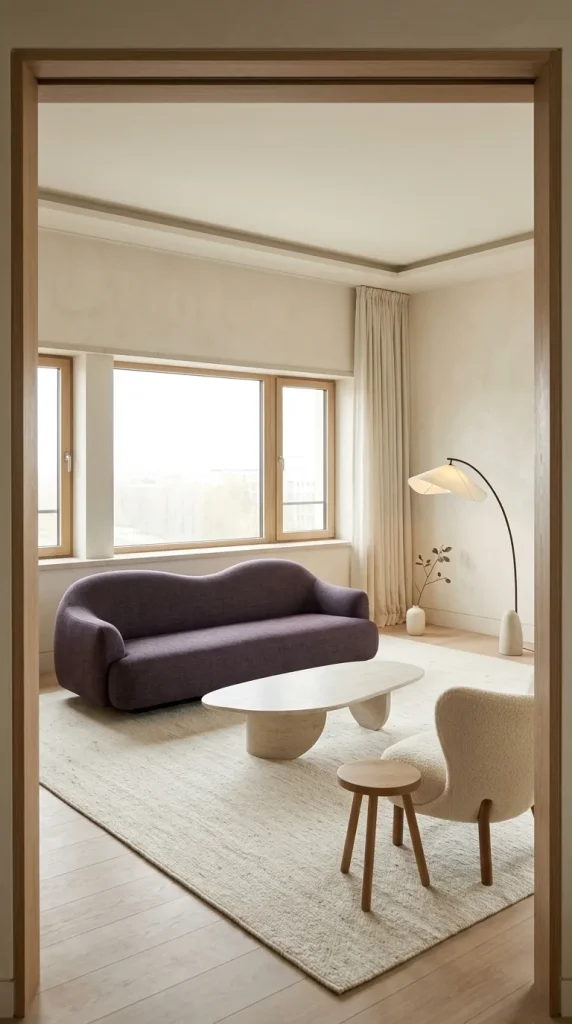
36. Create a Modern Minimalist Purple Room
Use purple once, but use it decisively.
A smoky-violet sofa, warm-white walls, one stone coffee table and a sculptural lamp may be enough.
Minimalism works better when purple is the focal point rather than scattered through many small objects.
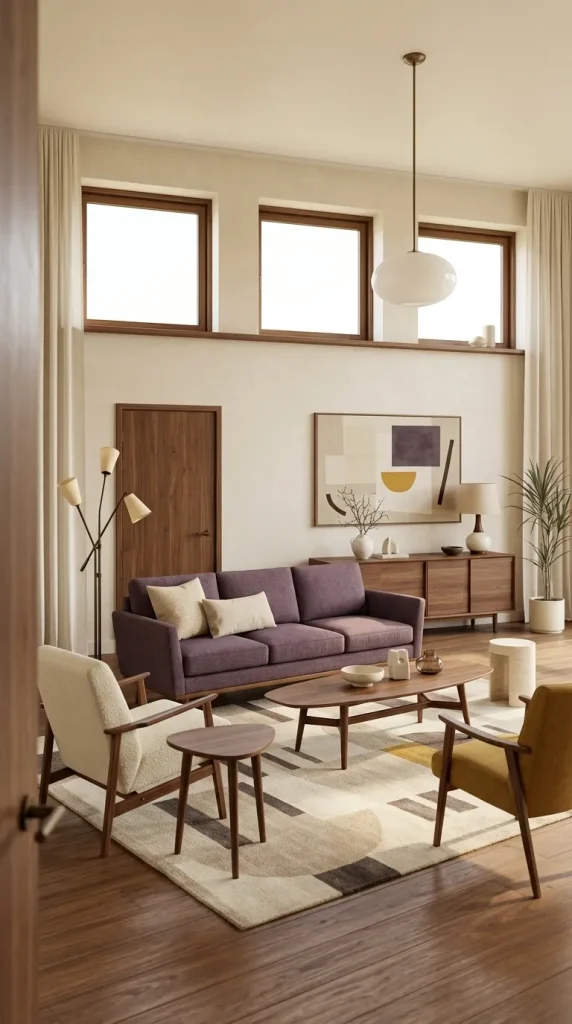
37. Build a Mid-Century Purple Living Room
Purple can work surprisingly well with mid-century materials.
Use a plum or muted violet sofa with walnut, tapered legs and a mustard or olive accent. Add a geometric rug and sculptural lighting.
The furniture forms should establish the mid-century character more than the colour alone.
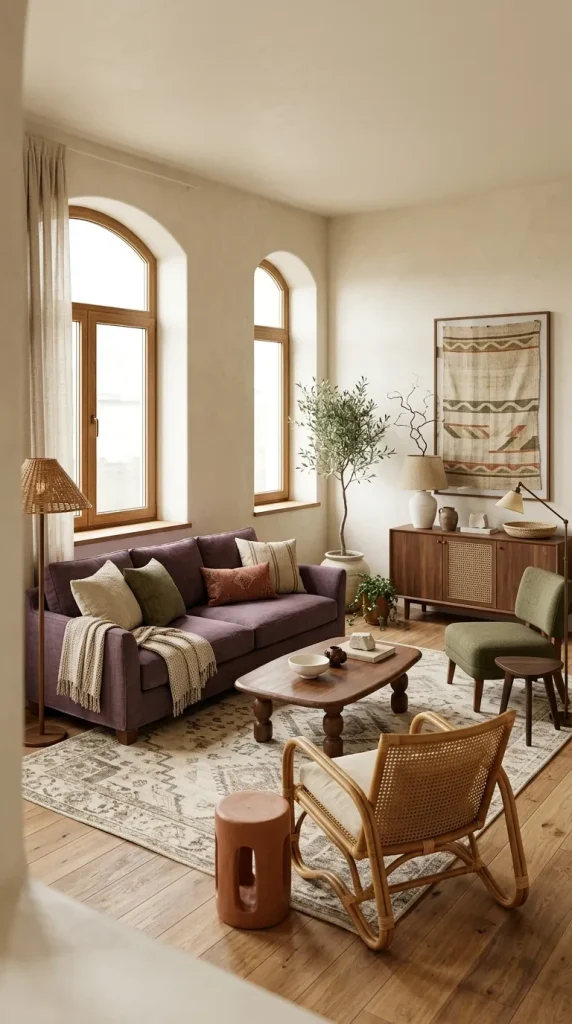
38. Create a Boho Purple Living Room
Use plum or dusty purple with rattan, warm wood, patterned rugs and layered textiles.
Introduce olive, rust or cream so the room does not rely on purple everywhere.
A woven rug and vintage textiles can make purple feel collected rather than glamorous.
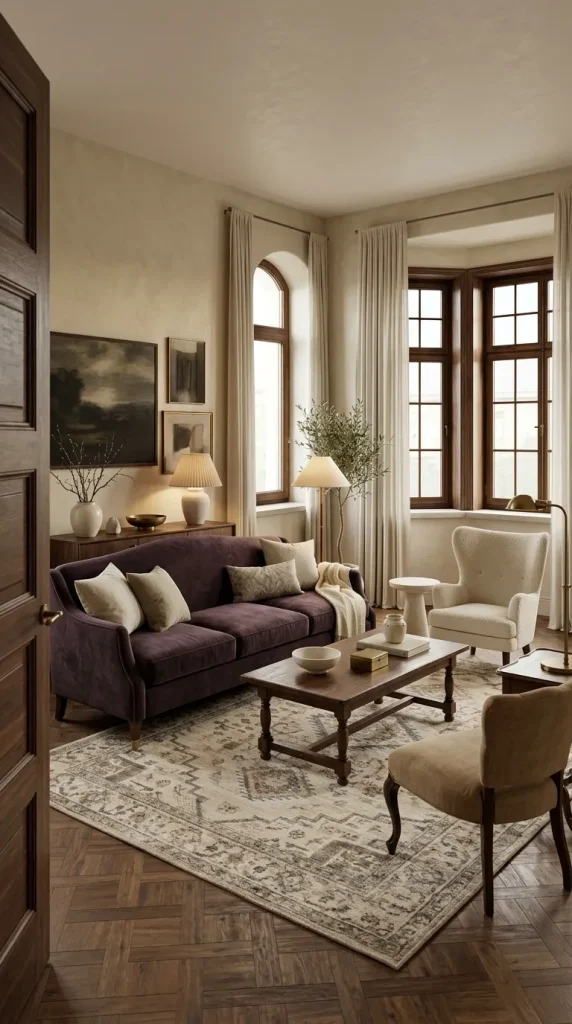
39. Build a Vintage Aubergine Living Room
Aubergine naturally suits old wood, aged brass and traditional patterns.
Use a deeper purple sofa or walls with antique-style tables, framed paintings and a vintage rug.
Cream curtains and softer lighting keep the darker palette inviting.
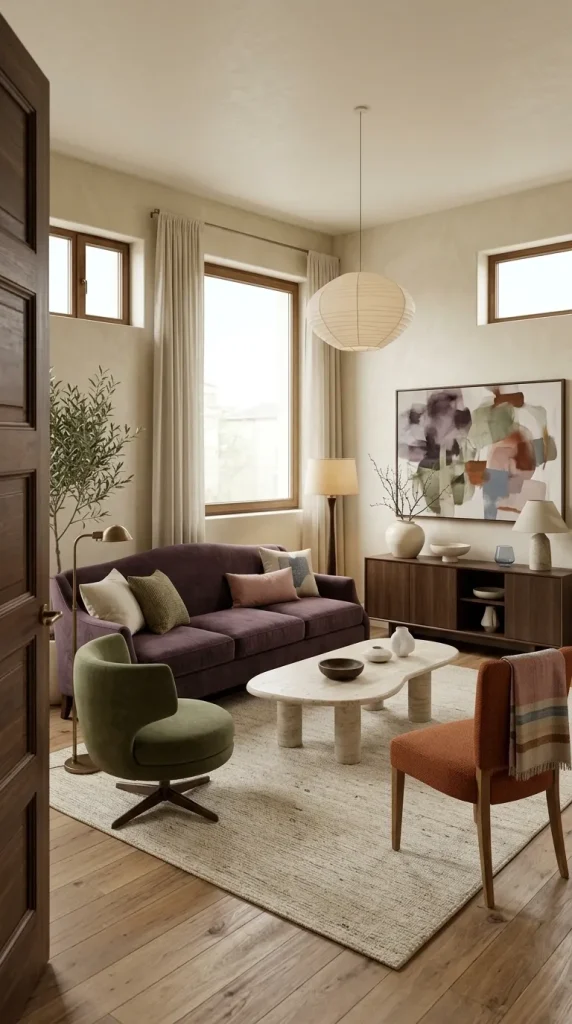
40. Create a Colorful Eclectic Purple Living Room
Purple can become the anchor for a much broader colour story.
Use plum or violet with green, orange, dusty pink or blue, then repeat two or three of those shades through art and textiles.
A neutral floor or sofa element gives the eye somewhere to rest.
The room should feel intentionally layered rather than like every colour was added independently.
How to Choose the Right Purple Shade
Purple changes dramatically depending on its undertone and depth.
| Purple shade | Strong supporting colours | Overall effect |
|---|---|---|
| Lavender | Cream, sage, pale oak, charcoal | Soft and airy |
| Lilac | Greige, dusty pink, warm wood | Light and contemporary |
| Mauve | Taupe, walnut, cream, brass | Muted and sophisticated |
| Smoky violet | Warm white, black, oak | Modern and restrained |
| Plum | Cream, walnut, forest green, gold | Rich and elegant |
| Aubergine | Cream, black, brass, dark wood | Moody and dramatic |
| Bright violet | White, black, orange, green | Bold and expressive |
Always sample purple paint in the actual room. Natural light, flooring and artificial lighting can move a shade noticeably toward blue, red, grey or brown.
Best Wall Colours With Purple Furniture
Cream and warm white are the safest choices because they allow purple upholstery to remain the main feature.
Beige creates a warmer room, while greige is useful with mauve and smoky violet.
Sage and muted green can create more colour without fighting purple. Charcoal and navy work with lighter or medium purple when you want stronger drama.
Avoid selecting wall paint from a small chip alone. Deep purple can become dramatically darker across an entire wall.
Best Rug Colours for Purple Living Rooms
Cream and oatmeal rugs work with almost every purple shade.
A faded vintage rug containing burgundy, green or muted blue can deepen plum and aubergine rooms. Olive can make purple feel earthier, while black-and-cream patterns suit more contemporary spaces.
When the sofa is already deep purple, a lighter rug usually creates more useful separation than another dark jewel tone.
Best Curtains With Purple
Warm-white and linen curtains keep purple rooms balanced.
Mauve curtains can work in neutral rooms where purple is not already dominant. Olive and forest green introduce stronger complementary colour, while navy creates a deeper atmospheric look.
If the walls are purple, matching curtains exactly can flatten the room. A different depth or texture usually looks more intentional.
Best Accent Chairs for a Purple Living Room
Cream is the easiest option because it creates contrast without introducing another strong colour.
Olive and forest green work beautifully with plum and aubergine. Rust creates warmer complementary contrast, while dusty pink suits mauve and lavender.
Black can sharpen a modern room.
The chair does not need to repeat the purple sofa.
Best Wood Tones With Purple
Pale oak works particularly well with lavender and smoky violet.
Walnut is excellent with mauve, plum and aubergine because its warmth balances the cooler parts of purple.
Dark-stained wood supports traditional and moody rooms but needs lighter textiles around deep purple.
Matching every wood finish exactly is unnecessary. Compatible undertones matter more than perfect sameness.
How to Make a Purple Living Room Feel Cozy
Purple alone does not create coziness.
Use layered lamps, wool or textured rugs, full curtains and comfortable upholstery. Walnut, cream and warm neutral textiles can make cooler purple shades feel more inviting.
With aubergine or plum walls, several smaller light sources usually work better than relying entirely on a ceiling fixture.
How to Use Purple in a Small Living Room
Small rooms do not have to avoid dark purple.
A single plum wall can add depth, while a compact lavender sofa can introduce colour without visually dominating the room.
For a deliberately cocooning effect, aubergine across several walls can work too, but lighter upholstery, adequate lighting and clear circulation become more important.
Physical furniture size matters more than colour alone.
What Should You Avoid in a Purple Living Room?
Using one generic purple everywhere. Lavender, mauve and aubergine have very different visual roles.
Pairing every deep colour together. Plum, navy, black and forest green need cream or another lighter element between them.
Using too much shiny gold with velvet purple. The combination becomes theatrical quickly.
Matching the walls, sofa, rug and curtains exactly. Tonal rooms need variation in shade and texture.
Ignoring lighting. Deep purple can appear nearly black at night, while warm bulbs can make red-leaning purple look much warmer.
Frequently Asked Questions
What colours go best with purple in a living room?
Cream, warm white, beige, greige, sage, olive, forest green, navy, dusty pink, rust, walnut, black and antique gold can all work. The best pairing depends on whether the purple is lavender, mauve, plum or aubergine.
What colour sofa works with purple walls?
Cream, beige, grey, olive and warm neutral sofas are strong options. With deep aubergine walls, lighter upholstery usually creates useful contrast.
Does green go with purple?
Yes. Sage works especially well with lavender, while olive, forest green and emerald suit plum and aubergine. Varying the depth of the two colours keeps them visually distinct.
Does gold go with purple?
Yes. Antique gold and brass pair particularly well with plum and aubergine. Use metallic gold selectively so it enhances the purple rather than competing with it.
How do I make purple look sophisticated?
Choose nuanced shades such as mauve, smoky violet, plum or aubergine and pair them with cream, walnut, stone, black or restrained brass. Avoid relying only on highly saturated purple and shiny metallic decor.
Can purple work in a modern living room?
Absolutely. A smoky-violet sofa, pale walls, stone coffee table and black lighting can feel highly contemporary. Purple does not need ornate furniture or glam styling.
Let Purple Set the Mood, Not Become the Theme
The strongest Purple Living Room Ideas treat purple as a spectrum rather than one dramatic colour.
Lavender can create an airy room. Mauve works almost like a sophisticated neutral. Plum brings richness, while aubergine can create an intensely atmospheric space.
Cream can soften purple. Walnut can warm it. Green creates natural contrast, black sharpens it and antique gold can make deeper purple feel more elegant.
The most important decision is how much purple the room actually needs. One sofa, wall or substantial textile usually creates a clearer design than scattering small purple objects everywhere.
When shade, proportion, material and lighting are handled deliberately, purple can anchor living rooms that feel minimalist, cozy, modern, vintage, bohemian, jewel-toned or boldly eclectic rather than simply “purple themed.”