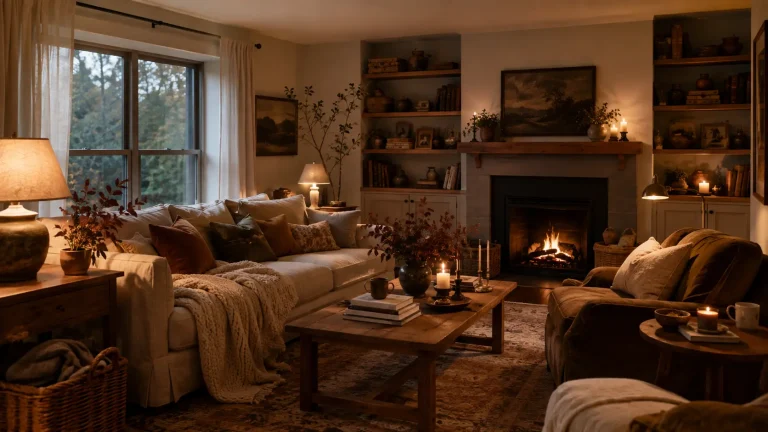
14 Aesthetic Living Room Ideas for a Collected, Polished Space
An aesthetic living room is not simply a room that photographs well. The difficult part is making the sofa, rug, lighting, art, color, and smaller objects feel connected without making the space look staged.
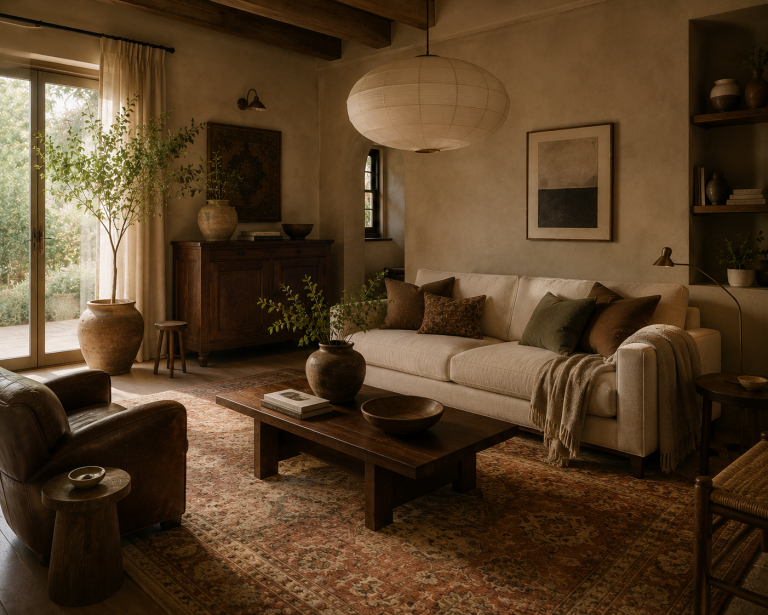
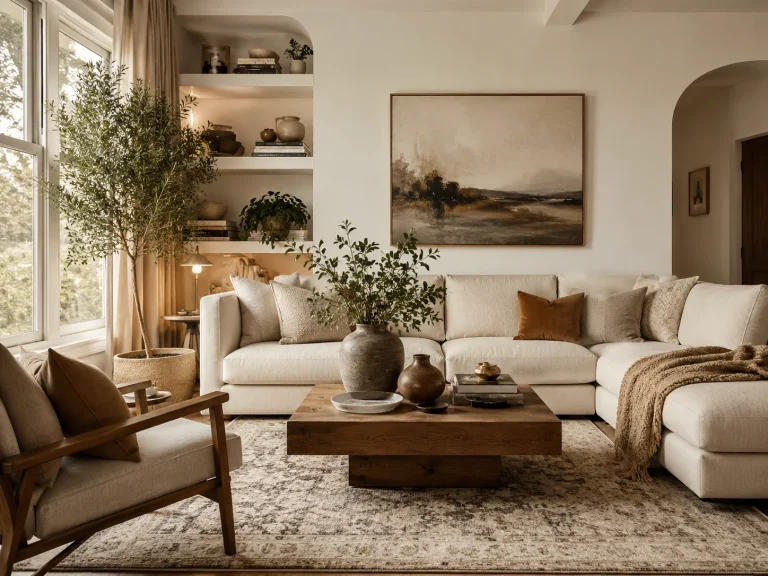
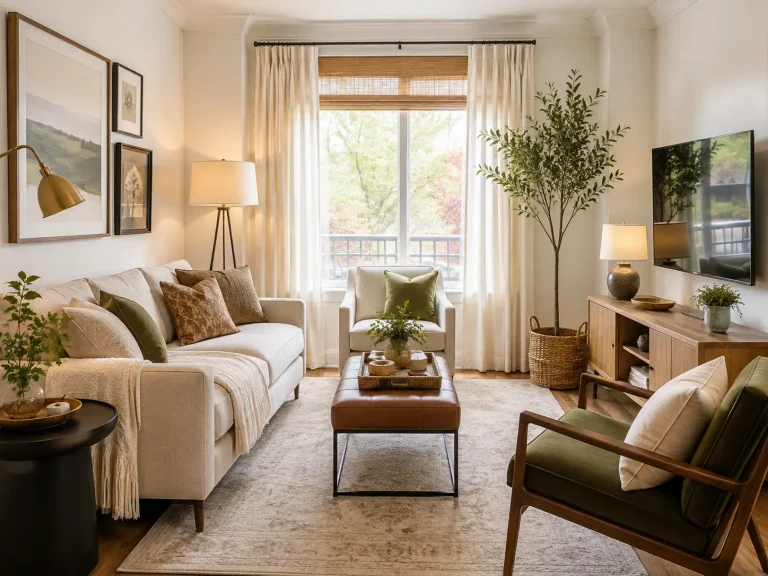
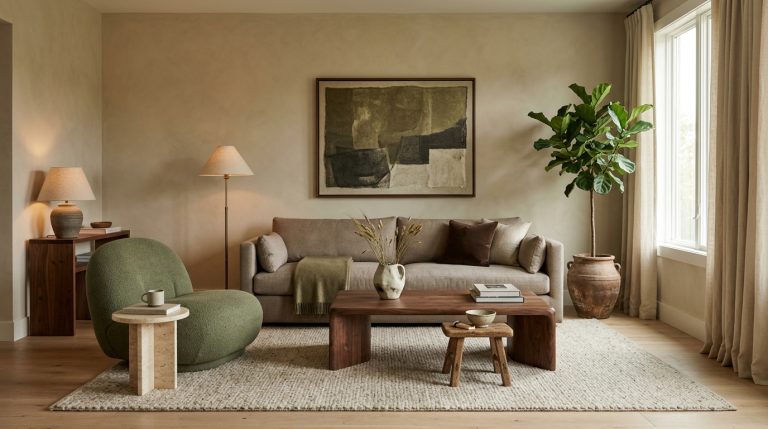
That matters even more in 2026. The strongest 14 aesthetic living room ideas are moving away from perfectly coordinated beige interiors and toward rooms with personality, vintage pieces, richer woods, expressive color, tactile materials, and objects that look collected over time. Current living-room design is becoming more individual and comfortable, with designers favoring patina, pattern, varied furniture, and lived-in character.
The goal is not to copy one aesthetic. It is to make every visible choice support the same atmosphere.
What makes a living room look genuinely aesthetic?
A cohesive room usually has a clear hierarchy. Something leads, perhaps the sofa, color, or mood, without matching it exactly.
Good aesthetic rooms also contain contrast. Smooth sits beside textured. Pale furniture gains weight from darker wood. A modern sofa may sit beside an old table.
That slightly imperfect mix is particularly relevant in 2026, when designers are increasingly favoring collected interiors over sterile modernism and matching furniture sets.
Build a color palette with a clear point of view
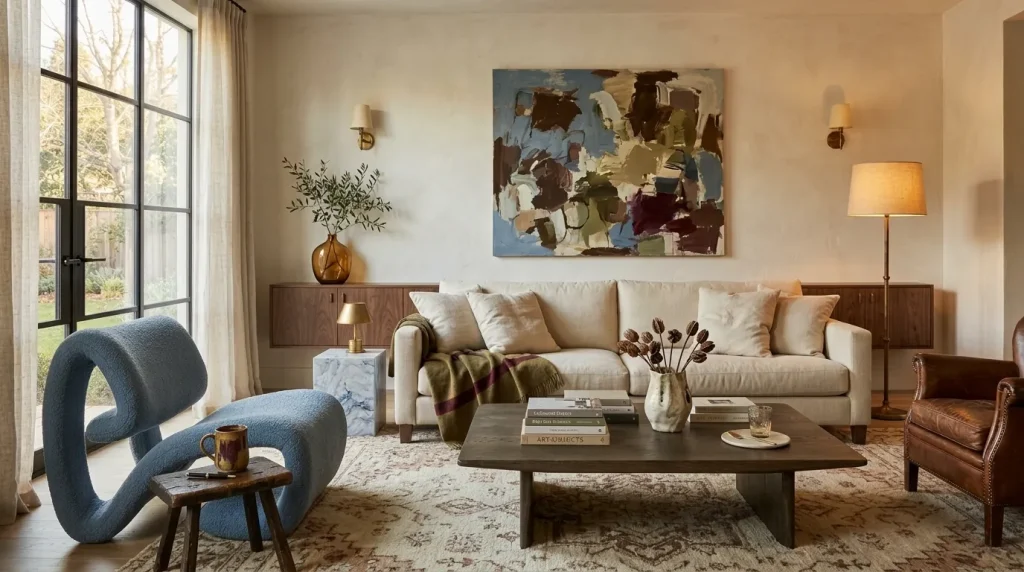
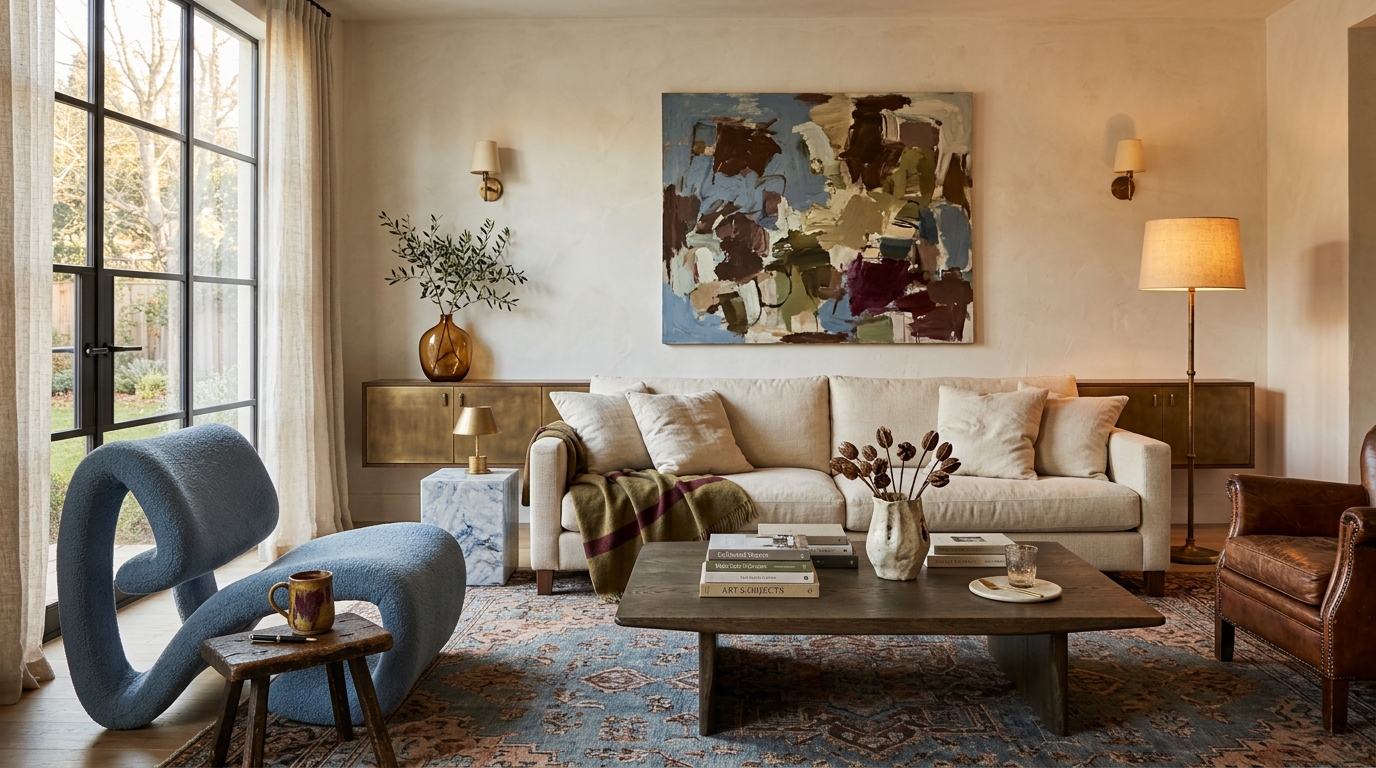
Idea 1: Choose three main colors before buying decor
Random accessories are one of the fastest ways to lose visual cohesion.
Choose one background color, one supporting color, and one stronger accent. For example, warm ivory walls might sit with chocolate brown furniture and dusty blue accents. Mushroom could work with olive and burgundy.
You can still introduce smaller shades through books and art, but the three main colors should remain recognizable.
For 2026, do not feel limited to pale beige. Current interiors are increasingly comfortable with richer brown, plum, olive, rust, blue, and earthy neutrals.
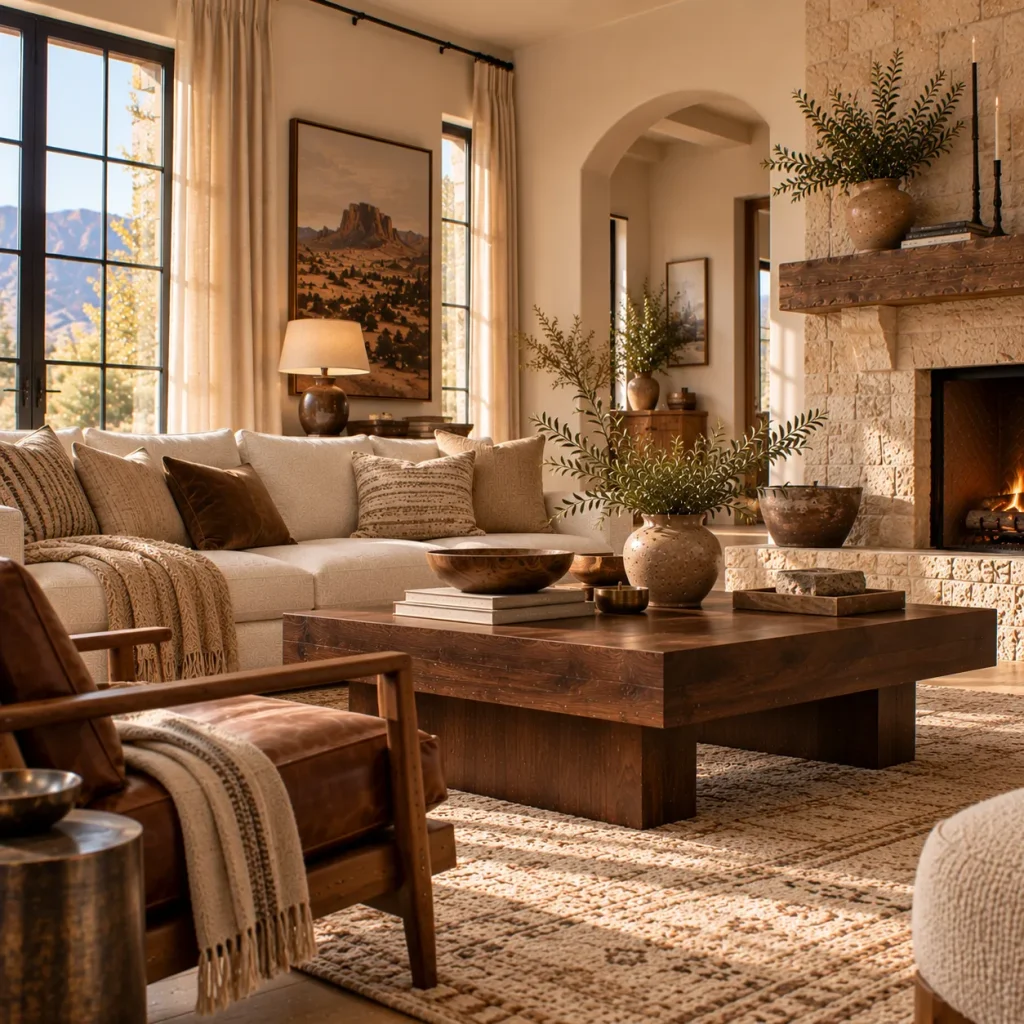
Idea 2: Use chocolate brown to ground pale rooms
If your living room already contains cream upholstery, warm white walls, and a light rug, adding more pale decor may make everything disappear into one visual layer.
Chocolate brown is a useful anchor.
Try a walnut coffee table, espresso cabinet, tobacco leather chair, chocolate velvet cushion, or dark wood picture frame.
Darker woods such as walnut and espresso oak are gaining renewed attention in 2026, particularly beside plaster, stone, softer textiles, and reflective finishes.
One substantial dark object usually works better than ten tiny black accessories.
Make the furniture composition feel intentional
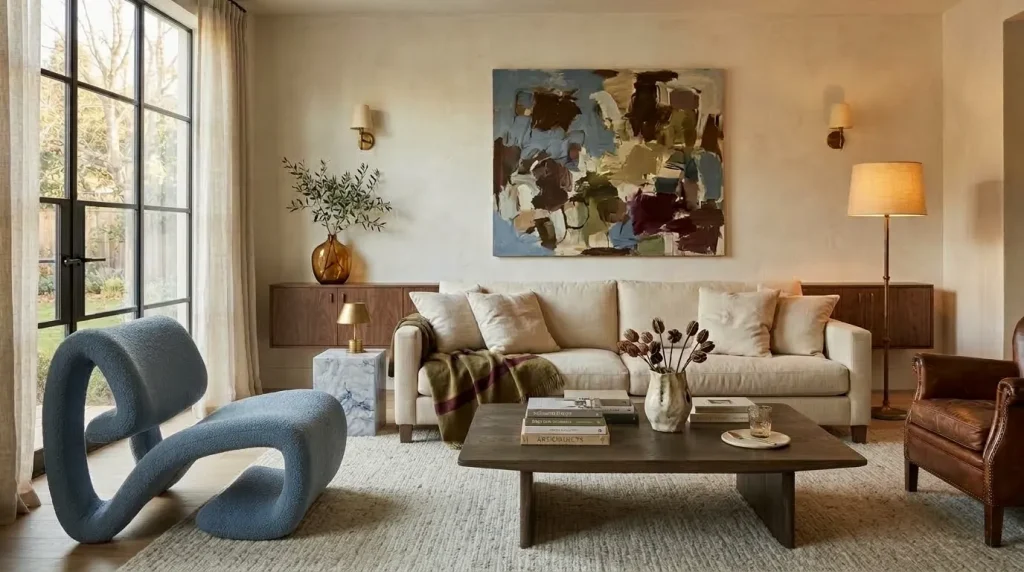
Idea 3: Use one piece with a memorable silhouette
An aesthetic room needs at least one furniture shape worth noticing.
That could be a curved lounge chair, sculptural coffee table, low vintage sofa, pedestal side table, or unusually shaped floor lamp.
Curves remain relevant in 2026, including more expressive combinations of sculptural forms and patterned upholstery.
But do not make every piece curved. A rounded chair looks stronger beside a straight sofa because each shape provides contrast.
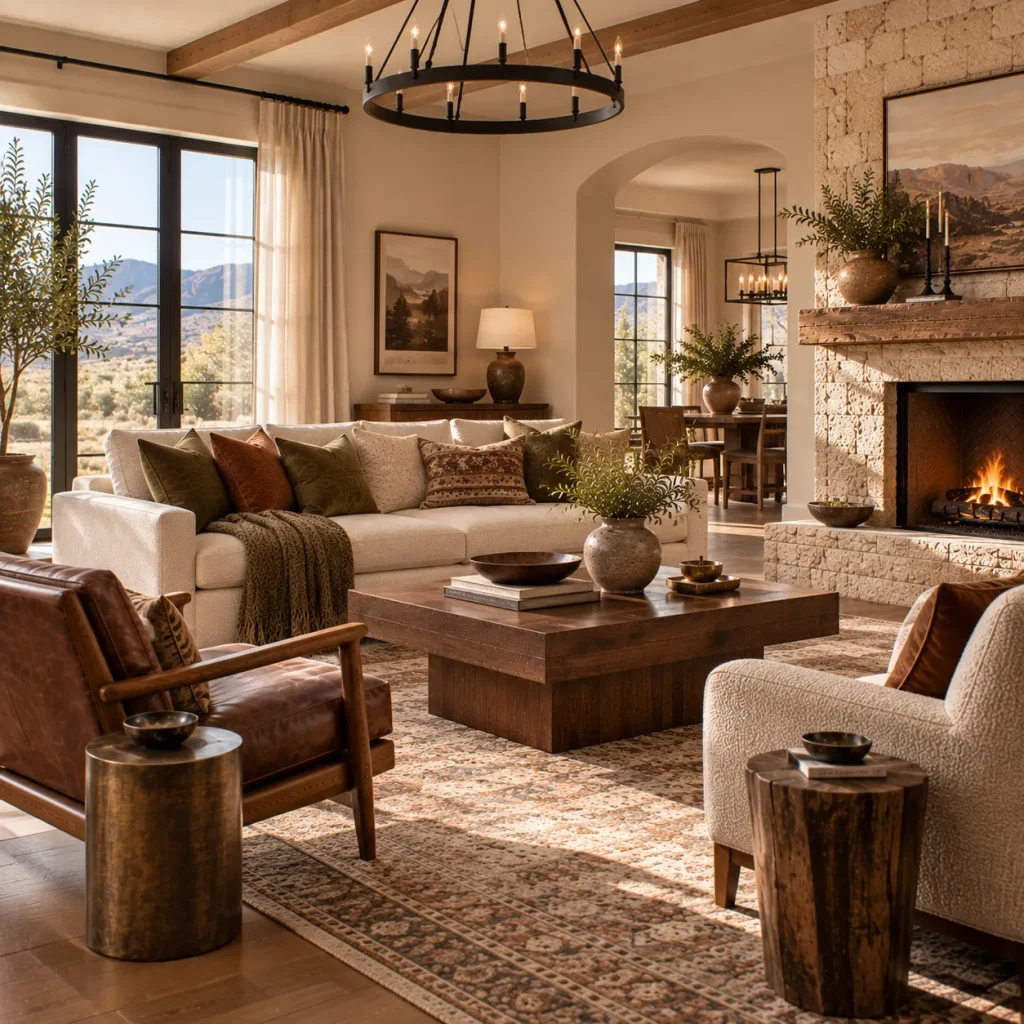
Idea 4: Stop automatically pushing everything against the walls
A sofa does not need to touch drywall simply because there is space behind it.
Where the room permits, bring seating inward and create a defined conversation zone. Even modest breathing room behind furniture can make the layout feel more deliberate.
Keep roughly 14 to 18 inches between the sofa and coffee table as a useful starting point. Chairs should feel connected to the seating group rather than stranded in corners — see our small living room layout ideas for more on this.
In a smaller room, fewer correctly scaled pieces usually look better than several miniature chairs and tables distributed around the perimeter, an idea we expand on in our minimalist living room ideas.
Let texture create depth without creating clutter
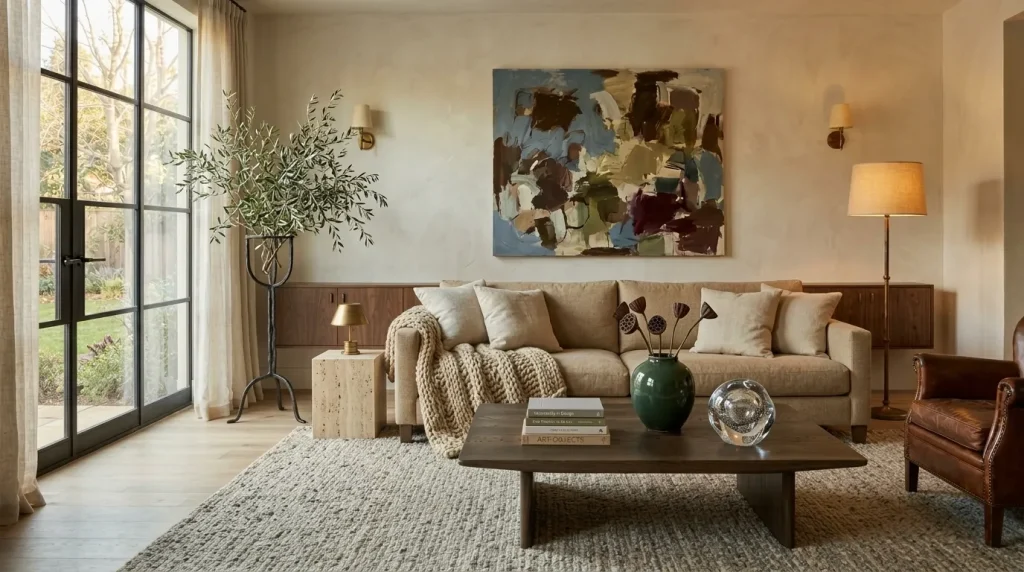
Idea 5: Mix at least three noticeably different materials
A room can use a restrained palette and still feel rich if its materials behave differently.
Try linen upholstery, walnut, honed stone, wool, glazed ceramic, aged brass, or glass.
The key word is different.
A cream boucle chair beside a cream boucle ottoman and cream nubby cushions technically contains texture, yet those materials still look remarkably similar.
Current 2026 design coverage is emphasizing material tension, where rough and polished surfaces deliberately sit together.
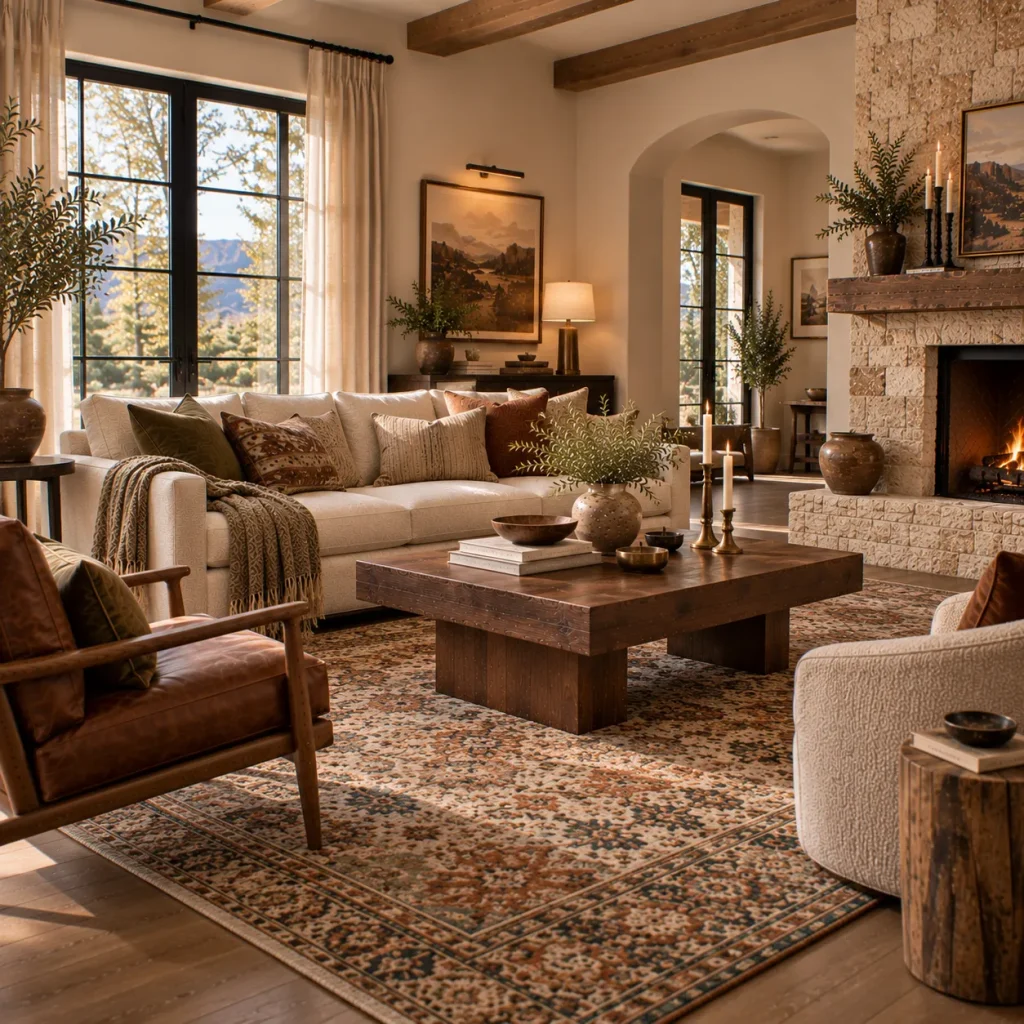
Idea 6: Use a rug large enough to organize the room
Aesthetic styling cannot rescue an undersized rug.
In many medium living rooms, an 8-by-10-foot rug creates a stronger seating foundation than a 5-by-7. Where the layout allows, let at least the front legs of the main sofa and chairs rest on it.
Choose the rug according to what the room lacks.
If everything is neutral, consider a faded pattern containing rust, blue, olive, brown, or burgundy. If the furniture is already colorful, a textured wool or low-contrast design may provide enough quiet.
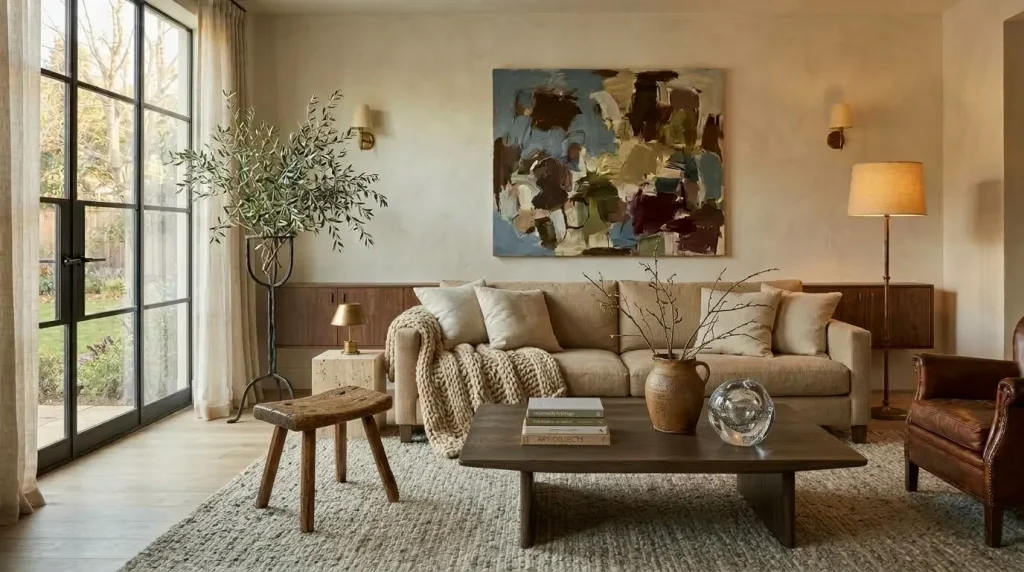
Idea 7: Add something visibly imperfect
Perfect rooms can feel oddly artificial.
Bring in a hand-thrown ceramic vessel, old wooden stool, vintage brass lamp, worn leather chair, handmade textile, or slightly irregular piece of art.
Architectural Digest’s recent interiors are showing similar interest in authenticity, age, craftsmanship, and the mixing of periods rather than flawless matching.
I once worked through an illustrative room where every object was attractive, new, and perfectly coordinated. It still felt like a display. Replacing one polished side table with a worn wooden stool gave the surrounding pieces far more character.
Give the walls more than filler decor
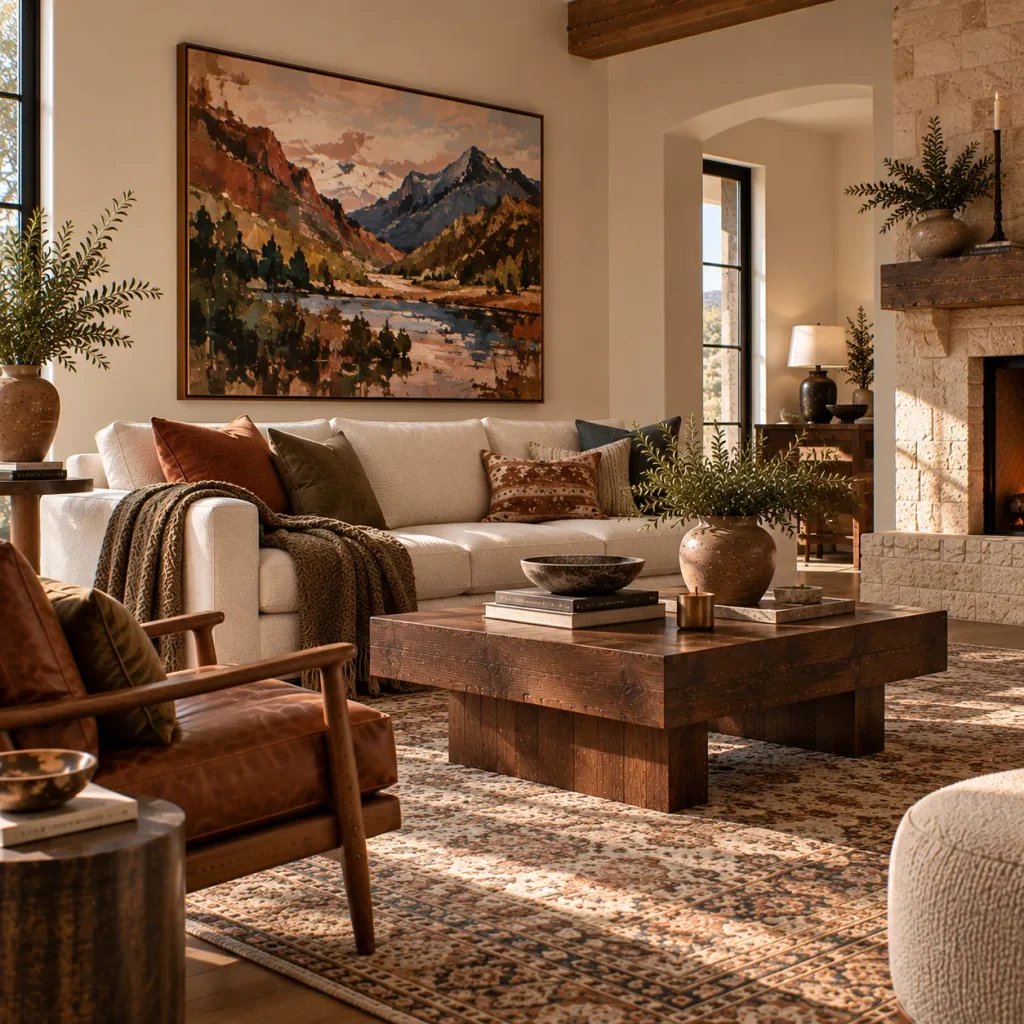
Idea 8: Hang one large artwork instead of several tiny pieces
A large blank wall does not automatically need a gallery wall.
One substantial painting, photograph, or textile can establish the palette and provide enough visual weight on its own.
Above a sofa, artwork around two-thirds of the sofa width is a useful starting point, depending on the frame and wall.
Do not choose beige artwork solely because the furniture is neutral. Rust, cobalt, olive, burgundy, black, or dusty pink can make an otherwise quiet room much more distinctive — the same principle behind our 15 vibrant living room ideas.
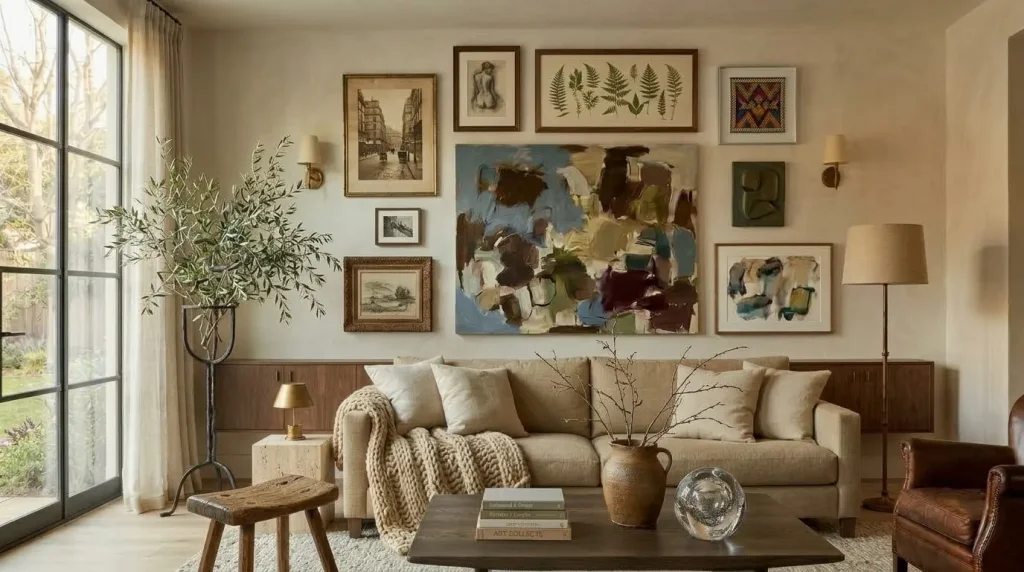
Idea 9: Build a gallery wall from different sources
If you prefer a collected wall, avoid purchasing a pre-matched pack of prints.
Combine photographs, drawings, paintings, small textiles, vintage pieces, and perhaps one sculptural object. Repeat a few frame tones or colors so the collection still feels connected.
Start with the largest piece and work outward. Gaps of roughly 2 to 3 inches often provide enough separation between smaller works without making the display fall apart visually.
The result should look accumulated, not manufactured.
Make shelves and surfaces look lived in
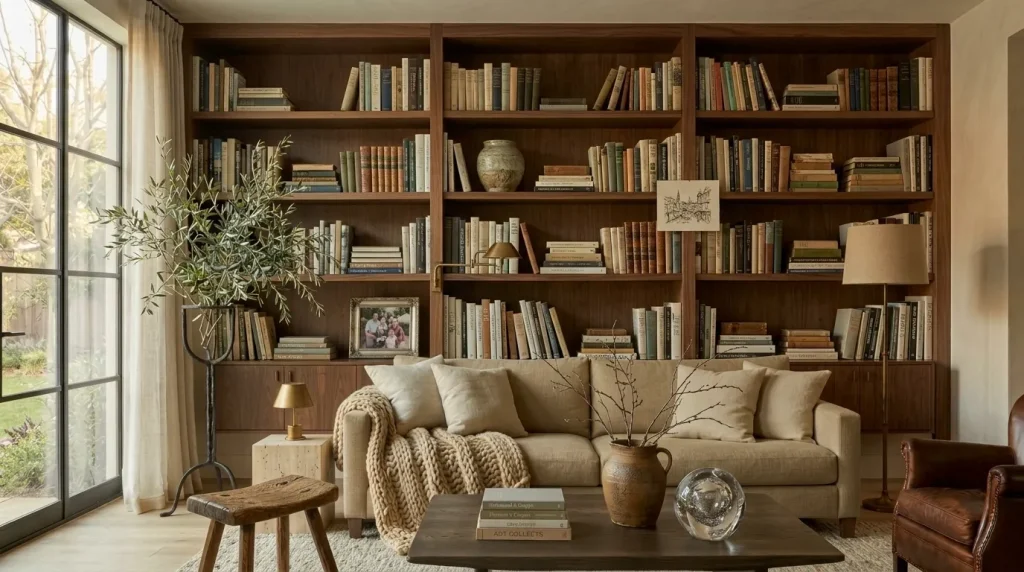
Idea 10: Style with books you actually read
Books bring color, scale, typography, and evidence of real life into a living room.
Use some upright and some stacked horizontally. Add one ceramic object, small artwork, photograph, or lamp rather than placing a decorative object between every book.
The wider 2026 shift toward personality-led rooms is encouraging visible collections, vintage objects, and items that tell a story rather than perfectly empty surfaces.
And keep the book spines visible. Turning books backward just to maintain a beige palette removes much of what makes them interesting.
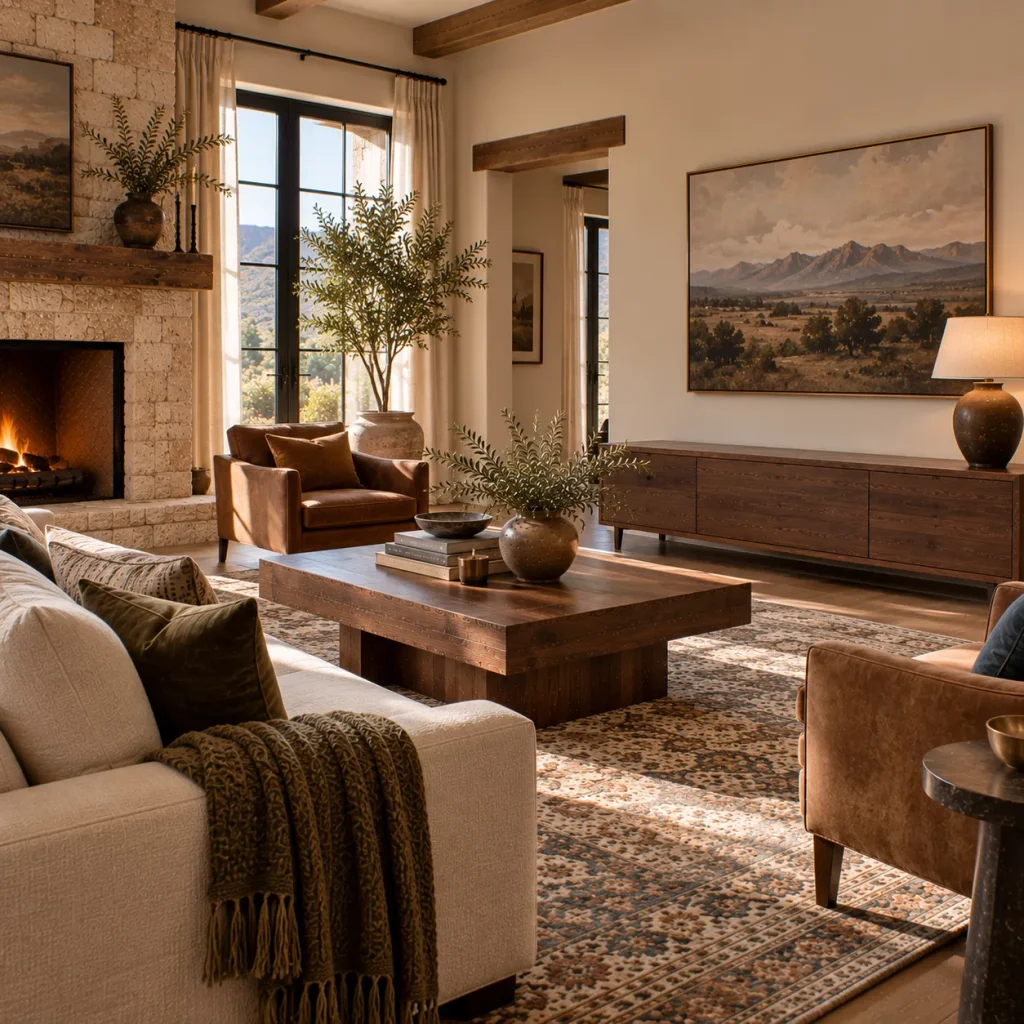
Idea 11: Create one intentionally quiet surface
An aesthetic room does not need decor everywhere.
If the coffee table is layered with books and pottery, keep the media console simpler. If built-ins contain a lot of books and art, leave the side table almost empty.
This contrast gives the eye somewhere to rest.
It also keeps the room from drifting into accidental maximalism. Current interiors may be more expressive, but the most successful layered rooms still use editing and visual hierarchy.
Use lighting to change how the whole room feels
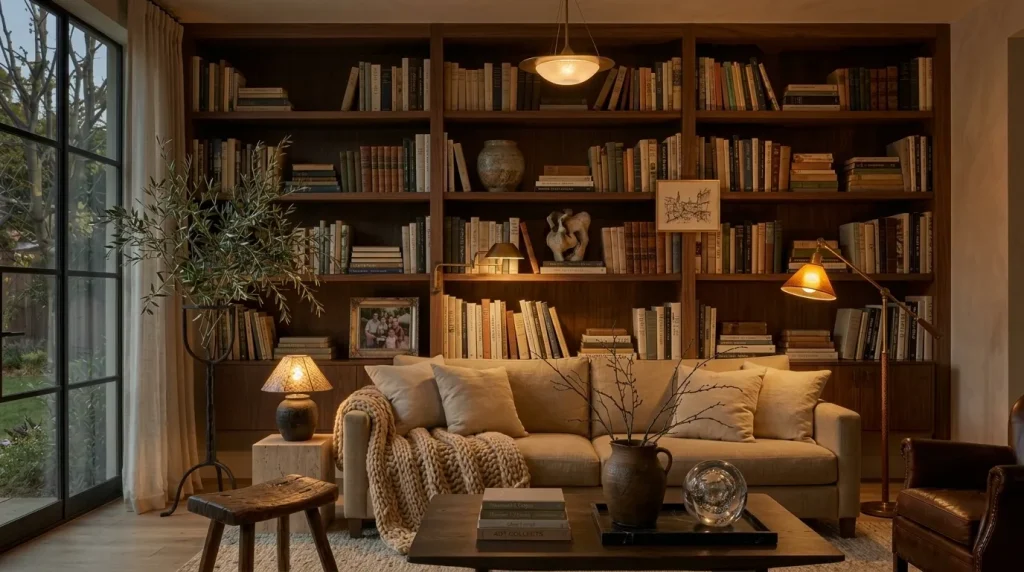
Idea 12: Create three levels of light
Lighting is often the missing layer in otherwise attractive living rooms.
Use overhead lighting for general illumination, then add a floor lamp around seating height and a smaller table or console lamp below that.
The room becomes much softer at night because light arrives from several directions. This layered approach is also central to our contemporary living room tips.
Sculptural lighting remains an important 2026 direction, with designers favoring larger profiles, organic forms, handcrafted finishes, alabaster, verdigris, and more asymmetrical placement.
Choose one fixture to be visually strong. The others can support it.
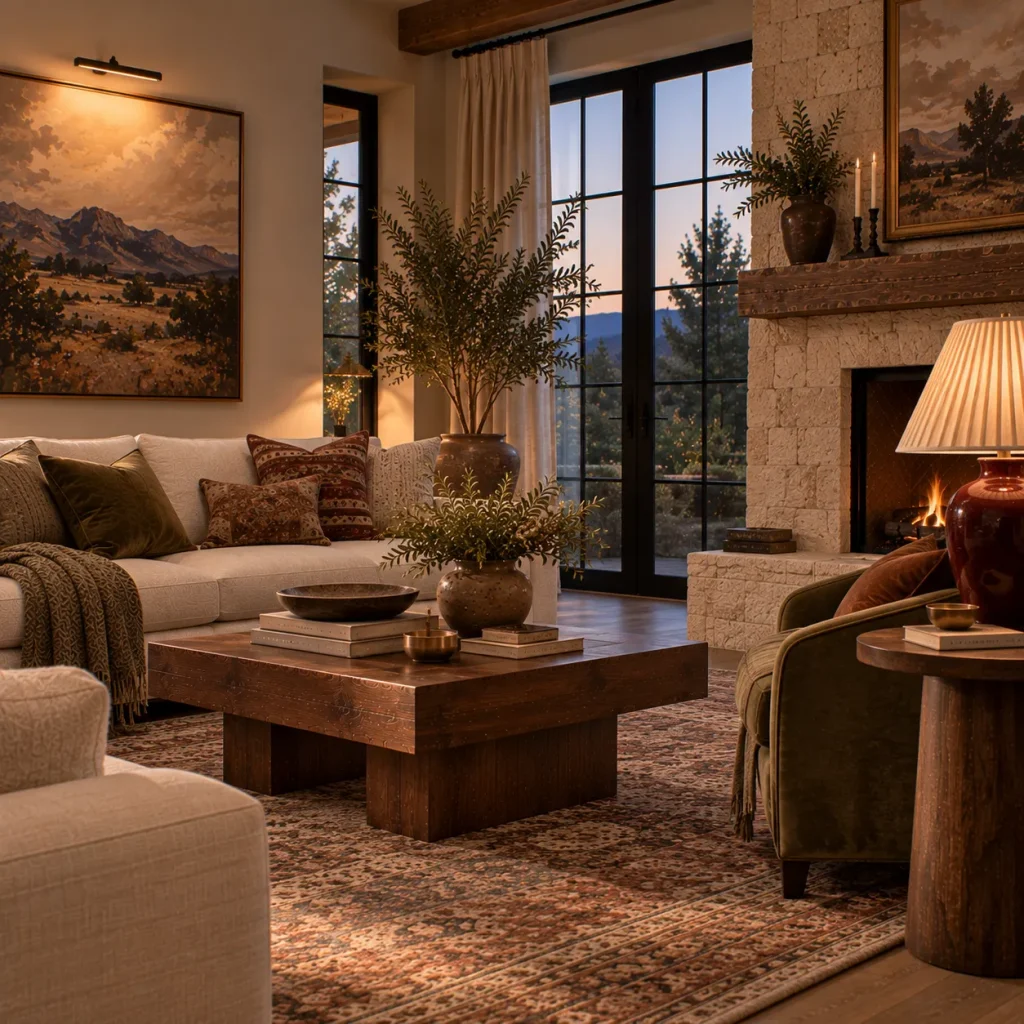
Idea 13: Use one lamp as decor
A lamp can provide shape, material, and color even when it is switched off.
Try a burgundy ceramic base, pleated fabric shade, dark bronze floor lamp, paper lantern, aged brass light, or sculptural glass piece.
Place it somewhere useful, such as beside a reading chair or on a console.
A beautiful lamp sitting where nobody needs light becomes decoration first and lighting second. The strongest choices do both jobs.
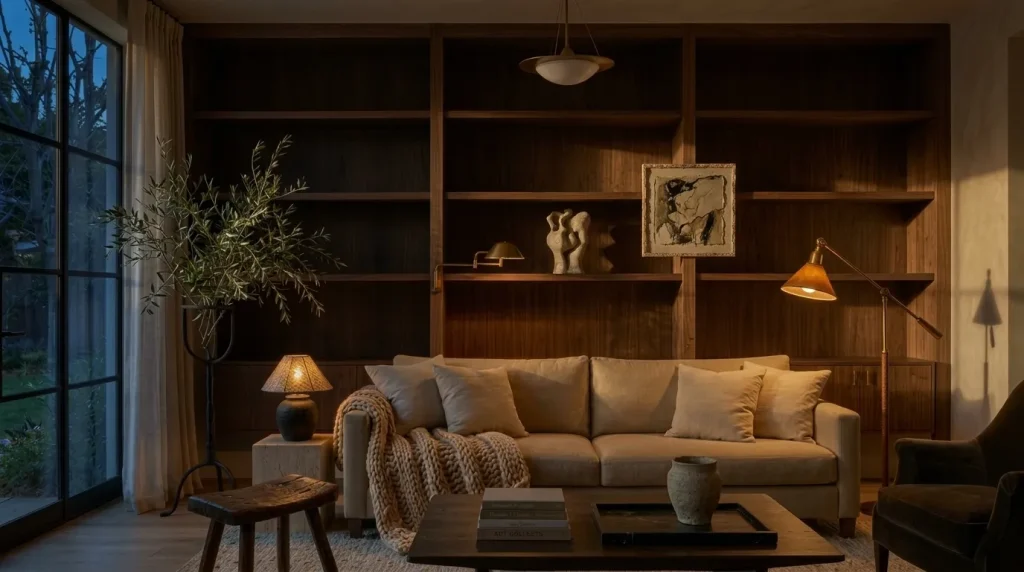
Idea 14: Let evening lighting expose texture
The best evening light should reveal your materials rather than flatten them.
Position a lamp close enough to cast light across plaster, wood grain, linen, stone, or artwork. Side lighting produces more shadow and depth than one bright fixture directly overhead.
This is particularly effective if your living room uses warm neutrals or darker colors.
A walnut cabinet, velvet chair, or textured wall can look far richer under low directional light than beneath a cool ceiling fixture.
A simple formula for an aesthetic living room
| Element | Strong starting point | What often goes wrong |
|---|---|---|
| Palette | 3 main colors plus smaller accents | Random trending colors |
| Furniture | One strong silhouette | Every piece competing |
| Rug | Large enough to connect seating | Small floating rug |
| Materials | Wood, textile, stone, metal | One texture everywhere |
| Art | One large piece or collected grouping | Generic matching print sets |
| Shelves | Books and meaningful objects | Styling every inch |
| Lighting | 3 different heights | One bright ceiling light |
Use the table as a diagnostic tool rather than a shopping checklist. Your room may already have most of what it needs.
What should you skip in an aesthetic living room?
Copying one viral room exactly. Aesthetic interiors are more convincing when they reflect the architecture, daylight, and furniture you actually own.
Too much beige. Neutral does not automatically mean sophisticated. Pale rooms often need darker wood, pattern, art, or stronger color.
Matching furniture sets. The 2026 move toward collected interiors makes identical sofa-and-chair combinations feel increasingly rigid.
Buying decorative clutter for empty shelves. Empty space is not a decorating emergency.
Following every micro-aesthetic at once. Pinterest’s 2026 home predictions range from Cottagecore to Dark Academia to Afrohemian Decor, which shows how varied current visual culture has become. Your living room does not need to contain all of it.
Try this if your living room looks nice but feels boring
Do not replace the sofa.
Photograph the room from the doorway. The camera makes repeated colors and weak contrast surprisingly obvious.
Then make three changes.
Add one darker anchor, such as walnut, chocolate, or deep olive. Replace one generic accessory with something vintage or handmade. Finally, add a lamp at a lower height than your existing lighting.
If the room still feels flat, look at the rug or art before buying smaller decor.
Large visual decisions usually change the atmosphere more effectively than another collection of cushions.
FAQ
What makes a living room look aesthetic?
An aesthetic living room has a clear color relationship, balanced furniture scale, varied materials, useful lighting, and enough personal objects to feel distinctive. Cohesion matters more than following one specific decor style.
What living room aesthetic is popular in 2026?
There is no single dominant look. Current 2026 interiors favor personality, vintage furniture, layered pattern, richer woods, sculptural lighting, mixed materials, and collected rooms over sterile, matching spaces.
How can I make my living room aesthetic on a budget?
Work with the largest pieces you already own. Improve the furniture arrangement, use a properly scaled rug, introduce secondhand art or furniture, change cushion covers, and add a good table or floor lamp before replacing major furniture.
Can a small living room still look aesthetic?
Yes. Use fewer pieces at the correct scale, maintain clear walking routes, and let one or two visual elements lead. A large rug, substantial artwork, and one distinctive chair often work better than filling a small room with many decorative objects.
Build a room that looks like you live there
The strongest 14 aesthetic living room ideas are not really about finding the correct collection of fashionable objects. They are about relationships between color, scale, material, and light.
Start with the largest thing you already like. It might be your sofa, rug, artwork, flooring, or an old wooden cabinet. Let that piece influence the next few decisions instead of starting again from zero.
And leave something imperfect. A stack of books, an aged table, an unusual lamp, or artwork that does not perfectly match can keep the room from looking over-designed.
A good living room should photograph beautifully, but it should make even more sense once someone sits down in it.