10 Moody Neutral Living Room Tips for Rich, Restful Rooms
A neutral living room does not have to be pale, and a moody room does not have to be black. Some of the most inviting spaces sit between those two extremes, using chocolate, mushroom, smoky olive, taupe, charcoal-brown, warm stone, and aged wood to create depth without relying on bright color.
These 10 moody neutral living room tips are especially relevant in 2026, as designers move away from cold gray and bland beige toward warmer, earthier neutrals. Current color reporting shows chocolate brown, umber, smoky olive, mushroom, and richer clay tones being treated almost like neutrals because they add atmosphere while remaining easy to layer.
The trick is contrast. A successful moody neutral room needs variation in value, texture, material, and light.
Choose neutrals with enough depth
Tip 1: Start with mushroom, smoky taupe, or warm stone
The easiest mistake is assuming neutral means beige.
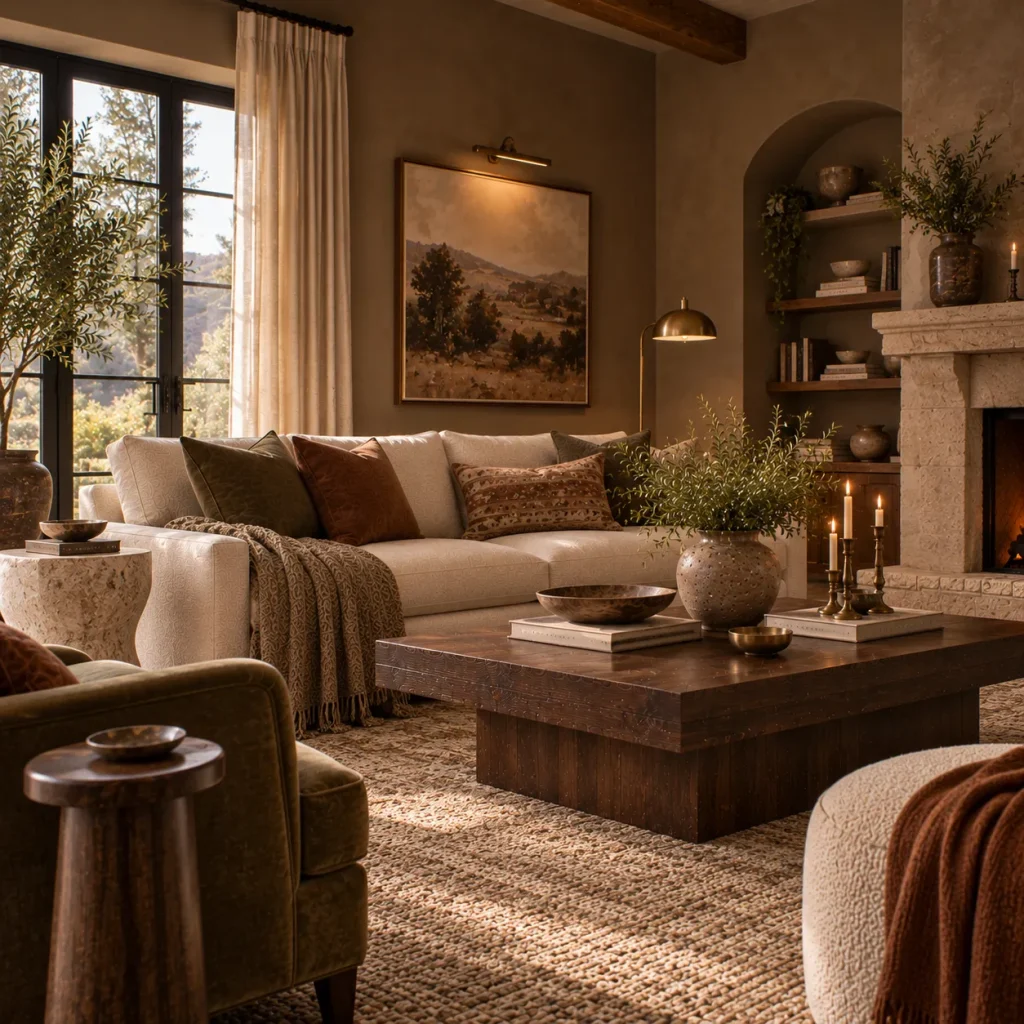
Instead, look for colors with more complicated undertones. Mushroom can lean brown, gray, or slightly mauve. Smoky taupe carries more depth than standard beige. Warm stone may contain subtle red, yellow, or brown notes that work beautifully beside wood.
These shades make an excellent wall foundation because they can handle darker furniture without creating harsh contrast.
Cool gray and blue-based white are losing ground in 2026 living rooms, while warmer neutrals with earthy undertones are becoming more prominent.
Always sample paint beside the flooring, sofa, and curtains. For a deeper dive into warm neutral shades, see our guide to warm neutral paint colors for a cozy living room. A taupe that looks warm on a paint card can suddenly appear gray against honey oak.
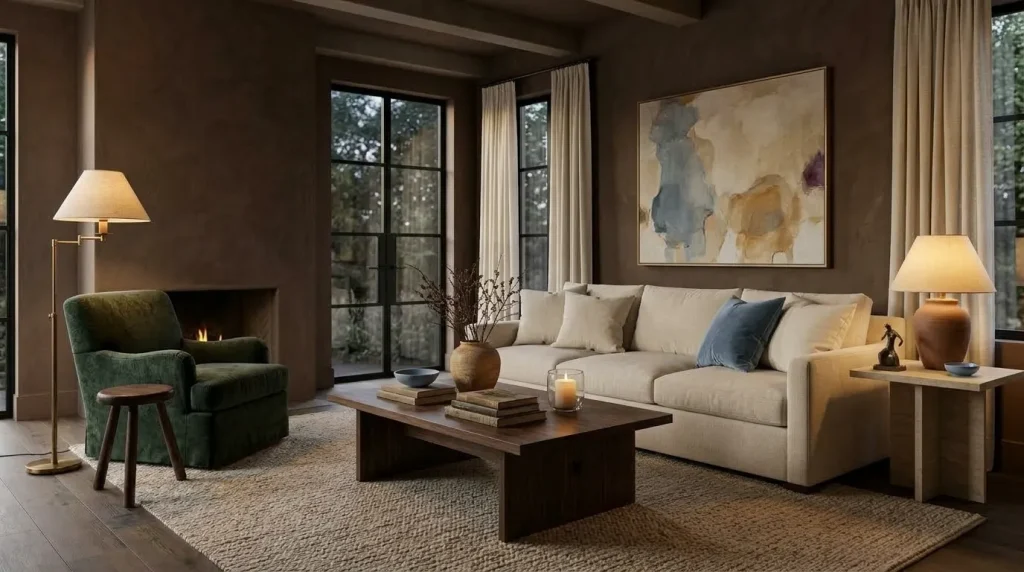
Tip 2: Treat chocolate brown as a neutral
Chocolate is one of the most useful colors for creating a moody living room without making it feel severe.
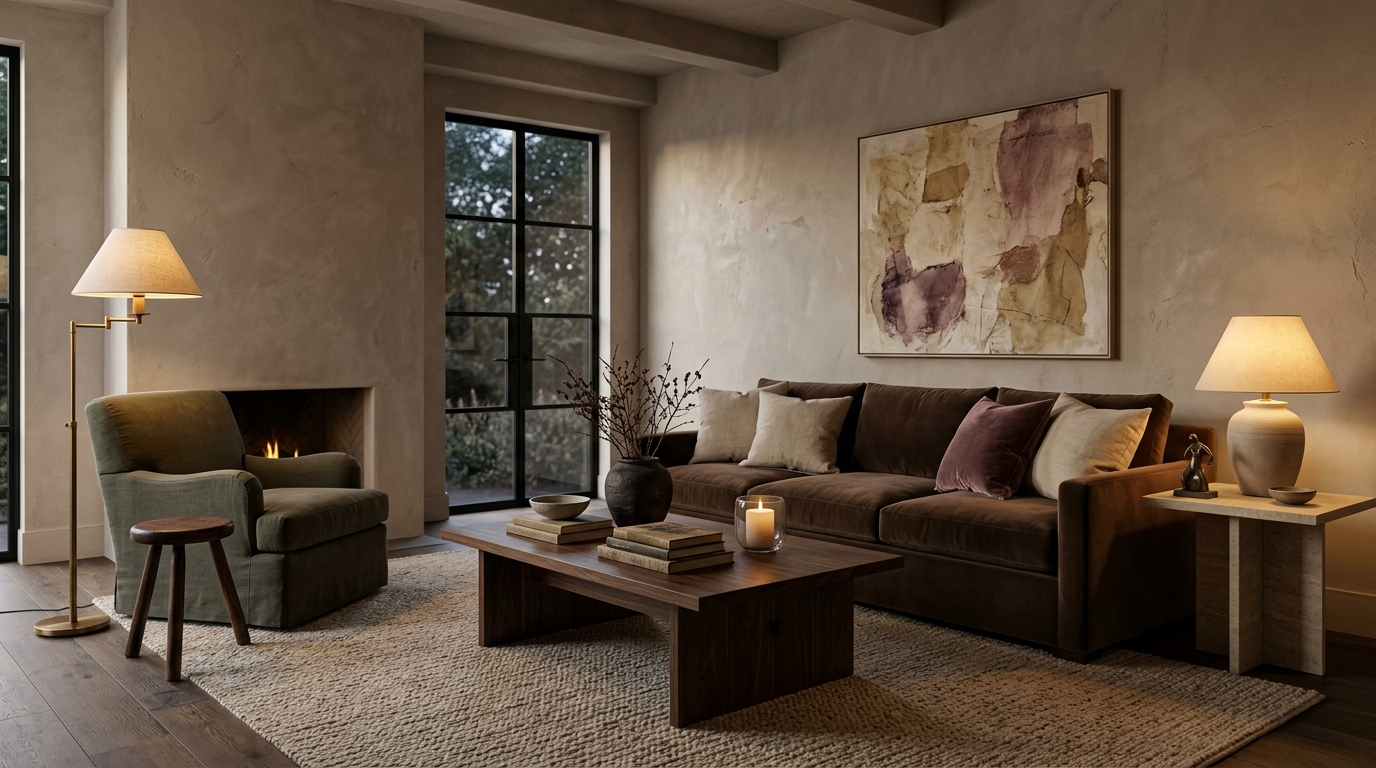
Use it on walls, upholstery, cabinetry, curtains, or a substantial wood piece. Unlike black, chocolate contains warmth. It pairs naturally with cream, dusty blue, and walnut tones.
Benjamin Moore’s 2026 Color of the Year, Silhouette AF-655, reflects this shift. The company describes it as a blend of rich espresso with charcoal undertones.
A chocolate wall behind a cream sofa creates stronger depth than another pale beige wall, yet the palette can still read as neutral.
And do not automatically add black accents afterward. Dark brown may already provide all the contrast the room needs.
Add muted color without losing the neutral mood
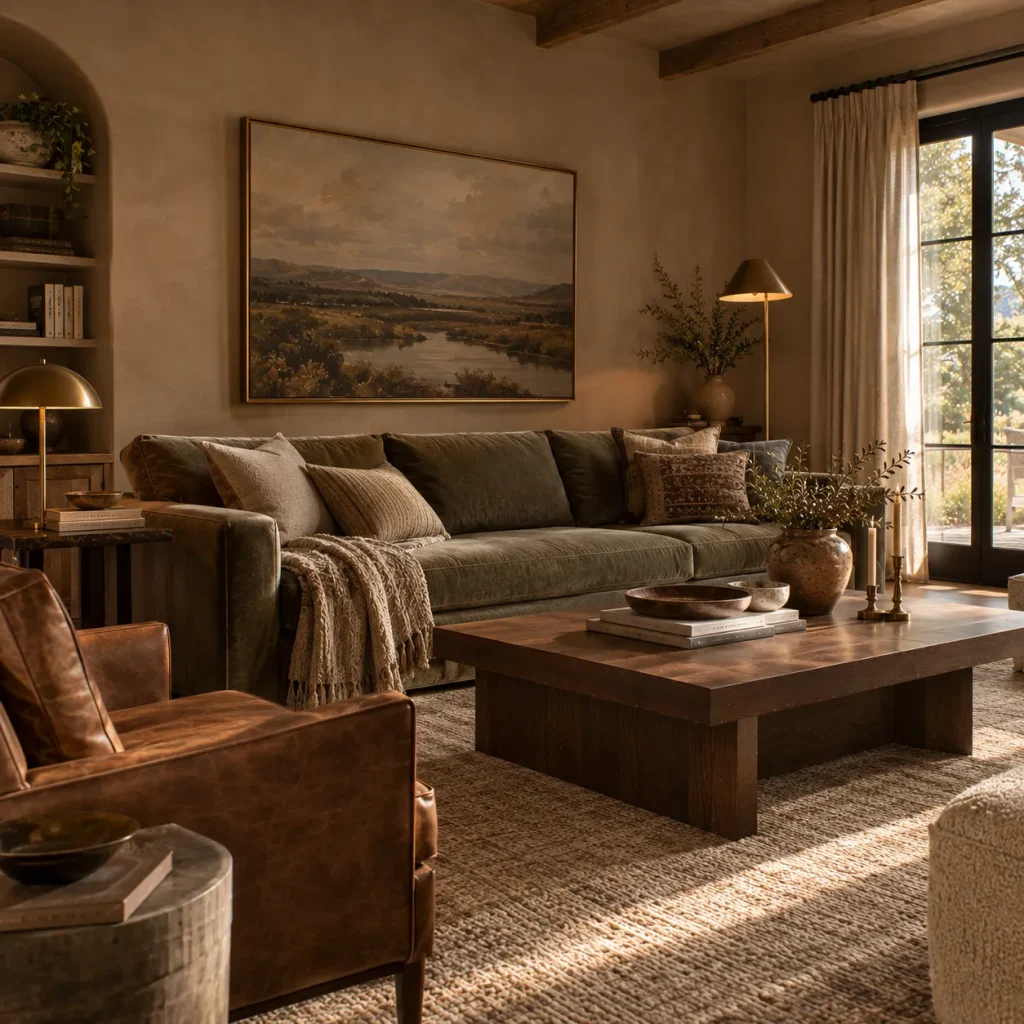
Tip 3: Bring in smoky olive or muddy green
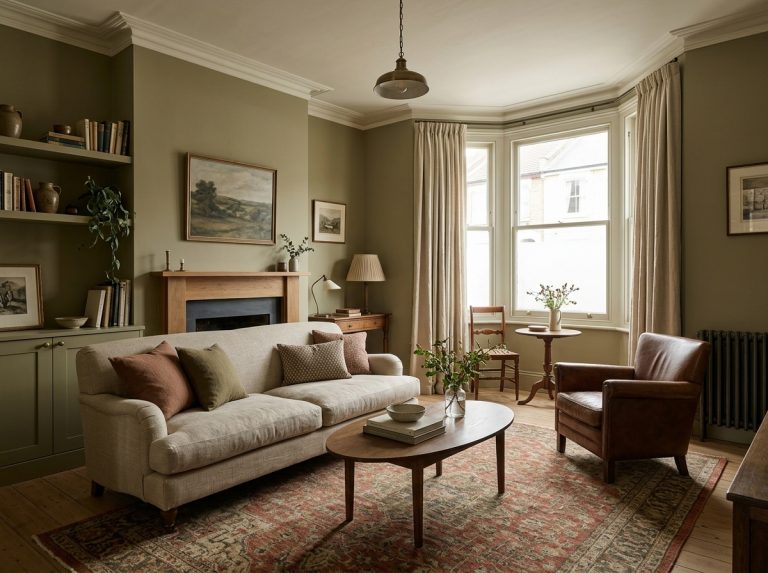
Green can function almost like a neutral when it contains enough gray, brown, or yellow.
Smoky olive looks particularly good with walnut, tobacco leather, parchment, aged brass, and oatmeal wool. It introduces a natural note without making the room feel noticeably colorful.
Homes & Gardens’ 2026 living-room color coverage identifies muddy greens and rich olive as current favorites because they provide depth while remaining soothing and easy to layer. If you love a darker, richer palette, our dark boho living room decor ideas explore a similar mood with a bohemian twist.
Try olive on a sofa, painted cabinet, or curtains if you do not want it on every wall. The undertone and saturation matter more than the color family.
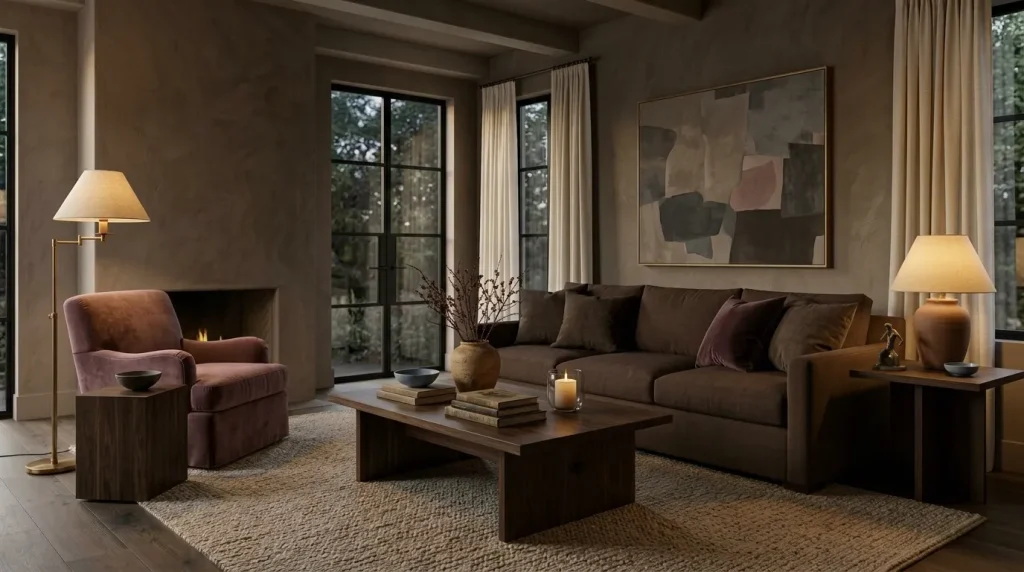
Tip 4: Use dusty rose or muted plum as supporting neutrals
A muted pink with brown or gray undertones can feel surprisingly restrained beside darker furniture.
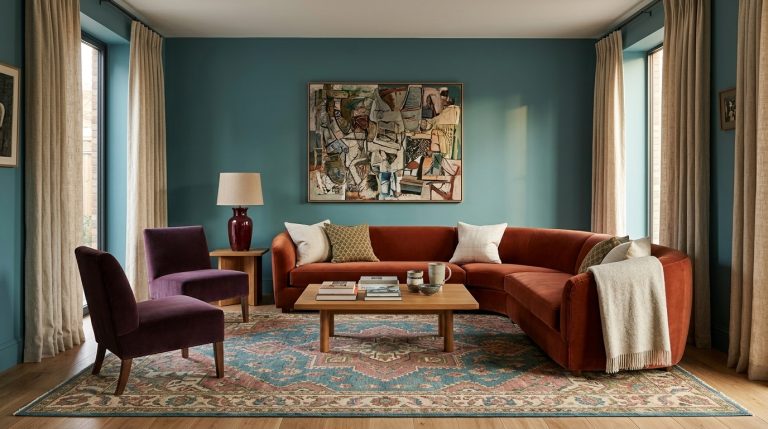
Try dusty rose cushions against chocolate upholstery, a faded plum chair beside walnut, or a plaster-pink wall with dark timber.
These colors are especially useful when a brown-heavy room starts looking too masculine or heavy.
Benjamin Moore’s 2026 palette combines its deep Silhouette brown with shades such as Batik, a dusty rose-violet, and First Crush, a warm beige with a blush undertone.
The relationship works because the colors share warmth.
Avoid sugary pinks if the goal is moody neutrality. Look for shades with clay, brown, violet, or gray in them.
Let natural materials provide the variation
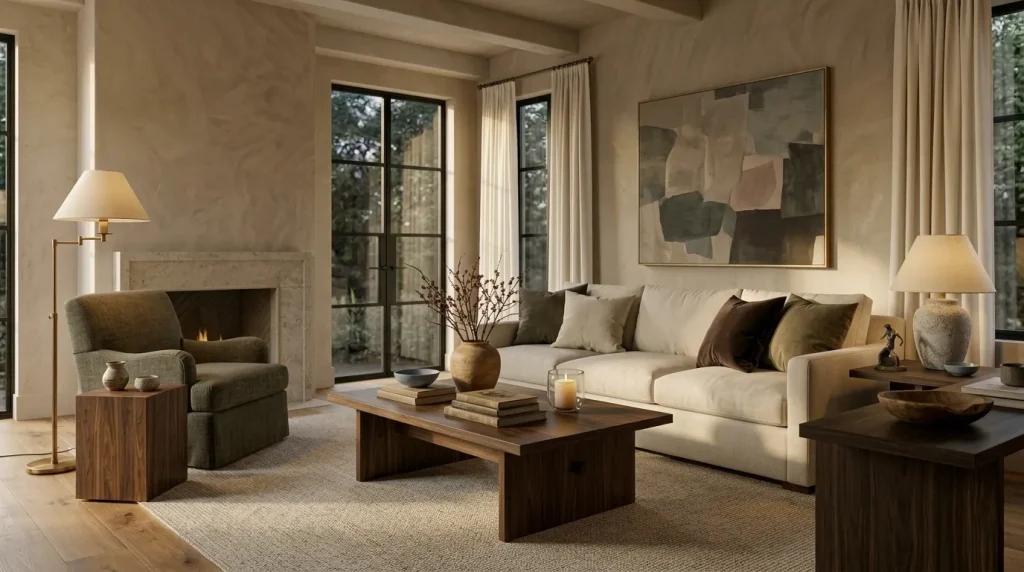
Tip 5: Use dark wood instead of relying on dark paint
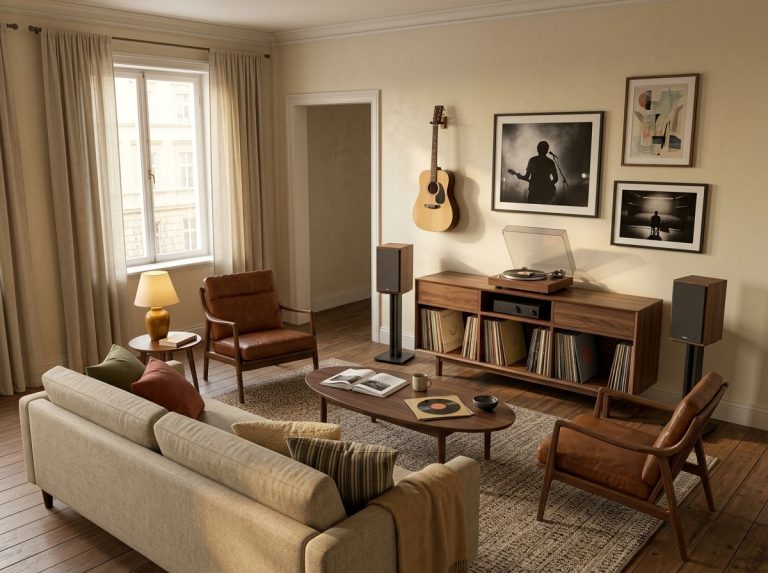
Walnut, espresso oak, mahogany, and dark-stained timber can give a neutral room considerable depth without a single dark wall. A single walnut console can anchor a pale room. So might an antique brown-wood chest between two pale chairs.
Dark woods are gaining strength in 2026 interiors, particularly when paired with plaster, stone, and softer fabrics — a pairing we also cover in our organic modern living room ideas.
Do not match every wood finish.
I once worked through an illustrative neutral room where the flooring, console, coffee table, and side tables were all nearly identical medium oak. The room looked coordinated but strangely flat. Changing only the coffee table to walnut made the other pieces more noticeable.
Variation often creates more cohesion than exact matching.
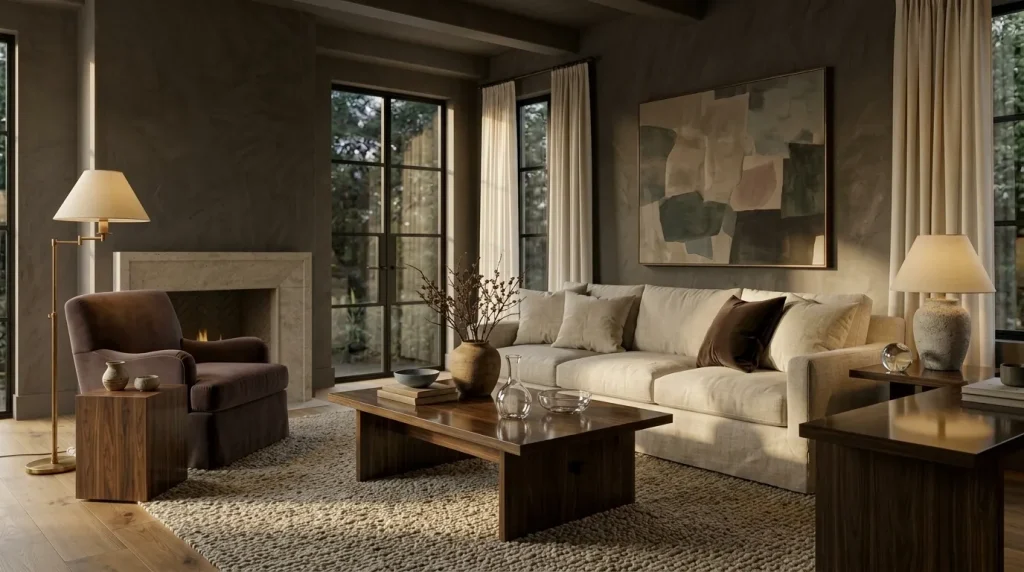
Tip 6: Combine rough and smooth textures
Moody neutral rooms depend heavily on material because color differences can be subtle.
Try a linen sofa with a velvet chair. Put honed limestone beside walnut. Combine wool with aged brass, rough ceramic with smooth glass, or matte plaster with polished wood.
This type of contrast is appearing strongly in current 2026 interiors. Designers are deliberately placing raw and refined materials beside each other. If your cushions, throws, and rugs are all beige and softly textured, adding another boucle object is unlikely to help. A smooth dark wood table may be the better choice.
Build depth through furniture rather than clutter
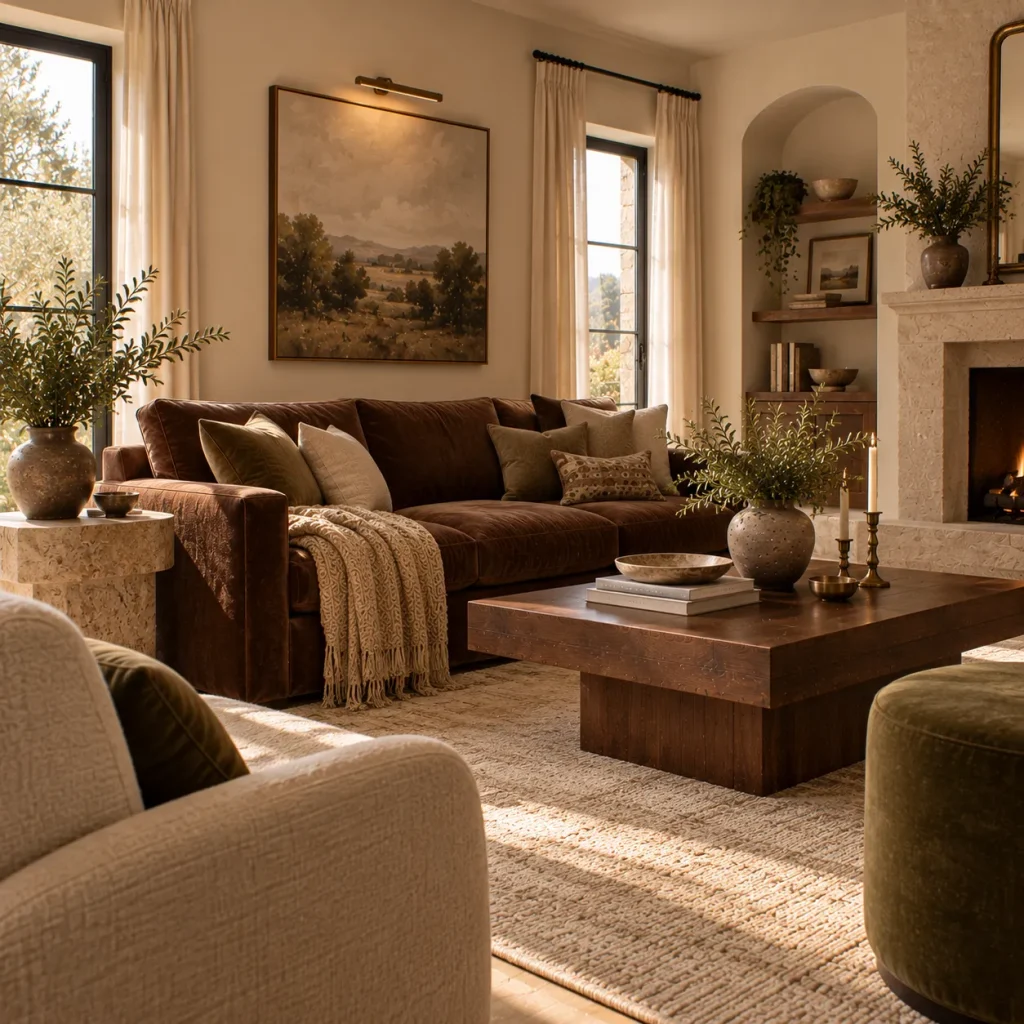
Tip 7: Choose one substantial dark anchor
A moody room needs visual weight, but it does not need dark objects everywhere.
Choose one large anchor. That could be a chocolate sofa, walnut cabinet, dark rug, smoky olive armchair, or espresso-colored built-in.
Then let some surrounding pieces become lighter.
For example: Chocolate sofa + parchment walls + oatmeal rug + walnut side table.
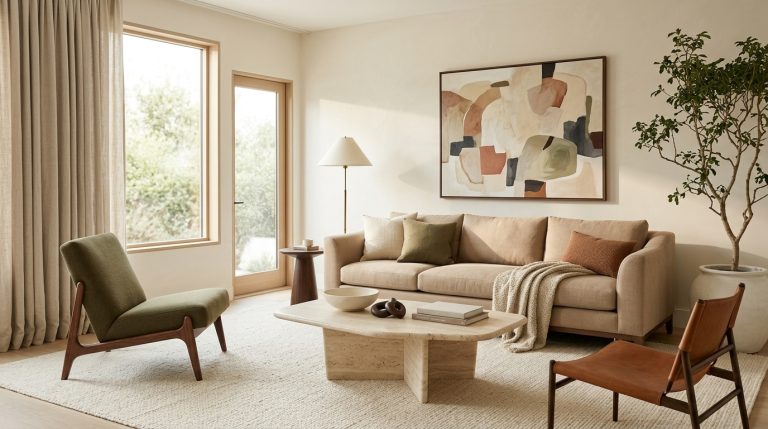
Or: Mushroom walls + cream sofa + dark wood coffee table + olive chair.
This creates a clear hierarchy.
Scattering ten small dark accessories around a pale room rarely produces the same effect. It can make the scheme look spotted rather than grounded. For more ways to anchor a room with one bold statement, browse our black accent living room ideas.
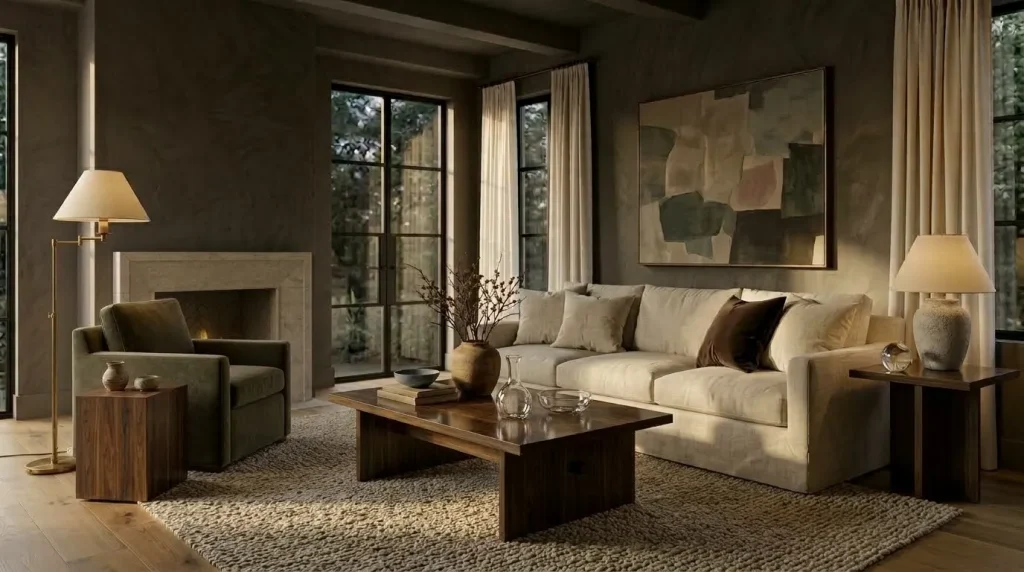
Tip 8: Keep furniture silhouettes simple
A moody palette already creates atmosphere. The furniture does not all need dramatic shapes too.
Use a comfortable sofa with clean lines so the room feels calm when every piece does not compete.
For many medium living rooms, a sofa around 78 to 90 inches wide is substantial enough to anchor the seating without becoming excessive. Leave roughly 14 to 18 inches between the sofa and coffee table where the layout permits.
And avoid buying tiny furniture simply because the walls are dark. Correctly scaled pieces usually make a room feel more intentional.
Use lighting to reveal the darker palette
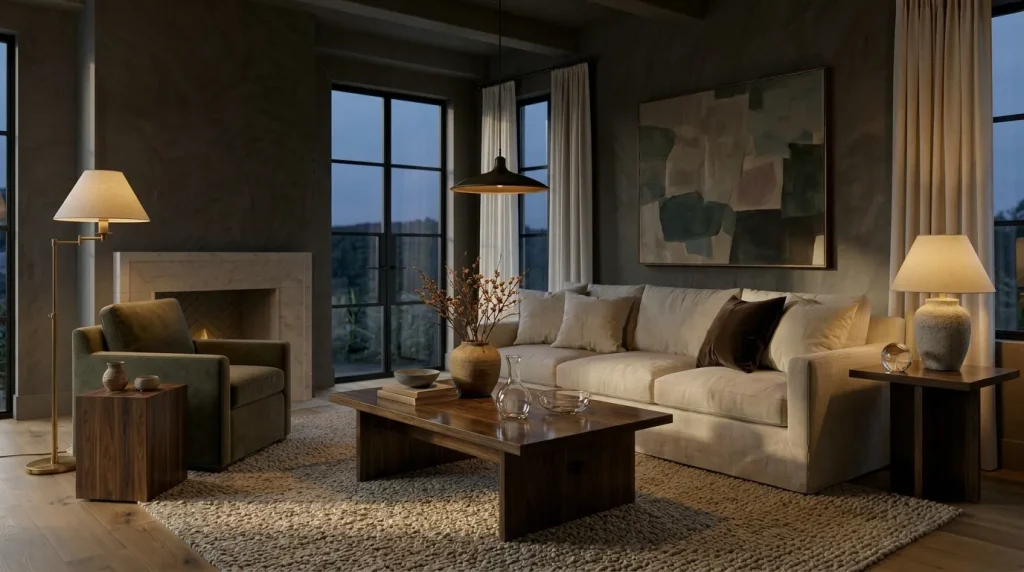
Tip 9: Create several pools of warm light
This may be the most important practical advice in the article.
Deep taupes, browns, and olives can look beautiful during daylight and nearly disappear under poor evening lighting.
Use at least two or three light sources at different heights. A ceramic table lamp, floor lamp beside the sofa, and pendant or wall light can give darker surfaces dimension.
Lighting itself is becoming more sculptural in 2026, with designers favoring larger forms, handcrafted finishes, alabaster, verdigris, and asymmetric arrangements. Do not rely on one bright ceiling fixture. It can flatten the very texture and shadow that make this palette appealing.
Keep the room personal
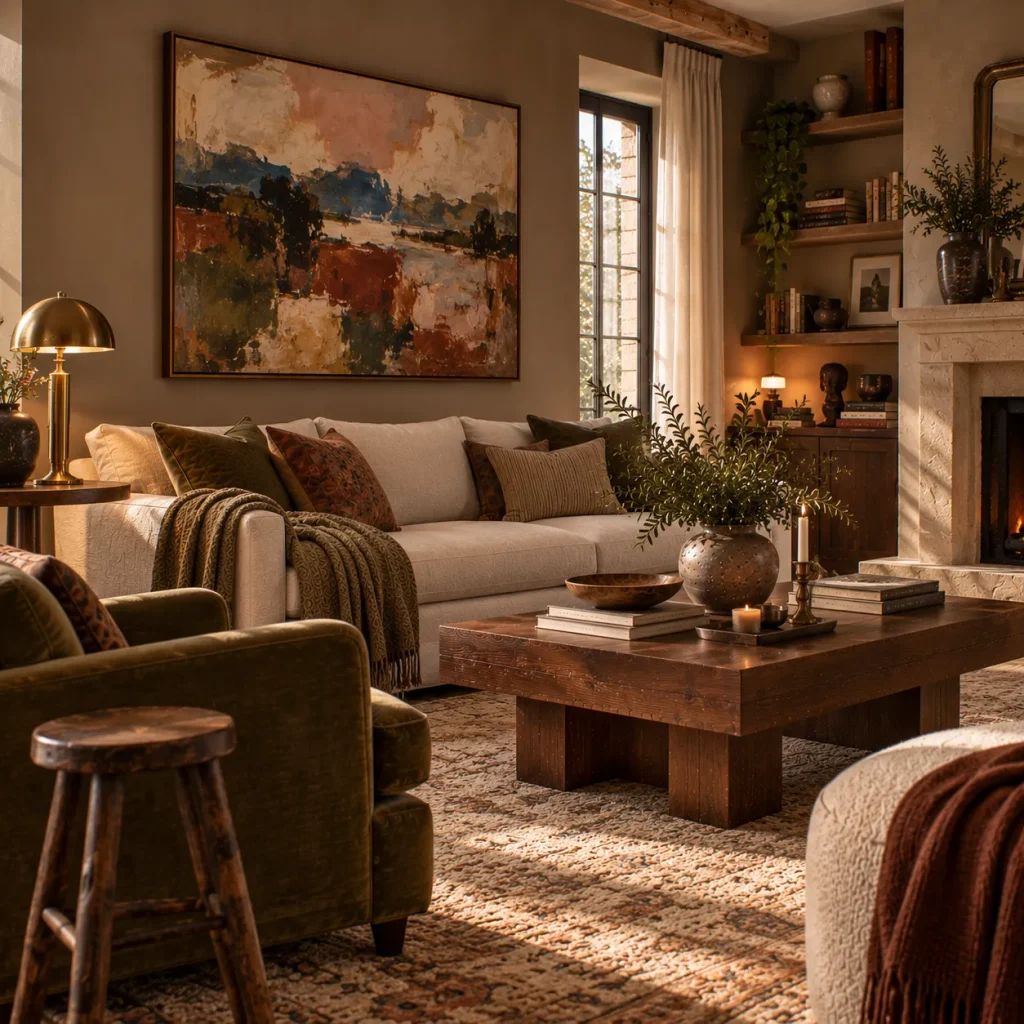
Tip 10: Add art, books, and vintage pieces with real contrast
Moody neutral should not become another version of sterile minimalism.
Hang art containing cream, rust, dusty blue, black, olive, or faded pink. Keep books visible. Add one old wooden stool, vintage lamp, ceramic vessel, or framed photograph.
Current 2026 living-room design is moving toward more individual spaces, with vintage furniture, expressive art, and collected pieces replacing neutral rooms designed mainly to look safe.
You do not need many objects.
One large artwork above a sofa may be enough. A useful starting point is around two-thirds of the sofa’s width, depending on the wall and artwork.
Leave some empty surface around stronger objects. Moody does not mean crowded.
A practical moody neutral palette guide
| Color | Best role | Pair it with |
|---|---|---|
| Chocolate brown | Walls, sofa, cabinetry | Cream, dusty blue, walnut |
| Mushroom | Main wall color | Espresso, olive, parchment |
| Smoky olive | Upholstery, curtains | Tobacco, brass, warm ivory |
| Warm charcoal | Smaller architectural areas | Oak, linen, clay |
| Dusty rose | Accent upholstery, textiles | Chocolate, walnut, cream |
| Muted plum | Chair, art, small wall area | Mushroom, brass, dark wood |
| Parchment | Light balancing neutral | Nearly every deeper shade |
The palette does not need all seven colors. Two deeper neutrals, one lighter neutral, and natural materials are usually enough.
What should you skip in a moody neutral living room?
Flat gray everywhere. Cool gray walls with gray upholstery and gray flooring can make a room feel lifeless. Warmer brown, mushroom, olive, or clay undertones usually provide more depth.
Dark walls plus dark furniture plus a dark rug. Moody still needs value contrast. Give the eye at least one substantial lighter surface.
Too much boucle. Soft texture is useful, but repeating the same nubby fabric across chairs, cushions, and ottomans makes the room visually flat.
Tiny black accents. Black frames, handles, lamps, try chocolate brown, warm charcoal, or espresso instead.
Poor evening lighting. A deep palette cannot work properly if the room becomes a dark box after sunset.
Try this if your living room is already beige
Keep the beige sofa if it is comfortable.
First, add one dark anchor. A walnut coffee table, chocolate chair, or espresso media cabinet can immediately change the balance.
Next, introduce a smoky color such as olive, dusty rose, or muted plum through one medium-sized element.
Then add a lamp with warm, low-level light.
Finally, remove several beige accessories. Do not automatically replace them.
This is often the missing step. A beige room may need stronger contrast and fewer neutral objects, not more layers of cream cushions and baskets.
FAQ
What colors make a living room feel moody but still neutral?
Chocolate brown, mushroom, smoky taupe, warm charcoal, muddy olive, espresso, clay, and muted plum can all behave like moody neutrals. Balance them with parchment, oatmeal, warm ivory, or lighter natural materials.
Are dark neutral living rooms popular in 2026?
Yes. Current 2026 color reporting shows a strong movement toward chocolate brown, smoky olive, earthy taupes, rich clay, and other deeper nature-inspired neutrals.
Can moody neutral colors work in a small living room?
Yes. Small rooms do not automatically need white walls. A continuous medium or dark neutral can make the room feel cohesive, provided you preserve contrast through upholstery, flooring, art, and layered lighting.
What wood tones work best with moody neutral decor?
Walnut, medium oak, espresso oak, mahogany, and warm dark stains work particularly well. Mixing compatible warm wood tones often looks more natural than matching every piece.
Build the mood through contrast, not darkness
The best 10 moody neutral living room tips all come back to one idea. A room becomes atmospheric because of relationships between light and dark, soft and hard, matte and reflective, not because every surface is deep brown.
Start with the largest neutral you already own, whether that is the sofa, rug, flooring, or wall color. Then decide what it lacks. Pale rooms usually need weight. Very dark rooms usually need something lighter or more reflective.
If you make one change today, introduce a single deeper neutral in a meaningful size rather than buying several small accessories. Chocolate, mushroom, smoky olive, walnut, and warm stone can create plenty of drama while keeping the room comfortable enough for everyday life.