35 Music-Themed Living Room Decor Ideas for Stylish, Soulful Spaces
A music-themed living room should feel like a home that belongs to someone who genuinely loves music, not a room filled with generic treble-clef signs and novelty decorations. The strongest spaces use real instruments, record collections, listening equipment, artwork and furniture to express that passion in a way that still feels comfortable and beautifully designed.
That might mean a warm vinyl-listening corner with a turntable on a walnut credenza, an acoustic guitar mounted above a sideboard, a dark rock-inspired lounge with leather seating and concert photography, or a compact apartment where one carefully planned music nook creates the entire mood. The theme can be subtle or expressive, but it should always feel personal.
The most successful music-themed living room decor ideas also consider how the room actually functions. Records need suitable storage. Guitars need secure mounting. Speakers need sensible placement. Cables need organisation. Seating should make listening comfortable, and the equipment should feel connected to the rest of the furniture instead of looking temporarily placed in the room.
These 35 ideas explore very different ways to build a music-inspired living room, from minimalist guitar displays and cozy record-player corners to vintage hi-fi lounges, soft-grunge spaces and eclectic record-collector interiors.
Make Real Instruments Part of the Decor
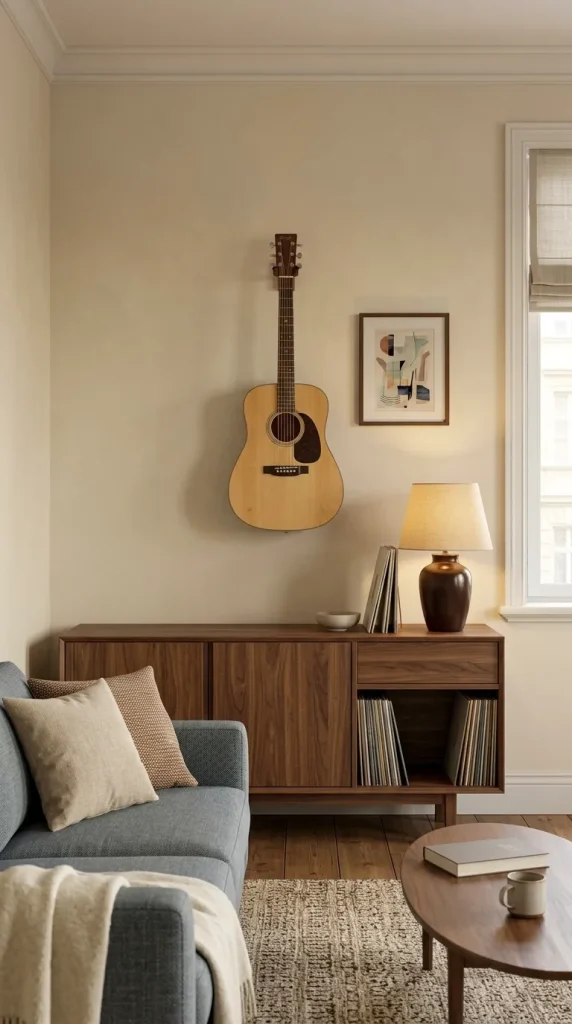
1. Mount One Acoustic Guitar as a Sculptural Focal Point
A single acoustic guitar can create a strong musical identity without overwhelming the room. Mount it above a low sideboard, console or compact record cabinet so the instrument becomes part of a complete wall composition rather than appearing to float randomly on an empty surface.
Warm timber furniture works especially well because it relates naturally to the guitar’s wood tones. Add one lamp, a few records or a small framed print nearby, then keep the rest of the wall relatively quiet. The strongest result feels more like an art display than instrument storage.
If the guitar is regularly played, place it where it can be removed easily and use mounting hardware appropriate for the instrument and wall construction.
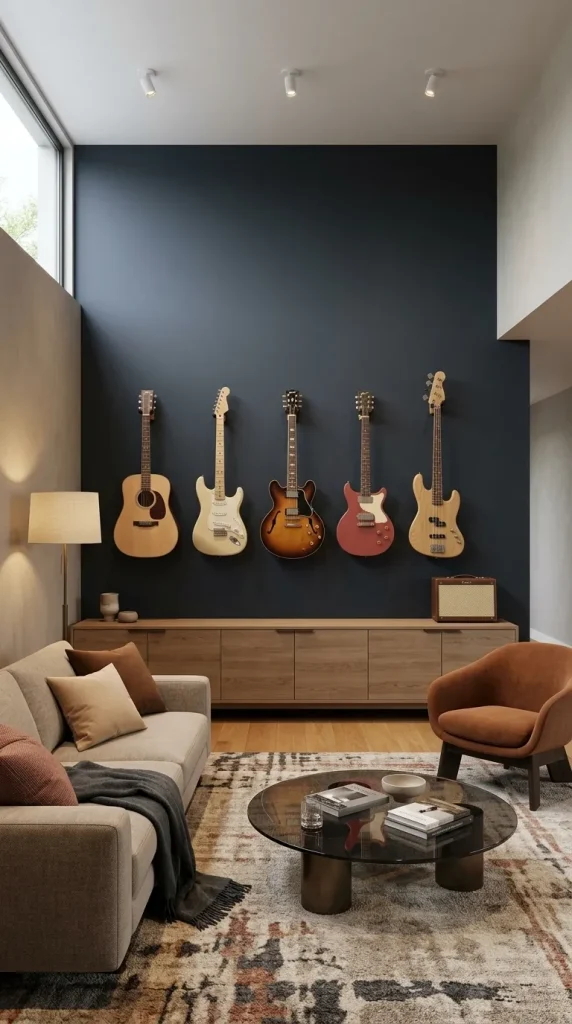
2. Create a Full Guitar Wall for a Stronger Studio-Inspired Look
A collection of guitars can become one of the most dramatic features in a music-themed living room. Electric, acoustic and bass guitars arranged together can create a studio-like wall without requiring additional decorative art.
Spacing is crucial. Keep the instruments aligned through either their centres or top edges so the arrangement feels intentional. A dark painted wall can make lighter guitars stand out, while a warm neutral wall works beautifully with natural-wood acoustics.
Place a low cabinet or bench beneath the display to visually anchor it. The room will usually need little additional wall decoration once the guitars become the dominant focal point.
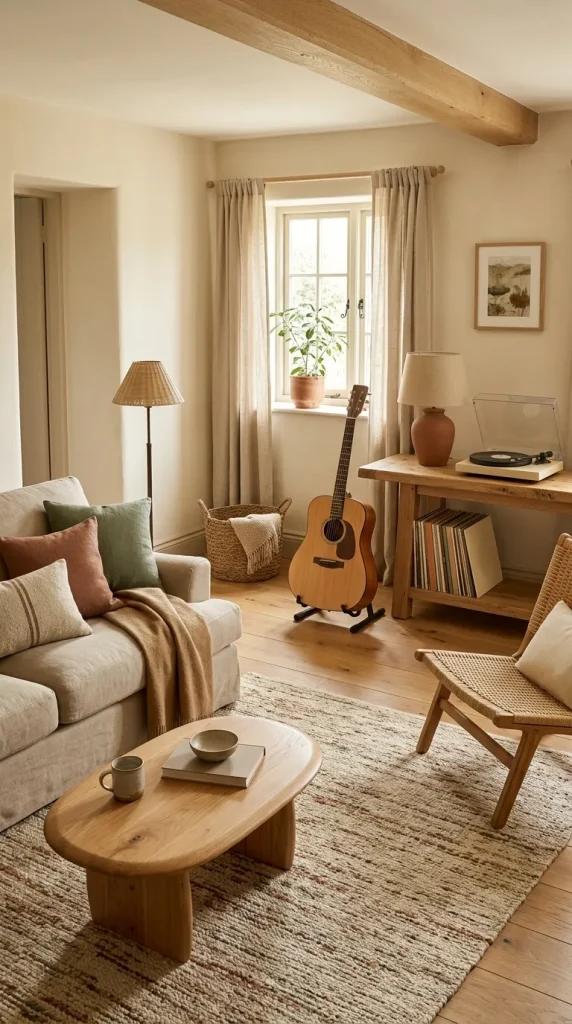
3. Pair an Acoustic Guitar With Rustic Wood and Woven Textures
For a softer folk-inspired living room, combine an acoustic guitar with warm timber, woven fabrics and natural textures. This direction feels very different from a darker rock room because the instrument becomes part of a relaxed, handcrafted atmosphere.
Try a natural-wood guitar beside an oak console, linen sofa and woven rug. Add warm lamps and perhaps a small record collection to reinforce the sense that music is part of everyday life.
The palette can stay earthy and understated. Cream, rust, muted green and warm brown allow the instrument’s wood grain to remain one of the most attractive details in the room.
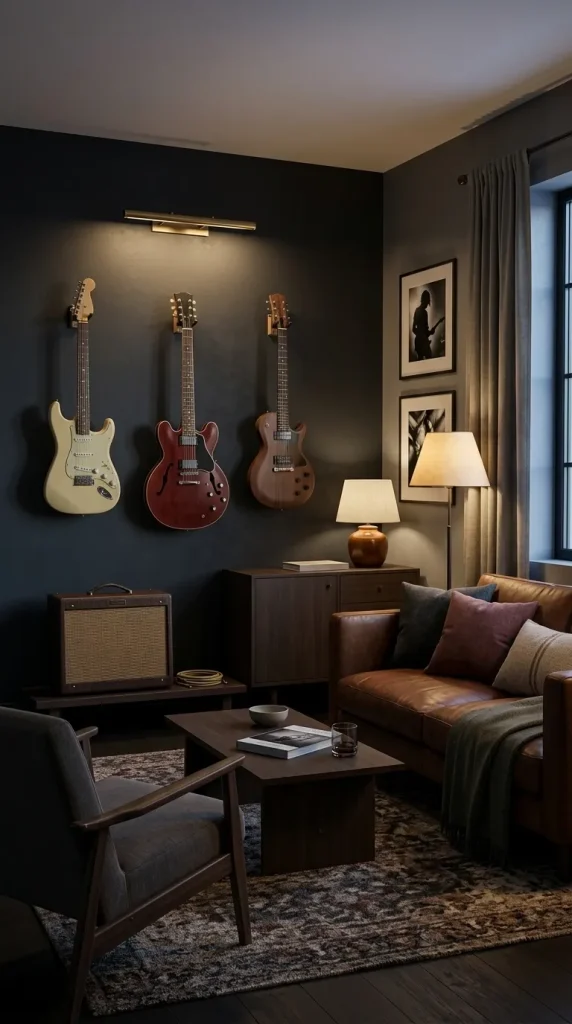
4. Use Electric Guitars Against a Dark Rock-Inspired Wall
Electric guitars feel especially dramatic against charcoal, deep navy or near-black walls. Combine them with a leather sofa, dark timber and framed concert photography for a living room that feels connected to rock music without becoming a merchandise display.
The guitars should remain the strongest decorative objects. If several instruments are mounted together, keep nearby artwork restrained and use simple frames. A vintage amplifier placed below the display can add another authentic reference, provided it has a genuine role in the room.
Warm lighting is important because it prevents the darker palette and technical equipment from feeling cold.
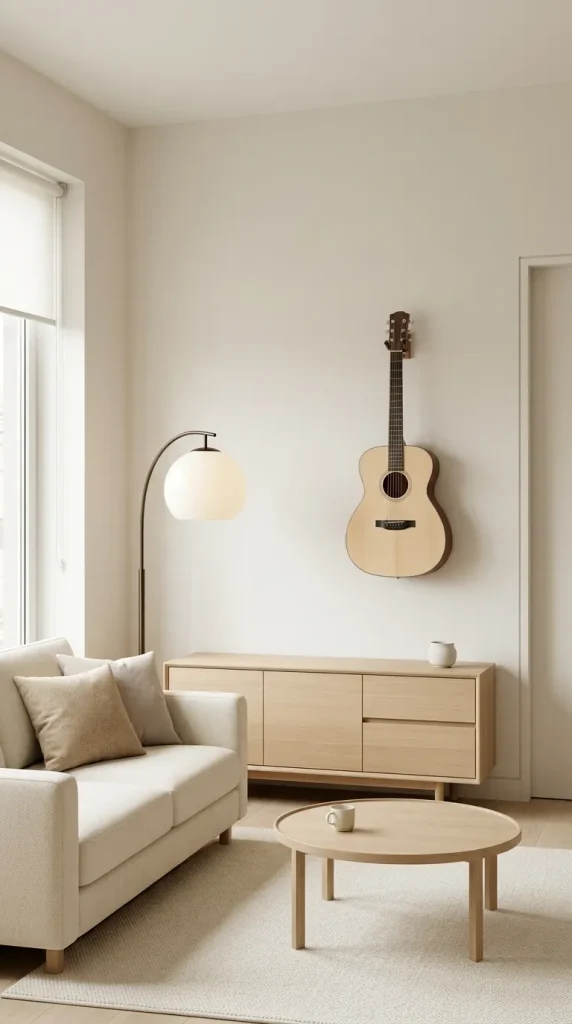
5. Make One Guitar the Only Musical Element in a Minimalist Room
A music-themed living room does not need a large collection. One beautifully displayed guitar can communicate the entire theme in a minimalist interior.
Mount it on a clean wall above a simple bench or narrow cabinet, then keep the surrounding furniture restrained. A cream sofa, pale-oak table and one sculptural floor lamp can create a calm background that allows the guitar’s shape to stand out.
This approach is especially useful in smaller homes where a large collection would make the room feel busy. The instrument becomes both functional and decorative without requiring additional music-themed accessories.
Build a Vinyl Listening Area That Feels Like Part of the Living Room
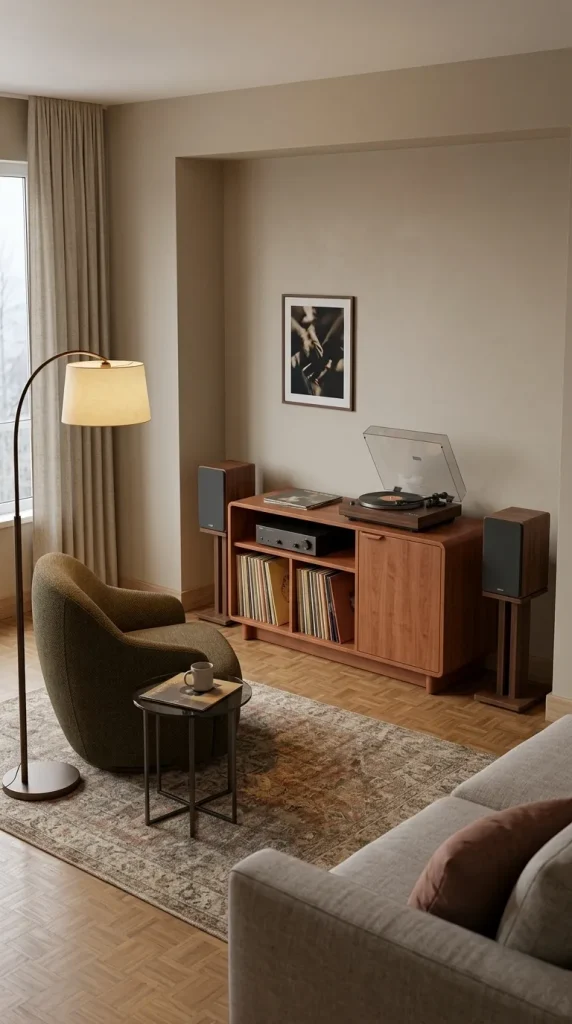
6. Create a Cozy Record-Player Corner With a Low Cabinet
A record-player corner can become one of the most inviting parts of the living room when it combines music equipment with comfortable furniture and warm lighting.
Place the turntable on a low cabinet with record storage underneath, then add a nearby armchair and floor lamp. The listening corner should feel like a destination rather than simply a surface where audio equipment happens to sit.
Keep frequently played records within easy reach. A small framed print or favourite album cover above the cabinet can establish the visual identity without turning the wall into a large display.
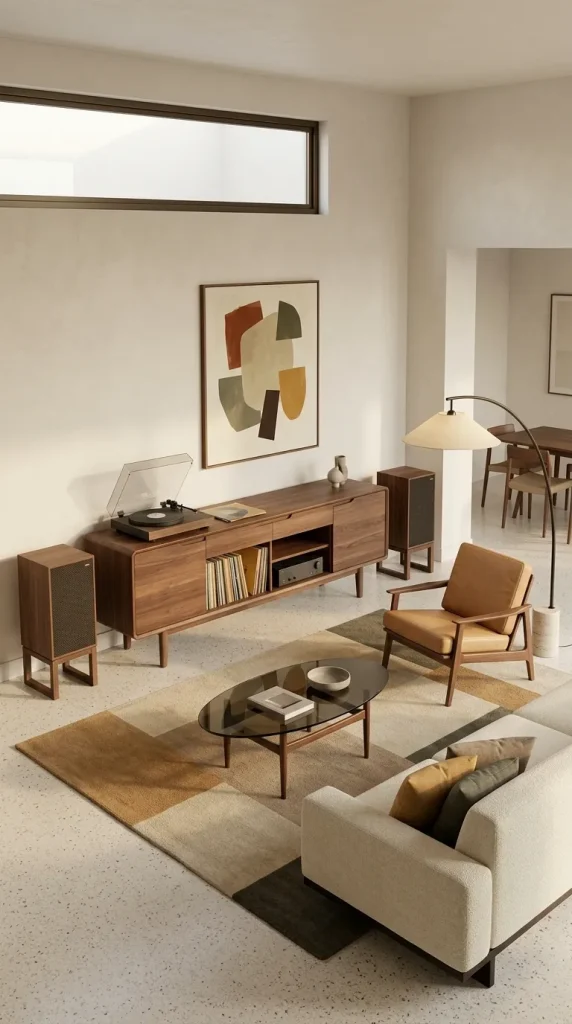
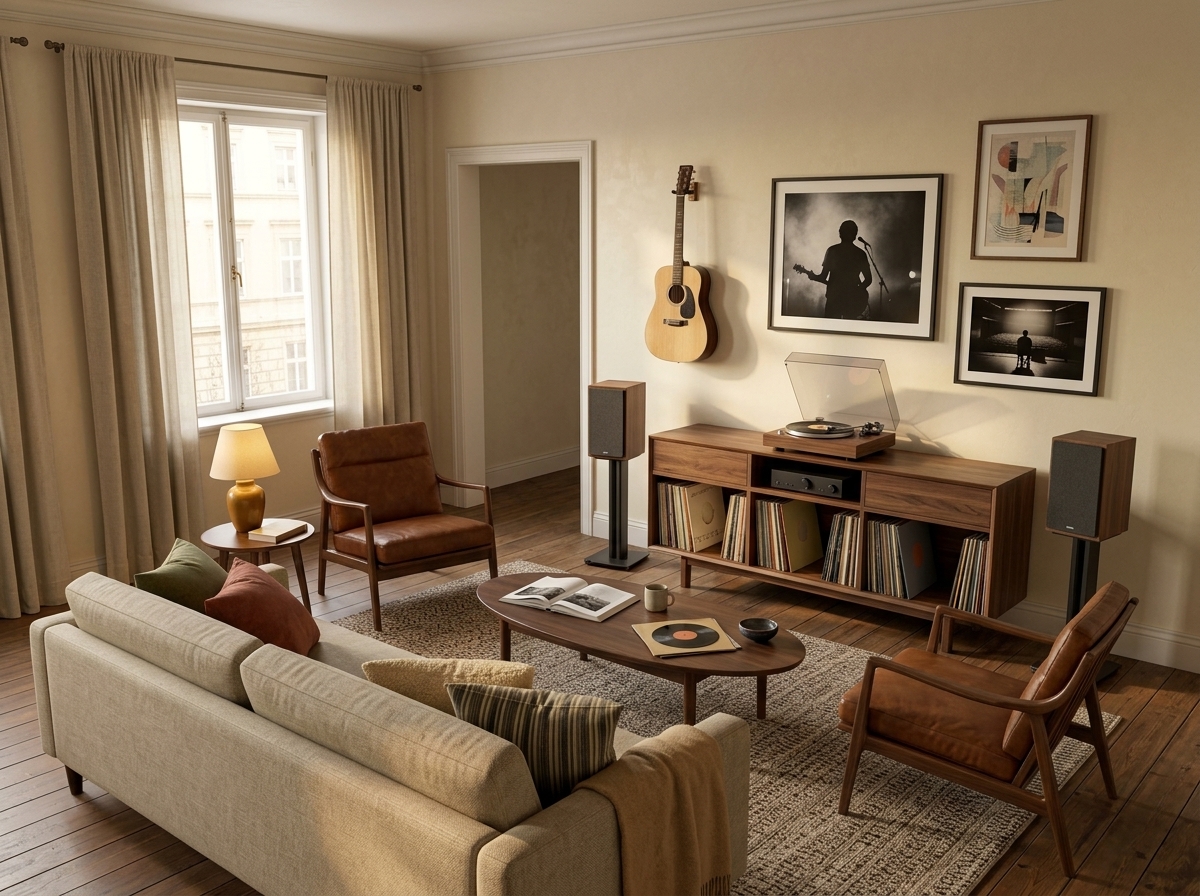
7. Put a Turntable on a Mid-Century Walnut Credenza
Few furniture pieces suit a record collection as naturally as a low walnut credenza. Its proportions, warm timber and generous storage make it ideal for a mid-century-inspired music living room.
Position the turntable on one end and leave enough clear surface around it for practical use. Store records vertically inside or beneath the cabinet, then introduce classic speakers, a low lounge chair and a warm rug.
A sculptural lamp and abstract artwork can complete the room without competing with the equipment. This concept should feel architectural and polished rather than like a generic retro theme.
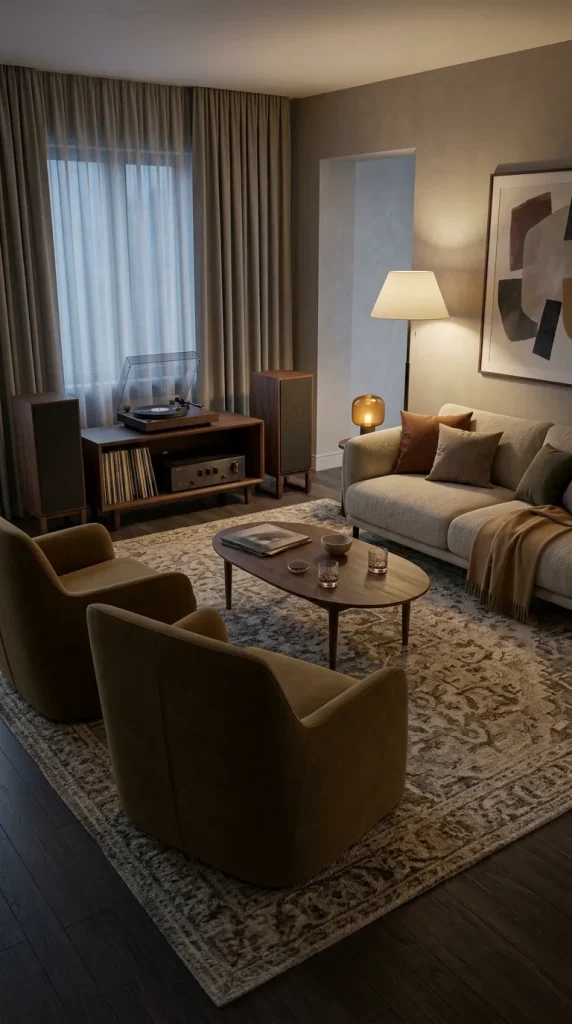
8. Design a Dedicated Vinyl Listening Lounge
If listening to records is one of the main ways you use the living room, allow the furniture arrangement to support it.
Position the seating in relation to the speakers rather than simply arranging everything around the television. A deep sofa or comfortable pair of chairs can face the hi-fi setup, while a low table provides space for album sleeves and drinks.
Use curtains, rugs and upholstered furniture to soften the room visually and acoustically. The overall atmosphere should encourage longer listening sessions rather than making the record player feel like a decorative prop.
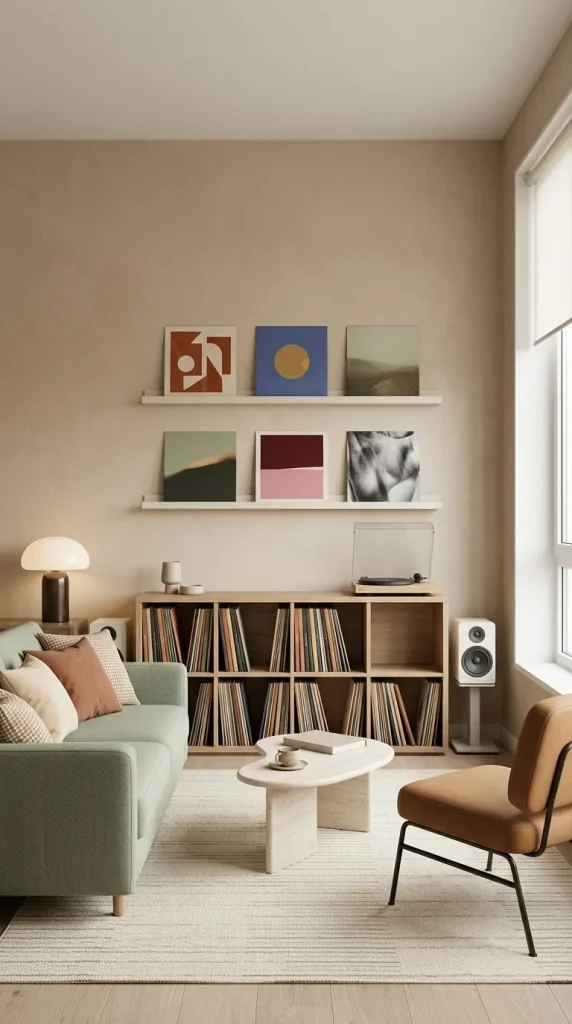
9. Create Front-Facing Album Displays Above Record Storage
Displaying several favourite album covers can bring colour and personality to the wall while keeping the larger record collection properly stored below.
Use picture ledges or suitable front-facing holders above a low record cabinet. Three to six covers are often enough to make an impact without turning the living room into a shop display.
Change the selected albums periodically. That simple rotation keeps the wall dynamic while allowing the collection itself to become part of the decoration.
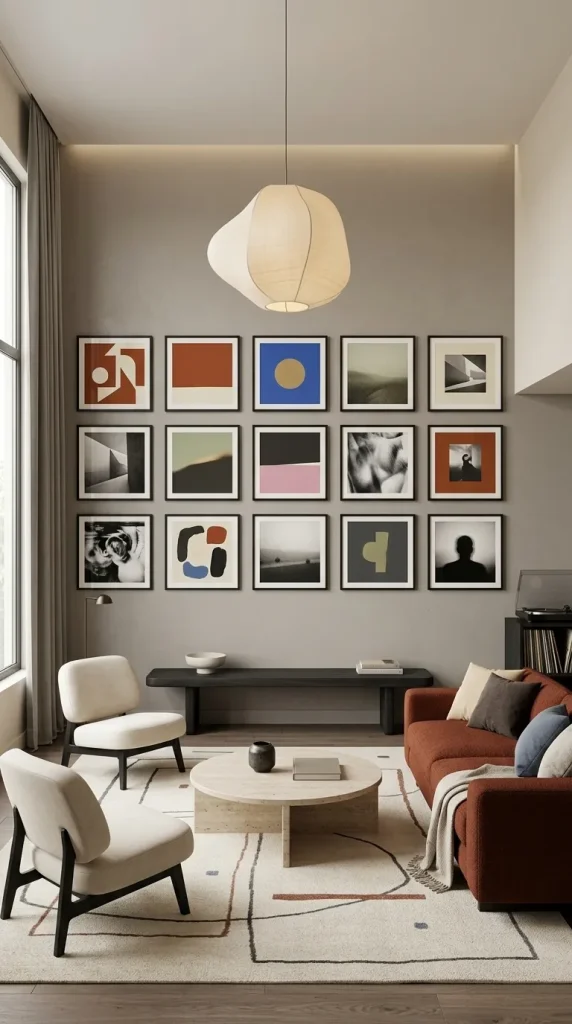
10. Build a Large Album-Cover Gallery Wall
A larger living room wall can support an organised grid of favourite album covers, particularly when the collection has strong graphic artwork.
Keep the frames or display method consistent so the different cover designs feel connected. Black frames can create a cleaner modern appearance, while natural timber suits a warmer retro interior.
Allow the gallery to become the main artwork in the room. If the wall already contains album art, avoid adding guitars, signs and additional poster collections beside it unless the intention is deliberately maximalist.
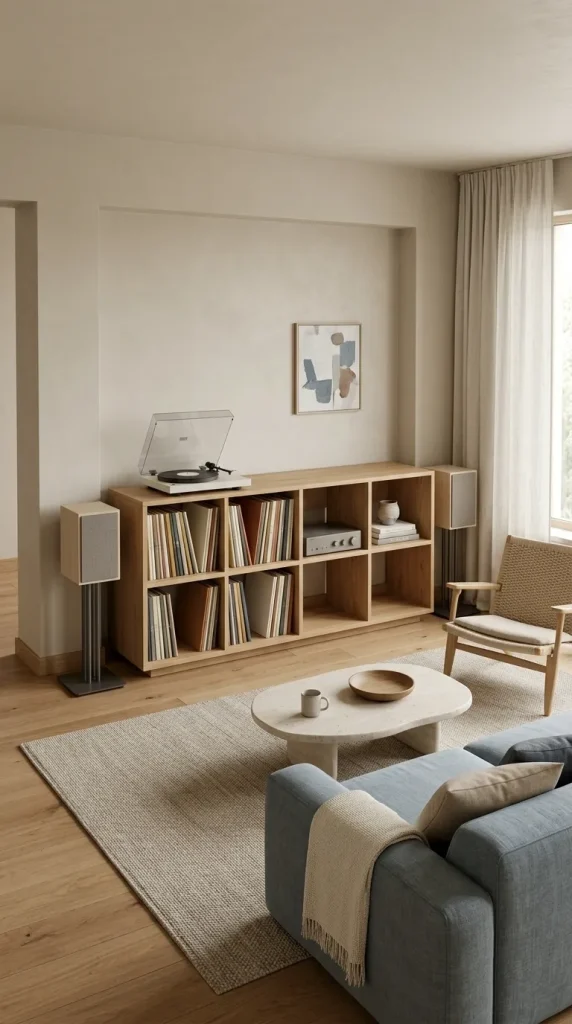
11. Store Vinyl in Open Cube Shelving
Cube shelving can provide accessible record storage while giving the collection a strong visual presence.
Keep records vertical and avoid packing the compartments so tightly that browsing becomes difficult. Use a few sections for equipment or selected decorative objects, but allow the majority of the shelving to remain functional.
A long, low configuration beneath the turntable often feels more appropriate in a living room than a tall wall of records because it maintains a comfortable relationship with the seating and surrounding furniture.
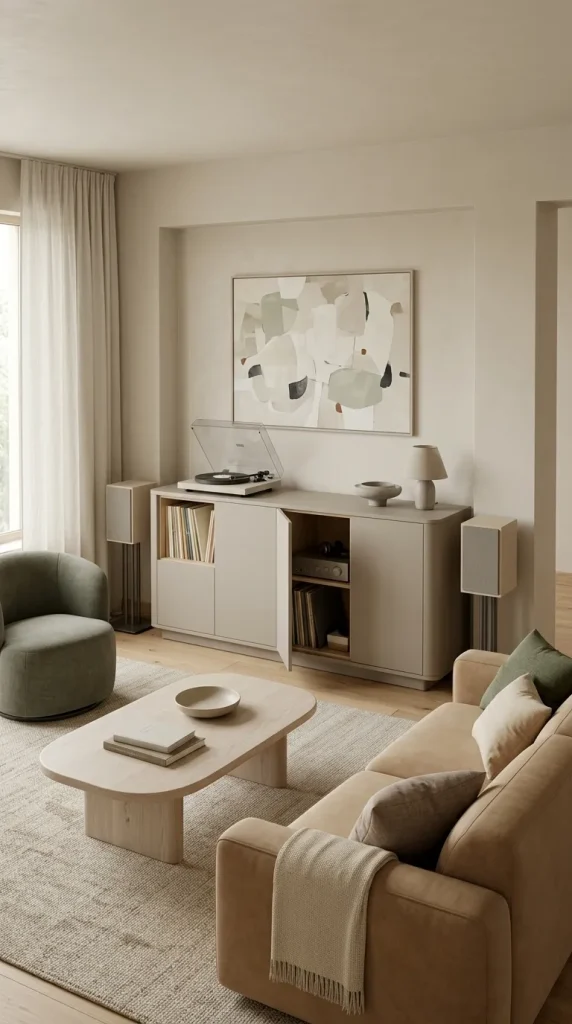
12. Hide Part of the Record Collection Behind Cabinet Doors
Not every music-themed living room needs to display its complete collection. A cabinet that combines open and closed storage can create a calmer appearance while keeping records accessible.
Use the open section for regularly played albums and the turntable, then store less frequently used records or accessories behind doors. This approach works especially well in minimalist and shared family living rooms.
The room still communicates a love of music, but the visual focus remains on a curated part of the collection rather than its total quantity.
Give Stereo and Hi-Fi Equipment a Design Role
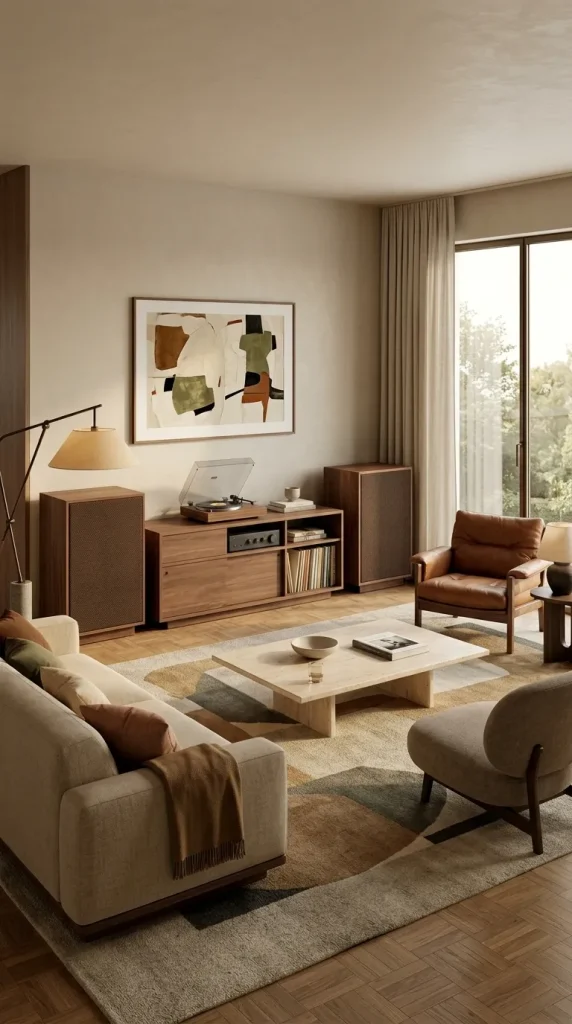
13. Make Large Speakers Part of a Mid-Century Listening Room
Large speakers can become attractive visual objects when the room’s furniture and materials support them.
Classic wood-veneered speaker cabinets work beautifully beside walnut furniture, low seating and warm neutrals. Position them thoughtfully rather than hiding them behind plants or decorative objects.
The room should acknowledge their scale. A substantial rug and larger furniture help the speakers feel proportionate rather than oversized. Keep smaller accessories restrained so the audio equipment becomes part of the interior architecture.
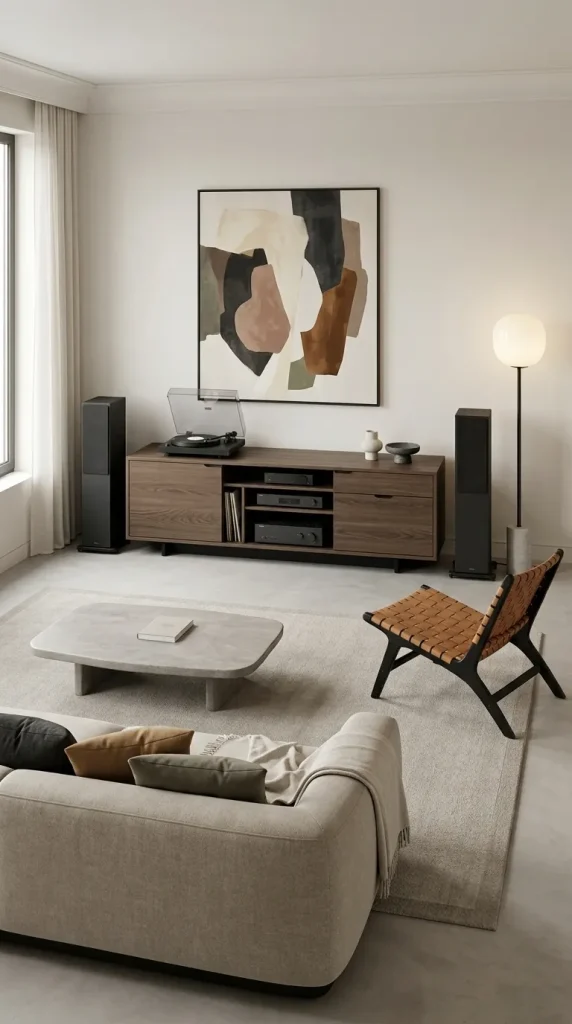
14. Create a Clean Modern Hi-Fi Setup
A modern hi-fi living room can feel sleek without appearing technical. Use a simple low cabinet, carefully positioned speakers and a restrained palette of black, warm wood and soft neutrals.
Keep the equipment organised and allow enough space around each component for practical use and ventilation. A few carefully chosen objects on the cabinet can soften the technical appearance, but avoid crowding the amplifiers or turntable.
Large abstract artwork or one sculptural lamp can provide the decorative balance that prevents the room from resembling an equipment showroom.
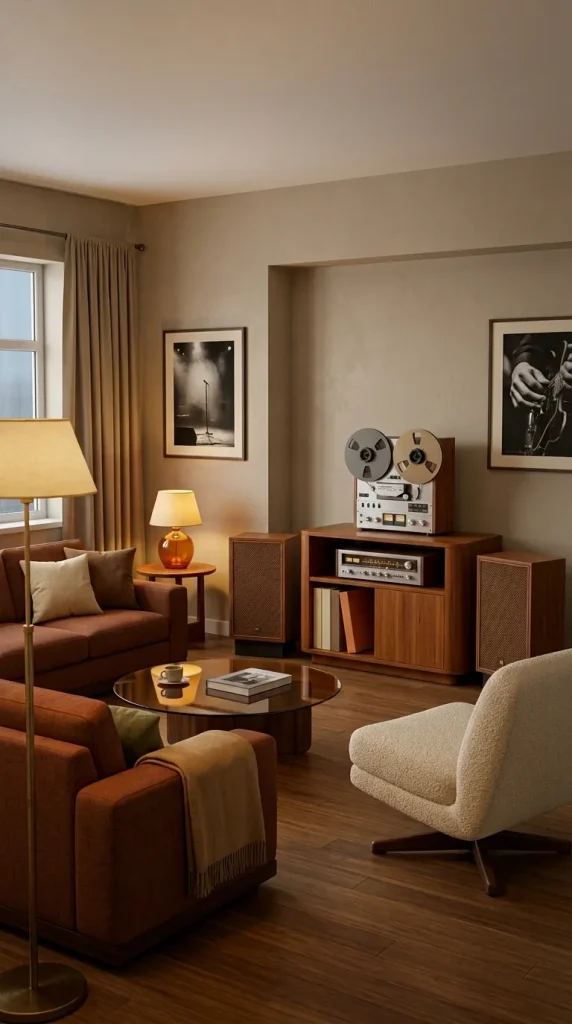
15. Build a Vintage Stereo Corner With Analog Equipment
Vintage audio equipment can create a distinctive focal point in a nostalgic music living room. A receiver, cassette deck, reel-to-reel machine or older speaker system can be incorporated into a cabinet that gives the equipment enough visual importance.
Choose one or two major pieces rather than collecting unrelated components simply because they are old. Warm timber, amber lighting and framed music photography can support the vintage atmosphere.
The room should still function comfortably as a lounge, so keep technical equipment concentrated in one defined zone.
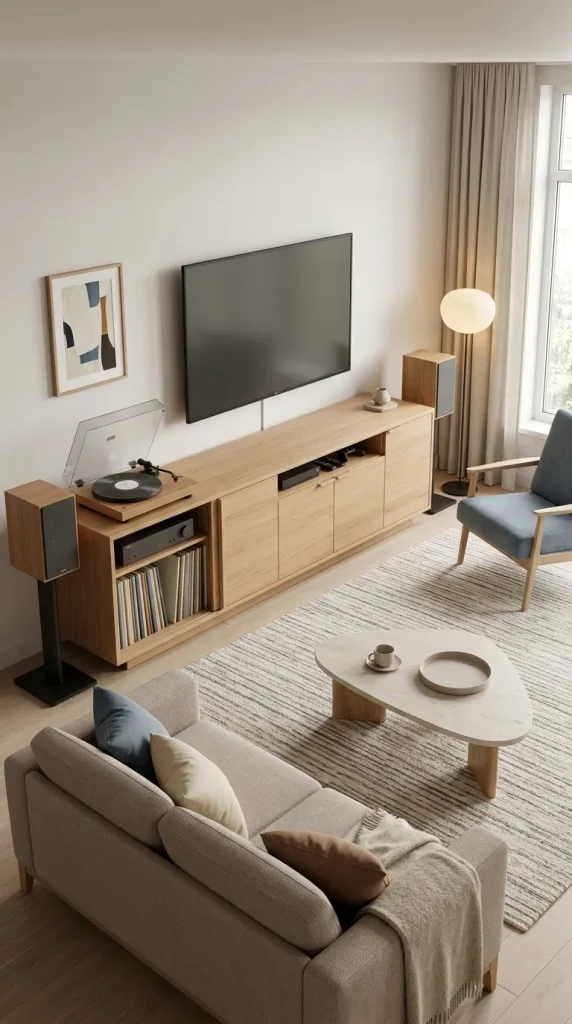
16. Use a Wide Media Console for Both TV and Turntable
A television and vinyl setup can coexist on the same wall when the console is wide enough to give each function its own space.
Centre the television above one portion of the unit and position the turntable toward one end. Use closed storage below for accessories and records, leaving enough clear surface around the equipment.
This arrangement is practical in smaller homes where separate media and music zones would consume too much space. A shared wood finish and restrained wall decor help the entire composition feel intentional.
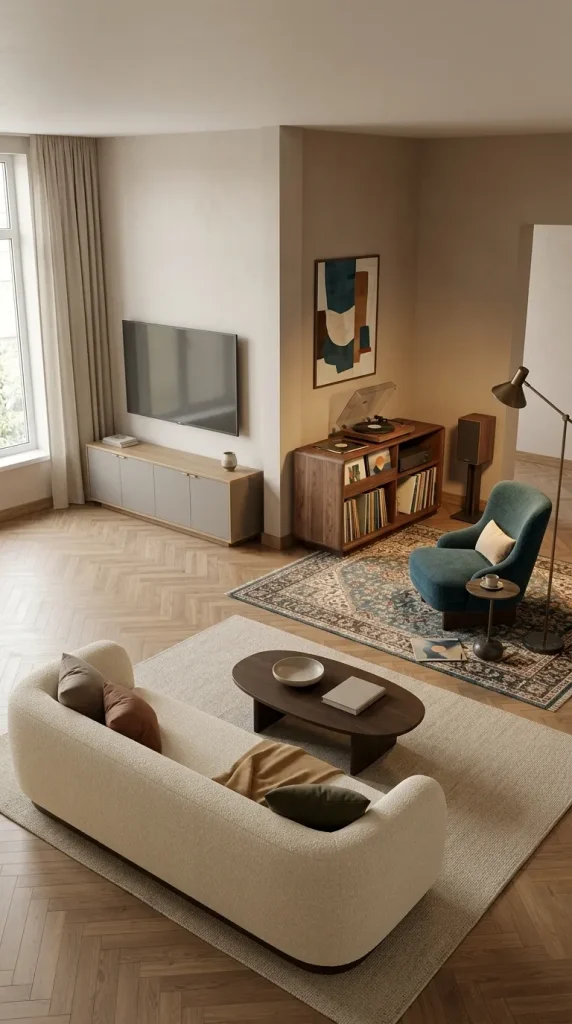
17. Separate the Record Player From the TV for a Stronger Music Identity
If space permits, moving the turntable away from the television can give the music setup a stronger identity.
Create a record corner on an adjacent wall using a low cabinet, one chair and a dedicated lamp. The TV area can remain comparatively simple, while the listening corner gains its own visual character.
This arrangement is particularly useful when music is an important part of everyday life and deserves more than a small position beside entertainment equipment.
Create a Cozy Music Corner in a Small Space
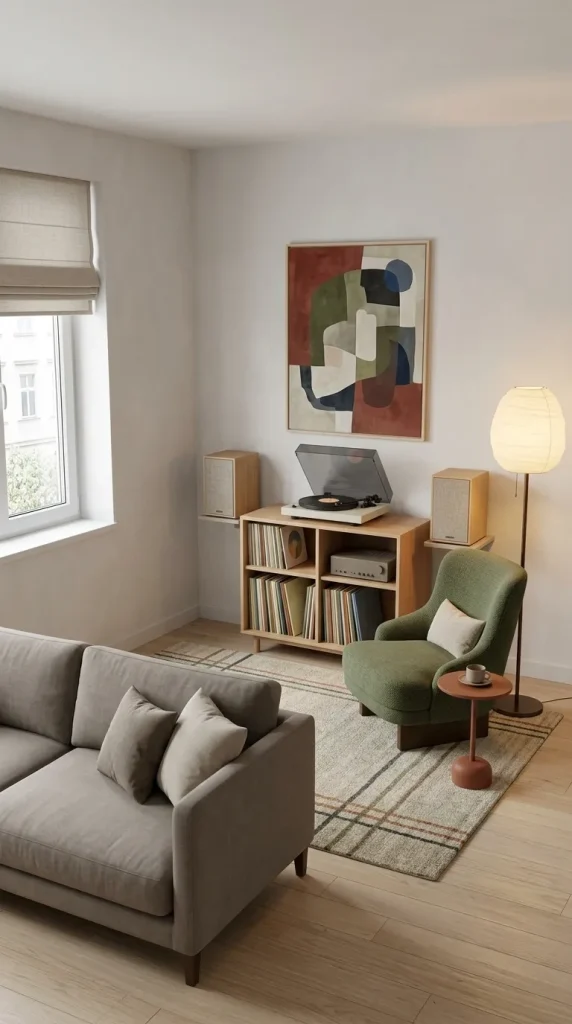
18. Turn an Empty Corner Into a Listening Nook
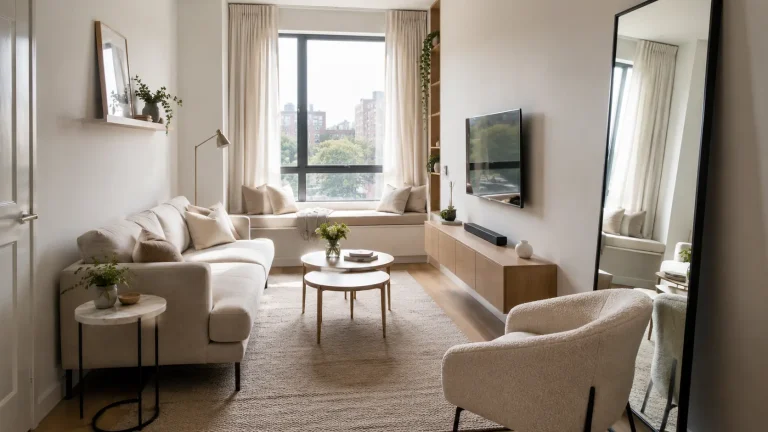
A small living room does not need a full music wall. An unused corner can become a complete listening area with a narrow record cabinet, compact speakers and one comfortable chair.
Use one strong piece of wall art above the setup and a warm floor lamp beside the seating. Keeping the arrangement visually contained makes it feel intentional without spreading music-related objects throughout the entire room.
This concept works especially well in apartments and shared homes where the living room needs to perform several functions.
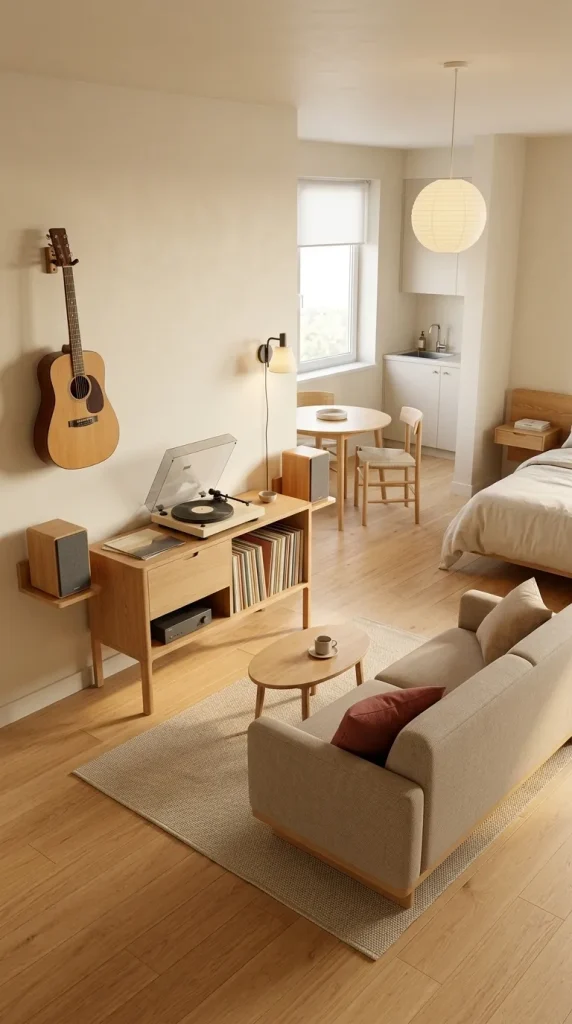
19. Build a Compact Music Nook in a Studio Apartment
In a studio apartment, every visible area needs to relate to the rest of the space. A music nook can use the same timber and colour palette as the main living furniture so the equipment does not create a disconnected zone.
A narrow console with a turntable, small speakers and vertical record storage may be enough. Add one wall-mounted guitar if playing is part of the setup.
Keep the seating compact and avoid introducing a large dedicated lounge chair if it obstructs circulation. The aim is to create a recognisable music area without sacrificing the apartment’s overall functionality.

20. Use a Small Armchair and Side Table for a Personal Listening Corner
Not every music setup needs to be built around the sofa. A single armchair positioned near the record cabinet can create a more intimate listening experience.
Choose a chair with enough comfort for long sessions but a footprint appropriate to the room. A small side table can hold a drink or album sleeve, while a floor lamp provides softer evening light.
Repeat one material from the audio furniture, such as walnut or black metal, to make the corner feel connected to the rest of the living room.
Explore Retro and Mid-Century Music Styles
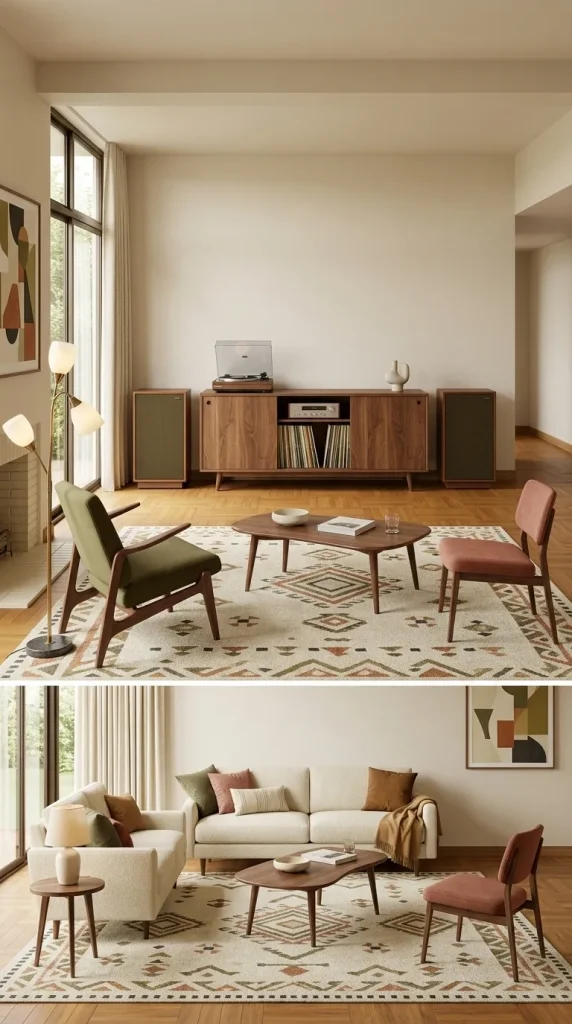
21. Create a Full Mid-Century Hi-Fi Living Room
A mid-century music living room can combine a walnut credenza, tapered-leg furniture, classic speakers and low-profile seating to create a highly cohesive listening environment.
Use a warm palette of teak, walnut, olive, rust and cream rather than introducing several unrelated retro colours. A sculptural lamp and geometric rug can add period character without turning the room into a historical replica.
The audio setup should remain central. Rather than covering the walls with music signs, let the turntable, speakers and furniture establish the identity naturally.
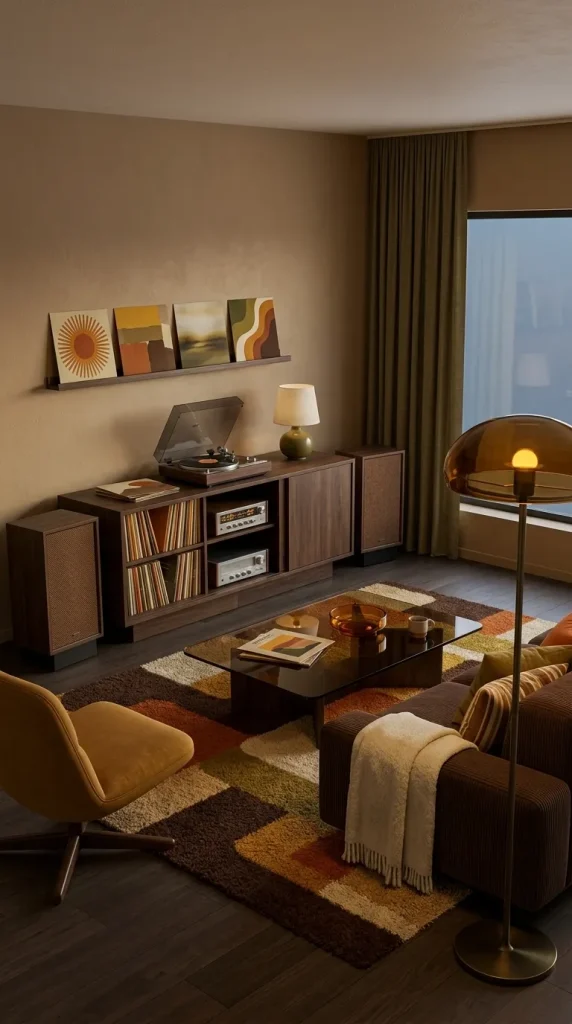
22. Build a 1970s-Inspired Record Lounge
A 1970s-inspired music room can feel warmer and more expressive than a cleaner mid-century setup. Deep brown, burnt orange, mustard and olive work beautifully with darker wood and tactile upholstery.
Try a low sofa, thick rug, substantial record cabinet and one sculptural vintage-style lamp. Album artwork and physical media can provide additional colour.
Avoid mixing too many different nostalgic periods. If the furniture and palette strongly reference the 1970s, keep modern neon lighting and 1990s grunge imagery out of the same concept unless you are deliberately creating an eclectic room.
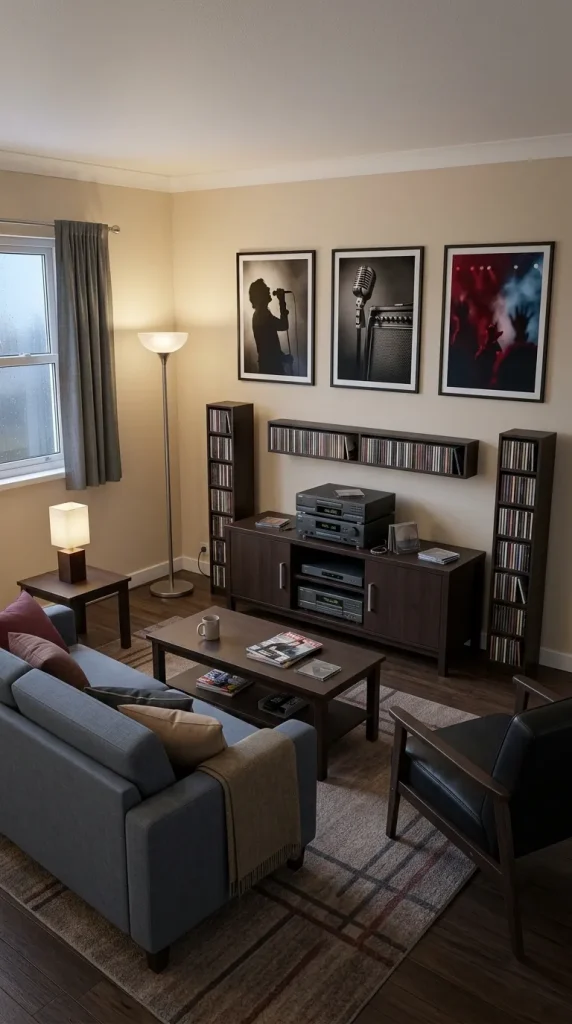
23. Create a Late-90s and Early-2000s CD Listening Room
A CD-focused music living room offers a completely different nostalgic direction from vinyl.
Slim CD towers, stereo components, visible speakers and shelves of jewel cases can establish the atmosphere. Pair them with a simple sofa, darker timber or black furniture and framed music posters from the era.
Organise the CDs so the display looks intentional rather than cluttered. This approach can work particularly well for readers whose personal music memories are connected to physical media from the 1990s and early 2000s.
Build a Rock-Inspired Living Room Without the Clichés
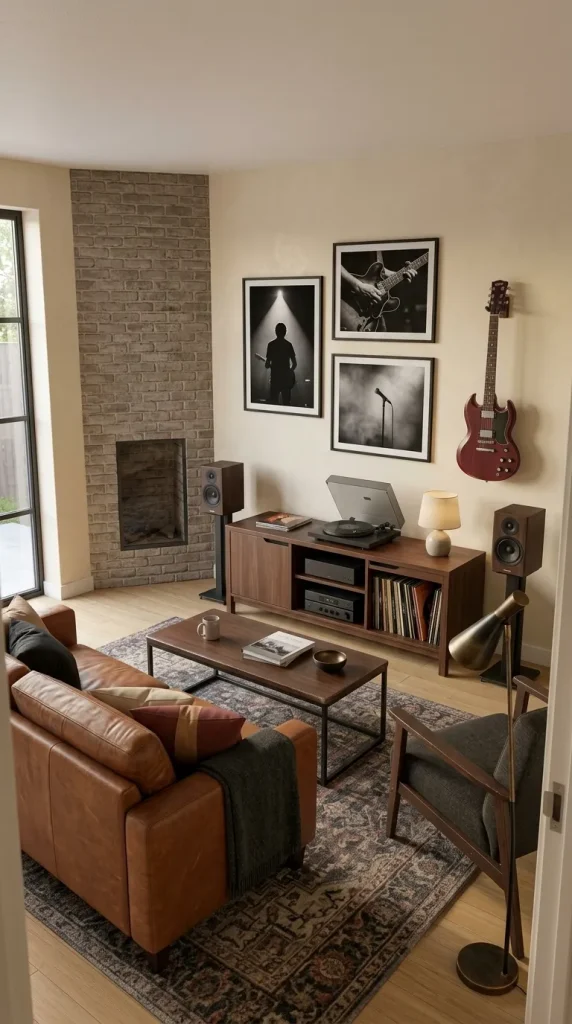
24. Create a Refined Classic-Rock Living Room
A sophisticated rock-inspired living room can communicate musical taste through real objects rather than novelty signs.
Use a vintage leather chair or sofa, one electric guitar, a few framed concert photographs and a warm timber media cabinet. Black accents can add definition without turning the room entirely dark.
The strongest decor should have genuine meaning. A photograph from a favourite concert or album artwork you actually love will make the room feel more personal than generic rock-and-roll decorations.
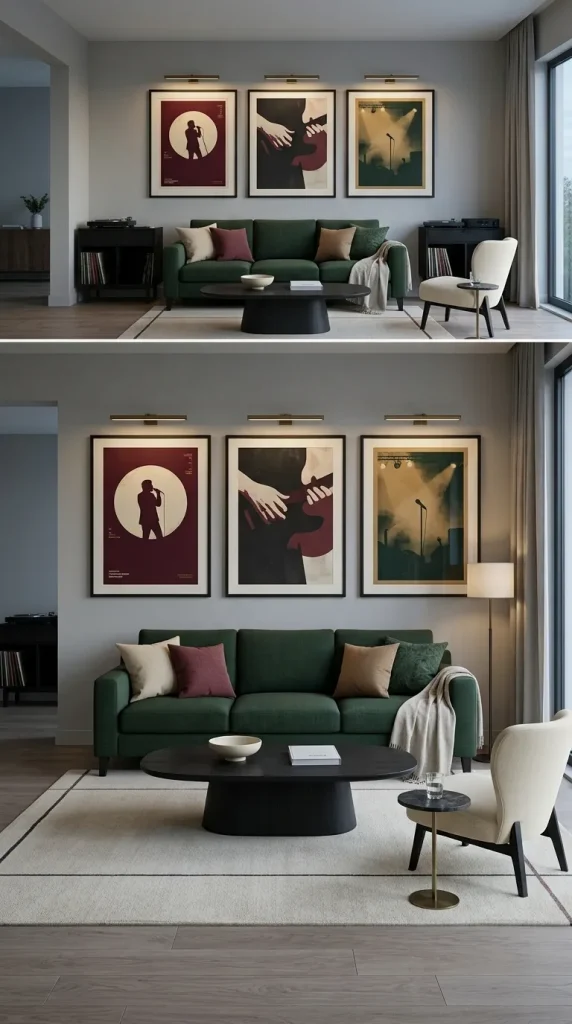
25. Use Concert Posters as a Curated Gallery
Concert posters can become sophisticated wall art when they are framed and arranged with enough visual discipline.
Choose several posters that share either a similar colour palette, frame style or era. A row of three large pieces above the sofa can create a more polished effect than dozens of smaller posters covering every wall.
Use picture lights or directional wall lighting if you want to emphasise the collection. The rest of the room can remain comparatively restrained so the posters carry the musical identity.
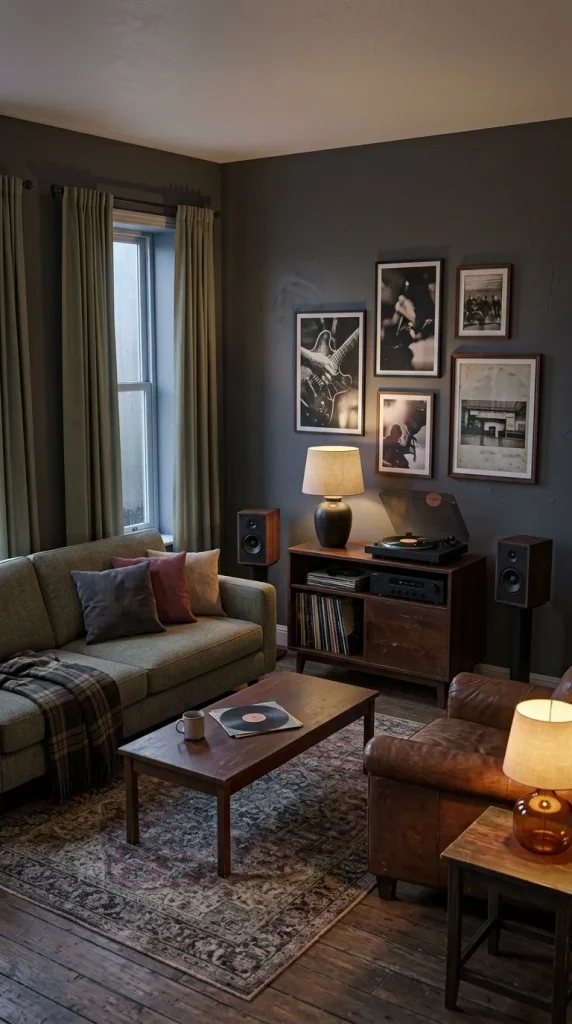
26. Create a Soft-Grunge Music Living Room
Soft grunge offers a darker and more relaxed aesthetic built around vintage furniture, faded music imagery and warm low lighting.
Use charcoal, muted burgundy, olive and brown as the foundation. A worn leather chair, plaid throw, patterned rug and second-hand timber table can create the collected atmosphere.
Frame selected band posters rather than taping dozens directly to the wall. Add records and a simple stereo system, then use warm table lamps to keep the room moody without making it feel harsh.
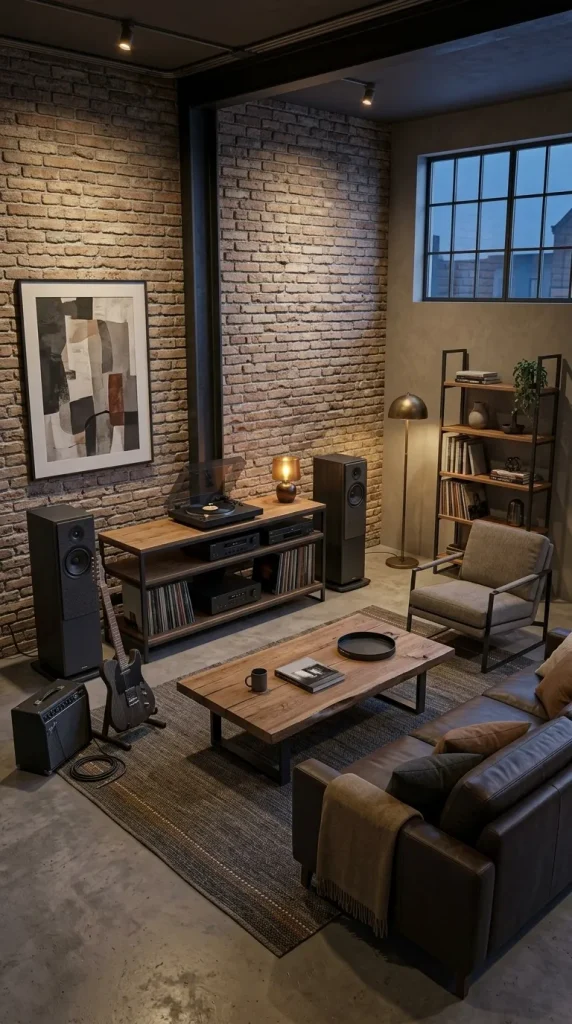
27. Build an Industrial Music Living Room
An industrial music-themed room can combine black metal, exposed brick where the architecture already supports it, reclaimed wood and visible audio equipment.
Use a dark leather sofa with metal shelving and a substantial timber coffee table. Large speakers, guitars or an amplifier fit naturally into this environment because the materials already have a technical, workshop-like quality.
Keep the palette relatively restrained and let texture do much of the decorating. Warm lighting is important to soften the harder materials.
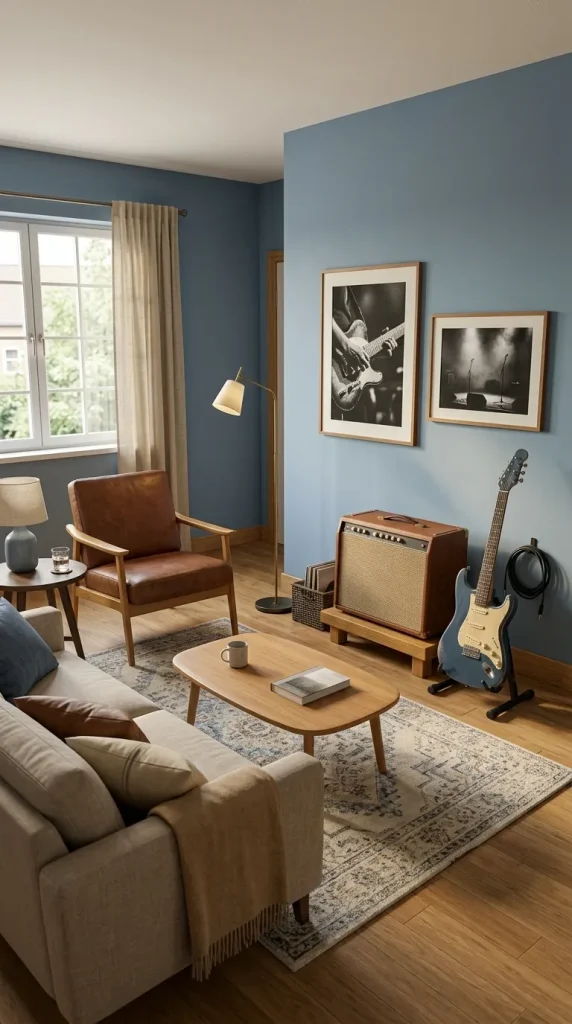
28. Add One Vintage Amplifier as a Decorative Feature
A vintage amplifier can become a small but distinctive focal point, especially in a rock, blues or retro-inspired room.
Position it beside a guitar stand or beneath framed concert photography rather than placing it randomly in a corner. If the amplifier is functional, make sure it remains accessible for playing.
Do not stack unrelated decorative objects on top of equipment that needs ventilation or regular use. The strongest arrangement treats the amplifier as part of the musical life of the room, not merely a prop.
Make the Living Room Work for Playing and Creating Music
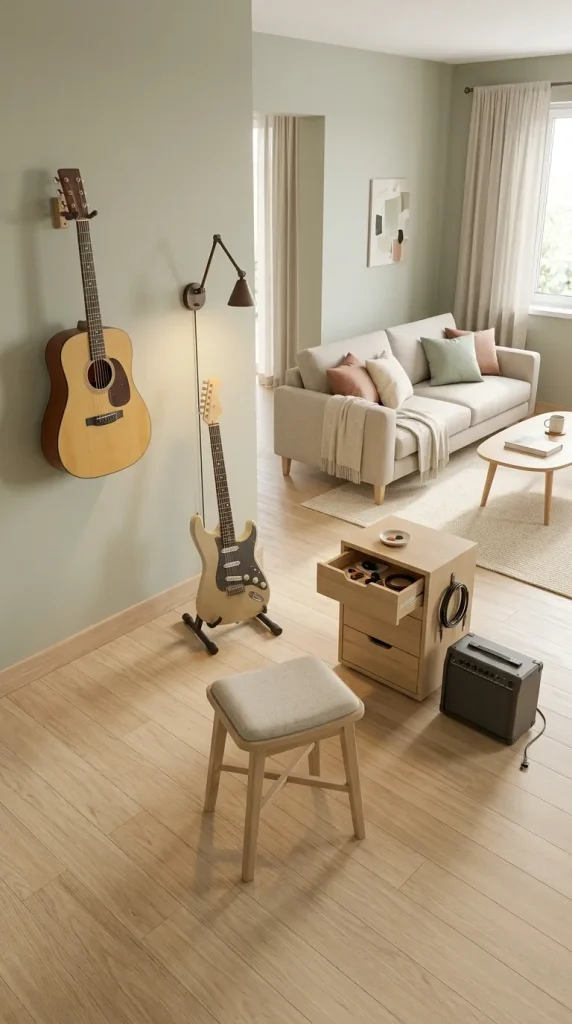
29. Create a Guitar-Playing Corner With Easy Instrument Access
A living room used for making music needs enough open floor space for instruments and accessories.
Mount one or two guitars within easy reach or use suitable floor stands, then add a compact stool or chair. A small drawer unit can hold picks, tuners, cables and other accessories so the area remains organised.
Keep decorative objects away from the immediate playing zone. The setup should make spontaneous practice easy rather than forcing you to move furniture or decorations every time you want to play.
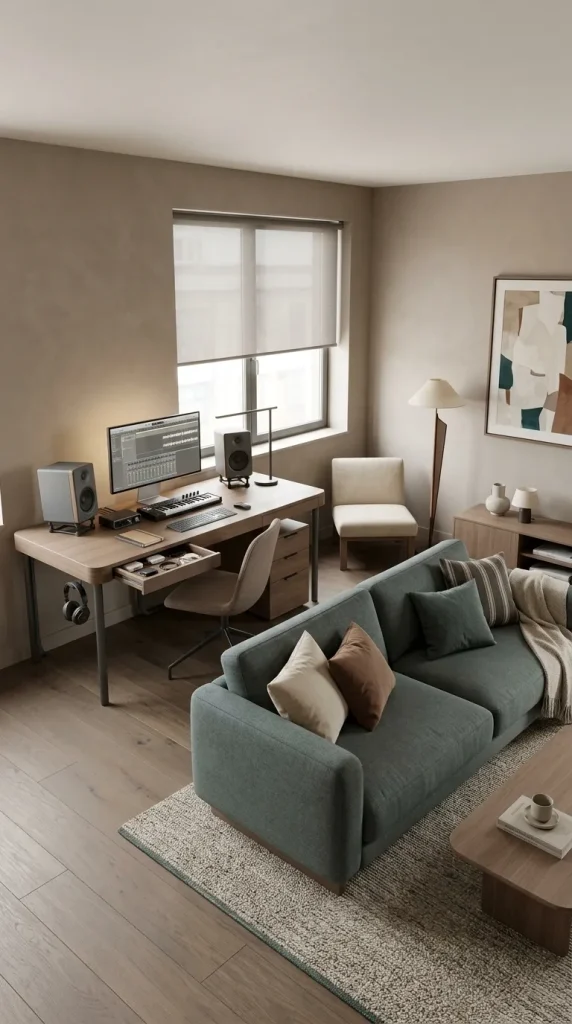
30. Combine a Music Production Desk With the Living Room
A living room can accommodate a compact production setup when the desk is planned as part of the furniture arrangement.
Choose a simple desk with enough space for a computer, audio interface and monitors, then use cable management and drawers to control the technical clutter. A quieter ergonomic chair often blends better with living room furniture than a highly technical studio chair.
Keep the production zone visually related to the rest of the room through shared wood tones or colours. This helps the desk feel more like part of the interior and less like an office inserted into the lounge.
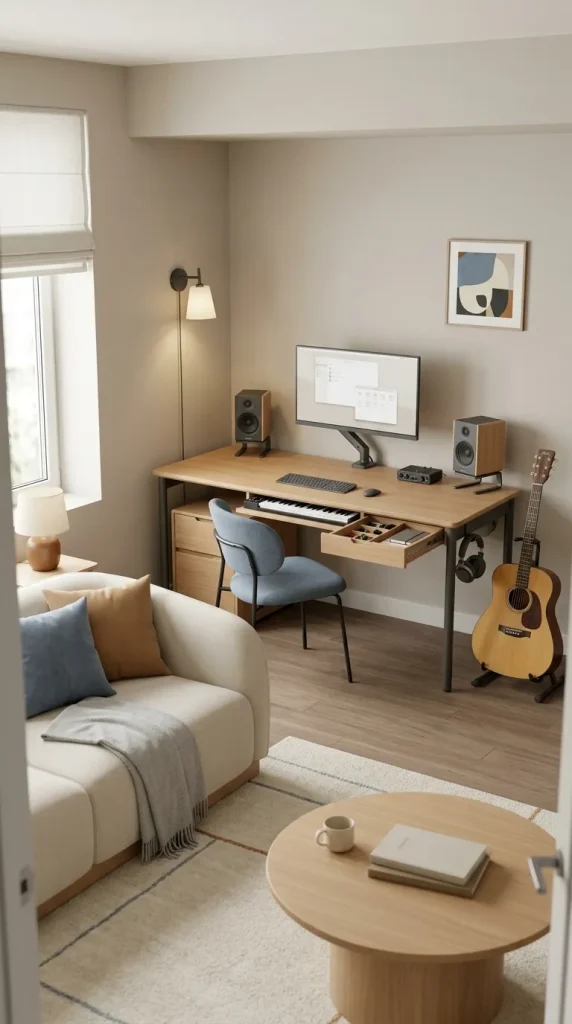
31. Create a Combined Home Office and Music Area
If the same desk needs to support work, music production and general computer use, flexibility becomes more important than themed decor.
Use monitor stands or arms to preserve desk space, keep audio accessories in drawers and mount headphones on an accessible hook. One nearby guitar or framed album print can give the workstation musical identity without making it visually busy.
The desk should be easy to reset between tasks. A tidy combined workstation is more likely to feel appropriate in a shared living room than one permanently covered in cables and equipment.
Organize Collections Without Losing Personality
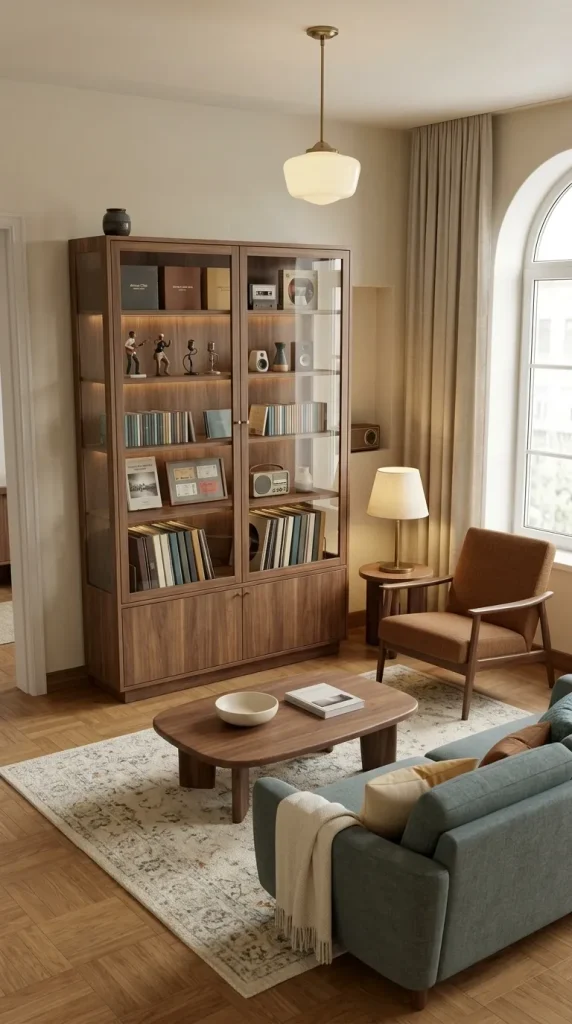
32. Use Glass-Front Cabinets for Music Collectibles
Music memorabilia, figurines, rare media and smaller objects can quickly overwhelm open shelves. A glass-front cabinet allows the collection to remain visible while giving it a more organised appearance.
Group objects according to artist, era, colour or format rather than placing everything randomly. Use shelf lighting sparingly if you want to highlight selected pieces.
The cabinet should complement the room furniture. Dark metal can suit an industrial or rock interior, while warm wood works naturally in retro and mid-century spaces.
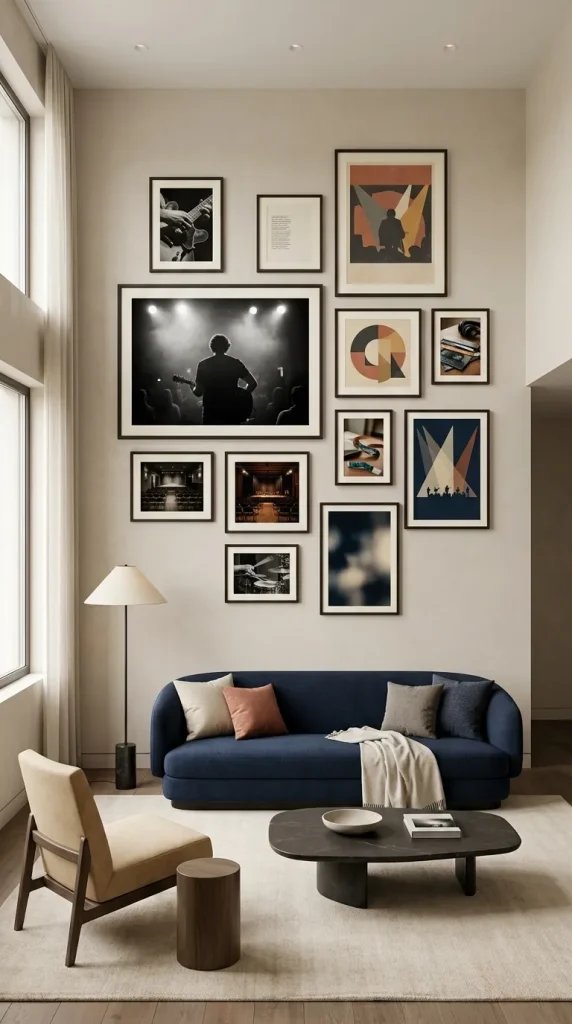
33. Create One Large Music Gallery Wall Instead of Decorating Every Wall
A strong gallery wall can combine concert posters, musician photography, album art and one or two personal photographs into a single visual feature.
Use one large piece as the anchor, then arrange smaller frames around it. Consistent spacing or a repeated frame finish helps connect the different images.
Once the gallery is complete, leave surrounding walls quieter. Music collections become more powerful when the eye knows where to focus.
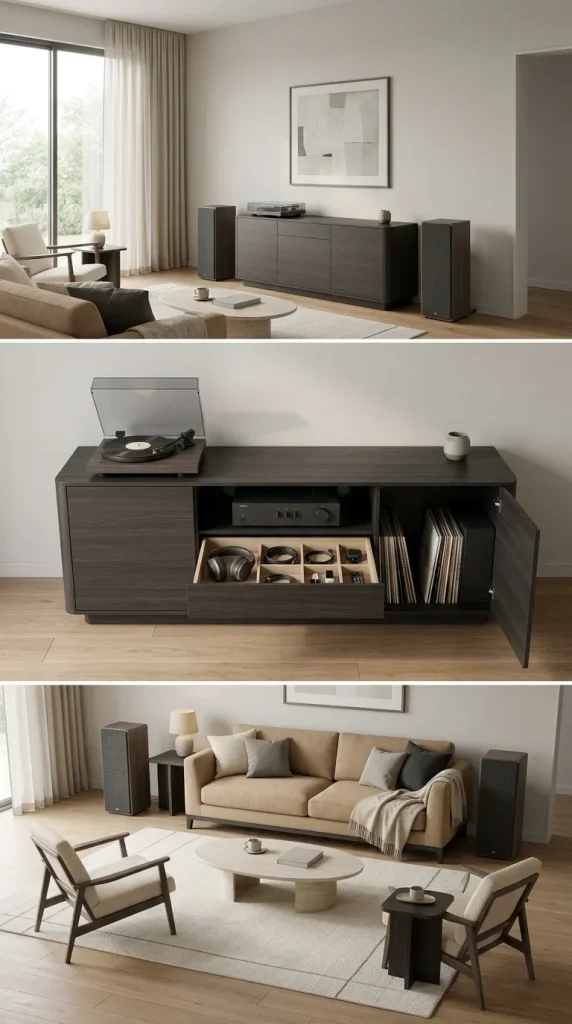
34. Organize Cables and Technical Accessories Out of Sight
Music equipment can create significant visual clutter if cables, headphones, adapters and accessories remain exposed around the room.
Use furniture with rear openings, cable trays and low-profile channels to route wires neatly. Keep frequently used headphones and cables in one drawer or dedicated storage area rather than distributing them across several surfaces.
Good cable management also makes cleaning easier and keeps the music setup visually connected to the rest of the living room.
Create a Room That Reflects Your Own Music Taste
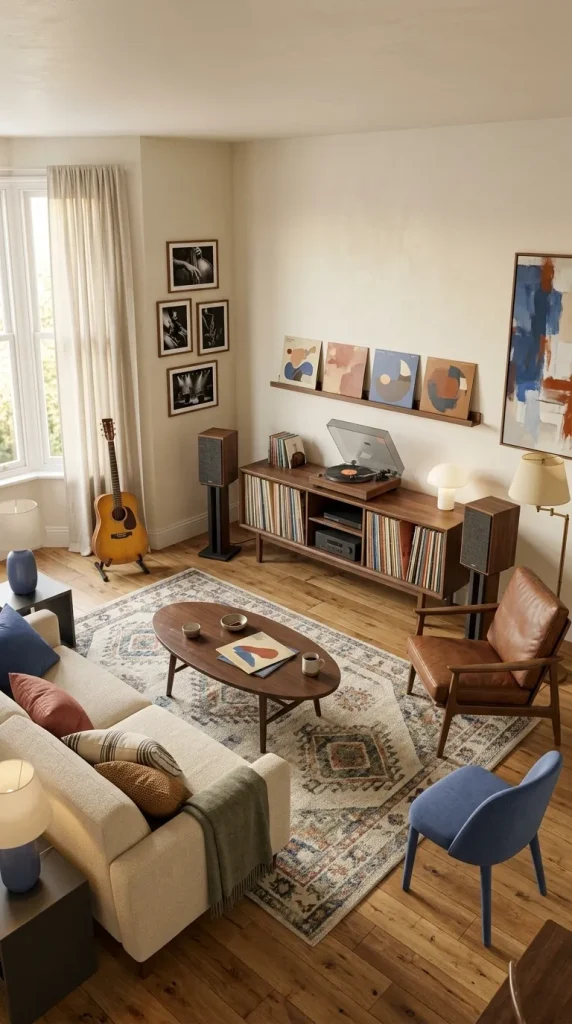
35. Build an Eclectic Music Lover’s Living Room Around Personal Collections
The most memorable music-themed living rooms are rarely those that follow a generic formula. They are the rooms that reflect what the person actually listens to, plays and collects.
An eclectic music lover’s room might combine a second-hand sofa, colourful rug, vinyl collection, guitar, framed jazz photography and contemporary artwork. Another could use neutral furniture with one striking album-cover wall and a beautifully designed hi-fi system.
The secret is repetition and editing. Repeat selected colours or materials so the different pieces feel connected, and decide which part of the collection deserves to become the main focal point. You do not need every musical object on display at the same time.
A room built around real musical interests will always feel more authentic than one decorated entirely with generic music symbols.
Choose the Right Music-Themed Style for Your Living Room
The strongest music rooms begin with a clear direction. A mid-century listening lounge should feel different from a soft-grunge space, just as a minimalist guitar display should feel different from an expressive record collector’s room.
| Music living room style | Key materials | Main focal point |
|---|---|---|
| Cozy vinyl lounge | Warm wood, soft upholstery, rugs | Turntable and record cabinet |
| Mid-century hi-fi | Walnut, teak, sculptural lighting | Credenza and speakers |
| Classic rock | Leather, dark wood, black metal | Guitar or concert art |
| Soft grunge | Worn leather, plaid, dark textiles | Posters and physical media |
| Industrial | Metal, reclaimed wood, brick | Audio equipment and guitars |
| Minimalist music room | Pale walls, simple timber, clean lines | One guitar or hi-fi setup |
| Retro CD room | Black furniture, physical media, stereo equipment | CD and stereo display |
| Eclectic music lover | Vintage furniture, colourful art, mixed materials | Personal collection |
| Small apartment music nook | Narrow storage, compact speakers, vertical display | Turntable or wall-mounted guitar |
Choose one principal direction first, then allow your personal collection to shape the details. This prevents the room from becoming a mixture of unrelated music references.
Make Sound and Interior Design Work Together
A music-themed living room should be comfortable to listen in as well as attractive to look at. Rugs, curtains and upholstered seating can help soften a room that otherwise contains many hard reflective surfaces. They also make the space feel warmer and more inviting.
Speaker placement deserves practical attention. Avoid placing large speakers simply where they look symmetrical if that position compromises how you actually listen. At the same time, keep them integrated with the room rather than surrounding them with unrelated furniture or decorative clutter.
Record players and audio equipment also need suitable surfaces, ventilation and easy cable access. The best music-themed rooms respect the equipment as functional objects rather than treating everything as decoration.
Common Music-Themed Living Room Decorating Mistakes
Using too many literal music symbols. Treble clefs, music-note signs and generic quotes are not necessary when real instruments, records and artwork already communicate the theme more authentically.
Displaying every collectible at once. A carefully selected record wall or concert-poster gallery usually has more impact than covering every available surface with memorabilia.
Treating valuable instruments as props. Frequently used or valuable guitars need secure mounting, appropriate environmental conditions and easy access.
Ignoring record storage. Vinyl should be stored properly rather than piled flat in large stacks or placed near excessive heat.
Letting cables dominate the setup. Audio equipment often brings substantial wiring, so cable management should be part of the room plan from the beginning.
Mixing unrelated retro periods accidentally. A 1960s-inspired hi-fi lounge, a 1990s grunge room and a contemporary music studio can all be beautiful, but combining all three without a clear plan may create visual confusion.
Frequently Asked Questions
How can I make my living room music-themed without making it look cheesy?
Use real musical objects instead of generic novelty decor. A guitar, turntable, record collection, framed concert poster or stereo system can communicate the theme naturally. Choose one main focal point and keep the remaining decorations relatively restrained.
How should I display guitars in a living room?
A single guitar can work above a console or sideboard, while several instruments can form a dedicated guitar wall. Use secure mounting hardware appropriate to the wall and instrument, leave enough spacing between guitars and keep regularly used instruments easy to access.
How can I display vinyl records without making the room look cluttered?
Store most records vertically in suitable shelving or cabinets, then display a smaller selection of album covers as artwork. Picture ledges and front-facing racks allow favourite covers to change regularly while keeping the main collection organised.
What furniture works best in a vinyl-listening living room?
Low cabinets, mid-century sideboards, comfortable armchairs and substantial sofas all work well. The best furniture depends on the room style, but the record player should have a stable surface, the collection should remain easy to browse and the seating should support comfortable listening.
How can I create a music corner in a small apartment?
Use a narrow cabinet with a turntable, compact speakers and vertical record storage. Add one wall-mounted guitar or framed music print and a small chair if space allows. Keeping the music area concentrated in one corner prevents it from overwhelming the rest of the apartment.
Let Music Shape the Room Naturally
The best music-themed living room decor ideas do not make music feel like an applied theme. They make it part of the way the room is used.
A guitar mounted above a sideboard can become both artwork and an instrument ready to play. A turntable and carefully organised record collection can create a comfortable listening ritual. Vintage speakers, framed concert photography or a compact production desk can tell visitors something meaningful about the person who lives there.
Start by choosing one strong musical focal point, then build the room around it. Organise media and accessories carefully, use lighting to create atmosphere and make sure the furniture remains comfortable enough for ordinary everyday life.
When music, equipment, collections and interior design are balanced properly, the room feels personal rather than themed. It becomes a living room where music is not merely displayed, but actually lived with.