14 Earthy Living Room Ideas for a Warm, Grounded Home
Earthy living rooms can become boring surprisingly quickly. Paint the walls beige, add a cream sofa, choose a jute rug, scatter a few brown cushions, and you technically have a natural palette. But you may also have a room where every surface sits at almost the same visual level.
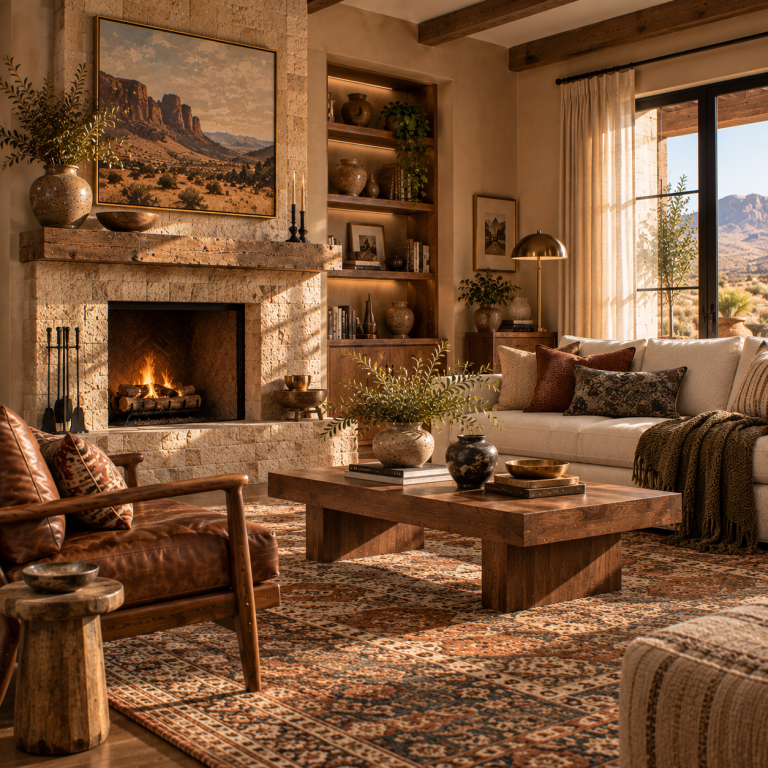
The stronger 14 Earthy Living Room Ideas for 2026 draw from a much broader landscape. Chocolate brown, tobacco, olive, moss, clay, terracotta, mushroom, dusty rose, dark walnut, limestone, wool, leather, and glazed ceramic are giving nature-inspired rooms more depth. Designers are increasingly favoring these warmer, richer colors over flat beige and cool gray, an approach explored further in earthy boho living room ideas, with earthy mid-tones such as tobacco brown, dusty olive, sunbaked terracotta, rust, and smoky green becoming important parts of current palettes.
The room should feel connected to nature without looking like a catalog of natural-fiber accessories.
Build a richer earth-tone palette
Idea 1: Let chocolate brown replace some of the beige. Brown is one of the easiest ways to give an earthy room visual weight. Try chocolate, chestnut, umber, tobacco, espresso, or cognac rather than relying entirely on tan. Use the color somewhere substantial: a chocolate sofa, walnut media cabinet, tobacco leather chair, dark brown curtains, or espresso coffee table. If your existing sofa is cream, you do not need to replace it. Put a dark walnut table in front of it, add one chocolate wool throw, and introduce brown through art or a vintage chair. A beige room rarely needs more beige.
Idea 2: Bring in real clay and terracotta tones. Clay-toned walls, terracotta textiles, and sunbaked brick can all warm a living room. Try clay-colored walls with oatmeal upholstery, or keep warm-white walls and use terracotta curtains or an oversized rust-toned rug. If your flooring already has strong orange undertones, move toward muted clay or dusty rust rather than adding more saturated terracotta.
Use green as a grounding neutral
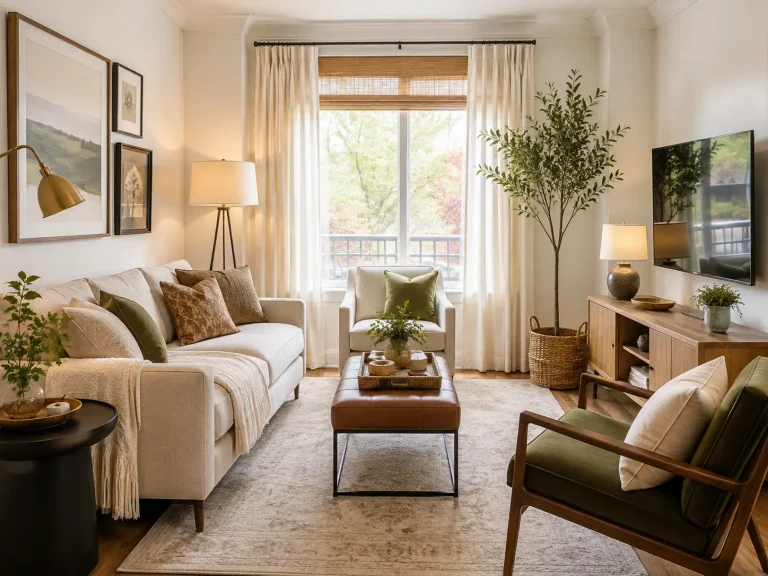
Idea 3: Choose olive or moss instead of bright botanical green. Green is naturally associated with earthy rooms, but the most current versions are muddier and more complex. Olive, moss, khaki-green, bronze-green, and muted teal tend to feel more sophisticated than a clear leafy shade.
Idea 4: Let one dusty, muted color carry part of the theme. A muted rose, dusty blue, or smoky violet accent can soften an otherwise very brown-and-green palette without pulling the room away from its earthy foundation.
Give wood more presence
Idea 5: Use dark walnut instead of only pale oak. Light oak is useful, but an earthy living room becomes much richer when at least one wood tone has more visual depth. Walnut, smoked oak, espresso oak, or dark-stained timber can anchor pale upholstery and natural fabrics. Try a walnut coffee table with a cream sofa, or place a dark wooden cabinet against olive walls. You do not need to match it to the floor; medium oak flooring can sit comfortably beside walnut furniture when both have warm undertones. Matching every wood tone can flatten a room almost as easily as matching every fabric.
Idea 6: Add one vintage wood piece with visible age. Earthy interiors benefit from materials that do not look newly manufactured. Try an antique side table, vintage cabinet, or a well-worn wooden bench to give the room a sense of history.
Choose a rug with real weight
Idea 7: Use a rug in an earthy pattern or color rather than plain jute. Try mushroom, olive, faded rust, tobacco, or a vintage-style pattern containing several of those shades. For many standard living rooms, an 8-by-10-foot rug is a useful starting point, depending on the seating layout, and larger rooms may need 9-by-12 or more. At minimum, try to connect the front legs of the primary seating to the rug rather than leaving a small rectangle floating beneath the coffee table. One larger, warmer rug can often make a room feel more grounded than several woven accessories scattered around it.
Bring stone and ceramic into the material mix
Idea 8: Add one substantial stone surface. Earthy interiors should not rely entirely on wood and fabric. Stone introduces visual coolness and weight. Consider travertine, limestone, marble, slate, or another natural-looking mineral surface through a coffee table, side table, fireplace surround, lamp base, or decorative object. Pair warm limestone with walnut, or use travertine beside olive upholstery. Do not fill the room with matching travertine tables; one substantial stone element is usually enough.
Idea 9: Use handmade-looking ceramic for smaller details. Ceramic is an excellent bridge between color and texture. A large earthenware lamp, reactive-glaze vase, stoneware bowl, or handmade-looking planter can bring clay, oxide, cream, or olive into the room without feeling decorative for decoration’s sake. Look for irregular glazing, visible throwing marks, or simple sculptural shapes, and use fewer pieces at larger scale. A substantial ceramic lamp on a walnut console will usually add more presence than six small beige vases lined across a shelf.
Make lighting part of the earthy atmosphere
Idea 10: Use oversized lighting as functional sculpture. An earthy living room benefits from lighting that has physical presence. Try a large paper pendant, ceramic table lamp, linen shade, aged brass floor lamp, or sculptural plaster fixture to give the room warmth after dark, echoing the same restrained, collected sensibility found in aesthetic living room ideas.
Add personality through art and objects
Idea 11: Choose art that introduces one more note of color. Not every image needs to contain mountains, leaves, pottery, or beige abstract shapes. Use art to introduce another note: try dusty blue, faded red, smoky violet, blush, or even black through a vintage portrait, landscape painting, abstract canvas, personal photography, or textile art. Current living-room design is becoming more expressive and individual, with designers deliberately moving away from neutral “safe” rooms and toward spaces that communicate the identity of the people living in them.
Idea 12: Edit your shelves the same way you edit your palette. Use books you actually read, objects gathered over time, and a few ceramics rather than buying an entire coordinated earth-tone shelf display. The goal is collected, not cluttered: group related objects, give stronger pieces breathing room, and resist covering every surface. This same restraint, applied at a smaller scale, is part of what makes minimalist living room ideas feel calm rather than empty.
A practical earthy living room palette guide
| Main tone | Supporting shade | Grounding material |
|---|---|---|
| Chocolate | Warm ivory | Walnut |
| Terracotta | Oatmeal | Limestone |
| Olive | Mushroom | Dark wood |
| Tobacco | Dusty blue | Cognac leather |
| Moss | Clay | Travertine |
| Rust | Cream | Aged brass |
| Warm white | Umber | Medium oak |
Idea 13: Choose one primary color relationship and build outward from it. You rarely need every earth tone in one living room. Picking a single main tone, supporting shade, and grounding material keeps the palette coherent instead of scattered.
Idea 14: Add depth through value contrast, not more neutrals. A richer, moodier direction is explored further in moody neutral living room tips, where deeper values do more work than adding another pale accessory.
What should you skip in an earthy living room?
Beige touching more beige everywhere. Earthy palettes need value contrast through chocolate, olive, rust, charcoal, or dark wood.
Rattan as the default material. One woven chair or basket may be enough.
Tiny nature-themed accessories. Use stronger materials and meaningful art instead.
Perfectly matching woods. Variation between wood tones usually looks more intentional than a uniform match.
Try this if your earthy living room feels flat
Identify the largest area where pale neutral is touching another pale neutral. Break that connection. Add a darker wood, a richer earth color, or a material with a completely different surface.
An earthy living room works when nature is present through relationships between color, texture, age, and material rather than through a collection of objects trying to look natural.