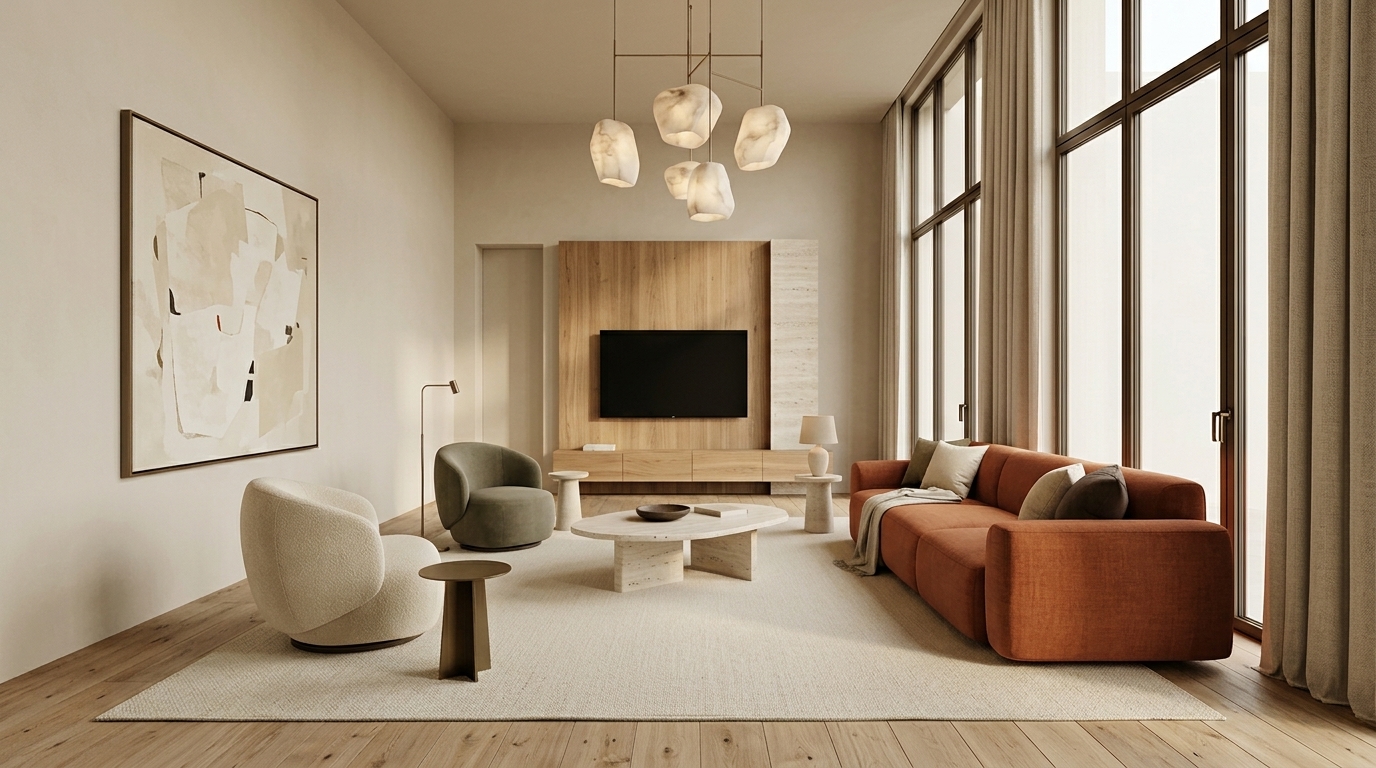
30 Orange Sofa Living Room Decor Ideas for Bold, Warm and Stylish Spaces
An orange sofa can completely change the personality of a living room. It immediately becomes one of the strongest visual elements in the space, which means the rest of the room needs to respond to it rather than compete with it.
The important thing is that not every orange sofa behaves the same way. Bright orange feels energetic and graphic. Burnt orange is deeper and more sophisticated. Rust has a stronger brown undertone, terracotta feels earthy and clay-like, and cinnamon leans softer and warmer. The exact shade affects which walls, rugs, wood tones and accent colours will work best around it.
That is why the strongest orange sofa living room decor ideas treat the sofa as the starting point for the whole room. Instead of trying to match it with more orange everywhere, the most successful spaces use contrast, texture and carefully chosen supporting colours to make the sofa feel intentional.
These 30 ideas explore very different ways to style orange seating, from calm beige-and-rust rooms and mid-century burnt-orange interiors to black-and-orange modern spaces, playful retro apartments and small minimalist living rooms.
Start With the Exact Shade of Orange
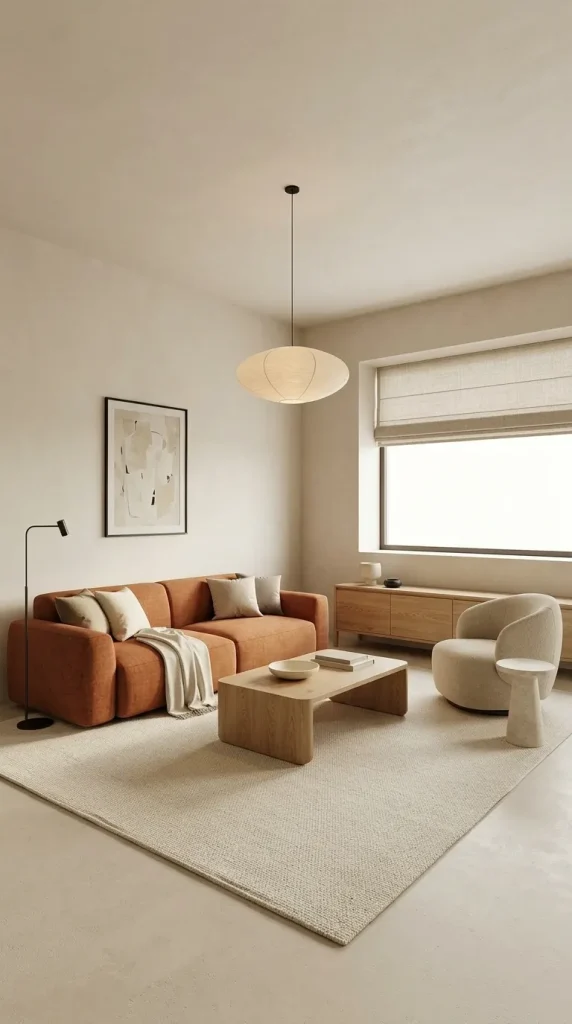
1. Build a Calm Room Around a Burnt Orange Sofa
Burnt orange works especially well when the surrounding palette is soft and restrained.
Pair the sofa with warm-white walls, a cream rug and natural wood furniture. Add one or two darker details through black lighting or picture frames to give the room structure.
Because burnt orange already has depth, it does not need many competing accents. Let the sofa remain the main source of colour while the rest of the room stays calm and textural.
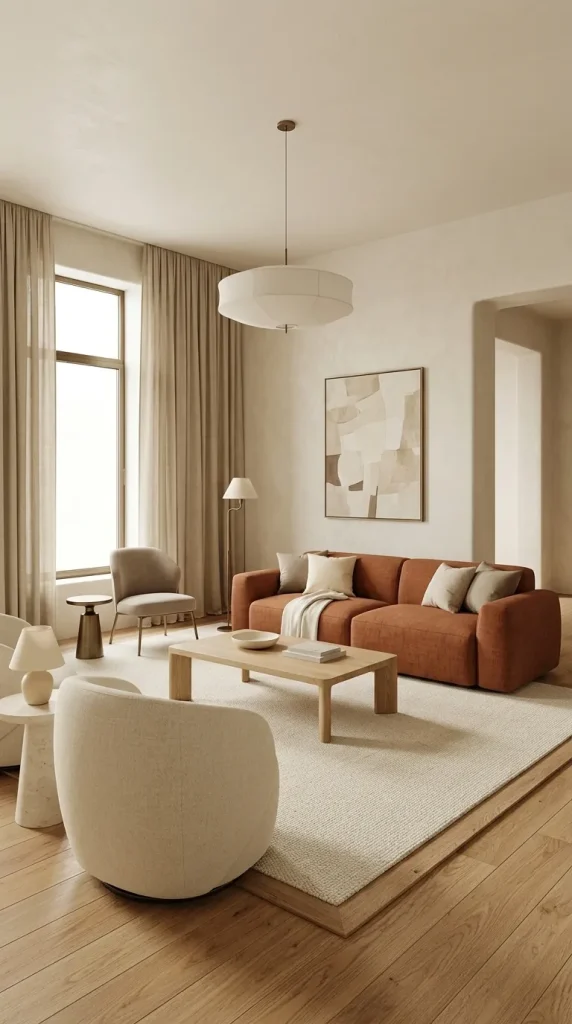
2. Style a Rust Sofa With Cream and Warm Wood
Rust is earthier and slightly browner than burnt orange, which makes it particularly easy to combine with natural materials.
Use cream walls, beige curtains and a simple timber coffee table to create a grounded palette. A wool rug in ivory or oatmeal can soften the seating area and keep the room from becoming too warm.
The result feels timeless rather than seasonal because the colour relationship is built around neutral materials rather than autumn-themed accessories.
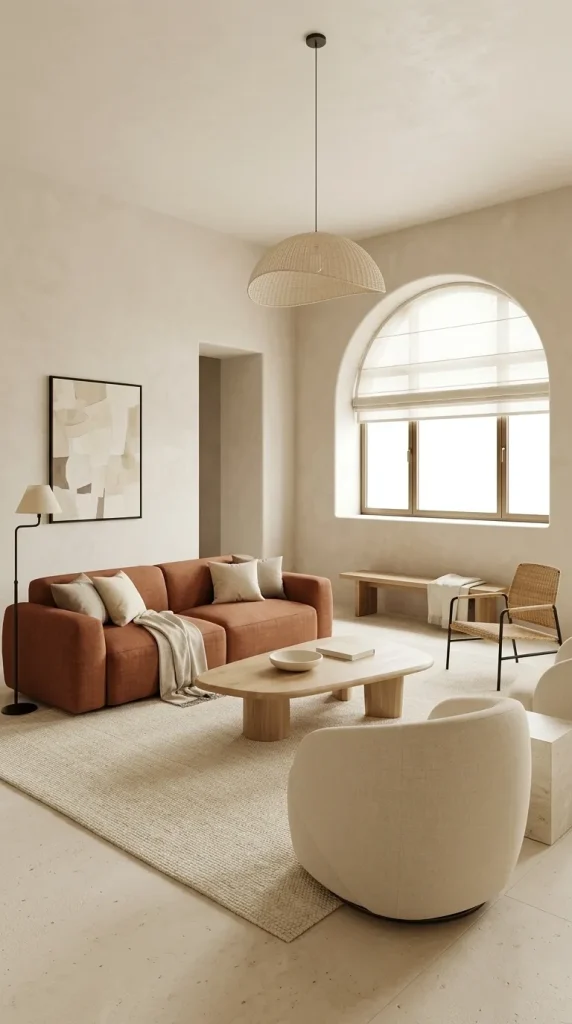
3. Pair a Terracotta Sofa With Soft Beige
Terracotta upholstery feels especially natural beside warm beige and clay-inspired colours.
Choose a pale beige rug and warm-neutral walls, then add simple wood furniture and a small amount of black for contrast. Textured linen and woven materials reinforce the earthy quality of the sofa.
Keep lighter surfaces visible so the room does not become one continuous field of warm brown-orange tones.
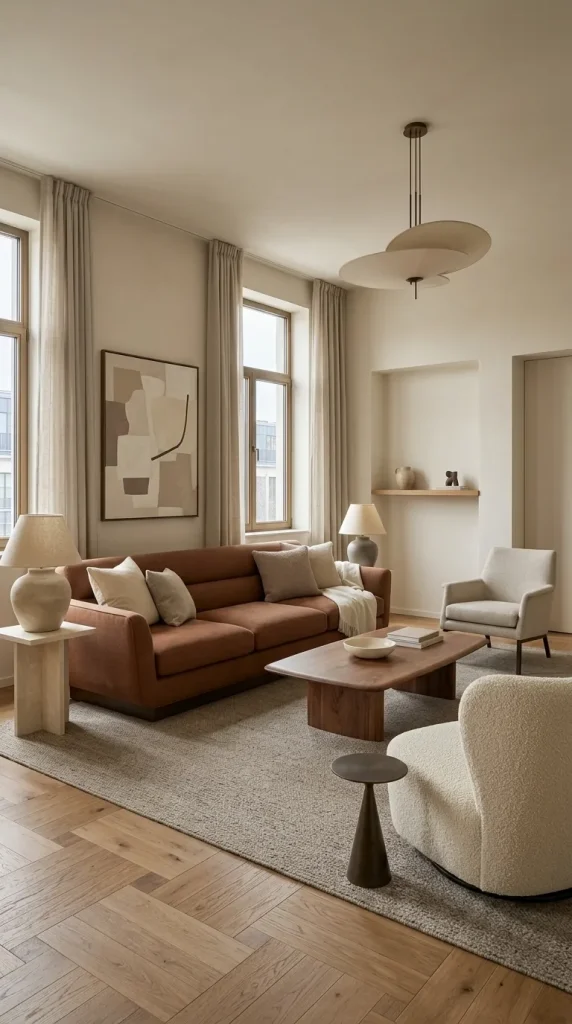
4. Create a Sophisticated Cinnamon Sofa Living Room
Cinnamon is softer than brighter orange and can work almost like a warm brown.
Pair it with cream upholstery, medium-toned wood and a taupe or oatmeal rug. Warm ceramic lighting and understated artwork can give the room a quiet, refined atmosphere.
Because cinnamon is relatively subtle, the room can support slightly more texture without feeling visually crowded.
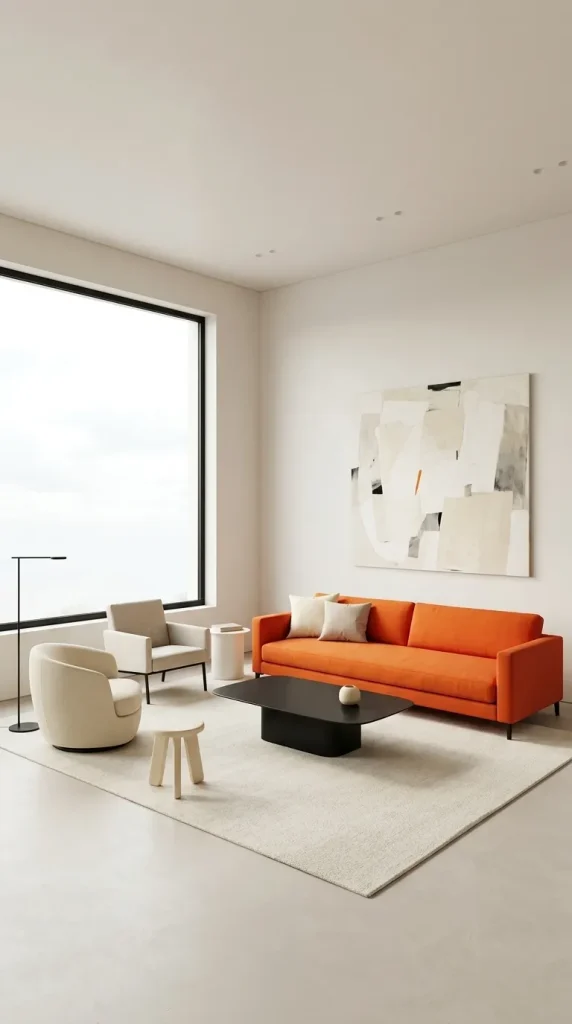
5. Make a Bright Orange Sofa the Only Strong Colour
A vivid orange sofa can carry the entire palette in a restrained room.
Keep the walls warm white, choose a neutral rug and use a simple black or wood coffee table. One large artwork can include a small touch of orange, but the rest of the room should stay relatively quiet.
This approach works particularly well in minimalist and contemporary interiors because the sofa becomes the single statement rather than part of a wider colourful scheme.
Use White, Cream and Beige to Soften Orange

6. Pair an Orange Sofa With Warm White Walls
Warm white is one of the easiest wall colours to use with orange seating.
It gives the sofa visual breathing room while preventing the contrast from becoming too harsh. Add a textured cream rug, natural wood and black lighting to make the room feel complete rather than empty.
Crisp white can work better with a brighter orange, while burnt orange, rust and terracotta usually sit more comfortably beside warmer off-white shades.
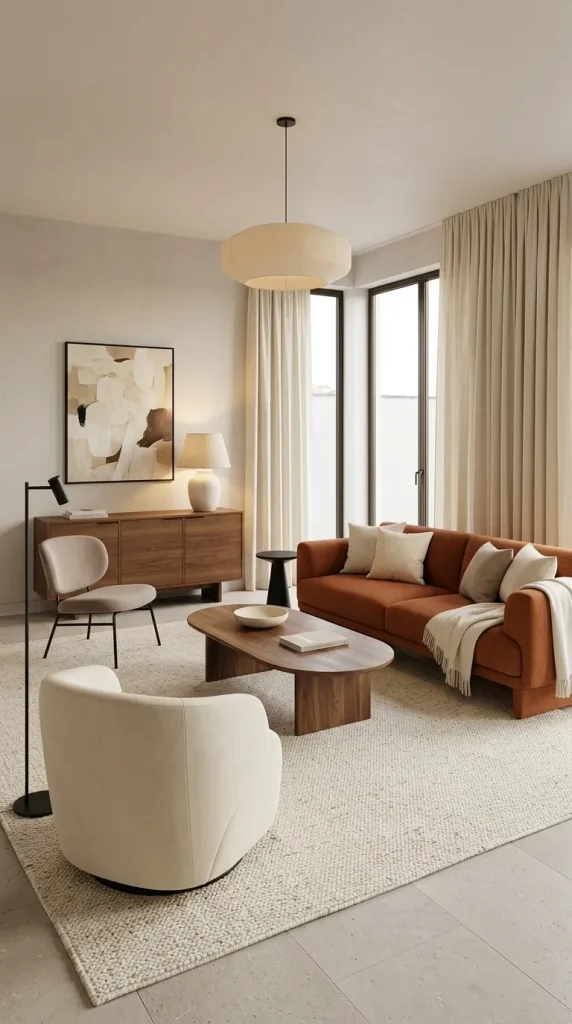
7. Create a Cream-and-Burnt-Orange Living Room
Cream makes burnt orange feel softer and more refined.
Use a cream rug, curtains and perhaps one accent chair, then allow the sofa to provide the deeper colour. Add walnut or medium wood to give the palette enough warmth and black metal for subtle structure.
This combination suits cosy contemporary interiors particularly well.
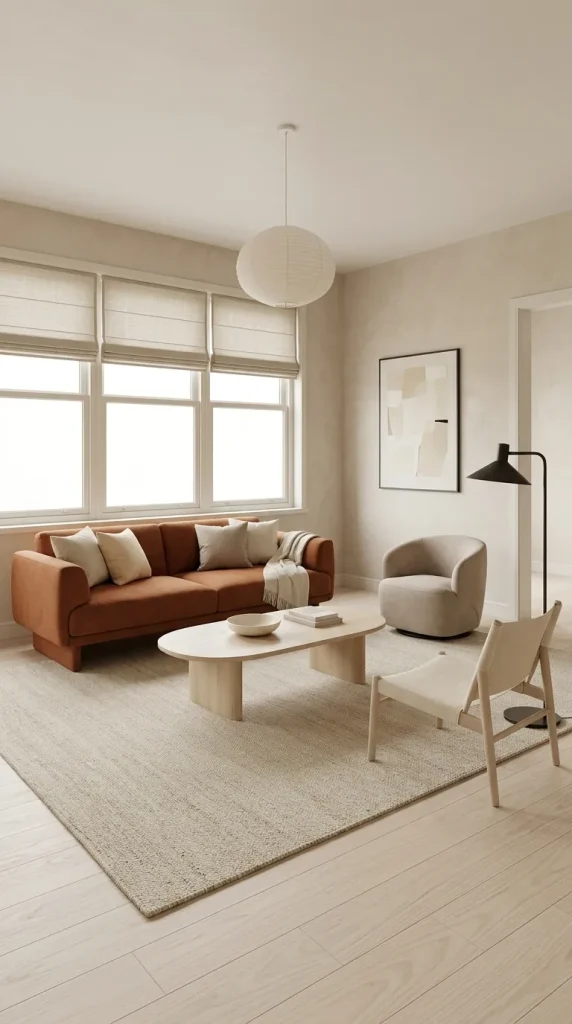
8. Use Pale Beige for a Relaxed Orange Sofa Room
Pale sand and beige can reduce the visual intensity of an orange sofa without making the room dull.
Choose a large neutral rug, beige walls and light timber furniture. Add one darker object, such as a charcoal lamp or black frame, so the overall palette has enough contrast.
This approach works beautifully with rust, terracotta and burnt orange because the sofa becomes the richest tone in the room.
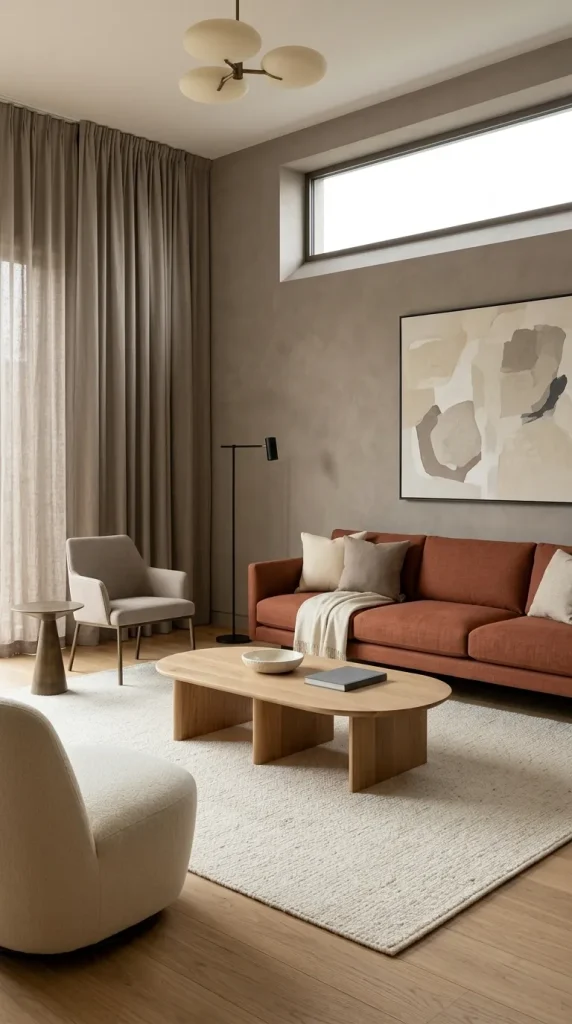
9. Pair Orange With Taupe for a More Muted Look
Taupe gives an orange sofa a slightly cooler, quieter backdrop than standard beige.
Use taupe walls or curtains, a cream rug and natural wood furniture. The mix is especially effective with a rust or terracotta sofa because the taupe softens some of the warmth.
Introduce one or two black or bronze accents to keep the room from feeling overly tonal.
Add Stronger Contrast With Black and Grey

10. Use Black Accents Around a Burnt Orange Sofa
Black can make orange upholstery feel sharper and more modern.
A black coffee table, floor lamp and picture frames provide enough definition without taking over the room. Keep the walls light and use a cream or beige rug to preserve balance.
This is one of the easiest ways to modernise a burnt orange sofa without changing the sofa itself.

11. Create a Dramatic Orange Sofa Against a Charcoal Wall
A charcoal wall can completely change the mood of orange seating.
Bright orange becomes graphic and energetic, while burnt orange looks richer and more sophisticated. Use cream textiles and warm wood to soften the contrast.
Good lighting is especially important because both the wall and sofa are visually strong. Several lamps often work better than one bright overhead light.

12. Pair an Orange Sofa With Light Grey
Light grey can cool the warmth of orange while keeping the room contemporary.
Choose a warm or neutral grey rather than a strongly blue-grey shade, especially with rust and terracotta upholstery. Add a cream rug and pale wood to connect the cooler grey with the warm sofa.
This combination is particularly effective in apartments where the architecture already includes grey flooring or painted walls.
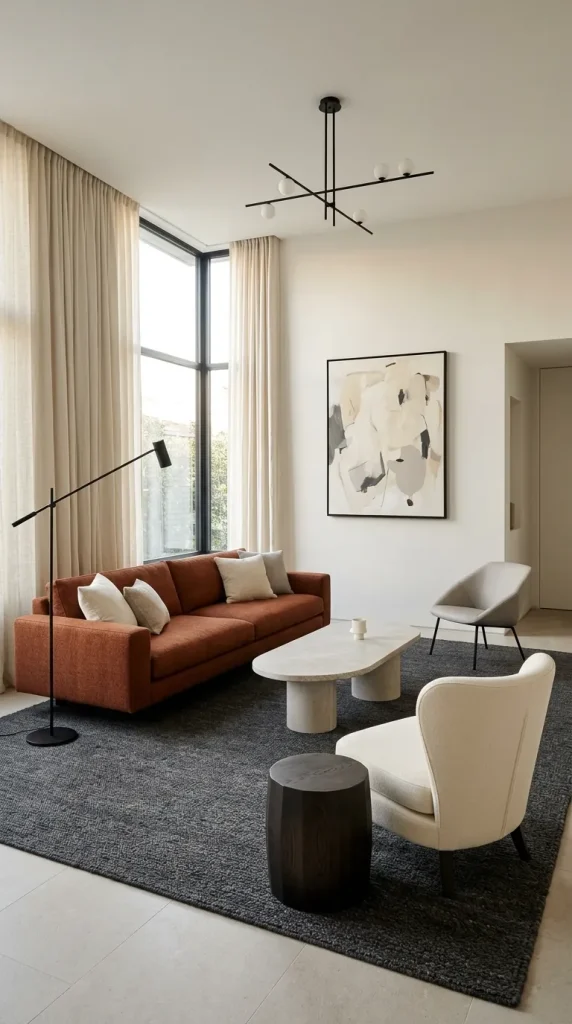
13. Use Charcoal Grey for a Stronger Modern Contrast
Charcoal provides more visual weight than pale grey and works especially well with burnt orange or leather upholstery.
Try a charcoal rug, black lighting and a dark wood side table against lighter walls. The sofa then becomes the warm counterpoint to the darker furnishings.
Keep at least one substantial pale element, such as a cream rug or curtains, so the room does not become too heavy.
Bring in Natural Wood for Warmth
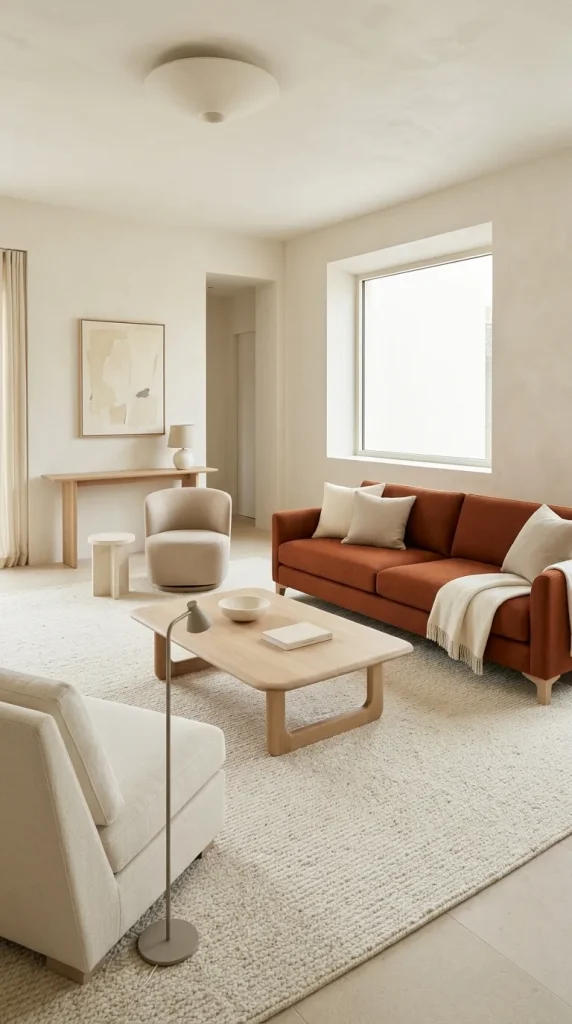
14. Pair Burnt Orange With Pale Oak
Pale oak can make a burnt orange sofa feel fresher and more contemporary.
Use a light wood coffee table, cream walls and an ivory rug. The lighter timber balances the depth of the upholstery and prevents the room from feeling overly retro.
This combination suits modern apartments and warm minimalist interiors especially well.
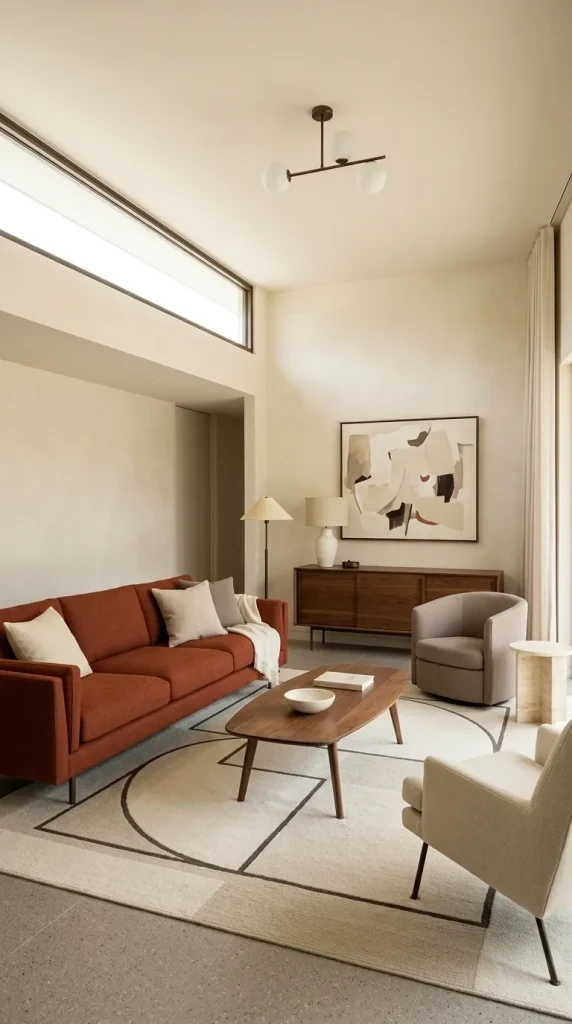
15. Combine Rust With Walnut for a Richer Look
Walnut deepens the warmth of rust and works beautifully in mid-century and retro-inspired rooms.
A low walnut coffee table, slim sideboard and rust sofa can create a cohesive foundation. Add cream walls and a geometric rug to keep the palette from becoming too dark.
The wood and sofa do not need to match exactly; their shared warmth is enough to connect them.
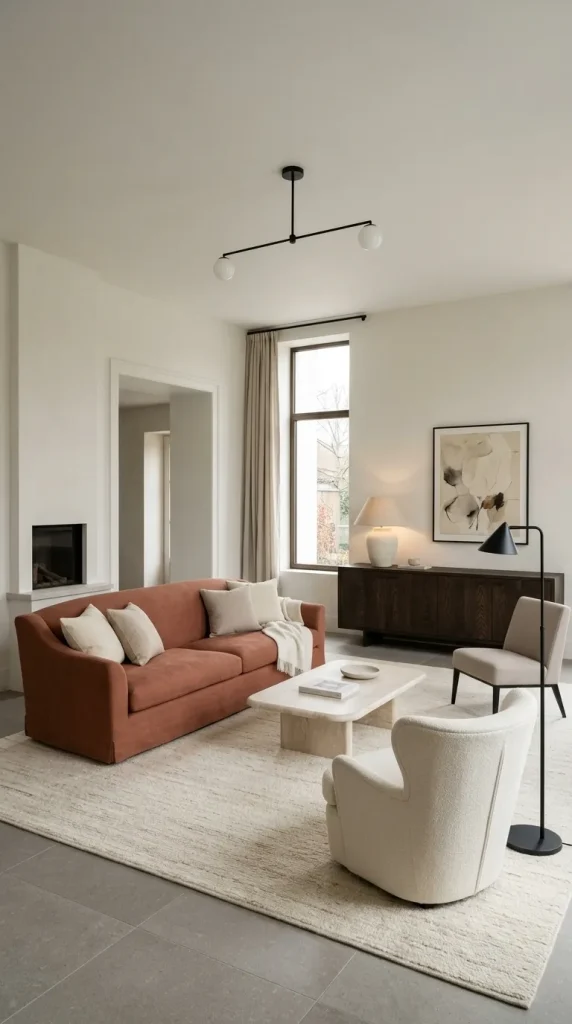
16. Use Dark Wood to Ground a Terracotta Sofa
A terracotta sofa can feel soft and earthy, so darker wood gives it useful structure.
Try a dark timber sideboard or coffee table against warm-white walls. Add a cream rug and simple black lighting.
This approach creates more depth than pale wood and works particularly well in traditional or moodier contemporary rooms.
Explore Retro and Mid-Century Styling
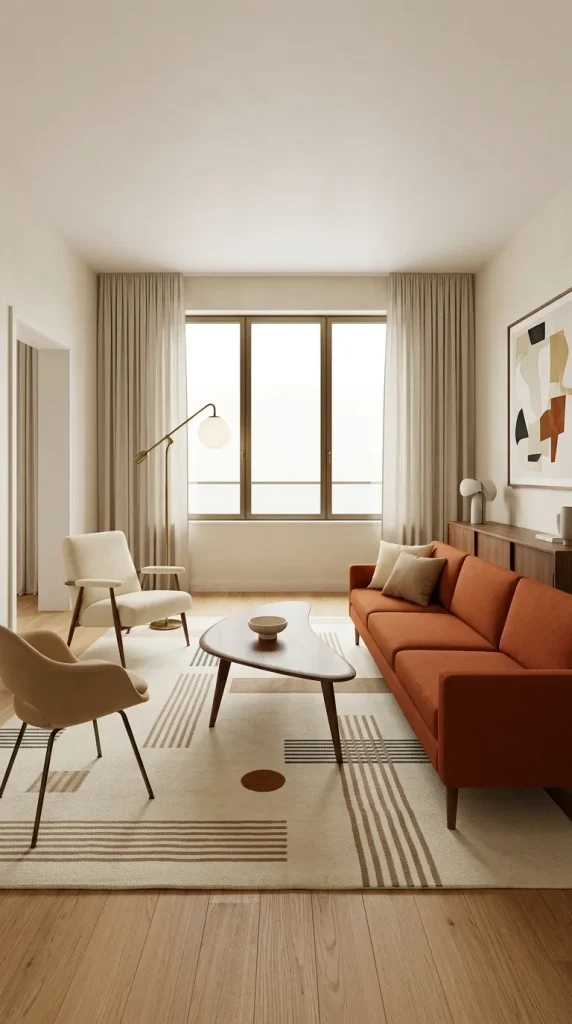
17. Create a Mid-Century Burnt Orange Living Room
Burnt orange is naturally suited to mid-century modern interiors.
Pair a low-profile orange sofa with walnut furniture, tapered legs and a geometric rug. Keep the walls cream or warm white and use one sculptural lamp for visual interest.
Avoid filling the room with overtly retro accessories. Furniture shape, colour and wood tone should carry most of the aesthetic.
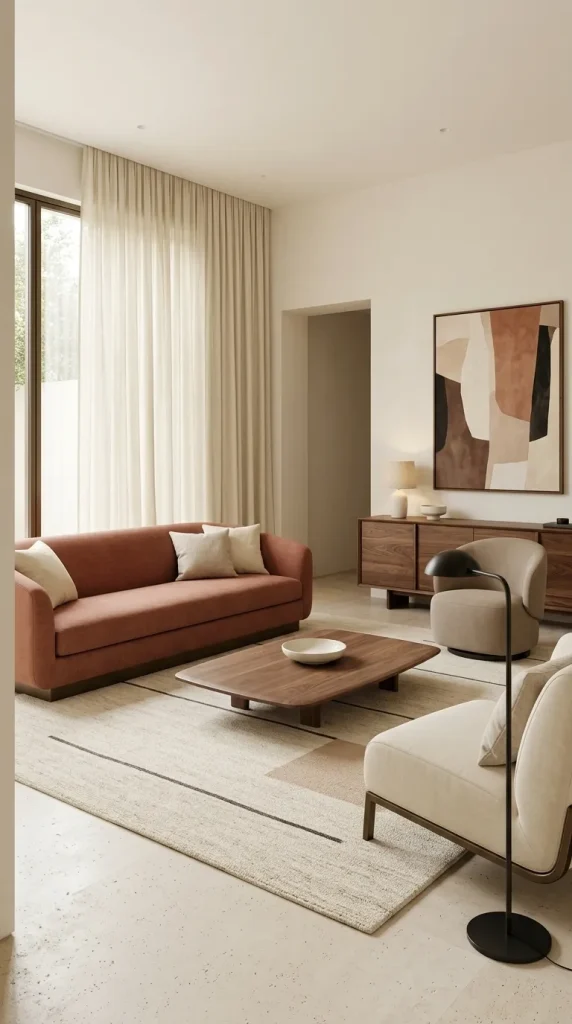
18. Build a Terracotta Mid-Century Room With Walnut and Cream
A terracotta sofa creates a slightly softer mid-century look than bright orange.
Use a walnut sideboard, cream curtains and an abstract artwork containing clay, brown and black. A low coffee table and restrained rug reinforce the period influence.
The room should feel inspired by mid-century design rather than recreated as a historical set.
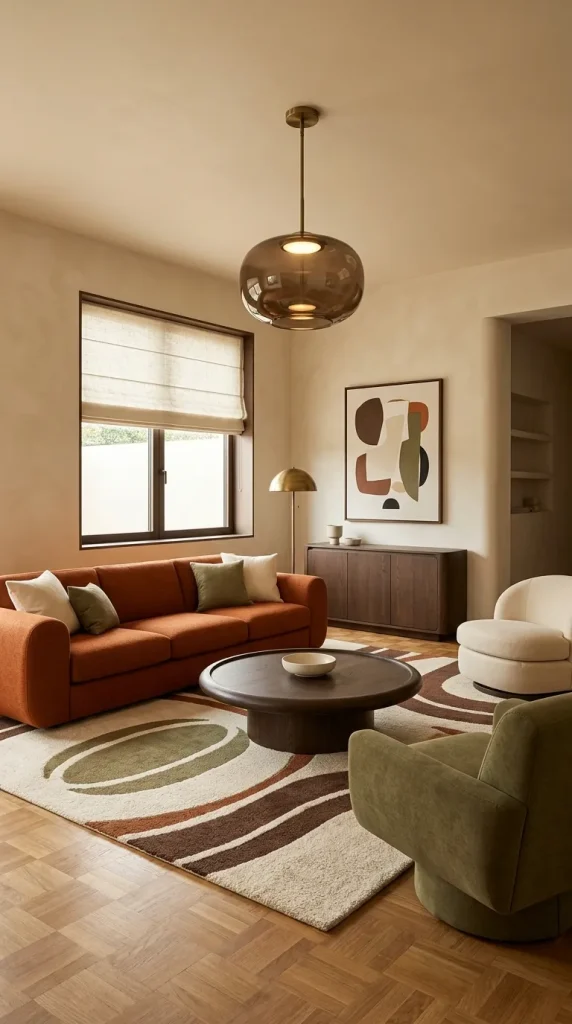
19. Create a 1970s-Inspired Orange Living Room
For a stronger retro direction, use burnt orange with olive, dark wood and cream.
Choose low furniture, rounded shapes and a textured or patterned rug. Brass or smoked-glass lighting can reinforce the atmosphere.
Keep the palette controlled. Orange, olive and brown already create enough visual character without adding several unrelated colours.
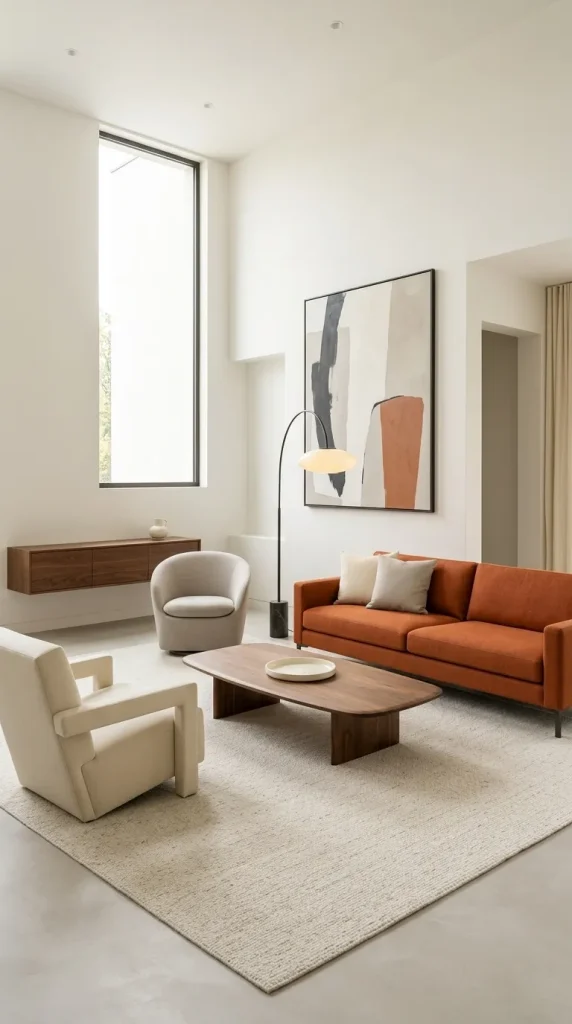
20. Build a Retro-Modern Room With Cleaner Lines
A retro-modern room uses some of the colour and warmth of vintage interiors without reproducing the entire look.
Pair a clean-lined orange sofa with walnut furniture, large abstract art and a simple rug. Add one sculptural lamp and avoid excessive period accessories.
This is a particularly flexible approach because the sofa provides the retro reference while the architecture and furniture remain contemporary.
Create Funky and Colourful Orange Sofa Rooms
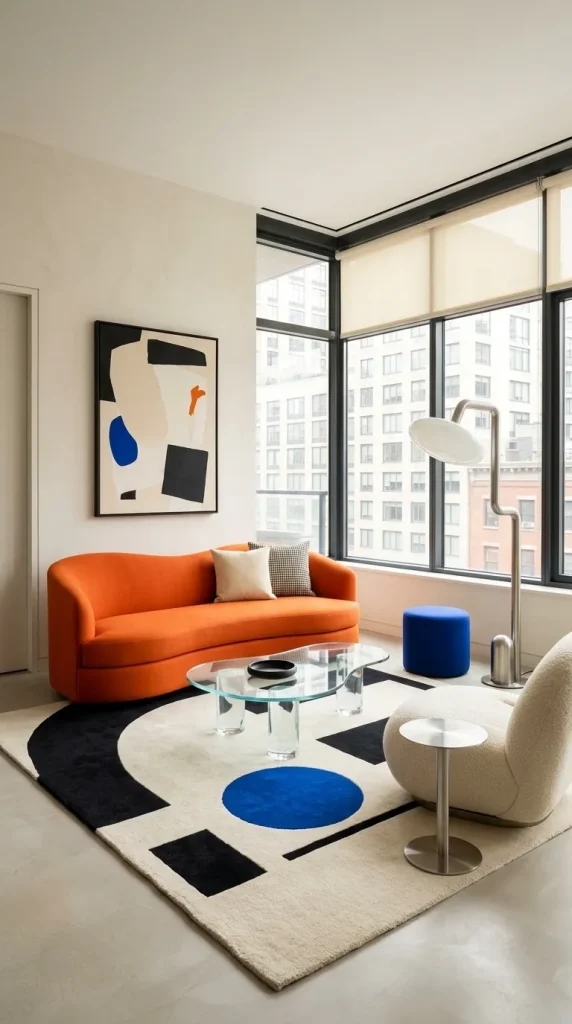
21. Pair a Bright Orange Sofa With a Graphic Rug
A graphic rug can make a bright orange sofa feel playful rather than overpowering.
Choose a design that contains black, cream and perhaps one secondary colour rather than another large field of orange. Curved furniture and unusual lighting can reinforce a funky apartment aesthetic.
Keep wall art bold but limited so the sofa and rug remain the two main visual anchors.
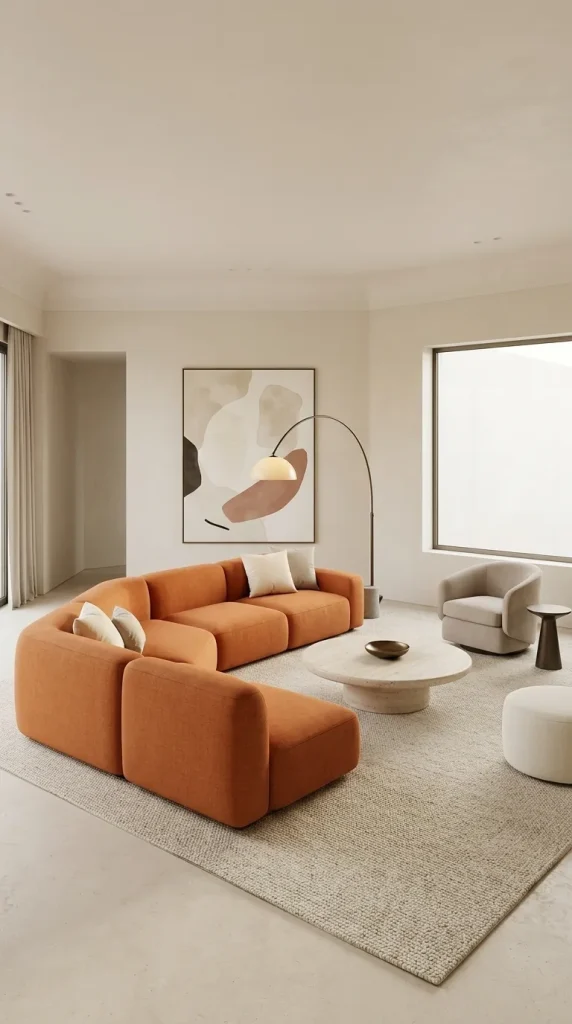
22. Use Curved Furniture Around a Modular Orange Sofa
A modular orange sofa already has a strong sculptural presence.
Pair it with a rounded coffee table, curved floor lamp and one large abstract artwork. Keep the walls relatively simple and use a large neutral rug to give the furniture breathing space.
This creates a playful but composed room rather than a collection of unrelated statement pieces.
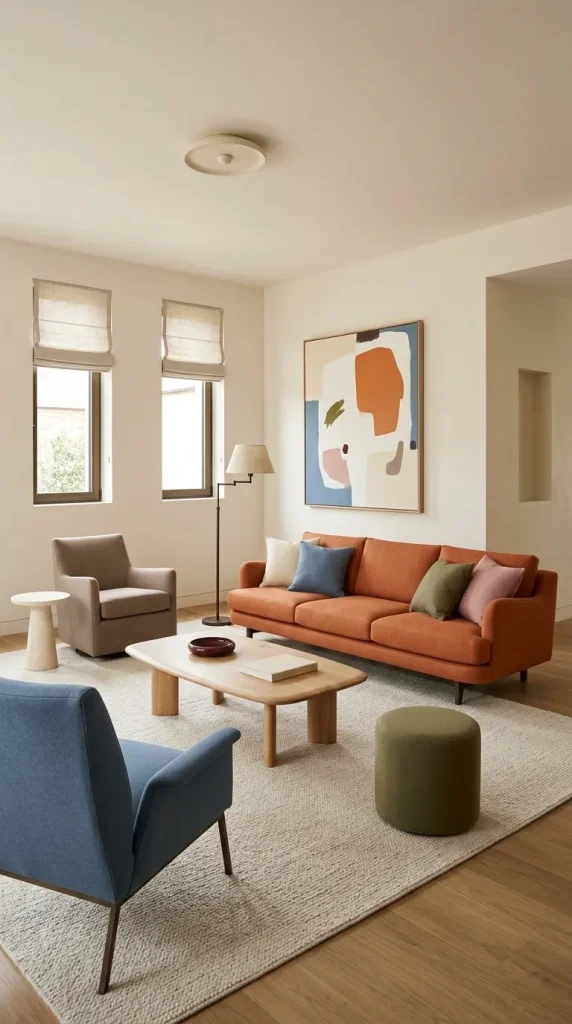
23. Build a Colourful Room Around Muted Secondary Shades
Orange does not need to sit only with neutrals.
Introduce muted blue, olive, dusty pink or burgundy through artwork, cushions and smaller furniture. Keep the orange sofa as the dominant colour and let the secondary tones appear in smaller doses.
This creates a colourful room that still feels coordinated rather than chaotic.
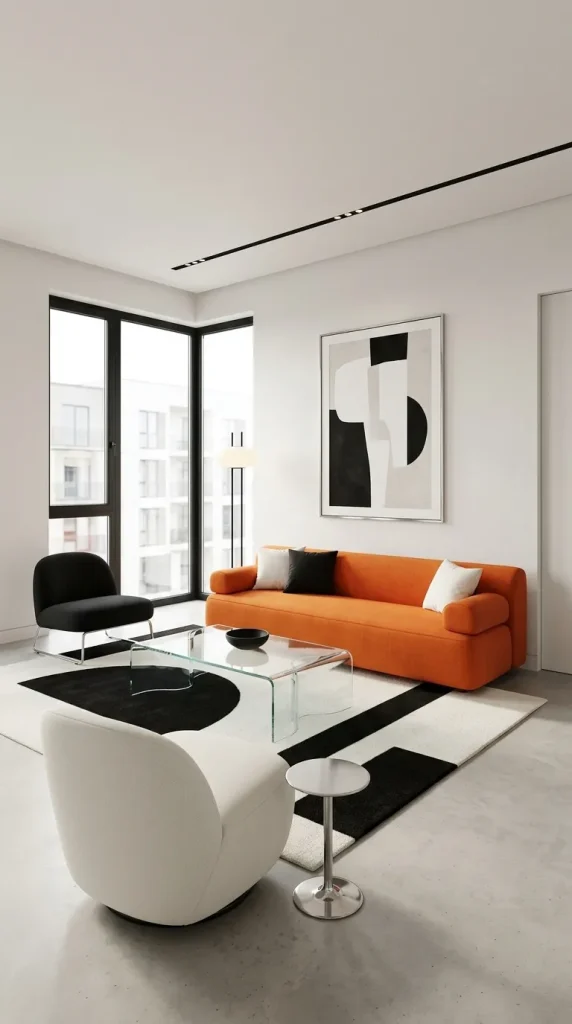
24. Create a Funky Orange Apartment With Black and White
Black and white can give a bright orange sofa a sharper, more graphic context.
Use a black-and-white rug, white walls and black lighting, then allow the sofa to provide nearly all of the colour. Chrome or glass can add another contemporary material without introducing another hue.
This direction works particularly well in modern apartments where the architecture is already simple.
Keep Orange Minimal and Contemporary
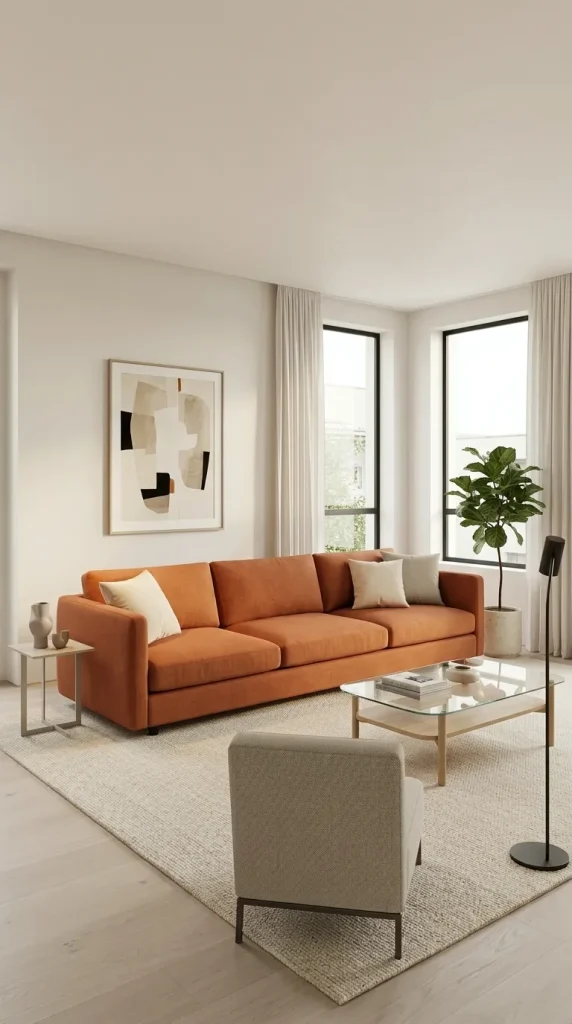
25. Use an Orange Sofa in a Minimalist Living Room
A colourful sofa can work beautifully in minimalism because minimalism is about editing, not eliminating colour.
Place the sofa against warm-white walls with one low coffee table, a simple neutral rug and a single large artwork. Avoid filling shelves and tables with small accessories.
The sofa becomes the main visual feature, which means the room can remain relatively sparse without feeling empty.
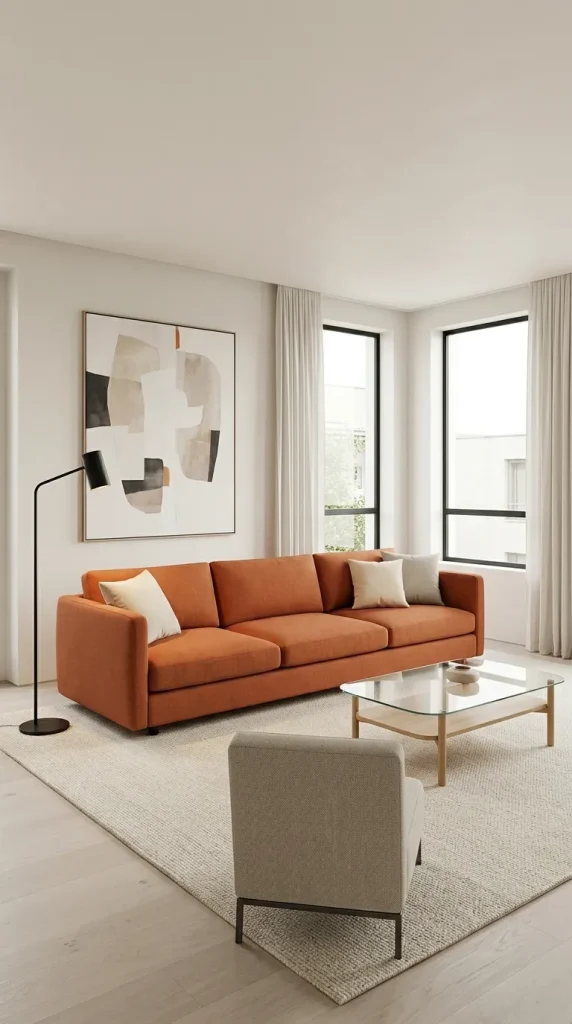
26. Style a Clean Modern Orange Sofa Room
For a polished contemporary look, pair a streamlined orange sofa with simple architecture and restrained materials.
Use a glass or wood coffee table, black floor lamp and large abstract artwork. A light neutral rug creates enough separation between the sofa and floor.
Keep the sofa silhouette as important as the colour. Clean lines make orange feel modern rather than automatically retro.
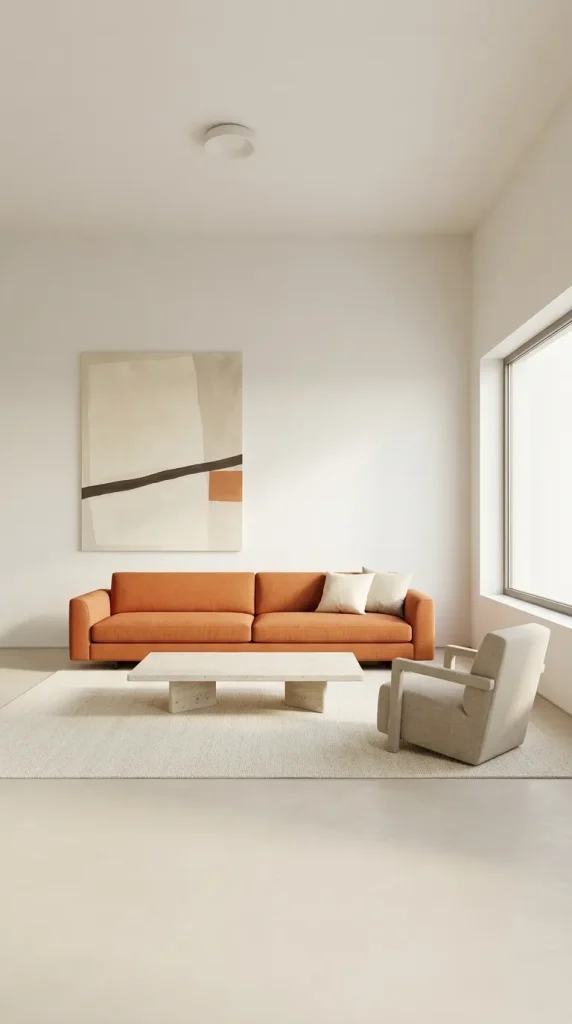
27. Use an Orange Sofa in a Small Living Room
A strong sofa colour can actually help a compact room because it creates an immediate focal point without requiring numerous decorative objects.
Keep the walls light, choose a compact coffee table and use a large but understated rug. Avoid repeating orange across curtains, lamps and multiple accessories.
If the sofa is visually substantial, surrounding furniture should feel lighter so the room maintains enough breathing space.
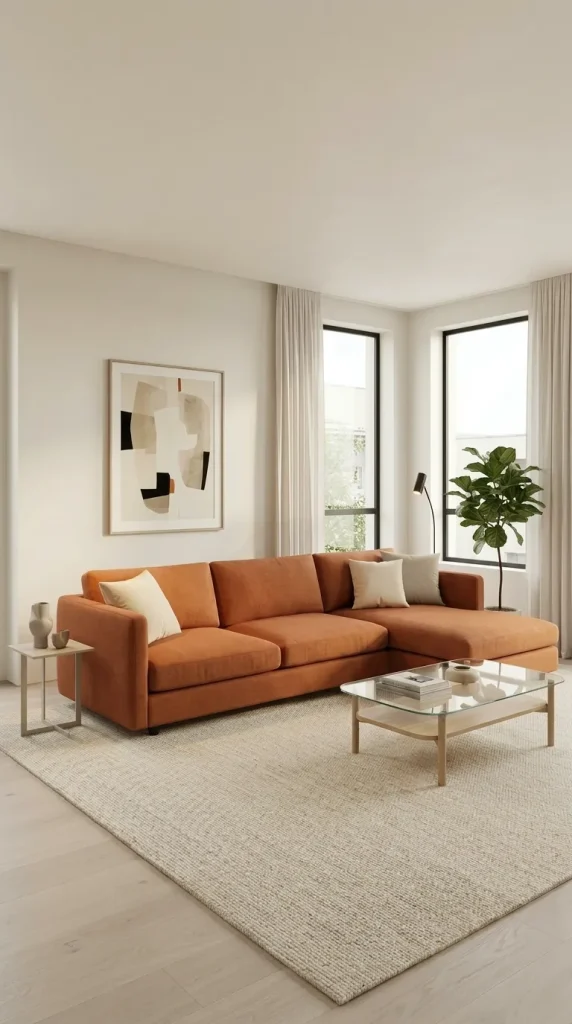
28. Balance an Orange L-Shaped Sofa With a Large Neutral Rug
An L-shaped orange sofa introduces far more colour than a standard two- or three-seater.
Use a large cream, beige or soft-grey rug beneath it and keep the walls relatively quiet. A simple wood or black coffee table can ground the centre of the arrangement.
Because the sofa already occupies considerable visual and physical space, avoid adding several large colourful chairs nearby.
Use Walls, Rugs and Accessories More Strategically
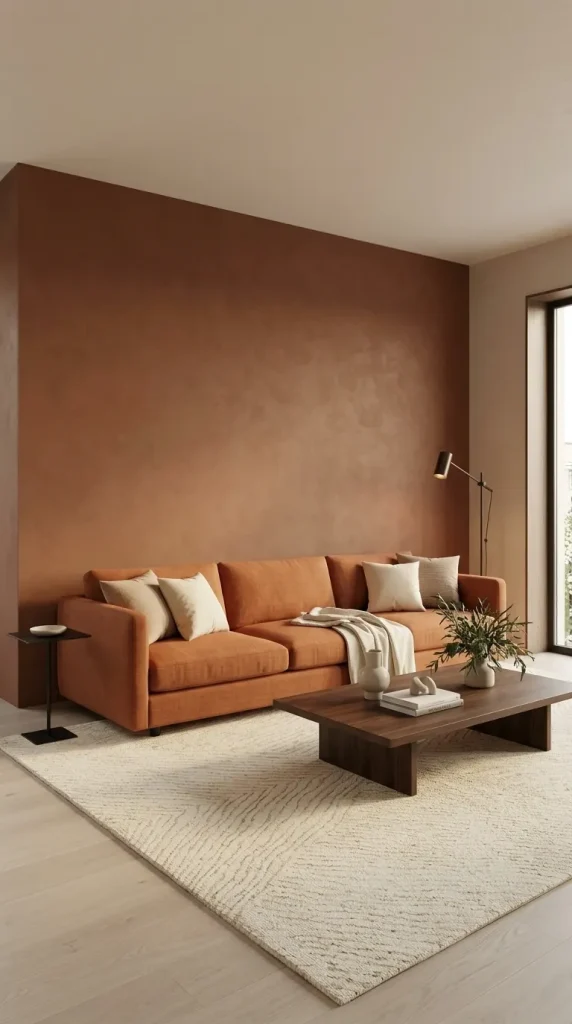
29. Create a Tonal Terracotta Room With an Orange Wall
For a more advanced colour scheme, place a rust or terracotta sofa against a wall in a related but different shade.
A deeper clay wall behind a slightly lighter sofa can create a sophisticated monochromatic effect. Cream textiles, dark wood and black accents help separate the layers.
The important thing is variation. If the wall and sofa are almost identical in colour and finish, the furniture may lose definition.
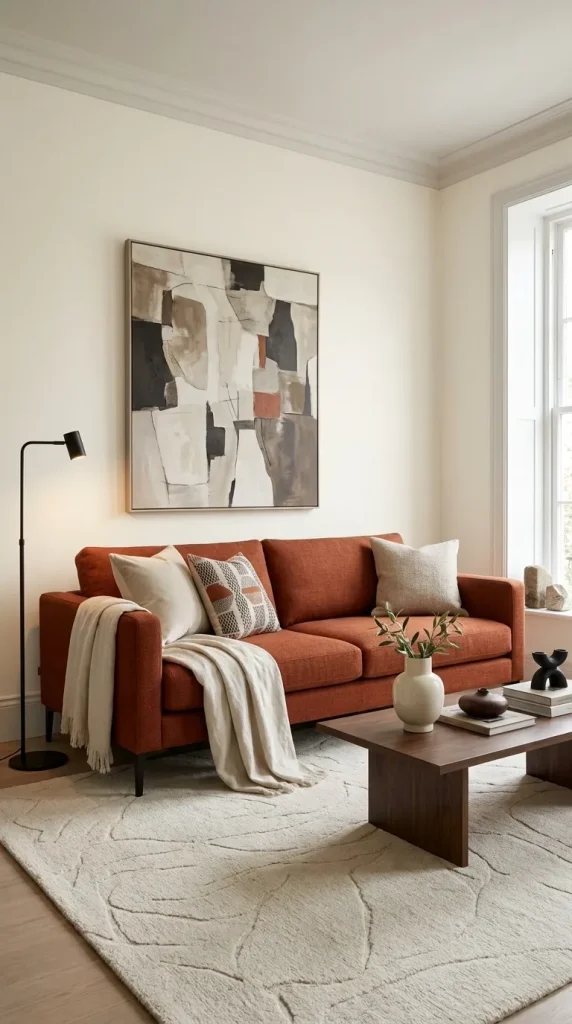
30. Use Artwork and Textiles to Connect the Sofa Without Overmatching
A room does not need matching orange cushions, curtains, lamps and rugs simply because the sofa is orange.
Instead, repeat the colour subtly. An abstract artwork might contain one small rust section, while a patterned cushion picks up the same warmth alongside cream or black. A neutral throw can then soften the sofa rather than adding more orange.
This creates continuity without making the palette feel forced.
How to Choose the Right Palette for Your Orange Sofa
The exact sofa tone should guide the surrounding colours.
| Orange sofa shade | Best supporting colours | Overall effect |
|---|---|---|
| Bright orange | White, black, grey, graphic neutrals | Energetic and modern |
| Burnt orange | Cream, charcoal, walnut, olive | Sophisticated and warm |
| Rust | Beige, cream, dark wood, taupe | Earthy and grounded |
| Terracotta | Warm beige, natural wood, black, cream | Organic and contemporary |
| Cinnamon | Oatmeal, cream, medium wood, taupe | Soft and refined |
| Orange leather | Black metal, walnut, wool, linen | Retro, industrial or modern |
Before buying paint or a rug, look carefully at whether the sofa leans yellow, brown, red or pink. That undertone can change how surrounding neutrals appear.
Best Rug Colours for an Orange Sofa
A cream or beige rug is one of the easiest options because it gives the sofa space to stand out.
Grey can work well in more contemporary rooms, especially when the grey is not excessively cool. Black-and-white rugs create a stronger graphic effect, while patterned rugs can help connect orange with secondary colours in retro or eclectic interiors.
Avoid automatically choosing a predominantly orange rug. Unless the room is intentionally monochromatic, too much similar colour beneath the sofa can reduce contrast and make the seating area feel visually dense.
Best Wall Colours for an Orange Sofa
Warm white provides the cleanest and most flexible backdrop.
Cream and beige create softer, warmer rooms and work especially well with burnt orange, rust and terracotta. Light grey introduces cooler balance, while charcoal or near-black can make orange feel much more dramatic.
If you want a tonal room, clay, rust or muted terracotta walls can work, but the wall and sofa should differ enough in depth or texture to remain distinct.
Always test the wall colour beside the actual sofa fabric in both daylight and evening lighting.
Common Orange Sofa Decorating Mistakes
Repeating orange everywhere. Matching cushions, curtains, rugs and decorative accessories can make the room feel overly coordinated.
Treating every orange shade the same. Bright orange needs a different supporting palette from rust or terracotta.
Ignoring undertones. A sofa that leans red-brown will react differently to grey and beige than one that leans yellow-orange.
Using too many competing focal points. An orange sofa already provides substantial visual impact, so rugs, artwork and lighting should usually support rather than compete with it.
Choosing overly cool lighting. Cold bulbs can make warm orange upholstery feel harsher. Balanced warm lighting generally creates a more flattering effect.
Making a small room too busy. A compact orange sofa can provide enough personality on its own. Extra colour and pattern should be added selectively.
Frequently Asked Questions
What colours go best with an orange sofa?
Cream, warm white, beige, taupe, black, warm grey, olive, navy and natural wood can all work well. The best choice depends on whether the sofa is bright orange, burnt orange, rust, terracotta or cinnamon.
What wall colour works with a burnt orange sofa?
Warm white, cream, beige, soft greige and charcoal are all strong options. Cream creates a softer atmosphere, while charcoal makes burnt orange feel more dramatic.
Does grey go with an orange sofa?
Yes. Light grey can cool the palette and create a contemporary look, while charcoal produces stronger contrast. Warm or neutral greys usually integrate more easily with rust and terracotta than strongly blue-grey shades.
What colour rug works with an orange couch?
Cream, beige, soft grey and black-and-white are reliable options. A multicoloured patterned rug can also work when it contains a small amount of orange that visually connects to the sofa.
How do I make an orange sofa look modern?
Keep the surrounding furniture clean-lined and relatively simple. Use warm-white walls, a large neutral rug, black or wood accents and restrained artwork. Avoid repeating orange excessively around the room.
Let the Orange Sofa Lead the Design
The strongest orange sofa living room decor ideas begin by accepting that the sofa is already the main statement.
Instead of trying to dilute the colour, decide what atmosphere you want around it. Cream and beige can make orange feel calm and earthy. Black and charcoal create sharper contrast. Walnut and dark wood push burnt orange toward mid-century and retro styling, while pale timber makes it feel lighter and more contemporary.
Use rugs, lighting, artwork and accessories to connect the sofa to the room without matching it too literally. A small amount of repeated warmth is usually enough.
When the palette and furniture are chosen intentionally, an orange sofa stops feeling difficult to decorate around. It becomes the element that gives the entire living room its personality.