10 Small Living Room Decor Ideas That Make Limited Space Feel Stylish and Comfortable
A small living room does not need miniature furniture, white walls, and almost no decoration to feel spacious. In fact, those choices can sometimes make a compact room feel tentative, as though every decision was made to disguise its size.
The stronger 10 Small Living Room Decor Ideas for 2026 take a more confident approach. Designers are using properly scaled sofas, larger rugs, darker color, built-in storage, vintage furniture, reflective surfaces, layered lighting, and personal objects while carefully controlling clutter. This same confidence shows up in contemporary living room tips, where scale and purposeful furniture matter more than simply shrinking everything down.
The goal is not to make your living room look twice its actual size. It is to make every square foot feel intentional.
Get the furniture scale right
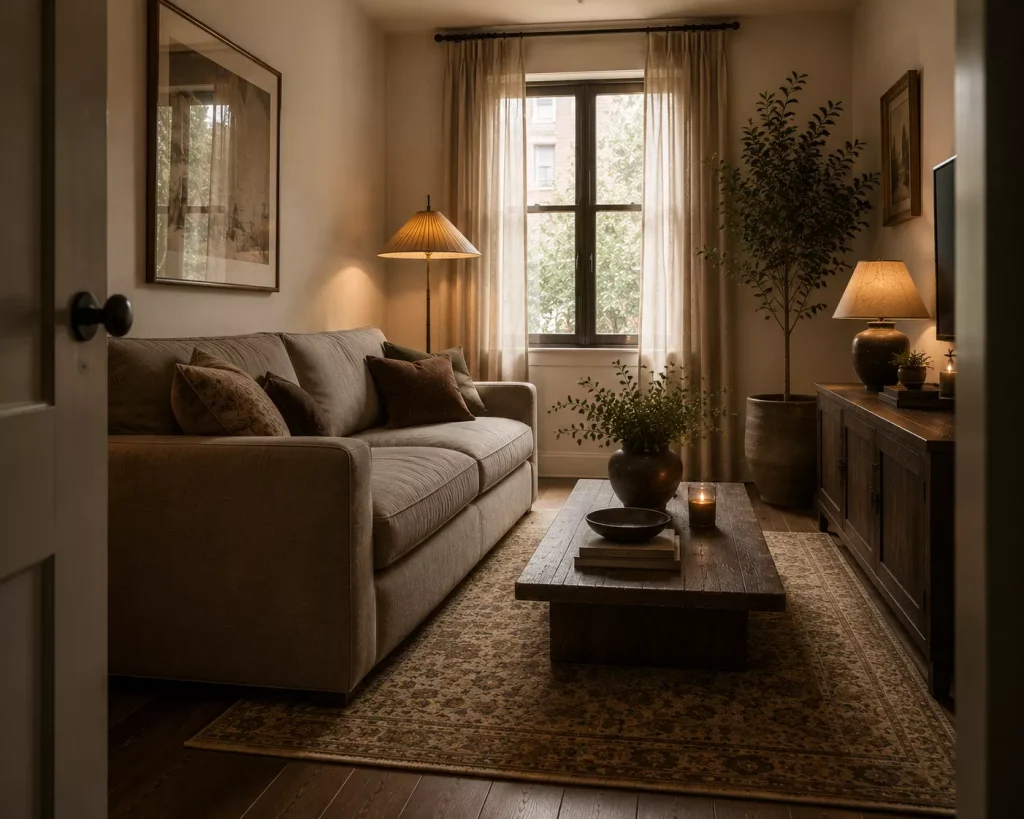
Idea 1: Choose a properly scaled sofa instead of an undersized one. A sofa that is too small can leave a compact room feeling awkward and under-furnished. The right scale, positioned thoughtfully, usually reads as more confident and comfortable than a tiny substitute.
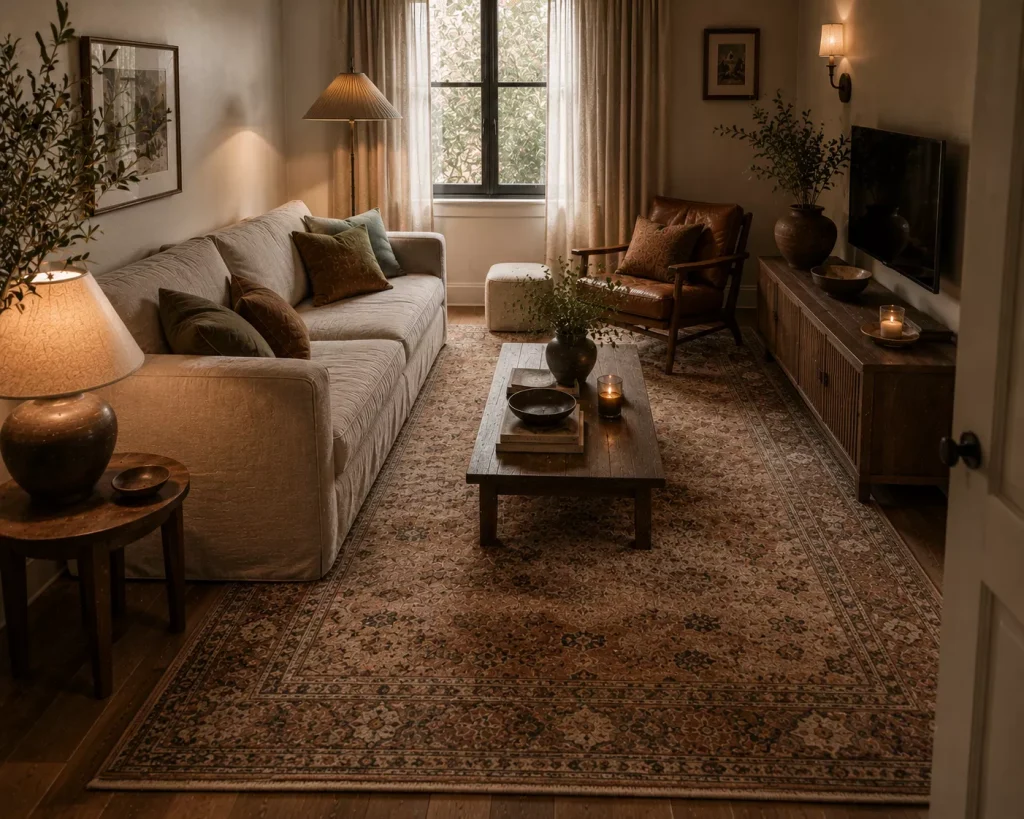
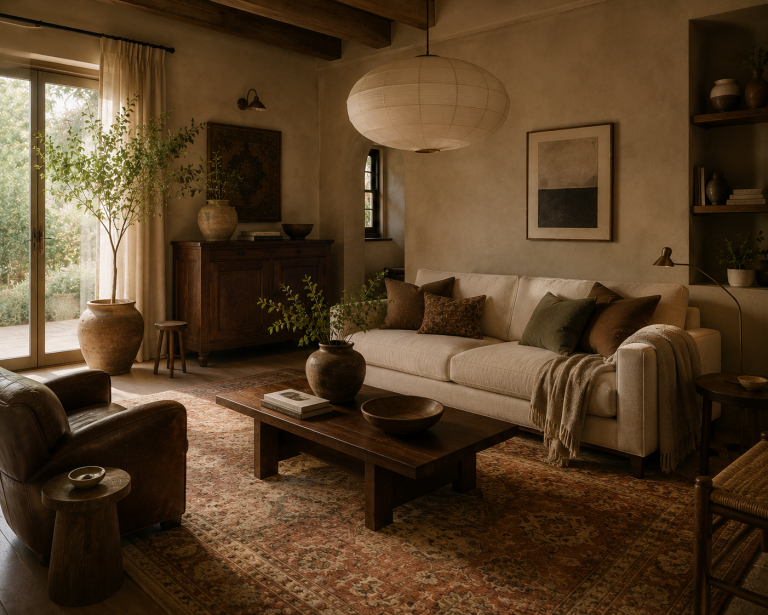
Idea 2: Use a larger rug than instinct suggests. A rug that is too small makes furniture look like it is floating. A properly sized rug, with at least the front legs of major furniture resting on it, visually anchors the room and can make it feel larger, not smaller.
Let color do more of the work

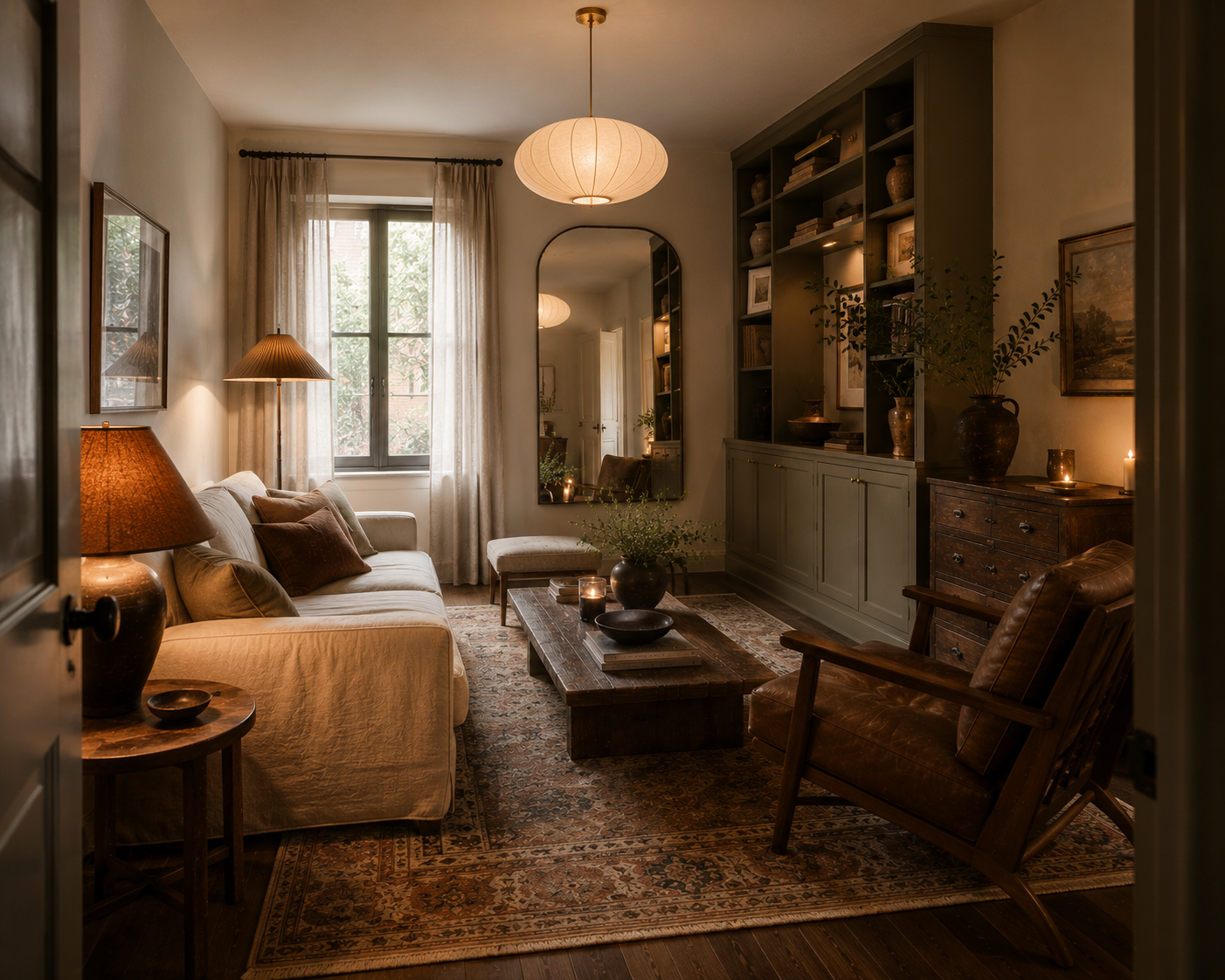
Idea 3: Consider a deeper, more immersive color instead of defaulting to white. Designers are increasingly embracing color drenching and deeper shades rather than assuming pale color always creates more space. Consider carrying one shade across walls, trim, built-in shelving, and radiator covers, and perhaps even the ceiling if the architecture suits it. Fewer color boundaries can make the room feel visually calmer. A dark room does not necessarily feel smaller when every surface belongs to one coherent palette. If full color drenching feels too committed, start by painting the shelving or media unit in the wall color so it visually recedes.
Make storage part of the architecture
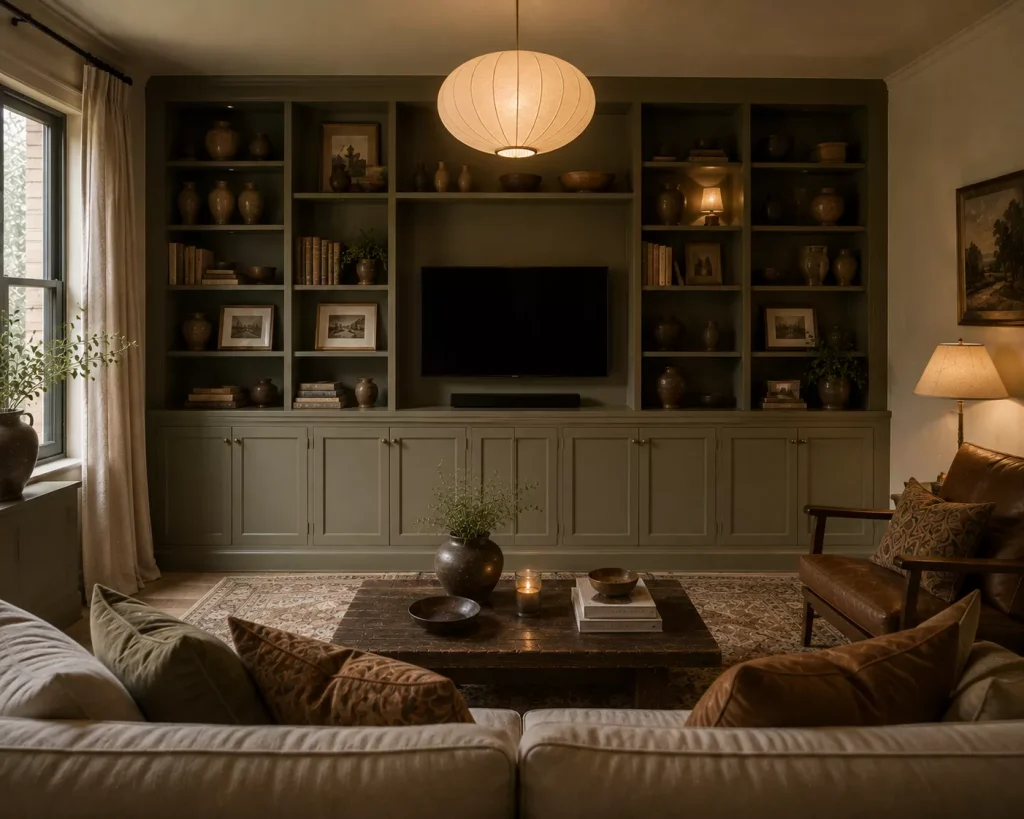
Idea 4: Use one wall for serious storage. A compact living room often looks cluttered because storage has been distributed through too many small objects: a basket here, a shelf there, a narrow bookcase beside the television, another cabinet beneath the window. Instead, consolidate. Use one substantial wall for built-ins, modular cabinetry, or a combination of closed storage and shelving. Closed cabinets can hide chargers, games, toys, remotes, paperwork, and electronics, while open sections carry books, ceramics, photographs, and a few meaningful objects. If true built-ins are outside the budget, place matching freestanding bookcases closely together and paint them the same color as the wall.
Let mirrors move natural light around
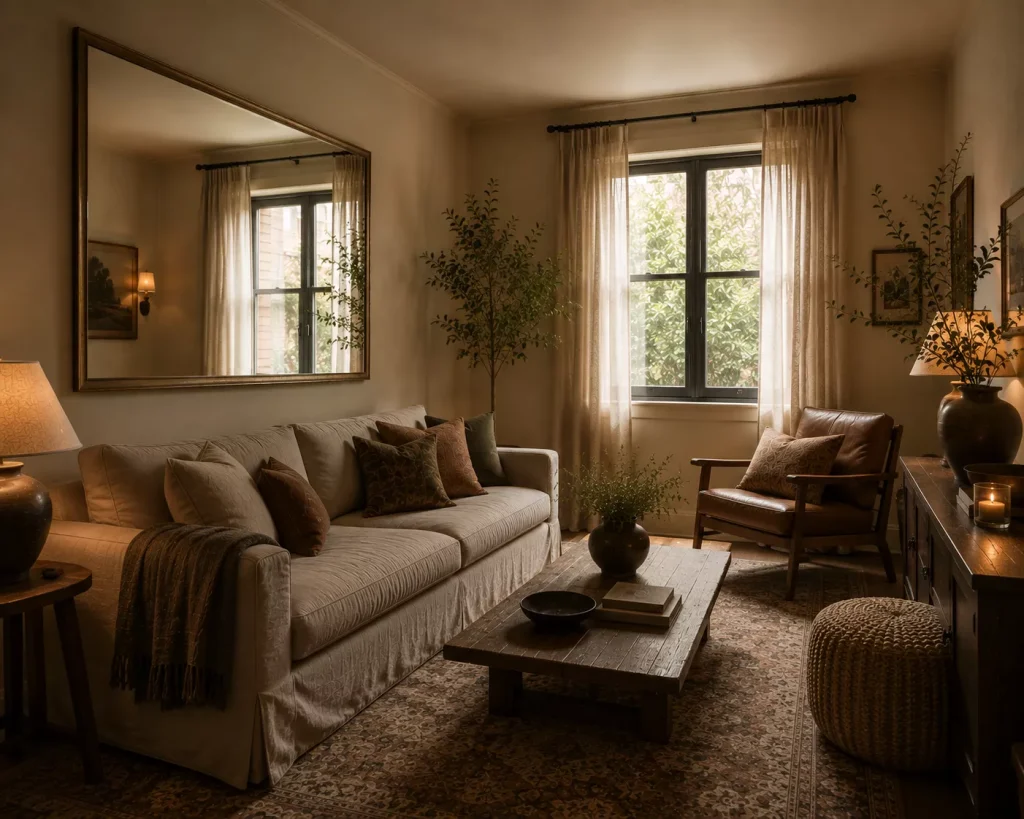
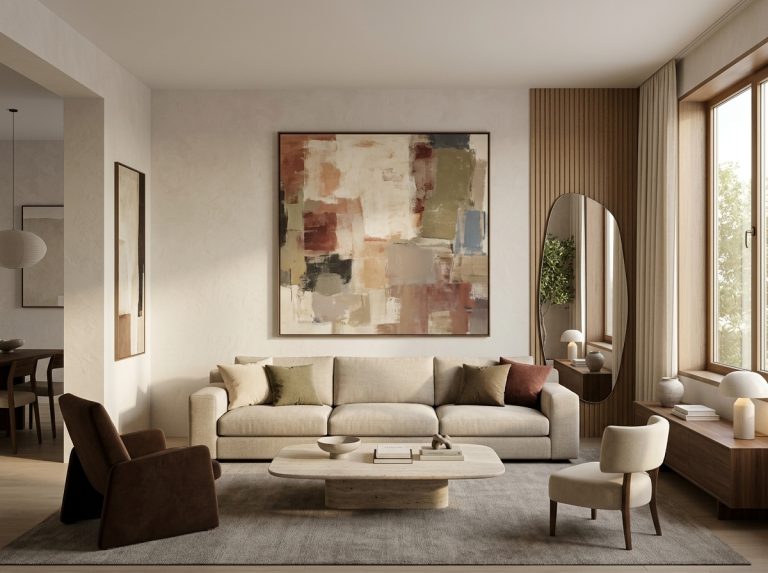
Idea 5: Use one substantial mirror instead of several tiny ones. Mirrors remain useful in small living rooms, but placement matters more than simply adding reflective surfaces. Place a mirror where it can reflect a window, an open doorway, artwork, a lamp, or a pleasant view into another room. A tall mirror between windows can help, and so can a wide mirror over a console or fireplace. Avoid using five small mirrors merely because they take up less wall space; one larger reflective plane usually feels calmer.
Choose curtains that add height

Idea 6: Hang fuller curtains in a richer color rather than thin white panels. For a small room, try warm ivory linen, oatmeal cotton, a narrow stripe, dusty blue, muted olive, or a small floral if the rest of the room is quiet. A fuller curtain in a richer color can make the room look more finished. If privacy is needed during the day, combine a sheer or blind with the decorative panels rather than relying on one heavy curtain for every job.
Give one piece of furniture more than one job

Idea 7: Replace the standard coffee table with something more useful. A coffee table occupies valuable central floor space, so make it work harder. Consider a storage ottoman, nesting tables, a trunk, a coffee table with drawers, a lift-top design, or a pair of stools that can become extra seating. A storage ottoman can be especially effective: it provides a place for feet, a tray can convert it into a table, and the interior may hide throws or children’s items. Keep dimensions proportionate, and leave enough circulation between the sofa and central table to move comfortably, often roughly 14 to 18 inches depending on furniture depth and room layout.
Light the room from several heights
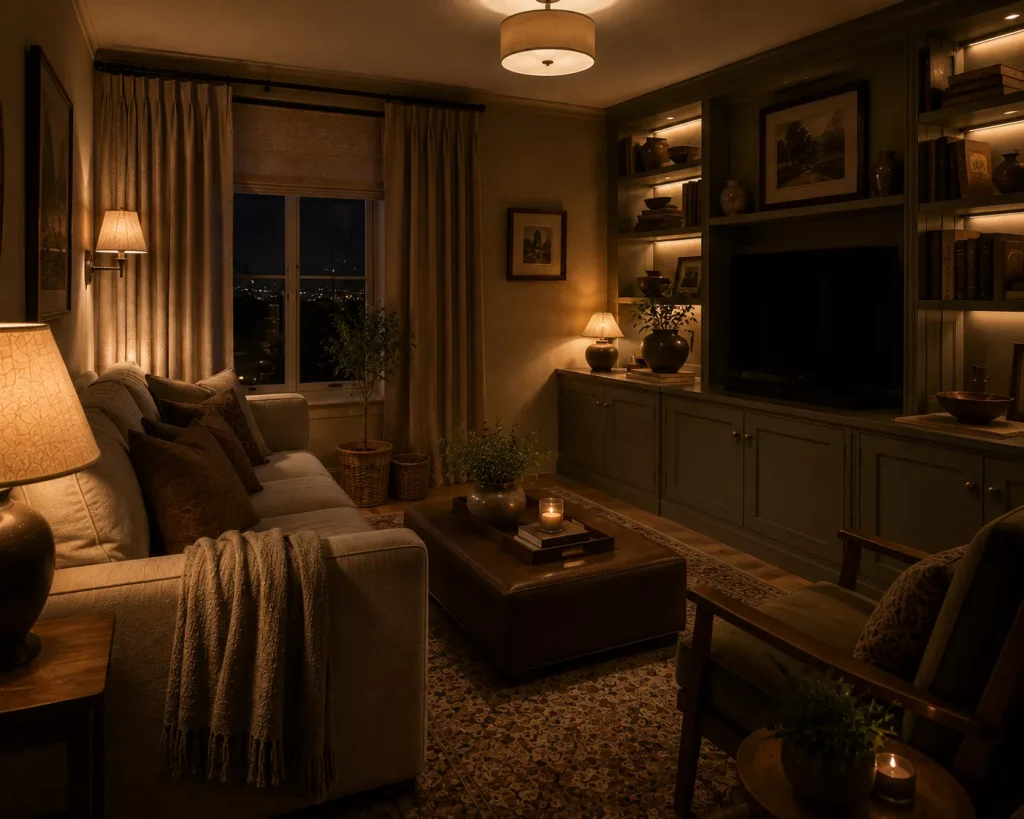
Idea 8: Create layered lighting instead of relying on one ceiling fixture. A single bright ceiling light can make a small living room feel surprisingly flat. Combine ambient light from a ceiling fixture, a table or floor lamp for softer illumination, a wall sconce or small accent lamp, and perhaps integrated lighting within shelving. Layered lighting is one of the strongest small-space directions of 2026 because it creates depth and atmosphere without using much physical floor area. Wall sconces are particularly useful when there is no room for substantial side tables.
Add personality without adding clutter
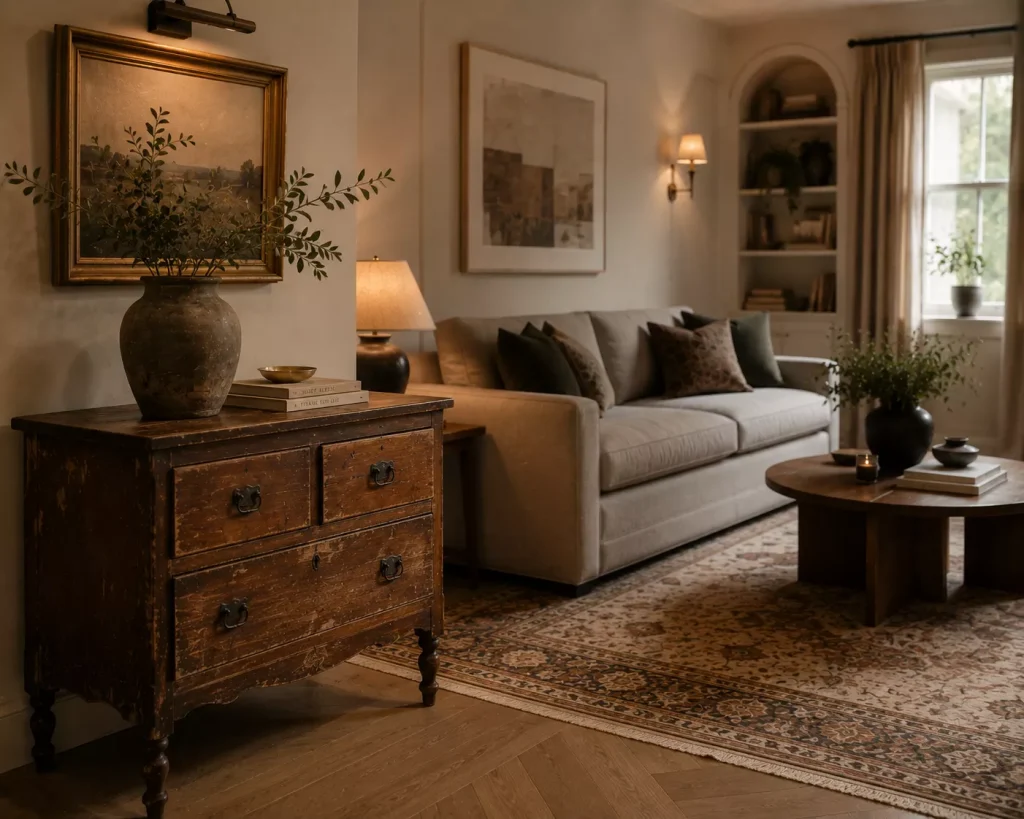
Idea 9: Bring in one genuine vintage piece. A single vintage chair, table, or cabinet gives a room more character than a collection of matching new furniture. It also breaks up the sense that everything was purchased as a set, which can make a small room feel more collected and less generic. This kind of restrained, layered approach to personality is explored further in aesthetic living room ideas.
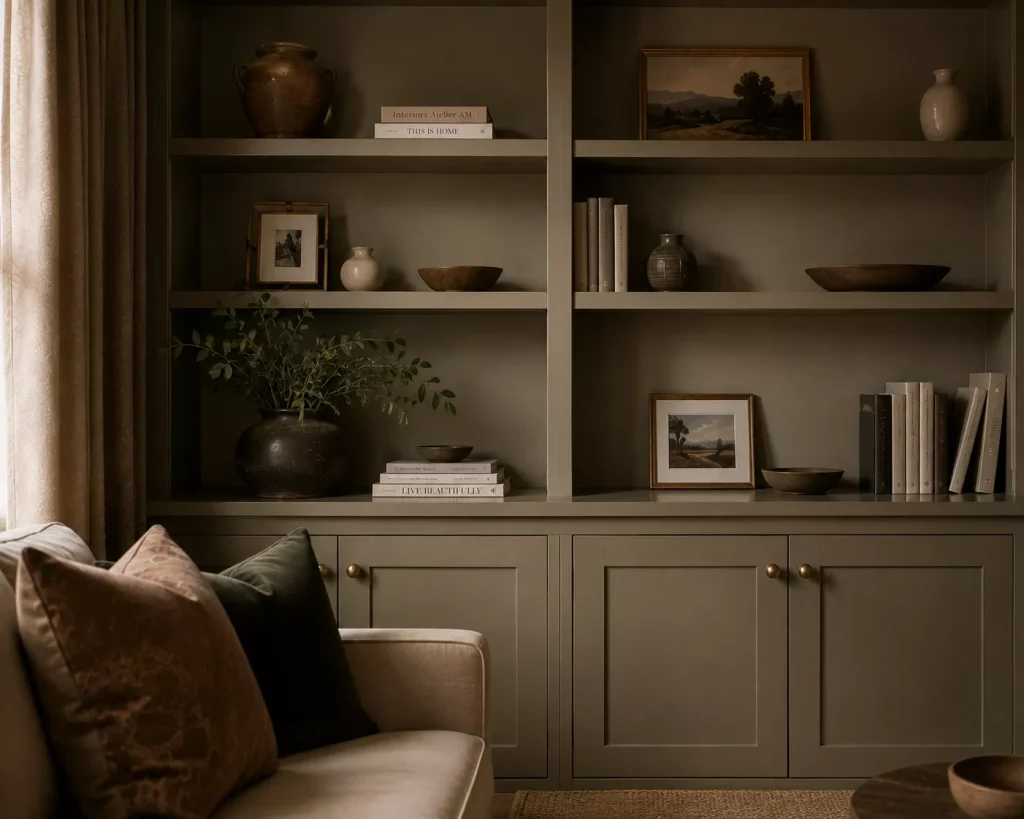
Idea 10: Edit shelves so they do not feel crowded. Displaying every object at once can make a small room feel busier than it already is. Leave visible negative space on shelving so the pieces that remain feel chosen rather than accumulated. Do not try every tactic simultaneously; usually two or three meaningful changes will alter the room more than buying another collection of accessories. A calmer, more restrained approach to display is at the heart of minimalist living room ideas, which apply just as well to a small space as a large one.
What should you skip in a small living room?
Tiny furniture everywhere. Proper scale can make a compact room feel calmer than many undersized pieces.
A small floating rug. A larger rug often creates a stronger sense of space.
White purely because the room is small. Deeper color, as covered in moody neutral living room tips, can actually unify compact architecture.
Open storage on every wall. Closed cabinetry helps control visual clutter.
Decorating every available surface. Current rooms are becoming more personal, but restraint still matters.
Try this if your small living room already feels crowded
Do not buy storage baskets first. Remove every movable decorative object and photograph the room. Then assess the largest pieces. Is the sofa correctly positioned? Is the rug big enough? Once the large furniture is right, reintroduce personal objects slowly rather than all at once, and resist the pull toward endless pale surfaces and miniature furniture.
If you make one change first, photograph the room from the doorway and identify what creates the most visual fragmentation. Simplify that area before adding anything new.
A well-designed small living room should not make visitors think about its size. It should make them notice how comfortable, layered, and personal it feels.