12 Contemporary Living Room Tips for a Polished, Livable Home
A contemporary living room can look impressive in a photograph and still feel uncomfortable to live in. The problem usually appears when “contemporary” gets translated into glossy surfaces, matching furniture, cold gray paint, and a sofa positioned primarily to face an enormous television.
The stronger 12 contemporary living room tips for 2026 take a different direction. Contemporary design is becoming warmer, more expressive, and more personal. Current living-room coverage points toward relaxed layouts, sculptural furniture, vintage pieces, richer woods, statement lighting, and rooms designed around how people actually live rather than a rigid showroom formula.
The result should still feel clean and current, but not empty. Think strong proportions, interesting materials, controlled contrast, and furniture you genuinely want to use.
Start with a warmer contemporary foundation
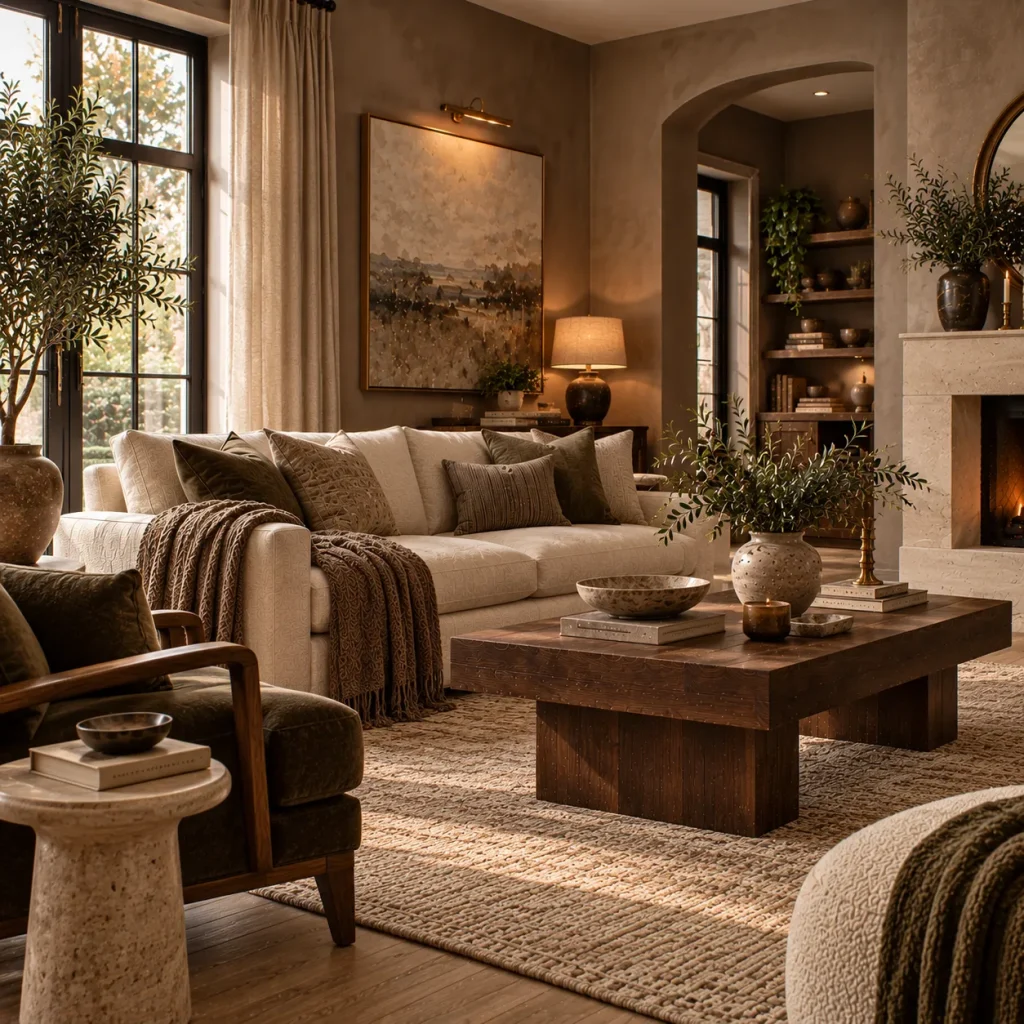
Tip 1: Use nuanced neutrals rather than cold gray
Contemporary does not mean gray walls.
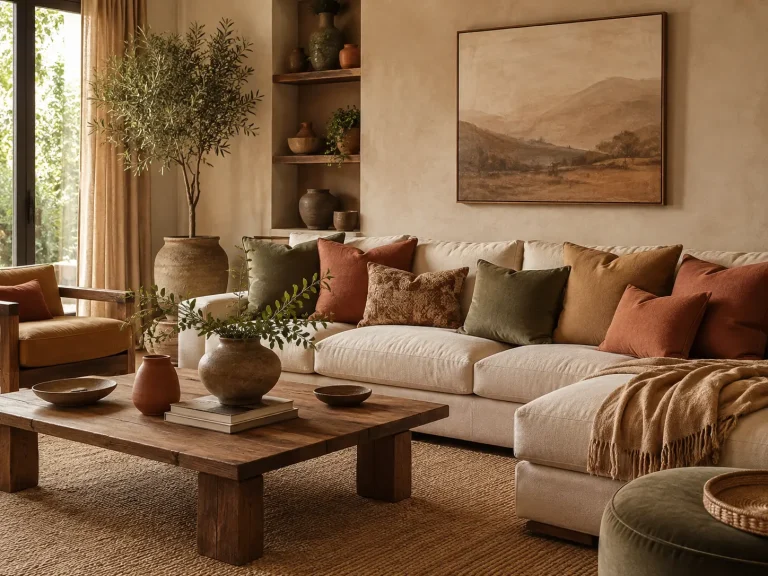
Warm ivory, mushroom, parchment, clay-beige, soft taupe, and smoky putty create a cleaner background for wood, stone, metal, and stronger upholstery colors. If you prefer a darker room, chocolate, olive, aubergine, and warm charcoal can provide sophistication without the hardness of pure black.
Before choosing paint, compare it directly with your flooring. A cool greige beside honey oak can make both surfaces look slightly wrong.
And do not assume every contemporary room needs pale walls. A rich, continuous color can actually make simple furniture shapes appear sharper, a foundation also explored in these organic modern living room ideas.
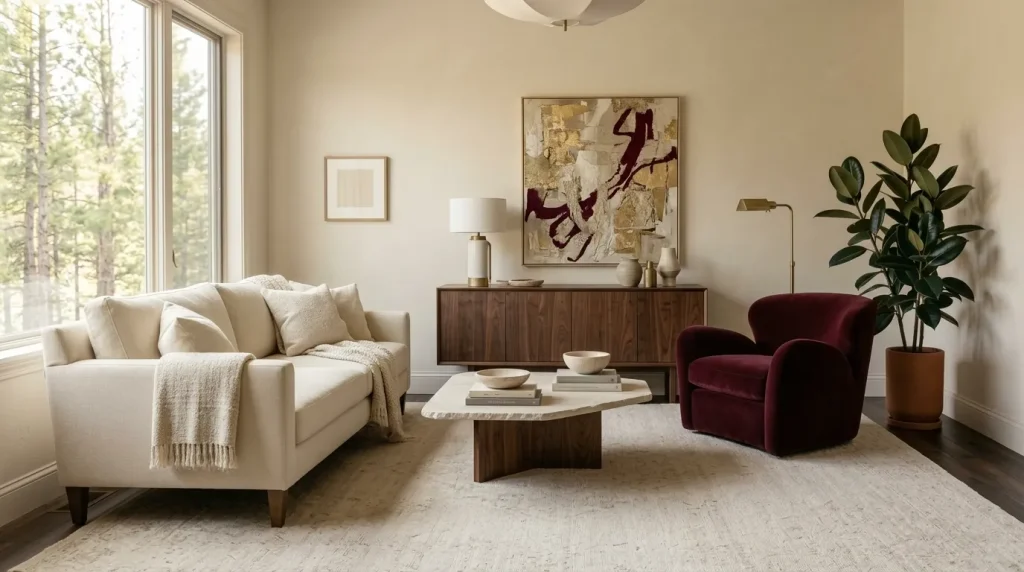
Tip 2: Introduce one deeper color with authority
A room with cream walls, cream upholstery, pale oak, and a beige rug may be calm, but it can also lack hierarchy.
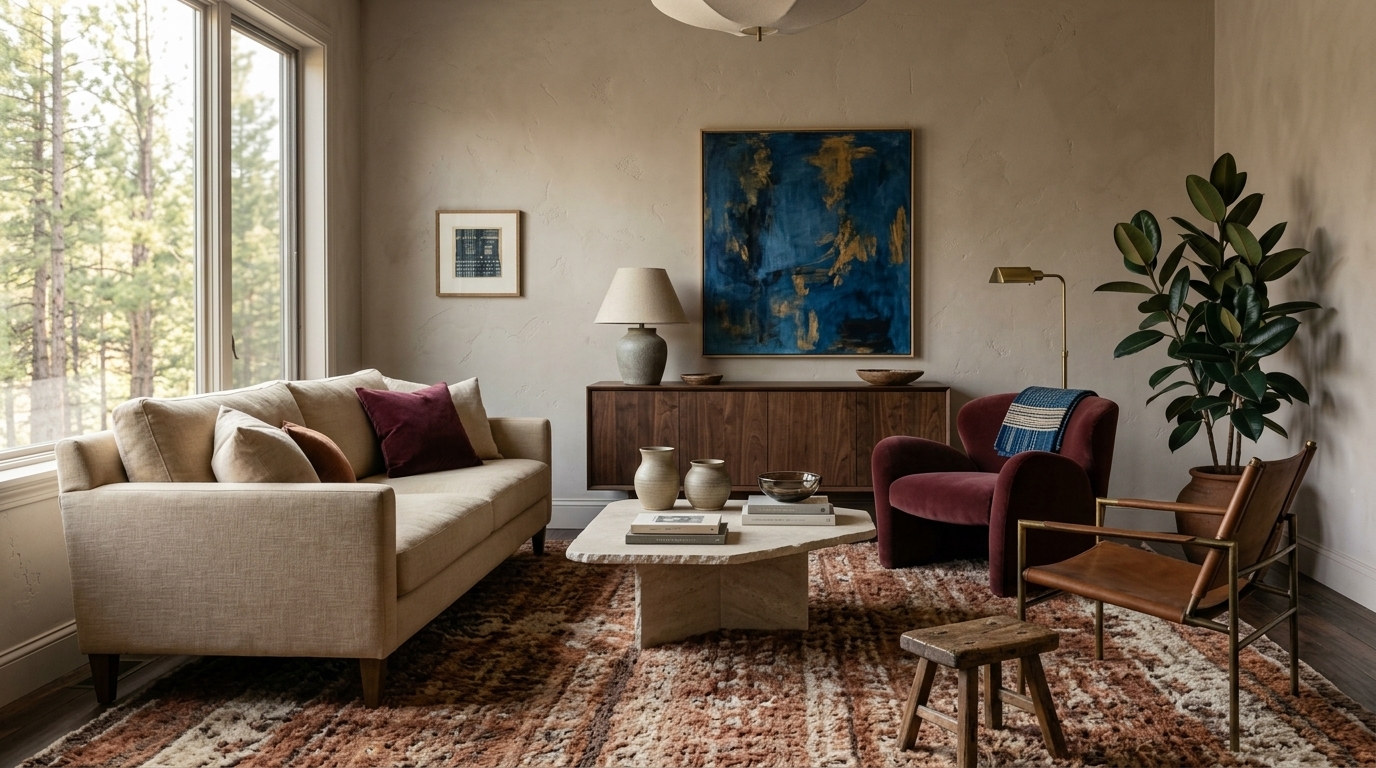
Bring in one darker tone through a significant object. Try a chocolate sofa, burgundy chair, bottle-green cabinet, walnut table, or large piece of saturated art.
This fits the broader 2026 move away from neutral “safe” interiors toward more individual color and statement pieces. Designers speaking to Elle Decor describe contemporary living rooms as increasingly expressive, layered, and personal.
You do not need five accent colors. One confident color often does more.
Choose furniture for shape and comfort
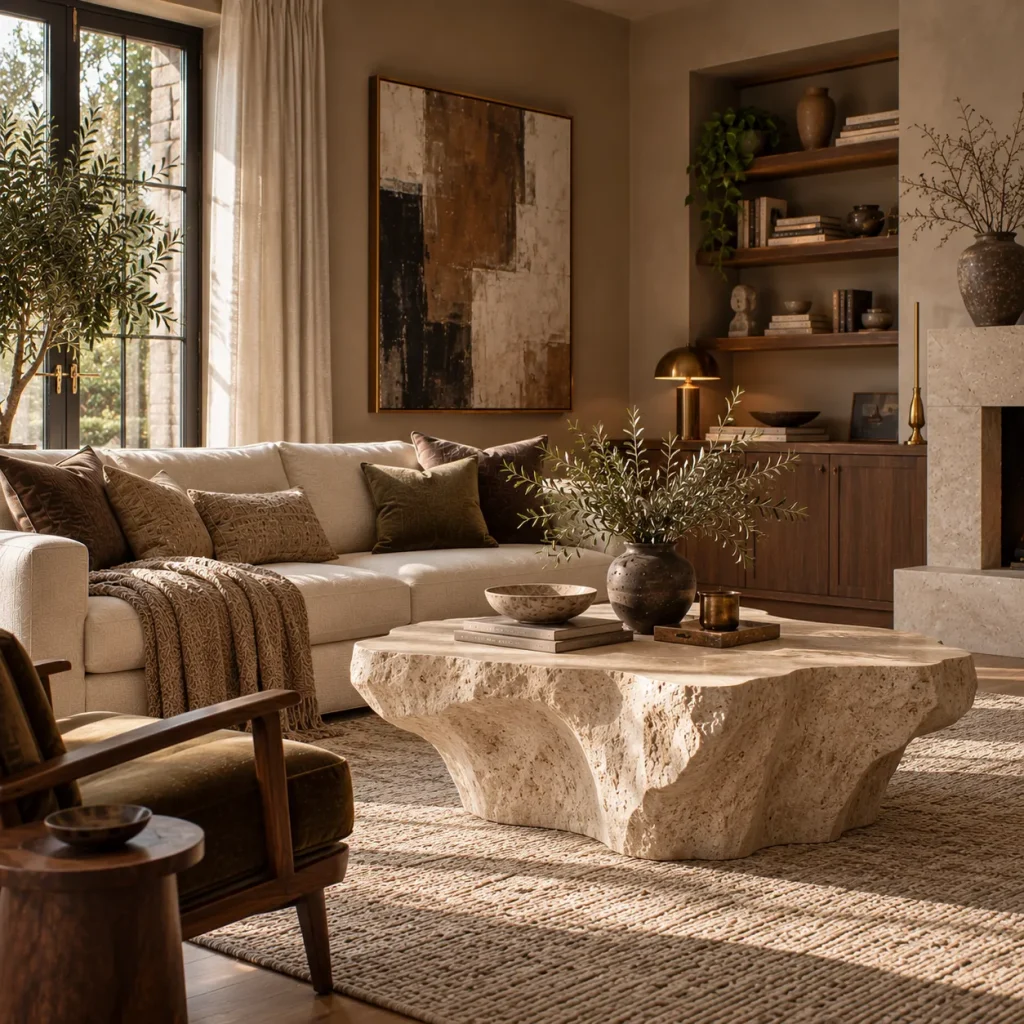
Tip 3: Use one sculptural piece, then let it breathe
Contemporary furniture is becoming softer and more sculptural, but curves work best when they have straighter shapes around them.
A rounded lounge chair can sit beside a rectangular sofa. An irregular stone coffee table can contrast with clean cabinetry. A curved sofa can work against a wall with crisp architectural lines.
The mistake is using a curved sofa, curved chairs, round rug, pebble table, arched cabinet, and mushroom lamp together.
One memorable silhouette creates tension. Six create a theme, the same restraint behind these curved furniture ideas for a living room.
If you choose a sculptural coffee table, keep roughly 14 to 18 inches between it and the sofa where the layout permits. It should look interesting without making circulation awkward.
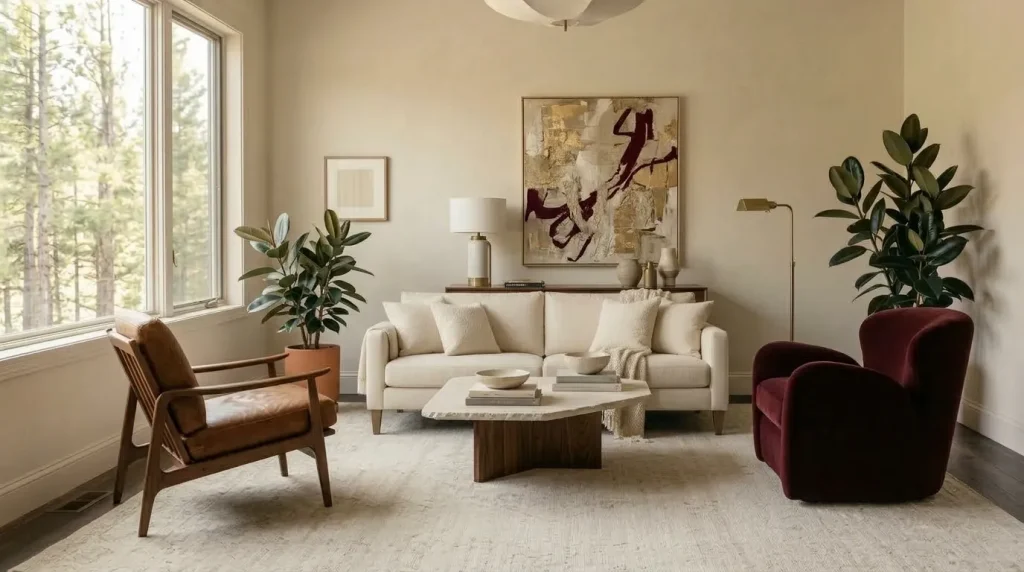
Tip 4: Stop pushing every piece against the wall
Furniture lined around the perimeter can make even a large room feel disconnected.
Architectural Digest recently highlighted this as a common living-room mistake. Designers recommend pulling furniture inward to establish a genuine seating group, noting that even moving pieces roughly 6 to 12 inches away from the walls can improve balance and conversation.
Try floating a chair at an angle toward the sofa. Bring the coffee table close enough to reach. If you have room, position a console behind a floating sofa rather than automatically placing the sofa against drywall.
The goal is not to maximize empty floor in the center. It is to create useful relationships between furniture, a principle covered further in these small living room layout ideas.
Mix materials instead of matching finishes
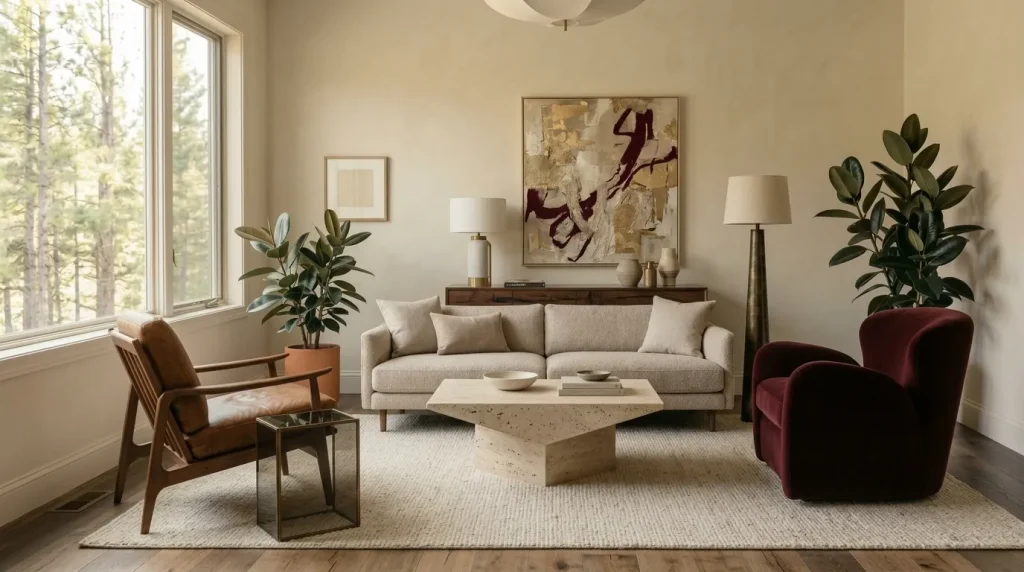
Tip 5: Pair warm wood with stone, glass, or metal
Contemporary rooms become richer when their materials disagree slightly.
Try walnut with honed limestone. Medium oak with aged brass. Smoked glass with wool. Travertine beside dark-stained timber.
Dark woods are especially relevant in 2026, with walnut and espresso oak returning alongside stone and plaster. Designers are also embracing what Elle Decor describes as material tension, where raw and polished finishes deliberately sit together.
This is more sophisticated than matching every coffee table, console, and cabinet in the same pale oak.
If your flooring is oak, you can still use walnut furniture. Look for compatible warm undertones rather than an exact match.
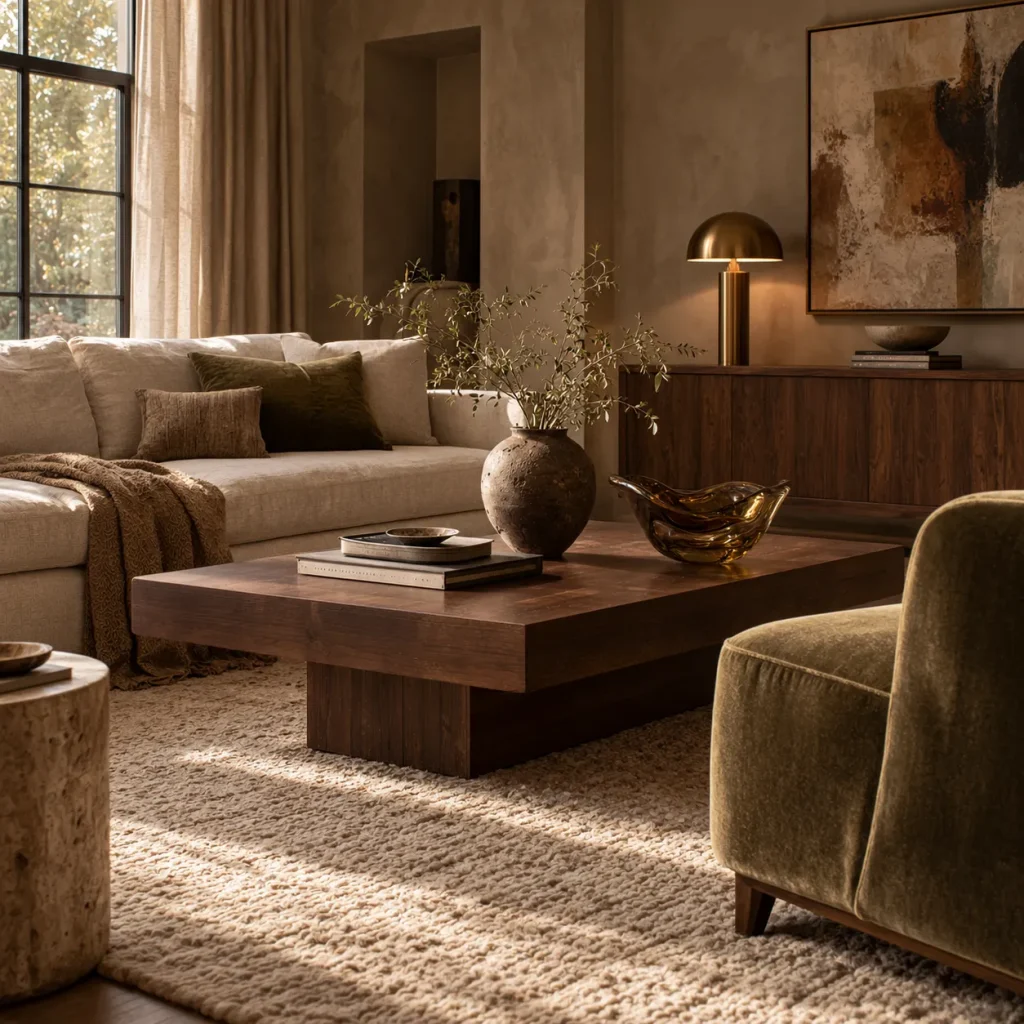
Tip 6: Use texture before buying more decor
Texture is one of the easiest ways to make a contemporary living room feel finished without creating clutter.
Combine linen upholstery with wool, smooth timber with rough ceramic, glass with velvet, or plaster-like walls with polished metal.
I once worked through an illustrative living-room scheme where nearly every object was beige. The problem was not really the lack of color. The sofa, rug, cushions, and ottoman also had almost identical soft textures.
Replacing the ottoman with a dark wood table changed the room immediately.
Before buying another cushion, ask whether the room needs a different material instead, the same editing mindset behind these minimalist living room ideas.
Make the layout feel contemporary because it works
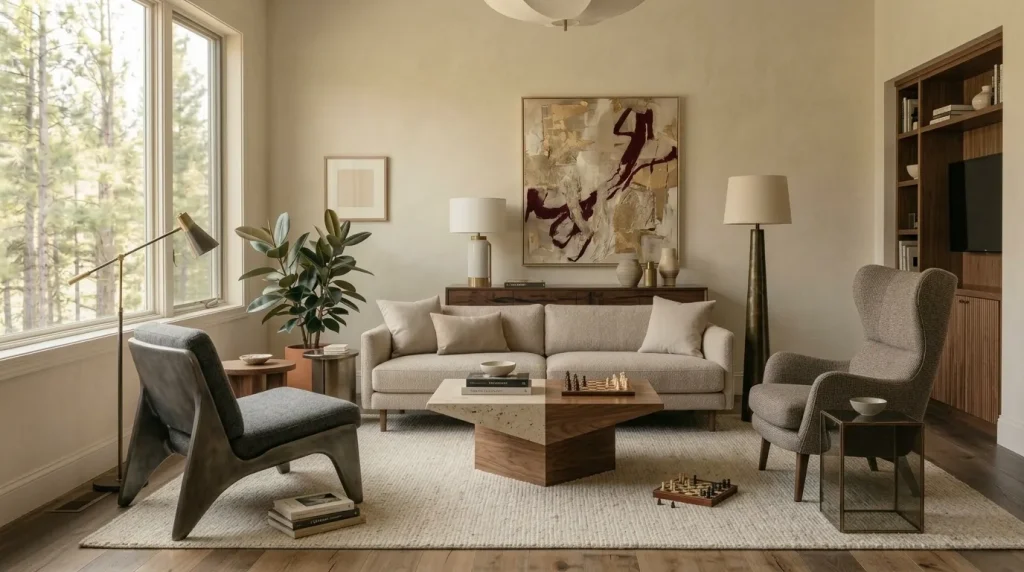
Tip 7: Build the seating around conversation as well as the TV
A television may be important, but it does not have to dictate every furniture decision.
Architectural Digest’s June 2026 living-room guidance specifically warns against designing the room entirely around the TV. A flexible living room can support conversation, reading, games, work, and films instead.
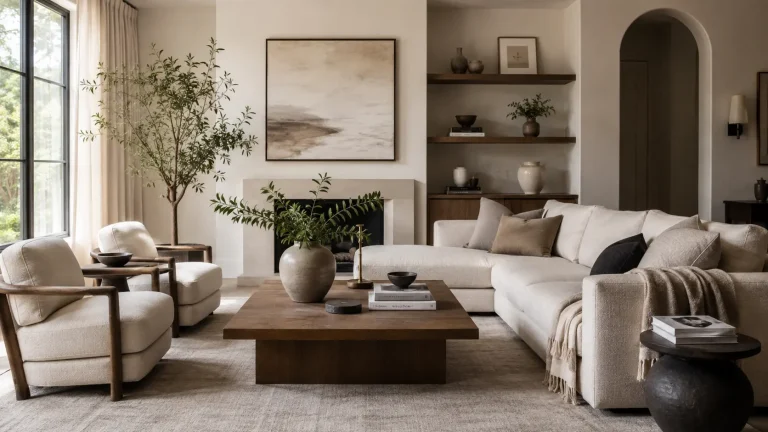
One useful arrangement is a sofa with two chairs angled toward it. House Beautiful recently highlighted this sofa-plus-two-chairs approach as a flexible way to create a balanced conversational group.
The chairs do not need to match.
In fact, a contemporary room often looks more interesting when one chair has a higher back or different upholstery.
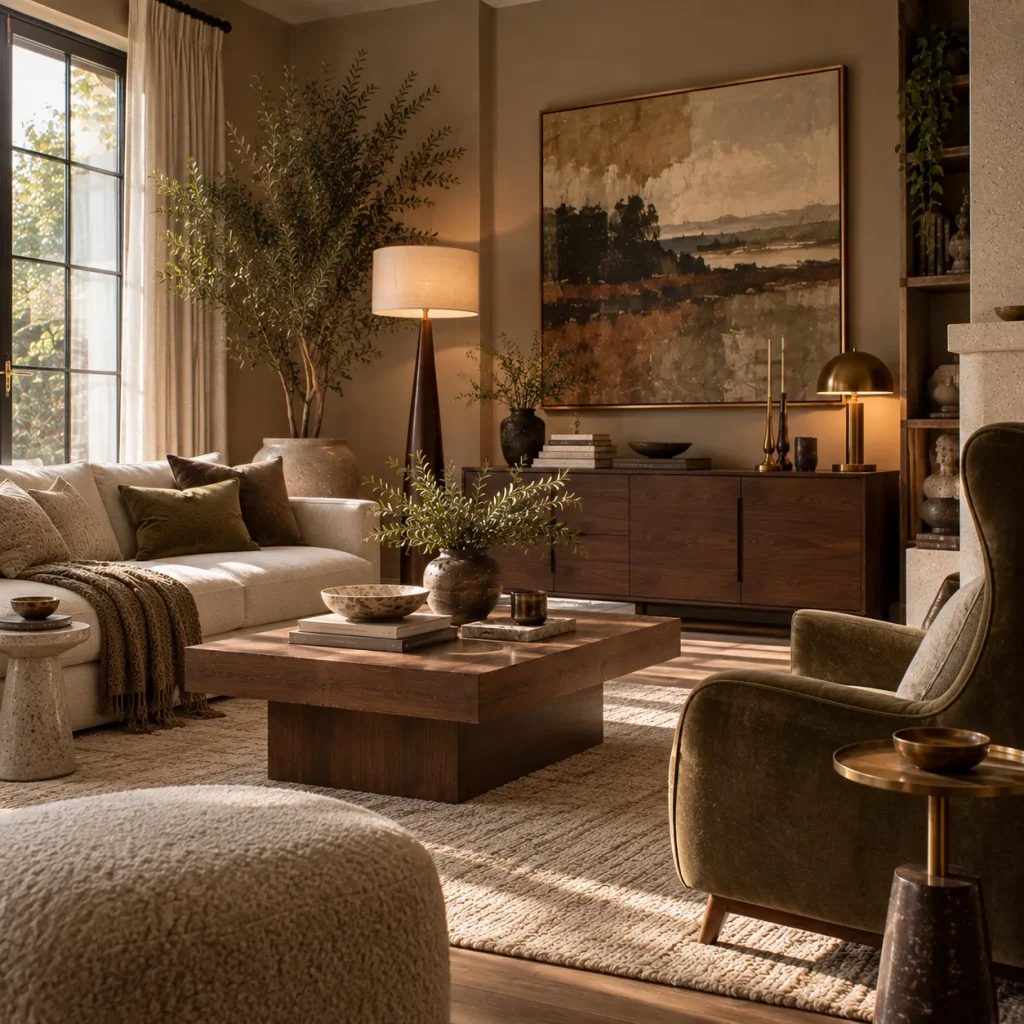
Tip 8: Use furniture at different heights
A sofa, chairs, side tables, and console that all stop at approximately the same height create a flat horizon across the room.
Introduce vertical variation.
Add a tall floor lamp beside lower furniture. Use one higher-back chair. Hang artwork above a low credenza. Let a substantial indoor plant fill an otherwise empty corner.
Designers quoted by Architectural Digest identify same-height furniture as a common reason living rooms start feeling like coordinated hotel lobbies rather than homes.
This is a small detail, but it makes a contemporary composition feel much more deliberate.
Let lighting become part of the furniture plan
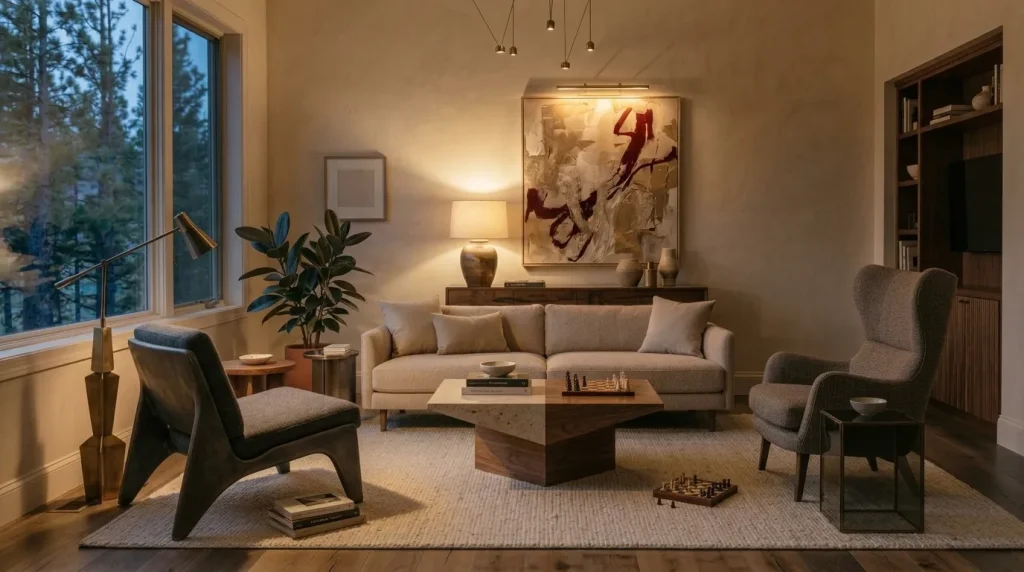
Tip 9: Replace one harsh ceiling light with several light sources
Contemporary lighting should do more than illuminate the whole room evenly.
Use a floor lamp near seating, a table lamp on a console, and wall or picture lights where they serve a purpose. Keep the main ceiling fixture for broader illumination rather than asking it to create every mood.
Architectural Digest recommends lighting from several heights instead of relying on a ceiling fixture alone.
And 2026 lighting is becoming notably more sculptural. Designers are using oversized pendants, organic forms, alabaster, aged finishes, and asymmetrical arrangements as functional objects within the room.
One dramatic lamp can be enough. Do not turn every fixture into a competing statement.
Add character without adding clutter
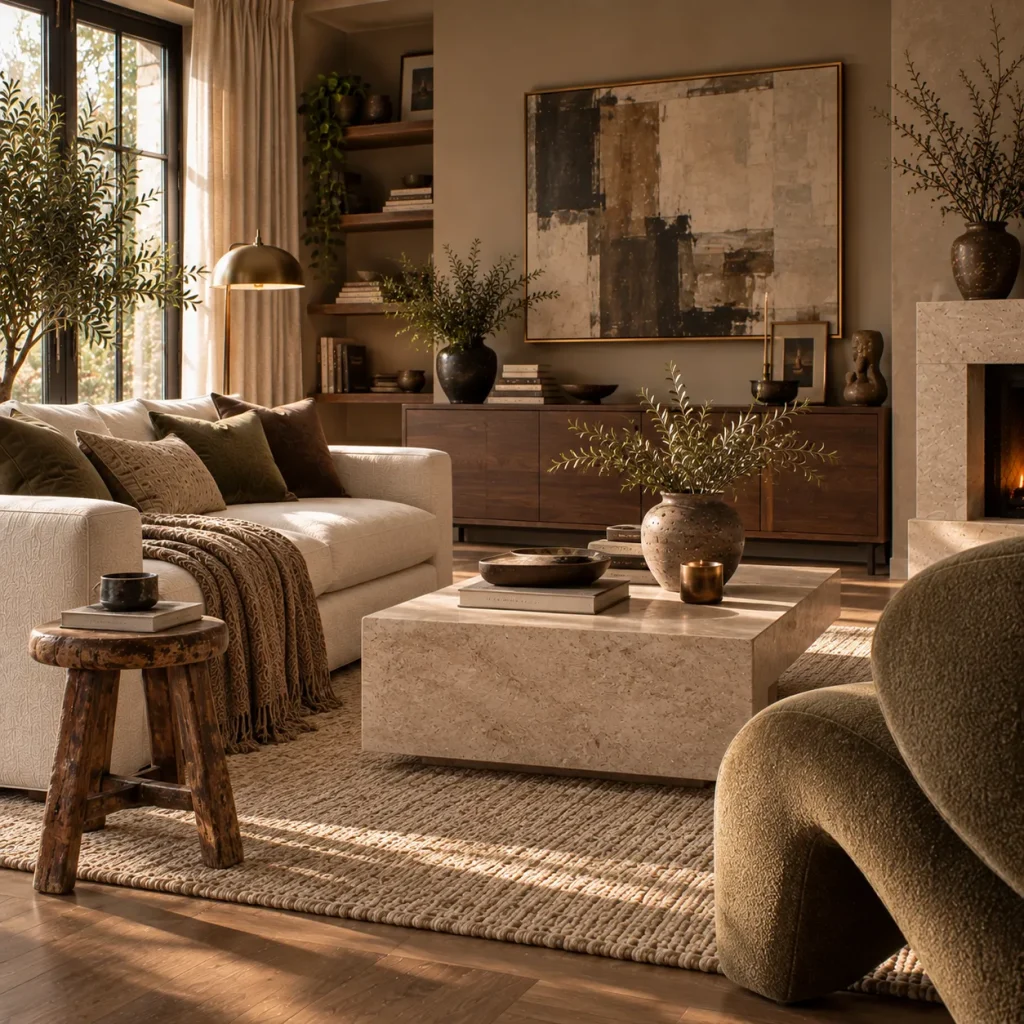
Tip 10: Mix one vintage piece into the contemporary furniture
A room containing only newly manufactured contemporary furniture can feel surprisingly anonymous.
Add an older cabinet, sculptural vintage chair, aged brass lamp, ceramic vessel, or weathered wooden stool. The piece does not need to belong to the same design period.
Vintage furniture and collected metals are particularly visible in 2026 interiors as designers move away from matching suites and perfectly coordinated finishes.
This is also where contemporary differs from strict minimalism. You can keep clean lines while allowing history, patina, and imperfection into the room.
A single old object may give the entire scheme more credibility than another new designer-style accessory.
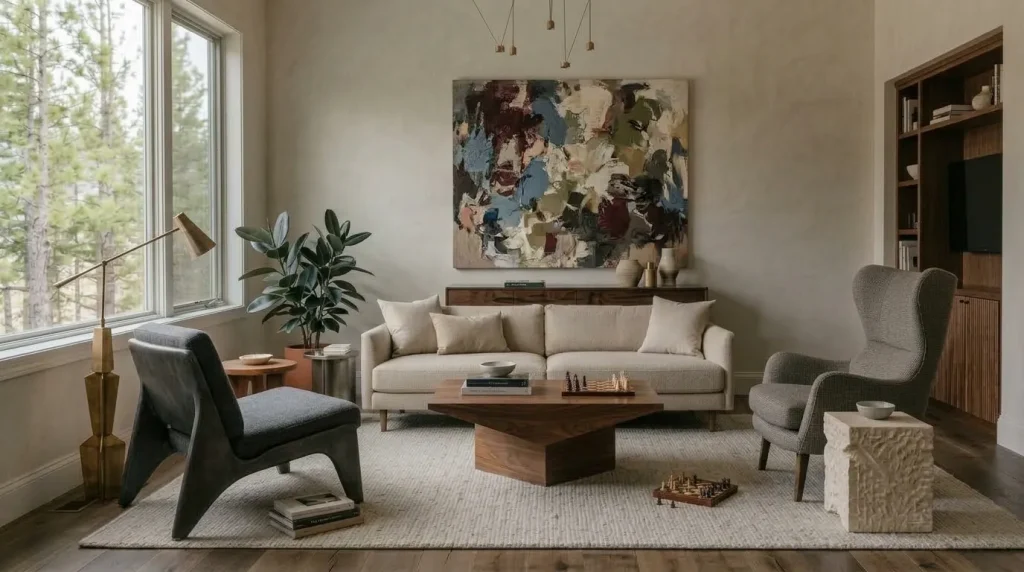
Tip 11: Give art enough scale to matter
Contemporary walls do not need to be empty.
One large painting or photograph can establish the room’s palette and create a visual pause between furniture pieces. Above a sofa, artwork around two-thirds of its width is a useful starting point, although the individual piece and wall should guide the final scale.
Avoid automatically creating a gallery wall because you have a large blank surface.
Architectural Digest’s current visual-clutter guidance recommends keeping some walls and surfaces deliberately open so stronger pieces have room around them.
That negative space is valuable.
But emptiness should be intentional, not the result of being afraid to add personality.
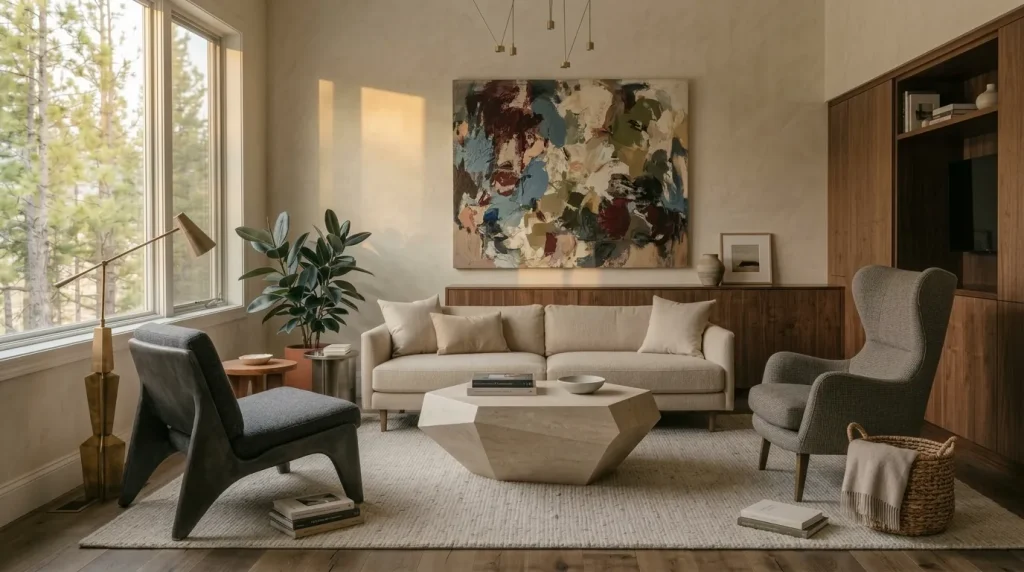
Tip 12: Make storage visually quiet
Contemporary rooms usually look better when everyday clutter has a clear destination.
Choose a media console with doors rather than exposing every cable and device. Use lower closed cabinets beneath built-in shelving. Keep blankets in one useful basket rather than several decorative baskets.
Architectural Digest’s August 2026 guidance notes that storage works particularly well when it is designed as part of the room rather than added afterward, and that visible cords can create noticeable visual clutter.
A contemporary living room does not need to hide evidence of daily life. It should simply keep the television remote, chargers, children’s toys, and game controllers from becoming the strongest elements in the design.
A practical contemporary living room formula
| Element | Strong 2026 approach | Be cautious with |
|---|---|---|
| Walls | Warm neutrals or nuanced deep color | Cold gray everywhere |
| Wood | Walnut, oak, darker finishes | Matching wood sets |
| Furniture | Clean shapes plus one sculptural piece | Curves on every item |
| Layout | Conversational, flexible seating | Furniture against every wall |
| Materials | Wood, stone, wool, glass, metal | One finish repeated everywhere |
| Lighting | Layered and sculptural | One harsh ceiling fixture |
| Decor | Art, books, vintage objects | Decorative clutter |
| Storage | Integrated and mostly closed | Visible electronics and cables |
What should you skip in a contemporary living room?
Sterile modernism. All-white walls, cool gray furniture, glass tables, and almost no personal objects are beginning to feel less relevant. Current 2026 design is noticeably warmer and more lived-in.
Matching furniture sets. Contemporary does not mean coordinated from one collection. Variation in shape, height, period, and material gives the room depth.
An oversized television as the only focal point. If the screen dominates the wall, balance it with cabinetry, art, or a darker background rather than designing every object around it.
Tiny rugs. A rug floating only beneath the coffee table can make the furniture look disconnected. In many medium living rooms, an 8-by-10-foot rug is a more useful starting point than a 5-by-7.
Too many statement pieces. One sculptural chair is compelling. A room full of sculptural furniture becomes exhausting.
Try this if your living room feels dated modern
Do not replace everything.
Keep the largest furniture that is comfortable and in good condition. First, remove a few matching accessories and anything that makes the room feel overly coordinated.
Next, introduce one warmer material. Walnut, dark oak, wool, aged brass, or textured ceramic can change the direction quickly.
Then improve one important contrast. Add chocolate brown beside cream, olive beside oak, or burgundy beside mushroom.
Finally, bring the seating slightly closer together and add a table or floor lamp.
Those changes can move a cold modern room toward contemporary 2026 design without requiring a complete renovation.
FAQ
What defines a contemporary living room in 2026?
A contemporary living room reflects current design thinking rather than one historical style. In 2026, that means warmer materials, comfortable layouts, sculptural furniture, expressive art, vintage elements, layered lighting, and more personal rooms rather than sterile minimalism.
What colors work best in a contemporary living room?
Warm ivory, mushroom, chocolate, olive, burgundy, dusty blue, clay, tobacco, and warm charcoal all work well. The best palette usually combines restrained background colors with one deeper or more saturated anchor.
Can contemporary design work in a small living room?
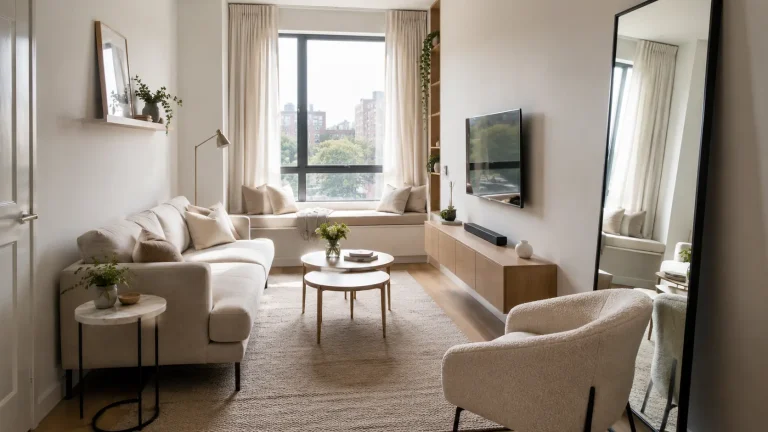
Yes. Choose fewer properly scaled pieces, use closed storage, keep circulation clear, and avoid filling every surface. Floating selected furniture and preserving some negative space can also make a compact room feel more organized.
What is the difference between modern and contemporary living room design?
Modern design usually refers to established movements such as mid-century or early modernism. Contemporary design describes what feels current now, so its materials, furniture shapes, colors, and influences continue changing with the way people live.
Make the room current by making it useful
The most effective 12 contemporary living room tips are not about buying whatever furniture shape happens to be fashionable this year.
Start with how the room needs to function. Bring the seating into a comfortable conversation zone. Give everyday clutter somewhere to go. Add several levels of light. Then use wood, stone, upholstery, art, and one or two stronger forms to give the room character.
If you make one change first, reconsider your layout before purchasing anything. A sofa moved forward eight inches or a chair turned toward the conversation can reveal that the room needs less new furniture than you thought.
Contemporary design works best when it feels current because it supports modern life, not because every object announces that it was bought in 2026.