15 Ideas for a Western Themed Living Room That Feel Rich, Not Rustic-Cliché
Western style can become a costume surprisingly quickly. Put a cowhide rug beneath a brown leather sofa, hang a horseshoe over the fireplace, add a few antlers, and suddenly the room feels more like a themed restaurant than a home.
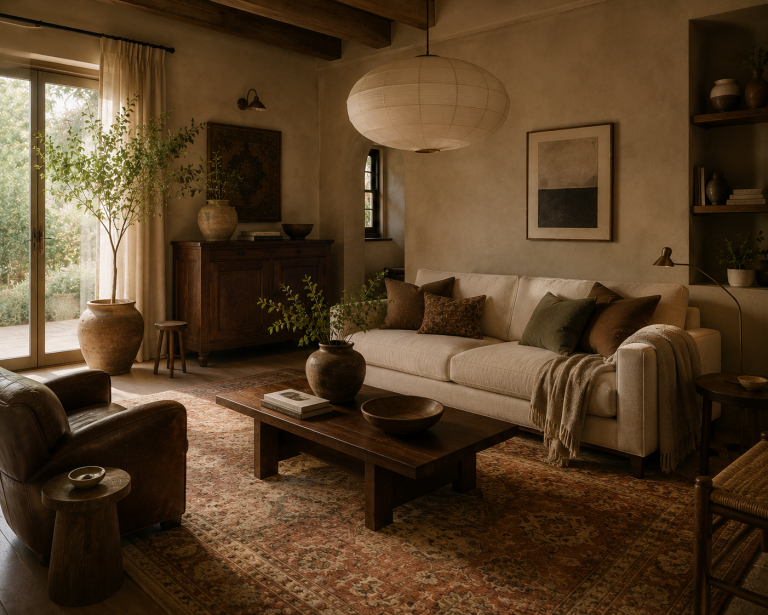
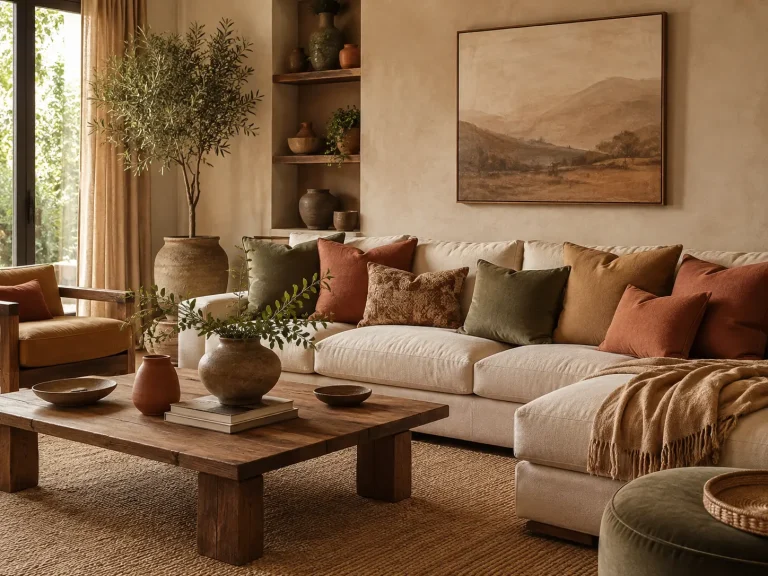
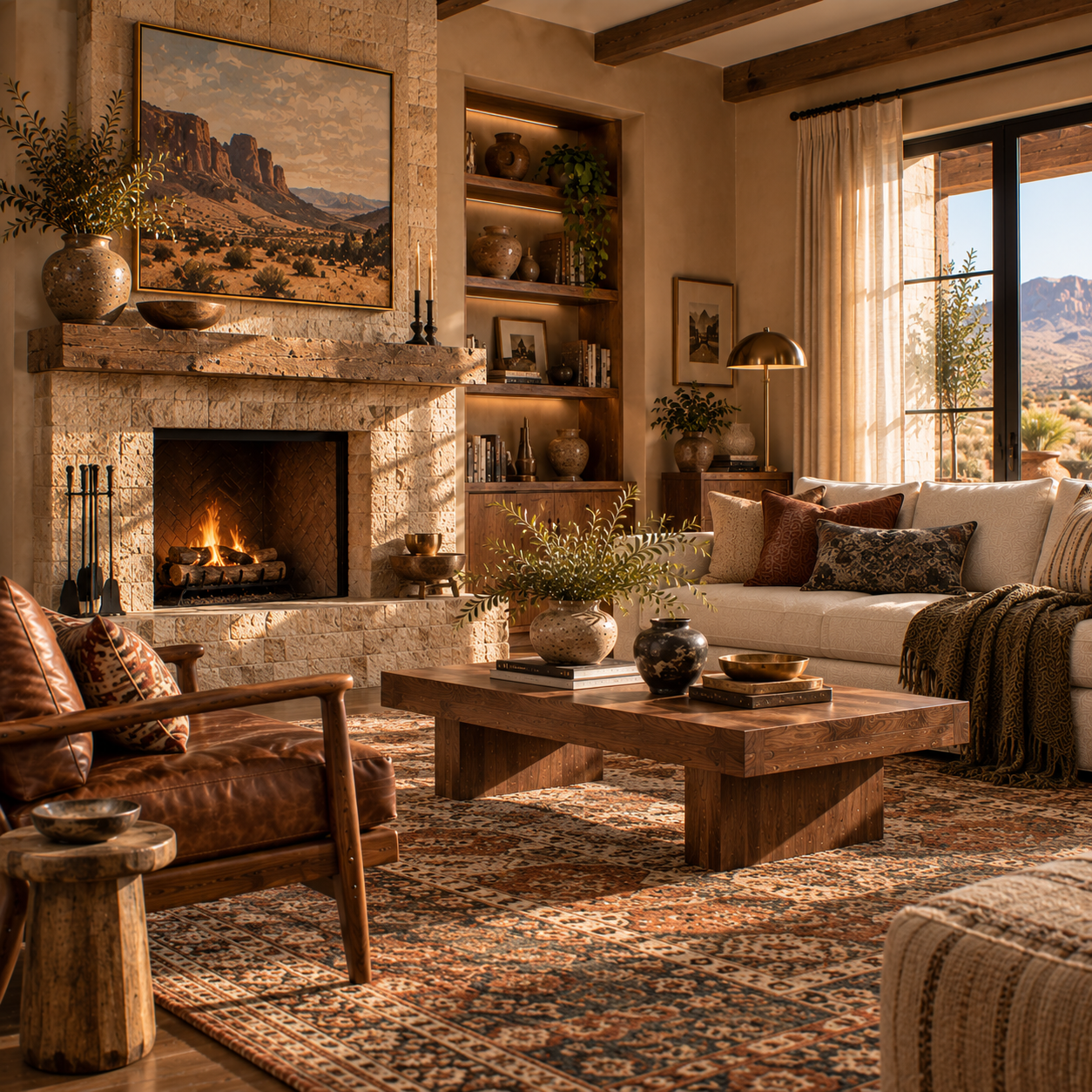
The stronger 15 ideas for a western themed living room take their cues from the landscape and materials of the American West rather than relying on cowboy symbols. Think saddle leather, walnut, weathered oak, iron, wool, stone, desert colors, vintage furniture, and objects with visible age. That approach feels especially relevant in 2026. Architectural Digest’s recent Texas ranch coverage paired Western character with earthy color, leather, brass, vintage finds, art, and polished contemporary details rather than novelty decor.
The goal is rugged warmth with enough refinement to work in a normal living room.
Build the palette from the Western landscape
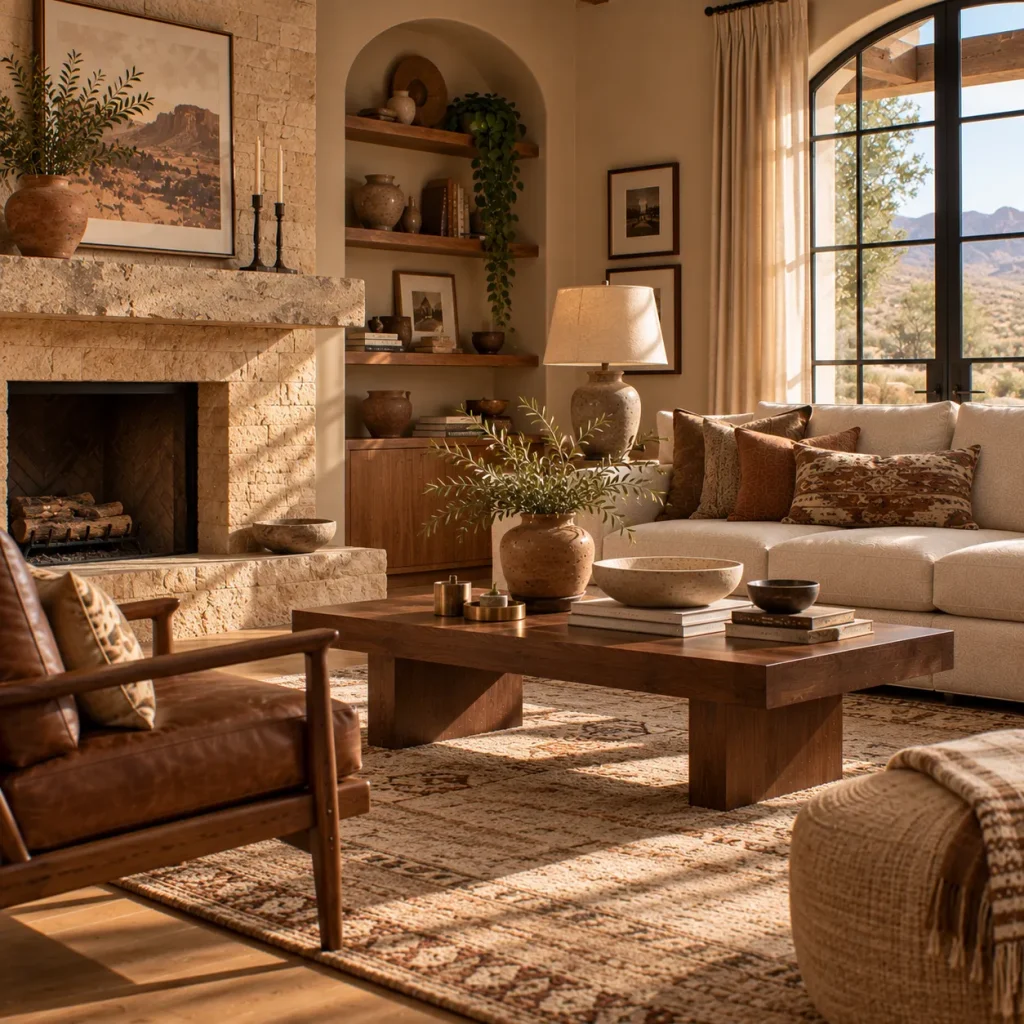
Idea 1: Start with sand, clay, and warm stone instead of plain beige
Western rooms are often neutral, but the landscape gives you much more interesting neutrals than generic beige.
Try adobe, parchment, mushroom, sun-baked clay, warm taupe, sandstone, or dusty putty. These shades work naturally with brown leather, dark wood, woven wool, and iron.
If your floors have orange or honey undertones, avoid a cool greige that fights them. A neutral with a little red, brown, or yellow usually creates a better relationship.
For paint, always test a large sample in your actual room. Desert-inspired colors can look significantly warmer under evening bulbs than they do in bright daylight.
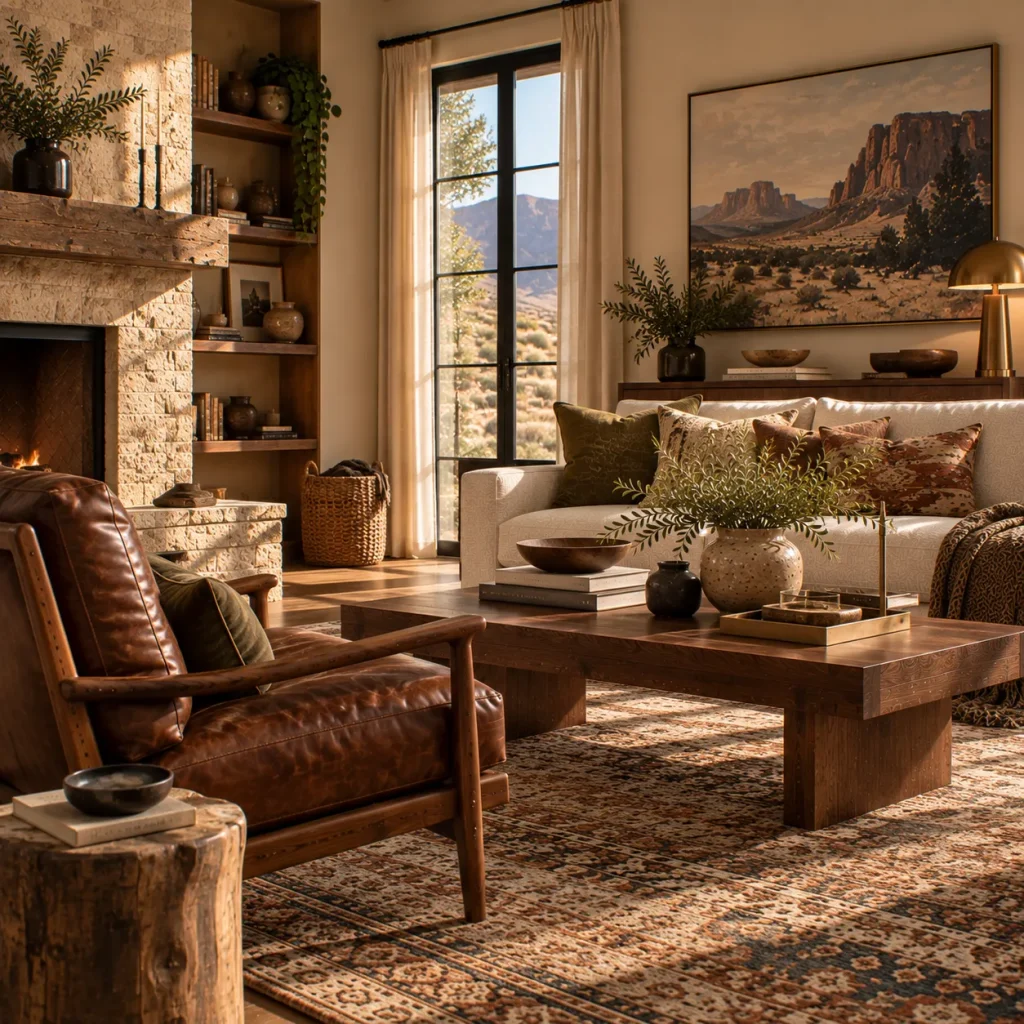
Idea 2: Bring in tobacco brown and saddle leather
Few materials communicate Western character as naturally as leather, but you do not need a room full of it.
A tobacco or cognac leather chair may be enough. You could also use a leather ottoman, sling chair, or small bench.
The color should feel aged rather than orange and shiny. Look for warm browns with variation, especially given the broader 2026 return of deeper brown tones and richer natural materials. Homes & Gardens’ current take on ranch interiors specifically highlights leather, geometric rugs, and warm natural finishes as part of a lighter, more contemporary interpretation.
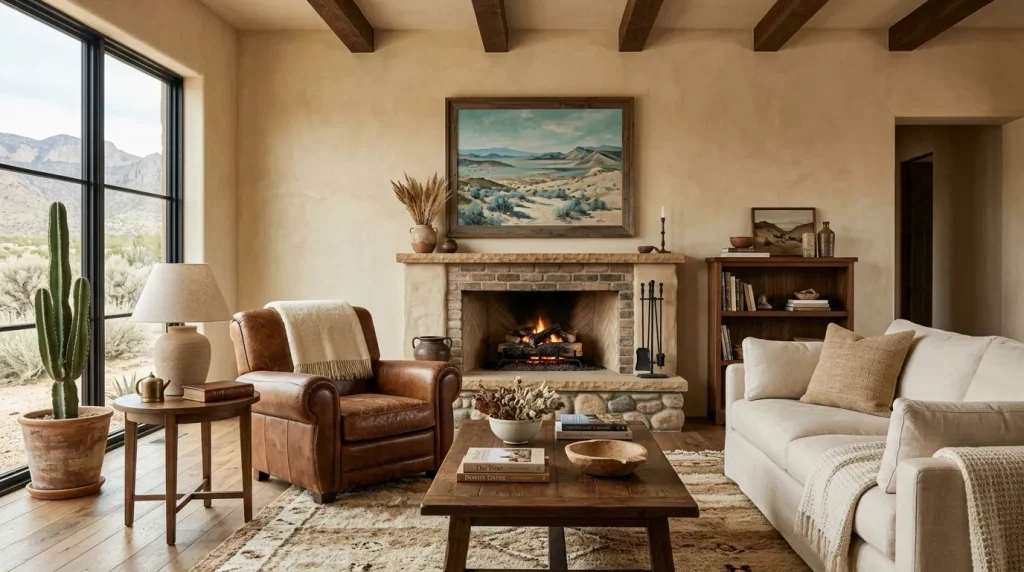
Idea 3: Add one dusty landscape color
Terracotta, faded turquoise, rust, ochre, sage, dusty blue, bottle green, and oxblood can all belong in a Western palette.
Do not use all of them.
Pick one or two based on the room you already have. Rust works beautifully with walnut and cream. Dusty turquoise cools down tobacco leather. Olive or sage can soften a room containing lots of stone and timber.
Current 2026 color direction is also moving toward chocolate, terracotta, oxblood, bottle green, and other deeper earth-based shades, many of which appear in our earthy color combinations for living room guide.
Let natural materials create most of the Western character
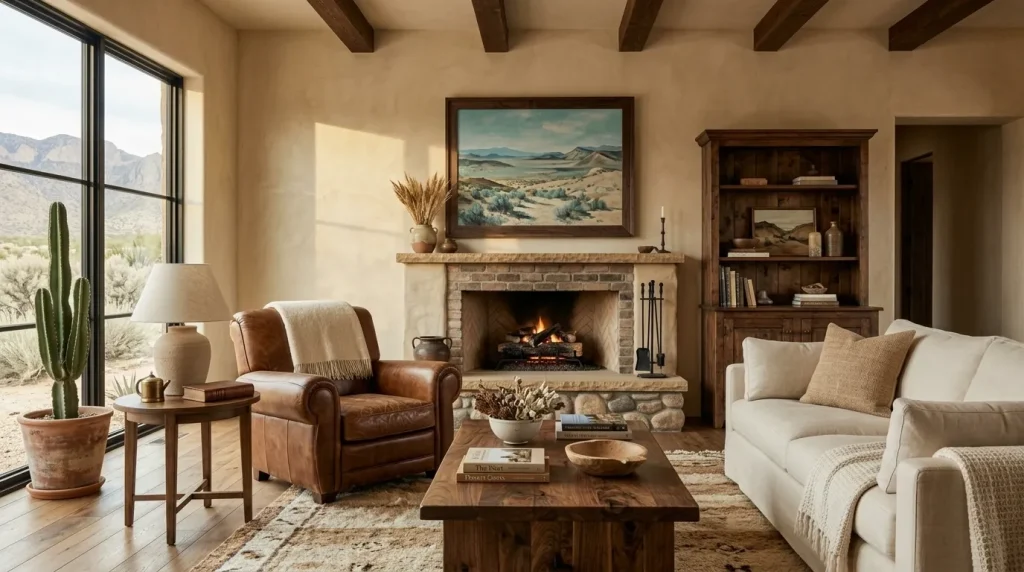
Idea 4: Use darker wood with visible grain
Western interiors should feel grounded.
Walnut, smoked oak, dark-stained timber, old pine, and reclaimed wood all work well as a coffee table, old pine cabinet, dark wood media console, or pair of heavier side tables.
This happens to align well with wider 2026 interiors, where walnut and espresso-toned oak are returning alongside plaster and stone — a pairing we also explore in our farmhouse living room tips.
And do not match every wood. A walnut table can sit on medium oak flooring. Slight variation usually makes a ranch-inspired room feel collected rather than purchased as one set.
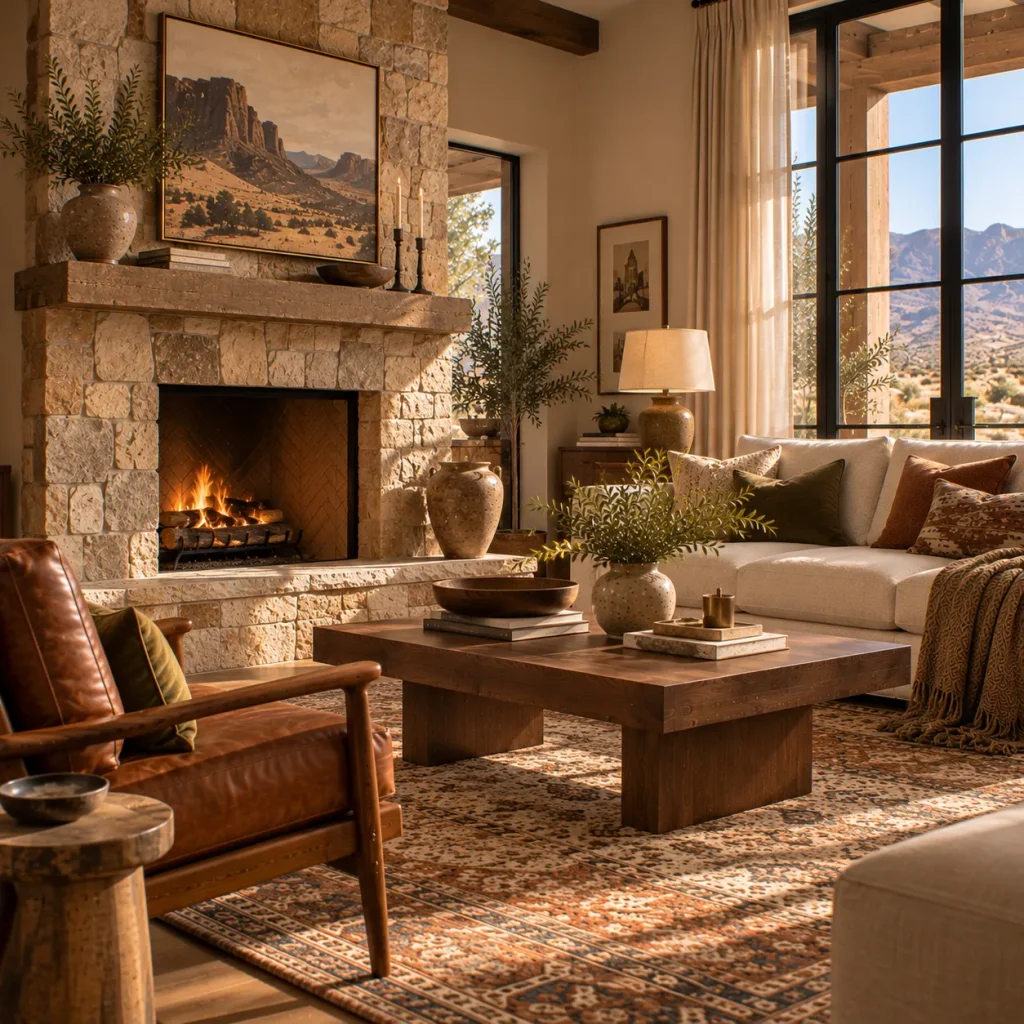
Idea 5: Bring stone into one architectural area
Stone is useful because Western design is as much about geology as cowboys.
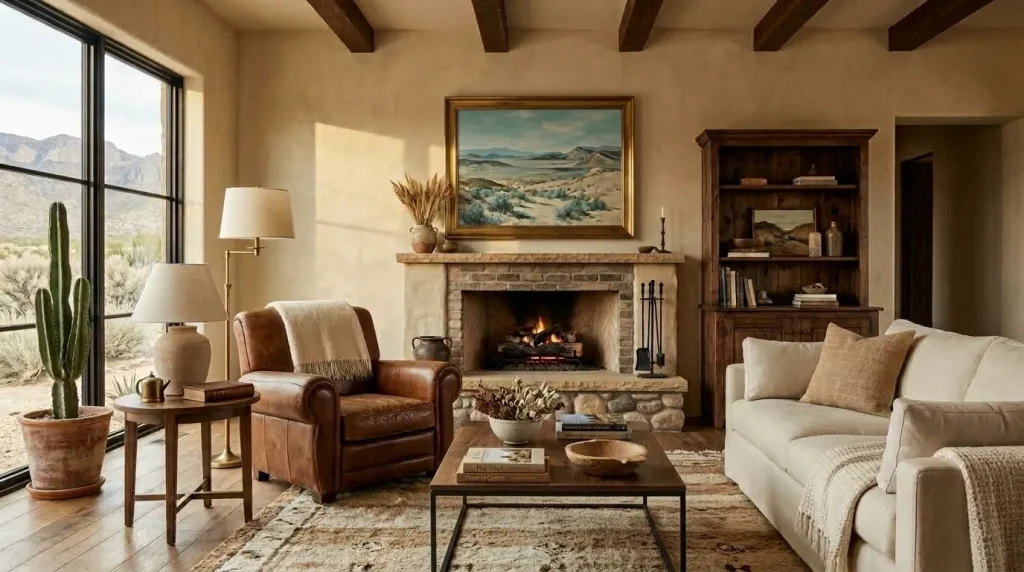
If you have a fireplace, limestone, fieldstone, sandstone, or a warmer textured stone can give the room an immediate sense of place. In a rental or smaller home, use stone more lightly through a side table, lamp base, or substantial decorative bowl.
Pair rough or honed stone with something soft.
A limestone fireplace beside wool upholstery works better than combining stone, distressed timber, rough leather, jute, and unfinished metal everywhere. Too many rugged finishes can make the room feel harsh.
Idea 6: Introduce iron and aged brass sparingly
Western interiors often benefit from metal, but matte black should not appear on every fixture.
Try aged brass picture lights, a bronze lamp, iron fireplace tools, or a blackened-steel coffee-table frame.
The contrast with wood and leather gives the room structure.
Material tension is especially current in 2026, with designers combining raw finishes and more polished surfaces rather than making every material equally rustic.
One brass lamp beside rough timber may be more effective than five wrought-iron accessories.
Choose furniture that suggests ranch living without becoming a set
Idea 7: Anchor the room with one substantial sofa
A Western-themed living room should feel comfortable enough to sit in for hours.
That does not mean buying the largest brown leather sectional you can fit through the door.
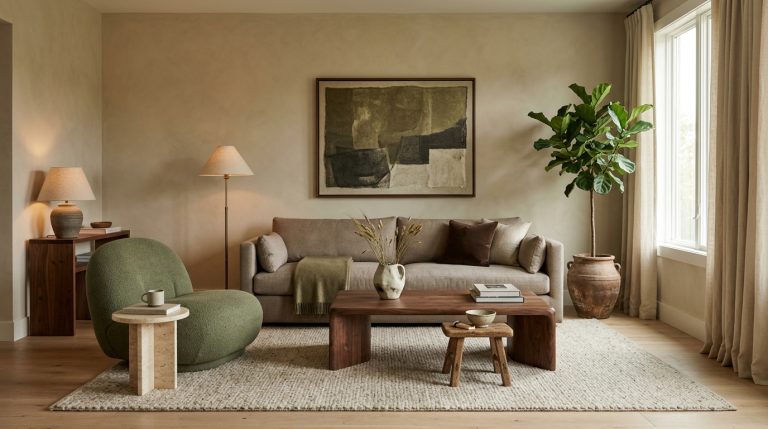
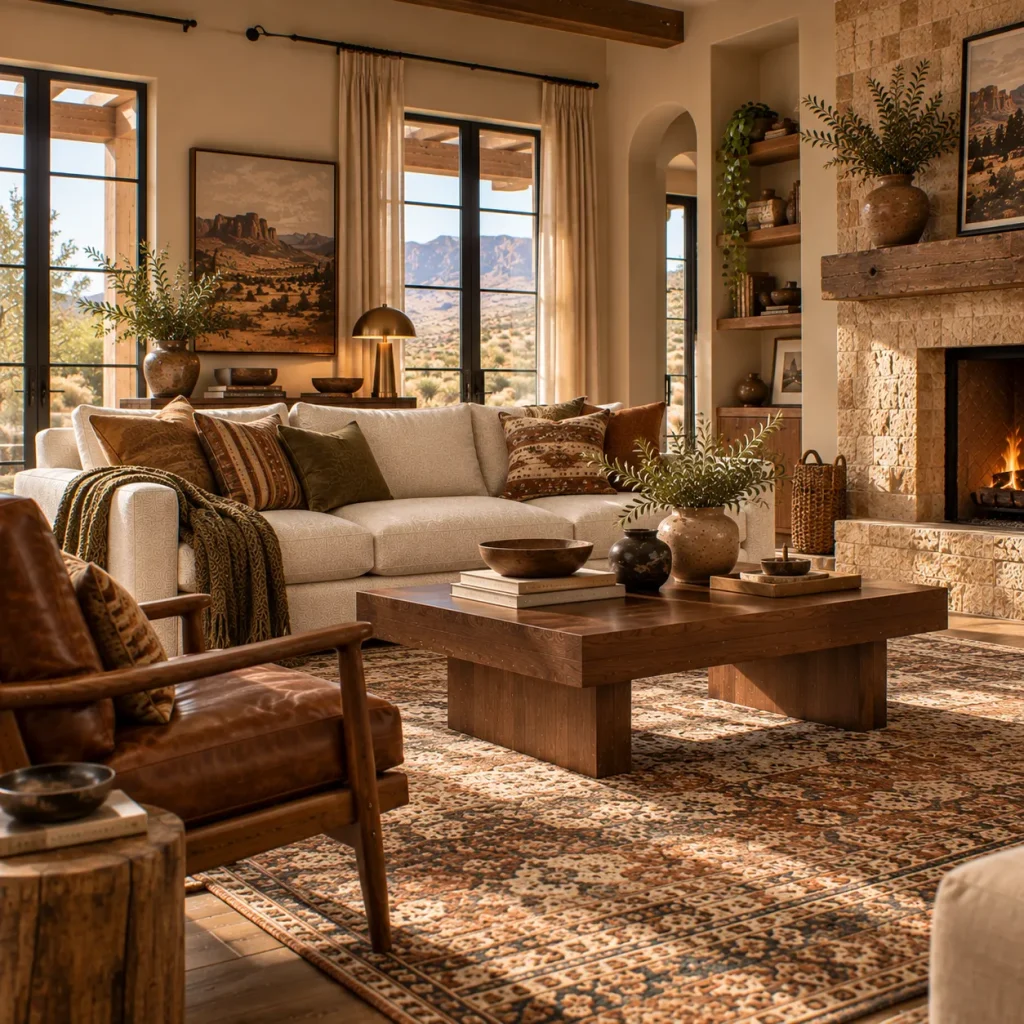
Consider a linen, wool-look, velvet, or textured performance sofa in cream, camel, olive, tobacco, or deep brown. If you already have a leather sofa, use fabric chairs so the room has softness.
In many medium living rooms, a sofa around 78 to 90 inches wide gives enough visual weight without taking over. Keep roughly 14 to 18 inches between the sofa and coffee table where your layout permits — see our small living room layout ideas for more layout guidance.
Idea 8: Add one vintage ranch-style piece
Western style becomes much more convincing once something looks genuinely old.
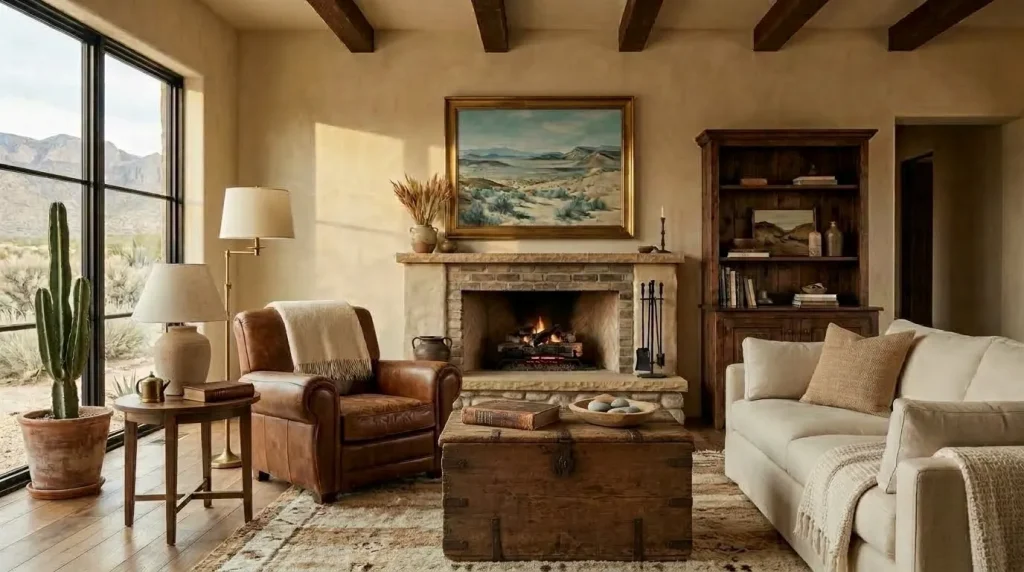
Try an antique chest as a coffee table, an old wooden stool, a vintage leather chair, a primitive cabinet, or a weathered side table.
A recent Architectural Digest Utah ranch project used vintage and secondhand pieces alongside contemporary furniture rather than building the entire room from obvious Western products.
I once worked through an illustrative Western room where every piece had been deliberately distressed by the manufacturer. Nothing actually had any history, and the result felt strangely artificial.
One real vintage table solved more than several faux-aged accessories.
Idea 9: Mix in one cleaner modern silhouette
This is where Western style becomes more interesting.
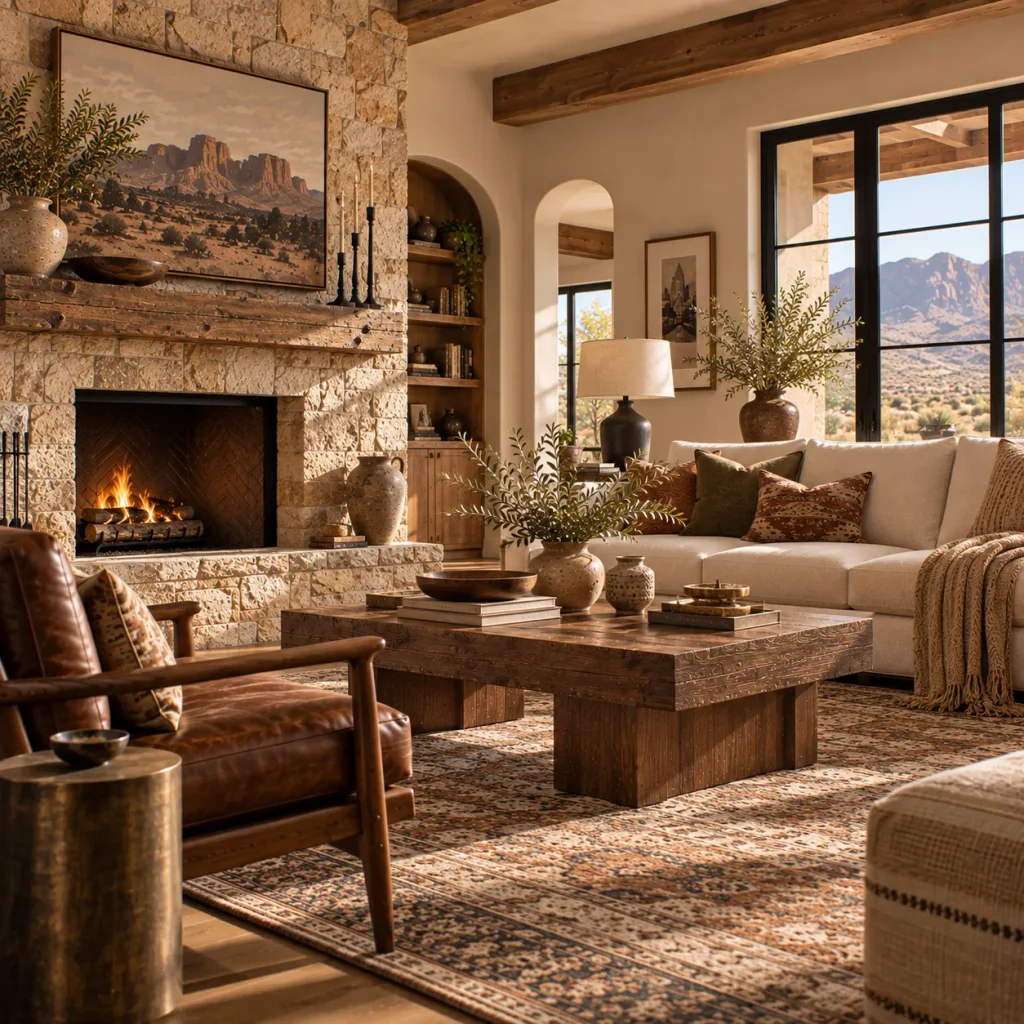
Put a streamlined sofa beside a rustic table. Use a modern lounge chair next to a stone fireplace. Pair an old wooden cabinet with a sculptural contemporary lamp.
You do not need every object to say “ranch.”
In fact, current 2026 ranch interiors are increasingly mixing Western materials with mid-century and contemporary pieces. Homes & Gardens highlights this combination as a way to make traditional ranch style feel lighter and more current.
Use pattern and art with more specificity
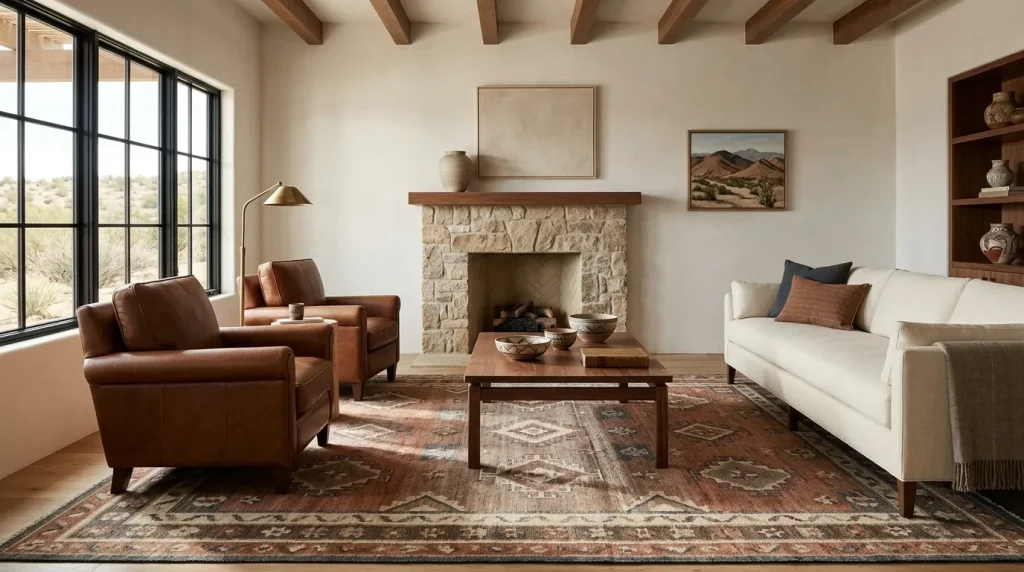
Idea 10: Choose a patterned wool rug rather than default cowhide
Cowhide can work, but it is not compulsory.
A large wool rug with geometric motifs, muted stripes, or desert-inspired colors can communicate Western style with more softness.
Look for rust, brown, indigo, cream, faded red, sage, or charcoal.
If you use textiles drawn from Indigenous or regional traditions, buy from makers or sellers who clearly identify the culture, region, and origin. Do not treat culturally specific motifs as anonymous “tribal” decoration.
In many moderate living rooms, an 8-by-10-foot rug will anchor the seating more successfully than a 5-by-7.
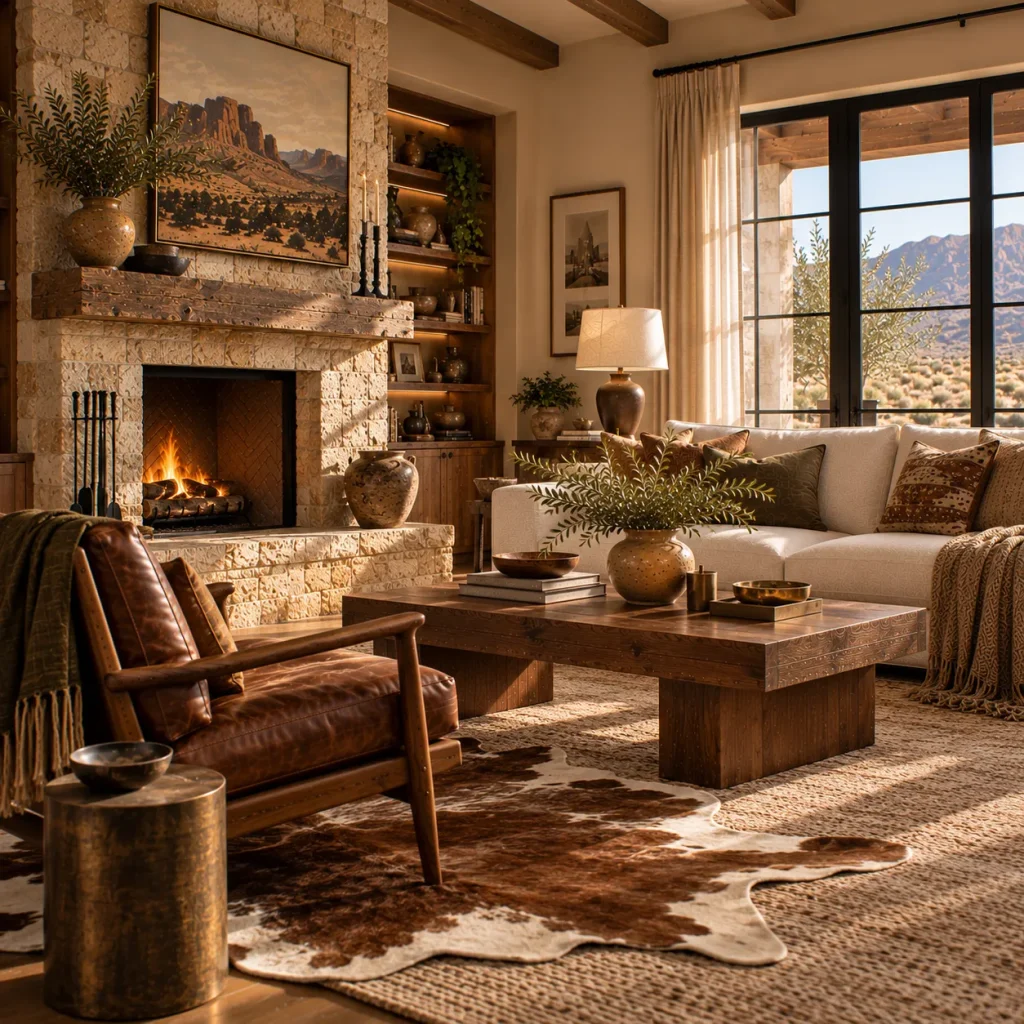
Idea 11: Use cowhide as one irregular layer
If you genuinely like cowhide, use it deliberately.
Layer one hide over a larger flat-weave or wool rug. The irregular outline creates movement and can help define a chair or smaller conversation area.
Avoid combining cowhide with a leather sofa, leather chairs, antlers, cowboy art, and several animal-print cushions. That is where a material becomes a theme.
One Western cue tends to look stronger when surrounded by quieter objects.
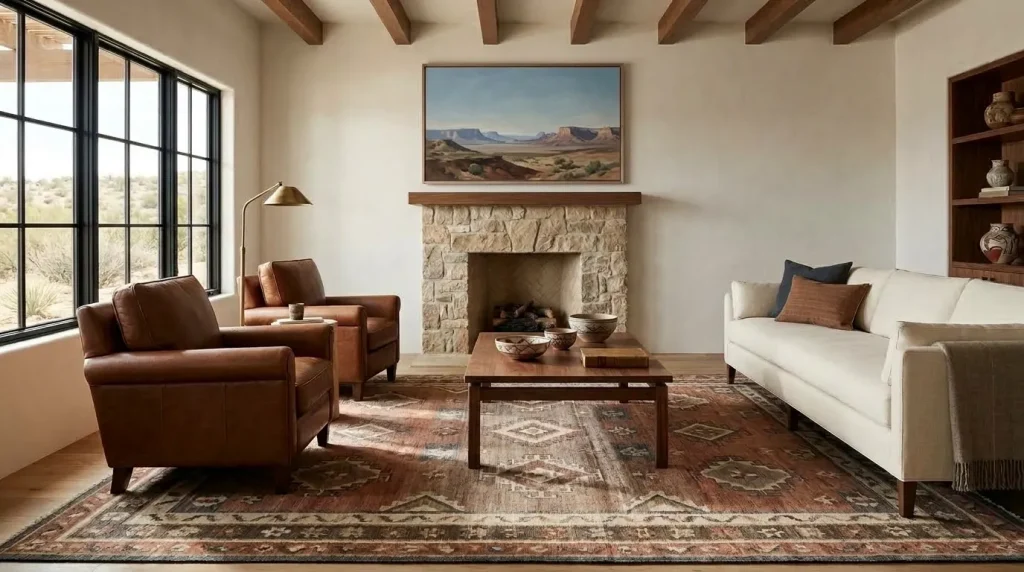
Idea 12: Hang Western landscape art instead of cowboy signs
Look toward the land before the iconography.
Desert photography, mountain landscapes, abstract work in clay and sky colors, vintage ranch photography, equestrian studies, botanical prints, or paintings of open terrain can all support the style.
Architectural Digest’s 2026 design coverage of a Moab, Utah, project specifically notes designers moving beyond the expected desert palette and using darker woods and moodier colors.
If you want an equestrian or cowboy reference, make it one meaningful piece of art rather than several novelty signs.
Above a sofa, artwork around two-thirds of the sofa’s width is a useful starting point.
Finish the room with texture, light, and a little restraint
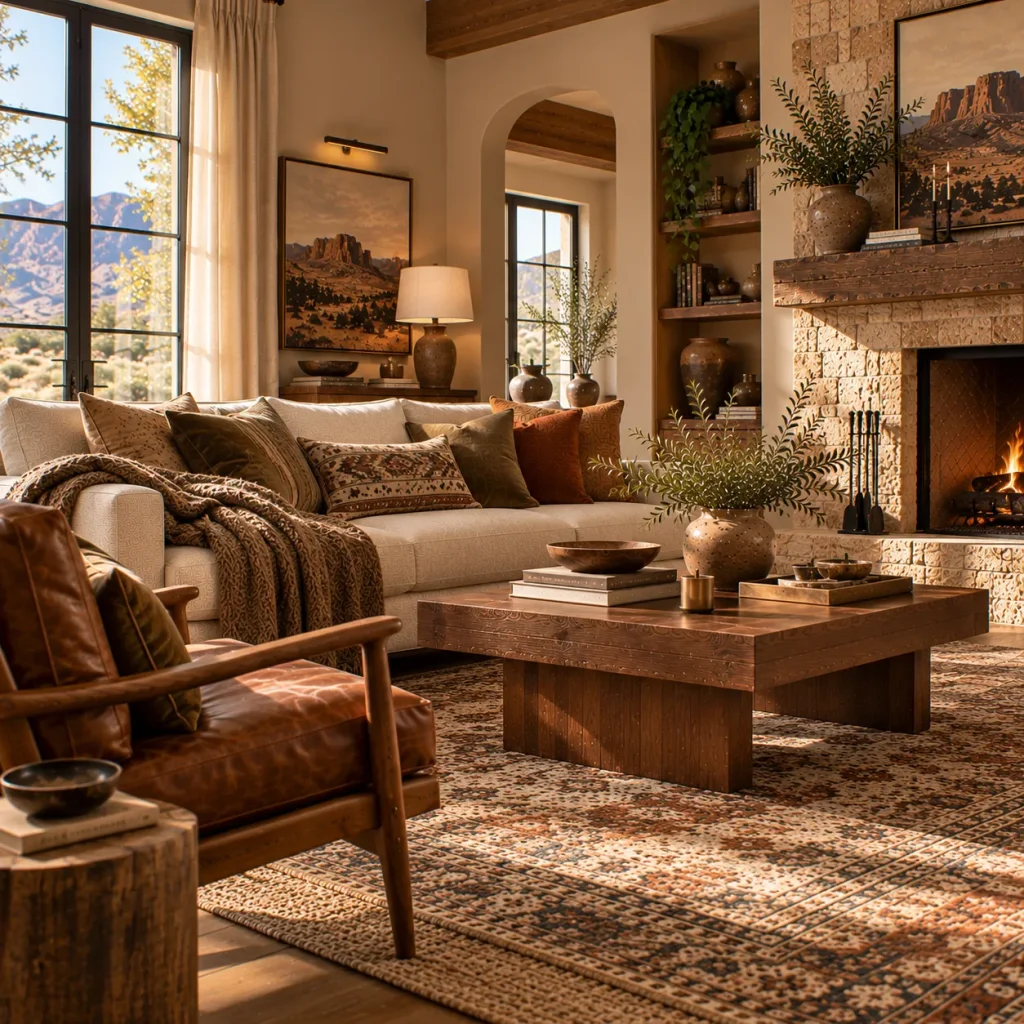
Idea 13: Layer wool, linen, suede, and woven textiles
Western rooms need softness because so many of their core materials are hard.
Use wool throws, linen curtains, woven cushions, velvet, suede, and textured cotton to balance timber, stone, and leather.
A rust velvet cushion can soften a leather chair. Cream linen curtains can brighten a dark wood wall. A heavy wool blanket gives a simple sofa enough ranch character without adding another decorative object.
Change the texture scale too. Use one substantial woven pattern, several smoother fabrics, and a few smaller tactile accents.
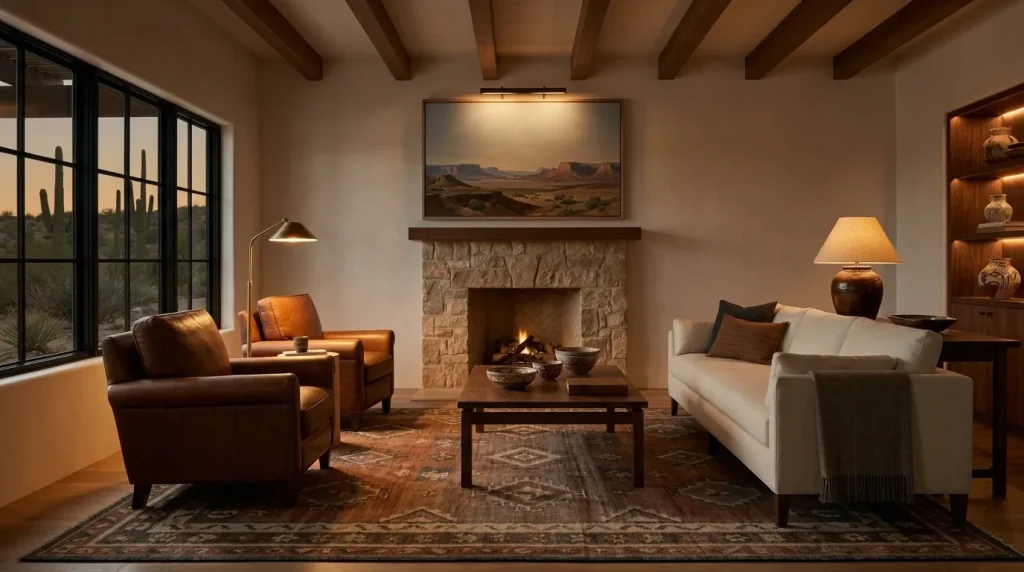
Idea 14: Make the lighting warmer and more sculptural
One black wagon-wheel chandelier is not the only route to Western lighting.
Try a ceramic table lamp, aged-brass floor lamp, iron picture light, parchment shade, or substantial pendant with a simple silhouette.
Use at least two or three light sources at different heights. Western materials such as leather, walnut, stone, and wool look much richer when illuminated from the side rather than blasted by one ceiling fixture.
Aged finishes fit particularly well with the wider 2026 shift toward patina and designed imperfection — the same mood we cover in our moody neutral living room tips.
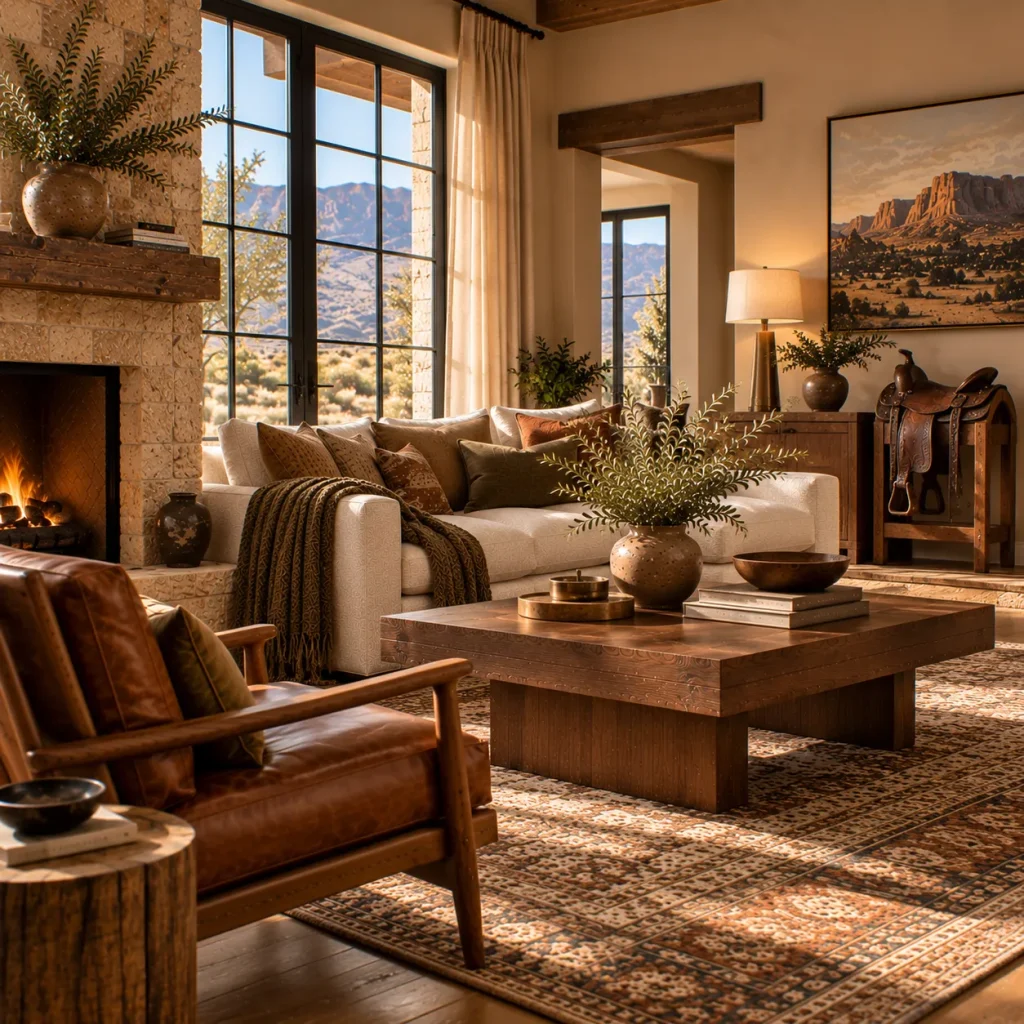
Idea 15: Add one unmistakable Western object, then stop
This might be an old saddle, pair of vintage spurs, ranch photograph, carved wooden horse, antique blanket, or beautifully made cowboy hat.
The important part is restraint.
If one authentic or meaningful object clearly references Western culture, you do not need horseshoes, stars, ropes, boots, longhorns, and “Howdy” signs to reinforce it.
A recent AD Texas ranch took a similar collected approach, combining Western personality with vintage finds, family artifacts, art, leather, brass, and more polished furnishings.
The room should feel influenced by the West, not decorated for a Western-themed party.
A practical Western living room material guide
| Element | Strong choice | Be cautious with |
|---|---|---|
| Walls | Adobe, parchment, clay, warm stone | Cold gray |
| Wood | Walnut, oak, reclaimed timber | Fake gray distressing |
| Upholstery | Saddle leather, linen, wool, velvet | Leather on every piece |
| Metal | Aged brass, iron, bronze | Matte black everywhere |
| Color | Rust, tobacco, olive, dusty blue | Too many desert colors |
| Decor | Art, vintage objects, pottery | Cowboy signs and themed sets |
What should you skip in a Western-themed living room?
Too much cowboy symbolism. Horseshoes, skulls, rope, boots, stars, and signs quickly overpower the actual design.
Matching brown leather furniture. A leather sofa, loveseat, recliner, and ottoman create a heavy block. Mix leather with linen, wool, or another textile.
Fake distressed wood everywhere. Real patina or simple natural grain looks more convincing than intentionally scraped new furniture.
A room that is entirely brown. Western landscapes contain clay, sage, blue, cream, ochre, red, green, and charcoal too.
Using culturally specific textiles without context. Learn what you are buying and support identifiable makers where possible.
Try this if your living room is already beige
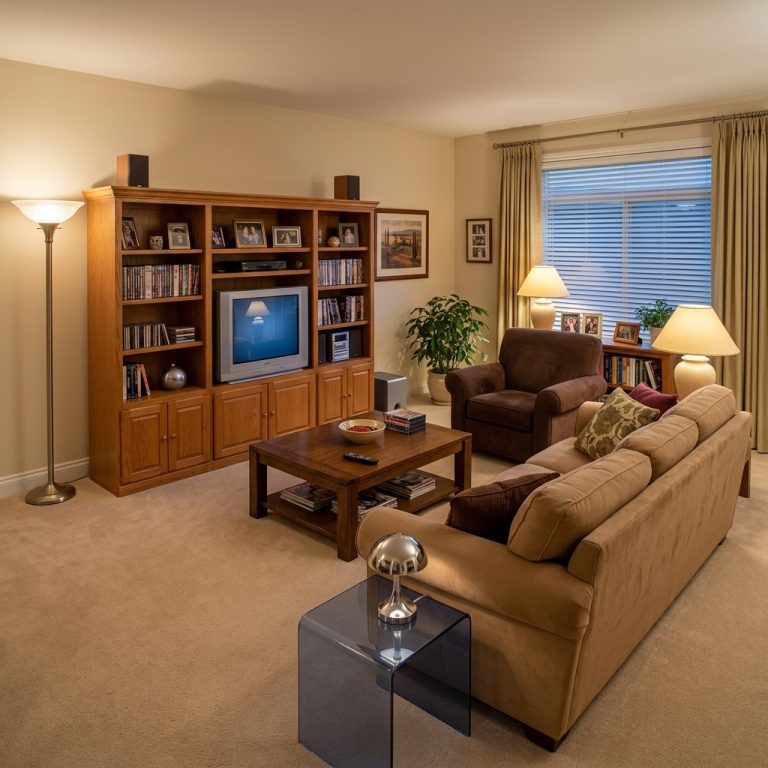
Keep the beige sofa.
Start with a substantial darker wood piece, such as a walnut coffee table or old chest. Then introduce one saddle-leather chair or ottoman.
Add a wool rug containing rust, brown, dusty blue, or olive. Replace two generic neutral cushions with a woven or patterned textile that relates to the rug.
Finally, introduce one piece of Western art and a warm table lamp.
You may not need anything explicitly cowboy-themed at all.
That is often the more convincing approach because the Western character comes from color, material, landscape, and age.
FAQ
Is Western decor still popular in 2026?
Yes. Ranch and Western-inspired interiors remain relevant, but the more current interpretation is richer and less literal. Recent projects mix Western materials with contemporary furniture, natural stone, vintage pieces, earthy colors, art, and refined finishes.
What colors work best in a Western living room?
Tobacco brown, rust, terracotta, parchment, dusty blue, olive, oxblood, chocolate, sage, and warm cream all work well. Choose three or four main tones rather than using every desert-inspired color at once.
Can Western decor work in a small living room?
Yes. Use fewer, stronger references such as one leather chair, a wool rug, darker wood, landscape art, and warm lighting. Avoid filling a compact room with bulky leather furniture and small themed accessories.
What is the difference between Western and rustic decor?
Rustic decor broadly focuses on natural, aged, and rough materials. Western decor can use those same materials but draws more specifically from ranch life, Southwestern landscapes, equestrian references, leatherwork, regional textiles, and the visual culture of the American West.
Let the landscape lead before the cowboy decor
The best 15 ideas for a western themed living room are less about collecting Western symbols and more about understanding why ranch interiors feel appealing in the first place.
They combine honest materials, substantial furniture, warm earth colors, practical textiles, age, and a strong connection to landscape.
Start with the pieces you will use every day. Choose a good sofa, a rug large enough for the seating, and a table with real material presence. Then add leather, art, iron, wool, or one vintage Western object.
If you are unsure what to remove, take out the most obvious novelty decoration first.
A good Western living room should still communicate its character even after the horseshoe comes off the wall.