10 Ideas for Combining Boho with Mid Century Modern for Living Rooms That Feel Collected
Boho and mid-century modern seem almost opposite at first. Mid-century rooms rely on clean silhouettes, functional furniture, and deliberate proportions. Boho interiors prefer layers, textiles, art, plants, vintage finds, and a little imperfection.
That contrast is exactly why the combination works.
These 10 ideas for combining boho with mid century modern for living rooms use mid-century furniture as the visual framework, then soften it with the color, texture, pattern, and personality associated with bohemian decorating. It is also a particularly relevant combination in 2026. Designers are moving toward rooms that feel collected, individual, and layered rather than perfectly matched, while walnut, vintage furniture, expressive pattern, and tactile materials are gaining renewed attention.
The goal is not half boho and half mid-century. It is one room where the two styles naturally support each other.
Let mid-century furniture provide the structure

Idea 1: Start with one strong walnut or teak piece
Mid-century furniture gives this combination its visual backbone.
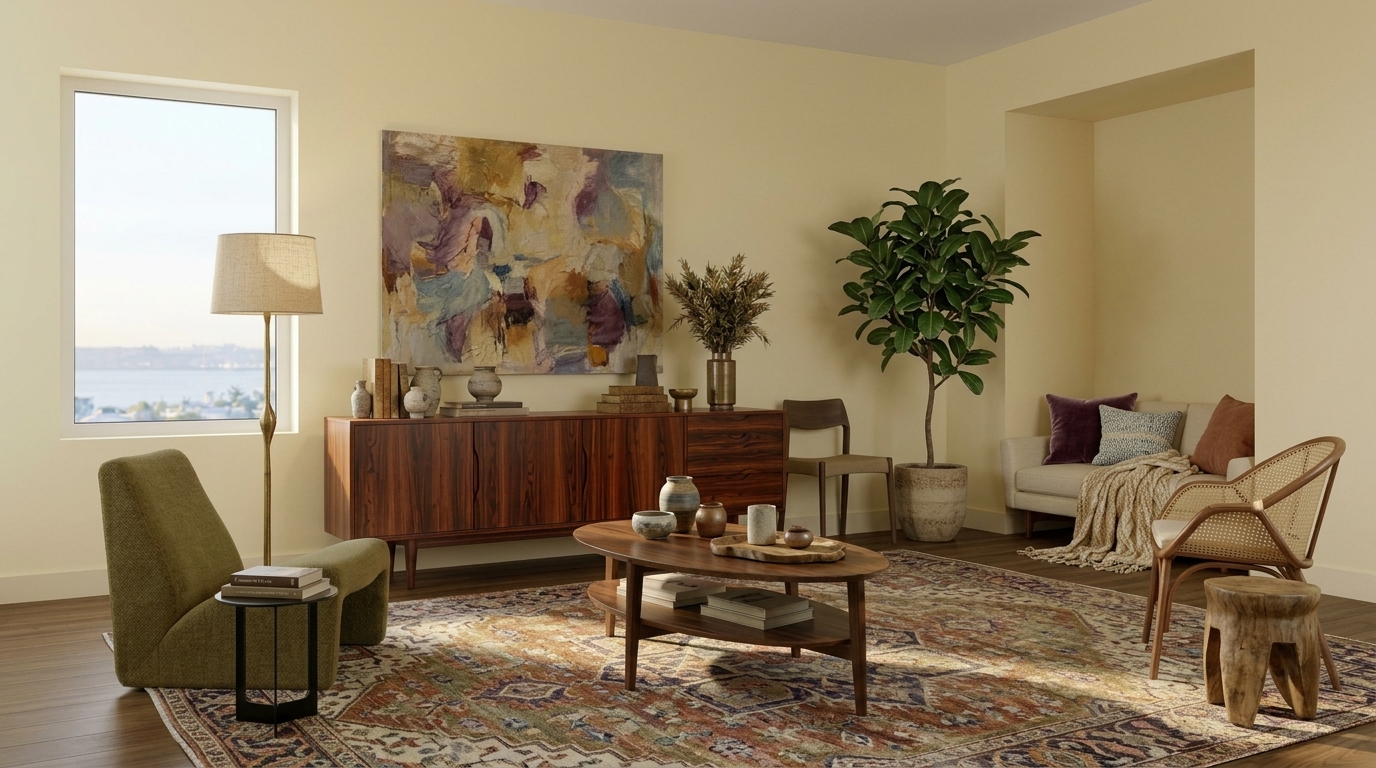
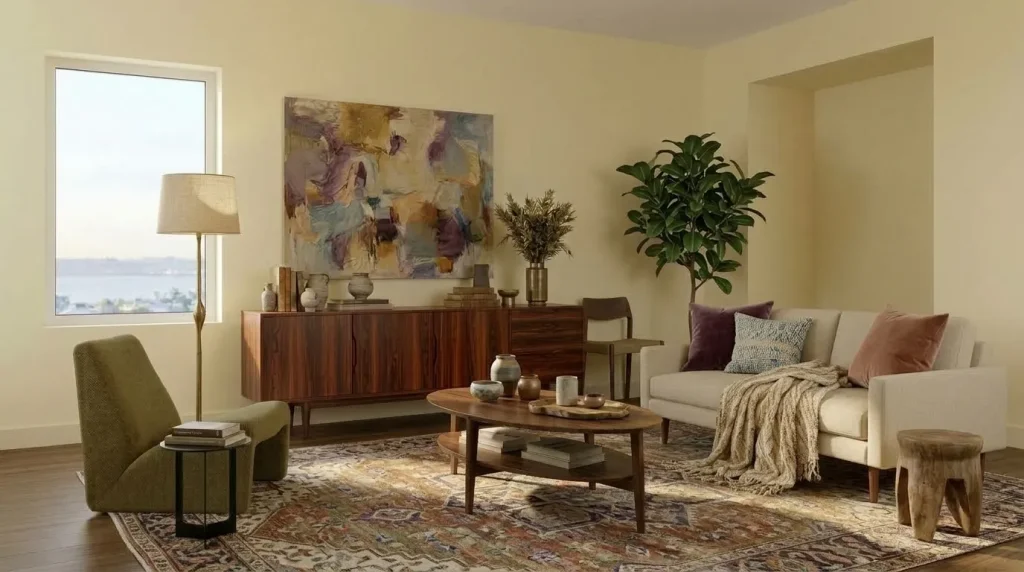
Begin with a substantial piece such as a walnut credenza, teak sideboard, rectangular coffee table, or wooden lounge chair with an exposed frame. Then let the boho elements become softer and less structured around it.
Walnut is especially useful now because darker woods are returning strongly in 2026 interiors. Designers are pairing walnut and espresso oak with plaster, stone, textiles, and aged finishes rather than relying only on the very pale timber that dominated recent years.
If your floor is medium oak, do not assume the furniture has to match it. Walnut can actually create useful contrast.
One dark wood anchor often gives woven baskets, linen, patterned rugs, and houseplants more visual weight — a principle we also explore in our mid century modern living room ideas.
Idea 2: Choose a sofa with clean lines, then make it softer
The sofa is where I would let mid-century modern lead.
Look for tapered legs, restrained arms, and a structured shape. It does not have to be a strict reproduction of a 1950s design.
Then use boho textiles to loosen it.
Add a wool throw, one patterned cushion, a velvet pillow, or a woven textile in rust, olive, indigo, or dusty rose.
For a modest living room, a sofa around 72 to 84 inches wide may give you enough seating without consuming the entire floor plan. Keep roughly 14 to 18 inches between the sofa and coffee table where space permits.
A common mistake is buying both a highly sculptural sofa and several highly decorative boho chairs. Let one side of the combination provide structure.
Build a warmer, richer color story
Idea 3: Use chocolate brown as the bridge between both styles
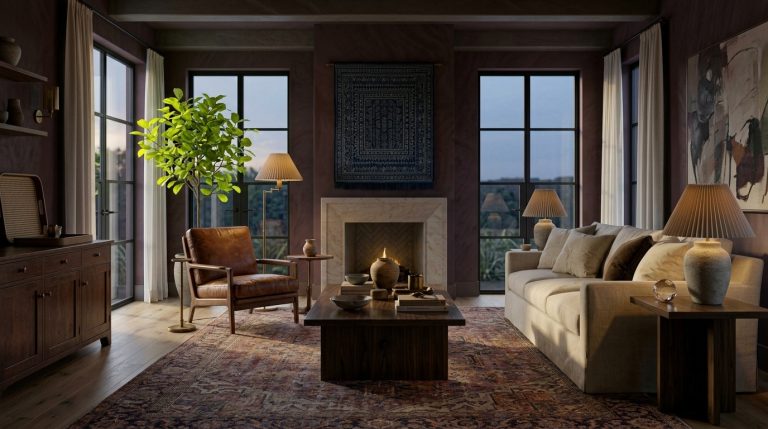
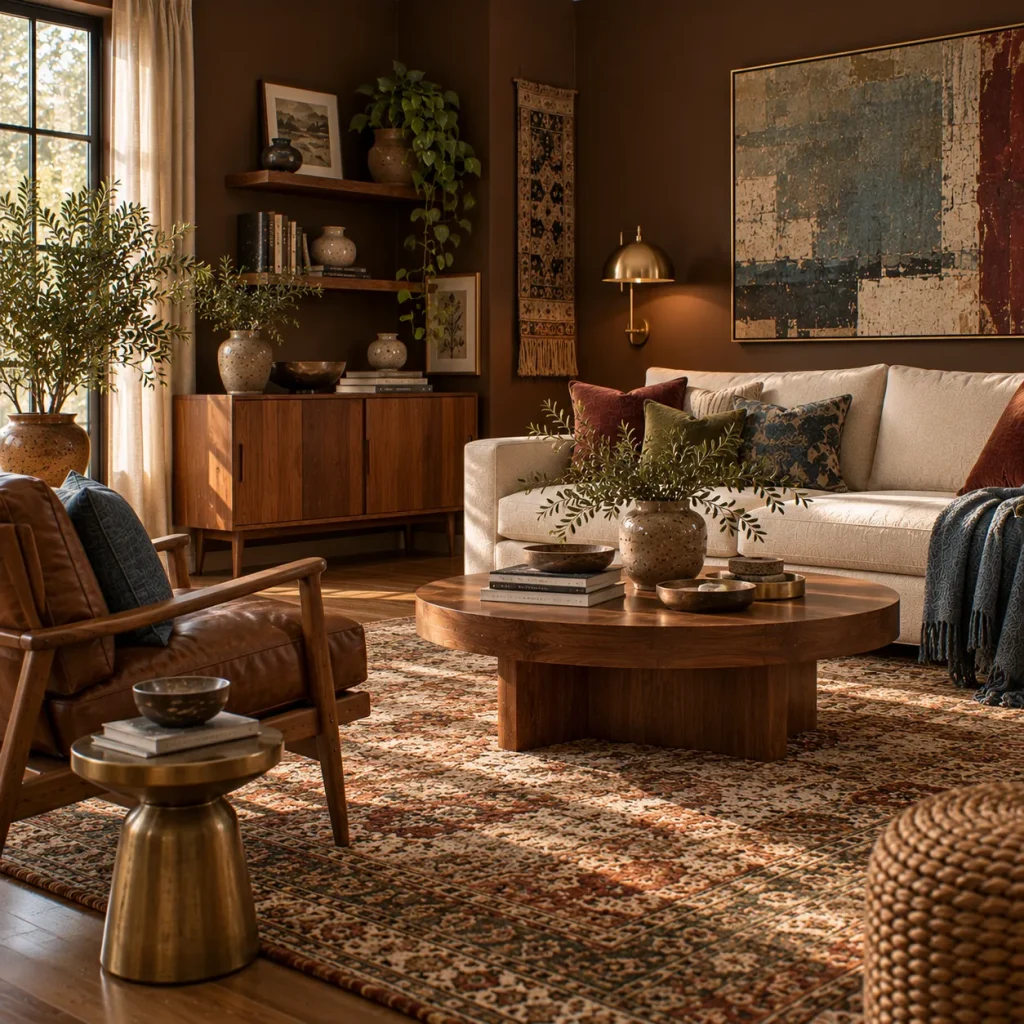
Chocolate brown belongs naturally with walnut, leather, wool, terracotta, cane, and patterned textiles, which makes it an unusually effective bridge between boho and mid-century furniture.
Try chocolate walls with a cream sofa and teak cabinet. Or use a tobacco leather chair with mushroom walls and a rust-toned rug.
Homes & Gardens has highlighted chocolate brown in 2026 as a particularly effective color for creating layered, vintage-feeling rooms.
You do not need to add mustard simply because the furniture is mid-century.
In fact, one of the easiest ways to make this combination feel too retro is to automatically use mustard, avocado, orange, and turquoise together.
Chocolate, olive, rust, warm ivory, dusty blue, and burgundy create a more nuanced palette, similar to the tones in our moody neutral living room tips.

Idea 4: Choose one boho color that breaks the retro formula
Once the wood and neutral upholstery are established, introduce a less predictable color.
Deep plum, dusty pink, moss, muted teal, brick red, or faded indigo can work beautifully.
For example: Walnut + warm ivory + plum. Teak + oatmeal + moss. Tobacco leather + parchment + dusty blue.
The color should appear more than once, but not everywhere. A plum cushion could relate to a color in the rug or artwork without requiring a matching plum lamp and throw.
Current 2026 living rooms are becoming more expressive and individual, with designers moving away from neutral “safe” rooms toward stronger art, pattern, color, and personal choices.
Use boho textiles to soften the geometry

Idea 5: Put a patterned vintage-style rug under simple furniture
A good rug may be the single easiest way to connect the two styles.
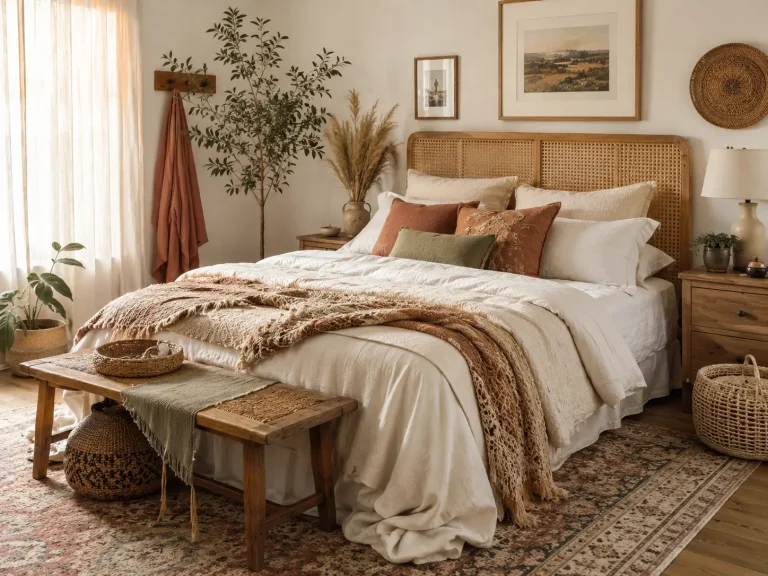
Mid-century furniture tends to have crisp outlines and visible legs. A faded Persian-style rug, kilim, geometric wool rug, or handwoven flat weave adds the irregular pattern and softness that boho needs.
Choose a rug containing several colors already present in the room. Rust, brown, olive, dusty blue, cream, and faded red are especially easy to combine with walnut.
Scale matters.
In many medium living rooms, an 8-by-10-foot rug works better than a 5-by-7 because the sofa and chairs can actually connect to it. Where possible, let the front legs of the main seating sit on the rug.
And do not feel compelled to choose a geometric “mid-century” rug. The furniture already provides that reference.
Idea 6: Mix pattern by repeating color, not motifs
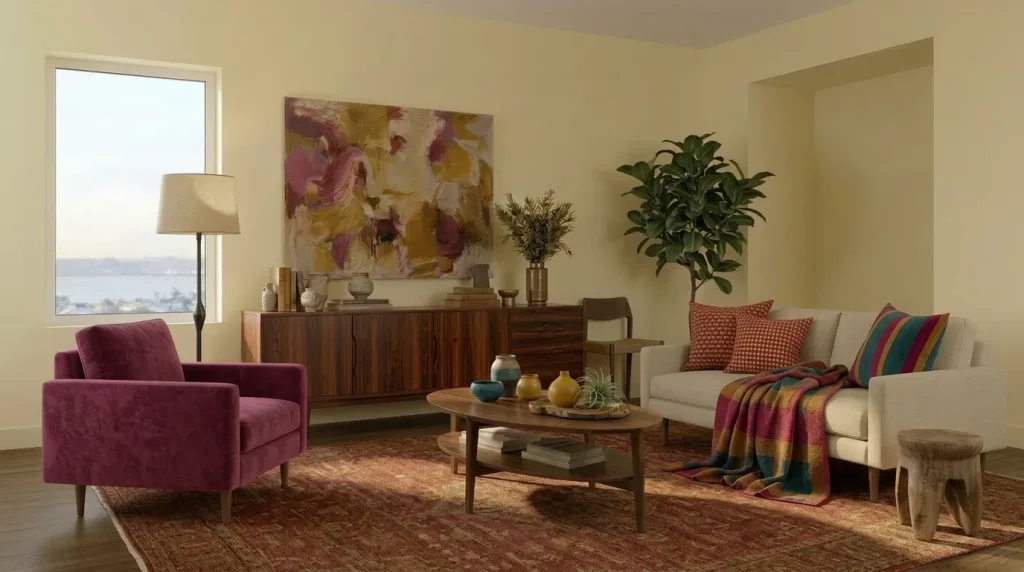
Boho gives you room to use multiple patterns, but mid-century modern needs enough restraint to keep the geometric design. Connect them through two or three repeating colors.
Current designer advice on 2026 pattern layering follows a similar principle. Shea McGee recommends using a shared color palette rather than trying to make every pattern match.
Vary the scale too.
A large botanical motif works better beside a narrow stripe and small geometric weave than beside two equally dominant prints.
This is one area where the two styles help each other. Boho stops mid-century furniture from looking like a showroom. Mid-century restraint prevents boho pattern from becoming chaotic.
Add woven materials without creating a rattan showroom

Idea 7: Use one or two woven pieces as contrast
Rattan, cane, wicker, and natural fiber work beautifully with mid-century wood.
A cane lounge chair beside a walnut sideboard feels natural because both materials have warmth, but one is visually dense while the other is airy.
Homes & Gardens specifically recommends the boho and mid-century combination, noting how well woven textures, natural prints, vintage objects, and houseplants work together.
The mistake is quantity.
A rattan chair, rattan coffee table, rattan pendant, cane cabinet, woven mirror, and six baskets quickly erase the mid-century clarity.
Pick one strong woven furniture piece and perhaps one smaller natural-fiber element elsewhere.
Then bring in ceramic, glass, metal, wool, and wood so the room has material range.
Let vintage pieces connect the styles naturally

Idea 8: Mix periods instead of recreating the 1960s
This combination becomes much more convincing when the furniture does not all come from the same decade.
Pair a mid-century credenza with an older stool. Put a contemporary linen sofa beside a 1960s chair. Use a vintage ceramic lamp with a newer coffee table.
Architectural Digest has featured exactly this sort of blend, including rooms where boho sofas, vintage mid-century chairs, ceramic tables, handmade rugs, walnut, and antique textiles coexist without one period dominating.
I once worked through an illustrative scheme where every piece had tapered legs. Sofa, cabinet, chairs, side table, and planter all technically fit the mid-century brief. The repetition made the room feel themed.
Replacing one table with a chunky irregular wooden stool immediately helped.
Current 2026 design is strongly favoring vintage and patinated pieces because they give rooms history and prevent the catalog effect, a mood we also explore in our dark boho living room decor ideas.
Give art and objects more personality
Idea 9: Combine bold art with quieter furniture
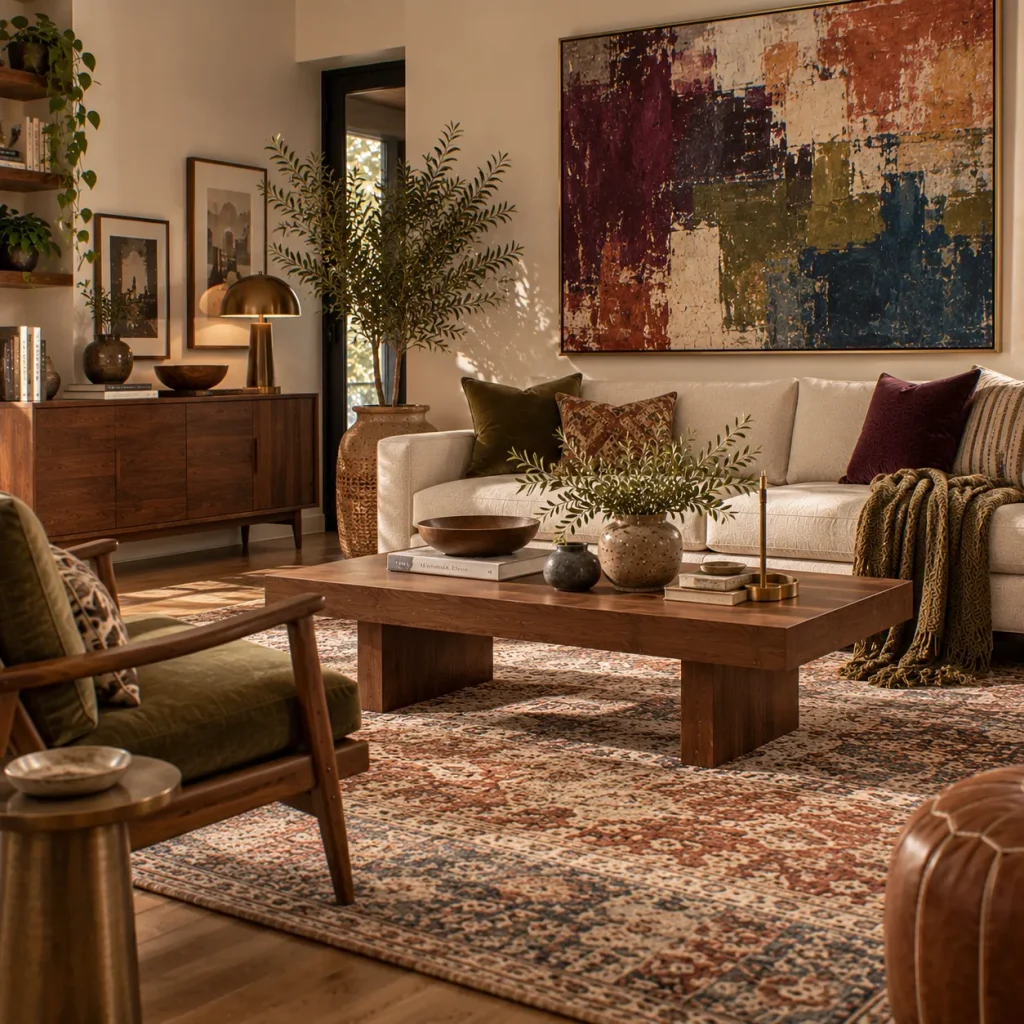
Boho interiors often rely on art and collected objects, while mid-century rooms give those objects enough visual breathing room.
Use that relationship deliberately.
Hang one substantial abstract painting, textile, vintage photograph, or collection of smaller works above a simple sofa or credenza.
Above a sofa, artwork around two-thirds of the sofa width is a useful starting point, depending on the piece and wall.
On shelves, combine books with ceramics, photographs, records, and a few objects you genuinely care about.
Do not buy a complete set of “bohemian wall art.”
Pinterest’s 2026 home trends include Afrohemian Decor, which points toward increased interest in culturally specific textiles, art, woven materials, and craft rather than vague global-inspired decoration.
If you use culturally specific textiles or artwork, choose pieces with identifiable origins and makers where possible, an approach we also emphasize in our boho living room decor ideas.
Finish the room with sculptural lighting and greenery
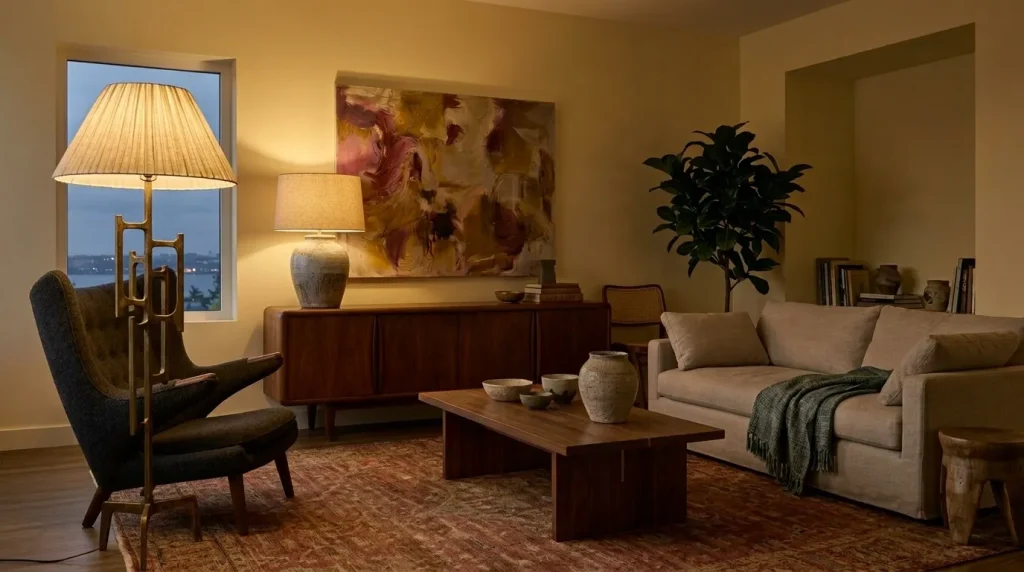
Idea 10: Let one statement lamp connect both aesthetics
Lighting is a natural meeting point for these styles.
Mid-century design gives you globe lamps, tripod forms, mushroom shapes, articulating arms, and sculptural metal fixtures. Boho contributes woven shades, ceramic bases, colored glass, pleated fabric, and more handmade character.
Choose one fixture with presence.
A large paper pendant could sit above walnut furniture. An aged-brass floor lamp might stand beside a patterned chair. A ceramic table lamp can soften a clean credenza.
Oversized and sculptural lighting is one of the major living-room directions for 2026, with designers treating fixtures as functional art.
Then add greenery according to the actual daylight. One large ficus, rubber plant, or climbing plant usually has more architectural impact than eight tiny pots.
A simple boho and mid-century modern formula
| Element | Mid-century role | Boho layer |
|---|---|---|
| Sofa | Clean silhouette | Textured pillows and throw |
| Wood | Walnut or teak | Aged or handmade accents |
| Rug | Simple furniture foundation | Pattern, color, softness |
| Seating | Sculptural wooden chair | Cane or patterned upholstery |
| Color | Brown, cream, olive | Rust, plum, indigo, dusty rose |
| Lighting | Globe or sculptural form | Ceramic, woven, pleated texture |
| Decor | Edited surfaces | Books, art, plants, collected objects |
You do not need a perfect 50/50 division. In most rooms, letting one style provide the architecture and the other provide the layers creates a clearer result.
What should you skip when mixing boho and mid-century modern?
Too many obvious mid-century icons. A tapered-leg sofa, starburst clock, Sputnik light, mustard chair, teak credenza, and geometric rug can turn the room into a period set.
Rattan everywhere. Woven furniture is useful precisely because it contrasts with solid wood. Too much removes that contrast.
The full retro color palette. Mustard, orange, avocado, and turquoise together makes the era reference very literal.
Decorating every surface. Boho does not require clutter. Current 2026 interiors are layered but increasingly edited.
Matching furniture. One of the broader shifts away from sterile modernism in 2026 is the rejection of perfectly matched sets in favor of collected combinations.
Try this if you already have a mid-century living room
Do not replace the main furniture.
Start with the floor. Add a patterned or vintage-style rug containing colors that relate to your existing wood.
Next, soften the sofa with one woven throw and two or three varied cushions rather than an entire matching set.
Add one natural-fiber piece, such as a cane chair or woven pendant.
Then bring in a vintage ceramic lamp, handmade pottery, books, plants, or a substantial piece of art.
Finally, remove one overtly retro accessory.
That last step matters. Good 10 ideas for combining boho with mid century modern for living rooms should make the mid-century furniture feel more relaxed, not more themed.
FAQ
Do boho and mid-century modern styles work together?
Yes. Mid-century furniture provides clean shapes and structure, while boho elements add pattern, texture, plants, art, and a more collected feel. The styles work particularly well because their differences create balance rather than requiring everything to match.
What colors work with boho mid-century decor?
Walnut brown, warm ivory, olive, rust, chocolate, plum, dusty blue, tobacco, and muted terracotta work especially well. Choose a limited palette and repeat a few colors through rugs, textiles, and art.
Can I mix rattan with mid-century furniture?
Yes. Rattan and cane pair naturally with walnut, teak, leather, and simple mid-century silhouettes. Use one or two woven pieces so they remain a contrast rather than becoming the dominant material.
Is boho mid-century decor still current in 2026?
Yes, especially because 2026 interiors are favoring vintage furniture, layered patterns, richer woods, tactile materials, and rooms that feel more personal. The broader movement toward mixing nostalgic references with contemporary living is also expected to continue into 2027.
Let one style provide structure and the other provide soul
The strongest 10 ideas for combining boho with mid century modern for living rooms do not rely on calculating exactly how much of each style you have.
Start with structure. A clean sofa, walnut credenza, simple chair, or well-proportioned coffee table can establish the mid-century foundation.
Then loosen it. Add a patterned rug, woven textile, old ceramic, plant, art, or one unexpected vintage piece.
If you make one change first, add something that contrasts with your most dominant existing element. A very clean room probably needs softness and pattern. A highly layered boho room may need one simpler piece of furniture.
That tension is what makes the combination work. The room should feel collected across periods, not divided between two decorating categories.