10 Mid Century Modern Living Room Ideas That Feel Fresh in 2026
Mid-century modern rooms are easy to recognize and surprisingly easy to overdo. A walnut credenza, tapered legs, mustard chair, starburst mirror, and geometric rug may check every box, yet together they can make a living room feel more like a retro set than a home.
The better approach is looser. These 10 mid century modern living room Ideas borrow the clean lines, useful furniture, warm woods, strong shapes, and indoor-outdoor thinking of mid-20th-century design without recreating 1958 piece by piece. That feels particularly relevant in 2026, as current interiors are becoming warmer, more personal, and more comfortable. Recent designer coverage also shows renewed interest in mid-century forms, richer woods, vintage pieces, natural materials, and rooms that combine different periods rather than following one rigid style.
Start with the architecture of the room
Idea 1: Let clean horizontal lines establish the look
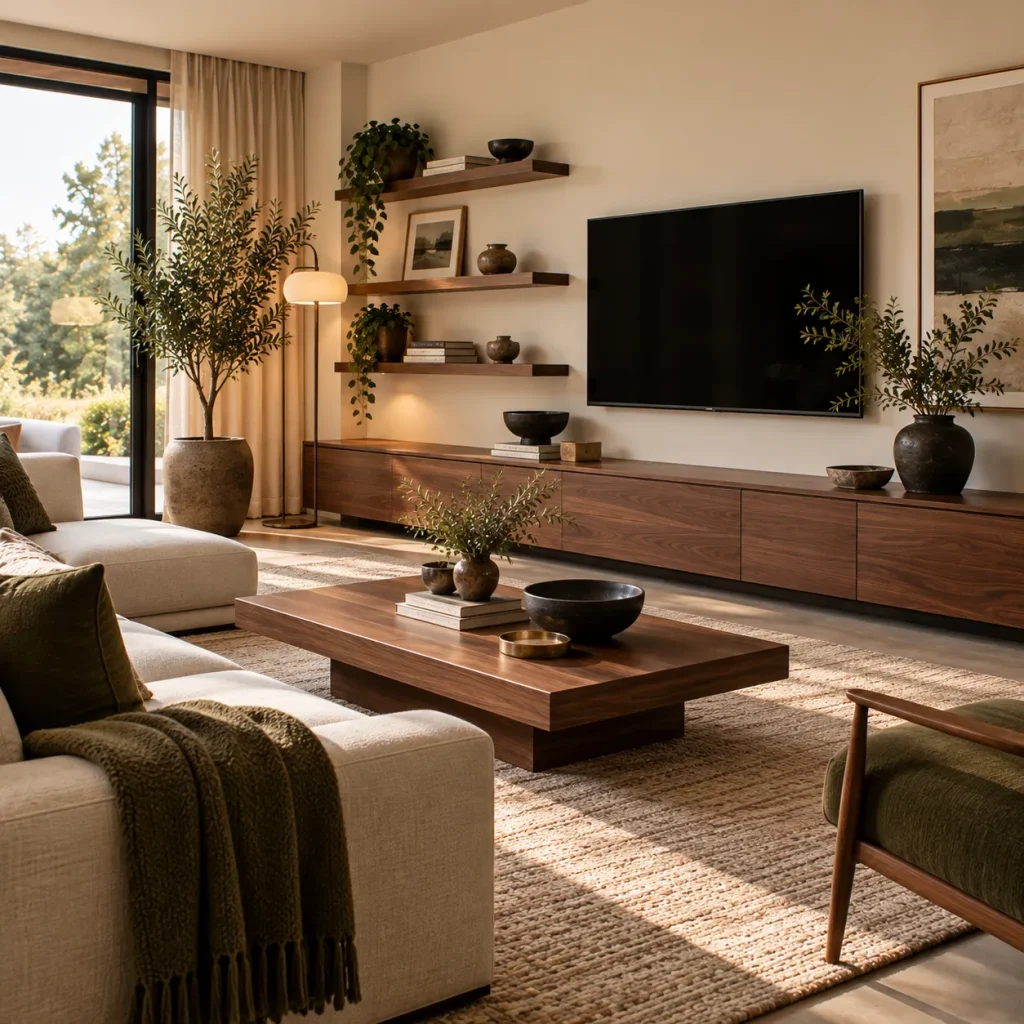
Mid-century design often feels calm because the eye can travel easily across the room. Low furniture, long consoles, slim shelving, and relatively uncluttered surfaces reinforce that horizontal movement.
You can create the effect without owning an architect-designed 1950s house. Try a long media cabinet rather than a tall entertainment unit. A console that extends beyond the television also makes the wall feel more deliberate.
If your TV is around 55 inches wide, a console roughly 70 to 80 inches wide can provide useful visual breathing room, depending on the wall.
Do not force every piece to sit low. In a room with an eight-foot ceiling, one tall plant, floor lamp, or vertical artwork can keep all that horizontal furniture from making the room feel compressed.
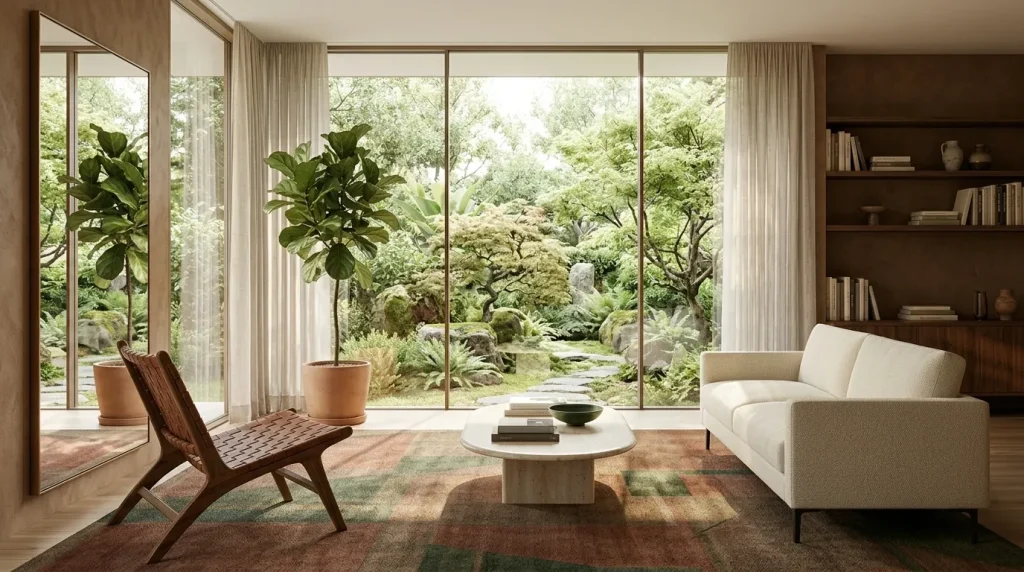
Idea 2: Strengthen the connection to natural light
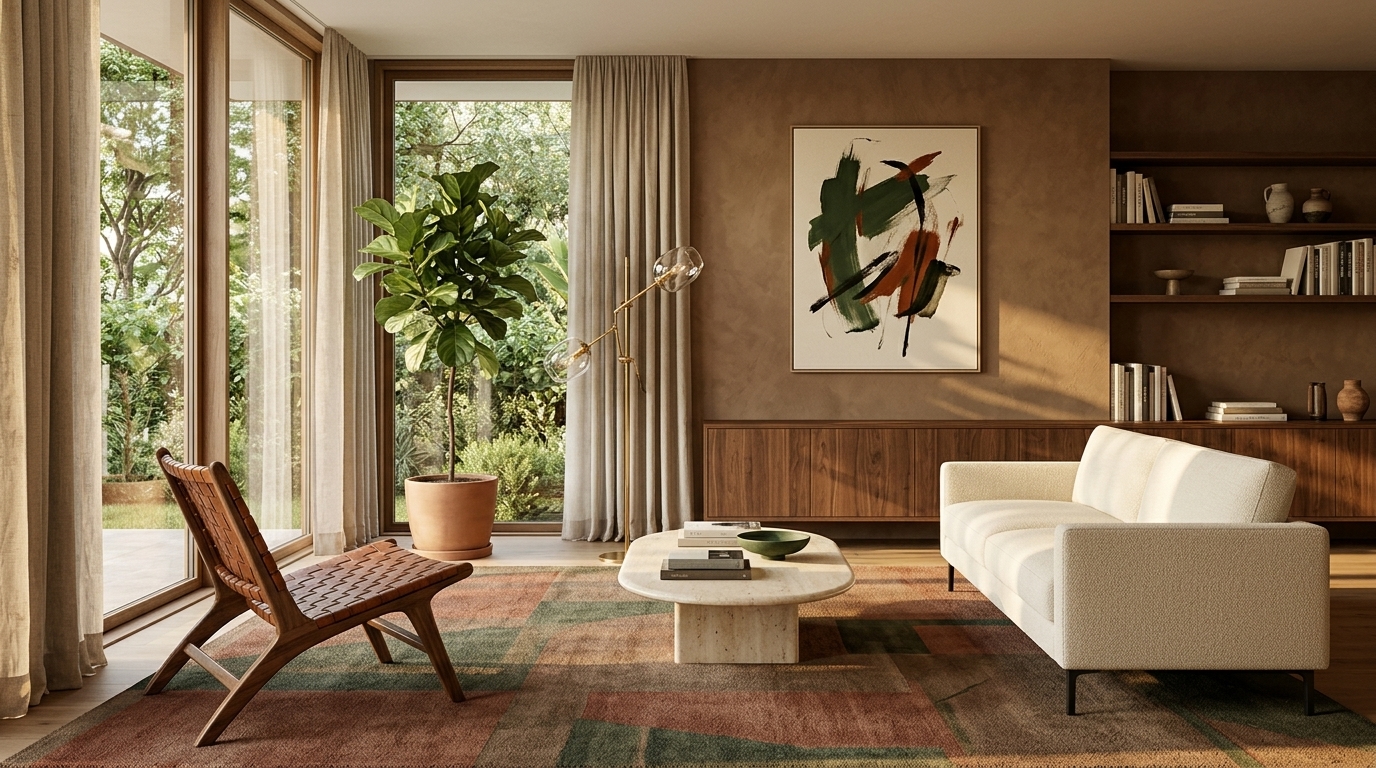
Original mid-century homes often made strong connections between indoors and outdoors through large windows, sliding doors, and open views. That principle is more useful than copying a specific chair.
Keep large windows visually open where privacy permits. Curtains hung above and beyond the frame can soften the architecture without cutting off too much glass.
Homes & Gardens highlighted this indoor-outdoor relationship in its 2026 coverage of Alexandra Daddario’s 1959 Brentwood home, where floor-to-ceiling glazing and natural light are central to the mid-century character.
If your living room has small windows, use a mirror opposite or adjacent to daylight rather than automatically hanging it above the sofa. The aim is to move light through the room, not simply add another decorative object.
Choose warmer, more sophisticated color
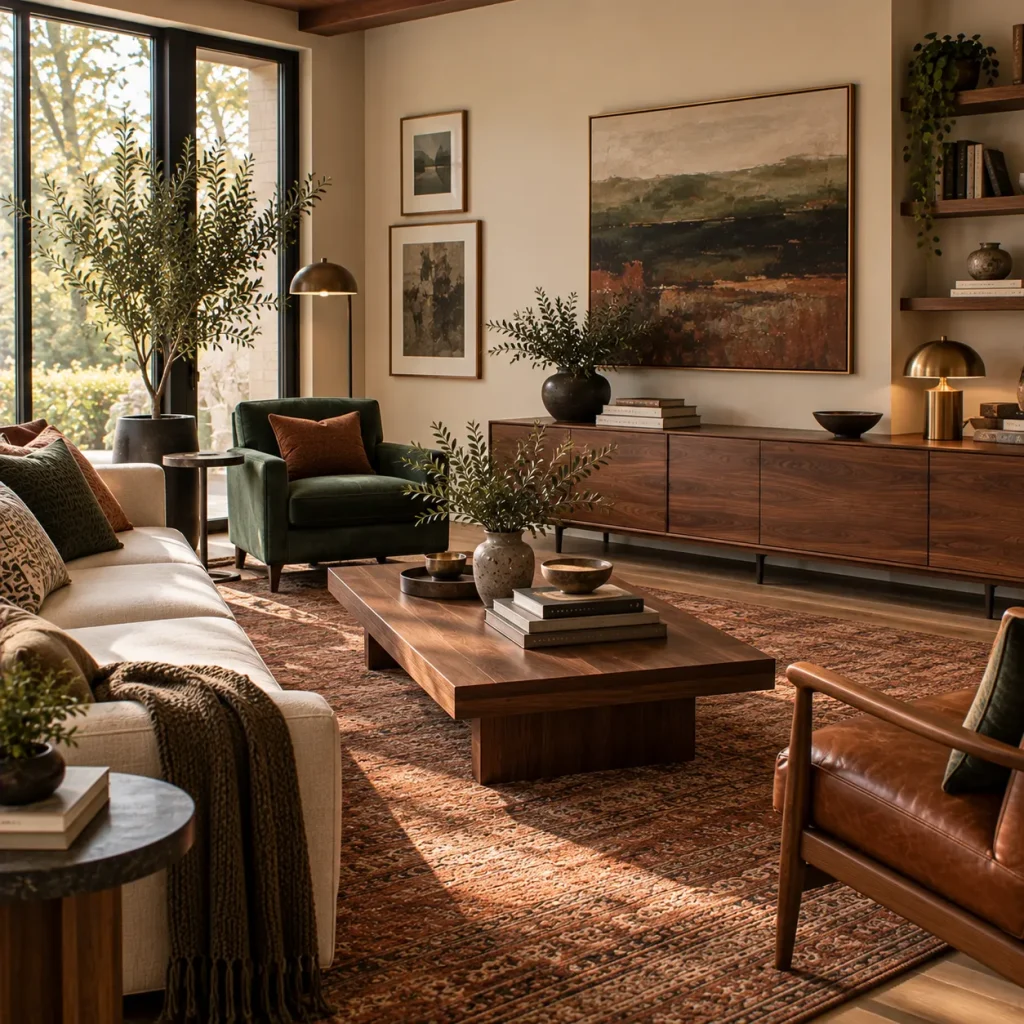
Idea 3: Replace the predictable mustard-orange palette
Mustard, avocado, burnt orange, and teal are strongly associated with retro interiors. You can use them, but using all four makes the decade reference too obvious.
A more current palette might combine walnut with forest green, chocolate brown, warm cream, tobacco, oxblood, dusty blue, or muted rust. See more living room color combination ideas for pairing options.
Architectural Digest’s guidance on mid-century living rooms points toward rich browns, greens, natural materials, and more nuanced versions of familiar retro shades.
Try forest green rather than bright jade. Use a tobacco leather chair instead of several orange accessories. A muted rust rug can provide warmth without turning the whole room into a 1970s color story.
One contrarian point is worth making here. A mid-century living room does not need a loud accent color. Walnut, cream, dark brown, black, and soft olive can communicate the style perfectly well.
Use wood with more depth
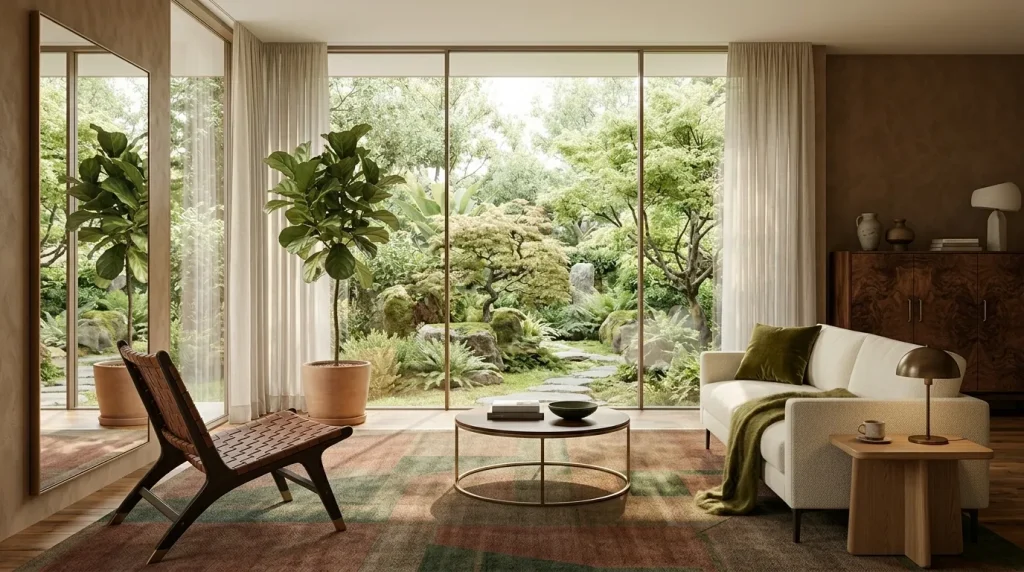
Idea 4: Bring in walnut, but do not match every wood finish
Walnut is one of the easiest materials to associate with mid-century furniture because its warm brown color works beautifully on clean-lined cabinets, tables, and chair frames.
It is also particularly relevant now. Current 2026 design coverage is showing renewed interest in deeper woods such as walnut and espresso-toned oak after years of very pale timber dominating interiors.
Start with one substantial wooden piece. A walnut credenza, rectangular coffee table, or vintage cabinet gives the room enough dark weight.
Then let the other woods vary slightly. Medium oak flooring, walnut furniture, and a darker stained frame can coexist if their undertones feel related.
Matching every wooden item is not more authentic. It often makes the room flatter.
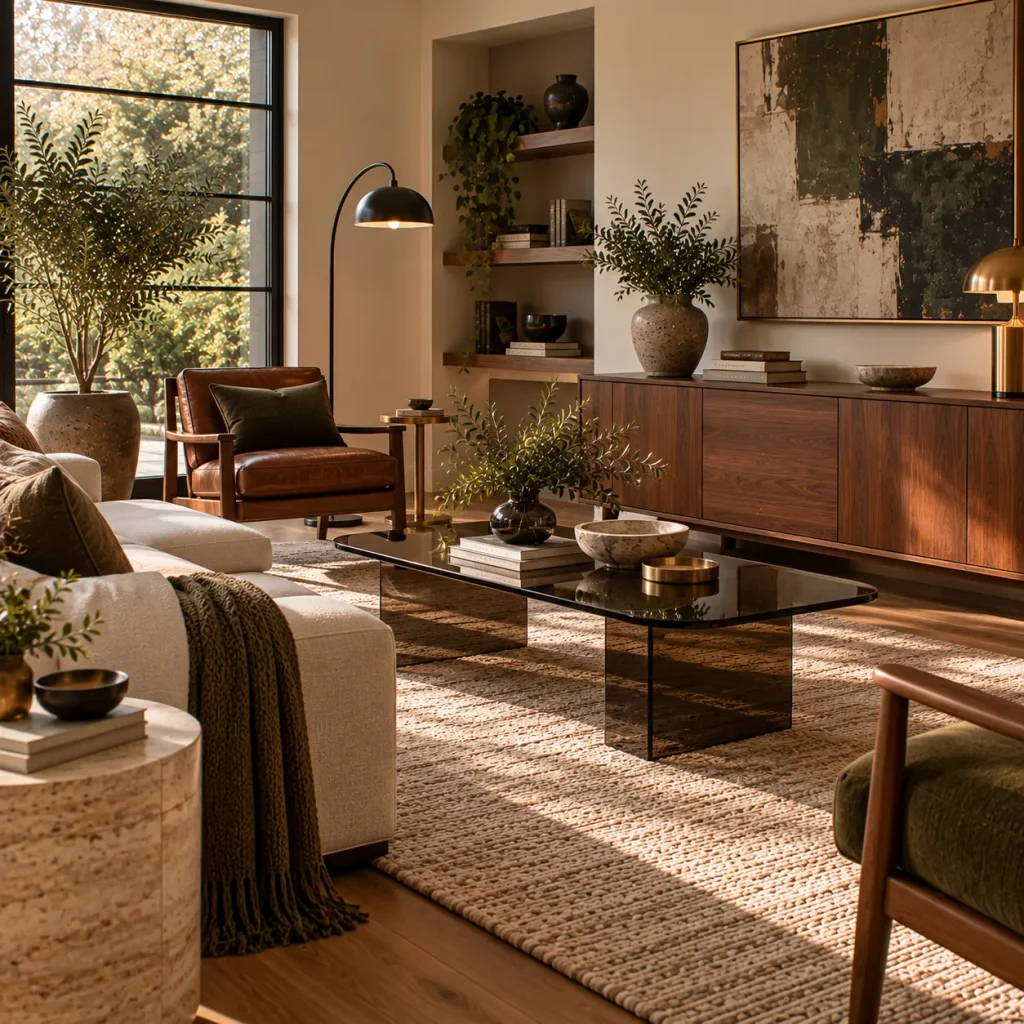
Idea 5: Combine wood with stone, glass, and metal
Mid-century modern design was never only about timber.
Add a travertine or marble side table, smoked-glass coffee table, blackened-metal lamp, brass detail, or chrome accent. For more on this layered approach, see these organic modern living room ideas. Harder materials keep a wood-heavy room from drifting toward rustic style.
The strongest combinations often contain contrast. A walnut table beside a wool rug works because one is smooth and structured while the other is soft. Marble beside warm timber creates another useful tension.
The broader 2026 design movement toward mixing raw and polished surfaces makes this especially current. Designers are increasingly using material contrast rather than relying on matching finishes throughout a room.
Pick furniture for silhouette and comfort
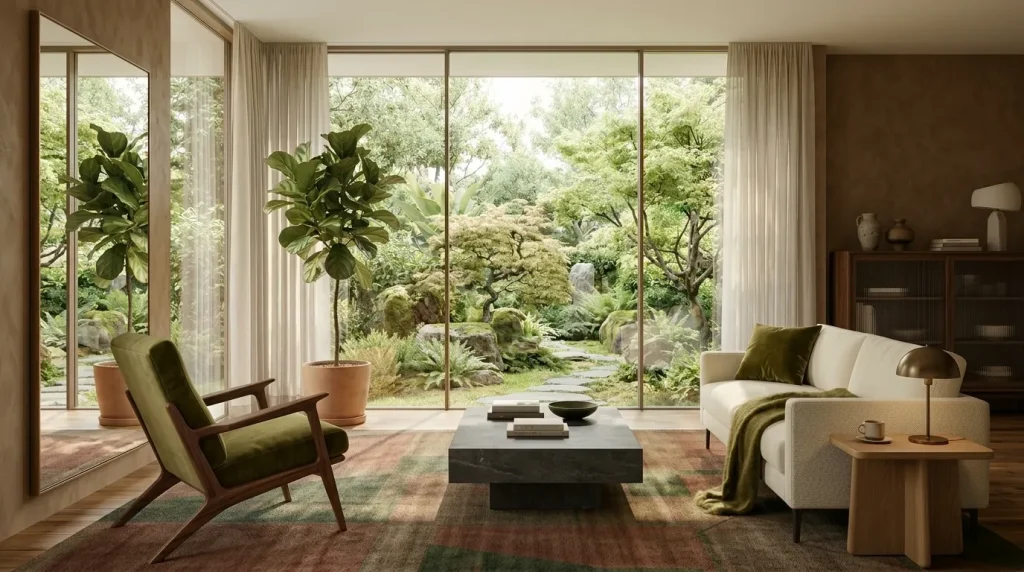
Idea 6: Use one unmistakably mid-century furniture shape
You do not need ten iconic-looking pieces.
One excellent silhouette can establish the direction. Consider a wooden lounge chair with an exposed frame, a streamlined sofa on visible legs, a sculptural molded chair, or an oval or curved coffee table.
Then let other furniture become quieter.
I once worked through an illustrative room layout where the sofa, two chairs, coffee table, sideboard, lamp, and shelving all had dramatically tapered legs. Each individual item suited the style. Together, the repetition became almost cartoonish.
Removing two obviously retro shapes made the remaining pieces look much stronger.
That is a useful rule for this style. Recognition becomes more convincing when you stop before every object starts announcing the same era.
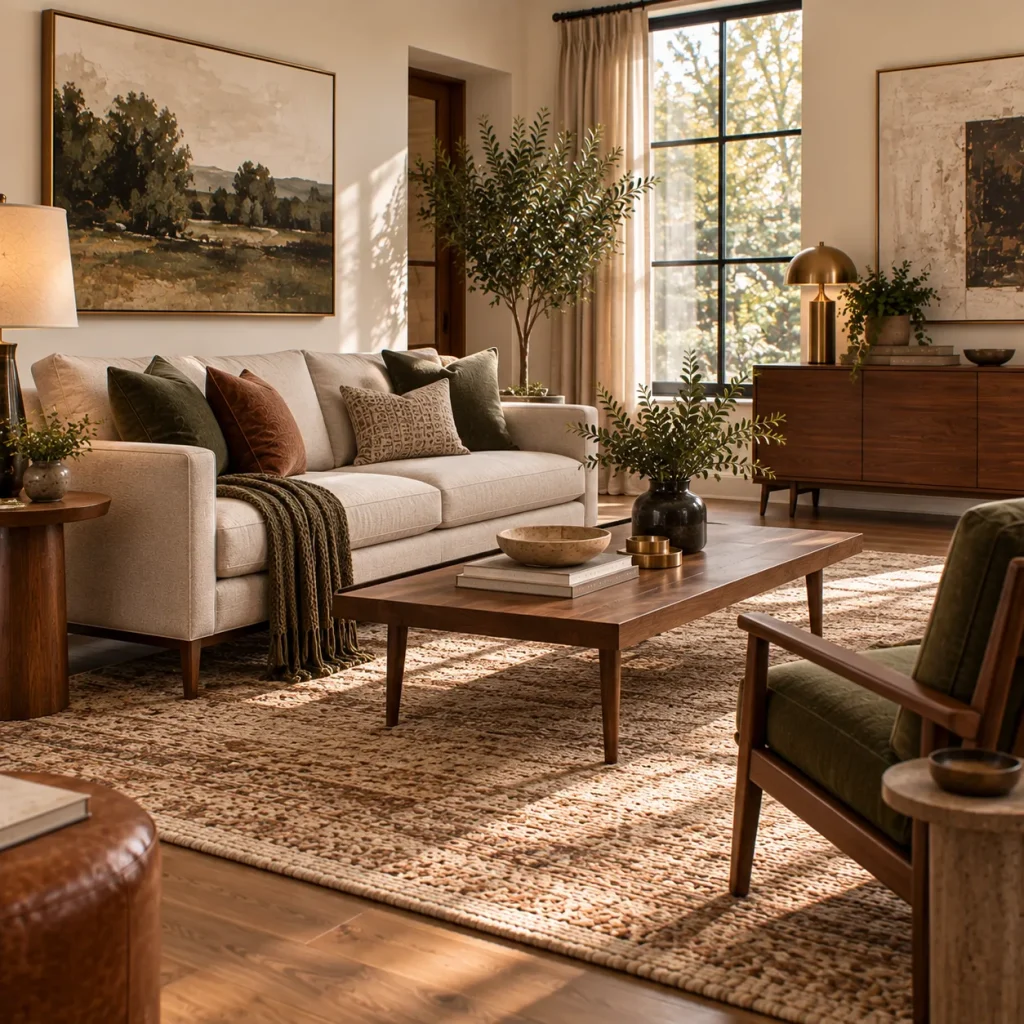
Idea 7: Do not sacrifice comfort for a low profile
Low-slung seating looks wonderful in many mid-century rooms, but it is not automatically practical for every household.
Very low sofas can be difficult for taller people or anyone who finds getting up from deep seating uncomfortable. Instead of chasing the lowest possible profile, look for visual lightness through slim arms, raised legs, and a structured frame.
For many living rooms, a sofa around 78 to 88 inches wide provides substantial seating without taking over the room. In a small living room layout, keep roughly 14 to 18 inches between the sofa and coffee table where space permits.
Current 2026 living-room design is placing more emphasis on comfort and personality, which gives us permission to adapt historical forms rather than reproducing them rigidly.
Add softness so the room does not feel like a showroom
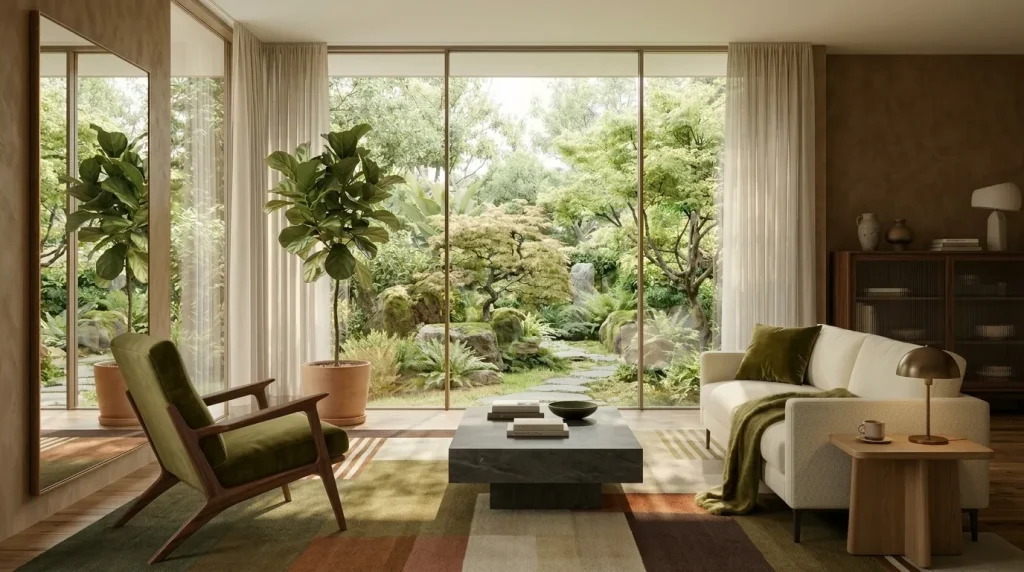
Idea 8: Use a large rug with quieter geometry
Geometric rugs suit mid-century interiors, but exaggerated atomic patterns can make the theme too literal.
Try a wool rug with broad blocks, broken stripes, abstract curves, or a subtle grid. A vintage Persian-style rug can also work surprisingly well because its age and complexity offset the cleaner furniture.
In a standard seating group, an 8-by-10-foot rug often creates a stronger foundation than a 5-by-7. Ideally, the front legs of the primary seating should reach the rug where the layout allows.
And do not assume a neutral rug is always safer. If your sofa, walls, and curtains are already cream, a muted olive, rust, tobacco, or patterned rug can prevent the center of the room from disappearing.
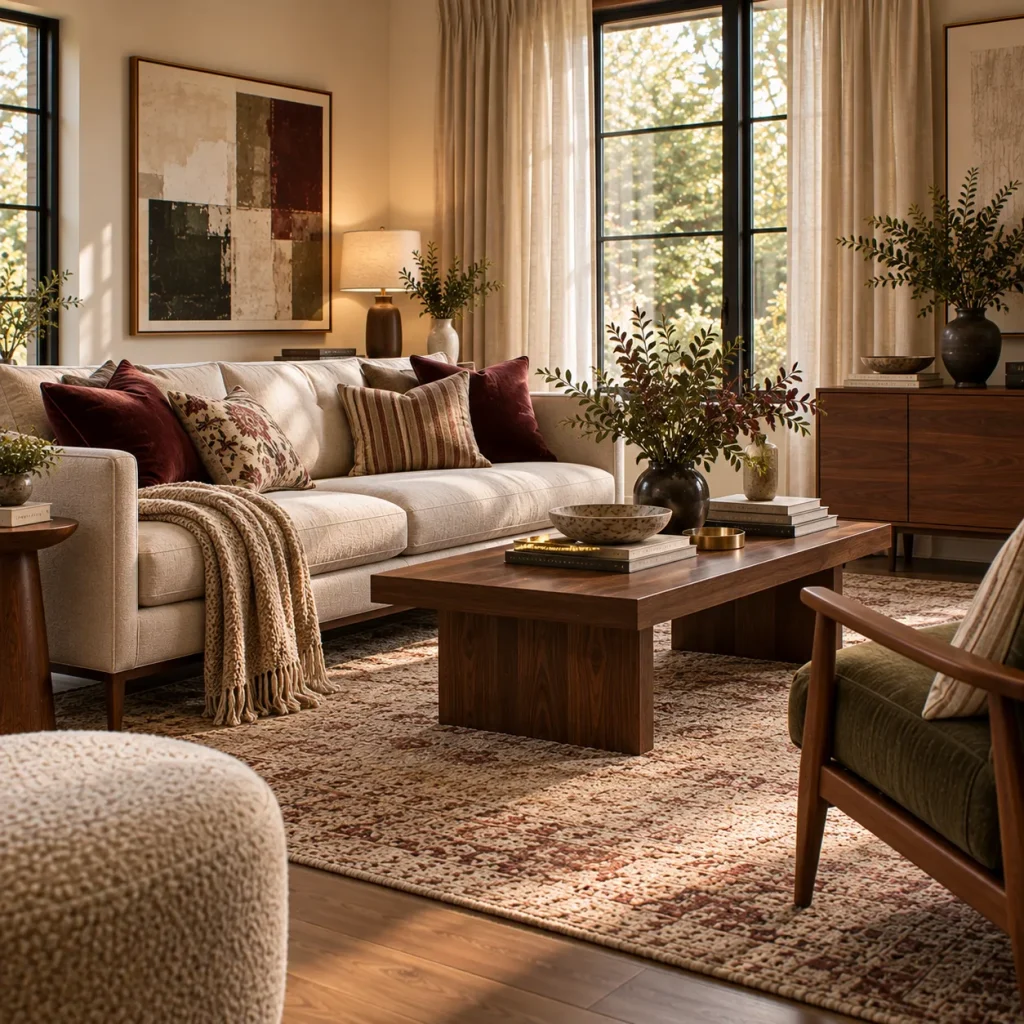
Idea 9: Add textiles that were not designed as “mid-century decor”
This is where many rooms become more believable.
Pair the clean furniture with linen curtains, a wool throw, velvet cushions, or even one restrained floral or striped textile. The contrast stops the room from looking as if every purchase came from the same style filter.
Patterned upholstery and more expressive textile combinations are gaining visibility again in 2026. Even retro references are being mixed with modern pieces rather than reproduced as complete period rooms.
This also connects with the emerging idea of “newstalgia,” which blends nostalgic references with contemporary living rather than copying an earlier decade exactly. Current design coverage is already identifying that approach as an important direction moving toward 2027.
Let lighting provide the sculptural moment
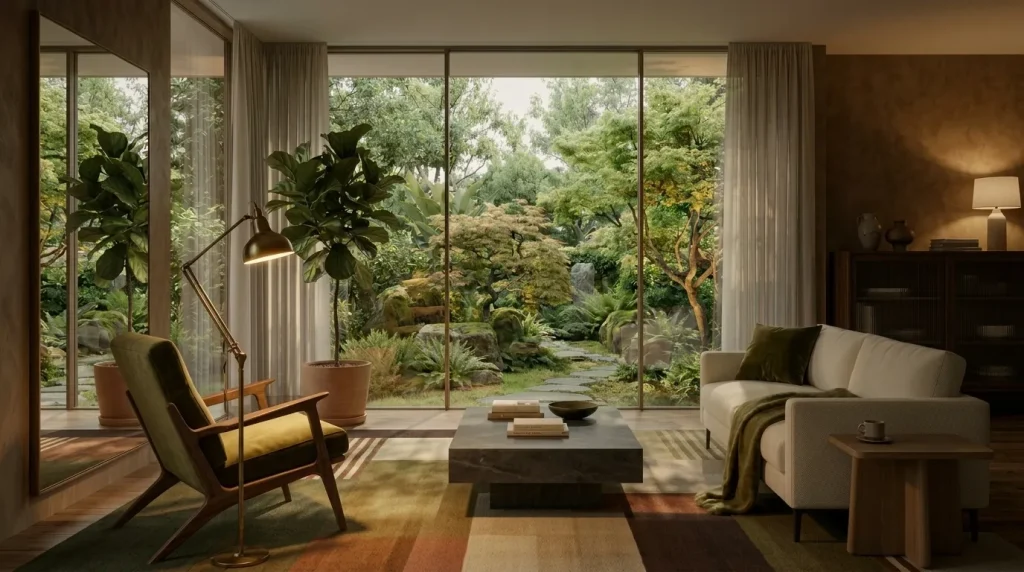
Idea 10: Choose one memorable lamp instead of several retro accessories
Lighting is one of the easiest places to introduce mid-century character without replacing major furniture.
Look for a globe pendant, adjustable arm lamp, mushroom-style table light, slender tripod floor lamp, or fixture combining glass with brass or dark metal.
Scale matters more than collecting several small lamps. A substantial floor lamp beside a lounge chair can provide both useful task lighting and enough shape to influence the room.
Then build two or three pools of light rather than depending entirely on the ceiling fixture. Table lamps and floor lamps make walnut, leather, wool, and stone appear richer at night because light reaches them from different directions.
Sculptural and expressive lighting remains prominent in 2026 living rooms, which makes this one historical mid-century principle that feels particularly relevant now.
A simple mid-century modern living room formula
| Element | More current approach | Avoid overdoing |
|---|---|---|
| Wood | Walnut, teak, medium oak | Matching every wood |
| Color | Forest green, tobacco, rust, cream | Full retro rainbow |
| Sofa | Structured, comfortable, raised profile | Extremely low seating |
| Rug | Wool, abstract, muted geometry | Literal atomic patterns everywhere |
| Lighting | One sculptural fixture plus lamps | Multiple novelty retro lights |
| Decor | Art, books, ceramics, vintage objects | Theme-based accessories |
| Metal | Brass, chrome, blackened metal | One finish on every object |
The goal is recognition without imitation. A room should reference mid-century design while still belonging to the people living in it now.
What should you avoid in a mid-century modern living room?
Too many icons or reproductions. A room packed with famous silhouettes can feel like a design showroom. Let one or two strong pieces lead.
Tapered legs on everything. Sofa, cabinet, table, planter, and chair do not all need the same leg treatment.
A forced 1960s color palette. Mustard and orange are options, not requirements. Rich brown, olive, burgundy, cream, and dusty blue can feel just as appropriate.
Furniture that is too low for your household. Historical authenticity is not worth daily discomfort.
Ignoring softness. Wood floors, wood furniture, glass, and metal can create a hard room. Wool, linen, curtains, upholstery, and books make the clean architecture easier to live with.
Try this if your living room is already gray and contemporary
You do not need to start over.
Keep the simple gray sofa if it is in good condition. Introduce walnut through a coffee table or media cabinet, then add a rug containing tobacco, olive, rust, or cream.
Next, replace one generic contemporary light with a sculptural floor or table lamp. Add an exposed wood-frame chair if space allows.
Finally, introduce art that carries two or three colors from the room.
Those changes shift the visual language toward mid-century modern without creating a themed interior or replacing expensive furniture.
FAQ
Is mid-century modern still popular in 2026?
Yes. Mid-century modern remains influential in 2026, particularly through clean furniture silhouettes, natural wood, warm colors, geometric forms, and connections to nature. Current interpretations tend to mix these elements with other periods rather than recreating an entire mid-century interior.
What colors work best in a mid-century modern living room?
Walnut brown, cream, forest green, tobacco, muted rust, olive, burgundy, dusty blue, and black all work well. Choose a limited palette and let wood provide part of the color rather than adding several bright retro shades.
Can mid-century modern work in a small living room?
Yes. Raised furniture legs, compact silhouettes, long low storage, and visually light chairs can make a small room feel less crowded. Avoid oversized sectionals and too many small retro accessories.
Can I mix mid-century furniture with modern pieces?
Yes, and the result can feel more current than using only period-inspired furniture. Keep some relationship between the pieces through wood tone, color, proportion, or material so the mix looks deliberate.
Reference the era without recreating it
The strongest 10 mid century modern living room Ideas share one principle. You do not need to make your home look like it was preserved from 1962.
Borrow the useful parts instead. Choose furniture with clear silhouettes. Bring in warm wood. Let natural light matter. Mix stone, glass, wool, leather, and metal. Add one or two vintage pieces, then give them contemporary company.
If you make one change first, identify the most generic large piece in the room and create contrast beside it. A walnut table next to a plain sofa or a sculptural lamp beside an ordinary chair may be enough to change the direction.
Mid-century style is strongest when its design principles remain visible but your own home remains the main story.