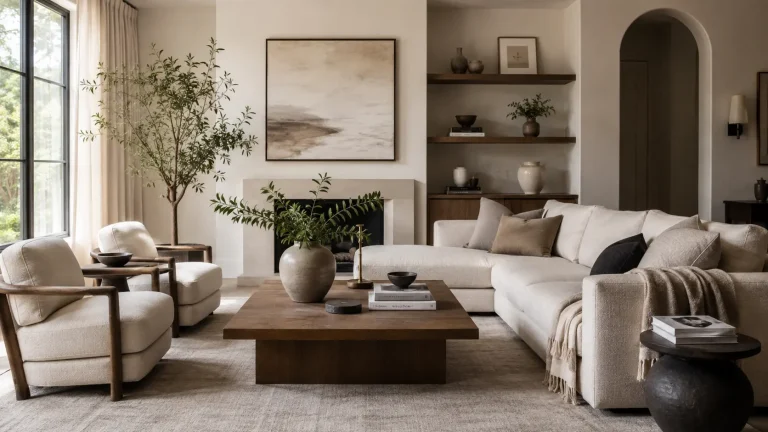
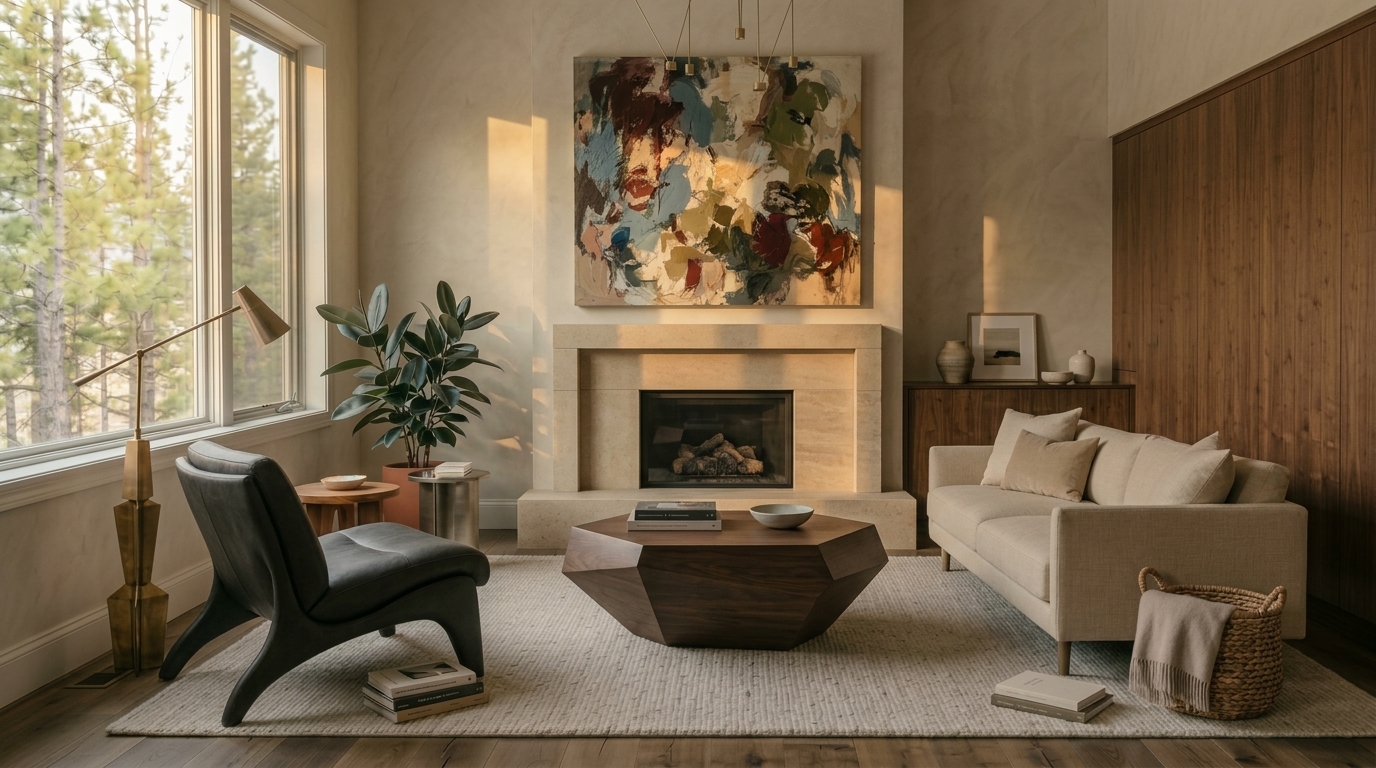
12 Accent Wall Ideas for Your Living Room That Feel Current in 2026
The fastest way to date an accent wall is to choose one simply because it is the wall behind the sofa. A successful feature wall needs a reason to stand apart, such as a fireplace, built-ins, strong artwork, unusual texture, or an architectural boundary.
That distinction matters more in 2026. The best 12 accent wall ideas for your living room are moving beyond the predictable dark-painted rectangle. Current designer projects are using plaster, wood, tactile wallpaper, stone, dimensional treatments, saturated cabinetry, and art to create walls that feel integrated with the room. Architectural Digest notes that natural and three-dimensional surfaces are becoming a quieter alternative to overt statement walls.
Here is how to make one wall different without making it feel disconnected.
Choose the right wall before choosing the finish
Idea 1: Paint the wall that already has a purpose
A painted accent wall is not outdated. A randomly selected accent wall often is.
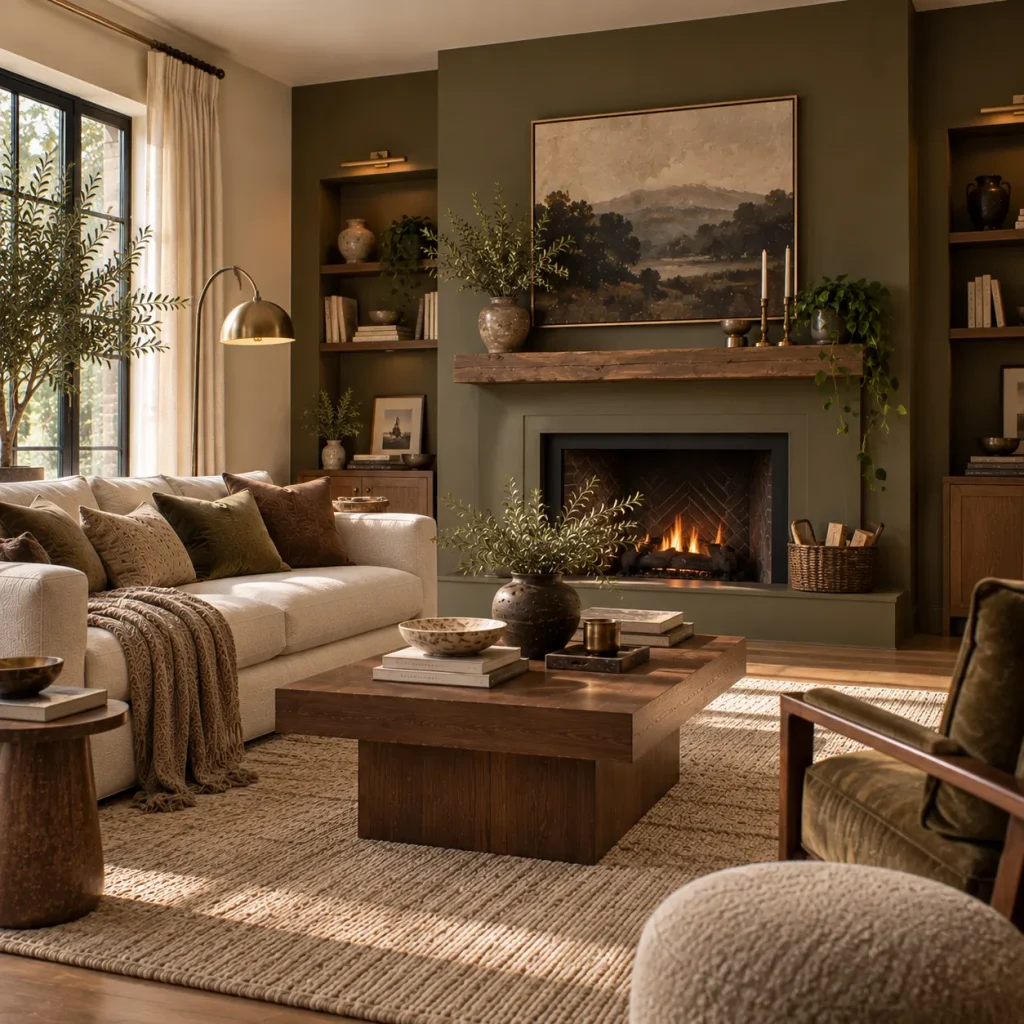
Choose a wall the architecture naturally emphasizes. The fireplace wall, the wall behind a substantial sofa, or the end wall of a long living room usually makes more sense than an arbitrary side wall.
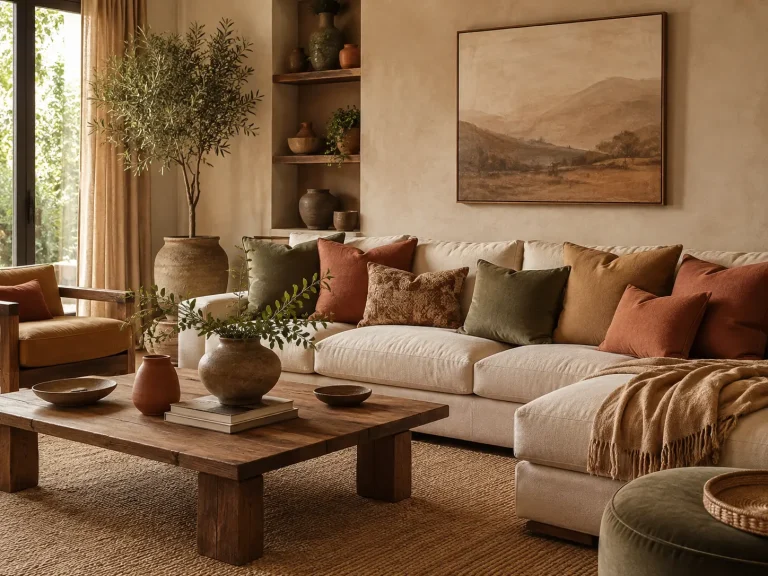
For 2026, look beyond charcoal and navy. Consider muddy olive, aubergine, tobacco brown, burgundy, muted teal, clay red, or chocolate.
If the room is narrow, painting the short end wall a deeper shade can visually pull it forward. In an open-plan space, paint can also help define the living zone without adding another physical divider.
Sample the color across a large area before committing. Strong colors change dramatically beside flooring, furniture, and artificial light, the same testing approach worth using with these warm neutral paint colors for a cozy living room.
Idea 2: Use a tonal accent instead of extreme contrast
An accent wall does not have to be dramatically darker than everything around it.
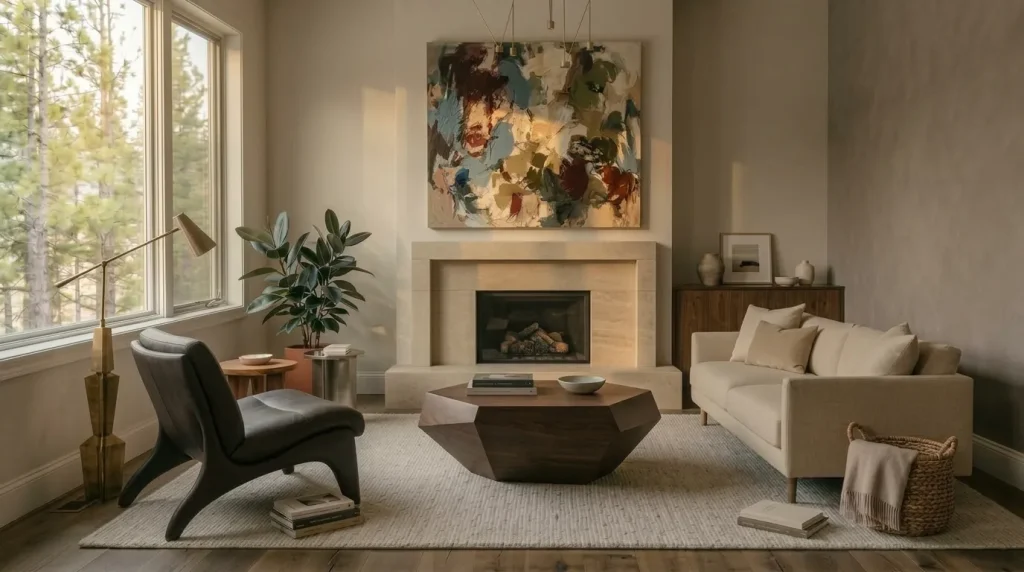
Try mushroom walls with a deeper taupe feature wall, pale dusty blue with a smoky blue-green accent, or warm ivory beside soft clay.
This lower-contrast approach works particularly well if you want the room to stay calm, a grounding effect also explored in these black accent living room ideas.
One useful contrarian idea is to stop thinking of an accent wall as something that must shout. In many current interiors, the more convincing feature wall is the one you notice because of depth and material, not because it is painted black against white walls.
Add depth with plaster and dimensional finishes
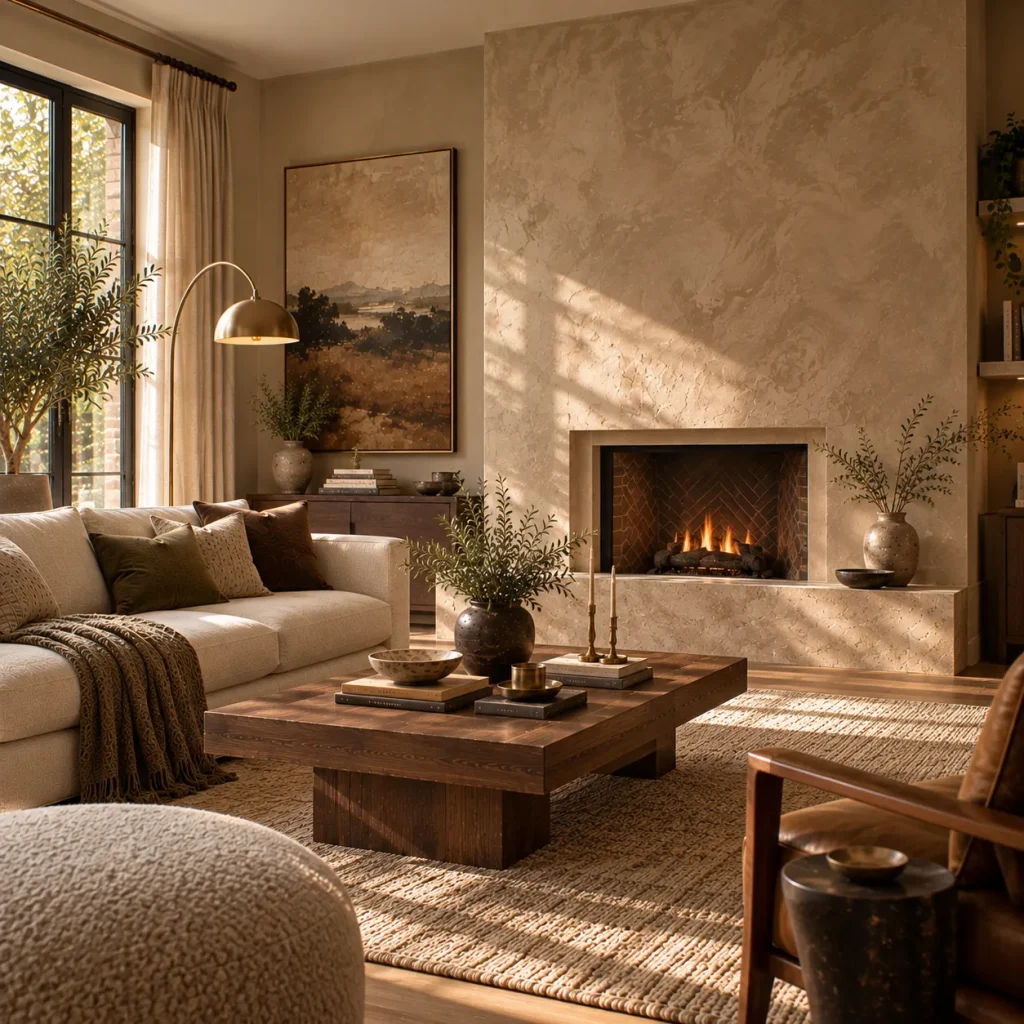
Idea 3: Extend the fireplace with plaster
If your living room has a fireplace, use the architecture you already have.
Instead of adding another unrelated feature somewhere else, extend the fireplace visually with limewash-style paint, plaster, Roman clay, or another softly textured finish.
Architectural Digest recently featured a living room where gray plaster was used around a marble fireplace to add depth without competing with the stone. The effect is quieter than introducing a second bold material.
Warm putty, chalky taupe, clay, or smoky gray can work beautifully.
Keep the surrounding styling controlled. A textured wall already changes as daylight moves across it, so it does not need shelves full of accessories.
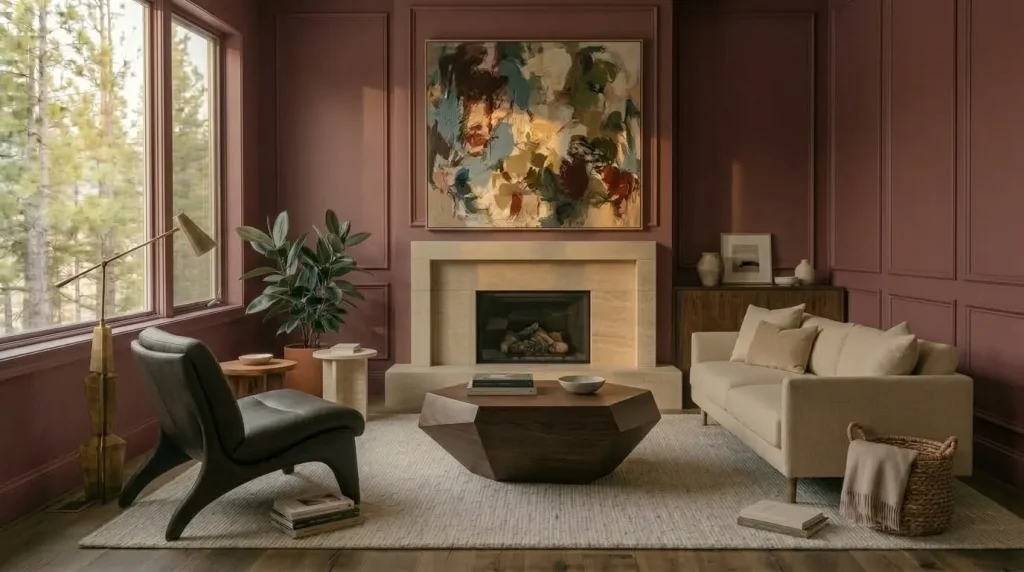
Idea 4: Add dimensional molding instead of another paint color
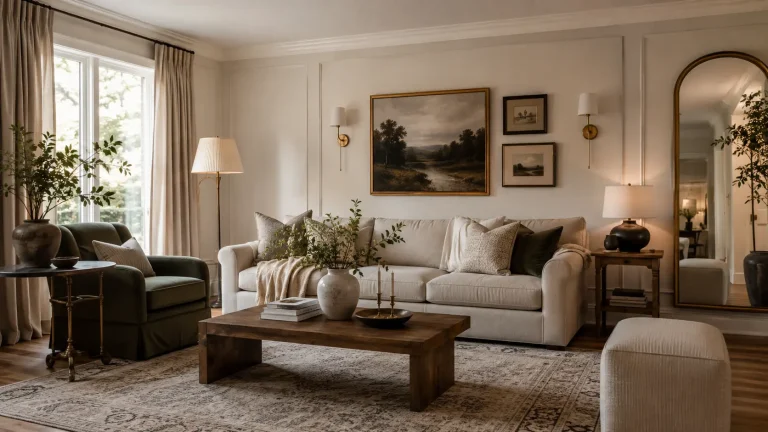
Picture-frame molding, restrained panel molding, or a shallow decorative frieze can give a flat wall architectural character.
Paint the molding and wall the same color if you want shadow rather than strong contrast. This works especially well with olive, muted blue, mushroom, burgundy, or warm ivory.
Three-dimensional wall treatments are gaining attention in 2026, including wood paneling, plasterwork, sculptural treatments, and historically influenced molding. Architectural Digest’s 2026 forecast also points to renewed interest in more decorative architectural panels.
Before installing molding, sketch the full wall. Panels that are too small can make a large wall look unnecessarily busy.
Bring wood back onto the walls
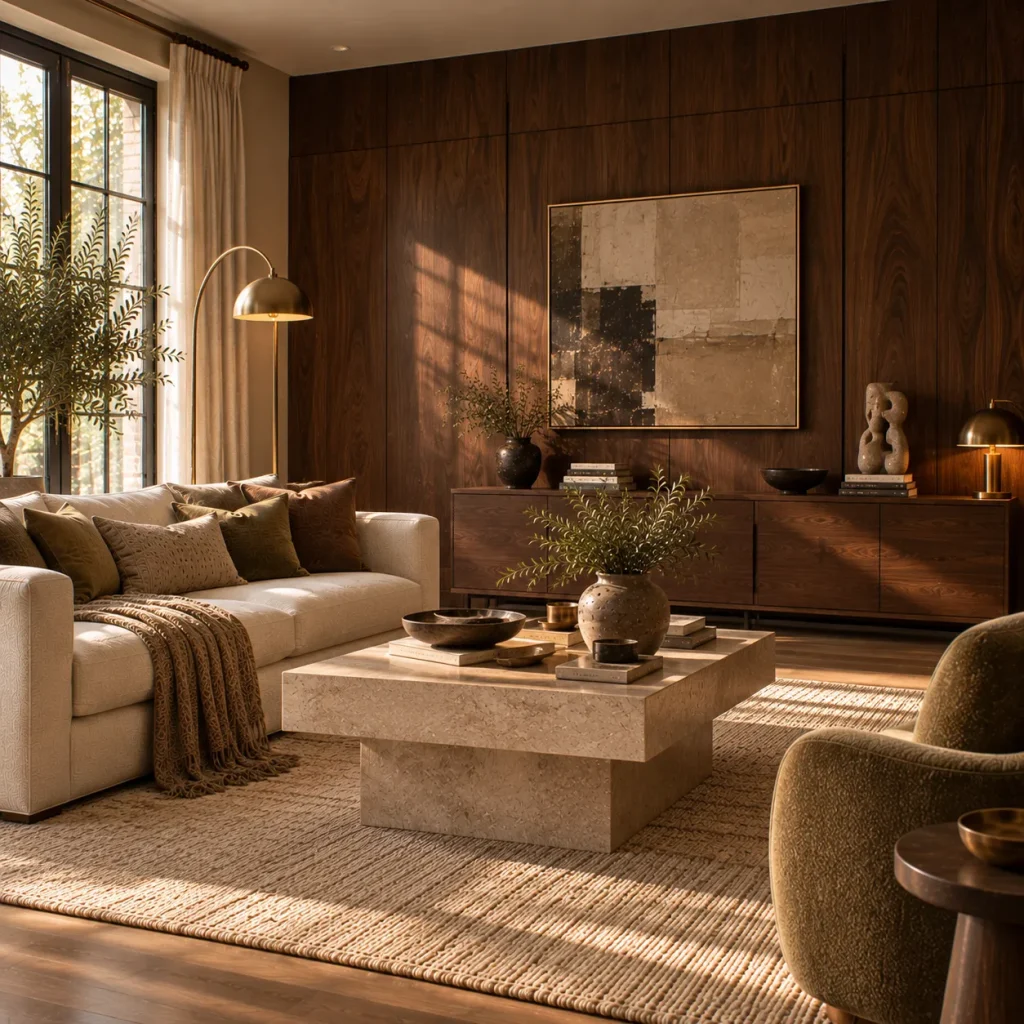
Idea 5: Use full-wall wood paneling
Wood paneling has moved far beyond pale vertical slats.
Walnut, smoked oak, dark oak, and medium-toned timber can make one living-room wall feel substantial, especially against lighter upholstery or plaster.
Architectural Digest highlighted the chocolate-toned oak paneling in Athena Calderone’s Tribeca apartment in March 2026, reflecting the wider return of darker, richer wood surfaces.
The important word is full-wall.
A narrow rectangle of thin vertical slats placed only behind a television can feel like a decorating treatment added afterward. Extending timber across a complete architectural plane generally feels more intentional.
If real wood paneling exceeds the budget, veneered panels or carefully detailed plywood may provide a similar visual warmth.
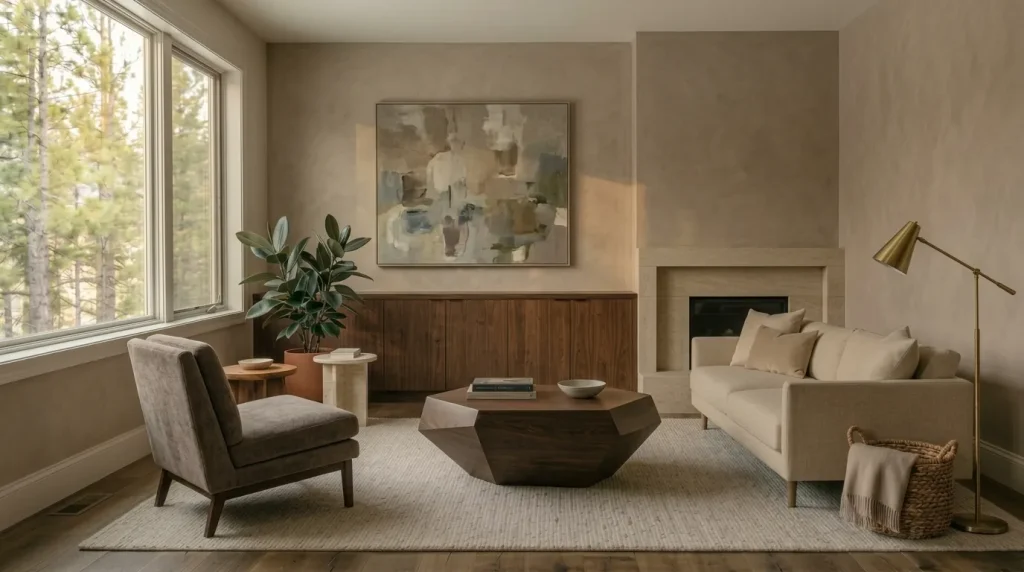
Idea 6: Combine wood with another quieter material
A feature wall does not need to use one finish from edge to edge.
Try wood cabinetry below with plaster above. Pair a stone fireplace with walnut panels on one side. Combine oak shelving with a wall painted in the same warm undertone.
Current 2026 interiors are making greater use of material tension, particularly combinations of raw, tactile, and more polished surfaces.
This can be more interesting than repeating one texture.
But limit the material count. Wood, plaster, stone, black metal, wallpaper, and tile on one wall quickly becomes an architectural sample board.
Use wallpaper with more texture and less predictability
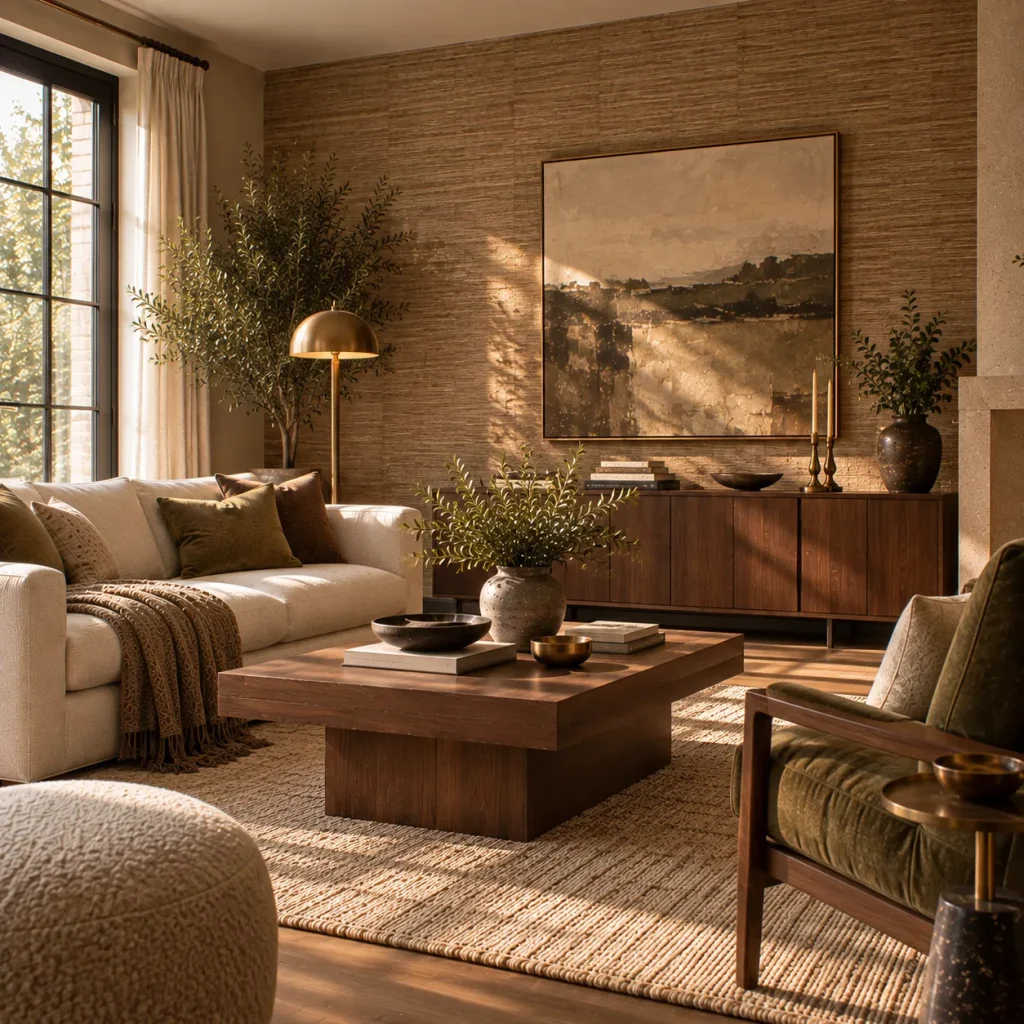
Idea 7: Choose grasscloth or another tactile wallpaper
If pattern feels too busy, use wallpaper for texture instead.
Grasscloth, linen-effect paper, hemp-like finishes, or softly irregular surfaces can make a wall react to light without introducing a dominant print.
Elle Decor’s 2026 wallpaper reporting highlights tactile surfaces, grasscloth, earthy pigments, and nuanced finishes as designers move toward wall coverings that provide atmosphere as well as pattern.
Grasscloth does have trade-offs. Natural fibers can show seams and slight variations, which are part of their character. They may also be less forgiving in high-moisture or hard-wearing environments.
In a living room, those imperfections can be exactly what prevents a neutral wall from feeling flat.
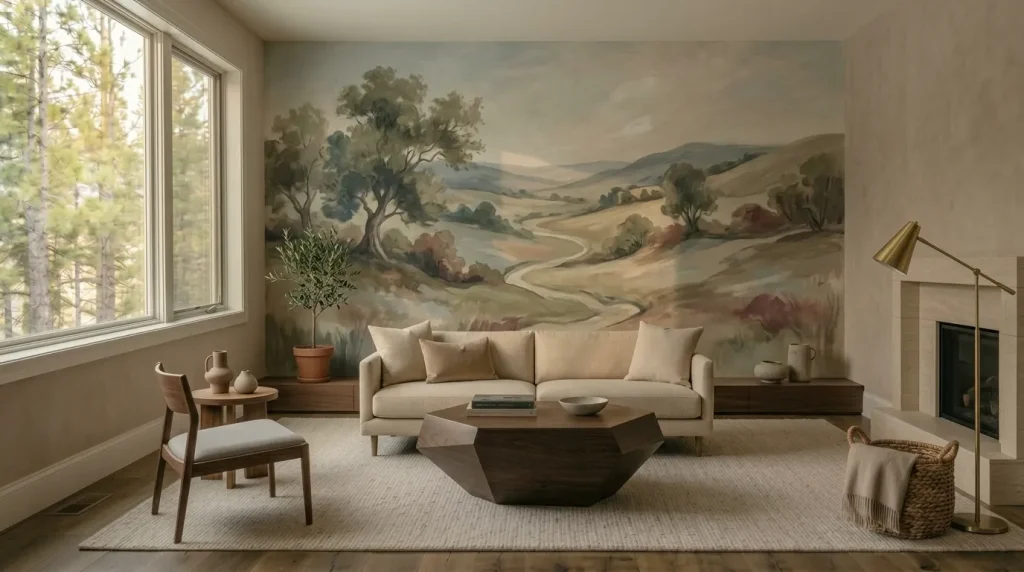
Idea 8: Use one scenic or hand-drawn mural
A mural can act almost like oversized artwork.
Look for landscapes, botanical scenes, abstract washes, painterly motifs, or heritage-inspired designs rather than a highly literal photographic scene.
Wallpaper makers and designers are seeing renewed interest in hand-painted qualities, detailed ornamentation, and softer, layered colors in 2026.
A mural works best on a wall with enough uninterrupted area to understand the composition. Avoid chopping the most important part of the design behind a television or tall cabinet.
If the sofa sits against the mural, choose upholstery that allows the wall to lead.
Make storage part of the accent wall
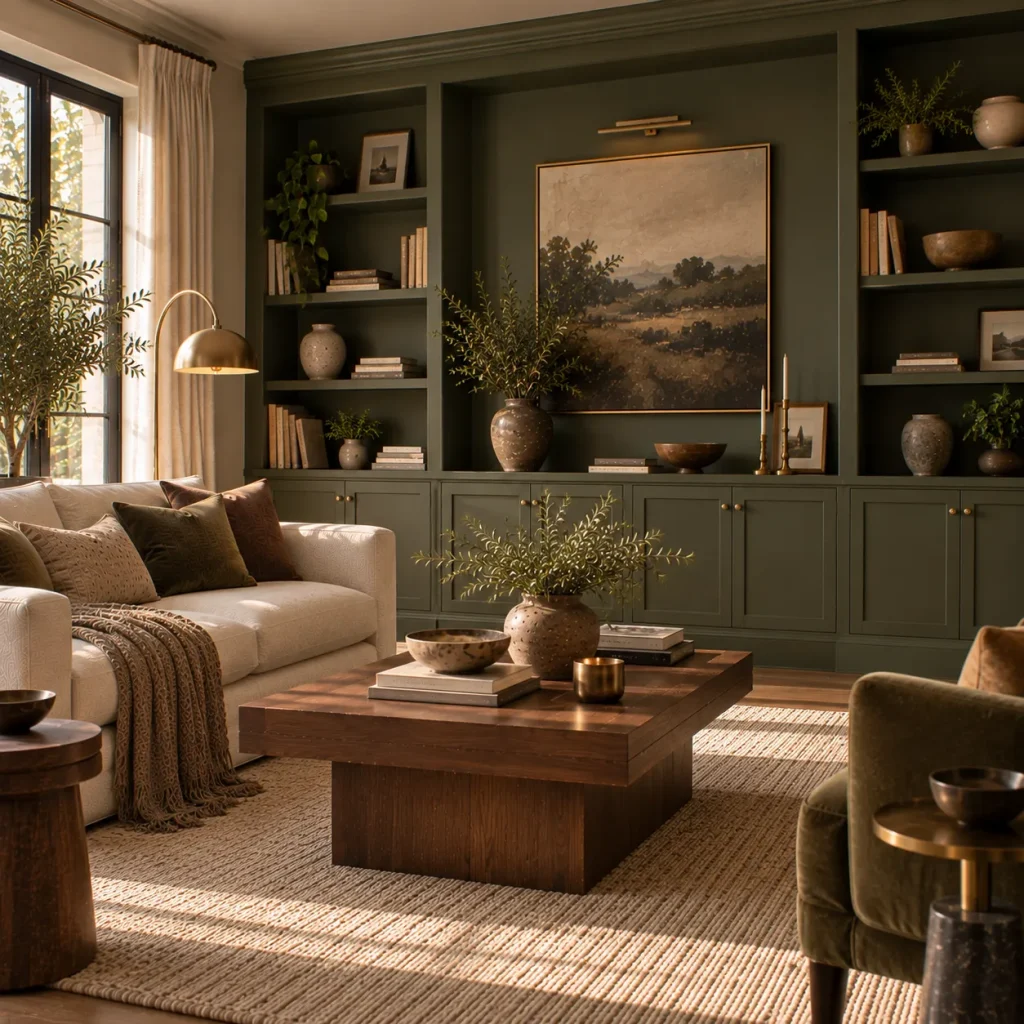
Idea 9: Paint built-ins and the wall as one composition
Built-in shelving can become the feature instead of adding paint somewhere else.
Paint shelves, lower cabinets, trim, and the surrounding wall in one saturated color. Olive, deep blue, chocolate, burgundy, and smoky green all work well.
Colorful cabinetry is a notable part of 2026 living-room design, alongside a wider move toward rooms that feel more individual and less styled to a fixed formula.
Keep some lower cabinets closed. A wall of open shelving creates enormous visual activity and leaves you responsible for styling every compartment, a balance covered in more depth in these living room built in shelves ideas.
If the built-in surrounds a television, leave enough room around the screen for future changes rather than constructing an opening that fits the current TV exactly, a principle covered further in these modern living room TV wall ideas.

Idea 10: Create an art wall with one dominant piece
Not every accent wall needs construction.
One oversized artwork can provide color, scale, and personality without changing the surface underneath it.
Above a sofa, art around two-thirds of the sofa’s width is a useful starting point, although the exact scale depends on the wall and frame.
You can also create a gallery wall, but avoid a perfectly matched grid unless that suits the architecture. Current wall styling is moving toward fewer, more intentional gestures rather than mass-produced sets and cluttered arrangements.
Try mixing a painting with photography, a small textile, and one unusual frame while repeating a few colors across the collection.
Consider harder and softer material alternatives

Idea 11: Use stone or tile on an architectural wall
Stone works particularly well when the accent wall already contains a fireplace.
Honed limestone, travertine, marble, textured ceramic tile, or brick can introduce both color and physical depth.
Avoid applying a narrow rectangle of faux stone solely around the television. A material such as limestone feels more convincing when it relates to the architecture and has enough area to show its natural variation.
Stone also pairs well with walnut, oak, wool, linen, and aged metal.
And consider maintenance before choosing deeply textured stone. Rough surfaces can collect more dust than flat painted walls, especially around shelving or heating.
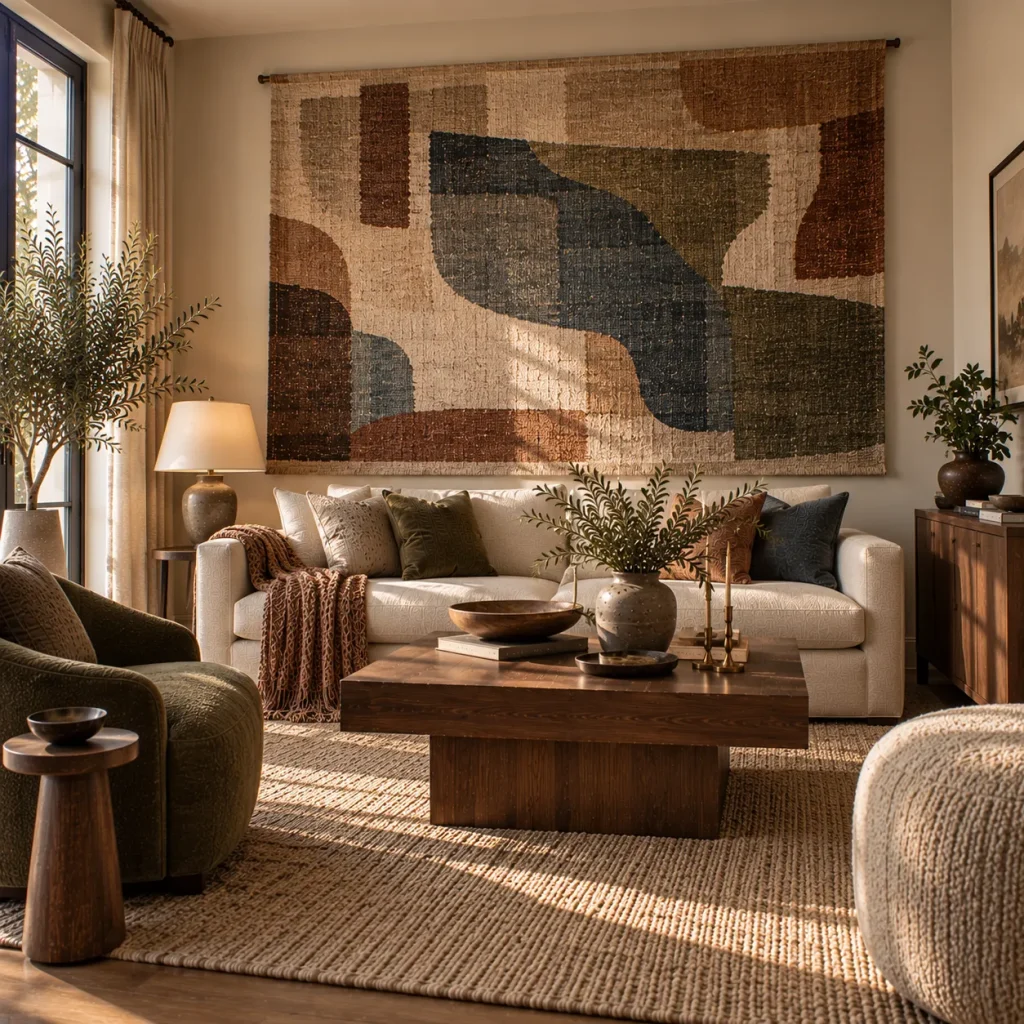
Idea 12: Try a renter-friendly removable treatment
Renters can create an accent wall without permanently altering the room.
Peel-and-stick wallpaper is one option. Removable textile panels, large fabric hangings, modular felt tiles, and oversized art can also cover substantial wall area.
Architectural Digest specifically points to removable felt tiles as a renter-friendly wall treatment, with the added benefit of some sound absorption.
Always test removable adhesives in an inconspicuous location first. Paint condition, wall texture, and humidity can affect how easily a product comes off.
For the lowest-risk approach, use one very large textile or artwork instead of attaching material across the entire wall.
Which accent-wall treatment suits your living room?
| Treatment | Best suited to | Main consideration |
|---|---|---|
| Paint | Budget updates | Choose an architecturally logical wall |
| Plaster | Fireplaces and calm interiors | Texture changes with light |
| Wood | Warm modern rooms | Cost and installation |
| Wallpaper | Pattern or tactile depth | Match scale to wall size |
| Molding | Traditional or transitional rooms | Panel proportions matter |
| Stone | Fireplace walls | Weight, cost, maintenance |
| Built-ins | Storage-heavy living rooms | Balance open and closed storage |
| Art | Flexible, low-construction updates | Scale matters |
What should you skip with a living room accent wall?
The random dark wall. If there is no architectural reason for the wall to stand apart, changing its color may make the room feel disconnected.
The narrow slatted TV rectangle. Vertical wood slats can still work, but using them only in a small strip behind the screen has become highly predictable.
Too many competing materials. A feature wall should clarify the room, not become a catalog of finishes.
Underscaled artwork. One tiny picture floating above a wide sofa often makes the wall look larger and emptier.
Trend-driven wallpaper you do not genuinely like. Wallpaper is more work to change than a cushion. Choose a pattern you can live with after the current trend cycle moves on.
Try this if you are renting
Start with scale rather than construction.
Measure the wall and choose one removable treatment large enough to matter. A substantial peel-and-stick mural, fabric hanging, or removable wallpaper panel will usually look more convincing than ten tiny decorative pieces.
Then pull one color from that wall into a cushion, lamp, or rug so it connects with the rest of the room.
If adhesives are prohibited, use oversized framed art or a large textile hung from approved hooks.
You still get the visual hierarchy of an accent wall without risking a difficult repair when you move.
FAQ
Are accent walls still popular in 2026?
Yes, but the style is becoming more architectural and material-led. Plaster, textured wallpaper, wood paneling, tile, stone, and sculptural treatments are increasingly replacing the generic high-contrast painted feature wall.
Which wall should be the accent wall in a living room?
Choose a wall the architecture already emphasizes, such as the fireplace wall, the main sofa wall, a wall of built-ins, or the end of a long room. Avoid selecting a wall solely because it is empty.
Does an accent wall make a small living room look smaller?
Not automatically. A deeper continuous color can give a small room more depth and identity. Problems usually arise when strong contrast divides an already compact space into visually disconnected sections.
Should an accent wall be lighter or darker than the other walls?
Either can work. Darker colors create stronger contrast, while a slightly deeper tonal variation usually feels softer. Material changes such as plaster, wood, or wallpaper can also distinguish the wall without changing its color dramatically.
Give the wall a reason to be different
The most successful 12 accent wall ideas for your living room begin with the same question: why should this particular wall receive more attention?
If the answer is the fireplace, architecture, artwork, storage, or an important furniture arrangement, you already have a strong starting point. Then choose a treatment that supports that purpose.
Do not begin by scrolling through paint colors. Stand in the doorway and notice where your eye naturally lands. That is often the wall worth developing.
From there, one well-chosen material can do more than several decorative tricks. Paint, plaster, walnut, wallpaper, stone, or art should make the room feel more coherent, not merely give you another surface to decorate.