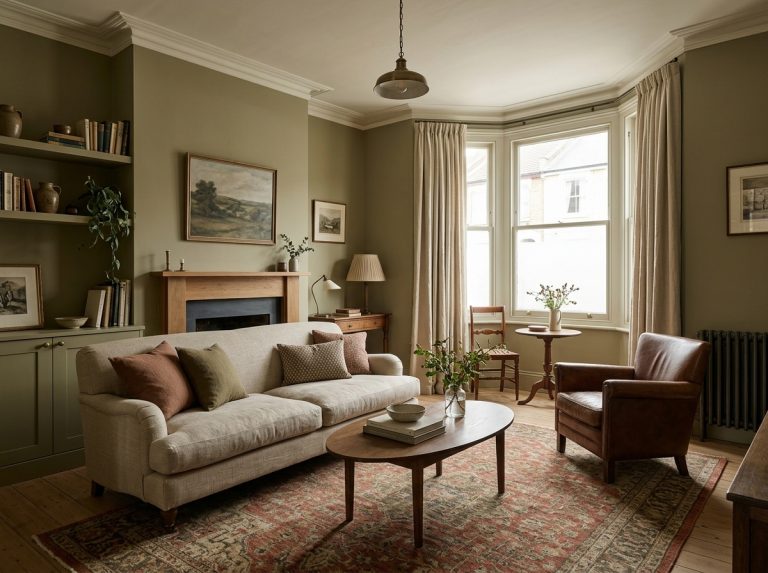
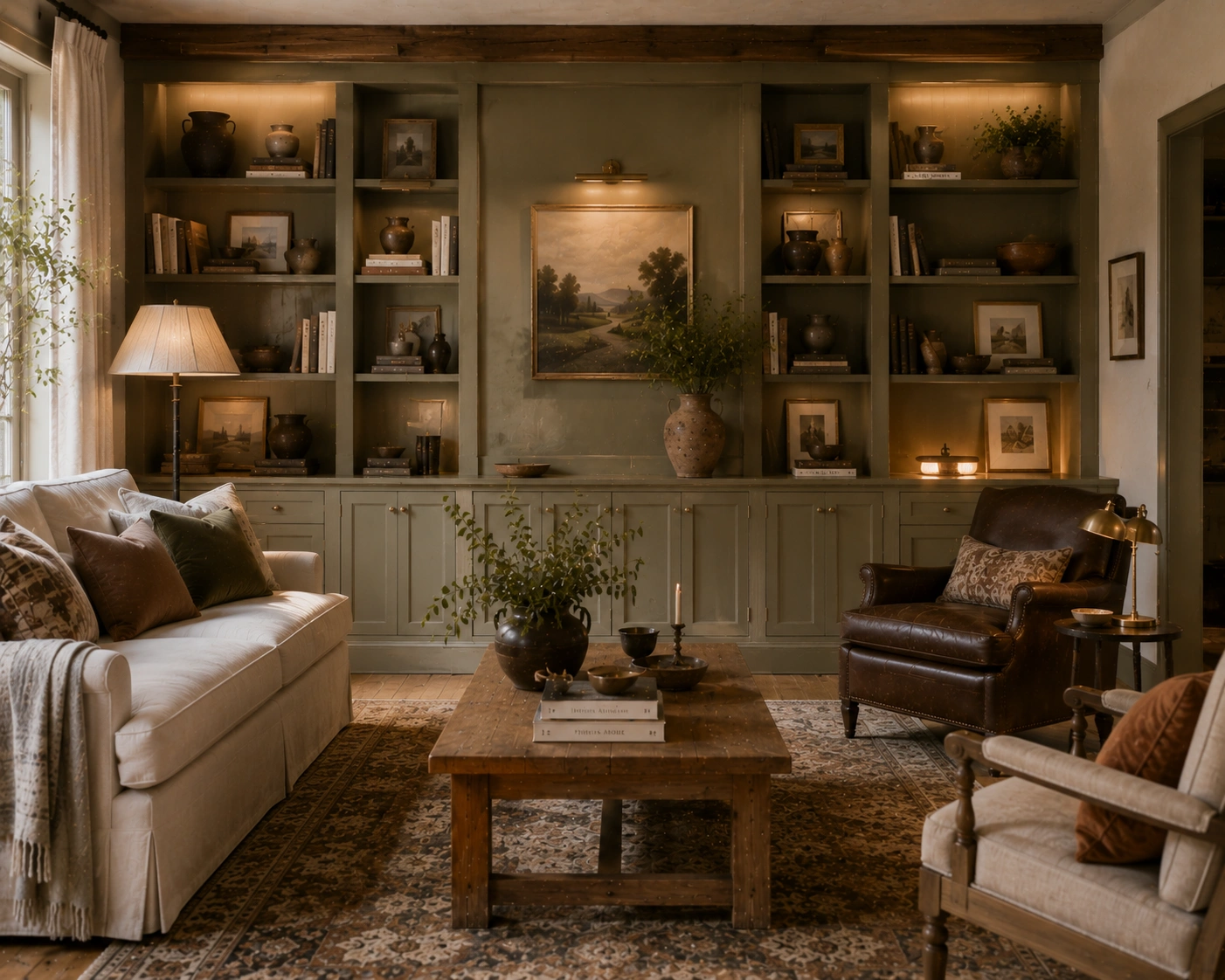
15 Living Room Built In Shelves Ideas That Look Custom, Not Cluttered
Built-in shelves can solve storage problems, frame a fireplace, hide a television, and give a plain living room architectural weight. They can also create six feet of expensive shelving that you then struggle to fill.
The difference usually comes down to planning. The strongest 15 living room built in shelves ideas for 2026 treat shelving as part of the room’s architecture rather than as a display case for matching accessories. Current designer projects are using full-wall libraries, darker woods, saturated paint, integrated cabinetry, books, collected objects, and multifunctional millwork. Architectural Digest also notes that successful built-ins should respond to the character and purpose of the room rather than feeling added afterward.
Here is how to make built-ins work harder without making the living room feel crowded.
Plan the architecture before styling the shelves
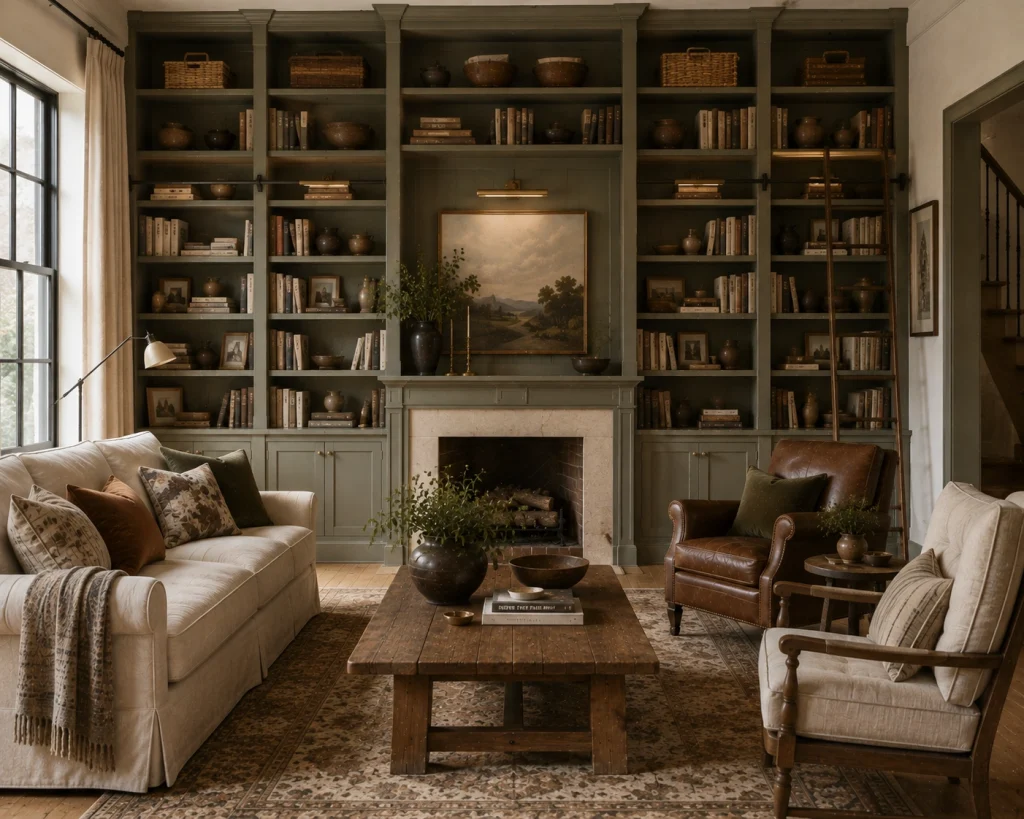
Idea 1: Take built-ins all the way to the ceiling
Stopping shelving a foot below the ceiling often leaves an awkward strip that collects dust and makes custom cabinetry look more like freestanding furniture.
Floor-to-ceiling shelves make better use of vertical space and can visually stretch the room upward. This is especially useful in smaller living rooms where adding another cabinet would consume floor area.
Keep frequently used books and objects between roughly waist and eye level. Reserve the highest shelves for larger books, baskets, or objects you rarely need.
Full-height shelving also fits the 2026 interest in library-style rooms. Homes & Gardens identifies wall-wrapping bookshelves and “book drenching” as a major living-room direction this year.
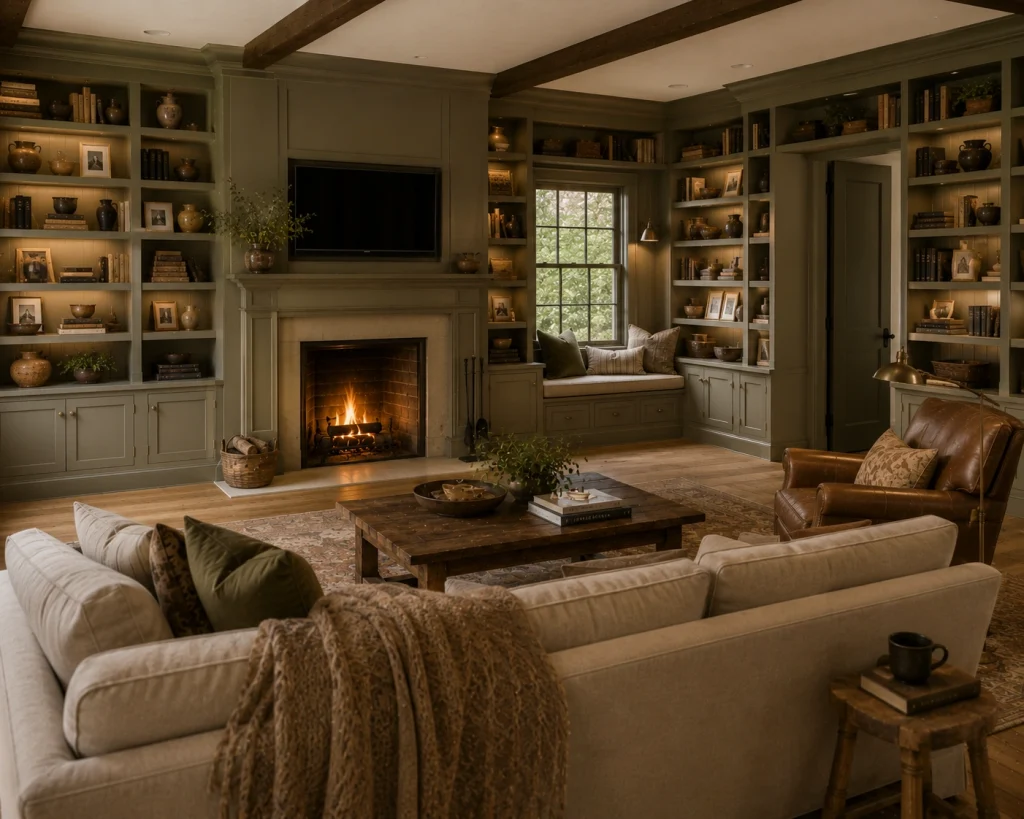
Idea 2: Wrap shelves around the entire wall
One of the strongest approaches is to treat the wall as one continuous storage composition.
Shelving can wrap around a fireplace, television, doorway, window, or even continue into a reading nook. The result feels architectural because there is no obvious point where a standalone bookcase begins or ends.
This can be particularly effective in a long living room where several separate pieces of furniture would otherwise break the wall into fragments.
But measure before committing. A 12-inch shelf depth works well for many books and objects. Deeper lower cabinets, around 15 to 20 inches depending on what they need to store, can accommodate games, electronics, and larger household items.
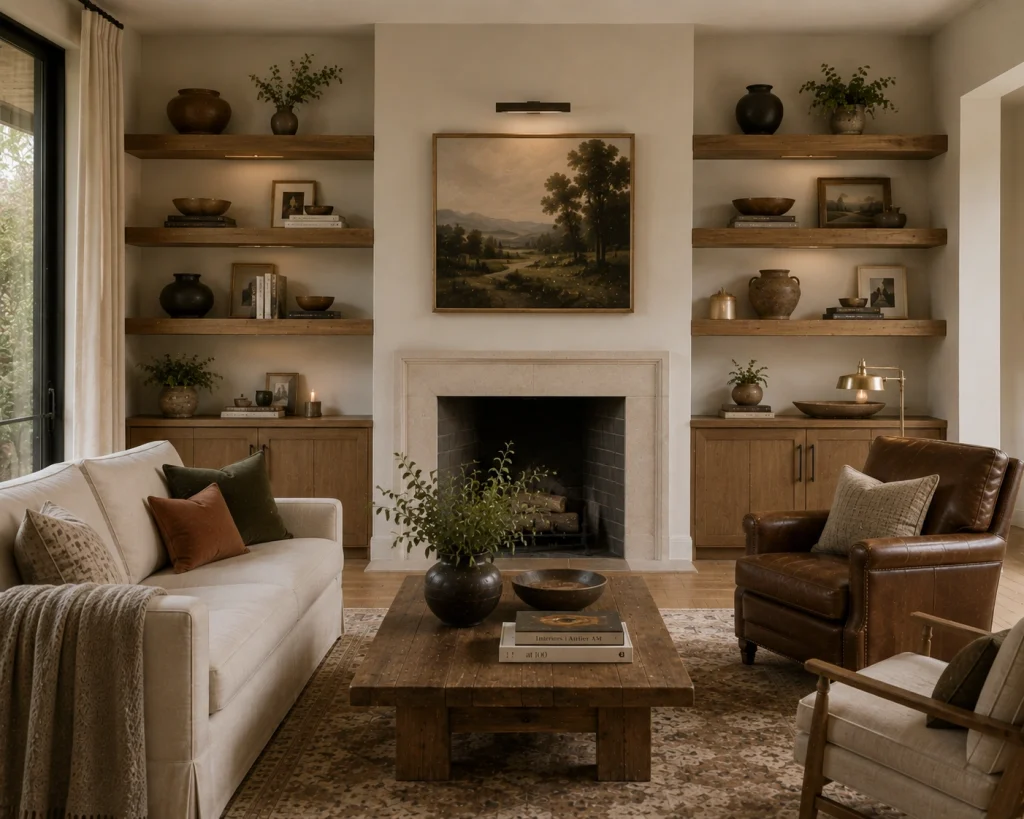
Idea 3: Float shelves between architectural boundaries
Not every built-in needs vertical side panels and rows of identical cubbies.
Floating shelves installed between two walls, above cabinetry, or inside an existing recess can look lighter. Architectural Digest recently highlighted this approach as a way to make shelving feel integrated into cleaner contemporary architecture.
Use thicker shelves if the span is visually substantial. Very thin boards across a broad wall can appear under-scaled.
This approach is also easier to imitate on a moderate budget. Well-installed ready-made wooden shelves above base cabinets can give you much of the built-in effect without commissioning an entire wall of millwork.
Combine open shelves with storage you can actually use
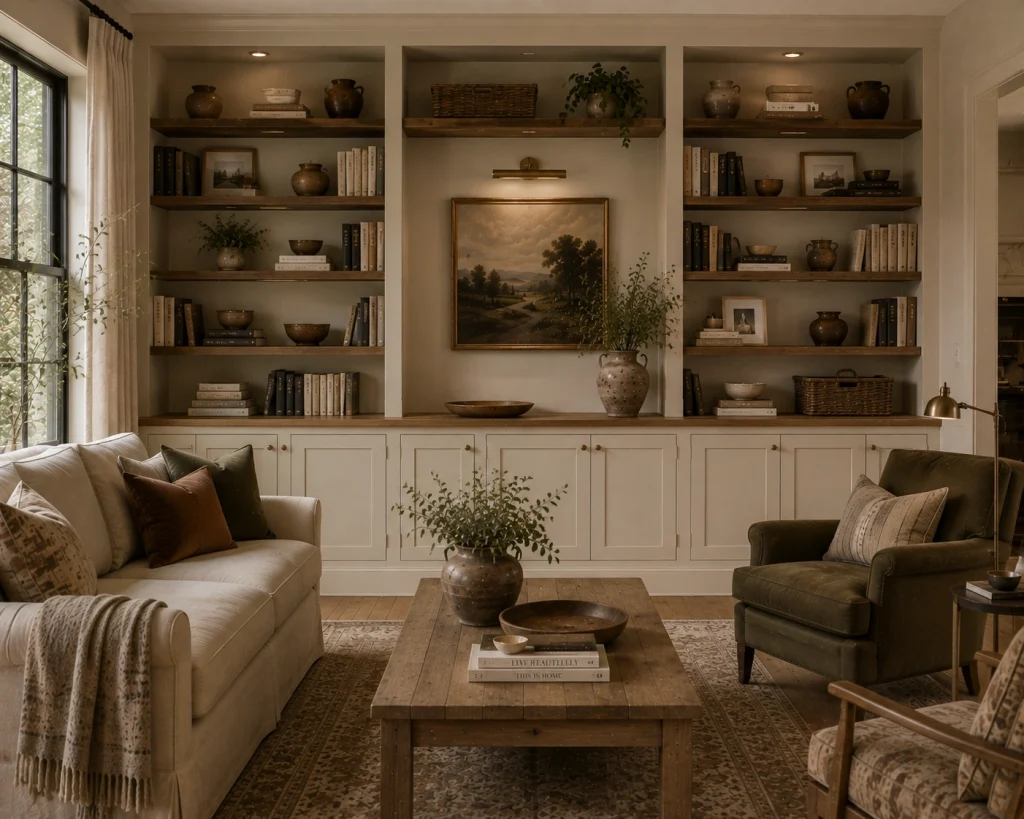
Idea 4: Put closed cabinets underneath open shelving
This may be the most practical built-in configuration for a real living room.
Display books, ceramics, art, and a few personal pieces above. Hide charging cables, games, toys, spare throws, routers, and household clutter behind doors below.
A useful starting point is to make the lower closed section around 28 to 36 inches high, depending on the proportions of the room and what you need to store.
And do not underestimate closed storage. A wall consisting entirely of open shelves can make you feel responsible for styling every square inch forever.
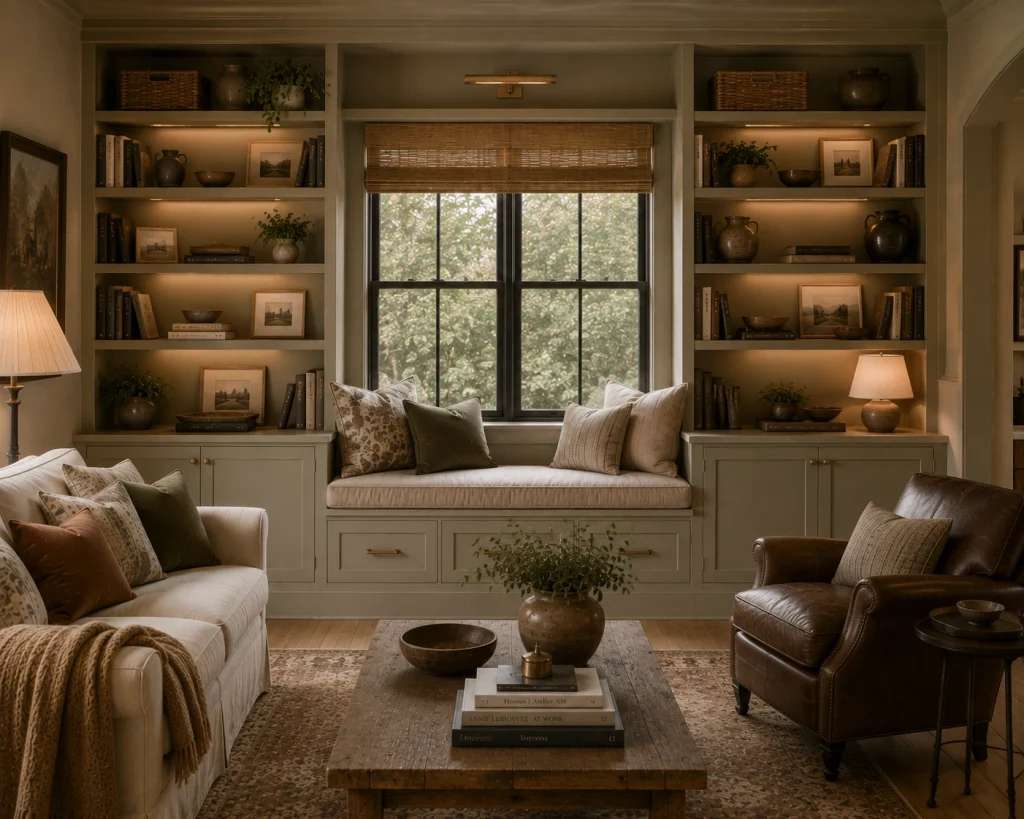
Idea 5: Build a window seat into the shelving
If shelves surround a window, use the gap below it.
A built-in bench can become reading seating while drawers or lift-up storage beneath handle blankets, toys, or board games. Keep the seat deep enough to be comfortable. Around 18 to 22 inches is a practical starting point for many window seats.
Use a fitted cushion with a durable fabric rather than stacking several loose cushions that constantly fall forward.
This works particularly well in family living rooms because one piece of millwork now provides bookshelves, seating, and hidden storage.
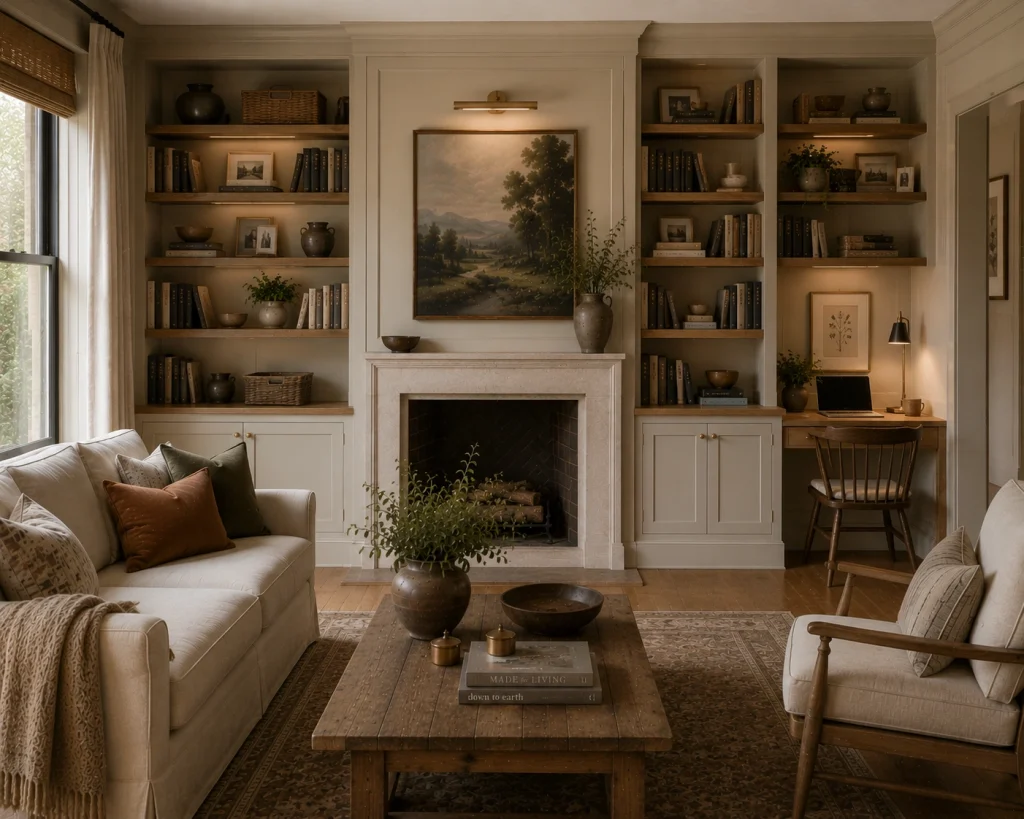
Idea 6: Include a small desk or work surface
Built-ins can absorb functions that would otherwise require another piece of furniture.
A section around 20 to 24 inches deep can become a compact desk, homework station, writing surface, or laptop area. Place it toward one end of the shelving rather than directly in the middle if you want the living room to retain a relaxed rather than office-like feel.
An older Architectural Digest project demonstrates how continuous millwork can combine bookshelves, open storage, a planter, desk, and seat within one architectural system.
That multifunctional thinking is especially useful in apartments, particularly when paired with these small living room layout ideas for making every inch work harder.
Make the built-ins part of the color scheme
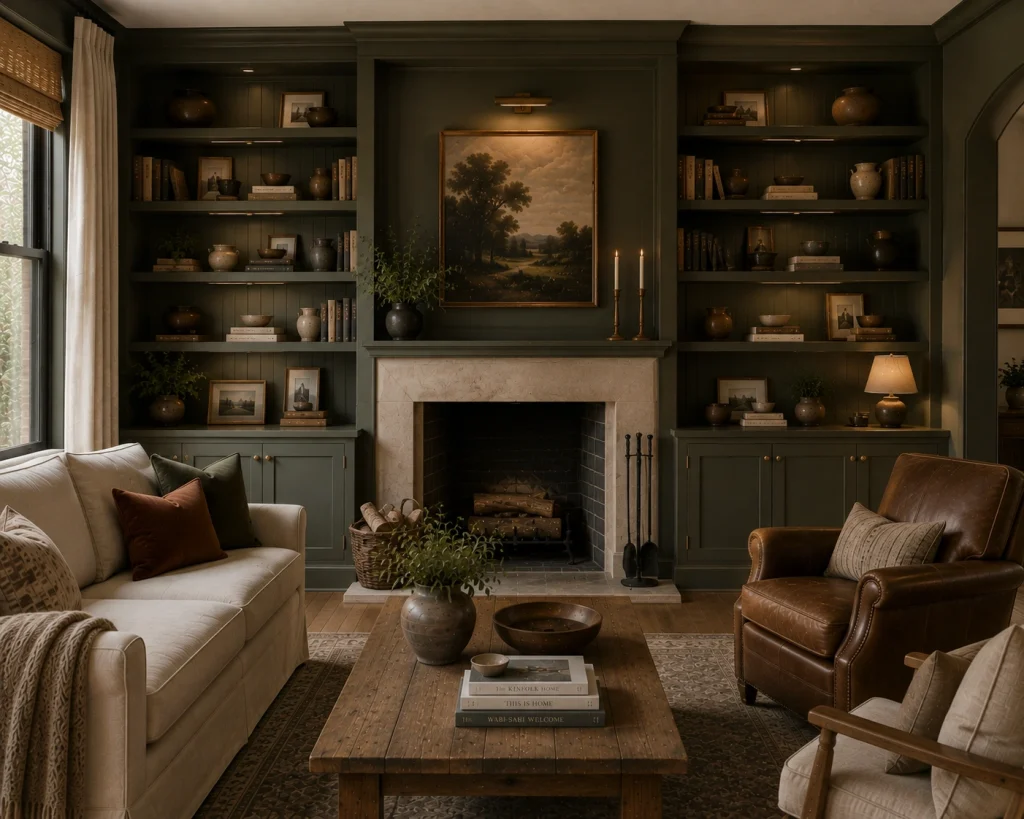
Idea 7: Paint the shelving a rich color
White built-ins are reliable, but they are no longer the automatic choice.
Olive, deep blue, muddy green, tobacco, aubergine, burgundy, and warm charcoal can make shelving read as intentional architecture. Homes & Gardens highlights colorful built-in cabinetry as a notable 2026 living-room direction, including green joinery used to frame art, books, and mixed vintage furniture.
If the room is small, do not assume dark shelving will automatically shrink it. A continuous darker wall can actually reduce visual fragmentation, the same grounding effect used in these black accent living room ideas.
Sample the paint inside the shelving too. Deep cubbies receive less light than open walls, so colors often appear considerably darker there.
Idea 8: Color-drench the shelves and surrounding wall
If you want the built-ins to feel less like cabinets attached to a wall, paint the shelving, trim, and wall in one color.
This works beautifully with nuanced shades such as moss, darker or contrasting tone. Keep the contrast sophisticated rather than using a different bright color in every cubby.
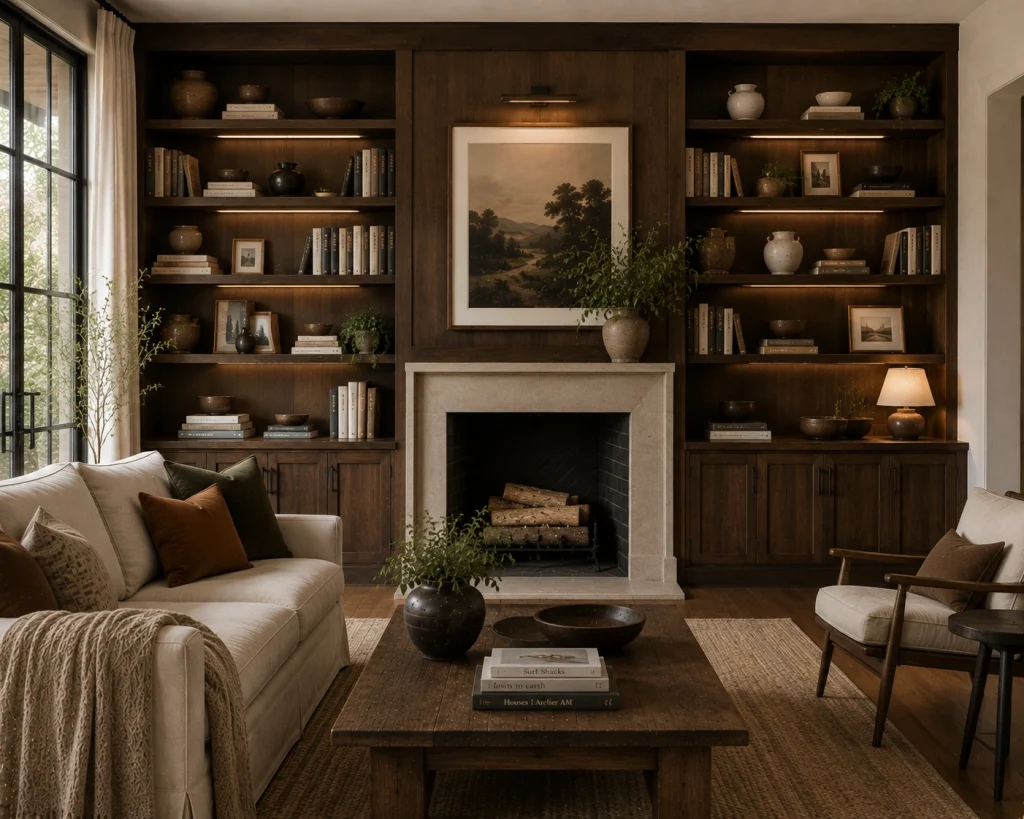
Idea 9: Use natural or dark wood instead of paint
Built-ins in walnut, medium oak, smoked oak, or dark-stained timber can add warmth that painted cabinetry cannot.
This is particularly effective in rooms with plaster walls, stone fireplaces, pale upholstery, or large windows. Darker shelving also creates a strong backdrop for book spines, white ceramics, and art.
A 2026 Architectural Digest apartment renovation used a custom storage wall to span an entire compact living room, showing how substantial millwork can provide storage while visually organizing a small space.
Do not automatically match the shelving to the floor. A walnut built-in can work against medium oak flooring if both have compatible warm undertones, the same layering principle behind these earthy color combinations for a living room.
Give the shelves more than one visual rhythm

Idea 10: Break the grid with asymmetrical openings
Rows of identical squares can make a built-in look like a commercial storage system.
Vary shelf heights instead. Leave one taller opening for artwork, another for large books, and several shorter sections for normal reading material.
You can also introduce an asymmetrical vertical division rather than centering everything perfectly.
I once sketched a built-in where every opening was exactly the same size. It looked wonderfully orderly on paper and strangely lifeless once filled. Increasing the height of two sections immediately made the composition feel more natural.
The shelves should support the objects rather than force every object into the same box.
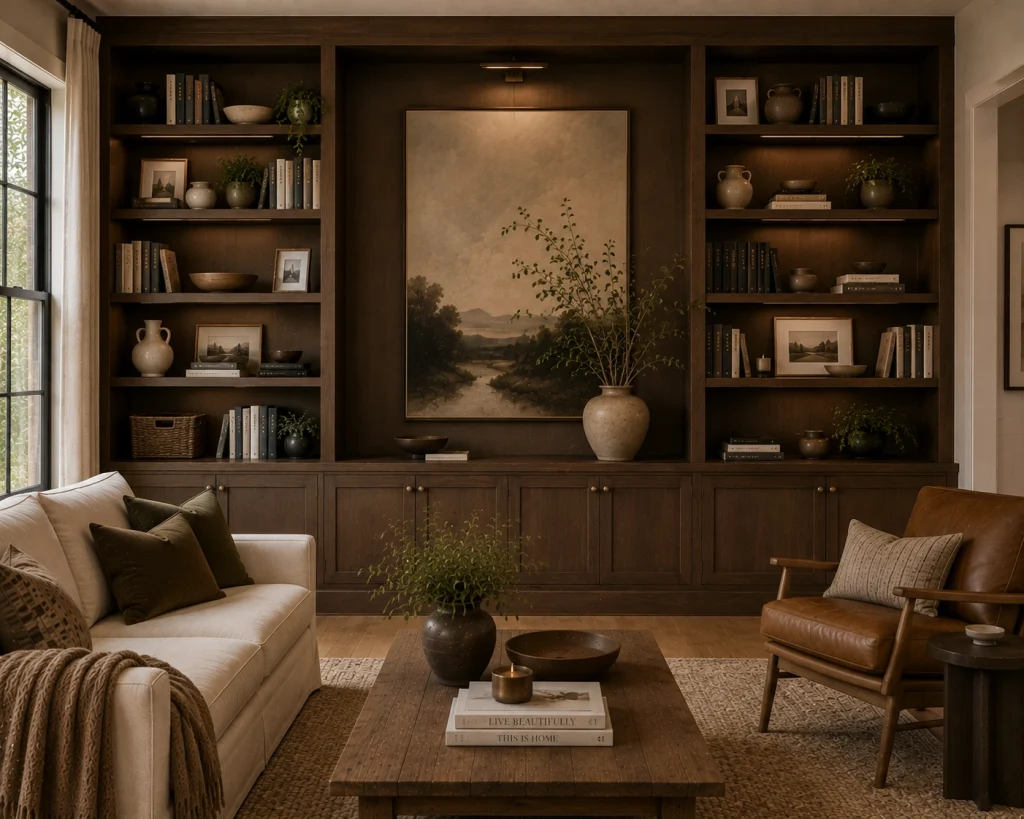
Idea 11: Create one oversized art niche
Instead of filling the entire wall with small shelves, sacrifice some storage for a larger opening.
Use it for a painting, framed textile, sculpture, television, or oversized ceramic vessel. The negative space gives smaller shelves somewhere to breathe.
If the niche contains art, leave enough clear wall around the piece that the frame does not almost touch the cabinetry.
This is one of the easiest ways to stop a large built-in from looking busy.
Idea 12: Frame the television without making it the star
Built-ins are useful around a television because they can hide wires, equipment, and media storage.
But avoid squeezing the screen into a perfectly fitted hole. TVs change size, and a tight opening can date the cabinetry quickly.
Leave generous space around the screen and use a console or closed cabinets beneath it. Consider darkening the back panel if you want the black television to blend more quietly into the wall.
Another option is to offset the television rather than center it, then balance the composition with books or artwork on the opposite side, an approach covered further in these modern living room TV wall ideas.
Build better lighting into the shelves
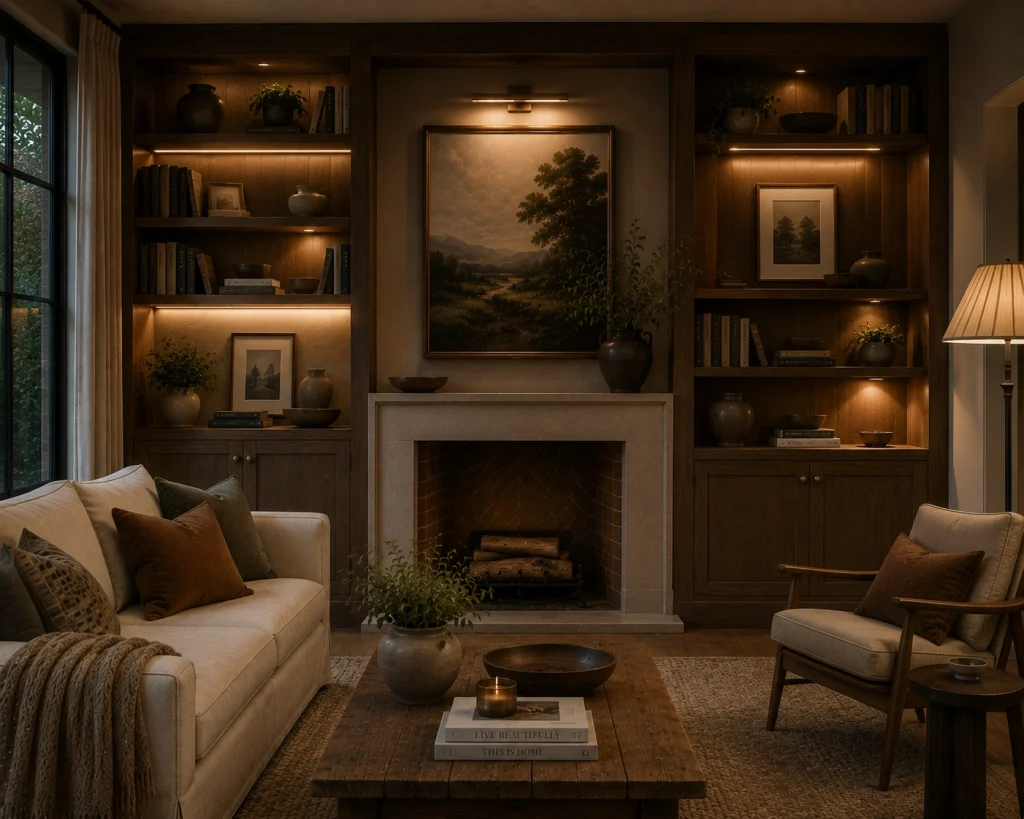
Idea 13: Add integrated shelf lighting selectively
Lighting can make built-ins useful after dark and reveal the texture of books, wood, ceramics, and artwork.
Small directional spots at the top, concealed LED strips, or picture lights can work well. Warm light generally suits wood and living-room materials better than very cool light.
The mistake is illuminating every shelf equally. That can make the wall resemble a retail display.
Light the important zones instead. An art niche, reading section, or two larger display shelves may be enough.
And plan electrical routes before the cabinetry is built. Hiding wiring afterward is far more difficult.
Style built-ins like a home, not a showroom

Idea 14: Fill shelves with real books
One of the most refreshing 2026 shelving trends is also one of the simplest. Books are being treated as books again.
Homes & Gardens describes “book drenching” as shelves filled with genuinely read collections rather than decorative volumes sorted solely by color or turned backward.
Mix upright books with several horizontal stacks. Leave space for art, ceramics, photographs, and objects you actually care about.
Architectural Digest similarly emphasizes that built-ins work best when they reflect what people collect, including books, art, travel objects, and family pieces.
Your shelves do not need to look perfectly styled. They need to look inhabited.
Idea 15: Mix objects at different scales
Shelf styling often fails because every object is approximately six inches tall.
Use variation. A stack of large books might sit beneath a 14-inch ceramic vessel. A tiny framed photograph can lean beside a taller sculpture. One shelf may contain mostly books while another has more open space.
Recent 2026 interiors are increasingly embracing this collected approach rather than extremely sparse shelves containing one decorative object per compartment.
And resist the urge to decorate every inch on installation day. Good shelves become better as books, photographs, and objects accumulate naturally.
A practical built-in shelving guide
| Feature | Useful starting point | Best for |
|---|---|---|
| Book shelf depth | Around 10 to 12 inches | Books and smaller objects |
| Lower cabinet depth | Around 15 to 20 inches | Games, electronics, clutter |
| Window-seat depth | Around 18 to 22 inches | Comfortable extra seating |
| Desk depth | Around 20 to 24 inches | Laptop or occasional work |
| Full-height shelves | Floor to ceiling | Maximizing vertical storage |
| Closed base cabinets | Lower 28 to 36 inches | Hiding everyday items |
These are design starting points, not construction rules. Final dimensions should reflect your room, objects, electrical requirements, and cabinet construction.
What should you skip with living room built-ins?
Too many tiny cubbies. Small compartments limit what you can display and create unnecessary visual lines.
Open storage from floor to ceiling. Unless you own an enormous book collection, include closed cabinets for less attractive necessities.
Fake books and matching decorative objects. Shelves are one of the best places in the home to show personality. Do not remove it in pursuit of perfect styling.
A television opening with no flexibility. Leave enough room for future screen changes.
Ignoring shelf thickness and span. Long shelves need appropriate structural support. Have substantial custom shelving properly designed rather than assuming a thin board can safely carry rows of books.
Try this if custom built-ins are outside your budget
Start with ready-made bookcases or base cabinets that closely fit the wall.
Add filler panels at the sides, continue trim across the top, and paint the units and surrounding wall the same color. Floating shelves above standard base cabinets can also create a convincing built-in composition.
Spend money where the eye notices it most. Good proportions, substantial trim, appropriate shelf thickness, and a consistent finish matter more than filling every inch with expensive custom joinery.
Then add books and objects gradually.
A convincing built-in should look connected to the room before you put anything on it.
FAQ
Are built-in living room shelves still popular in 2026?
Yes. Full-wall libraries, book-filled shelving, colorful cabinetry, and multifunctional millwork are prominent in 2026 interiors. The current approach favors more personality and useful storage rather than extremely sparse decorative shelving.
How deep should living room built-in shelves be?
Around 10 to 12 inches is a useful starting point for many books and decorative objects. Lower cabinets usually need greater depth, depending on what you plan to store.
Should built-in shelves match the wall color?
They can, but they do not have to. Matching creates a quieter architectural effect, while contrasting paint or natural wood makes the shelving more prominent.
Do built-ins make a small living room look smaller?
Not necessarily. Floor-to-ceiling built-ins can replace several freestanding storage pieces and use vertical space more efficiently. Keeping the design visually continuous and avoiding too many tiny compartments can help a small room feel organized rather than crowded.
Design the empty shelves before filling them
The most successful 15 living room built in shelves ideas begin with architecture, not accessories.
Decide what the wall actually needs to do. Maybe that means storing hundreds of books. Perhaps it needs to hide toys, accommodate a television, provide a reading seat, or squeeze a desk into an apartment living room.
Once those functions are settled, think about proportion, color, wood, lighting, and display.
If you are planning built-ins now, start by making a list of everything they must hold before drawing a single shelf. That one step often reveals whether you need more bookshelves, more closed cabinets, or simply fewer compartments.
Good built-ins should make the living room easier to live in before they make it prettier.