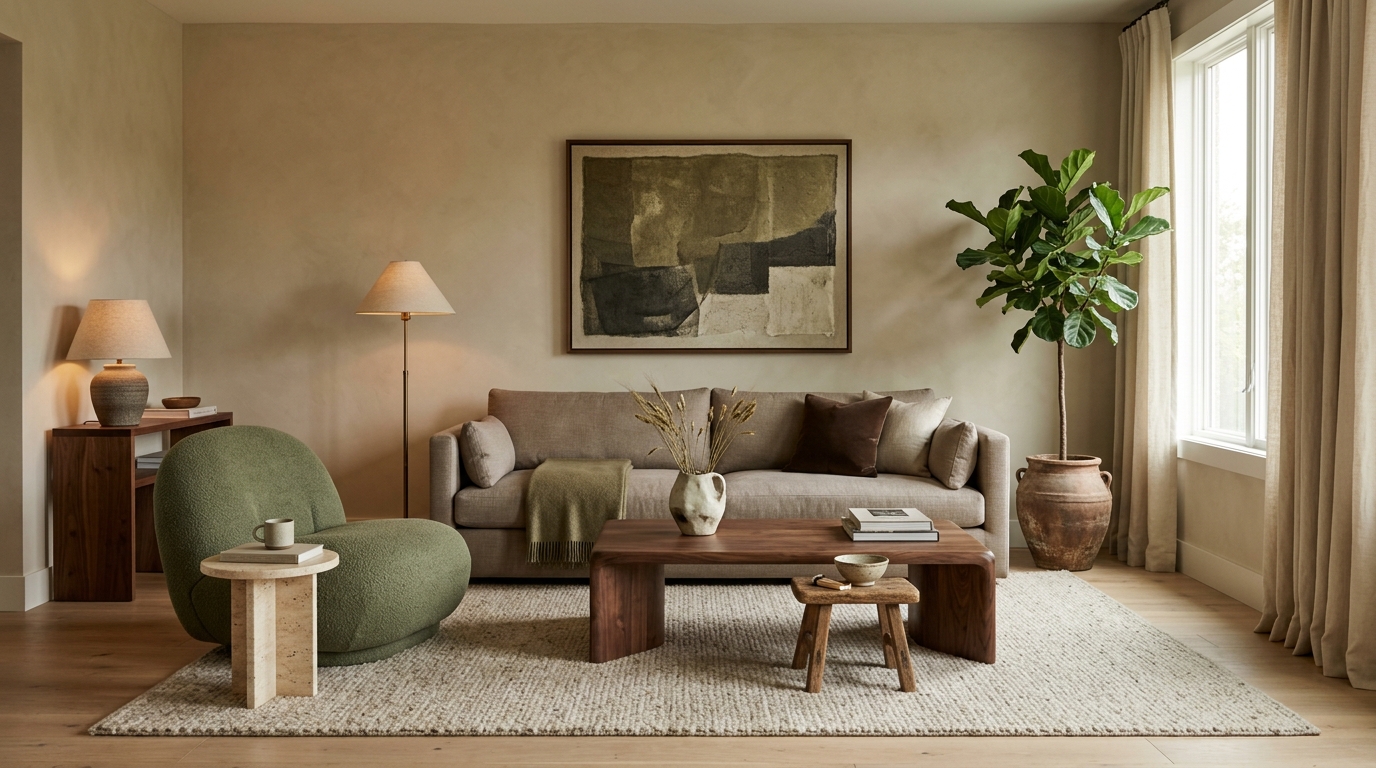
10 Organic Modern Living Room Ideas for a Calm, Textured Home
Organic modern rooms can look wonderfully calm in photographs, but there is a common problem in real homes. Cream sofa, cream rug, pale oak table, beige cushions, olive tree. Everything coordinates, yet nothing has enough weight to make the room memorable.
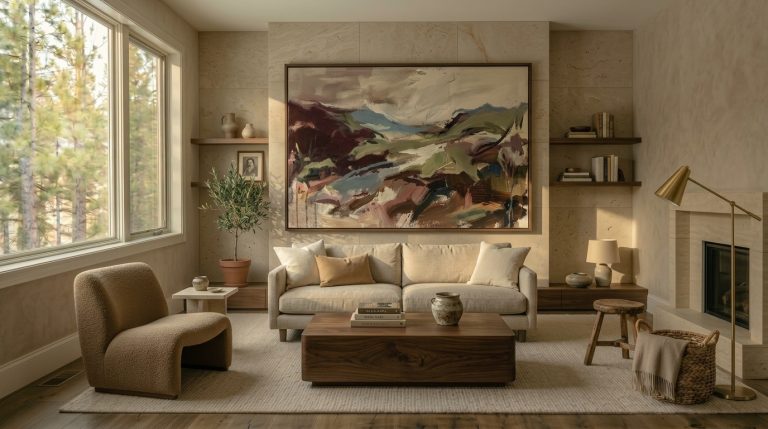
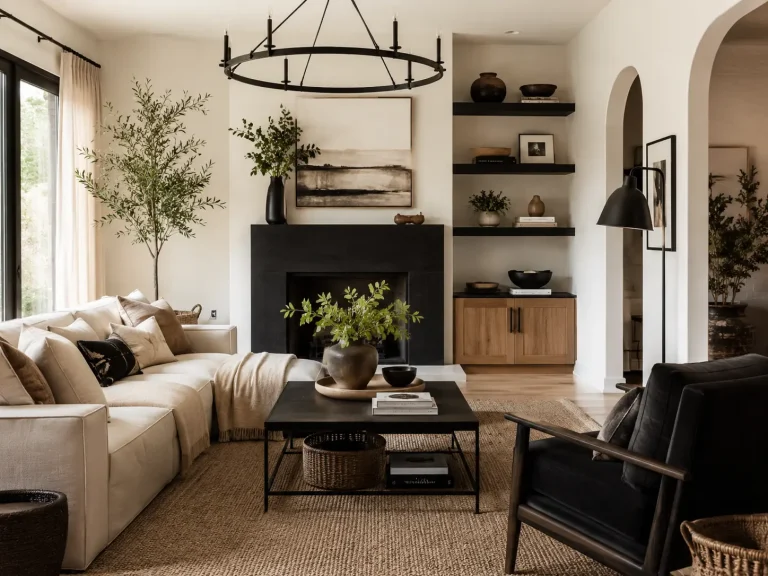
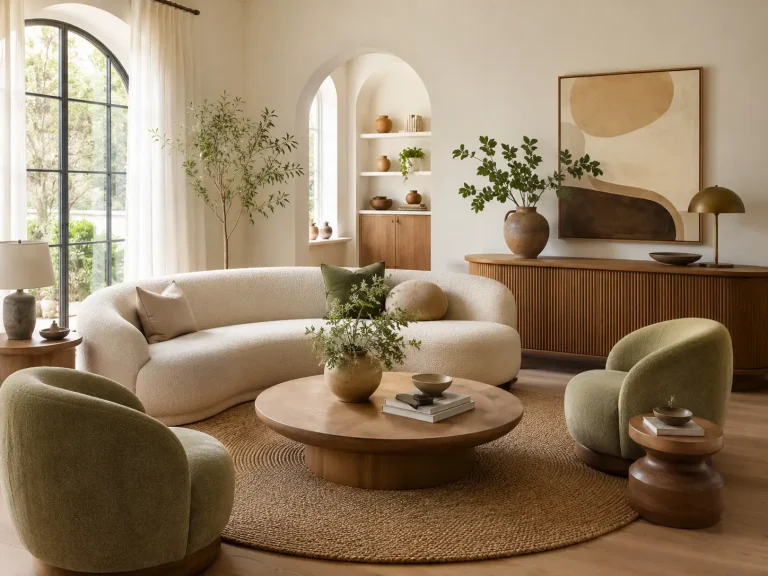
These 10 organic modern living room Ideas take a more layered approach. Organic modern style remains highly relevant in 2026, but its stronger interpretation is moving beyond pale minimalism. Designers are using richer woods, plaster, stone, sculptural shapes, handmade objects, patina, and more varied earthy color. The wider 2026 design direction also favors rooms that feel personal and materially interesting rather than perfectly staged.
Build a warmer organic modern color palette

Idea 1: Layer warm neutrals instead of choosing one beige
An organic modern palette works best when the neutral colors are visibly different. Start with warm ivory or parchment walls, then introduce mushroom upholstery, oatmeal wool, camel, clay, or smoky taupe.
The important distinction is value. A pale wall, midtone sofa, and darker wood table create more depth than five nearly identical cream surfaces.
If your floor has golden oak or warm stone, be cautious with cool gray-beige paint. Try warm neutral paint colors instead, and physically sample paint beside the flooring and check it in morning, afternoon, and artificial light.
And white walls are not mandatory. A muted putty or pale clay wall can actually make pale upholstery look cleaner.
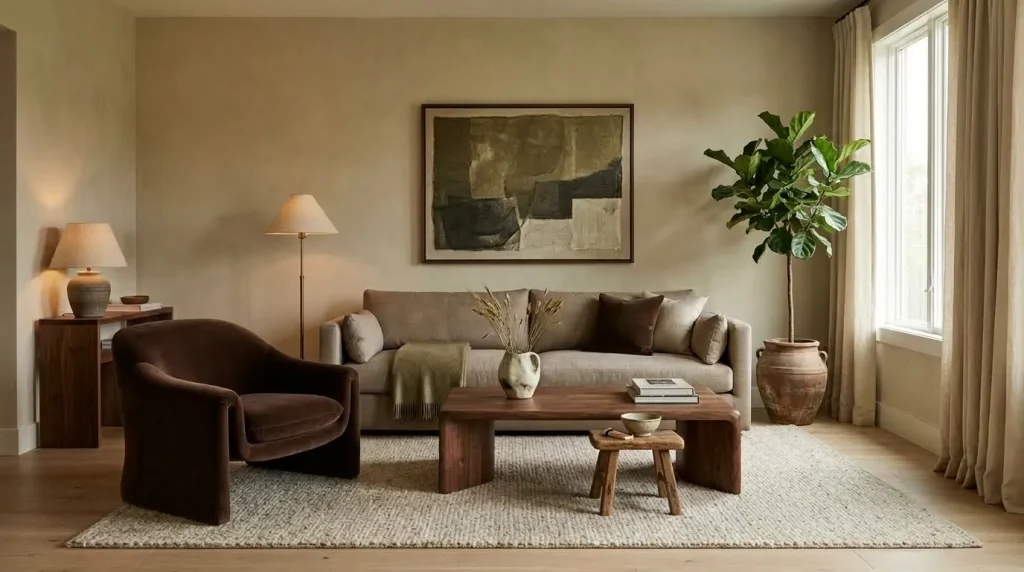
Idea 2: Add one deeper earth color
The older organic modern formula often stopped at beige, tan, and green plants. In 2026, deeper earth-rooted colors are becoming more important. Designer Nate Berkus has specifically pointed toward richer natural colors paired with hand-finished wood, plaster, irregular stone, and materials that age visibly.
Try chocolate brown, moss, olive, terracotta, tobacco, bottle green, or a muted oxblood. For more inspiration, see these earthy color combinations for living rooms.
You do not need much. A chocolate velvet chair, moss cushion, rust-colored throw, or earthy artwork can give a quiet room enough contrast without changing its restful character.
Let natural materials carry the design
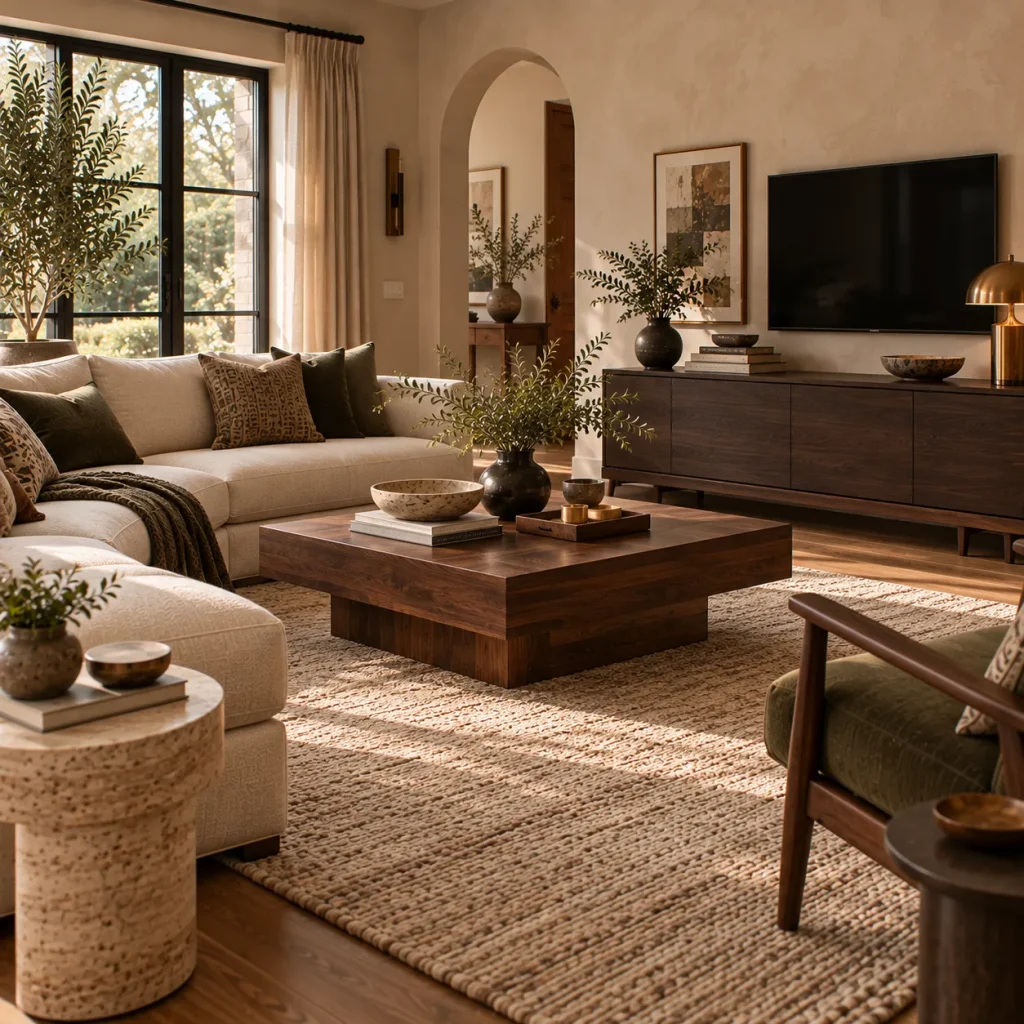
Idea 3: Use richer wood instead of pale oak everywhere
Pale oak still works, but organic modern rooms no longer need to look Scandinavian from floor to ceiling.
Walnut, smoked oak, dark-stained timber, and medium-toned woods are increasingly useful for grounding softer interiors. Current 2026 coverage is also showing a return to darker woods such as walnut and espresso oak, particularly beside plaster and stone.
A walnut coffee table can be enough. You might also use a dark wood media console beneath a pale wall or an old timber stool beside a cream chair.
Do not worry about matching every wood finish exactly. A medium oak floor can coexist with walnut furniture. Repeating the warmer undertone matters more than buying a complete matching set.
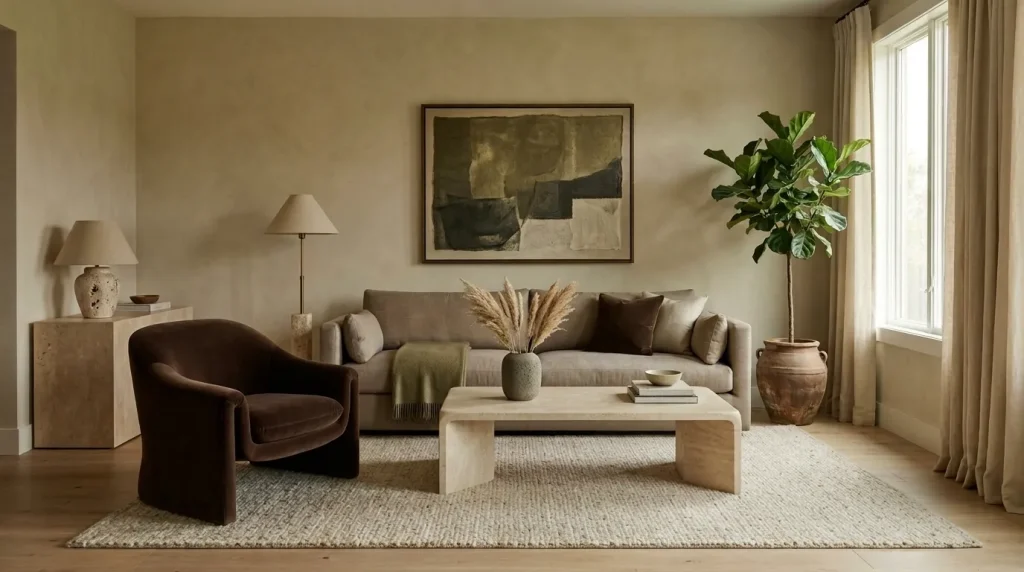
Idea 4: Introduce stone where it can be touched
Travertine, limestone, marble, and rougher natural stone work beautifully in organic modern interiors because they add irregularity to otherwise simple furniture.
A stone coffee table is the obvious option, but it is not always the practical one. Large solid stone tables can be heavy, expensive, and difficult to reposition. A limestone side table, travertine lamp base, marble tray, or stone fireplace surround may be easier to live with.
Look at finish as carefully as color. Honed stone generally feels quieter than highly polished stone, while visible veining can provide movement in a room with very little pattern.
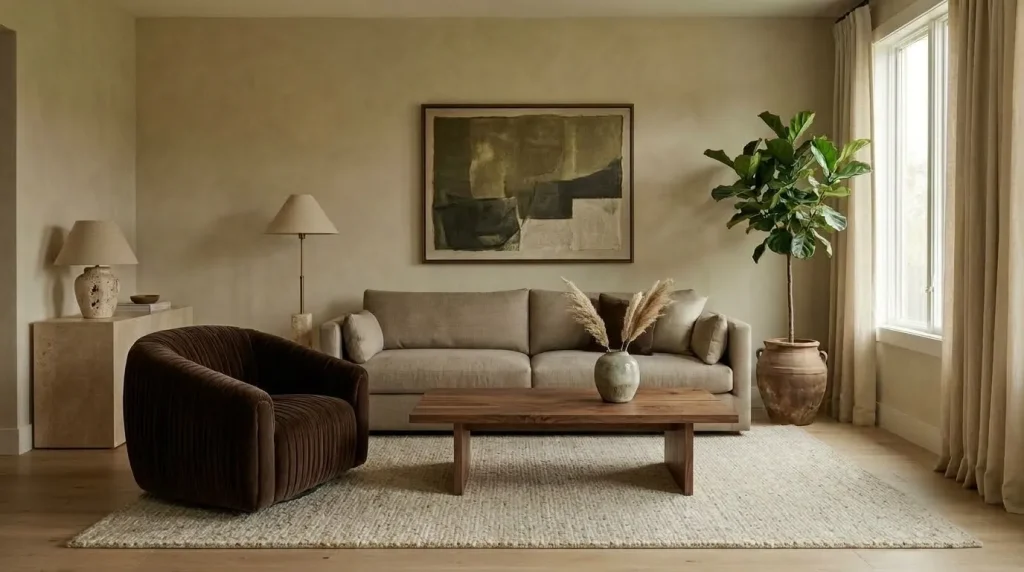
Idea 5: Design the texture scheme before buying accessories
Texture is one of the most important tools in an organic modern living room.
Homes & Gardens reports that designers are increasingly thinking in terms of complete “texture schemes,” beginning with foundational surfaces such as rugs, sofas, chairs, and large wood pieces, then adding medium and smaller tactile layers.
Try combining a flat linen sofa, wool rug, irregular ceramic, smooth stone, grained wood, and perhaps one soft velvet or bouclé element.
The key is contrast.
If the sofa, rug, curtains, cushions, and ottoman are all cream bouclé, technically you have texture. Visually, however, they behave almost like one material.
Balance organic curves with cleaner lines
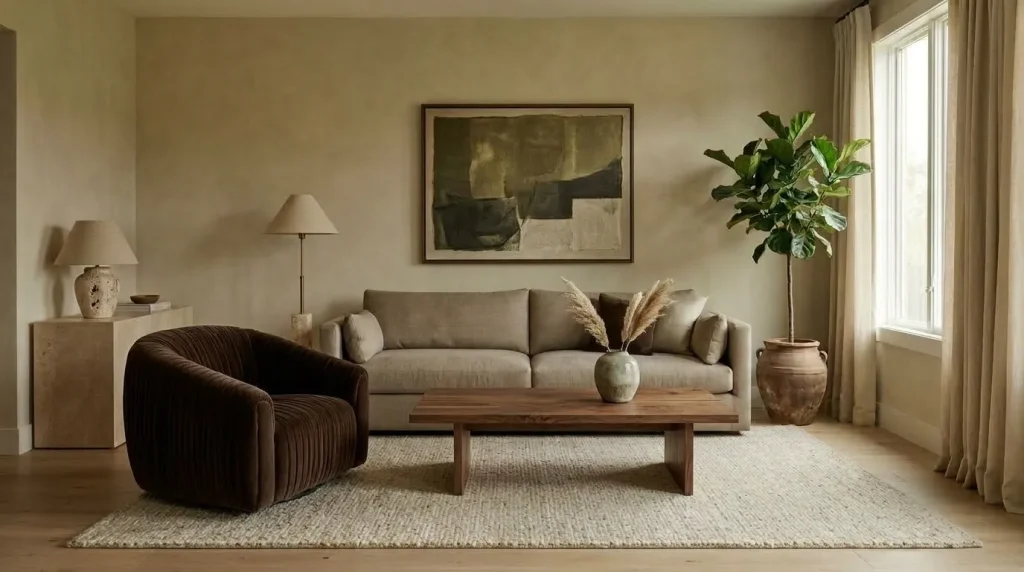
Idea 6: Choose one sculptural curved piece
Curved sofas, rounded armchairs, and organic wooden forms remain prominent in 2026 furniture design. Designers are seeing continued demand for sculptural silhouettes because they soften rooms and support more relaxed seating arrangements.
But this is an area where organic modern can become predictable.
You do not need a curved sofa, kidney-shaped coffee table, rounded rug, mushroom lamp, pebble ottoman, and arched cabinet in the same room. Browse curved furniture ideas for living rooms for pieces with the right amount of presence.
Choose one or two curves with enough presence. A rounded lounge chair beside a rectangular sofa works well because each shape makes the other more noticeable.
For a small living room, a round coffee table around 32 to 38 inches across can also improve movement around the seating area. See more small living room layout ideas for compact spaces.
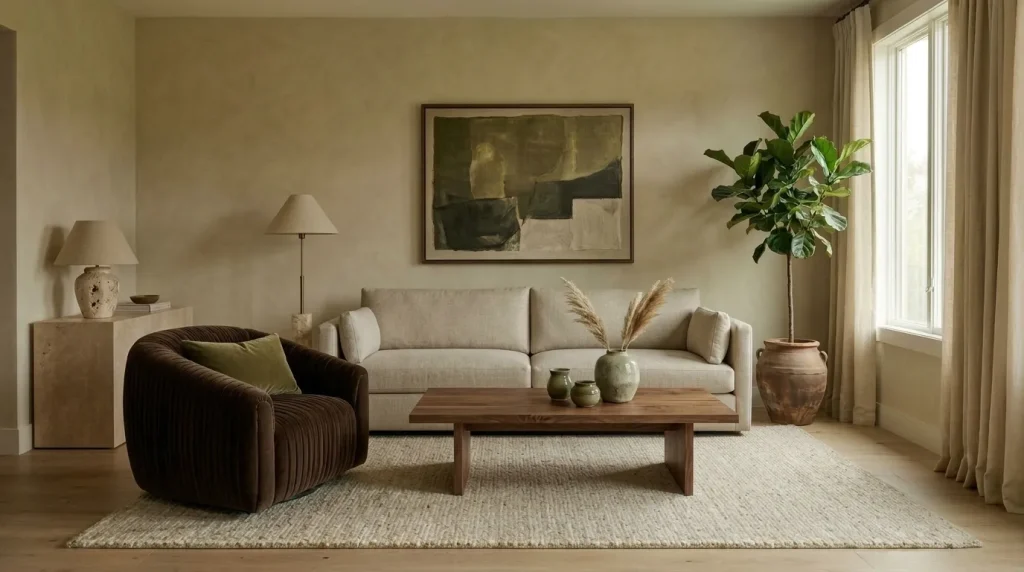
Idea 7: Choose a sofa with structure rather than excessive bulk
The huge cream “cloud sofa” helped define an earlier phase of warm minimalism. In smaller rooms, its depth can consume valuable floor space.
For 2026, designers are also seeing interest in more tailored sofa silhouettes that remain comfortable without appearing shapeless.
Look for a sofa with clean lines, gently softened arms, and enough visible structure to contrast with more irregular materials.
A seat depth around 22 to 24 inches is a useful starting point for many households, although comfort depends on height and how you sit. In a compact living room, a 72-to-84-inch sofa may leave more usable circulation than an oversized sectional.
Keep roughly 14 to 18 inches between the sofa and coffee table where your layout allows.
Make minimalism feel personal rather than empty
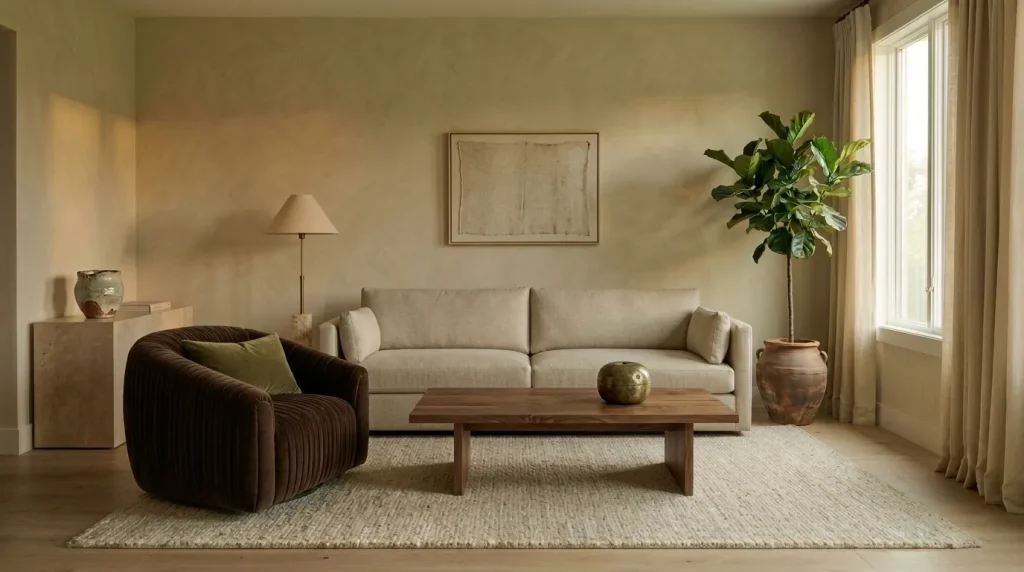
Idea 8: Replace generic decor with handmade or aged objects
Organic modern style becomes much better once perfection disappears.
A hand-thrown ceramic bowl with an irregular rim, weathered wooden stool, vintage vessel, textured artwork, or visibly aged brass object can provide more character than several identical accessories.
This aligns with a wider 2026 movement toward patina, handmade materials, visible imperfection, and interiors that feel collected instead of showroom-ready.
I once arranged a very neutral room where everything looked technically correct, but every object was new. Replacing a polished side table with a slightly battered wooden stool immediately changed the atmosphere. The room needed age more than it needed another color.
Use restraint, though. Organic modern is still visually edited. One unusual ceramic vessel deserves a little empty space around it.

Idea 9: Use greenery according to the room, not the trend
An olive tree has almost become shorthand for organic modern decor. That does not mean every living room needs one.
Choose plants based on actual daylight and scale. A rubber plant, ficus, large philodendron, or upright indoor tree can add height where conditions suit it.
If your room receives weak natural light, forcing a large living tree into a dark corner is neither practical nor attractive. Try preserved branches or a substantial sculptural branch arrangement in a ceramic vessel instead.
One large plant usually has more architectural effect than eight tiny pots scattered across shelves.
Finish with lighting that feels sculptural and warm

Idea 10: Build the room around several pools of light
Organic modern interiors depend heavily on material texture, and flat overhead lighting can erase much of it.
Use a combination of ambient, task, and lower-level lighting. A ceramic table lamp, paper or linen-shaded floor lamp, wall sconce, and restrained ceiling fixture can create different lighting zones.
Large-scale and sculptural lighting is a notable 2026 living-room direction, with designers treating fixtures as functional objects rather than purely background elements.
Choose materials that relate to the rest of the room. Plaster, ceramic, linen, aged brass, dark metal, paper, and wood all work.
And avoid making every lamp beige. A dark bronze or deep brown lamp can give a pale console the contrast it needs.
A practical organic modern material formula
| Element | Strong starting choice | Useful contrast |
|---|---|---|
| Walls | Warm ivory, putty, pale clay | Walnut or dark artwork |
| Sofa | Linen, woven performance fabric | Wood, leather, stone |
| Rug | Wool or wool-look texture | Smooth coffee table |
| Wood | Oak, walnut, smoked timber | Plaster or stone |
| Stone | Travertine, limestone, marble | Soft upholstery |
| Accent color | Olive, rust, chocolate, moss | Parchment and cream |
| Decor | Handmade ceramics, vintage objects | Carefully kept empty space |
The goal is not to fit every material into one room. Use the table to create contrast between hard and soft, light and dark, refined and imperfect.
What should you skip in an organic modern living room?
Too much beige. Organic modern does not mean removing color. If every surface sits within the same pale neutral value, the room can feel washed out rather than calm.
Bouclé on everything. One bouclé chair can provide useful softness. Sofa, chairs, ottoman, and cushions in the same fabric make the room feel trend-led.
A curve in every object. Curves are still current, but straight edges give organic forms something to work against.
Fake natural materials where the imitation is obvious. A small real wood table or handmade ceramic piece often brings more character than several faux-stone and plastic wood-grain accessories.
Decorating for emptiness. A room should have negative space, but removing books, art, personal objects, and useful furniture just to achieve minimalism can make it feel staged.
Try this if your living room is already beige
You probably do not need a new sofa.
First, introduce one darker material. Walnut, tobacco leather, dark oak, or chocolate brown can anchor the room.
Next, replace one pale synthetic accessory with something materially stronger, such as a ceramic lamp, stone side table, wool throw, or vintage wooden stool.
Then add one earthy color through art or upholstery. Olive, terracotta, moss, or dusty blue all work without disrupting a quiet palette.
Finally, look at lighting. Adding a low table or floor lamp can reveal textures that overhead lighting flattens.
Four targeted changes usually do more than another collection of beige cushions.
FAQ
Is organic modern style still popular in 2026?
Yes. Organic modern remains highly relevant in 2026, particularly as interiors move toward natural materials, earthy colors, tactile surfaces, curved forms, and more personal spaces. The newer version generally feels richer and less uniformly beige.
What colors work in an organic modern living room?
Warm ivory, parchment, mushroom, camel, chocolate brown, olive, moss, muted terracotta, and smoky taupe work particularly well. Start with two or three neutrals, then introduce one deeper earth tone so the room has enough contrast.
Can organic modern work in a small living room?
Yes. Use fewer pieces with stronger materials, such as a compact linen sofa, correctly sized wool rug, round wood or stone table, and one substantial plant. Avoid oversized seating and too many small decorative objects.
What is the difference between organic modern and modern minimalism?
Modern minimalism usually emphasizes simplicity, clean lines, and reduced decoration. Organic modern keeps that visual restraint but adds natural wood, stone, tactile textiles, irregular shapes, earthy color, and handcrafted pieces to make the space feel warmer.
Let the materials do more of the decorating
The strongest 10 organic modern living room Ideas do not depend on filling a room with products labeled “organic modern.” They depend on balancing opposites.
Pair smooth stone with soft wool. Put darker walnut beside pale plaster. Set one rounded chair against cleaner furniture lines. Leave breathing room around something handmade rather than surrounding it with more decor.
If you are starting today, do not buy accessories first. Look at your largest surfaces, including the sofa, rug, walls, flooring, and main table. Decide where the room lacks contrast or texture, then make one meaningful change there.
A calm living room does not have to be empty or beige. It simply needs every material to have a reason for being there.