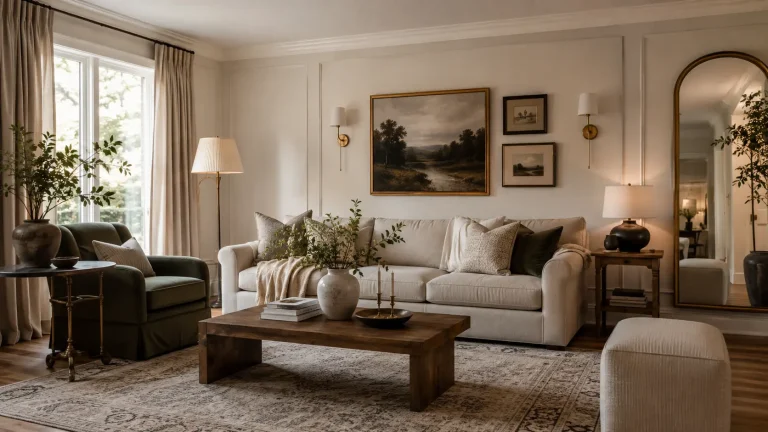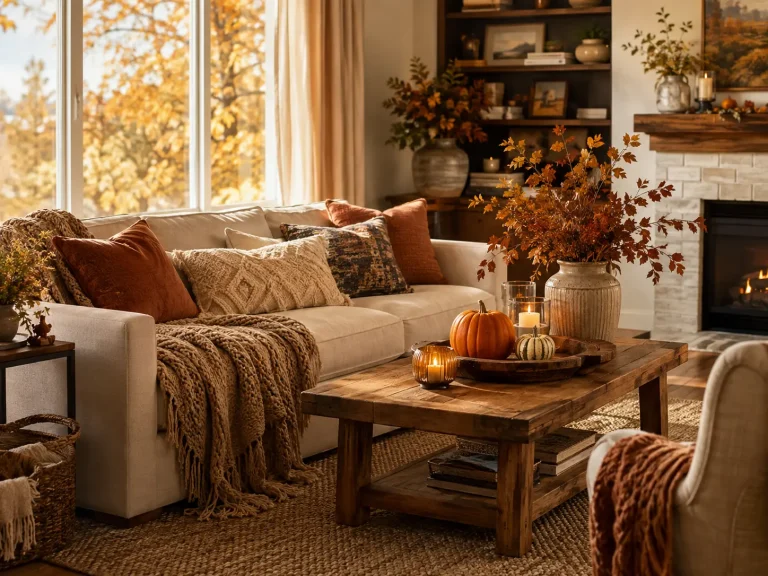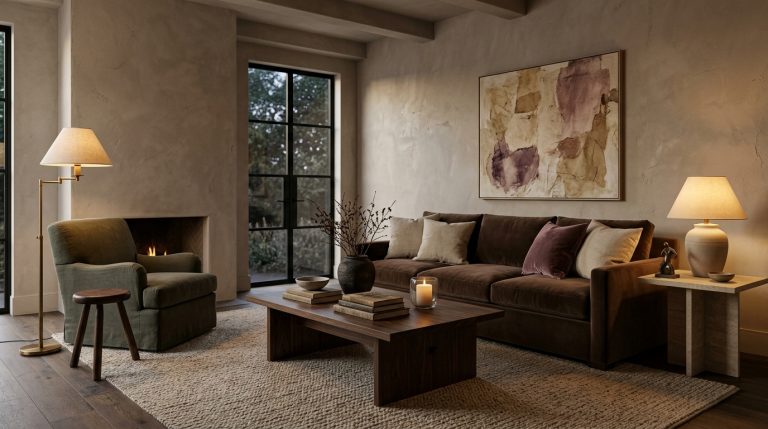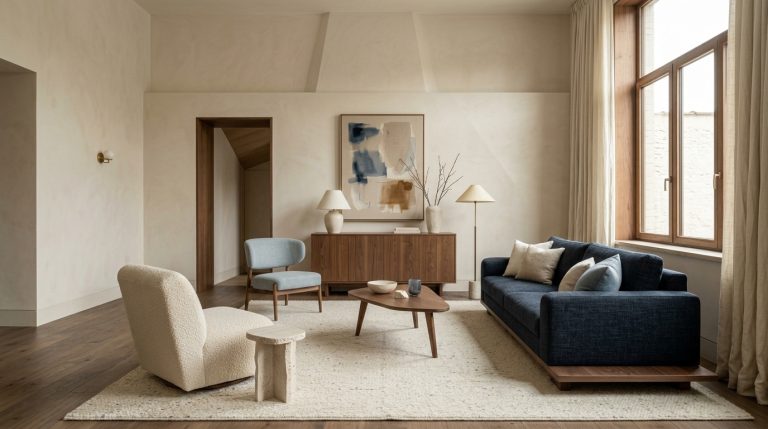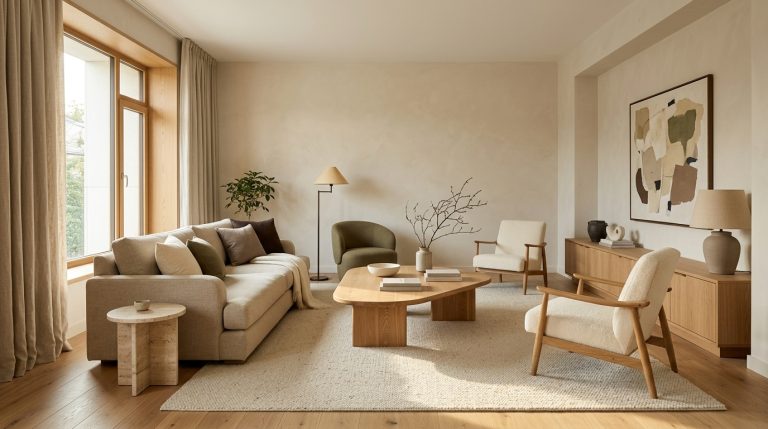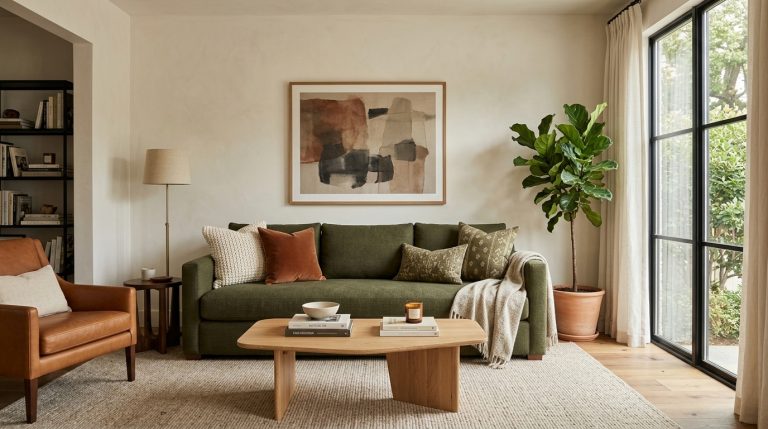
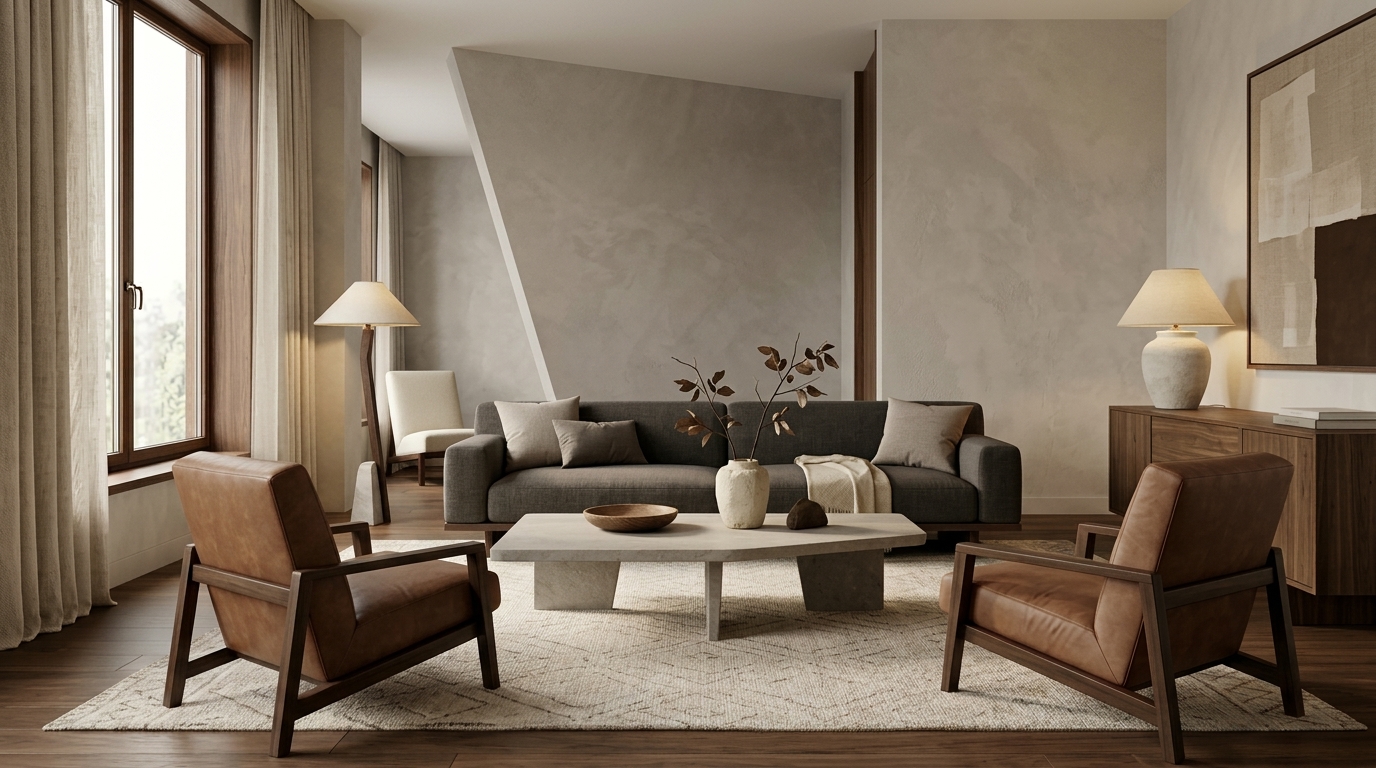
30 Grey and Brown Living Room Ideas That Feel Warm, Modern and Intentional
Grey and brown living room ideas can look sophisticated, warm and quietly layered, but the combination is less automatic than it first appears. Grey often has a cooler, mineral quality, while brown brings warmth through timber, leather, upholstery and flooring. Put the wrong versions together and the room can look muddy, dated or unexpectedly cold. Put the right versions together and each neutral improves the other.
The key is not simply adding equal amounts of grey and brown. A successful room needs hierarchy. One colour usually carries more visual weight, while the other changes the temperature and gives the space depth. Cream, ivory, taupe or warm white can then provide breathing room between them.
Material matters just as much as shade. Walnut reads differently from chocolate-brown upholstery. Cognac leather behaves differently from espresso-stained furniture. Grey linen feels softer than grey tile, while charcoal wool absorbs light differently from a smooth grey sectional. Before choosing accessories, look at where grey and brown already exist in your room: sofa, flooring, cabinetry, walls, fireplace, wood furniture or even an adjoining kitchen.
These 30 ideas show different ways to build a grey and brown living room around real furniture, different room sizes, varied architectural styles and different levels of colour commitment.
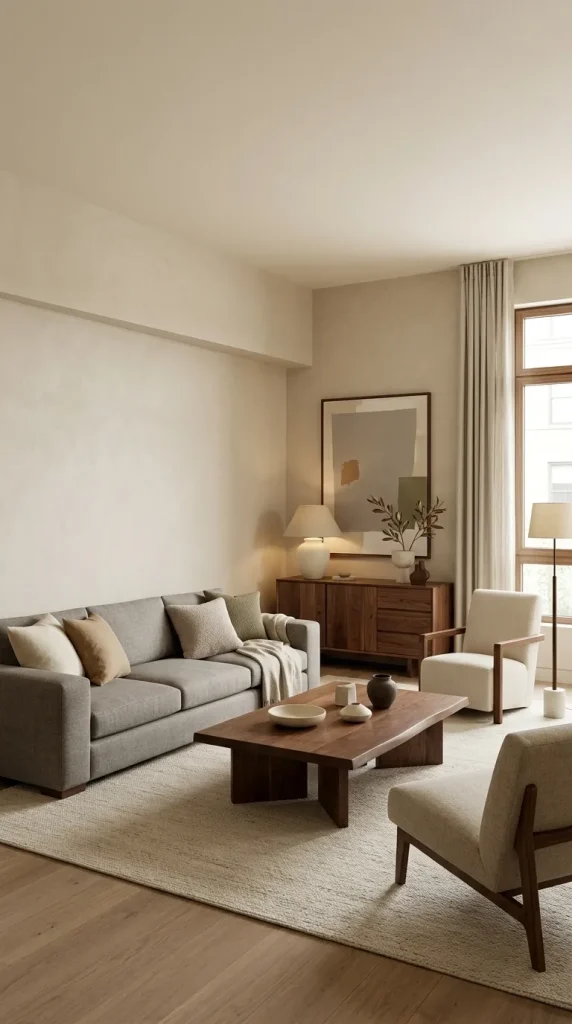
1. Warm Up a Grey Sofa With Walnut Furniture
A grey sofa is one of the easiest starting points for this palette because brown does not need to appear in another large upholstered piece. Instead, bring the warmth through substantial timber furniture. A walnut coffee table, sideboard or media console gives the sofa a warmer context without making the room feel brown-heavy.
Medium warm grey works particularly well with walnut because neither is extremely light or extremely dark. If your sofa leans cool, add an oatmeal or warm ivory rug between the grey upholstery and timber so the transition feels deliberate. A few camel, cream or muted olive textiles can reinforce the warmer direction.
Avoid surrounding the sofa with matching dark-brown tables on every side. One or two strong walnut pieces usually look more intentional than a complete furniture set.
This approach works particularly well in contemporary homes where the existing grey sofa feels slightly generic. The wood gives it character without requiring new upholstery.
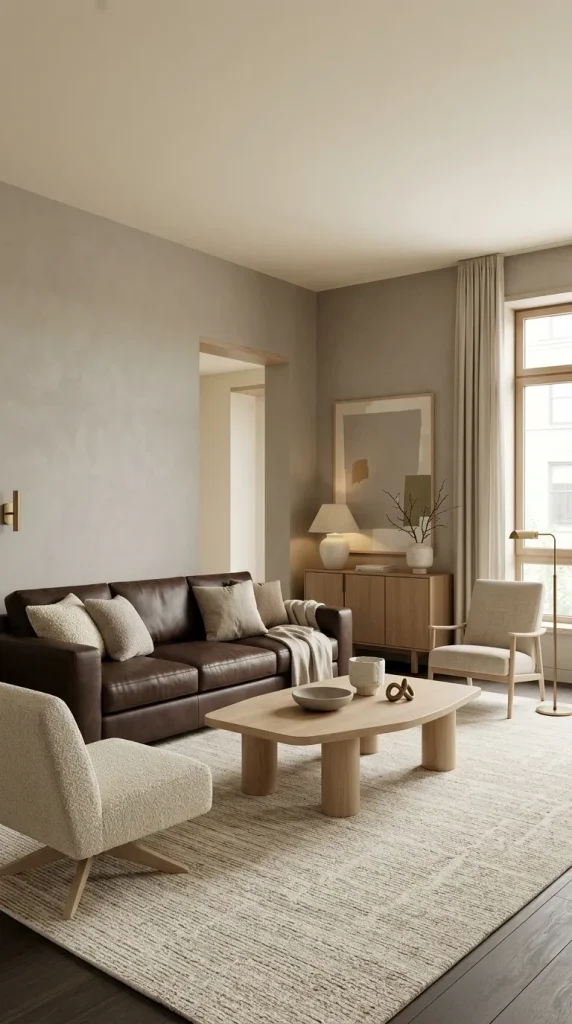
2. Pair a Brown Leather Sofa With Warm Grey Walls
If you already own a dark brown leather sofa, warm grey walls can modernize it more effectively than replacing the furniture. Look for grey with beige, mushroom or soft taupe undertones rather than icy blue-grey. The warmer undertone creates a visual bridge between the leather and the architecture.
Leather already has sheen and substantial visual weight, so soften the surfaces around it. A cream wool rug, flax linen curtains and woven or bouclé cushions prevent the sofa from being surrounded by equally hard materials.
If the floor is also dark wood, the rug becomes especially important. Choose one large enough for at least the front legs of the main seating pieces to sit on it. This separates the leather sofa from the brown floor instead of allowing both to merge into one dark mass.
Do not automatically add more dark-brown furniture. Pale oak, stone, aged brass or a lighter walnut table can give the room more tonal variation.
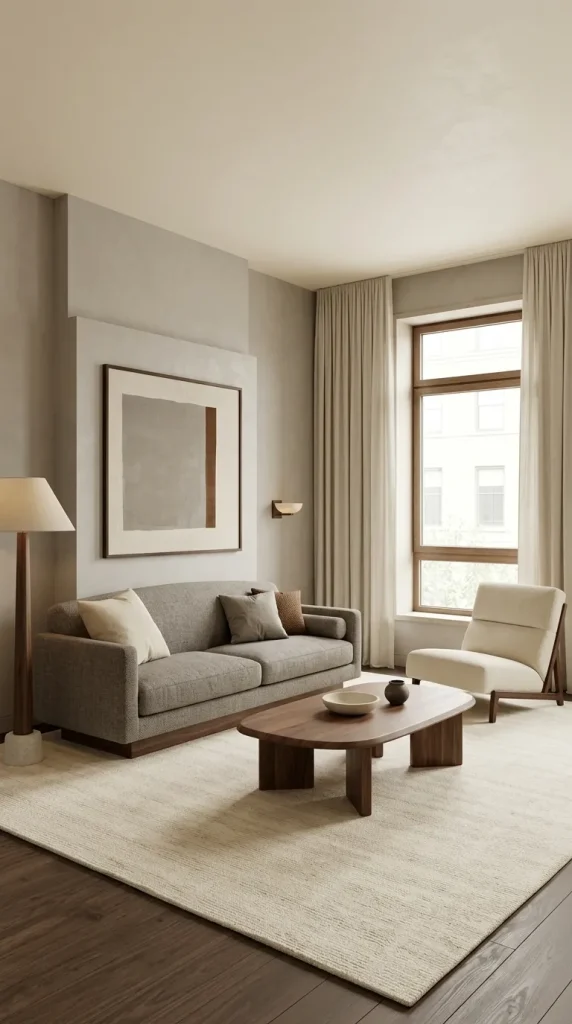
3. Use Grey, Brown and Cream as a Three-Neutral Palette
Grey and brown often work best when cream provides the lightest major surface. Cream softens cool grey, creates contrast against dark brown and keeps the entire palette from settling into the same middle value.
One useful arrangement is a medium-grey sofa, walnut furniture and a large warm-cream rug. Another is a chocolate sofa against mushroom-grey walls with ivory curtains. The colours remain neutral, but each has a clear role.
For a balanced room, think of cream as visual breathing space rather than another competing colour. Use it where light is most useful: rug, curtains, lampshades, walls, occasional chairs or large cushions.
This is particularly effective in rooms with limited daylight because it allows you to retain richer brown and grey furniture without making every large surface dark.

4. Build a Lighter Scheme With Pale Grey and Camel
Camel is one of the most useful brown families when you want a grey and brown living room to feel contemporary rather than heavy. It brings warmth but has considerably less visual weight than espresso or chocolate brown.
Try a pale warm-grey sofa with a camel leather chair, pale oak table and ivory rug. The camel chair becomes the warm focal point while the grey remains calm and architectural.
This combination suits apartments because you can establish the grey-and-brown relationship with relatively few substantial pieces. Furniture with visible legs also helps preserve a sense of floor area.
Keep black to small structural details such as a lamp stem or thin frame. Too much black can undermine the lightness that makes the camel-and-grey combination appealing.
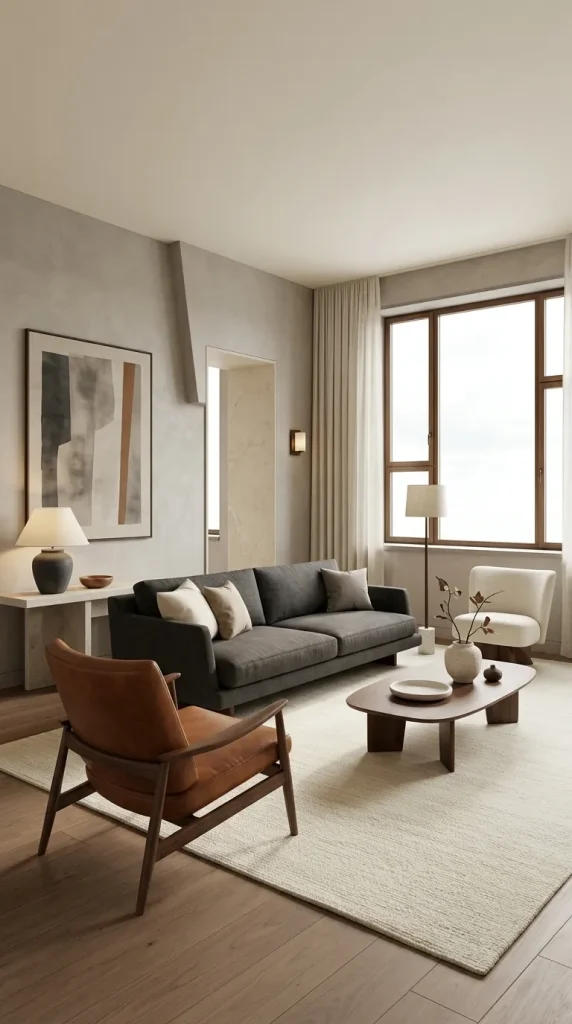
5. Balance Charcoal Grey With Cognac Leather
Charcoal and cognac create a much stronger contrast. The deep grey supplies sophistication and visual structure, while cognac leather introduces the warmth that keeps the space from becoming severe.
A charcoal sofa with one cognac lounge chair is enough to establish the relationship. Alternatively, use charcoal walls behind a cognac sofa, particularly in a room with generous natural light.
Because both colours are visually assertive, keep the rug quieter. Warm ivory, faded beige or a softly patterned cream-and-grey rug gives the eye somewhere to rest. A walnut table can connect the leather to the rest of the room without duplicating its orange undertone exactly.
Cognac is especially effective against charcoal because its warmth is clear and intentional. Avoid combining it with multiple orange-brown woods of slightly different undertones unless there is a neutral surface separating them.

6. Let Oak Provide the Brown in a Light Grey Room
Brown does not have to arrive through brown upholstery. In a light grey living room, pale or medium oak can supply enough warmth on its own.
Use light grey upholstery, cream walls and an oak coffee table or media unit for a brighter interpretation of the palette. Oak flooring can play the same role if it is already part of the room.
This approach works particularly well in Scandinavian-influenced or understated contemporary interiors. Add wool, linen, ceramic and woven materials rather than many decorative objects so the room gains texture without becoming busy.
If both the sofa and walls are pale grey, introduce tonal separation through the rug. Warm ivory, oatmeal or a subtle beige-grey pattern will keep the seating from visually disappearing into the surrounding surfaces.

7. Create a Brown-Led Room With Soft Grey Upholstery
Grey does not always need to dominate. In a room with wood flooring, walnut built-ins or substantial brown furniture, use grey as the cooling counterpoint.
A pair of stone-grey armchairs can work beautifully with a chocolate or tobacco-brown sofa. Alternatively, a soft-grey sofa can sit within a room where the floor, shelving and tables provide most of the brown.
The goal is to avoid making every upholstered piece brown simply because the architecture is already warm. Grey creates relief and prevents the room from leaning too traditional.
Cream curtains and a lighter rug can complete the hierarchy: brown as the architectural anchor, grey as the upholstery counterpoint and cream as the lightest layer.
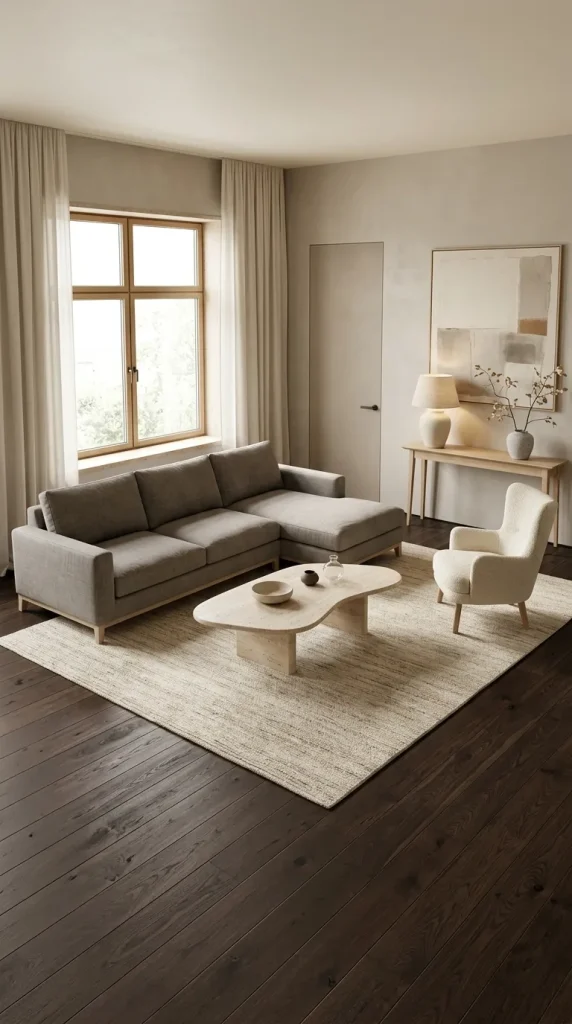
8. Use a Warm Grey Sectional With Dark Brown Floors
Dark brown flooring can support a grey sofa beautifully, but the combination needs separation. A charcoal sectional placed directly over espresso flooring can make the entire bottom half of the room feel visually dense.
Choose a warm medium-grey or lighter grey sectional where possible. Then place a substantial cream, oatmeal or taupe rug beneath it. In many medium-size living rooms, an 8-by-10-foot rug will connect the sectional and nearby chair more effectively than a small rug floating under the coffee table.
The rug is not simply decoration here. It creates a visual boundary between two large surfaces and prevents the sofa from blending into the floor.
Keep at least some furniture lighter than the flooring. Pale oak, travertine or glass can work better than another espresso table.
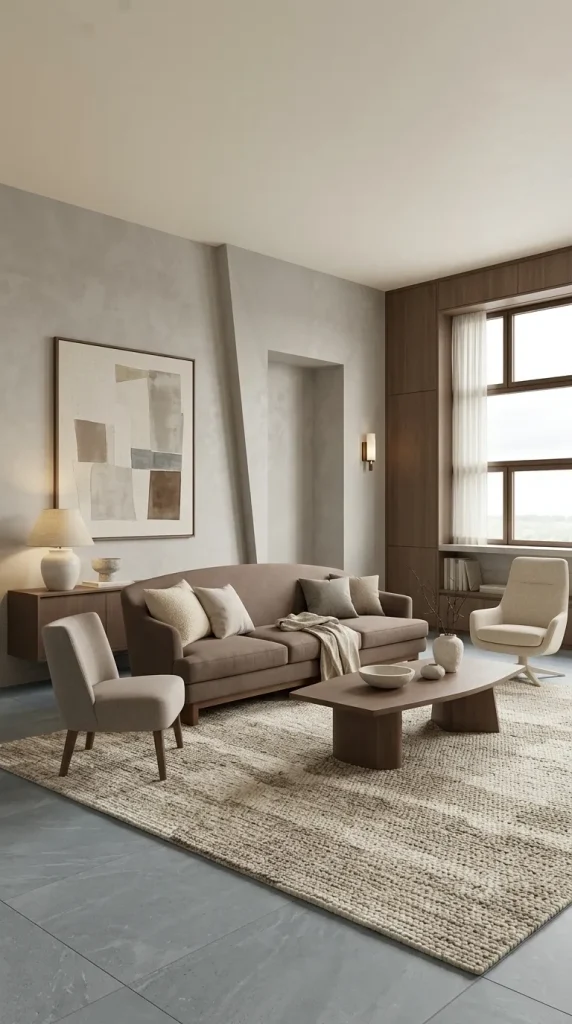
9. Warm Up Cool Grey Flooring With Brown Upholstery
Cool grey tile or grey vinyl can make a living room feel sterile if the furniture simply repeats more cool grey. Brown upholstery is a useful counterweight.
A camel or mocha sofa immediately changes the temperature of a grey-floor room. Walnut furniture, wool textiles and flax curtains can reinforce the warmth without making the entire space brown.
If the floor has a strong blue-grey cast, avoid highly orange timber unless you have a bridging neutral between the two. Taupe, cream, mushroom or greige can help soften the jump.
A large textured rug is especially helpful on tile because it changes not only the colour relationship but also the room’s tactile quality and acoustics.
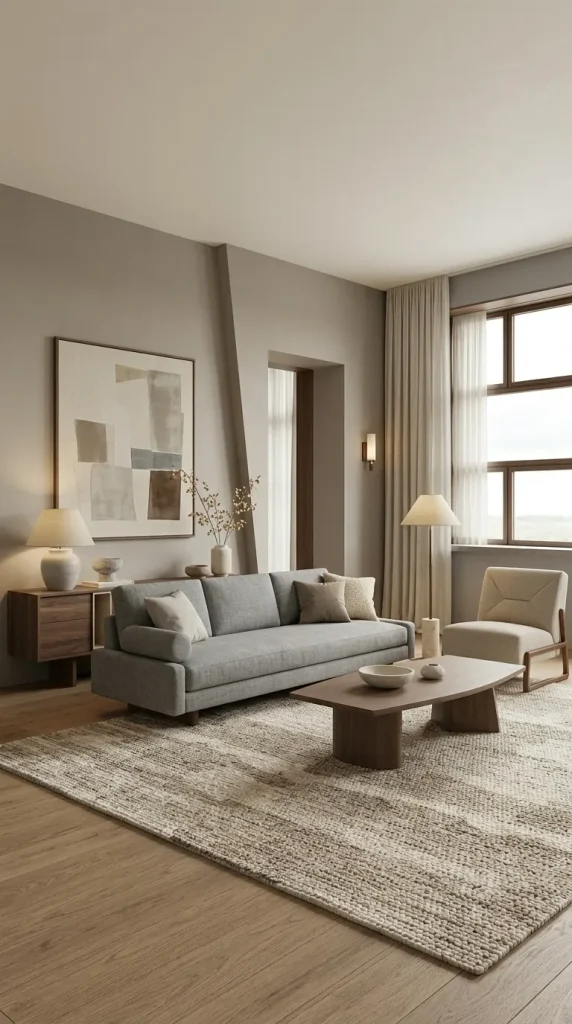
10. Use Greige or Mushroom Walls to Bridge Both Colours
Sometimes the easiest solution is to choose a wall colour that already sits between grey and brown. Greige, mushroom, putty and some taupes can visually connect grey upholstery with brown wood more naturally than either a distinct grey or brown wall.
This is especially useful if your furniture already contains conflicting temperatures. For example, a cool grey sofa and warm walnut cabinet may feel unrelated against a stark white wall but more coherent against a soft mushroom background.
Undertones still matter. Some taupes lean pink or violet, while others lean beige or green. Test a large sample beside your actual sofa and flooring, and check it during daylight and after your lamps are switched on.
Do not choose paint from a tiny chip alone. Large neutral surfaces often reveal undertones much more strongly once they cover a wall.
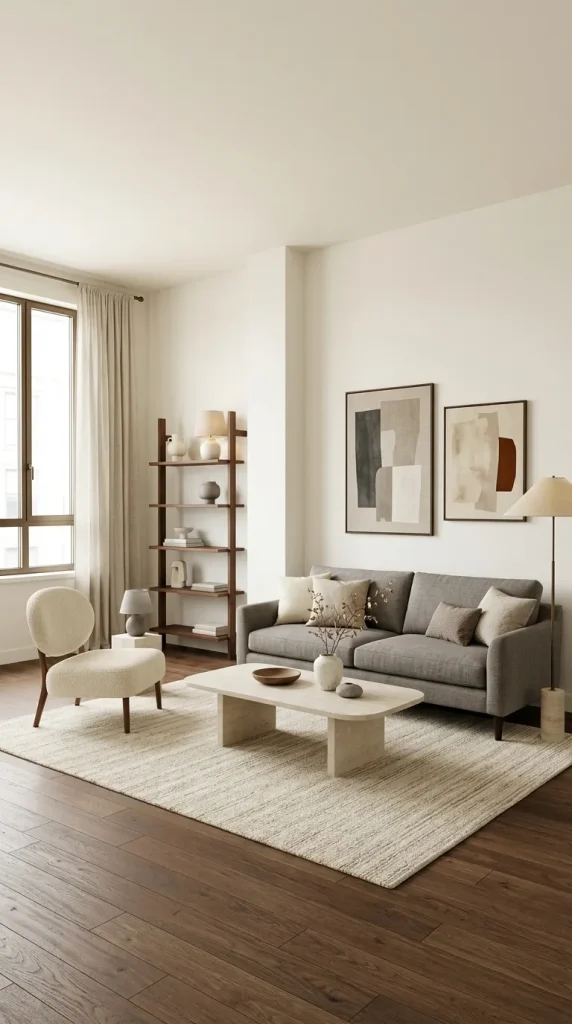
11. Keep the Walls Warm White When the Room Already Has Enough Colour
Not every grey and brown living room needs grey or brown walls. If the sofa, flooring and timber furniture already establish the palette, warm white can be the most useful wall choice.
A warm ivory or creamy off-white allows a grey sofa and brown floor to remain distinct while increasing perceived brightness. It also gives artwork, shelving and lighting more visual room.
Be cautious with very crisp blue-white paint beside orange-leaning wood or cognac leather. It can exaggerate the warmth of the brown while making the grey appear colder.
This approach is particularly effective in rentals because you can create the entire grey-and-brown scheme through furniture, rugs, curtains and lighting without repainting.
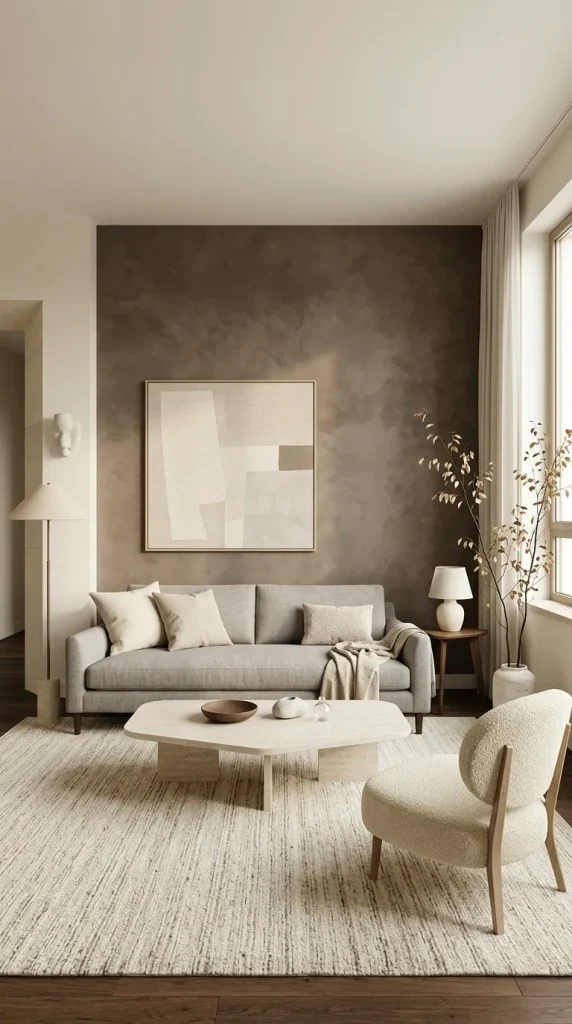
12. Try a Muted Mocha Accent Wall Behind a Grey Sofa
A brown accent wall can work, but the shade should feel architectural rather than like generic chocolate paint. Look toward muted mocha, cocoa, earthy taupe or brown-grey.
Place it behind a light or medium-grey sofa so there is clear tonal separation. A cream rug and lighter curtains will stop the feature wall from pulling the whole room downward.
This is useful when brown is otherwise present only in small wood pieces and you want it to become a stronger part of the palette.
Keep adjacent walls lighter unless you intentionally want a cocooning room. One substantial brown surface often has more impact than repeating brown through many small accessories.

13. Design a Moody Charcoal and Walnut Living Room
For a darker interpretation, combine charcoal walls with walnut furniture instead of defaulting to black. Walnut has enough depth to belong in a moody room but retains visible grain and warmth.
A medium-grey or taupe sofa can prevent the room from becoming a continuous field of dark surfaces. Alternatively, use a dark brown leather sofa but place it on a noticeably lighter rug.
Lighting is crucial. Instead of relying on one ceiling fixture, place a floor lamp beside the seating and another lamp or sconce across the room so different walls receive separate pools of light.
Cream lampshades, artwork mats and smaller pale surfaces are especially effective in a moody scheme because they create controlled highlights rather than making the room uniformly bright.
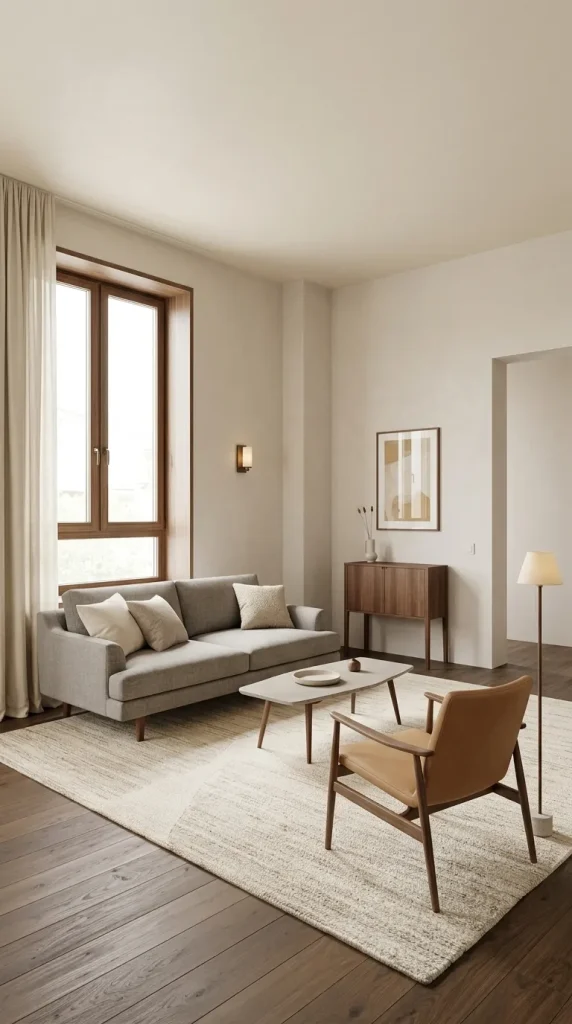
14. Make a Small Grey and Brown Living Room Feel Layered, Not Heavy
Small living rooms do not automatically need pale colours, but they do need disciplined visual weight. The bigger problem is often oversized furniture rather than the presence of brown or grey.
Use a compact warm-grey sofa with visible legs, one medium-brown wood tone and a rug that is large enough to connect the furniture. A camel chair can provide warmth without requiring a bulky dark-brown sofa.
Wall-mounted sconces or slim floor lamps preserve floor area. A glass, stone or narrow-legged coffee table can also reduce visual density compared with a large dark timber block.
If the room already has dark flooring, let the walls or curtains carry the lightest value. Avoid stacking a dark floor, dark sectional, dark rug and espresso TV unit into the same compact space.
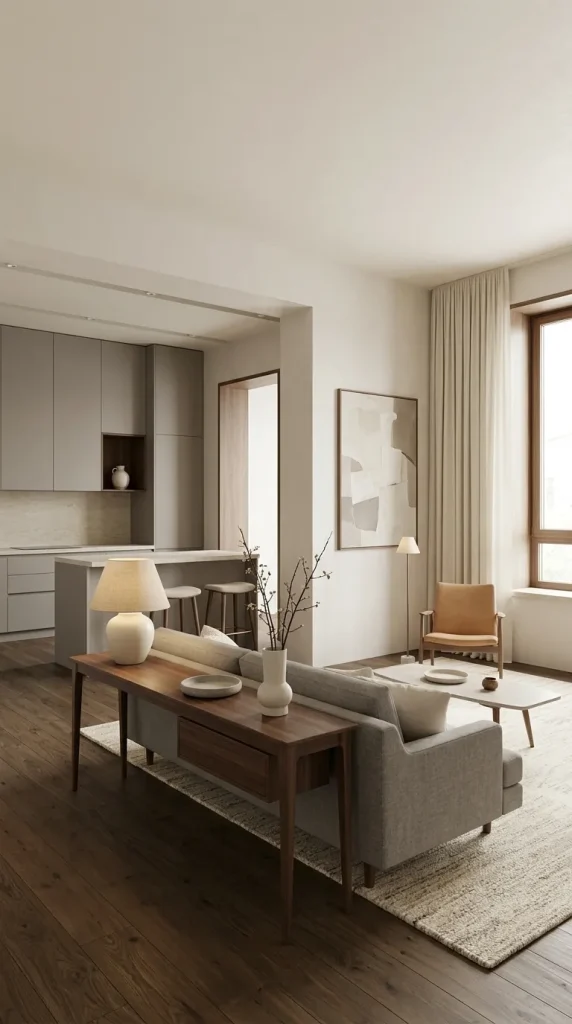
15. Connect a Grey Kitchen to a Brown-and-Grey Living Room
In an open-plan space, the kitchen and living area need continuity without being exact copies of one another. If the kitchen cabinetry is grey, let the living room introduce the warmth.
A grey sectional can still work, but bring brown through walnut furniture, leather seating or wood flooring and repeat a small amount of that wood tone near the kitchen where practical.
A console behind the sofa is especially useful when the sofa faces away from the kitchen. A walnut console can make the back of a grey sectional part of the design rather than an awkward divider.
Use rugs to define the living zone. Repeating one metal finish or wood tone across both areas is generally more sophisticated than duplicating equal amounts of grey and brown in each room.
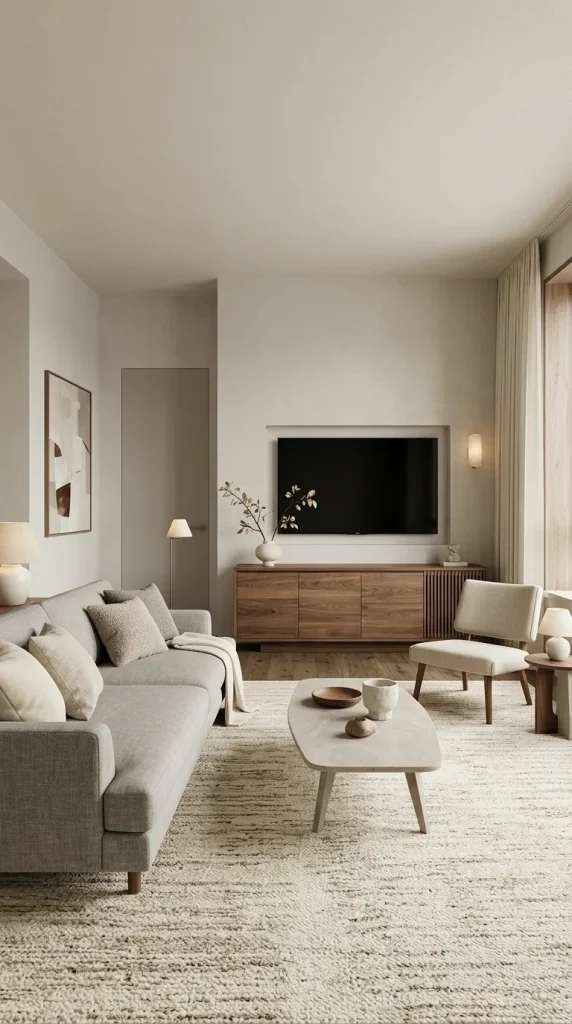
16. Use a Grey Sofa With a Walnut TV Unit
A TV is already a large black rectangle, so a black console is not always the best choice in a grey living room. Walnut can soften the media wall while introducing the brown side of the palette.
Against light warm-grey walls, a walnut TV unit creates enough contrast without appearing visually severe. Add cream or taupe textiles elsewhere so the brown does not exist only at the television end of the room.
In a darker room, consider a lighter oak or medium walnut media unit rather than espresso. Otherwise the screen, console and wall may combine into one heavy composition.
Keep cable management and scale in mind. The console should feel visually substantial enough for the television rather than appearing like a small unrelated table beneath it.
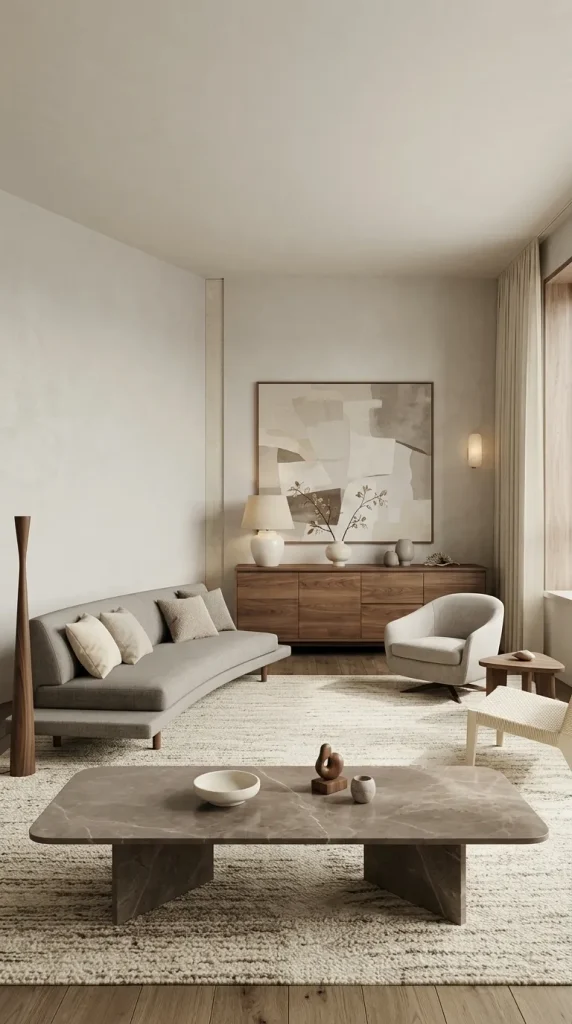
17. Pair Grey Seating With Brown Marble and Walnut
For a more refined contemporary room, brown can come through both stone and timber. A grey sofa with a walnut sideboard and a coffee table in marble containing grey, beige or brown veining creates a layered neutral palette without relying on many colours.
Marble is useful because its natural pattern can visually connect grey and brown in a single surface. It also introduces a smoother, more reflective texture beside wool, linen or timber.
Keep metallic accents restrained. Aged brass can add warmth, but the room does not need gold on every lamp, table and decorative object.
This combination works especially well in larger contemporary rooms where bigger material surfaces have enough space to be appreciated.
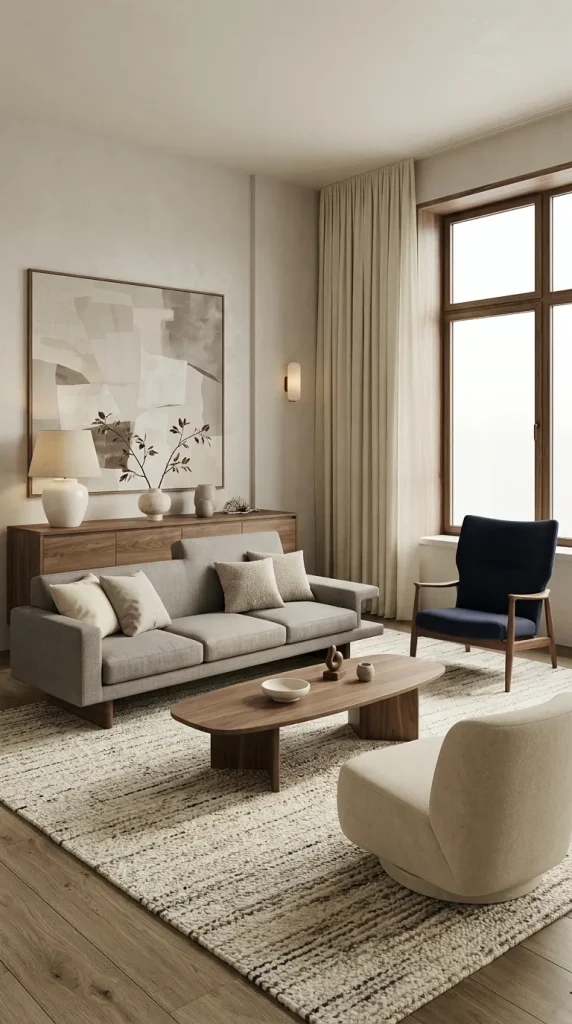
18. Add Navy to Grey and Brown for More Definition
Navy works well as a controlled supporting colour because it strengthens the cooler side of grey while brown keeps the palette from becoming cold.
Try a grey sofa, walnut table and one navy armchair, or introduce navy through a patterned rug containing cream and brown. A cognac leather chair is another strong partner because navy and cognac create clear but sophisticated contrast.
Keep navy selective. If the walls, sofa, rug, curtains and accessories all become navy, the room is no longer primarily a grey-and-brown scheme.
Cream is particularly useful as the fourth element because it separates the three stronger colours and keeps the room visually readable.
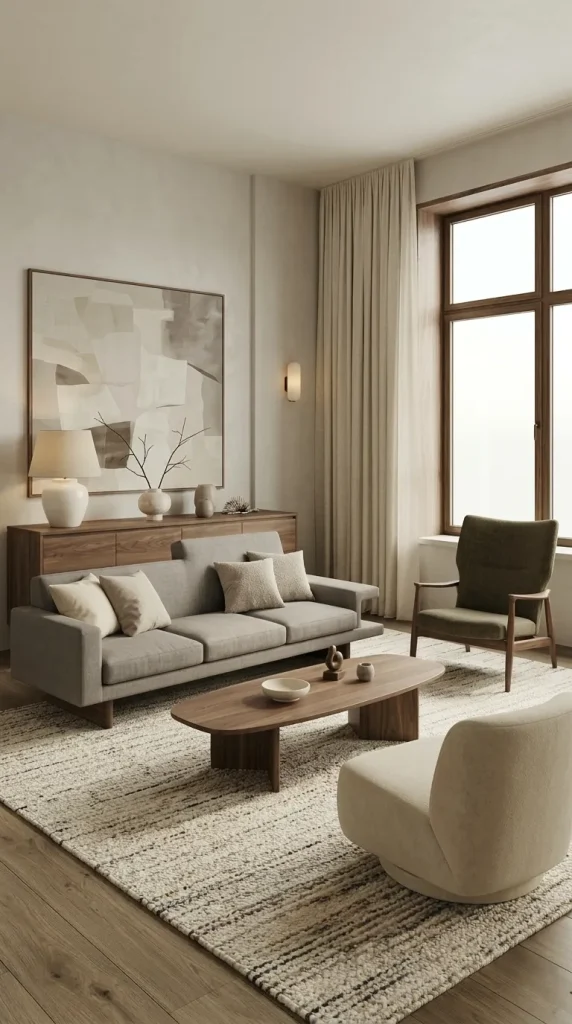
19. Use Olive or Sage as the Organic Accent
Olive and sage fit naturally into grey-and-brown interiors because they sit between mineral grey and earthy timber.
For a deeper room, combine warm grey upholstery, walnut or dark brown leather and muted olive through a chair, rug pattern or textiles. For a lighter room, pale grey, light oak and soft sage create a quieter result.
Olive works especially well with darker woods, while sage generally feels better alongside pale oak and cream.
Do not assume plants are the only way to bring in green. Upholstery, art, ceramics or a muted rug can create the colour relationship more deliberately than placing plants in every empty corner.
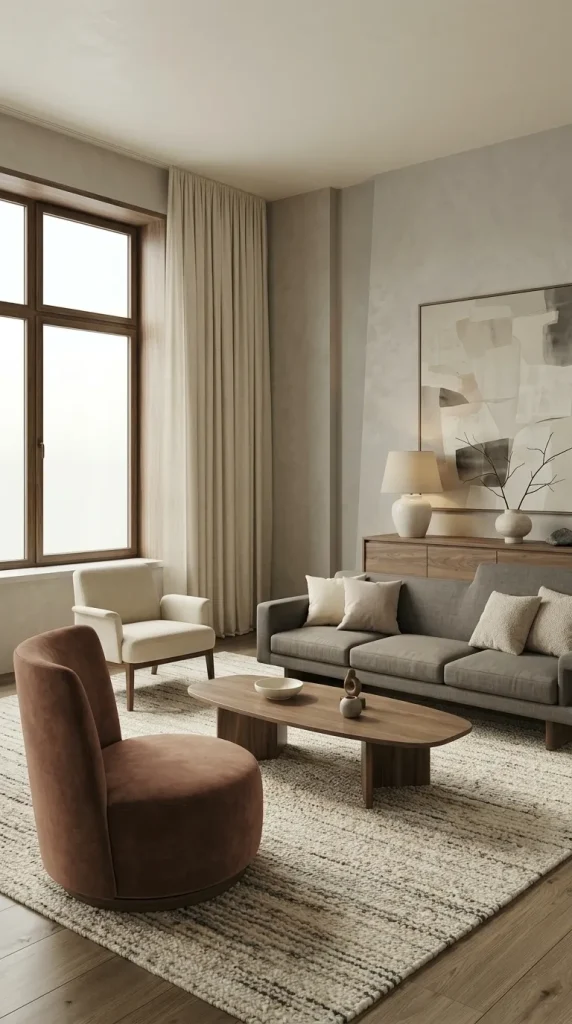
20. Add Rust or Burnt Orange Without Making the Room Seasonal
Rust intensifies the warm side of a grey-and-brown palette and is especially effective with charcoal, walnut and cognac.
Use it in one meaningful place: perhaps a rust velvet chair, a faded rug with rust detailing or a piece of large-scale art. Smaller cushions can repeat the colour, but they should not be the only design move.
Keep the surrounding surfaces neutral so rust remains an accent rather than turning the entire room orange.
Although this combination can feel autumnal, it does not need seasonal decor. Walnut, wool, aged metal and muted rust work year-round when treated as permanent materials rather than fall accessories.
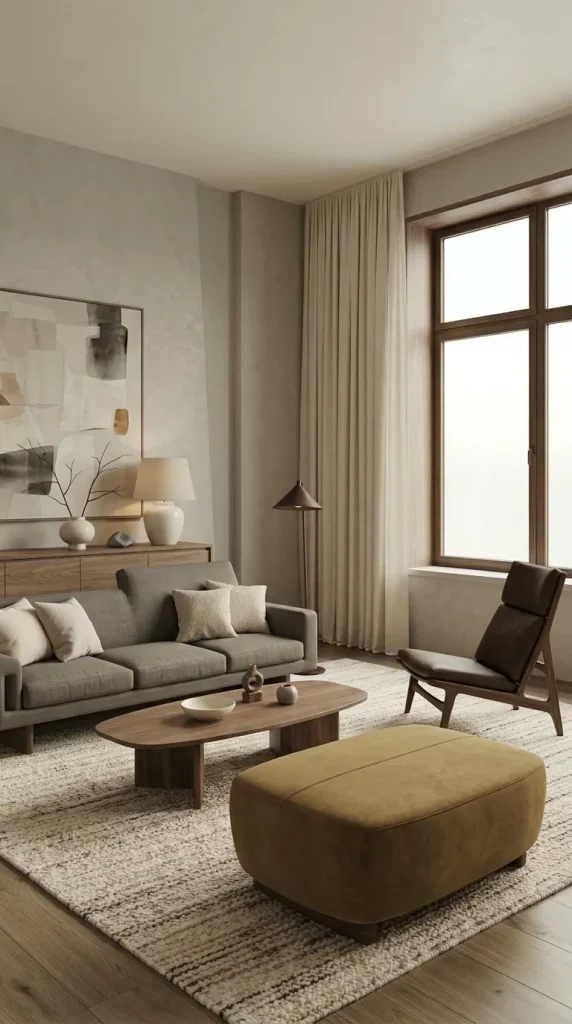
21. Use Mustard With Charcoal and Chocolate Brown
Mustard or muted ochre can bring energy to darker grey-and-brown rooms without the brightness of clear yellow.
A charcoal sofa, chocolate-brown chair and mustard textile or artwork can create strong contrast. Walnut furniture reinforces the warmth, while cream prevents the darker colours from taking over.
Use mustard more cautiously in already yellow-toned rooms. If the floor and timber are strongly orange, additional yellow may amplify warmth too much.
One substantial mustard element usually looks more intentional than scattering many small yellow accessories throughout the room.
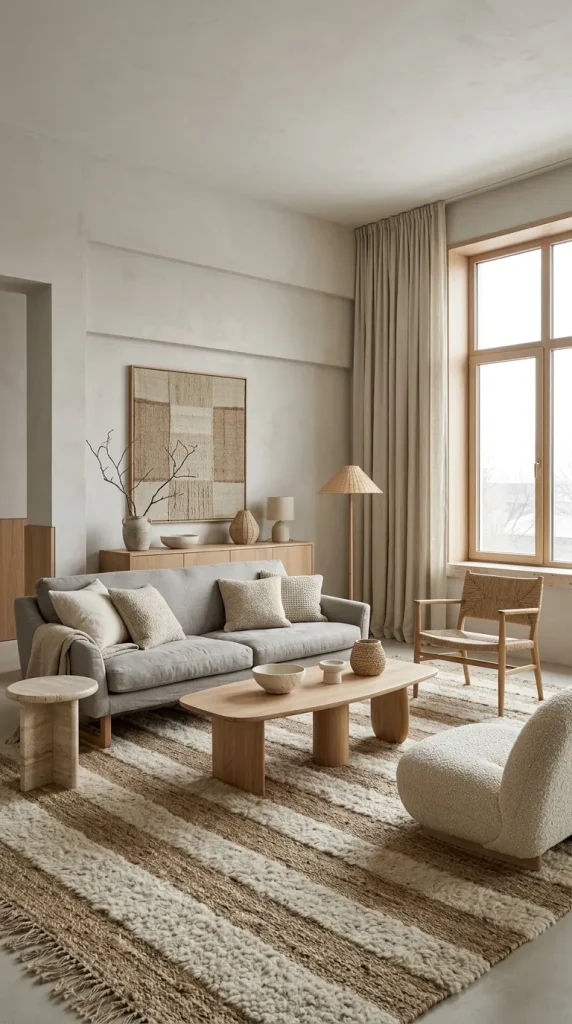
22. Create a Natural Grey and Brown Living Room With Texture
A restrained colour palette needs material variation. Instead of adding more colours, layer grey linen, natural oak, jute, wool, stone, woven fibers and ceramics.
For example, use a soft grey linen sofa, oak furniture, an oatmeal wool-and-jute rug and a travertine side table. Brown is present through natural material rather than through obviously brown decorative objects.
Texture is especially important in neutral interiors because two rooms can contain the same basic colours yet feel completely different depending on whether the surfaces are flat, polished, woven, matte or tactile.
Avoid relying on synthetic fabrics with identical smooth finishes everywhere. Material contrast is what makes a limited palette feel layered rather than unfinished.
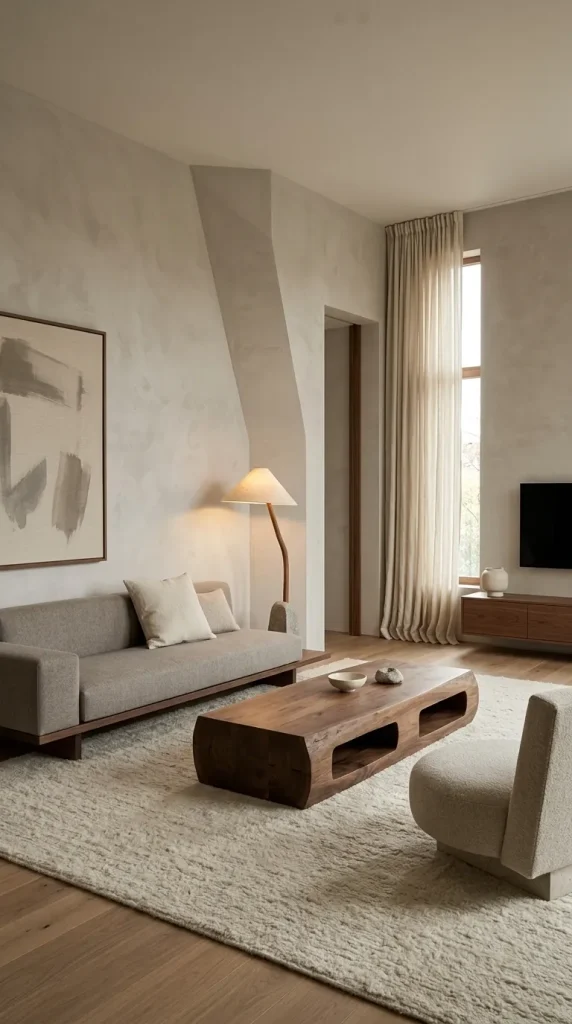
23. Give Grey and Brown a Modern Minimalist Treatment
A minimalist version works best when each large piece has a clear role. Use fewer objects but make the proportions and materials stronger.
A warm grey low-profile sofa, substantial walnut coffee table, large cream wool rug and one sculptural floor lamp may be enough. Brown can also enter through a single wall-mounted timber media unit.
Do not interpret minimalism as eliminating warmth. Without wood, textiles and layered lighting, a grey minimalist room can become sterile very quickly.
Keep decorative accessories limited, but vary the surfaces: matte upholstery, visible timber grain, wool, ceramic and perhaps stone.
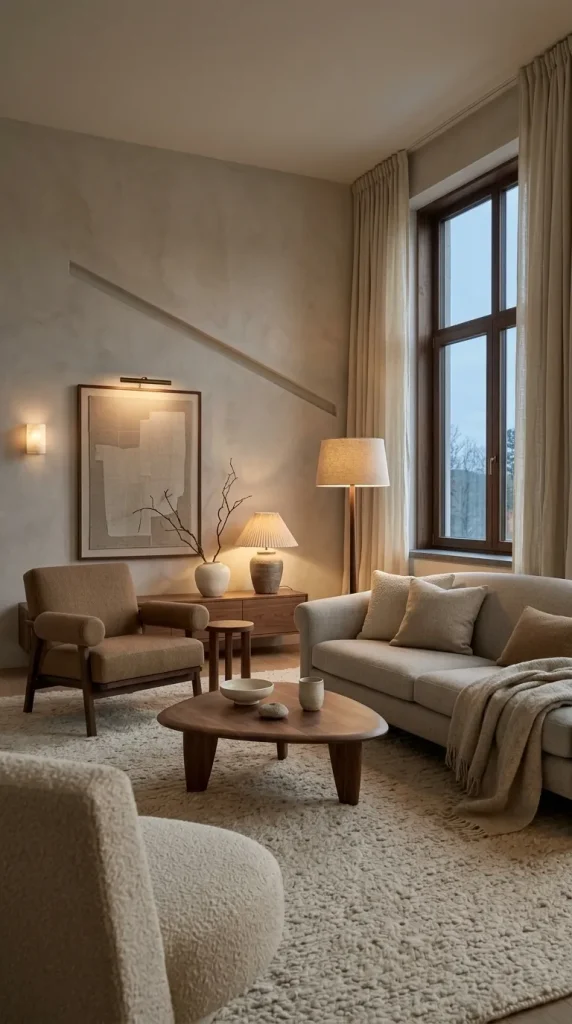
24. Build a Cozy Room Through Lighting and Textile Layers
A grey and brown living room does not become cozy simply because the colours are dark. Coziness comes from how the room handles texture, scale and evening light.
Start with a correctly sized rug that connects the seating. Add curtains with enough fullness to soften the windows, and use wool, bouclé, linen or woven textiles across the seating.
Then layer the lighting. A floor lamp beside the sofa, table lamp on the opposite side and perhaps a picture light or wall sconce create multiple pools of illumination.
This allows even a pale grey-and-camel room to feel cozy. Conversely, a charcoal-and-chocolate room with only one bright ceiling light can feel harsher than expected.
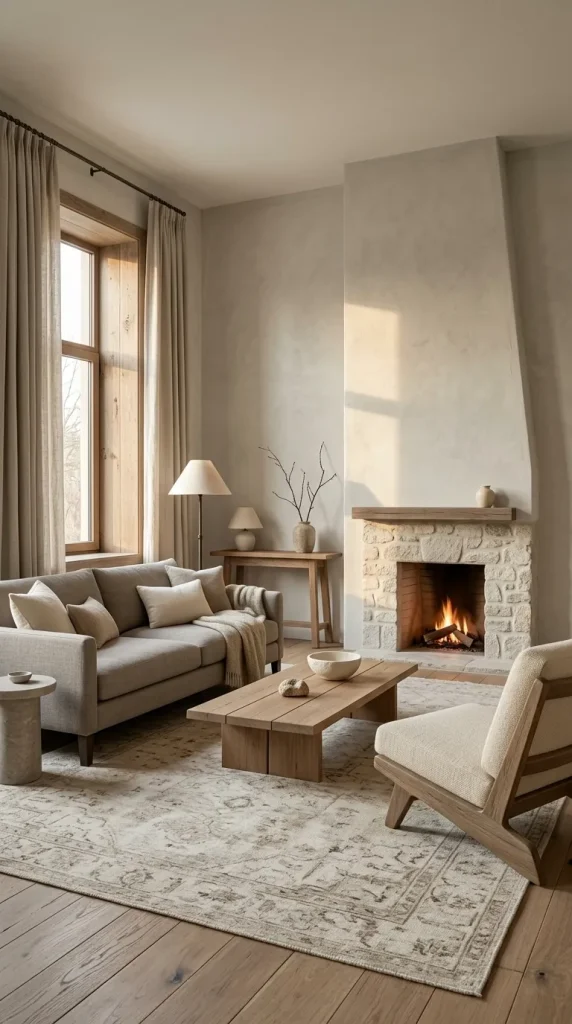
25. Create a Rustic Grey and Brown Room With Stone and Reclaimed Wood
Rustic grey and brown interiors should derive their character from material rather than from farmhouse-themed accessories.
Use warm grey linen upholstery beside reclaimed timber, natural stone and aged metal. A faded cream, grey and brown rug can soften rougher surfaces and prevent the room from becoming overly brown.
If the room has a fireplace, let stone or brick provide part of the visual weight. A wood mantel can then repeat the brown without needing additional heavy timber furniture.
Keep upholstery relatively simple. The contrast between soft grey fabric, weathered wood and stone will create more character than decorative signs or overly themed accessories.
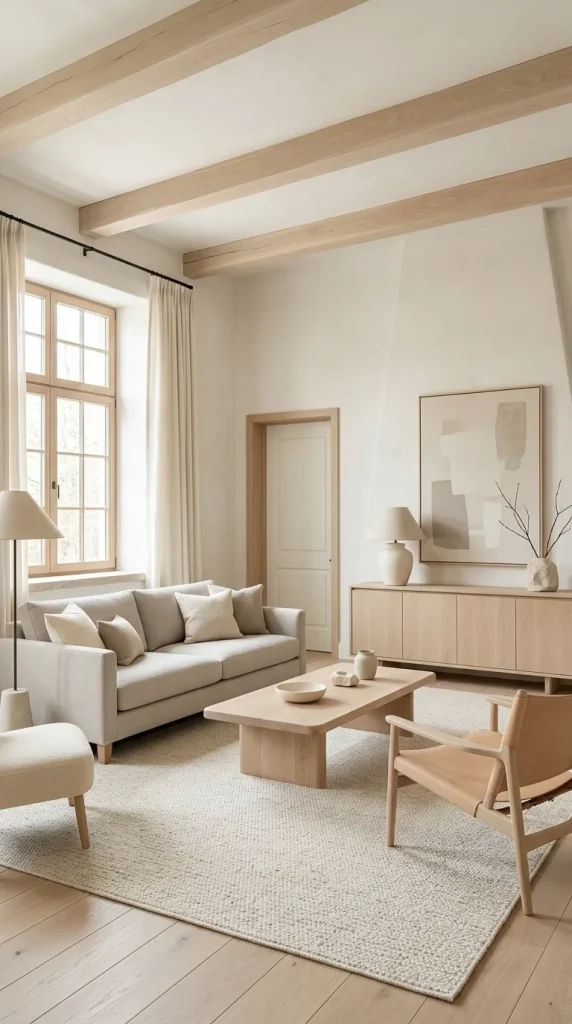
26. Make Modern Farmhouse Grey and Brown Feel Cleaner
A modern farmhouse interpretation works best when the room retains plenty of light. Use warm white or pale grey walls with oak beams, medium-brown wood furniture and a grey or cream sofa.
Brown leather can work well through one chair, particularly if the main sofa is fabric. Black metal may provide definition through a curtain rod or light fixture but should not dominate the room.
Choose linen curtains and a large textured rug rather than multiple small rustic accessories.
The goal is to let wood, simple upholstery and architectural elements establish the farmhouse direction rather than filling the room with themed decor.
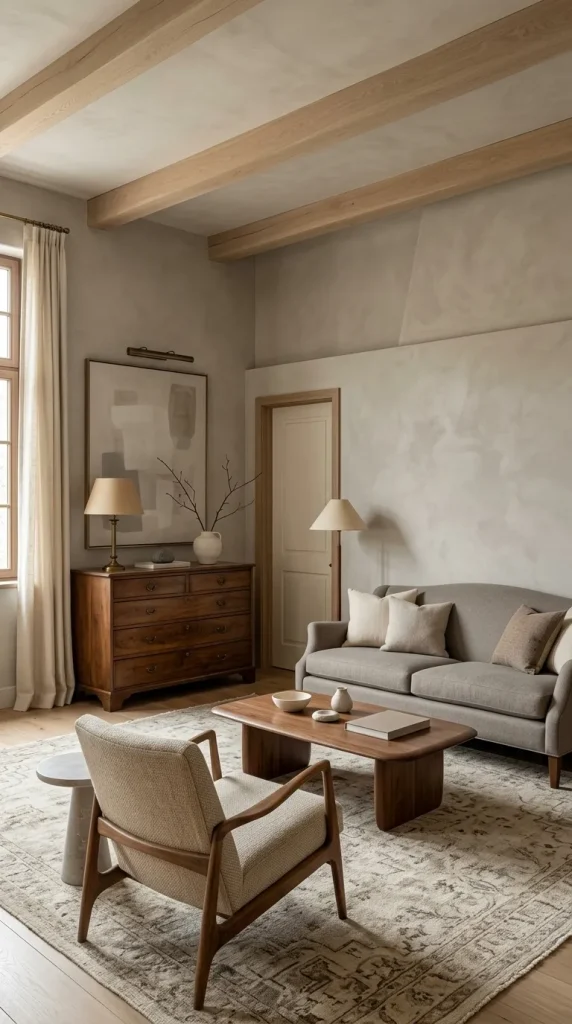
27. Use Vintage Furniture to Give the Palette More Character
Vintage and traditional rooms are particularly compatible with grey and brown because brown can arrive naturally through older timber furniture.
Pair a warm-grey wall with a vintage walnut or mahogany-style chest, classic upholstered sofa and faded patterned rug containing cream, muted brown and perhaps a little rust or blue.
Use aged brass through lighting or picture frames rather than polished gold. Framed artwork should have enough scale to relate to the furniture beneath it.
A grey wall can be useful here because it prevents all the dark timber from making the room feel overly traditional. It creates a cleaner backdrop without erasing the warmth of the furniture.
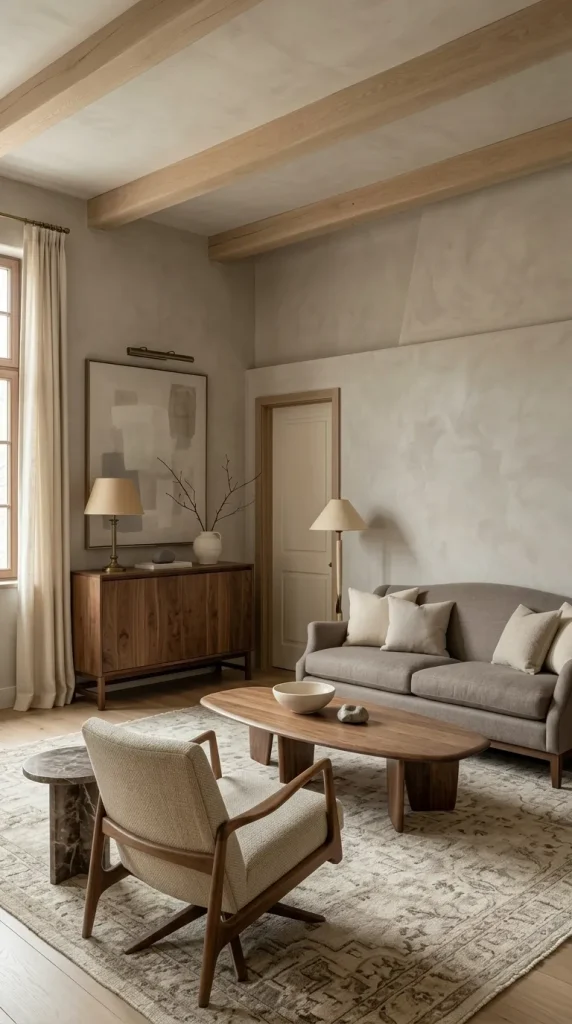
28. Create an Elegant Grey and Brown Room With Better Materials, Not More Glam
If you want the palette to feel luxurious, prioritise proportion and material quality rather than filling the room with shiny gold accessories.
Consider a soft charcoal or mushroom sofa, large walnut table, cream wool rug, marble side table and full-length curtains. Aged brass lighting can provide a warm metallic note without becoming the theme.
A larger artwork or mirror will usually contribute more to the sense of scale than many small accessories.
The room should still have tonal relief. Walnut, charcoal, dark brown and brass all carry weight, so cream upholstery, curtains or rug surfaces are useful counterbalances.
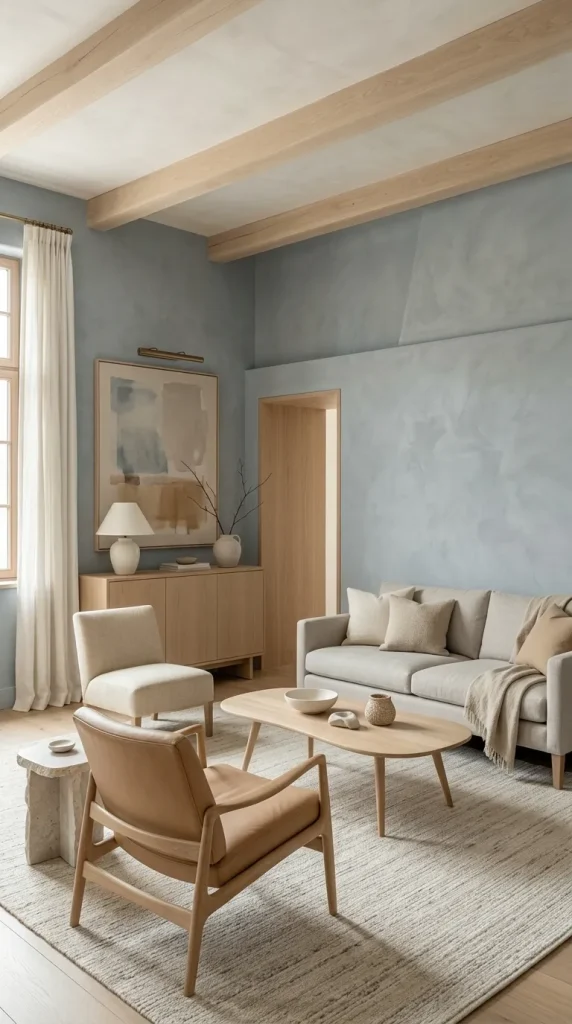
29. Use Blue-Grey, Tan and Light Oak for a Softer Direction
Blue-grey can work with brown when the brown is relatively light and warm. Tan, camel and light oak are better partners than heavy espresso in this softer interpretation.
Try muted blue-grey walls, a tan chair, light oak table and neutral-grey sofa. Warm white curtains preserve daylight and keep the room from becoming overly cool.
This direction can feel relaxed and slightly coastal-adjacent when linen and woven materials are used, but there is no need for obvious nautical styling.
If the blue-grey wall appears noticeably cool, repeat a small amount of warmth near it through timber, art or textiles so the temperature difference feels intentional.
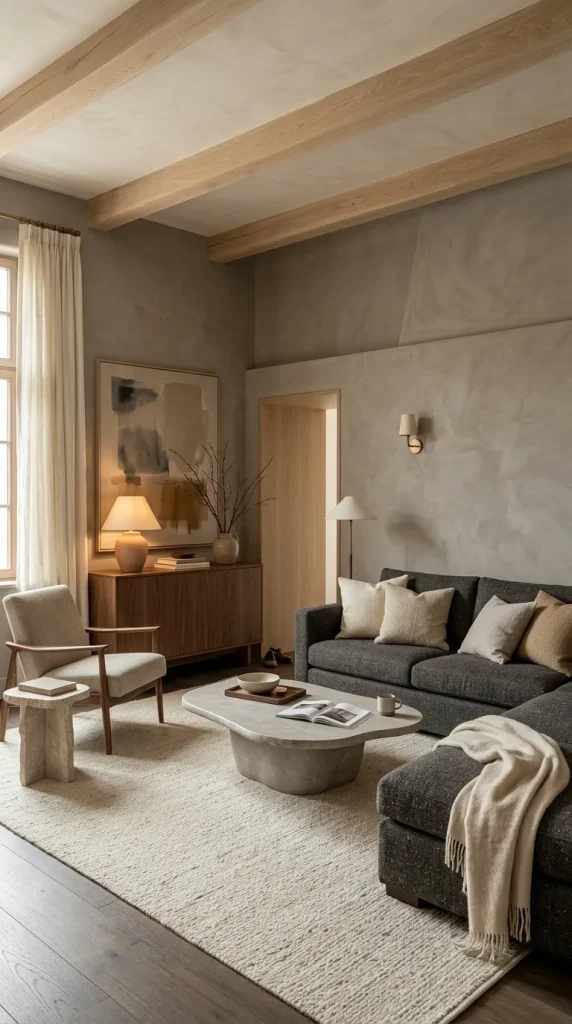
30. Start With the Furniture You Already Own
One of the most useful ways to approach grey and brown is to stop designing the imaginary perfect room and identify which major pieces you cannot or do not want to replace.
If you already own a charcoal sectional, ask what is making it look heavy. A dark floor, undersized grey rug and black TV unit may be the bigger problem. Changing the rug to warm ivory and replacing or refinishing one dark table may transform the relationship without touching the sofa.
If you inherited a brown leather couch, it may look dated because it sits with matching brown tables, beige walls and weak lighting. Warm-grey or mushroom walls, a larger cream rug, a walnut or stone table and lighter curtains can change the entire room around it.
The same principle applies to grey flooring, oak cabinets, walnut shelving or an adjoining grey kitchen. Begin with the fixed element, identify its undertone and visual weight, then decide whether grey or brown needs to lead. Decorating around what you already own is often more successful—and more realistic—than trying to rebuild the entire palette from scratch.
How to Choose the Right Grey and Brown Combination
The first decision is not whether grey and brown work together. They do. The more useful question is which grey and which brown belong together.
Warm grey, mushroom, greige and taupe transition naturally into camel, walnut, mocha and many medium browns. Stone grey can work with oak and cognac. Charcoal handles richer brown particularly well because the contrast feels intentional.
Cool blue-grey can still work, but it usually needs a lighter or less orange brown. Tan, weathered oak and muted brown-grey are easier companions than very yellow wood.
Dark combinations need the most discipline. Charcoal plus espresso, for example, can look sophisticated in a bright room but oppressive if the floor, curtains and media furniture are also dark.
Look at the undertone before the colour name. Two items described as grey may be completely different once one reveals blue undertones and the other appears beige or violet.
Should Grey or Brown Be the Dominant Colour?
There is no requirement for a 50/50 split.
A grey-led room might use a grey sofa or grey walls as the main field, with brown introduced through walnut furniture, leather, flooring and smaller natural materials.
A brown-led room may already have hardwood flooring, brown leather seating or dark wood architecture. Grey can then cool the composition through upholstery, walls, rugs or stone.
The strongest rooms usually have one visual hierarchy. When every major surface is trying to represent both colours equally, the palette can become busy despite containing only neutrals.
A useful starting point is to identify your largest fixed surface. If you have a large charcoal sectional, grey is already visually important. If the room has dark brown hardwood and walnut built-ins, brown may already be the dominant family before any furniture is added.
Best Bridging Neutrals for Grey and Brown
| Bridging neutral | Works especially well with | What it contributes | Main risk |
|---|---|---|---|
| Warm cream | Charcoal, chocolate, walnut | Light and warmth | Too much can remove contrast |
| Ivory | Dark brown leather, medium grey | Softer relief than bright white | Yellow undertones may clash with cool grey |
| Greige | Grey sofa, warm wood | Connects both temperature families | Can become muddy if every surface is greige |
| Mushroom | Walnut, charcoal, taupe | Sophisticated mid-tone transition | Needs lighter surfaces nearby |
| Oatmeal | Grey upholstery, brown floors | Soft textile warmth | Can disappear beside beige furniture |
| Taupe | Brown furniture, grey stone | Naturally bridges grey and brown | Undertones vary significantly |
| Warm white | Rooms already rich in grey and brown | Clean visual relief | Cool white can exaggerate temperature differences |
Cream is often the safest option when the room feels too dark. Taupe and mushroom are particularly useful when the problem is not darkness but a noticeable disconnect between cool grey and warm wood.
What Colour Rug Works Best in a Grey and Brown Living Room?
The rug should usually solve a problem rather than simply repeat the palette.
If you have a grey sofa on a grey floor, use a warm ivory, oatmeal, taupe or patterned rug to create separation. If a brown leather sofa sits on dark timber flooring, a lighter rug is even more important.
A faded Persian-style rug can work beautifully when it contains several muted tones such as cream, brown, grey, rust or olive. Pattern is useful because it connects separate furniture colours without requiring an exact match.
Jute can work in lighter organic rooms, but consider comfort and texture if the main seating area is used frequently. Wool generally gives more softness and visual depth.
A very small rug often fragments the seating arrangement. Where the room allows, choose a size that lets at least the front legs of the sofa and main chairs rest on it.
What Curtains Work With Grey and Brown?
Curtain colour should respond to the room’s existing visual weight.
In charcoal-and-dark-brown rooms, cream, oatmeal or flax linen curtains can bring lightness to the perimeter. In pale grey rooms with oak furniture, taupe or warm beige curtains can deepen the palette slightly.
Charcoal curtains can work in large, bright modern rooms where lighter walls and furniture provide enough contrast. Heavy chocolate-brown curtains are harder to use because they can make the room feel dated when brown is already present through flooring and furniture.
Tonal curtains that closely match the wall can create a calm, enveloping effect, but they can also flatten the room if every surrounding surface is similar in value.
Mounting curtains higher than the window frame where architecture allows can emphasise vertical space, particularly in apartments and compact rooms.
Best Accent Colours for Grey and Brown Living Rooms
You do not need multiple accent families. One controlled direction is usually enough.
Cream and ivory are the strongest choices when the room needs light and softness.
Navy gives a sophisticated cooler accent and works particularly well with walnut and cognac.
Olive and sage connect naturally to brown woods and warm grey through an organic colour relationship.
Rust and burnt orange add energy to charcoal, chocolate and walnut without requiring bright colour.
Mustard and muted ochre can animate darker schemes, especially when the room contains charcoal or chocolate brown.
Black is useful for thin structural details—frames, curtain rods, lamp bases or a fireplace surround—but should be restrained when the room already contains dark grey and espresso.
Aged brass works as a warm finish rather than a major colour. It can enliven grey while complementing walnut, cognac and mocha.
The key is restraint. Grey, brown, cream and olive form a coherent room. Grey, brown, cream, navy, olive, orange, yellow, teal and gold competing at the same time usually do not.
What Should You Avoid in a Grey and Brown Living Room?
Using Only Mid-Tone Neutrals
A room containing medium grey, taupe, medium brown, greige and beige can sound coordinated but still look flat because there is too little tonal separation.
Include a clear light value, a darker anchor or both.
Pairing Icy Grey With Very Orange Brown Without a Bridge
A blue-grey sofa beside yellow-orange timber can make both undertones look stronger. Introduce cream, taupe, mushroom or another transitional neutral between them.
Sometimes replacing one small surface is enough. A warm rug between the sofa and floor can completely change the relationship.
Making Every Major Surface Dark
Charcoal walls, espresso flooring, chocolate seating, dark curtains and a black media unit may individually look attractive, but together they place visual weight everywhere.
Decide where the darkness belongs. If the walls and floor are dark, consider lighter upholstery. If the sofa is charcoal and the flooring is brown, use a lighter rug and walls.
Buying a Complete Matching Furniture Set
Grey-and-brown rooms usually look richer when furniture pieces relate without matching exactly.
A grey sofa, cognac chair and walnut table can feel collected and intentional. A complete brown suite or identical grey furniture set often makes a neutral room look more generic.
Matching the Rug to the Sofa
The rug does not have to contain the exact sofa colour.
Its more important job may be creating contrast between the sofa and floor, connecting several furniture pieces or introducing a bridging neutral.
Using Only Hard Materials
Dark leather, wood, metal and tile can create a severe room even when the colours themselves are warm.
Introduce wool, linen, bouclé, curtains, upholstered chairs or a textured rug to change how the room feels physically as well as visually.
Assuming Grey and Brown Must Look Rustic or Masculine
The palette has no fixed style identity.
Pale oak and light grey can feel Scandinavian. Walnut, marble and mushroom can feel elegant. Charcoal and cognac can look contemporary. Dark timber and patterned rugs can feel traditional. The materials, furniture profiles and architecture define the style—not the fact that grey and brown are present.
How to Make a Grey and Brown Living Room Feel Cozy
Coziness comes from material and light more than from simply making the palette darker.
Use a rug large enough to anchor the seating rather than a small decorative mat. Add curtains even when blinds already provide privacy if the architecture suits them. Bring different tactile surfaces together: leather against wool, linen beside timber, smooth stone beside bouclé.
Then look at the room after sunset.
One bright ceiling fixture often leaves corners dark while making the centre uncomfortable. Layer a floor lamp beside the sofa, a table lamp elsewhere and perhaps sconces or picture lighting where appropriate. The separate pools of illumination give brown wood more warmth and prevent grey walls from becoming flat.
How to Make Grey and Brown Look Modern
Reduce unnecessary repetition.
Instead of scattering many brown objects around the room, use one or two substantial brown elements such as a walnut media console and cognac chair. Let grey occupy a larger simple surface such as the sofa or wall.
Use clean furniture profiles, larger-scale artwork and fewer but more intentional decorative objects.
Modern does not mean removing all softness. A cream wool rug, linen curtain or textured upholstered chair can keep strong architectural lines from becoming cold.
How to Use Grey and Brown in an Open-Plan Living Room
Start by identifying which colour already dominates the adjoining zone.
If your kitchen cabinets are grey, you do not need another wall of grey in the living area. Repeat grey through upholstery or a smaller detail, then introduce brown through wood, leather or flooring.
If the kitchen has substantial brown cabinetry, use grey seating and cream surfaces in the living room while repeating the kitchen’s wood tone once or twice.
A rug can establish the boundary of the seating zone without creating a visual wall. Furniture placement can help as well: a floating sofa with a slim console behind it creates a more deliberate transition between kitchen and living areas.
Avoid making one zone completely cool and the next completely warm. A small repeated colour or finish is usually enough to create continuity.
Frequently Asked Questions
Do grey and brown really go together in a living room?
Yes. They work particularly well because grey can add coolness and structure while brown introduces warmth and natural depth. The important part is choosing compatible undertones and creating enough contrast between the major surfaces.
What shade of grey goes best with brown furniture?
Warm grey, mushroom, greige and many stone greys are particularly forgiving with brown furniture. Light warm grey works well with deep brown pieces, while charcoal can look excellent with cognac or walnut when the room includes lighter surfaces for balance.
What colour rug works with a grey sofa and brown floor?
Warm ivory, oatmeal, cream, taupe or a faded patterned rug combining grey and brown are all useful options. The rug should create visible separation between the sofa and floor rather than disappear into either one.
Can I use grey and brown in a small living room?
Yes. Furniture scale and visual weight matter more than simply avoiding dark colours. Use appropriately sized seating, maintain clear walkways and avoid concentrating several dark surfaces in the same part of the room.
What colour curtains work with grey and brown?
Cream, warm white, oatmeal, flax and taupe are among the most adaptable options. Darker charcoal curtains can work in large bright spaces. Choose the curtain according to whether the room needs more lightness, warmth or depth rather than automatically matching the sofa.
Does a brown leather sofa work with grey walls?
Yes, particularly when the grey has warm, neutral or mushroom undertones. Add cream, wool, linen and natural wood to soften the leather and prevent the room from feeling dominated by hard, dark surfaces.
What wood works best in a grey living room?
Oak is useful for lighter schemes, while walnut works particularly well with medium grey and charcoal. Espresso furniture creates much more visual weight, so it generally needs lighter walls, flooring or rugs nearby.
Should I add black to a grey and brown room?
Black can sharpen the palette through smaller structural elements such as frames, lamps, curtain rods or table bases. Use it carefully if the room already includes charcoal grey and dark brown because large black surfaces may make the combination unnecessarily heavy.
Final Thoughts
The most important decision in a grey and brown living room is not whether the two colours match. It is deciding where each colour should carry visual weight.
Grey may belong on the sofa while brown comes through walnut and leather. Brown may dominate through hardwood and existing furniture while warm-grey walls provide relief. Cream may need to separate two dark surfaces. A rug may be more important than another accessory because it prevents the sofa from merging into the floor.
Once you stop treating grey and brown as two generic colours and start looking at undertone, material, proportion and light, the palette becomes far more flexible. It can be modern, cozy, natural, dramatic, traditional or minimal without losing its identity.
The goal is not to make everything match. It is to create enough connection for the room to feel intentional and enough contrast for every important surface to remain visible.