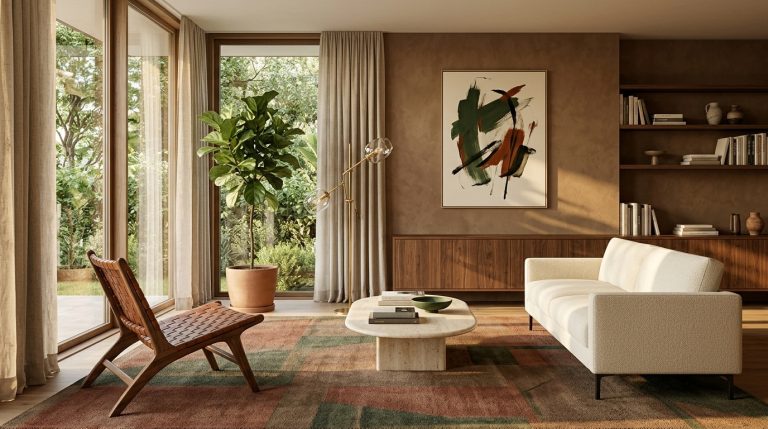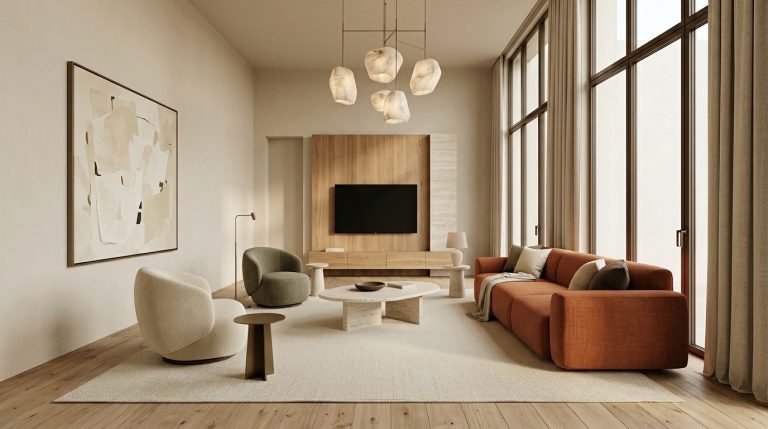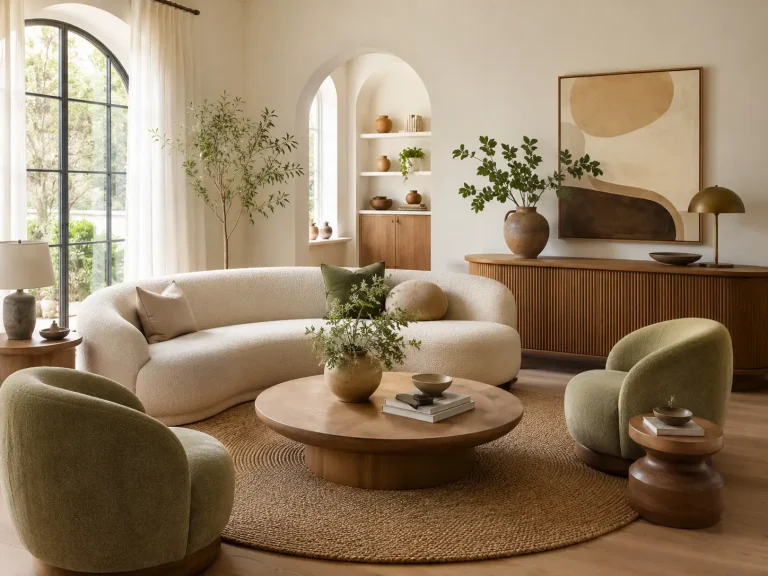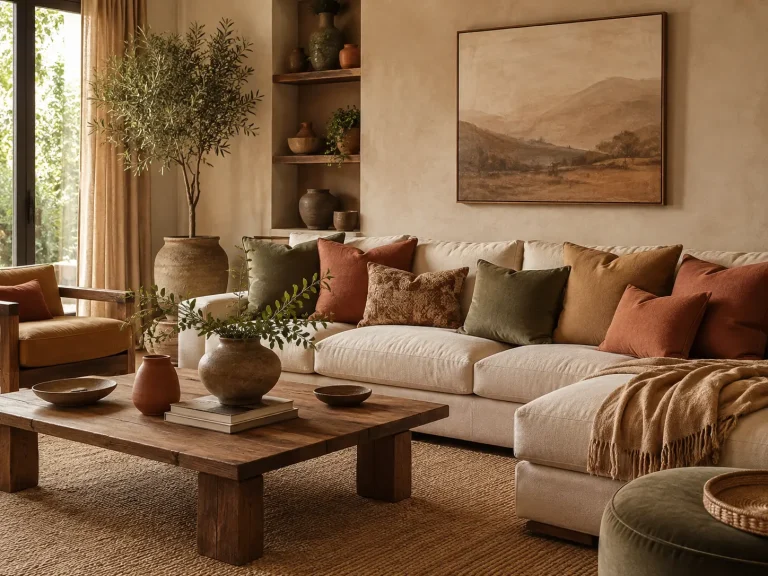
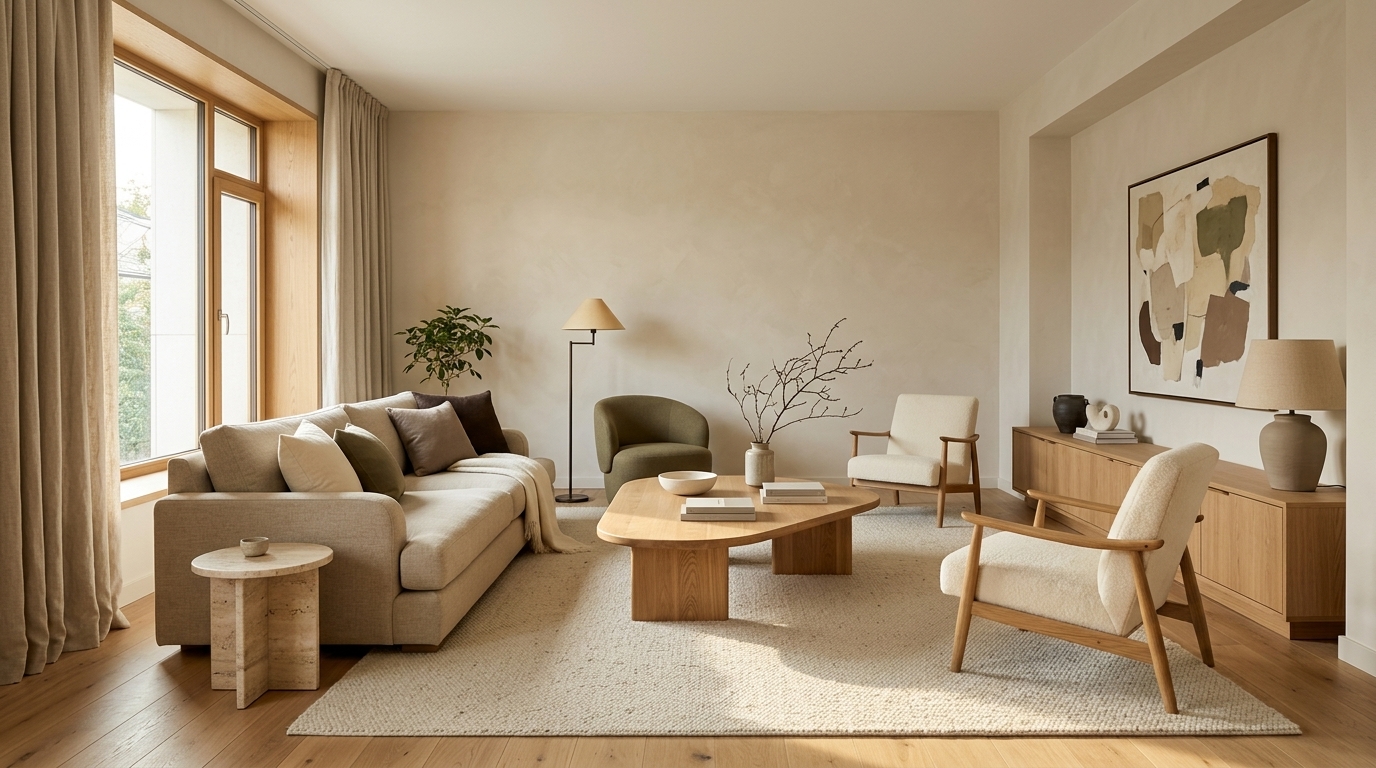
30 Living Room Ideas With Oak for Warm, Modern and Beautiful Spaces
Oak has a way of making a living room feel grounded almost immediately. Whether it appears underfoot as wide-plank flooring, across a low TV unit, around the windows as original trim or in a substantial coffee table, the grain and warmth of oak bring a natural quality that works across surprisingly different interior styles.
The challenge is that oak is not one single colour or look. Pale white oak can feel soft and contemporary, honey oak can introduce strong golden warmth, red oak may carry pink or reddish undertones, and dark oak creates much more visual weight. Those differences affect everything around the wood, from wall colour and sofa upholstery to rugs, metal finishes and lighting.
That is why the best living room ideas with oak begin with the specific oak already in the room. Instead of treating wood as an isolated material, the strongest spaces coordinate its undertone with the surrounding colour palette and then introduce enough contrasting texture to keep the room from feeling overly wooden.
These 30 ideas explore oak furniture, flooring, trim, TV units, sideboards and architectural details in genuinely different living rooms, from pale Japandi spaces and earthy green interiors to cosy honey-oak rooms, dramatic dark-oak schemes and more traditional settings.
Start With the Oak Tone You Already Have
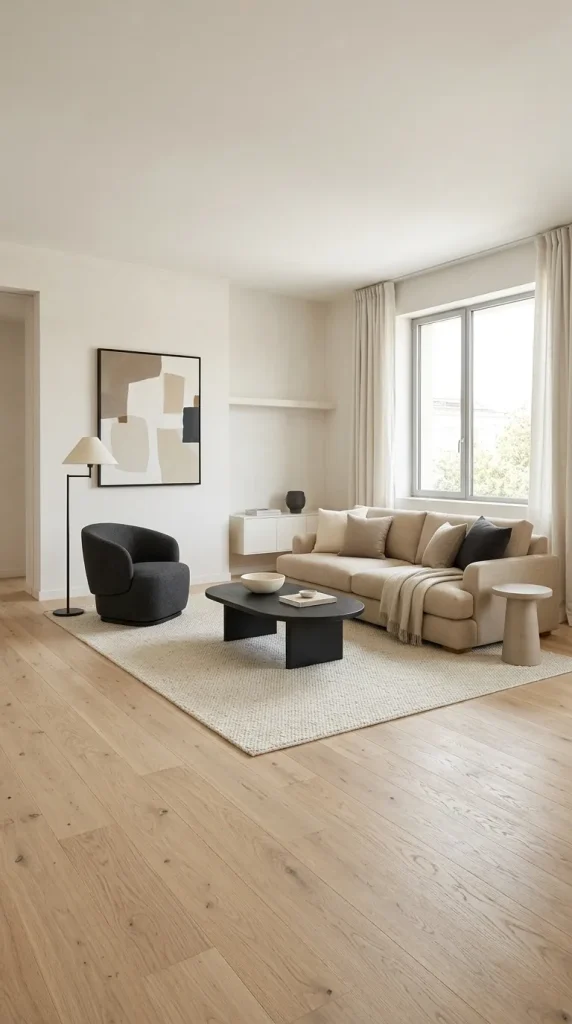
1. Build a Soft Modern Living Room Around Light Oak Floors
Light oak flooring creates one of the most flexible foundations for a contemporary living room because it introduces warmth without visually weighing down the room.
Pair it with a warm white or soft cream wall colour, a low beige sofa and one or two darker accents to create definition. Black lighting, a charcoal armchair or a dark coffee table can prevent the pale surfaces from blending into one another.
A textured wool rug adds softness while still allowing enough flooring to remain visible around its edges. Keep the larger furniture relatively simple so the natural grain of the floor becomes part of the room rather than disappearing beneath too many competing finishes.
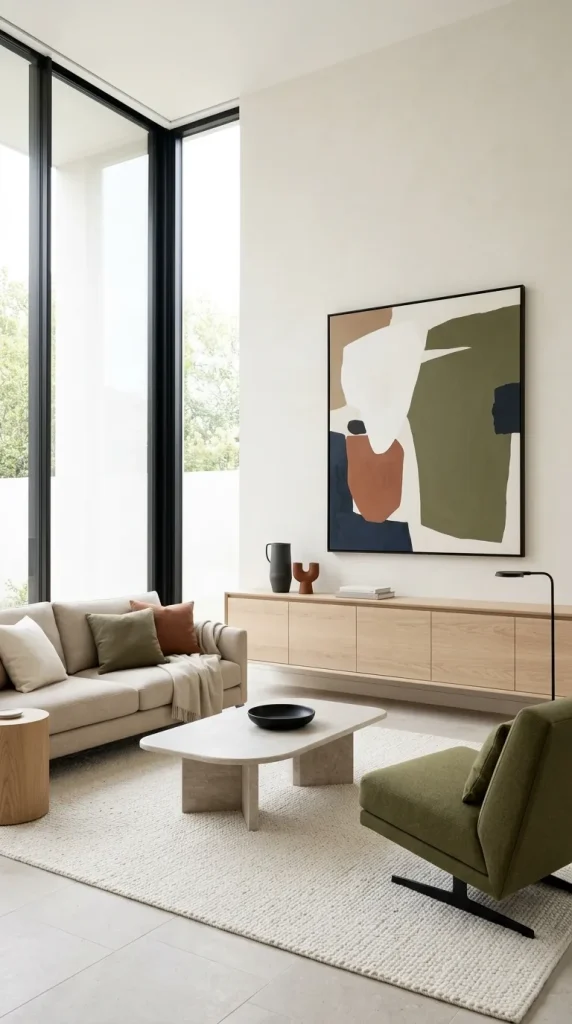
2. Use White Oak for a Bright Contemporary Interior
White oak has a pale, natural appearance that works especially well in contemporary rooms with clean furniture lines.
Try white oak flooring or a white oak media unit alongside off-white walls, beige upholstery and one strong black architectural detail. A dark floor lamp, slim black frame or charcoal side table can give the room enough contrast to feel intentional.
Do not assume white oak requires an entirely beige room. Muted olive, rust, navy or a large colourful artwork can give the palette far more personality while keeping the wood feeling fresh.
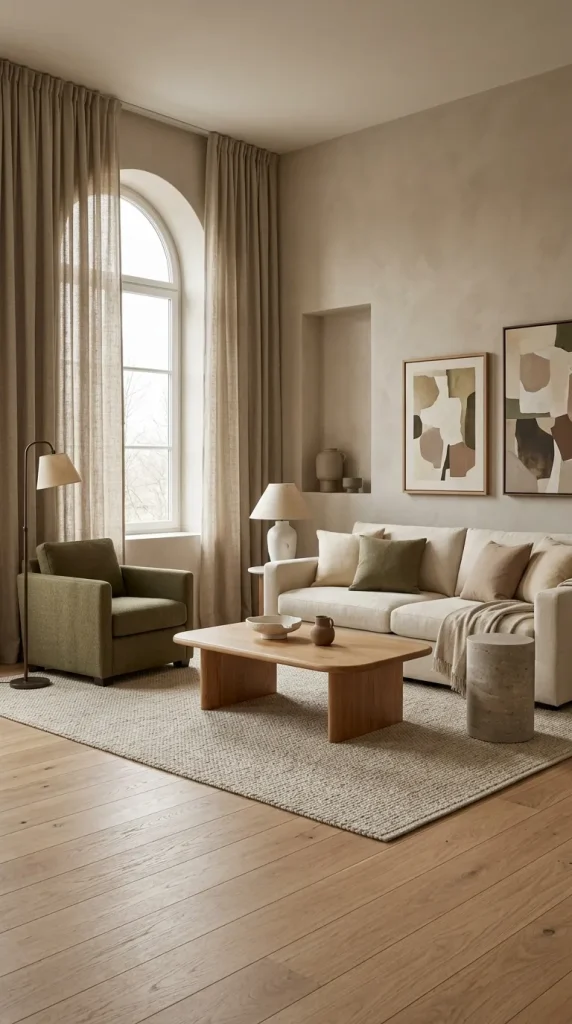
3. Create an Earthy Living Room With Natural Oak
Natural oak sits comfortably between very pale and highly golden finishes, which makes it especially versatile.
Combine natural oak flooring with a cream sofa, olive armchair and stone or ceramic accessories. Linen curtains and a soft woven rug reinforce the tactile quality of the wood without making the room feel rustic.
This approach works particularly well in earthy contemporary interiors because oak becomes the material that connects the different pieces. The furniture does not need to match exactly as long as the undertones remain compatible.

4. Modernise Honey Oak Instead of Hiding It
Honey oak often feels dated because of the colours traditionally paired with it, not because the wood itself is inherently old-fashioned.
If your living room has honey-oak floors, trim or furniture, remove overly yellow beige from the surrounding palette. Cleaner warm-white walls, an olive sofa, a cream rug and black lighting can make the wood feel dramatically more current.
The black details help sharpen the golden oak, while cooler green provides controlled contrast. The result still feels warm but no longer looks overwhelmingly yellow.
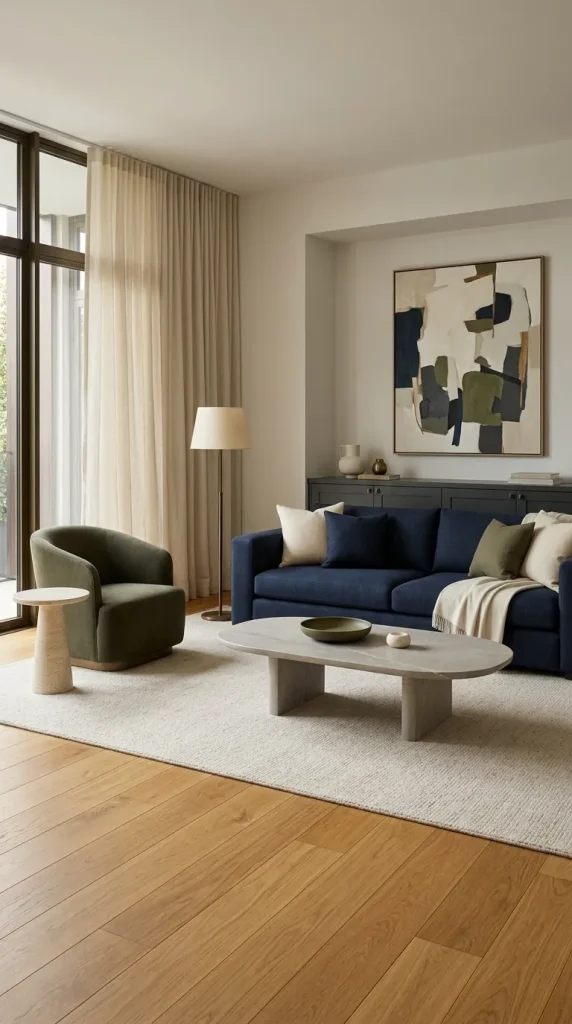
5. Balance Golden Oak With Deeper Colours
Golden oak is slightly richer and more saturated than many natural oak finishes, so it often benefits from stronger surrounding colours.
A golden-oak floor can look beautiful with deep olive, navy or charcoal furniture. Keep a lighter cream or warm-white element in the room so the palette does not become too heavy.
A navy sofa, for example, creates sophisticated contrast against golden flooring while cream curtains and a lighter rug connect the cool upholstery back to the warm wood.

6. Work With the Undertones of Red Oak
Red oak needs more careful colour coordination because its grain can contain noticeable pink or reddish warmth.
Muted greens can be particularly effective because they visually balance those undertones. A red-oak floor with sage walls, cream upholstery and dark bronze lighting can feel calm and natural.
Certain soft blues can work as well, but always test paint samples beside the actual floor. A wall colour that looks neutral elsewhere may reveal unexpected pink or violet undertones once it sits next to red oak.
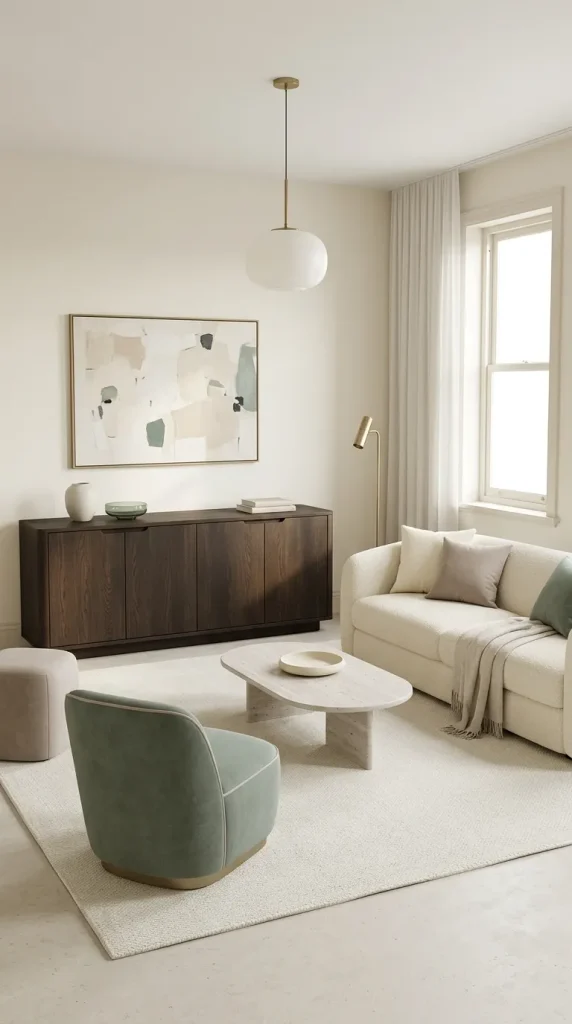
7. Use Dark Oak as a Strong Grounding Element
Dark oak can create an elegant, sophisticated living room when it is given enough lighter contrast.
A dark-oak sideboard or flooring works beautifully beside warm ivory walls, a cream sofa and a substantial pale rug. Add soft taupe, muted green or brass lighting to create depth without introducing too many dark elements.
In smaller rooms, use dark oak selectively. One substantial dark piece can establish the mood without making every surface feel visually heavy.
Coordinate Oak With Colour
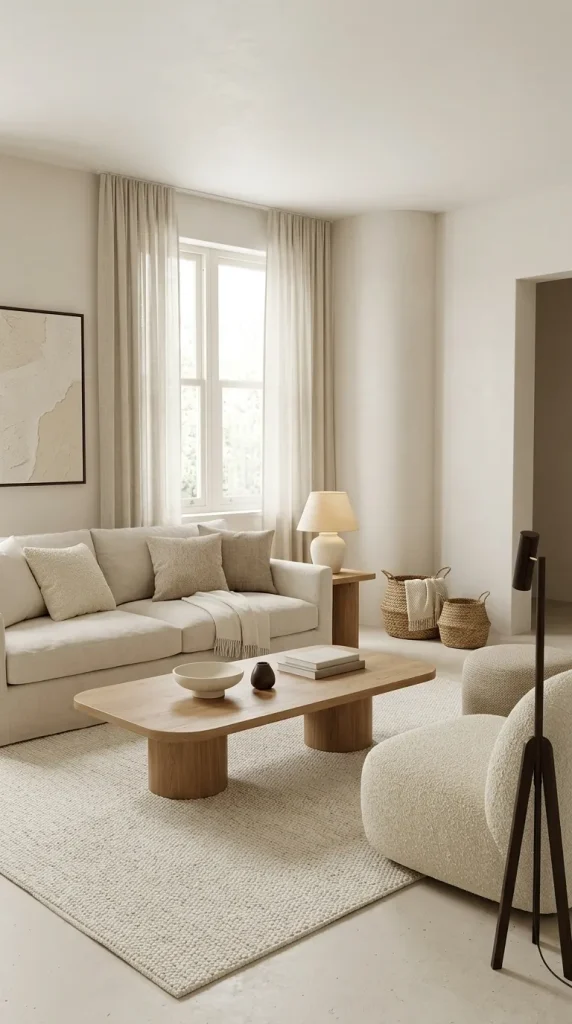
8. Pair Oak With Cream for a Soft, Cosy Living Room
Cream and oak create one of the easiest warm combinations, but texture is essential if you want the result to feel layered rather than flat.
Combine a cream sofa with an oak coffee table, ivory wool rug and linen curtains. Introduce variation through bouclé, woven baskets, ceramic objects and a darker timber or black accent.
The palette stays calm, while the different surfaces create enough contrast to prevent the room from becoming a sea of beige.
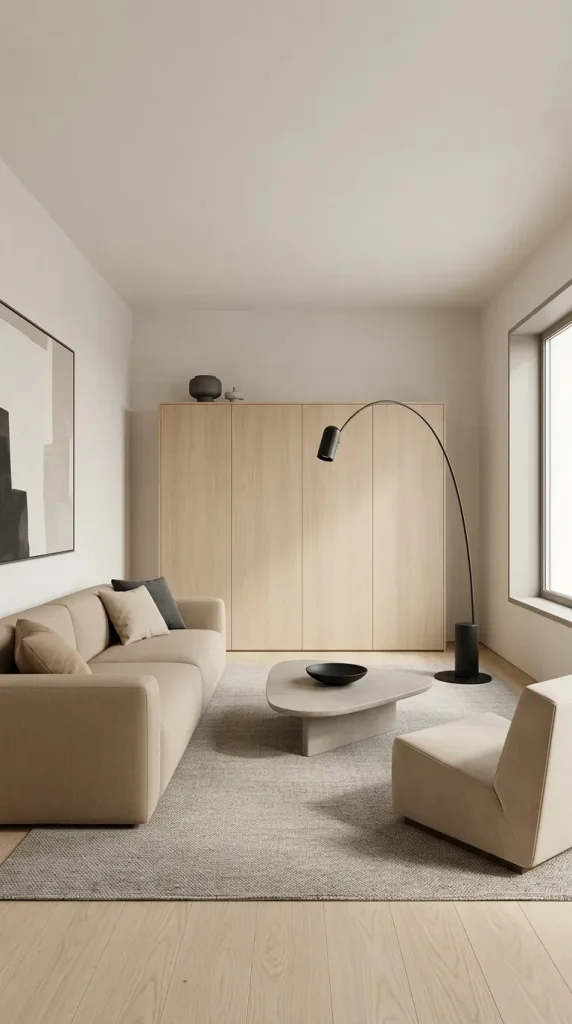
9. Use Beige and Oak for Warm Minimalism
Beige and oak are natural partners in warm minimalist interiors.
Choose a beige sofa, pale oak media unit and light wood flooring, then introduce a sculptural black floor lamp or charcoal artwork to provide definition. Keep decorative objects limited and let the proportions of the furniture create most of the visual interest.
If everything is tan or pale wood, the room may feel washed out. One darker material or muted colour is usually enough to give the design structure.
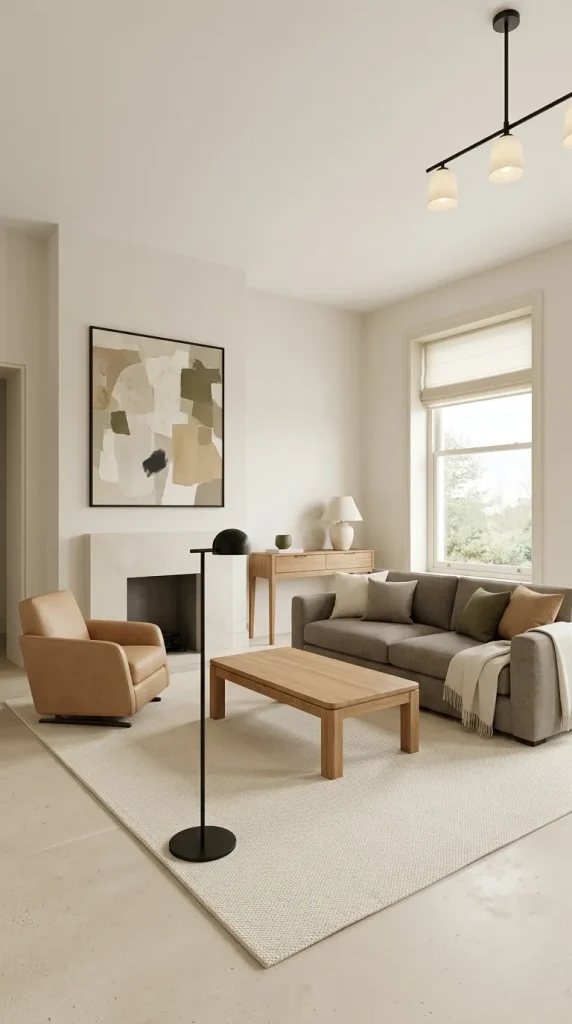
10. Combine Oak With Warm Grey
Grey can work beautifully with oak when the undertones relate.
Warm grey and greige are especially suitable beside natural, honey and golden oak because they create a quieter contrast than cooler blue-grey. Try warm-grey upholstery with oak furniture, a cream rug and black metal lighting.
Avoid using five different grey surfaces simply because the sofa is grey. Oak already provides warmth, so introduce cream, olive or camel to make the overall palette more dimensional.
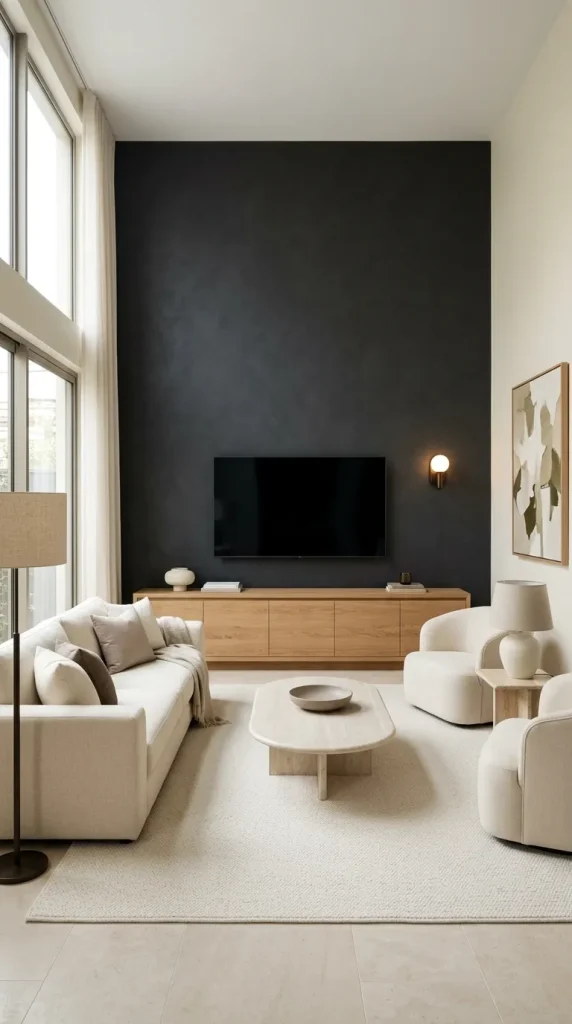
11. Use Charcoal and Oak for a More Dramatic Modern Room
Charcoal creates sharper contrast and can make oak feel much more architectural.
A charcoal feature wall behind a natural-oak TV unit can frame the television and emphasise the warmth of the cabinet. Cream upholstery and a lighter rug prevent the darker wall from dominating the room.
This combination works especially well where natural light is good. Warm lamps are important in the evening so the charcoal does not make the space feel overly severe.
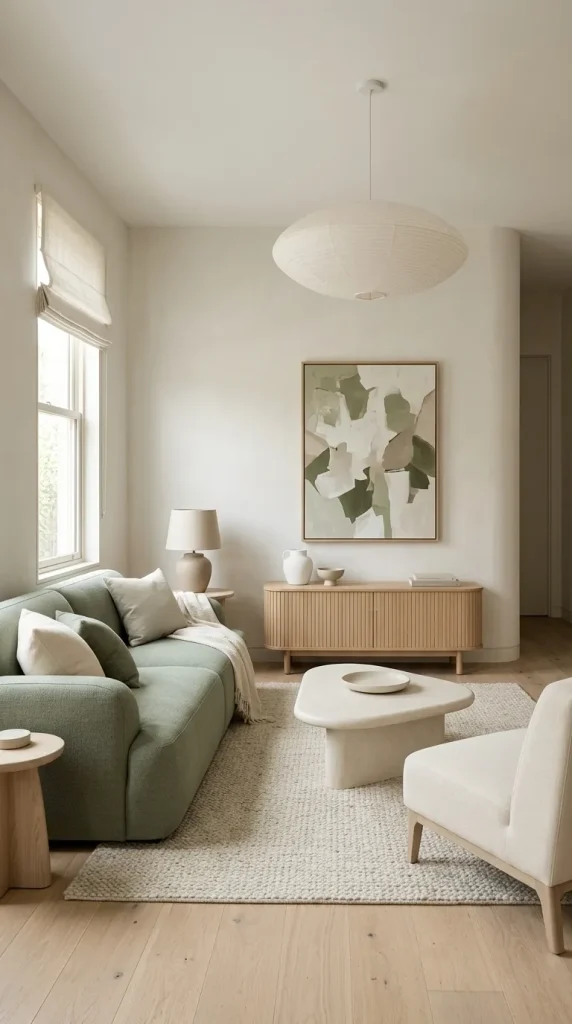
12. Pair Sage Green With Pale Oak
Sage and pale oak create a calm, natural living room with a softer character than traditional green-and-wood interiors.
Use sage on the sofa or walls, then bring in pale oak through flooring, side tables or a media console. Cream textiles and simple ceramics keep the palette gentle.
This is particularly effective in Japandi, Scandinavian and contemporary natural interiors where the room needs colour but still feels restrained.
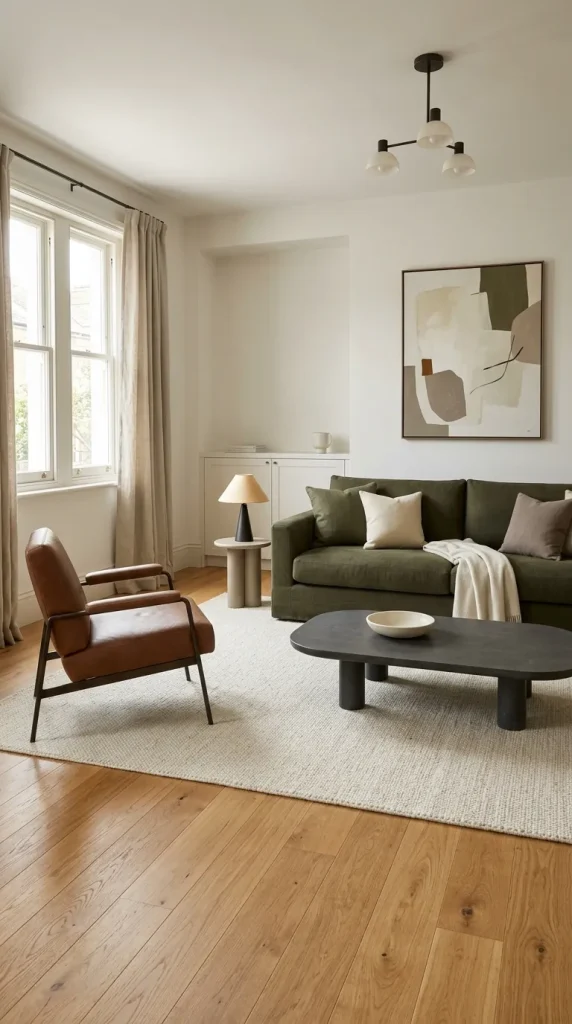
13. Combine Olive Green With Honey Oak
Olive and honey oak share a rich earthy warmth, making them particularly suited to cosy living rooms.
An olive sofa against warm-white walls can look beautiful above honey-oak flooring. Add a cream rug, dark metal lighting and perhaps a cognac leather chair for another layer of warmth.
Because both the oak and green are visually substantial, keep smaller accessories relatively quiet.
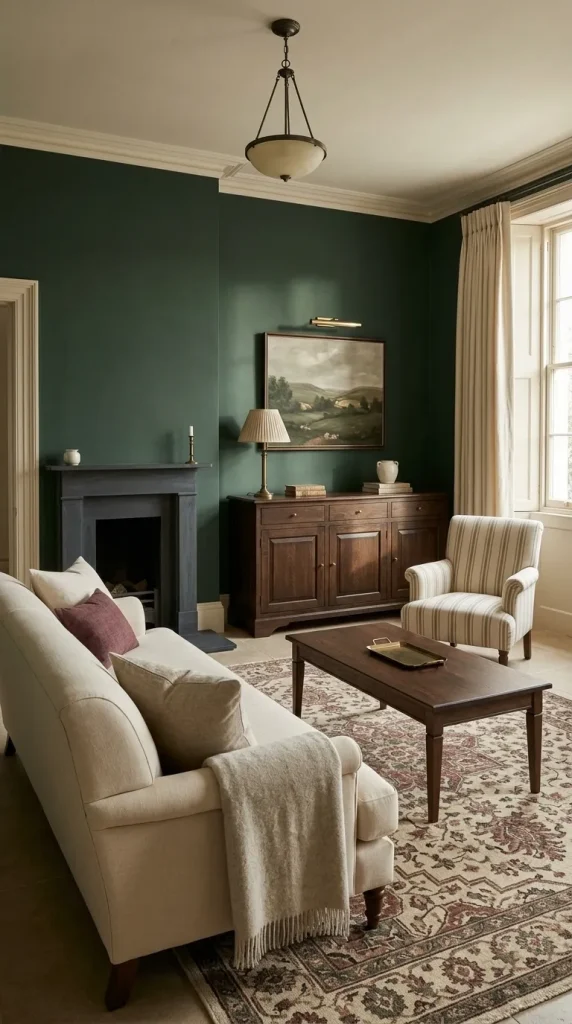
14. Use Forest Green With Dark Oak for a Rich Traditional Look
Deep forest green creates a very different atmosphere from sage or olive.
Pair dark oak furniture with deep-green walls or upholstery, then introduce warm cream, antique brass and a traditional patterned rug. The combination feels grounded and sophisticated.
This direction suits older properties or rooms with architectural details particularly well, but the furniture should still be proportioned carefully so the result does not become overly heavy.
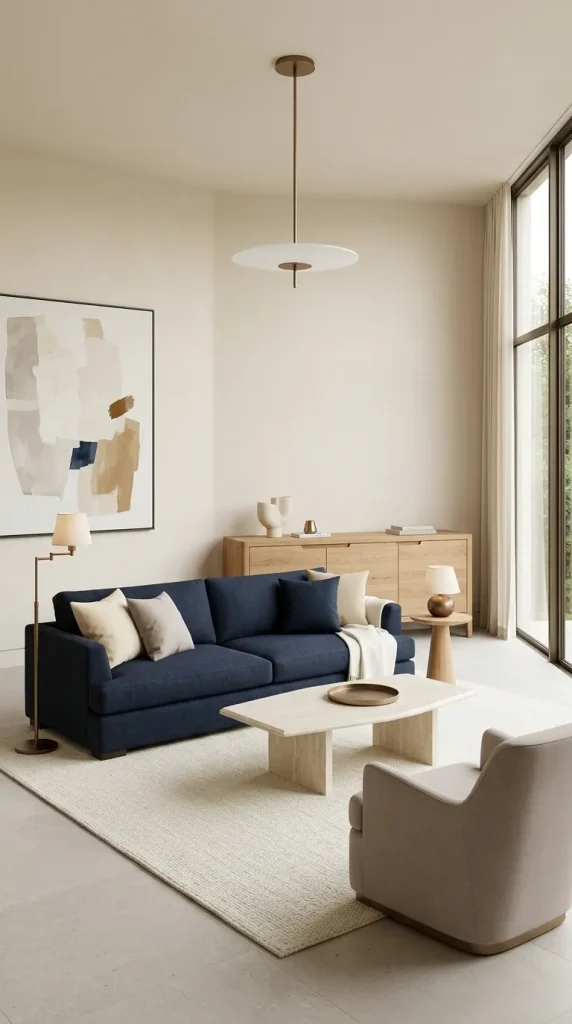
15. Pair Navy With Natural Oak
Navy introduces cool depth against the warmth of oak.
A navy sofa beside natural-oak flooring or a substantial oak sideboard can feel tailored and sophisticated. Cream cushions, an ivory rug and warm lighting soften the contrast.
Use black sparingly if the navy is already very dark. Brass or bronze can provide a warmer metallic detail and help connect the upholstery to the wood.
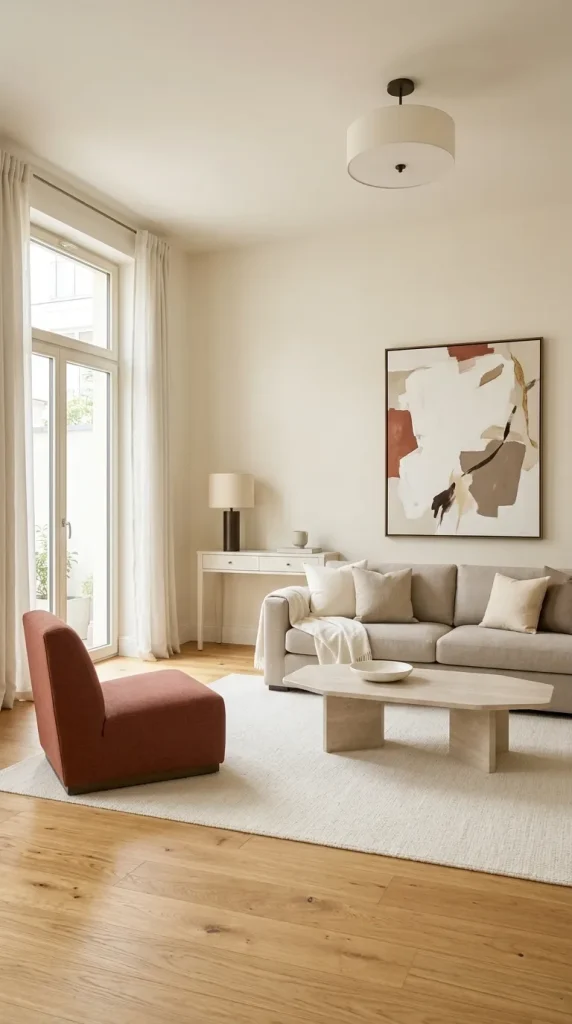
16. Use Warm White With Oak for a Bright, Flexible Base
Warm white is one of the easiest wall colours to use around oak, particularly honey and golden finishes.
The slightly creamy undertone helps the wood feel warm without making it appear more yellow. Pair warm-white walls with an oak floor, neutral sofa and one stronger accent through artwork, lighting or a chair.
A stark blue-white can sometimes exaggerate the warmth of golden oak by contrast, so compare samples directly against the wood before committing.
Create Strong Modern Oak Combinations
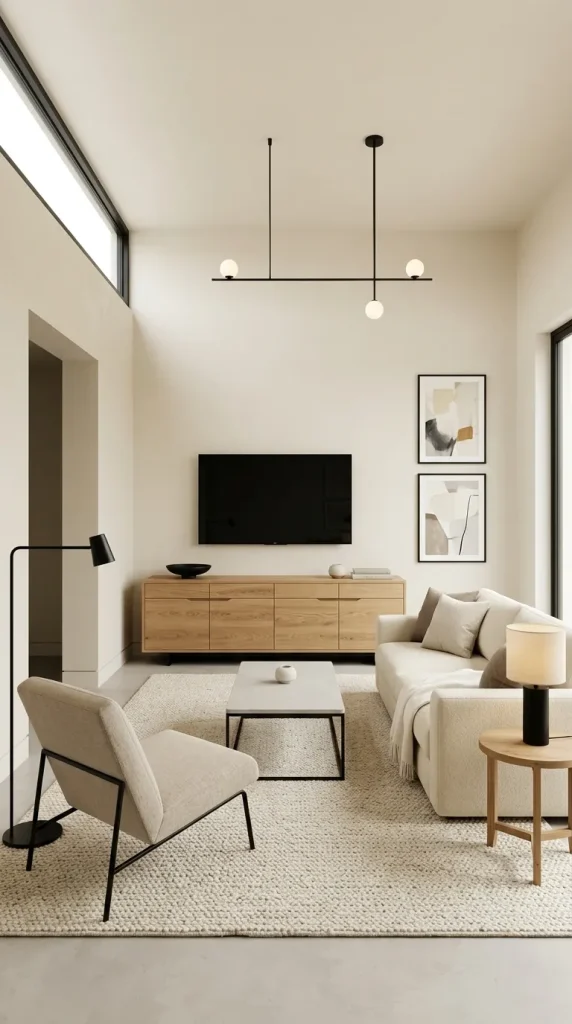
17. Combine Natural Oak and Black for a Sharp Modern Living Room
Oak and black are one of the strongest modern combinations because the materials perform opposite visual roles.
Oak provides warmth and texture, while black adds structure. Try a natural-oak media unit with black lighting, black picture frames and slim metal furniture.
Introduce cream upholstery and a textured rug to keep the room from feeling stark. This palette works especially well in modern, minimalist and Japandi interiors.
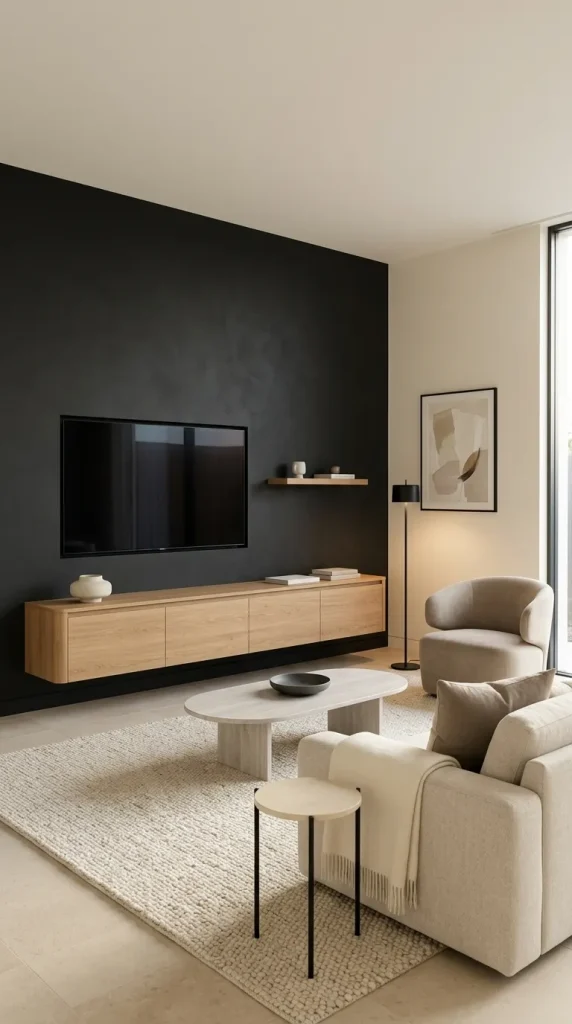
18. Design a Black TV Wall With an Oak Media Unit
A black television can look like an isolated dark rectangle when the surrounding wall and furniture do not relate to it.
Use an oak TV unit beneath the screen, then repeat black through a floor lamp, artwork frame or side-table legs. A dark painted wall can make the screen recede visually, while the oak prevents the composition from becoming too cold.
Keep shelves and decorative objects restrained so the television and cabinet remain the clear focal point.
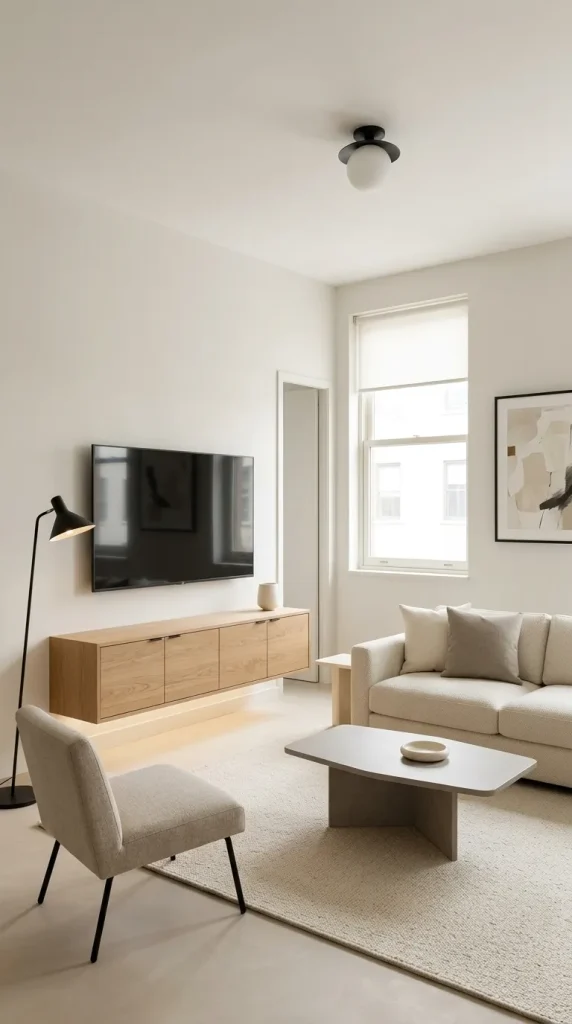
19. Use an Oak Floating TV Unit in a Small Modern Living Room
Floating oak cabinetry can make a compact room feel lighter because more floor remains visible beneath it.
Choose a relatively slim unit with enough storage for equipment and everyday clutter. Pair it with pale walls, a compact sofa and a rug that defines the seating area.
Black hardware or lighting can modernise the oak, while closed storage keeps the room visually calm.
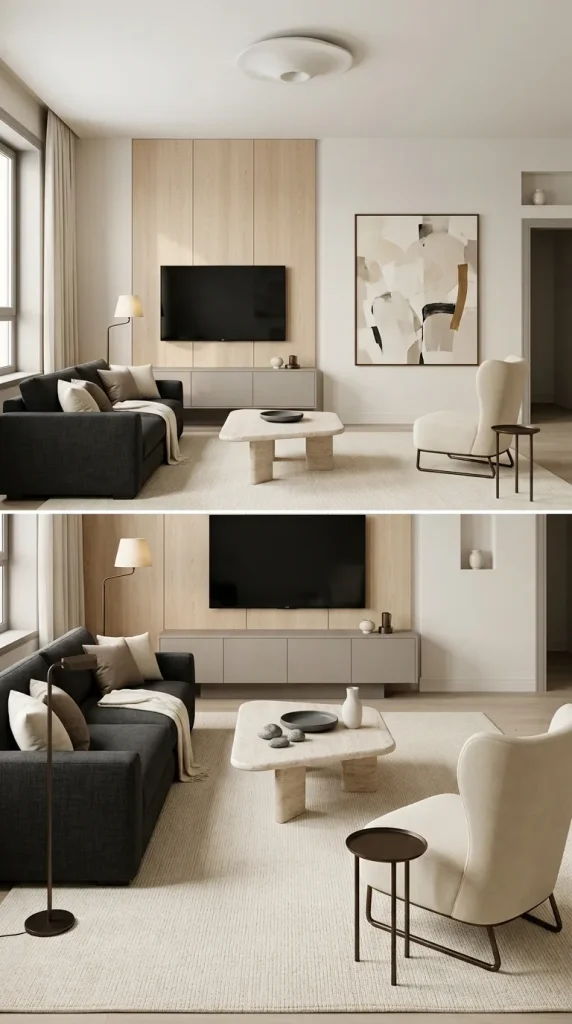
20. Introduce Oak Wall Panels Without Covering the Entire Room
Oak wall panels can create a polished contemporary feature, but they do not need to extend across every wall.
Use them behind the television, around a small architectural recess or on one section of a longer wall. Keep surrounding surfaces painted so the timber remains visually distinct.
A pale-oak panel with a charcoal sofa and cream rug feels modern, while darker oak can create a richer, more dramatic focal point.
Style Oak Furniture Without Making Everything Match
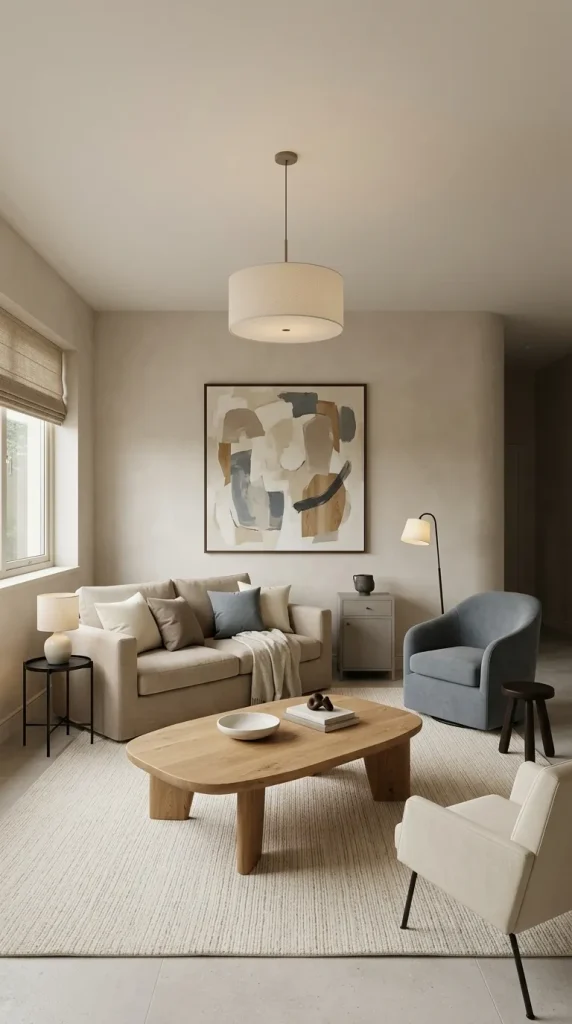
21. Use an Oak Coffee Table as the Main Wood Accent
An oak coffee table is one of the easiest ways to introduce the material because it sits at the centre of the seating arrangement.
Choose a size that relates properly to the sofa and rug. A substantial solid-oak table can anchor a larger room, while a slimmer design with lighter legs works better in compact spaces.
You do not need matching oak side tables. Black metal, painted furniture or a darker timber can create a more layered room as long as the overall palette feels connected.
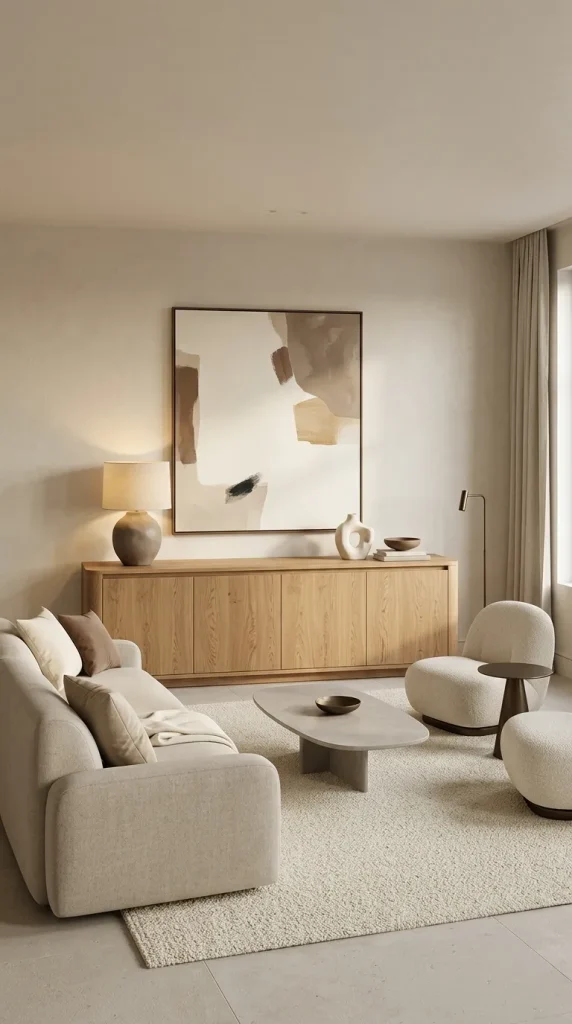
22. Style an Oak Sideboard as a Living Room Focal Point
An oak sideboard provides both storage and a natural place for artwork and lighting.
Place one substantial painting or mirror above it, then add a lamp and a few ceramics rather than covering the entire surface. The wood grain should remain visible.
A sideboard works particularly well along a long wall or behind the seating area, where it can create structure without taking over the main conversation space.

23. Mix Different Oak Furniture Tones Instead of Buying a Matching Set
An oak room does not need a perfectly matched coffee table, media unit and sideboard.
Slight variation can make the interior feel more natural. A pale-oak media unit can sit comfortably with a slightly darker natural-oak coffee table if both share similar undertones.
Use upholstery and rugs to separate the wood surfaces visually. The goal is repetition, not exact duplication.
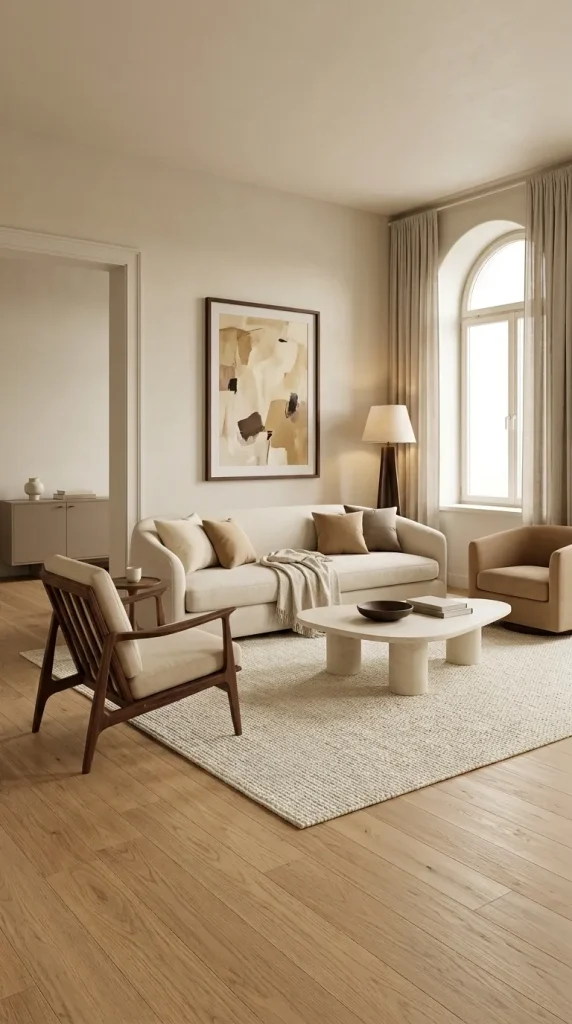
24. Mix Oak With Walnut for a More Layered Interior
Oak and walnut can work together beautifully because the contrast gives the room more depth.
Use oak as the dominant wood, perhaps through flooring or a media cabinet, then introduce walnut through one smaller table or occasional chair.
Repeat the darker walnut tone through artwork frames or lighting so it does not feel like a random furniture mismatch. Keeping the undertones compatible matters more than matching the wood species exactly.
Make Oak Flooring a Design Feature

25. Let Herringbone Oak Flooring Become the Main Pattern
Herringbone flooring already introduces movement, so the rest of the living room can afford to be more restrained.
Pair it with a cream sofa, muted-green armchair and a simple coffee table. Use a plain or lightly textured rug rather than a busy geometric design that competes with the floor.
Traditional mouldings can make herringbone feel classic, while simpler furniture and black accents can push the same flooring toward a more contemporary direction.
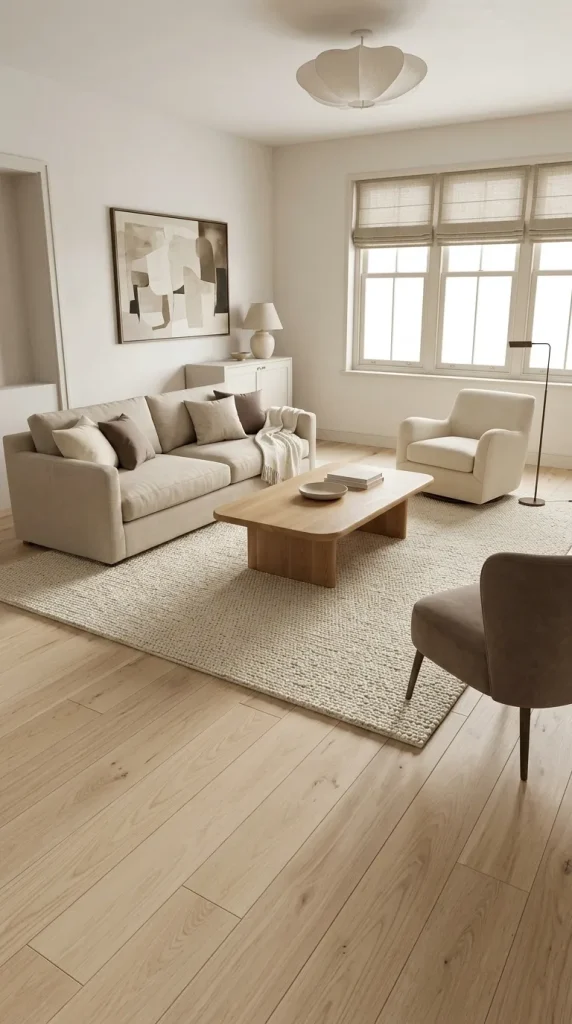
26. Style Oak Furniture on Oak Floors With Deliberate Contrast
Wood-on-wood works best when there is enough difference in tone or texture to separate the furniture from the floor.
Place a slightly darker oak coffee table on pale flooring, or use a lighter oak media unit with medium-toned floors. A substantial rug helps create visual separation and gives the seating area a clear boundary.
Avoid trying to match the furniture exactly to the flooring. Near-identical wood tones can sometimes make the room feel flatter than deliberately varied finishes.
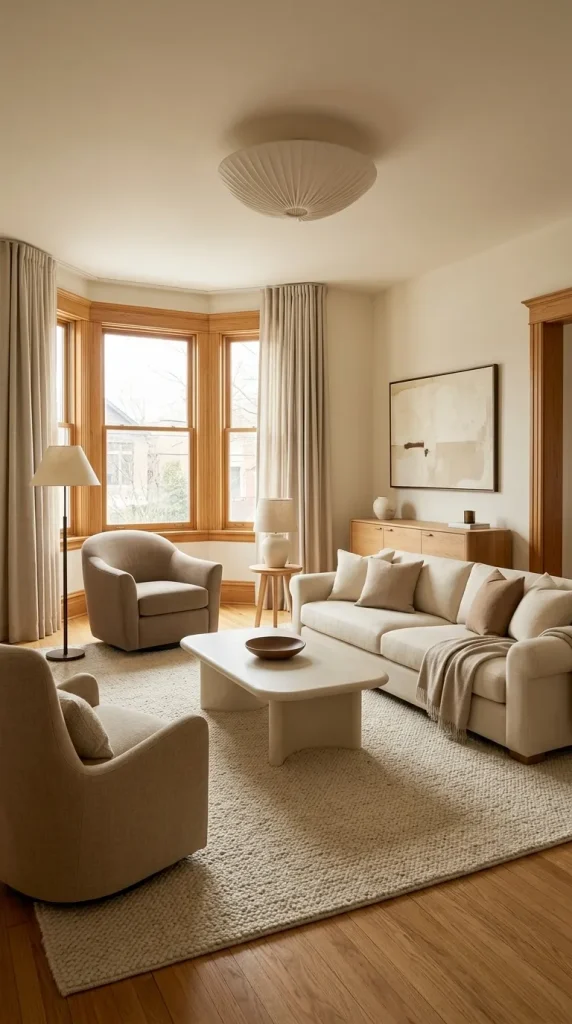
27. Use a Cream Rug to Soften an Oak-Heavy Living Room
When oak appears across the floor, furniture and architectural trim, textiles become essential.
A large cream or oatmeal rug can interrupt the amount of visible wood while making the seating area feel more comfortable. Add upholstered furniture and curtains to create additional softness.
Choose a rug colour that supports the oak’s undertone. Extremely cool grey can sometimes feel disconnected beside very warm honey or golden floors.
Work With Oak Architecture and Awkward Layouts

28. Make Oak Trim Feel Intentional With the Right Wall Colour
Original oak trim can become an attractive architectural feature when the surrounding paint supports it.
Warm white, soft greige and muted green are useful starting points, but the correct choice depends on the trim’s exact undertone. Honey-oak trim often looks more current beside a cleaner warm white than beside yellow-beige walls.
Paint samples should always be viewed directly against the trim in both daylight and evening light. Changing the wall colour alone can dramatically alter how orange, pink or golden the wood appears.

29. Use Oak Shelving and Cabinets to Make Alcoves Useful
Oak can turn awkward alcoves into deliberate architectural features.
In a traditional living room, natural or darker oak shelves can sit on either side of a fireplace, with closed cupboards below for storage. In a modern room, pale-oak cabinetry can create a cleaner, more integrated appearance.
The two alcoves do not always need to be identical. One can hold books while the other contains a television or decorative objects, as long as the material and proportions create enough continuity.
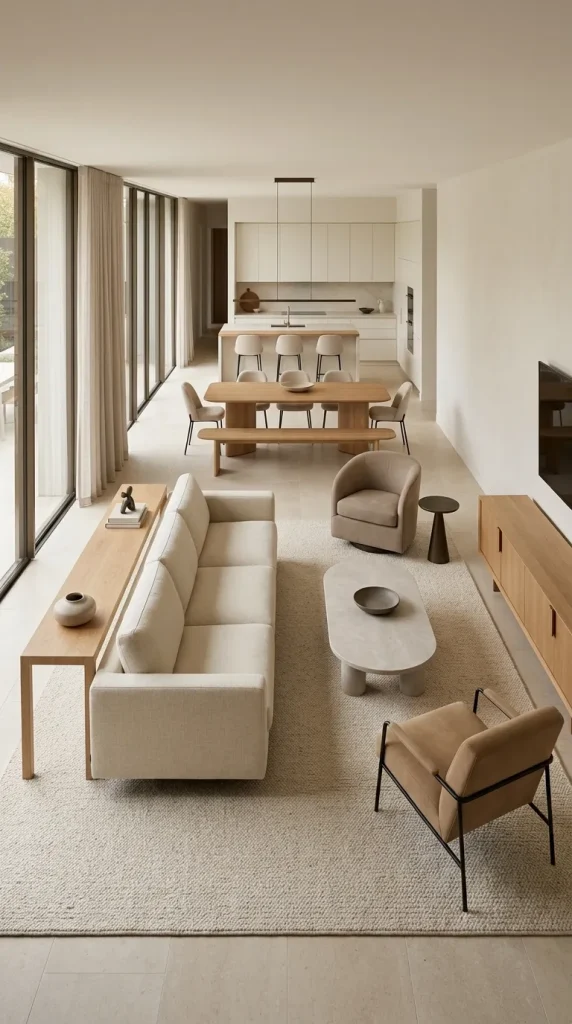
30. Define a Long or Open-Plan Living Room With Oak Furniture
Oak furniture can help organise a room even when there is no obvious wall or architectural boundary.
Place a narrow oak console behind the sofa to define the edge of the seating area, or use a low oak media cabinet to anchor the opposite side. In an open-plan room, related oak tones can continue into the dining table or kitchen without requiring every piece to match.
Break up the wood with upholstered seating, rugs, stone and black metal so the room does not become visually monotonous. Oak should provide continuity while other materials create the contrast that makes each zone distinct.
How Different Oak Finishes Change the Room
Understanding the finish you are working with makes colour and furniture choices much easier.
| Oak type | Visual character | Colours that often work well |
|---|---|---|
| Light oak | Airy, contemporary, soft | Cream, beige, sage, black |
| White oak | Natural, pale, refined | Off-white, olive, charcoal, warm neutrals |
| Natural oak | Balanced and versatile | Beige, navy, olive, cream |
| Honey oak | Golden and warm | Warm white, olive, soft blue, charcoal |
| Golden oak | Rich and saturated | Cream, navy, camel, deeper green |
| Red oak | Pink/red undertones | Muted green, warm neutrals, selected blues |
| Dark oak | Grounded and dramatic | Ivory, taupe, muted green, warm grey |
| Grey oak | Cooler and contemporary | Cream, camel, olive, black |
These combinations are starting points rather than rigid rules. Natural light, artificial lighting and the specific finish of the wood can significantly affect how colours appear next to oak.
How to Choose Wall Colours for Oak
Wall colour is especially important because it occupies such a large visual area around the wood.
Warm whites can brighten honey and golden oak without creating an overly sharp contrast. Greige can work beautifully with natural oak, particularly in rooms that contain both grey and beige furnishings. Muted greens complement many oak tones because they create a natural relationship with the timber.
Navy can provide strong contrast against warmer oak, while softer blue may help balance reddish undertones. Dark charcoal can create a sophisticated modern effect when there is enough natural light and lighter upholstery.
Always compare samples directly against the actual wood. A paint that appears neutral on one wall can look noticeably pink, green or grey beside a particular oak finish.
Benjamin Moore Pale Oak is also worth distinguishing from pale oak timber. Pale Oak is a paint colour, while pale oak wood is a natural material with grain and varying undertones. They may work together in some rooms, but they are not interchangeable terms.
How to Keep an Oak Living Room From Feeling Too Wooden
A room with oak floors, oak trim, an oak sideboard and an oak coffee table can quickly become visually repetitive if every large surface uses the same material.
Break up the timber with upholstery, rugs and painted surfaces. Cream linen, wool, bouclé and leather can add softness. Black metal provides crisp contrast, while brass creates a warmer, more traditional effect.
Stone and ceramics can also introduce useful material variation. Travertine, limestone-look surfaces and substantial ceramic lamps work particularly well in modern natural interiors because they complement oak without adding another wood tone.
The goal is not to minimise the oak but to give it enough contrasting materials to stand out.
Common Mistakes When Decorating With Oak
Trying to match every wood finish exactly. Related undertones usually create a more natural room than a complete matching furniture suite.
Ignoring the oak’s undertone. Honey, red, white and dark oak respond very differently to paint and upholstery colours.
Using too many warm beige surfaces around honey oak. This can exaggerate the yellow-orange character of the wood. Cleaner whites, green, black or deeper neutral accents can provide better balance.
Assuming all grey works with oak. Warm greys often suit golden oak better, while cooler grey can work naturally with pale or grey oak.
Using too much timber without contrast. Rugs, upholstered furniture, paint, stone and metal prevent oak-heavy rooms from feeling monotonous.
Replacing older oak automatically. Honey-oak floors, trim and cabinetry can often look far more current once the surrounding wall colour, lighting and textiles are updated.
Frequently Asked Questions
What colours go best with oak in a living room?
Cream, warm white, beige, sage, olive, grey, charcoal, navy and black can all work with oak. The best choice depends on the specific wood tone. Honey and golden oak often respond well to cleaner warm whites and greens, while white oak can work with both soft neutrals and stronger contrast.
How do I make honey oak look more modern?
Change the surrounding colours before considering replacing the wood. Warm-white walls, modern upholstery, a larger neutral rug, black lighting and muted green can make honey oak feel much more current.
Can I put oak furniture on oak flooring?
Yes. The room usually looks more layered when the furniture and flooring differ slightly in tone or finish. Rugs, upholstery and contrasting materials can help separate the different wood surfaces visually.
Does grey go with oak?
Yes, but undertone matters. Warm grey and greige usually work naturally with honey or natural oak, while cooler greys often pair better with white or grey oak. Test the combination directly in the room.
What colour sofa works with oak furniture?
Cream and beige create a warm natural atmosphere, grey feels more contemporary, green reinforces an earthy palette, navy creates stronger contrast, and black gives the room a sharper modern character. Cognac leather also works beautifully with natural oak.
Let Oak Become the Foundation, Not the Entire Theme
The strongest living room ideas with oak use the material to create warmth and continuity without allowing every surface to become timber.
Start by identifying the oak tone you already have. Light and white oak can support brighter modern interiors, while honey and golden oak benefit from colours that either harmonise with their warmth or deliberately balance it. Red oak requires closer attention to undertones, and dark oak needs enough lighter material around it to retain visual balance.
Then build contrast through upholstery, rugs, paint, metal and stone. Let one or two oak pieces repeat the material rather than purchasing a perfectly matched furniture collection.
When colour, scale and texture are handled carefully, oak can feel contemporary, cosy, colourful, minimal or traditional. The material itself does not make a room dated. The way it is combined with everything around it determines the final result.