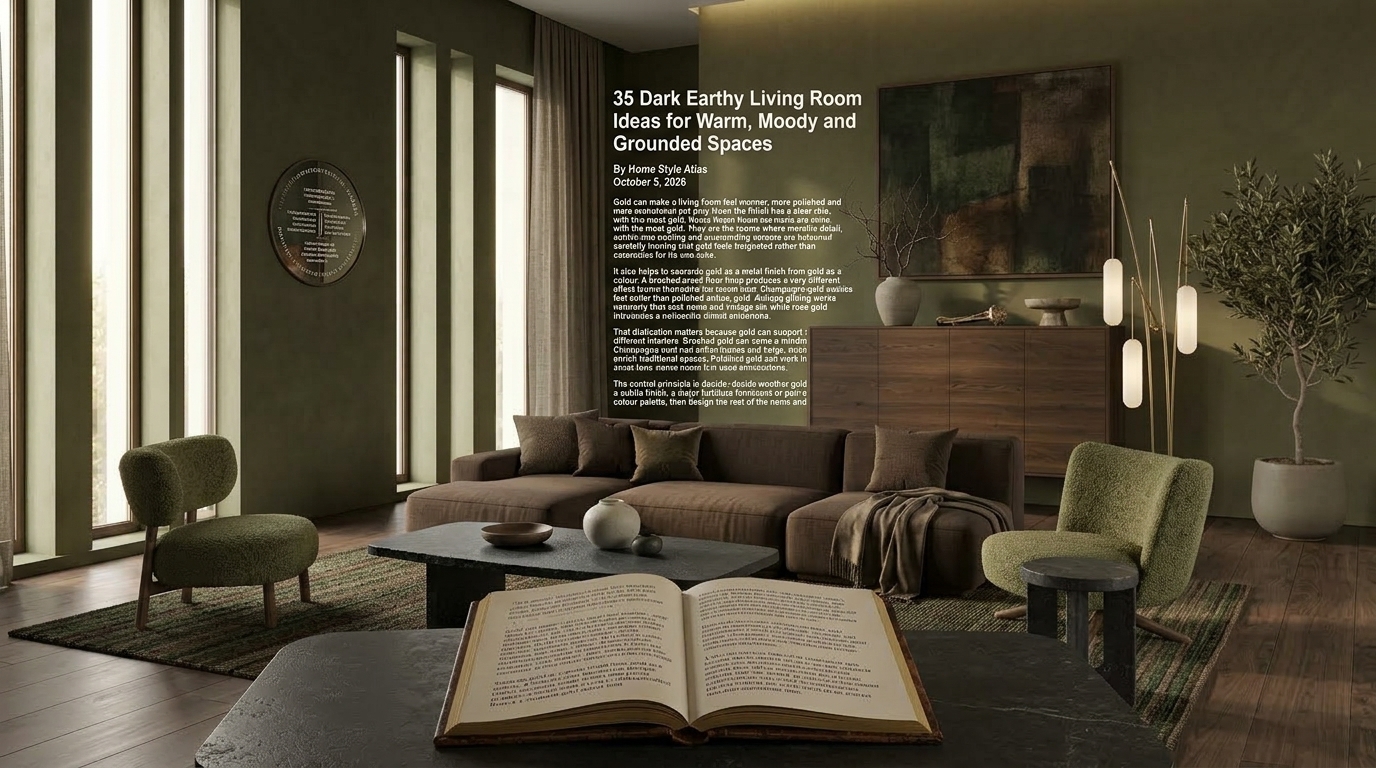
35 Dark Earthy Living Room Ideas for Warm, Moody and Grounded Spaces
A dark earthy living room should feel grounded before it feels dark.
That distinction matters because a room can be charcoal, navy or almost black and still feel cold, glossy or disconnected from nature. What creates the earthy quality is the combination of deeper natural colours with tactile materials: olive, moss, forest green, chocolate brown, espresso, mushroom taupe, dark timber, leather, wool, linen, stone, clay and aged metal.
The best dark earthy living room ideas do not simply make every major surface dark. They decide where the darkness should live.
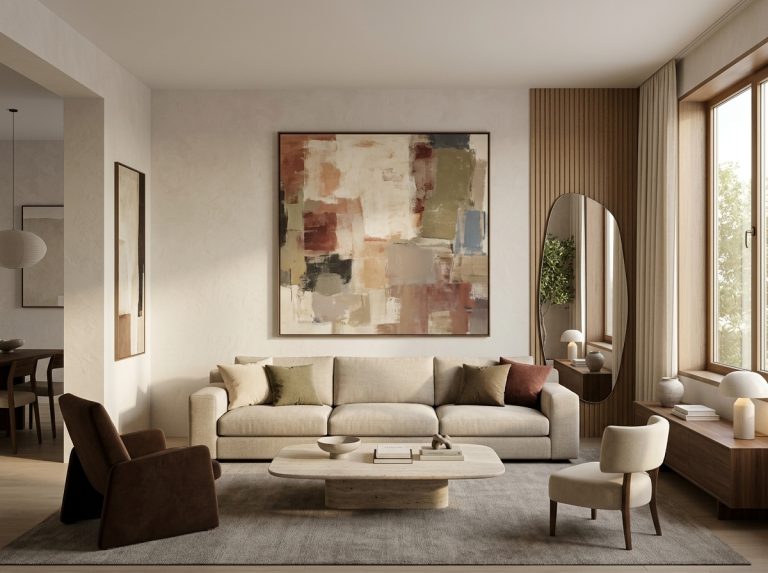
In one room, the walls might be deep olive while the sofa stays cream. In another, warm-white walls can frame a charcoal sectional, walnut shelving and dark curtains. A third room may keep the walls medium taupe but use dark wood flooring, a chocolate sofa and a vintage rug to create depth from below.
That is one of the most useful principles for this style:
Dark walls do not require dark furniture. Dark flooring does not require dark walls. Dark upholstery does not require dark curtains.
When every large surface has the same depth, furniture starts to disappear into the architecture. When dark values are distributed strategically, the room feels atmospheric but still readable.
Material is equally important. A charcoal sofa beside glossy black furniture can feel urban and cool. The same sofa beside walnut, cream wool, olive linen and limestone can feel deeply earthy. A forest-green room filled with synthetic shiny finishes may feel less natural than a warm-white room containing dark timber, leather, stone and moss-coloured textiles.
These 35 ideas explore where to place the darkness, how to choose warmer or cooler earth tones, and how to make the room feel cozy and natural rather than gloomy or themed.
Start by Deciding Where the Darkness Lives
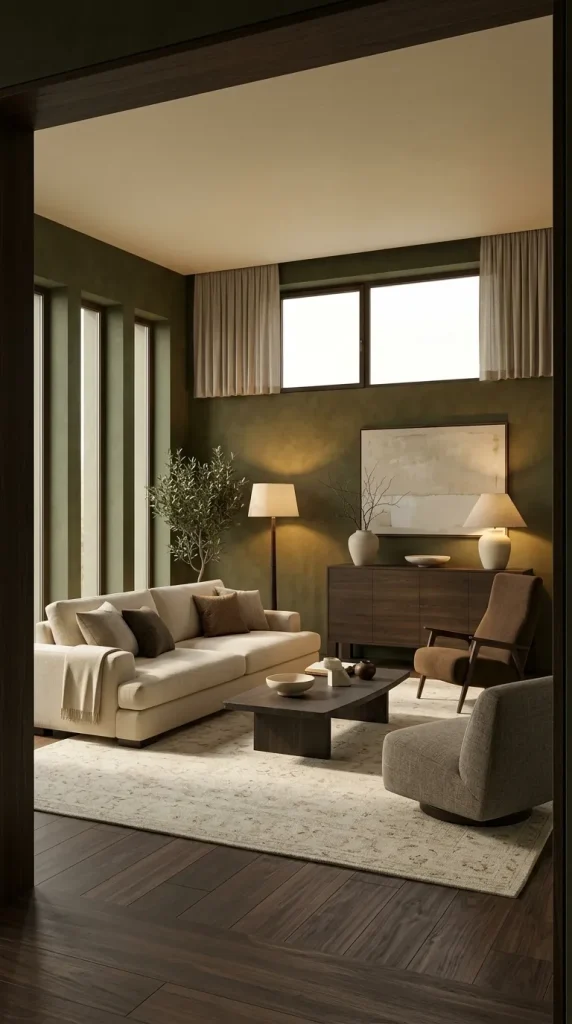
1. Use Deep Olive Walls With a Cream Sofa
One of the strongest ways to create a dark earthy living room is to make the walls dark while keeping the largest upholstered piece light.
Paint the room in a deep olive with a slightly brown or yellow undertone rather than a blue-green shade. Place a cream, oatmeal or warm ivory sofa against the wall so the upholstery stays clearly visible. A walnut coffee table and dark-wood sideboard can then reinforce the depth without making the seating area feel heavy.
Under the sofa, use a rug that is lighter than both the wall and floor. Cream wool, parchment or a subtle faded pattern works well because it separates the furniture from the lower part of the room. If the flooring is already dark timber, this lighter rug becomes even more important.
For lighting, avoid relying only on a ceiling fixture. A warm ceramic table lamp and one floor lamp on the opposite side of the sofa create separate pools of light that reveal the olive wall rather than turning it almost black after sunset.
This is a particularly useful approach in rooms where you want drama but still need the main seating to feel inviting.
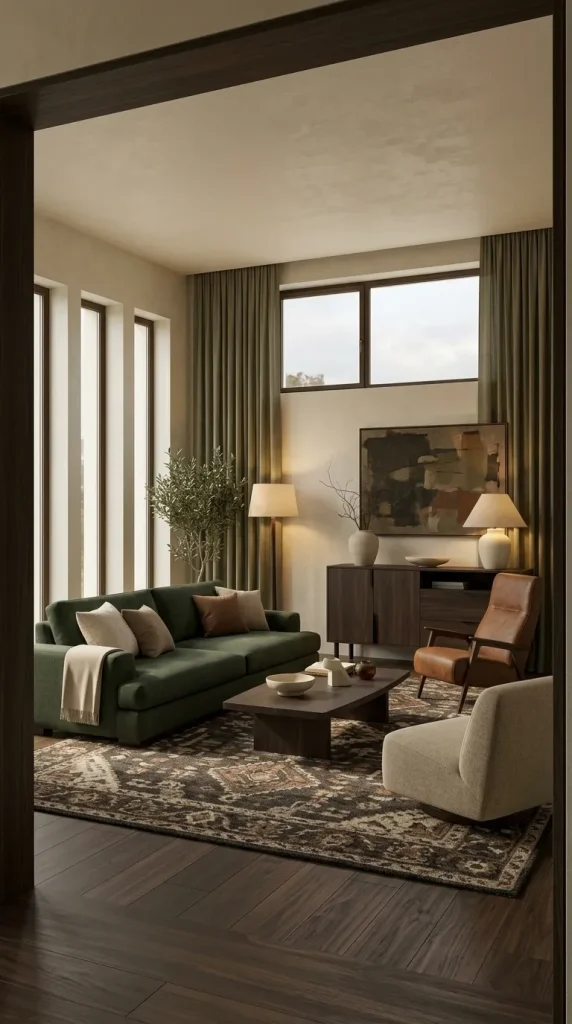
2. Keep Warm-White Walls and Put the Darkness Into the Furniture
A dark earthy room does not need dark paint.
Warm-white walls can become the background for a dark-green sofa, walnut media unit, charcoal rug and olive curtains. The effect is especially useful for renters or anyone who wants the atmosphere without committing to deep paint.
Choose warm white rather than blue-white. A cooler white can make olive and brown furniture appear sharper and less natural. Warm white allows walnut, leather and muted green to feel richer.
The key is to use enough dark material to create depth. One dark sofa alone in a white room may look isolated. Repeat darker tones through a substantial console, curtain fabric or large artwork so the room has visual continuity.
If the sofa is forest green, let the rug contain cream, tobacco brown or faded rust rather than another solid green. The room should feel layered, not colour-matched.
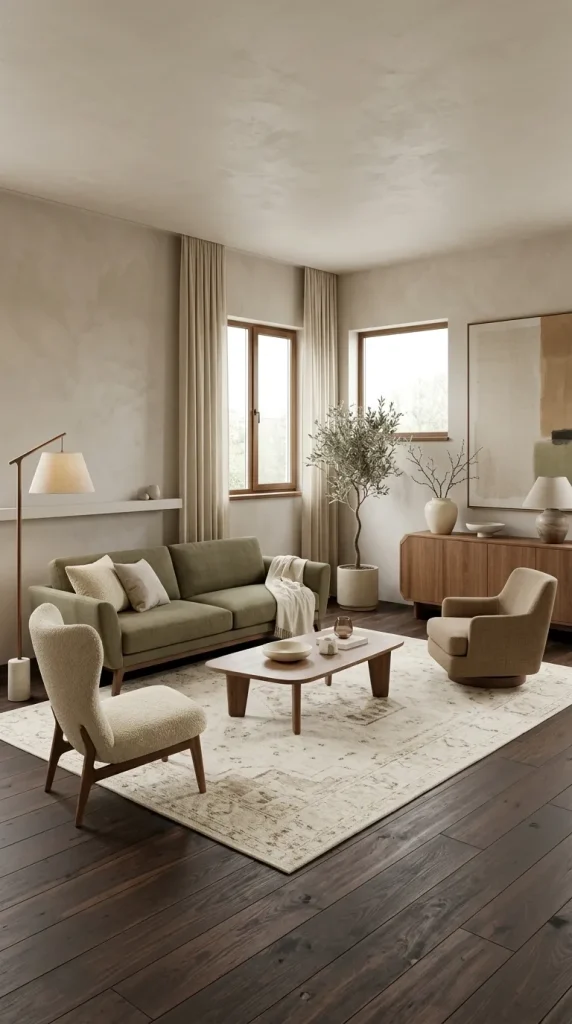
3. Let Dark Wood Flooring Carry Most of the Mood
If your living room already has espresso, smoked oak or dark walnut-toned flooring, you may not need dark walls at all.
Use mushroom, warm taupe or soft parchment on the walls, then bring in a medium olive or camel sofa. The dark floor will create enough weight below, while the lighter vertical surfaces prevent the room from feeling compressed.
A large cream or muted patterned rug is especially important if both the sofa and floor are dark. In many medium-size living rooms, an 8-by-10-foot rug is a more useful starting point than a 5-by-7 because it visually connects the sofa and chairs instead of looking like a small mat floating in front of them.
The design lesson here is simple: dark flooring already counts as a major dark surface. Do not automatically add dark walls, dark curtains and dark upholstery on top of it.
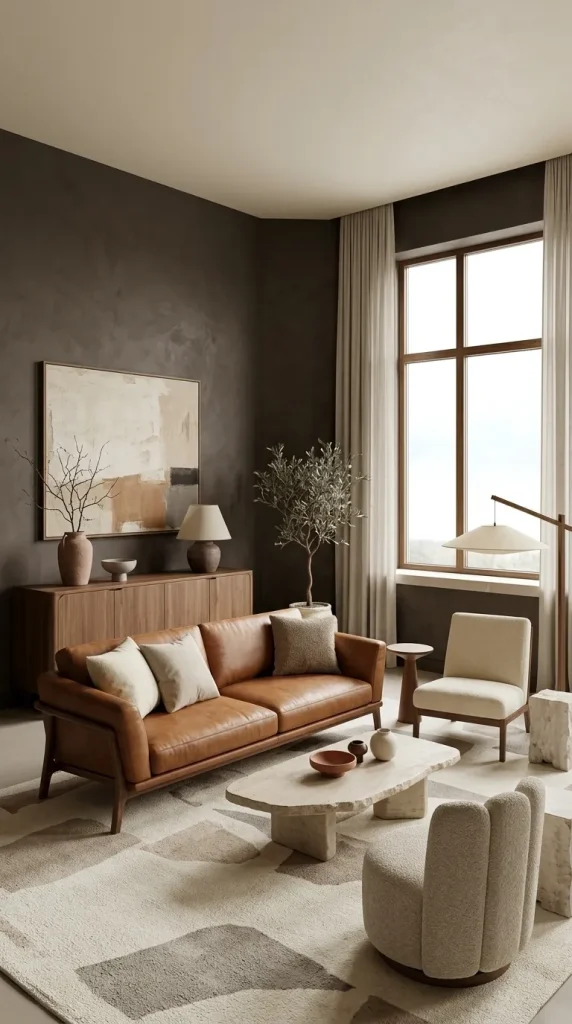
4. Use Charcoal Walls With Warm Brown Furniture
Charcoal can absolutely feel earthy when it is paired with warm materials.
Choose a charcoal that has a brown, mushroom or slightly warm undertone rather than a blue-steel cast. Pair it with a caramel leather sofa, medium walnut, cream wool and clay-toned ceramics.
The brown leather is what stops this palette from becoming a generic grey room. A stone coffee table or rough ceramic lamp can strengthen the natural quality further.
If the room receives limited daylight, keep the ceiling and window treatments lighter. Charcoal walls combined with dark curtains can absorb more light than many people expect.

5. Use Chocolate Walls Instead of Green
Not every dark earthy room needs green.
Chocolate-brown walls can create a warm and enveloping space, especially when paired with cream upholstery, aged brass and stone. This is a strong option for readers who like earthy interiors but do not want the room to feel botanical.
Use different browns rather than one repeated shade. Chocolate walls, walnut furniture and a tobacco rug should not all match exactly. Varying depth and finish creates dimension.
A limestone or travertine table is particularly effective here because the pale stone interrupts the brown palette without feeling cold.
Build Around Dark Green
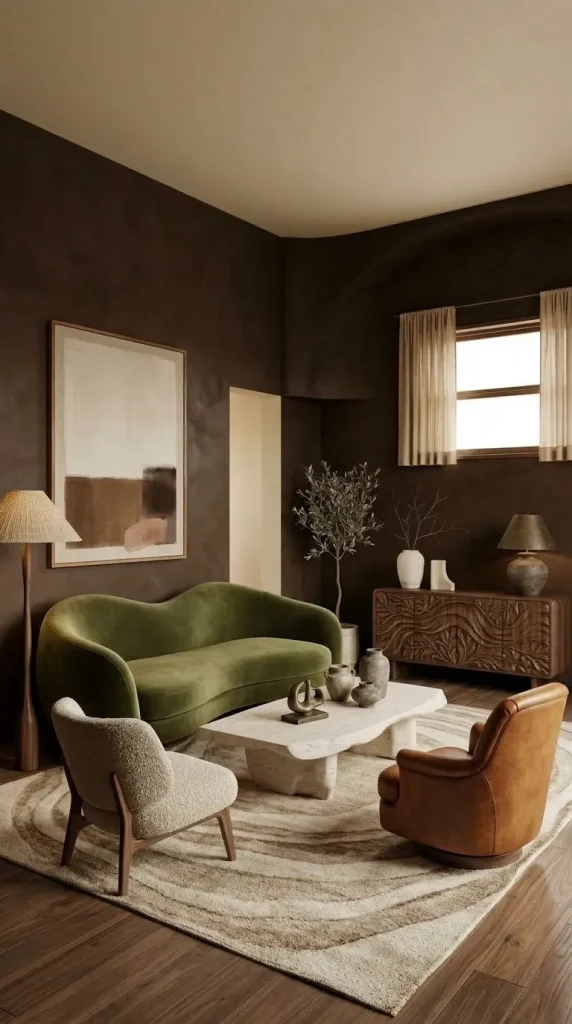
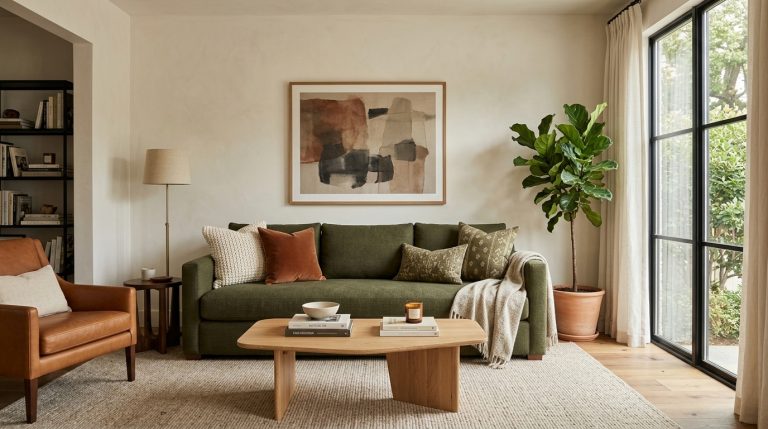
6. Pair Olive With Walnut and Camel Leather
Olive is one of the most forgiving dark-earthy colours because it feels deep without becoming almost black.
Use olive walls or upholstery with walnut furniture and a camel leather chair. Add cream through the rug or curtains so the room has enough relief.
This combination can work in modern, traditional or slightly heritage-inspired interiors depending on furniture shape. A clean-lined olive sectional with low walnut furniture feels modern; a rolled-arm sofa and traditional rug feel more collected.
Keep metallic accents warm and restrained. Aged brass or bronze usually feels more natural than bright polished gold.
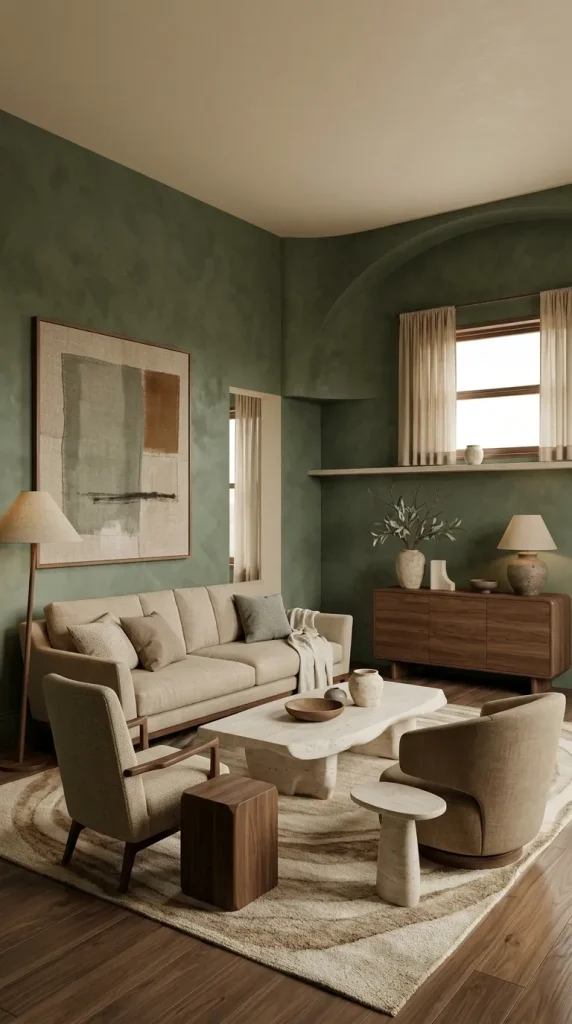
7. Use Moss Green for a Softer Organic Room
Moss green creates less drama than forest green but feels more organic and tactile.
Pair moss walls with medium-dark wood, linen upholstery and a limestone or travertine coffee table. Use woven wool rather than glossy textiles.
The goal is to create depth through material rather than through very high contrast.
This is a strong palette for rooms where you want the dark-earthy mood but still need the room to feel calm during the day.
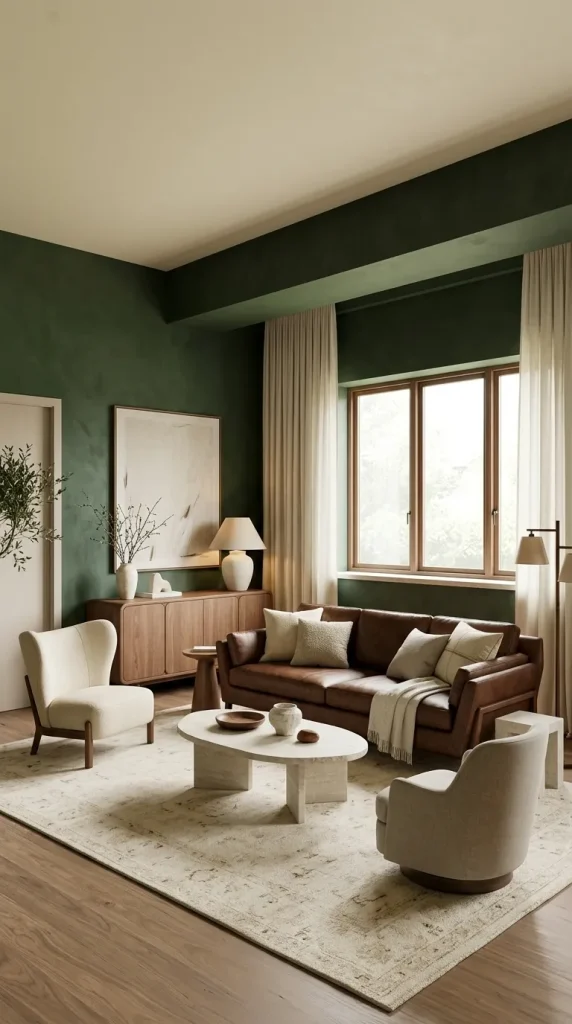
8. Build a Forest-Green Room Around a Brown Leather Sofa
Forest green and brown leather naturally reinforce each other, but they can become too heavy if everything else is dark.
Use forest-green walls with a medium or dark brown leather sofa, then interrupt the palette with a parchment rug, cream curtains and lighter artwork.
Leather needs softness around it. Add wool cushions, linen curtains and perhaps one upholstered accent chair rather than another leather piece.
A common mistake is pairing forest-green walls, a chocolate leather sofa, dark wood floor and dark rug. Every element is individually attractive, but together they lose separation. One substantial pale surface fixes the problem.
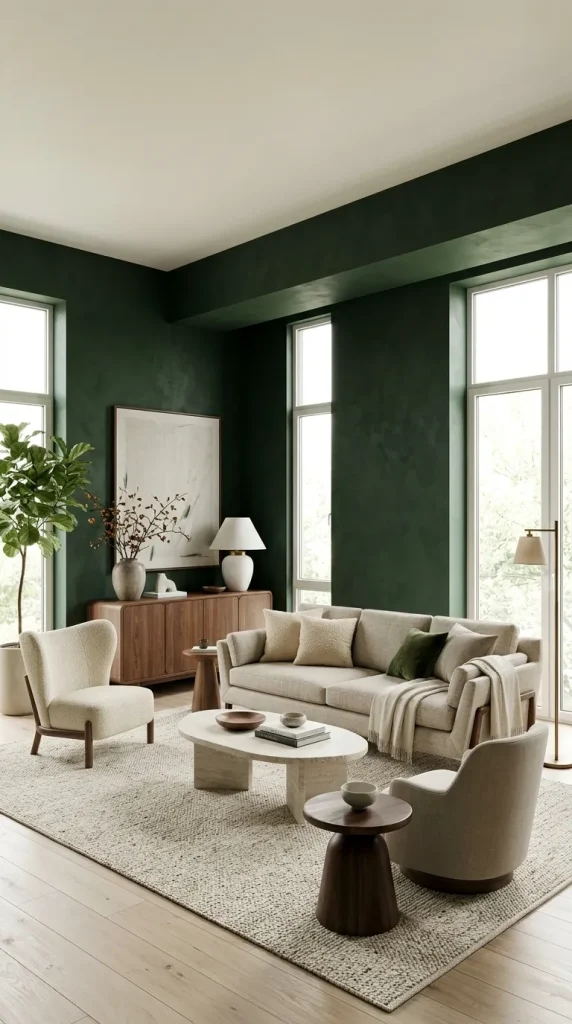
9. Use Blackened Green in a Large, Bright Room
Blackened green sits at the darkest end of the earthy spectrum and is best used deliberately.
It can work across all walls in a room with large windows, generous ceiling height or pale flooring. Pair it with oatmeal upholstery, walnut and aged brass so the walls remain the deepest element.
In a smaller or darker room, use blackened green on built-ins, a fireplace wall or one architectural zone instead of every surface.
The colour should reveal green in daylight rather than reading as flat black all day.
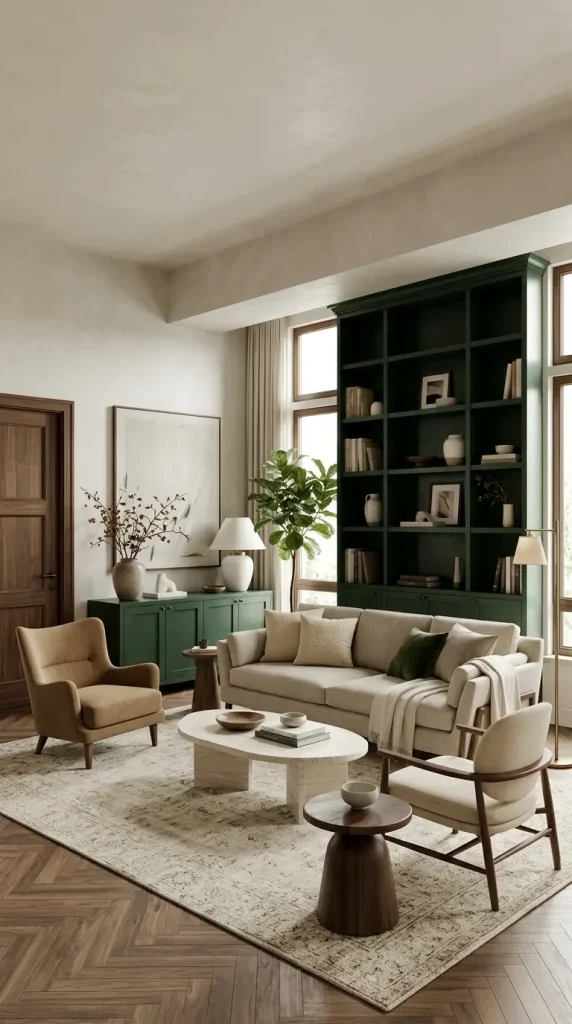
10. Use Dark Green Built-Ins Instead of Dark Walls
If full dark walls feel too committed, use deep green on shelving or cabinetry.
A wall of forest-green built-ins can create substantial visual depth while the remaining walls stay warm white or mushroom. Style the shelves with books, ceramics, dark wood frames and a few lighter objects.
This creates architectural darkness rather than a painted-box effect.
It is also a useful approach in traditional rooms where existing millwork can become the main earthy focal point.
Use Brown as a Major Design Colour
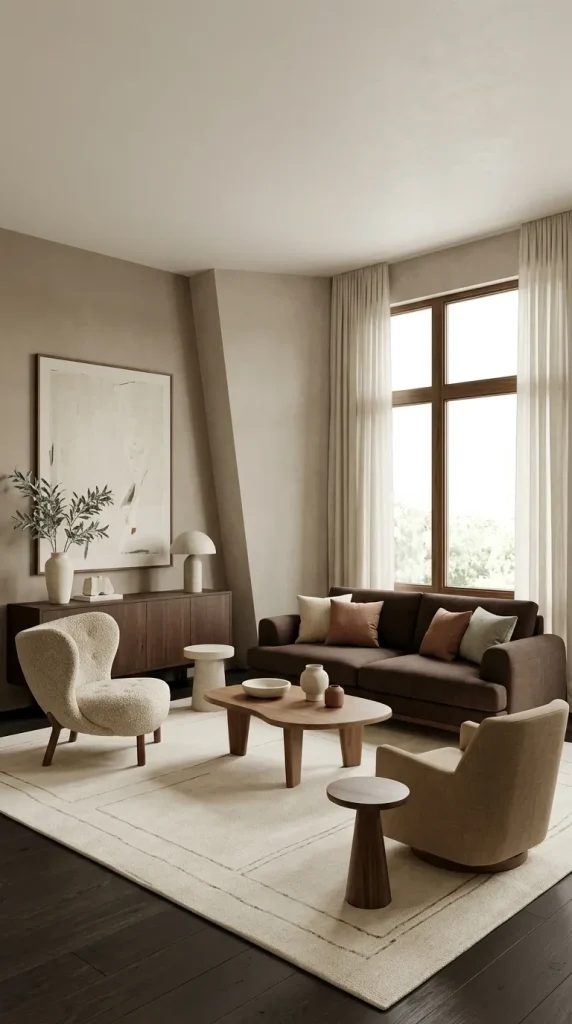
11. Build Around a Chocolate Brown Sofa
A chocolate sofa already creates a large warm mass, so it does not need equally dark walls.
Use warm taupe or olive walls, a cream rug and walnut furniture that is slightly lighter or darker than the sofa. Add rust or moss in small amounts.
If the floor is also dark brown, the rug becomes crucial. Without it, the sofa and flooring may merge visually.
This is one of the most practical examples of the “distribute the darkness” principle: dark sofa, medium walls, lighter rug.
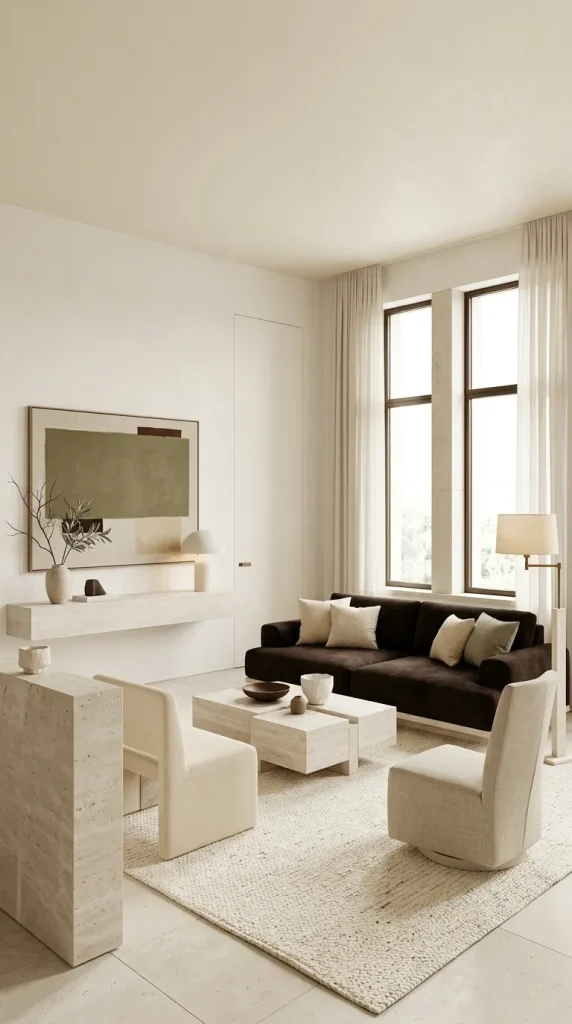
12. Pair Espresso Upholstery With Pale Stone
Espresso upholstery is close to black and can appear extremely heavy in low light.
Balance it with limestone, travertine, cream wool and warm-white walls. Add olive through art or textiles rather than through another major dark surface.
The pale stone makes the room feel more architectural and less furniture-heavy.
This works especially well in contemporary interiors where you want deep brown without a rustic aesthetic.

13. Use Brown Leather in a Modern Earthy Room
Brown leather does not automatically make a room traditional or Western.
Choose a clean-lined leather sofa, pair it with olive-grey walls, blackened-metal lighting and a cream wool rug. Add walnut or smoked oak rather than heavily distressed wood.
The room becomes earthy through the material palette, not through themed accessories.
A soft textile chair opposite the sofa also helps because a full leather seating set can make the room feel hard.

14. Use a Dark Brown Sectional With Lighter Surroundings
Large sectionals introduce so much visual weight that the architecture around them usually needs to breathe.
Place a chocolate sectional against warm-white or mushroom walls, then use a pale oversized rug and a substantial stone or wood coffee table.
Do not compensate for the sectional’s size with many tiny accessories. Larger art and fewer objects usually create a calmer room.
For circulation, aim for comfortable walkways around the sectional rather than squeezing extra furniture into every open corner.
Make Grey Feel Earthy
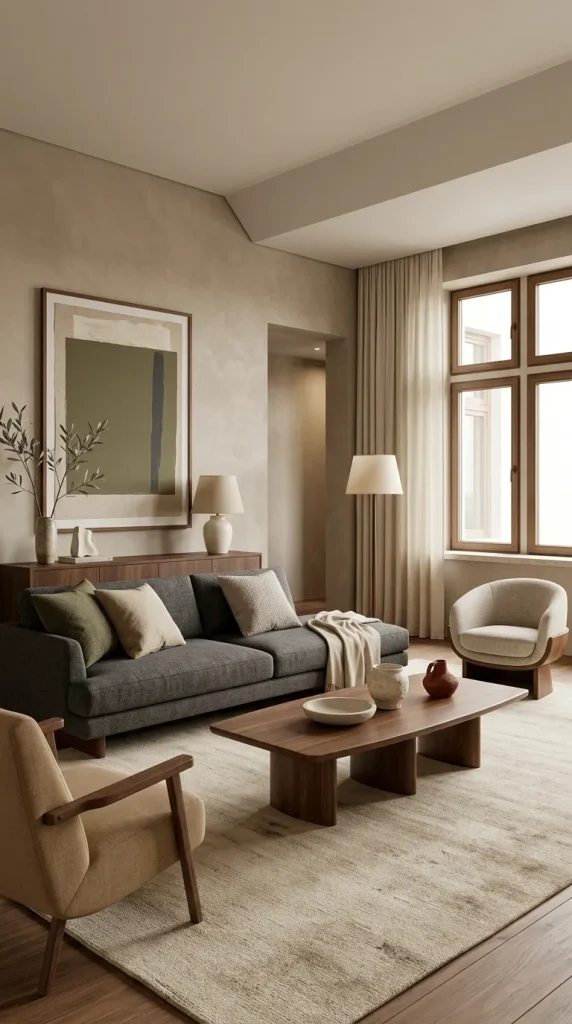
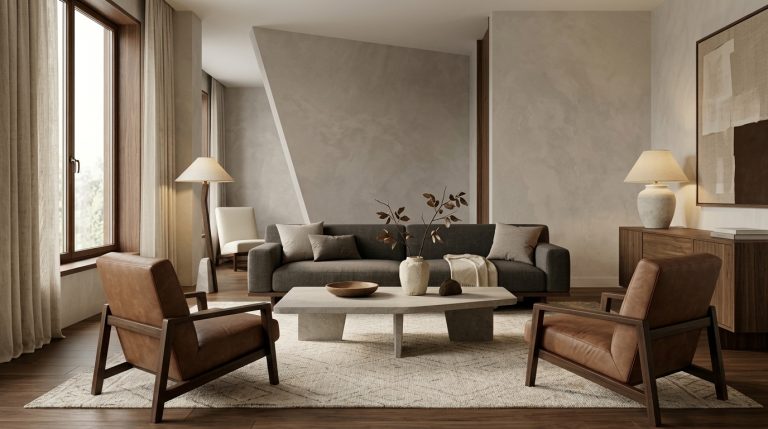
15. Warm a Charcoal Sofa With Olive and Walnut
Charcoal upholstery can feel cold when paired with cool grey walls and black furniture.
Shift it toward earthy by adding olive cushions, walnut furniture, a beige or cream wool rug and rust in one smaller accent.
The warmth does not need to come from bright colour. Natural wood alone can dramatically change the sofa’s character.
This is especially useful if you already own a charcoal couch and do not want to replace it.
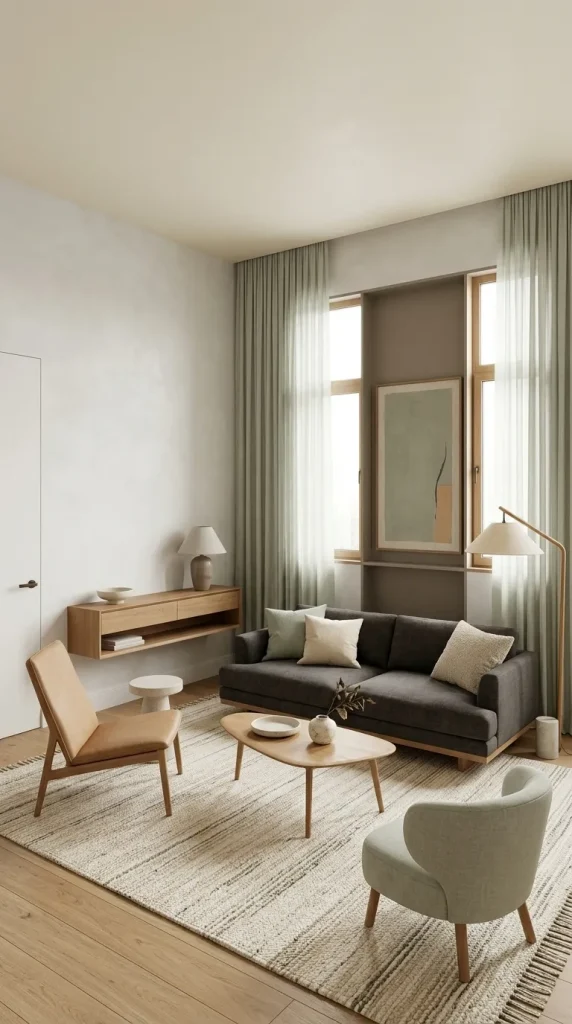
16. Pair Dark Grey With Sage and Camel
Sage is lighter than olive, so it creates a softer transition around charcoal.
Use sage through curtains or one chair, then add camel leather and medium wood. Keep walls warm white or taupe.
This works well in apartments because the room can feel dark-earthy without becoming visually dense.
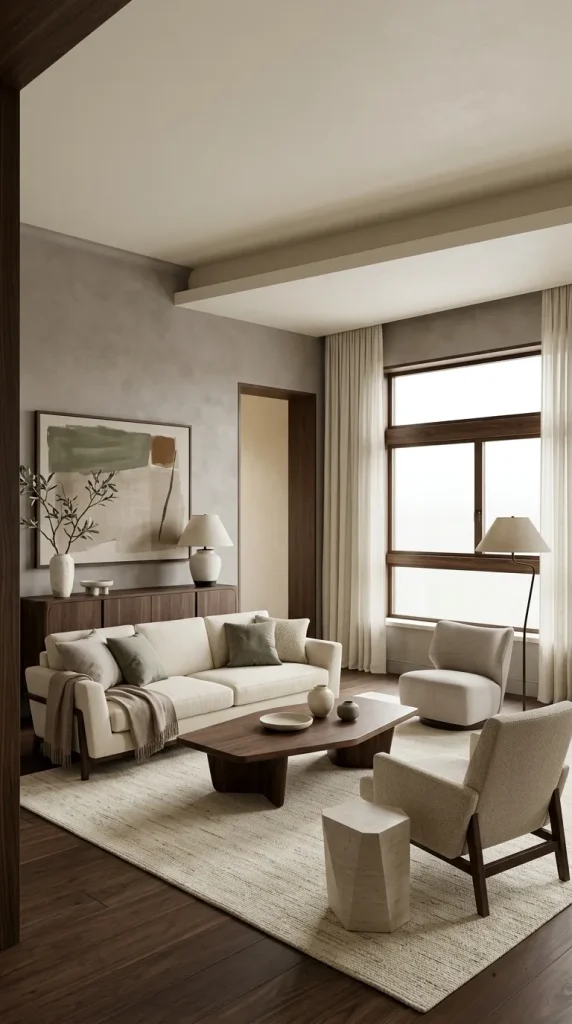
17. Use Warm Grey Walls With Dark Timber
A grey-painted room can still feel natural if the grey itself is warm.
Choose mushroom-grey or taupe-grey walls, then pair them with dark timber, cream upholstery and blackened bronze.
Avoid icy silver grey if the rest of the palette is walnut and olive. The temperature mismatch can make the room feel disconnected.
Use Cream as Contrast

18. Put a Cream Sofa in a Dark Olive Room
This is one of the most effective ways to create a dark earthy room without sacrificing comfort or brightness.
Use dark olive walls, walnut furniture, black lighting and a cream sofa. Add a patterned rug containing olive, brown and faded rust so the sofa feels integrated rather than isolated.
The cream sofa becomes the room’s lightest major surface and gives the eye somewhere to rest.
This is a strong reminder that dark-earthy refers to the room’s overall atmosphere, not the colour of every piece of furniture.
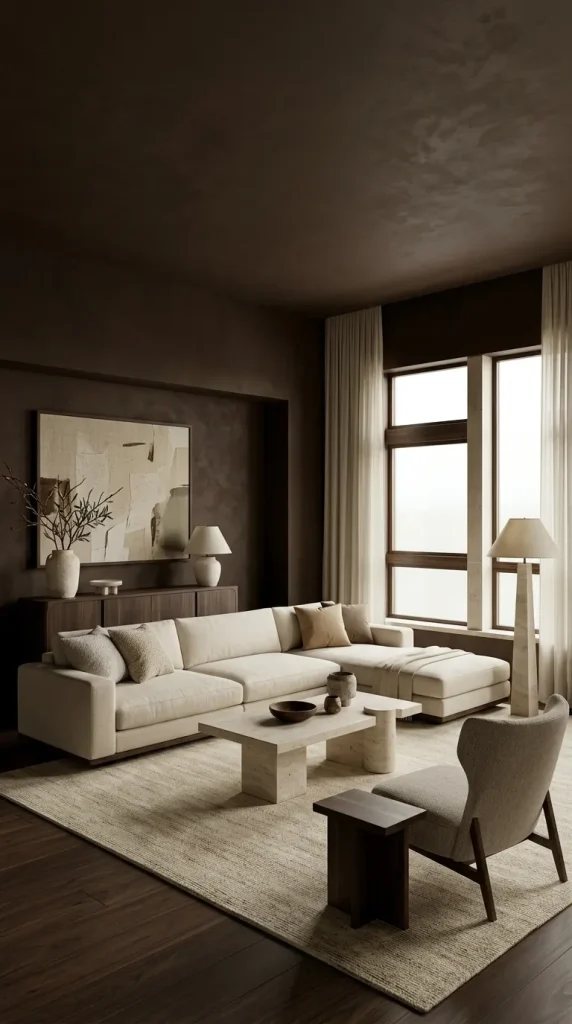
19. Pair Cream Upholstery With Chocolate and Stone
Use a cream sectional with chocolate walls, dark wood and a pale stone coffee table.
The palette feels dark because the architecture and furniture around the sofa provide depth, while the upholstery remains inviting.
This is particularly effective in larger rooms where a dark sofa might otherwise create too much visual mass.
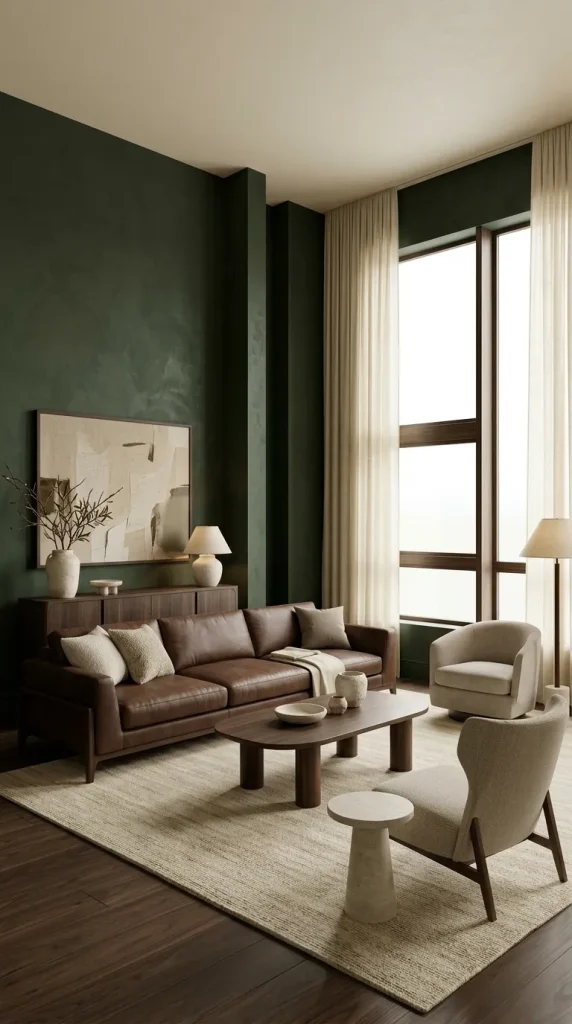
20. Use Cream Curtains in a Dark Room
Dark curtains are not mandatory.
In a room with forest-green walls and a brown leather sofa, cream linen curtains can preserve light and create vertical relief. The softer fabric also offsets heavy upholstery and dark wood.
This is especially important in rooms with one main window. Covering that window with heavy dark fabric may make the space much gloomier than expected.
Bring in Deep Blue
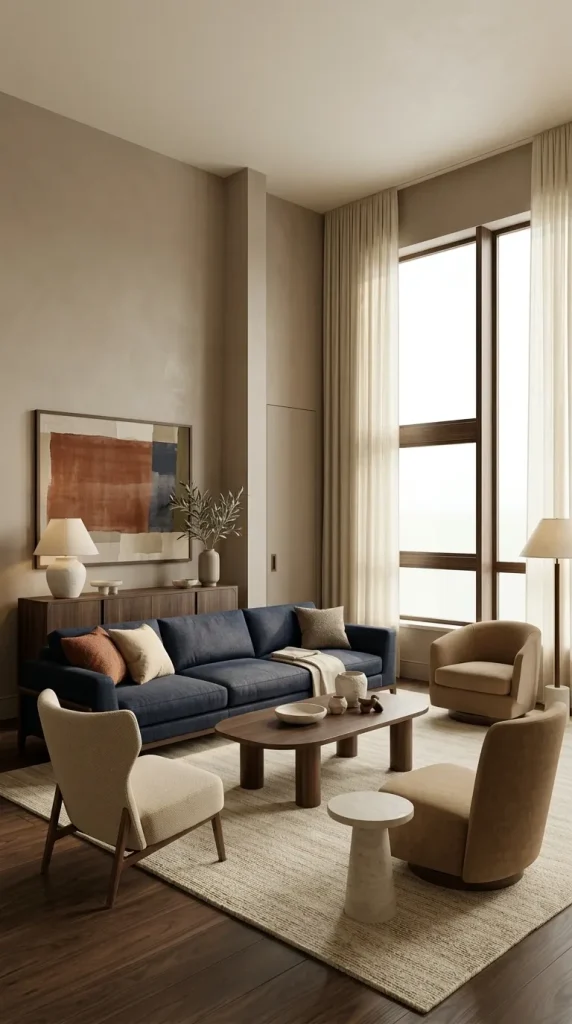
21. Pair Navy With Walnut and Rust
Navy can still feel earthy when the surrounding materials are warm and natural.
Use a navy sofa with walnut, a parchment rug and rust-coloured textiles. Add olive as a smaller accent if the palette needs another natural tone.
Avoid bright cobalt or glossy royal blue, which shifts the room toward a more energetic colour scheme.
The darker, muted navy acts almost like a cool earth tone.
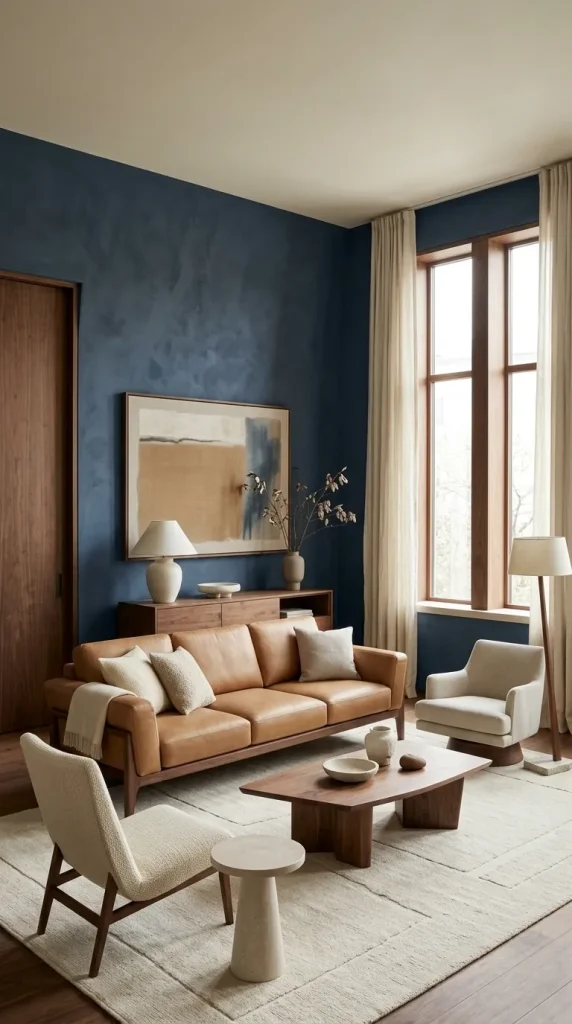
22. Use Deep Blue Walls With Camel Leather
Deep blue walls can create a dark earthy room when paired with caramel or camel leather.
Use medium-to-dark walnut furniture and cream textiles so the palette has warmth and contrast.
This is a useful option for readers who want the grounded mood but do not like green-dominated interiors.
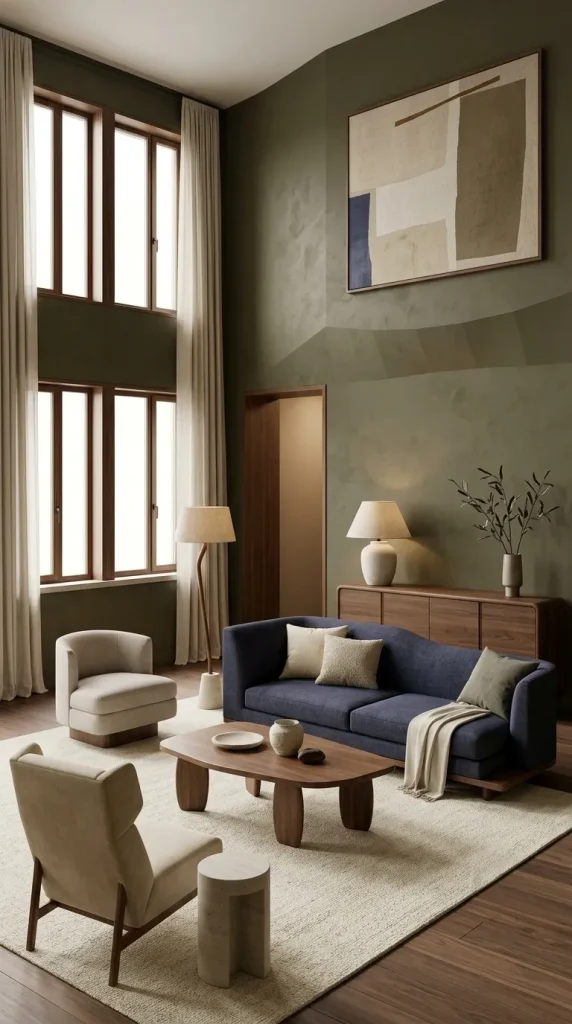
23. Combine Indigo With Olive
Indigo and olive can create a surprisingly sophisticated dark palette.
Use one as the main colour and the other as a secondary element. For example, an indigo sofa can sit against muted olive walls with a cream rug and walnut table.
Because both colours are deep, introduce one lighter neutral surface to separate them.
Add Warm Earth-Tone Accents
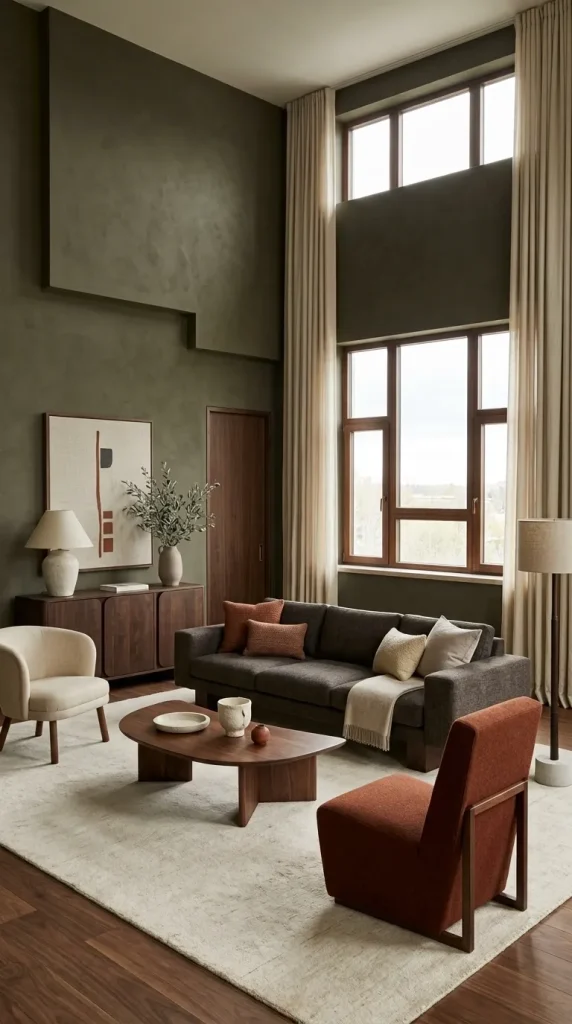
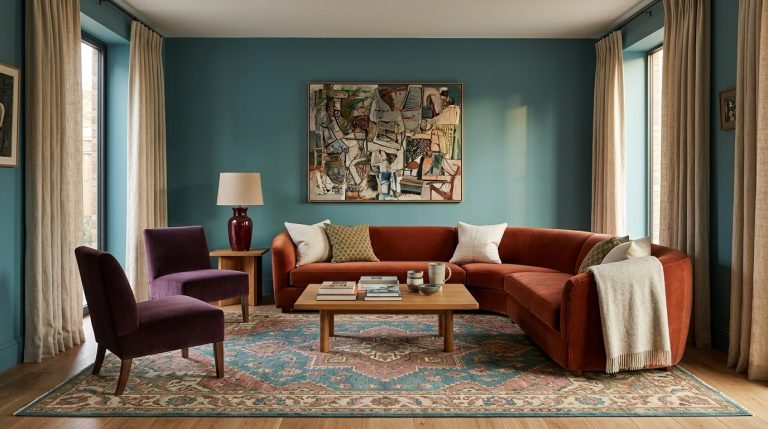
24. Use Rust as a Secondary Colour
Rust is especially useful when a green or charcoal room feels too cool.
Introduce it through one chair, a cushion group, pottery or a vintage rug. Keep it secondary so the room does not shift into a terracotta-themed palette.
Rust works beautifully beside olive, walnut and cream because it adds warmth without becoming bright orange.

25. Add Clay and Terracotta Through Ceramics
Terracotta does not have to appear through large furniture or walls.
Clay ceramics, brick-red artwork or a rust-toned lamp base can add warmth to charcoal, green or brown rooms in a more controlled way.
This is particularly useful in minimalist rooms where too many textile colours would feel busy.
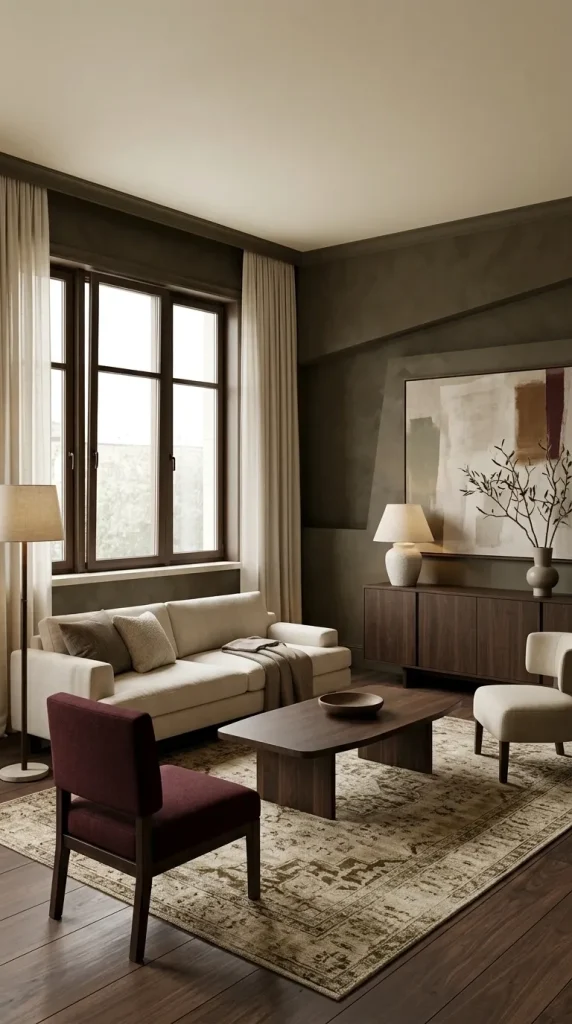
26. Use Burgundy in a Dark Earthy Palette
Burgundy can deepen an olive or brown room without turning it into a red room.
Use burgundy through a traditional rug, one chair or patterned cushions. Pair it with dark timber and cream.
This naturally edges toward dark academia or vintage styling, so keep the architecture and furniture simpler if you want the room to remain broadly earthy.
Use Dark Wood as Architecture

27. Keep Existing Dark Wood Trim
Quality dark trim does not automatically need to be painted white.
Use olive, warm taupe or parchment walls around it, then add lighter upholstery and a rug with cream or faded green.
The trim can become part of the room’s depth rather than something you are fighting against.
Updating the wall colour and lighting is often enough to make traditional dark wood feel intentional again.
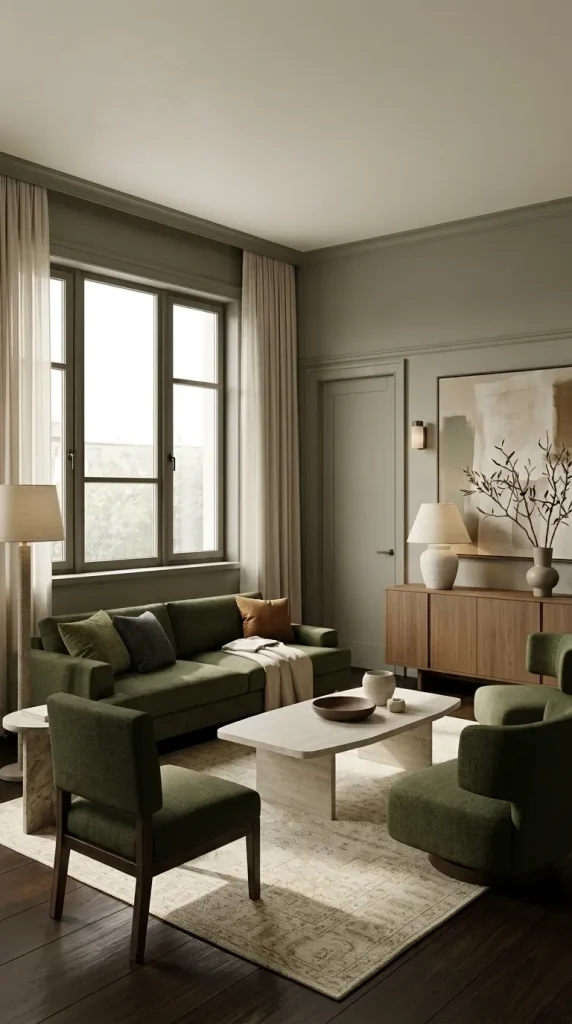
28. Pair Dark Wood Floors With a Light Rug
Dark floors can be beautiful in this style, but they need separation from dark seating.
Use a cream, oatmeal or subtly patterned rug large enough to extend under the front legs of the sofa and chairs.
A dark-green sofa floating directly over espresso flooring may look like one heavy mass. The rug creates a visual boundary without removing the dark atmosphere.

29. Use a Walnut Media Wall With Lighter Walls
A walnut or smoked-oak TV wall can create earthy depth without dark paint.
Keep adjacent walls warm white or mushroom and use a charcoal or olive sofa. Black sconces can integrate the television without turning the wall entirely black.
Because the TV itself is already a large black rectangle, more black cabinetry is not always necessary.
Bring in Stone and Architectural Texture
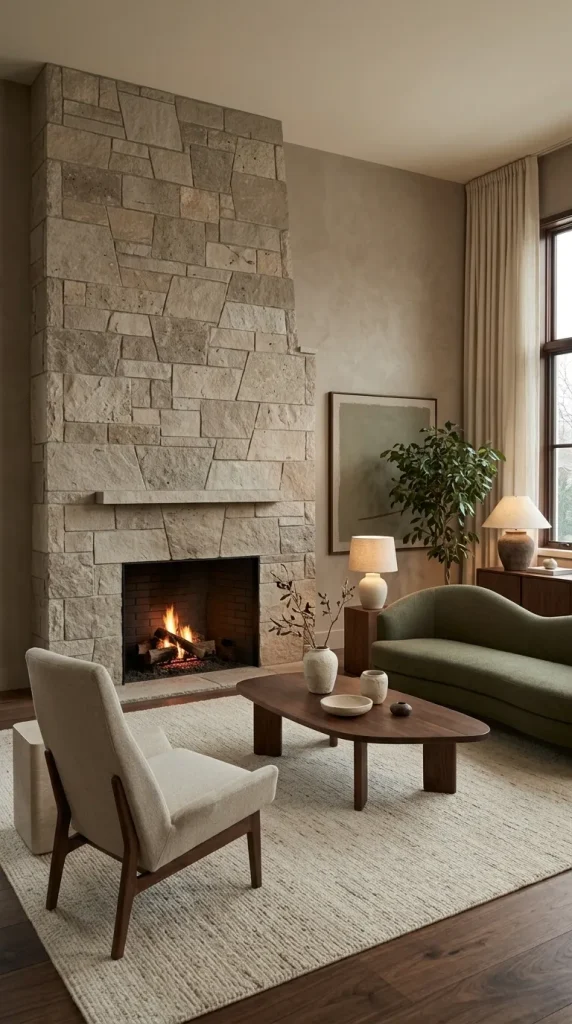
30. Use a Stone Fireplace as the Earthy Focal Point
A stone fireplace naturally adds texture, colour variation and visual weight.
Pair it with olive upholstery, dark wood and cream wool. Choose stone with warm grey, brown or beige variation rather than an icy blue-grey finish.
Keep the wall art around the fireplace restrained so the material itself remains the focal point.
At night, table lamps near the seating area and the fireplace glow together to create depth across the room.

31. Pair Dark Walls With Travertine
Travertine is useful because it introduces a pale natural surface without feeling stark.
Use deep olive or charcoal walls with a cream sofa and a travertine coffee table. The stone brightens the centre of the room while retaining the earthy material language.
This is one of the strongest ways to make a dark room feel more modern and less rustic.
Explore Distinct Dark-Earthy Styles

32. Create a Dark Organic-Modern Living Room
Use deep olive walls, cream upholstery, walnut, limestone and sculptural lighting.
Keep the object count relatively low and let large materials do the work. One broad rug, one substantial table and one or two large artworks usually feel stronger than many small accessories.
Organic modern should feel restrained and tactile. It should not rely on layered patterns or baskets everywhere.
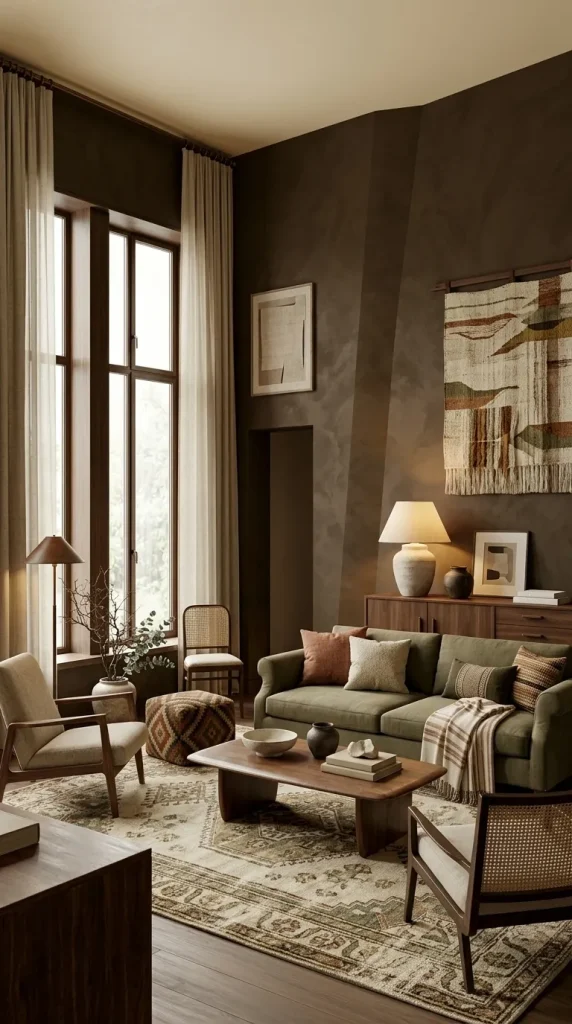
33. Build a Dark Boho Living Room
Dark boho should feel more collected than organic modern.
Use dark green or brown walls, a vintage rug, warm wood, woven textiles and a mix of cushions in rust, olive and cream.
Rattan can appear, but do not make every concept depend on the same cane chair and oversized plant.
Older wood furniture, a patterned textile ottoman or low vintage table can create a more convincing layered feel.
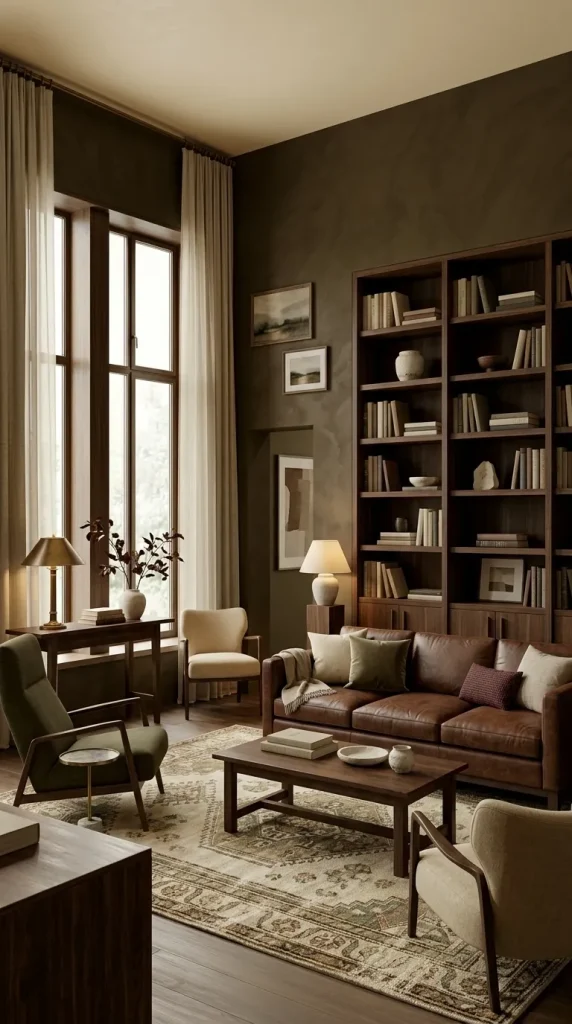
34. Create a Dark Academia-Inspired Earthy Room
Use dark wood bookshelves, a brown leather sofa, olive or burgundy accents and antique brass.
A traditional rug and framed art can deepen the room, but maintain enough cream or parchment so the space stays livable.
This should feel like one interpretation of dark earthy rather than the entire definition of the style.
Books, wood and traditional materials create the scholarly feeling; the room does not need novelty academic props.
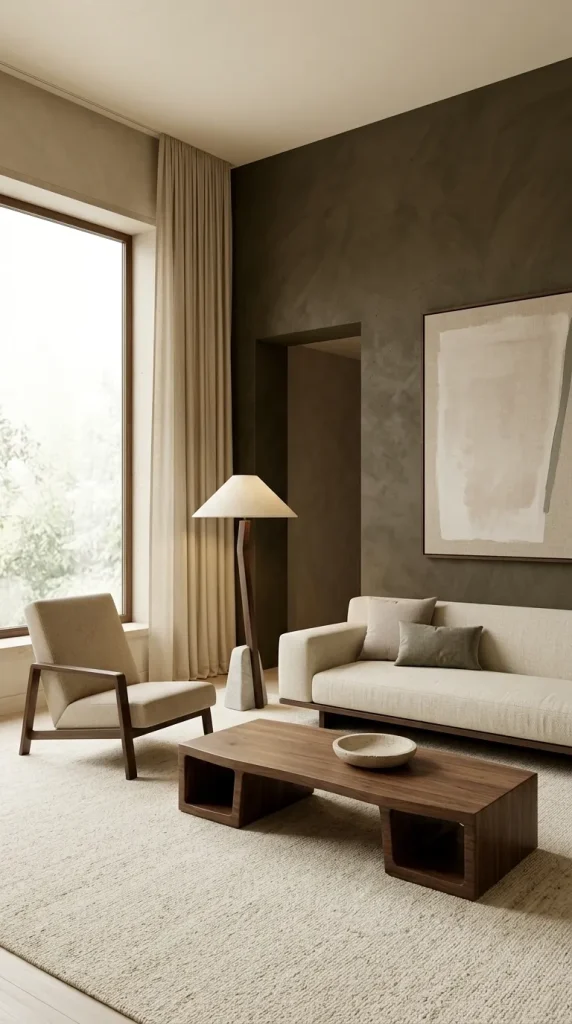
35. Build a Minimalist Dark Earthy Room
Minimalism and dark-earthy styling work surprisingly well together.
Use one deep olive or mushroom wall, a cream or charcoal sofa, a solid walnut table and one substantial wool rug. Add a sculptural lamp and stop before the room fills with small decor.
When there are fewer objects, material quality matters more. Wood grain, wool texture, matte paint and stone become the decoration.
This direction proves that dark earthy does not have to mean layered, rustic or bohemian.
How to Decide Where the Darkness Should Live
Before choosing paint, decide which major surfaces are already dark.
| Main dark element | Best balancing strategy |
|---|---|
| Dark walls | Use lighter upholstery, rug or curtains |
| Dark sofa | Keep walls medium or light and add a pale rug |
| Dark flooring | Separate dark furniture with lighter textiles |
| Dark wood trim | Use medium walls and lighter upholstery |
| Dark curtains | Keep nearby wall or sofa lighter |
| Dark built-ins | Let surrounding walls remain softer |
| Dark rug | Use a lighter sofa or visible lighter flooring |
This framework is more useful than simply choosing a paint colour.
If the walls, floor, curtains and main sofa are all dark, the room loses visual hierarchy. You can still create a deliberately dark interior, but the materials and tonal values need to differ enough that each major element remains readable.
Warm vs Cool Dark Earthy Palettes
Dark earthy rooms can lean warm or cool.
Warmer dark earthy palettes use olive, chocolate, espresso, rust, walnut and camel. They tend to feel immediately cozy and grounded.
Cooler dark earthy palettes use charcoal, navy, blackened green and deep blue. These often feel more contemporary or dramatic.
Cooler palettes usually benefit from cream, leather, walnut and warm metal. Warmer palettes may need black, grey or pale stone to keep them from becoming muddy.
A room can also mix the two. Navy with camel and walnut is one example; charcoal with rust and olive is another.
Best Wall Colours for a Dark Earthy Living Room
The strongest wall families are:
Olive: versatile, warm and natural. Works with walnut, camel and cream.
Moss: softer and more organic. Works well with stone and linen.
Forest green: deeper and more dramatic. Best balanced with lighter upholstery or rugs.
Mushroom taupe: ideal for a neutral dark-earthy room without strong green.
Chocolate: warm and enveloping. Works particularly well with cream and stone.
Charcoal: best when warmed with wood, leather or olive.
Deep blue: useful for readers who want depth without green.
Warm white: still completely valid when furniture, flooring and textiles create enough dark depth.
Always sample paint in the actual room. Dark colours can look dramatically different next to dark flooring, under warm artificial light or beside large windows.
Best Rugs for Dark Earthy Living Rooms
Rugs often determine whether a dark room feels layered or heavy.
A cream wool rug is one of the best tools for separating dark sofas from dark floors.
A vintage patterned rug can introduce olive, faded rust, burgundy and parchment while adding visual history.
A jute rug works well in boho and rustic rooms, although its lighter texture may look too casual in highly polished modern interiors.
A dark rug can work if the sofa or floor is lighter, but avoid stacking dark brown sofa, dark brown rug and dark wood flooring unless pattern or contrast clearly separates them.
Best Curtains for Dark Earthy Rooms
Curtain colour should respond to wall colour and daylight.
If the room already has dark walls, cream, oatmeal or warm beige curtains can preserve light and soften the architecture.
If the walls remain warm white, olive, forest green, taupe or chocolate curtains can create much of the dark atmosphere.
Heavy linen and textured woven fabrics usually feel more natural than shiny synthetics. Velvet can work beautifully in moody or traditional rooms but is visually heavier.
Do not assume the curtains have to be dark because the room is dark earthy.
Best Materials to Use
Dark earthy rooms become convincing through tactile contrast.
Walnut and smoked oak add depth and visible grain.
Leather brings warmth and patina but needs softer textiles around it.
Wool adds softness to dark upholstery and flooring.
Linen introduces a lighter, matte surface.
Travertine and limestone brighten dark rooms without breaking the natural palette.
Slate and charcoal stone deepen dramatic rooms.
Ceramic and stoneware provide smaller matte surfaces that reinforce the natural feel.
Aged brass and bronze add small warm highlights without turning the room into a metallic luxury scheme.
A successful room should usually contain several different material families rather than five dark objects with the same smooth finish.
How to Make a Dark Earthy Living Room Feel Cozy
Darkness alone does not make a room cozy.
Use at least several separate light sources. A floor lamp, table lamp and wall or picture light will create more atmosphere than one ceiling fixture.
Warm-white lighting generally works better with olive, wood and brown than cool-white bulbs. Extremely yellow bulbs can make brown and olive look muddy, so aim for warmth without turning everything amber.
Full curtains, a generous rug, upholstered chairs, books and soft textiles also matter.
If the room feels dark but not cozy, the problem is often missing softness or lighting rather than the paint colour.
How to Make a Small Living Room Dark and Earthy
Small rooms do not have to stay white.
One deep olive wall can create depth while the rest of the room remains warm white. A compact dark-green sofa can work against pale walls with walnut furniture and an oatmeal rug.
You can also colour-drench a small room for a cocooning effect, but in that case keep the sofa, rug or curtains lighter.
Furniture scale is critical. A correctly sized dark sofa usually works better than an oversized pale sectional simply because pale upholstery cannot compensate for poor circulation.
Slim side tables, wall-mounted lights and visible floor area will help the room breathe.
How to Make White Walls Feel Dark Earthy
For renters, white walls are not a deal-breaker.
Use a dark-green or charcoal sofa, walnut shelving, olive curtains and a substantial vintage rug. Add large earthy artwork rather than many small accessories.
The mood can come from furniture, textiles and wood rather than paint.
Warm white works more naturally than cool stark white, so if repainting is possible but dark colours are not, even moving from blue-white to a warmer white can improve the palette.
What Should You Avoid in a Dark Earthy Living Room?
Making every surface dark
Dark walls, dark floors, dark sofa and dark curtains can eliminate visual hierarchy.
Choose at least one lighter major element.
Using the same olive or brown everywhere
Earthy does not mean monochromatic.
Vary shade, temperature and material.
Using cool grey, black and cool lighting and expecting the room to feel earthy
The room needs warmth through wood, leather, cream, olive or rust.
Filling the room with plants but ignoring material
Plants can support the look, but greenery alone does not make a room earthy.
Wood, stone, wool, linen and ceramic matter more.
Assuming dark earthy means rustic
A dark earthy room can be minimalist, modern, organic or luxurious.
Reclaimed timber, farmhouse furniture and woven baskets are optional, not mandatory.
Frequently Asked Questions
What colours work best in a dark earthy living room?
Olive, moss, forest green, chocolate, espresso, charcoal, mushroom taupe, navy, rust, cream and warm white are among the strongest choices.
Can a dark earthy living room have white walls?
Yes. Dark furniture, wood, rugs, curtains and artwork can create the atmosphere without dark paint.
What sofa colour works best?
Dark green, chocolate brown, charcoal, navy and cream can all work. The best choice depends on where the rest of the darkness already appears.
How do I stop a dark earthy living room from feeling gloomy?
Use lighter rugs or upholstery, layered lighting, warm materials, visible texture and enough tonal separation between walls, flooring and furniture.
Does black work in a dark earthy room?
Yes, but it works best as a structural accent through lighting, frames or furniture rather than as the only dark colour. Wood, olive, leather and cream keep black grounded.
What wood tones work best?
Walnut, smoked oak and espresso-stained wood work particularly well. Medium oak can also provide contrast in very dark rooms.
Can grey work in a dark earthy living room?
Yes. Charcoal and warm grey work particularly well when combined with olive, camel, walnut, cream or rust.
Build the Room Around Darkness, Material and Contrast
The best Dark Earthy Living Room Ideas are not defined by one colour.
They are built from the relationship between darkness and natural material.
Dark green becomes more convincing beside walnut and wool. Charcoal becomes earthier beside leather and olive. Chocolate feels more sophisticated when pale stone and cream interrupt it. Navy becomes warmer beside camel and rust.
Most importantly, the strongest rooms decide where the darkness lives.
If the walls are dark, the sofa can be cream. If the floor is dark, the rug can be lighter. If the sofa is charcoal, the walls can stay warm white. If the room already has dark wood trim, you may not need another large dark surface at all.
That distribution creates depth without making the living room feel visually heavy.
When warm wood, stone, leather, wool, linen, ceramics, natural colour and layered light are combined deliberately, a dark earthy living room can feel grounded, cozy and deeply atmospheric without becoming gloomy, overly rustic or theme-driven.