40 Budget Living Room Decor Ideas That Look Stylish Without Costing a Fortune
A beautiful living room does not have to begin with a new sofa, expensive artwork or a complete furniture makeover. Sometimes, the biggest improvement comes from something much simpler: moving the furniture into a better arrangement, introducing warmer lighting, painting an awkward wall or giving an old wooden table a second life.
The challenge with decorating on a budget is knowing where to spend and where to save. A collection of inexpensive accessories can quickly become surprisingly costly without making the room feel substantially different. Meanwhile, a carefully chosen second-hand cabinet, a properly sized rug or a single large piece of handmade artwork might transform the entire space.
The most successful budget living room decor ideas take advantage of what you already own. A grey sofa can look completely different beside warm timber and olive-green textiles. A cramped apartment can feel more welcoming when unnecessary furniture is removed, while a plain family lounge might only need better lighting, a stronger focal point and more organised storage.
Whether you are decorating your first apartment, refreshing a dated family room or creating a cosy home with very little money, these 40 ideas focus on affordable changes that make a genuine difference. They cover furniture arrangements, DIY projects, wall decorations, colour schemes and several distinct interior styles, helping you create a room that looks considered rather than cheaply furnished.
Start With Changes That Cost Almost Nothing
Before buying another decorative object, look at the room as it is. Furniture placement, clutter and visual balance often have a greater influence on the overall appearance than the price of individual pieces. A few thoughtful changes can reveal possibilities that are easy to overlook when everything has occupied the same position for years.
1. Rearrange Your Existing Furniture to Create a Better Layout
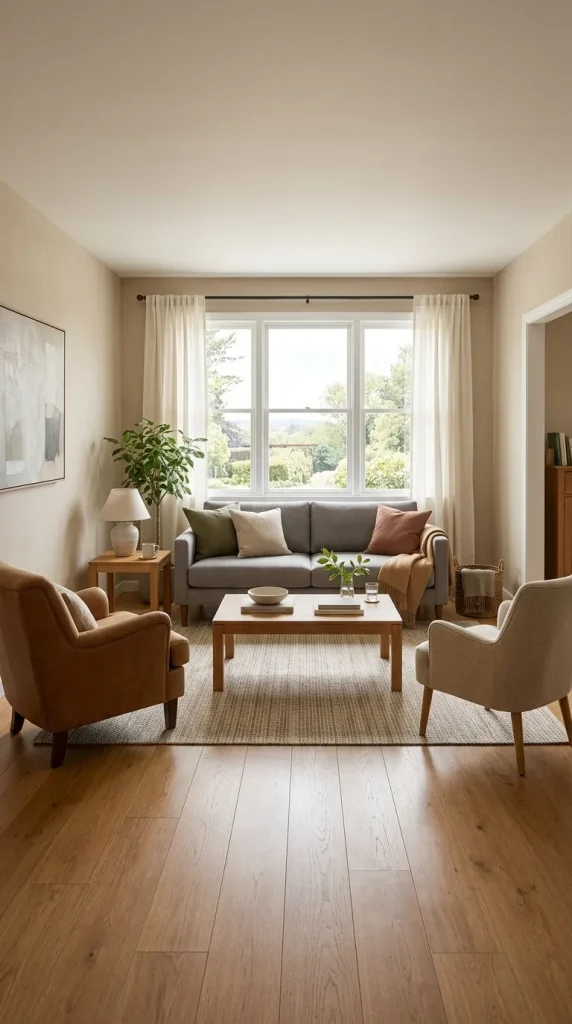
Moving the furniture is one of the most effective ways to refresh a living room without spending anything. A sofa pushed against one wall, an armchair sitting awkwardly in a corner and a coffee table positioned too far from the seating can make even attractive furniture feel disconnected.
Start by identifying the room’s main focal point, whether that is a window, fireplace, television or substantial piece of artwork. Arrange the principal seating in relation to it, then position smaller furniture where it serves a practical purpose. In a compact room, removing an unnecessary side table may improve circulation more than purchasing additional storage. In a larger space, bringing furniture closer together can create a more intimate conversation area.
Do not assume that every piece must remain against a wall. Where dimensions allow, moving the sofa slightly forward can improve the proportions of the seating area and create useful space behind it.
2. Give Your Living Room One Clear Focal Point
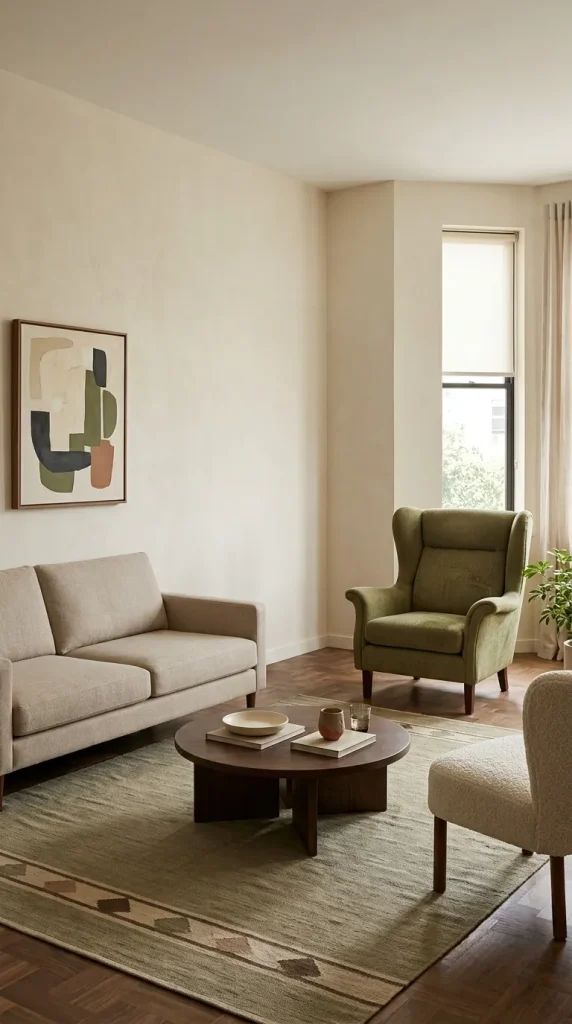
An inexpensive living room often looks unfinished because everything has similar visual importance. Small artwork, scattered decorations and furniture arranged without a clear centre can make the space feel disorganised, even when the individual objects are attractive.
Choose one element to become the main feature. It could be a large painting above the sofa, an attractive second-hand cabinet, a fireplace or a beautifully styled window. Arrange the surrounding furniture and decorative objects to support that feature rather than compete with it.
If you already have an interesting rug or statement armchair, build the room around it before purchasing anything new. Allowing one existing object to establish the colour palette can make the entire arrangement feel more intentional.
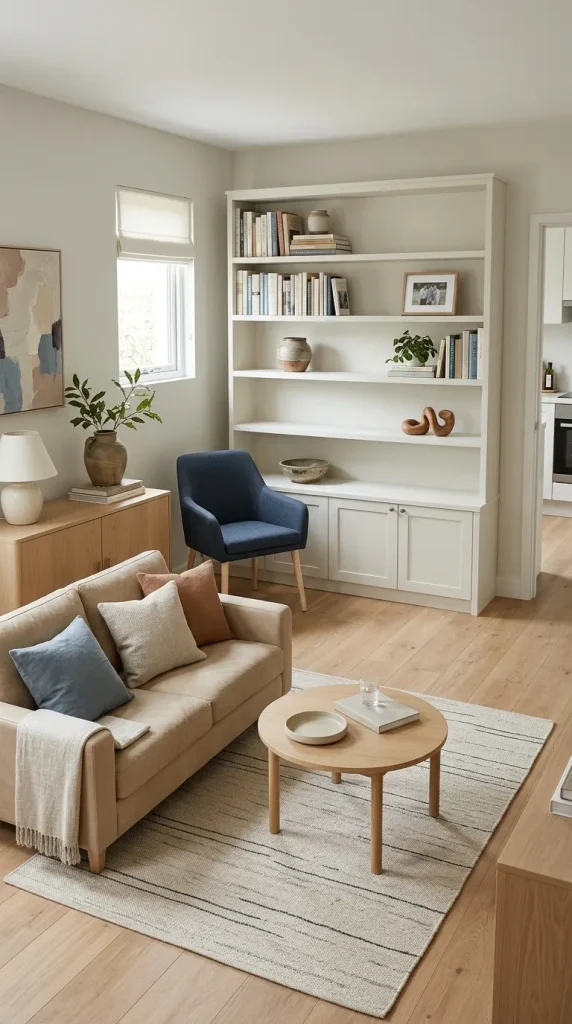
3. Declutter and Restyle the Furniture You Already Own
Decluttering does not mean removing everything that gives your home personality. It means deciding which objects deserve to remain visible and which would be better stored elsewhere.
Empty one bookshelf, sideboard or coffee table and rebuild the arrangement using only the objects you genuinely enjoy. Group books together, give larger decorative pieces some space and move everyday clutter into suitable storage. A room often feels more polished when a few meaningful objects are displayed deliberately rather than when every surface contains an assortment of unrelated accessories.
This is particularly useful in small apartments, where visual clutter can make limited space feel even more restricted. Before buying decorative baskets or organisers, check whether existing cupboards, drawers and shelves can be used more efficiently.
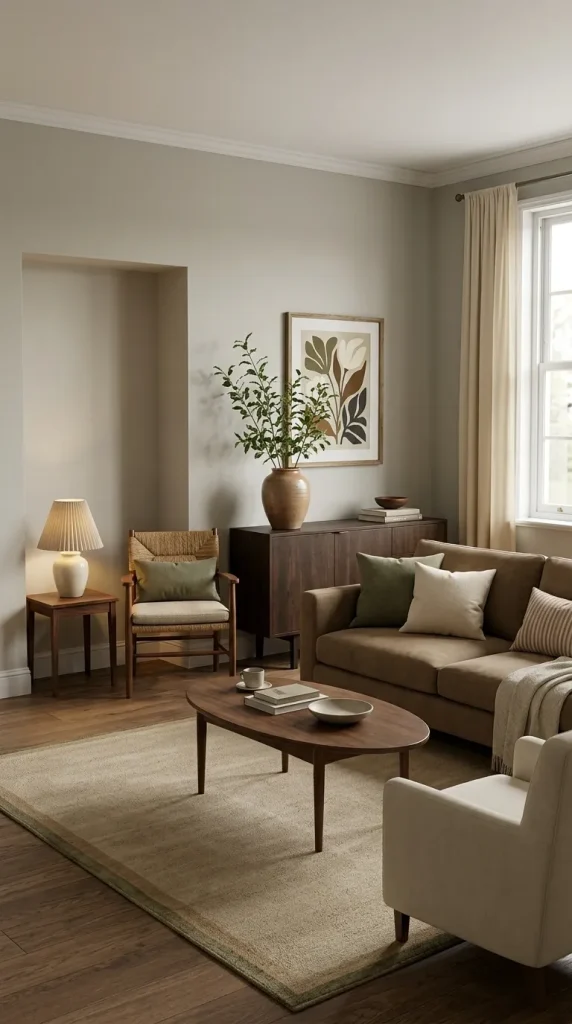
4. Borrow Decorative Pieces From Other Rooms
You may already own attractive objects that would look better in the living room than in their current locations. A ceramic vase from the dining room, a framed print from the hallway or a small lamp from a spare bedroom can create a new arrangement without requiring another purchase.
Try exchanging decorative objects between rooms while keeping their colours and proportions in mind. A substantial vase might look more convincing on a living room sideboard than several small ornaments, while an unused chair could become part of a reading corner.
The objective is not to move clutter from one room to another. Choose pieces that solve a specific decorating problem, such as an empty wall, an awkward corner or a lack of contrast.
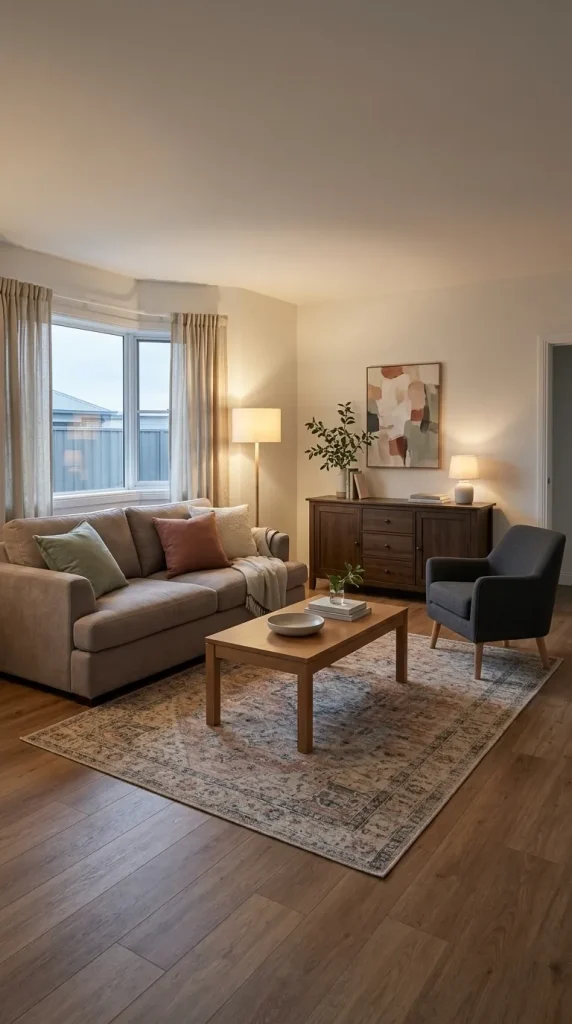
5. Build a Decorating Plan Around What You Already Have
One of the easiest ways to waste a limited budget is to buy attractive objects before deciding how they will work together. A discounted chair is not good value if it does not fit the room, and inexpensive accessories are unnecessary if they introduce colours that conflict with your existing furniture.
Begin by identifying the larger pieces that will remain, such as the sofa, rug, storage cabinet and coffee table. Choose a simple palette around those items, then decide which problem requires attention first. If the room is too dark, prioritise lighting. If it feels cluttered, improve storage. If it lacks personality, concentrate on artwork or colour.
Decorating in stages allows you to compare prices, discover suitable second-hand pieces and avoid purchases made simply to fill an empty space.
Make a Small Living Room Look Beautiful on a Budget
Small spaces require thoughtful proportions rather than expensive furniture. A carefully arranged compact room can look more comfortable and complete than a larger space filled with unnecessary objects. The key is to make every major piece contribute to the layout while preserving enough room to move naturally.
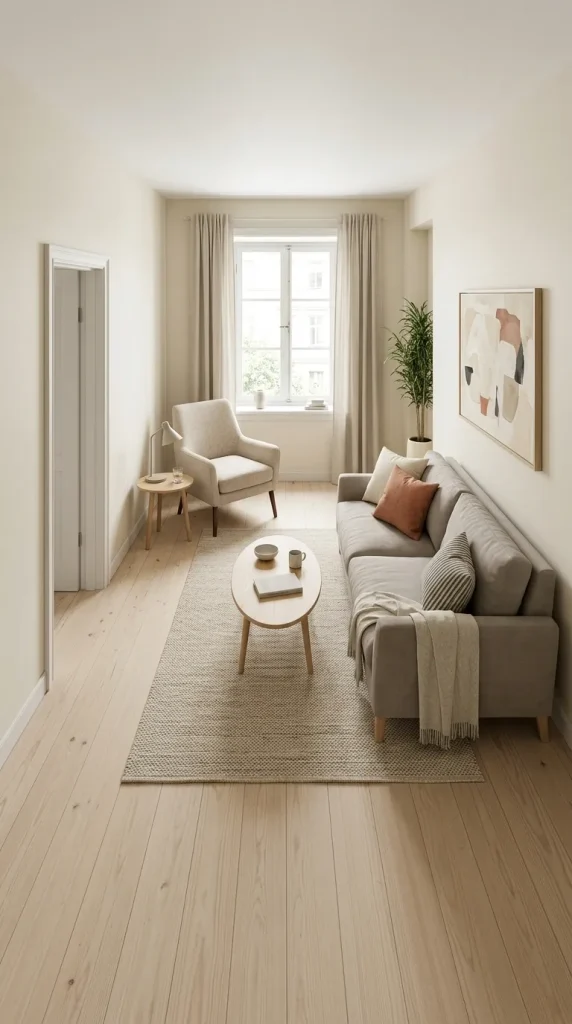
6. Create More Space by Simplifying the Seating Arrangement
A small living room can feel cramped when it contains too many individual chairs, side tables and occasional pieces. Instead of immediately looking for smaller replacements, consider whether the current furniture arrangement provides the seating you actually need.
One comfortable sofa and a compact armchair may offer a better layout than two bulky sofas. If the sofa is already substantial, remove unnecessary furniture from its immediate surroundings and create a clear route between the doorway and the main seating area.
For a narrow room, furniture with slimmer arms and shallower proportions may be worth considering when an existing piece genuinely needs replacing. However, do not buy new furniture simply because a compact alternative looks attractive online. First determine whether rearranging your current seating solves the problem.
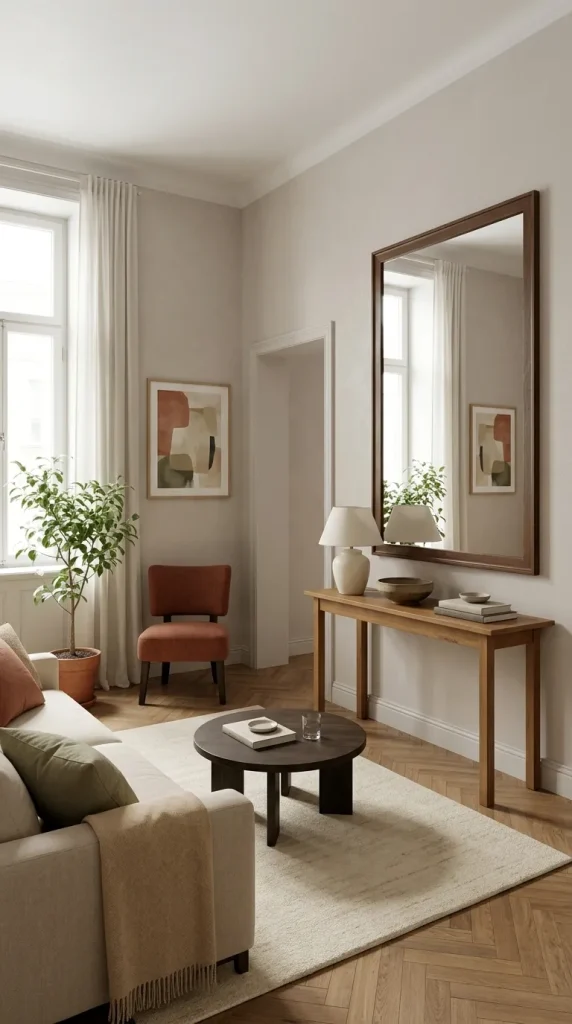
7. Use a Large Mirror to Make a Compact Room Feel Brighter
A second-hand mirror can change the appearance of a small living room by reflecting natural light and introducing visual depth. Its placement matters more than an elaborate frame.
Position the mirror where it reflects a window, attractive artwork or another appealing part of the room. A substantial mirror above a console can create a strong focal point, while a tall mirror may emphasise the height of a narrow space.
Look for second-hand mirrors with attractive proportions rather than purchasing several small decorative designs. If the frame is unsuitable, refinishing it may be more economical than replacing the entire mirror. Always secure heavy mirrors appropriately, especially when they are positioned above furniture.
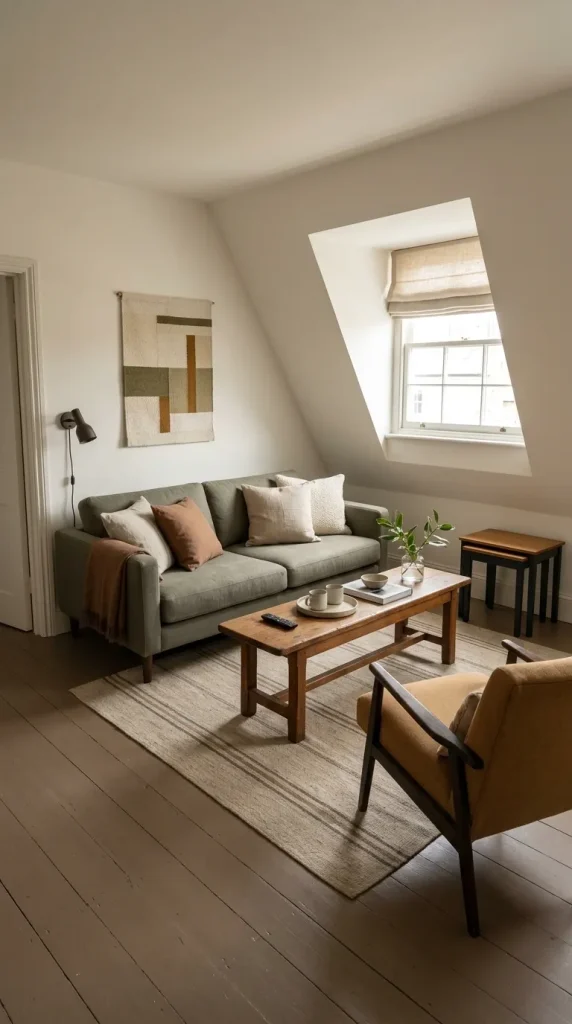
8. Replace Several Small Tables With One Practical Coffee Table
Too many occasional tables can make a small living room feel unnecessarily crowded. A well-positioned coffee table may provide enough surface space for everyday use while creating a clearer relationship between the sofa and armchair.
Before purchasing anything, consider repurposing an existing bench, trunk or sturdy table if it has suitable dimensions. A second-hand coffee table can also offer better value than several inexpensive new pieces.
If you frequently need additional surfaces, nesting tables provide flexibility without permanently occupying much floor space. Choose a finish that connects with the existing furniture, whether that is warm timber, painted wood or a simple glass-and-metal design.
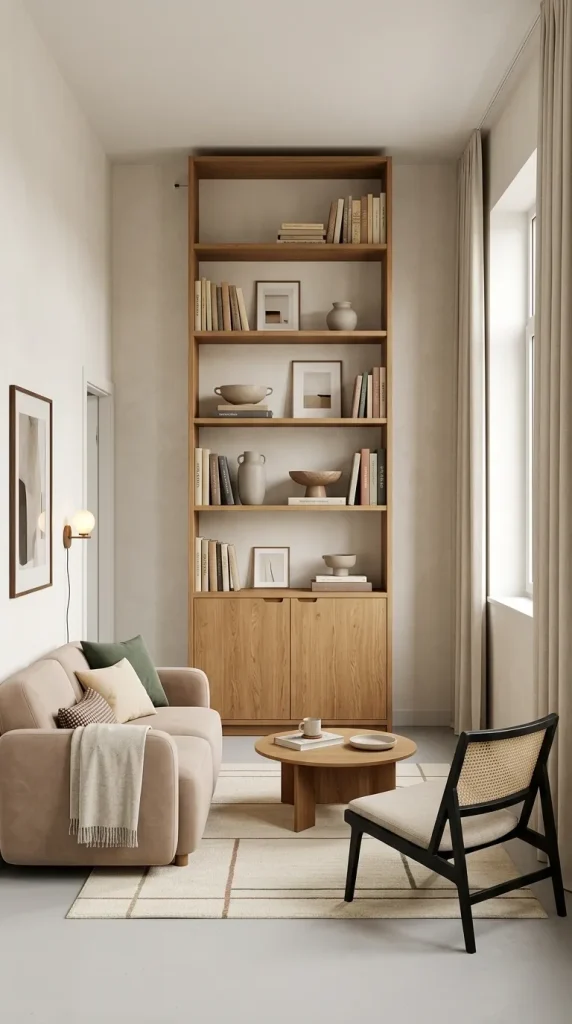
9. Use Vertical Storage Instead of Filling the Floor
Limited floor space does not always mean limited storage potential. A tall freestanding bookcase, narrow cabinet or carefully planned shelving arrangement can hold books, decorative objects and household belongings without spreading storage across several pieces of furniture.
In a rented apartment, a suitable freestanding unit may be more practical than permanent built-ins. Choose furniture with some closed storage so everyday items do not all remain visible. Where appropriate, secure tall furniture against tipping using suitable hardware and installation methods.
Restyle existing shelves before buying new ones. Books arranged vertically and horizontally, a few framed pictures and larger decorative objects can make functional storage contribute to the room’s appearance.
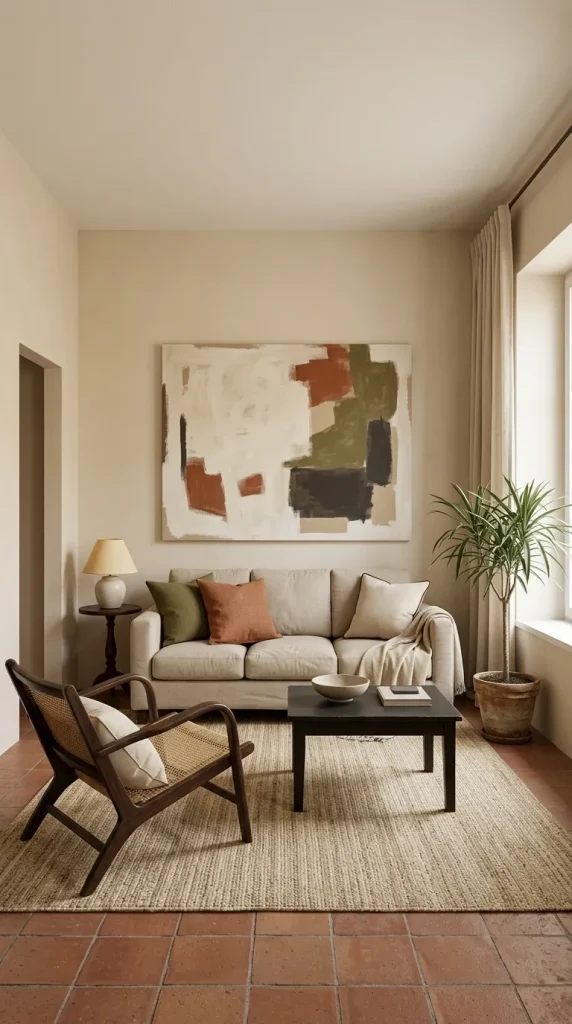
10. Give a Small Living Room One Substantial Decorative Feature
Many small living rooms suffer from an excess of undersized decorations. Several tiny pictures, multiple miniature plants and numerous small ornaments can make the space feel visually busy without creating a strong design.
Try choosing one larger piece instead. An oversized artwork, substantial mirror, attractive cabinet or generous rug can establish a clearer visual hierarchy while allowing the surrounding furniture to remain relatively simple.
If the budget is extremely limited, create a large DIY canvas or reframe artwork you already own. The scale of the decoration can make a much greater difference than the amount spent on it.
Refresh the Walls With Affordable DIY Decor
Blank walls can make an otherwise furnished living room feel unfinished, but filling them with inexpensive artwork is not always the answer. The most successful budget wall decorations use appropriate scale, coordinated colours and a composition that relates to the furniture beneath them.
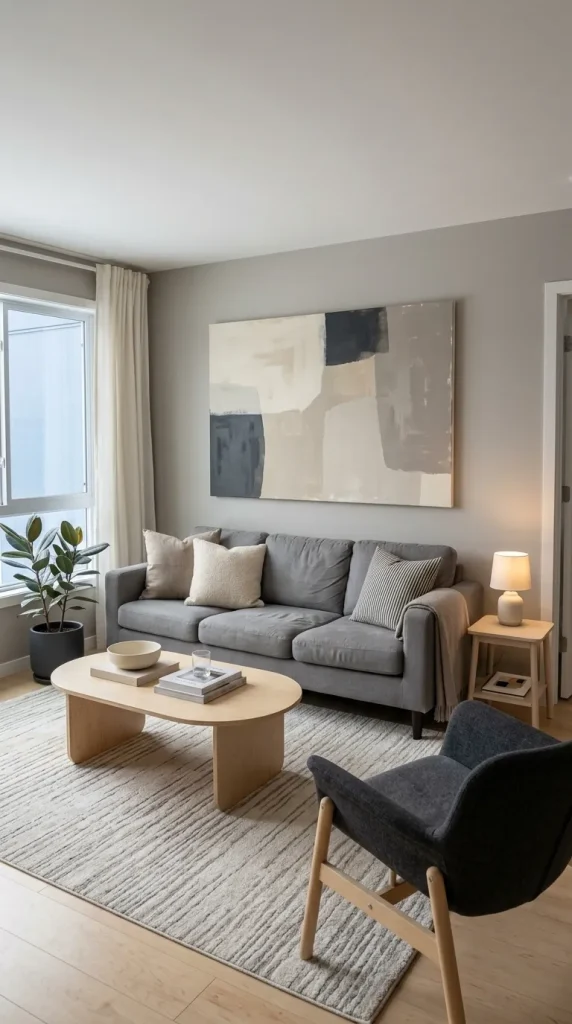
11. Paint an Oversized Abstract Canvas
A substantial DIY painting can be an affordable alternative to purchasing large original artwork. Simple abstract shapes, tonal colour fields or restrained geometric compositions can create an attractive focal point without requiring advanced painting skills.
Choose colours that already appear in the room. A beige sofa might work beautifully beneath a canvas containing warm white, terracotta and muted olive, while a contemporary grey living room could benefit from a softer combination of charcoal, mushroom and cream.
The dimensions should relate to the furniture below. A single large canvas above the sofa often feels more substantial than several unrelated small pictures. Before painting, test the composition on paper and consider the cost of the canvas and materials so the project remains genuinely economical.
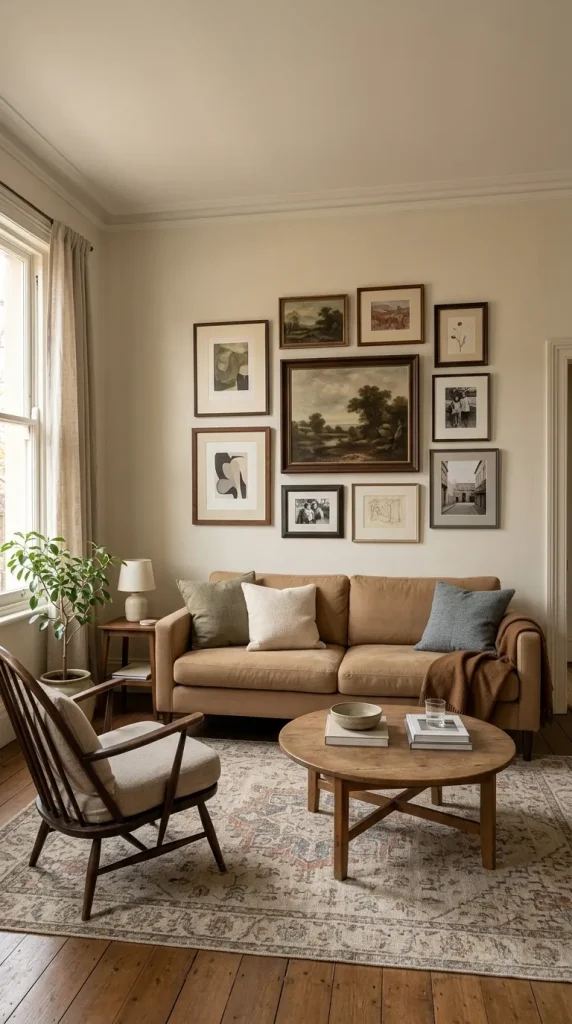
12. Create a Gallery Wall With Second-Hand Frames
Thrifted picture frames can turn an ordinary collection of photographs, prints and personal artwork into a more deliberate wall display. The key is to establish a visual relationship between the pieces rather than purchasing frames simply because they are inexpensive.
Choose a mixture of sizes, then connect them through a shared frame colour, coordinated matting or repeated tones in the artwork. A relaxed gallery can combine vintage landscapes with personal photographs and abstract prints, while a more formal arrangement may use identical frames.
Lay the complete arrangement on the floor before hanging anything. This allows you to refine the spacing and overall proportions without repeatedly making holes in the wall.
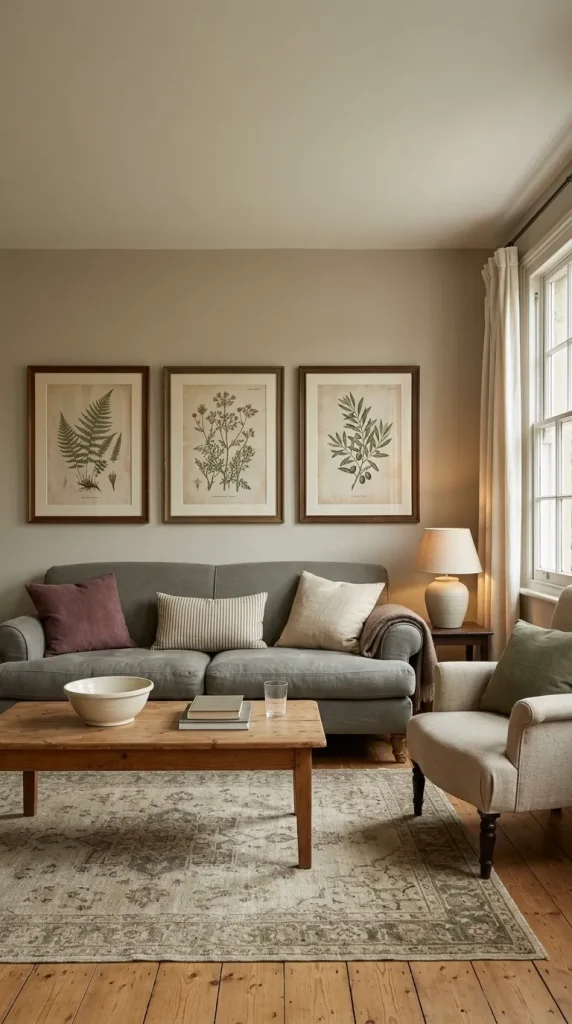
13. Frame Affordable Prints and Public-Domain Artwork
Beautiful wall art does not have to come from an expensive gallery. Affordable posters, suitable digital prints, personal photography and public-domain artwork can all provide visual character when they are carefully selected and framed.
Look for artwork that supports the room’s existing palette and atmosphere. Vintage botanical illustrations suit country-inspired interiors, while simple abstract prints work well in contemporary spaces. A collection of landscapes can bring colour and depth to a traditional living room.
Remember that printing and framing can increase the total cost. Reuse frames you already own or look for second-hand examples in suitable dimensions before choosing the prints.
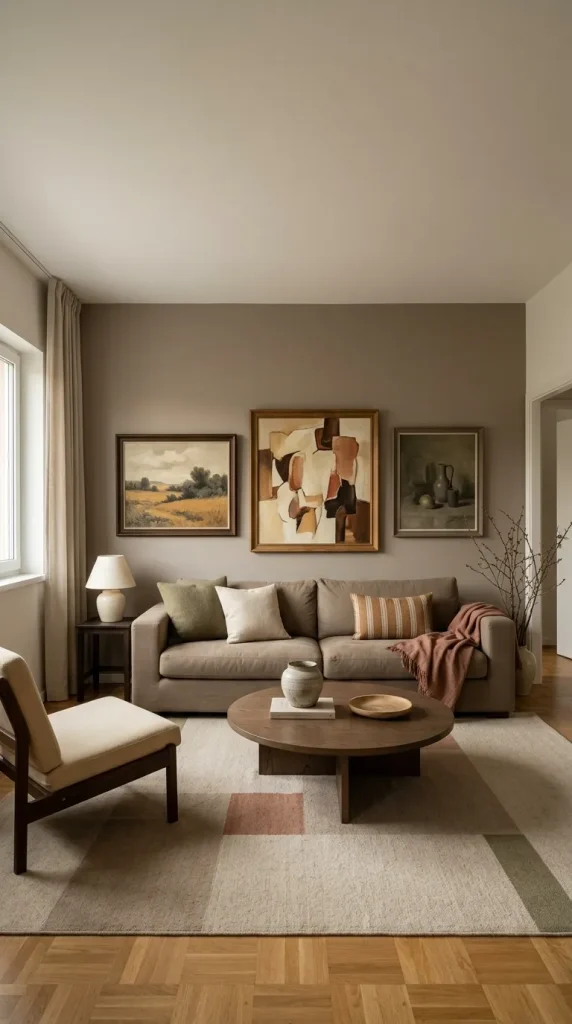
14. Make a Large Blank Wall Feel Finished Without Buying Dozens of Pictures
Decorating a large wall on a limited budget can be particularly challenging because small artwork may look lost against the available space. The solution is often to increase the scale of the composition rather than the number of objects.
One oversized DIY canvas, three substantial framed prints or a coordinated collection of larger second-hand paintings can provide enough visual weight. If painting is permitted, a simple accent wall may create an even more substantial change without requiring additional artwork.
Consider the furniture beneath the wall before deciding on the arrangement. A broad sofa needs a composition with enough width to relate to it, while a narrow console may suit one tall piece or a carefully arranged vertical grouping.
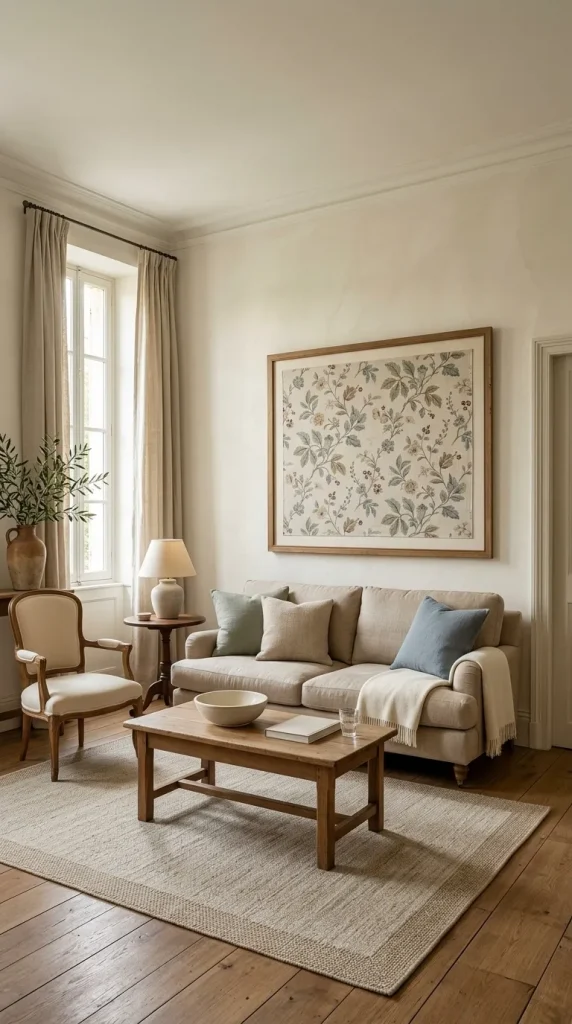
15. Frame Fabric for an Affordable Textured Wall Feature
Framed fabric can introduce colour, pattern and texture without the cost of a large painting. An attractive remnant, vintage scarf or piece of patterned textile may provide enough material for one substantial artwork or a pair of related frames.
This is particularly effective in farmhouse, traditional, French country and eclectic living rooms. Botanical fabric can complement wooden furniture and neutral upholstery, while a bold geometric textile can introduce personality into a simple contemporary room.
Choose a suitable frame and backing so the material sits neatly without being damaged unnecessarily. Allow the fabric to become the main decorative element rather than surrounding it with several unrelated patterns.
Give Existing Furniture a Second Life
Replacing furniture can consume most of a decorating budget, but many older pieces can become attractive again with a different finish, improved placement or more thoughtful styling. The important question is whether the furniture is structurally sound and suitable for the role you want it to perform.
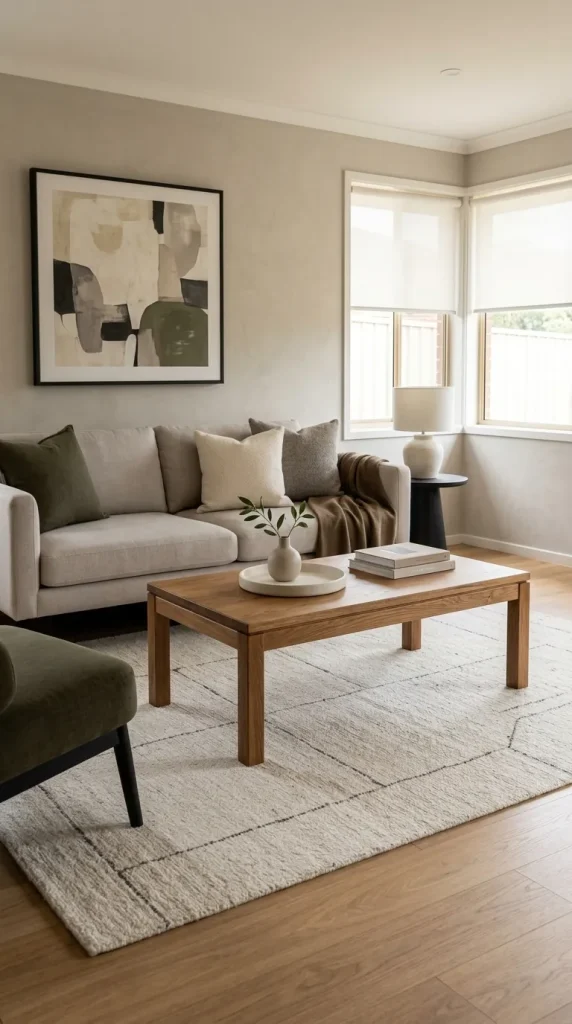
16. Refresh an Old Coffee Table With Paint or a New Finish
A worn coffee table may need only a new finish to complement the living room. Painting an inexpensive wooden table in a deep olive, charcoal or warm neutral can create a distinctive feature, while refinishing suitable solid wood may reveal attractive natural grain.
Choose the approach according to the table’s construction and existing condition. Solid timber, veneer and laminated surfaces require different preparation and products, so inspect the material before sanding or painting.
For a more contemporary room, simplify the styling after the makeover. One substantial tray, a ceramic vase or a small group of books may be enough to allow the refreshed table to become a useful decorative feature.
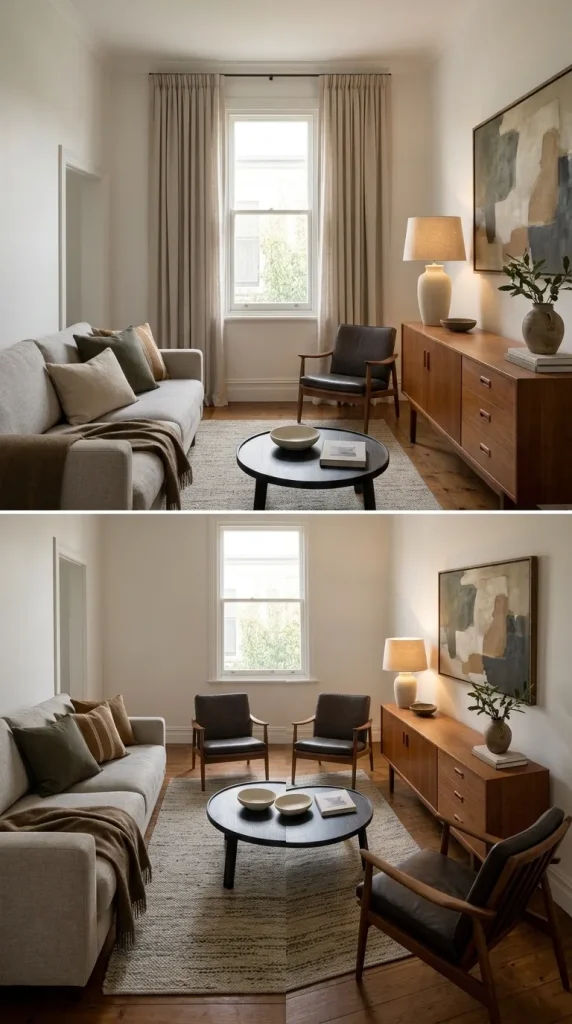
17. Find a Second-Hand Sideboard That Adds Character and Storage
A well-chosen second-hand sideboard can solve several decorating problems at once. It provides practical storage, fills an otherwise awkward wall and creates a substantial surface for artwork, lighting and decorative objects.
Look for proportions that suit the room rather than focusing exclusively on price. A narrow vintage sideboard may work beautifully in a townhouse lounge, while a larger wooden cabinet can anchor a generous family living room. Check drawers, doors, joints and finishes before purchasing.
Once the cabinet is in place, create a simple composition above and around it. A substantial painting, attractive lamp and carefully chosen ceramic piece can make even an inexpensive vintage find feel intentional.
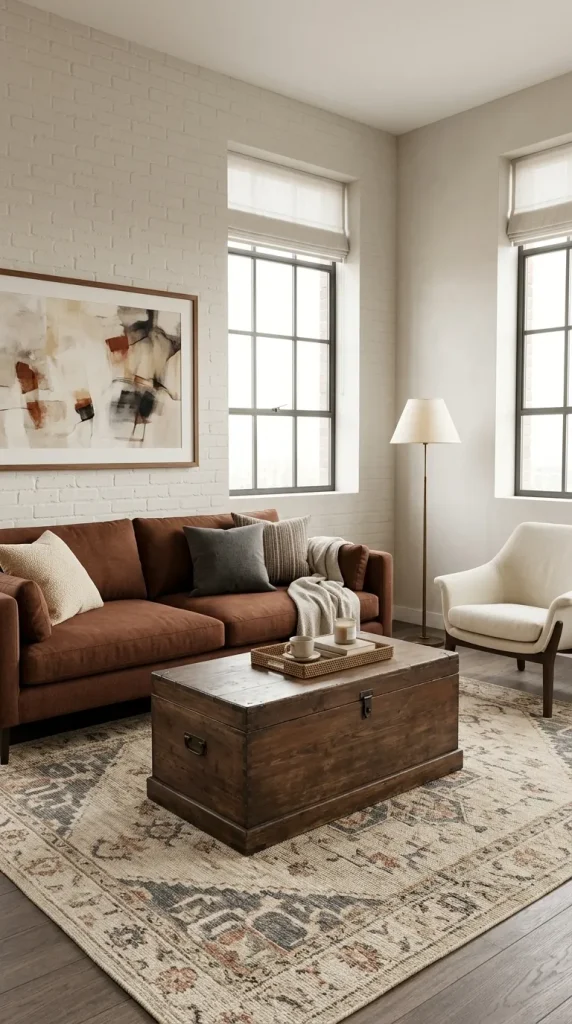
18. Repurpose an Existing Bench, Trunk or Chest
Furniture already in your home may have a more useful role in the living room than in its current location. A sturdy wooden bench could become a low display surface, while a suitable trunk might provide both storage and a distinctive coffee table.
Think carefully about dimensions and function before moving the piece. A trunk used as a coffee table needs to be stable and easy to access, while a bench should provide appropriate support for anything placed on it.
The benefit of repurposing is that it introduces character without automatically creating another purchase. When the material or finish differs from the surrounding furniture, repeat a related colour or texture elsewhere to make the arrangement feel cohesive.
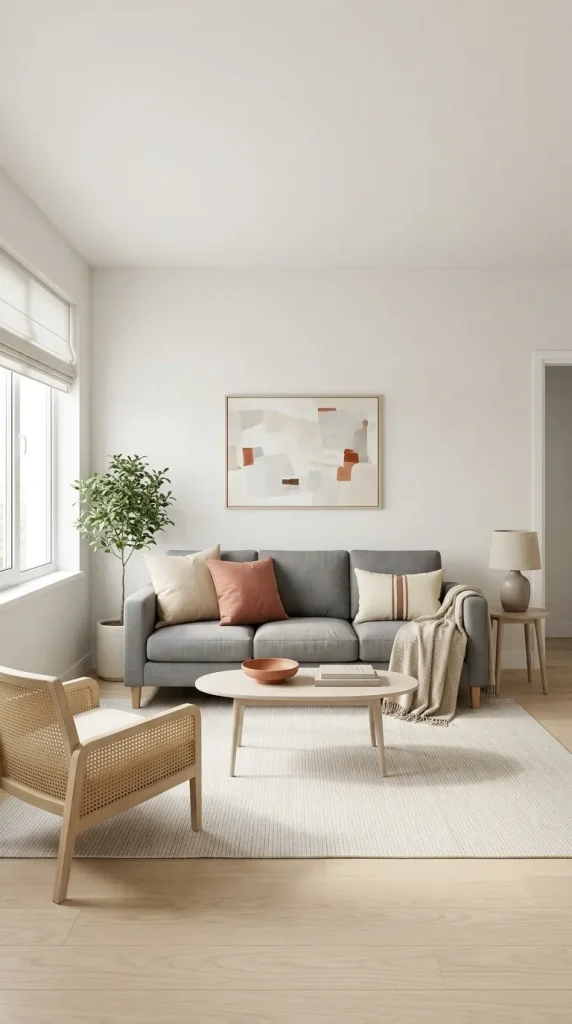
19. Make Your Existing Sofa Look Different With New Covers and Textiles
A sofa is usually one of the most expensive pieces of living room furniture, so replacing it simply because the room feels dated is rarely the most economical starting point. Changing a few textiles may create a completely different atmosphere.
A grey sofa can become warmer with oatmeal cushions, muted terracotta and a textured throw. A beige sofa can suit a modern minimalist room with charcoal accents or a farmhouse-inspired space with sage and natural linen. Choose cushion covers rather than entirely new inserts if the existing ones are still in good condition.
Keep the number of decorative textiles appropriate to the sofa. A few substantial cushions in coordinated fabrics usually create a more considered appearance than a large assortment of inexpensive, unrelated designs.
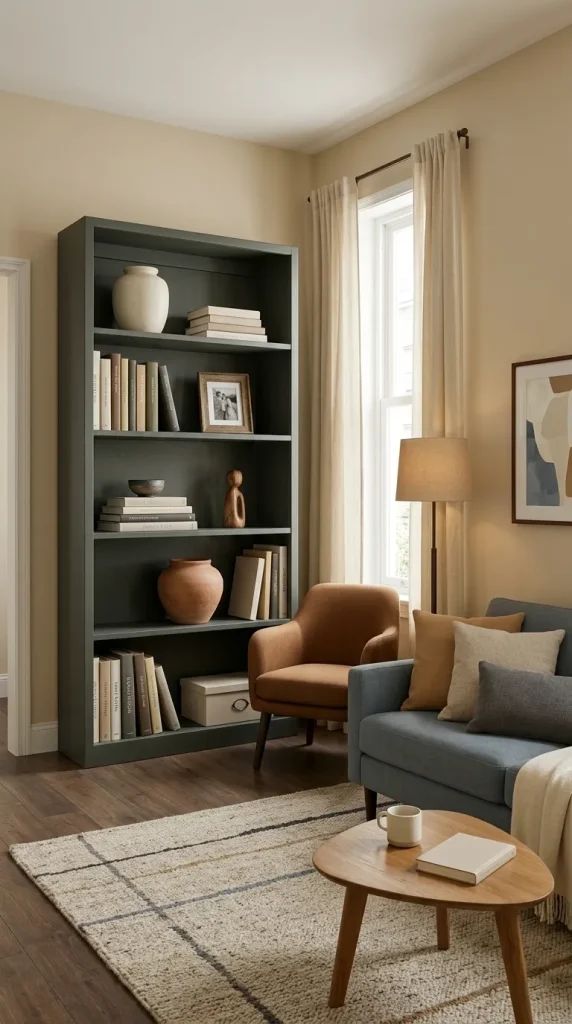
20. Restyle an Old Bookshelf Instead of Replacing It
A basic bookcase can look significantly more attractive when its contents are arranged thoughtfully. Empty the shelves, clean the unit and decide which books, photographs and decorative objects deserve to remain visible.
Use a mixture of vertical books, small horizontal stacks and a few larger objects to create variation. Leave some open space so the display does not feel crowded. If the bookcase is structurally sound but its finish conflicts with the room, a suitable paint or refinishing project may provide an economical update.
In a small living room, the bookshelf can also replace several smaller storage pieces, reducing clutter while creating one substantial decorative feature.
Create a Cosy Living Room With Affordable Textiles and Lighting
Cosiness comes from the relationship between comfortable furniture, soft materials, lighting and colour. A room does not need numerous cushions, blankets or decorative lights to feel inviting. Often, one substantial textile and a few well-positioned lamps can make an ordinary space noticeably more comfortable.
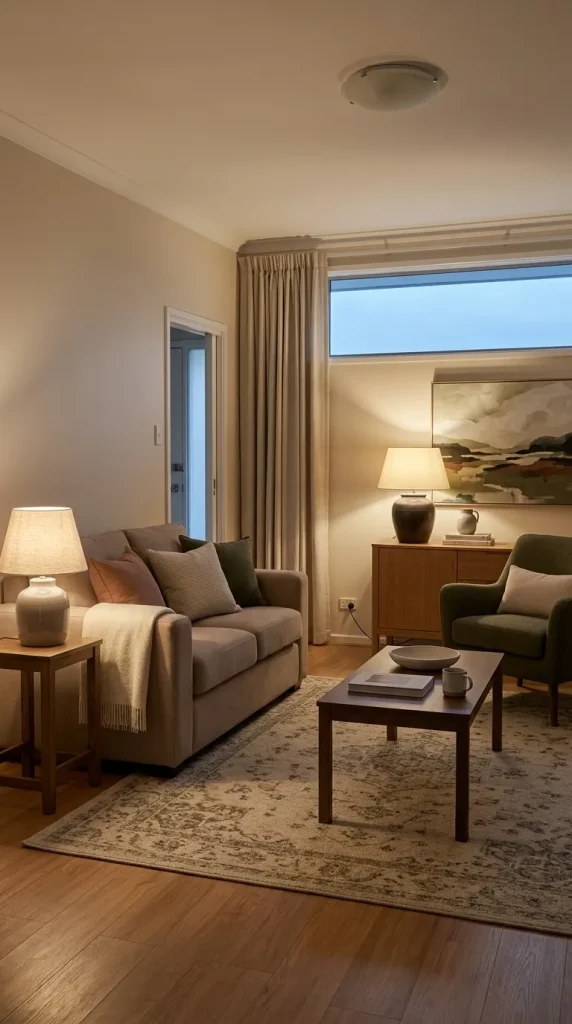
21. Introduce Warm Lighting With Affordable Table Lamps
Lighting is one of the most effective areas to improve when a living room feels cold or unfinished. A room illuminated exclusively by one bright ceiling fixture may lack the softer atmosphere created by smaller sources of light.
Place a table lamp beside the main sofa and another near a reading chair or sideboard where appropriate. Second-hand lamp bases can be economical if they are electrically safe and compatible with suitable bulbs and shades. Warm light can soften inexpensive furniture and make the surrounding colours appear more welcoming.
Choose lamps according to the scale of the furniture. One substantial lamp on a sideboard may create a stronger decorative effect than several undersized lights scattered around the room.
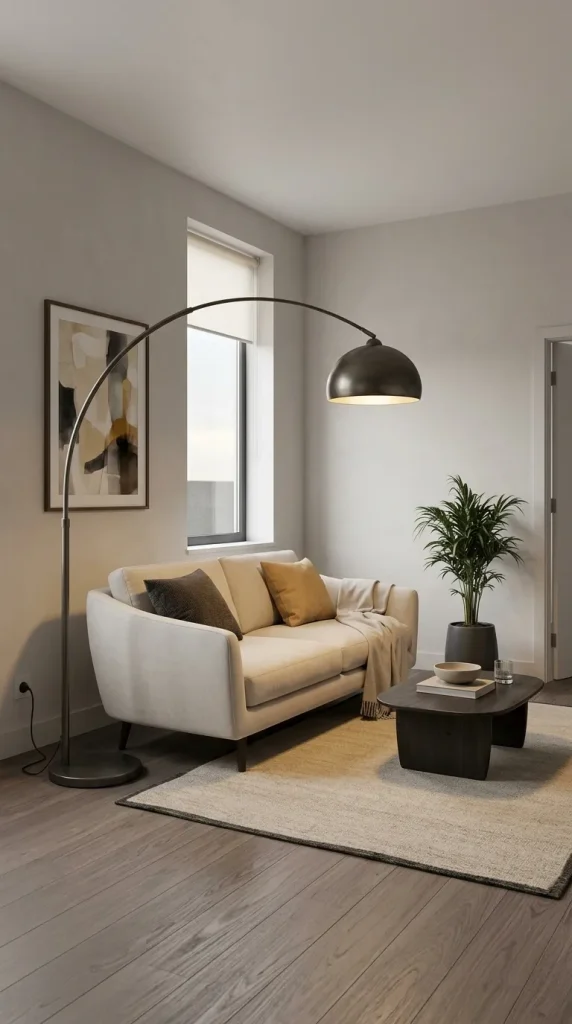
22. Make a Floor Lamp the Statement Piece
A distinctive floor lamp can provide both practical lighting and a decorative focal point, particularly in a room where you cannot afford to introduce several new furniture pieces.
An arched metal lamp may suit a contemporary interior, while a fabric-shaded design can create a warmer traditional atmosphere. Position it beside the sofa or reading chair so it serves a genuine purpose.
Look for second-hand options where appropriate, but prioritise safety and condition over appearance. A well-positioned floor lamp can also reduce the need for another side table, which is especially useful in a compact living room.
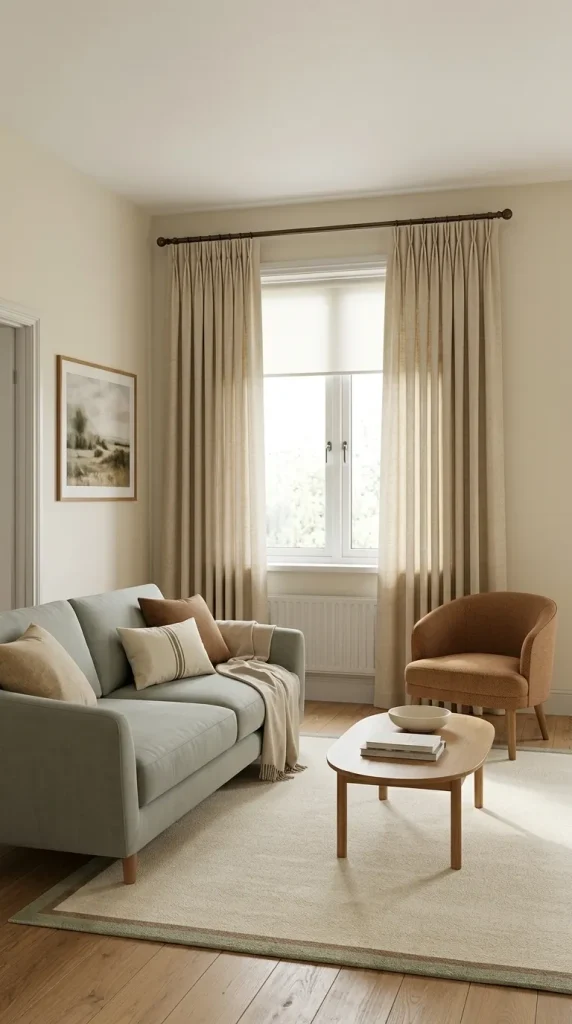
23. Upgrade the Appearance of Your Windows With Ready-Made Curtains
Curtains occupy a substantial visual area, so improving them can make a room feel more complete. You do not necessarily need bespoke window treatments to achieve attractive proportions.
Choose ready-made curtains with a length and fabric that suit the room, and consider whether their existing heading style and installation position can be improved. Where appropriate, positioning the curtain pole above the window can emphasise height and create a more generous appearance.
Practical requirements still matter. Privacy, light control, heating equipment and the way the windows open should influence the choice. If your existing curtains already perform well, pressing them, improving their arrangement or changing nearby accessories may be more economical than replacing them.
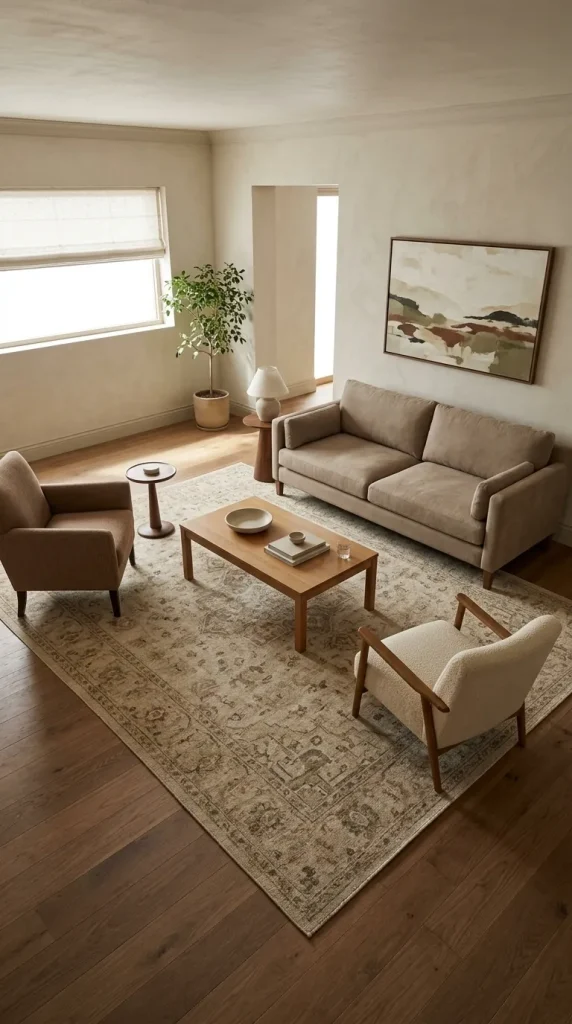
24. Use One Appropriately Sized Rug to Connect the Seating
A rug can make an inexpensive furniture arrangement feel more coherent by visually connecting the sofa, armchairs and coffee table. The important factor is size rather than simply choosing an attractive pattern.
A rug that is too small may make the seating look disconnected, while an appropriately sized design can create a clearer and more comfortable conversation area. If you already own a suitable rug, try repositioning it before shopping for a replacement.
When purchasing a new rug is necessary, compare affordable and second-hand options while considering durability and maintenance. Choose a pattern and colour that work with the furniture you intend to keep so the rug remains useful even if smaller accessories change.
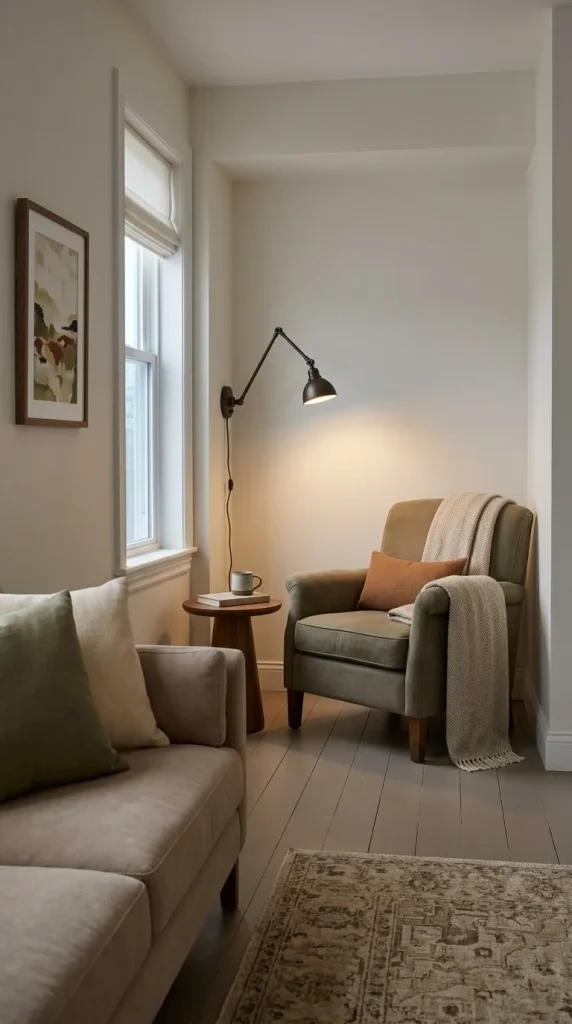
25. Create a Cosy Corner With a Chair, Lamp and Throw
An awkward corner can become one of the most inviting parts of a living room when it has a clear purpose. If you already own a suitable armchair, position it near a window or bookshelf and introduce a lamp for reading.
A textured throw and small side table can complete the arrangement without requiring elaborate decoration. In a compact room, a wall-mounted reading light may be more practical than another floor lamp, provided installation is permitted and suitable.
The result should feel connected to the rest of the living room through a repeated colour or material. A reading corner does not need a separate decorating scheme to feel special.
Create Distinct Decorating Styles Without Expensive Furniture
A limited budget should not force every living room into the same beige-and-white scheme. Modern, minimalist, farmhouse, French country and Mediterranean-inspired interiors can all be created through affordable choices when the defining colours, materials and furniture relationships are understood.
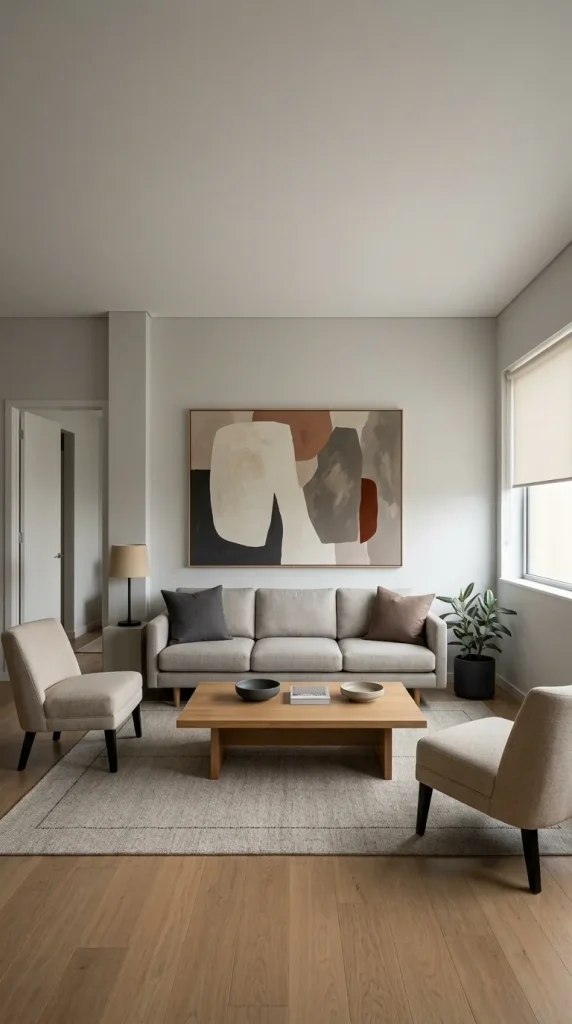
26. Create a Modern Living Room With Clean Lines and One Strong Accent
A modern living room can feel sophisticated without expensive designer furniture. Start with the simplest furniture arrangement that meets your needs, then introduce one substantial decorative feature, such as large artwork, a distinctive floor lamp or a well-proportioned coffee table.
Keep the palette controlled and avoid purchasing multiple small accessories simply to make the space feel complete. A neutral sofa, timber table, understated rug and one large abstract print can create a convincing contemporary interior when the proportions work together.
If you already own traditional furniture, consider whether one older piece can provide useful contrast rather than replacing everything to achieve an entirely modern appearance.
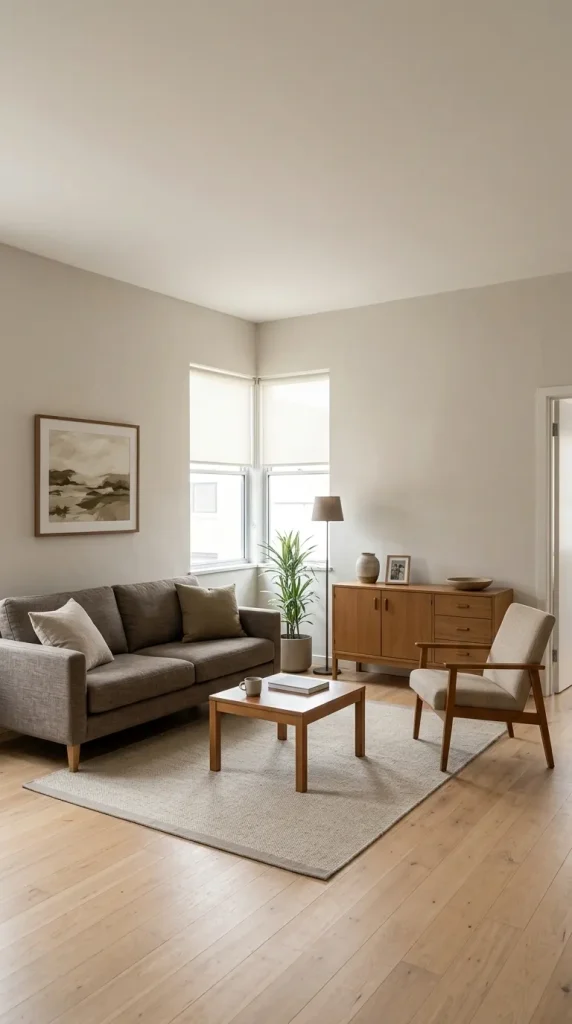
27. Make Minimalism Work With Furniture You Already Own
Minimalism can be particularly compatible with budget decorating because it encourages thoughtful decisions about what genuinely belongs in the room. However, it does not require replacing every existing piece with expensive contemporary alternatives.
Begin by removing unnecessary furniture and improving the layout. Concentrate everyday belongings in practical storage and allow a few meaningful objects to remain visible. Choose a limited palette that accommodates the larger pieces you already own.
A calm, functional living room with a comfortable sofa, suitable lighting and a few attractive objects can feel more complete than a supposedly minimalist space filled with new furniture that serves little purpose.
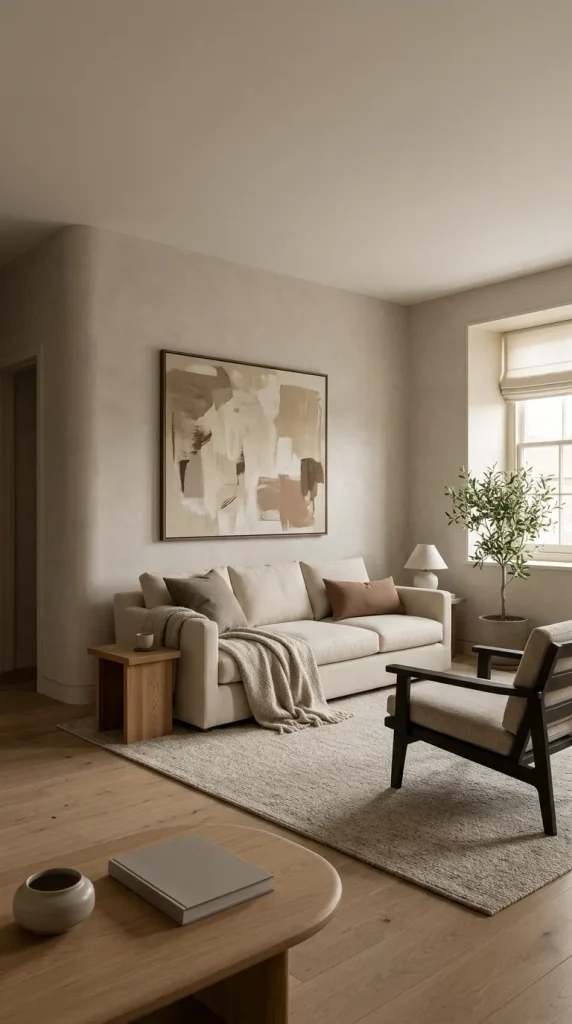
28. Introduce Warm Minimalism With Timber and Textured Neutrals
Warm minimalism offers a softer alternative to highly graphic contemporary interiors. Natural timber, warm ivory, mushroom, oatmeal and textured fabrics can create a relaxed atmosphere without requiring extensive decoration.
An existing neutral sofa can become the foundation. Add a wooden side table, a textured throw and one substantial piece of artwork that repeats the room’s natural tones. If the space feels flat, introduce contrast through darker timber or a muted earthy colour rather than purchasing several additional beige accessories.
The emphasis should remain on material variation and comfortable proportions. Fewer objects often create a stronger effect when the individual pieces contribute useful texture and visual weight.
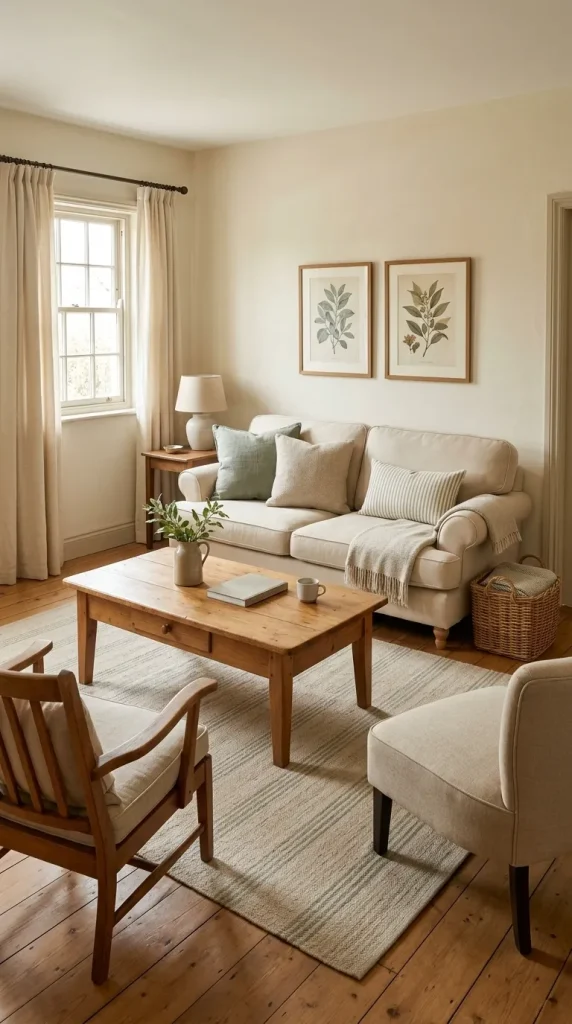
29. Create a Farmhouse Living Room With Second-Hand Wood and Natural Textiles
Farmhouse-inspired decorating does not require expensive shiplap, reclaimed beams or a collection of distressed furniture. The atmosphere can come from warm wooden pieces, comfortable upholstery, simple fabrics and practical household accessories.
A second-hand wooden coffee table, cream sofa, sage-green cushions and woven basket can establish a relaxed farmhouse palette. Botanical artwork and simple curtains introduce additional character without overwhelming the room.
Avoid purchasing decorative signs or artificially distressed accessories simply to communicate the style. The more convincing approach is to use furniture and materials that feel practical, natural and appropriate to the home.
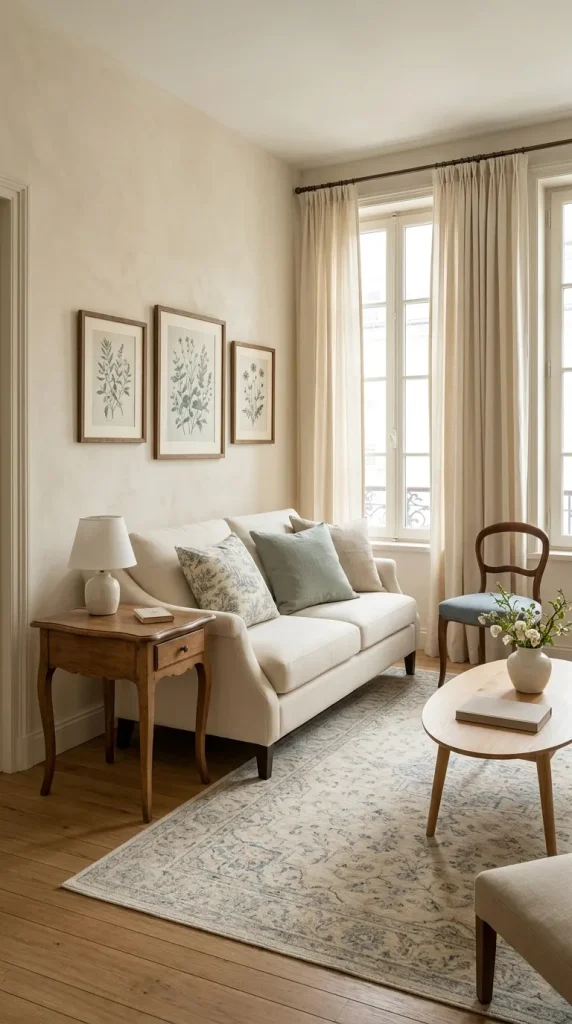
30. Create an Affordable French Country Living Room
French country decorating can be achieved through carefully selected second-hand furniture and textiles rather than expensive antiques or elaborate renovation work. Soft cream, faded blue, muted sage and natural timber provide an attractive foundation.
A vintage wooden side table can sit beside a comfortable neutral sofa, while floral or toile-inspired cushions introduce traditional pattern. Framed botanical prints, simple ceramic vases and soft curtains complete the atmosphere.
Allow one or two vintage pieces to provide most of the character. A beautifully proportioned second-hand table may be more valuable to the design than purchasing several new decorative accessories intended to imitate an antique interior.
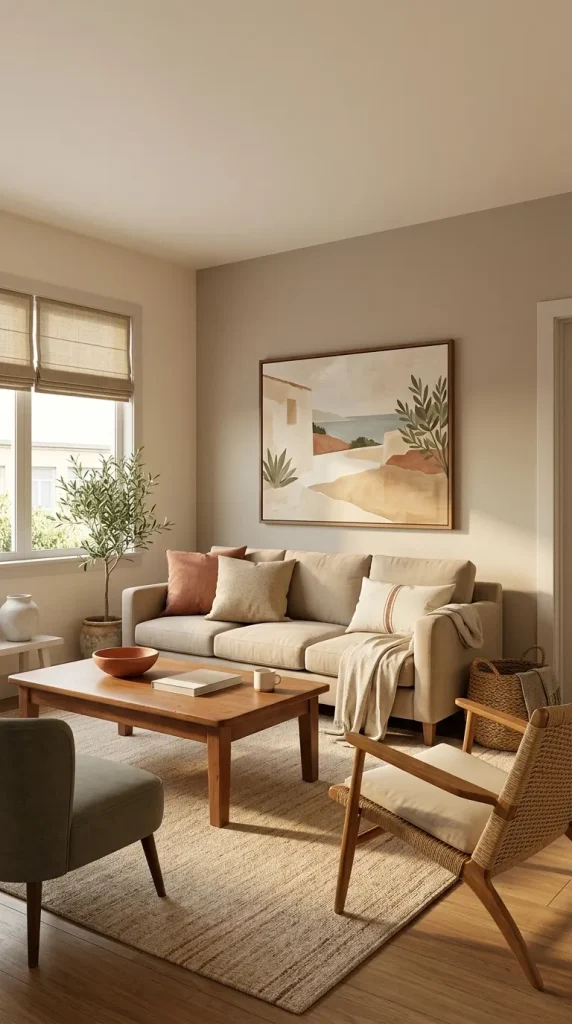
31. Bring Mediterranean Warmth Into the Living Room
A Mediterranean-inspired living room can feel rich and relaxed without installing stone floors, building arches or undertaking structural alterations. Warm white walls, terracotta colours, natural wood and woven materials create the foundation.
Use an existing wooden coffee table alongside a neutral sofa and introduce terracotta through cushions, artwork or decorative ceramics. A woven basket and simple natural-fibre accessories can reinforce the material palette.
If painting is permitted, a warm wall colour may provide a relatively affordable transformation. Otherwise, substantial artwork and carefully selected textiles can establish the same atmosphere without changing the property’s permanent finishes.
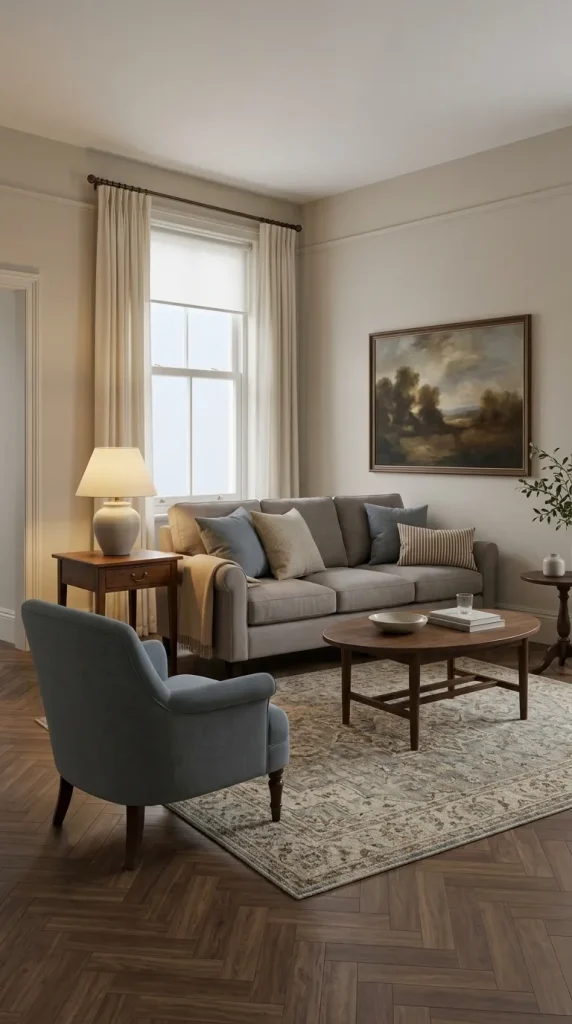
32. Create a Classic Living Room With Balanced Furniture and Traditional Details
A classic living room does not have to depend on costly antiques or expensive upholstery. Balanced furniture placement, restrained colours, traditional lamps and well-chosen artwork can create a timeless atmosphere using affordable pieces.
Arrange a sofa and armchair around a suitable coffee table, then establish a clear visual relationship between the furniture and the main wall. A second-hand wooden side table, traditional lamp and one substantial painting can introduce character without requiring an elaborate collection of decorative objects.
Choose textiles and colours that complement the furniture’s existing shape and finish. A classic interior often benefits more from good proportions and restraint than from a large number of inexpensive ornaments.
Decorate Around Your Existing Colours and Furniture
One of the most expensive decorating mistakes is choosing a new colour scheme that requires replacing perfectly usable furniture. A better approach is to work with the sofa, flooring and storage you already own, then introduce carefully selected colours that make those pieces feel more intentional.
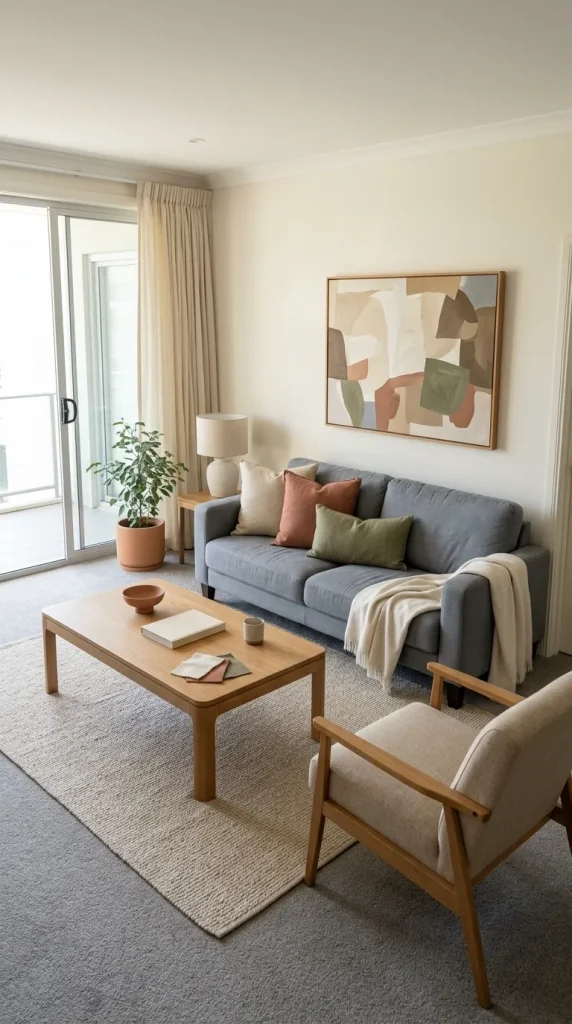
33. Warm Up a Grey Living Room With Wood and Earthy Accents
A grey sofa or grey carpet can provide a useful neutral foundation, but a room filled with several nearly identical grey tones may feel cold or visually flat.
Introduce warm ivory, oatmeal, natural wood and muted terracotta to create a more welcoming palette. A wooden coffee table, cream curtains and a few olive or rust-coloured cushions may be enough to transform the atmosphere without replacing the sofa or flooring.
Consider the existing grey’s undertone before choosing paint or textiles. A cool, blue-based grey may respond differently to warm accessories than a softer taupe-grey. Test potential combinations using affordable fabric samples or objects already in the home before making larger purchases.
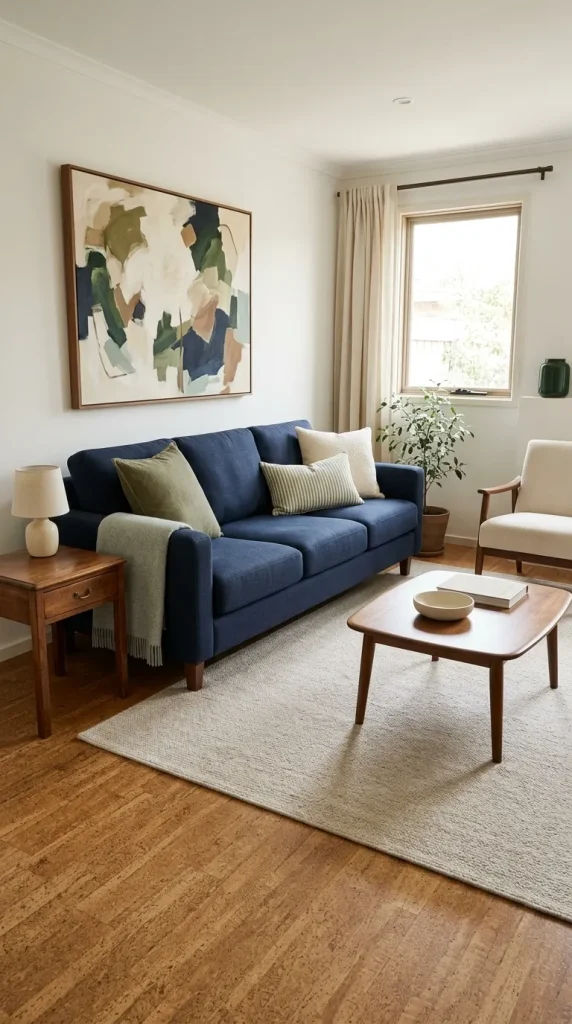
34. Combine Navy Blue and Green for an Affordable Colourful Living Room
Navy and green can create a distinctive, sophisticated palette without requiring expensive statement furniture. If you already own a navy sofa, introduce olive, sage or forest-green accents through cushions, artwork or a carefully chosen throw.
Warm timber and cream can prevent the colours from becoming excessively dark. A second-hand wooden side table and neutral curtains may connect the palette more effectively than purchasing additional bright accessories.
If the living room already contains a green sofa, reverse the relationship by introducing navy through artwork or smaller textiles. Allow the existing furniture to remain the dominant colour so the scheme feels cohesive rather than overly coordinated.
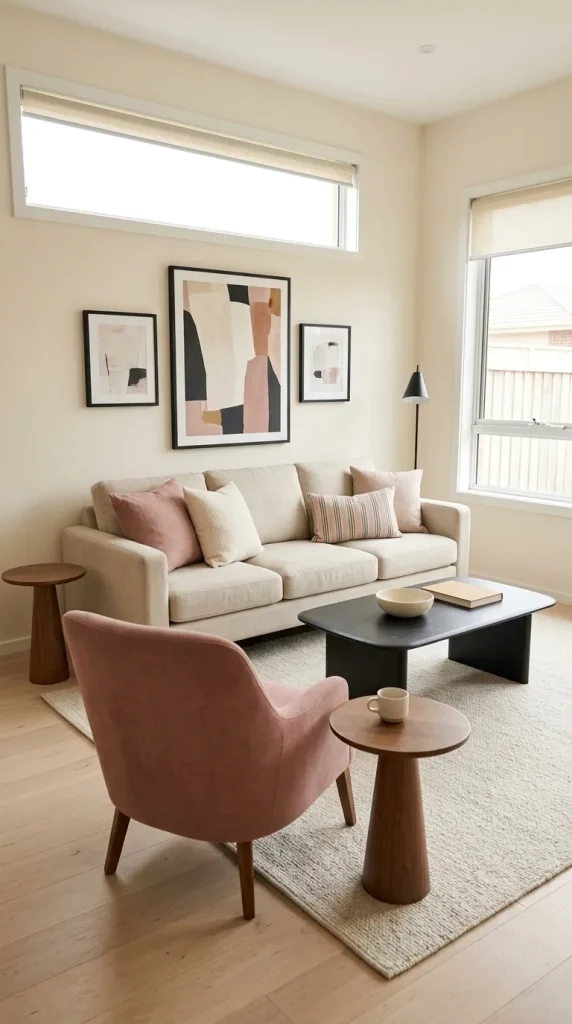
35. Use Black and Dusty Pink for a Graphic Budget Makeover
Black furniture or dark metal details can create a striking foundation for a more expressive living room. Dusty pink or blush introduces softness, while cream and warm wood provide enough contrast to prevent the palette from feeling severe.
Try black picture frames above a neutral sofa, a few pink cushions and one substantial graphic artwork. A black floor lamp or existing dark coffee table can establish repetition without requiring the purchase of several matching accessories.
For a more dramatic look, use a stronger pink accent in one larger object, such as a chair or rug, while keeping the surrounding furniture relatively simple.
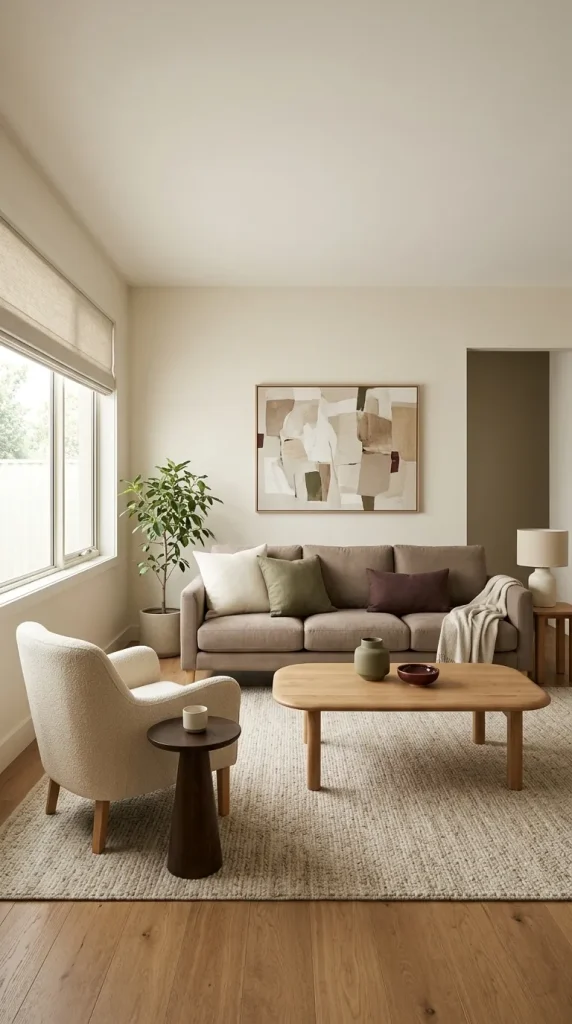
36. Create a Flexible Neutral Living Room That Can Evolve Over Time
A neutral foundation can make budget decorating easier because smaller decorative elements can change without forcing you to replace the main furniture.
Warm ivory, cream, beige, taupe and natural timber provide an adaptable palette. Start with your existing sofa and flooring, then introduce variation through texture and a few carefully chosen darker accents.
A neutral room does not need to be colourless. Artwork, cushions and ceramics can introduce olive, burgundy, terracotta or muted blue according to your preferences. By limiting the major purchases to pieces that work across several palettes, you can refresh the space gradually without starting again every time your taste changes.
Solve Practical Living Room Problems With Budget-Friendly Design
The final improvements should make the living room easier to use as well as more attractive. Affordable storage, sensible furniture placement and a carefully designed television area can make a larger difference to everyday comfort than another collection of decorative accessories.
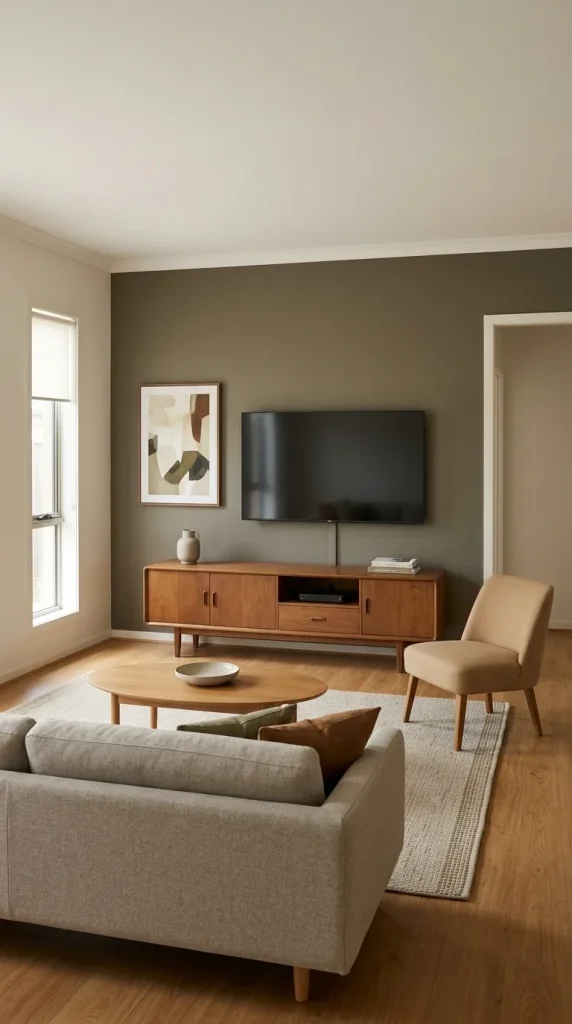
37. Create an Attractive TV Wall Without an Expensive Media Installation
A television wall does not require custom cabinetry, elaborate decorative panelling or a full-height media installation. A suitable low console, coordinated wall colour and simple arrangement of artwork or shelving can create a polished result on a limited budget.
Look for a second-hand media cabinet with enough storage for your equipment and everyday belongings. Position the television at a comfortable viewing height, manage visible cables and keep ventilation openings clear.
If painting is permitted, a contrasting wall colour can help the television feel integrated into the room. Avoid surrounding the screen with numerous small decorative objects that compete for attention during viewing.
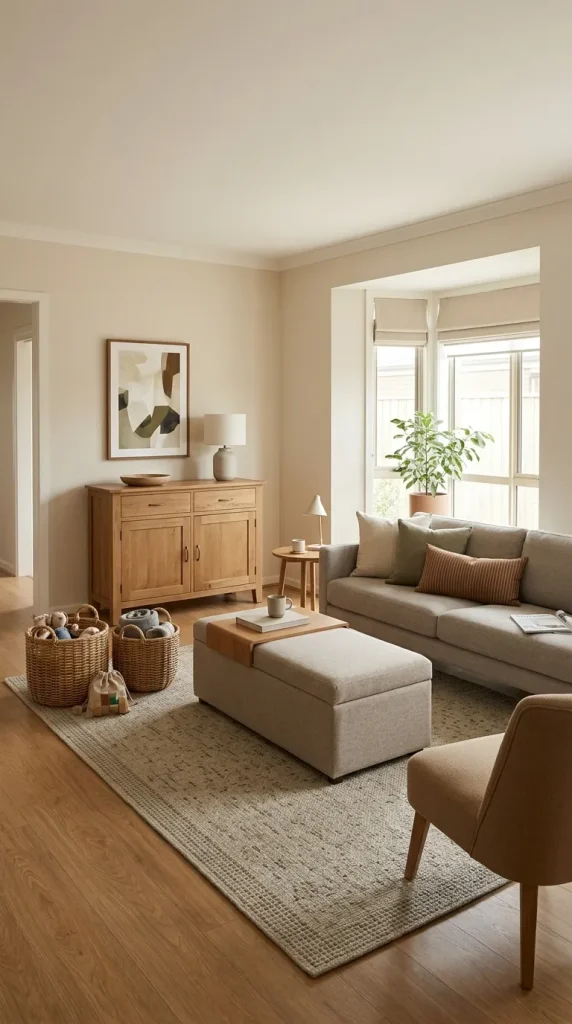
38. Use Baskets and Closed Storage to Organise a Family Living Room
Even an attractively decorated living room can feel unfinished when toys, cables, magazines and everyday objects have nowhere to go. Affordable storage should solve those practical problems while supporting the room’s appearance.
Use existing cupboards first, then introduce baskets or decorative boxes only where they are genuinely needed. A storage ottoman may provide more value than a purely decorative coffee table if the room regularly accumulates toys or blankets.
Choose containers that relate to the surrounding materials. Woven baskets can complement farmhouse or Mediterranean-inspired interiors, while simple closed boxes work well with contemporary cabinetry. Keep the storage accessible so the organisation system remains practical after the initial makeover.
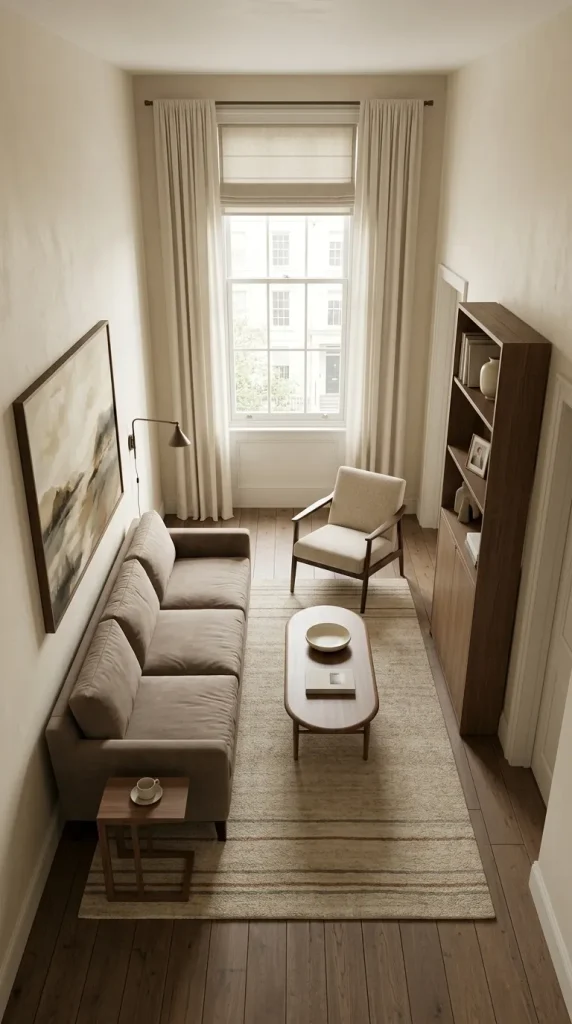
39. Give a Narrow Townhouse Living Room a Better Layout
Narrow living rooms can look overcrowded when furniture is distributed along both walls without considering the route through the room. A budget-friendly improvement may involve changing the arrangement rather than purchasing smaller furniture immediately.
Position the principal sofa where it provides comfortable seating without obstructing doorways, then use one compact occasional chair instead of several smaller pieces. A suitable rug can establish the seating zone, while wall-mounted or tall freestanding storage may reduce the need for additional floor-level furniture.
If the room has an attractive window or fireplace, allow that architectural feature to become the main focal point. One substantial artwork and a well-positioned lamp can provide enough decorative character without filling every narrow wall.
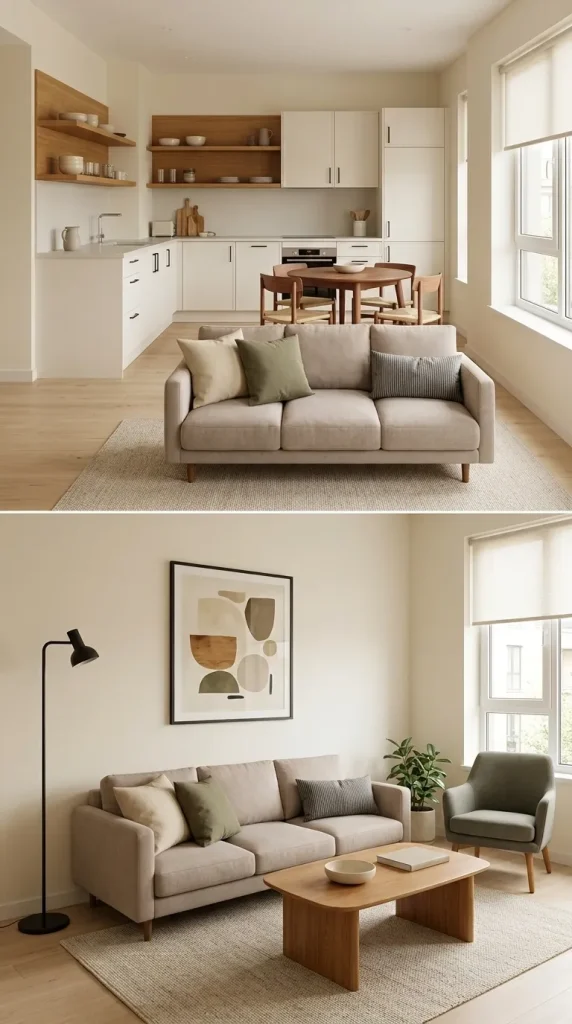
40. Connect an Open-Plan Living Room and Kitchen With a Shared Palette
An open-plan apartment can feel unfinished when the living room and kitchen have completely unrelated colours, materials and lighting. Creating a visual connection does not require buying matching furniture for both areas.
Look for one or two existing features that can be repeated. If the kitchen has warm wooden shelving, choose a similar timber finish for the living room coffee table or introduce a related tone through artwork. If the kitchen contains black handles or lighting, a black floor lamp or picture frame can create subtle continuity in the seating area.
Use furniture placement and an appropriately sized rug to establish a separate living zone. A compact dining table or sofa can help define the transition between the two spaces without requiring an expensive partition or additional architectural work.
How to Prioritise Your Living Room Decorating Budget
The most useful decorating budget is one based on the room’s actual problems rather than a fixed shopping list. Someone furnishing an empty first apartment may need to prioritise seating and storage, while someone refreshing an established family room might achieve a substantial improvement through paint, lighting and artwork.
| If your living room feels… | Start with… | Avoid spending on… |
|---|---|---|
| Cramped | Furniture arrangement and removing unnecessary pieces | Extra occasional furniture |
| Dark | Better lamp placement and suitable lighting | Small decorative accessories |
| Unfinished | One substantial focal point | Numerous undersized ornaments |
| Cluttered | Existing storage, closed cabinets and organisation | More display shelves |
| Dated | Paint, textiles and furniture restyling | Replacing every major piece |
| Cold | Warm colour, timber and textured fabrics | More matching cool-toned accessories |
| Disconnected | An appropriately sized rug and better furniture spacing | Unrelated decorative pieces |
| Impersonal | Meaningful artwork, photographs and second-hand finds | Generic matching accessory sets |
If the available money is extremely limited, begin with changes that cost nothing. Rearrange the furniture, declutter and restyle the objects you already own. Then identify one affordable improvement that solves the most noticeable remaining problem.
Five Budget Decorating Mistakes That Can Make a Room Look Cheaper
Buying too many inexpensive accessories. Small purchases add up quickly, particularly when they do not contribute to a clear decorating plan. One substantial piece of artwork or an attractive second-hand cabinet may create more impact than numerous decorative objects.
Choosing furniture without checking dimensions. A discounted sofa or cabinet is not good value if it blocks the doorway, overwhelms the room or fails to provide the storage you need. Measure the available space and consider circulation before making larger purchases.
Buying an undersized rug. A small rug that sits entirely beneath the coffee table can make the seating look disconnected. If a suitably sized rug is beyond the current budget, consider improving the existing furniture arrangement while saving for one that genuinely suits the room.
Replacing furniture that could be improved. A structurally sound table, cabinet or sofa may only need a different finish, better placement or updated textiles. Assess the possibility of reuse before purchasing replacements.
Decorating without a consistent colour palette. Affordable objects often look more intentional when they repeat a limited number of colours and materials. An attractive vase, thrifted frame and second-hand table can work together beautifully when their proportions and finishes have been considered.
Frequently Asked Questions
How can I decorate my living room on a very small budget?
Start by rearranging the furniture, removing unnecessary clutter and restyling objects you already own. Borrow suitable accessories from other rooms, display personal photographs and consider simple DIY artwork. If you can afford one purchase, prioritise the item that solves the room’s most noticeable problem rather than buying several small decorations.
How do I make cheap living room furniture look expensive?
Concentrate on proportion, placement and a cohesive colour palette. An inexpensive sofa can look more considered beside a suitably sized rug, well-positioned lighting and a substantial piece of artwork. Second-hand wooden furniture can also introduce character when its condition and finish complement the rest of the room.
What are the best budget living room decor ideas for small apartments?
Focus on furniture arrangement, vertical storage, flexible lighting and one strong decorative focal point. A compact sofa, practical media cabinet and suitable rug can create a comfortable seating area, while removable wall decorations and portable lamps offer flexibility for renters.
What should I buy first when decorating a living room on a budget?
Prioritise essential functionality. If the room lacks comfortable seating, usable storage or adequate lighting, address those needs before purchasing purely decorative accessories. If the main furniture is already suitable, paint, artwork, textiles or a well-chosen second-hand piece may provide the greatest visual improvement.
How can I make a living room feel cosy without buying lots of decorations?
Improve the lighting, introduce one or two comfortable textiles and make sure the seating arrangement feels inviting. A warm table lamp, textured throw, suitable rug and a few meaningful personal objects can create a comfortable atmosphere without filling every shelf or surface.
A Beautiful Living Room Starts With Better Decisions, Not Bigger Spending
The most successful budget living room decor ideas come from understanding what the room actually needs. A cramped apartment may improve dramatically when the furniture is rearranged, while a dated family lounge might feel entirely different with warmer lighting, refreshed textiles and a substantial piece of artwork.
Rather than attempting to copy an expensive interior through numerous inexpensive purchases, focus on the design relationships that make attractive rooms work. Furniture should suit the available space, colours should complement the pieces you intend to keep, and decorative objects should have enough visual presence to make a difference.
Take advantage of second-hand furniture, simple DIY projects and the objects already in your home. Make improvements gradually, spend where they deliver genuine value and allow the room to develop its own character.
A stylish living room does not need to look expensive. It needs to feel comfortable, cohesive and thoughtfully put together.