40 Animal Print Living Room Ideas That Feel Bold, Chic and Surprisingly Sophisticated
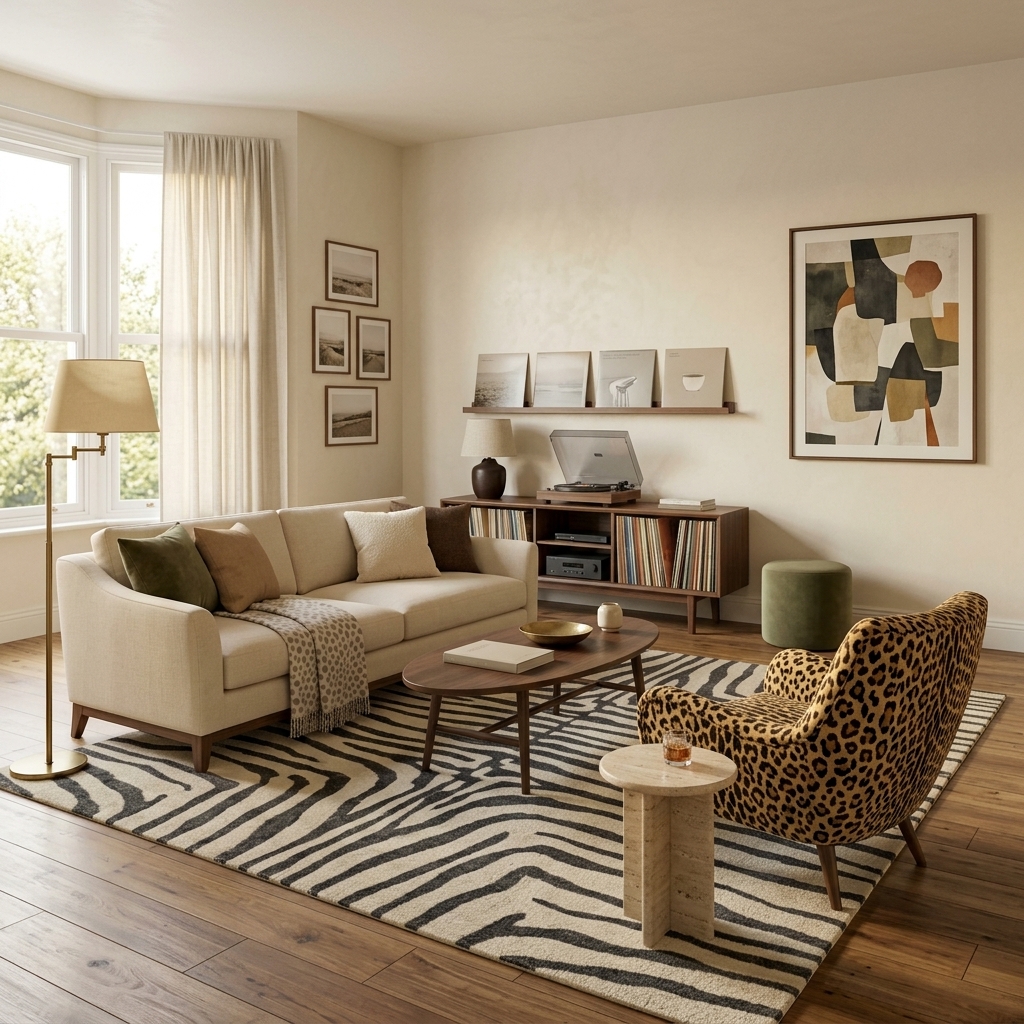
Animal print has a reputation for being loud, theatrical and difficult to style, but that is only one way to use it. A leopard chair beside a cream sofa can feel polished and elegant. A zebra rug can make a modern black-and-white room feel graphic and architectural. A subtle spotted throw can add movement to an otherwise quiet neutral space without turning the room into a theme.
The difference comes down to scale, placement and the furniture surrounding the pattern. Leopard tends to bring warmth through camel, brown, black and cream. Zebra creates sharper contrast and works especially well with monochrome interiors. Tiger feels stronger and more dramatic, while lower-contrast animal patterns can behave almost like textured neutrals.
The best animal print living room ideas also respond to the style of the room. The same leopard print can look glamorous with velvet and brass, earthy beside olive green and walnut, playful in a Y2K pink-and-chrome interior or sophisticated in a restrained cream living room. Animal print is not one aesthetic. It is a pattern that changes character depending on what you place around it.
These 40 ideas explore bold and subtle ways to use animal print across modern, bohemian, maximalist, mid-century, vintage, moody, glamorous and retro living rooms while keeping the final space intentional rather than chaotic.
Start With Leopard Print
Leopard is one of the easiest animal prints to incorporate because its warm brown, camel, black and cream tones naturally connect with common furniture and flooring colours. It can function as a focal point or behave almost like a neutral depending on its scale.
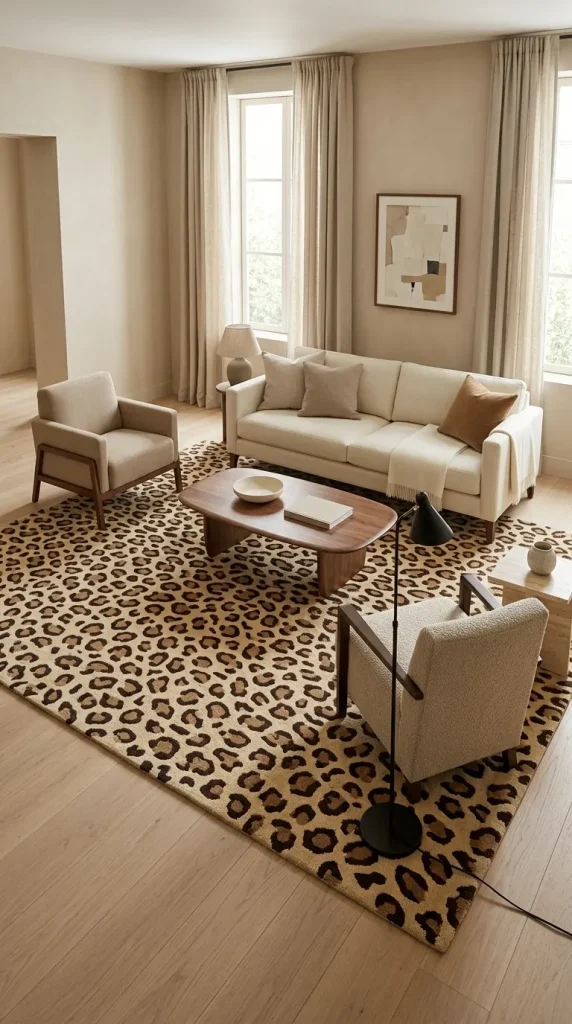
1. Anchor a Neutral Living Room With a Leopard Rug
A leopard rug can add movement to a cream or beige living room without requiring colourful furniture or dramatic wall treatments.
Choose a rug large enough to relate to the sofa and armchairs rather than a small accent piece floating beneath the coffee table. A cream sofa, walnut coffee table and black floor lamp can create a sophisticated foundation while allowing the leopard pattern to provide most of the visual energy.
Keep nearby textiles relatively simple. Plain linen curtains and solid cushions prevent the room from becoming overly busy and make the rug feel intentional.
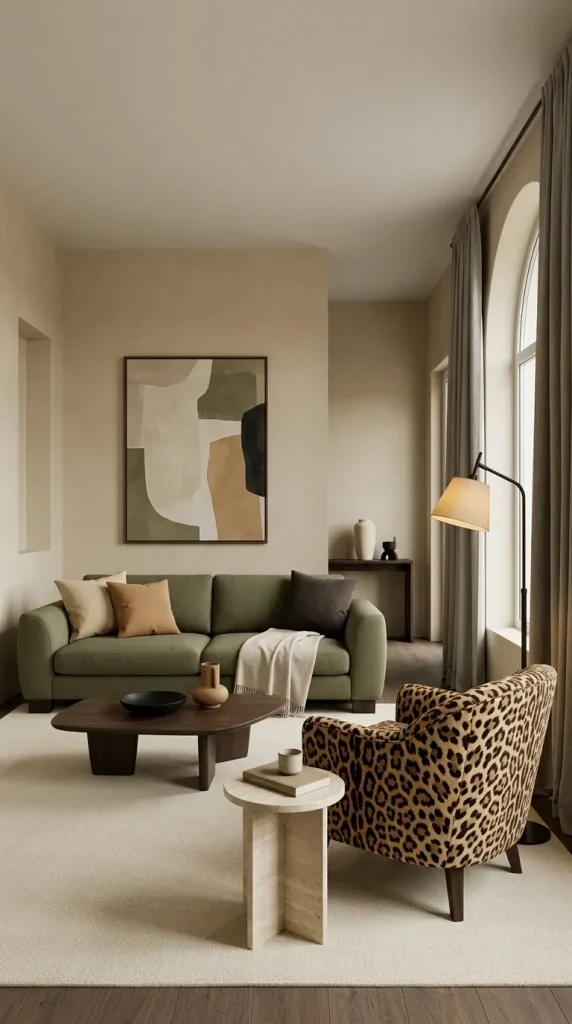
2. Make a Leopard Accent Chair the Main Focal Point
A single animal-print chair often creates more impact than several scattered accessories.
Place a leopard chair beside a plain cream, olive or charcoal sofa and give it enough breathing room to stand out. A small side table and floor lamp can turn it into a complete reading corner rather than a decorative object placed randomly in the room.
Repeat the black or camel tones from the chair through artwork, a lamp base or coffee-table accessories. You do not need another leopard pattern elsewhere to make the room feel connected.
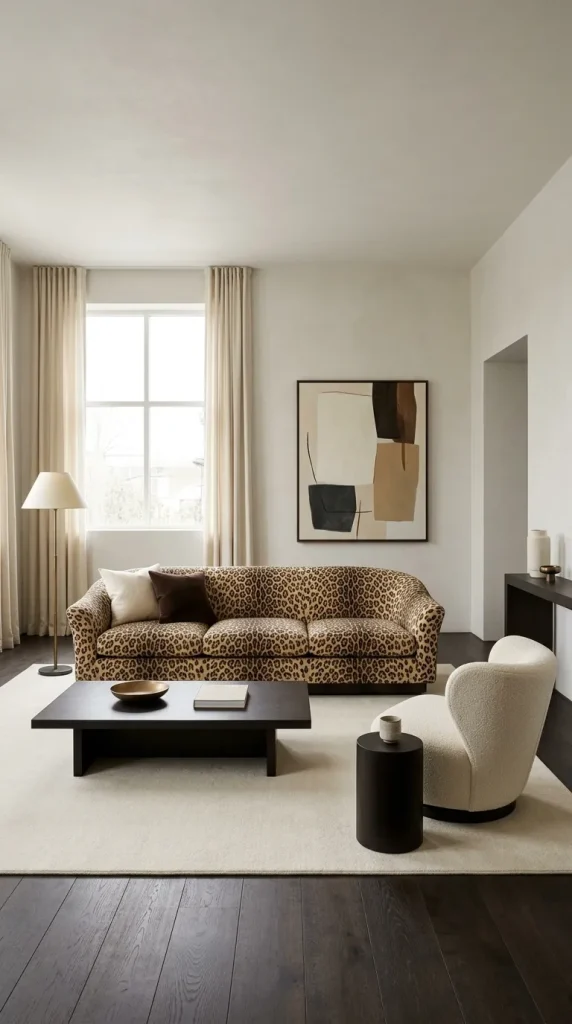
3. Style a Leopard Sofa With Quiet Surroundings
A leopard sofa has much greater visual weight than a rug or chair, so the surrounding elements should usually become calmer.
Pair it with plain walls, a solid rug and simple curtains. Dark wood, black metal or warm brass can give the room definition without adding another dominant pattern.
One substantial artwork above the sofa is often more effective than a large gallery wall. The sofa already supplies strong visual movement, so the rest of the room should support rather than compete with it.
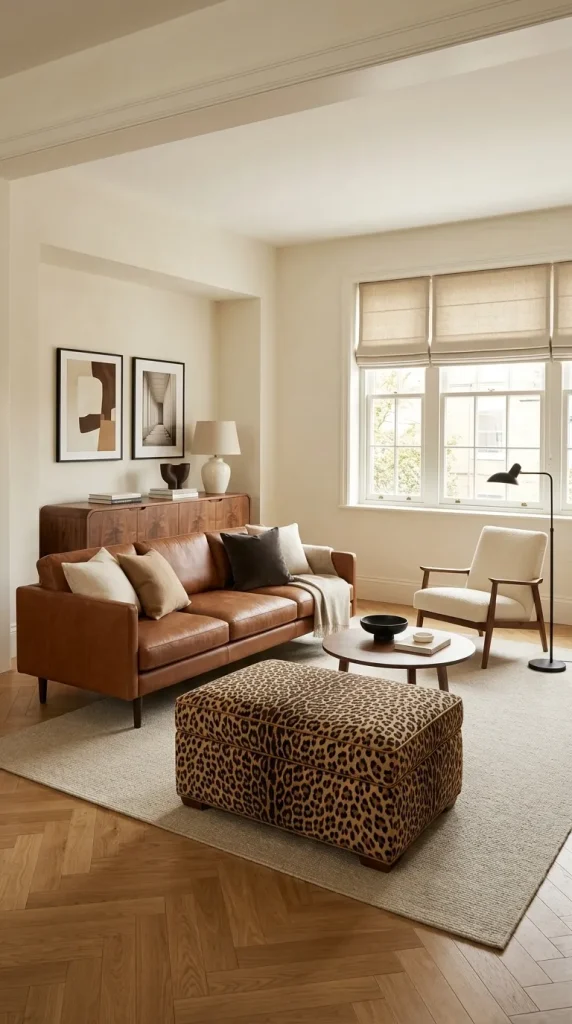
4. Pair Leopard With Warm Walnut Furniture
Leopard and walnut work naturally together because both contain warm brown undertones.
A leopard ottoman or chair beside a walnut sideboard, mid-tone leather sofa and cream walls can feel sophisticated rather than flashy. Introduce black through lighting or picture frames to connect the darker markings in the print.
This combination suits traditional, transitional and mid-century-inspired interiors particularly well because the animal pattern adds energy without fighting the furniture’s warmth.
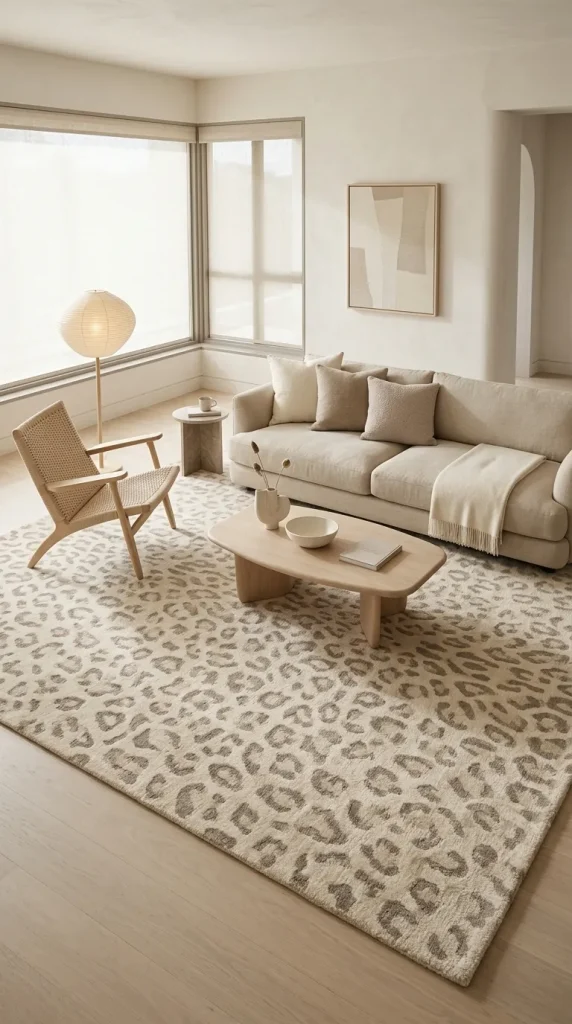
5. Use Beige Leopard as a Subtle Neutral
Not every leopard pattern needs high contrast. Beige, taupe and cream versions can introduce movement while staying within a quiet palette.
Use a low-contrast leopard rug beneath an oatmeal sofa or add a muted spotted ottoman to a warm minimalist room. Because the print is softer, you can layer it with textured linen, wool and pale wood without creating a strong themed effect.
This is one of the easiest approaches for readers who like animal print but do not want it to become the first thing they notice.
Use Zebra for a More Graphic Look
Zebra has a sharper, more architectural effect than leopard because of its bold black-and-white contrast. It works especially well in modern, monochrome, glamorous and mid-century spaces.
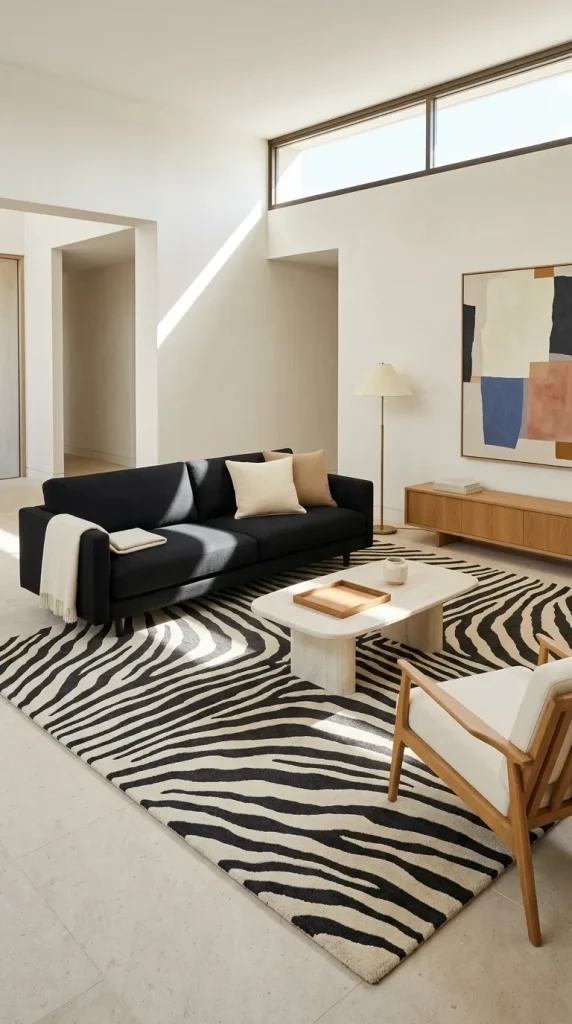
6. Place a Zebra Rug Under a Black Sofa
A black sofa and zebra rug create a strong graphic foundation, but the room needs lighter elements to avoid becoming too heavy.
Use cream or white walls, a pale coffee table and warm wood to introduce contrast. A brass floor lamp or one colourful artwork can soften the black-and-white scheme without weakening its impact.
Keep additional patterns limited. The zebra rug already creates enough visual movement to anchor the seating area.
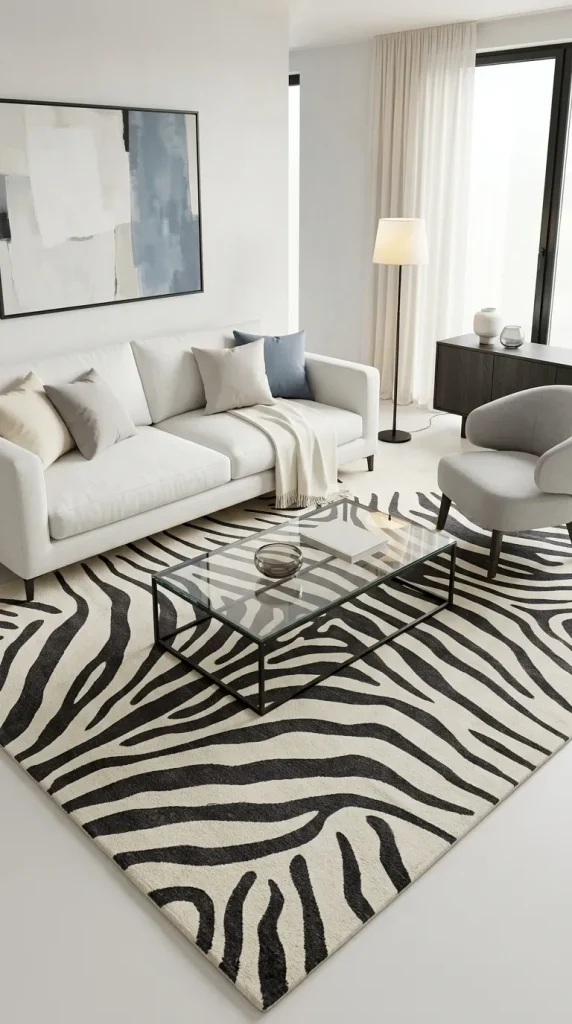
7. Pair a Zebra Rug With a White Sofa
A white or cream sofa creates a lighter, more elegant backdrop for zebra.
Choose a larger rug that extends beneath at least part of the seating so the pattern feels integrated rather than decorative. Add black metal, glass or dark wood for structure, then introduce one soft accent colour through cushions or artwork.
This combination feels cleaner and more modern than warmer leopard-heavy interiors.
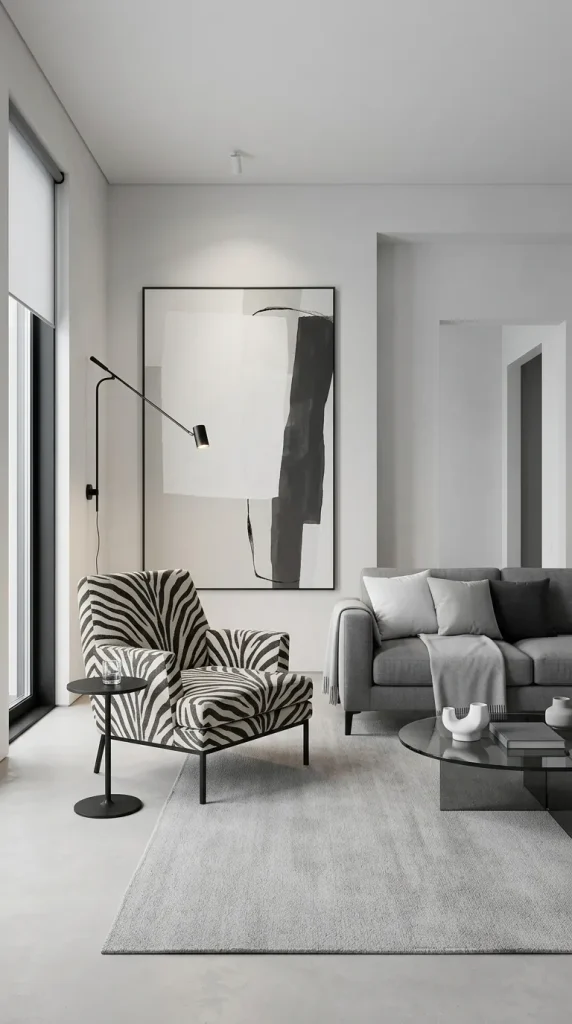
8. Use a Zebra Accent Chair in a Monochrome Room
A zebra chair can become a sculptural focal point in an otherwise restrained black, white and grey living room.
Keep the sofa simple and allow the chair to sit slightly apart from the main seating group. A small black side table and oversized artwork can create a complete composition around it.
Because zebra is already high contrast, the furniture silhouette matters. A clean-lined chair creates a modern effect, while a curvier piece can push the room toward glam or retro styling.
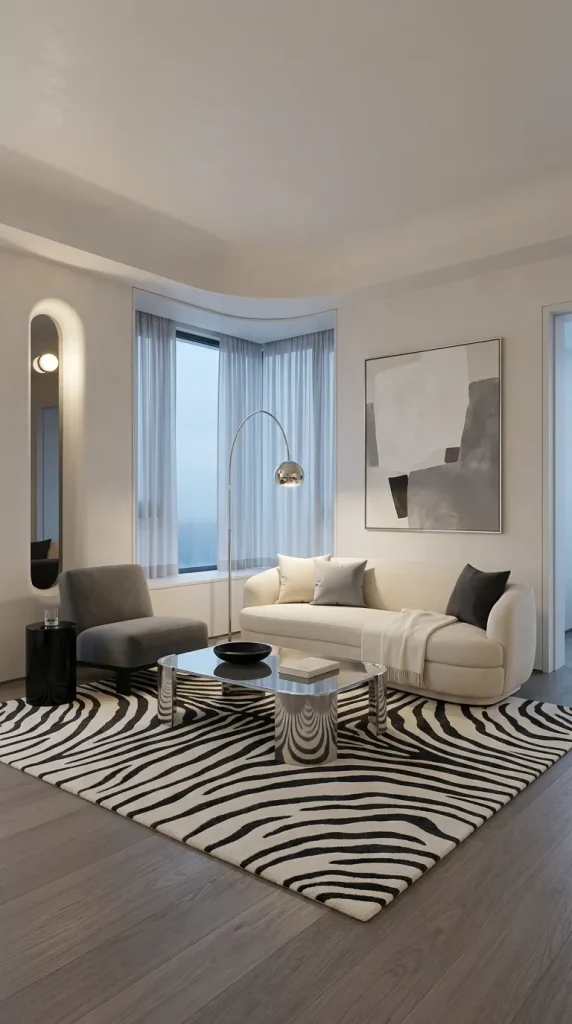
9. Combine Zebra With Chrome for Modern Glamour
Chrome and zebra create a cooler, more polished look than leopard and brass.
Try a zebra rug beneath a cream sofa with a chrome coffee table and sculptural lighting. Black lacquer or mirrored accents can reinforce the glamorous character.
Use reflective finishes selectively. Too many shiny surfaces can make the room feel theatrical, while one or two metallic pieces create enough contrast to make the animal print feel luxurious.
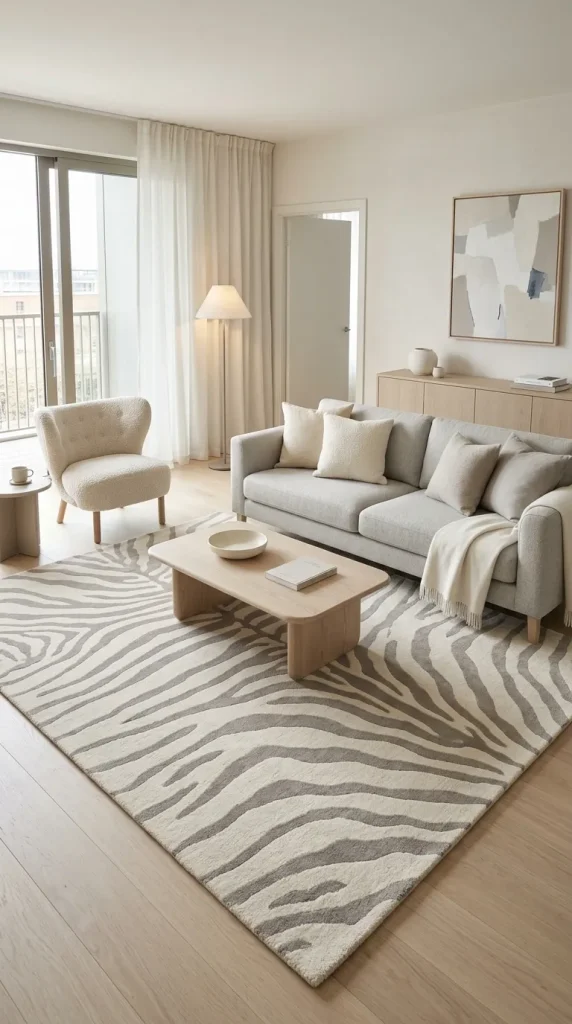
10. Use Soft Grey Zebra for a Contemporary Neutral Room
A grey-and-cream zebra pattern can work in interiors where traditional black-and-white feels too strong.
Place a muted zebra rug beneath a light grey sofa, then add pale wood and textured cream cushions. The pattern still creates movement, but the lower contrast allows the overall room to remain calm.
This is a particularly useful approach for apartments and contemporary spaces where you want personality without an aggressive statement.
Work Animal Print Into Existing Sofa Colours
You do not need to replace your sofa to introduce animal print. In fact, one of the easiest ways to make the pattern feel intentional is to choose a print that responds to the colour and undertone of the seating you already own.
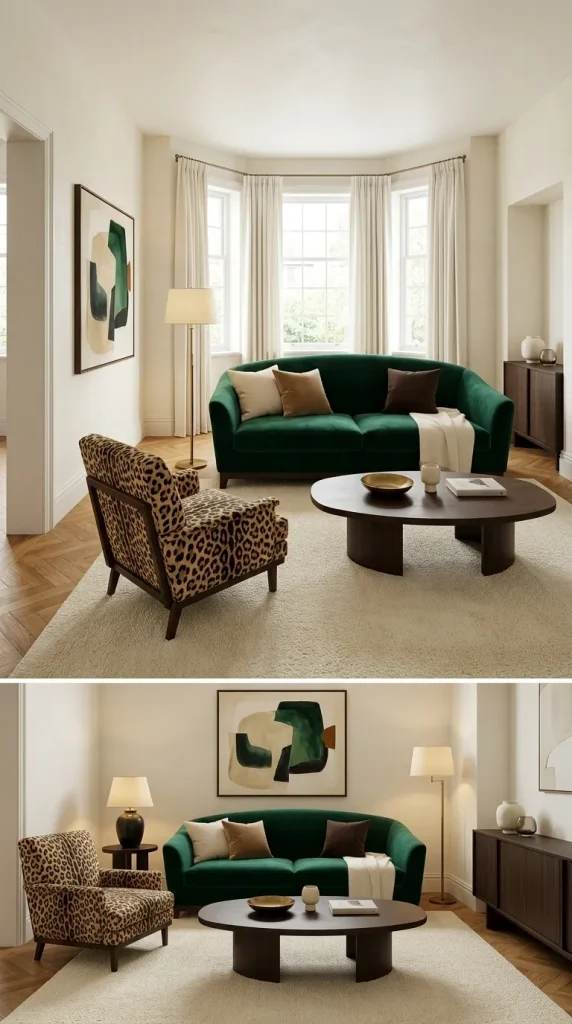
11. Pair an Emerald Green Sofa With Leopard
Emerald and leopard create a rich, glamorous combination because the deep green gives the warm animal print a dramatic backdrop.
Use leopard through one chair, cushion or ottoman rather than every surface. Brass lighting and dark wood can reinforce the jewel-toned atmosphere, while cream walls prevent the room from becoming visually heavy.
This combination works especially well with velvet because the fabric adds another layer of richness without introducing an additional pattern.
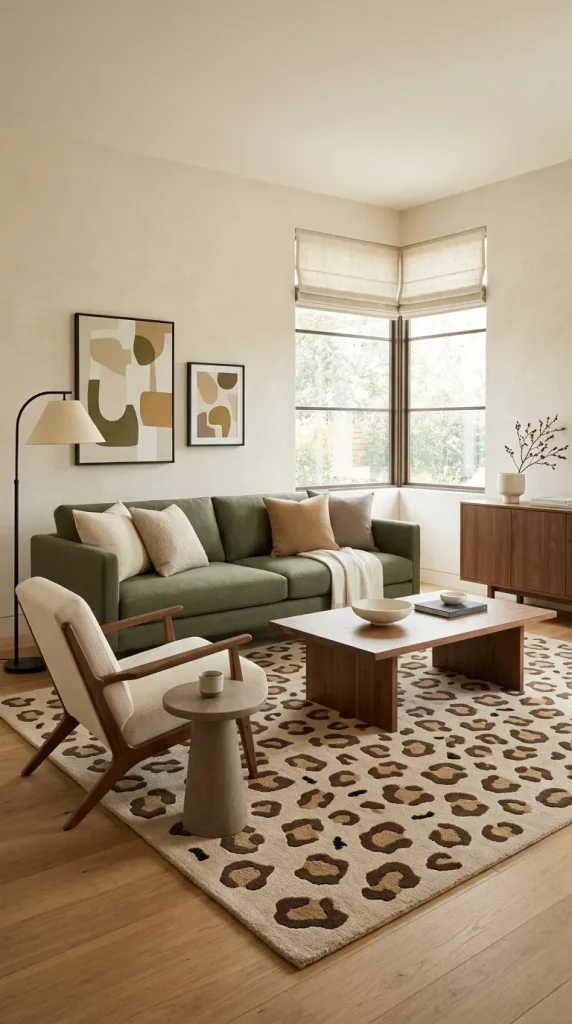
12. Combine an Olive Sofa With Warm Leopard Accents
Olive feels earthier and more relaxed than emerald, making it a natural partner for leopard.
Pair an olive sofa with a beige leopard rug, warm timber and cream textiles. Add black through picture frames or lighting to echo the darker markings in the print.
The result can feel modern, boho or rustic depending on the surrounding materials. Rattan pushes it toward bohemian style, while walnut and clean-lined furniture make it more contemporary.
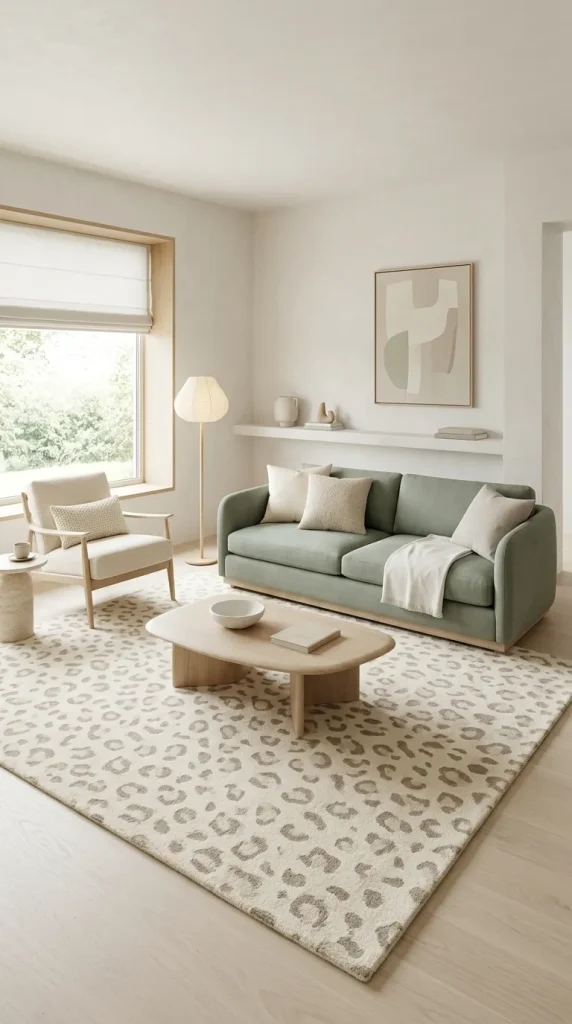
13. Style a Sage Sofa With Subtle Animal Print
Sage works beautifully with lower-contrast animal print because both can sit within a soft natural palette.
Use a cream-and-taupe animal-print rug beneath the sofa or introduce one spotted stool beside it. Pale oak, linen and off-white walls create a light, relaxed foundation.
Avoid using overly saturated accents unless you want a stronger eclectic look. The appeal of this combination comes from its softness.
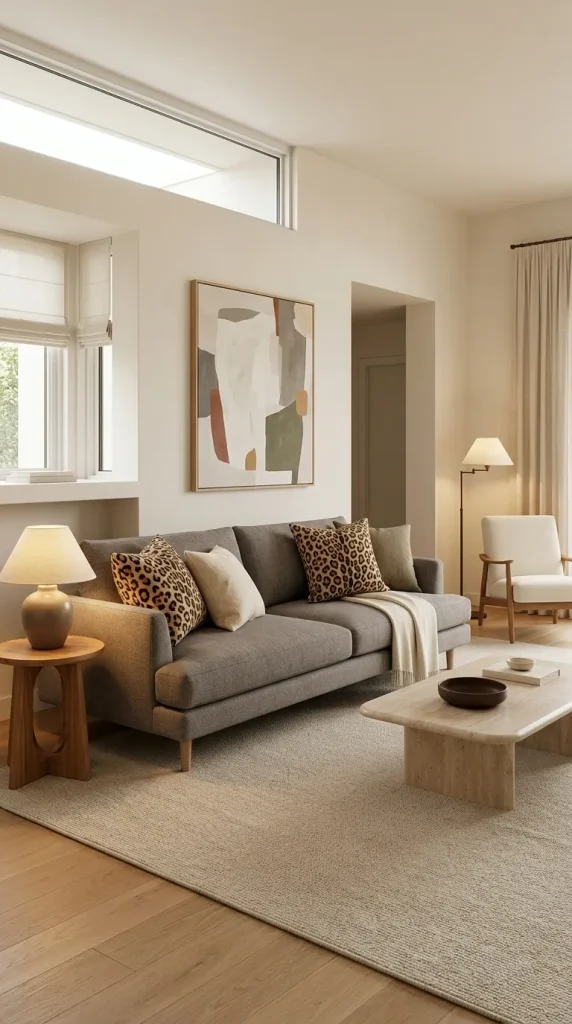
14. Warm Up a Grey Sofa With Leopard Cushions
A grey sofa can feel much warmer when leopard introduces camel and tan into the room.
Use one or two substantial leopard cushions alongside cream, rust or olive textiles. Add a wooden side table and warm lamp to connect the new palette.
There is usually no need to add a second major leopard element. The pattern can remain a supporting accent while the warmer colours transform the sofa’s overall appearance.
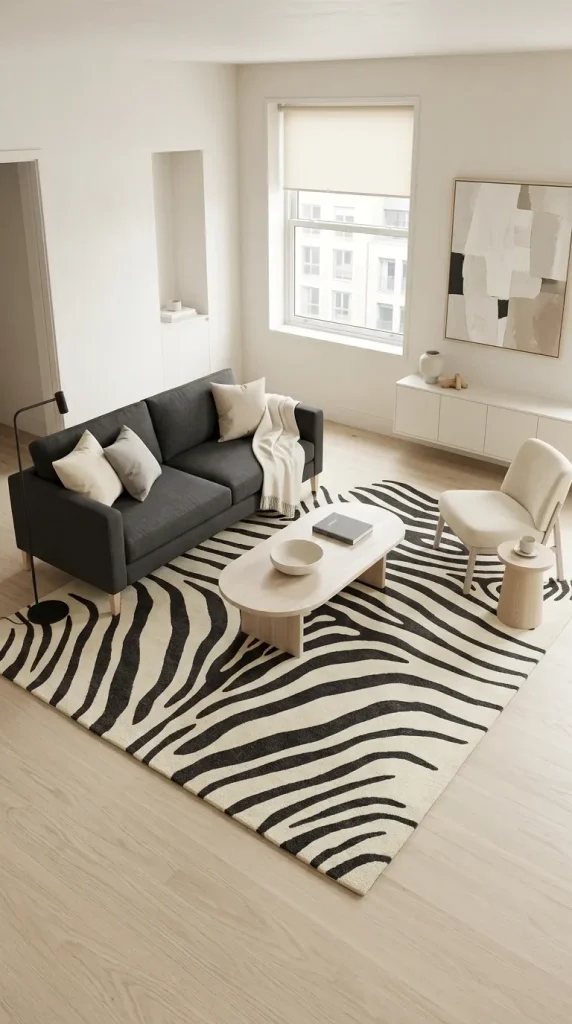
15. Add Zebra to a Charcoal Sofa for a Strong Modern Look
Charcoal furniture works especially well with zebra because the black markings already relate to the sofa.
Use the print in a substantial rug or one accent chair, then introduce white or cream to create enough contrast. A pale timber coffee table can prevent the palette from feeling severe.
This approach is particularly effective in modern apartments where the furniture is already dark and simple.
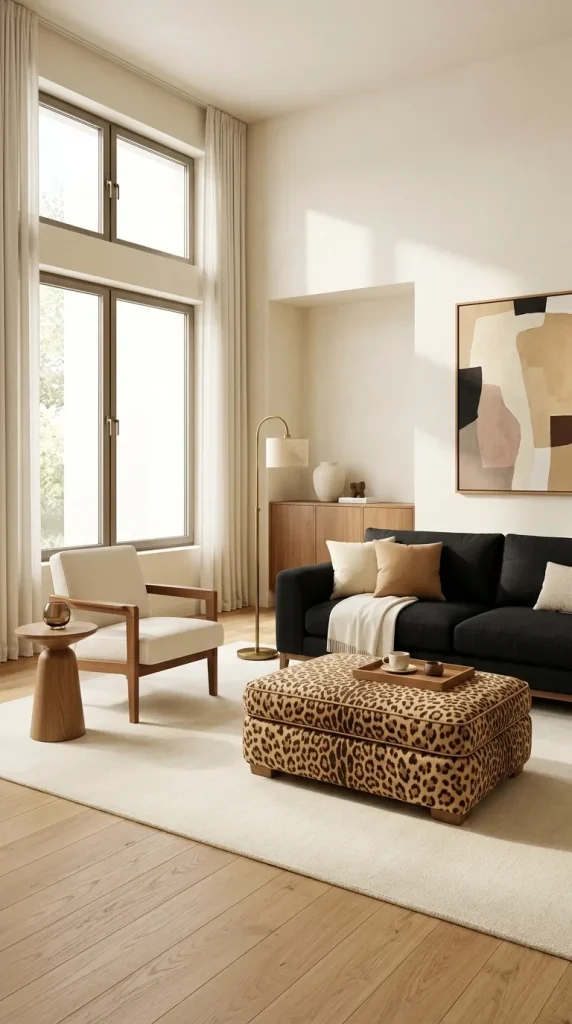
16. Style a Black Couch With Leopard for Warm Contrast
Leopard introduces warmth to a black sofa in a way that zebra cannot.
Try a leopard ottoman or pair of cushions against the dark seating, then bring in cream walls and medium-toned wood. Brass or aged-gold accents can make the combination feel more sophisticated.
Avoid surrounding the black sofa with too many dark surfaces. The warm print needs enough lighter space around it to remain visible.
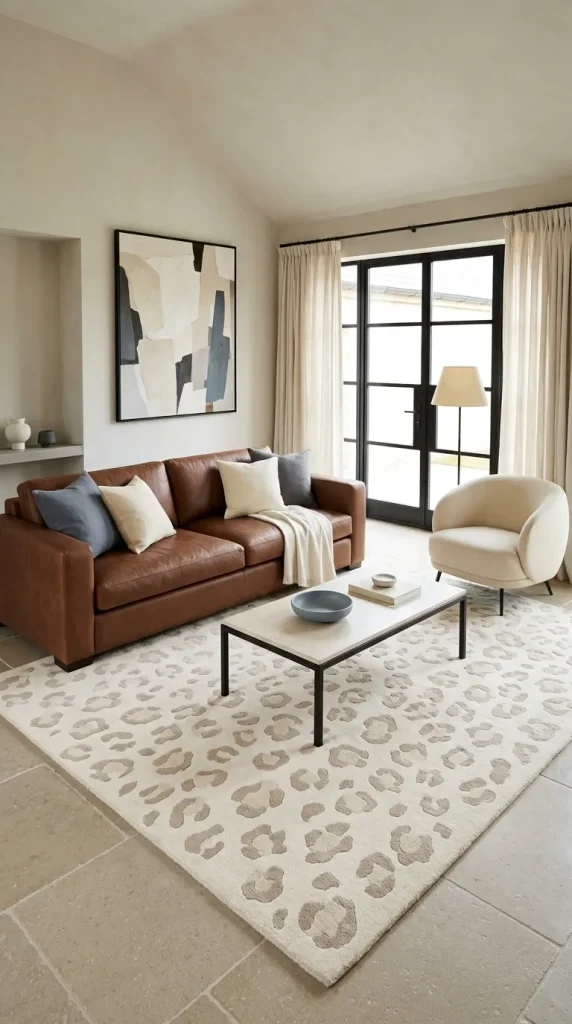
17. Use Animal Print With a Brown Sofa Without Making the Room Too Brown
Brown seating already shares many tones with leopard and tiger, so contrast becomes particularly important.
Use a lighter animal-print rug, cream curtains and black accents to separate the furniture from the pattern. A brown leather sofa paired with a pale leopard rug can feel earthy and stylish when the surrounding walls remain relatively light.
Add one cooler accent such as muted blue or olive if the palette starts to feel overly warm.
Explore Rich Colour Combinations
Animal print works surprisingly well with saturated colour because many patterns contain enough black, cream and brown to act as a bridge between stronger hues.
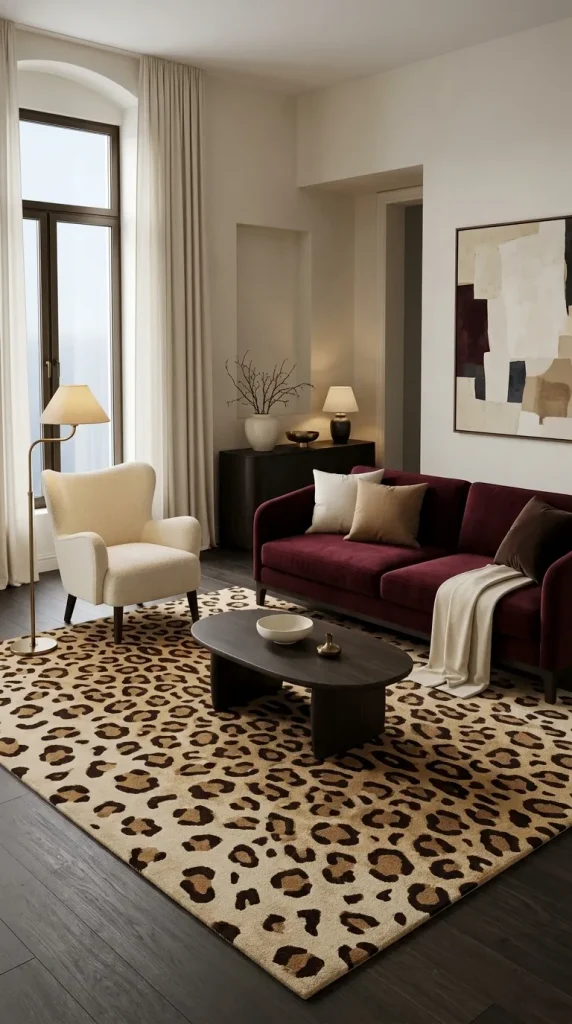
18. Combine Burgundy and Leopard for a Rich, Moody Living Room
Burgundy and leopard share warm undertones, making them particularly compatible.
A burgundy velvet sofa can sit above a leopard rug, or a cream sofa can be surrounded by burgundy curtains and leopard cushions. Dark wood and antique brass reinforce the richness of the palette.
Keep lighter cream or beige visible somewhere in the room so the combination remains balanced rather than becoming overly dark.
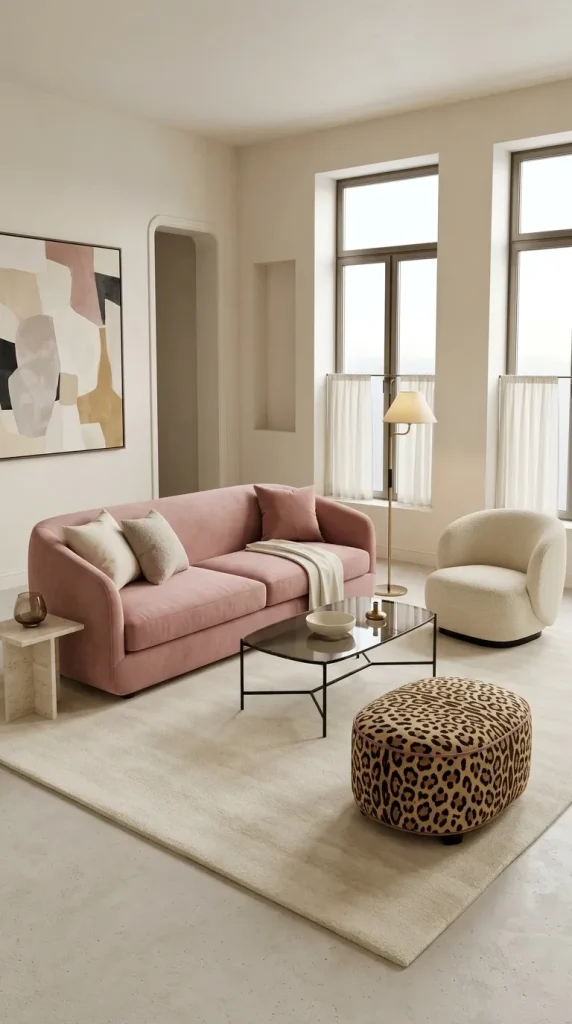
19. Pair Dusty Pink With Leopard for a Softer Glam Look
Dusty pink and leopard can feel romantic rather than flashy when the surrounding materials are sophisticated.
Use a pink sofa or armchair with one leopard ottoman, black accents and warm brass. Cream walls and a neutral rug can keep the palette from becoming too decorative.
The muted pink should usually dominate, with animal print acting as the stronger secondary pattern.
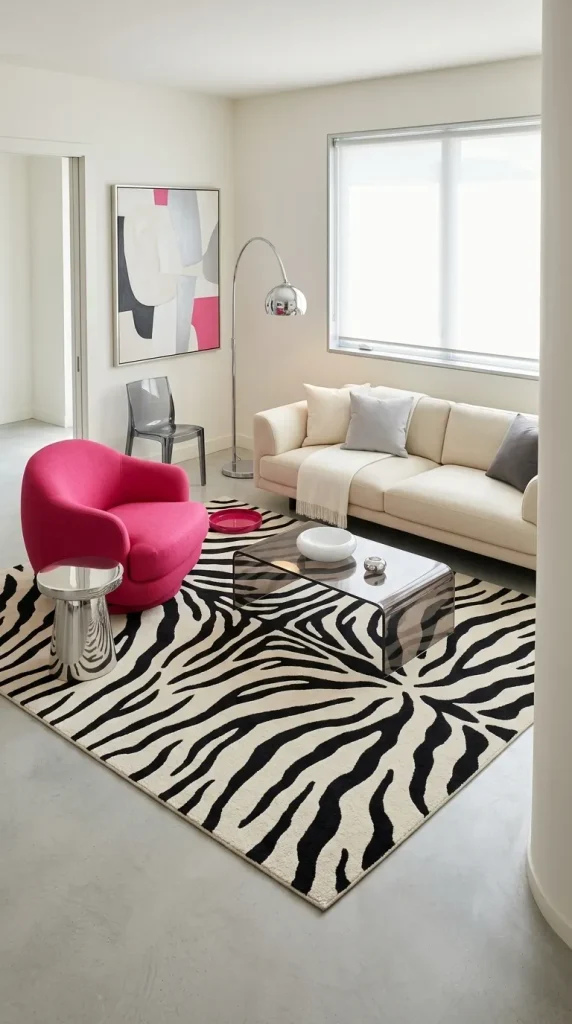
20. Use Hot Pink and Zebra for a Playful Y2K Mood
For a much bolder direction, combine zebra with hot pink, chrome and glossy surfaces.
A zebra rug beneath a pink accent chair can create an energetic early-2000s feel without requiring the entire room to become themed. Add a chrome side table or sculptural lamp to reinforce the Y2K influence.
Keep the sofa relatively simple so the stronger colours and patterns remain legible.
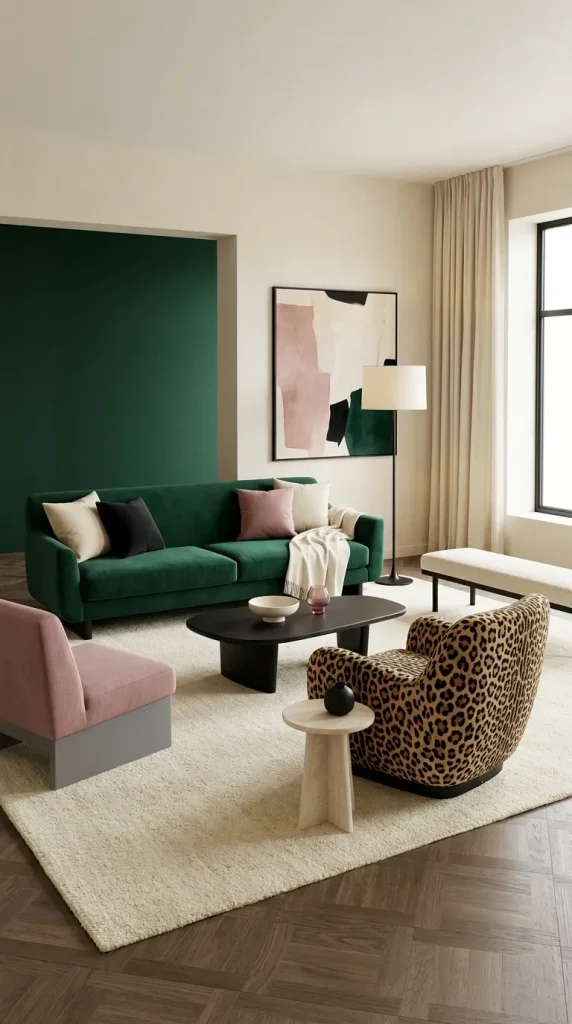
21. Mix Emerald Green, Dusty Pink and Leopard
Green, pink and leopard can create a richly layered eclectic room when the tones are carefully balanced.
Use emerald as the largest colour, perhaps through the sofa or walls, then introduce dusty pink in smaller upholstery or artwork. Leopard can appear through one chair or rug.
Repeat black and cream around the room to connect the different elements. This prevents the scheme from feeling like three unrelated decorating decisions.
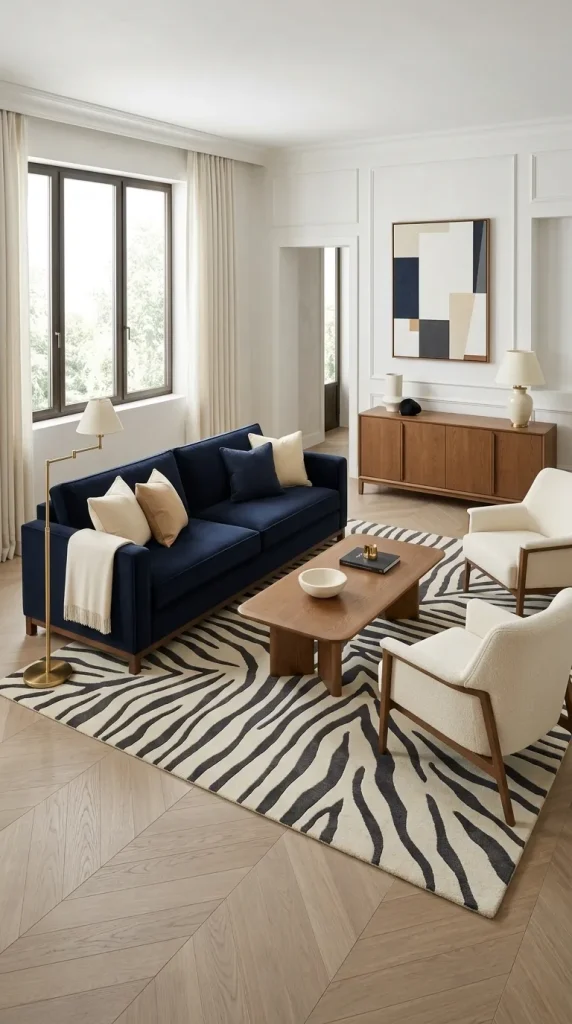
22. Pair Navy With Zebra for a Tailored Look
Navy and zebra create a cleaner, more tailored effect than warmer animal-print combinations.
A navy sofa, zebra rug and brass lighting can feel polished and slightly glamorous. White walls and medium-toned wood keep the room bright enough for the dark upholstery to remain elegant.
This combination works especially well in more formal contemporary living rooms.
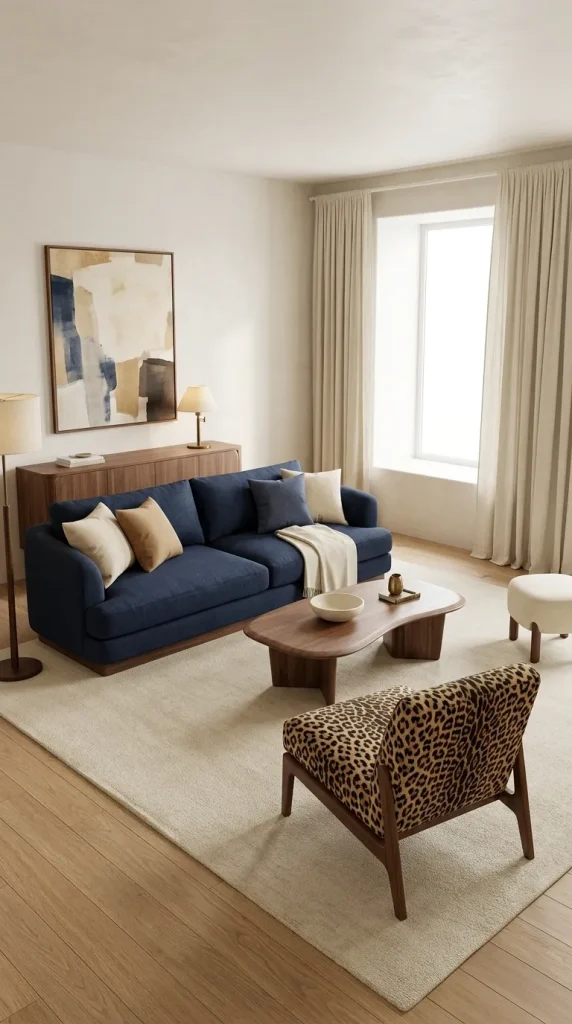
23. Combine Navy With Leopard for a Softer Contrast
Leopard against navy feels warmer and less graphic than zebra.
Use a navy sofa with leopard cushions or one spotted chair, then bring in cream curtains and walnut furniture. Brass or aged-gold accents can tie the palette together.
The navy provides enough depth to make the leopard pattern stand out without requiring strong wall colour.
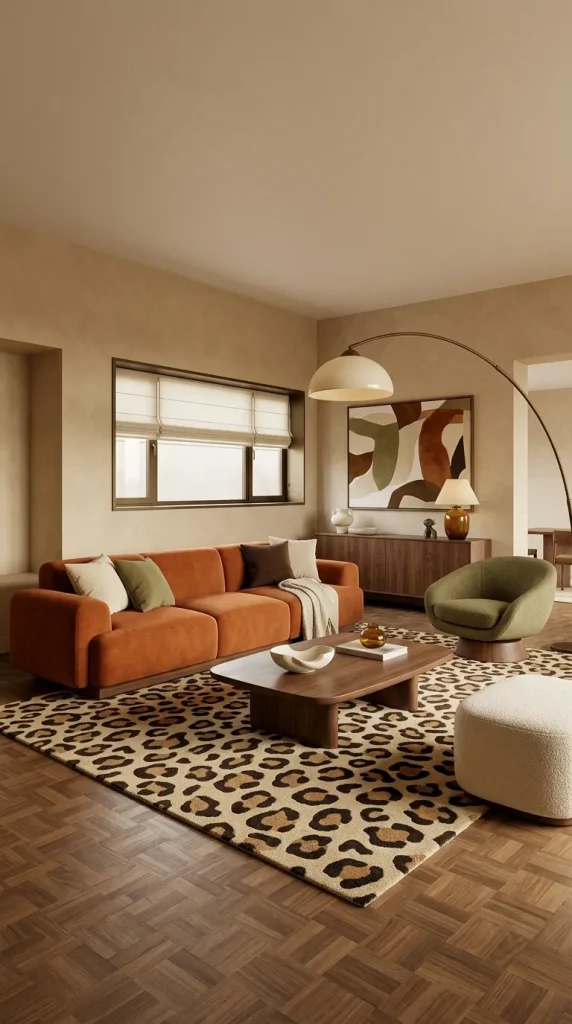
24. Use Burnt Orange and Leopard for a 1970s-Inspired Room
Burnt orange, leopard and dark wood create an unmistakably warm retro atmosphere.
Choose a low-profile orange sofa, leopard rug and walnut coffee table. Add olive, cream and sculptural lighting to strengthen the 1970s character.
Furniture shape matters as much as the palette. Lower seating and rounded forms will make the room feel genuinely retro rather than simply contemporary with orange accessories.
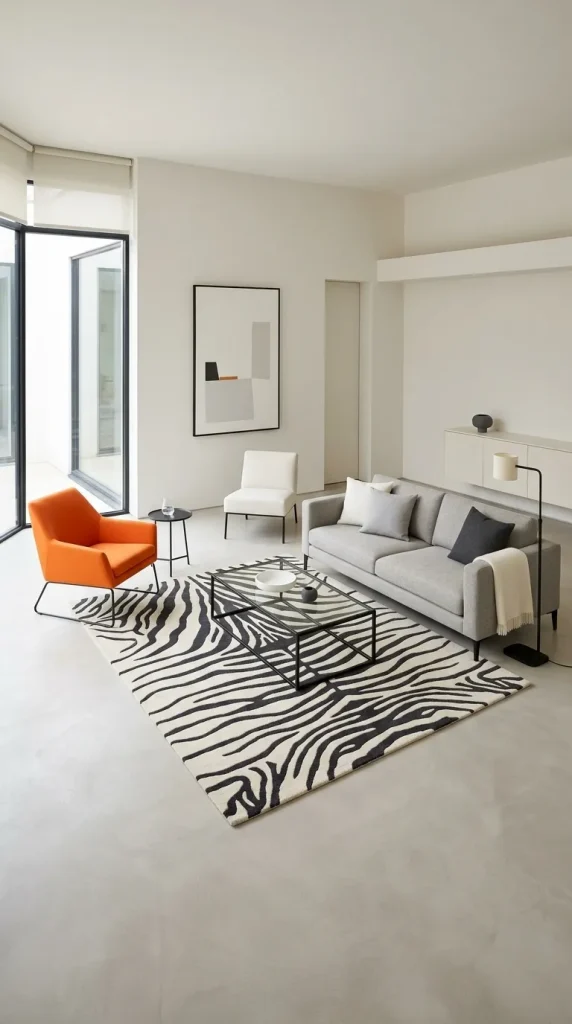
25. Pair Bright Orange With Zebra for a Graphic Modern Room
Bright orange and zebra produce a very different effect from the earthy 1970s combination.
Use a white or grey sofa, one orange accent chair and a zebra rug. Black metal and clean-lined furniture reinforce the graphic quality.
Keep wall art relatively simple. The orange and zebra already provide enough visual energy.
Adapt Animal Print to Different Interior Styles
The pattern itself does not determine the style. Furniture shape, lighting, materials and colour establish whether the room feels modern, glamorous, bohemian or retro.
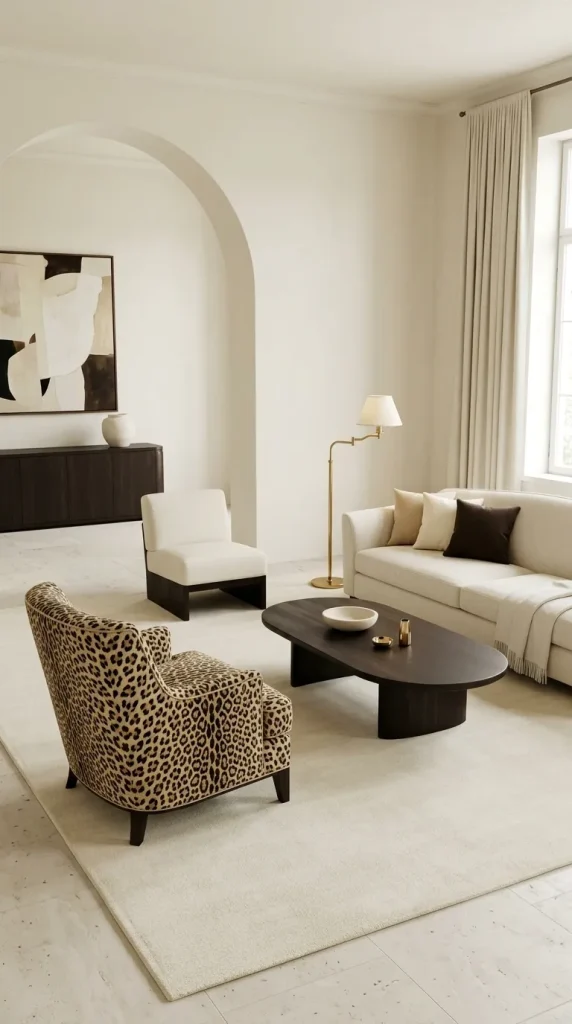
26. Create a Classy Cream-and-Leopard Living Room
For a sophisticated interpretation, use leopard only once or twice against cream upholstery, dark wood and polished metal.
A cream sofa with a leopard accent chair can create enough pattern for the entire room. Add a dark timber coffee table, brass lamp and one substantial artwork.
Avoid literal wildlife decor. The sophistication comes from treating leopard as an upholstery choice rather than a theme.
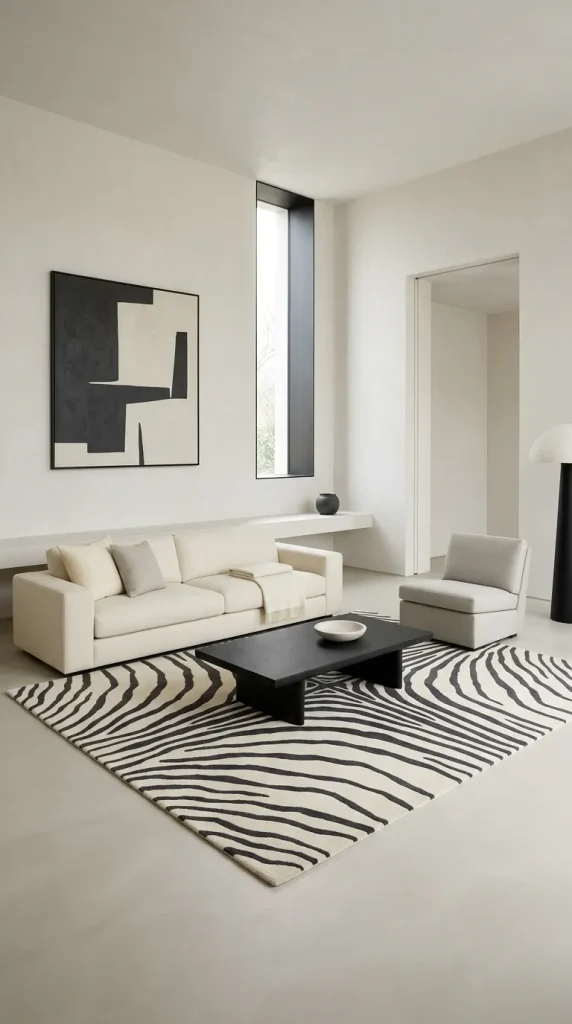
27. Use Zebra in a Clean Modern Living Room
Modern interiors benefit from the strong geometry of zebra when the rest of the room remains edited.
Combine a low cream sofa with a zebra rug, black coffee table and large abstract painting. Use one sculptural floor lamp rather than several decorative objects.
The clean furniture silhouettes allow the print to appear intentional instead of decorative.
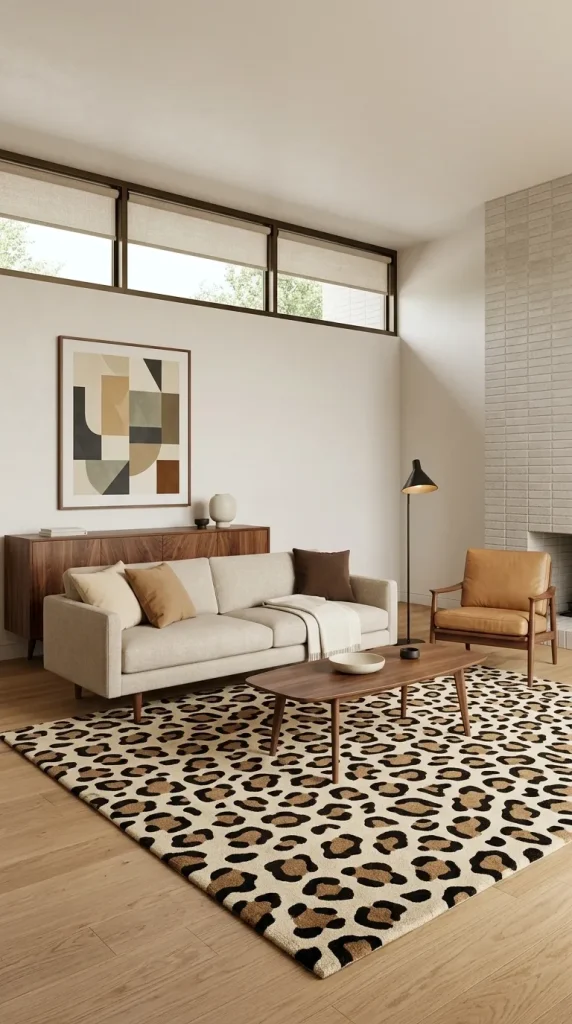
28. Mix Leopard With Walnut in a Mid-Century Modern Room
Mid-century design works especially well with animal print because warm wood and lower furniture provide a strong architectural foundation.
A walnut sideboard, low sofa and leopard rug can create a sophisticated retro room. Add a camel leather chair and brass or black lighting.
Avoid heavy glam accessories. The character should come from furniture geometry, timber and the graphic pattern underfoot.
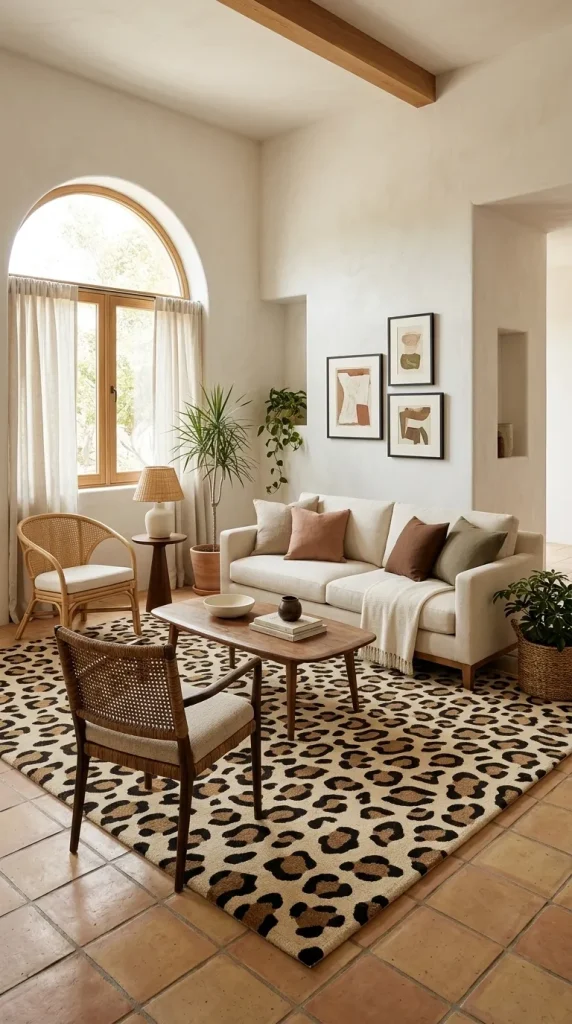
29. Layer Animal Print Into a Bohemian Living Room
Boho interiors allow animal print to sit among woven textures, plants, rattan and vintage furniture.
Use one leopard rug or zebra ottoman as part of a broader layered arrangement. Earthy cushions, rattan chairs and warm wood can soften the print.
Repeat a few colours across the different patterns. A leopard rug containing tan and black can connect naturally with brown timber, cream upholstery and black-framed artwork.
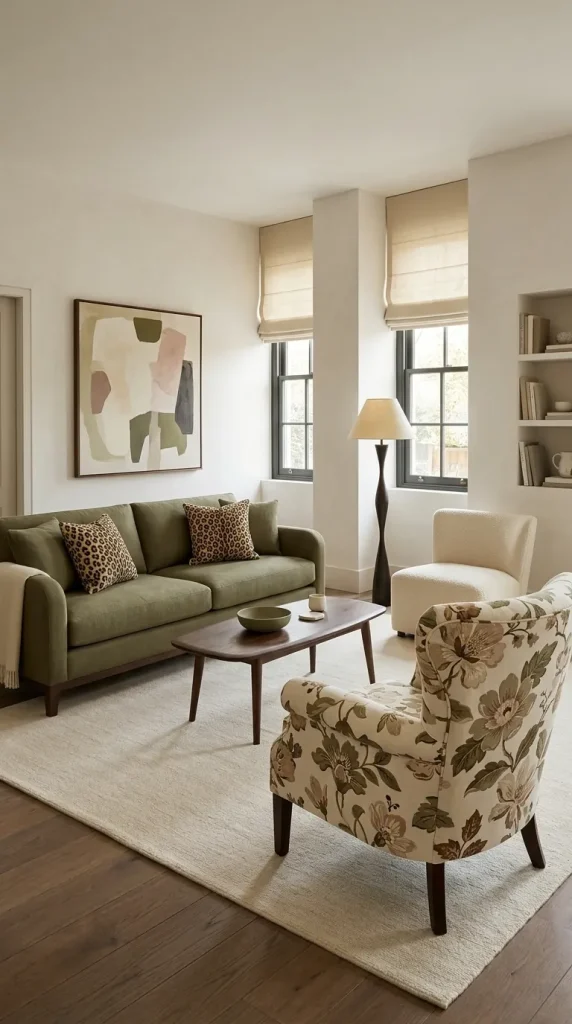
30. Create an Eclectic Room With Floral and Leopard Patterns
Floral and animal prints can work beautifully together when their scales differ.
A large floral armchair or sofa can be paired with smaller leopard cushions, or a leopard rug can sit beneath floral curtains with a more open pattern. Choose at least one shared colour to connect the two.
Avoid using two equally dense patterns at the same visual strength. One should remain dominant while the other supports it.
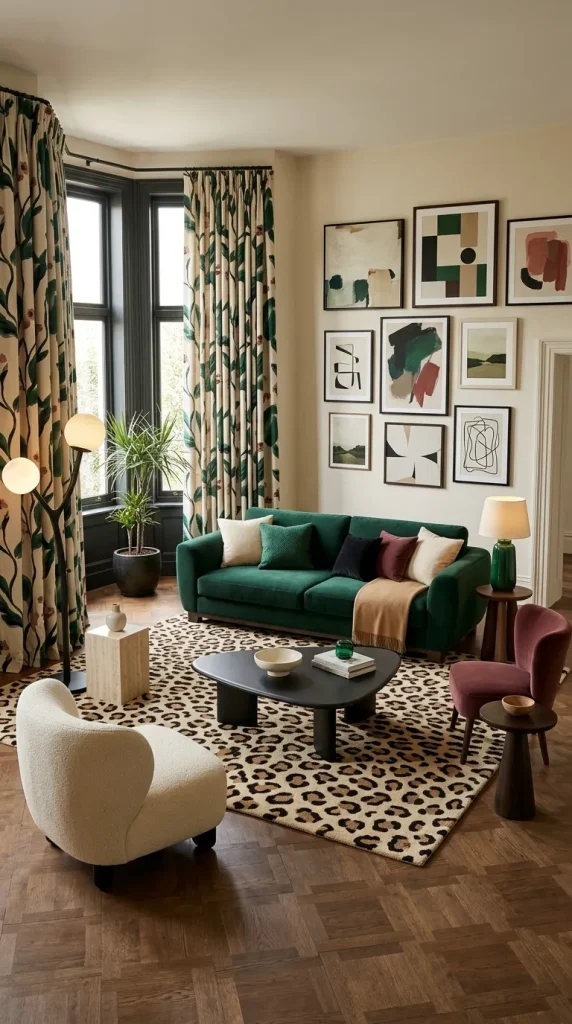
31. Build a Maximalist Animal-Print Living Room
A maximalist room can handle more than one major pattern, but the palette still needs structure.
Try an emerald sofa, leopard rug, patterned curtains and a gallery wall, then repeat black, cream and green throughout the room. Sculptural lighting and colourful artwork can add another layer.
The secret is repetition. If every object introduces a completely new colour and pattern, the room can feel random. Repeated tones and materials create the visual rhythm that makes maximalism feel intentional.
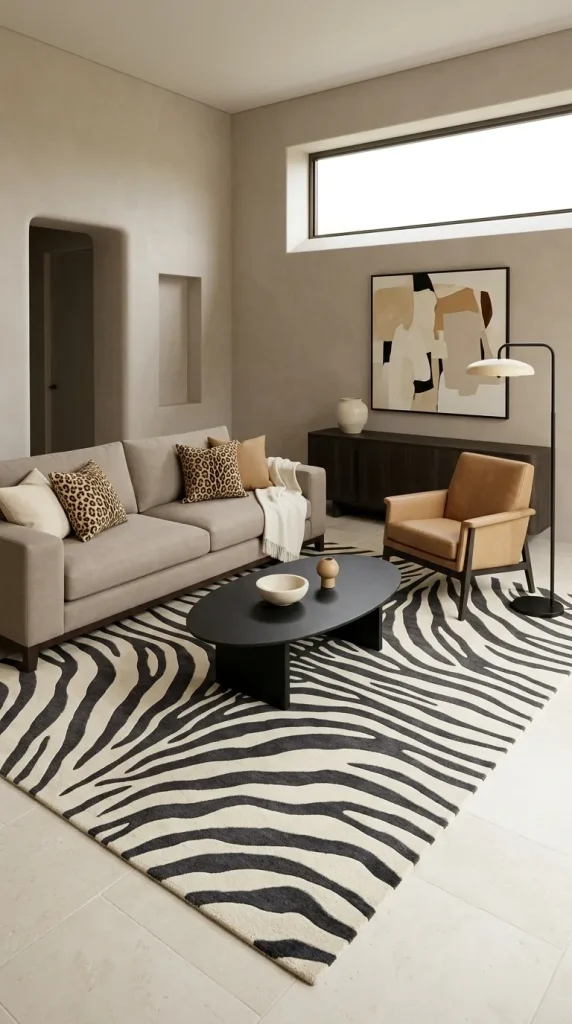
32. Mix Zebra and Leopard Without Creating Chaos
Mixed animal prints work best when one dominates.
Use zebra as the main pattern through a large rug, then introduce leopard in two small cushions or one stool. Keep the sofa solid and repeat black and warm tan elsewhere in the room.
The difference in pattern scale also helps. Large zebra stripes and smaller leopard spots are easier to combine than two equally dense prints competing at the same level.
Explore Moody, Glamorous and Retro Directions
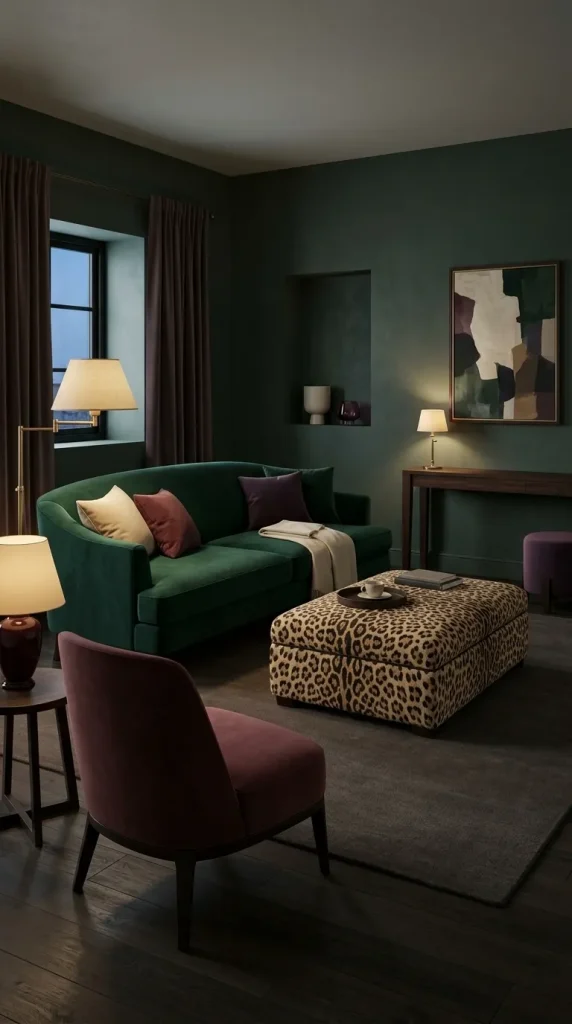
33. Create a Moody Jewel-Tone Animal-Print Room
Deep green, burgundy, plum or navy can create a dramatic backdrop for animal print.
Use velvet seating, dark wood and warm brass lighting, then introduce one leopard or tiger pattern as the main decorative contrast. A leopard ottoman in front of an emerald sofa, for example, can look exceptionally rich.
Layer several lamps rather than relying on bright overhead lighting. The lower-light atmosphere makes the print feel more luxurious.
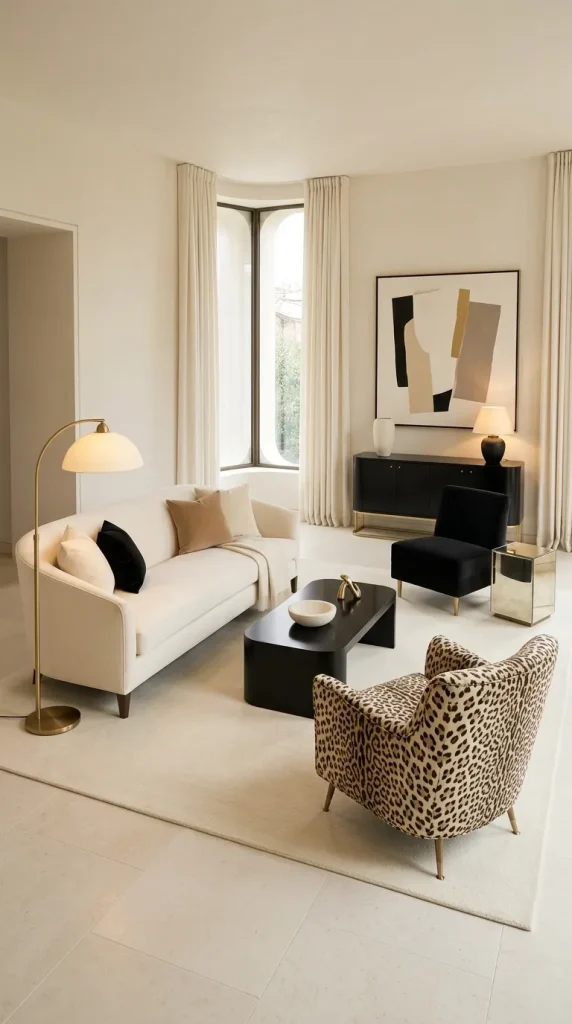
34. Build a Glam Leopard Living Room With Black and Gold
Black, gold and leopard create a classic glamorous combination.
Use leopard through one chair or rug, then introduce black lacquer, velvet and warm metallic accents. A cream or ivory sofa can prevent the room from becoming overly dark.
Mirrored furniture can work in small doses, but too many reflective surfaces can push the room toward theatrical styling. Brass or brushed gold often creates a more refined result.
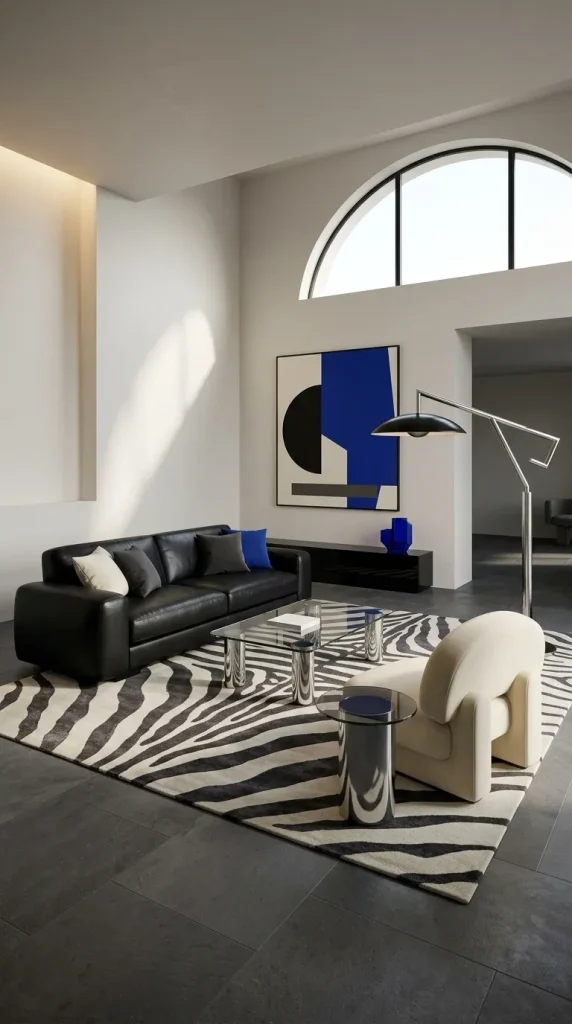
35. Create an 80s-Inspired Zebra and Chrome Living Room
An 80s-inspired room can use zebra with glossy black, chrome and bold artwork.
Choose a sculptural black sofa or chair, a zebra rug and chrome occasional furniture. One saturated accent colour such as red, cobalt or purple can make the room feel more expressive.
Use larger geometric shapes and dramatic lighting to reinforce the decade rather than relying only on animal print.
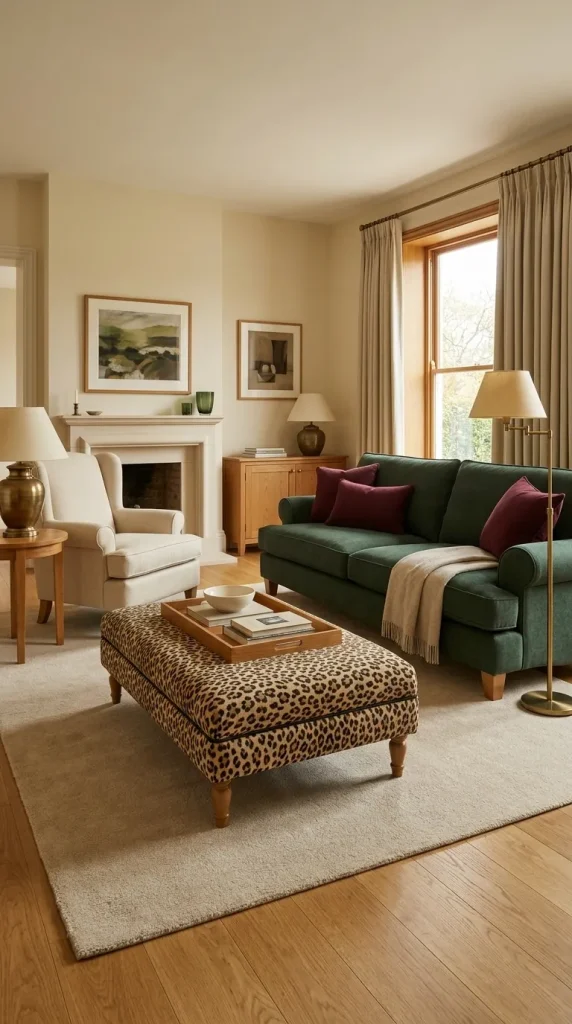
36. Create a 90s Animal-Print Living Room With Dark Green and Burgundy
A 1990s-inspired living room can use smaller doses of animal print alongside oversized furniture and richer traditional colours.
Try a dark green sofa, burgundy cushions and one leopard ottoman or small rug. Honey-toned timber and brass lamps can reinforce the nostalgic atmosphere.
The room should feel warmer and more substantial than a cleaner contemporary animal-print scheme.
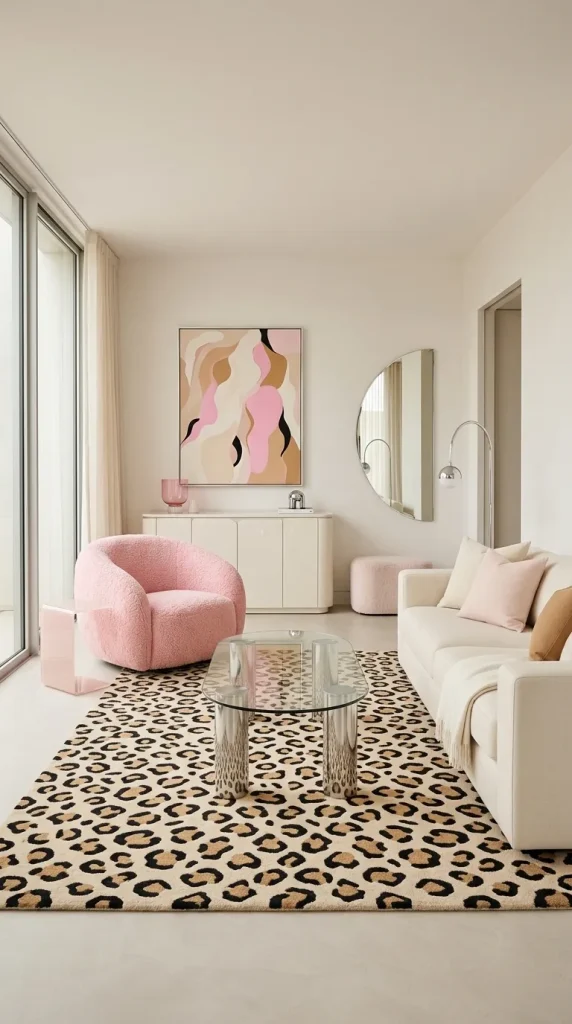
37. Create a Y2K Leopard-and-Pink Living Room
Y2K animal print can be playful, glossy and intentionally expressive.
Use leopard with pink upholstery, chrome furniture and fuzzy textures. A curved mirror or translucent side table can reinforce the early-2000s mood.
Keep one contemporary anchor, such as a simple cream sofa or clean wall colour, if you want the room to feel inspired by Y2K rather than completely recreated from the era.
Use Animal Print in Lower-Commitment Ways
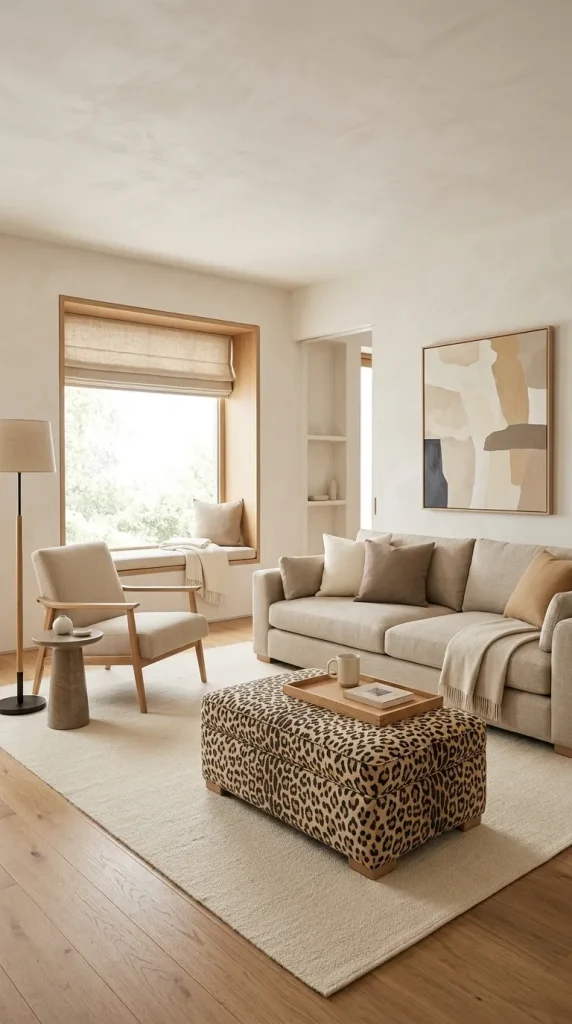
38. Add Animal Print Through an Ottoman or Stool
An upholstered ottoman offers a practical middle ground between a tiny cushion and a large patterned chair.
Place a leopard ottoman in front of a neutral sofa or use a zebra stool beside an armchair. The piece can function as a footrest, extra seating or occasional table with a stable tray.
Because the item sits lower in the room, the print creates impact without dominating the walls or main upholstery.
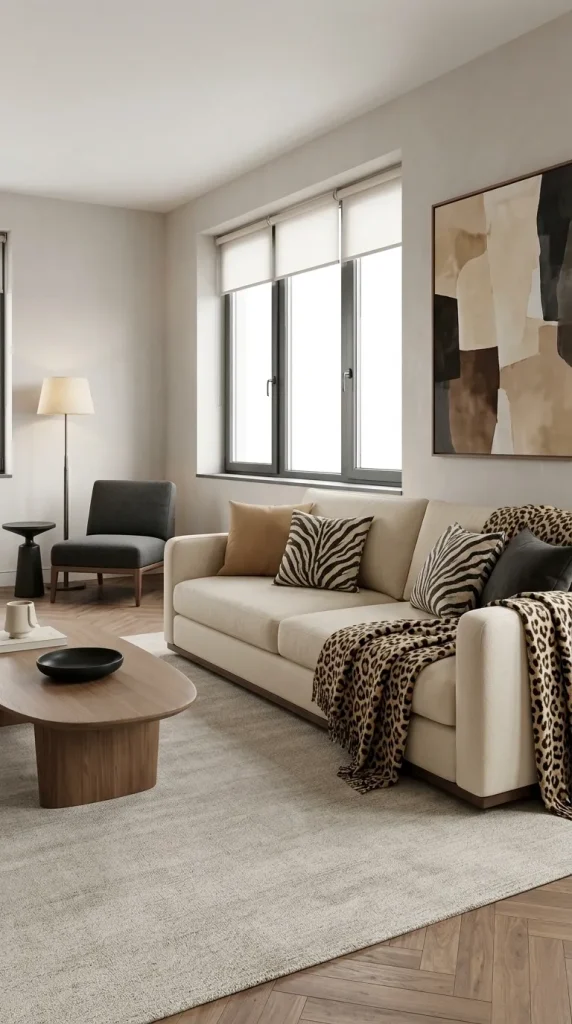
39. Introduce Animal Print Through Throws and Cushions
Throws and cushions are the easiest way to experiment with animal print before making a larger commitment.
One leopard throw folded over a cream sofa can add warmth, while two zebra cushions can sharpen a monochrome seating arrangement. Avoid covering every cushion in animal patterns.
Use solid colours around the print and repeat its tones elsewhere through wood, metal or artwork. Even a very small amount can make the room feel more energetic.
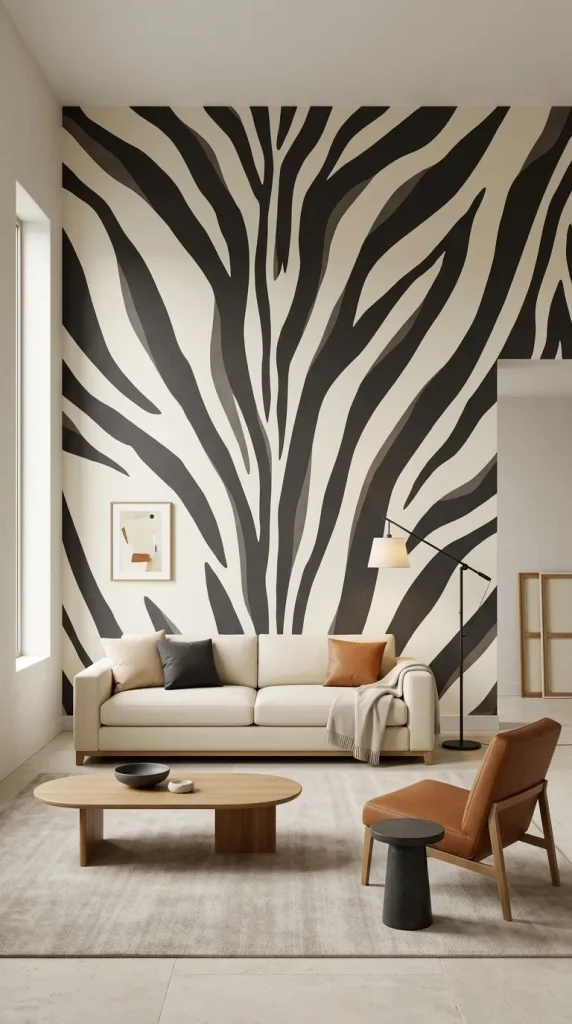
40. Use Animal-Print Wallpaper as a Statement Wall
Wallpaper offers one of the boldest ways to introduce the pattern.
A large graphic zebra pattern behind a simple sofa can create a modern focal wall, while smaller leopard spots can bring warmth to a niche, bookshelf backdrop or compact accent wall. More abstract versions can feel subtler and more contemporary.
Scale the furniture according to the pattern. Large wallpaper designs often need simpler furniture and artwork, while a smaller repeat can support more decorative styling.
For renters or anyone hesitant about a full wall, framed wallpaper panels or animal-print textiles can create a similar effect with less commitment.
How to Choose the Right Animal Print
Different animal prints create different visual effects, so the right choice depends on the furniture, colour palette and atmosphere you want.
| Animal print | Best suited to | Overall effect |
|---|---|---|
| Leopard | Neutral, glam, boho, vintage, warm modern | Warm, versatile, energetic |
| Zebra | Modern, monochrome, glam, mid-century | Graphic, sharp, architectural |
| Tiger | Retro, maximalist, moody, dramatic | Bold, warm, expressive |
| Cheetah | Transitional, neutral, eclectic | Smaller-scale, textured, lively |
| Faux hide | Rustic, eclectic, boho | Natural, textural, grounded |
| Low-contrast animal print | Minimalist, neutral, contemporary | Subtle, layered, calm |
Leopard is often the easiest starting point because its brown and black tones coordinate with many common furniture colours. Zebra creates more immediate contrast and usually benefits from a simpler surrounding palette.
How Much Animal Print Should You Use?
There is no fixed percentage that works in every living room, but it helps to think in terms of intensity.
A restrained room might use animal print only through a cushion, throw or small stool. A bolder room could make a patterned rug or chair the main statement. A maximalist room may combine several prints across furniture, rugs and walls.
The most useful rule is to decide where you want the eye to land first. If the leopard sofa is the focal point, the rug and curtains probably do not also need to be animal print. If the zebra rug is the dominant feature, smaller patterned accents can stay comparatively quiet.
How to Mix Animal Print With Other Patterns
Pattern mixing becomes easier when the prints differ in scale.
Large zebra stripes can work with a smaller floral pattern, while a bold leopard rug can pair with narrow stripes or a restrained geometric cushion. Two highly detailed patterns at the same scale are more likely to compete.
Colour repetition also matters. If both patterns contain black, cream or olive, they are more likely to feel connected even when their designs are very different.
Common Animal-Print Living Room Mistakes
Using too many literal animal references. Animal print is already visually strong. Safari signs, animal sculptures and wildlife artwork are not necessary unless they genuinely belong to the specific room concept.
Making every patterned piece equally dominant. Choose one main animal-print anchor and allow the remaining patterns to support it.
Ignoring furniture style. A zebra rug will feel completely different beneath a clean modern sofa than beneath ornate traditional furniture. The surrounding shapes and materials matter as much as the print.
Choosing a rug that is too small. A tiny animal-print rug can look decorative and disconnected. A correctly scaled rug makes the print feel like part of the seating area.
Using identical scale across multiple patterns. Varying pattern scale makes mixing easier and prevents the room from feeling visually flat or chaotic.
Forgetting texture. Velvet, linen, leather, chrome, rattan and walnut all change the personality of animal print. Choose materials that reinforce the style you want.
Frequently Asked Questions
Is animal print still stylish in a living room?
Animal print can feel stylish when it is integrated into a clear interior scheme rather than treated as a novelty. Leopard, zebra and other patterns can work in modern, neutral, maximalist, retro, bohemian and glamorous rooms depending on the furniture and materials around them.
What colour goes best with leopard print?
Leopard works particularly well with cream, black, camel, olive, emerald, burgundy, dusty pink and warm wood. Because the pattern already contains several neutral tones, it can also pair surprisingly well with brighter colours when the palette is controlled.
What colours work with zebra print?
Black, white and grey provide the most obvious foundation, but zebra can also work beautifully with navy, emerald, hot pink, orange and metallic finishes. The stronger the accent colour, the simpler the remaining furniture should usually become.
How do I use animal print without making my living room look tacky?
Use the pattern deliberately rather than everywhere. Start with one substantial element such as a rug, chair or ottoman, then surround it with solid colours and materials that suit your preferred style. Avoid adding unnecessary safari-themed decorations simply because the room contains animal print.
Can I mix leopard and zebra in the same living room?
Yes. Make one the dominant pattern and use the other more sparingly. A zebra rug with two leopard cushions can work because the patterns have different scales and visual weight. Repeating black, cream and tan elsewhere can help connect them.
Let Animal Print Add Personality, Not a Theme
The strongest animal print living room ideas use pattern as part of the room’s wider design rather than allowing it to dictate everything.
A leopard chair can add warmth to an elegant cream interior. A zebra rug can turn a simple modern room into something graphic and memorable. An emerald sofa can become even richer beside leopard, while pink, chrome and animal print can create an entirely different Y2K-inspired atmosphere.
Choose the pattern according to the style you want, then decide how dominant it should be. Use furniture scale, colour repetition, texture and lighting to connect the animal print with the rest of the room.
When the balance is right, animal print does not feel chaotic or costume-like. It feels bold, personal and surprisingly versatile.