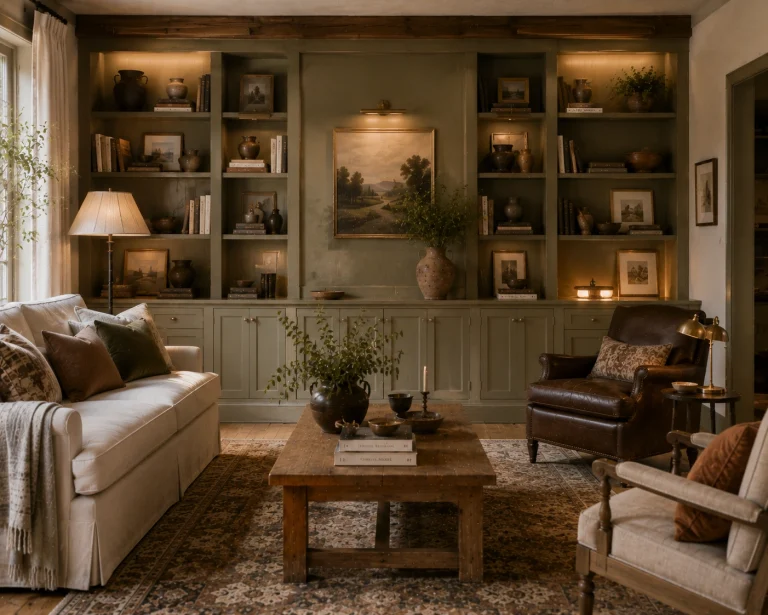
40 Living Room Decor Ideas for a Nostalgic 2000s and Y2K Aesthetic
From cosy suburban family rooms and Tuscan-inspired interiors to colourful Y2K apartments, retro TV lounges and futuristic chrome furniture.
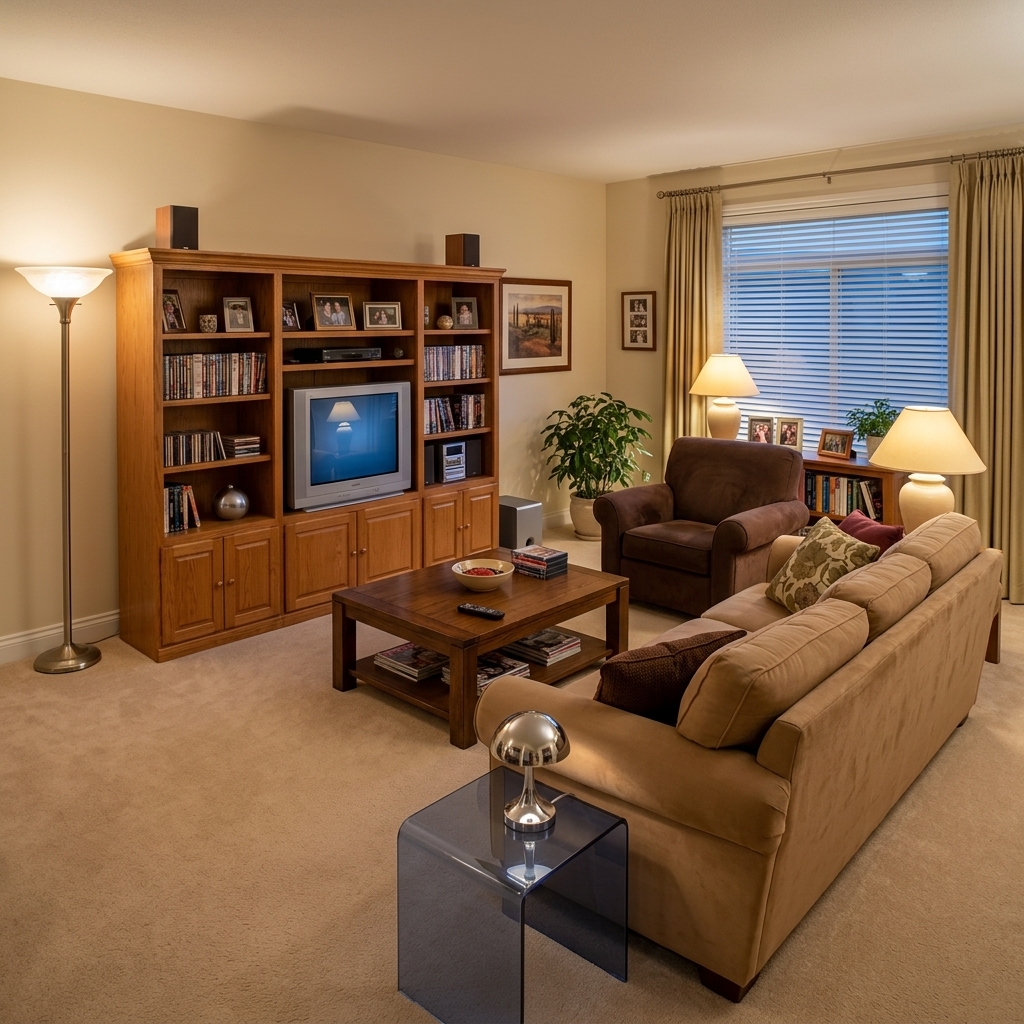
An early 2000s living room had a particular kind of personality. There might have been an enormous sofa facing an oak entertainment centre, a coffee table covered with magazines, DVDs stacked beside the television and several table lamps casting a soft evening glow. These rooms were not always perfectly coordinated, but that was part of their appeal. They were comfortable, familiar and filled with evidence of everyday life.
Yet the living rooms of the 2000s were far more varied than nostalgia might suggest. While suburban homes embraced beige carpets, chocolate-brown upholstery and substantial wooden furniture, fashionable apartments experimented with chrome, translucent plastics, curved seating and playful colours. Tuscan-inspired interiors introduced another distinctive look, with terracotta walls, dark timber, leather furniture and decorative ironwork.
The difference between an authentic early 2000s living room and a Y2K-inspired interior is particularly important. Y2K aesthetics captured the futuristic optimism surrounding the new millennium, while many ordinary homes retained furniture, finishes and decorating traditions inherited from the 1990s. Both belong to the visual story of the decade, but they produce very different interiors.
These 40 living room decor ideas for the 2000s and Y2K aesthetic explore that full range. Some recreate the comforting atmosphere of a family home from 2003. Others embrace colourful, futuristic design or reinterpret the period with contemporary furniture and carefully chosen nostalgic details. The aim is to capture what made these rooms memorable while creating a space that remains comfortable and practical today.
Recreate the cosy early 2000s family living room
The conventional family living room of the early 2000s was often designed around comfort, entertainment and familiar furniture rather than strict minimalism. Deep seating, generous proportions, warm wood and substantial storage helped establish an atmosphere that many people now associate with childhood evenings and weekends at home.
1. Make an oversized sofa the centre of the room
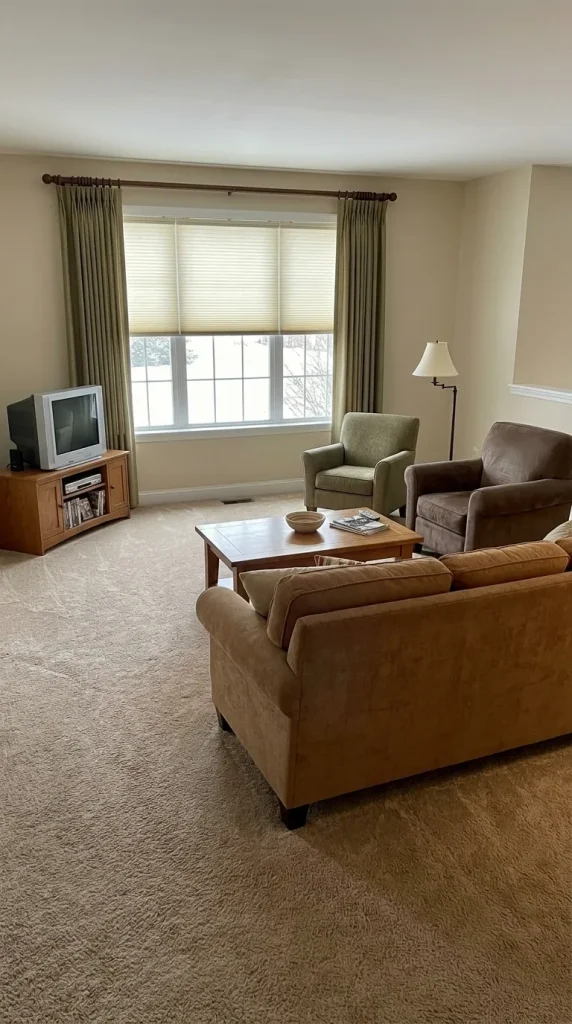
Few furniture pieces capture early 2000s nostalgia as effectively as a deep, generously upholstered sofa. Wide seats, rounded arms and substantial back cushions were common in family-oriented interiors, particularly in beige, tan, chocolate brown, burgundy and muted green.
If you want an authentic suburban atmosphere, choose a comfortable sofa with enough visual weight to anchor the room. A substantial timber coffee table and a large rug will help balance its proportions. In a contemporary living room, however, you can recreate the softness without choosing a sofa that consumes the entire floor. Look for plush upholstery and generous cushions combined with slightly narrower arms and a more manageable depth.
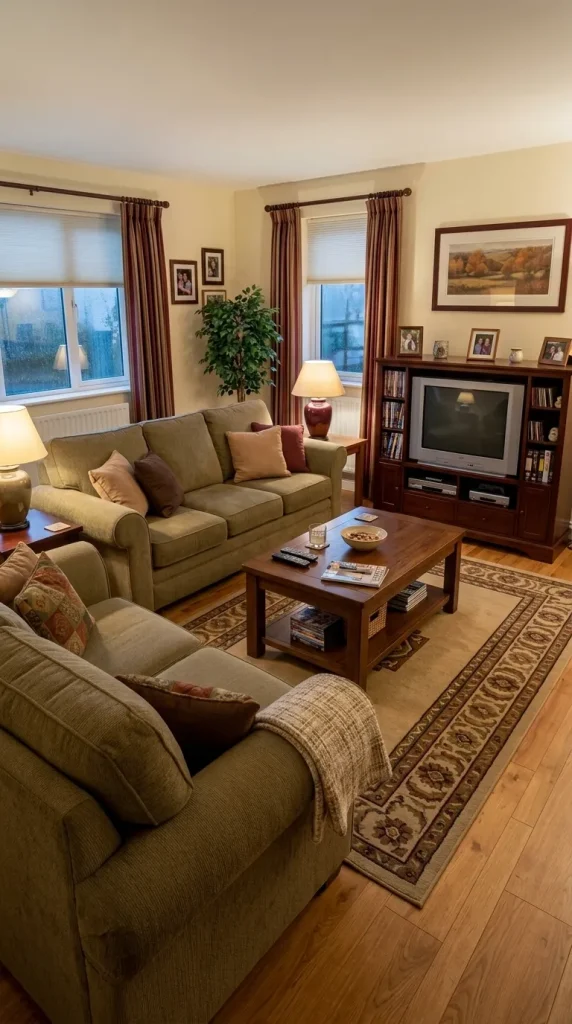
2. Arrange a sectional around the television
The large sectional was particularly suited to the family-room culture of the 2000s. Television viewing, films, video games and informal gatherings often shared the same space, making comfortable seating one of the room’s most important features.
Position an L-shaped sofa to create a clearly defined television area, then introduce a practical coffee table that can accommodate drinks, remote controls and everyday belongings. The important difference between this arrangement and a formal sitting room is its emphasis on relaxed use. Keep sufficient space for circulation, but do not feel compelled to arrange every chair around a perfectly symmetrical conversation area if the television genuinely remains the household’s main entertainment feature.
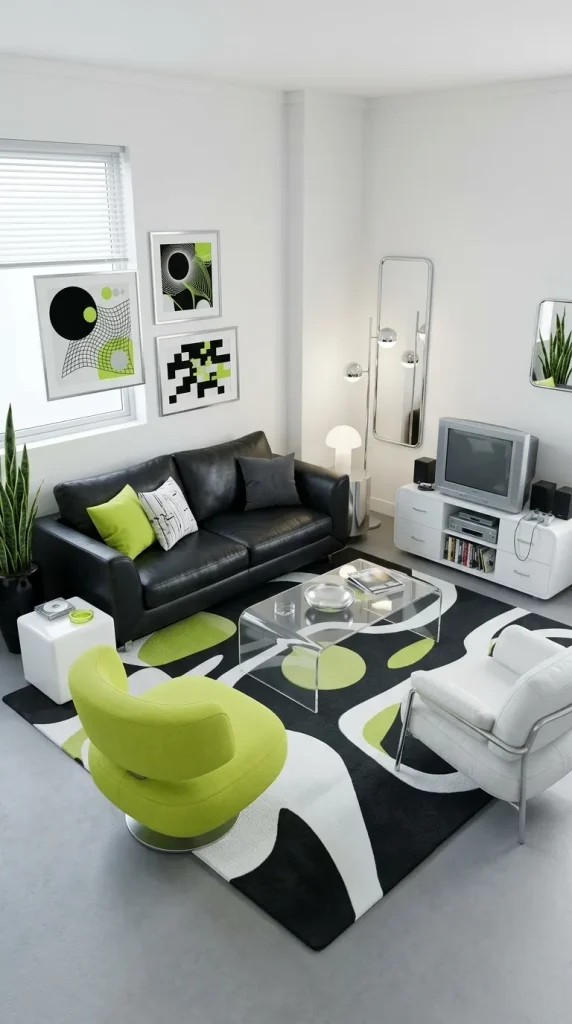
3. Embrace beige carpeting and warm neutral walls
Beige, cream, tan and other warm neutrals were familiar foundations in many early 2000s homes. They often appeared alongside substantial upholstery and wooden furniture, producing rooms that felt soft and comfortable rather than particularly experimental.
To recreate this atmosphere today, begin with warm cream or golden-beige walls, a tan sofa and medium-oak furniture. Introduce contrast through chocolate-brown cushions, a darker side table or a traditional patterned rug. Avoid using precisely the same beige on every surface. Slight variations between carpeting, upholstery and wall colour give the room depth while preserving the recognisable neutral palette.
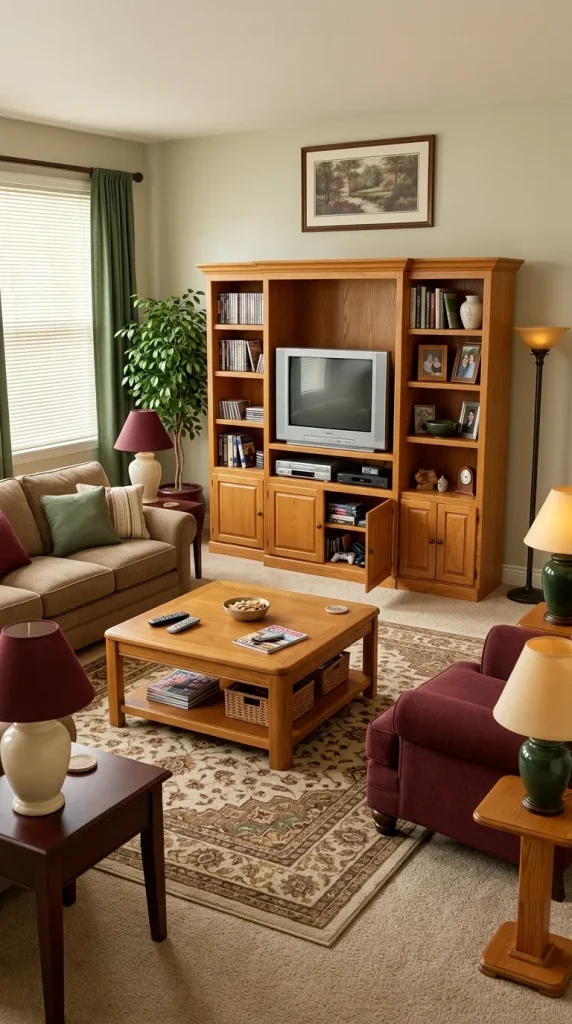
4. Bring back the substantial oak entertainment centre
An oak entertainment cabinet is one of the strongest visual references to the ordinary early 2000s living room. These units frequently contained televisions, DVD players, stereo equipment, books, photographs and decorative objects in one substantial arrangement.
For a historically faithful recreation, search for a second-hand entertainment centre with shelves and compartments that suit the equipment you intend to display. If you prefer a contemporary adaptation, choose a long oak media console and add open shelving nearby. The combination of warm timber, visible entertainment equipment and physical-media storage can establish the period without requiring an enormous cabinet that overwhelms a smaller room.
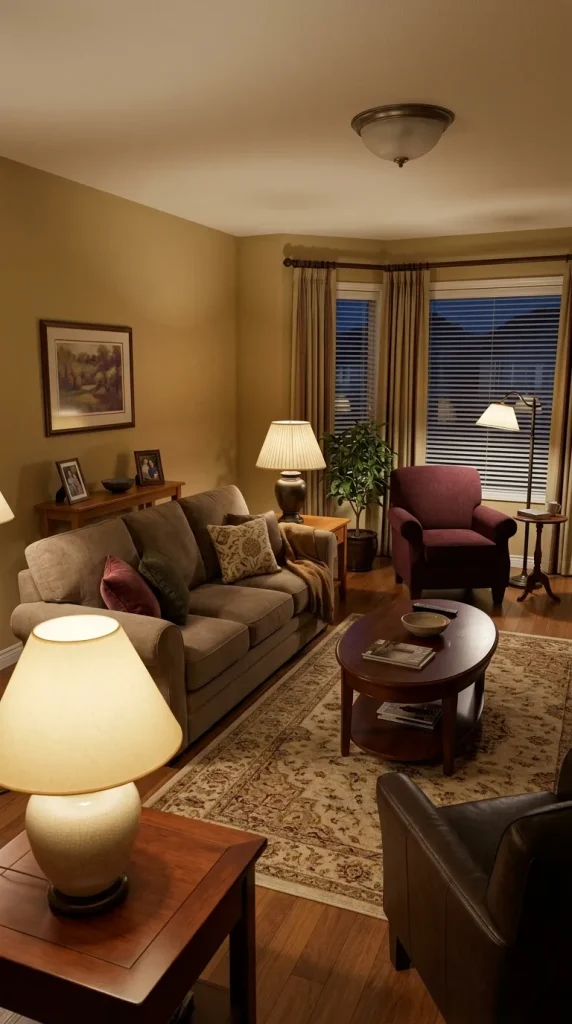
5. Use substantial table lamps for a familiar evening atmosphere
Traditional table lamps were an important part of the comfortable domestic character of the period. Ceramic bases, decorative metal finishes and generous fabric shades commonly appeared beside sofas and armchairs, creating a softer atmosphere than overhead lighting alone.
Place lamps at different points around the seating area so the room feels welcoming after dark. Cream or beige shades diffuse light, while bronze, dark metal and traditional ceramic bases reinforce the nostalgic style. A taller floor lamp beside a reading chair adds practical illumination without requiring every corner to contain another side table.
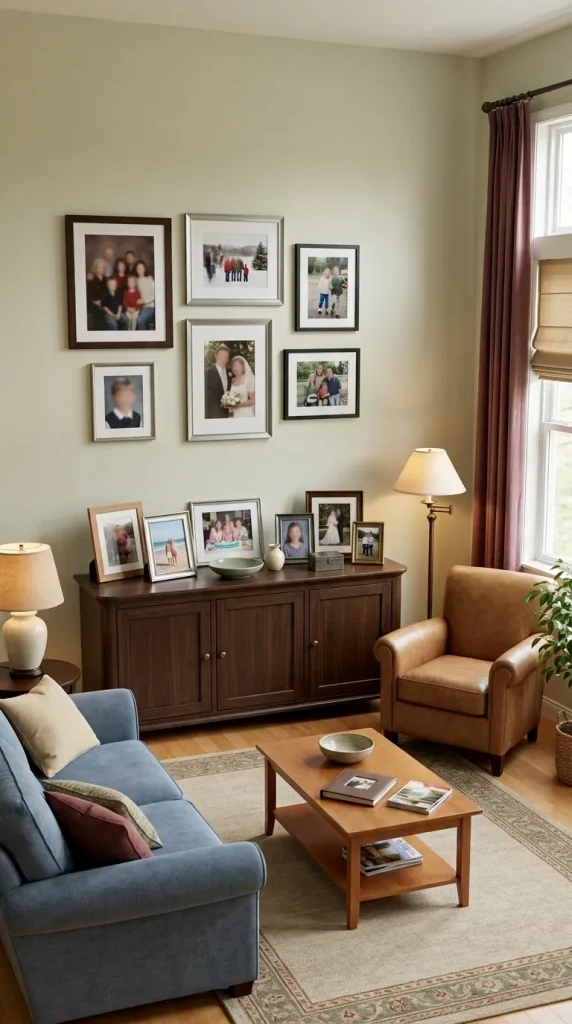
6. Display family photographs in mixed frames
Family photographs were a visible and personal part of many early 2000s living rooms. Mantelpieces, television cabinets and side tables often held pictures from holidays, weddings, school events and other memorable occasions.
Rather than recreating a perfectly coordinated contemporary gallery wall, use a relaxed collection of timber, silver and dark metal frames. Varying their sizes can create the familiar impression of a collection that developed over time. Give the larger photographs prominent positions and group smaller frames together so the display feels personal without covering every available surface.
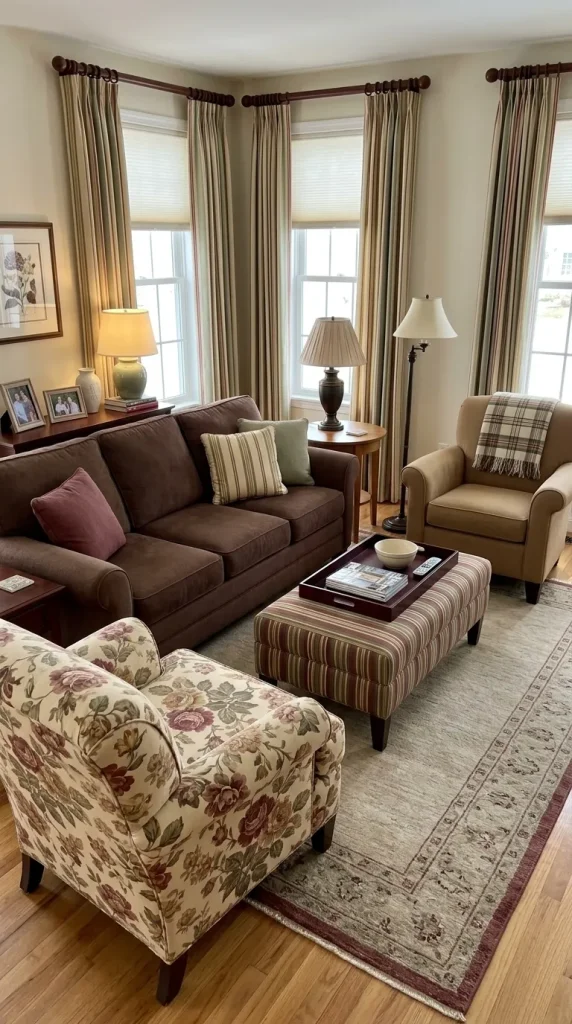
7. Introduce floral armchairs and patterned cushions
The beginning of the 2000s retained many traditional decorating influences from the previous decade. Floral upholstery, decorative stripes and coordinated fabric collections appeared in family homes long after more futuristic interiors had begun attracting attention.
A floral armchair beside a solid-coloured sofa is an effective way to recreate this softer aesthetic. Choose a pattern containing muted burgundy, sage, cream or dusty blue, then repeat one of those colours elsewhere through a cushion or rug. Allow the patterned chair to provide most of the decorative detail rather than coordinating the curtains, sofa and every cushion in identical fabric.
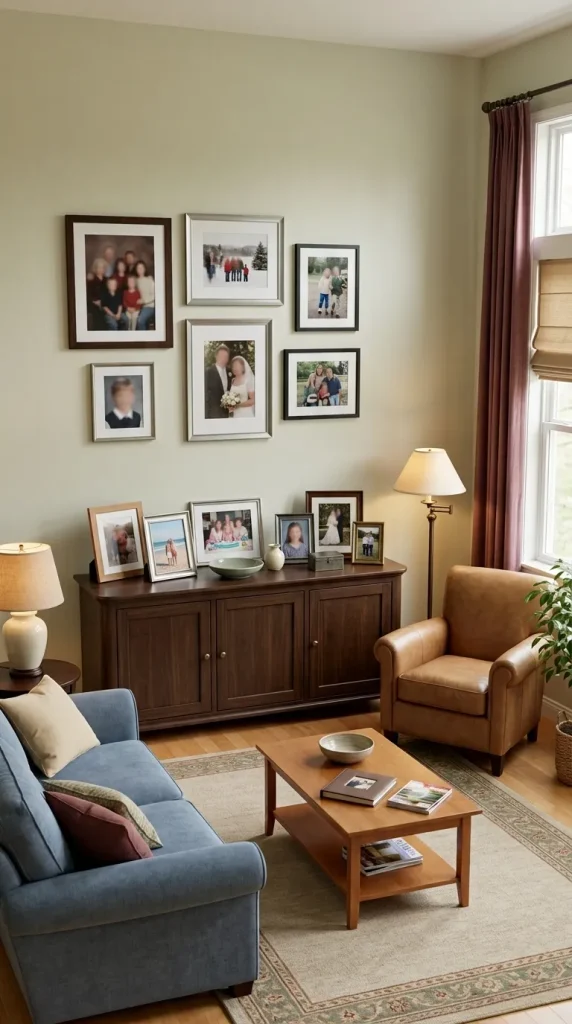
8. Create a room that feels collected rather than perfectly styled
One reason nostalgic 2000s living rooms feel so familiar is that they often contained furniture and objects acquired over many years. A newer sofa might sit beside an inherited cabinet, while family photographs, magazines, plants and souvenirs occupied the surrounding shelves.
Recreate that character with a deliberate mixture of old and new furniture. A second-hand coffee table, substantial upholstered chair and contemporary sofa can work together when they share a compatible palette or material. Keep the personal objects that contribute genuine character, but provide storage for the everyday clutter that would otherwise prevent the room from functioning comfortably.
Bring back Tuscan-inspired 2000s decorating
Tuscan-inspired interiors represent a distinctly different side of the decade. They favoured rich, earthy colours, dark timber, substantial furniture and decorative materials associated with traditional Mediterranean architecture. The overall effect was warmer and more ornate than the futuristic Y2K aesthetic.
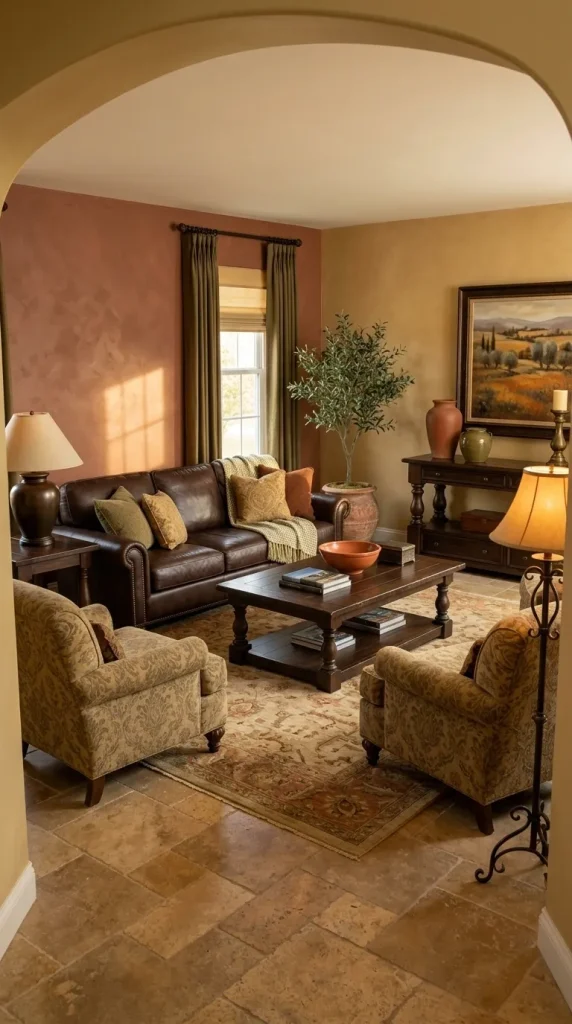
9. Use terracotta and golden-beige walls
Terracotta, ochre, golden beige and muted olive can establish the rich colour palette associated with Tuscan-inspired interiors. These shades work particularly well when the room contains dark timber furniture, leather upholstery and traditional rugs.
For a more faithful recreation, choose a substantial terracotta or golden wall colour and surround it with similarly warm materials. A contemporary interpretation can be lighter, with parchment or warm ivory walls and terracotta introduced through cushions, ceramics and artwork. The second approach preserves the warmth of the period without making the room feel overly decorative.
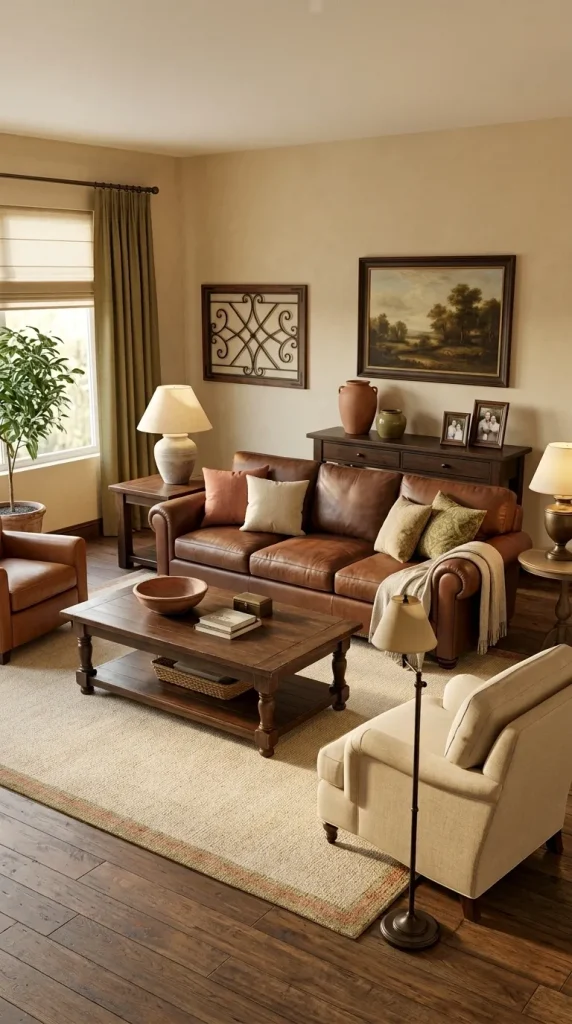
10. Make a brown leather sofa the main feature
Substantial leather seating suits the warm and traditional character of Tuscan-inspired living rooms. Chocolate, cognac and tobacco-brown leather work particularly well with dark wood, cream walls and patterned textiles.
A generously proportioned leather sofa can provide enough visual weight that the surrounding furniture does not need to be elaborate. Balance it with a lighter rug, a substantial timber coffee table and warm ambient lighting. If you already own a brown leather sofa, it may be one of the most useful starting points for recreating this particular early 2000s style.
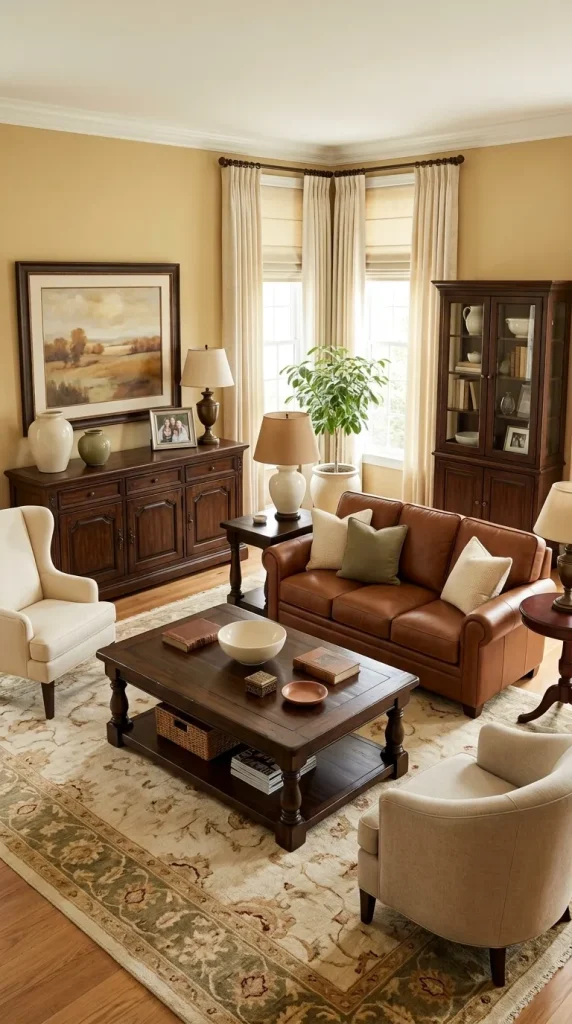
11. Introduce substantial dark-wood furniture
Heavy coffee tables, carved cabinets and dark timber sideboards contributed to the sense of richness associated with many Tuscan-inspired homes. Their visual weight worked with the deep upholstery and warm wall colours rather than attempting to create an airy minimalist appearance.
One substantial piece can communicate this character without requiring a complete matching furniture set. Try a dark wooden coffee table with a leather sofa, or place a traditional sideboard beneath a large landscape painting. Surround darker furniture with lighter fabrics and ceramics so individual pieces remain visible instead of merging into one heavy composition.
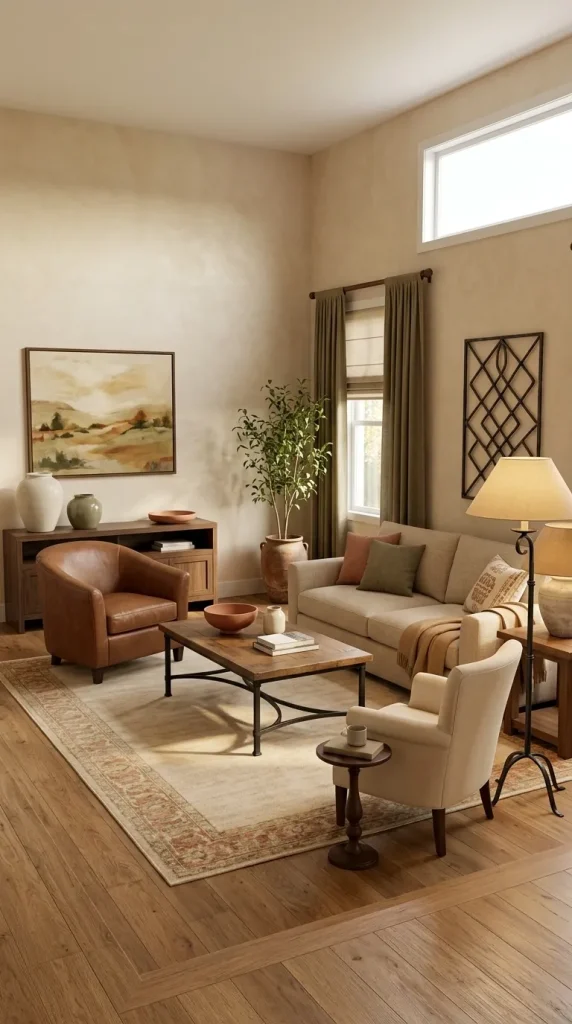
12. Use wrought iron as a distinctive decorative material
Wrought iron appeared in traditional lighting, furniture bases and decorative wall accents, providing a strong contrast to warm plaster-like walls and dark timber. Its elaborate forms were particularly compatible with the ornate side of Tuscan decorating.
A wrought-iron floor lamp, decorative wall panel or occasional table can introduce this character without making the entire room feel themed. Choose one or two meaningful pieces rather than repeating elaborate metalwork across every surface. If you prefer a more modern interpretation, combine a simpler blackened-metal lamp with terracotta ceramics and a substantial wooden table.
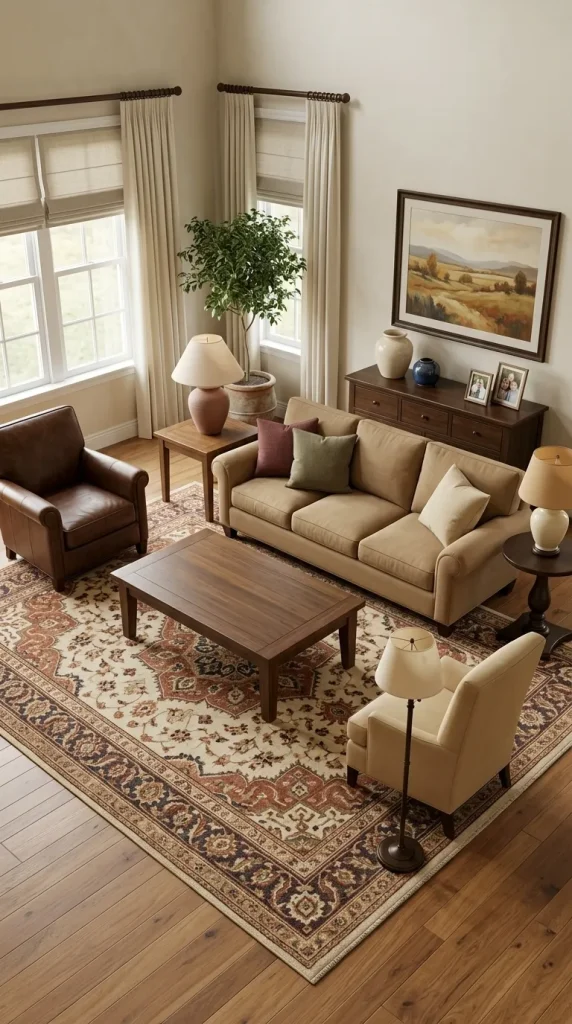
13. Ground the room with a traditional patterned rug
A patterned rug helps bring together the different colours and materials of a Tuscan-inspired living room. Muted burgundy, rust, olive, dark blue and warm cream are especially useful because they can connect leather upholstery, timber furniture and richly coloured walls.
Choose a rug large enough to sit beneath the main seating group rather than leaving a small decorative rectangle in the middle of the floor. If the furniture is already ornate, a more faded pattern can provide the necessary detail without competing with every surrounding object.
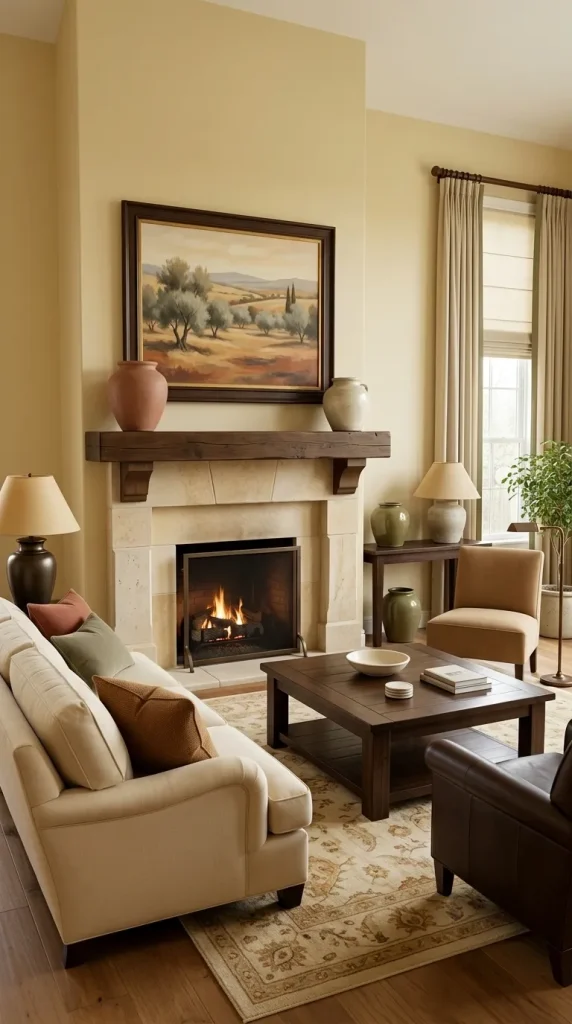
14. Decorate with substantial ceramics and traditional artwork
Large ceramic vessels, decorative bowls and framed landscapes can reinforce the Mediterranean-inspired richness of the period. The most convincing arrangements give these objects enough scale to relate to the furniture below them.
Place a large painting above the fireplace or sideboard, then introduce one or two substantial ceramic pieces rather than numerous small ornaments. Terracotta, aged stoneware and darker glazed pottery create useful material variation. These elements should complement the room’s architecture and furniture instead of turning every surface into a display.
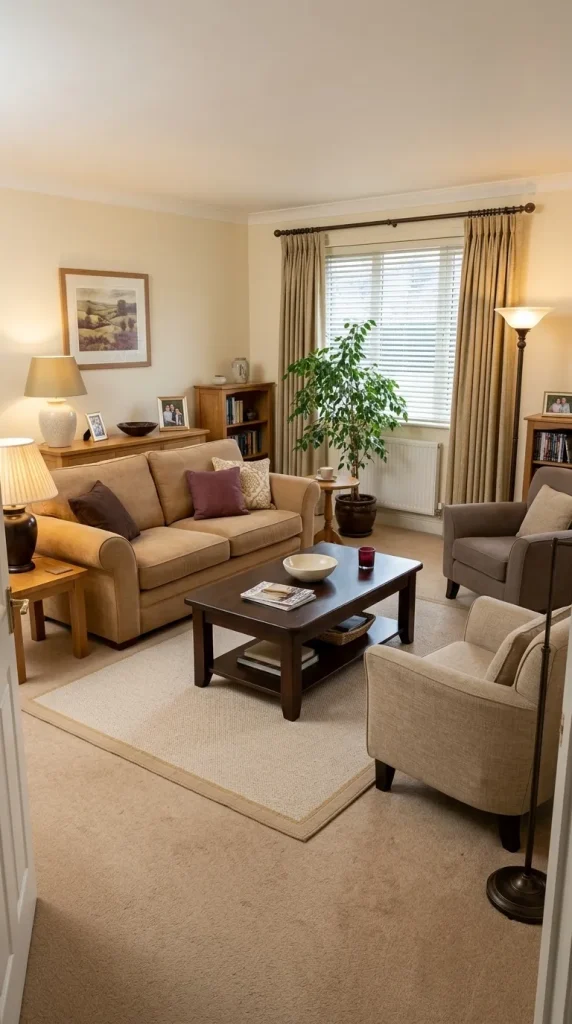
15. Create a softer modern interpretation of the Tuscan look
For a living room that references the early 2000s without reproducing every period detail, retain the warm colour palette and substantial natural materials while simplifying the furniture.
Consider warm ivory walls, a cognac leather sofa, a dark-wood coffee table and a traditional rug with faded rust and olive tones. Add one sculptural iron lamp and several understated ceramics. The room will retain a recognisable Tuscan influence while feeling more relaxed and compatible with contemporary everyday living.
Explore colourful and futuristic Y2K interiors
While conventional family homes favoured warm neutrals and substantial wooden furniture, the more experimental Y2K aesthetic embraced reflective materials, unusual shapes and expressive colours. Its visual language drew on the excitement surrounding digital technology, the new millennium and imagined futuristic environments.
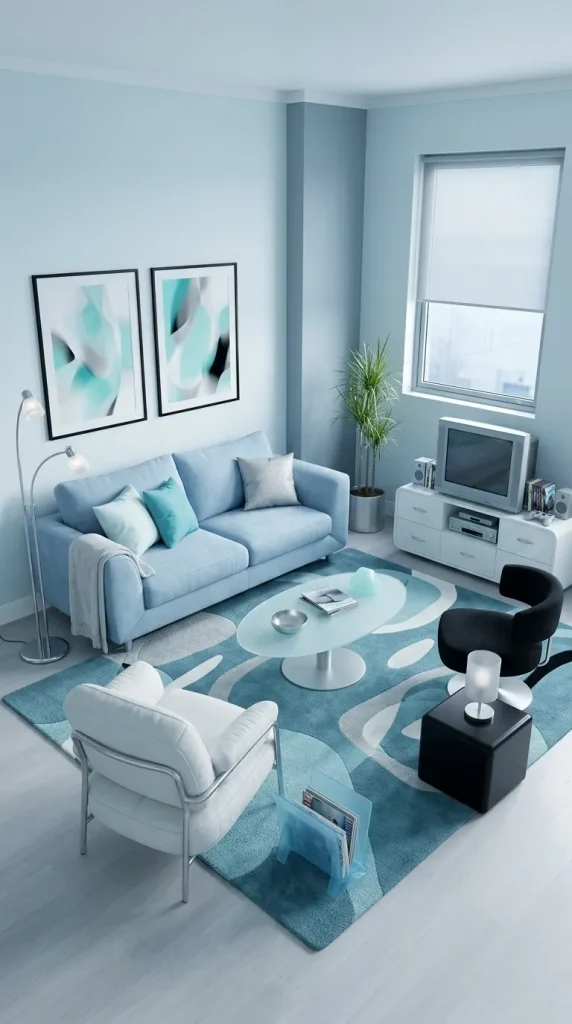
16. Introduce chrome furniture for a futuristic atmosphere
Chrome is one of the most effective materials for establishing the technological side of the Y2K aesthetic. A polished metal coffee table, chrome-framed chair or curved floor lamp immediately gives an otherwise simple room a recognisable futuristic reference.
The strongest contemporary combinations balance the reflective material with something softer. Chrome beside a plush sofa, shag rug or textured chair creates useful material contrast. White walls, icy blue upholstery and small black accents reinforce the futuristic mood without requiring every surface to become reflective.
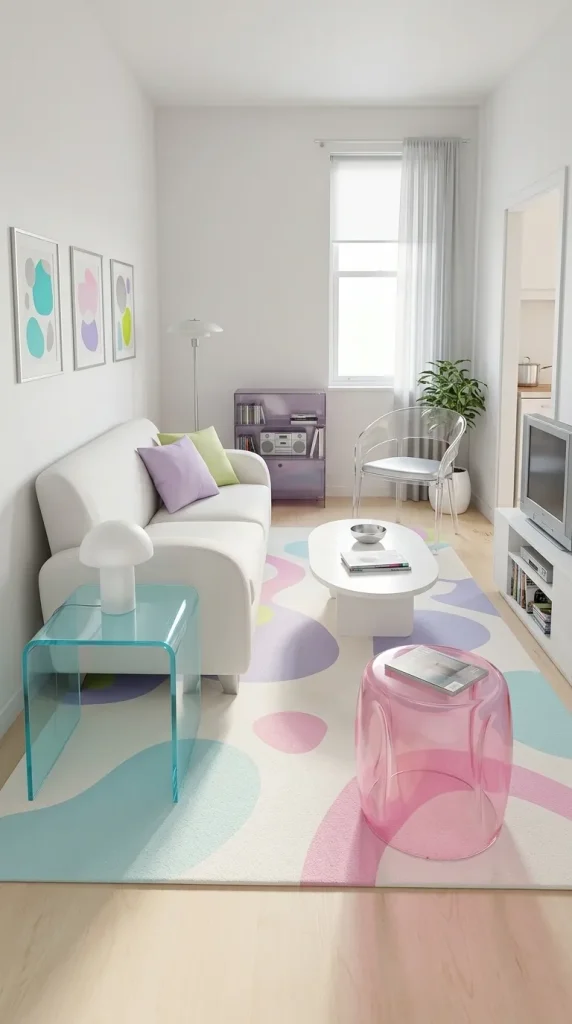
17. Use translucent acrylic furniture
Transparent and coloured acrylic furniture captures the playful synthetic quality associated with millennium-era interiors. Translucent blue, pink, lilac and clear pieces work particularly well alongside chrome and glossy furniture.
A coloured acrylic side table can be especially effective in a compact apartment because it introduces a strong visual reference without adding much apparent weight. Pair it with a simple upholstered sofa and an expressive floor lamp. Keep the number of transparent pieces relatively limited so each remains a distinctive part of the composition.
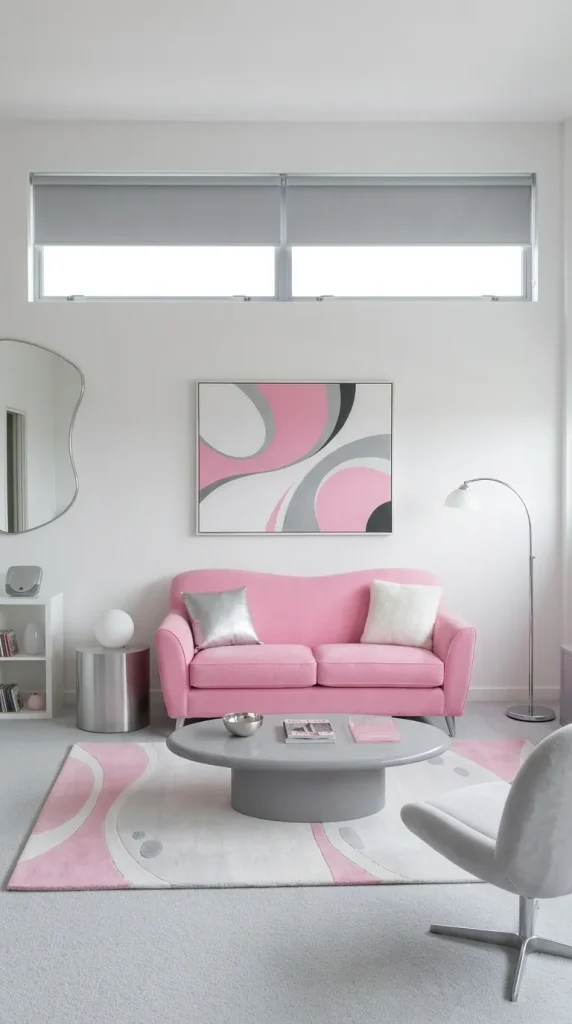
18. Create a bubblegum-pink and silver living room
Pink and silver provide one of the most recognisable combinations for a playful Y2K-inspired interior. A pink sofa, chrome coffee table and white walls create a vivid scheme that feels futuristic without needing numerous decorative references.
If a bright pink sofa feels too permanent, introduce the colour through an accent chair, large rug or upholstered ottoman. Silver lighting and a curved mirror can strengthen the look. Keep the remaining palette relatively restrained so the strongest pink object remains the focal point.
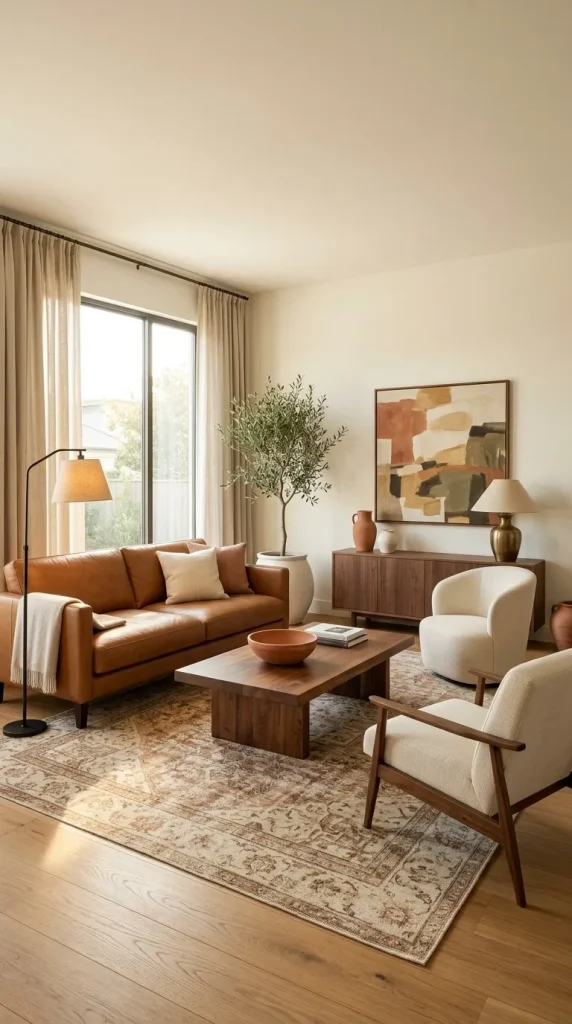
19. Build an icy-blue and metallic colour scheme
Icy blue, pale turquoise, white and silver create a cooler interpretation of Y2K design. The combination evokes the glossy, technology-inspired interiors associated with the early digital era.
Use pale blue upholstery against white walls, then introduce polished metal through a coffee table or lamp. A deeper turquoise cushion or artwork can provide contrast without disrupting the scheme. The room will feel more sophisticated if the different blues have a clear relationship rather than appearing as several unrelated saturated accents.
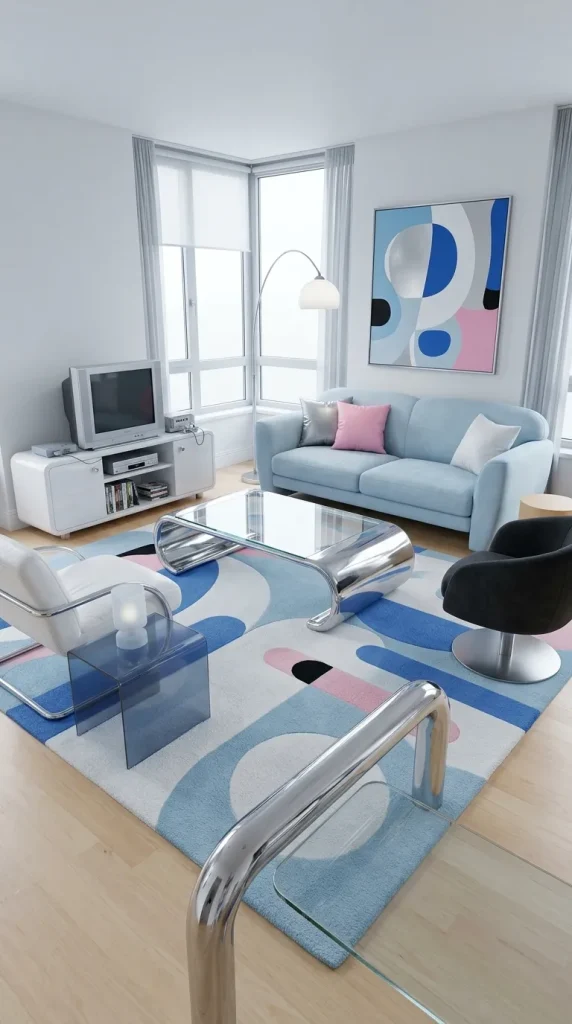
20. Combine lime green and black for a graphic alternative aesthetic
A high-contrast palette of lime green, black and white produces a much more energetic living room than the softer pastel side of Y2K. Black leather seating, a lime accent chair and graphic artwork can create the foundation.
Chrome works particularly well alongside this colour scheme because it introduces another futuristic material without adding a competing colour. Use the brightest green strategically rather than covering every surface. One substantial accent is usually more effective than repeating the same saturated shade on the walls, rug, curtains and furniture.
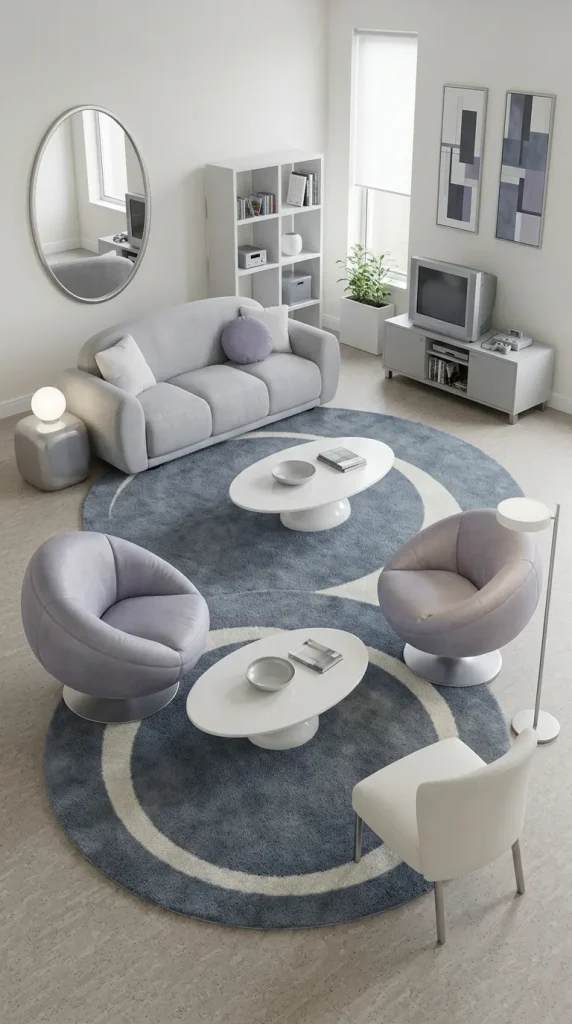
21. Choose furniture with rounded, bubble-like silhouettes
Curved sofas, oval coffee tables, rounded armchairs and circular mirrors can establish the playful geometry of the Y2K aesthetic even in a relatively neutral room.
A cream curved sofa beside a chrome table offers a softer interpretation, while a colourful rounded chair introduces a more expressive direction. Repeat a few curved shapes throughout the room, but balance them with straightforward shelving or artwork. This contrast allows the more sculptural furniture to stand out instead of making every object compete for attention.
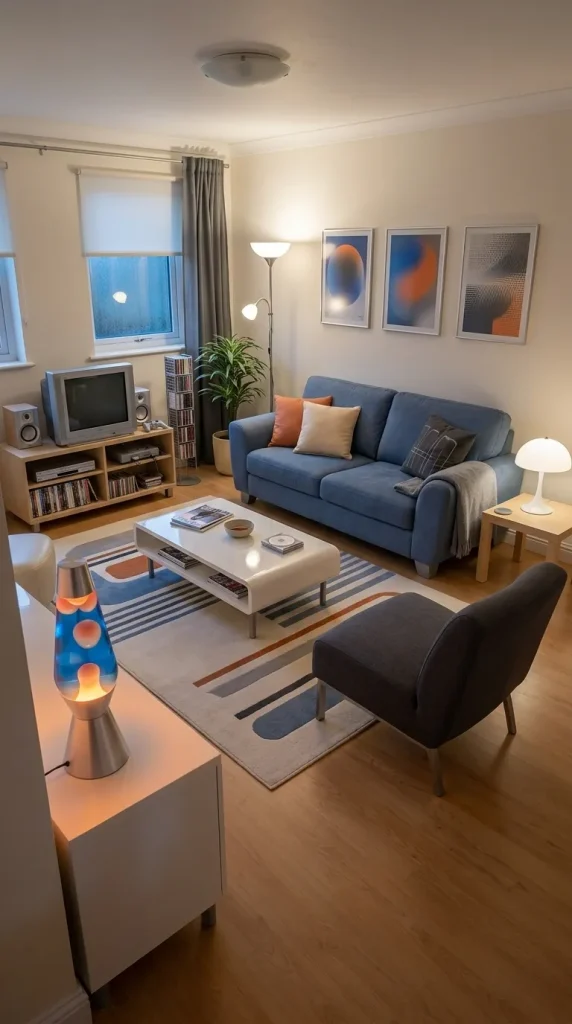
22. Add a lava lamp and sculptural accent lighting
A lava lamp can provide an immediately recognisable nostalgic detail, particularly in a colourful apartment or informal hangout room. Its slow-moving light introduces a different atmosphere from an ordinary table lamp.
Treat novelty lighting as an accent rather than the room’s main source of illumination. A comfortable living room still needs functional lighting for reading, television viewing and everyday activities. Mushroom lamps, rounded translucent shades and unusual sculptural fixtures can introduce similar playful character without depending entirely on novelty objects.
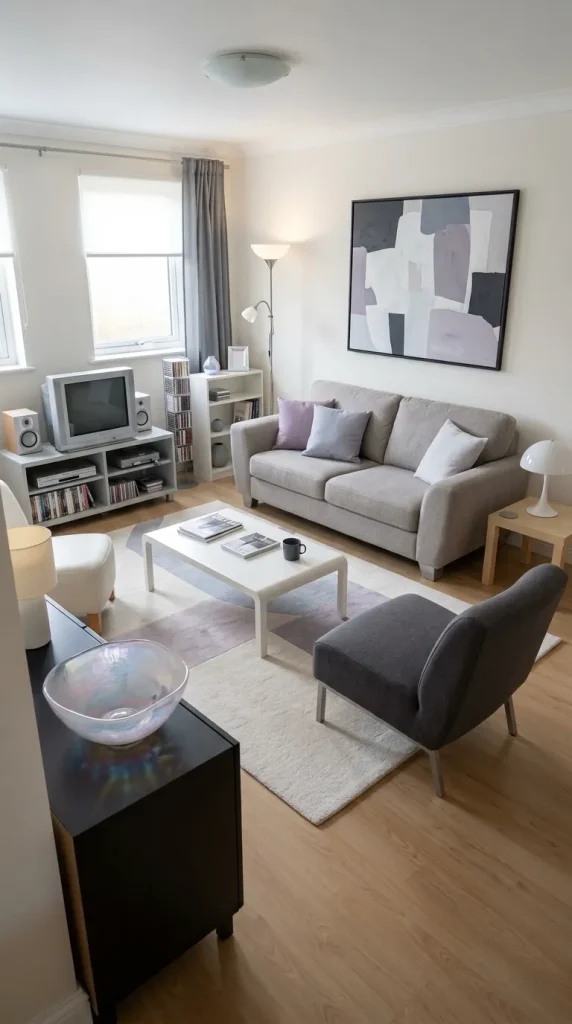
23. Introduce iridescent accessories and glossy finishes
Iridescent bowls, glossy side tables, metallic picture frames and reflective decorative objects can help recreate Y2K’s fascination with synthetic and futuristic materials.
Choose one or two significant pieces rather than collecting every shiny object available. A substantial iridescent vase on a white cabinet may create more impact than several small accessories scattered around the room. Position reflective pieces where natural or artificial light can reveal their changing colours, and balance them with upholstery or other matte materials.
Experiment with the different colour palettes of the 2000s
Colour is one of the clearest ways to distinguish a conventional family living room from a playful Y2K apartment or a more traditional Tuscan-inspired home. The decade was not defined by one universal palette, so choose the colours that support the particular atmosphere you want to recreate.
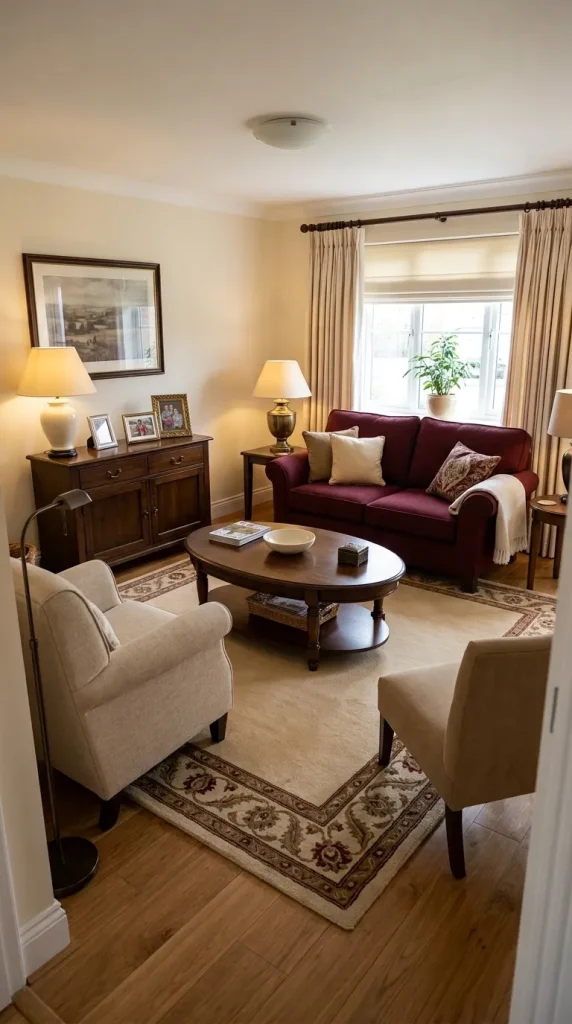
24. Combine burgundy and cream for traditional early 2000s nostalgia
Burgundy upholstery, cream walls and dark timber can create the comfortable, slightly formal atmosphere associated with many traditional family homes of the period.
Use burgundy as the dominant colour through a sofa or substantial armchair, then soften it with cream curtains and a lighter rug. Traditional artwork and warm table lamps reinforce the scheme. If you prefer a contemporary result, replace elaborate decorative accessories with larger artwork and a simpler coffee table while retaining the recognisable palette.
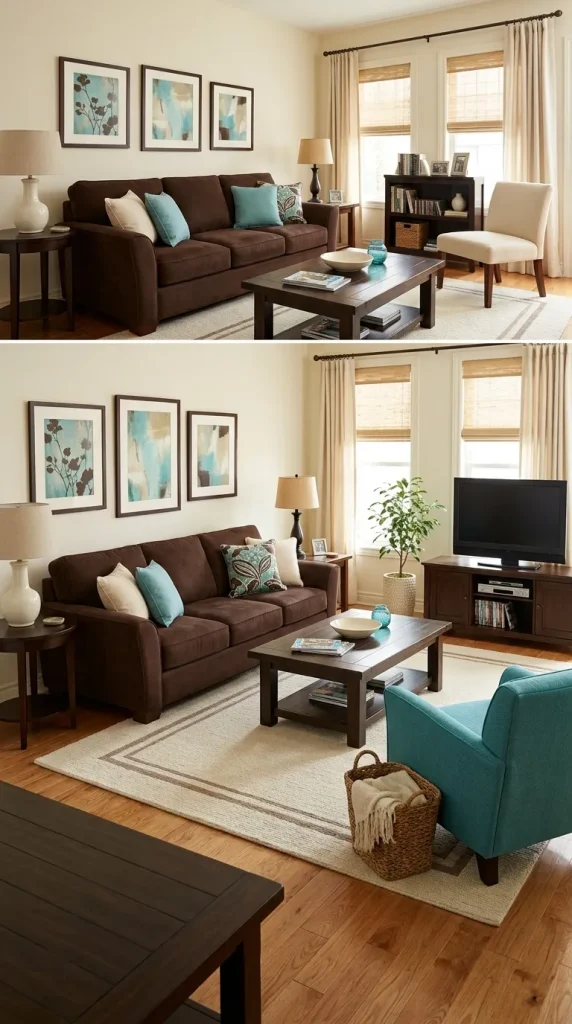
25. Pair chocolate brown with turquoise
Chocolate brown and turquoise capture another distinctive early 2000s decorating direction. The deep warmth of brown provides the visual foundation, while turquoise introduces a brighter and more energetic accent.
Try a chocolate sofa with a turquoise armchair or use smaller touches of blue through cushions, artwork and a patterned rug. Cream walls and medium-toned timber can soften the contrast. Keep one of the two colours dominant so the room does not become excessively coordinated.
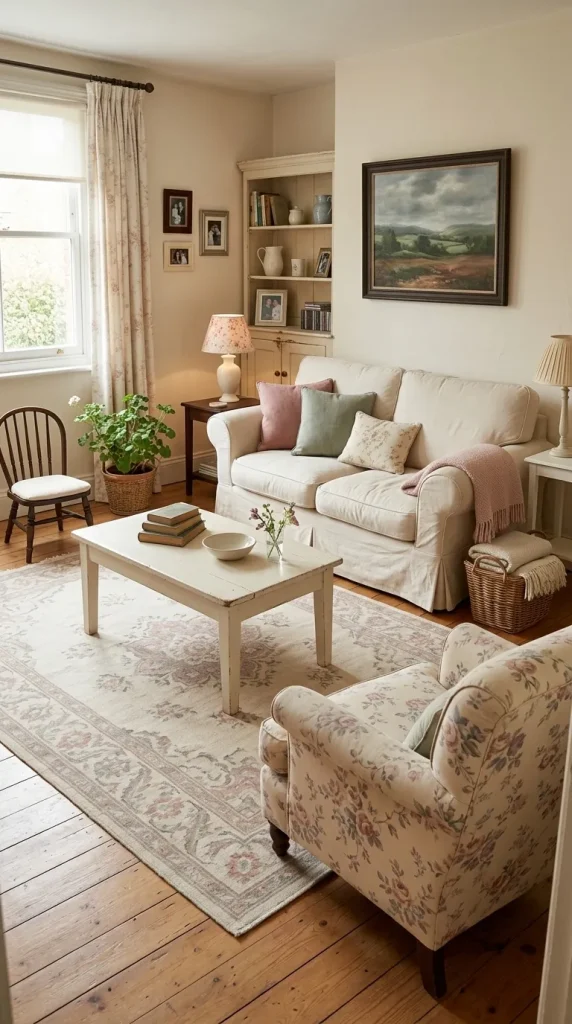
26. Recreate the softer shabby-chic side of the decade
Shabby-chic interiors offer a gentler alternative to both Tuscan richness and futuristic Y2K. White-painted furniture, faded floral prints, comfortable upholstery and softly coloured accessories create a relaxed, romantic atmosphere.
Begin with a cream sofa, a pale vintage cabinet and one floral armchair. Add a lightly patterned rug and delicate ceramic lighting. Rather than distressing every piece of furniture, use one or two genuinely older objects to establish the collected character. A darker wooden table or substantial painting can prevent the pale palette from feeling overly delicate.
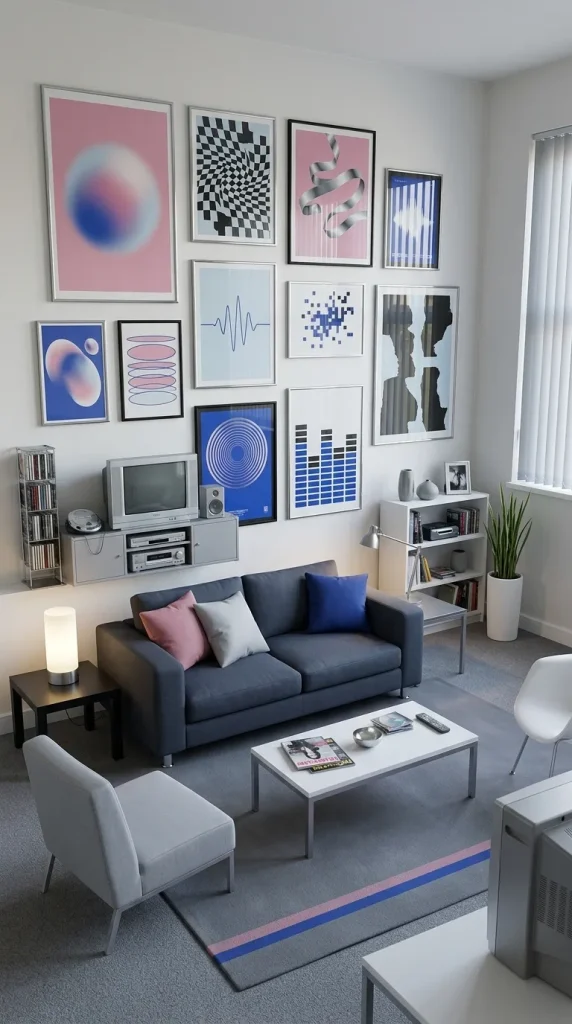
27. Create a graphic poster wall inspired by Y2K culture
Music posters, graphic prints, abstract artwork and chrome frames can make a living room feel like a colourful early 2000s apartment. This works particularly well when the room contains simpler furniture and the artwork becomes its main source of personality.
Choose a coherent visual direction rather than covering the wall with unrelated posters. A collection built around pink, blue and silver can support a futuristic scheme, while bold black frames and saturated graphic imagery suit a more alternative aesthetic. Larger framed prints make the arrangement feel more deliberate, but a casual collage can work if you prefer a youthful, informal atmosphere.
Bring back the physical-media living room
Physical media is central to the nostalgic appeal of many 2000s living rooms. Televisions, DVD players, stereos, CDs and game consoles were often displayed rather than hidden, creating rooms where entertainment equipment and personal collections became part of the decoration.
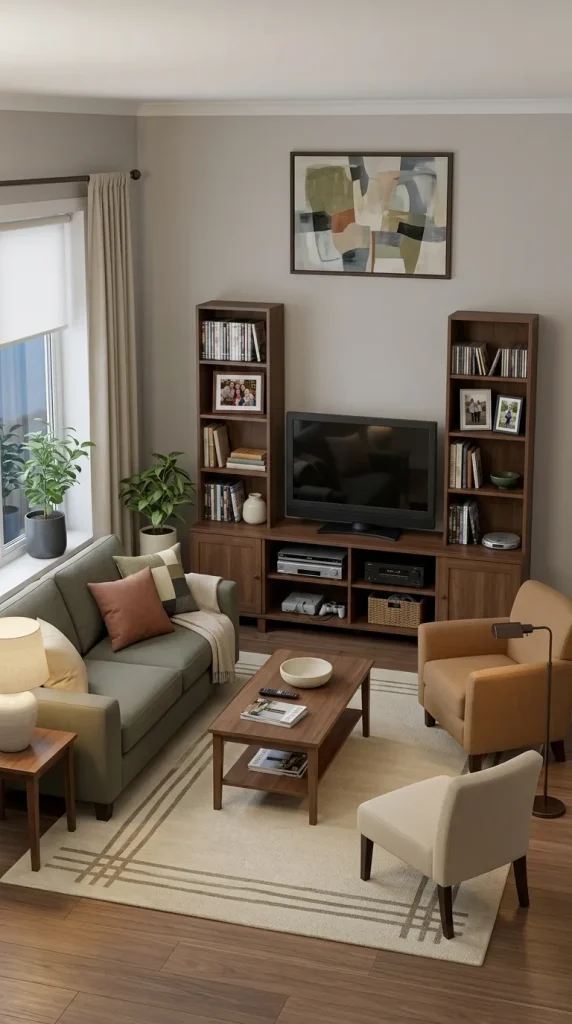
28. Turn a media cabinet into a curated DVD and CD display
A collection of DVDs or CDs can immediately establish the atmosphere of an early 2000s entertainment room. Instead of hiding every case inside closed cupboards, devote one section of shelving to a carefully organised collection.
Keep the media cabinet substantial enough to relate to the television, but avoid allowing it to dominate a compact room. A modern low console with vertical shelving can reference the period while accommodating contemporary equipment. Books, framed photographs or a few decorative objects can interrupt long rows of cases and make the display feel more residential.
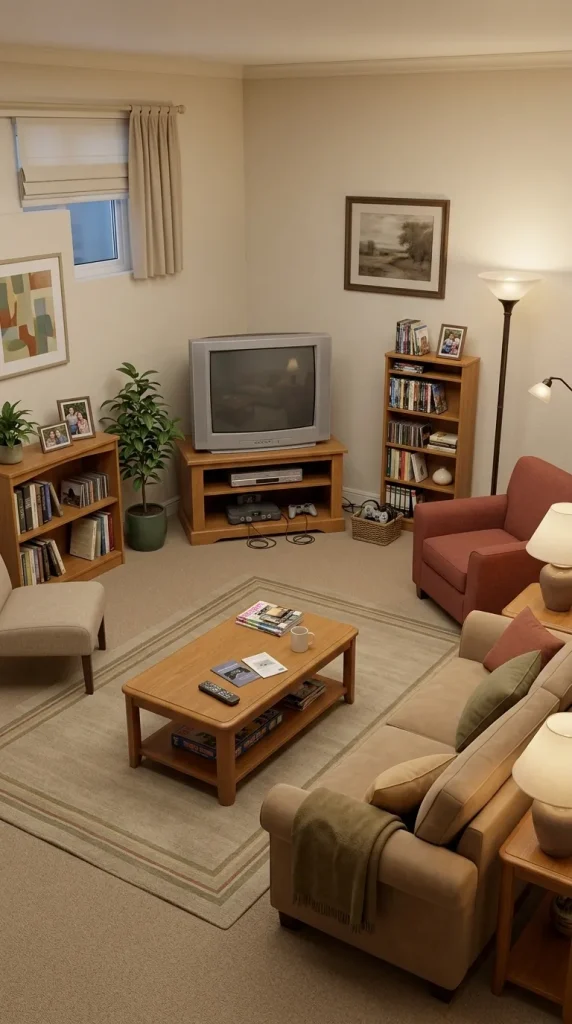
29. Create a retro television corner
A retro television setup offers a more historically faithful version of the 2000s living room. A period-appropriate cabinet, older game console and visible physical-media collection can recreate the atmosphere of a family entertainment corner.
If you prefer contemporary technology, keep your modern television and concentrate on the surrounding furniture, lighting and accessories. This is often a better compromise for everyday use. If you choose an original CRT television, make sure the furniture can support its weight and that the equipment is in safe working condition. Larger vintage televisions can be exceptionally heavy and should not be placed on unsuitable furniture.
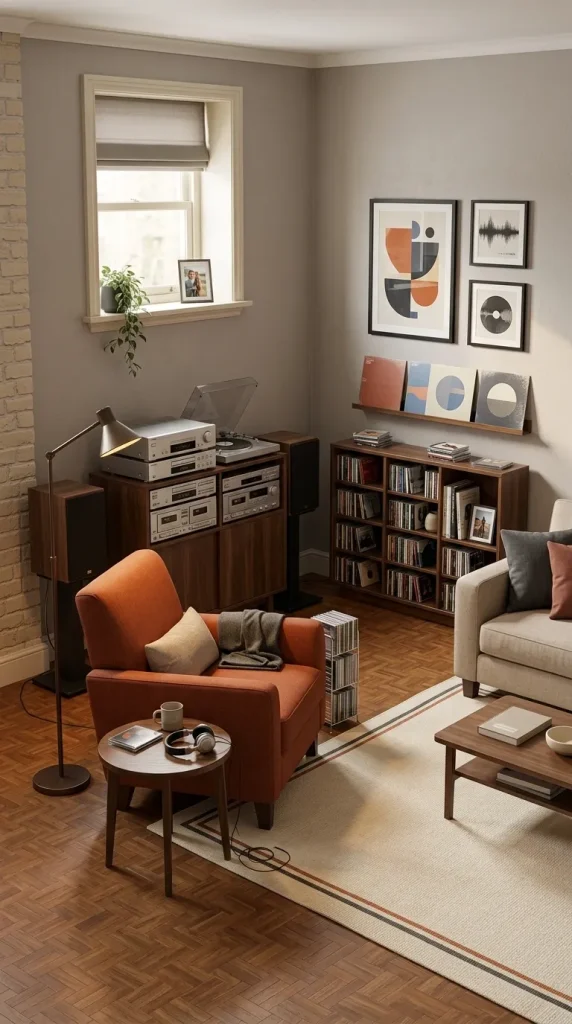
30. Build a nostalgic music corner with CDs and a stereo
A dedicated music corner can recreate the period’s relationship with physical media without turning the entire living room into a record shop. Use a substantial stereo, CD storage or a turntable, depending on the equipment you genuinely enjoy.
A comfortable armchair and small lamp can make the corner feel like part of the living room rather than a separate display. Album artwork, music posters and carefully arranged collections can provide colour and personality. Keep the equipment accessible and the cables organised so the arrangement remains functional.
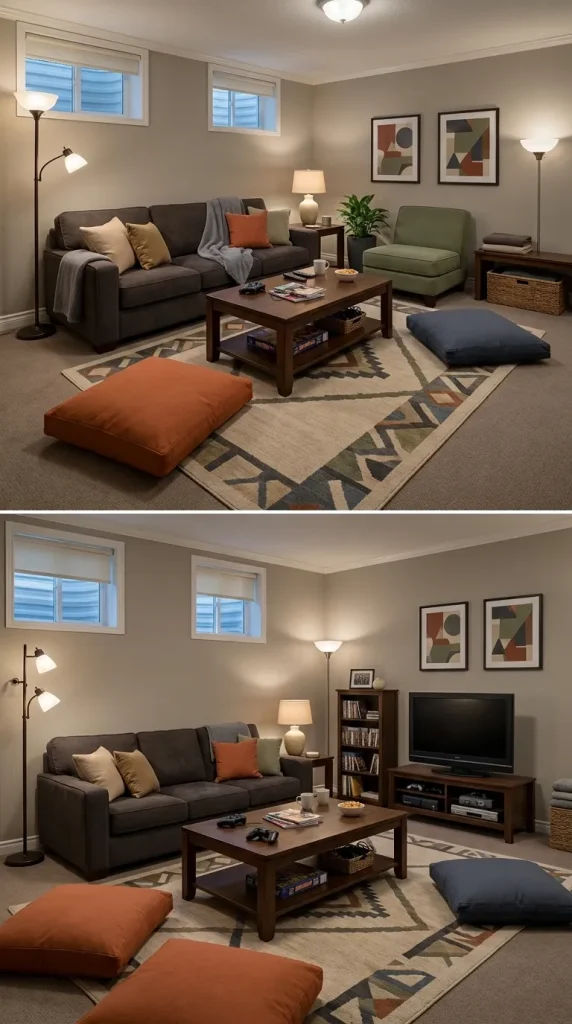
31. Design a relaxed gaming and television hangout room
A cosy early 2000s hangout room can combine a comfortable sofa, practical media storage, gaming equipment and more informal occasional seating. The emphasis should be on creating a room where friends can spend an entire evening comfortably rather than simply displaying nostalgic objects.
A substantial rug and low coffee table can anchor the seating. Floor cushions or a small additional chair may provide flexible seating if the room is large enough. Adjustable lighting helps the space accommodate television viewing, games and conversation without requiring one bright overhead fixture to remain on all evening.
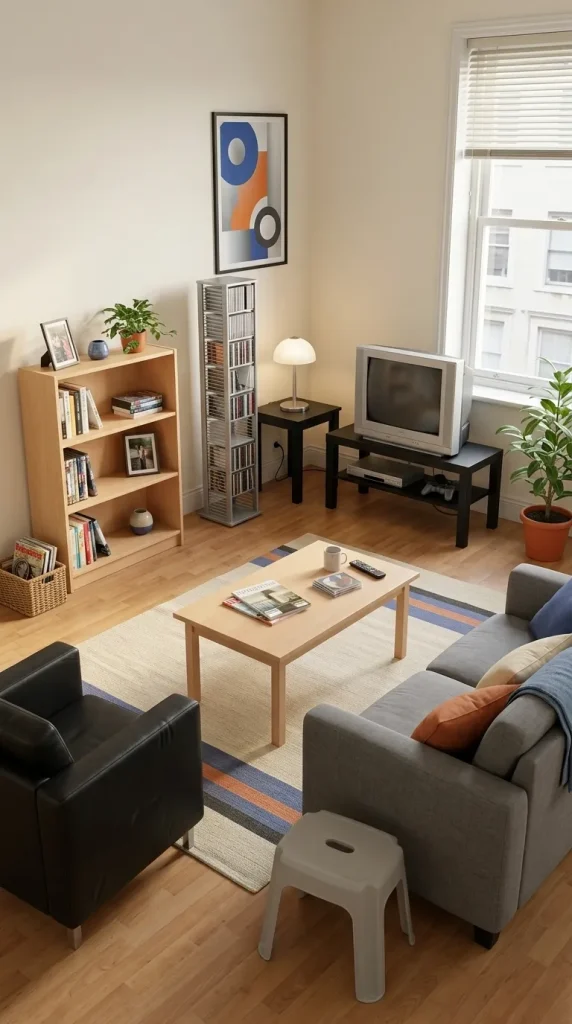
32. Introduce a CD tower or visible media collection as a nostalgic accent
If a large entertainment centre is impractical, a slim CD tower or compact media cabinet can still establish a strong period reference. Position it near the television or music equipment so the arrangement has a clear purpose.
The important design decision is to treat the collection as part of the room rather than decorative clutter. A repeated arrangement of media cases provides its own rhythm, while a nearby lamp or framed poster creates a more complete composition. This is particularly useful in apartments and smaller living rooms where an oversized cabinet would overwhelm the available space.
Recreate the relaxed atmosphere of a first 2000s apartment
Not everyone remembers the decade through large suburban houses. First apartments and smaller city living rooms often featured second-hand furniture, colourful accessories, posters and practical entertainment setups assembled gradually on limited budgets.
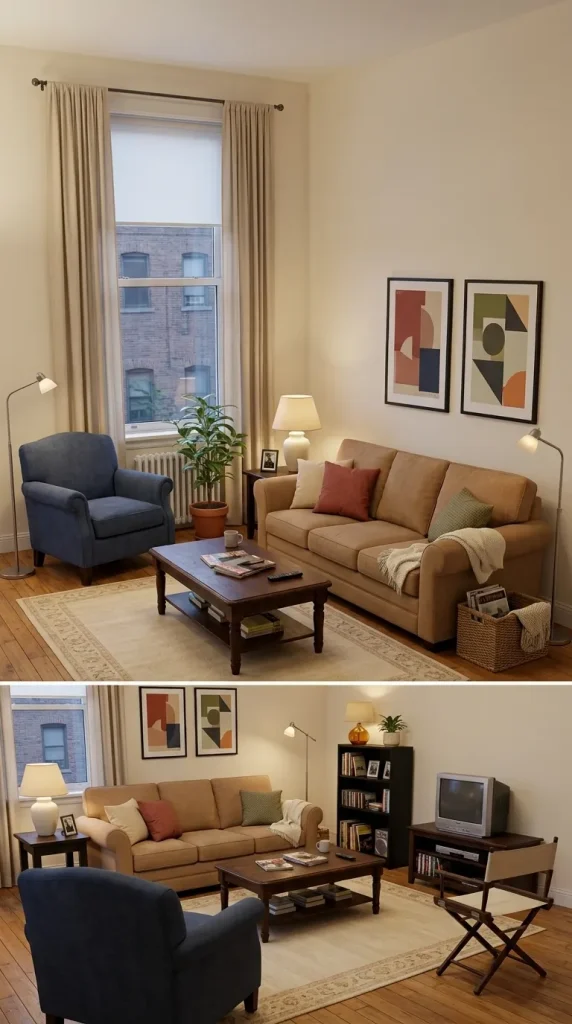
33. Mix second-hand furniture for an authentic first-apartment look
A mismatched sofa, inherited coffee table, inexpensive shelving and second-hand armchair can create the relaxed character associated with a first apartment from the early 2000s. The key is to make the furniture feel deliberately collected rather than randomly placed.
Connect the different pieces through a common colour palette or repeated material. For example, a tan sofa, dark-wood coffee table and cream rug can create a cohesive foundation even when none of the furniture belongs to the same collection. Framed posters, warm lamps and a visible music collection add personality without requiring expensive decorative accessories.
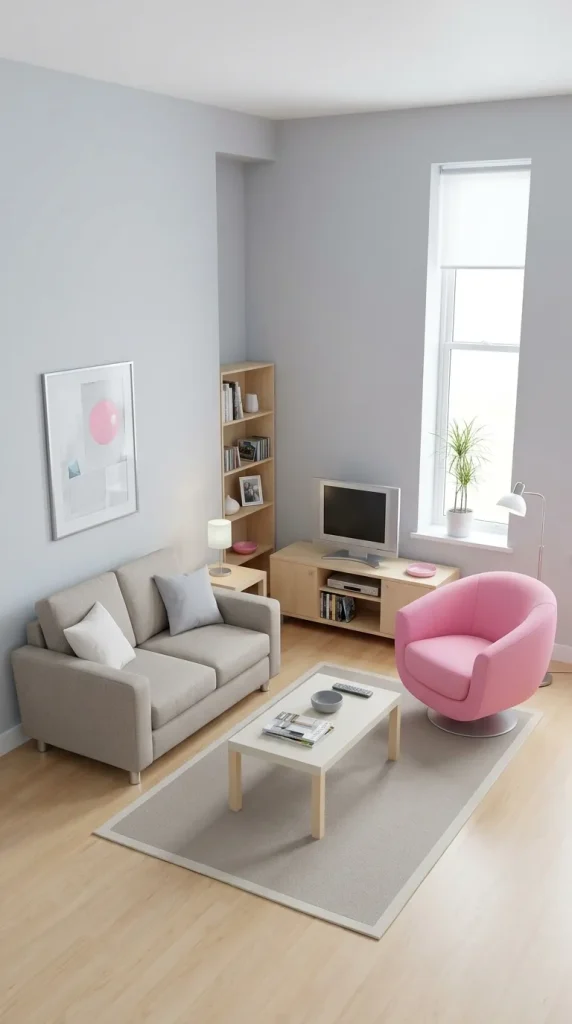
34. Create a compact Y2K apartment with one strong statement piece
A small apartment does not need chrome furniture, coloured acrylic, a bold sofa and futuristic lighting all at once. One substantial Y2K object can establish the visual direction.
Try a bright pink armchair beside a neutral sofa, a chrome coffee table in an otherwise simple living room or a colourful geometric rug beneath contemporary furniture. Introduce a few related details through artwork or lighting, then leave enough empty space for the room to remain comfortable. This selective approach is particularly helpful in compact apartments where every furniture piece has a significant visual impact.
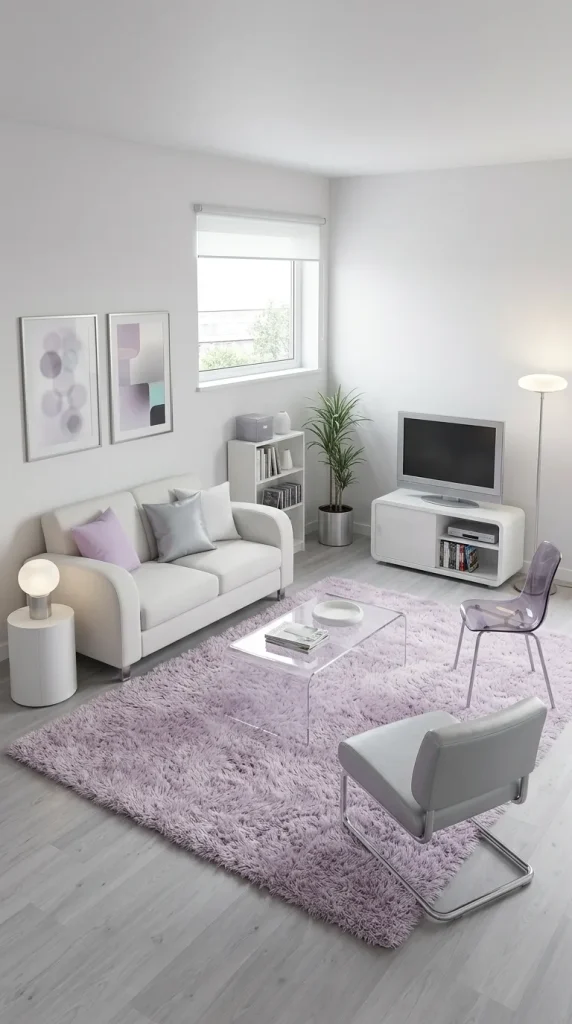
35. Use a shag rug to soften futuristic furniture
A plush shag rug introduces the softness that many colourful Y2K interiors need. It creates contrast against chrome, clear acrylic and glossy furniture while reinforcing the playful, tactile character of the period.
Choose a colour that supports the broader scheme. White or cream can soften a pink-and-silver room, while lilac or pale blue adds character to a more restrained apartment. A bold lime rug can work in a graphic black-and-white space, provided the remaining furniture does not introduce several additional saturated colours. The rug should be large enough to relate to the seating instead of appearing as an isolated decorative object.
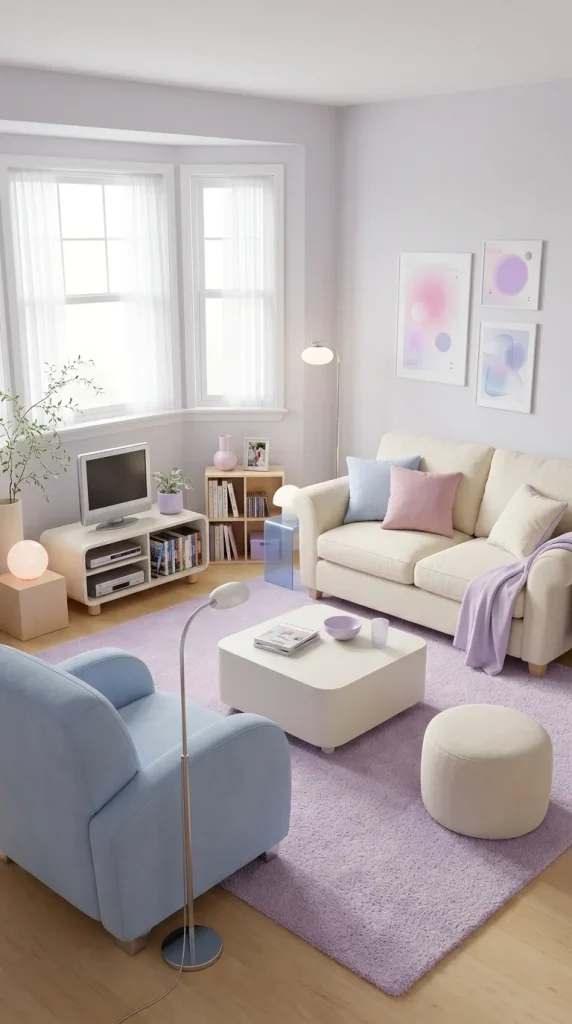
36. Make a cosy Y2K living room with pastels and plush upholstery
The Y2K aesthetic does not have to be cold, highly reflective or excessively bright. A softer interpretation can combine lilac, pale pink, powder blue and cream with rounded seating, a generous rug and playful accent lighting.
Choose plush upholstery as the foundation and introduce metallic or translucent objects in smaller quantities. A cream sofa, lilac rug, pale-blue side table and chrome floor lamp can feel recognisably Y2K while remaining suitable for everyday relaxation. Soft lighting and a limited palette prevent the room from resembling a themed installation.
Embrace eclecticism, collections and colourful personality
The early 2000s also offer inspiration for readers who prefer fuller, more expressive living rooms. Books, magazines, plants, souvenirs, vintage furniture and personal collections can create an atmosphere that feels lived-in rather than carefully staged.
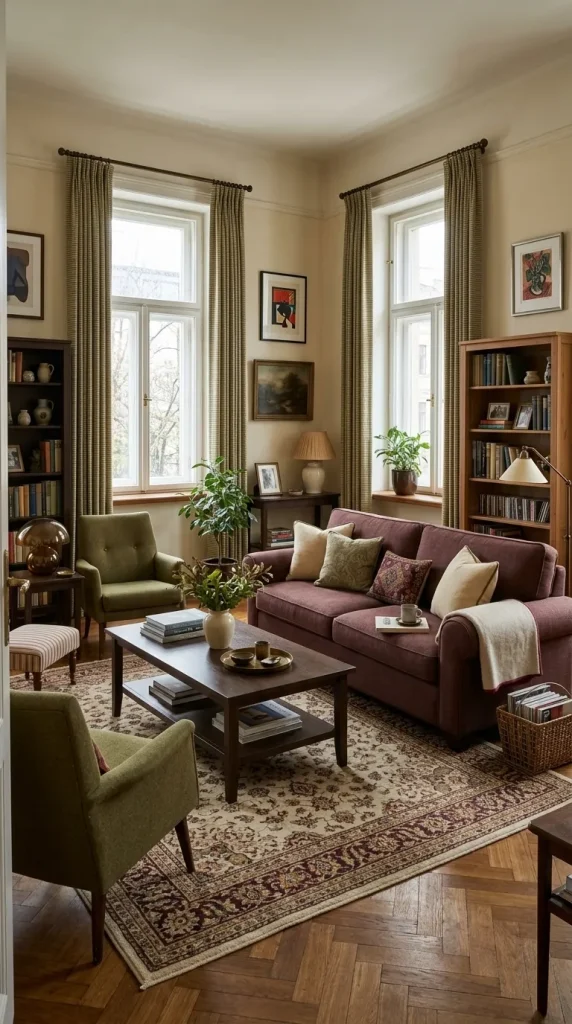
37. Create a collected, cosy maximalist living room
A nostalgic maximalist living room can combine a substantial sofa, vintage armchair, patterned rug, bookshelves and an assortment of personal objects. The important distinction is between meaningful layering and simply filling every available surface.
Choose one dominant palette to connect the different furniture and collections. Warm timber, burgundy, olive and cream can create a traditional atmosphere, while brighter artwork and unusual lighting introduce a more playful character. Group smaller objects into coherent collections and leave some shelves partially empty so the important pieces remain visible.
This approach also connects naturally with contemporary eclectic-grandpa styling, although that modern label should not be confused with an established historical category from the 2000s.
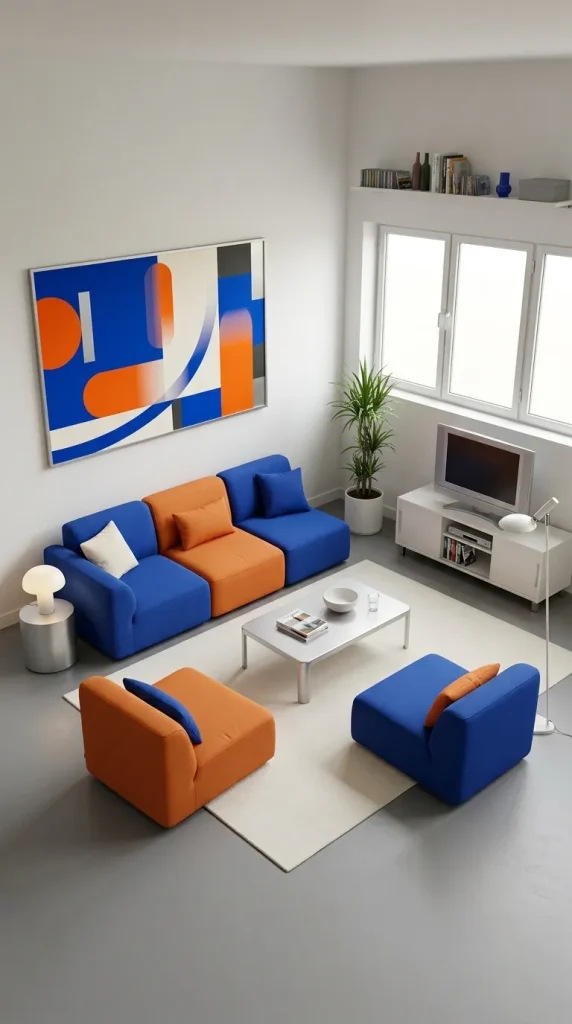
38. Combine colourful modular furniture with graphic artwork
For a more expressive Y2K-inspired interior, use modular furniture or a colourful accent sofa as the dominant feature. Bright upholstery can sit beside simple white walls, metallic furniture and a large graphic artwork that repeats one or two colours from the seating.
The furniture configuration should remain practical. Modular pieces can be particularly useful in a room that accommodates both everyday relaxation and occasional gatherings, but the individual modules need enough surrounding space to be rearranged comfortably. Keep decorative accessories relatively restrained if both the upholstery and artwork are already visually strong.
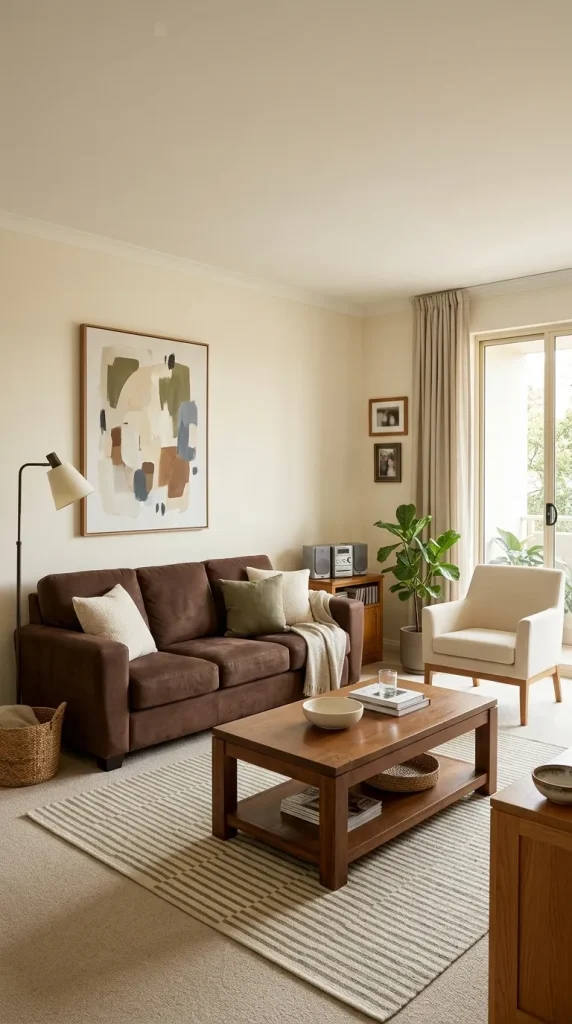
39. Build a contemporary living room around nostalgic pieces you already own
An authentic 2000s influence does not always require buying retro furniture. A brown sofa, oak cabinet, beige carpet, substantial wooden coffee table or older stereo may already provide the foundation.
Look at which elements genuinely belong together and build the room around them. A chocolate sofa and oak entertainment unit can support a warm suburban scheme with cream walls and traditional lamps. Alternatively, a contemporary apartment can acquire Y2K character through a single chrome table, colourful rug and sculptural light fixture.
This is often a more personal approach than purchasing a completely new furniture collection designed to resemble the past. Existing objects carry their own history, which is part of what makes nostalgic interiors appealing.
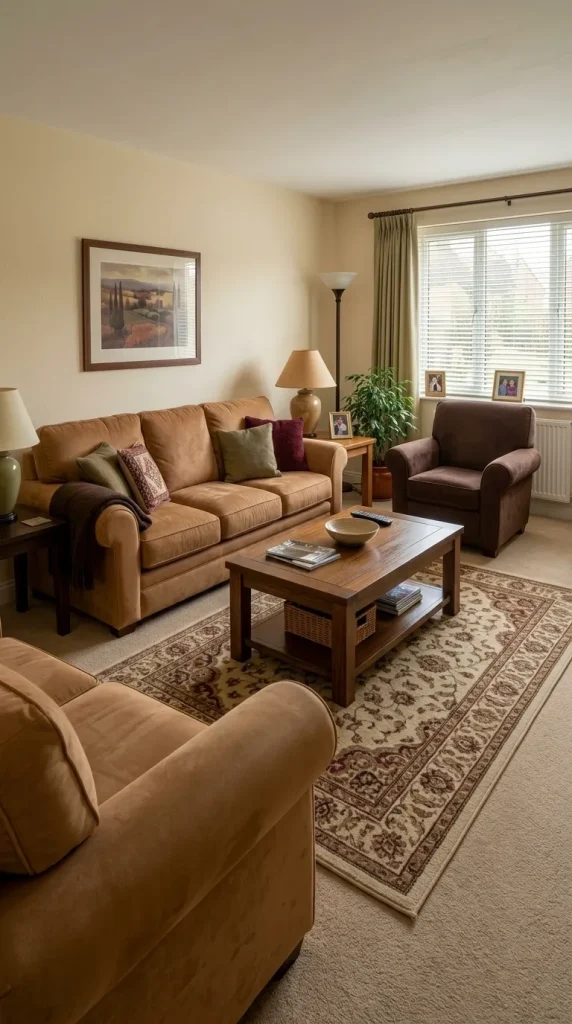
40. Blend 2000s nostalgia with contemporary comfort
For most homes, a selective interpretation of the period will be easier to live with than a complete historical recreation. The best approach is to identify the specific version of the decade you enjoy, then choose a few substantial elements that establish it.
A contemporary family room might use a deep chocolate-brown sofa, an oak media cabinet, warm table lamps and a traditional rug. A modern Y2K apartment could combine a curved cream sofa, chrome table, translucent side chair and large abstract artwork. A softer Tuscan-inspired room might retain terracotta, leather and dark timber while removing elaborate decorative details.
Each version captures a recognisable aspect of the 2000s without relying on novelty accessories. Furniture silhouette, colour, material and layout should communicate the aesthetic before smaller decorative objects are introduced.
Choose the right 2000s aesthetic for your living room
The most effective way to decorate with early 2000s inspiration is to decide which visual direction you actually want. These different styles share a broad historical period, but they require different materials, colours and furniture arrangements.
| Style | Main colours | Furniture and materials | Overall atmosphere |
|---|---|---|---|
| Suburban family room | Beige, tan, chocolate, burgundy | Deep sofas, oak furniture, plush carpet | Comfortable and nostalgic |
| Tuscan-inspired | Terracotta, ochre, olive, warm cream | Dark timber, leather, wrought iron | Rich and traditional |
| Futuristic Y2K | Pink, icy blue, silver, white | Chrome, acrylic, curved furniture | Glossy and playful |
| Graphic alternative Y2K | Lime, black, white, turquoise | Leather, metal, graphic artwork | Bold and energetic |
| Soft Y2K | Lilac, pale pink, powder blue, cream | Plush seating, shag rugs, rounded tables | Colourful and cosy |
| First-apartment nostalgia | Warm neutrals with personal accents | Second-hand furniture, media cabinets, posters | Relaxed and collected |
| Modern 2000s revival | Cream, brown, olive or selected brights | Contemporary furniture with retro accents | Nostalgic but edited |
Rather than choosing items simply because they were popular during the decade, look for pieces that reinforce the same interpretation. A Tuscan-inspired leather sofa and a translucent pink acrylic chair can coexist in an eclectic room, but they will not automatically produce a coherent design merely because both reference the 2000s.
Authentic early 2000s decor versus a modern Y2K interpretation
An authentic early 2000s living room may include substantial matching upholstery, fitted carpeting, a large entertainment cabinet, patterned textiles, traditional lamps and numerous personal decorative objects. These features often reflect the furniture and decorating conventions of ordinary homes rather than the experimental styles associated with the millennium.
A modern Y2K interpretation takes a different approach. It might begin with contemporary seating and introduce the period through chrome, coloured acrylic, curved furniture, graphic artwork and unusual lighting. This produces a recognisable nostalgic aesthetic without requiring the entire room to resemble a historical recreation.
Neither approach requires replacing everything you own. If you already have warm wooden furniture and a substantial sofa, building a family-room-inspired scheme may be relatively straightforward. If your home has white walls and simple contemporary furniture, a few expressive Y2K pieces could be enough to establish the look.
Common mistakes when decorating a 2000s-inspired living room
Mixing every 2000s aesthetic into one room. Tuscan decorating, suburban family-room nostalgia and futuristic Y2K interiors have different visual languages. Combining all their most recognisable elements can produce a room that feels themed rather than coherent. Start with one direction and introduce influences from others only where they genuinely complement it.
Relying entirely on novelty accessories. Lava lamps, CDs, retro electronics and colourful ornaments can establish atmosphere, but furniture silhouettes, materials and colour schemes should carry most of the design. A room should communicate the period before every nostalgic accessory is added.
Buying furniture that is too large for the space. Oversized sofas and entertainment centres were characteristic of many family homes, but their proportions do not automatically suit modern apartments or smaller living rooms. Choose pieces that capture the softness and visual weight of the period while protecting circulation.
Making every surface glossy. Chrome, acrylic and iridescent materials are effective Y2K references, but they benefit from contrast. Plush rugs, matte walls and comfortable upholstery help prevent the room from becoming visually hard.
Confusing a collected interior with an overcrowded room. Personal collections, magazines, books and physical media contribute to the nostalgic atmosphere, but they still need appropriate storage. Group objects deliberately and allow larger pieces to remain visible rather than filling every available shelf.
Frequently asked questions
What defines early 2000s living room decor?
Conventional family living rooms from the early 2000s often featured deep sofas, warm neutral colours, substantial wooden entertainment cabinets, fitted carpet, traditional table lamps, patterned textiles and visible personal collections. More experimental Y2K interiors embraced chrome, translucent materials, futuristic shapes, saturated colours and playful lighting.
How can I make my living room look Y2K without redecorating everything?
Introduce one or two recognisable materials or silhouettes, such as a chrome coffee table, curved armchair, translucent side table or colourful geometric rug. Add graphic artwork and an unusual lamp that complement the palette. Contemporary furniture can provide a comfortable foundation without weakening the Y2K reference.
What colours work best for a 2000s-inspired living room?
The answer depends on which version of the decade you want. Beige, chocolate brown, burgundy and muted green suit conventional family-room nostalgia. Terracotta, ochre and olive support Tuscan-inspired interiors. Bubblegum pink, icy blue, silver, lilac, lime green and turquoise work particularly well for playful Y2K schemes.
Can a small living room have a 2000s aesthetic?
Yes. Use one distinctive furniture piece, a coherent colour palette and a few meaningful period references instead of attempting to reproduce an oversized suburban family room. A compact media cabinet, appropriately scaled sofa, framed posters and distinctive lighting may be enough to establish the atmosphere.
How can I make a Y2K living room feel cosy?
Balance glossy and synthetic materials with soft upholstery, plush rugs, cushions and comfortable lighting. Cream, lilac, pale pink and powder blue can create a gentler colour palette, while a curved sofa and a few reflective accessories retain the playful character of Y2K design.
Bring back the atmosphere, not just the accessories
The appeal of 2000s and Y2K living room decor ideas lies in the variety of interiors that existed during the same decade. A warm suburban family room, a richly decorated Tuscan house, a colourful first apartment and a futuristic Y2K lounge may share very few visual features, yet each can evoke a particular memory of the period.
Choose the version that genuinely appeals to you. If you love the cosy family-room atmosphere, begin with comfortable seating, warm wood and practical entertainment furniture. If you prefer the more experimental Y2K aesthetic, focus on chrome, curved shapes, translucent materials and a distinctive colour palette. For a richer traditional look, terracotta, leather, dark timber and substantial decorative pieces can establish the character of an early 2000s Tuscan interior.
The most convincing room will use furniture, materials, lighting and personal objects to create a coherent atmosphere. Nostalgia should emerge from the way the room feels, not simply from how many recognisable retro accessories you can fit into it.