35 UK Living Room Decor Ideas for Cosy Homes Full of Character
A beautiful British living room rarely depends on having an enormous space or an expensive furniture collection. In fact, some of the most inviting interiors make clever use of awkward architecture: a narrow Victorian terrace with a chimney breast, a bay window that catches the afternoon light, or a compact new-build lounge that needs personality without losing valuable floor space.
The secret is to work with the room rather than against it. A generous rug can make a small sitting room feel more connected, while a carefully positioned corner sofa can separate living and dining areas in an open-plan home. A dark green wall might bring warmth to a north-facing lounge, and a pair of well-designed alcove cupboards can provide storage without making a period room feel crowded.
These UK living room decor ideas explore 35 different ways to make the most of British homes, from traditional terraced houses and period conversions to contemporary flats, family lounges and modern new builds. Each idea focuses on the relationship between furniture, architecture, colour, lighting and everyday life, so the finished room feels personal as well as practical.
Make the most of British architectural features
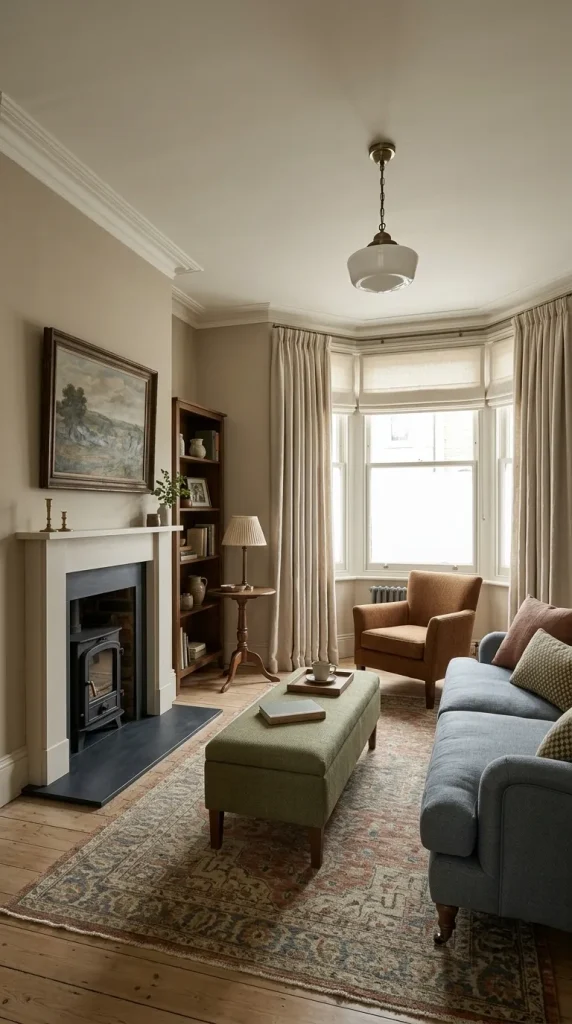
1. Arrange a terraced-house lounge around the chimney breast
In a traditional terraced house, the chimney breast often determines much of the living room’s layout. Rather than treating it as an obstacle, use it to establish the main focal point. A sofa along the opposite wall, with a compact armchair near the window, can create a comfortable seating area without requiring two large sofas to face each other.
This arrangement is particularly useful in narrow front reception rooms, where the fireplace, doorway and bay window compete for limited wall space. A slim upholstered ottoman may work better than a bulky coffee table because it provides a softer central element while preserving the route through the room. If the chimney breast is off-centre, balance the composition with artwork, lighting or furniture rather than forcing everything into perfect symmetry.
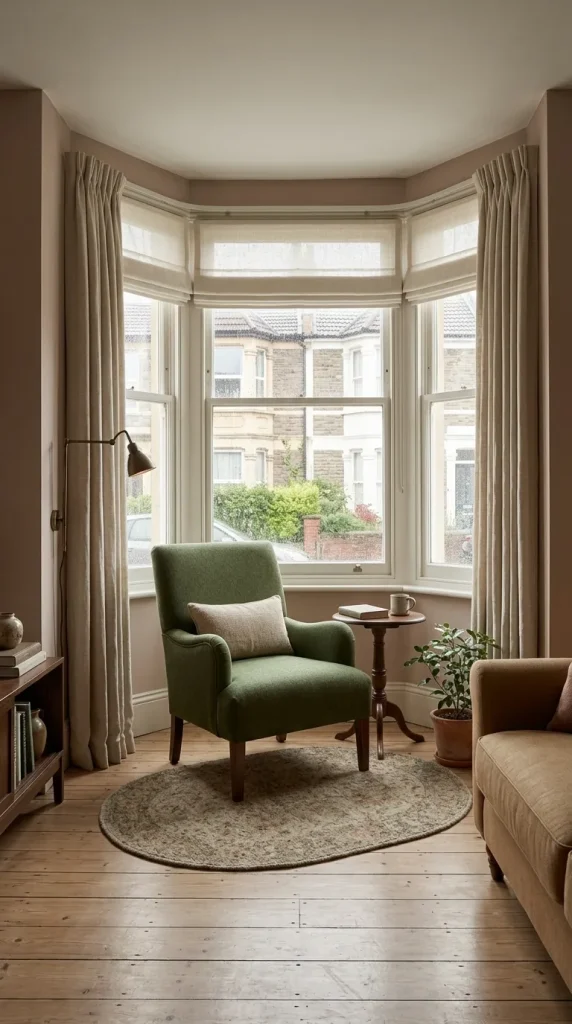
2. Turn a bay window into a cosy reading corner
A bay window can become one of the most attractive parts of a British living room when it is given a clear purpose. Instead of pushing a large sofa across the entire opening, consider placing a comfortable armchair in the bay with a small side table and a reading lamp. The chair benefits from natural light during the day, while the surrounding architecture creates a sense of enclosure.
Choose the furniture according to the bay’s depth. A compact upright armchair may fit a shallow Victorian bay better than a generous lounge chair that projects into the main seating area. A slim floor lamp or wall-mounted reading light can provide evening illumination without occupying another valuable surface.
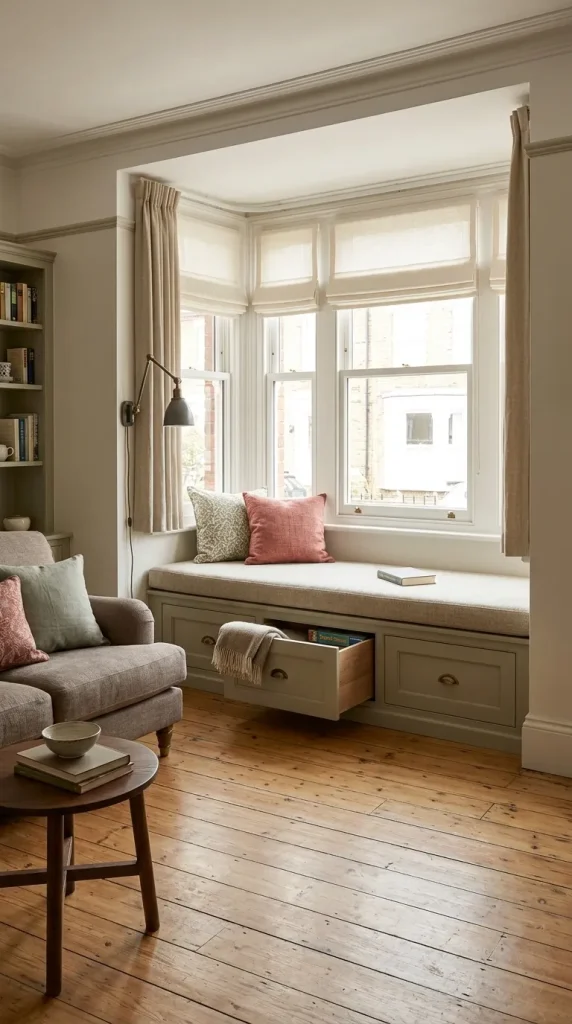
3. Build a window seat into a square bay
Square bay windows can offer valuable space for additional seating, particularly in smaller terraced houses where every metre matters. A fitted window seat can create a quiet reading spot without taking up as much floor area as a separate armchair. Drawers or cupboards underneath can accommodate books, blankets, games or other everyday belongings.
Upholster the seat in a substantial linen, cotton blend or other suitable durable fabric, then introduce a couple of cushions that connect it to the rest of the living room. A window seat should complement the main sofa rather than look like an unrelated furniture arrangement. House & Garden has featured this approach in London Victorian homes where fitted bay seating allows owners to retain period character while making practical use of limited floor space.

House & Garden
+1
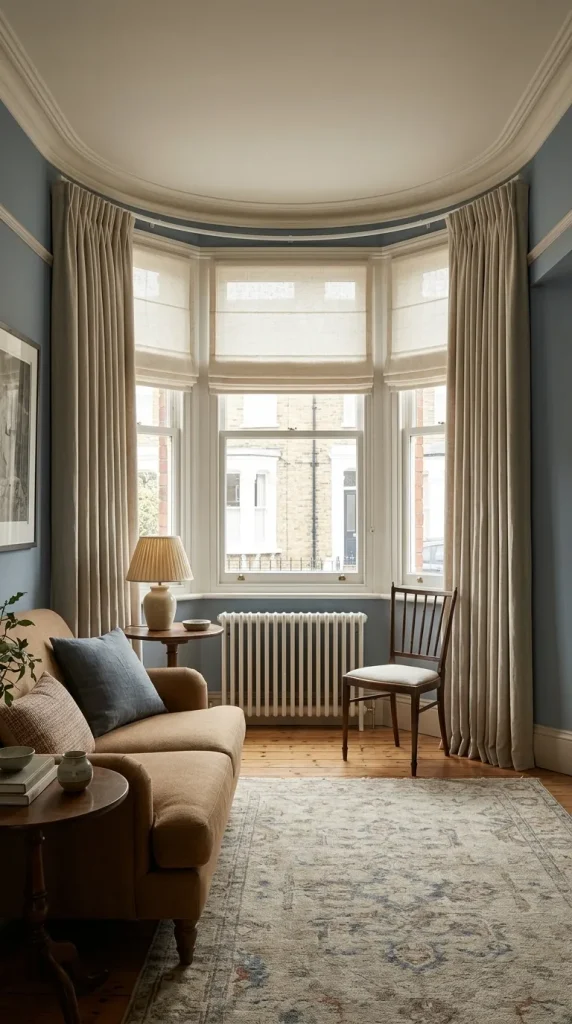
4. Dress bay windows with curtains and blinds that work together
Window treatments deserve as much attention as the furniture because they influence the room’s proportions, daylight, privacy and evening comfort. Full-length curtains can emphasise the height of a period sitting room, while Roman blinds may be more practical when furniture sits close to the windows.
In a curved bay, a carefully measured curtain track can follow the architecture. Individual blinds are another option if you need independent control over each window. Where original shutters survive, consider retaining them and adding curtains for softness and additional light control. Avoid choosing heavy curtains that constantly cover a radiator, and investigate draughts around older windows rather than relying on fabric alone to address them. The Energy Saving Trust identifies gaps around windows, doors and floorboards as common sources of unwanted draughts.
House & Garden
+1
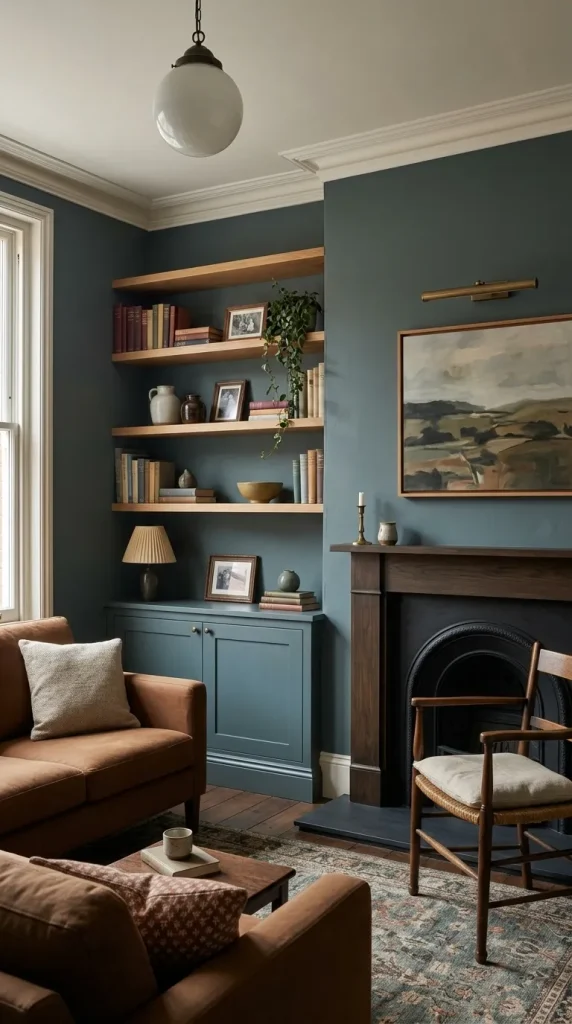
5. Install alcove cupboards with open shelving above
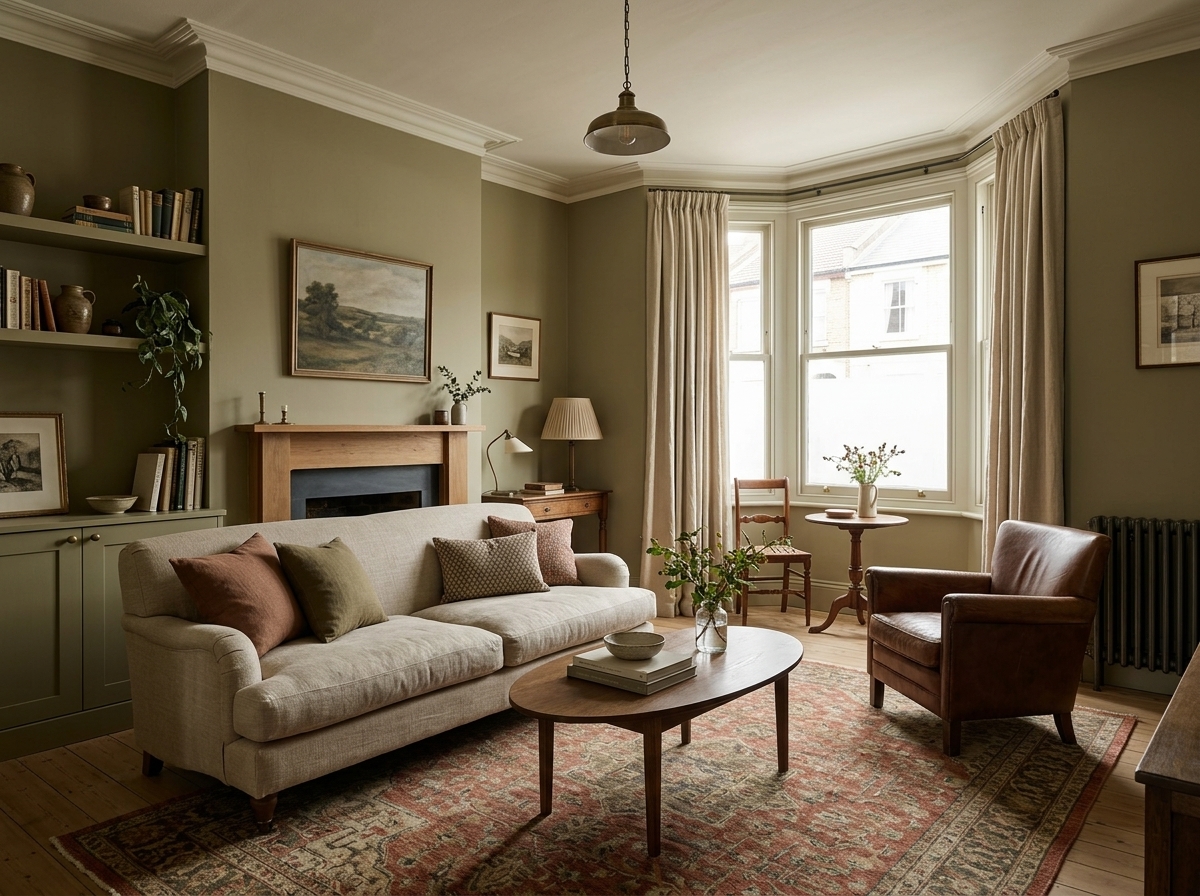
Alcoves on either side of a chimney breast are among the most useful features in many Victorian and Edwardian living rooms. Low fitted cupboards provide concealed storage for household clutter, while open shelves above offer space for books, ceramics, photographs and a few carefully chosen objects.
Paint the joinery the same colour as the walls for a quiet, integrated appearance, or choose a deeper shade such as olive, tobacco or smoky blue to give the recesses more presence. Warm oak shelving can introduce texture without making the arrangement overly decorative. This combination of lower cupboards and upper shelves is a well-established solution for British period homes because it creates substantial storage without adding another freestanding cabinet to the floor.
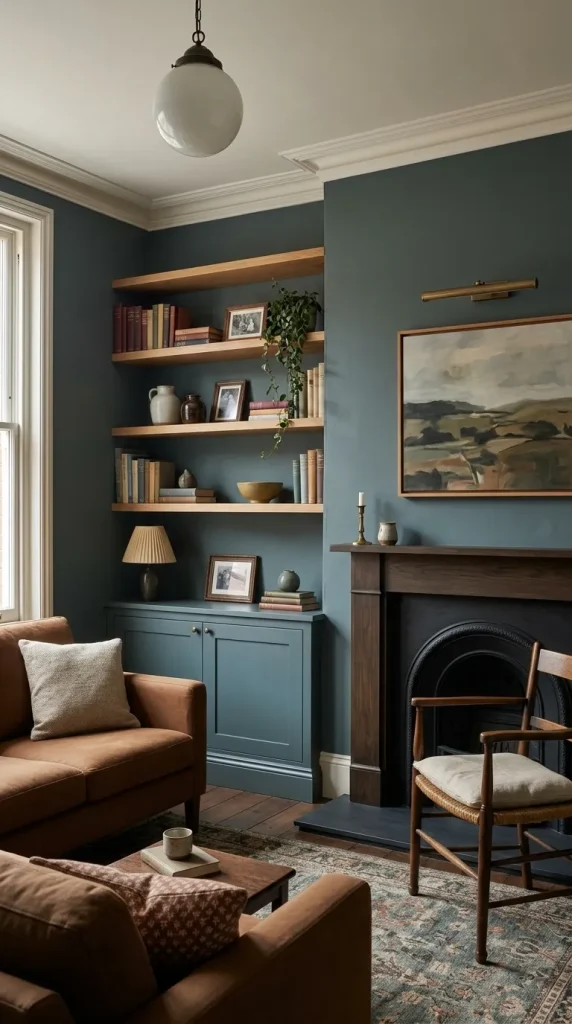
6. Give uneven alcoves different but complementary functions
Not every pair of alcoves has matching dimensions, particularly in older houses that have been altered over time. Instead of forcing identical cupboards into two different spaces, consider giving each recess a separate function.
One alcove might contain a narrow bookcase and closed storage, while the other accommodates a television, compact workspace or reading chair. Keep the overall composition connected through paint colour, timber finish or repeated shelf proportions. This deliberate asymmetry can be more convincing than bespoke units that attempt to disguise every irregularity. It also lets the room respond to the way the household actually uses it.
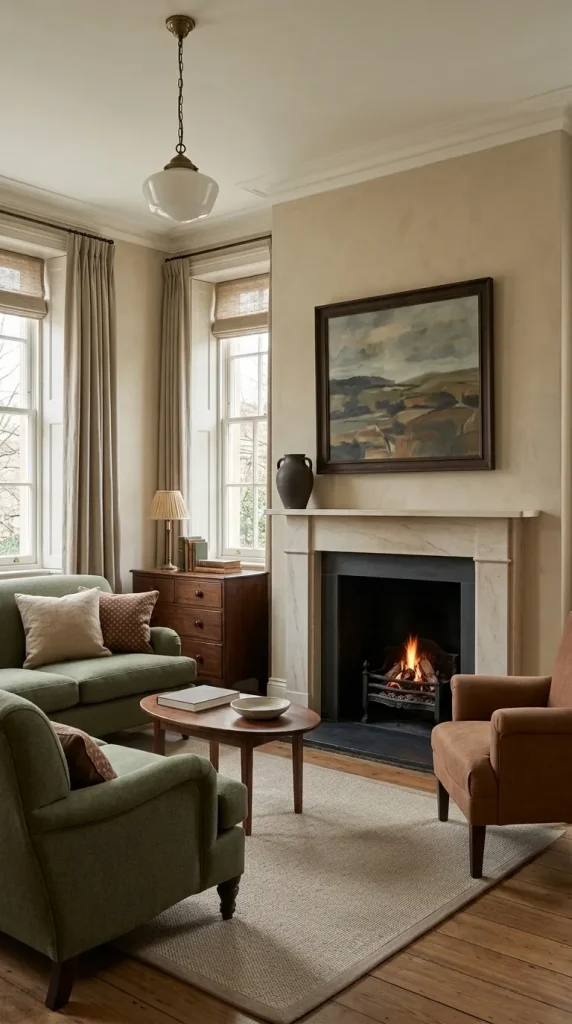
7. Make the fireplace a feature without overdecorating it
An original fireplace can provide a natural focal point, even when it is no longer used for heating. Cast iron, painted timber, marble, limestone and decorative tiled surrounds each establish a different character. Choose the treatment in relation to the property’s architecture rather than automatically replacing an older surround with a contemporary one.
For a traditional living room, a large painting or antique mirror above the mantelpiece can create enough visual weight without a collection of small ornaments. A modern room might benefit from a simpler mantel arrangement with one sculptural ceramic piece and substantial artwork. If the fireplace is functional, keep textiles, furniture and decorations at appropriate safe distances, and have necessary maintenance carried out by a qualified professional.
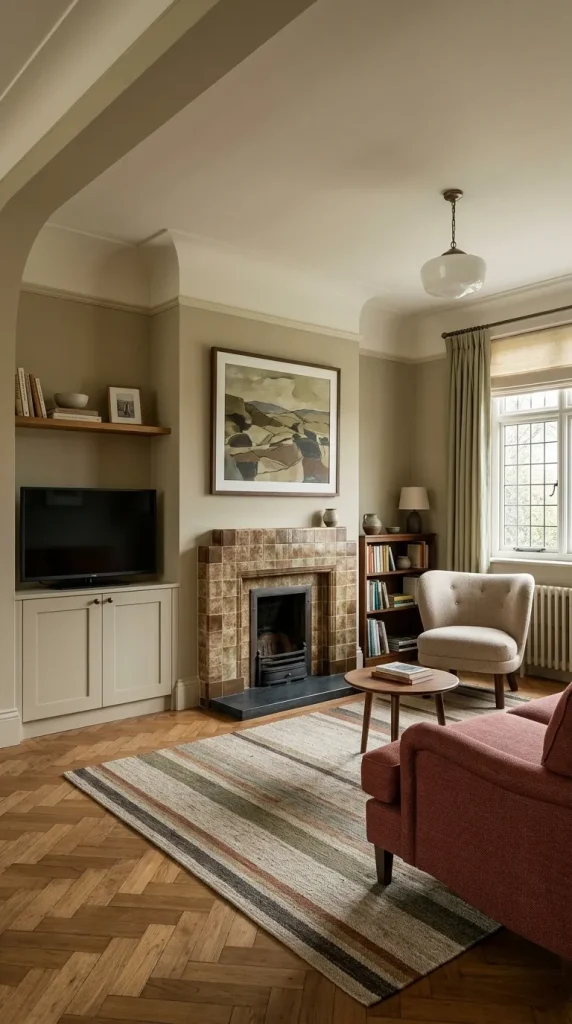
8. Position the television around the fireplace, not automatically above it
A television and fireplace often compete for attention in British reception rooms. Mounting the television above the mantelpiece may appear to solve the layout problem, but it can create an uncomfortable viewing angle and may expose the television to excessive heat, depending on the installation.
An alcove is often a more practical alternative. Place the television on a low media unit or incorporate it into fitted cabinetry, then allow the fireplace to remain the architectural focus. In a larger room, a separate media zone may be possible. Ideal Home’s small-living-room guidance likewise explores alcoves, concealed screens and fitted units as ways to prevent the television from dominating compact lounges.
If above-fireplace mounting is the only practical position, check the appliance manufacturer’s heat and clearance requirements and assess viewing height before committing.
Make small and awkward UK living rooms work harder
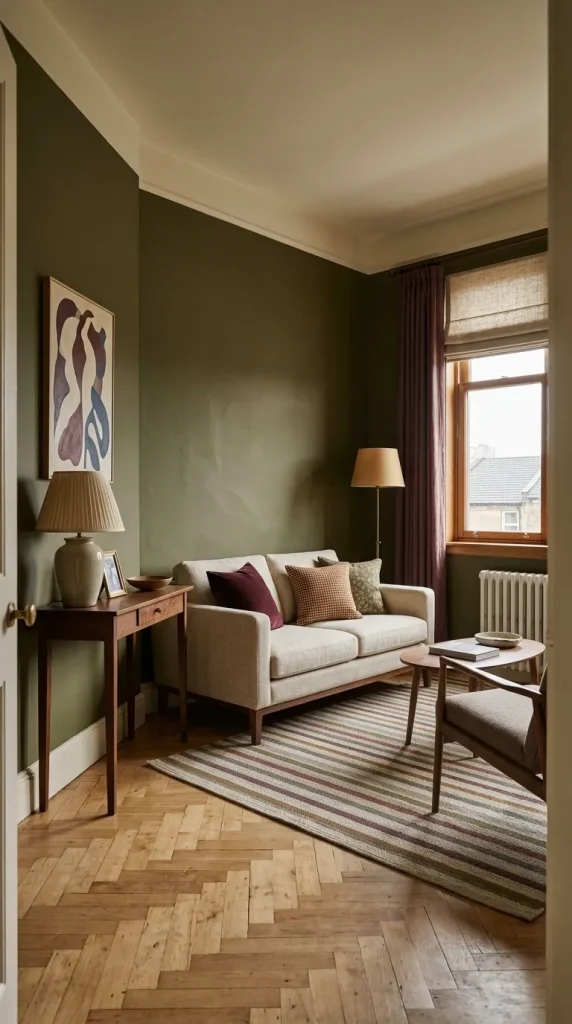
9. Use rich colour to give a small lounge more character
A compact living room does not automatically need white walls. In some smaller British homes, particularly those with limited daylight, trying to make every surface bright white can emphasise shadows and leave the room feeling stark.
Deep olive, smoky blue, mushroom, burgundy or a muted chocolate brown can create a more enveloping atmosphere. The important consideration is how the colour behaves alongside the flooring, upholstery and available light. A dark green living room with a cream sofa, warm timber and several well-positioned lamps can feel welcoming rather than cramped. For a softer alternative, choose a warm neutral with enough depth to distinguish the walls from pale furniture.
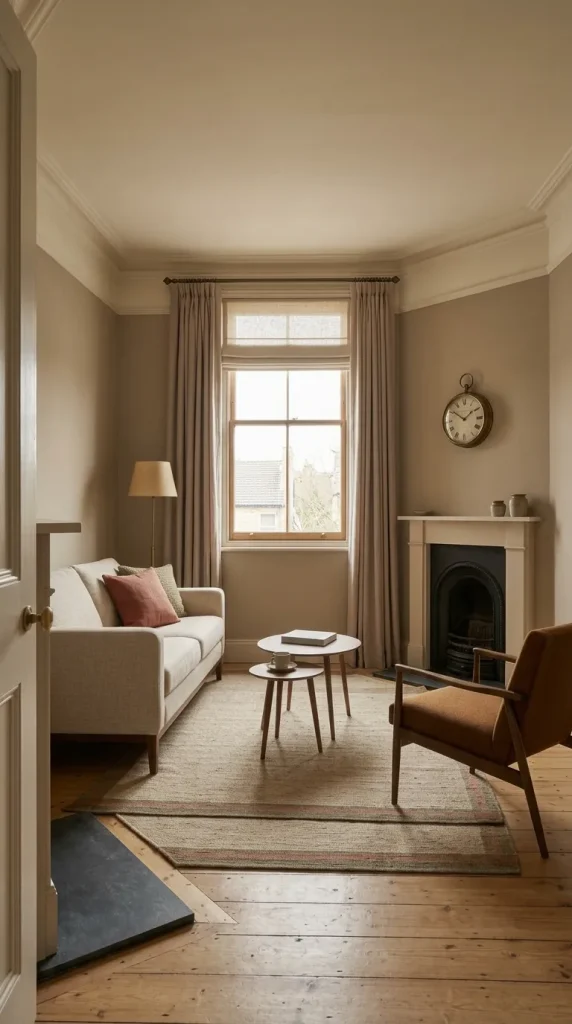
10. Choose a sofa with the right proportions, not simply the smallest sofa
Sofa depth and arm width can have a considerable impact in a compact lounge. A bulky design with very wide arms may occupy almost as much space as a three-seater while providing little more usable seating than a smaller sofa. A streamlined model with narrower arms can offer a generous seat without overwhelming the room.
Pay attention to the space around the sofa as well as its overall dimensions. Measure the route between the doorway, fireplace and windows before choosing a configuration. Raised legs can reveal more flooring and make substantial furniture appear visually lighter. House & Garden has documented this approach in a London Victorian terrace where narrow-armed sofas and compact armchairs help maximise seating without sacrificing the room’s circulation.
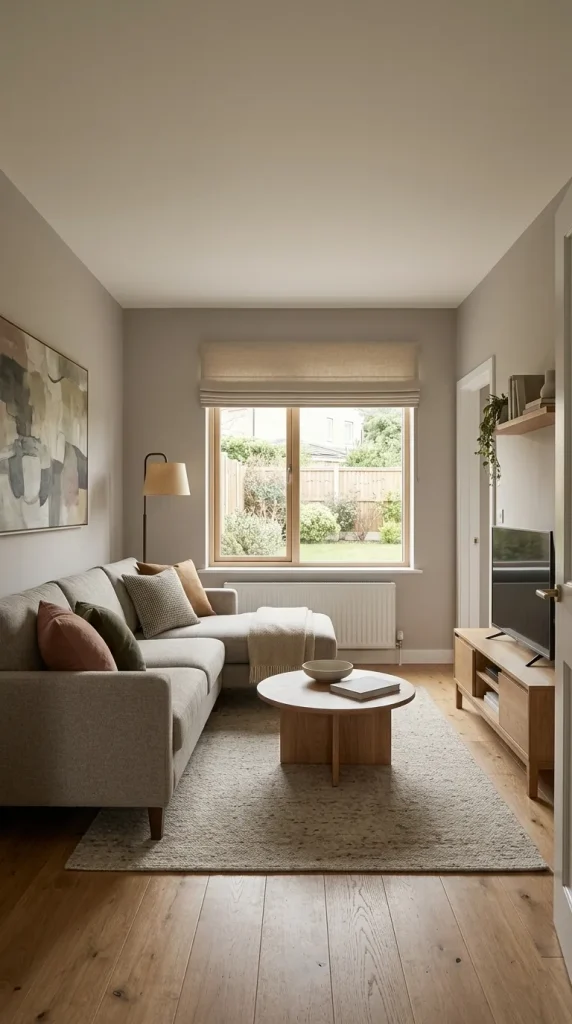
11. Make a corner sofa work with the room’s circulation
A corner sofa can be an excellent solution for a British family living room because it provides generous seating within one coherent piece of furniture. However, its orientation matters more than it might appear in a showroom.
In a square room, an L-shaped sofa can occupy two adjacent walls while leaving the centre open. In a longer room, allowing the chaise to project into the space can help establish a defined seating area. Check whether a left-hand or right-hand configuration works better with doors, windows, radiators and the television.
Avoid selecting the deepest sectional simply because it offers more seats. A sofa that obstructs a doorway or leaves no comfortable route to the bay window will make a small room feel more restricted, regardless of how attractive it looks.
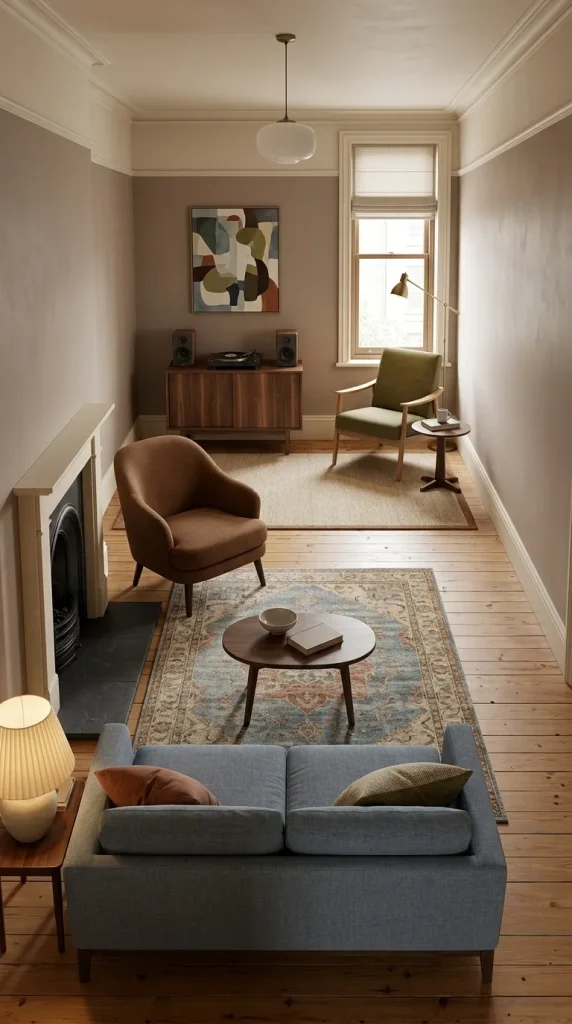
12. Divide a long, narrow lounge into purposeful zones
A long living room can feel awkward when all the furniture is arranged along the walls, creating a corridor through the middle. Instead, divide the room into distinct areas according to how you actually use it.
The main sofa and armchairs might occupy the section nearest the fireplace, while the other end becomes a reading area, music corner or small dining space. Use rugs, lighting and furniture orientation to distinguish the zones without building partitions. Keep a clear walking route along one side so the room remains easy to move through.
Furniture does not always need to follow the room’s length. Where the dimensions permit, positioning a sofa or chair across part of the room can interrupt the tunnel effect and create a more intimate seating arrangement.
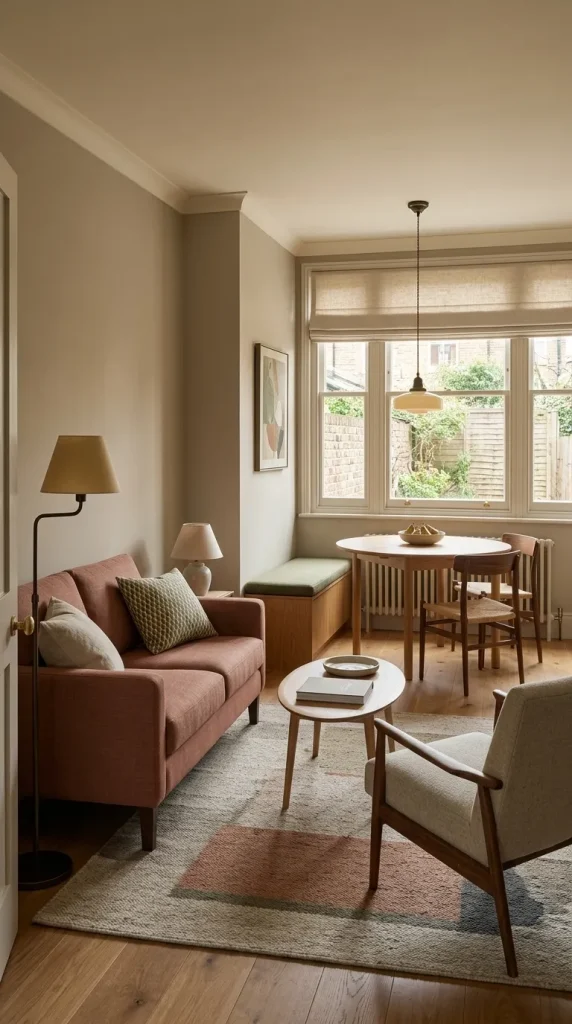
13. Combine living and dining in a compact reception room
Many British homes have one room that needs to function as both a lounge and a dining area. The mistake is often trying to accommodate full-sized furniture for both functions without considering which one is used most frequently.
If dining happens only occasionally, an extendable table or compact round design may be more practical than a large rectangular table. A bench against the wall can reduce the space needed for chairs, while a pendant over the dining area can distinguish it from the softer lighting around the sofa.
Connect both zones through consistent timber finishes, upholstery tones or metal details. The spaces should feel related without requiring identical furniture. In a small room, a large physical divider is rarely necessary when furniture placement and lighting already make the different functions clear.
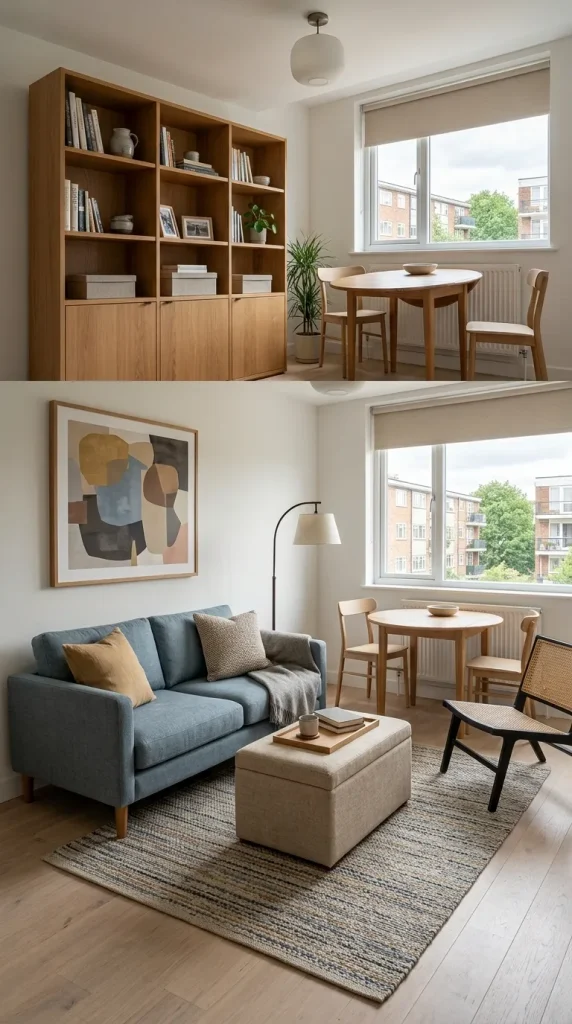
14. Give a small flat flexible furniture and storage
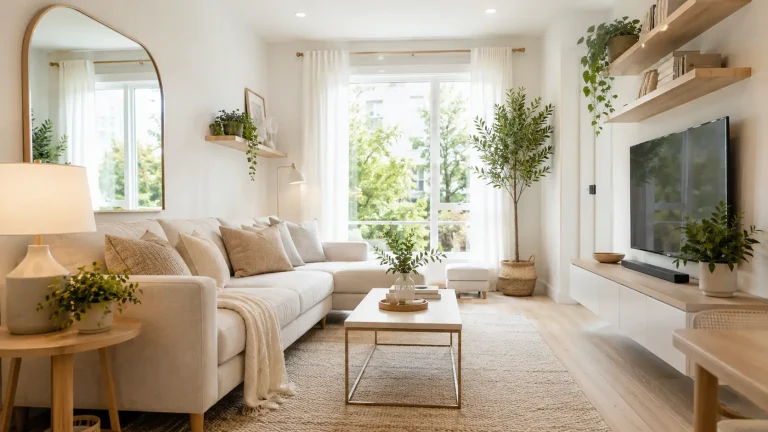
In a compact flat, adaptability is often more useful than elaborate fitted furniture. A freestanding bookcase, storage ottoman, extendable table or movable floor lamp can solve an immediate problem while remaining useful if the layout changes or you move.
Avoid filling every available corner simply because storage is limited. Concentrate larger storage pieces along one wall so the remainder of the room feels calmer. If you rent, use artwork, textiles, lighting and suitable removable treatments to establish personality without relying on permanent alterations.
A period conversion flat may benefit from displaying an original fireplace or tall window, while a contemporary apartment could use one large artwork and sculptural lighting to establish its focal point. The solution should respond to the actual property rather than treating every small flat as the same kind of space.
Give new-build living rooms warmth and character
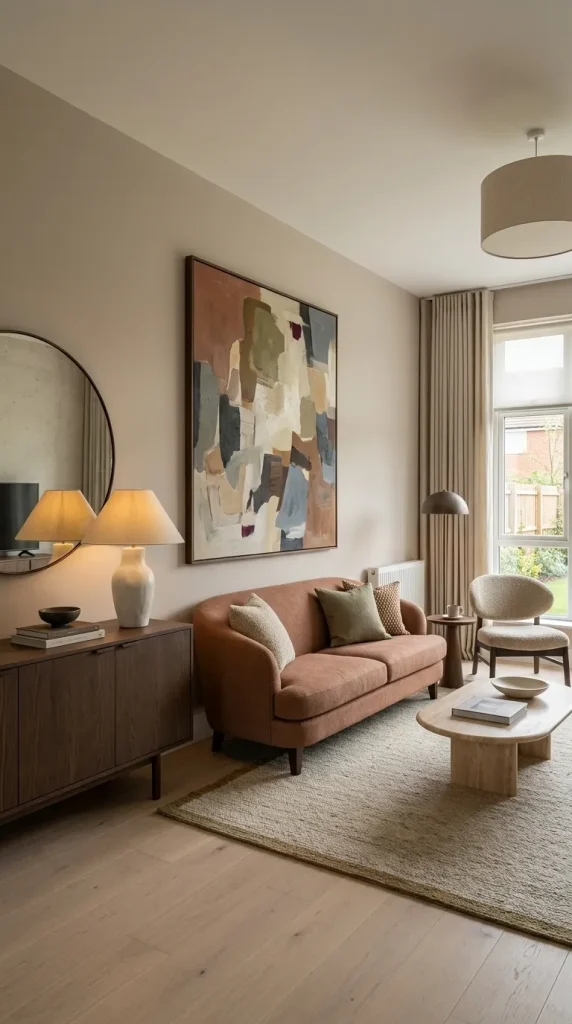
15. Create a focal point in a new build without a fireplace
A living room does not need a fireplace to feel complete. In a modern new build with plain walls and a simple rectangular layout, a substantial artwork, distinctive cabinet or beautifully upholstered sofa can provide the visual anchor that a chimney breast would create in an older property.
Choose the focal point before arranging the remaining furniture. A large abstract painting above a sofa can establish the room’s colour palette, while a long timber sideboard with a mirror or sculptural lamp creates a different kind of composition. Avoid introducing an artificial fireplace simply to make the room feel more traditional. A carefully arranged living room can have plenty of character without pretending to possess architectural features it never had.
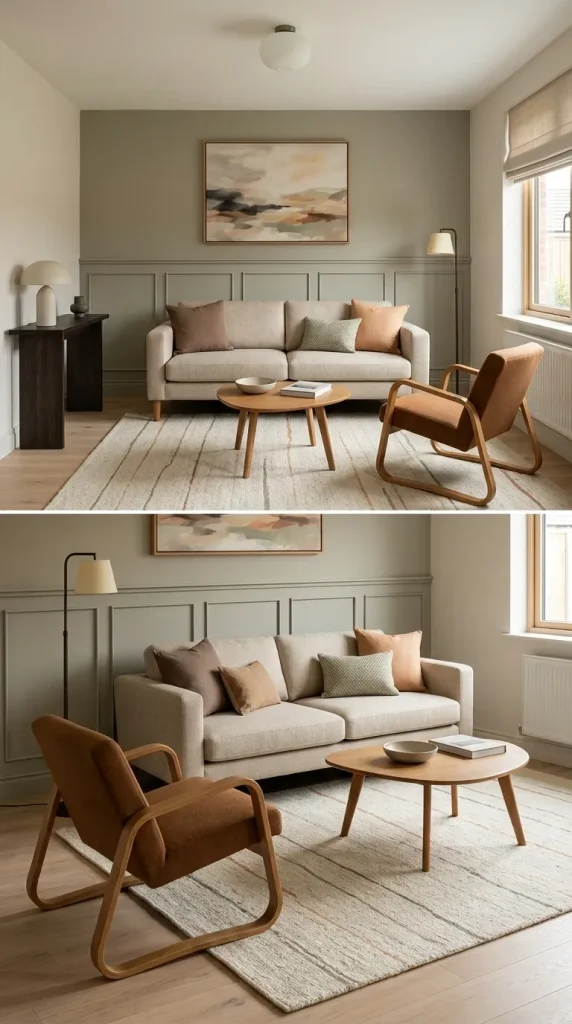
16. Add architectural detail with carefully proportioned wall panelling
Wall panelling can give a new-build lounge the structure it lacks, but the proportions should relate to the room. Large rectangular panels may suit a tall living room, while simpler half-height panelling can introduce detail without overwhelming an ordinary ceiling height.
Painting the wall and moulding the same colour creates subtle shadows and a more integrated appearance. For something contemporary, consider restrained vertical timber detailing behind a sofa or media unit. Avoid installing several competing types of panelling simply to make every wall decorative.
If the living room is particularly compact, one considered feature wall may create more impact than panelling the entire room. The treatment should reinforce the architecture rather than compete with the furniture.
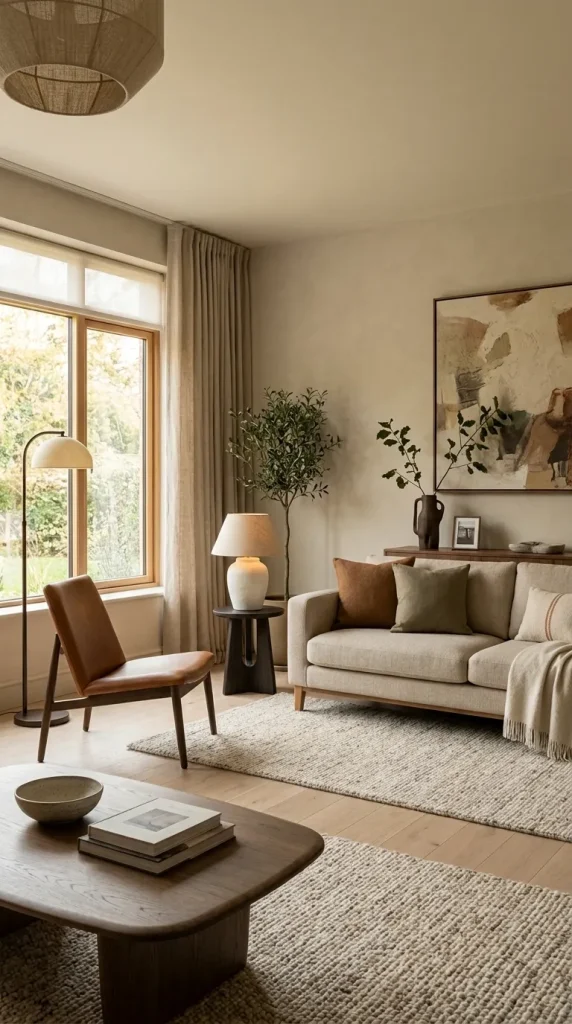
17. Create a warm contemporary living room with natural materials
Contemporary design does not have to mean cool grey walls, sharp-edged furniture and a largely empty room. A warm modern interior can combine clean furniture silhouettes with natural timber, textured upholstery, generous rugs and softer lighting.
For example, an oatmeal sofa could sit beside a smoked-oak coffee table, a wool rug and a sculptural ceramic lamp. Introduce contrast through a darker side table, oversized artwork or a cognac leather chair. The variation in materials keeps the room interesting even when the palette remains relatively quiet.
This emphasis on tactile materials and personal character is reflected in 2026 interiors coverage, including renewed attention to texture, relaxed furniture and interiors that feel collected rather than perfectly matched.
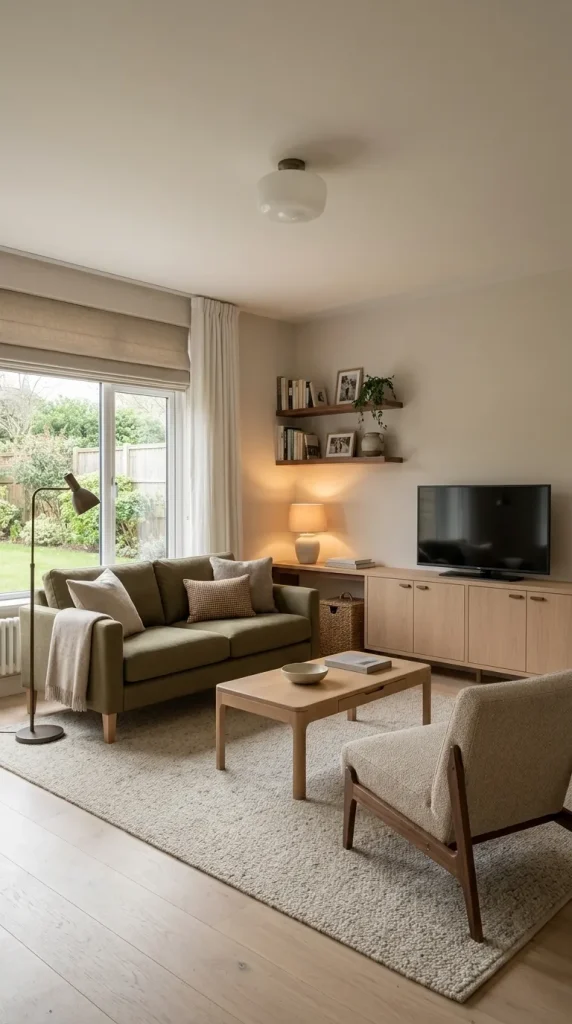
18. Make minimalism comfortable enough for everyday family life
A minimalist living room should reduce unnecessary objects, not eliminate comfort. In a British family home, this distinction matters because the lounge frequently accommodates television viewing, reading, homework, toys, guests and everyday relaxation.
Choose substantial furniture with clear functions. A comfortable sofa, appropriately sized rug, useful coffee table and well-designed storage can establish the room without requiring numerous decorative accessories. Closed cupboards can conceal household clutter, while a few open shelves allow books, photographs and personal objects to remain visible.
Warm white, mushroom, pale oak, walnut and olive can create a minimalist palette with character. Soft textiles and lamps at different heights prevent the room from feeling clinical. The result should be easy to live in, not difficult to maintain.
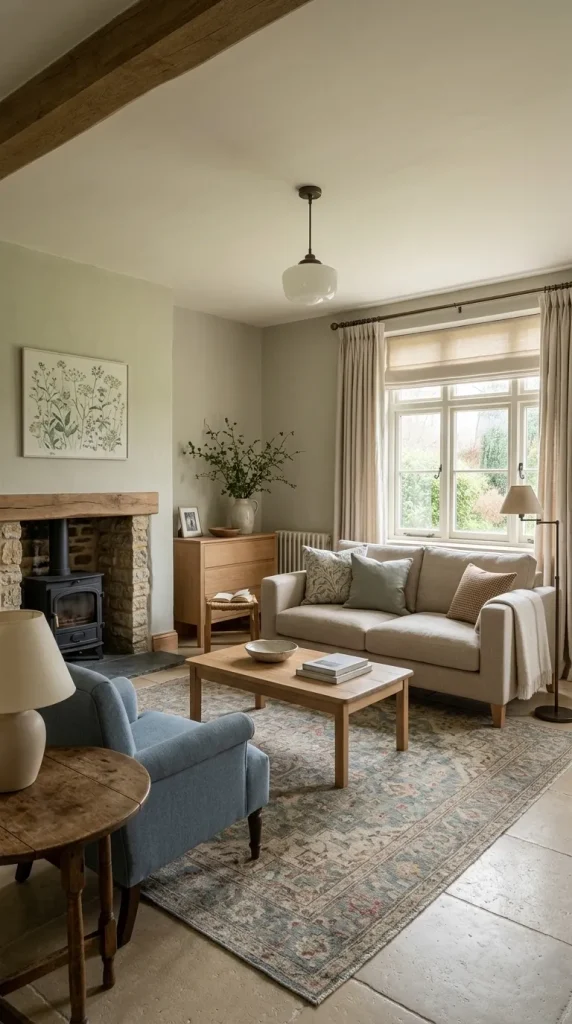
19. Bring modern country style into a British living room
Modern country decorating works particularly well in cottages, older semidetached houses and traditional homes where natural materials and architectural detail already have a strong presence. It can also bring warmth to a newer property without requiring a complete period-style makeover.
Combine comfortable contemporary seating with oak furniture, natural linen, botanical prints and softly coloured walls. Sage, parchment, mushroom and faded blue provide a gentle foundation, while patterned cushions or a vintage rug introduce more personality.
Avoid making every object rustic. A simple modern floor lamp beside an antique table, for example, can prevent the room from feeling overly themed. The character comes from combining comfortable furniture with materials that appear as though they belong to the home.
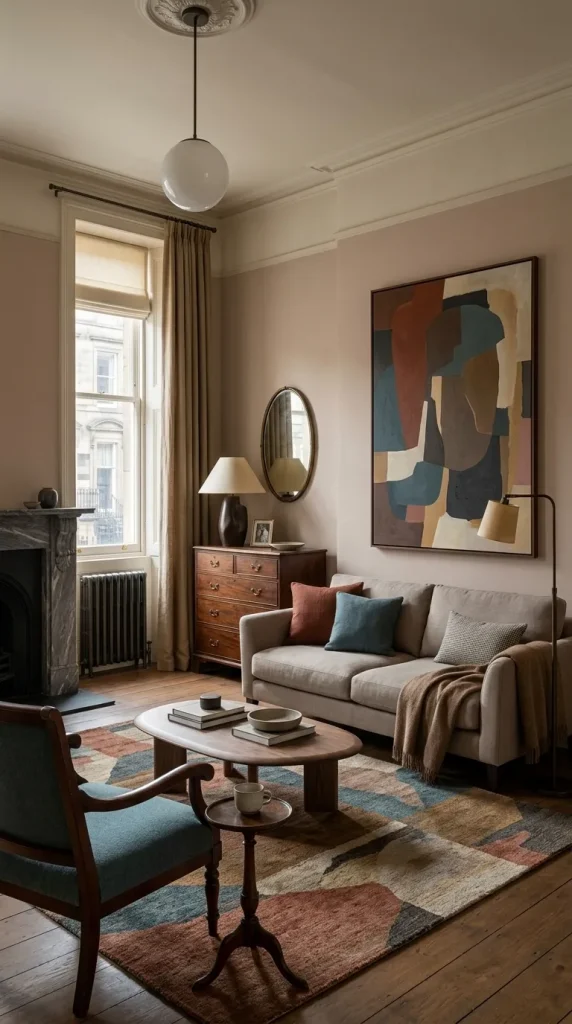
20. Mix traditional furniture with contemporary art for a collected room
Traditional British living rooms can accommodate modern furniture and artwork without losing their architectural character. In fact, the contrast between a Victorian fireplace, antique cabinet and substantial contemporary painting can make each element more noticeable.
Start with the furniture or architectural features you genuinely want to keep. A family-owned chest, inherited armchair or antique mirror can provide history, while a modern sofa introduces a more relaxed silhouette. Connect the different pieces through repeated colours or materials rather than forcing them into one period.
An earthy rug, contemporary lamp or large abstract artwork can help older furniture feel relevant without stripping away its individuality. The current appreciation for vintage pieces and collected interiors supports this approach, but the strongest reason to adopt it is personal. Your living room should reflect belongings and decisions accumulated over time.
Choose colours that work with the furniture you already own
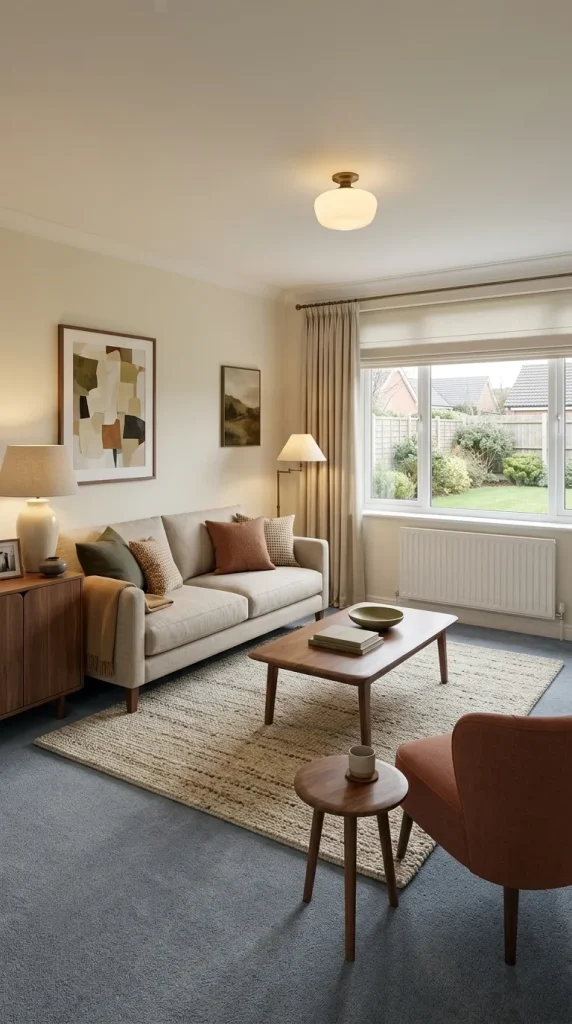
21. Warm up a living room with grey carpet
Grey carpeting is a common starting point for decorating, particularly when replacing the flooring is not practical. Rather than surrounding it with more cool grey and brilliant white, introduce warmer tones that soften the overall effect.
Oatmeal upholstery, walnut furniture, warm ivory walls and an olive or terracotta accent can make a grey-carpeted room feel more welcoming. The exact grey matters. A blue-based grey usually benefits from careful introductions of warm colour, while a taupe-based grey may already sit comfortably beside cream, camel and dark wood.
A textured rug can also help if the carpet feels visually flat, although it should be substantial enough to relate to the seating. Choose lighting with a comfortable warm appearance so the room does not become increasingly cold-looking after sunset.
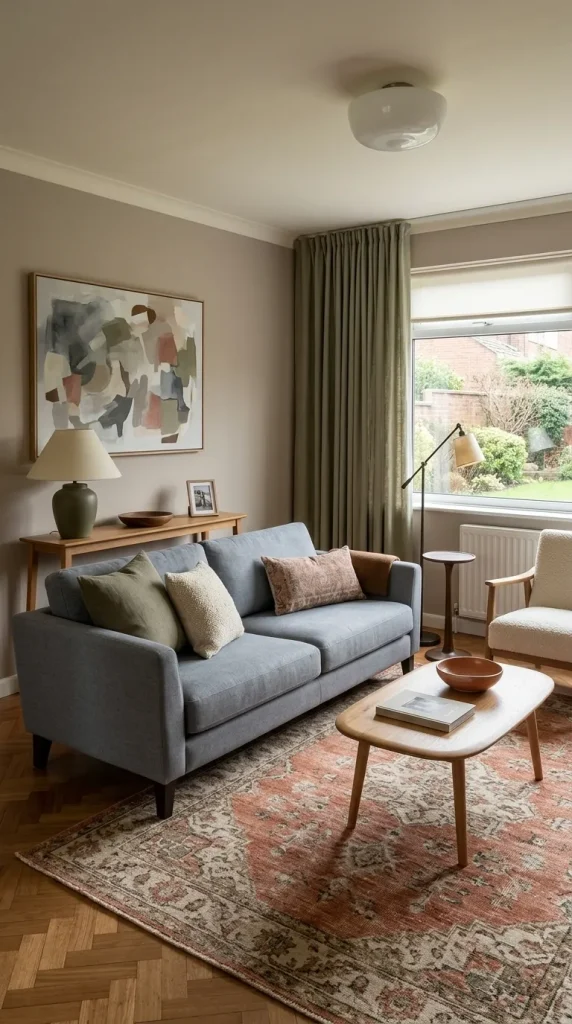
22. Refresh a grey sofa without replacing it
A grey sofa does not have to determine the colour of the entire living room. Treat it as a neutral foundation and build a more interesting palette around it.
A cool grey sofa can work beautifully with mushroom walls, a medium-oak coffee table, olive cushions and a faded terracotta rug. A warmer charcoal sofa might suit dusty rose, tobacco brown, cream or muted blue. Use artwork to connect two or three of the supporting colours so the room feels coordinated rather than assembled from separate purchases.
Avoid buying a matching grey rug, grey curtains and several nearly identical grey cushions simply because they are guaranteed to match. The variation in value, undertone and texture is what will give the room depth.
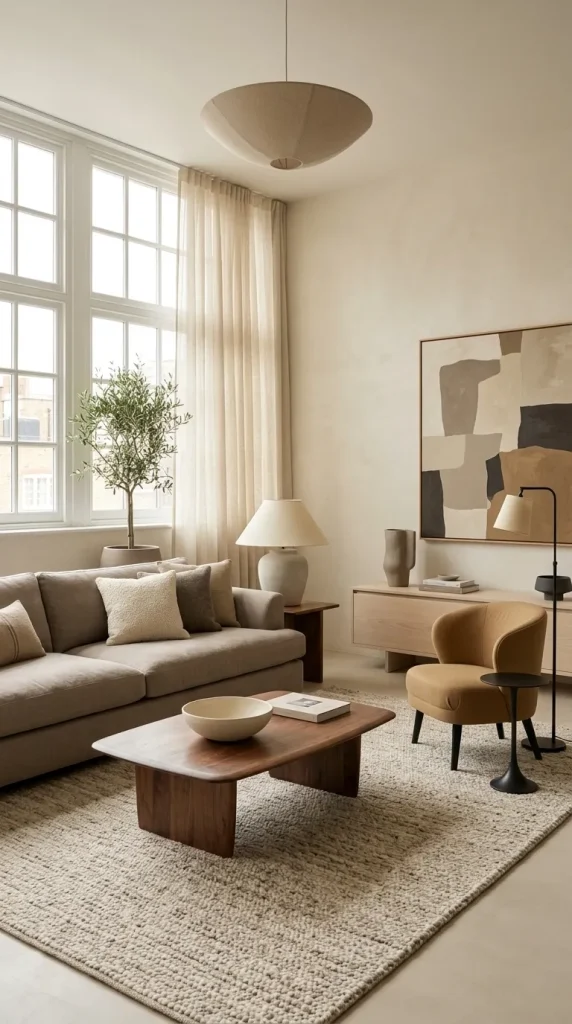
23. Layer cream, beige and taupe instead of choosing one neutral
A neutral living room needs variation if it is going to feel inviting rather than flat. Cream, beige, taupe, camel, mushroom and warm ivory can all sit comfortably together, but each should contribute a different value or texture.
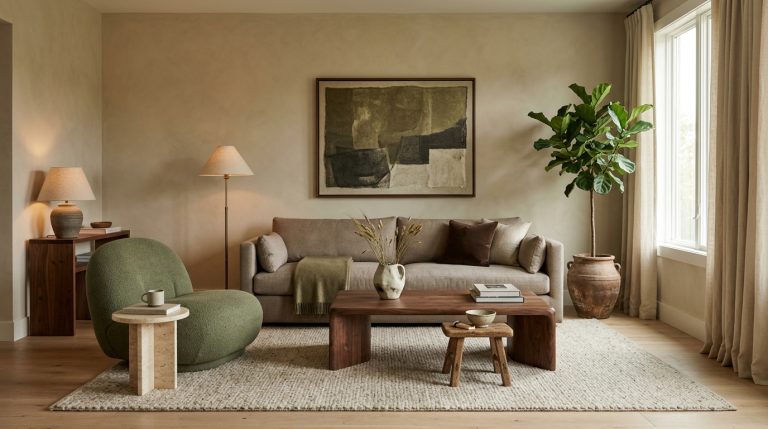
Consider warm ivory walls, a mushroom-coloured sofa, a camel armchair, a walnut coffee table and a substantial oatmeal rug. The palette remains restrained, yet the differences between the lighter upholstery, darker timber and tactile textiles create depth.
Bouclé, linen, wool, stoneware and natural wood are particularly useful in this kind of scheme. A small amount of charcoal or blackened metal can also provide definition. Avoid filling every available surface with neutral decorative objects. The materials and furniture should do much of the work themselves.
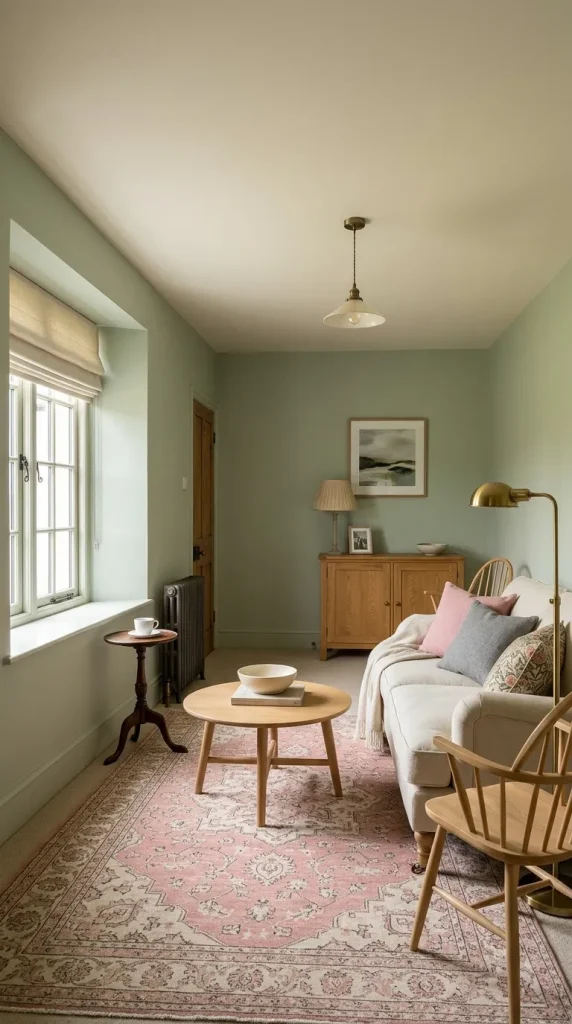
24. Bring green into the room according to the mood you want
Green is particularly adaptable because different shades create very different atmospheres. Sage can soften a compact country-style lounge, olive brings warmth to contemporary interiors, and forest green can give a traditional sitting room a richer, more enveloping quality.
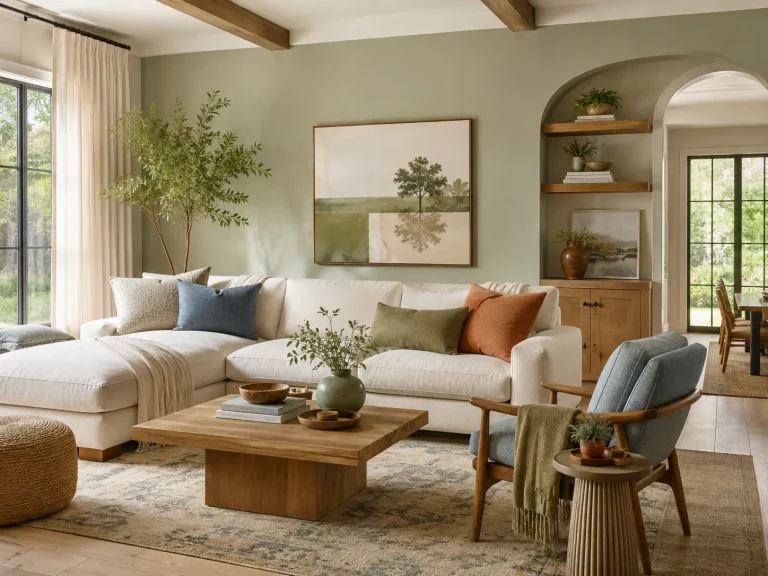
For a quieter scheme, pair sage walls with cream upholstery, medium oak and a patterned rug containing muted pink or rust. Olive works well alongside camel, chocolate brown, walnut and aged brass. Forest green can support darker wood, burgundy textiles and antique artwork without feeling excessively formal.
The 2026 colour direction includes renewed attention to earthy greens and more complex, nature-inspired shades.
However, choose the green according to the light in your own home. Test samples at different times of day, particularly if the room faces north or receives limited direct sunlight.
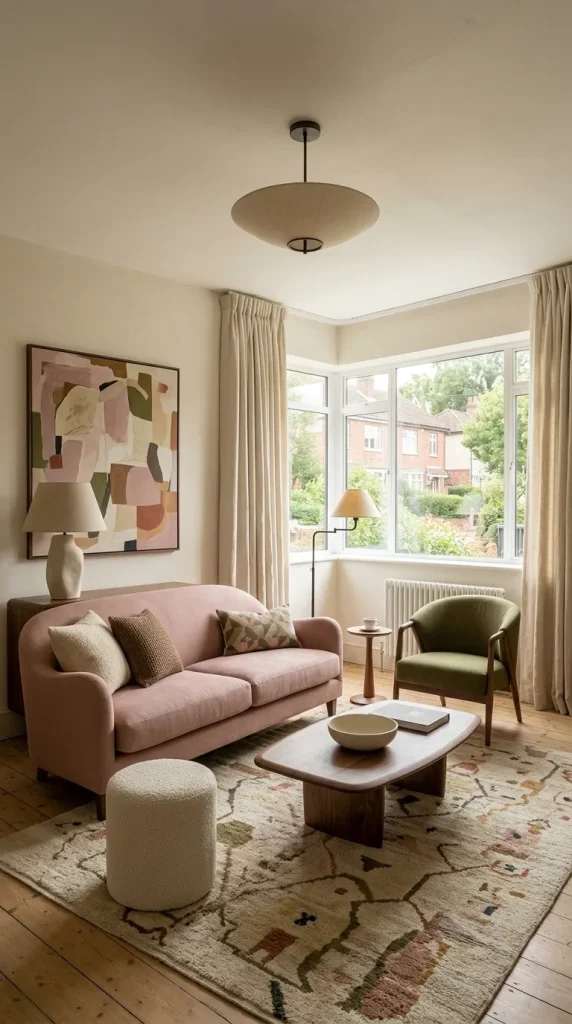
25. Introduce colour through unexpected but balanced combinations
A colourful living room does not need every piece of furniture to be brightly upholstered. Start with two colours that establish the personality of the space, then allow quieter materials to balance them.
Dusty pink and olive can feel wonderfully relaxed alongside walnut and cream. Terracotta and faded blue create a warmer, slightly more expressive combination. Mustard and chocolate brown suit earthy interiors, while burgundy and soft green can bring depth to traditional or eclectic rooms.
One colour should usually occupy more space than the other. If the sofa is dusty pink, olive may work better through an armchair, patterned rug or artwork rather than covering every remaining wall. Repeating the accent colour in two or three places creates cohesion without making the room look excessively coordinated.
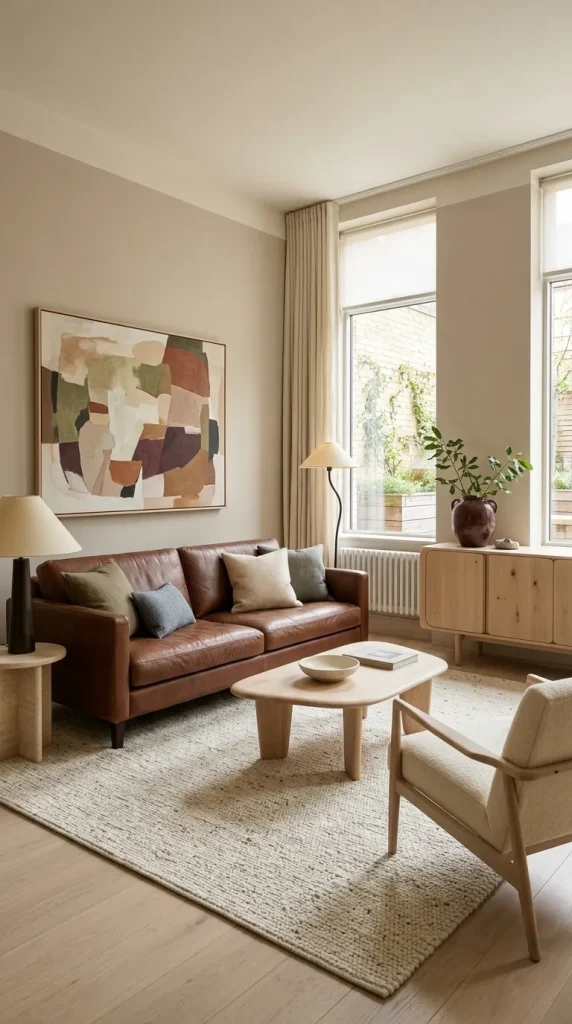
26. Make an existing brown sofa the foundation of an earthy scheme
Brown sofas are surprisingly flexible because they can support traditional, rustic and contemporary decorating styles. The shape and upholstery determine the direction as much as the colour itself.
A cognac leather sofa can look striking beside olive walls, a cream rug and dark timber furniture. A chocolate fabric sofa may feel softer with warm ivory curtains, a mushroom wall colour and muted blue cushions. For a contemporary look, pair a brown sofa with pale oak, sculptural lighting and a large abstract artwork containing rust, olive or burgundy.
Avoid surrounding substantial brown upholstery with too many similarly dark wooden pieces. Give the sofa lighter elements that define its silhouette and keep the room from feeling visually heavy.
Make the living room work for modern family life
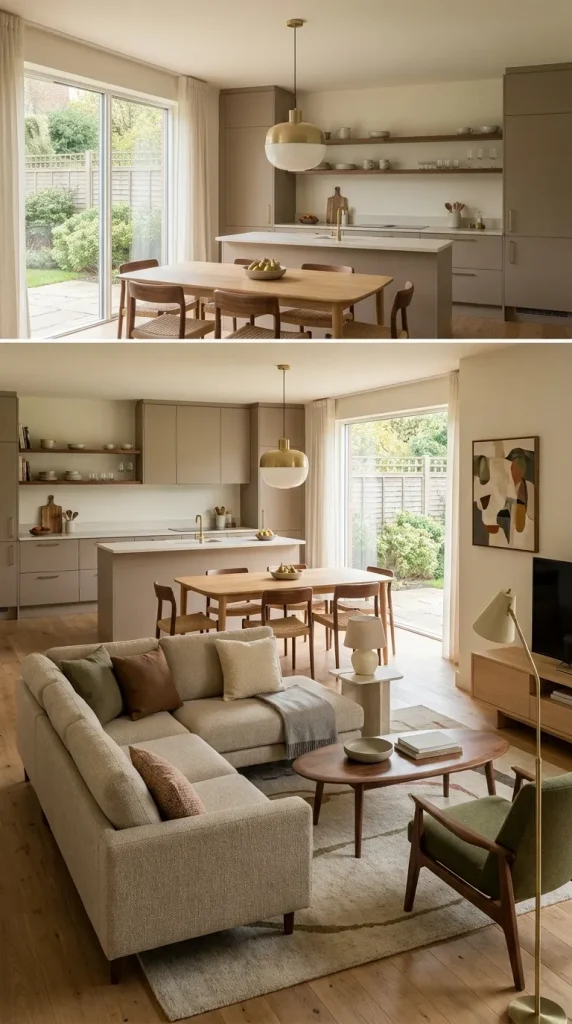
27. Create clear zones in an open-plan kitchen and living room
Open-plan spaces need visual relationships between cooking, dining and relaxing, but they do not necessarily need partitions. Furniture placement can often create enough separation on its own.
A corner sofa may establish the edge of the seating area, while a large rug brings the coffee table and other chairs into one composition. A pendant over the dining table and softer lamps around the sofa can distinguish the zones after dark.
Maintain continuity through a few repeated materials or colours. If the kitchen has walnut shelving and brushed brass handles, for example, walnut furniture or a brass floor lamp can connect it to the living room. Avoid making both areas identical. Each should have its own function and character while still belonging to the same home.
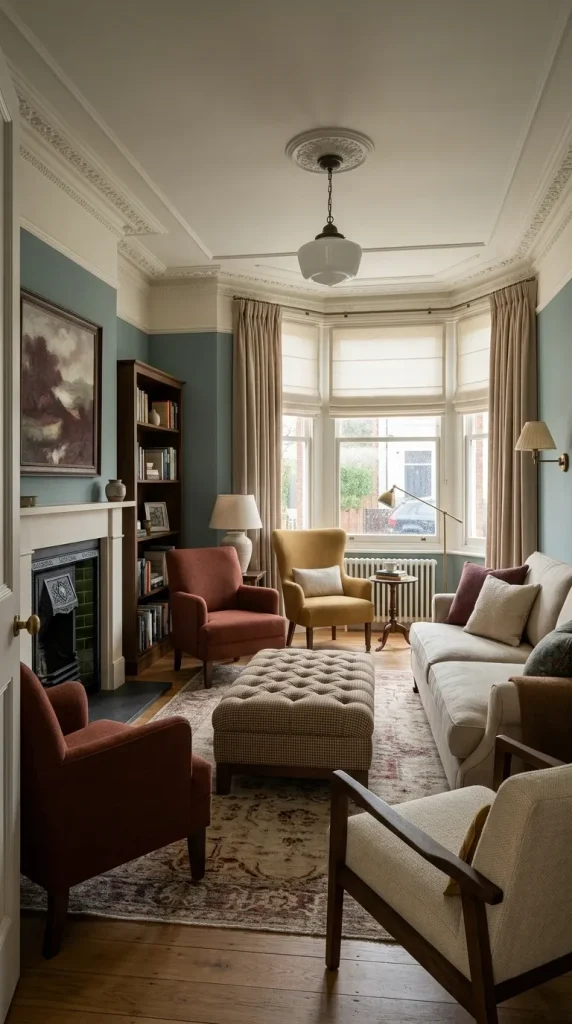
28. Create a conversation-focused living room without a television
A screen-free lounge can be especially inviting when the seating is arranged around conversation rather than one wall. Two sofas facing each other, or a sofa paired with two armchairs, can establish a balanced arrangement around a substantial coffee table or upholstered ottoman.
The focal point might be a fireplace, garden view, artwork or a beautifully arranged bookcase. In a bay-fronted room, an armchair near the window can create a separate reading area without disrupting the main conversation zone.
Lighting should support different activities. Wall lights or table lamps can provide softer evening illumination, while a dedicated reading light makes the space genuinely useful. The room should feel comfortable with one person reading as well as with several people entertaining.
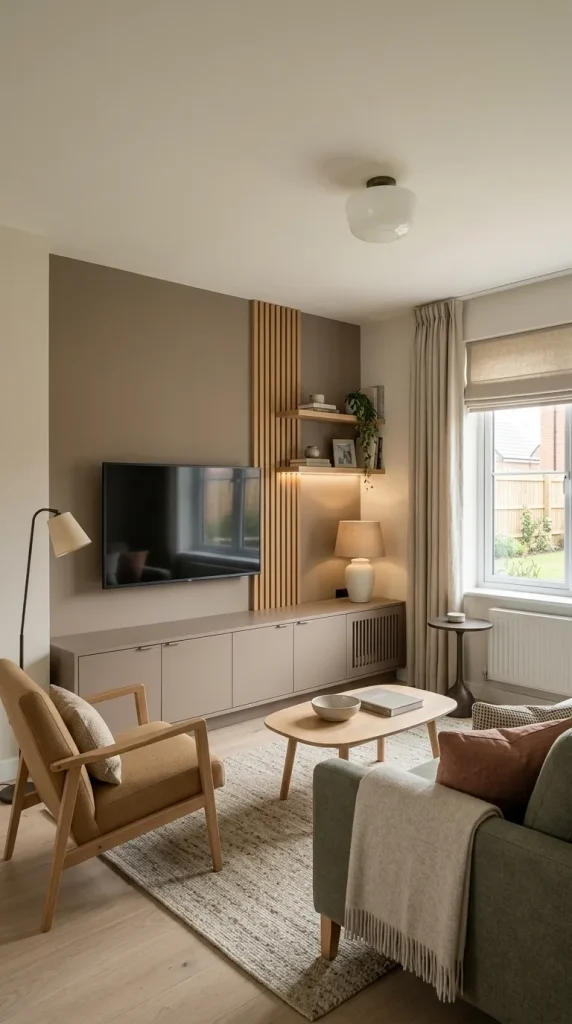
29. Design a media wall that suits the room rather than dominates it
Media walls can work beautifully in contemporary UK living rooms, particularly when the television, storage and other electronic equipment need to occupy the same area. However, a full-height installation is not automatically the right choice.
In a modest new-build lounge, a low media cabinet, restrained shelving and a carefully chosen wall colour may create a more balanced composition than a substantial floor-to-ceiling structure. Timber detailing, subtle lighting and closed cupboards can add character without making the screen the dominant architectural feature.
If you are combining a television with an electric fire, follow the manufacturers’ ventilation, heat and clearance requirements. Provide sensible cable access, and consider whether you will want to change the television or other equipment in the future. A well-designed media wall should accommodate ordinary maintenance rather than conceal every component permanently.
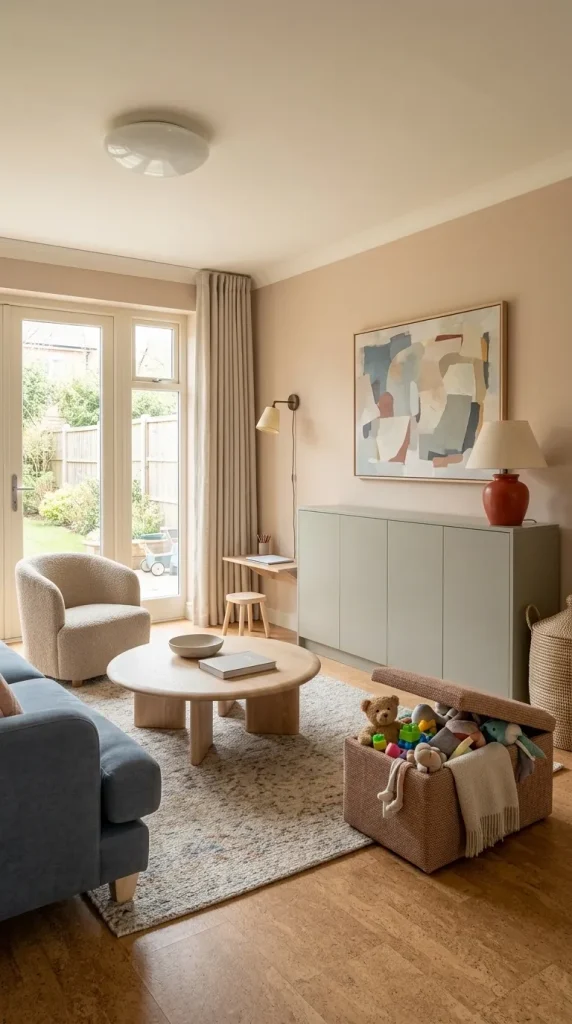
30. Integrate toy storage into a stylish family living room
A family lounge should accommodate everyday life without looking as though a separate playroom has been installed in the middle of it. The most useful storage is often located exactly where clutter accumulates.
Low cupboards, storage ottomans, built-in alcove units and baskets can all help, but the choice should depend on what needs storing. A large cupboard with adjustable shelves may be more useful than several small decorative baskets if the household has games, books and bulky toys.
Choose washable upholstery, robust furniture and a durable rug where necessary. Rounded coffee tables can be practical in homes with young children, while closed storage allows the room to return quickly to a calmer appearance in the evening. Practicality should be incorporated into the design from the beginning rather than treated as a compromise.
Finish the room with lighting, texture and personal details
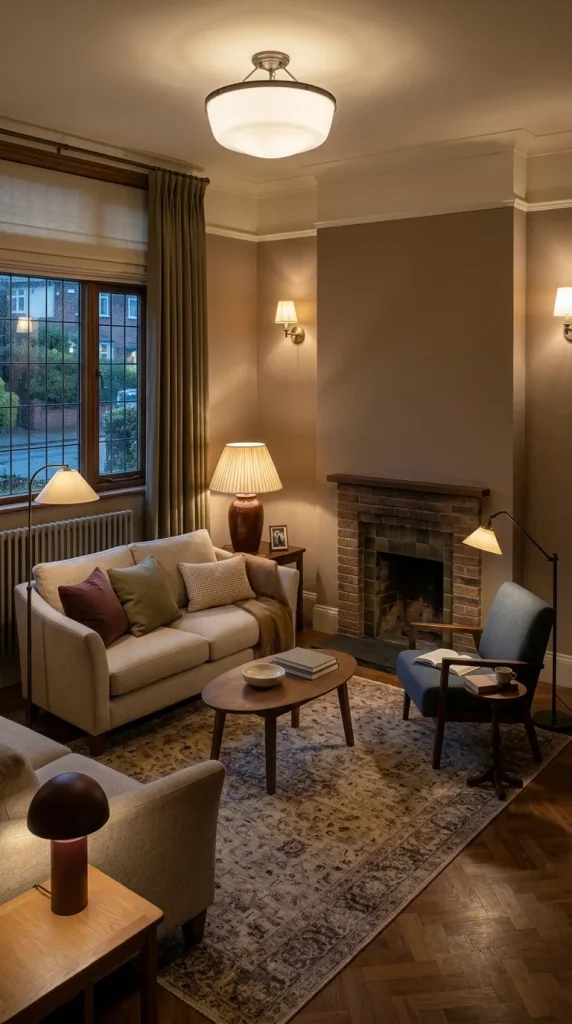
31. Layer lighting to make the lounge genuinely cosy
A comfortable British living room needs more than one ceiling light. The aim is to create different levels of illumination for different activities and times of day.
A ceiling fixture provides general light, while table lamps and floor lamps establish softer pools of light around seating. Wall lights are particularly useful beside fireplaces or within alcoves, where floor space may be limited. A reading lamp should illuminate the book or activity without creating glare for everyone else.
In rooms with lower ceilings, a flush or semi-flush fixture may be more practical than a large pendant. Taller period rooms can accommodate something more sculptural. Current interiors coverage is also giving greater attention to portable and layered lighting, reflecting a broader interest in adaptable, comfortable spaces.
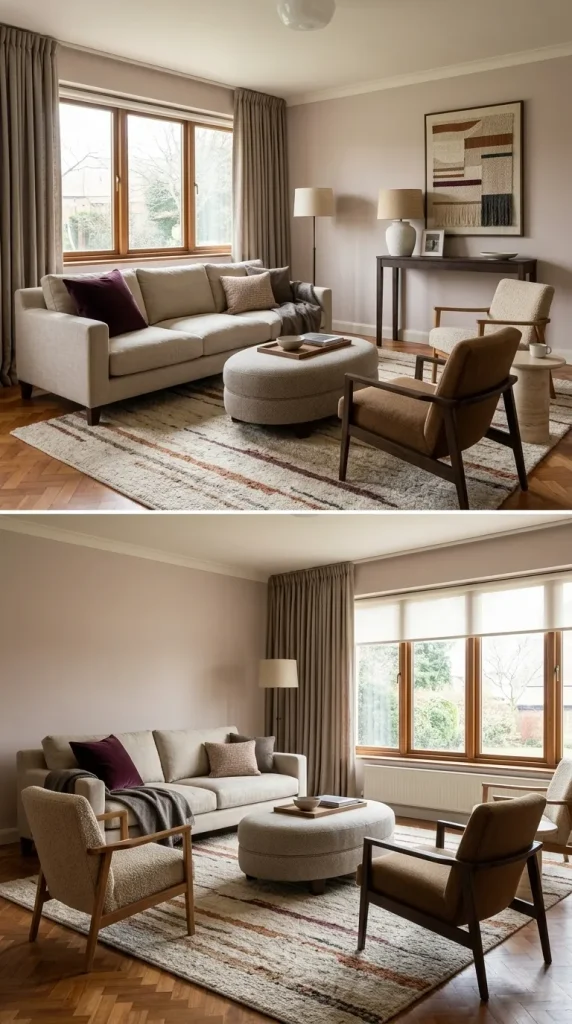
32. Use rugs, curtains and varied textiles to create comfort
Cosiness is not achieved simply by adding more cushions and throws. The proportions of the furniture, softness of the surfaces and way materials interact all influence the atmosphere.
A substantial rug can visually connect a sofa and armchairs, while full-length curtains soften the vertical surfaces. A wool throw over a linen sofa introduces a different texture, and a velvet cushion can provide a denser colour accent without requiring the entire seating arrangement to change.
For a lounge with timber flooring, a generous rug can make the seating area feel more settled. In a carpeted room, additional texture may be better introduced through curtains, upholstery or an ottoman rather than another floor covering. Choose each layer according to what the room is missing.
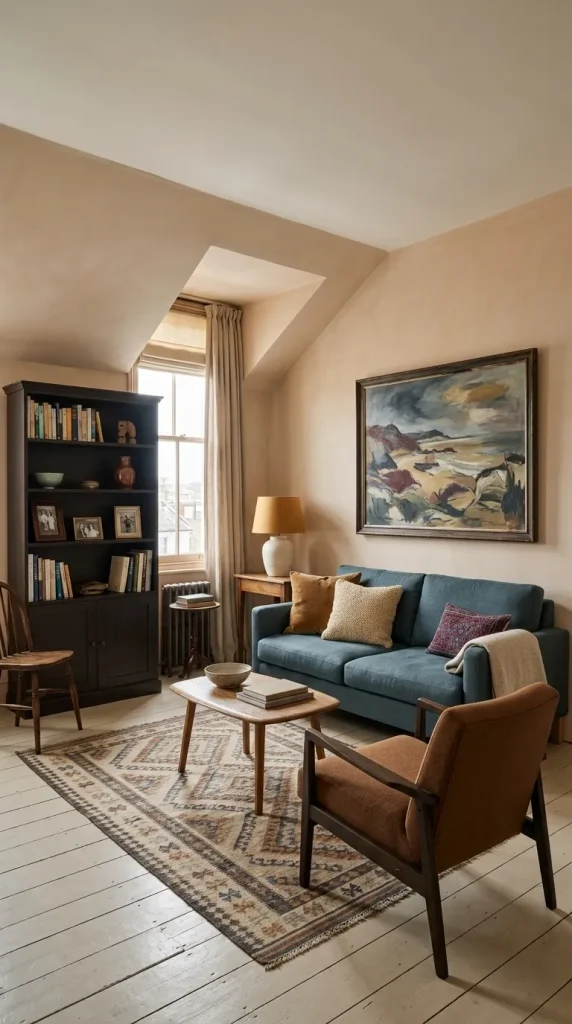
33. Use artwork and shelves to give the room a personal identity
Artwork and decorative objects should say something about the people living in the home rather than simply occupy empty surfaces. An inherited painting, contemporary print, family photograph, ceramic collection or travel souvenir can all contribute to a room with genuine character.
The scale matters. One generous painting over the sofa can be more effective than several undersized frames, particularly in a compact room. In a traditional living room, an informal gallery wall may work beautifully above a sideboard, while a contemporary flat might benefit from one large abstract artwork and a carefully edited bookcase.
Avoid filling every shelf. Books, pottery, photographs and objects with different heights can create a collected composition when they are given room to breathe. If everything is displayed at once, individual pieces lose their significance.
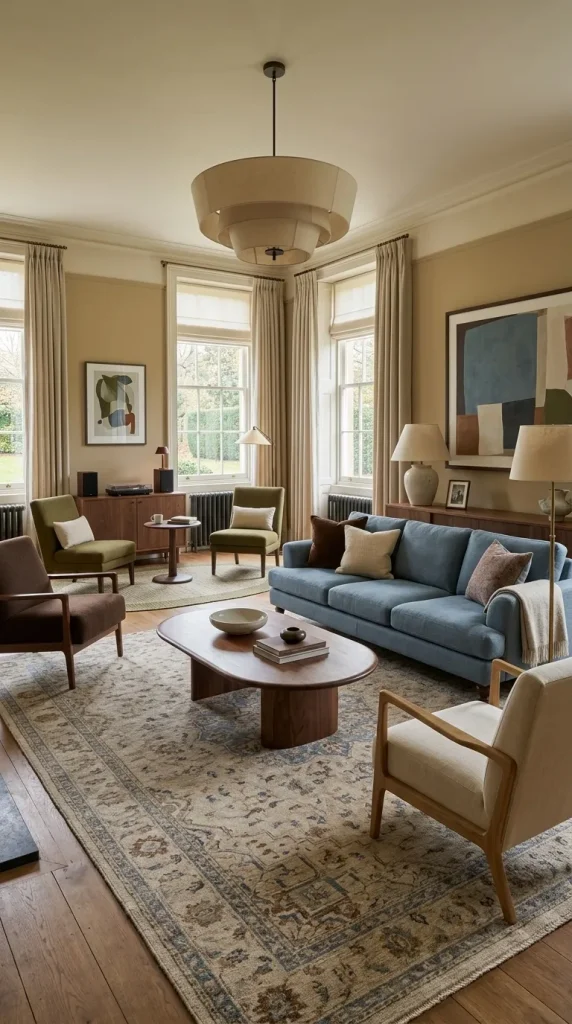
34. Create separate seating areas in a large living room
Larger British living rooms have a different design problem from compact terraces. Furniture can appear stranded, and the distance between pieces may make the room less comfortable for conversation.
Rather than distributing everything around the perimeter, create a substantial central seating group using an appropriately sized rug. A second area might contain a pair of armchairs near the window, a reading corner beside a bookcase or a small music space.
Use lighting to give each zone its own atmosphere, then repeat selected materials or colours to connect the arrangement. A large artwork, statement pendant or substantial cabinet can help anchor a generous wall. The objective is to make the room feel like several related spaces rather than one enormous arrangement of disconnected furniture.
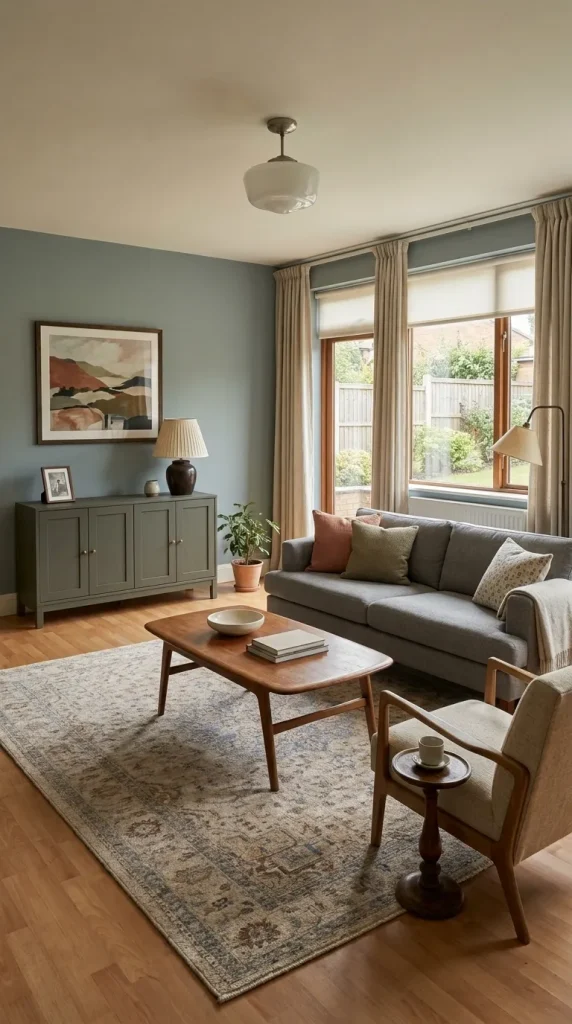
35. Refresh your living room gradually instead of buying everything at once
One of the most practical decorating approaches, particularly when moving into a new home, is to establish the essential furniture and live with the room before making every remaining decision.
Start by assessing the layout, sofa, storage and lighting. These have more influence on daily comfort than a collection of small decorative accessories. Once those foundations work, introduce curtains, an appropriately scaled rug, artwork and secondary furniture according to what the space actually needs.
For affordable improvements, consider repainting, rearranging existing furniture, changing cushion covers, buying second-hand timber pieces or updating an old lamp with a more suitable shade. A carefully chosen vintage table can bring greater character than several new matching accessories. Allow the decorating scheme to develop as you discover how the room is used throughout the day and across the seasons.
Which ideas suit different types of British homes?
The architecture of your property should guide your decorating decisions, but it does not have to dictate a particular style. A Victorian terrace can accommodate modern furniture, while a new-build living room can develop character through traditional materials and collected pieces.
| Property type | Design priorities | Useful approaches |
|---|---|---|
| Victorian or Edwardian terrace | Chimney breast, bay window, alcoves, narrow layout | Fitted storage, compact seating, layered curtains |
| 1930s semi | Bay window, fireplace, family-friendly layout | Comfortable sofas, substantial rugs, balanced storage |
| Modern new build | Plain walls, fewer architectural features | Oversized artwork, restrained panelling, sculptural lighting |
| Small city flat | Limited space, flexible furniture, storage | Slim-arm sofas, freestanding cabinets, multifunctional pieces |
| Country cottage | Existing timber, fireplaces, smaller windows | Natural fabrics, warm colour, antiques, comfortable seating |
| Large open-plan home | Distinct functions, visual continuity | Furniture-led zoning, generous rugs, coordinated materials |
The important distinction is between responding to the property’s practical limitations and being restricted by its historical style. Some of the most characterful homes combine period architecture with furniture and artwork from several different eras.
Five common mistakes when decorating a UK living room
Buying furniture before planning the layout. An attractive corner sofa can become a costly mistake if it blocks the route to a bay window or leaves insufficient space around the fireplace. Measure the room and major circulation routes before selecting the largest pieces.
Choosing a rug that is too small. A small rug floating under the coffee table can make the seating feel disconnected. Where possible, choose a rug large enough to establish a visual relationship between the principal pieces of furniture.
Treating grey flooring as a reason to make everything grey. Existing grey carpet or a grey sofa can work with warm ivory, timber, olive, terracotta and many other colours. Introducing contrast and texture often produces a more welcoming result than buying more matching grey accessories.
Relying entirely on overhead lighting. A brightly illuminated ceiling does not necessarily produce a comfortable room. Table lamps, floor lamps and well-positioned wall lights provide greater flexibility, especially during darker afternoons and evenings.
Decorating every wall and surface. Empty space is useful. Allow important artwork, attractive furniture and architectural details to remain visible rather than surrounding everything with smaller accessories.
Frequently asked questions
How can I make a small UK living room look bigger?
Start with the furniture layout rather than immediately painting everything white. Choose furniture with appropriate depth, protect the walking routes and use a rug that visually connects the seating. Keep bulky storage concentrated along one wall and allow enough empty space around the important furniture. Large mirrors and well-planned lighting can also help, particularly when they reflect useful daylight.
What colours work best in a cosy British living room?
Warm ivory, mushroom, olive, sage, chocolate brown, burgundy, muted blue and terracotta can all create a welcoming atmosphere. The right choice depends on the room’s orientation, existing flooring and furniture. Test paint colours in morning, afternoon and artificial light before committing to a scheme.
How should I arrange furniture in a narrow terraced-house lounge?
Identify the primary circulation route first, then position the sofa in relation to the fireplace, windows and television. A slim-arm sofa, compact armchair and narrow coffee table or ottoman may provide more useful seating than several bulky pieces. Alcove cupboards can reduce the need for additional freestanding storage.
How do I decorate a new-build living room without a fireplace?
Establish an alternative focal point with substantial artwork, a distinctive cabinet, wall treatment or sculptural lighting. Arrange the seating around how the room is actually used, then introduce texture through curtains, rugs, upholstery and timber furniture. A fireplace is not essential for a balanced or characterful room.
Can a corner sofa work in a small British living room?
Yes, provided its dimensions and configuration suit the layout. In a square room, positioning it against adjacent walls may preserve central floor space. In an open-plan room, the projecting section can help define the seating area. Measure the doorway clearances, walking routes and available space around the coffee table before buying.
Create a living room that belongs to your home
The strongest UK living room decor ideas begin with the architecture and everyday needs of the household. A narrow terraced-house lounge calls for different decisions from a large open-plan new build, and a flat with limited storage presents different opportunities from a cottage with a substantial fireplace.
Rather than trying to reproduce a particular style exactly, identify what the room already offers. A bay window can become an inviting reading corner. Alcoves can provide discreet storage. Grey flooring can become the foundation of a warmer palette, while a plain new-build wall can gain character through artwork or considered architectural detailing.
Choose furniture that fits, lighting that supports real activities and materials that make the room comfortable. Then add colour, artwork and personal objects gradually.
A successful British living room should not merely look attractive from the doorway. It should be a place where you genuinely enjoy spending time.