17 small living room ideas that instantly make your space look bigger, Brighter, and Easier to Live In
A small living room can feel cramped long before it’s actually full.
Sometimes the problem is an oversized sofa. Sometimes it’s a coffee table that forces you to sidestep every time you cross the room. And sometimes it’s simply too many small things competing for attention.
That’s why the best small living room ideas aren’t about making everything tiny or painting every surface white. They’re about creating clearer sightlines, better proportions, and fewer visual interruptions.
I once helped rearrange a compact living room where the owner was convinced she needed a smaller sofa. She didn’t. We moved one cabinet, swapped a bulky coffee table for two nesting tables, and raised the curtain rod.
The room suddenly felt noticeably more open.
Here are 17 practical ways to get that same effect without stripping your space of personality.

1. Choose a sofa with slimmer arms
The sofa usually takes up more visual and physical space than anything else in the room.
That makes its shape incredibly important.
A sofa with thick rolled arms can easily waste 8 to 12 inches on each side. In a small room, that’s a lot of unused width.
Look for narrow arms, a relatively shallow seat, and a clean silhouette.
A sofa around 72 to 78 inches wide can often provide plenty of seating without overwhelming the room. If your living room is especially tight, something closer to 68 inches may work better.
And don’t assume an “apartment sofa” is automatically the right choice.
Some compact sofas still have bulky proportions.
Measure depth as carefully as width. A 40-inch-deep sofa can swallow a narrow room, while a 32 to 35-inch depth often leaves a much better walkway.
The goal isn’t to buy the smallest sofa possible.
It’s to choose one that uses its footprint efficiently.
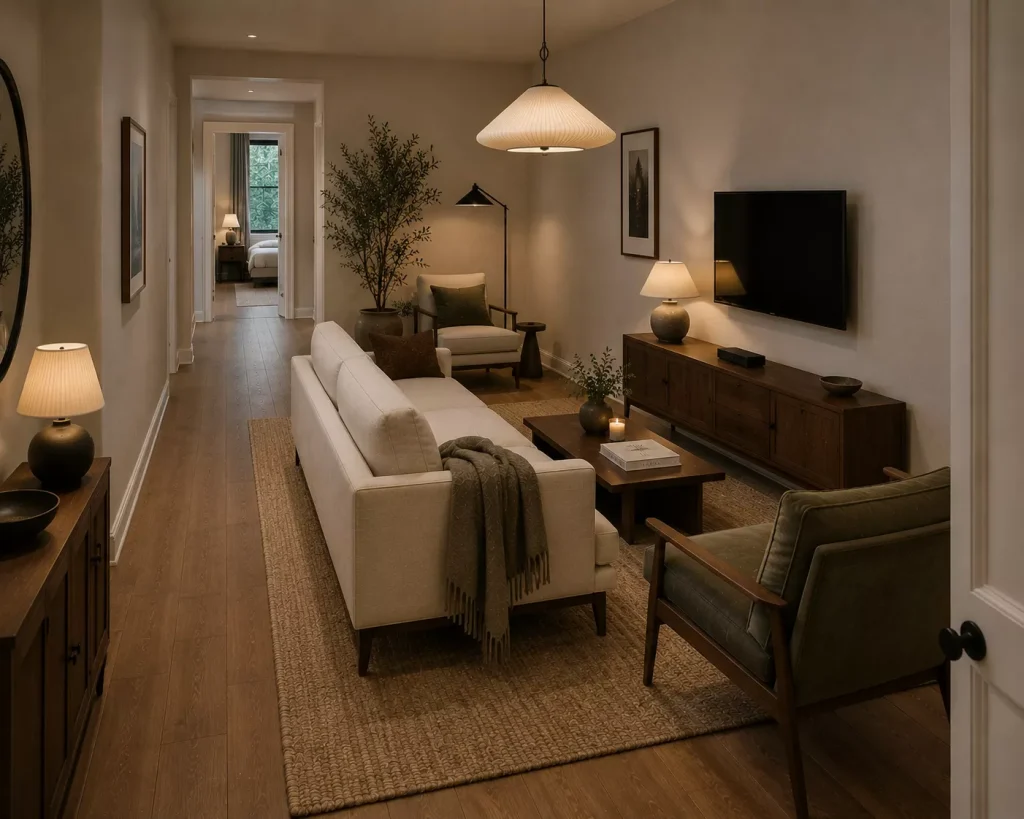
2. Stop pushing every piece of furniture against the wall
This advice surprises people because small rooms seem like they should keep furniture pressed against the perimeter.
Sometimes that works.
Sometimes it makes the room feel like a waiting area.
Pulling a sofa just a few inches away from the wall can create more breathing room. Floating a chair slightly inward can also help define a conversation zone.
What matters is the relationship between the pieces.
Your sofa, chair, and coffee table should feel connected rather than scattered around the edges.
If the room is long and narrow, floating furniture can even create a natural passage behind the seating area.
That can work better than forcing everyone to walk through the middle of the room.
Keep the main route obvious
Aim for roughly 30 to 36 inches along your main walking path where the floor plan allows.
You don’t need that much clearance everywhere.
But one clear route from the entry to the next doorway can make the entire room feel less cramped.

3. Use a larger rug than you think you need
Tiny rugs make small rooms look even smaller.
That’s one of the most common decorating mistakes I see.
A 4-by-6 rug floating under only the coffee table creates a little island in the middle of the room. It visually shrinks the seating zone.
Instead, try a 6-by-9 or 8-by-10 rug where the proportions allow.
At minimum, get the front legs of the sofa and major chairs onto the rug.
That one move makes the furniture read as a connected group.
For pattern, low-contrast designs work especially well.
Think faded rust and cream, muted blue with warm gray, or olive mixed with beige.
Patterns can also hide everyday wear better than a solid ivory rug.
The trade-off is cost.
Larger rugs are more expensive, but they often do more for the room than several smaller decorative purchases combined.
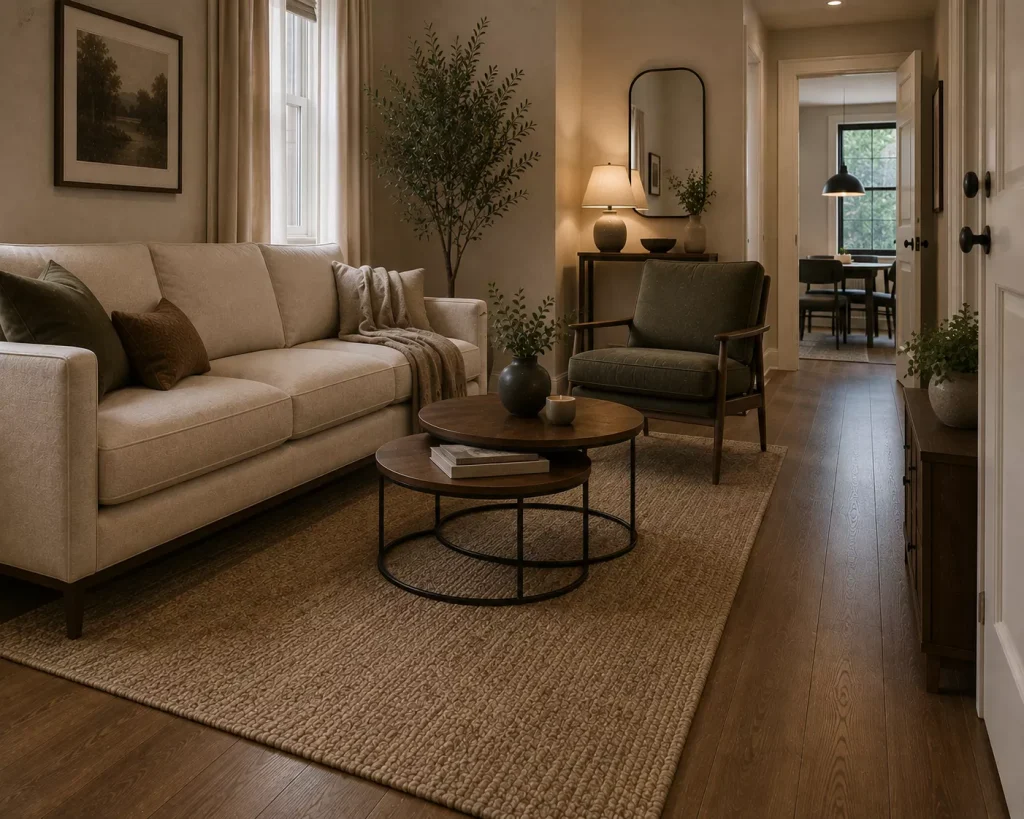
4. Replace one bulky table with flexible pieces
Large square coffee tables can become traffic blockers.
Especially in rooms under about 12 feet wide.
One of my favorite small living room ideas is replacing a single heavy table with two smaller nesting tables or a storage ottoman.
Nesting tables can separate when you need more surface area, then tuck together when you want floor space.
A storage ottoman can hold blankets, board games, or extra pillows while doubling as a table with a tray on top.
Round tables are also useful in tight rooms because they remove sharp corners from the walking path.
A 24 to 30-inch round coffee table often works better than a large rectangle.
You don’t lose much function.
But you gain easier movement.

5. Keep furniture low enough to preserve sightlines
Tall furniture can make a compact living room feel boxed in.
That doesn’t mean everything should sit near the floor.
It means you should be strategic about where height appears.
Use lower furniture across the most visible areas and keep tall storage concentrated on one wall.
A media cabinet around 20 to 28 inches high will usually feel lighter than a tall entertainment unit.
The same goes for low-profile sofas and open-leg sideboards.
Visible floor underneath furniture makes the room feel less crowded.
You don’t need to see every inch of the floor, of course.
But a little space beneath the sofa, console, or chairs helps the furniture appear less massive.
There’s a practical downside.
Open-leg furniture exposes cables and dust more easily.
If you know you’ll store random bags underneath, closed storage may actually make the room look calmer.

6. Hang curtains higher and wider
Curtains can make a wall feel taller or shorter depending on where you hang them.
Mounting the rod just above the window frame often makes the window look smaller.
Instead, position the rod several inches higher.
If the ceiling allows it, go closer to ceiling height.
Extend the rod beyond the window frame too, so the curtain panels can sit partly beside the glass when open.
That lets more daylight enter.
And daylight is one of the best tools for making a small room feel more open.
Choose panels that reach the floor.
Warm white, oatmeal, pale stone, and soft greige are easy options if you want the curtains to blend into the wall.
A subtle striped linen blend can also create vertical movement.
Avoid panels that are too short.
Curtains hovering six inches above the floor rarely look intentional.
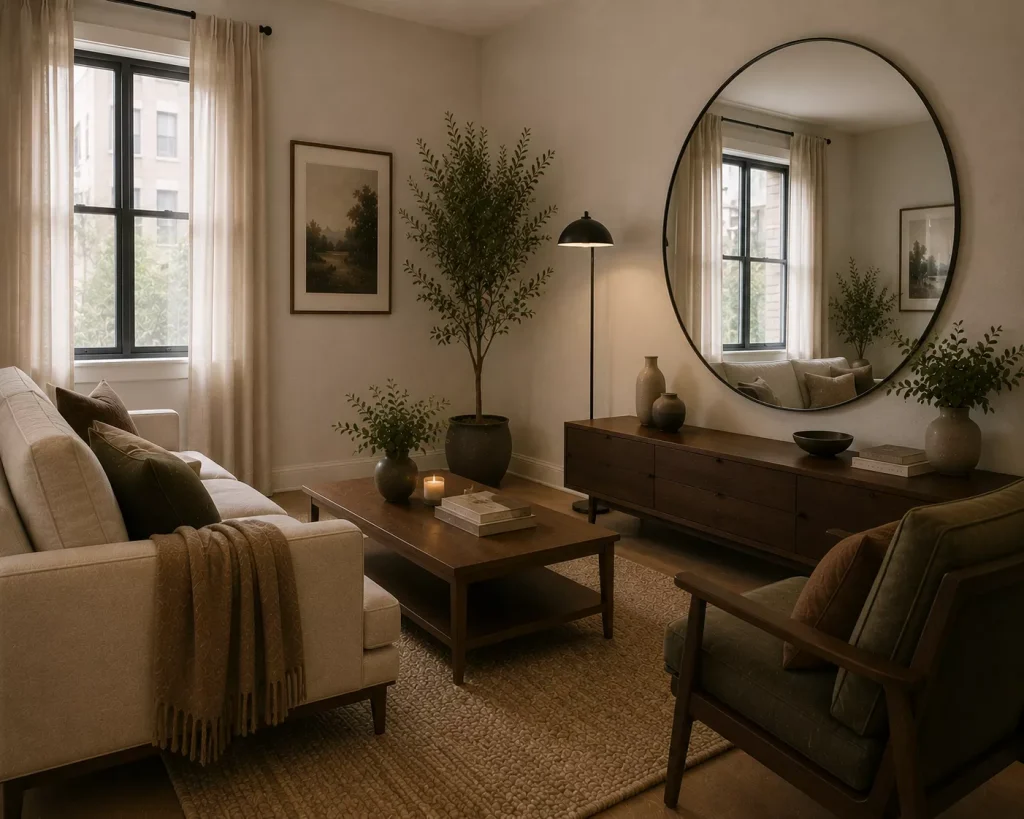
7. Use mirrors where they actually reflect something useful
Mirrors can help a small room feel more open.
But only if they reflect something worth seeing.
Put a mirror opposite or beside a window to bounce daylight deeper into the room.
A large mirror above a console can also extend the visual depth of the wall.
I prefer one substantial mirror over several small ones.
Try a round mirror around 30 to 36 inches wide, or a full-length mirror with a thin frame.
Walnut, black metal, aged brass, and pale oak all work well depending on your palette.
Just avoid reflecting clutter.
A mirror opposite an overfilled bookcase simply doubles the busyness.
That’s not quite the effect we’re after.

8. Keep your color palette connected
Small rooms often feel chaotic because there are too many separate color stories happening at once.
You don’t have to use all neutrals.
You just need repetition.
A simple palette might be:
Warm white
Medium oak
Muted olive
Rust
Black accents
Another room might use cream, walnut, dusty blue, and brushed brass.
The exact colors matter less than how consistently they appear.
Repeat your main accent two or three times.
If the sofa has a clay-colored cushion, bring that tone back in the rug or artwork.
If the coffee table has black legs, repeat black in the floor lamp or picture frames.
This creates continuity.
And continuity makes the room feel larger because your eye isn’t constantly stopping to process something new.
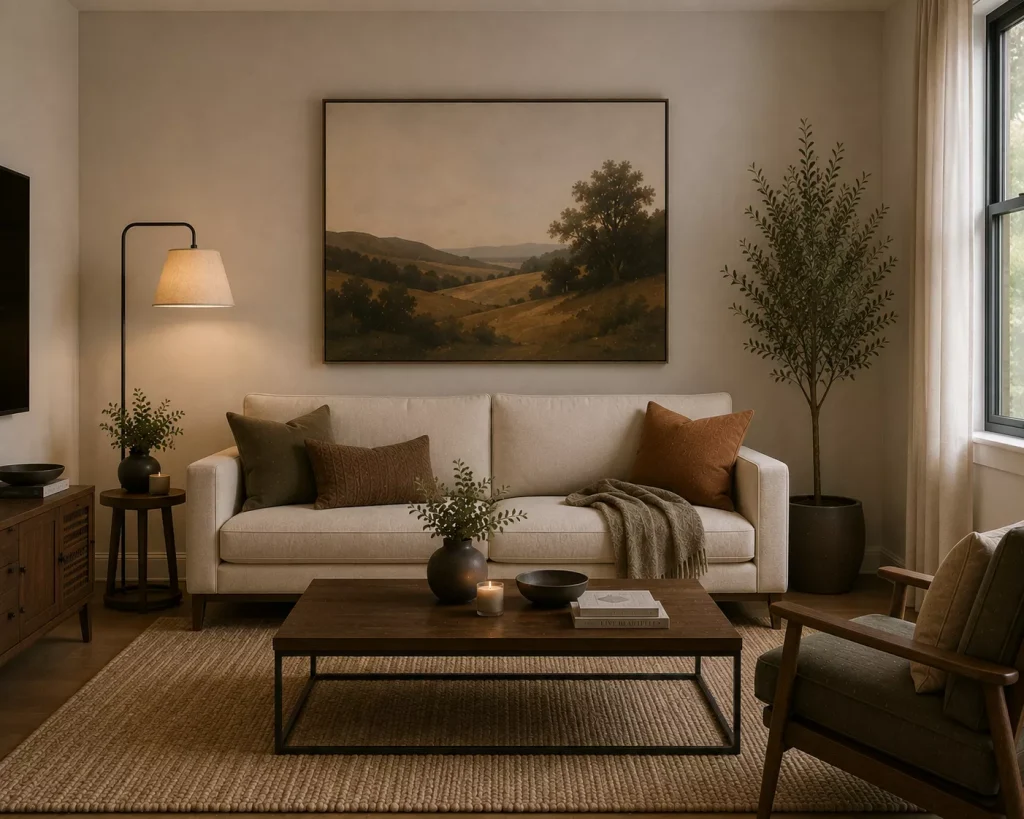
9. Choose one large piece of art instead of many tiny frames
Small rooms don’t require small art.
Actually, oversized artwork can make a compact space feel more confident.
A single large print above the sofa gives the wall structure without adding clutter.
For an 80-inch sofa, a piece around 40 to 55 inches wide can work beautifully.
You can also use a pair of coordinated frames if one large piece feels too expensive.
The key is scale.
Tiny art floating in the middle of a broad wall makes the room feel fragmented.
If you love gallery walls, keep the arrangement tight and treat it as one visual unit.
Leave roughly 2 to 3 inches between frames.
And don’t hang everything too high.
Artwork above the sofa usually feels more connected when the bottom edge sits around 6 to 10 inches above the back.
10. Move storage upward instead of outward
When floor space is limited, walls become valuable.
Use them.
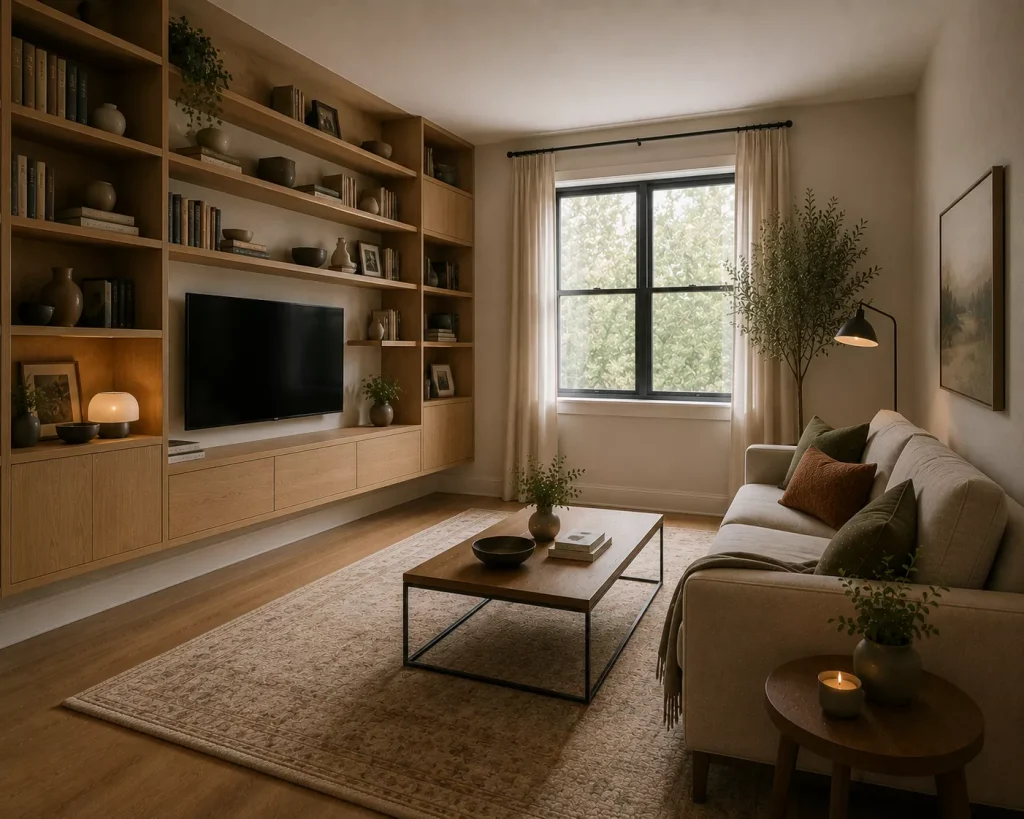
Floating shelves can replace a small bookcase. Wall-mounted cabinets can provide storage without consuming floor area. A narrow ledge above the sofa can hold art without needing another piece of furniture below.
This doesn’t mean covering every wall with shelves.
That often makes small rooms feel busier.
Concentrate storage in one or two areas.
For example, one wall might hold a tall shelving system with baskets and books, while the opposite wall stays mostly clear.
Closed storage is useful for visual clutter.
Open shelves are better for display.
A mix of both usually works best.
Use closed cabinets for cords, games, paperwork, and electronics.
Keep open shelves for books, pottery, framed photos, and a few objects you actually enjoy looking at.

11. Pick chairs that don’t block the room
Accent chairs can be useful.
They can also be surprisingly bulky.
Avoid wide barrel chairs with thick arms if the room is tight.
Look for open arms, narrower seats, and visible legs.
A chair around 28 to 30 inches wide can provide comfortable seating without dominating the floor plan.
Armless chairs take up even less visual space.
Just remember that comfort matters.
A tiny chair nobody wants to sit in isn’t helping.
If you host occasionally rather than every weekend, consider using lightweight stools or small poufs as extra seating.
They can tuck under a console when not needed.
That’s far more flexible than permanently dedicating a huge corner to a chair that mostly holds laundry.

12. Use lighting at several heights
Small rooms feel flatter when all the light comes from one ceiling fixture.
Layering light creates depth.
Use a floor lamp near the sofa, a table lamp on a console, or a plug-in wall sconce near a reading chair.
Warm bulbs around 2700K usually make living rooms feel more relaxed.
A slim floor lamp with a narrow base is useful in tight corners.
Wall sconces are even better when floor space is extremely limited.
For renters, plug-in models avoid hardwiring.
The cords aren’t beautiful, but cord covers can keep them controlled.
And avoid oversized shades unless your room has the proportions to support them.
A giant floor lamp arching across half the sofa may look dramatic online.
In a 10-by-11-foot living room, it can feel like another piece of furniture.
13. Keep the window area visually light
Anything blocking natural light makes a small room feel denser.
That includes tall plants, heavy furniture, and dark curtains crowded around the window.
Try keeping low furniture near the glass.
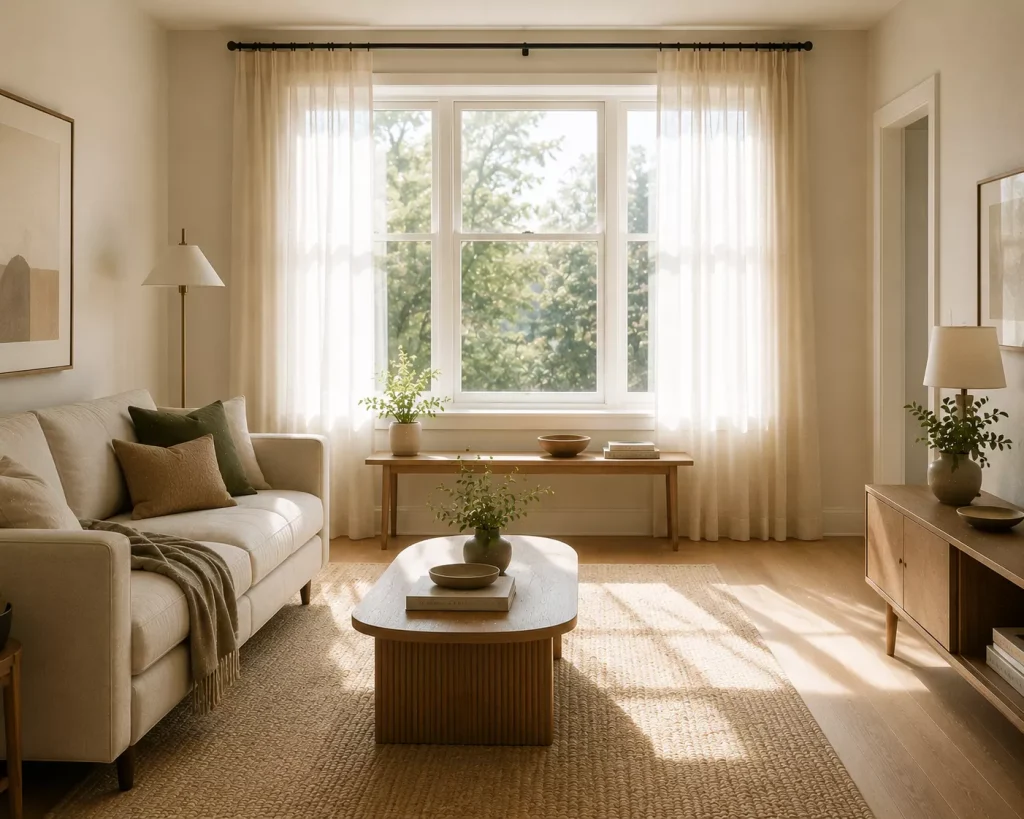
A slim bench, low console, or simple plant stand works better than a tall bookcase.
If privacy isn’t a major concern, sheer curtains can soften the room without blocking daylight.
A lightweight linen-look sheer in warm white or flax works well.
For apartments facing neighboring buildings, layer sheers with proper curtains so you can adjust privacy throughout the day.
Natural light doesn’t literally increase the size of the room.
But it changes how clearly you perceive the boundaries.
And brighter rooms usually feel more open.
14. Limit how many small accessories are visible
Here’s what nobody tells you about styling small rooms.
Accessories multiply quickly.
One candle becomes four. One bowl becomes a tray filled with three other things. Soon every surface is busy.
Use larger, fewer objects.
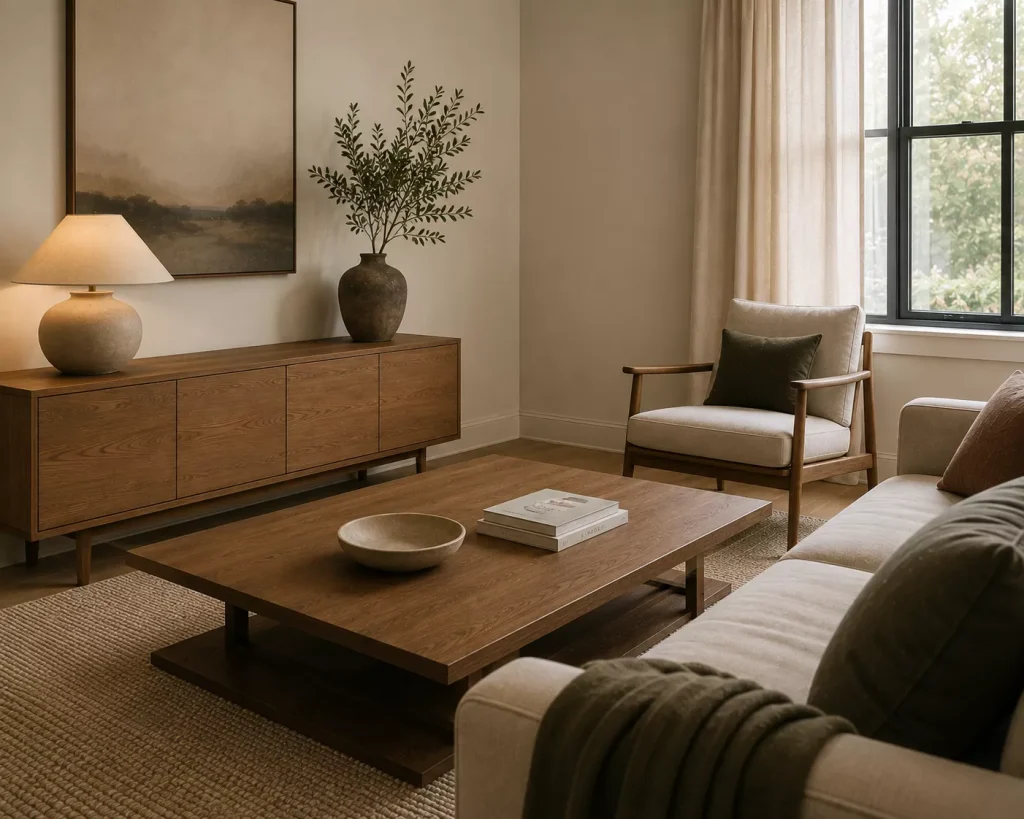
A coffee table might need one low bowl, a stack of two books, and nothing else.
A console could hold one lamp and a substantial vase.
That’s enough.
Leave empty space around objects so they can actually be seen.
I’d rather have three pieces that look intentional than fifteen that feel like they’re waiting for a garage sale.
This is one of those small living room ideas that costs absolutely nothing.
You may even save money by shopping less.

15. Choose glass and open-frame furniture selectively
Transparent and open-frame pieces can reduce visual weight.
A glass coffee table lets you see more of the rug and floor underneath.
An open metal console can feel lighter than a solid cabinet.
But don’t overdo it.
A room full of glass and thin metal can start feeling cold.
Balance those materials with wood, upholstery, woven texture, or ceramics.
For example, pair a glass table with a wool rug and linen sofa.
Or use an open black-metal console with a warm oak lamp and woven basket.
You want visual lightness without making the room feel temporary.
And yes, glass shows fingerprints.
If you have children, pets, or a strong dislike of cleaning, that’s worth considering before committing.

16. Leave at least one corner or wall relatively empty
This is probably the hardest advice for people who love decorating.
You don’t have to fill everything.
An empty corner isn’t a design failure.
A blank wall isn’t unfinished just because there’s room for another shelf.
Negative space gives the eye a place to rest.
And that makes the furnished areas feel more intentional.
If every wall has furniture and every corner contains a plant, lamp, basket, or stool, the room starts feeling smaller.
Try removing one nonessential piece.
Live with the empty space for a few days.
You may find that the room suddenly feels calmer.
That happened in the compact room I mentioned earlier.
We removed a narrow cabinet from beside the sofa.
The cabinet wasn’t ugly.
It just wasn’t earning the space it occupied.
17. Arrange everything around how you actually move through the room
The most successful small living room ideas are really circulation ideas.
Furniture should support the way you enter, sit, relax, and move around the space.
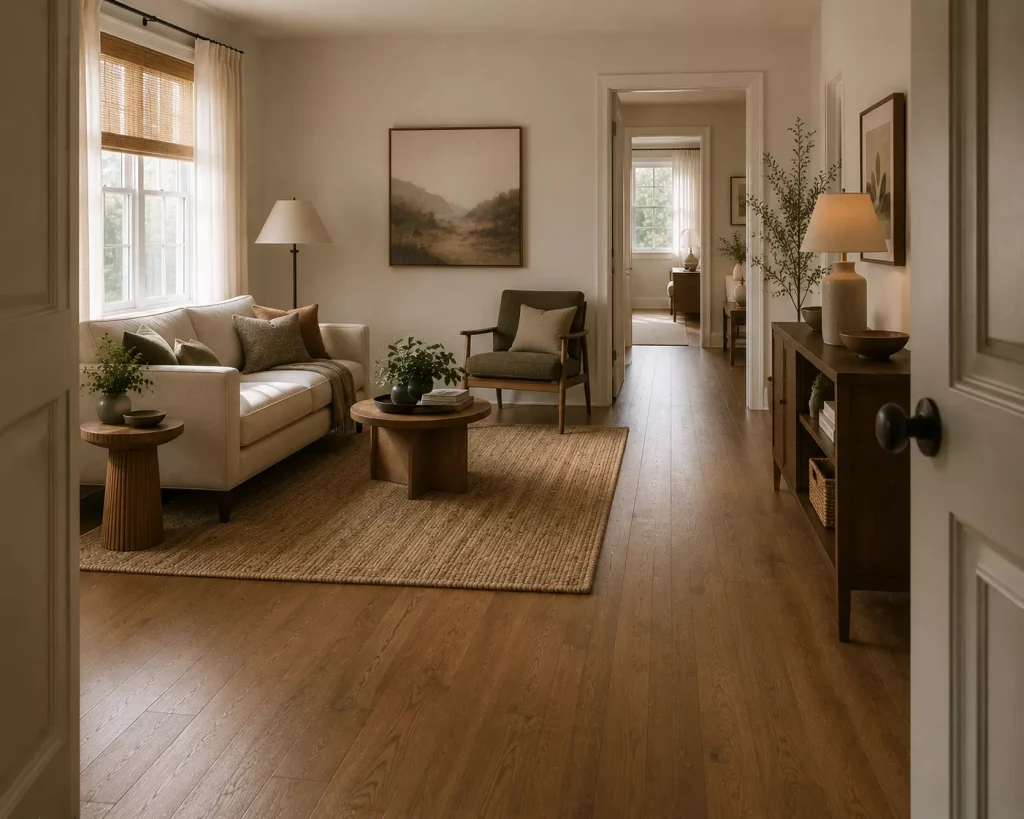
Stand at the doorway and look inward.
Is the back of a chair blocking the view?
Does the coffee table interrupt your path?
Do you have to squeeze between the sofa and media unit every day?
Fix those problems first.
A simple planning order helps:
- Mark the main walking route.
- Position the sofa.
- Add the largest secondary seat.
- Place the rug.
- Add a coffee table only if there’s comfortable clearance.
- Bring in storage.
- Decorate what remains.
This order prevents accessories from dictating the layout.
Function should come first.
Because a room that’s easy to move through almost always feels bigger.
FAQ About Small Living Rooms
What colors make a small living room look bigger?
Warm whites, soft greige, pale blue, muted green, and light taupe can help keep a room feeling open. Darker colors can still work if you use them deliberately and keep the palette connected.
Should a small living room have a large sofa?
It can. One properly scaled sofa often works better than several tiny seats. Focus on slim arms, reasonable depth, and enough room for circulation.
What furniture should I avoid in a small living room?
Be cautious with oversized recliners, bulky coffee tables, very deep sofas, and tall furniture placed throughout the room. Anything that blocks sightlines or walking paths can make the space feel smaller.
How do I make a small living room look bigger without buying new furniture?
Start by removing one unnecessary piece, clearing surfaces, raising curtains, and rearranging furniture to improve the main walking route. Those changes can make a bigger difference than new decor.
Make the room easier to move through first
That small living room from the beginning didn’t need a smaller sofa.
It needed better decisions around the sofa.
Once we cleared one bulky cabinet, moved the coffee table, and opened the window wall, the room finally had some breathing room.
That’s the place to start in your own home.
Don’t ask how much more furniture you can fit.
Ask what’s interrupting the view, blocking the light, or making you walk around it every day.
The smartest small living room ideas create space by reducing friction, not personality.
Move one thing today that has always felt slightly wrong.
You’ll know very quickly if the room has been asking for that change all along.