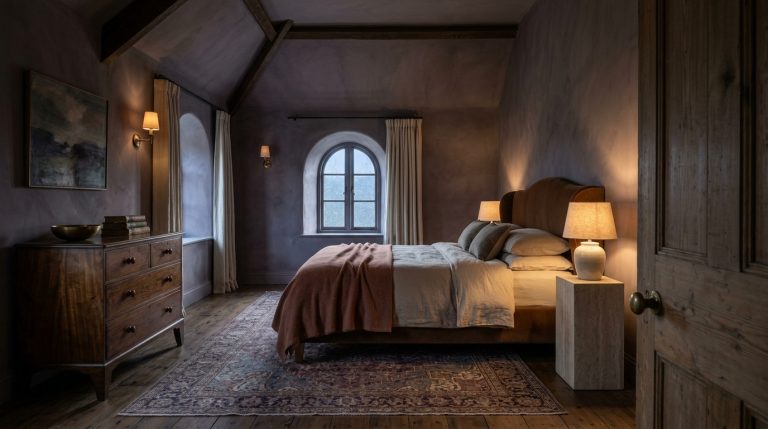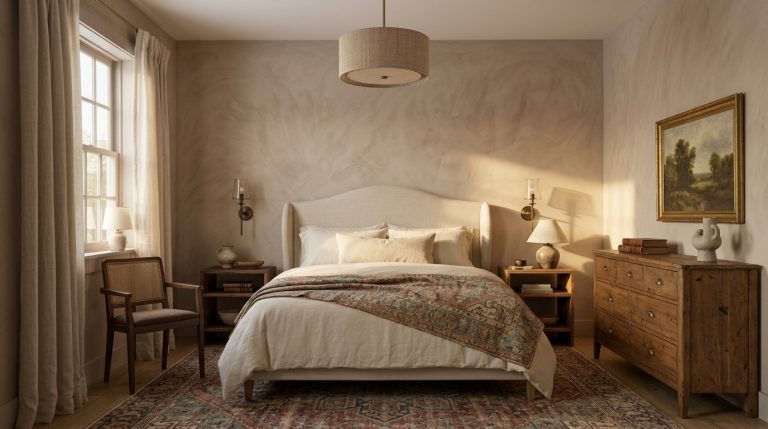

10 cozy bedroom ideas that make your room feel like a luxury retreat, Without the Luxury Price Tag
A bedroom can look expensive and still feel cold.
I’ve seen rooms with upholstered beds, matching nightstands, and perfectly styled pillows that somehow feel more like hotel lobbies than places you’d actually want to sleep. The problem usually isn’t the budget. It’s that the room has polish but no softness.
The best cozy bedroom ideas work differently. They layer comfort slowly through lighting, texture, color, and proportions.
I once helped rethink a fairly ordinary bedroom with beige walls, a basic oak bed, and one ceiling light. We didn’t replace the furniture. We added floor-length curtains, changed the bedding, moved the lamps lower, and introduced one deep brown throw.
The room immediately felt richer.
You don’t need marble nightstands or a $3,000 mattress to create that feeling. You need the right details in the right places.
1. Build the room around genuinely comfortable bedding
The bed should feel inviting before it looks impressive.
Start with sheets that feel good against your skin. Cotton percale works well if you sleep warm and like a crisp feel. Cotton sateen is smoother and slightly heavier. Linen feels relaxed and gets softer with use, though good sets often cost more.
Then layer thoughtfully.
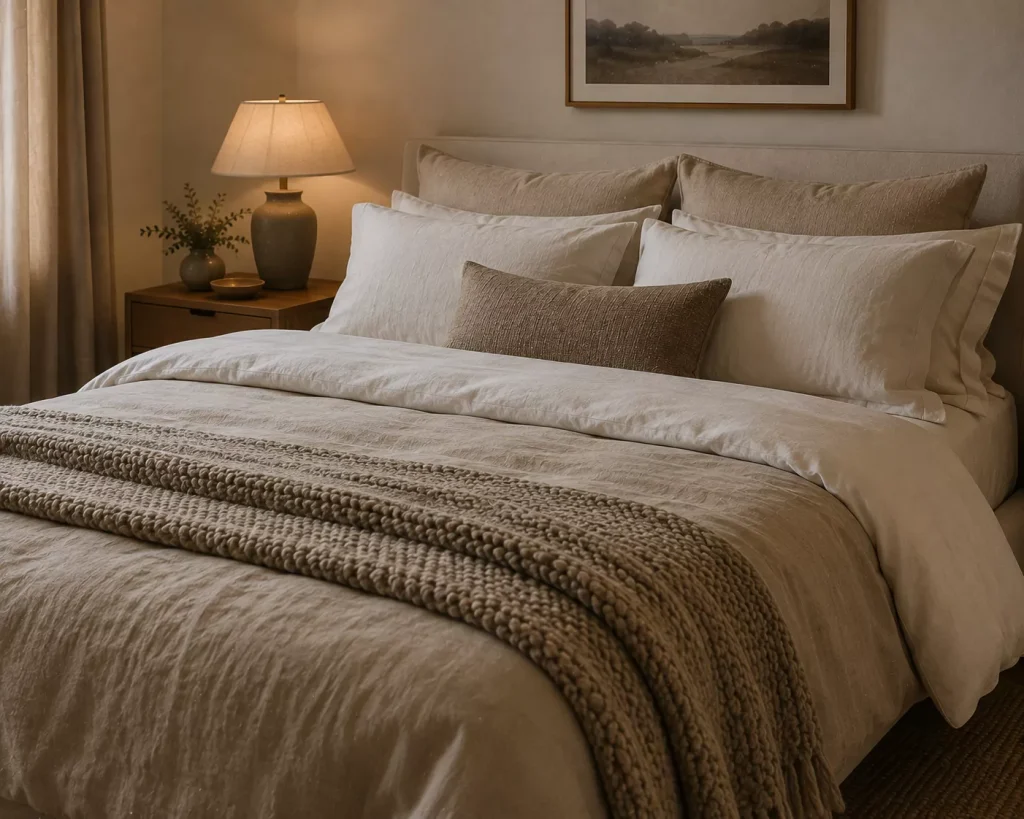
A practical combination might include white or warm ivory sheets, a mushroom-colored duvet, two sleeping pillows, two larger back pillows, and one lumbar cushion.
That’s enough.
You don’t need nine pillows arranged like a department store display.
For extra warmth, add a throw across the lower third of the bed. Brushed cotton, wool blend, chunky knit, or washed linen all add texture.
Spend where you touch the fabric
If your budget is limited, put more money into sheets and the duvet cover than decorative pillows.
A $25 cushion can look lovely. But comfortable bedding affects you for eight hours every night.
One of the best cozy bedroom ideas is simply making the bed feel as good as it looks.
2. Use warm, layered lighting instead of one harsh ceiling fixture
A bedroom with one bright ceiling light rarely feels restful.
The easiest fix is layering.
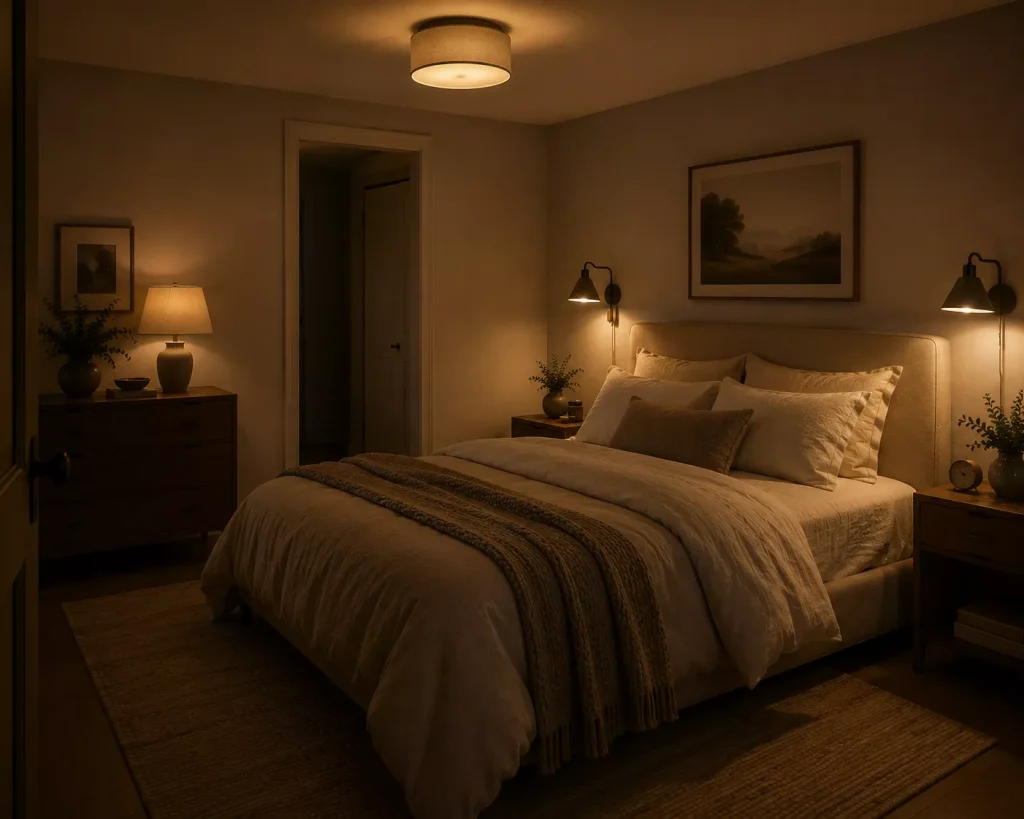
Use your ceiling fixture for general light, then add lower lamps near the bed. A table lamp on each nightstand creates balance, while wall-mounted sconces free up surface space.
I usually prefer warm bulbs around 2700K in bedrooms.
That softer light makes wood, linen, wool, and warm paint colors feel richer.
If you read in bed, choose directional sconces or lamps with enough brightness to be practical. Decorative lamps that barely illuminate the page become irritating very quickly.
A small lamp on a dresser can add another gentle pool of light.
And dimmers are worth considering where installation allows.
The goal is flexibility.
You might want brighter light while getting dressed, then something much softer at 10 p.m.
One mistake I see often is using cool white bulbs because they seem “cleaner.”
They can work in kitchens or workspaces. In a bedroom, they often make the room feel more clinical than comfortable.
Luxury isn’t always about fixtures.
Sometimes it’s just about being able to turn off the big light.
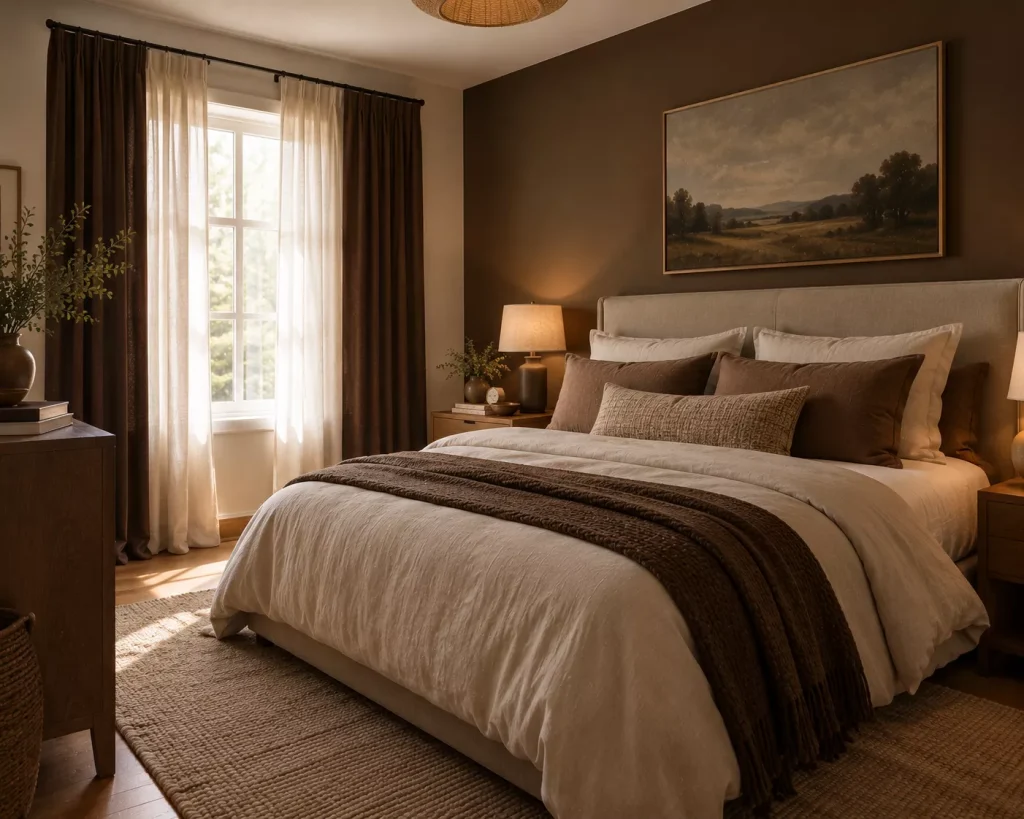
3. Choose a warm color palette with enough depth
Cozy doesn’t mean beige from floor to ceiling.
Actually, a room often feels warmer when there’s some contrast.
Try building the palette around one soft neutral and one deeper shade.
For example:
- warm greige with chocolate brown
- creamy white with muted olive
- soft taupe with dusty blue
- oatmeal with clay terracotta
- pale mushroom with deep burgundy
The darker tone gives the room structure.
You could use it on the headboard, throw blanket, curtains, artwork, or one wall.
I’m particularly fond of deep brown in bedrooms right now because it feels softer than black but still adds weight.
Paint can help too.
A warm taupe or muted olive wall behind the bed can create a cocooning effect without making the entire room dark.
If your bedroom receives little daylight, test deeper colors before committing.
Paint changes dramatically throughout the day.
That’s the trade-off.
Darker shades can feel rich in the evening but heavier on a gray morning.
Use sample swatches and live with them for a few days.
A good bedroom palette should feel restful at 7 a.m. as well as 9 p.m.
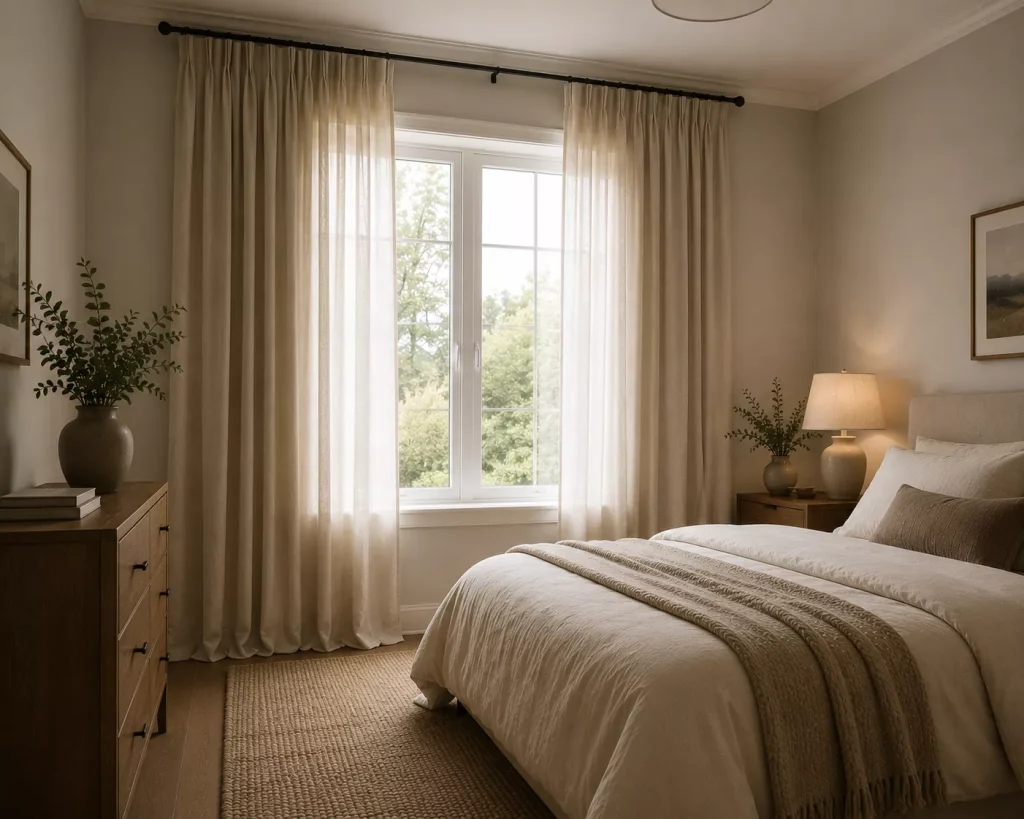
4. Hang curtains high and let them reach the floor
Curtains can change a bedroom more than people expect.
Short panels hung directly above the window often make the wall feel smaller.
Instead, mount the rod several inches above the frame or closer to the ceiling if the proportions allow. Extend it wider than the window too, so the curtains can sit beside the glass when open.
That lets in more daylight.
For fabric, linen blends are an easy choice because they have enough texture to feel relaxed without looking heavy.
Warm ivory, oatmeal, stone, dusty blue, and muted olive all work beautifully.
If you need darkness for sleeping, layer decorative curtains over blackout panels.
Avoid overly dramatic pooling
A small amount of fabric touching the floor can look soft.
Ten inches of fabric collecting dust is another story.
I prefer curtains that lightly skim the floor or break by an inch or two.
Ready-made panels can start around $30 to $70 per pair. Higher-quality linen blends cost more, but correct length and placement matter more than the label.
That’s a recurring theme with cozy bedroom ideas.
Proportion usually beats price.
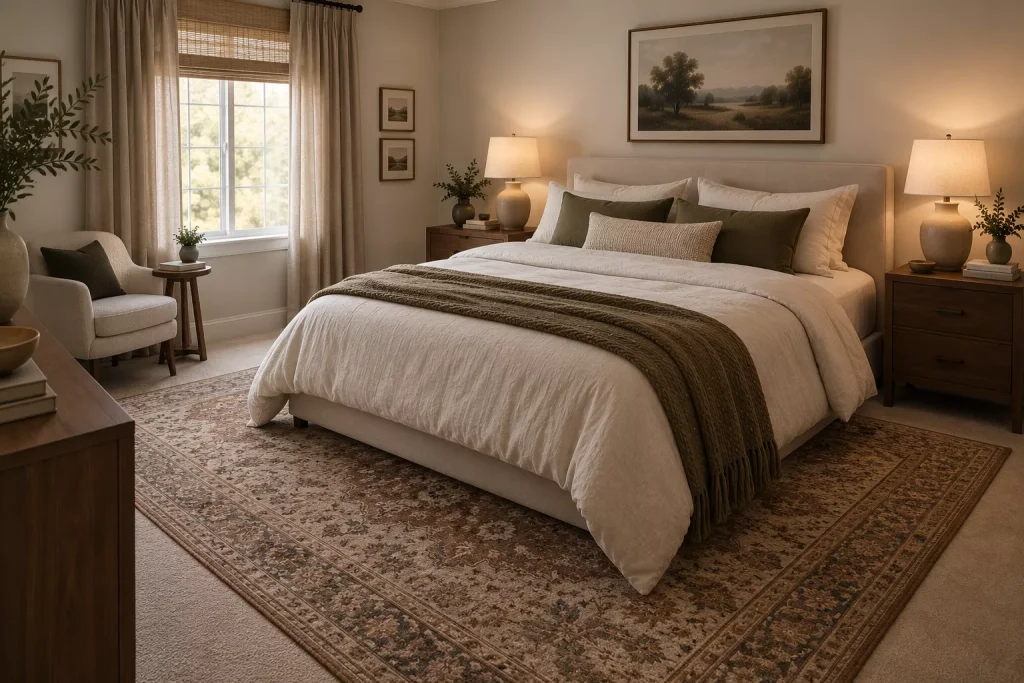
5. Add one substantial rug, even if the room is carpeted
A rug adds softness underfoot and visually anchors the bed.
And yes, you can put one over carpet.
In fact, layering a low-pile rug over plain wall-to-wall carpet can make a rental bedroom feel much more considered.
For a queen bed, an 8-by-10 rug often works well if the room has enough space. Place it so the rug extends beyond both sides and the foot of the bed.
A 6-by-9 can also work in tighter rooms.
For a king, a 9-by-12 usually gives better proportions.
Choose wool if durability and softness matter most. Flatwoven cotton is more affordable and easier to move. Washable synthetic rugs can be practical for pets, though some feel thinner underfoot.
Pattern can be useful too.
A faded Persian-style rug in rust, cream, muted navy, or olive adds warmth without requiring a lot of extra decor.
Here’s a quick comparison:
| Rug type | Best quality | Main downside |
|---|---|---|
| Wool | Soft and substantial | Higher price |
| Flatwoven cotton | Lightweight and casual | Less cushioning |
| Washable synthetic | Easy to clean | Can feel thin |
| Jute blend | Natural texture | Rougher under bare feet |
| Vintage-style patterned | Adds depth and hides wear | Can compete with busy bedding |
Bare flooring can look beautiful.
But a bedroom often feels more complete when your feet land on something soft in the morning.
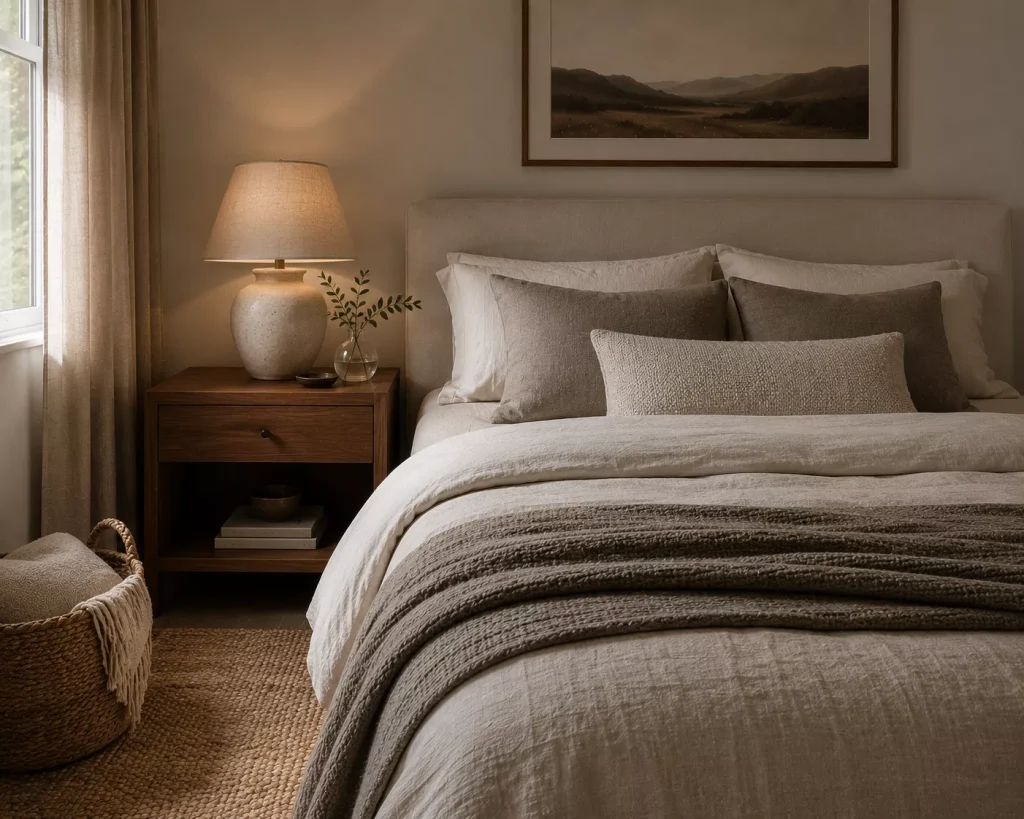
6. Bring in natural materials instead of adding more decoration
A cozy room doesn’t need more objects.
It usually needs better materials.
Wood, linen, wool, cane, ceramic, cotton, and aged metal all add warmth because they have visible texture.
Try a walnut nightstand beside an upholstered bed. Add a ceramic lamp with a linen shade. Use a woven basket for extra blankets.
Those materials do the decorative work for you.
I’d rather see one substantial oak dresser than a shiny white dresser covered in ten accessories.
Natural materials also help inexpensive pieces feel less generic.
A basic bedside table can look far more interesting with a handmade ceramic lamp and a small wooden tray.
You don’t need everything to be natural either.
Mixing finishes keeps the room from feeling too rustic.
A black metal sconce beside a linen headboard works beautifully. So does a glass vase on a warm wood dresser.
The key is balance.
Here’s what nobody tells you about “luxury” bedrooms. They’re often convincing because the materials have depth, not because every item is expensive.
Texture is doing far more work than the price tag.
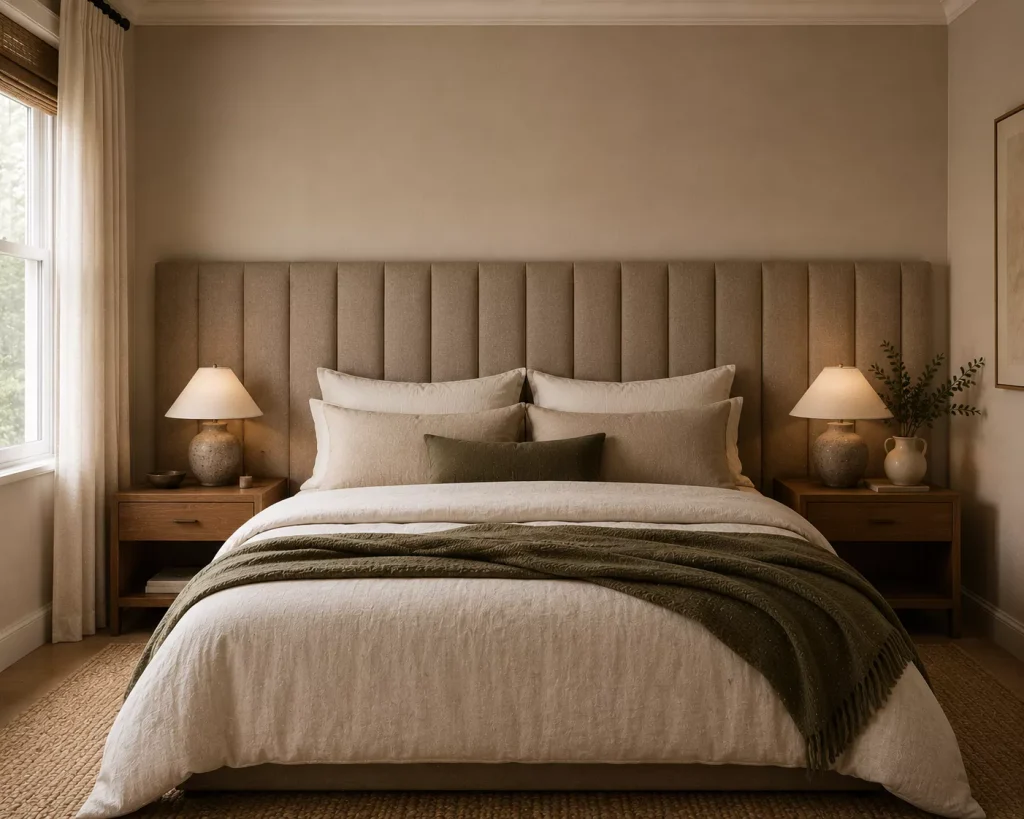
7. Make the headboard the visual anchor
The bed should usually be the strongest visual element in the room.
A headboard helps.
Upholstered designs in oatmeal, camel, dusty rose, olive, or warm gray add softness and make the bed feel substantial.
Wood works too.
An oak or walnut headboard brings natural warmth and can balance a room with lots of fabric.
If your bedroom is small, avoid extremely thick headboards that steal several inches of floor space.
Slim upholstered panels or simple wood designs give you the visual effect without the bulk.
You can also create the look without buying a new bed.
Mount a large upholstered panel behind the mattress, use a cane screen, or paint a wide block of color behind the bed.
One renter-friendly option is a large textile wall hanging.
Whatever you choose, keep the scale generous.
A tiny headboard can make the bed look undersized.
For most queen beds, a headboard slightly wider than the mattress feels balanced.
And don’t overdecorate the wall above it.
One large artwork, a pair of smaller pieces, or even nothing at all can be enough.
Sometimes the headboard should get to be the statement.
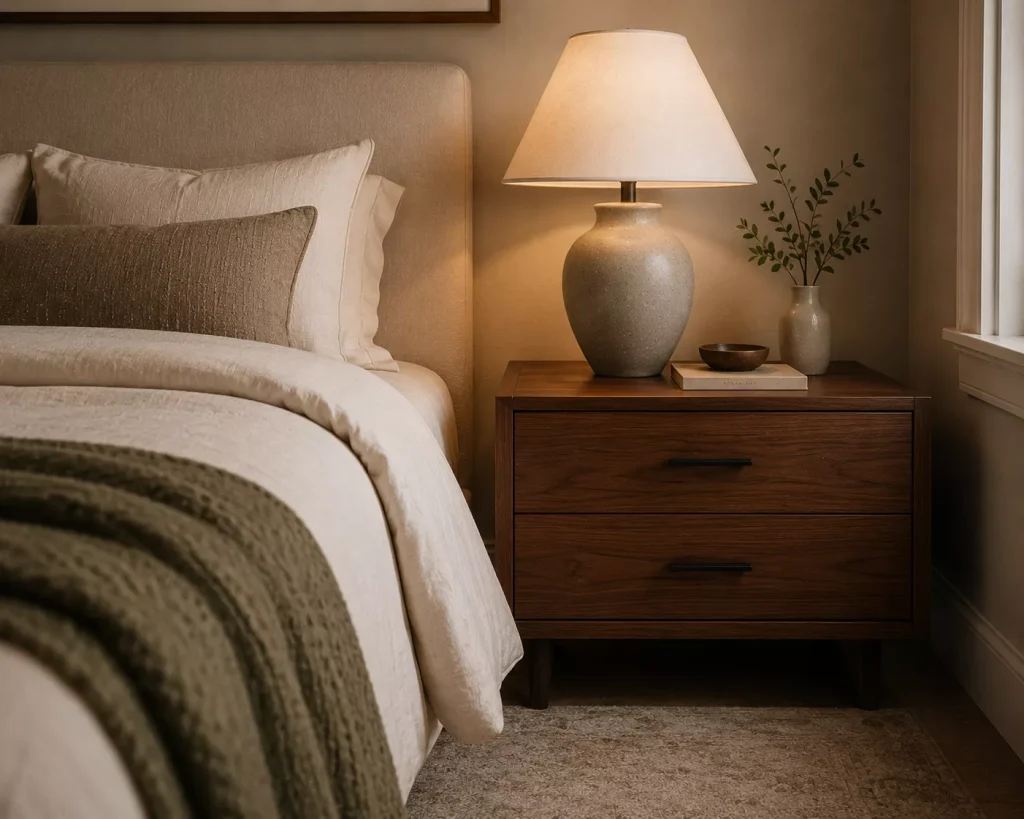
8. Keep nightstands calm and useful
Nightstands are easy to overstyle.
You start with a lamp, then add a candle, book stack, framed photo, vase, alarm clock, water carafe, decorative box, and suddenly there’s nowhere to put your phone.
A bedroom should work after the photos are taken.
Keep the setup simple.
One lamp, one small tray, and perhaps a book or ceramic object is usually enough.
If you need storage, choose nightstands with drawers.
Closed storage helps hide medication, chargers, tissues, and all the unglamorous things people actually keep beside the bed.
Matching nightstands can look balanced, but they’re not mandatory.
A small round table on one side and a drawer unit on the other can work beautifully if their heights relate.
The ideal nightstand top generally sits close to mattress height.
Too low feels awkward. Too high can dominate the bed.
And if your room is very small, wall-mounted shelves can free floor space.
This is where practical design starts feeling luxurious.
Luxury isn’t having more stuff beside the bed.
It’s reaching for your water at 2 a.m. without knocking over three decorative objects.

9. Add one sitting or dressing moment, if the room has space
A bedroom feels more retreat-like when every activity doesn’t happen on the bed.
If you have the room, create one small secondary zone.
That could be a reading chair near the window, a cushioned bench at the foot of the bed, or a stool beside the dresser.
You don’t need much.
A compact chair around 28 to 32 inches wide can create a cozy reading corner without taking over the room.
Pair it with a floor lamp and small table.
For larger bedrooms, an upholstered bench around two-thirds the width of the bed can look balanced.
Just don’t force it.
This is where people sometimes chase the hotel look too literally.
A bench that leaves only 15 inches between the bed and dresser isn’t sophisticated. It’s an obstacle.
Measure the walkway first.
If seating interferes with doors, drawers, or circulation, skip it.
A beautiful bedroom with one less piece of furniture will feel better than a crowded room trying to tick every decorating box.
Empty floor space is part of the design too.
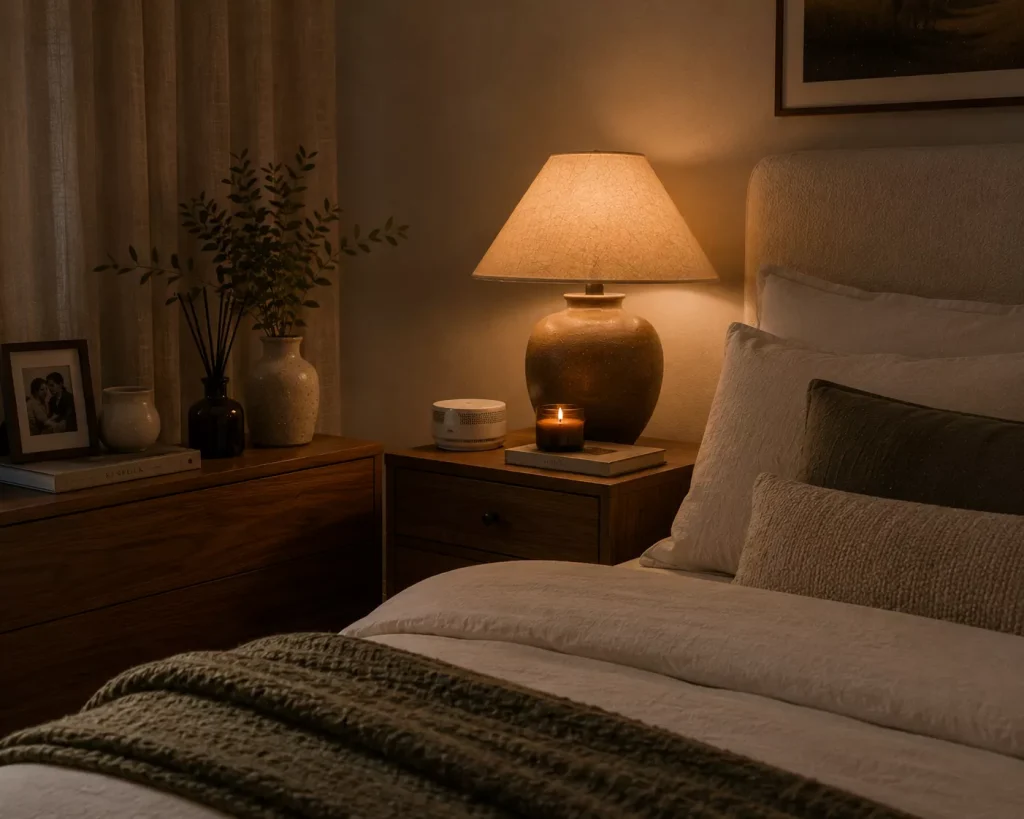
10. Finish with scent, sound, and details you actually enjoy
The final layer of a cozy bedroom isn’t visual.
It’s sensory.
Soft lighting matters. So does the temperature of the room, the feel of the bedding, and what you hear at night.
A small diffuser, candle, or linen spray can add scent, but keep it subtle.
Lavender, cedar, bergamot, sandalwood, and soft citrus can all work depending on your preference.
If outside noise is an issue, a small white-noise machine can make the room feel more private.
You can also soften sound naturally with rugs, curtains, upholstered furniture, and fabric headboards.
Then add a few personal objects.
A framed photograph, favorite book, small piece of pottery, or artwork from a trip will make the room feel more intimate than generic decorative sets ever could.
That’s the final lesson behind these cozy bedroom ideas.
A room feels luxurious when it supports you well.
Not when it looks expensive from the doorway.
Comfort that’s personal will always feel richer than decor chosen only because it photographs well.
FAQ About Cozy Bedrooms
What colors make a bedroom feel cozy?
Warm neutrals, muted greens, clay tones, dusty blue, chocolate brown, and soft burgundy all work well. Pair lighter shades with one deeper tone so the room has enough visual depth.
How can I make my bedroom feel luxurious on a budget?
Start with bedding, lighting, curtains, and one good rug. Correct proportions and layered textures usually make a bigger difference than expensive decorative accessories.
How many pillows should be on a bed?
There’s no perfect number, but practicality matters. Two sleeping pillows, two larger pillows, and one decorative lumbar pillow are enough for most beds without creating a nightly pillow-removal routine.
What makes a bedroom feel warmer and more inviting?
Layered lighting, textured fabrics, warm wood, floor-length curtains, soft rugs, and a controlled color palette all help. Keeping clutter under control matters just as much.
Make the bed the first place you improve
Remember that plain bedroom from the beginning?
The biggest change wasn’t the curtains or the lamps, although both helped.
It was the bed.
Once the bedding felt softer, the colors worked together, and the throw added some weight, the entire room started making sense.
That’s where I’d begin with these 10 cozy bedroom ideas that make your room feel like a luxury retreat.
You don’t need to redo everything this weekend.
Choose one layer, perhaps the sheets, lighting, or curtains, and get that right before adding more.
A bedroom should make you want to slow down the moment you walk in.
If yours doesn’t yet, what’s the first thing that feels too cold, too bright, or simply unfinished?