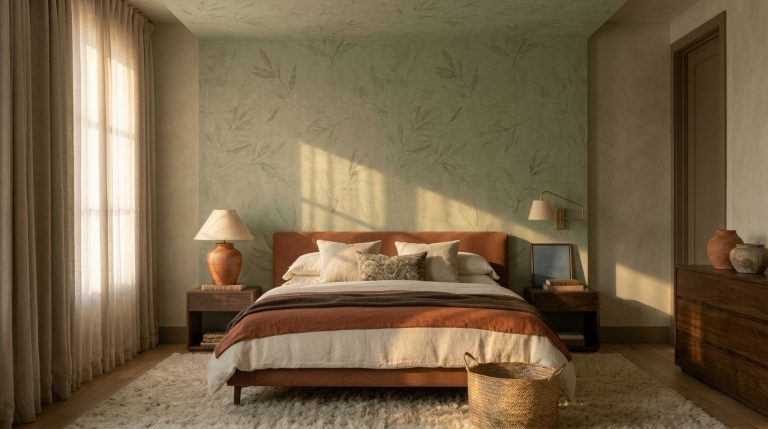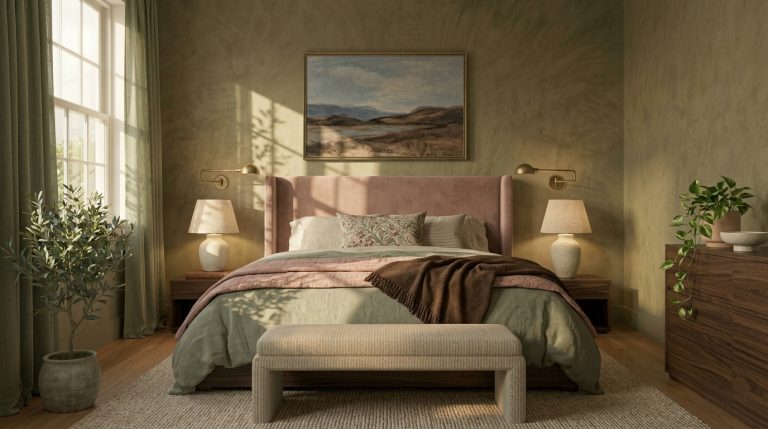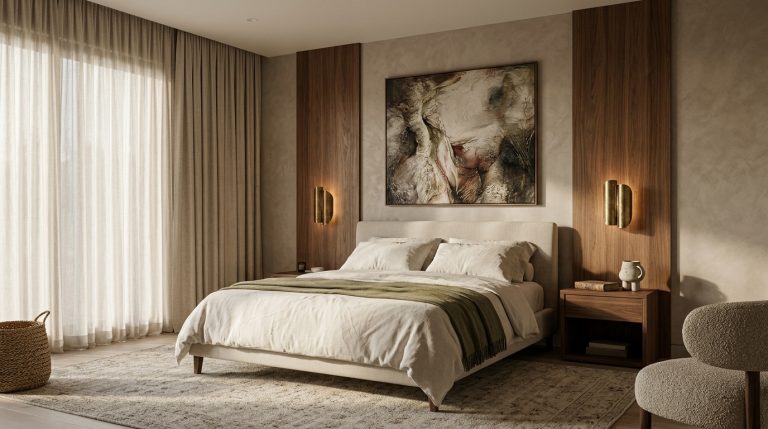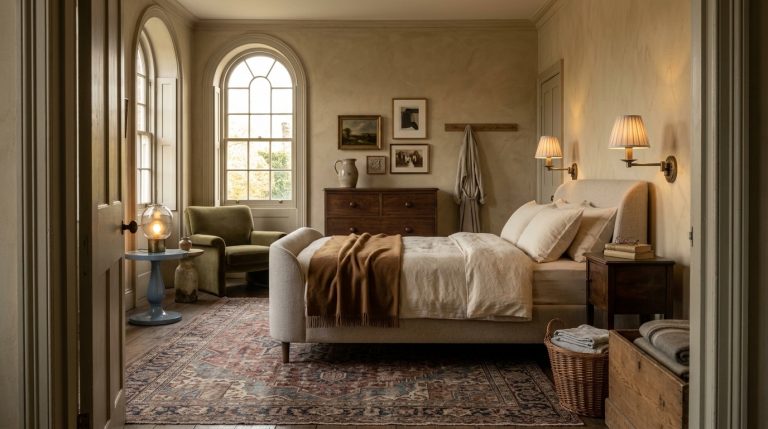
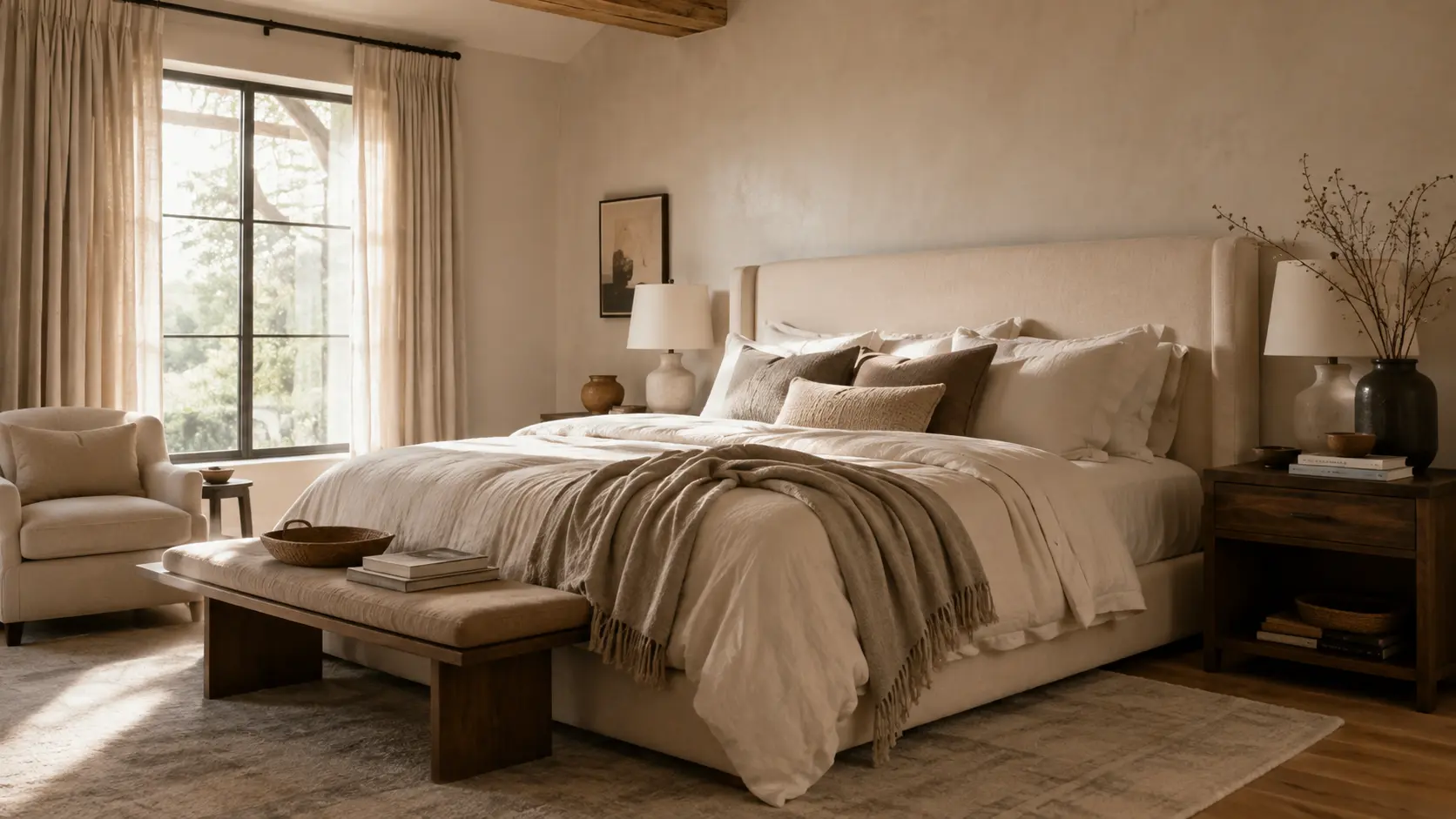
15 Dream Bedroom Ideas for a Beautiful, Restful Retreat
A dream bedroom is not simply a room filled with expensive furniture or perfectly coordinated decor. It is a space that feels deeply comfortable, reflects your personality, and makes the end of the day feel a little more inviting.
For some people, that means soft neutral colors, linen bedding, and warm natural wood. For others, it might mean enveloping olive walls, a dramatic upholstered headboard, vintage furniture, or layers of rich textiles. The best bedrooms are not built around one decorating formula. They are designed around how you want the room to feel.
That idea is increasingly shaping bedroom design in 2026. Designers are moving toward warmer, more personal rooms with layered materials, cocooning details, richer colors, and fewer visible screens. ELLE Decor’s 2026 bedroom reporting highlights color-drenched rooms, tactile “cocoon” bedrooms, and more analog, technology-light retreats, while broader industry research from ASID points to wellness and changing lifestyles as important influences on contemporary interiors.
If you are planning a complete makeover or simply looking for inspiration, these 15 dream bedroom ideas can help you create a room that feels beautiful without sacrificing comfort or practicality.
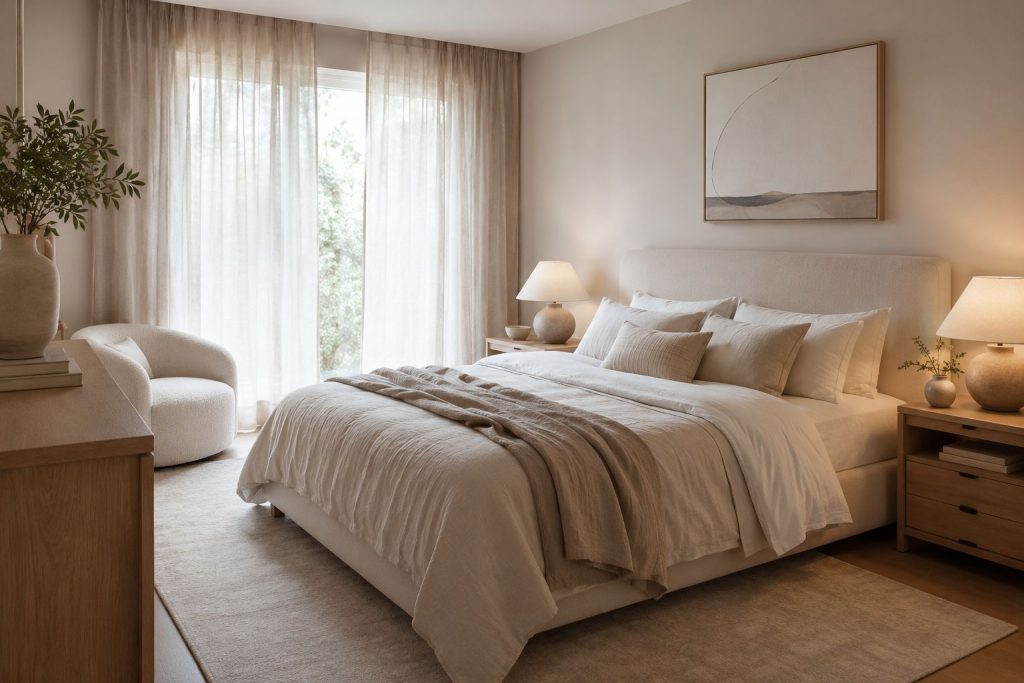
1. Start With the Feeling You Want the Bedroom to Create
Before choosing a paint color or buying a new bed, decide how you want to feel when you enter the room.
Do you want a bedroom that feels:
- Light and peaceful?
- Warm and cocooning?
- Romantic and layered?
- Calm and minimalist?
- Moody and sophisticated?
- Natural and organic?
This decision makes every decorating choice easier.
For a light, restful bedroom, consider warm whites, pale woods, airy curtains, and simple cotton or linen bedding. For something more intimate, move toward deeper colors, heavier fabrics, warm lamps, and furniture with richer finishes.
A dream bedroom should have a clear mood. When too many unrelated ideas compete in the same room, even beautiful furniture can feel disconnected.
Choose three or four descriptive words before decorating—such as soft, warm, natural, and elegant—and use them as a filter whenever you consider adding something new.
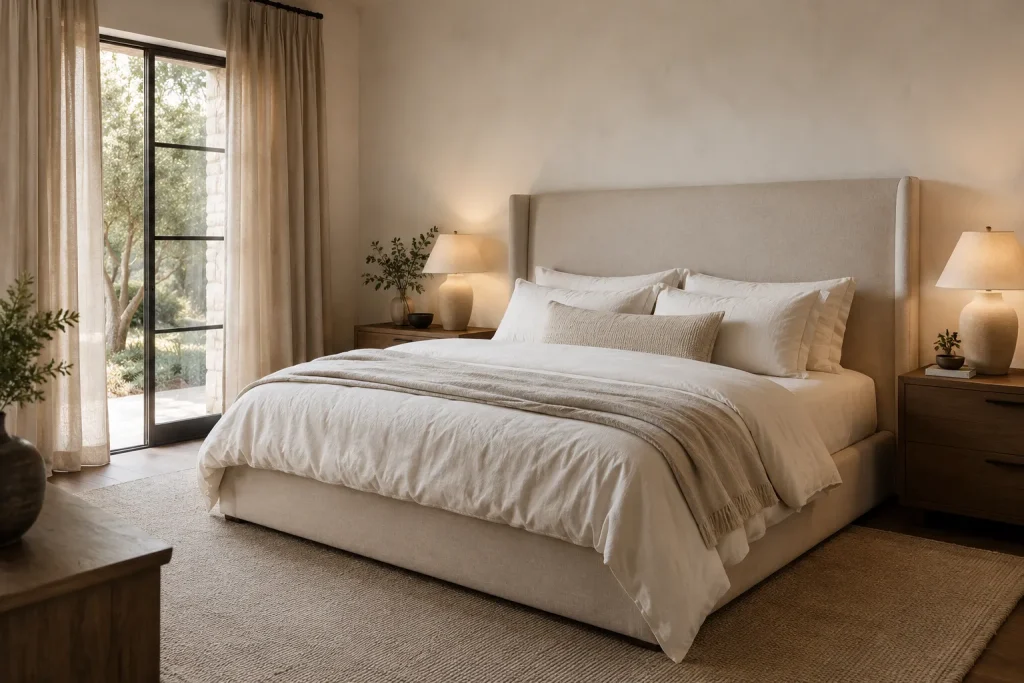
2. Make the Bed the Clear Focal Point
The bed is usually the largest piece of furniture in the bedroom, so it should visually anchor the room.
An upholstered bed is particularly effective when you want the space to feel softer and more luxurious. Architectural Digest’s current coverage of upholstered beds emphasizes their ability to add visual warmth and texture, with linen, cotton, bouclé, velvet, and performance fabrics providing options for very different decorating styles.
A tall headboard can make a large bedroom feel more intimate, while a lower-profile frame suits rooms where you want to preserve visual openness.
You do not necessarily need a dramatic bed frame. A simple headboard can become a focal point when it contrasts gently with the wall behind it.
Try combinations such as:
- Oatmeal upholstery against warm-white walls
- Olive velvet against soft mushroom paint
- Cream linen against walnut paneling
- Warm taupe against pale plaster
- Deep brown fabric against muted beige
Give the bed enough breathing room rather than surrounding it with oversized furniture.
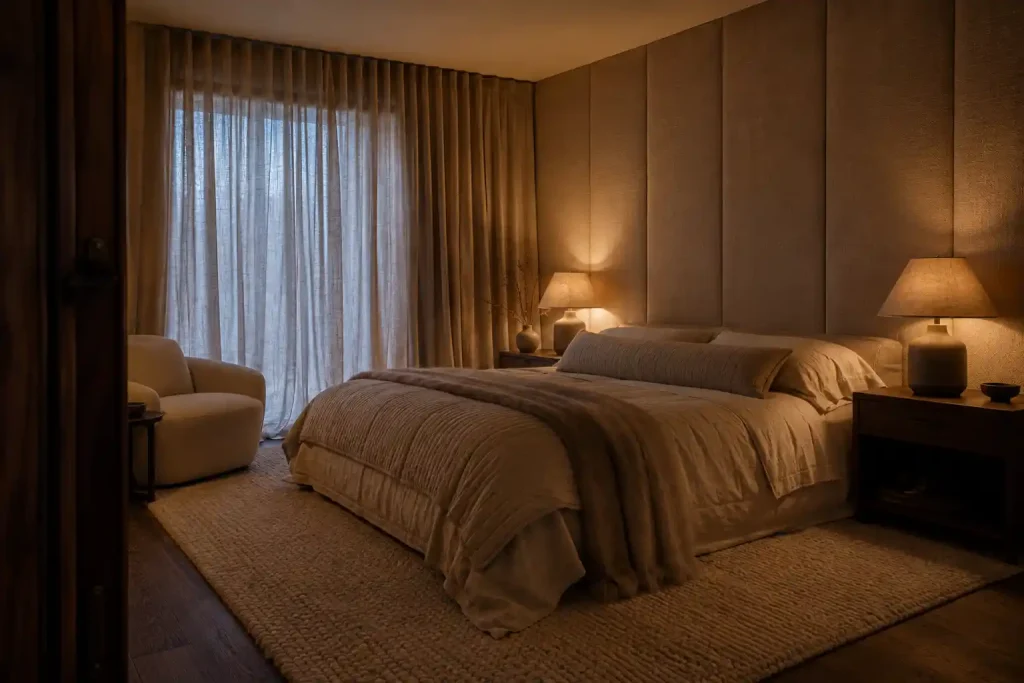
3. Create a Cocoon With Upholstery and Soft Surfaces
One of the strongest bedroom directions of 2026 is the idea of the cocoon bedroom.
Instead of treating comfort as something provided only by the mattress and duvet, designers are extending softness into headboards, wall panels, curtains, rugs, and surrounding furniture. ELLE Decor reports designers using tall upholstered headboards, fabric wall treatments, washed linen, mohair, silk, and other tactile materials to make bedrooms feel quieter and more enveloping.
You can achieve a similar effect without upholstering an entire wall.
Start with:
- A padded headboard
- Floor-length curtains
- A substantial rug
- Layered bedding
- One comfortable upholstered chair
- Fabric lampshades
These surfaces help reduce the hard visual edges created by walls, wardrobes, windows, and flooring.
The goal is not to cover every surface in fabric. Choose a few soft elements and allow harder materials such as wood, stone, glass, or metal to provide contrast.
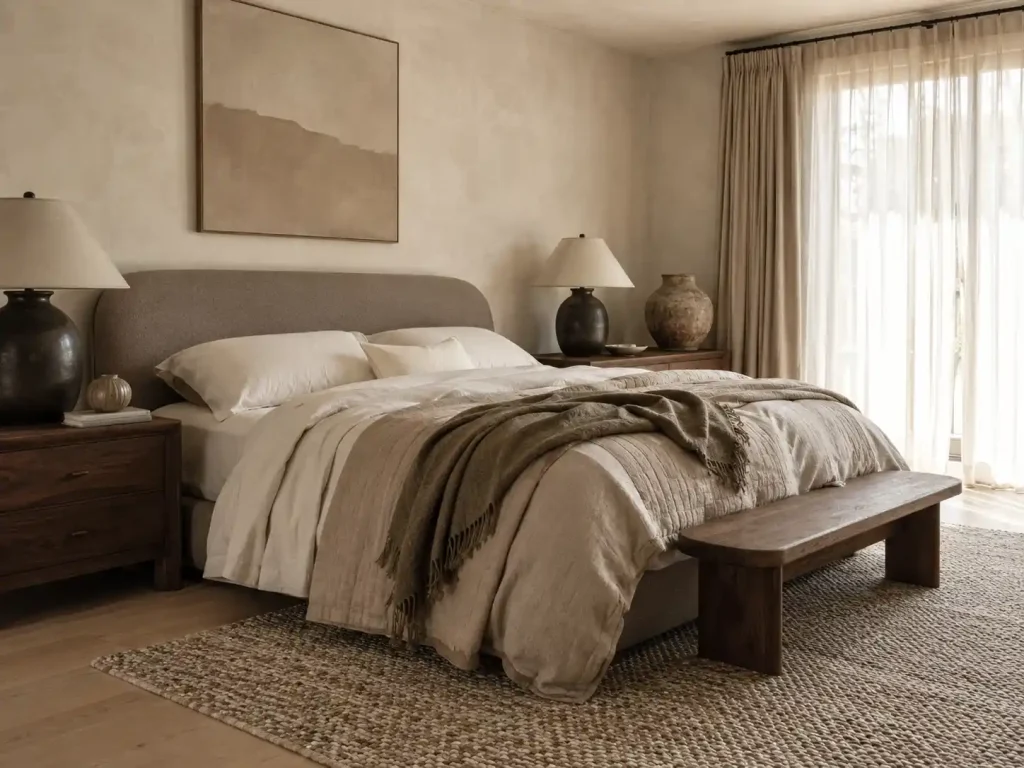
4. Layer Warm Neutrals Instead of Using Plain White Everywhere
Neutral bedrooms remain timeless, but today’s most inviting versions have moved beyond brilliant white and pale gray.
Warm white, cream, oatmeal, mushroom, sand, taupe, khaki, and soft brown create more depth while remaining easy to live with.
Sherwin-Williams selected Universal Khaki as its 2026 Color of the Year, describing it as a neutral intended for livability and longevity. Its broader 2026 forecast also explores foundational neutrals alongside sunbaked hues, restorative darks, and softer colors.
Instead of choosing one beige and repeating it everywhere, create layers.
For example:
- Warm-white walls
- Cream bedding
- Mushroom headboard
- Oatmeal curtains
- Walnut nightstands
- Dark bronze lighting
The slight variations make the room feel richer without making it busy.
Pay attention to undertones. A pink-based taupe may fight with a yellow cream, while a warm greige can connect beautifully with both stone and natural wood.
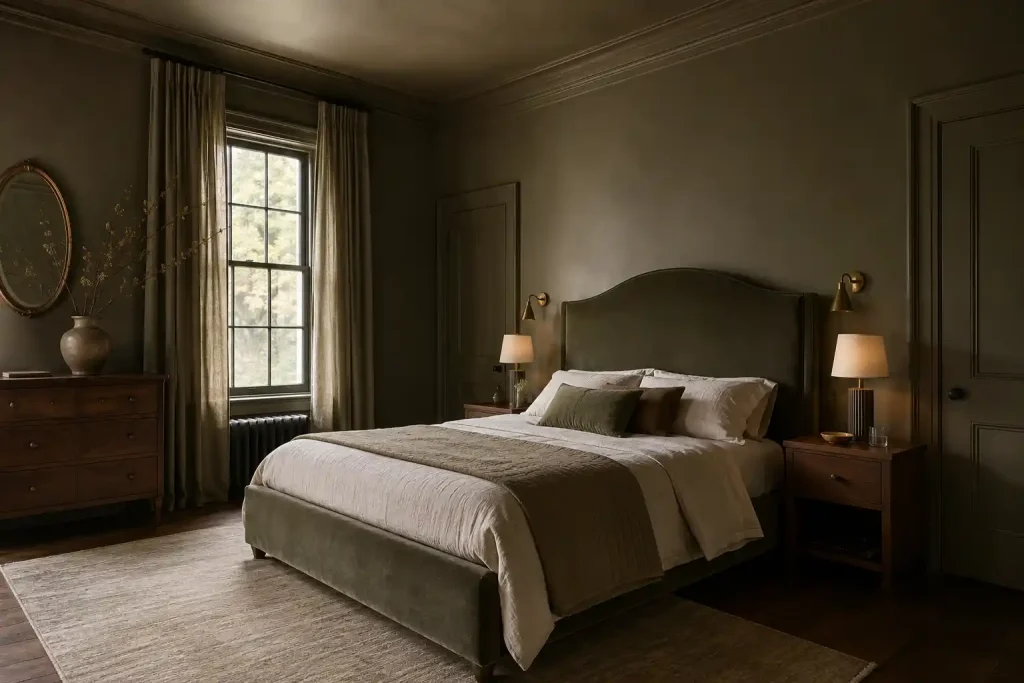
5. Try a Color-Drenched Bedroom
If your dream bedroom is more dramatic, consider taking one color beyond a single feature wall.
Color drenching involves using variations of the same color across the walls, trim, doors, and sometimes even the ceiling. Designers interviewed by ELLE Decor describe this approach as a way to create a cohesive, immersive bedroom, with shades such as smoky olive and deep blue-gray providing atmosphere without excessive visual interruption.
The technique can work with lighter colors too.
Try:
- Soft mushroom
- Dusty olive
- Clay
- Muted blue
- Warm taupe
- Burgundy
- Deep chocolate
- Blue-gray
You can vary the finish instead of the color. Matte walls with satin trim, for example, create subtle definition.
In a small room, this can sometimes make boundaries feel less obvious because the eye does not stop at strong color changes between walls and architectural details.
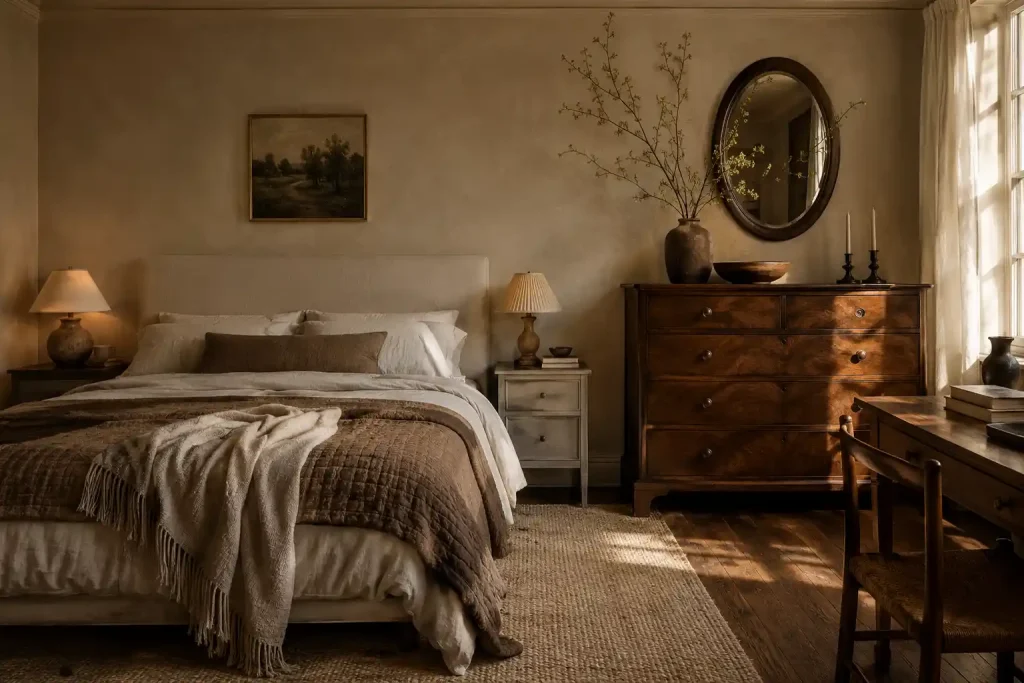
6. Bring in Richer Natural Wood
Wood gives a bedroom warmth that paint alone cannot create.
Light oak is still beautiful, but deeper tones such as walnut and medium brown are increasingly useful when you want a room to feel grounded and sophisticated.
The 1stDibs 2026 designer survey found strong interest in earthy, dramatic colors, with deep browns among the leading choices, while organic modernism and vintage furniture continue to influence interiors.
You might introduce wood through:
- Nightstands
- A bed frame
- A vintage dresser
- Wall paneling
- A bench
- Picture frames
- A small writing desk
Avoid making every piece match exactly.
A walnut dresser can sit comfortably beside painted nightstands or an upholstered bed. Rooms often feel more natural when furniture looks collected over time rather than purchased as one identical set.
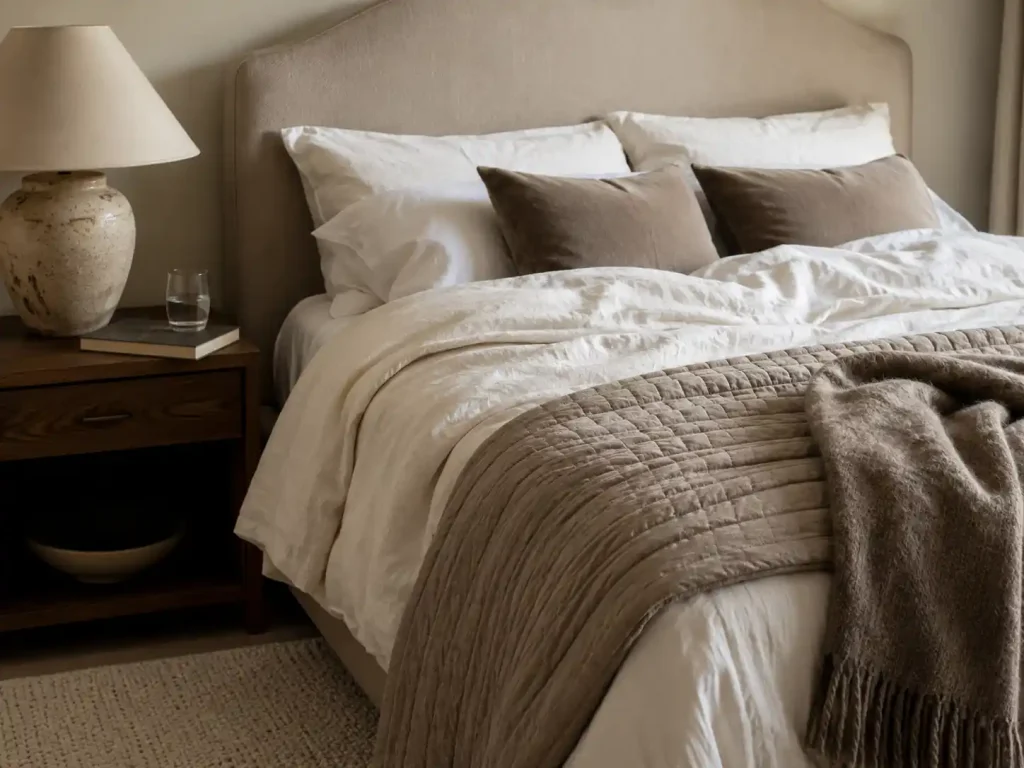
7. Make the Bedding Look Luxurious but Livable
Beautiful bedding is one of the easiest ways to change the entire bedroom.
Begin with quality sheets and a duvet or quilt in a color that supports the overall palette. Then introduce a small number of layers with different weights and textures.
For example:
- Cotton sheets
- Washed-linen duvet
- Light quilt
- Wool or knitted throw
- Two decorative cushions
The bed should look inviting rather than untouchable.
Perfectly symmetrical towers of cushions may photograph well, but they can quickly become annoying in everyday life. A more relaxed arrangement usually feels warmer and is easier to maintain.
For an elevated hotel-inspired look, concentrate on the quality of the fabrics rather than the number of accessories.
A cream bed can still feel visually interesting when crisp cotton, rumpled linen, quilted fabric, wool, and velvet are layered within a similar palette.
8. Use Curtains to Make the Room Feel More Finished
Window treatments can dramatically change the perceived quality of a bedroom.
Curtains that are too short, too narrow, or mounted directly around the window often make the space look smaller and less considered.
For a more luxurious effect, mount the curtain rod or track higher and, where practical, extend it beyond the width of the window. This allows the curtains to frame rather than cover the glass when open.
Full-height drapery is also playing a larger role in 2026 bedrooms. House Beautiful reports designers using richer wall coverings, enveloping drapery, and even canopy-like treatments as part of the broader move toward more cocooning bedrooms.
Choose the fabric according to the atmosphere you want.
Sheer linen softens daylight. Heavier lined curtains improve privacy and create a more intimate look. Using both gives you greater control throughout the day.
9. Design the Lighting in Layers
A dream bedroom should look as good at night as it does during the day.
Relying on one bright ceiling light can flatten beautiful colors and make an otherwise cozy bedroom feel clinical.
Use several sources instead:
- Bedside lamps
- Wall sconces
- A ceiling fixture
- Floor lamp
- Small reading light
- Subtle accent lighting
Put them at different heights.
Warm lamps near the bed create a different atmosphere from general ceiling lighting and make it easier to transition into the evening.
Architectural Digest’s 2026 coverage of sleep-focused bedroom design emphasizes lighting as an important part of bedroom planning, with designers paying attention to how brightness and color temperature change throughout the day.
If you read in bed, make sure the bedside light is functional as well as attractive. A beautiful lamp that cannot illuminate a book properly will soon become frustrating.
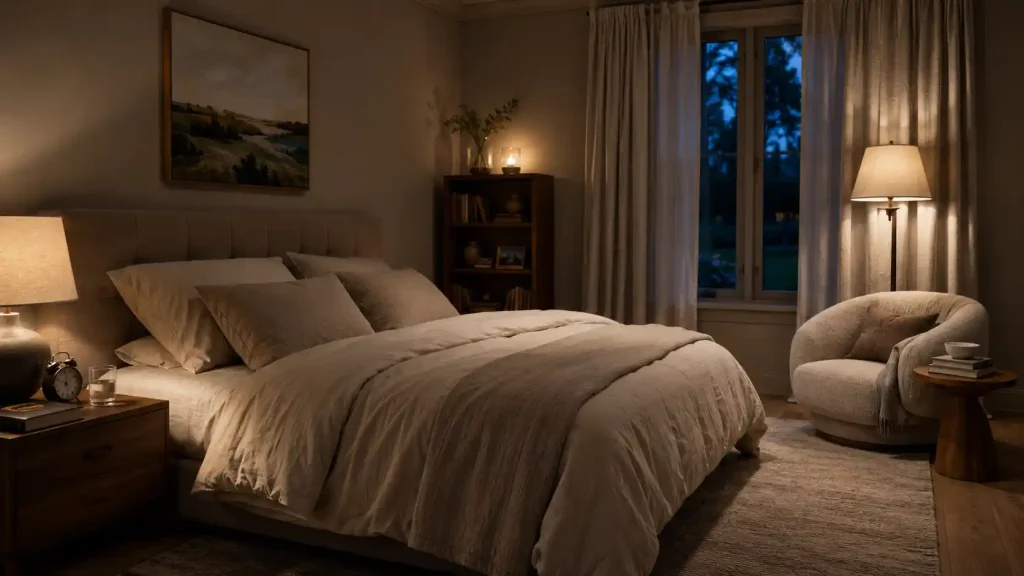
10. Create an Analog, Low-Tech Retreat
One surprisingly luxurious bedroom feature in 2026 is something most homes already know how to create: less technology.
Architectural Digest and ELLE Decor have both reported growing interest in analog bedrooms—spaces where visible screens, charging cables, televisions, and other digital distractions are reduced or concealed.
You do not need to remove every device.
Instead:
- Charge your phone inside a drawer
- Conceal cables
- Keep the television out of sight when possible
- Use a traditional alarm clock
- Leave space for physical books
- Put chargers away when they are not being used
A bedside table containing a lamp, book, glass of water, and one meaningful object feels calmer than one filled with cables and glowing electronics.
The bedroom should visually signal rest.
11. Add One Vintage or Antique Piece
A beautiful bedroom should not feel as though it was assembled from one furniture catalog.
One vintage item can introduce character that new furniture sometimes lacks.
The 1stDibs 2026 survey found that vintage sourcing remains extremely common among participating designers, reflecting the wider preference for rooms that feel collected, individual, and connected to craftsmanship.
Consider:
- An old wooden dresser
- Vintage bedside table
- Antique mirror
- Small writing desk
- Upholstered bench
- Ceramic lamp
- Framed artwork
Do not worry if the piece is not identical to everything else.
Instead, look for a connection through color, material, proportion, or finish.
A traditional walnut chest can look surprisingly fresh beside a simple modern upholstered bed.
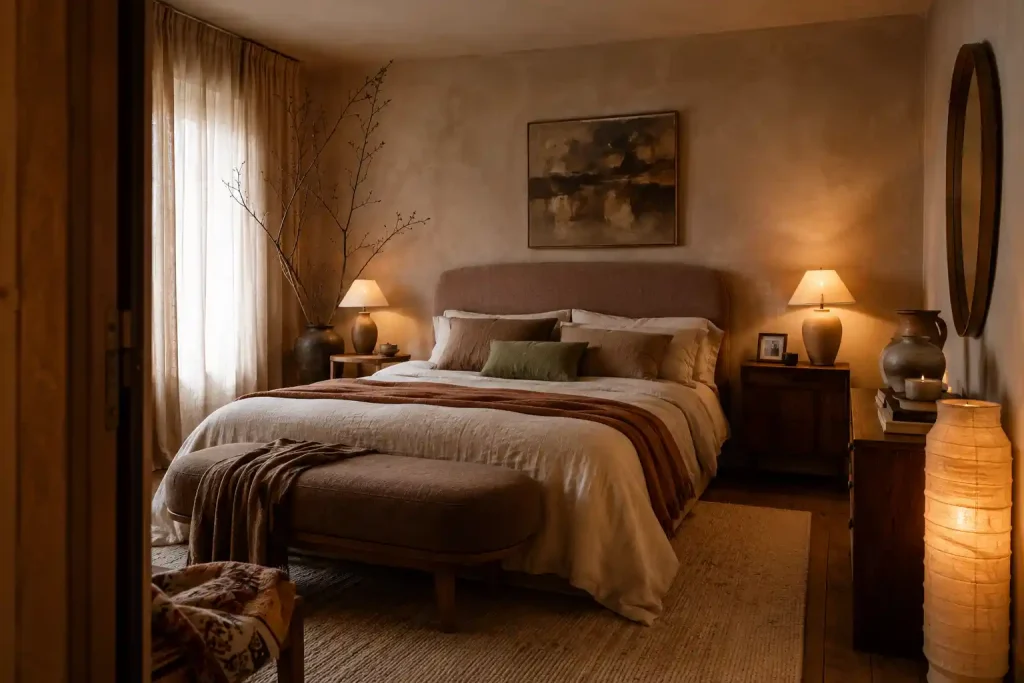
12. Introduce Curves to Soften the Architecture
Most bedrooms contain many straight lines: rectangular doors, wardrobes, windows, beds, rugs, and picture frames.
Curved furniture can soften this geometry.
Current 2026 design reporting continues to highlight rounded furniture and softer forms as part of the movement toward warmer, less rigid interiors.
You might use:
- A curved headboard
- Oval mirror
- Round bedside table
- Globe pendant
- Rounded bench
- Barrel chair
- Sculptural lamp
You do not need all of them.
One or two rounded pieces are usually enough to change the visual rhythm of the room.
This is also a direction likely to continue beyond 2026. Early 2027 reporting from major design fairs points toward increasingly sculptural furniture and artistic lighting, suggesting that practical objects will continue becoming more expressive.
13. Bring Nature Into the Bedroom
Natural elements make bedrooms feel less manufactured and often help connect several decorating styles.
Use living plants where the light conditions are appropriate, but do not force greenery into a dark corner simply because plants look attractive in photographs.
Nature can also enter through:
- Visible wood grain
- Stone
- Wool
- Linen
- Rattan
- Handmade clay
- Botanical art
- Branches
- Earth-inspired colors
A large branch in a ceramic vessel may have more impact than several tiny plants scattered around the room.
If you want to introduce color, muted olive, moss, clay, ochre, and mineral blue work particularly well alongside wood and warm neutrals.
Looking toward 2027, Sherwin-Williams’ Rewild forecast presents 48 colors intended to reflect changing directions in interiors, reinforcing the movement toward broader, more expressive palettes rather than one prescribed neutral look.
Treat these forecasts as inspiration, not instructions. Your bedroom should outlast a single trend cycle.
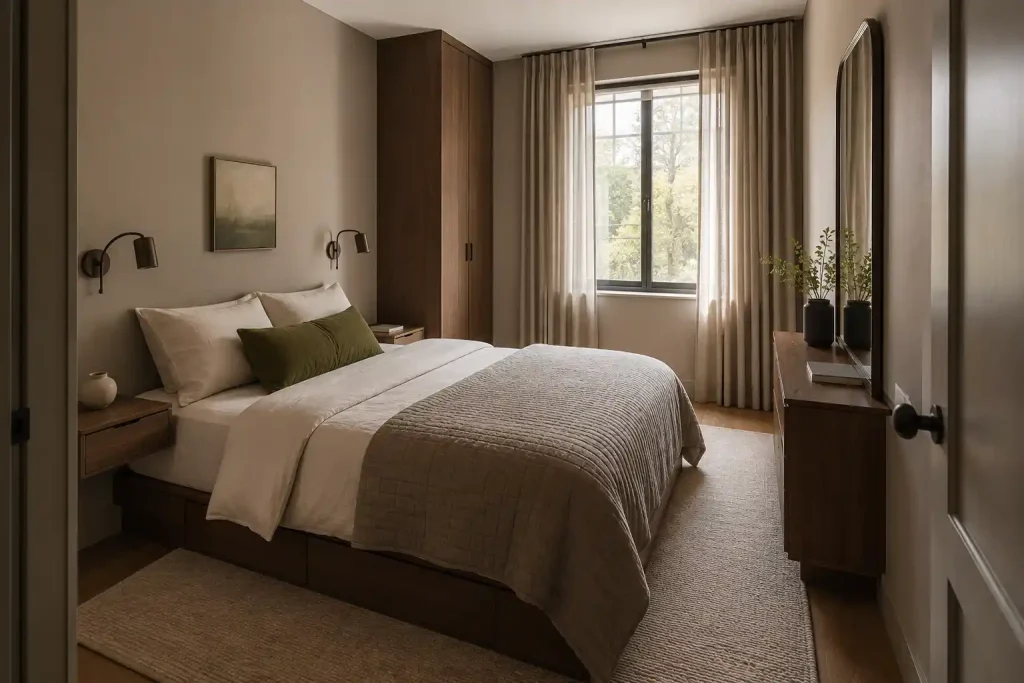
14. Make a Small Bedroom Feel Intentional
A dream bedroom does not need to be large.
In fact, compact rooms can feel particularly cozy when every piece has a clear purpose.
Start with the correct bed size. An oversized bed that leaves almost no circulation space will make the room frustrating regardless of how beautiful it looks.
Then consider:
- Floating nightstands
- Wall-mounted sconces
- Under-bed storage
- Full-height curtains
- A large mirror
- One properly sized rug
- Built-in storage
- A narrow dresser instead of a deep one
Architectural Digest’s current designer advice for small bedrooms emphasizes appropriately scaled furniture, visual continuity, built-ins, mirrors, vertical elements, and thoughtful use of color and texture.
Do not fill every empty corner.
Leaving visible floor and wall space can make a compact bedroom feel more deliberate and comfortable.
15. Finish With Details That Tell Your Story
The final layer is the one no trend report can choose for you.
A bedroom becomes memorable when it contains things that have a reason to be there.
That could mean:
- Art you genuinely love
- Books you actually read
- A photograph
- An inherited piece of furniture
- Handmade pottery
- A textile brought home from a trip
- A collection displayed carefully
- An object connected to a hobby
- A favorite chair beside the window
Designers are increasingly moving away from impersonal rooms that look perfectly “curated” and toward spaces that feel collected and emotionally connected to the people who live there. House Beautiful’s 2026 trend reporting describes this broader shift toward softer forms, layered materials, familiarity, and more personal interiors.
The difference between a stylish bedroom and a dream bedroom is often this final layer.
One looks beautiful.
The other feels like yours.
What Makes a Bedroom Look Expensive?
An expensive-looking bedroom has surprisingly little to do with filling it with luxury products.
Focus instead on proportion, fabric, lighting, and finishing details.
A few upgrades can make a noticeable difference:
Use a correctly sized rug.
The rug should visually support the bed rather than resemble a small mat floating beneath it.
Hang curtains properly.
Long curtains mounted high make walls and windows appear more substantial.
Upgrade visible lighting.
Lamps are both decorative objects and sources of atmosphere.
Choose fewer, larger accessories.
One substantial vase or artwork usually looks more deliberate than many tiny decorations.
Mix materials.
Wood, linen, wool, metal, ceramic, and glass give a room depth.
Avoid complete matching furniture sets.
Related pieces generally look more natural than identical ones.
Hide everyday clutter.
Good storage allows beautiful objects to remain visible without visual noise surrounding them.
Common Dream Bedroom Decorating Mistakes
Designing only for photographs
The bedroom has to work when the cushions are removed, the curtains are closed, and you actually need somewhere to charge your phone.
Buying furniture before measuring
Mark the proposed dimensions on the floor before ordering large pieces. Check doors, drawers, circulation space, and wardrobe access.
Ignoring nighttime lighting
A bedroom that looks beautiful only in daylight is only half designed.
Following every trend at once
Choose one or two current ideas and combine them with materials and furniture you genuinely enjoy.
Forgetting storage
Uncontrolled clutter can overwhelm even the most carefully selected palette.
Making everything match
Perfectly matched furniture, lamps, cushions, and accessories can make a room feel less personal. Aim for coordination rather than duplication.
Frequently Asked Questions
How can I make my bedroom feel like a dream bedroom?
Begin with comfort. Choose a good bed, thoughtful lighting, a cohesive color palette, quality bedding, useful storage, and a few personal objects. Add decorative layers only after the practical foundation works.
What colors make a bedroom feel luxurious?
Warm neutrals, deep olive, chocolate brown, muted burgundy, taupe, mushroom, blue-gray, and cream can all create a sophisticated bedroom. The quality of the materials and lighting often matters more than the specific color.
What is trending in bedrooms in 2026?
Some of the strongest current directions include cocooning upholstery, color drenching, richer earthy palettes, layered textiles, statement headboards, vintage furniture, softer forms, and bedrooms with less visible technology.
Do dream bedrooms have to be neutral?
Not at all. A dream bedroom can be burgundy, olive, blue, terracotta, chocolate, or almost any color if the palette is balanced and supports the atmosphere you want.
How do I make a small bedroom look luxurious?
Use fewer but better-proportioned pieces, full-height curtains, layered lighting, concealed storage, one generous rug, quality bedding, and a consistent color palette. Avoid filling the room with small furniture simply because the space is limited.
Final Thoughts
The best dream bedroom ideas are not about reproducing somebody else’s perfect room exactly.
A truly beautiful bedroom begins with the way you want to live in it.
Make the bed comfortable enough that you look forward to using it. Choose colors that feel good in your actual light. Add wood, textiles, and other natural materials that bring warmth. Use several sources of soft lighting. Give yourself enough storage to keep the room peaceful, and allow a few meaningful objects to make the design personal.
The clearest direction coming through professional design in 2026—and early signals for 2027—is that bedrooms are becoming warmer, softer, more tactile, more expressive, and more personal rather than simply more minimal.
That is good news because creating a dream bedroom does not require chasing perfection.
It requires creating a room that makes you want to stay a little longer.