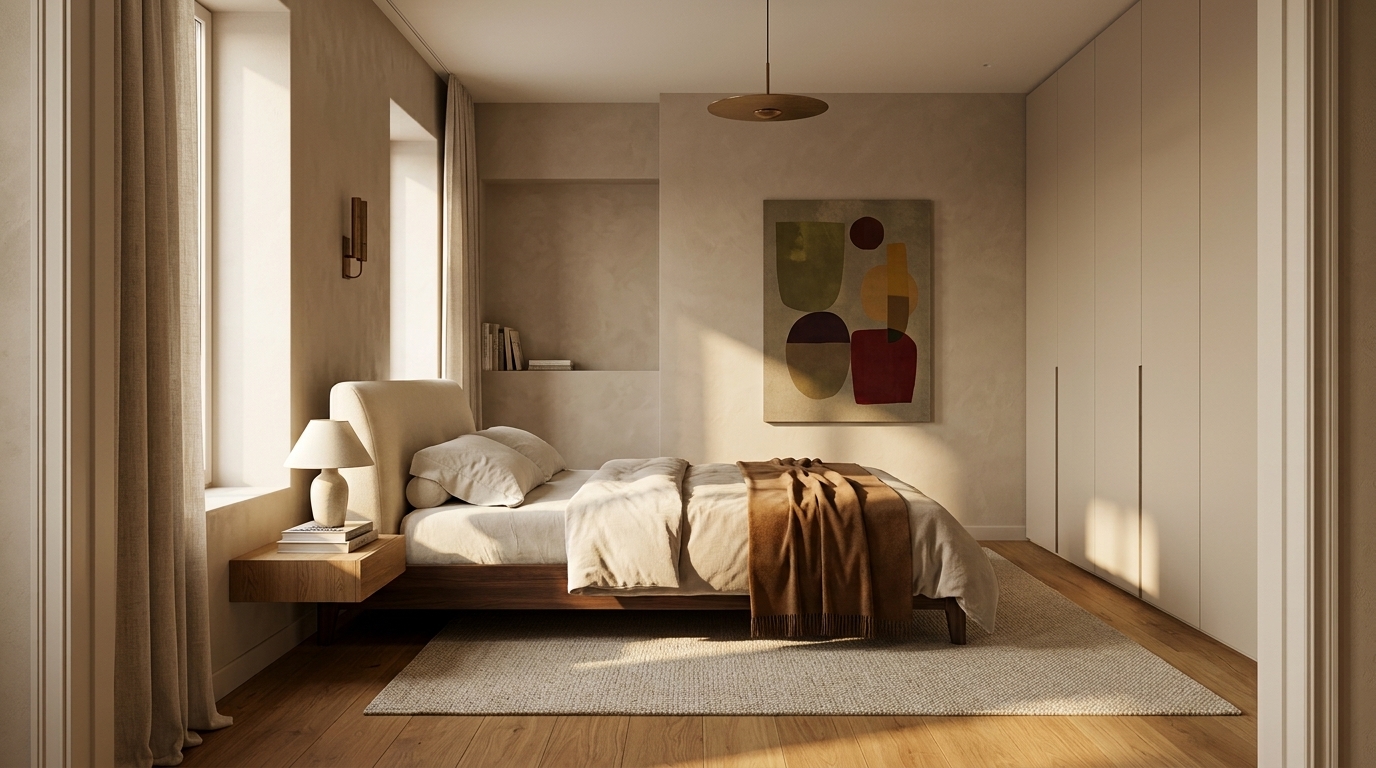
10 Minimalist Bedroom Tips for a Calm, Warm, Uncluttered Space
Minimalist bedrooms often go wrong because people remove personality along with clutter. The room ends up with white walls, a low beige bed, one tiny lamp, and almost nothing else. It looks tidy, but it can also feel temporary.
The better 10 minimalist bedroom tips for 2026 are warmer and more practical, in the same spirit as these neutral bedroom ideas. Current bedroom design is moving toward creamy taupes, muted greens, clay tones, tactile fabrics, concealed storage, and spaces designed around rest rather than visual emptiness. Designers are also talking about bedrooms that feel more layered and personal, even when the overall scheme remains restrained.
Minimalism works best when fewer things are asked to do more. Better proportions, useful storage, natural materials, and thoughtful lighting matter far more than simply owning less decor.
Build a quieter palette with enough depth
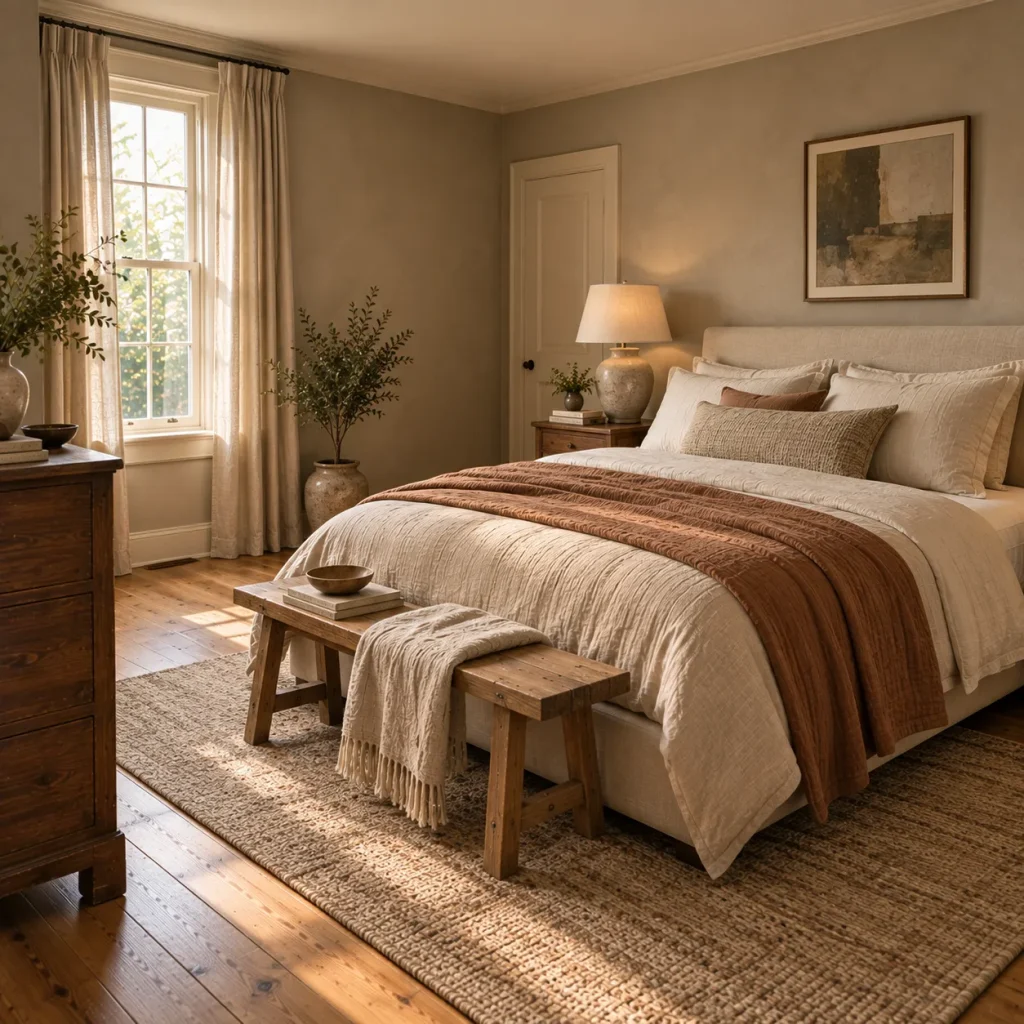
Tip 1: Use warm neutrals instead of automatic bright white
Minimalism does not require white walls.
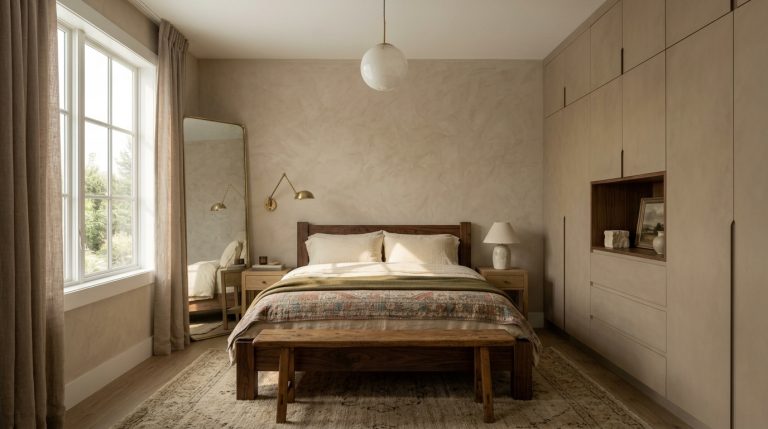
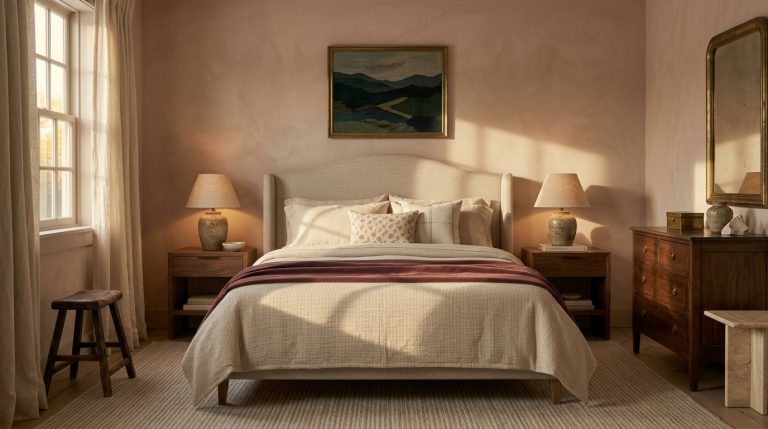
Warm ivory, mushroom, creamy taupe, parchment, soft clay, and muted greige can create a calmer background while making wood and textiles look richer. For 2026, designers are specifically moving away from cool gray and flat neutral bedrooms toward creamy taupes, clay-toned beiges, soft caramel, chalky whites, muted greens, and soft blues.
Start with your flooring. Honey oak tends to work better with warm mushroom or cream than blue-gray. Dark walnut can handle a paler plaster tone or muted green.
And sample paint physically before committing. Neutral colors can shift dramatically as daylight changes.
One contrarian point matters here. A minimalist room does not become more successful simply because it contains less color. A muted olive wall may actually feel calmer than stark white because there is less visual contrast between the wall, furniture, and shadows.
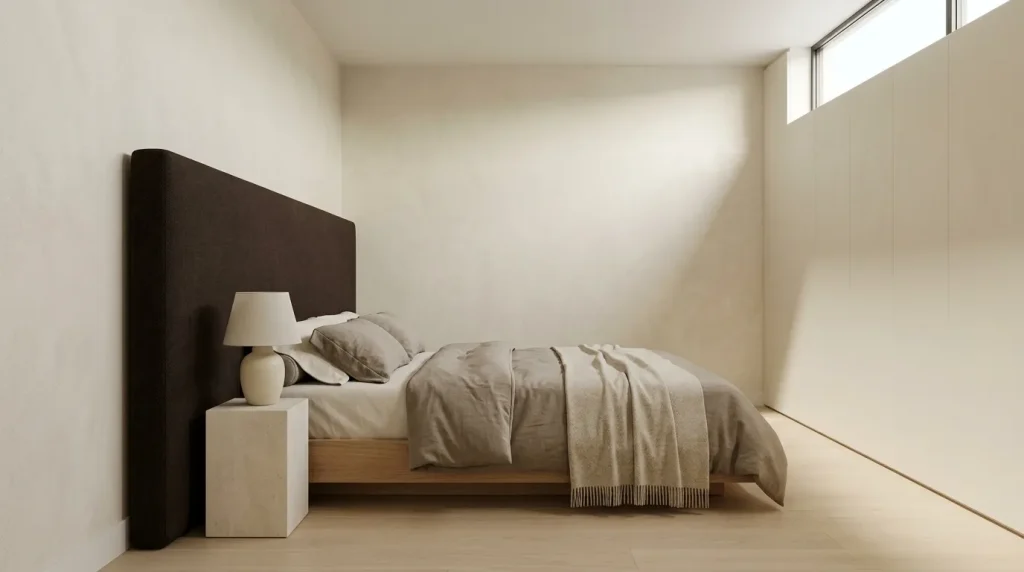
Tip 2: Add one darker anchor
A pale minimalist bedroom often needs one substantial dark element.
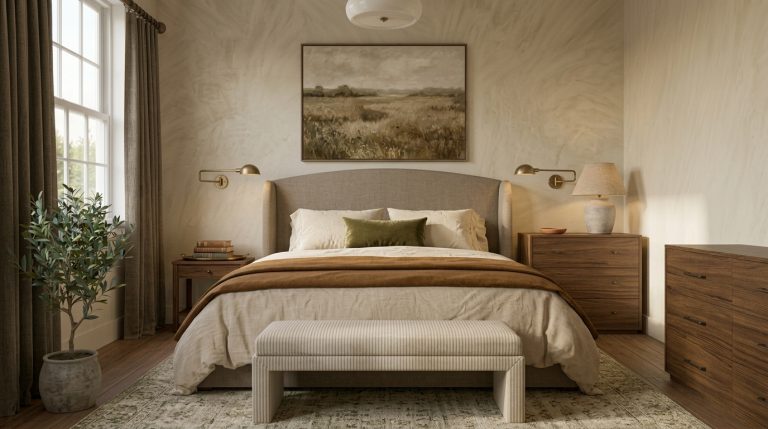
Try a walnut bed, espresso dresser, chocolate upholstered headboard, dark bronze lamp, or deep olive chair.
Dark woods are particularly relevant in 2026, with walnut and espresso-toned oak appearing alongside plaster, stone, and softer textiles.
You do not need black accents scattered everywhere. In fact, chocolate brown often creates a softer contrast than pure black. Pair it with mushroom, warm ivory, dusty blue, or muted sage.
If everything in the room sits between cream and beige, add one dark piece before adding more accessories.
Let the bed carry most of the visual weight
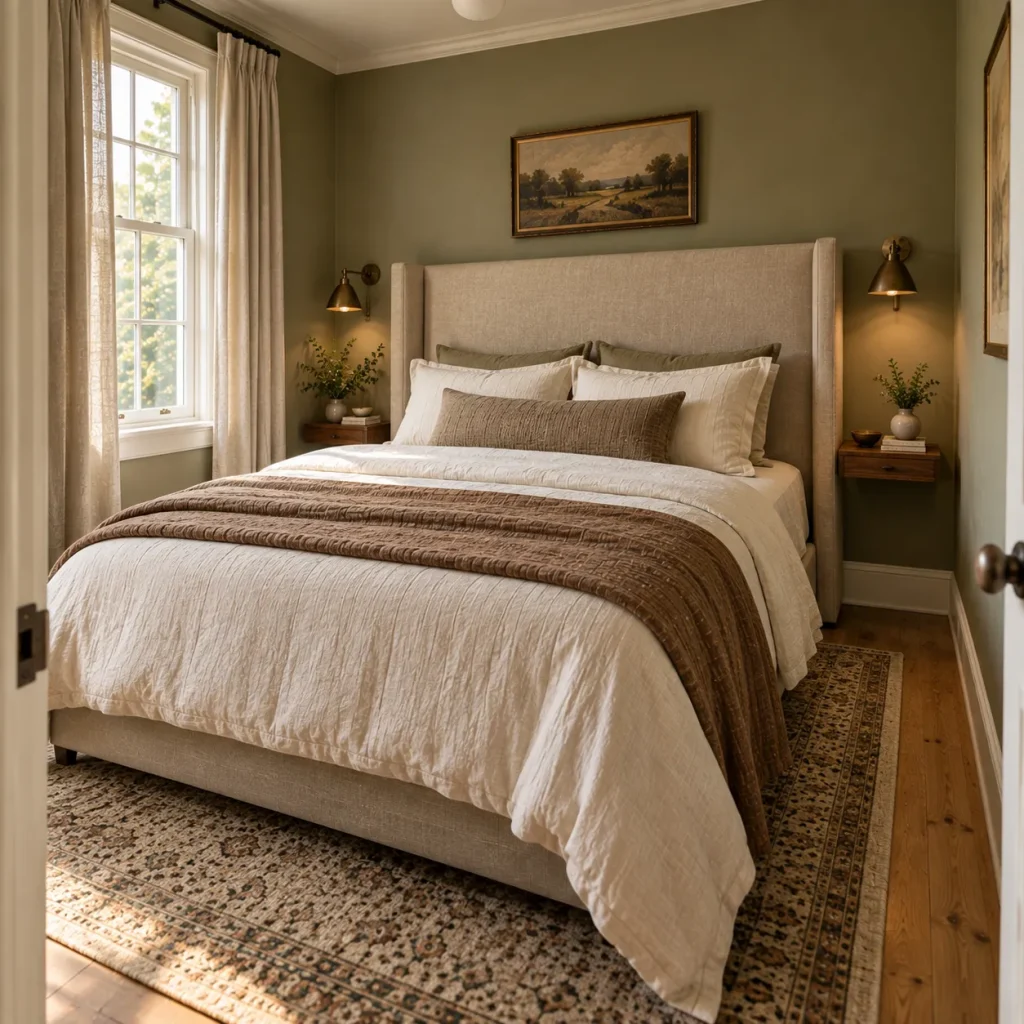
Tip 3: Choose a substantial bed instead of tiny furniture
Minimalism does not mean undersized furniture.
A properly scaled bed can actually make the room feel calmer because it gives the eye one clear dominant shape.
Choose a bed that fits the room while leaving useful circulation. Where possible, roughly 24 to 30 inches beside frequently used areas is a practical starting point, though genuinely small bedrooms may require tighter clearances.
Architectural Digest’s current small-bedroom guidance similarly recommends an edited furniture plan rather than simply filling a compact room with many miniature pieces, a principle that shows up clearly in these cozy small bedroom tips.
A queen bed with two slim wall-mounted shelves may look better than a smaller bed surrounded by multiple pieces of furniture.
And do not fear a taller headboard. Height can give the bed architectural presence without consuming much additional floor area.
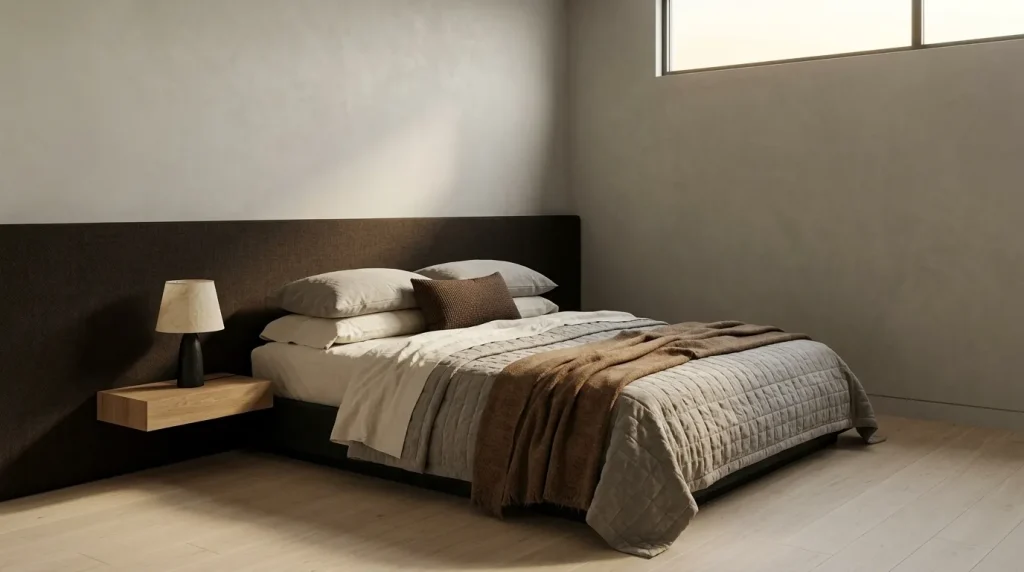
Tip 4: Layer bedding with texture, not decoration
A minimalist bed should look inviting, not unfinished.
Use fewer layers, but make the layers noticeably different.
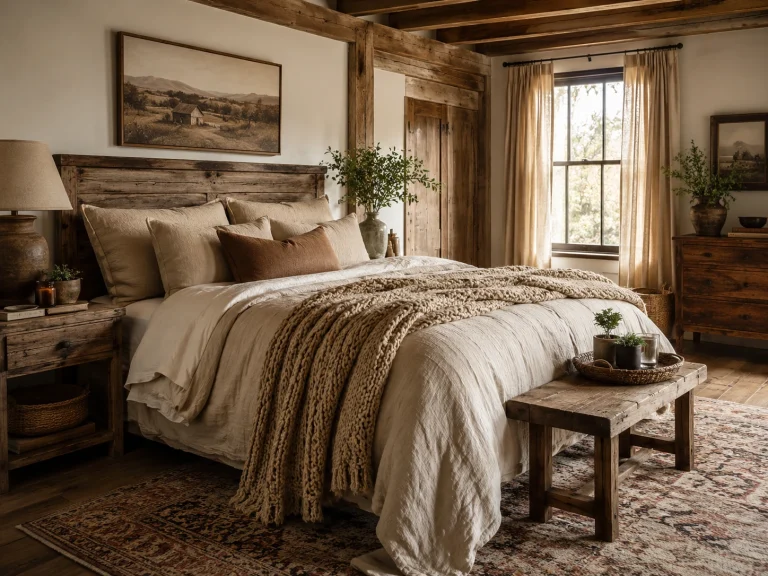
Start with cotton or linen sheets. Add a duvet or coverlet, then one wool, linen, or quilted throw across the foot.
For example: warm ivory sheets with a mushroom duvet and tobacco wool throw. Or muted olive bedding with an oatmeal blanket and one chocolate lumbar cushion.
Current 2026 bedroom design is placing greater emphasis on washed linen, wool, mohair, upholstered surfaces, and other tactile materials that create warmth without requiring more visual clutter.
Skip the row of five decorative cushions if you remove them every night. Two good sleeping pillows and one or two decorative cushions may be all you need.
Hide the things that create daily visual noise
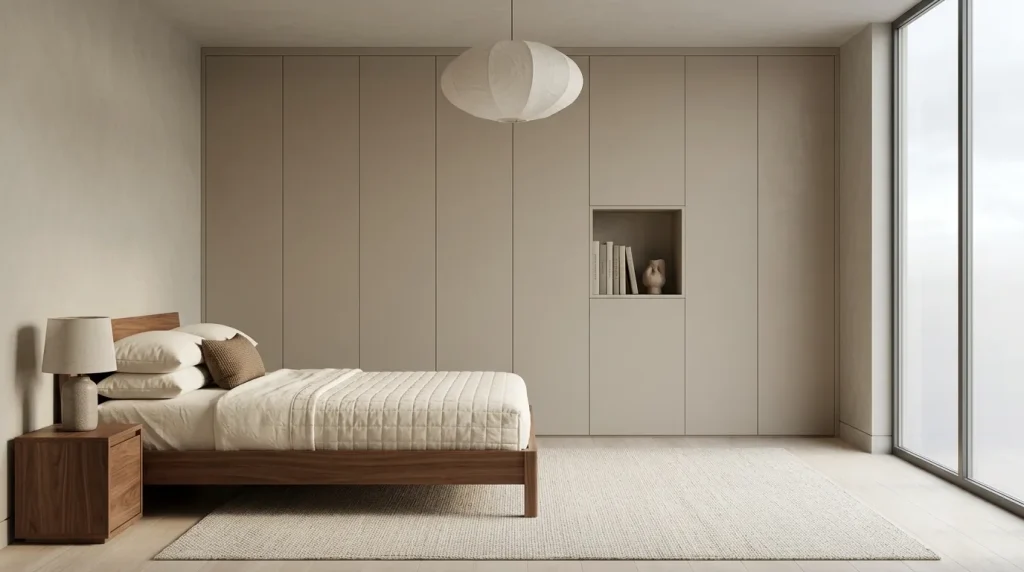
Tip 5: Prioritize closed storage
Minimalist rooms rarely stay minimalist if everyday objects have nowhere to go.
Closed storage matters more than decorative editing.
Use wardrobe doors, drawers, bedside storage, lidded boxes, or built-ins for clothing, chargers, paperwork, spare bedding, and personal items.
Architectural Digest’s 2026 bedroom guidance specifically recommends stealthy storage to reduce visual noise, while its small-bedroom storage coverage highlights storage beds, tall dressers, modular shelving, and other multifunctional solutions.
Open shelves can still work, but do not make every possession visible. A shelf with five carefully chosen books and one ceramic object is different from a shelf functioning as overflow storage.
I once worked through an illustrative minimalist room that looked cluttered despite containing very little furniture. The problem was not quantity. Chargers, cosmetics, paperwork, and clothing were visible on almost every surface. One bedside drawer and proper wardrobe organizers changed the room more than removing another chair ever could.
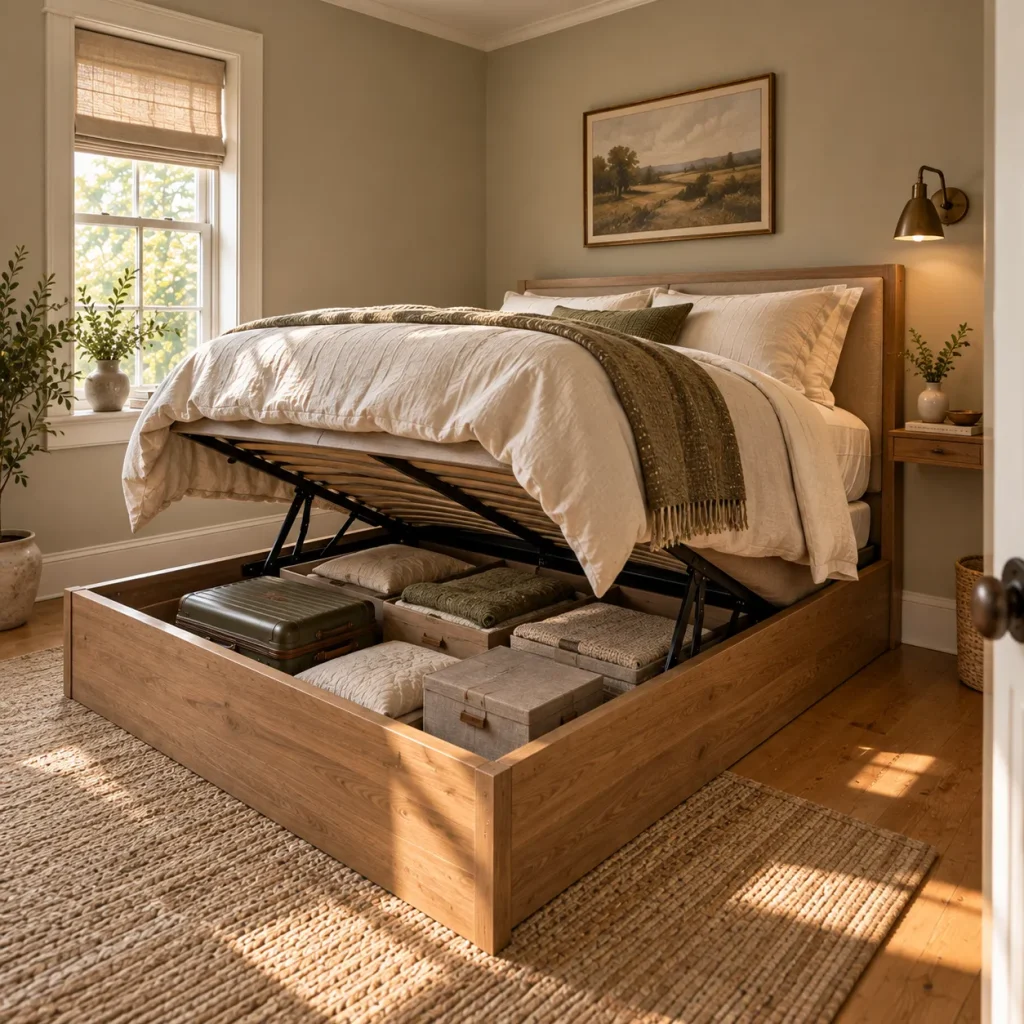
Tip 6: Make the bed part of your storage plan
If the bed occupies a large percentage of the floor, use that footprint intelligently.
A lift-up storage bed is useful for luggage, seasonal clothing, spare bedding, and bulky items. Drawers work well when there is enough clearance to open them.
Architectural Digest’s 2026 review of storage beds highlights concealed compartments and under-bed drawers as practical ways to gain storage without adding more standalone furniture.
Already have a bed frame? Use consistent under-bed boxes rather than sliding random bags underneath.
Minimalism becomes much easier to maintain when storage systems are simple enough that putting something away takes only a few seconds.
Use fewer materials, but make them count
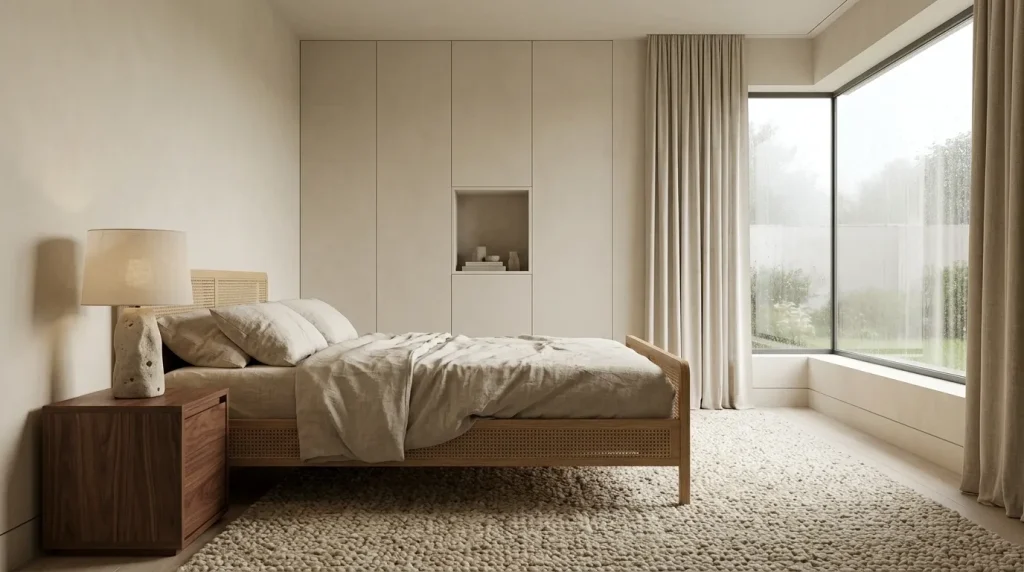
Tip 7: Combine wood, linen, wool, and one mineral surface
A minimalist bedroom can have plenty of material richness.
Try a walnut nightstand beside linen bedding, a wool rug, and a ceramic or limestone lamp. You may only have four main materials, but their differences create depth.
Current design is moving toward stronger material contrast, pairing rough and polished surfaces rather than filling rooms with visually identical finishes, an approach shared by these organic modern bedroom tips.
Avoid the opposite mistake of making every soft piece bouclé. A bouclé headboard, bouclé bench, shag rug, and nubby cushions all create texture, but because they behave similarly, the room can still feel flat.
Pair rough with smooth. Linen beside polished wood. Wool beside glazed ceramic. Matte plaster beside aged brass.
Minimalism becomes more interesting when surfaces change while the palette stays restrained.
Give the floor enough scale
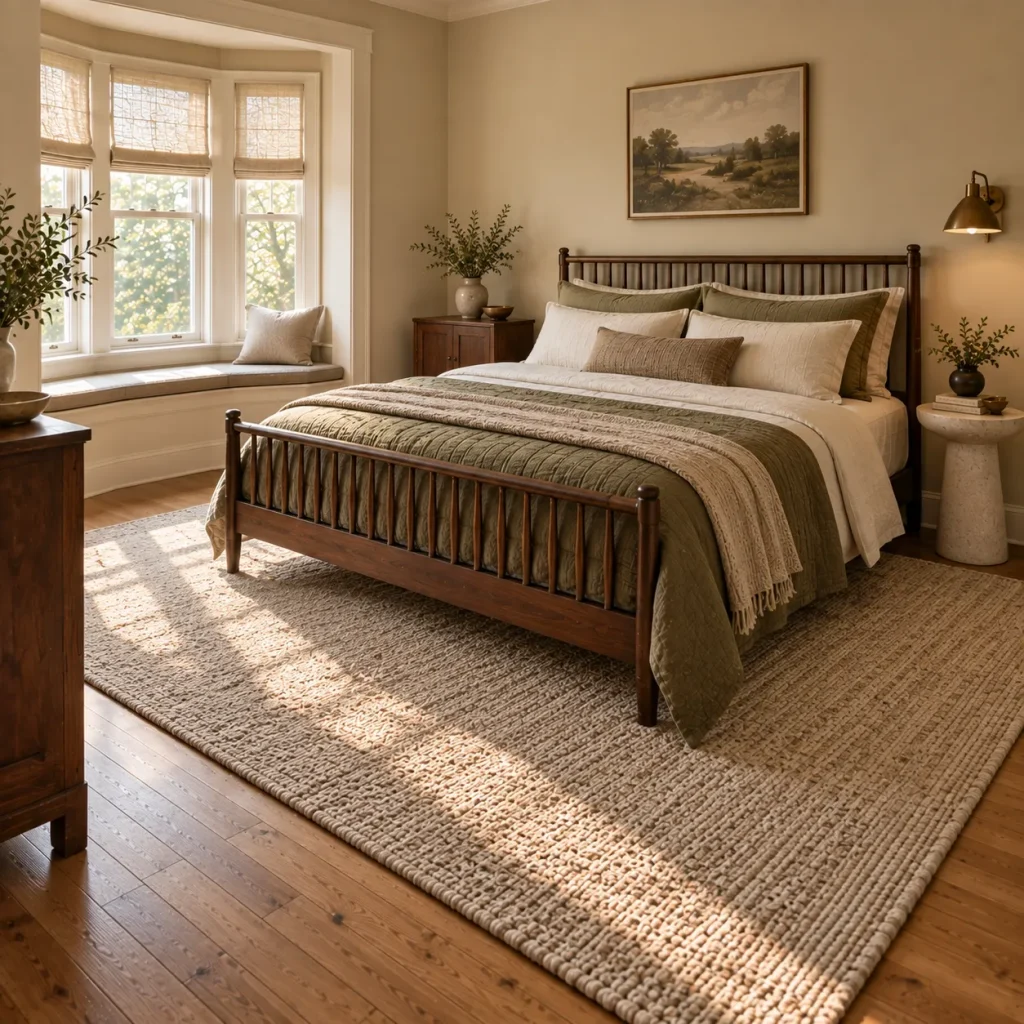
Tip 8: Use one generous rug rather than several small ones
A larger rug can make a minimalist room feel more unified.
For a queen bed, an 8-by-10-foot rug is often a useful starting point where space allows. For a king, 9-by-12 may give better coverage. Exact sizing depends on your room and whether the nightstands sit on or off the rug.
Choose wool, a flat weave, or a low-patterned design. Oatmeal, warm gray-brown, tobacco, soft olive, or faded geometric patterns work particularly well.
Another useful contradiction is that a larger rug can make a small bedroom feel more settled than a tiny rug. Small rugs introduce more visible edges. One larger surface visually connects the bed and nearby furniture.
Make lighting part of the minimalist architecture

Tip 9: Layer light instead of relying on one ceiling fixture
Minimalist bedrooms need good lighting because there are fewer decorative elements to distract from poor illumination.
Use at least two levels of light.
A ceiling fixture can provide general illumination. Bedside sconces or lamps can create softer evening light. In a larger bedroom, a dresser lamp or floor lamp may provide another useful layer.
Keep fixtures simple, but they do not have to disappear. A ceramic lamp, sculptural paper shade, bronze sconce, or linen-covered shade can provide enough material character to function as decor.
Current 2026 bedroom design strongly emphasizes integrated lighting and softer, cocooning environments rather than stark overhead illumination.
Wall sconces are particularly useful in small rooms because they free nightstand space.
And keep bulb temperatures reasonably consistent. A warm bedside lamp beside an icy white ceiling fixture will make even a carefully chosen palette look disconnected.
Remove technology from the visual center
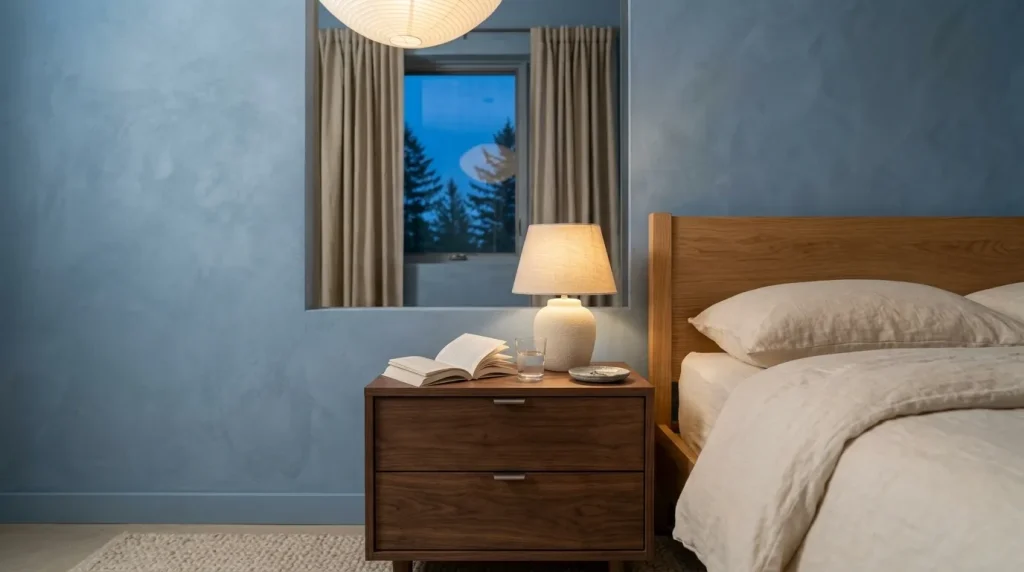
Tip 10: Create an analog bedside zone
Minimalism should reduce distraction as well as objects.
One of the most interesting bedroom shifts in 2026 is the move toward deliberately lower-tech sleeping spaces. Designers report clients hiding televisions, concealing charging stations, and reducing visible electronics so bedrooms feel more separate from digital life.
You do not need to ban technology.
Put charging cables inside a drawer if possible. Keep the television off the main visual axis or conceal it where practical.
Leave room for a book, water, and perhaps a small ceramic dish on the nightstand.
The goal is not aesthetic purity. It is giving your eyes fewer things asking for attention before sleep. That is a much more useful definition of bedroom minimalism, and it is a similar restraint you will find in these Scandinavian bedroom tips.
A practical minimalist bedroom formula
| Element | Strong approach | What to reduce |
|---|---|---|
| Walls | Mushroom, ivory, clay, muted green | Stark contrast everywhere |
| Bed | Substantial, simple silhouette | Undersized furniture |
| Bedding | Linen, cotton, wool | Excess cushions |
| Storage | Closed and integrated | Visible overflow |
| Wood | Walnut, oak, dark-stained timber | Matching furniture sets |
| Rug | One generous wool rug | Several tiny rugs |
| Lighting | Layered lamps and sconces | One harsh ceiling light |
| Decor | Art, books, one ceramic piece | Repetitive accessories |
The point is not to follow the table rigidly. It is to give each element a clear role.
What should you skip in a minimalist bedroom?
Removing everything personal. Minimalism should edit possessions, not erase identity. Keep meaningful art, books, photographs, or one vintage object.
Buying a matching bedroom set. Identical bed, dresser, and nightstands can make a restrained room feel more like a furniture showroom.
Using white because minimalism supposedly requires it. Warm neutrals and muted colors can remain visually quiet while giving the bedroom greater depth.
Open storage everywhere. Visible storage usually creates more work if your goal is a calm bedroom.
Tiny decor scattered across every surface. One substantial lamp or artwork contributes more than several small objects.
Try this if your bedroom currently feels cluttered
Do not start by throwing things away.
First, clear the nightstands and dresser completely. Put back only what you use daily.
Next, identify which remaining objects have no proper storage location. Solve those problems with a drawer organizer, under-bed box, wardrobe container, or other closed solution.
Then look at the furniture. If two pieces perform the same function, consider removing one. A dresser and a second small chest may not both be necessary.
Finally, add back one personal object, such as artwork, a book stack, ceramic lamp, or photograph.
The room should feel edited, not vacant.
FAQ
What colors work best in a minimalist bedroom?
Warm ivory, mushroom, creamy taupe, soft clay, muted olive, dusty blue, and chocolate brown all work well. Current 2026 bedroom palettes are moving toward warmer neutrals and restrained midtones rather than cold gray and stark white.
How do I make a minimalist bedroom feel cozy?
Use tactile materials, warm lighting, a substantial rug, layered bedding, and natural wood. Cozy minimalism comes from material quality and softness rather than adding many decorative objects.
How much furniture should a minimalist bedroom have?
There is no ideal number. Keep the pieces required for sleeping, clothing storage, lighting, and your actual routines. Remove furniture that duplicates another function or makes circulation unnecessarily difficult.
Is minimalist bedroom design still popular in 2026?
Yes, but its character is changing. Current bedroom design combines thoughtful minimalism with warmer color, richer texture, concealed storage, integrated lighting, and more personal details rather than the cold, sparse interiors often associated with earlier minimalism.
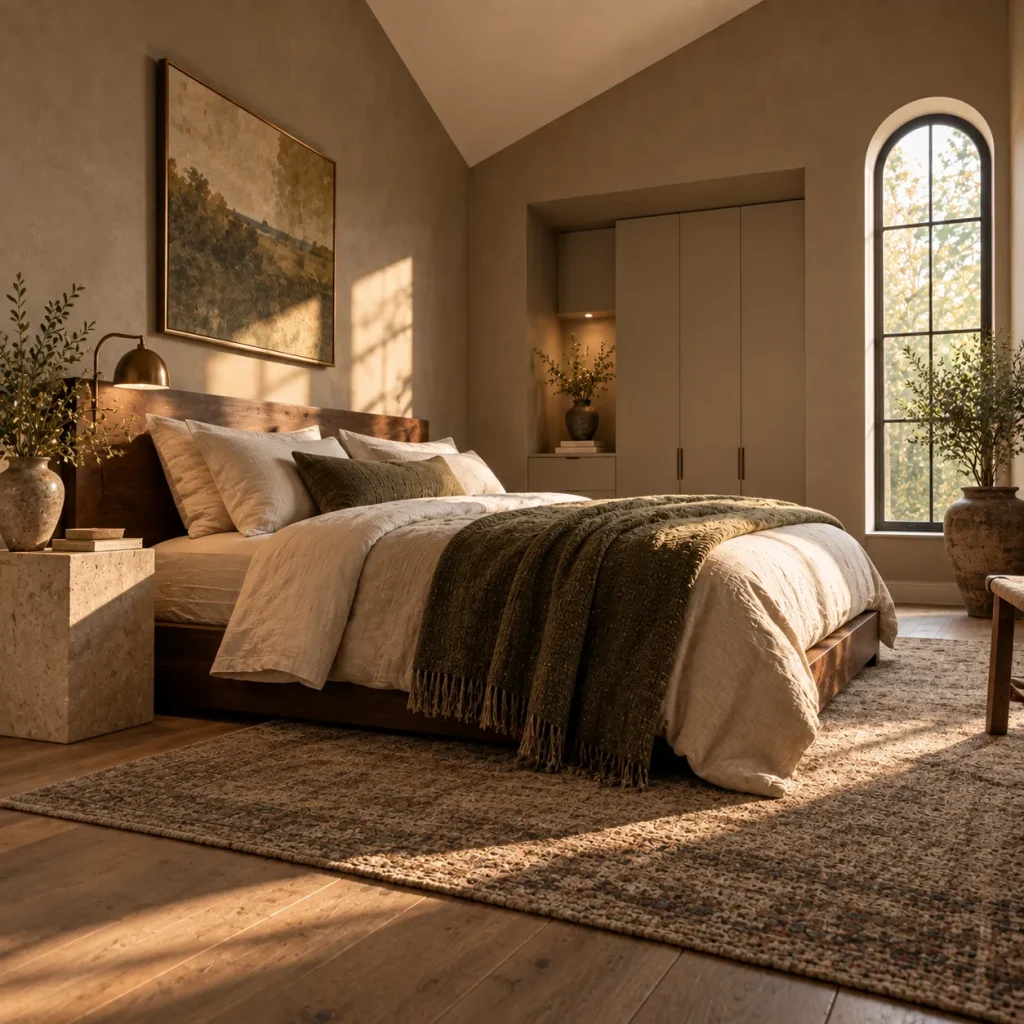
Make fewer things work harder
The strongest 10 minimalist bedroom tips are not instructions for stripping the room down until nothing remains.
Start with comfort. Give the bed enough scale. Give belongings proper storage. Use a few materials that feel good to touch. Add softer lighting and one darker element so the room has depth.
Then edit.
If you make one change first, clear one surface completely and decide what genuinely deserves to return. That small exercise usually reveals whether your bedroom has too many possessions or simply poor storage.
A minimalist bedroom should make everyday routines easier while giving your eyes fewer distractions. When furniture, storage, light, and materials are doing their jobs properly, you need surprisingly little decoration to make the room feel finished.