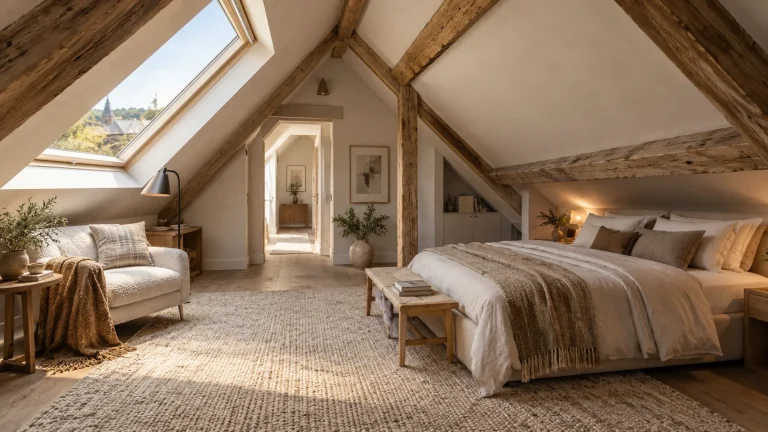
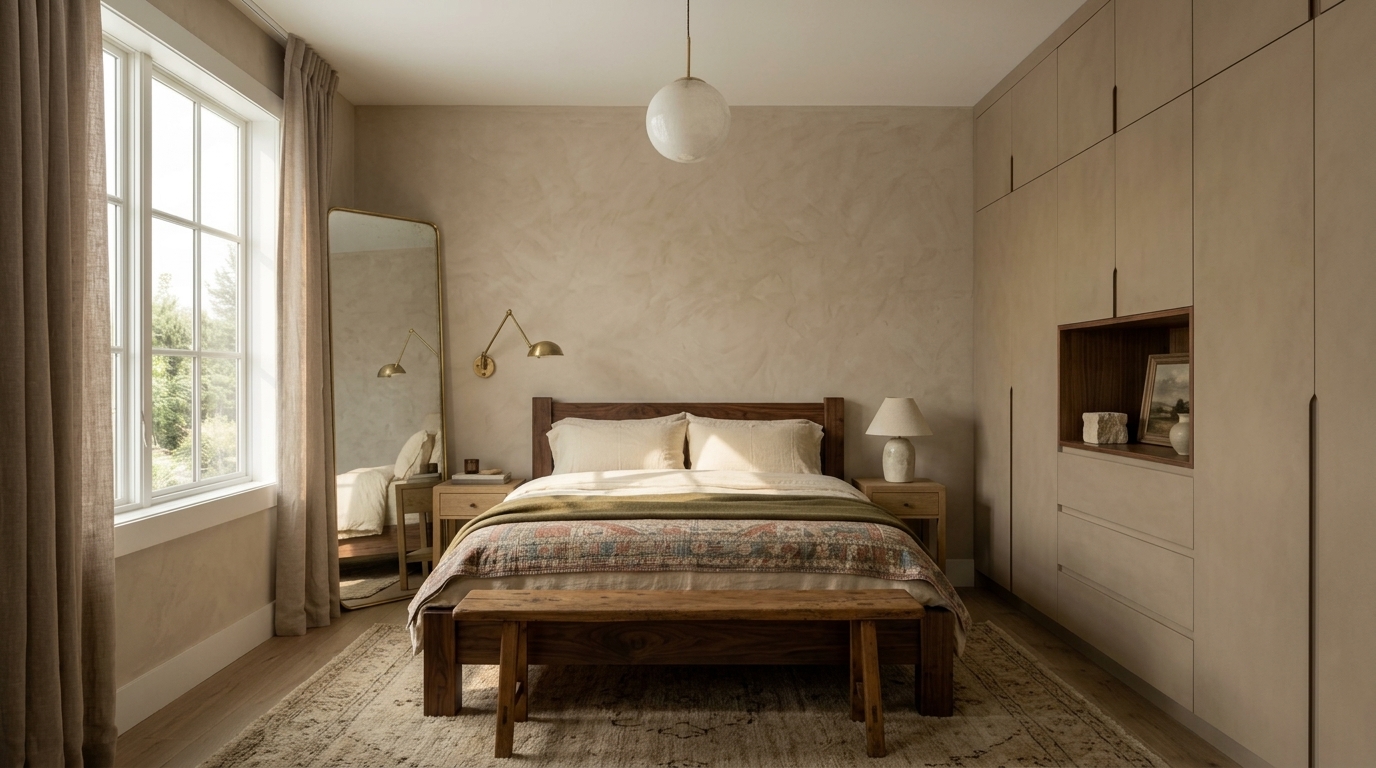
13 Rustic Bedroom Ideas for a Warm, Collected Retreat
Rustic bedrooms can become cliché surprisingly quickly. Add a distressed wood bed, faux-fur throw, barn-style signs, and a pair of industrial lamps, and the room may feel more like a themed rental cabin than a restful bedroom.
The better 13 rustic bedroom ideas for 2026 focus on honest materials, age, texture, and comfort. Darker woods, raw plaster, wool, linen, antique furniture, stone, deeper earthy colors, and visible patina are giving rustic interiors a richer direction. Current design coverage also points toward bedrooms that feel warmer, more personal, and less perfect, with tactile surfaces and vintage pieces replacing sterile styling.
You do not need exposed beams or a countryside house. A normal bedroom can feel rustic through a few carefully chosen materials.
Start with colors drawn from natural materials
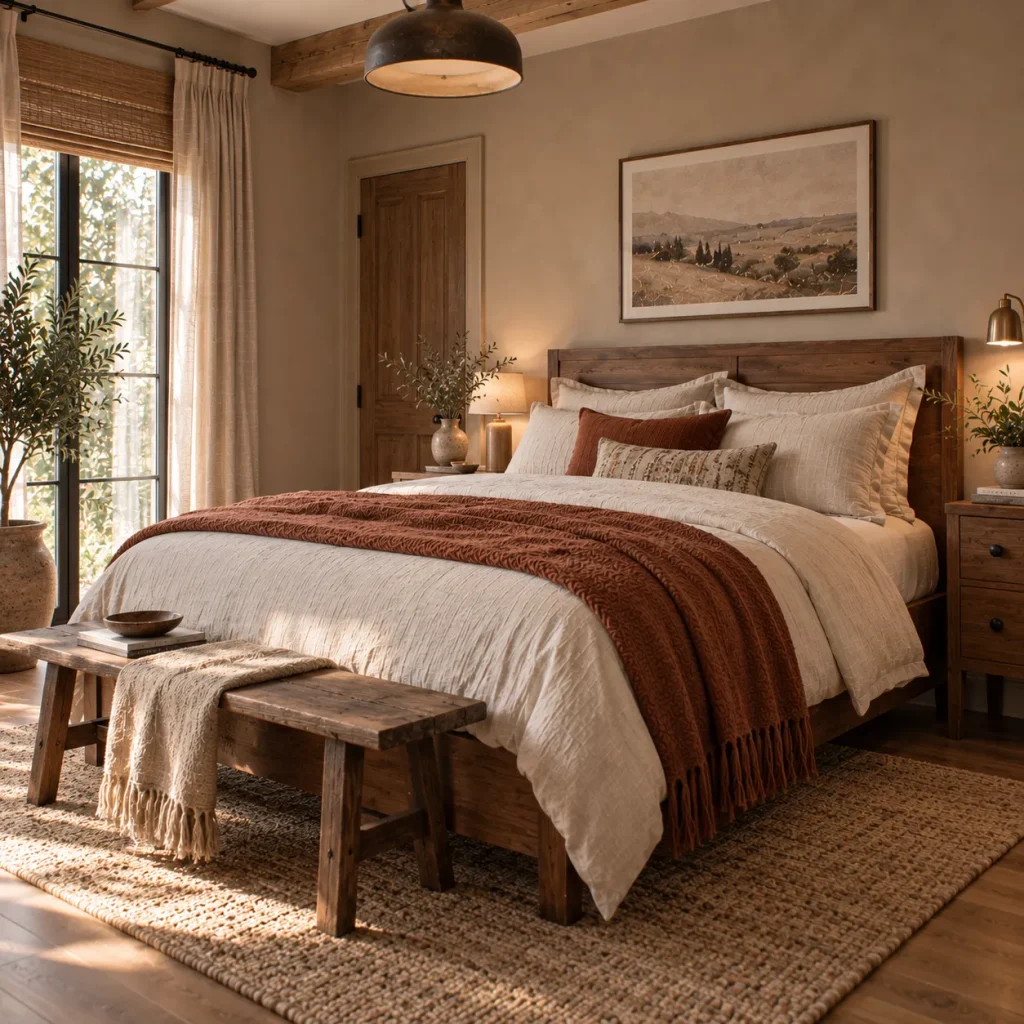
Idea 1: Replace cold white with a warmer wall color
Rustic interiors usually work best when the walls have enough warmth to sit comfortably beside wood.
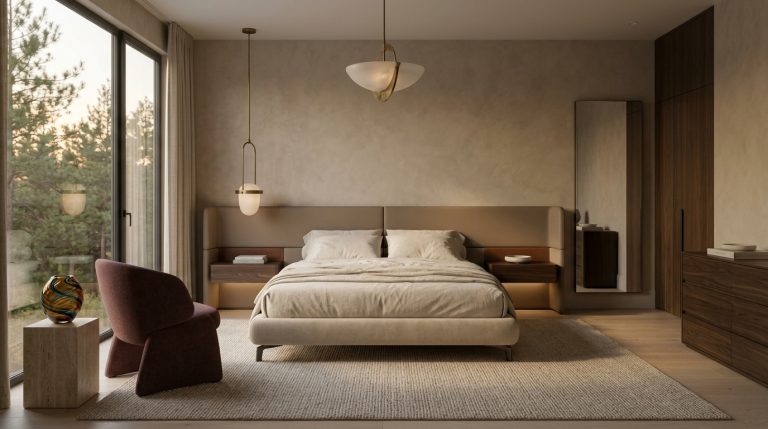
Try parchment, chalky cream, mushroom, putty, clay-beige, or a pale taupe rather than a stark blue-white. These colors make wood grain, woven fabrics, and aged finishes look more natural.
Current 2026 bedroom trends are leaning toward midtone muted greens, warm clays, soft blues, creamy taupes, and richer earthy neutrals rather than flat white rooms, similar to the palette in our neutral bedroom ideas.
Look carefully at your flooring before choosing paint. Honey oak can make a cool greige look unexpectedly gray, while darker timber often benefits from a lighter warm neutral.
Always test a large sample in your room. Rustic colors depend heavily on daylight and the undertones of surrounding wood.
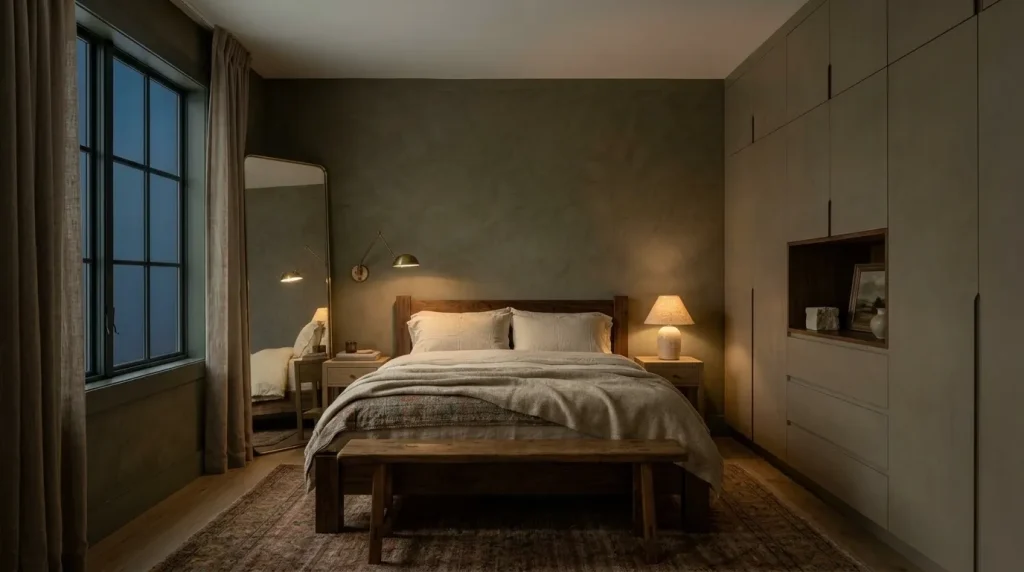
Idea 2: Use a deeper earth tone for a cocooning effect
Rustic does not have to mean pale.
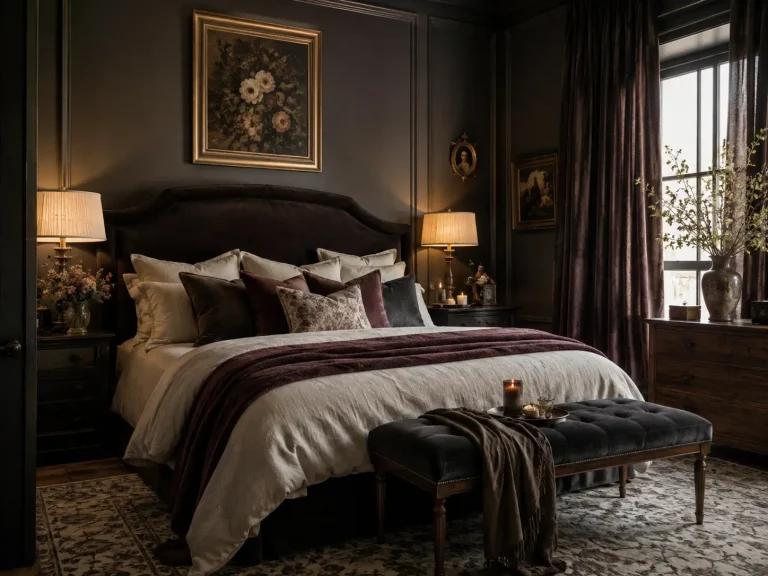
Chocolate brown, bottle green, oxblood, terracotta, smoky olive, or warm charcoal can make a bedroom feel intimate, especially when balanced by linen, wool, or lighter bedding.
These deeper nature-based shades are prominent in 2026 color direction, with chocolate, maroon, terracotta, oxblood, and bottle green appearing as richer alternatives to safer beige palettes.
A small bedroom can handle dark walls too. In some rooms, painting several surfaces in the same deep tone feels calmer than creating one sharp dark feature wall against three white walls.
Just make sure the room has enough lower-level lighting at night.
Let wood provide the rustic foundation

Idea 3: Choose a bed with visible wood grain
The bed is usually the largest furniture piece in the room, so it can establish the rustic direction without much extra decoration.
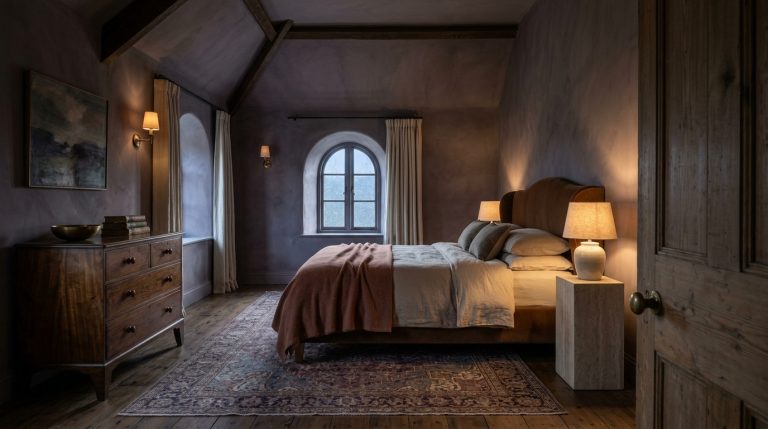
Consider walnut, aged oak, old pine, reclaimed timber, or dark-stained wood. Look for visible grain, a substantial headboard, and simple construction rather than exaggerated distressing.
Darker woods are gaining renewed attention in 2026, particularly walnut and espresso-toned oak paired with plaster, stone, and softer textiles — the same material palette we cover in our rustic farmhouse kitchen ideas.
If your flooring is already wood, you do not need the bed to match it exactly.
Medium oak flooring with a walnut bed can create useful contrast. Similar warm undertones matter more than identical finishes.
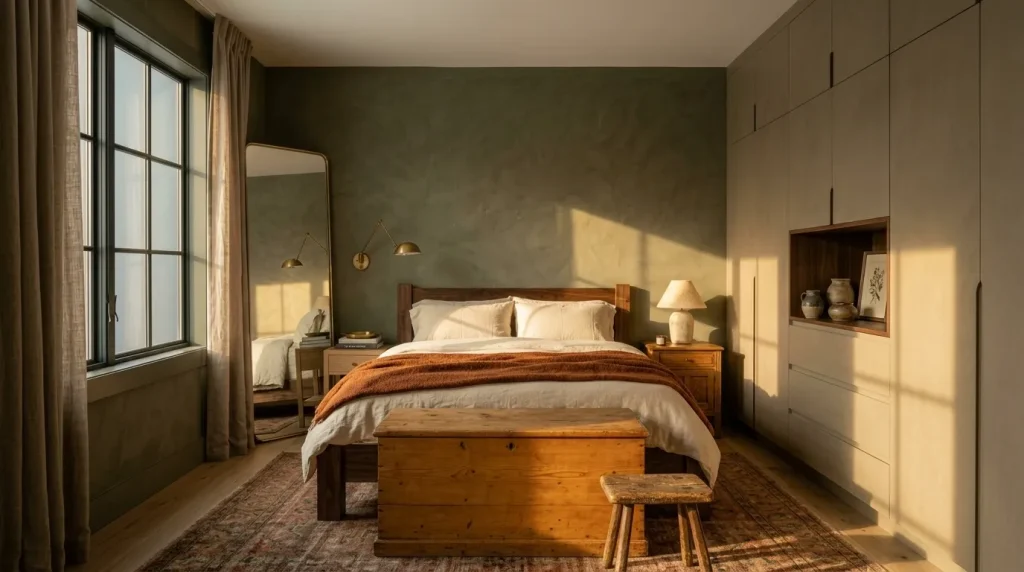
Idea 4: Mix wood finishes instead of buying a matching set
A rustic bedroom should look as though its furniture arrived gradually.
Pair a dark wooden bed with lighter oak nightstands. Use an old pine chest beside a walnut dresser. Paint one small piece if three different woods begin competing.
I once worked through an illustrative room where the bed, nightstands, dresser, and bench were all purchased in the same distressed finish. It looked coordinated, but it also looked like a furniture showroom.
Replacing one nightstand with an old wooden stool immediately made the room feel more believable.
Rustic design depends on variation and age. Matching everything can remove both.
Add age without adding fake distressing
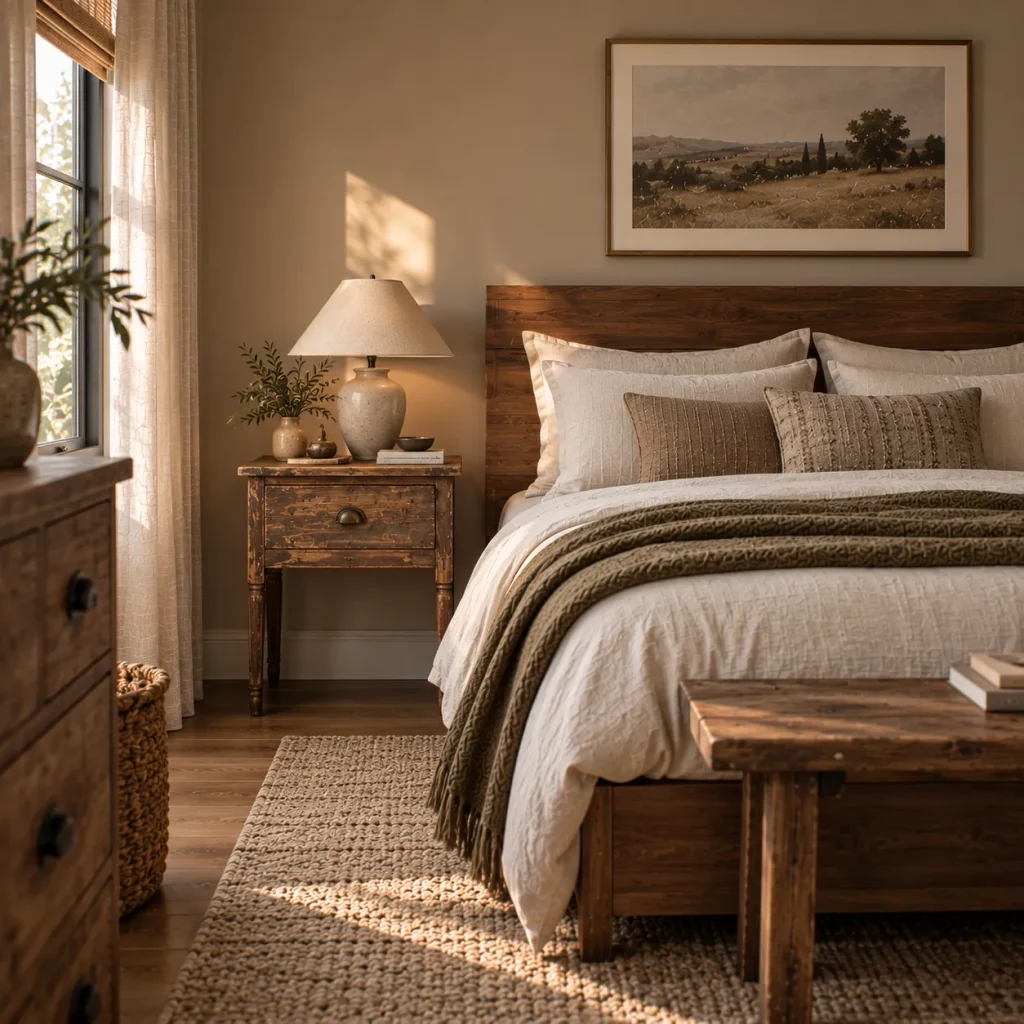
Idea 5: Bring in one genuinely vintage piece
One old object can do more for a rustic room than several new pieces manufactured to look old.
Try an antique chest, vintage bedside table, weathered bench, old framed mirror, wooden chair, or small cabinet.
Current interior design is embracing patina and designed imperfection more broadly in 2026, with Architectural Digest also describing farmhouse and rustic bedroom styling through reclaimed wood, flea-market finds, cotton, natural materials, and furniture that feels connected to history rather than overly designed.
Do not deliberately damage a good new piece to make it “rustic.” Natural wear looks different from artificial scraping.

Idea 6: Use reclaimed wood on one architectural surface
Reclaimed timber can be beautiful, but covering every wall in rough boards is rarely necessary.
Use it more selectively. A reclaimed headboard, ceiling beam, bench, or one properly detailed wall can provide enough texture.
Older rustic guidance often recommended shiplap or reclaimed boards as feature treatments, and those ideas still work when the material suits the architecture.
For a more current interpretation, avoid a narrow decorative rectangle behind the bed. If you panel a wall, let the material relate to the full architectural surface.
And check reclaimed materials carefully for stability, pests, moisture damage, and appropriate finishing before bringing them indoors.
Make the bed feel soft enough to balance the hard materials

Idea 7: Layer linen, cotton, and wool instead of piling on pillows
Wood and stone make rustic bedrooms visually strong, so the bed should provide softness.
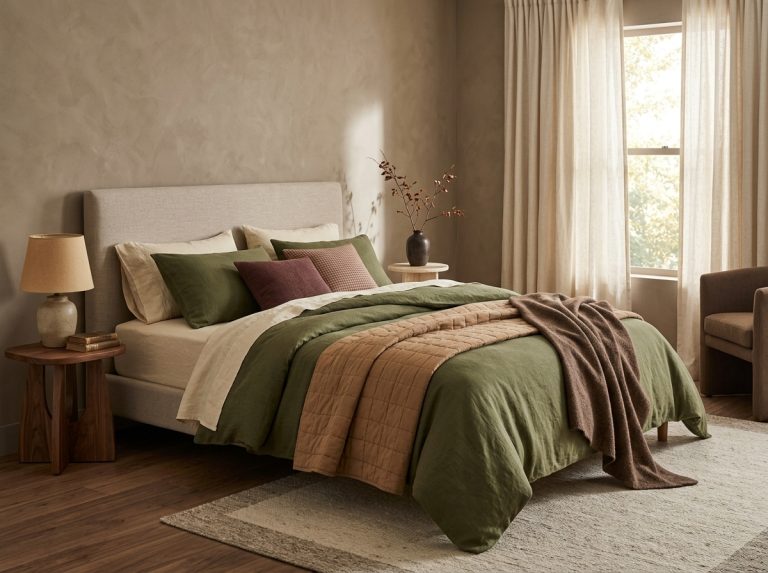
Start with breathable cotton or linen sheets. Add a linen duvet, quilted coverlet, or cotton blanket, then finish with a wool throw.
You do not need seven decorative pillows.
Two sleeping pillows, two larger back pillows, and one smaller lumbar cushion can be plenty, depending on the bed size.
Current 2026 bedroom design is strongly focused on tactile, enveloping materials such as washed linen, mohair, brushed wool, and upholstered surfaces.
Try oatmeal linen with rust wool, or warm ivory bedding with an olive blanket.
The color can stay quiet while the texture changes.
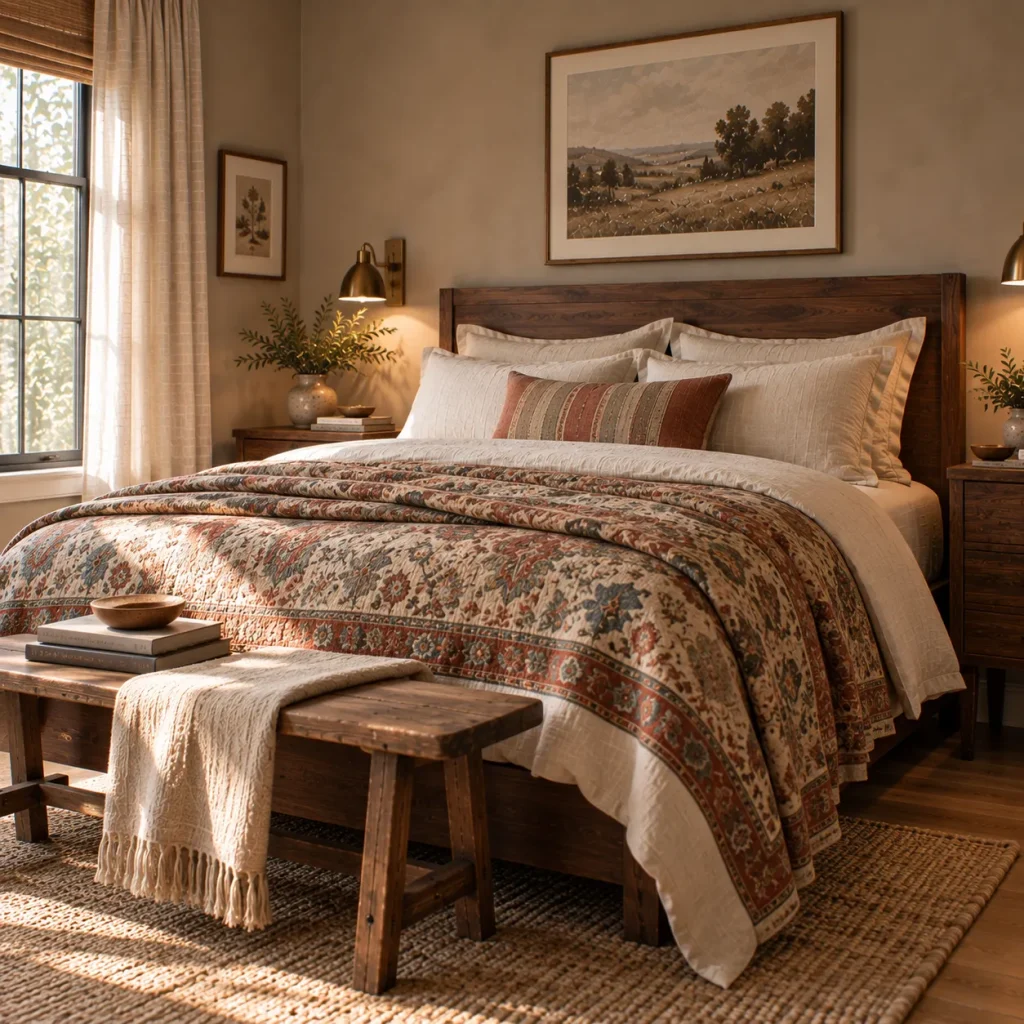
Idea 8: Add a patterned quilt or blanket
Rustic bedrooms benefit from pattern because wood grain alone can make the room feel visually heavy.
Try ticking stripes, checks, small florals, plaids, heritage-inspired quilts, or woven geometric blankets.
Architectural Digest’s current bedroom guidance specifically points to quilts, checks, stripes, and layered natural textiles as a way to create warmth and character in farmhouse and rustic spaces, echoing our farmhouse living room tips.
Do not match every pattern.
A striped pillow can work beside a faded floral quilt if two or three colors repeat across both.
Rust, sage, dusty blue, cream, tobacco, and burgundy are particularly easy to layer with natural timber.
Bring texture onto the walls and floor
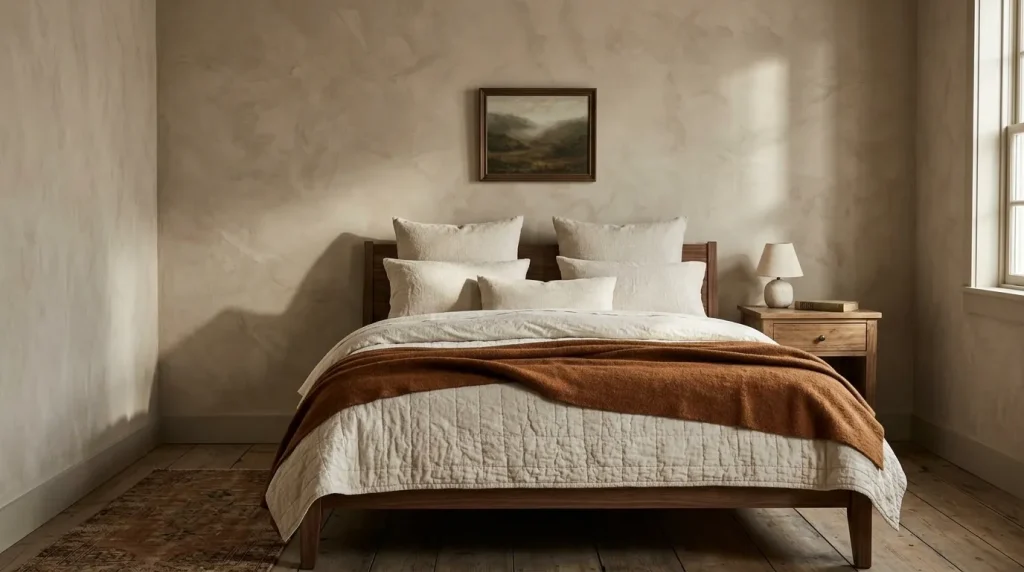
Idea 9: Use plaster or limewash instead of more wall decor
A rustic wall does not need a collection of signs.
Raw plaster, limewash-style paint, softly textured finishes, or clay-based surfaces can create depth through shadow rather than decoration.
A recently restored 1920s home featured waxed clay lime plaster alongside antique furniture and richly layered materials, showing how aged-looking surfaces can give rooms character without artificial rustic styling.
Warm putty, clay, taupe, or soft stone are particularly effective.
If specialty finishes are outside the budget, use matte paint and let natural wood, textiles, and artwork provide the remaining texture.
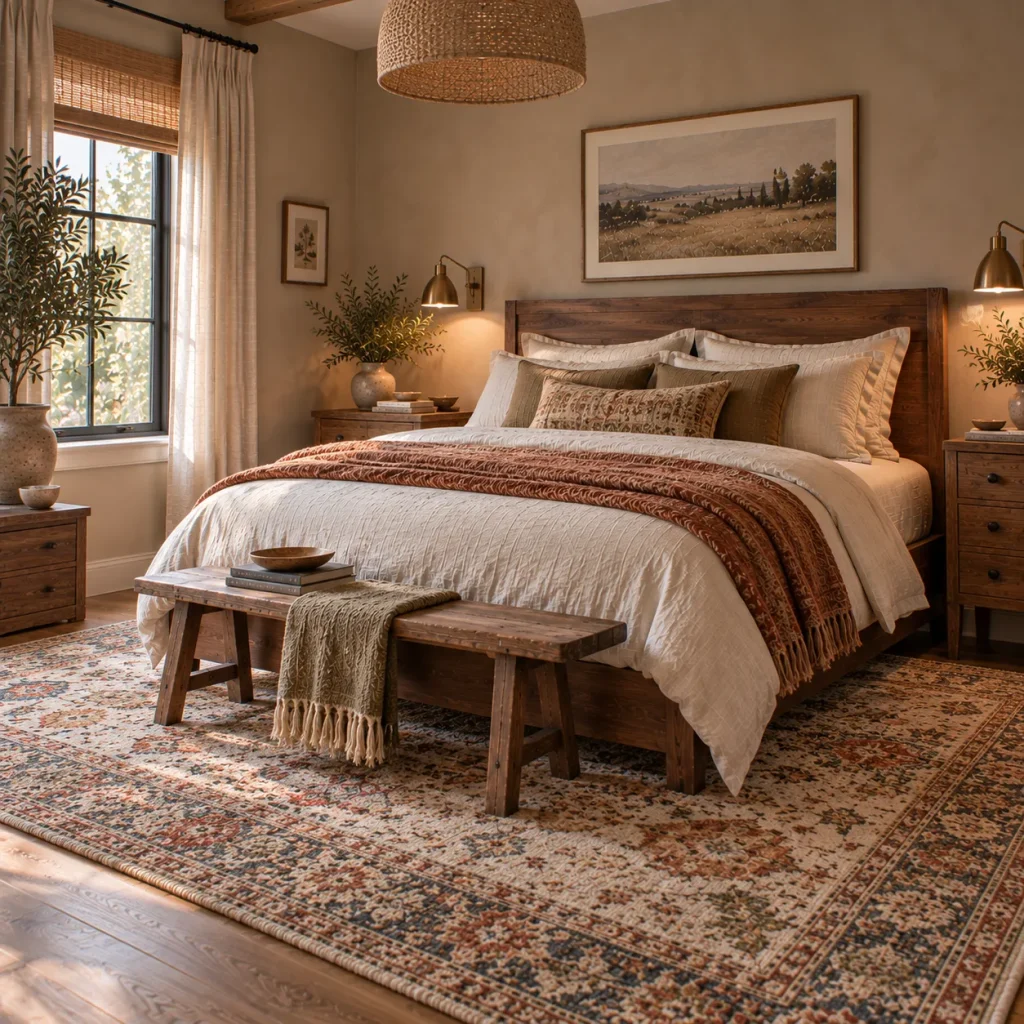
Idea 10: Use a generous wool or woven rug
Bare wood floors look beautiful, but they can make a bedroom feel acoustically and physically hard.
A wool, flat-woven, jute-blend, or faded patterned rug provides softness and helps connect the bed to the rest of the room.
For a queen bed, an 8-by-10-foot rug is often a useful starting point where space permits. A king may work better with a 9-by-12. Final size depends on the room and how much rug you want visible around the bed.
Older rustic bedroom guidance still gets this principle right. Wool, sisal, sheepskin, and natural woven materials give rustic spaces the tactile softness they need.
If the room already contains lots of brown wood, choose a rug with cream, dusty blue, faded red, or olive rather than another solid brown surface.
Use stone and metal as quieter accents
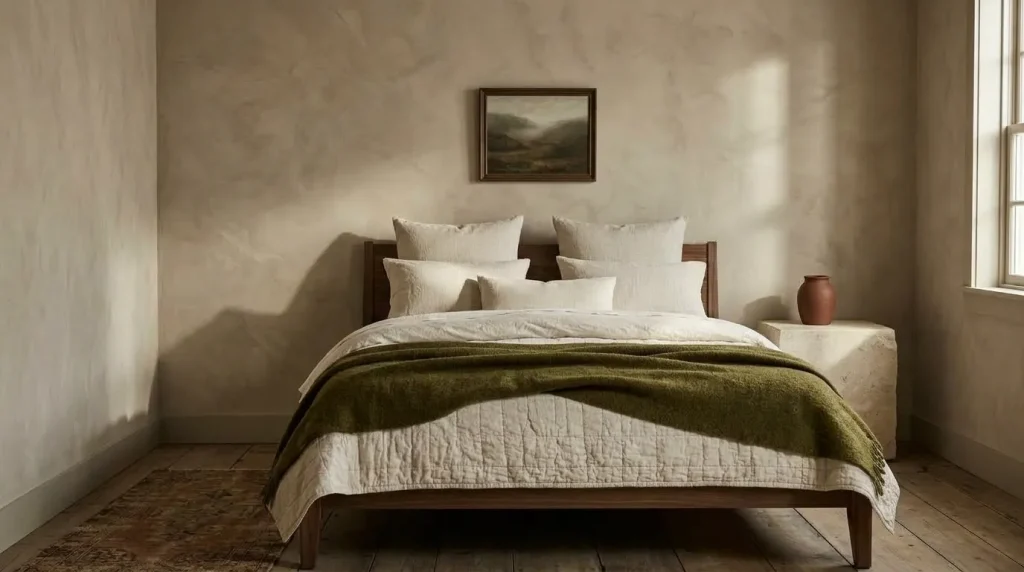
Idea 11: Introduce one stone or ceramic element
Rustic style becomes richer when wood is not the only natural material.
Try a limestone lamp base, travertine side table, stone fireplace surround, handmade ceramic vase, or rough pottery.
Stone works particularly well beside soft bedding because the surfaces contrast so clearly.
You do not need a faux-stone accent wall simply to make the room more rustic. One authentic material in a smaller dose often looks better.
Current 2026 interiors are increasingly mixing rough surfaces such as stone and plaster with smoother wood, metal, and upholstery.
That material tension keeps rustic bedrooms from becoming visually heavy.
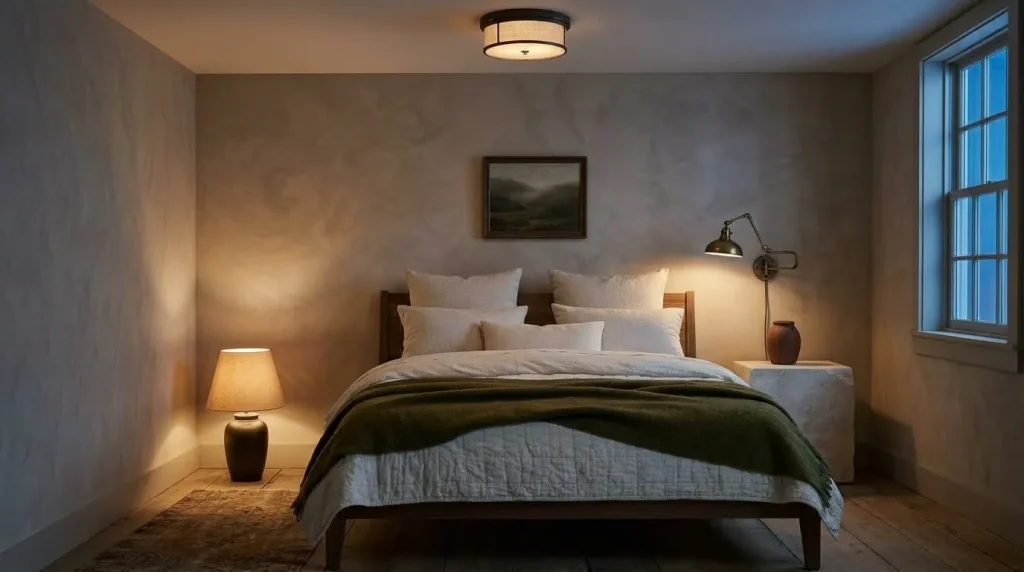
Idea 12: Choose aged brass, bronze, or iron for lighting
Black industrial fixtures are common in rustic bedrooms, but using matte black on every lamp, handle, mirror, and bed frame can feel formulaic.
Try aged brass, dark bronze, iron, or a mixed-metal approach instead.
A brass swing-arm sconce can look beautiful beside old oak. Bronze works naturally with olive, tobacco, and chocolate. Iron can add stronger contrast without dominating the room.
Use several levels of light where possible.
Bedside lamps or sconces provide reading light. A ceiling fixture handles broader illumination. A small floor lamp can define a reading corner in a larger bedroom.
Current bedroom trends are also giving more attention to reading zones and intentionally layered lighting rather than treating bedrooms as spaces used only for sleep.
Finish with objects that feel collected
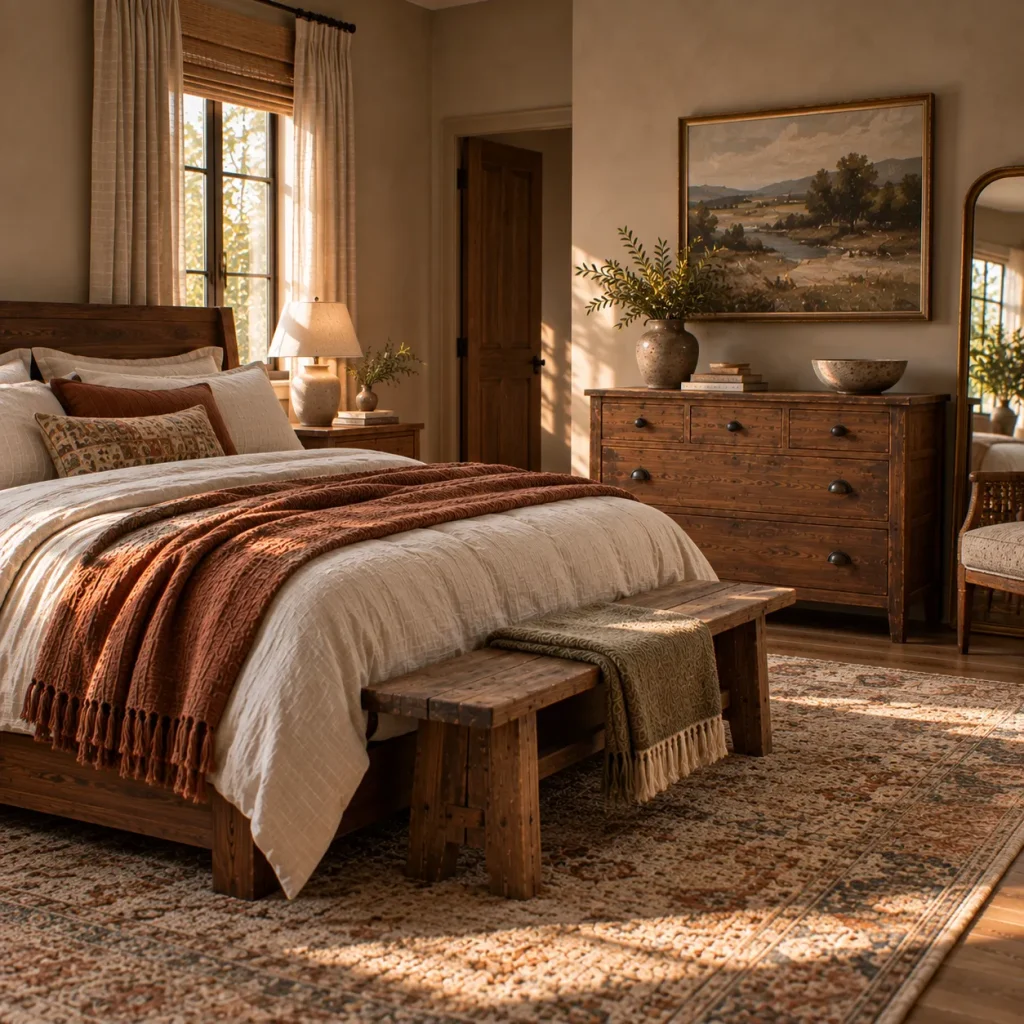
Idea 13: Use landscape art, books, and handmade pieces
Rustic bedroom decor does not need to announce itself.
Instead of “Farmhouse,” “Relax,” or “Home” signs, use a landscape painting, old botanical study, black-and-white photograph, woven textile, or small vintage drawing.
Add books you actually read. Keep a handmade ceramic bowl on the dresser. Hang an old mirror if the room needs reflected light.
One of the strongest 2026 movements is toward rooms with age, authenticity, and personal detail rather than generic perfection.
Do not decorate every horizontal surface.
A bedside table with a lamp, two books, and one small object can feel far richer than a tray filled with coordinated rustic accessories, a mood we also explore in our cozy bedroom ideas.
A practical rustic bedroom material guide
| Element | Strong choice | Be cautious with |
|---|---|---|
| Walls | Putty, clay, plaster, mushroom | Cold gray |
| Wood | Walnut, oak, pine, reclaimed timber | Fake distressed finishes |
| Bedding | Linen, cotton, wool | Too many faux-fur layers |
| Rug | Wool, woven natural fiber, faded pattern | Tiny bedside rugs |
| Metal | Aged brass, bronze, iron | Matte black everywhere |
| Color | Rust, olive, dusty blue, chocolate | Brown on every surface |
| Decor | Art, books, vintage objects | Rustic word signs |
What should you skip in a rustic bedroom?
Artificially distressed furniture everywhere. One genuinely aged piece has more character than a complete set covered in manufactured scratches.
Too much reclaimed wood. Wood on the floor, walls, ceiling, bed, and furniture can make the room visually heavy.
Cold gray farmhouse palettes. Warmer wood, clay, mushroom, chocolate, olive, and soft cream feel more relevant in 2026.
Oversized piles of decorative pillows. They create work every evening without necessarily adding comfort.
Rustic-themed accessories. Lanterns, signs, faux antlers, rope, and decorative crates are not required. Let material and craftsmanship establish the style.
Try this if your bedroom is already plain and beige
Keep the beige walls and bed if they work.
First, add one darker wooden piece, such as walnut nightstands or an old pine bench.
Next, introduce a wool or patterned rug containing rust, olive, dusty blue, or chocolate.
Replace generic cushions with one patterned quilt or textured throw.
Then add a ceramic or aged-brass bedside lamp.
Finally, bring in one vintage item or piece of landscape art.
You can create a strong rustic direction without touching the walls or replacing expensive furniture.
FAQ
Are rustic bedrooms still popular in 2026?
Yes, but the style is becoming richer and less themed. Current interiors favor natural timber, darker woods, plaster, vintage pieces, earthy color, wool, linen, and authentic patina rather than faux-distressed farmhouse furniture.
What colors work best in a rustic bedroom?
Warm ivory, mushroom, clay, chocolate brown, olive, dusty blue, terracotta, bottle green, and rust all work well. Choose colors that complement the undertones of your wood flooring and furniture.
Can rustic style work in a small bedroom?
Yes. Use one strong wooden piece, simple bedding, a properly scaled rug, and a few tactile materials rather than filling the room with bulky rustic furniture. Vertical storage and wall-mounted lighting can also free useful floor and nightstand space.
What is the difference between rustic and farmhouse bedrooms?
Rustic design focuses broadly on natural materials, age, texture, craftsmanship, and an informal connection to the landscape. Farmhouse style overlaps with those qualities but more specifically references rural domestic interiors through pieces such as quilts, painted furniture, checks, traditional joinery, and practical country-house details.
Let real materials create the rustic feeling
The strongest 13 rustic bedroom ideas do not depend on making every object look old.
Start with honest materials. Let walnut or old oak provide weight. Use linen and wool to soften it. Add plaster, stone, pottery, or aged metal where another texture is needed.
Then leave a little imperfection.
If you make one change first, replace the most artificial rustic element in the room with something simpler. A real wooden stool, wool blanket, old picture, or handmade ceramic lamp usually has more character than several accessories designed specifically to look “rustic.”
A bedroom should feel calm enough to sleep in and personal enough to belong to you. Rustic style works best when the warmth comes from materials that age well, not from a decorating theme.