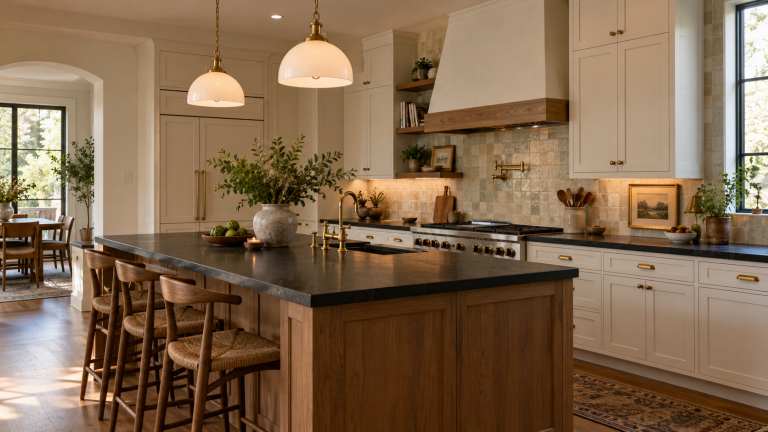
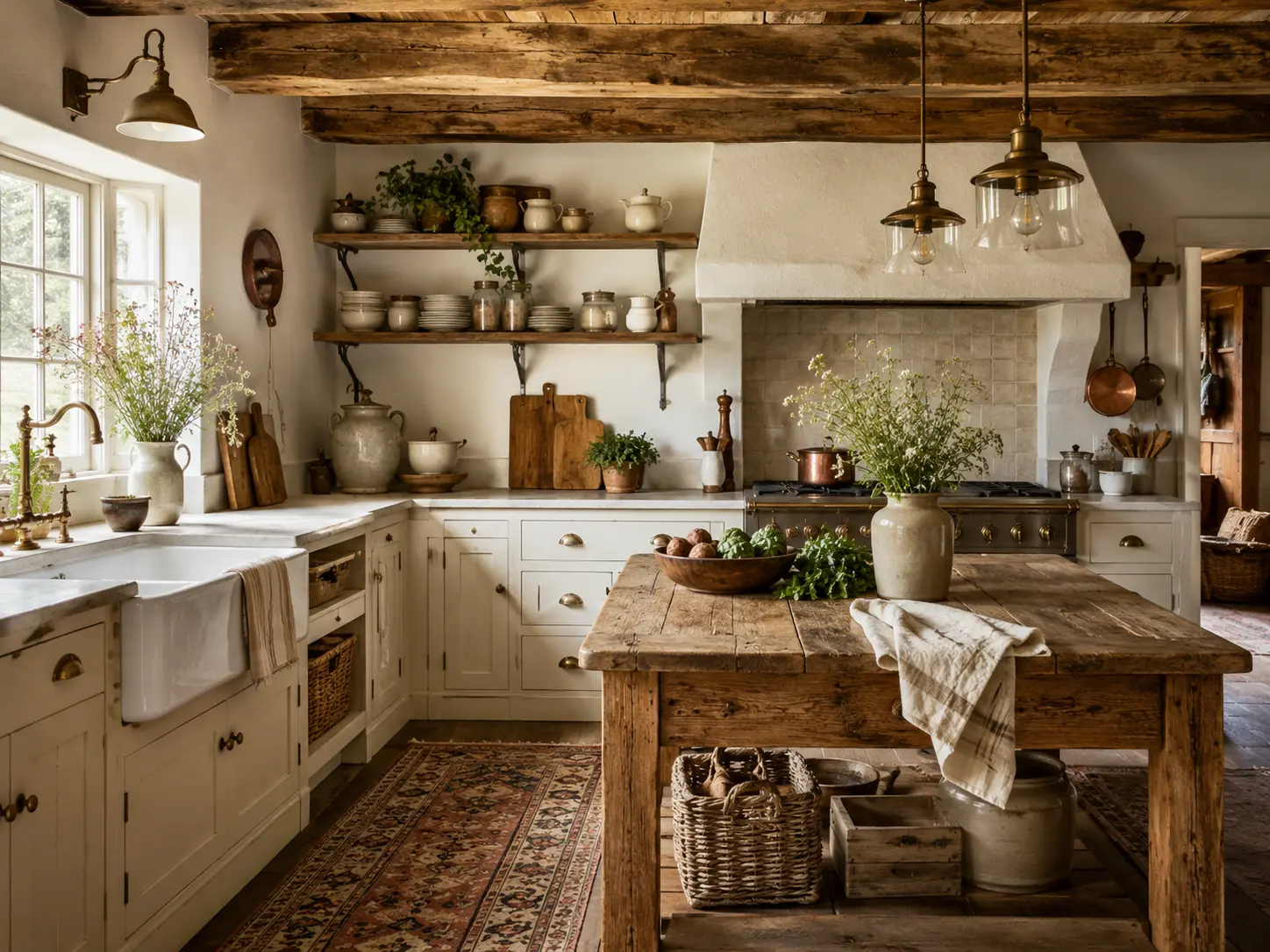
14 rustic farmhouse kitchen ideas for a Warm, Lived-In Home
A rustic farmhouse kitchen should be able to survive flour on the counter, muddy shoes near the back door, and a cast-iron pan left beside the stove.
If the room only looks convincing when every surface is empty, something has gone wrong.
The best 14 rustic farmhouse kitchen ideas are less about distressed signs and more about materials that improve with use. Think oak with visible grain, stone that develops character, painted cabinetry, old brass hardware, useful open shelving, and furniture that doesn’t look like it arrived as one matching package.
That direction feels especially relevant in 2026. Kitchen design is moving toward warmer woods, earthy colors, patinated metals, furniture-like cabinetry, and spaces that feel personal rather than showroom-perfect. Designers are already predicting those ideas will continue strongly into 2027.
Here’s how I’d bring that warmth into a real kitchen.
1. Let natural wood do more of the decorating
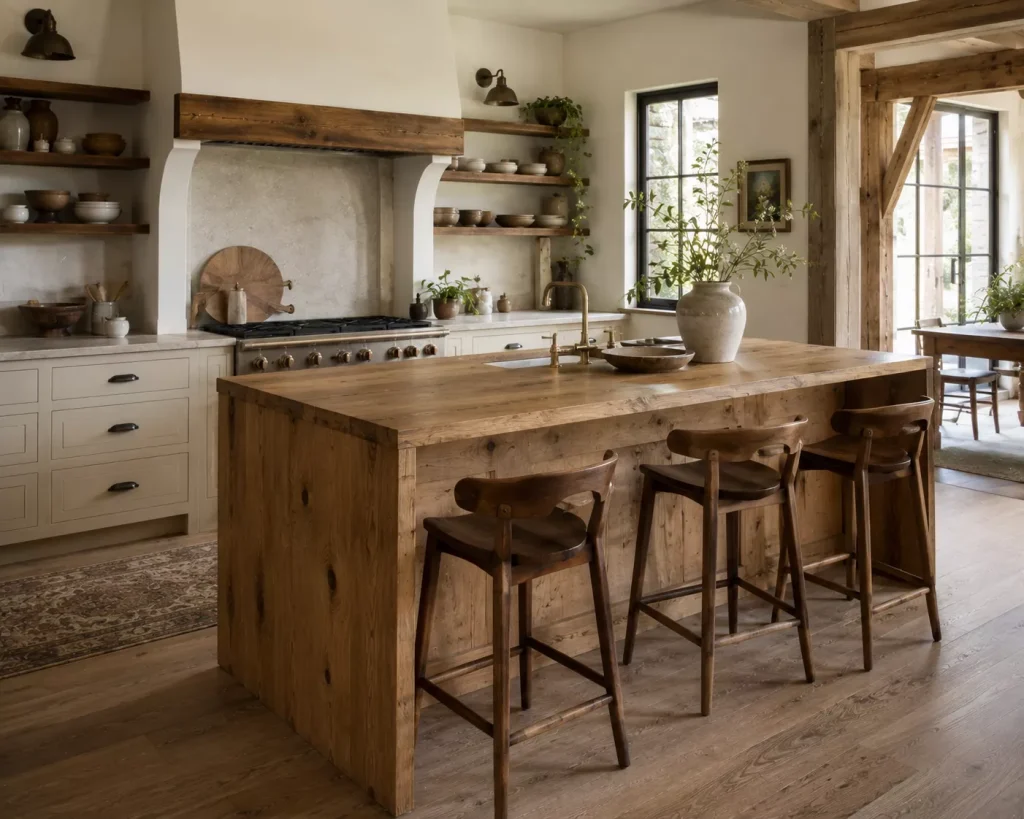
Idea 1: Use visible wood grain instead of hiding every surface under paint.
Oak, walnut, pine, and reclaimed timber bring instant warmth to a farmhouse kitchen.
You don’t need wood cabinets everywhere. In fact, mixing painted cabinetry with natural wood often looks more interesting.
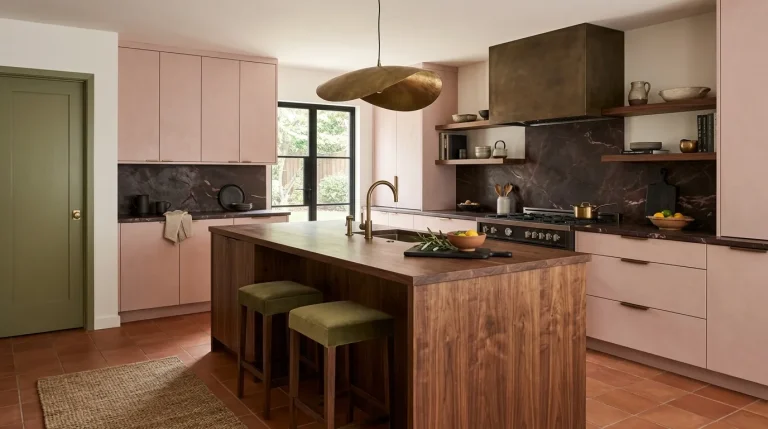
Try warm cream lower cabinets with an oak island. Or keep existing white cabinets and add walnut counter stools, wood shelving, and an old butcher-block table.
Natural wood is especially prominent in current kitchen design, with designers favoring warmer, textured finishes over the colder, flatter looks that dominated previous years.
Idea 2: Allow wood finishes to age naturally.
This is where rustic interiors become convincing.
A table with scratches from actual use has more character than furniture factory-distressed to look old.
Patina is having a broader moment in 2026 interiors, with designers embracing wood, leather, brass, bronze, and other materials that visibly change over time.
That doesn’t mean neglecting your kitchen.
Seal counters properly. Repair water damage. Clean grease.
But don’t panic because an oak table has acquired another small mark.
Farmhouse materials should be allowed to have a life.
2. Choose cabinet colors that feel earthy rather than overly trendy
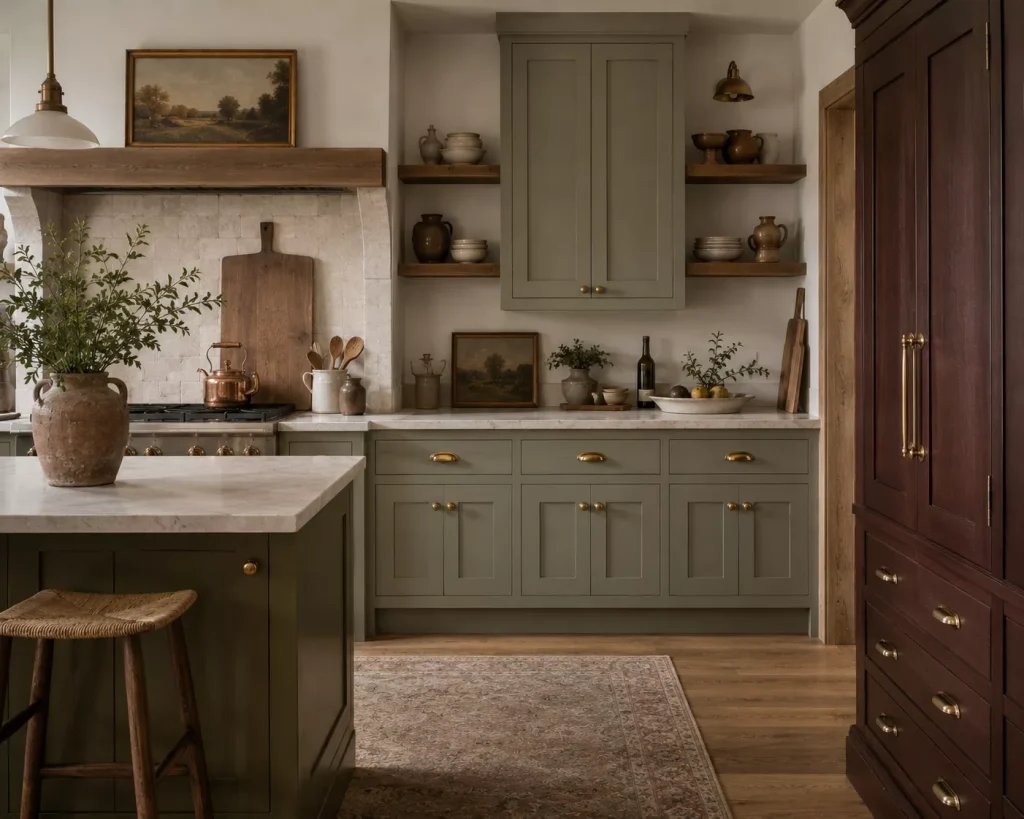
Idea 3: Move beyond bright white cabinetry.
White kitchens can still look beautiful, but rustic farmhouse rooms often benefit from something softer.
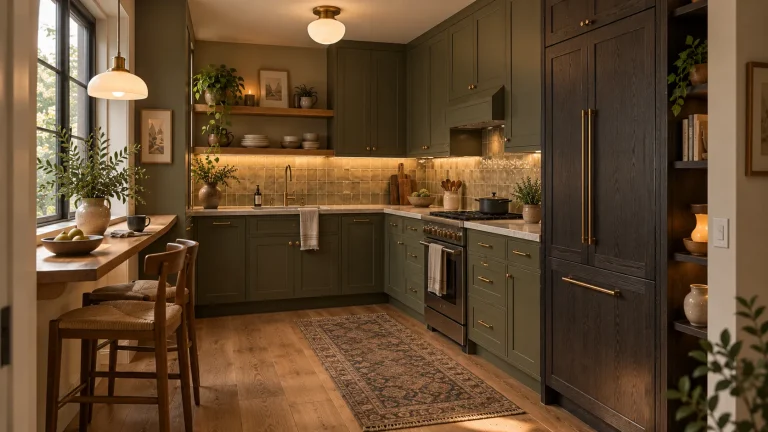
Try putty, mushroom, warm cream, dusty sage, olive, muted blue, or even earthy yellow.
Current kitchen palettes are leaning toward warm neutrals and grounded colors rather than cold gray. Earthy greens, yellow, terracotta, and softened off-whites are also expected to carry into 2027.
I particularly like sage cabinetry with medium oak and aged brass.
For something quieter, warm mushroom cabinets beside a cream stone countertop feel traditional without looking old-fashioned.
Let one element carry the stronger color
You don’t need green cabinets, patterned tile, colorful wallpaper, and a painted island all competing at once.
Perhaps the island gets the olive paint while the perimeter cabinetry stays cream.
Or paint a freestanding pantry cupboard deep burgundy and leave the rest restrained.
Farmhouse kitchens handle color beautifully because wood, stone, and woven materials naturally soften it.
The key is choosing one strong moment instead of turning every surface into one.
3. Make the kitchen island look more like furniture
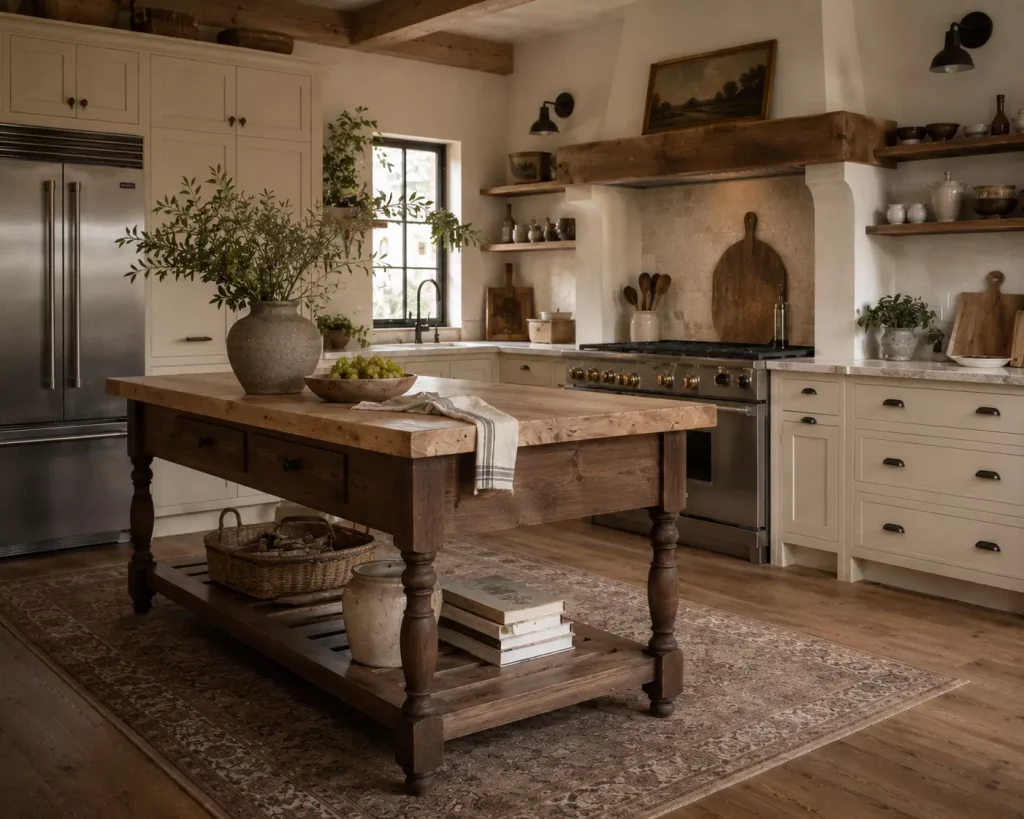
Idea 4: Give the island character instead of matching every cabinet.
A farmhouse island can feel almost like an old worktable placed in the middle of the kitchen.
Try a different wood tone, painted base, visible legs, open lower shelving, or a slightly thicker countertop.
Furniture-inspired cabinetry and statement islands are becoming increasingly important as kitchens shift toward spaces that feel more individual and less built from standardized matching units.
If you’re renovating on a budget, you may not need a custom island.
A substantial secondhand worktable can sometimes serve the same purpose if the height works for food preparation and the surface is appropriate.
Measure the walkway before falling in love with an island
An island that looks perfect online can make a smaller kitchen miserable.
Try to preserve comfortable passage around it, especially near the refrigerator, dishwasher, and oven.
And consider whether you genuinely need seating.
Four stools lined along an island consume more clearance than people expect.
If the kitchen already has a dining table six feet away, you may prefer deeper drawers or shelving rather than another row of seats.
The most rustic thing a kitchen can do is work properly.
4. Use open shelving where it serves a real purpose
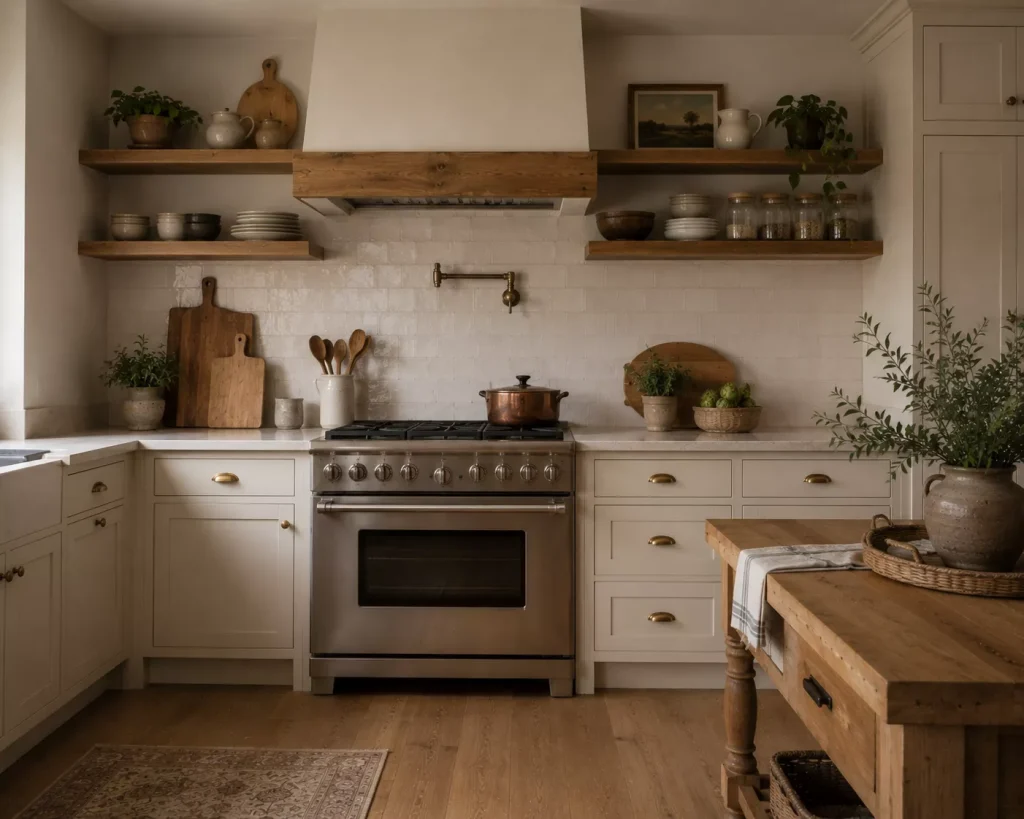
Idea 5: Replace a few upper cabinets, not necessarily all of them.
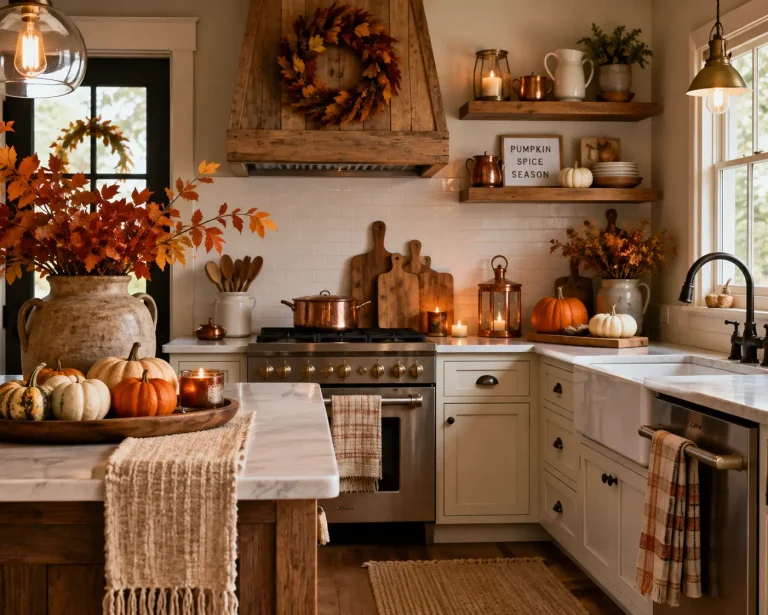
Open shelving suits farmhouse kitchens because everyday crockery, wood boards, jars, and ceramics become part of the room.
But I’d use it selectively.
Two oak shelves beside the range can hold plates and bowls you reach for daily.
A narrow shelf above a coffee station might hold mugs and a sugar jar.
You don’t need every upper wall exposed.
Here’s the practical trade-off:
| Storage choice | Best quality | Main drawback |
|---|---|---|
| Open wood shelves | Warm, accessible display | Requires regular dusting |
| Glass-front cabinets | Lighter visual feel | Contents still need organizing |
| Closed cabinets | Hides everyday clutter | Can feel heavier |
| Freestanding hutch | Strong farmhouse character | Needs more floor space |
| Rail and hook system | Keeps tools accessible | Can look busy quickly |
Everyone says farmhouse kitchens need open shelves.
But actually, people who hate visible clutter should keep most of their cabinets.
There’s nothing rustic about being annoyed every morning because the cereal boxes are ruining your carefully arranged shelves.
5. Bring in stone, tile, and surfaces with a little variation
Idea 6: Choose countertops that don’t feel too glossy or perfect.
Soapstone, honed marble, butcher block, textured quartz, and quieter stone patterns all sit comfortably in rustic farmhouse kitchens.
Real marble is beautiful, but it stains and etches.
That’s a real trade-off.
If every lemon mark will bother you, choose something lower-maintenance rather than convincing yourself you’ll learn to love patina.

Idea 7: Add handmade-looking tile.
Slightly irregular backsplash tile can bring softness to all those straight cabinet lines.
Try warm white zellige-style tile, muted green squares, cream subway tile with uneven edges, or even a restrained checkerboard.
Checkerboard pattern is enjoying renewed interest in 2026 kitchens, helped by its familiar geometry and ability to add character without requiring overly decorative cabinetry.
For a rustic kitchen, I prefer subdued contrast.
Think cream and terracotta rather than stark black and white.
And don’t assume the backsplash has to become the focal point.
Sometimes simple warm tile allows the wood, range hood, and cookware to carry the room.
6. Let the sink and hardware feel substantial
Idea 8: Use one practical farmhouse feature instead of several decorative clichés.
An apron-front sink is the obvious candidate.
A deep ceramic or fireclay sink works particularly well if you regularly wash large pans, baking sheets, or produce.
But measure carefully.
Apron-front sinks can require cabinet modifications, and replacing one isn’t always a simple drop-in project.
If you like the style but don’t want the renovation, keep your existing sink and focus on the faucet.
A bridge-style faucet, aged-brass finish, or simple traditional silhouette can bring enough character.

Idea 9: Choose hardware that looks better with a little wear.
Cup pulls, simple knobs, iron handles, aged brass, and unlacquered-looking finishes suit farmhouse cabinetry naturally.
I’d avoid mixing too many metal finishes in one compact kitchen.
You don’t need black hardware, chrome plumbing, brass lighting, copper pots, and bronze accessories all fighting for attention.
Choose one main metal.
Then allow a second finish to appear quietly where necessary.
The same principle applies to rustic design generally.
Variation creates character.
Randomness creates noise.
7. Make room for freestanding furniture and old pieces
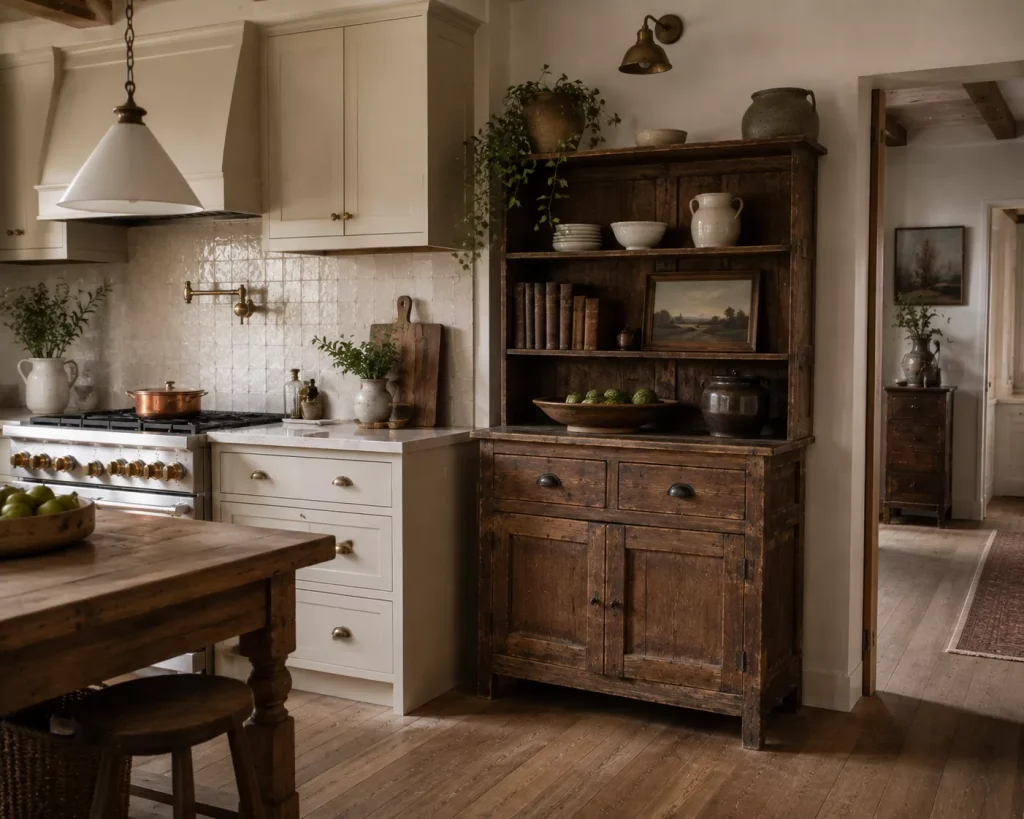
Idea 10: Add one piece that doesn’t look built into the kitchen.
A farmhouse kitchen benefits enormously from furniture.
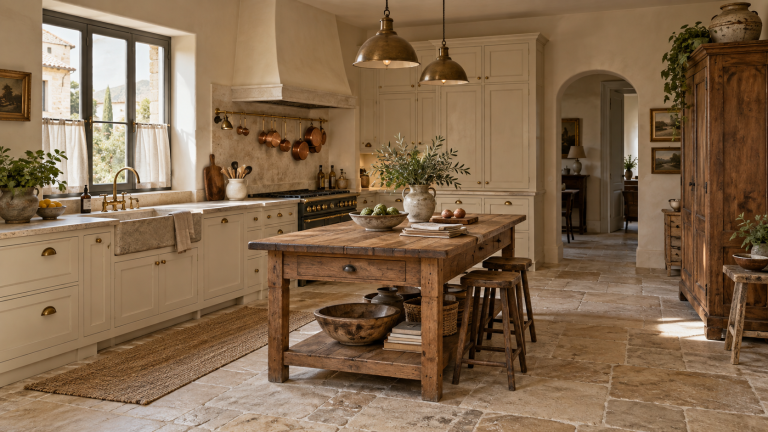
Try a vintage hutch, old pine cupboard, butcher’s table, stool, or narrow dresser.
The renewed interest in vintage pieces, warm woods, traditional craftsmanship, and naturally aged finishes fits especially well with rustic farmhouse interiors.
I once saw a very ordinary white kitchen become far more convincing after a battered walnut cabinet was added to an empty wall.
It wasn’t even technically kitchen furniture.
That was why it worked.
Idea 11: Mix old and new rather than recreating a historical kitchen.
Put a vintage cupboard beside a modern range.
Use an old table underneath contemporary pendant lights.
Pair shaker cabinetry with stainless appliances.
A real home doesn’t need to pretend electricity was recently invented.
Modern appliances, induction cooking, smart storage, and good task lighting can coexist perfectly well with old wood and traditional details.
Actually, that contrast usually makes the farmhouse elements feel more authentic because the room isn’t trying to become a set.
8. Use lighting that feels warm and useful
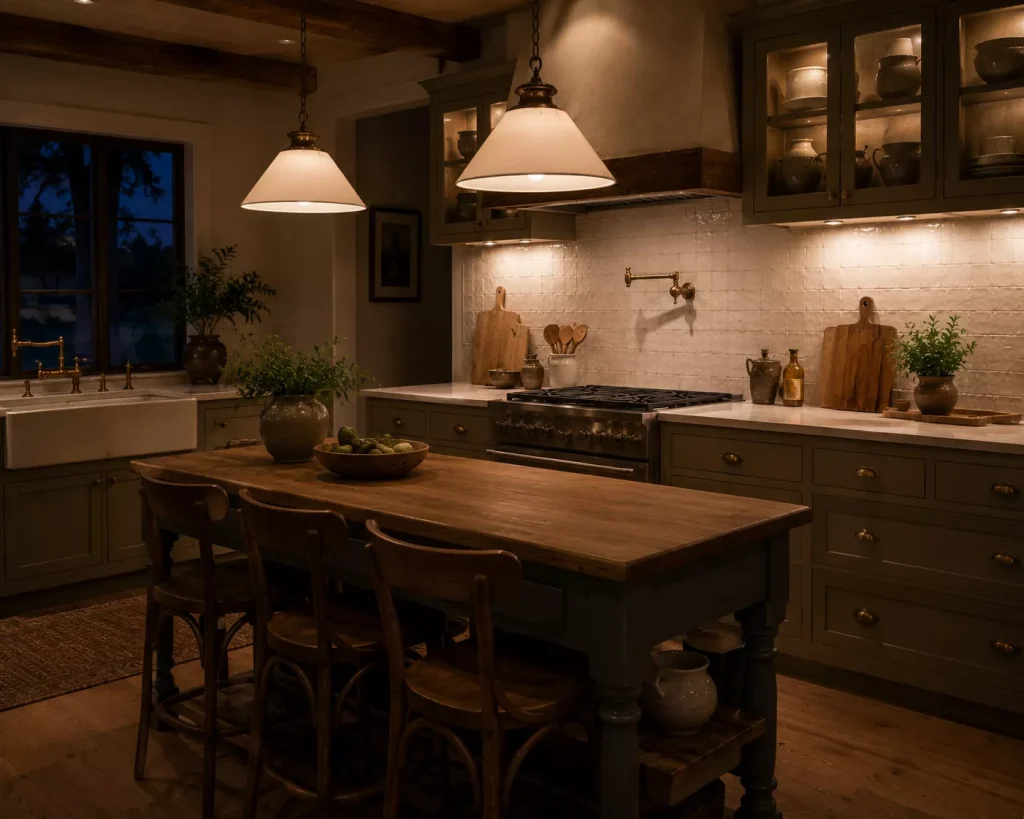
Idea 12: Layer task lighting with one decorative fixture.
The kitchen needs bright enough light to chop onions safely.
It also needs somewhere softer to go once dinner is finished.
Use under-cabinet lighting for worktops.
Then add pendants above an island or table.
Aged brass, blackened metal, milk glass, ceramic, and fabric shades can all suit the style.
Decorative and mood lighting is becoming more important in kitchens as the room increasingly functions like a living and gathering space, a direction designers expect to strengthen into 2027.
Avoid choosing pendants that are too small.
Two substantial lights above a large island usually look stronger than three tiny fixtures floating in space.
But scale works both ways.
An enormous lantern in a modest kitchen can make the ceiling feel surprisingly low.
And wherever possible, put decorative lighting on a dimmer.
Being able to soften the kitchen after cooking makes the room feel far more comfortable.
9. Add fabric, art, and useful objects instead of themed decor
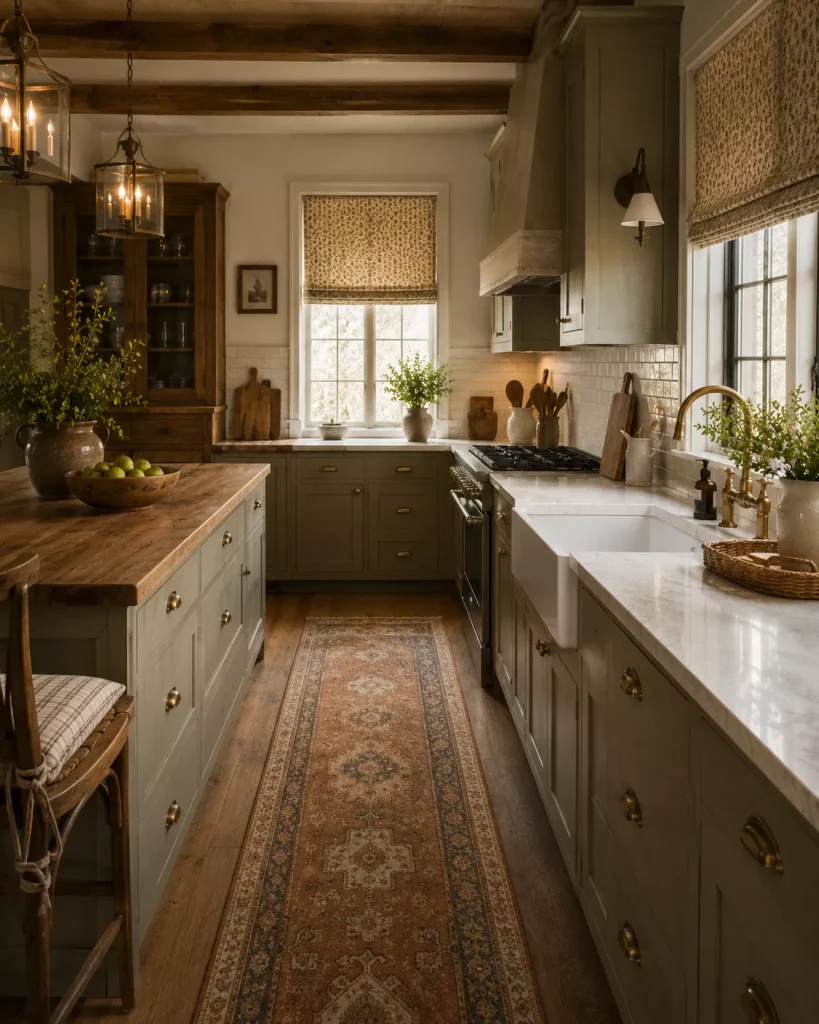
Idea 13: Bring softness into the kitchen through textiles.
Kitchens contain lots of hard surfaces.
Wood, stone, metal, tile, and glass all benefit from something softer nearby.
Try a washable vintage-style runner between cabinets.
Use a Roman shade in a small check or muted floral.
Add seat cushions to wood chairs.
A faded textile in rust, olive, blue, mustard, or cream can bring enough pattern without covering the whole room.
Traditional textiles, handmade ceramics, woven baskets, and craft-focused materials are also appearing strongly in the wider 2026 return to more personal, Americana-influenced interiors.
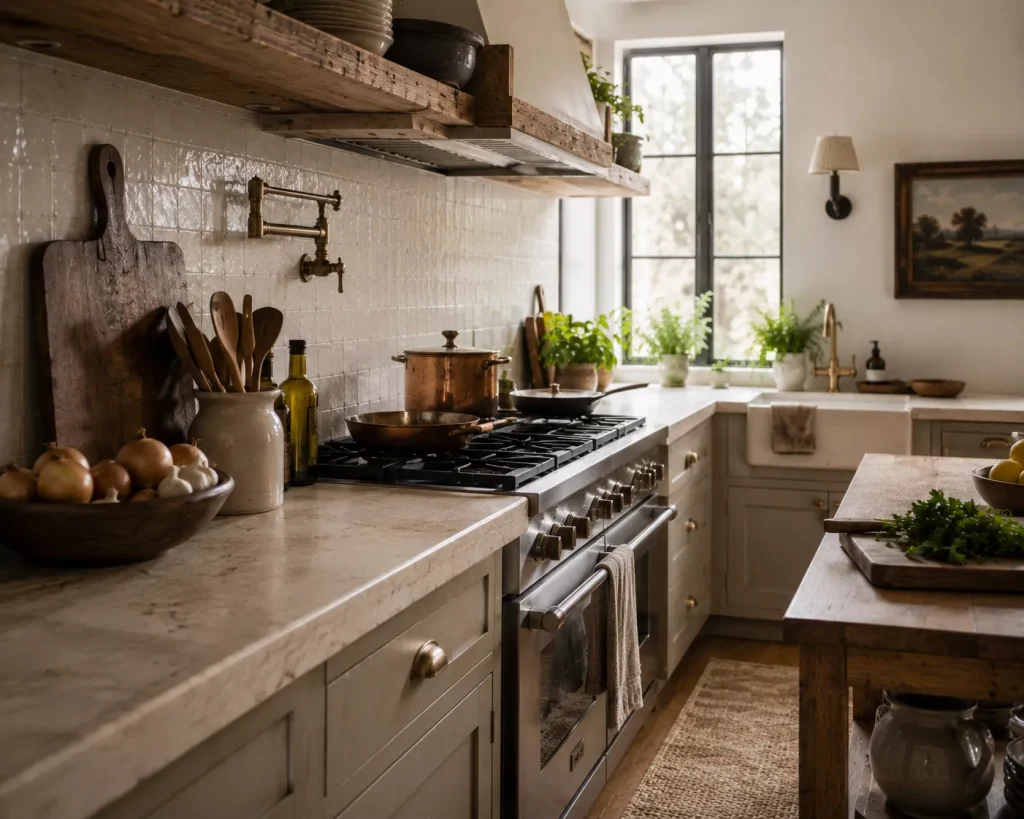
Idea 14: Decorate with things the kitchen can actually use.
A wood cutting board.
A bowl of fruit.
Copper or stainless pans.
A ceramic utensil crock.
A framed landscape.
Fresh herbs on the windowsill.
Those things create atmosphere without taking up space purely for decoration.
One recent rustic kitchen even used bundles of dried lavender and herbs alongside dark wood, flagstone, shelving, and practical cookware to build a more storybook country feeling.
I wouldn’t copy every detail.
Dried herbs can collect dust and don’t suit humid areas.
But the principle is good.
Useful objects can be beautiful.
What should you skip in a rustic farmhouse kitchen?
Start with decorative signs.
The kitchen doesn’t need wall art explaining that kitchens contain coffee, family, food, or gathering.
I’d also skip deliberately distressed finishes everywhere.
One old table with genuine scratches has character.
Brand-new cabinetry sanded around every corner to imitate decades of wear tends to look forced.
Don’t automatically install shiplap on every wall either.
It can work beautifully in the right house, but farmhouse style doesn’t depend on it.
And avoid piling rustic materials onto every surface.
Wood cabinets, wood floors, wood ceiling, wood island, wood shelves, wood stools, and wood accessories can quickly make a kitchen feel heavy.
Break timber with painted finishes, tile, plaster, metal, or stone.
The broader 2026 movement toward imperfect interiors works because materials feel varied and collected, not because every object looks old.
Rustic should feel relaxed.
Not manufactured.
FAQ About Rustic Farmhouse Kitchens
What colors work best in a rustic farmhouse kitchen?
Warm white, cream, mushroom, sage, olive, dusty blue, terracotta, muted yellow, and warm brown all work well. Natural wood gives these softer colors enough contrast to prevent the room from feeling flat.
Can you create a farmhouse kitchen without renovating?
Yes. Add a wood table, vintage hutch, washable runner, aged-looking hardware, better lighting, ceramics, and simple open shelves. Those changes can alter the character of a kitchen without replacing the cabinets.
What countertops work with rustic farmhouse kitchens?
Wood, soapstone, honed stone, marble, and quieter quartz surfaces can all work. Choose according to the maintenance you’re genuinely comfortable with, rather than selecting a high-maintenance material purely for appearance.
How do you make farmhouse decor look current?
Use fewer literal farmhouse motifs and focus on authentic materials, useful objects, warmer color, vintage furniture, and good lighting. Current kitchen design is moving toward exactly that more personal, patina-rich approach.
The best rustic kitchen I’ve worked in wasn’t especially large or expensive.
Its oak table was scratched. The cabinet paint had a few small marks near the handles. An old ceramic bowl held onions beside the range, and the newest thing in the room was a very modern coffee machine.
Nothing matched perfectly.
And that was exactly why it worked.
Use these 14 rustic farmhouse kitchen ideas the same way. Start with the material that occupies the most visual space, usually cabinetry, flooring, or the island. Warm that up first. Then add one older piece and one useful object worth leaving visible.
A farmhouse kitchen shouldn’t look preserved.
It should look ready for someone to start cooking.