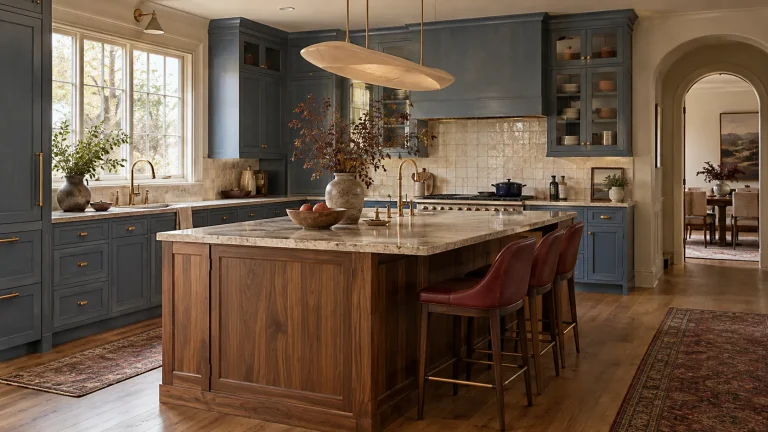

12 kitchen flooring ideas That Balance Style, Durability, and Everyday Life
Choose a Floor That Survives Real Life, Not Just Photos
Kitchen flooring has to tolerate far more than most beautiful inspiration photos reveal. Water splashes around the sink, chairs scrape beneath the table, crumbs collect in grout lines, pets cross the room with wet paws, and somebody eventually drops a heavy pan. The best kitchen flooring ideas for 2026 balance appearance with maintenance, comfort, slip resistance, and the way the kitchen connects to surrounding rooms. Current flooring direction is noticeably warmer, with terracotta, tumbled limestone, natural wood, terrazzo, mosaics, and pattern replacing some of the smooth gray floors that dominated previous years. Your perfect floor is not necessarily the most fashionable material — it is the surface that still makes sense after five years of cooking, cleaning, spills, chairs, shoes, and changing daylight.

Idea 1: Bring Warmth Back With Natural Wood
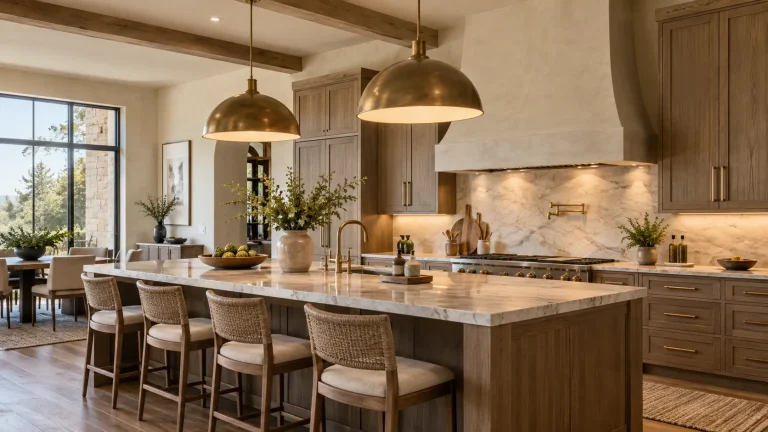
Oak and walnut flooring continue to gain ground as kitchens move away from cold, uniform surfaces. A wide-plank oak floor pairs naturally with warm white or painted cabinetry, while walnut adds richer contrast in a kitchen that already leans light. If you’re drawn to this kind of warm, wood-driven kitchen, our mid century modern kitchen remodel tips guide explores similar walnut-forward material choices.
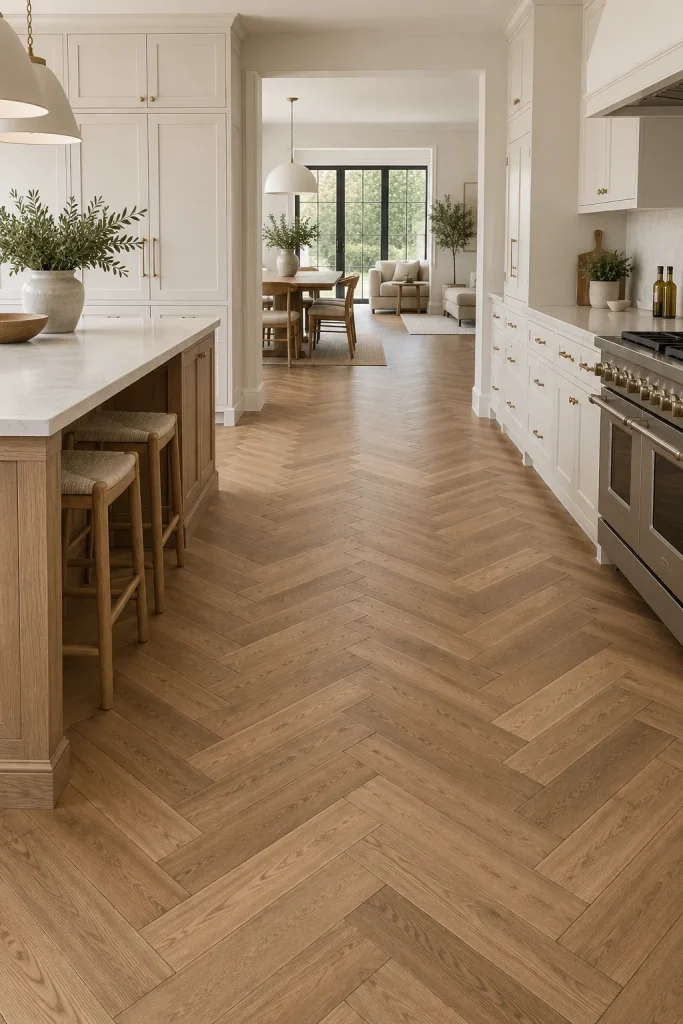
Idea 2: Try a Herringbone or Parquet Pattern
A herringbone wood floor adds movement and craftsmanship without introducing another color. Classic parquet provides a subtler feature-floor effect. Do not automatically pair a highly patterned wood floor with busy stone and decorative tile — let one surface lead. A walnut or medium-oak herringbone floor can look beautiful beneath warm white cabinets and relatively quiet countertops, though professional installation matters here since alignment becomes very visible, especially across open-plan areas.
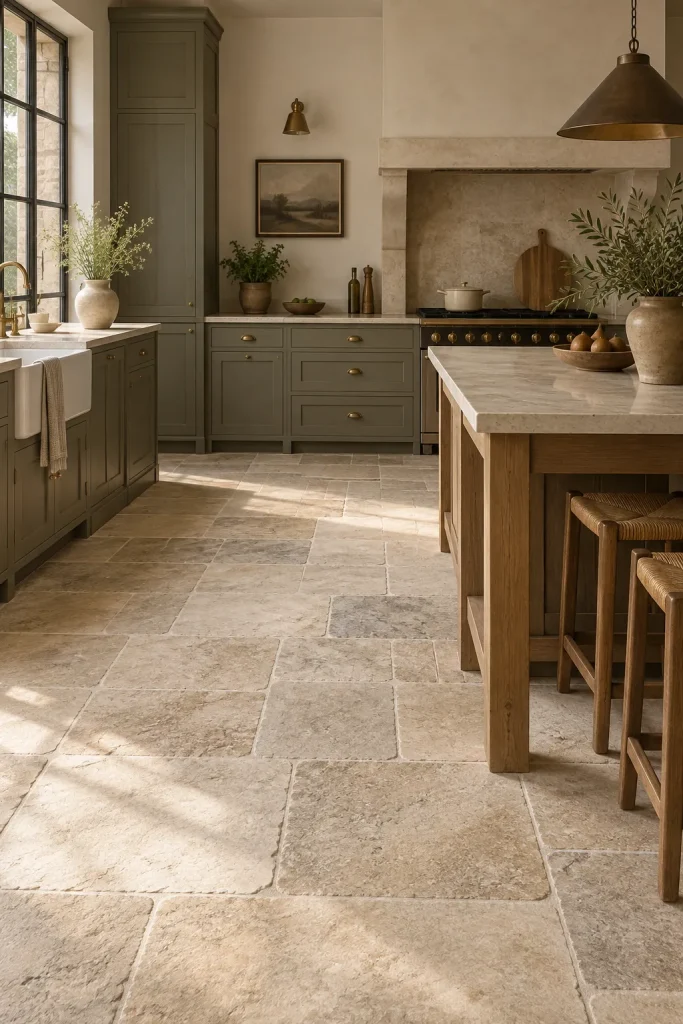
Idea 3: Try Tumbled Limestone for a Softer Stone Floor
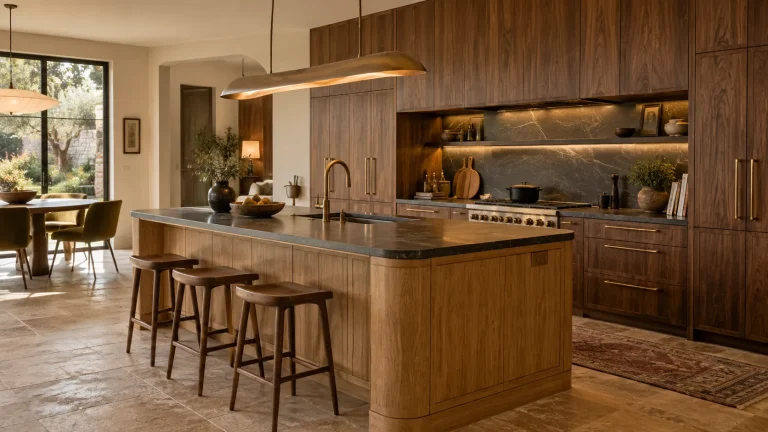
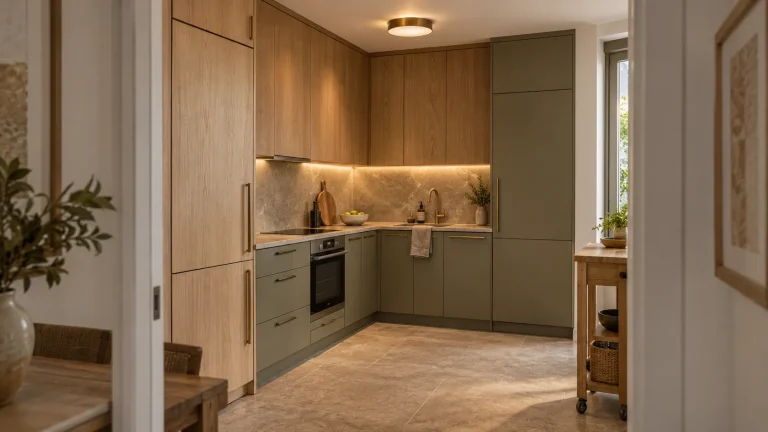
Limestone can make a new kitchen feel grounded almost immediately. Tumbled versions have softened edges and subtle tonal variation, giving the floor a more relaxed appearance than highly polished stone. Tumbled limestone is one of the significant 2026 kitchen flooring directions because its worn-looking texture adds character without relying on decorative pattern. Warm beige, oatmeal, fossil gray, and creamy limestone tones work particularly well with oak, walnut, sage, and mushroom cabinetry — a pairing that also suits the rustic warmth in our 14 rustic farmhouse kitchen ideas.
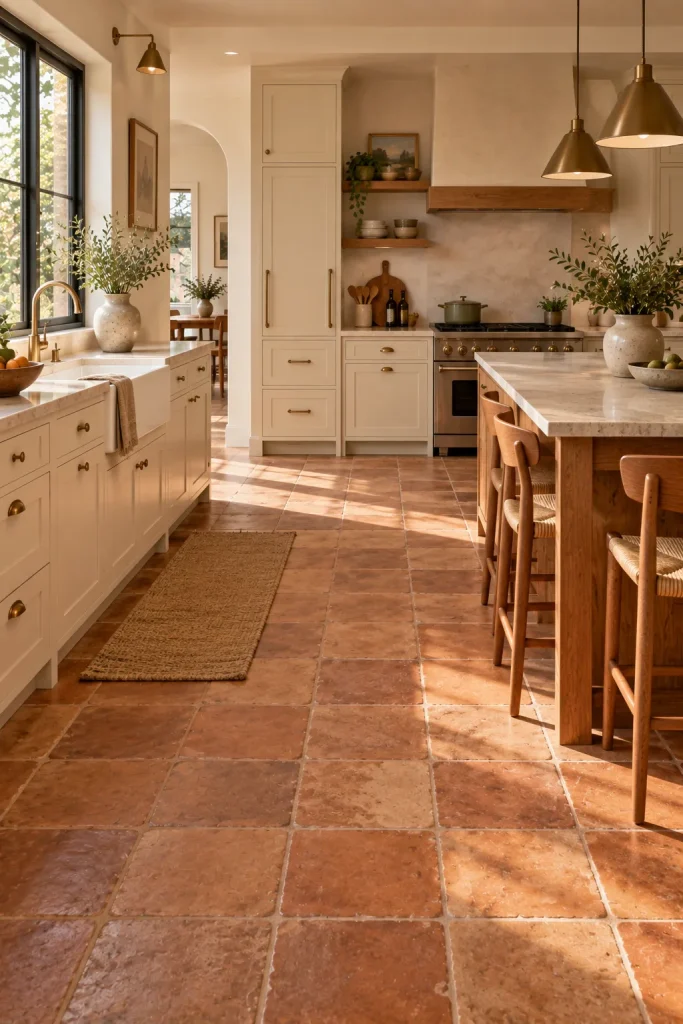
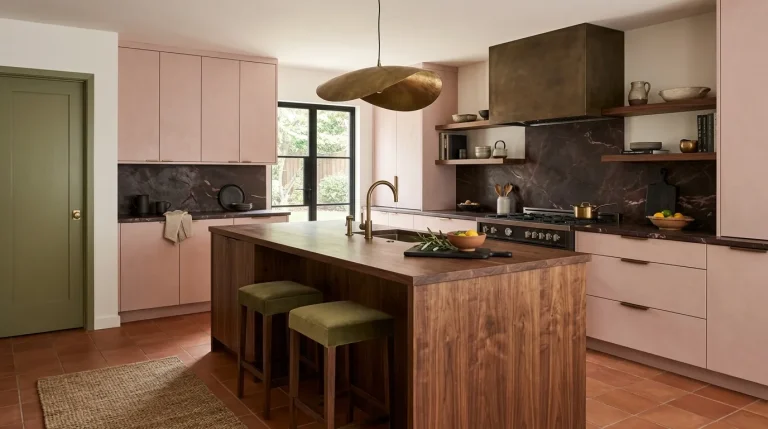
Idea 4: Warm Up a Contemporary Kitchen With Terracotta
Terracotta tile brings an earthy, sun-warmed character that pairs beautifully with both traditional and Mediterranean-leaning kitchens. It works especially well against white or cream cabinetry, softening the kind of high-contrast scheme found in our kitchen with white cabinets and black countertops guide.

Idea 5: Choose Large-Format Porcelain for Low-Maintenance Realism
Porcelain that mimics stone or wood now comes in large formats with convincing, non-repeating veining. Check that the same printed vein does not repeat every few feet, and consider that larger formats reduce the number of grout joints, which can make compact kitchens feel less fragmented. Also check slip ratings and surface texture — a highly polished floor might look beautiful under showroom lights, but matte surfaces are generally more forgiving of scratches and smudges and provide better grip.
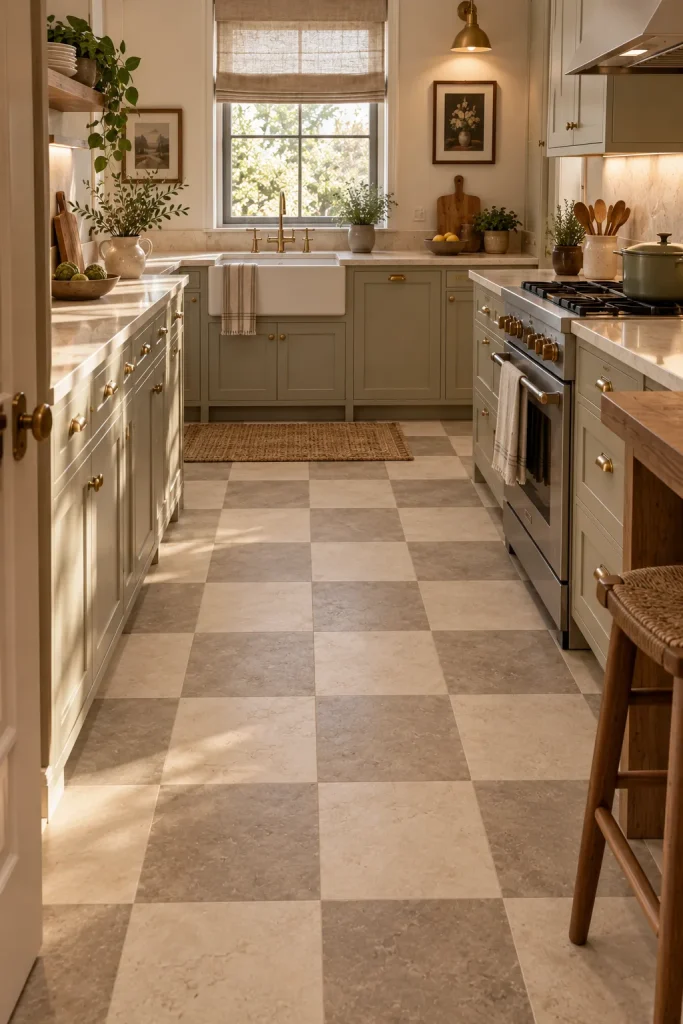
Idea 6: Introduce a Checkerboard Floor in Softer Colors
Checkerboard flooring is not limited to black and white. Try warm ivory with limestone gray, terracotta with cream, dusty blue with parchment, or chocolate with mushroom. Patterned flooring, particularly checkerboard, is a notable small-kitchen direction in 2026 because it can give even modest spaces personality without requiring more cabinetry or wall decoration. For a quieter result, choose two colors close in value — a muted stone-and-cream checkerboard will read as texture from a distance while still producing pattern up close, an approach that pairs elegantly with the elevated, collected feel in our french inspired kitchen tips.
What Should You Skip
- Highly polished stone in a busy kitchen — matte and honed finishes are more forgiving and safer underfoot
- Repeating printed veining in budget porcelain — check samples for obvious pattern repeats before committing
- Mixing multiple bold patterns — pattern on the floor usually needs quieter countertops and cabinetry
- Choosing flooring before checking slip resistance — a beautiful floor that’s dangerous underfoot isn’t a win
FAQ
Q: What is the most durable kitchen flooring option?
A: Large-format porcelain and quality LVT tend to be the most forgiving for daily wear, spills, and heavy foot traffic.
Q: Is patterned flooring practical for a small kitchen?
A: Yes — a checkerboard or mosaic floor in softer, closer-value colors can add personality to a small kitchen without overwhelming it.
Q: Does natural stone flooring need special care?
A: Most natural stone benefits from periodic sealing, and honed or tumbled finishes are generally easier to maintain than polished stone.
Final Thoughts
The best kitchen floor is the one that still looks intentional after years of daily use. Lean on warm materials, choose finishes that hide wear gracefully, and let pattern or stone add character without compromising safety or long-term maintenance.