15 blue kitchen cabinet ideas for a Fresh, Character-Rich Kitchen
Blue kitchen cabinets have reached an interesting point. The color is established enough to feel dependable, but the familiar navy-and-white formula can now look predictable if every other detail follows the same script.
The strongest 15 blue kitchen cabinet ideas for 2026 explore a much wider spectrum. Dusty blue, denim, blue-gray, powder blue, smoky teal, and chalky navy are appearing alongside walnut, oak, burgundy, copper, warm stone, and cream. If you have been following the latest trends in kitchen design, lighter blues with gray undertones are one of the key cabinet-color directions for the year, rather than obvious pastels.
Blue works because it can behave almost like a neutral while still giving cabinetry personality. The trick is choosing the right blue, then warming or sharpening it with the materials around it.
Start with a blue that suits the room
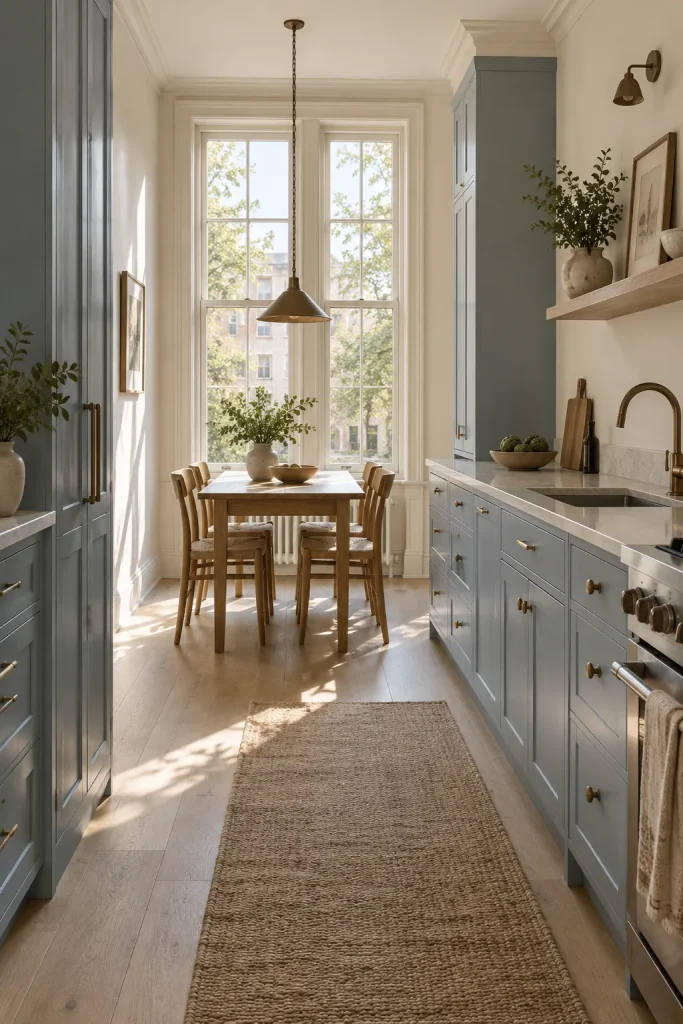
Idea 1: Choose dusty blue for a soft, versatile base. Dusty blue reads as calm and slightly muted, which makes it easy to pair with almost any countertop or hardware finish. It works especially well in kitchens that get plenty of natural light.
Idea 2: Try denim blue for everyday warmth. Denim blue sits between pale blue and navy, giving it enough depth to anchor a room without feeling heavy or formal.
Idea 3: Use blue-gray when you want flexibility. Blue-gray shifts subtly depending on the light and the surrounding materials, which makes it one of the most forgiving cabinet colors to commit to.
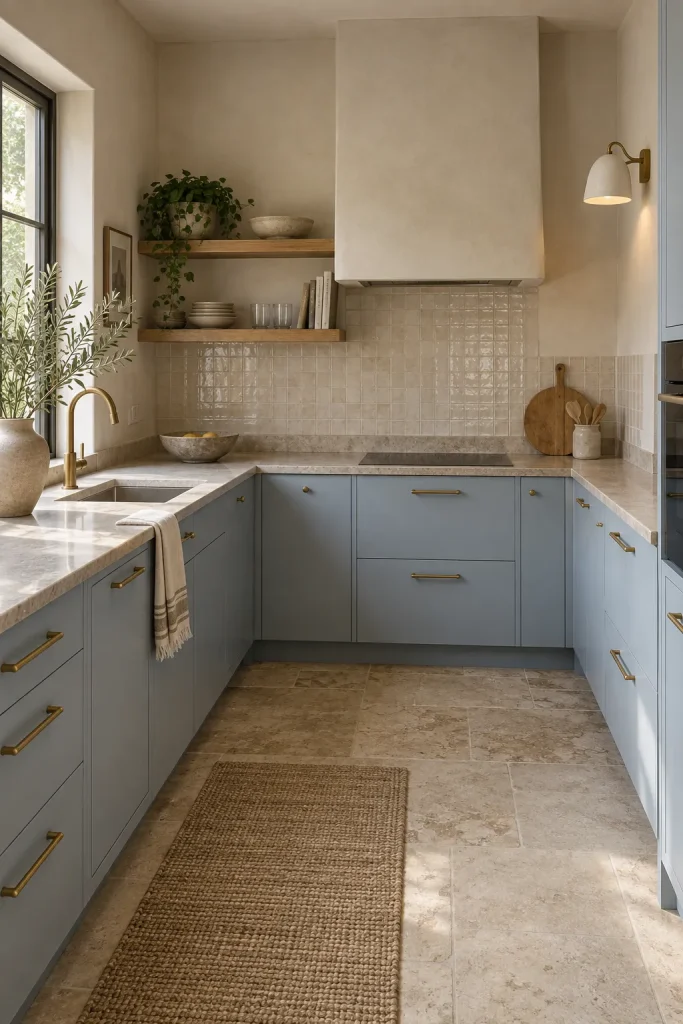
Idea 4: Reach for powder blue in a bright, airy kitchen. Powder blue keeps a room feeling light and fresh. Pair it with brass hardware and pale wood to avoid a nursery-like effect, and lean into texture rather than more pastel.
Go bold or go small

Idea 5: Go almost midnight blue in a small kitchen. A small kitchen does not automatically need pale cabinetry. Midnight blue can create a compact, enveloping room that feels deliberate rather than cramped, especially when paired with oak and copper. Try midnight blue with a creamy stone countertop and medium-oak flooring, and add strong under-cabinet task lighting so the counters remain useful. Getting that layering right often comes down to the same details covered in kitchen island lighting tips, since a darker cabinet color needs deliberate light planning to keep the room from feeling closed in.
One darker color across several surfaces can also reduce visual fragmentation. A tiny kitchen with blue cabinets and blue-painted walls may actually feel calmer than one divided into navy, bright white, gray, and black.
Let blue share the kitchen with wood
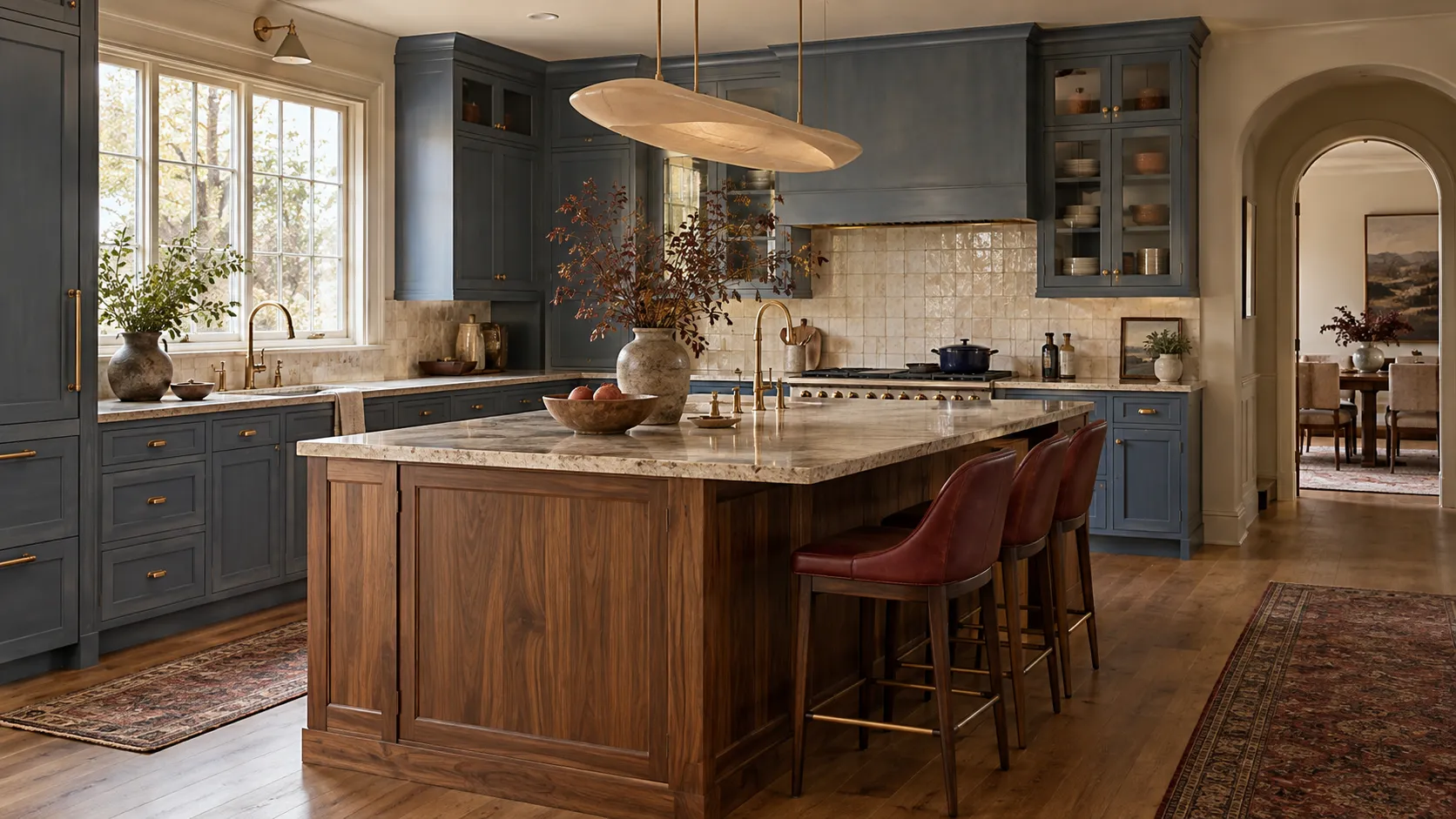
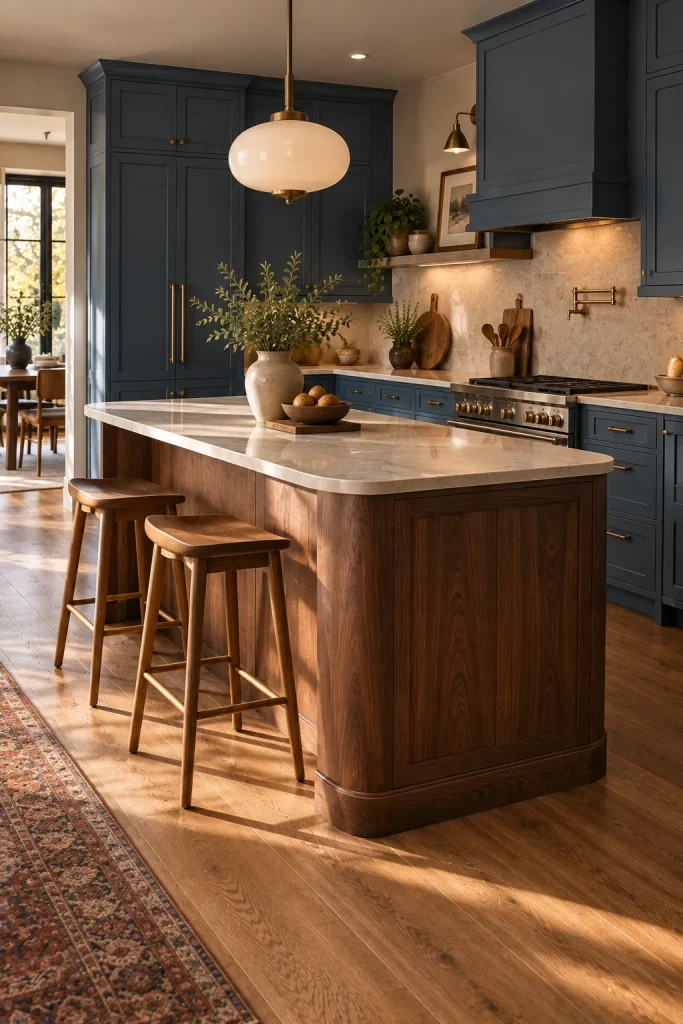
Idea 6: Pair denim-blue cabinets with walnut. Denim blue sits beautifully between pale blue and navy. It has enough richness to anchor a larger kitchen while still leaving room for warm wood tones to soften the palette.
Idea 7: Add oak open shelving to break up a wall of blue. Continuous blue cabinetry can start to feel monotonous. A run of oak shelving interrupts the color and gives the eye somewhere to rest.
Idea 8: Bring in a walnut island for contrast. A walnut island against blue perimeter cabinets is one of the most reliable combinations in kitchen design right now, similar in spirit to the pairings explored in mid century modern kitchen remodel tips, where warm wood and confident color are balanced deliberately rather than left to chance.
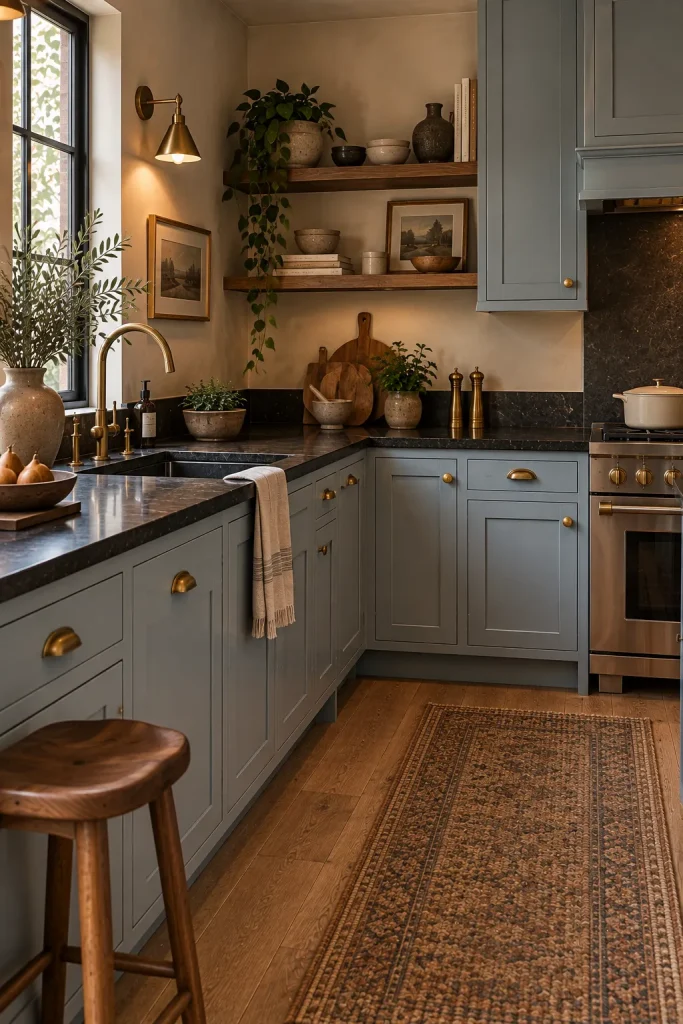
Idea 9: Use aged brass hardware to warm cool blues. Brass hardware softens the coolness of blue-gray or powder blue cabinetry and keeps the kitchen from feeling clinical.
Choose countertops with intention
Idea 10: Pair blue cabinets with warm natural stone. Warm-toned natural materials work better with blue than cold gray and black-and-white contrast. If you choose natural stone, understand its maintenance requirements: some marbles etch, some limestones are porous, and quartzite varies substantially by type. Choose what suits your cooking habits rather than simply choosing the slab with the prettiest photograph.
Idea 11: Put dark stone beneath pale blue cabinets. The reverse relationship can be equally successful. Try pale blue cabinets with soapstone, honed black granite, or a deep brown countertop. The dark horizontal plane makes the blue feel more substantial. Add oak or aged brass to prevent the composition becoming too cool.
I once worked through an illustrative pale-blue kitchen where the owner kept adding pastel accessories because the cabinetry looked washed out. The real issue was contrast. Switching the visual plan to include a dark countertop immediately made the blue look richer without changing the paint color. Sometimes pale cabinetry needs something dark nearby, not something paler.

Give blue a strong supporting cast
Idea 12: Add a burgundy or terracotta accent. A single warm accent color, whether in a rug, stools, or open shelving, keeps blue cabinetry from feeling like the only decision made in the room. This kind of high-contrast pairing works the same way it does in kitchen with white cabinets and black countertops, where one confident secondary tone does most of the visual work.
Idea 13: Use a patterned or textured backsplash. A subtle pattern or handmade-tile texture keeps a large expanse of blue cabinetry from reading as flat or one-note.
Idea 14: Layer in mixed metals. Combining brass, bronze, or matte black fixtures with blue cabinetry adds depth without introducing another dominant color.
Idea 15: Keep the ceiling and trim warm, not stark white. A warm white or cream ceiling keeps a blue kitchen from feeling cold, especially in rooms with limited natural light.
| Blue shade | Warm partner | Useful accent |
|---|---|---|
| Dusty blue | Medium oak | Burgundy |
| Powder blue | Walnut | Copper |
| Blue-gray | Cream stone | Aged brass |
| Denim | Walnut | Terracotta |
| Chalky navy | Mushroom | Brass |
| Midnight blue | Oak | Warm ivory |
| Smoky teal-blue | Limestone | Bronze |
These combinations are starting points. Existing flooring and natural light should influence your final palette more than the name on the paint card.
What should you skip with blue kitchen cabinets?
The automatic navy-and-brilliant-white formula. It can still work, but warmer whites and more nuanced blues feel fresher in 2026.
Choosing blue without testing the undertone. The same cabinet can appear gray, green, or intensely blue as daylight changes.
Making every accent blue. Blue cabinets do not require blue rugs, dishes, stools, kettles, and artwork.
Ignoring wood. Oak and walnut are among the easiest ways to prevent blue cabinetry from feeling cold.
Assuming pale blue must look coastal. Pair it with dark stone, burgundy, walnut, bronze, or terracotta instead.
Blue has enough history to feel established and enough range to keep evolving. In 2026, the most compelling blue kitchens are not the ones using the most fashionable shade. They are the ones that give blue warmer, richer, and more personal materials to live beside.