
15 small moody kitchen tips for a Dark, Cozy Space That Still Feels Open
Embrace the Intimacy of a Small Footprint
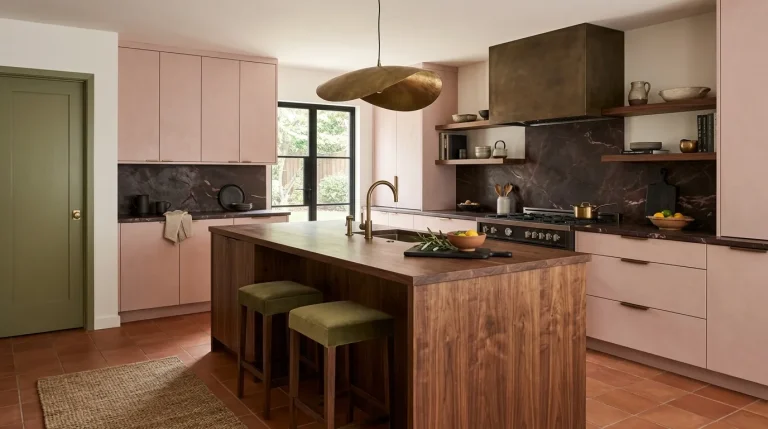
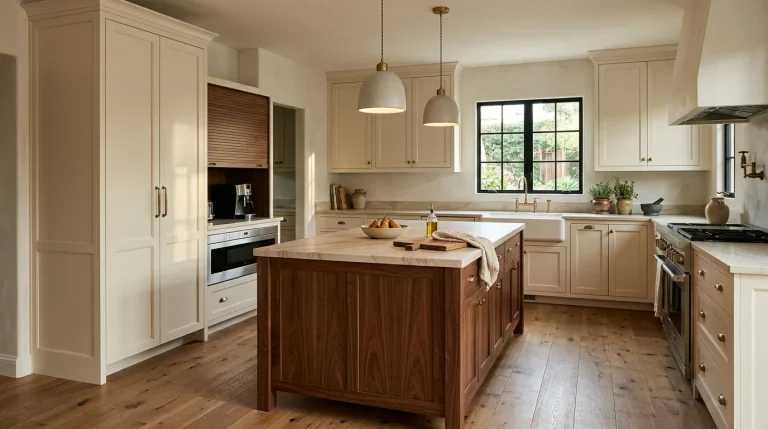
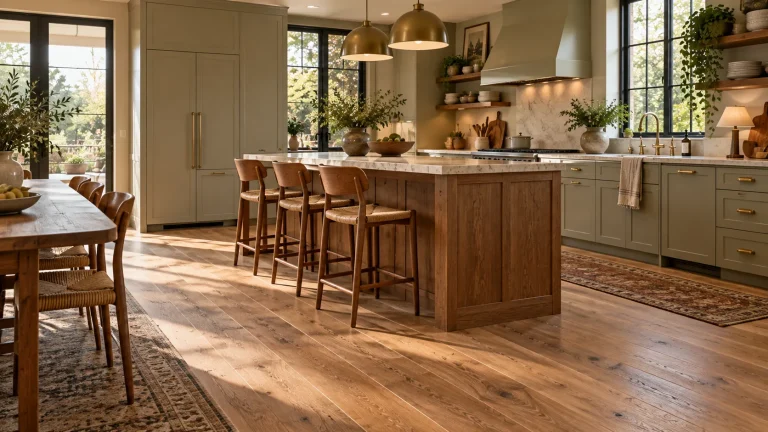
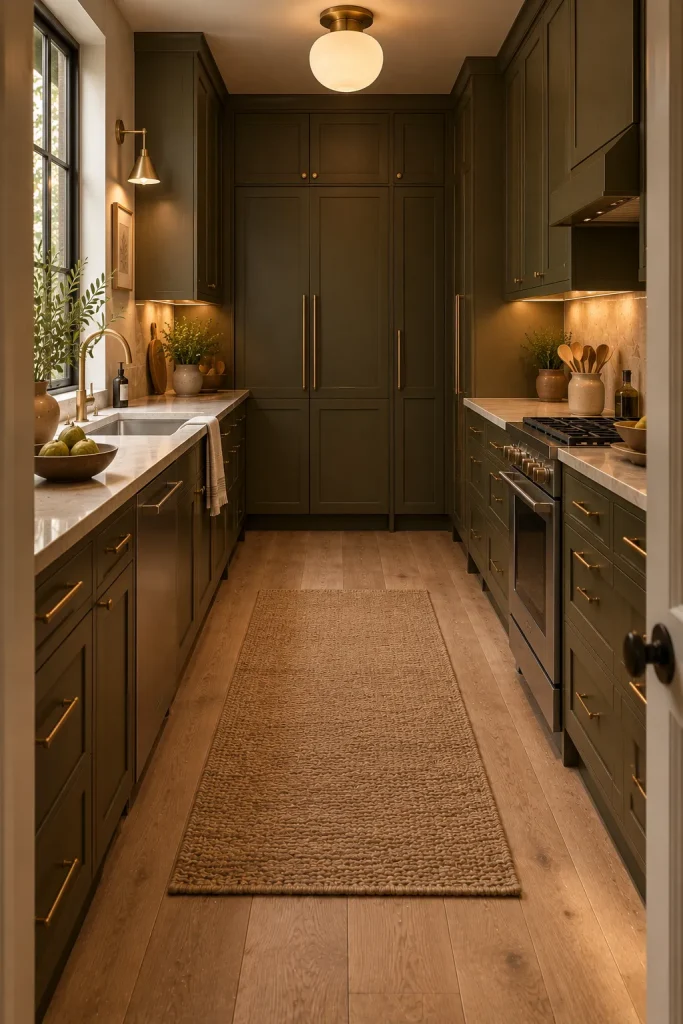
A small kitchen does not need white cabinets, pale counters, and barely-there color to feel spacious. In fact, trying too hard to make a compact room look bigger can leave it feeling anonymous. The stronger small moody kitchen tips for 2026 embrace the intimacy of the footprint. Deep olive, burgundy, chocolate brown, black-stained wood, aged brass, reflective tile, warm stone, and layered lighting can make a little kitchen feel almost jewel-box-like. Designers are increasingly questioning the old assumption that small kitchens must stay pale, with richer browns, olives, oxbloods, forest greens, and aubergines now being used specifically because compact spaces can carry atmosphere so well. The secret is controlling darkness rather than avoiding it.

Tip 1: Choose a Complex Dark Color Instead of Flat Charcoal
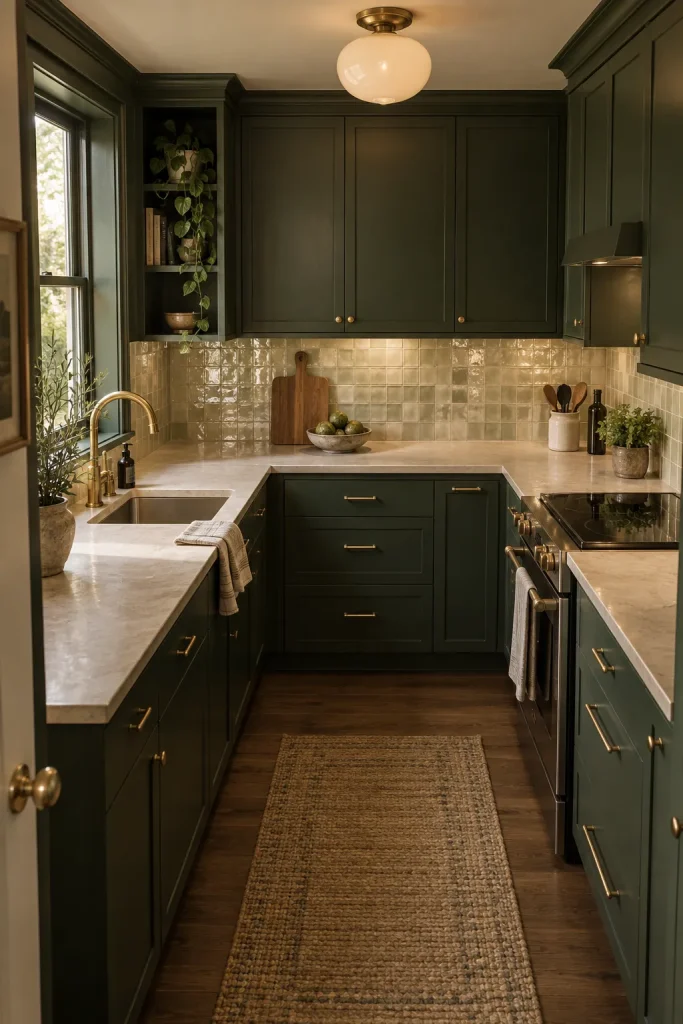
Moody does not automatically mean black. Deep olive, burgundy, chocolate, forest green, and aubergine all read as rich and warm rather than heavy or cold. A complex, slightly muddied dark color has more depth than a flat gray-black, and that complexity is what keeps a compact kitchen from feeling like a closed box. This same principle of layered, considered color runs through our 10 moody farmhouse kitchen tips guide, applied here at a smaller scale.
Tip 2: Use Reflective Surfaces to Keep the Room From Feeling Flat
In a small dark kitchen, reflective materials matter more than in a larger space. Keep the ceiling or backsplash somewhat lighter, and let glossy tile, polished brass, or glass fixtures bounce light around the room. Reflective surfaces prevent a compact, dark scheme from feeling visually flat or closed-in.

Tip 3: Add Black-Stained Oak Instead of Painted Black
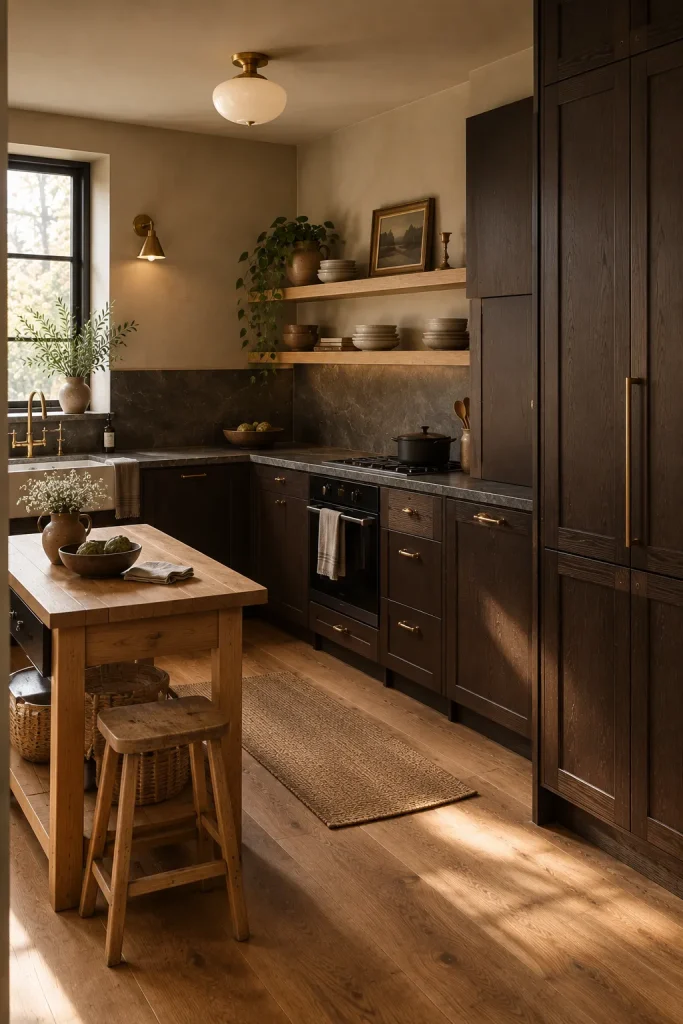
Painted black can become extremely flat in a compact room. Black-stained timber gives you darkness while preserving grain, and that visible texture keeps deeper finishes from feeling heavy. Use it through lower cabinetry, a pantry, shelves, or one small island. Walnut works beautifully too — try it with forest green, dark plum, or mushroom walls. You do not need every timber to match; medium-oak flooring beside darker stained cabinetry can create more depth than repeating one finish everywhere.
Tip 4: Use One Lighter Wood Element as Relief
If most of the kitchen is dark, bring in a small amount of warmer, lighter timber — a natural-oak shelf, a butcher-block worktable, a vintage pine stool, or a wooden cutting board left out on the counter. That single lighter note keeps the eye moving and prevents the room from reading as one uniform block of color.
Tip 5: Keep the Footprint Efficient, Not Cramped
A moody palette works best when the layout itself is still doing its job well. Full-height storage, integrated appliances, and a compact or absent island all matter just as much in a dark small kitchen as in a pale one — the same efficient-use-of-space principles covered in our 12 modern small kitchen ideas guide apply here regardless of color.

Tip 6: Layer Lighting Even More Carefully Than Usual
Dark surfaces absorb light, so a small moody kitchen needs deliberate lighting even more than a larger one. Warm under-cabinet task lighting, one well-placed pendant or sconce, and dimmable ambient light together keep the room feeling cozy rather than dim. This layered approach is part of the broader shift toward richer, more atmospheric kitchens described in our 14 latest trends in kitchen design.
If you prefer a lighter version of contrast rather than an all-dark scheme, our kitchen with white cabinets and black countertops guide explores a related but higher-contrast approach.
What Should You Skip
- Flat, uniformly painted black surfaces with no grain or texture to break them up
- Skipping reflective materials — a small dark kitchen needs them more than a large one
- Treating dark color and small space as reasons to skip proper lighting planning
- Matching every wood tone exactly — variation adds the depth a small space needs
FAQ
Q: Will dark colors make a small kitchen feel smaller?
A: Not if reflective surfaces, layered lighting, and a mix of wood tones are used deliberately — darkness reads as cozy rather than cramped.
Q: What’s the best dark color for a small kitchen?
A: Complex, muddied colors like olive, burgundy, or forest green tend to feel warmer and richer than flat charcoal or black.
Q: Does a small moody kitchen need more lighting than a pale one?
A: Yes — dark surfaces absorb more light, so layered task and ambient lighting matters even more.
Final Thoughts
A small moody kitchen doesn’t need to apologize for its size. Lean into rich, complex color, let wood grain and reflective surfaces do quiet work, and plan lighting deliberately, and the space will feel like an intentional retreat rather than a room trying to be something it’s not.