12 moody romantic home decor ideas for Intimate Spaces
A moody romantic home shouldn’t feel like somebody dimmed the lights and covered every surface in burgundy velvet.
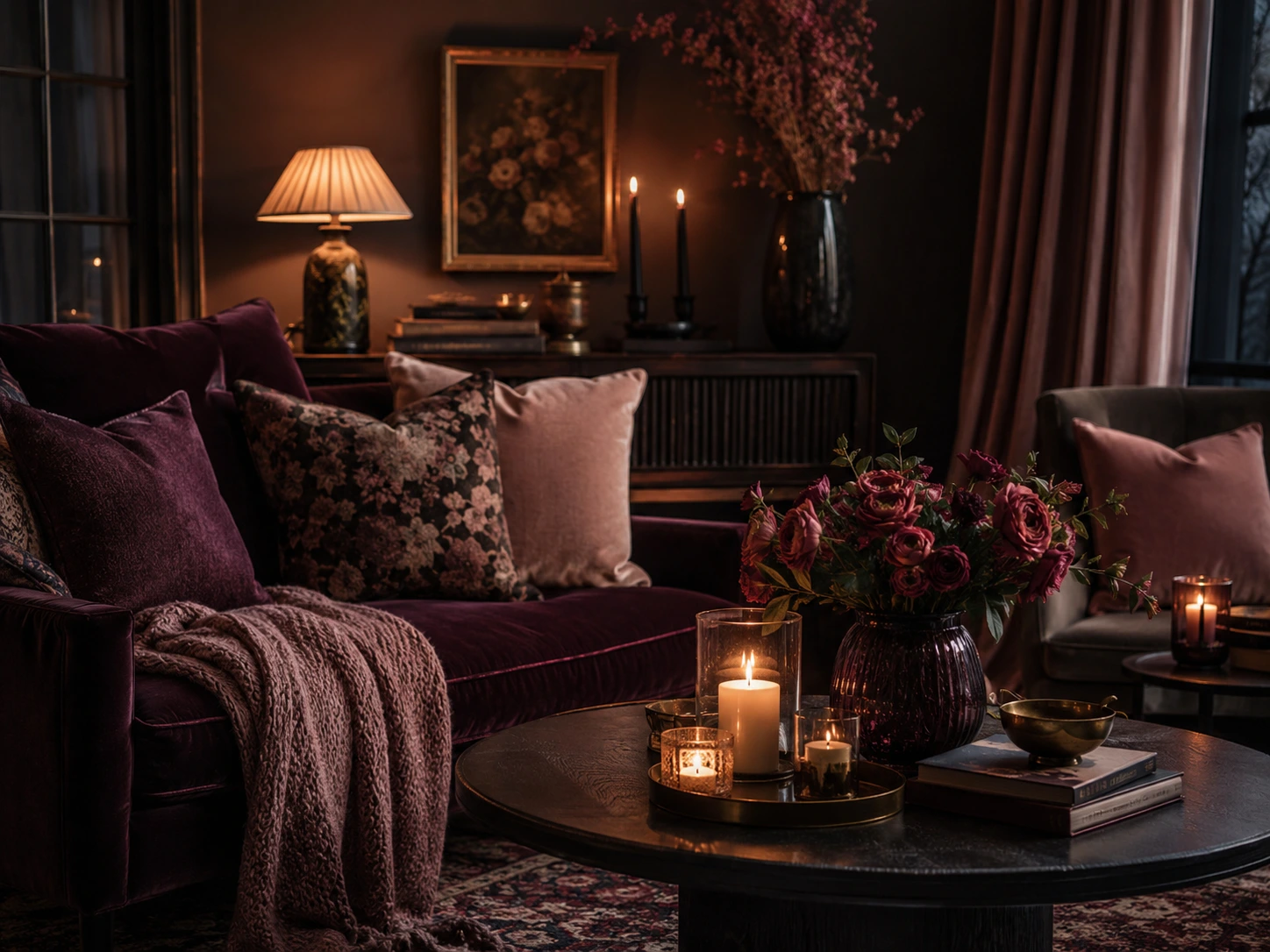
The rooms that get this look right have more restraint. Deep color creates the backdrop, but warm wood, aged metal, soft fabric, old art, and pools of flattering light keep everything from becoming too heavy.
That makes 12 moody romantic home decor ideas surprisingly practical outside bedrooms too. A living room can feel intimate without becoming gloomy. A dining room can carry drama without looking formal. Even a small hallway can handle a darker palette when the details are chosen carefully.
The timing fits current interiors as well. Rich burgundy, color-drenched rooms, tactile craftsmanship, darker woods, and more expressive decoration are all prominent in 2026 design coverage.
Here’s how I’d bring that feeling home without turning every room into a theatrical set.
1. Start with burgundy, plum, or chocolate instead of decorating everything black
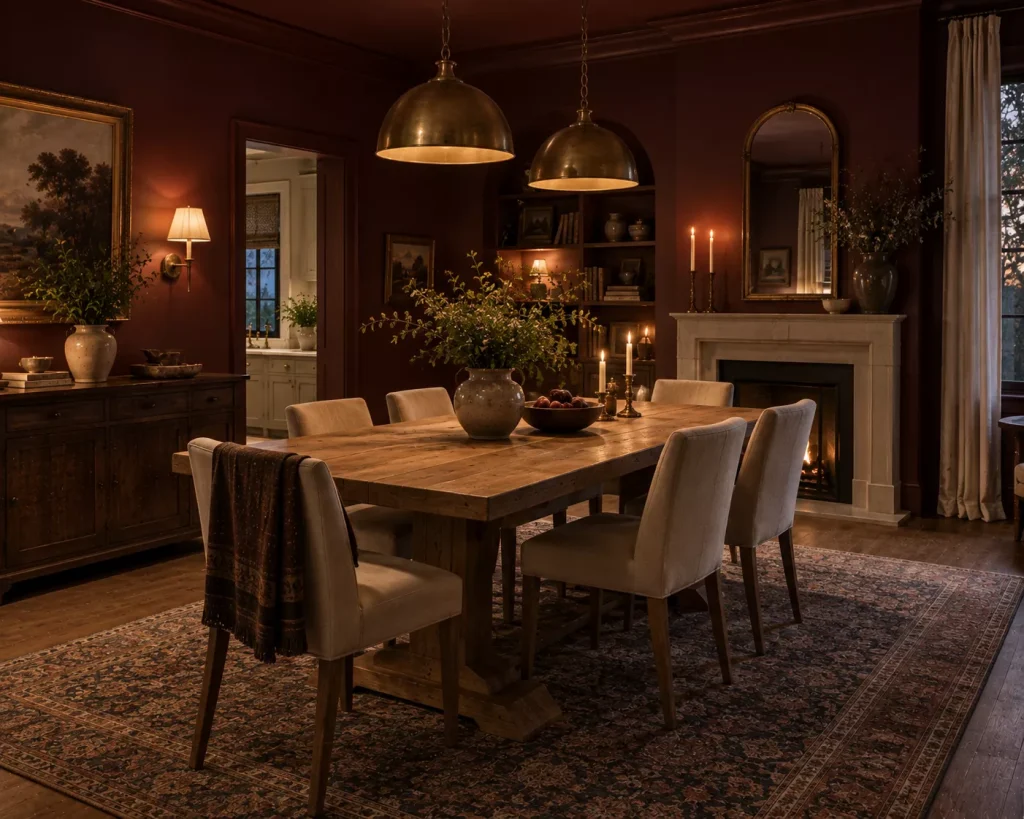
Idea 1: Choose a deep color with warmth underneath it.
Black can be beautiful, but it’s often the least interesting shortcut to a moody interior.
Burgundy, oxblood, aubergine, blackberry, chocolate brown, and deep olive give you darkness with more complexity. They also sit comfortably beside wood, brass, cream, dusty pink, and muted blue.
Burgundy is having a particularly strong year. Recent interiors are treating it almost like a rich neutral, pairing deep red walls with tan upholstery, natural wood, stone, and brass rather than using it only as an accent.
Try an oxblood dining room with an oak table.
Paint a living room chocolate brown and bring in cream upholstery.
Or keep most walls lighter and use aubergine on built-in shelves.
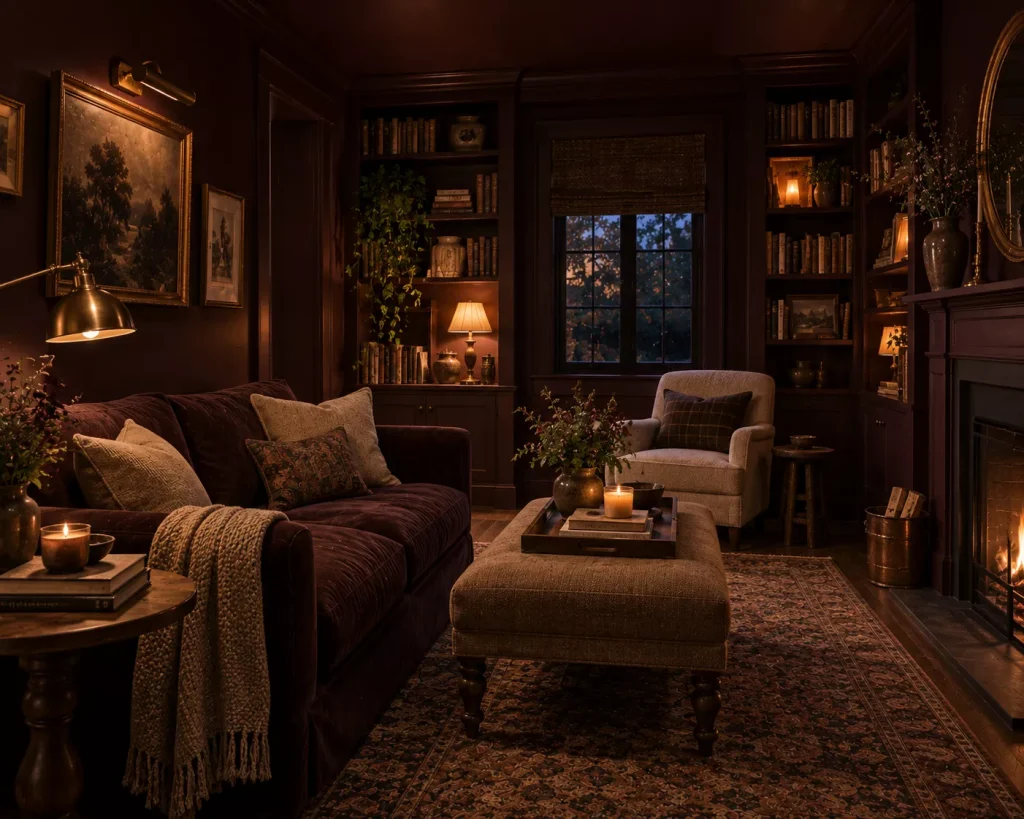
Idea 2: Let one room go fully dark.
Everyone says dark colors make rooms look smaller.
Sometimes that’s exactly why they work.
A snug library, bedroom, powder room, or evening sitting room can benefit from feeling enclosed. Current designers are leaning into color-drenched spaces specifically for their depth and cocooning quality.
You don’t need every room to feel airy.
Some rooms are better when they pull you inward.
2. Use warm neutrals so the darker colors have somewhere to breathe
A romantic interior needs contrast.
Otherwise, dark paint plus dark furniture plus dark textiles can merge into one visual block after sunset.
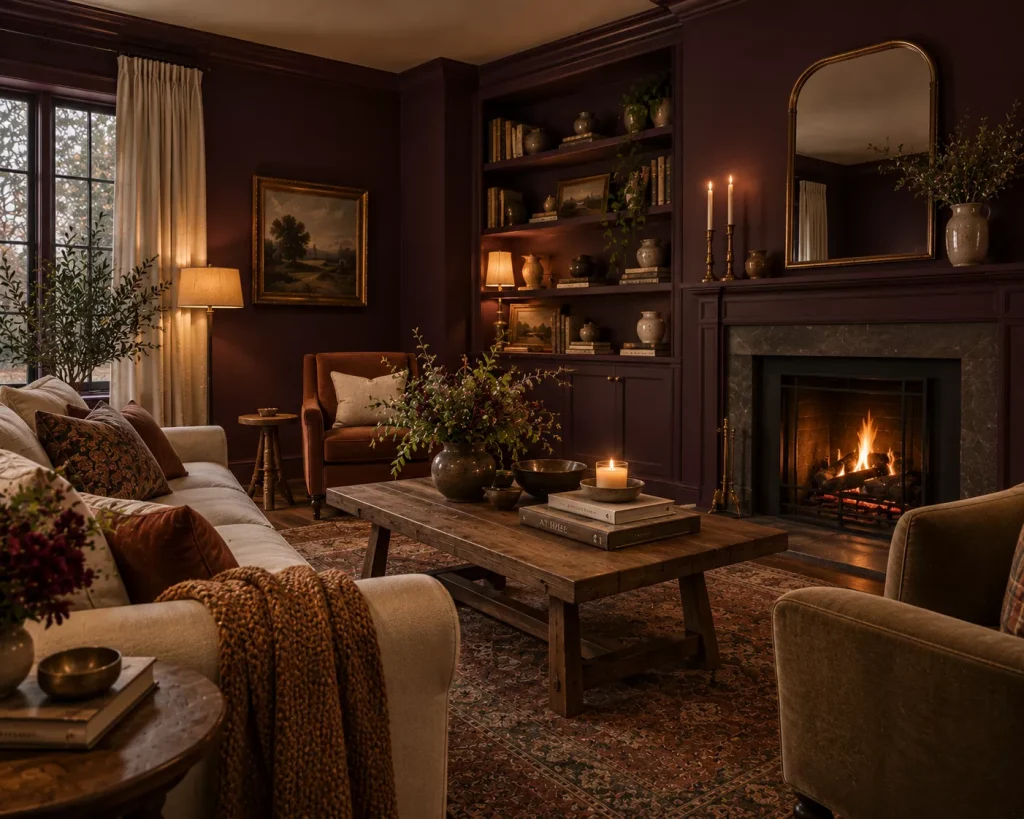
Idea 3: Pair saturated colors with cream, camel, mushroom, or dusty rose.
Imagine plum walls with an oatmeal sofa.
Or chocolate paint with warm ivory curtains and a rust-colored rug.
Even one lighter upholstered chair can give a dark room enough relief.
Warm neutrals are being used in 2026 interiors as layered colors rather than blank backgrounds, often paired with natural materials and deeper tones.
I like working with roughly three levels of color.
A dark foundation.
A medium tone such as walnut, rust, dusty blue, or olive.
Then a lighter shade such as cream or flax.
The room immediately gains depth.
Skip harsh white if the room already feels dramatic
Brilliant white trim against deep burgundy can create a very sharp outline.
That may be exactly what you want.
But for something softer, try warm ivory, mushroom, or a lighter version of the wall color.
Lower contrast creates a more enveloping effect.
And that’s usually better suited to a romantic room than a crisp black-and-white scheme.
3. Mix velvet with fabrics that look less precious
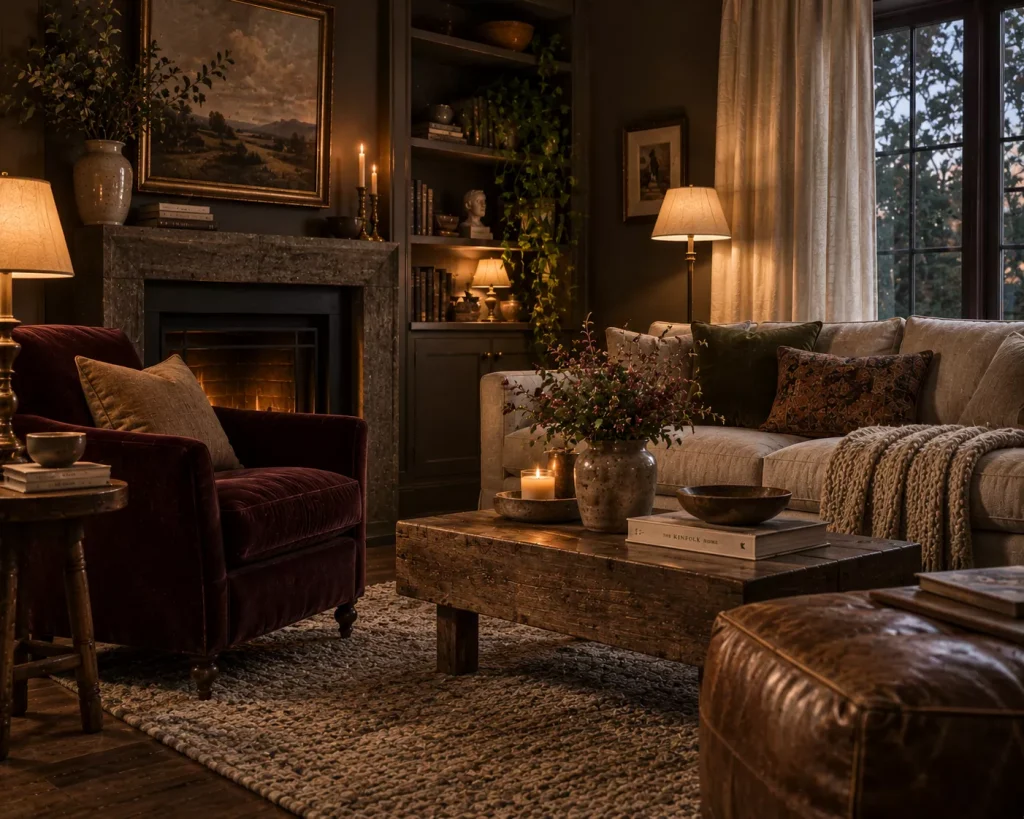
Idea 4: Use velvet once, then bring in linen, wool, and cotton.
Velvet makes sense here.
It catches light beautifully, deepens color, and immediately feels more tactile than flat upholstery.
But an entire room of velvet can become overwhelming.
Try a burgundy velvet chair beside a linen sofa.
Use two moss-green velvet cushions on a cotton-covered bed.
Or choose a velvet headboard and keep the curtains in matte linen.
Current 2026 design forecasts are embracing richer, tactile materials, but the more convincing rooms rely on contrast rather than one luxurious texture repeated endlessly.
Here’s a practical mix:
| Material | Best use | What it brings |
|---|---|---|
| Velvet | Chair, cushion, headboard | Depth and soft sheen |
| Linen | Curtains, sofa, bedding | Relaxed texture |
| Wool | Rugs and throws | Warmth and weight |
| Cotton | Bedding and upholstery | Everyday comfort |
| Leather | Chair or small bench | Patina and structure |
I once saw a living room where velvet appeared on the sofa, ottoman, curtains, and cushions.
Every individual piece was beautiful.
Together, the room felt like it required a ticket.
One dramatic textile is usually enough.
4. Let lighting create the romance instead of adding more accessories
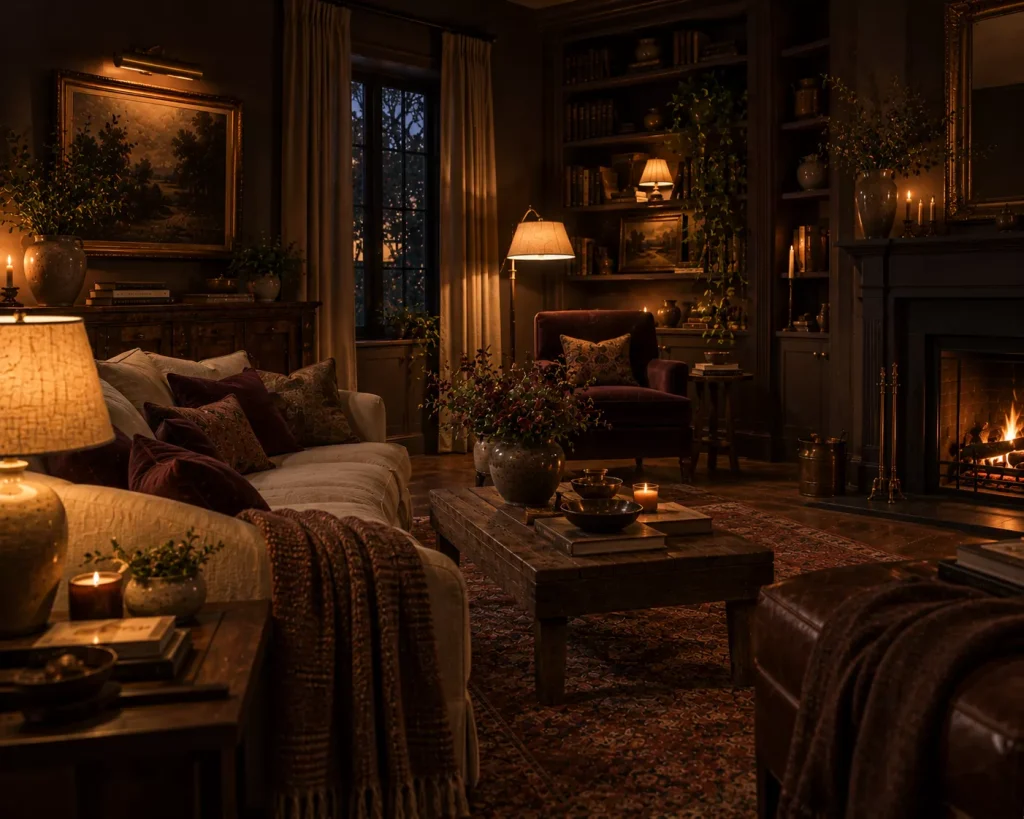
Idea 5: Build small pools of light around the room.
Lighting does more for this decorating style than another tray of candles ever will.
Use table lamps, picture lights, wall sconces, and floor lamps at different heights.
A living room could have one ceramic lamp near the sofa, a small shaded lamp on a bookcase, and a picture light above artwork.
Then leave the big ceiling light off in the evening.
I generally prefer warm light for these rooms because it flatters burgundy, brown, wood, cream, and aged metals.
Statement lighting is also a major part of 2026 interiors, with designers using sculptural chandeliers and distinctive fixtures as central room features rather than purely functional additions.
Idea 6: Use one fixture with a little drama.
Try aged brass, smoked glass, dark ceramic, pleated fabric, or a small vintage-style chandelier.
The fixture doesn’t need to be enormous.
Actually, in a normal-size room, something slightly restrained often feels more convincing.
A grand chandelier crammed into an eight-foot ceiling isn’t romantic.
It’s something you’ll worry about while carrying a laundry basket.
Scale still matters.
5. Bring in darker woods and furniture with visible age
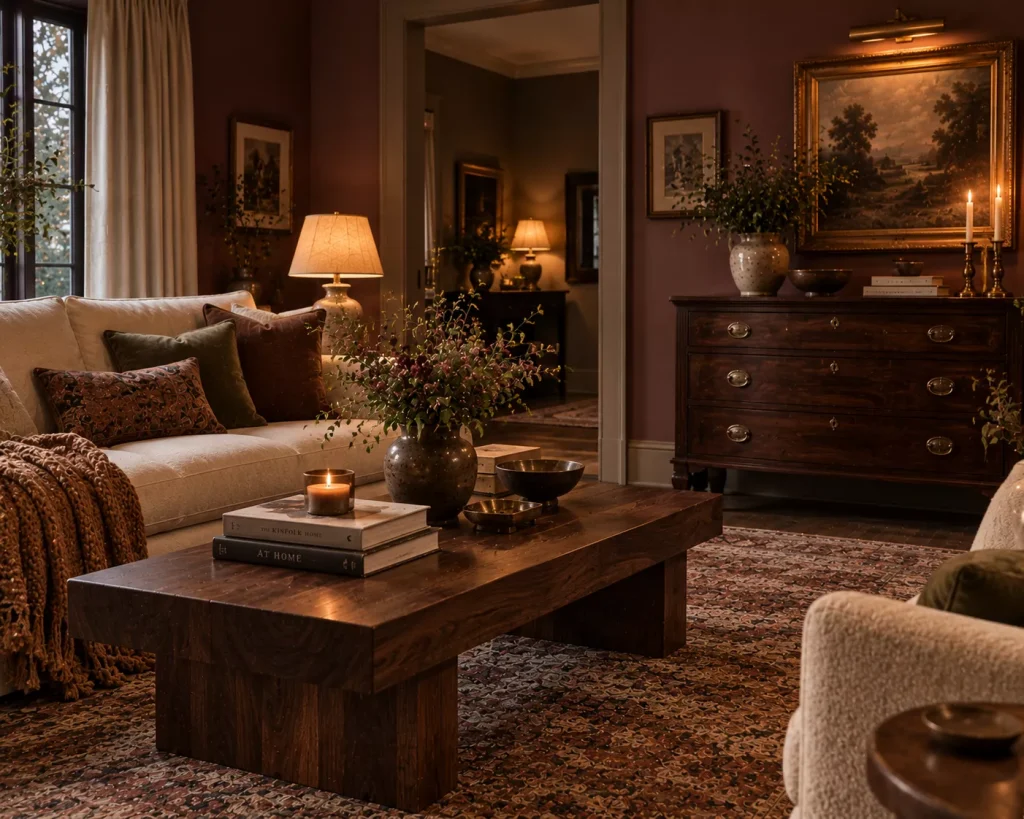
Idea 7: Replace some pale wood with walnut, cherry, or mahogany tones.
Light oak has its place, but darker woods bring instant weight to a romantic interior.
A walnut coffee table can ground a pale sofa.
A dark antique dresser works beautifully against dusty rose or plum.
Even picture frames in deeper wood can shift the atmosphere.
This aligns with the current Neo Deco movement, where walnut and mahogany are being used alongside rich color, velvet, polished materials, and sculptural forms.
You don’t need to replace all your furniture.
One dark piece may be enough.
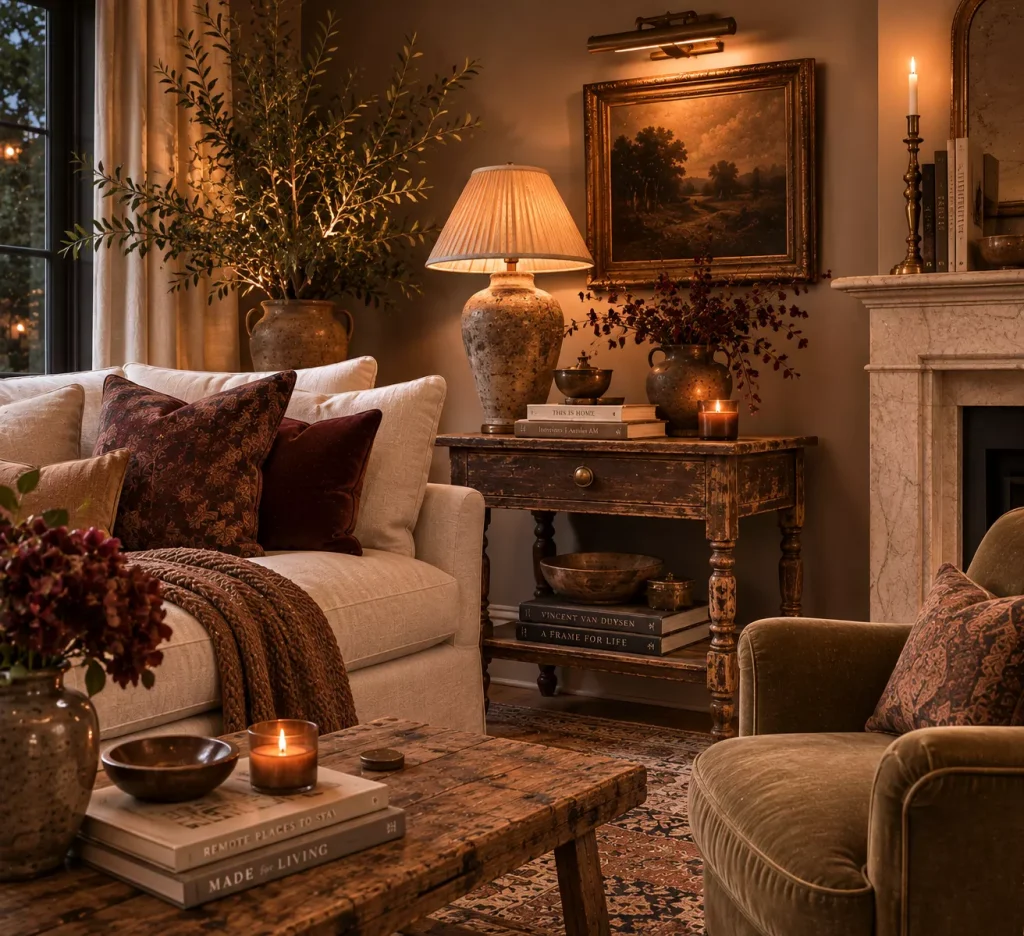
Idea 8: Add something old, or at least something that doesn’t look brand new.
A secondhand side table.
A vintage mirror.
An old cabinet with worn edges.
A slightly tarnished brass lamp.
These pieces loosen up a room.
That matters because romantic decor can become too polished very quickly.
A room where every object is glossy, perfect, and newly purchased tends to feel staged.
A little age makes it believable.
And don’t rush to refinish every scratch.
If the furniture is structurally sound, small marks and changes in finish can add exactly the sort of patina current interiors are increasingly embracing.
6. Use curtains, rugs, and pattern to make the room feel enveloping
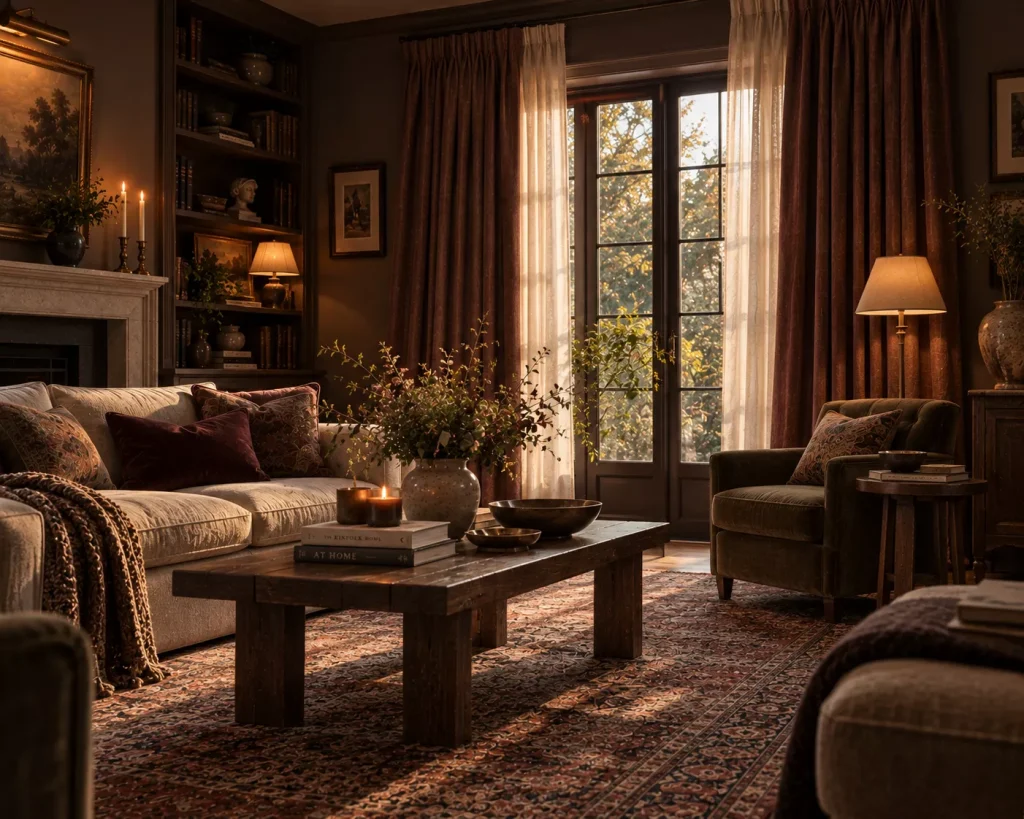
Idea 9: Hang full-length curtains with enough fabric to feel substantial.
Romantic rooms benefit from softness around the architecture.
Mount the rod higher than the window where possible, then let the curtains reach the floor.
Try tobacco brown, mushroom, deep olive, dusty rose, faded blue, or burgundy.
If the room is already very dark, warm ivory curtains can provide useful contrast.
Layering sheers behind heavier panels also gives you more control over privacy and daylight.
Then look down.
A patterned rug can keep the room from feeling overly formal.
Try faded Persian-inspired designs, subtle florals, or geometric patterns in plum, rust, brown, blue, and cream.
Mix pattern by changing the scale
You can use more than one pattern.
Just don’t make them all the same size.
A larger floral curtain can sit beside a small checked cushion and a quieter patterned rug.
Keeping the colors related prevents the room from feeling chaotic.
Layered pattern is showing up strongly in 2026 interiors, but designers are balancing it with coherent palettes and areas of visual rest rather than piling prints together randomly.
That distinction matters.
Romantic should feel layered.
Not restless.
7. Choose art and mirrors with a little mystery
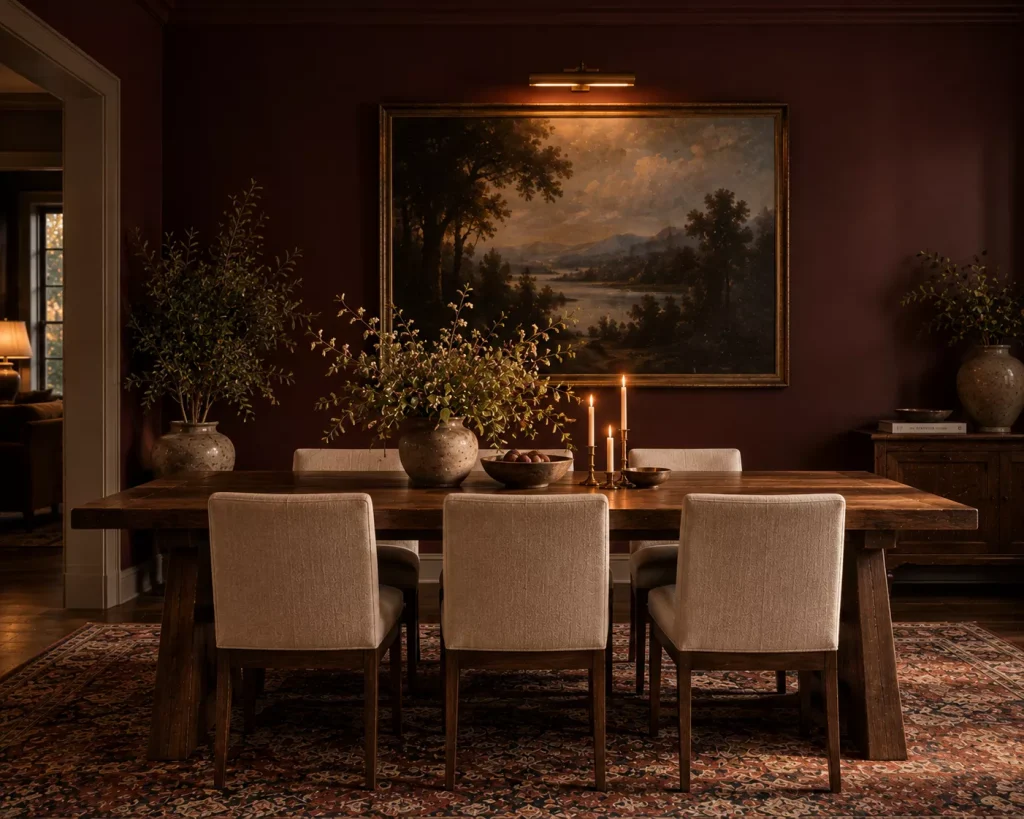
Idea 10: Let the walls carry mood through art rather than decorative slogans.
Dark botanical paintings work beautifully.
So do landscapes, portraits, figure studies, abstract pieces, and black-and-white photography.
I’d choose one larger work before buying six tiny prints.
A substantial portrait above a console can change the atmosphere of an entire hallway.
An oversized landscape can soften a dark dining room.
And art doesn’t have to match the wall color perfectly.
In fact, a little friction often helps.
A pale blue painting against burgundy walls can look far more interesting than artwork composed entirely of burgundy and brown.
Idea 11: Add one mirror with character.
Aged brass, dark carved wood, antique silver, and subtly gilded frames all work.
Place the mirror where it reflects something worth seeing.
A lamp.
Curtains.
Artwork.
A glimpse into another room.
Don’t put it opposite the busiest shelving unit just because that wall happened to be empty.
Mirrors multiply whatever is already there.
Unfortunately, they show no loyalty to the aesthetic and will reflect your drying rack with equal enthusiasm.
One good mirror is enough.
You don’t need every wall sparkling.
8. Make everyday rooms romantic without making them impractical
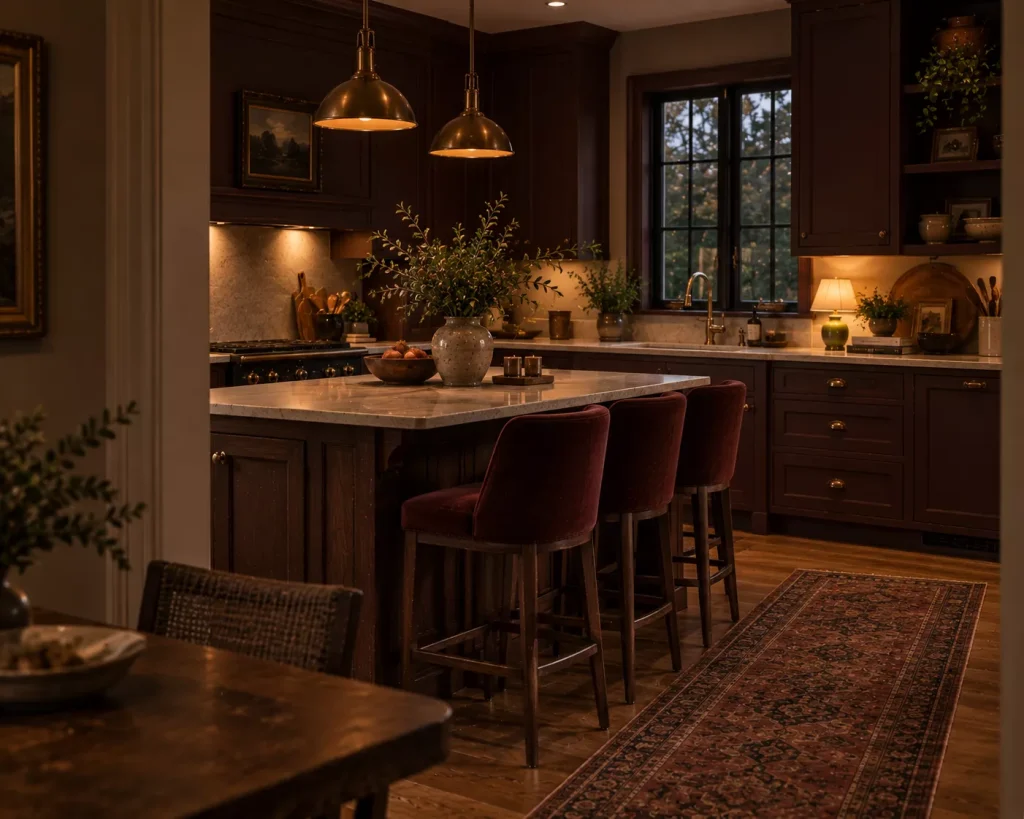
Idea 12: Bring the mood into ordinary routines.
This is where 12 moody romantic home decor ideas become more useful than a styling exercise.
The dining table can hold a low stoneware bowl instead of an elaborate centerpiece.
A kitchen might get burgundy stools, a vintage runner, and one small shaded lamp on the counter.
A bathroom could use chocolate towels, an aged-brass mirror, and a warm wall color.
The reading corner can have a comfortable chair, proper lamp, and stack of books you actually read.
Current design direction is moving strongly toward personalized interiors that make everyday activities feel more considered, rather than rooms built around neutral resale appeal.
That’s the part of romantic decor worth keeping.
You’re not creating a stage.
You’re making ordinary evenings feel a little better.
I’m particularly fond of small lamps in unexpected places.
A tiny lamp on a kitchen counter or bookcase can change the mood of a whole room for perhaps $30 to $100.
You don’t always need another decorative object.
Sometimes you need better light on the ones already there.
What should you skip in a moody romantic home?
Don’t confuse romantic with fragile.
A living room still needs a sofa people can sit on without worrying about destroying the fabric.
A dining table still needs space for dinner.
And a bedroom shouldn’t require removing twelve cushions before you can sleep.
I’d also skip covering everything in burgundy simply because the color is popular right now.
Use it because it works with your home.
Chocolate, olive, aubergine, smoky blue, and dark brown can create an equally intimate feeling.
Avoid too many obvious symbols too.
Heart-shaped accessories, fake roses, ornate candelabras, and overly theatrical gothic pieces can push the look into theme territory.
There’s nothing wrong with gothic decor if that’s genuinely your style.
But you don’t need it to create romance.
Finally, don’t underestimate empty space.
Dark rooms already carry visual weight.
Leaving part of a wall bare or keeping a console lightly styled often makes the richer elements look better.
FAQ About Moody Romantic Decor
What colors work best for moody romantic home decor?
Burgundy, plum, oxblood, chocolate brown, deep olive, charcoal, and smoky blue all work well. Balance them with cream, mushroom, dusty pink, camel, or warm taupe so the room doesn’t become visually heavy.
Can moody decor work in a small room?
Yes. A small room can actually benefit from an intentionally cocooning color scheme. Use layered lighting, controlled furniture scale, and some lighter textiles rather than relying on pale paint alone.
How can I make a room romantic without making it feminine?
Focus on warm light, tactile fabric, dark wood, art, deeper color, and aged metals. Romance comes from atmosphere and sensory comfort, not from using pink, florals, or traditionally feminine details.
How do I make dark decor feel cozy rather than gloomy?
Add several warm light sources, natural wood, soft rugs, curtains, and enough medium or light tones to create contrast. Texture matters just as much as paint color.
A moody romantic home doesn’t need to announce itself from the front door.
The feeling can build gradually.
Maybe the entry is warm and quiet. The living room brings in deeper color and old wood. Then the bedroom gets softer fabric, heavier curtains, and lower evening light.
That gradual shift feels far more natural than repeating the same burgundy-and-velvet formula in every room.
Start these 12 moody romantic home decor ideas with the place where you spend most evenings.
Turn off the overhead light. Remove one accessory that feels unnecessary. Add one deeper color and one tactile material.
Then see how the room feels after sunset.
That’s the real test. A romantic home should make an ordinary night at home feel like somewhere you’re happy to stay.