15 fall home decor ideas for a Warm, Collected Autumn
Fall decorating feels much better when your house still looks like your house.
You shouldn’t need twelve storage bins of seasonal decor to make a room feel different in October. A richer throw, darker wood, amber glass, branches from outside, and better evening lighting can shift the mood far more effectively than covering every surface with pumpkins.
That’s the approach behind these 15 fall home decor ideas.
For fall 2026, the most interesting interiors are moving beyond predictable orange. Chocolate brown, maroon, bottle green, terracotta, dusky mauve, smoky violet, and navy are all part of the season’s broader palette. At the same time, designers are leaning toward tactile materials, vintage character, pattern, natural finishes, and rooms that feel personally collected rather than perfectly coordinated.
So this year, I’d decorate less literally and make the whole home feel warmer instead.
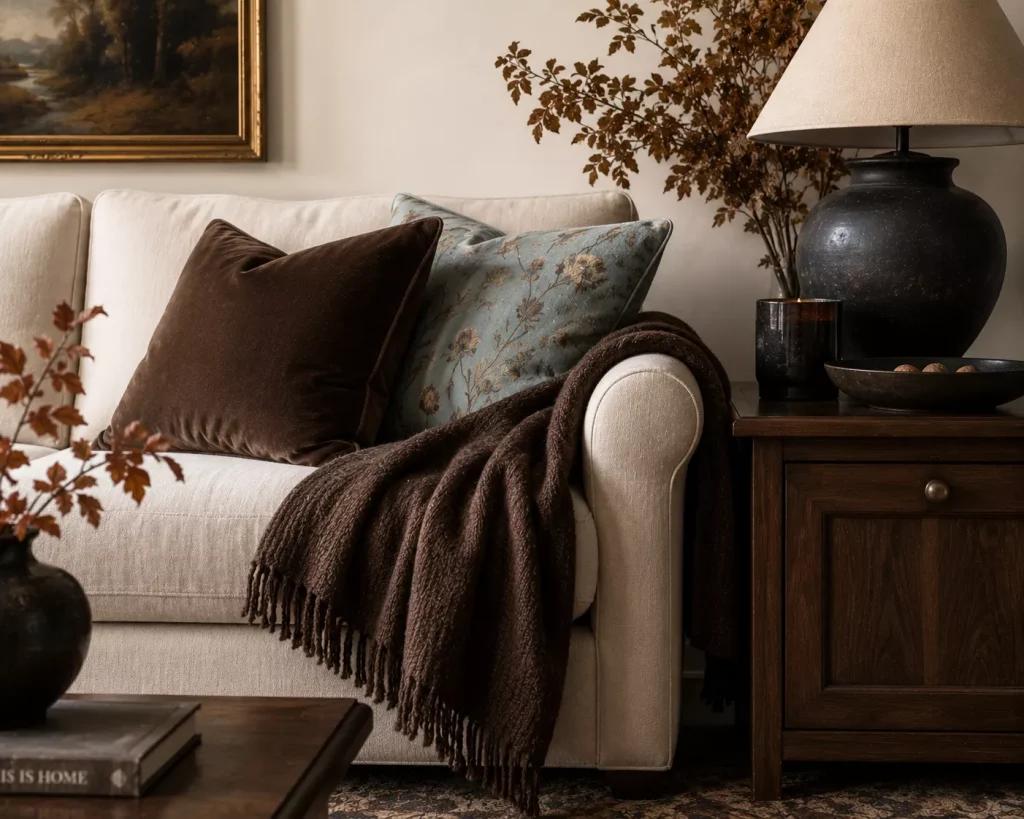
1. Build your fall palette around chocolate brown
Idea 1: Use chocolate brown as your seasonal neutral.
If you change one color this fall, make it brown.
Chocolate is particularly useful because it works with things most homes already contain, such as walnut furniture, leather, baskets, brass, cream upholstery, and wood floors.
It’s also one of fall 2026’s strongest colors, along with richer reds, greens, blues, and clay-based shades.
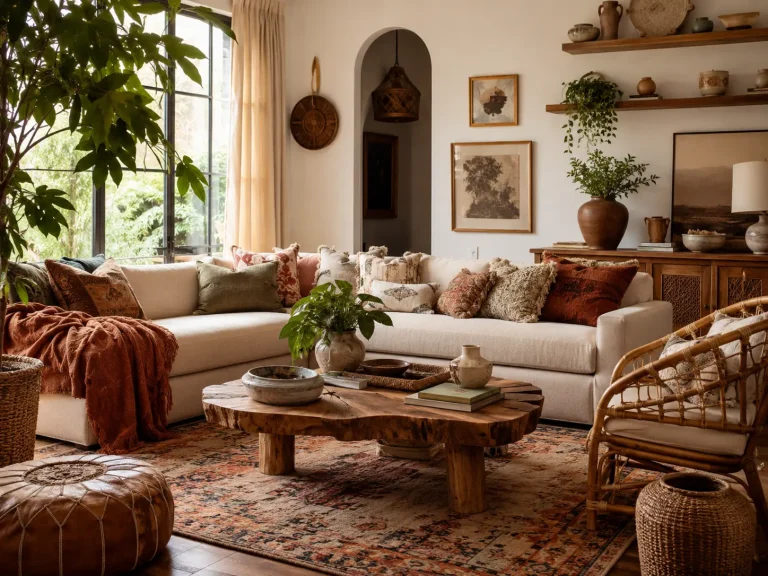
Try a chocolate throw over a cream sofa.
Add brown pillowcases to pale bedding.
Bring a dark ceramic bowl onto the dining table.
Move a walnut side table into a room that currently feels too pale.
Add one unexpected fall color
Idea 2: Pair brown with blue, mauve, or bottle green.
This is where the palette becomes more interesting.
Chocolate and pale blue feel sophisticated without looking overly autumnal.
Bottle green beside medium oak creates a grounded, almost library-like mood.
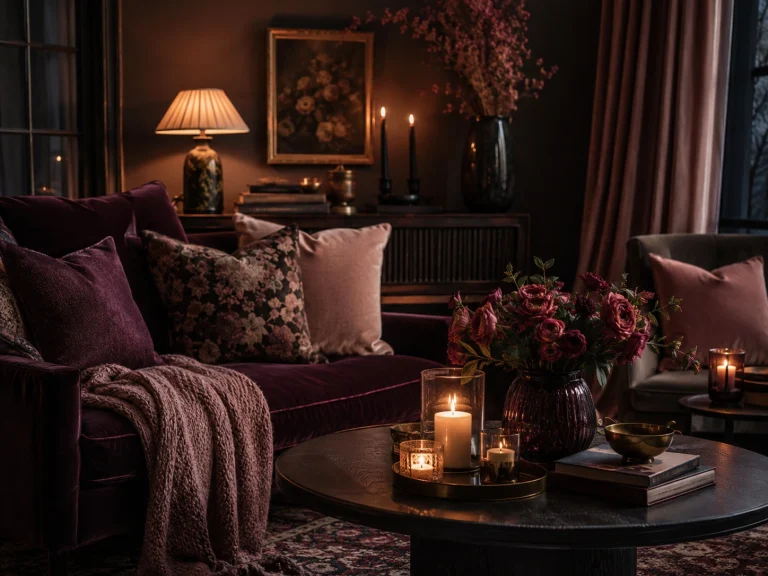
Dusky mauve works beautifully with brown, mushroom, and aged brass.
And deep navy can replace black when you want contrast without making the room severe.
Fall color doesn’t have to imitate leaves.
It just needs more depth than your summer palette.
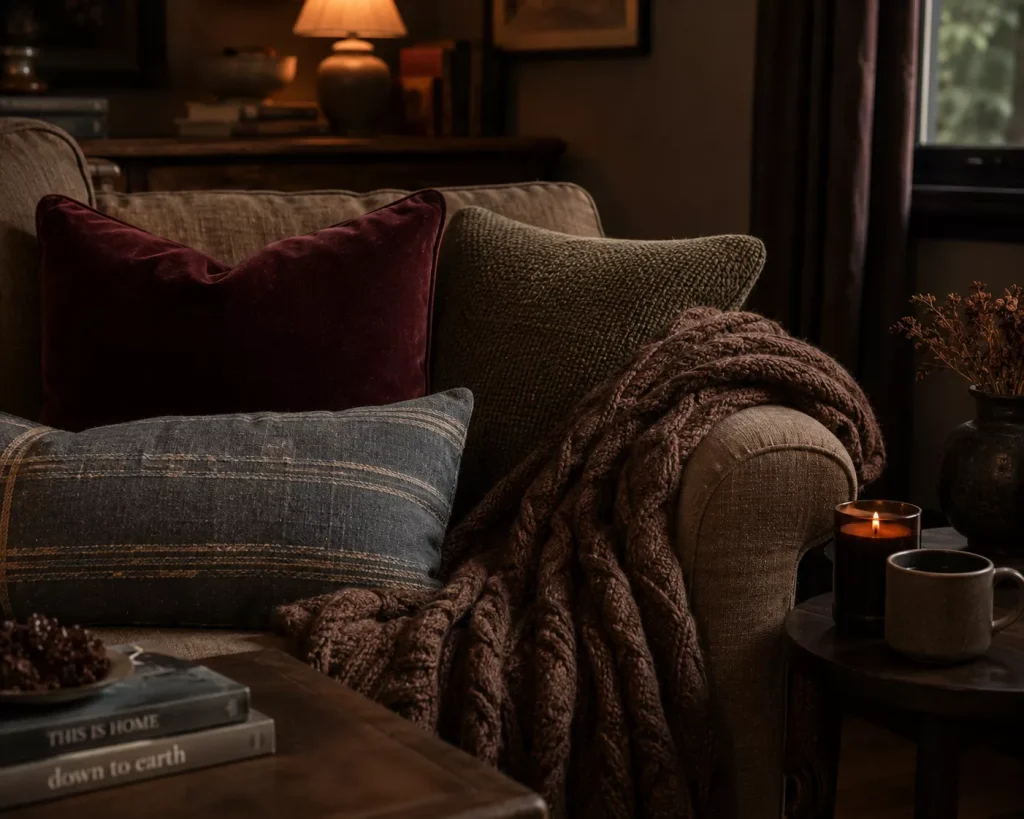
2. Change the textiles people actually touch
Idea 3: Add one heavier throw where evenings happen.
A fall home should become physically more comfortable, not simply look seasonal.
Start with the sofa, reading chair, or foot of the bed.
Cotton fisherman knits, wool blends, velvet, brushed cotton, and textured linen all work. Current fall collections are emphasizing precisely this kind of tactile shift, using leather, bouclé, velvet, wool, linen, and richer woven textures to move rooms into the cooler season.
You don’t need throws on every chair.
One substantial blanket where someone regularly sits is enough.
Idea 4: Change pillow covers rather than buying new inserts.
Use what you already own.
Replace two pale summer covers with burgundy, olive, cocoa, or berry.
Then mix textures rather than matching everything.
A velvet cushion beside a woven cotton stripe feels more collected than four identical rust pillows.
Current 2026 interiors are leaning toward mismatched patterns and worn-in combinations, including folky florals, grids, berry tones, rose, and faded blues.
That also means your existing blue cushion might stay.
Just give it a darker neighbor.

3. Bring autumn inside with branches, not themed accessories
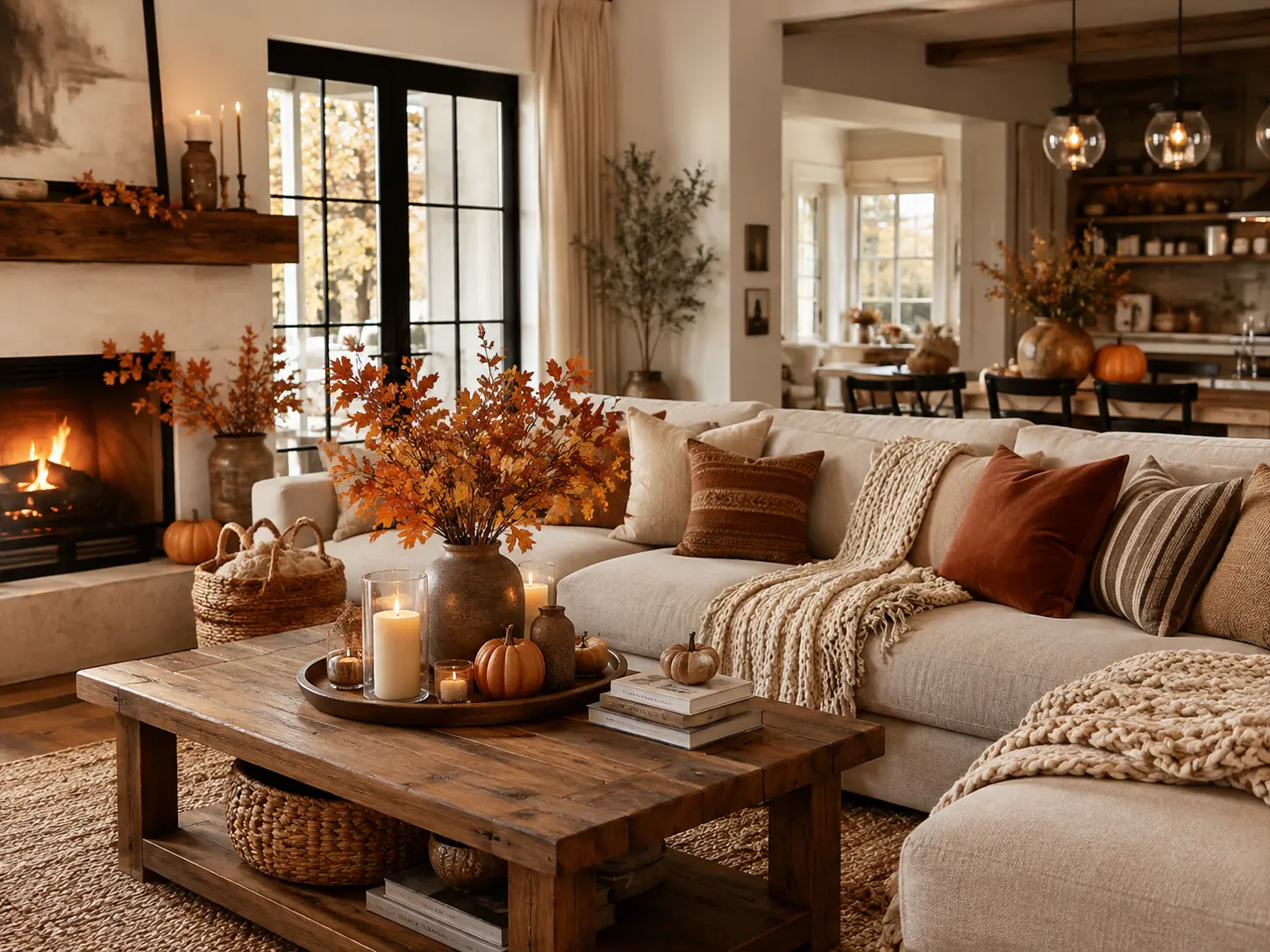
Idea 5: Make one large branch arrangement.
This may be the cheapest high-impact update in the article.
Use branches with turning leaves, dried hydrangeas, seed heads, berry stems, or bare sculptural twigs.
Place them in a heavy stoneware pitcher, amber glass vase, or large ceramic vessel.
Scale matters.
A 30-inch branch arrangement on a console can do more than eight tiny pumpkin decorations scattered through the room.
I’d put one in the entry, dining room, or living room.
Not all three.
Natural materials are a major part of 2026 decorating, with wood, stone, linen, organic textiles, greenery, and other tactile surfaces being used to soften interiors and make them feel more grounded.
Idea 6: Use seasonal food as decor in hardworking rooms.
Fill a kitchen bowl with apples, pears, pomegranates, or small squash.
Put walnuts in a shallow dish on the dining table.
These objects already belong around food.
And unlike decorative acorns, somebody may actually use them.
That’s my first rule for seasonal decorating.
If an object can be beautiful and useful, it should beat the purely decorative version almost every time.
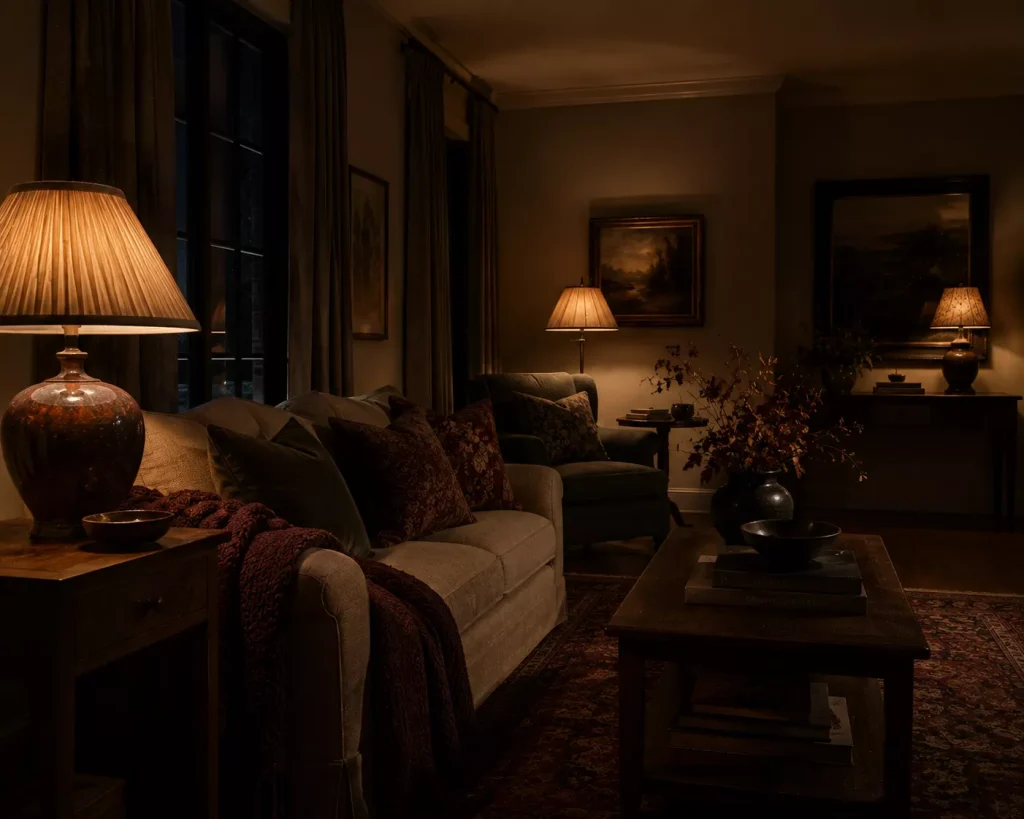
4. Make evening lighting part of the fall change
Idea 7: Add low lamps before adding more decor.
Fall changes your home because daylight changes.
Rooms that felt bright at 7 p.m. in July can feel flat and gloomy once evenings shorten.
A small lamp on a bookcase, kitchen counter, console, or side table creates a much stronger seasonal shift than another decorative object.
Look for bases in ceramic, amber glass, dark wood, or aged metal.
Try pleated linen, parchment, or patterned shades.
Warm brass is also showing up prominently in current fall collections because it works especially well beside deeper greens, reds, and natural textures.
Create pools of light
Instead of relying entirely on one ceiling fixture, light the places you actually use.
One lamp beside the sofa.
Another near a reading chair.
Perhaps a small source on the console across the room.
The goal isn’t darkness.
You still need enough light to read, cook, and move around safely.
But several lower light sources make rooms feel much more comfortable after sunset.
And please don’t replace practical lighting with twenty candles.
Atmosphere is good.
Trying to find the remote in semi-darkness is not.
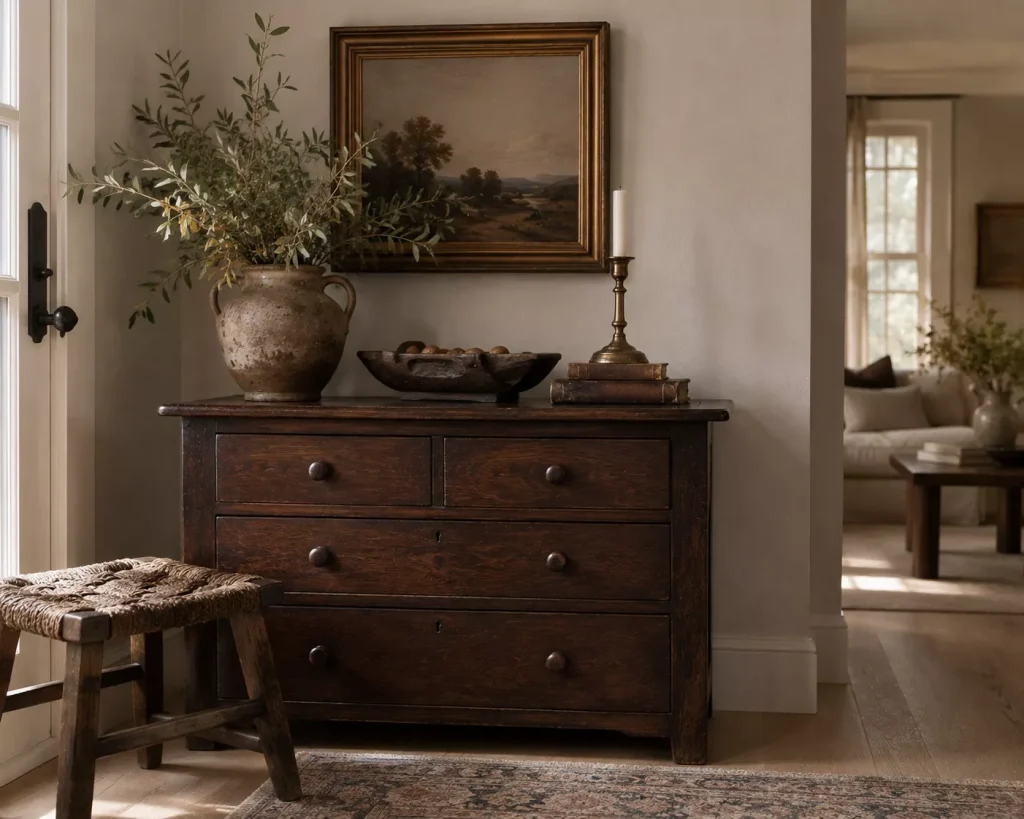
5. Bring darker wood and vintage pieces forward
Idea 8: Move one dark wood piece into a prominent spot.
Walnut, mahogany, smoked oak, and other deeper woods have been gaining ground as interiors move away from an overwhelmingly pale-wood palette. Designers value them for the warmth and architectural weight they bring to a room.
Fall is an easy time to use that direction.
Try a walnut tray on a pale ottoman.
Use an old dark wood stool as a side table.
Bring a vintage chest into the entry.
Or swap a pale frame for a deeper wood version.
You don’t need to replace your dining table.
A little dark wood goes a long way.
Idea 9: Add something genuinely old or secondhand.
Vintage character is particularly relevant in 2026, including ornate mirrors, landscapes, ceramic objects, and furniture forms that might once have been dismissed as dated.
That’s useful because secondhand shopping can give you fall atmosphere without buying explicitly seasonal products.
Look for:
- small landscape paintings
- brass candlesticks
- old wood frames
- stoneware jugs
- footed bowls
- vintage stools
- woven baskets
My favorite fall pieces are often the things that don’t need to be packed away afterward.
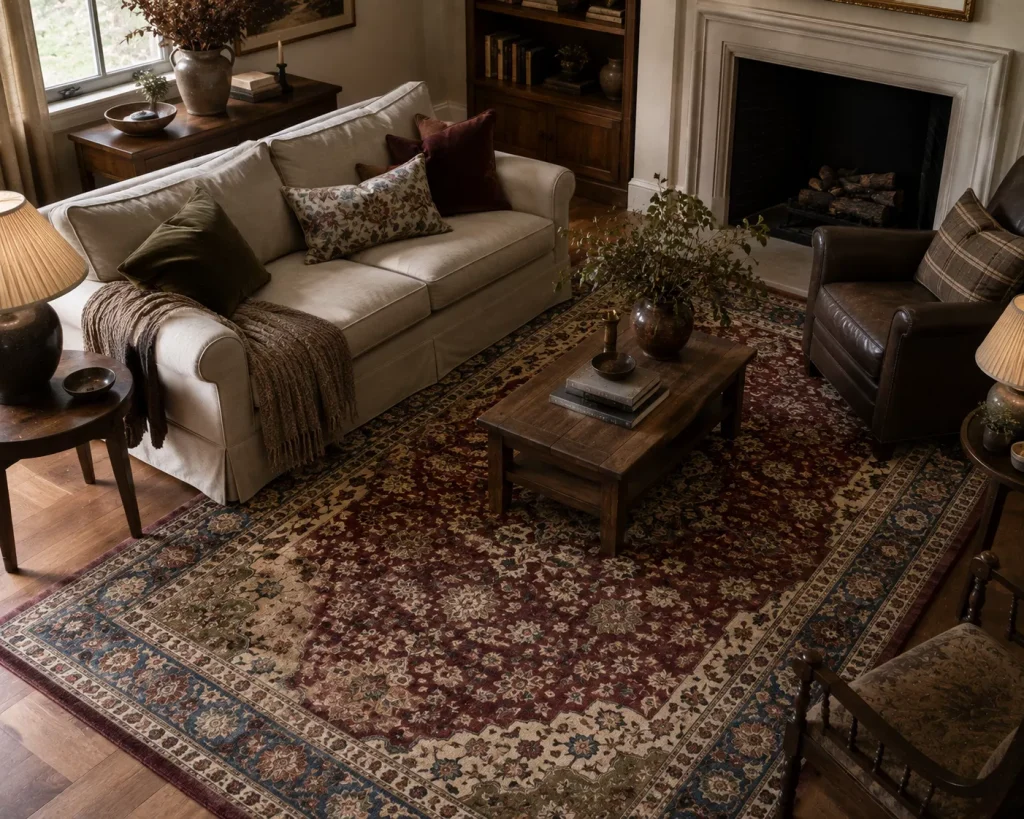
6. Let pattern do some of the seasonal work
Idea 10: Introduce a heritage floral, plaid, or small check.
Fall and pattern belong together, but plaid isn’t your only option.
Heritage florals, tassel details, deeper jewel tones, and old-fashioned pattern are appearing strongly in fall 2026 collections.
Try one floral cushion against a solid sofa.
Use a narrow checked runner on the dining table.
Add patterned bedding to a guest room.
Or choose a vintage-style rug with burgundy, olive, and faded blue.
The trick is varying scale.
If the rug has a detailed pattern, keep nearby cushions simpler.
If curtains are floral, use solid upholstery.
Here’s a useful whole-home guide:
| Area | Best fall pattern | Keep quieter |
|---|---|---|
| Living room | Vintage-style rug | Sofa upholstery |
| Bedroom | Floral quilt | Curtains |
| Dining room | Checked runner | Dinnerware |
| Entry | Patterned runner | Wall decor |
| Kitchen | Striped towels | Countertops |
Pattern should create character.
It shouldn’t make your eyes search for somewhere to rest.
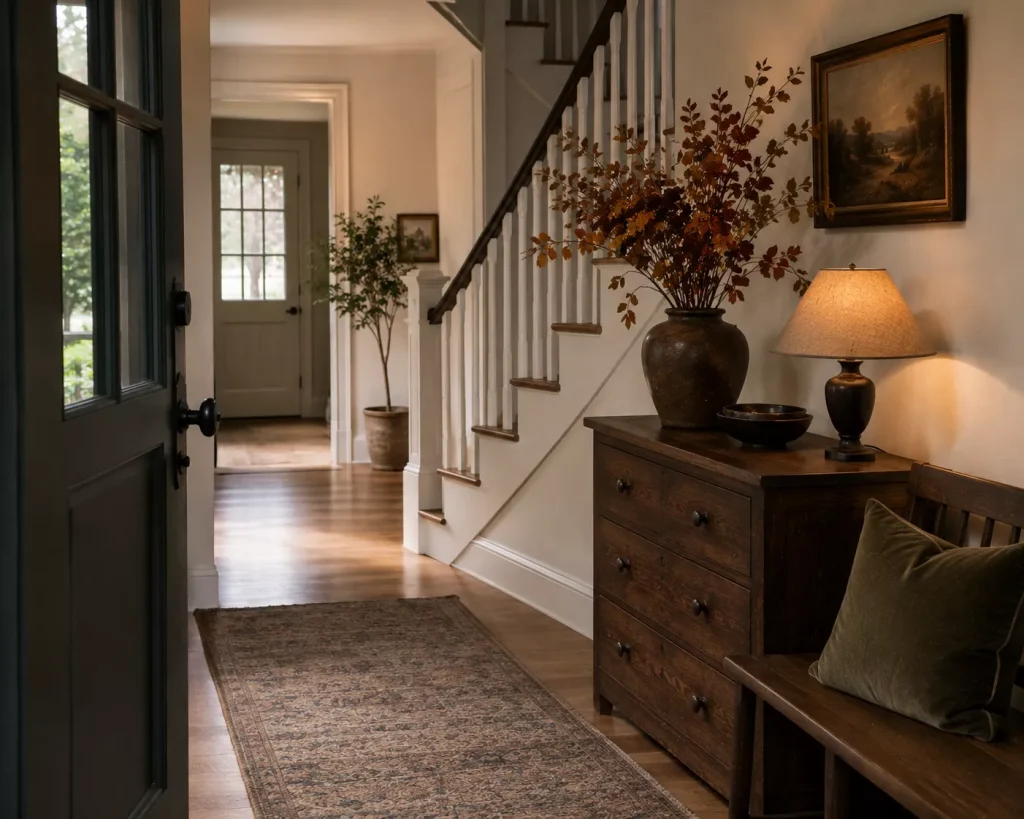
7. Give the entryway a seasonal change without blocking it
Idea 11: Create one small fall landing zone.
Your entry doesn’t need to become an indoor porch.
Keep the walking area clear.
Then choose one surface, perhaps a console or small chest, and give it a seasonal edit.
Try a dark bowl for keys, a lamp with a warmer shade, one vase of branches, and a small vintage landscape.
That’s enough.
If the entry has a bench, add one olive or burgundy cushion.
If there’s a runner, consider something with a deeper pattern that can stay throughout winter.
This is also where you can introduce scent if you enjoy it, but keep it subtle.
The house shouldn’t announce cinnamon from the driveway.
I once put a heavily scented seasonal candle near an entrance because it smelled pleasant in the store.
In a small hall, it became aggressive within fifteen minutes.
Fall should smell like a home.
Not a candle department.

8. Make the dining table useful between dinners
Idea 12: Create a low centerpiece you don’t have to remove every day.
Dining tables often get decorated as though every evening is Thanksgiving.
That isn’t practical.
Use a low arrangement instead.
A shallow wood bowl with pears.
Three brass candlesticks at slightly different heights.
A few small gourds down the center.
Or a wide ceramic bowl filled with pomegranates and foliage.
Better Homes & Gardens’ fall decorating guidance similarly emphasizes simple natural materials, harvested elements, brass accents, pumpkins, gourds, and textiles rather than relying solely on elaborate seasonal displays.
Keep the arrangement low enough that people can see one another across the table.
And leave enough room for dinner.
It sounds obvious, but decorative tables have a bad habit of becoming storage puzzles at mealtime.
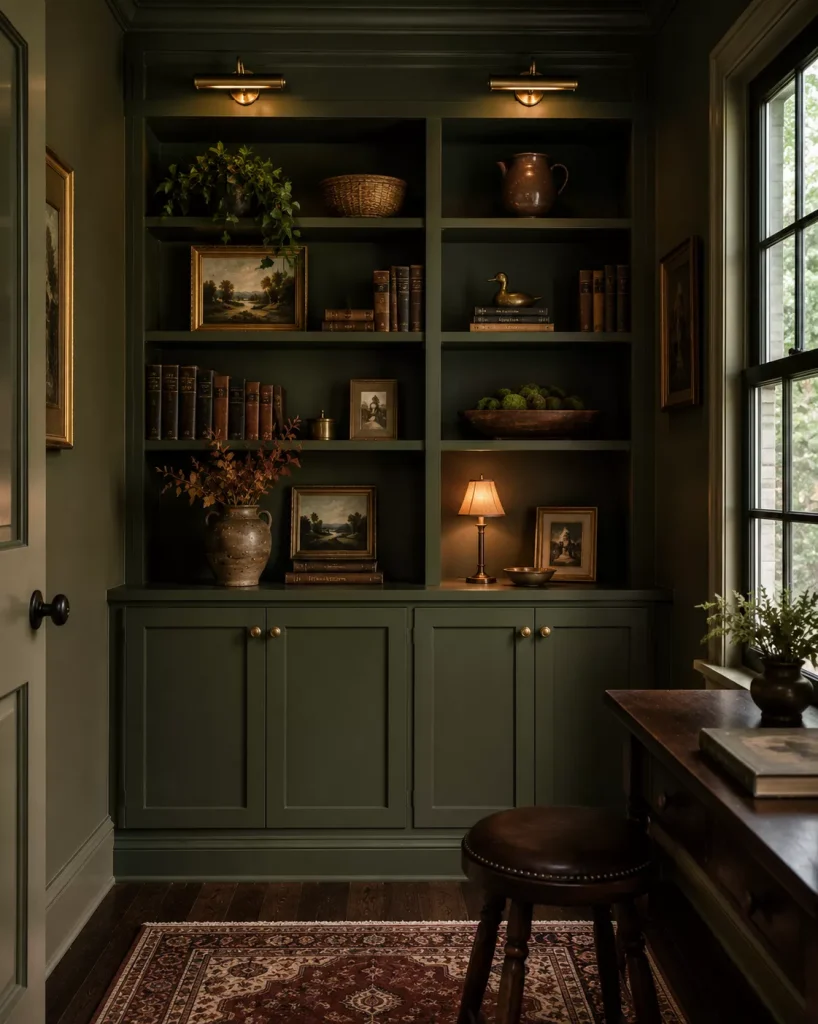
9. Let one room get a stronger seasonal color change
Idea 13: Paint something small if you genuinely want a bigger shift.
Not every fall update needs to be temporary.
If your powder room, study, entry, or bookcase has felt unfinished for months, fall might be a good excuse to give it more color.
Bottle green.
Chocolate brown.
Maroon.
Dusky mauve.
Navy.
Current color guidance for fall 2026 encourages using these shades architecturally, including on walls, cabinetry, tile, and larger upholstered pieces rather than limiting them to accessories.
This is where everyone says seasonal decorating should be reversible.
I disagree.
If you discover you love a chocolate-brown bookcase in October, why would you repaint it in January?
The best seasonal ideas sometimes reveal what your home was missing all year.

10. Give the house one genuinely playful fall moment
Idea 14: Add a little personality instead of perfect tastefulness.
A sophisticated fall home doesn’t need to be serious.
Use an unusual ceramic object on the mantel.
Frame a slightly strange vintage landscape.
Put a lilac vase beside burgundy flowers.
Yes, lilac.
Better Homes & Gardens identified lilac as an unexpected fall 2026 decorating color, reflecting the broader move away from rigid seasonal palettes.
That’s useful because the most memorable rooms often contain one thing that technically shouldn’t work.
A pale violet cushion in a brown room.
A sky-blue lamp beside oxblood books.
A ceramic fox hidden among more serious objects.
Don’t use trends as rules.
Use them as permission.

11. Finish by removing something
Idea 15: Edit one surface before buying the final decoration.
This may be the most useful of all 15 fall home decor ideas.
Clear the coffee table.
Remove three objects from the console.
Put away one basket you never use.
Then look again.
Current design is becoming more expressive, but that doesn’t mean indiscriminate clutter. The strongest 2026 rooms combine richer materials and personality with intentional choices rather than simply filling every surface.
Seasonal decorating often goes wrong because we add fall on top of everything already there.
Instead, swap.
Remove the pale ceramic vase and bring out amber glass.
Replace two summer cushions rather than adding two more.
Put the lightweight throw away when the wool one comes out.
Your home gains a seasonal mood without gaining forty extra objects.
What should you skip when decorating for fall?
Skip decorating every room equally.
Your laundry room doesn’t need a pumpkin because the living room has one.
Concentrate on the spaces you use most.
I’d also skip buying complete matching seasonal collections.
A matching wreath, garland, pillow, table runner, sign, and figurine can make the house feel staged rather than collected.
Avoid relying only on orange too. Fall 2026 is giving us chocolate, maroon, terracotta, bottle green, mauve, violet, navy, and dusty yellow, which are easier to blend into existing interiors.
And don’t underestimate your everyday possessions.
Wood cutting boards.
Brown books.
Copper pans.
Old landscapes.
Cream pottery.
A wool blanket.
You may already own half of your fall decor.
Bring those pieces forward before buying something new.
FAQ About Fall Home Decor
What are the main fall decor colors for 2026?
Chocolate brown, maroon, terracotta, oxblood, dusky mauve, bottle green, smoky violet, straw yellow, and navy are among the strongest current directions. You can still use orange, but it no longer needs to dominate the palette.
How can I decorate for fall without using pumpkins?
Focus on darker textiles, warm wood, brass, branches, dried flowers, seasonal fruit, vintage landscapes, patterned rugs, and softer lighting. The house can feel autumnal without displaying a single pumpkin.
What is the cheapest way to make a house feel cozy for fall?
Rearrange what you already own first. Move darker ceramics and wood pieces forward, change pillow covers, clip branches, and adjust lighting. One new throw or pair of cushion covers may be enough after that.
How do I decorate for fall without creating clutter?
Replace rather than add. When a seasonal pillow comes out, store a summer one. Keep displays concentrated on a few surfaces and leave practical areas such as kitchen counters and dining tables mostly usable.
Make the house warmer, not more seasonal
The most useful 15 fall home decor ideas aren’t the ones that disappear into storage boxes after Thanksgiving.
They’re the changes that make your home feel better as daylight fades and evenings cool.
A darker lamp shade.
A wool throw.
One old painting.
Chocolate brown beside pale blue.
Branches in the hallway.
A dining table you can still eat at.
Start with the room you use most after sunset and change three things there. Add warmer light, deeper color, and one natural texture.
Then live with it for a few days before decorating another room.
Fall doesn’t need to arrive everywhere at once.
Sometimes one beautifully lit corner is enough to make the whole house feel ready for the season.