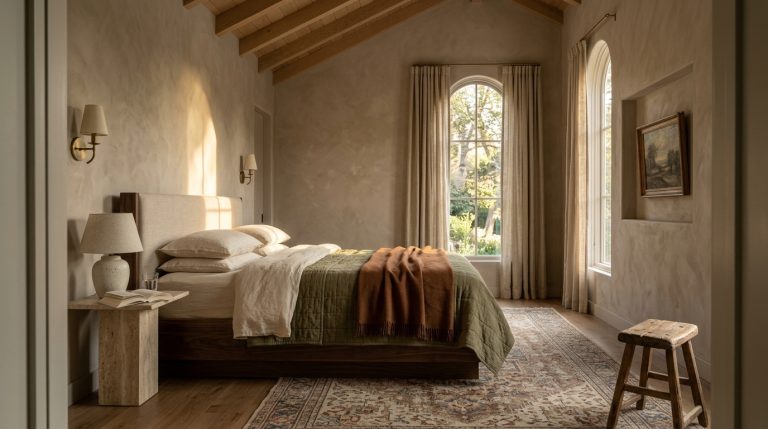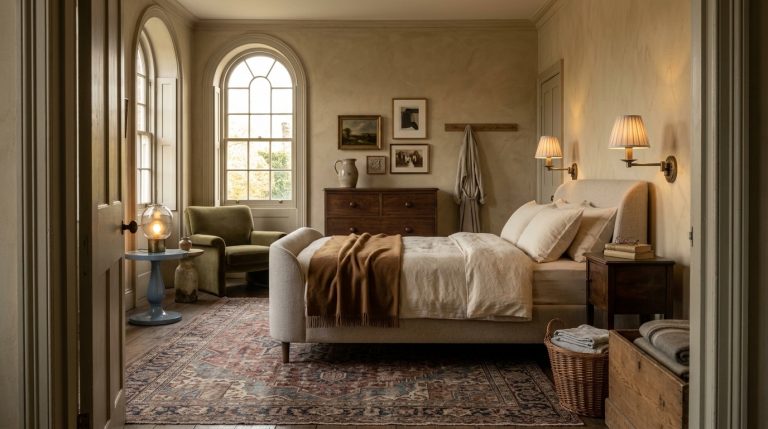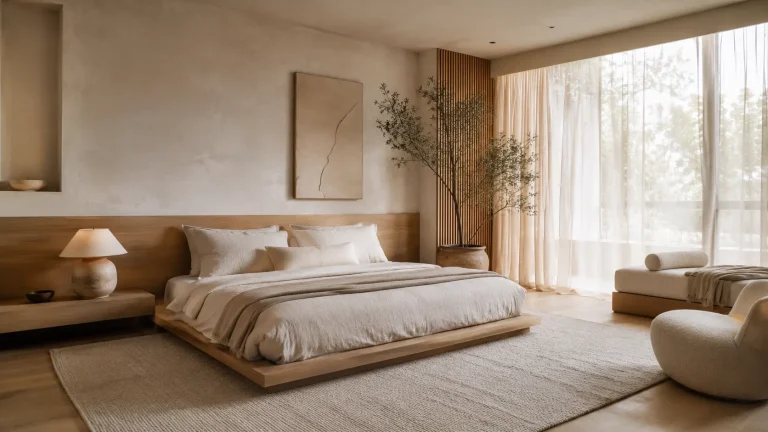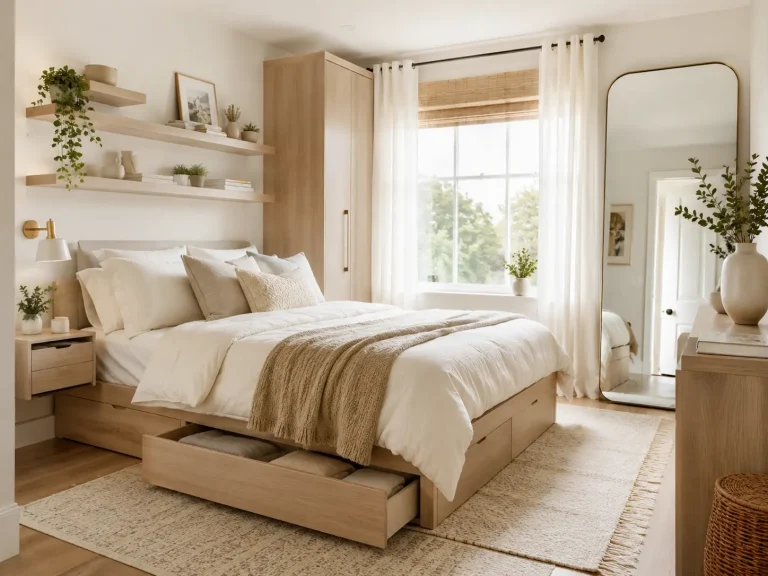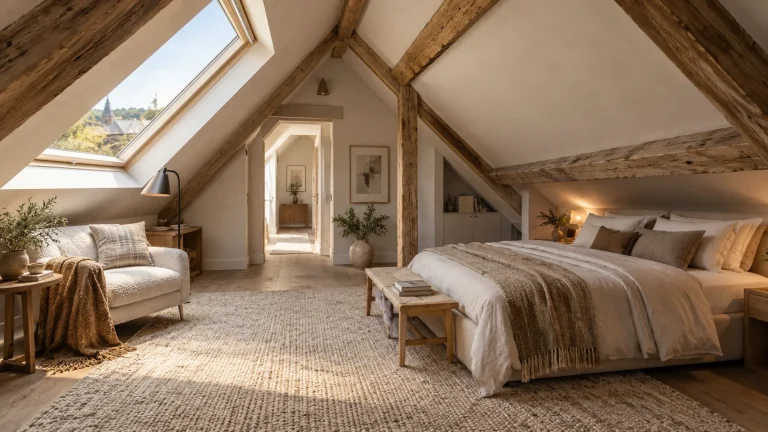
10 Neutral Bedroom Ideas for a Soft, Cozy, and Timeless Bedroom
A neutral bedroom should feel peaceful without feeling lifeless. The most successful rooms combine warm undertones, natural materials, layered textiles, useful furniture, comfortable lighting, and controlled contrast.
That direction is especially relevant in 2026. Houzz reports growing interest in tactile textures, earthy colors, wellness spaces, and biophilic design, while the American Society of Interior Designers is tracking wellness, sustainability, adaptive living, and emotional well-being as major forces shaping interiors.
A neutral bedroom therefore does not have to mean an all-white room. Cream, mushroom, taupe, clay, warm wood, muted green, chocolate brown, and soft black can all function as neutrals when used with restraint.
Early 2027 color forecasting also suggests that neutrals will remain important, but they will increasingly be combined with expressive, nature-connected colors rather than used as a flat, colorless scheme. Sherwin-Williams’ 2027 Colormix forecast includes 48 hues and a group of “Continuity Colors” intended to work across changing palettes, reinforcing the idea that timeless foundations and more personal color can coexist.

1. Build the Room Around Warm, Layered Neutrals
The foundation of a timeless neutral bedroom is not one perfect paint color. It is a family of related tones that work together.
Start with two or three main shades. For example, use warm white on the walls, oatmeal for the curtains, and taupe for the upholstered headboard. Then introduce a deeper neutral, such as walnut, chocolate brown, charcoal, or bronze, to give the room definition.
Layering is especially important because pale colors can easily disappear into one another. Architectural Digest highlights the value of combining different whites and creams, while designers repeatedly emphasize texture as the element that gives a tonal room warmth and character.
When selecting neutrals, pay close attention to undertones. Cream may lean yellow, taupe may lean pink or gray, and greige may appear warm in one room but cool in another.
Compare paint, flooring, fabric, and wood samples inside the bedroom itself. Check them in morning light, afternoon light, and artificial light before making a final decision.
A useful starting formula is:
- 60 percent light foundational neutral
- 30 percent mid-tone material or textile
- 10 percent darker contrast or muted color
For example, a room could have warm-white walls and cream bedding as its foundation, a taupe headboard and curtains as the mid-tone layer, and dark wood with black metal accents as the final contrast.
2. Replace Stark White With Softer Wall Colors
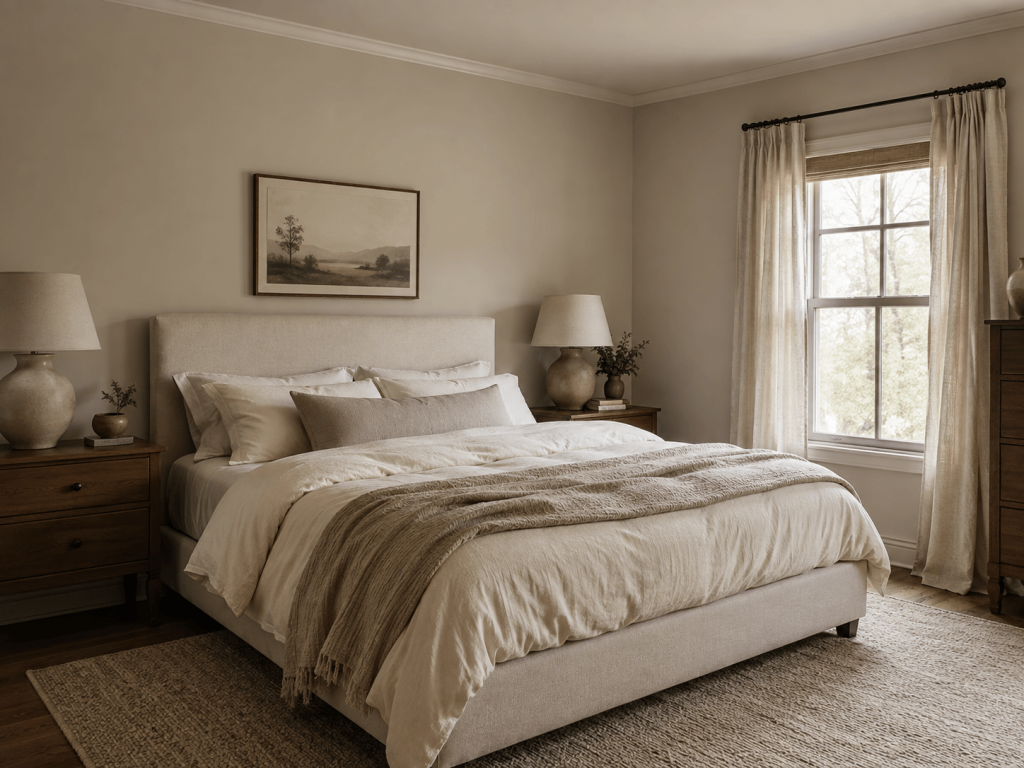
Bright white can be beautiful in a sunny bedroom, but it may appear cold in a room with limited daylight, gray flooring, or cool artificial lighting.
In 2026, designers are showing greater interest in warmer whites, creams, mushroom shades, and grounded neutrals with visible depth. Homes & Gardens describes flat all-white schemes and lifeless cool colors as losing favor, while warmer and earthier alternatives are gaining attention.
Suitable neutral bedroom wall colors include:
- Warm white
- Ivory
- Pale sand
- Soft beige
- Mushroom
- Light taupe
- Gentle greige
- Muted stone
The best option depends on the bedroom’s natural light and existing finishes.
Warm white pairs beautifully with oak furniture and linen textiles. Mushroom works well with walnut, cream, and aged brass. Greige can connect warm fabrics with cooler stone, concrete, or gray flooring.
Do not choose paint from a small digital swatch alone. Apply large samples to more than one wall and leave them in place for several days. A shade that looks elegant under showroom lighting may appear pink, green, yellow, or dull beside your own flooring and furniture.
For a more enveloping effect, consider painting the ceiling and trim in a related neutral rather than automatically using brilliant white. The difference can be subtle, but it creates a softer visual envelope around the bed.
3. Make the Bed Look Comfortable, Not Overstyled
The bed is the main visual and functional feature of the room. It should look inviting enough to use, not so elaborately decorated that it feels like a showroom display.
Start with breathable bedding in cotton or linen. Use a duvet, quilt, or coverlet in cream, warm white, sand, or pale taupe. Introduce texture through a waffle blanket, washed-linen pillows, a wool throw, or a softly quilted layer.
Current bedroom design is moving toward cocooning, tactile comfort. Designers cited by ELLE Decor describe 2026 bedrooms as becoming more intimate and serene, with upholstered headboards, washed linen, and layered materials contributing to a quieter environment.
When styling the bed, vary the textures more than the colors. Smooth cotton sheets can sit beneath a relaxed linen duvet, while a wool or knitted throw introduces a heavier surface.
Limit decorative pillows to the number you can realistically manage. Two sleeping pillows, two larger supportive pillows, and one lumbar cushion are often enough. A bed covered with eight or ten cushions may photograph well, but it becomes inconvenient when they must be removed and rearranged every day.
A slightly relaxed bed can also feel warmer than a perfectly rigid one. Natural folds, a casually placed throw, and softly arranged pillows make the room feel lived in rather than untouched.
4. Use Natural Wood as a Major Neutral
Wood should not be treated only as a small accent. In a neutral bedroom, it can provide warmth and visual weight that paint and textiles cannot achieve on their own.
Light oak creates an airy, relaxed atmosphere and works well in Scandinavian, Japandi, organic-modern, and minimalist bedrooms. Medium oak and ash feel natural and understated. Walnut adds richness and pairs particularly well with cream, taupe, bronze, muted green, and soft black.
The broader 2026 design direction supports this approach. Houzz has identified warm earthy colors and natural textures as growing areas of interest, while the 1stDibs designer survey found continued demand for chocolate brown, organic modernism, antiques, vintage furniture, and handcrafted materials.
Avoid purchasing a perfectly matching bedroom set in which the bed, dresser, wardrobe, and nightstands all have the same finish and detailing.
A room generally feels more personal when its furniture relates without matching exactly. Keep the wood undertones compatible, but vary the age, shape, finish, or material.
For example, combine a light oak bed with painted nightstands and a vintage walnut chest. The pieces still feel connected through their warm tones, but the variation prevents the bedroom from looking like a furniture showroom.
5. Create Depth Through Texture, Not Clutter
Texture is the difference between a simple neutral bedroom and a flat one. It creates visual interest without disturbing the calm color palette.
Useful materials include:
- Washed linen
- Wool
- Cotton
- Bouclé
- Woven grass
- Rattan
- Raw or matte wood
- Limewash or plaster
- Handmade ceramics
- Brushed or aged metal
Houzz’s 2026 trend data shows rising interest in tactile finishes such as linen wallpaper, seagrass wallpaper, sandstone, and Venetian plaster. Coverage of Maison & Objet 2026 also highlighted warm neutrals, heritage crafts, sculptural pieces, and everyday objects elevated through material and detail.
The key is to distribute texture around the room rather than concentrating everything on the bed.
Place a wool rug underfoot, use a woven shade at the window, add a ceramic lamp beside the bed, choose a linen or bouclé headboard, and position a wooden bench at the foot of the bed.
Repeating one or two textures also creates unity. A woven lampshade might connect with a storage basket, while the texture of a wool rug could be repeated in one cushion or throw.
Avoid filling the room with decorative objects simply to create interest. A few substantial textures are more effective than numerous small accessories.
6. Add Curves and Soft Geometry
Bedrooms naturally contain many hard lines. The bed, walls, windows, wardrobes, rugs, and artwork are usually rectangular. Curved elements soften this structure and make the room feel more relaxed.
A rounded headboard, oval mirror, globe lamp, curved bench, or arched doorway can break up the straight lines without adding another color.
Houzz reports continued momentum for curves and soft geometry, while the 1stDibs survey reflects designers’ ongoing interest in more expressive forms and eclectic combinations.
You do not need to replace every piece with curved furniture. One or two rounded forms are usually enough.
An arched mirror above a straight dresser creates contrast. A round side table can soften a rectangular bed. A globe pendant or dome-shaped bedside lamp can introduce curves without consuming additional floor space.
Choose shapes that also serve a practical purpose. A rounded upholstered headboard is comfortable for reading, while an oval mirror can soften a large dresser without making the arrangement feel visually heavy.
7. Layer Lighting for Rest, Reading, and Atmosphere
One ceiling light cannot perform every job in a bedroom. A useful lighting plan includes several smaller sources positioned at different heights.
A well-layered bedroom should contain:
- Ambient lighting for general visibility
- Bedside lighting for reading
- Accent lighting for atmosphere
- Natural daylight during the day
Architectural Digest’s coverage of the “analog bedroom” recommends smaller, warmer light sources instead of relying entirely on a single overhead fixture. The wider trend reflects a growing desire to make bedrooms quieter, less technological, and more supportive of rest.
Choose warm illumination rather than cool, blue-white light. Fabric, paper, ceramic, frosted-glass, and woven shades can diffuse the light and reduce harsh glare.
Place bedside lamps or wall sconces on separate controls so each person can use the light independently. Wall-mounted sconces are especially useful in a small bedroom because they leave more space on the nightstand.
Also consider what is visible from the bed. Bright charging indicators, exposed cables, digital clocks, and a large television screen can interrupt the calm effect even when the room is attractively decorated.
Use cable management, concealed sockets, covered storage, or a charging drawer to reduce visual noise.
8. Introduce Nature Without Creating a Theme
Biophilic design is receiving greater attention because homeowners want spaces that feel restorative and connected to nature.
Houzz reported substantial growth in searches connected with biophilic design, wellness rooms, and calming interiors in 2026. ASID has similarly emphasized wellness, natural materials, and human-centered design.
Nature can be introduced into a neutral bedroom through:
- One healthy indoor plant
- A natural branch in a ceramic vessel
- Woven fibers
- Visible wood grain
- Stone accessories
- Botanical artwork
- Muted green accents
- Clay or terracotta tones
- An unobstructed outdoor view
Choose plants that match the room’s actual light level. A large living tree placed in a dark corner will not remain attractive for long.
In a low-light room, use a shade-tolerant plant, preserved branch, dried arrangement, or nature-inspired artwork instead. Artificial greenery should be realistic and used sparingly.
The room does not need to become a botanical theme. One well-positioned tree, branch, or sculptural plant often has greater impact than many small pots placed on every available surface.
9. Add Personality Through Vintage and Handmade Pieces
A timeless bedroom should not look as though every item arrived in the same delivery. Vintage, antique, and handmade pieces introduce irregularity, craftsmanship, and personal history.
The 1stDibs 2026 survey found that 85 percent of participating designers sourced vintage pieces, while the share using pre-1920 antiques also increased. The report connects this interest with a broader appreciation for handcrafted and valuable materials.
You do not need expensive antiques to achieve this effect. Consider adding:
- A vintage chest as a bedside table
- An old framed sketch
- A handmade ceramic lamp
- A woven basket
- A small wooden stool
- A repaired or reupholstered bench
- A textile collected during a journey
- A meaningful family object
Use one or two characterful pieces rather than filling the bedroom with unrelated finds. A calm neutral palette provides enough visual space for these objects to stand out.
The best choices should also be useful or meaningful. An old chest that provides storage is more valuable to the room than an object purchased only because it appears vintage.
10. Ground the Room With Controlled Contrast
A neutral bedroom still needs edges, focal points, and visual weight. Without contrast, the furniture may appear to dissolve into the walls.
Chocolate brown is particularly relevant in 2026. In the 1stDibs survey, it remained the most frequently selected color among participating designers for the year, while deep greens, burgundy, and softer pastel shades also gained attention.
For a timeless neutral bedroom, use deeper colors in controlled amounts:
- Walnut nightstands
- A charcoal cushion
- Black picture frames
- Bronze hardware
- A dark brown bench
- An olive throw
- Burgundy piping
- Deep green artwork
Repeat the accent at least twice so it appears intentional. A black lamp can connect with a black picture frame, for example.
This is also where emerging 2027 color directions can be introduced without making the bedroom feel temporary. Instead of repainting every wall to follow a forecast, introduce muted green, earthy red, mineral blue, or soft ochre through cushions, throws, artwork, lamps, or one small painted piece.
Sherwin-Williams’ 2027 forecast presents a broad and flexible collection rather than one prescribed color combination, supporting a more adaptable and personal approach.
How to Make a Small Neutral Bedroom Feel Larger
Neutral colors can make a small bedroom feel visually continuous, but color alone will not solve a difficult layout.
Choose furniture that preserves clear walking paths. Floating nightstands, wall-mounted lights, beds with storage drawers, and shallow wardrobes can free valuable floor space.
Hang curtains close to the ceiling and extend the curtain rod beyond the sides of the window. When the curtains are open, more glass remains visible and the window appears wider.
Use one appropriately sized rug rather than several small mats. A rug that extends beyond both sides of the bed makes the sleeping area feel complete and gives the feet a comfortable landing.
Do not assume that every small bedroom must be painted bright white. A warm mid-tone neutral can make the room feel cocooning and may soften its boundaries.
Consistency is more important than extreme brightness. Too many abrupt changes in wall color, furniture height, flooring, and material can visually divide an already compact room.
Neutral Bedroom Mistakes to Avoid
Using one shade of beige everywhere
Vary the tone and material so the room has depth. Cream linen, pale wood, taupe upholstery, and dark bronze will create more interest than repeating one beige finish.
Mixing incompatible undertones
Compare paint, flooring, curtains, upholstery, and wood together before purchasing. Items that look neutral separately may clash when placed side by side.
Choosing furniture before measuring
Mark the proposed bed, nightstands, dresser, wardrobe, and door swing on the floor with removable tape. Confirm that drawers and doors can open fully.
Relying only on overhead lighting
Add lower, warmer sources near the bed. These will create a more comfortable evening atmosphere and improve reading light.
Styling every surface
Leave deliberate empty space on bedside tables, dressers, walls, and shelves. Negative space is an important part of a calm bedroom.
Following trends too literally
Use trend-led colors and shapes through replaceable layers rather than expensive permanent features.
Ignoring maintenance
Select washable fabrics, accessible storage, and finishes suited to the people and pets living in the home.
Frequently Asked Questions
What are the best neutral colors for a bedroom?
Warm white, cream, sand, mushroom, taupe, greige, soft brown, and muted stone are dependable choices. Subtle greens and clay tones can also function as neutrals when used carefully.
How do you keep a neutral bedroom from looking boring?
Use several related shades, mix tactile materials, add warm wood, include one or two vintage pieces, and introduce controlled dark contrast.
Are gray bedrooms outdated in 2026?
Gray itself is not unusable, but flat, cool-gray schemes are losing appeal. Warmer grays, mushroom tones, greige, and gray-green shades are easier to combine with the current preference for natural materials and richer accents.
What is the biggest neutral-bedroom trend for 2026?
The strongest direction is warmth: warmer neutrals, tactile surfaces, natural wood, cocooning textiles, restorative lighting, and more personal objects.
This reflects wider professional research concerning wellness, craftsmanship, organic materials, and emotionally supportive interiors.
How can a neutral bedroom reflect 2027 trends without dating quickly?
Keep the major surfaces timeless, then introduce forecast colors through cushions, throws, artwork, lamps, or one small painted piece. This allows the room to evolve as preferences change.
Final Thoughts
A soft, cozy, and timeless neutral bedroom is not created by removing every color or purchasing a matching beige furniture set. It comes from balancing quietness with character.
Use warm, related neutrals as the foundation. Add natural wood, comfortable bedding, varied texture, soft curves, and layered lighting. Bring in nature thoughtfully, then personalize the bedroom with vintage, handmade, or meaningful objects. Finally, use deeper accents to give the design structure.
The most relevant lesson from 2026 design research is that homeowners are not simply seeking attractive rooms. They want spaces that support comfort, restoration, individuality, and everyday life.
A neutral bedroom can meet all of those needs when it is designed as a personal retreat rather than assembled from a trend formula.