
15 boho living room ideas for a Warm, Collected Home
A boho living room should feel like it grew with you.
That usually means a slightly worn wood table, a sofa you actually sit on, a rug with enough pattern to hide real life, and objects that weren’t all purchased during the same shopping trip.
The trouble starts when “boho” becomes a checklist. Rattan chair. Macramé. Pampas grass. Beige cushions. Done.
These 15 boho living room ideas take a more relaxed approach. The goal is warmth, personality, and texture without making the room look themed or overcrowded.
I once helped rearrange a rental living room that had plenty of boho decor but still felt strangely flat. We removed several small accessories, added a larger patterned rug, brought in one old wood table, and repeated a deep olive tone across the room.
It immediately felt more personal.
Here’s how to get that balance right.
1. Start with an earthy palette, then add one stronger color
Boho interiors are often associated with soft neutrals, but beige alone rarely creates an interesting room.
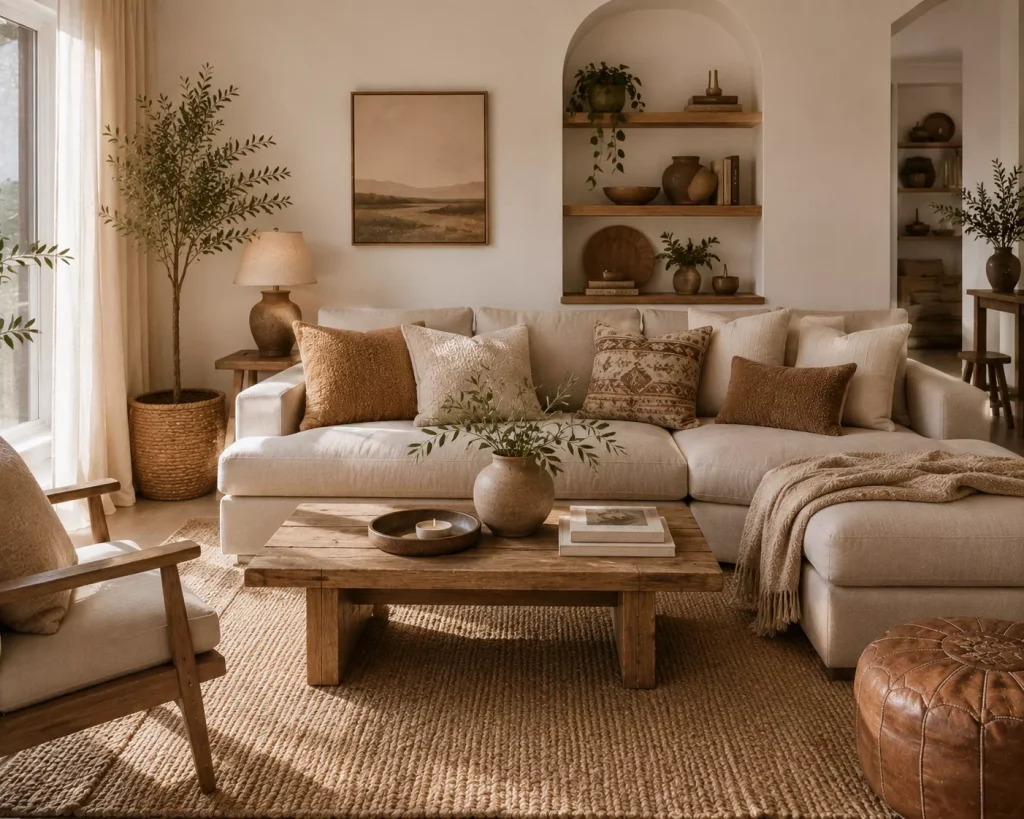
Idea 1: Build your base with warm, earthy neutrals.
Cream, warm white, mushroom, sand, caramel, and light taupe are easy starting points. They work well with wood and woven materials without feeling sterile.
Then add a richer color.

Idea 2: Bring in olive, rust, burgundy, or ochre for depth.
A muted olive armchair can anchor a cream room. Rust cushions can warm up a gray-beige sofa. A deep burgundy throw adds weight without requiring a dramatic wall color.
One palette I like is warm white, medium oak, olive green, rust, and small touches of black.
It feels relaxed without becoming washed out.
You don’t need to repeat every color equally. Let one or two shades dominate, then echo the stronger accents in three or four places.
That repetition makes the space feel connected.
And if your rental walls are plain white, that’s fine. You can build nearly the entire palette through textiles, artwork, wood, and ceramics.
2. Use one generous rug to anchor the whole seating area
A tiny rug is one of the fastest ways to weaken a living room.
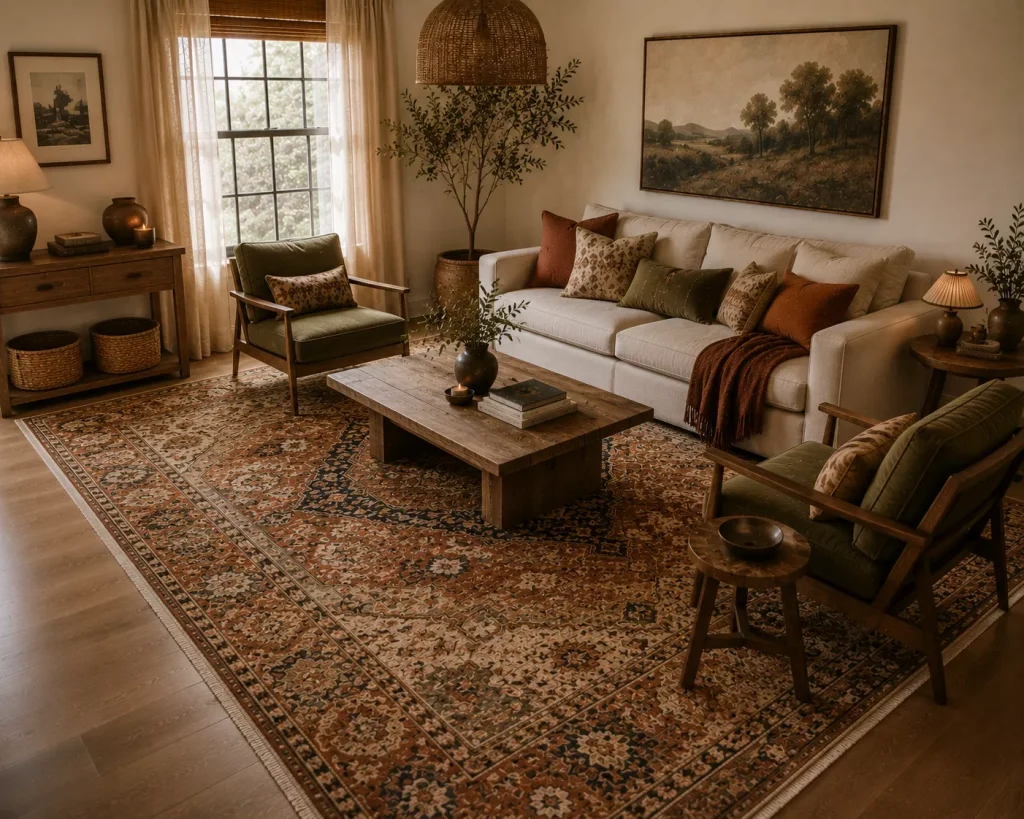
Idea 3: Choose a rug large enough to connect the sofa and chairs.
In many living rooms, an 8-by-10-foot rug works better than a 5-by-7 because the front legs of the major seating pieces can sit on it.
For tighter apartments, a 6-by-9 can still work.
Boho rooms handle pattern especially well.
Look for faded Persian-inspired designs, geometric flatweaves, subtle stripes, or vintage-style patterns in rust, cream, brown, muted navy, and olive.
I usually prefer a low-contrast pattern over solid beige. It gives the room more depth and hides ordinary wear.
Should you layer rugs?
You can, but you don’t have to.
A jute rug underneath a smaller patterned rug creates texture, especially in larger rooms.
The downside is bulk. Layered rugs can shift, curl, or create awkward edges in high-traffic areas.
One correctly sized rug often looks cleaner.
That’s a good example of where common boho advice goes too far. More texture isn’t automatically better.
3. Mix wood tones instead of buying a matching furniture set
Boho rooms look better when they feel collected.
Matching coffee tables, side tables, consoles, and shelving can make the space feel too polished.
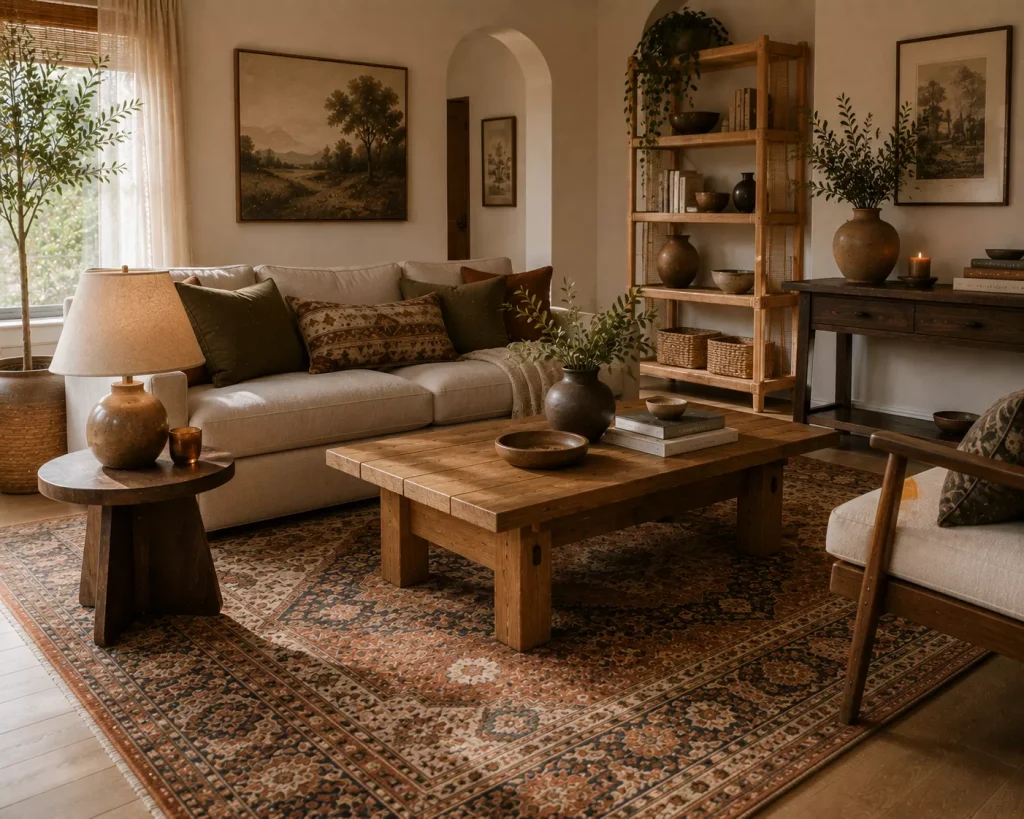
Idea 4: Mix two or three wood tones intentionally.
Try a medium-oak coffee table with a darker walnut side table. Add a lighter cane chair or pale pine shelf.
The woods don’t need to match exactly.
They just need enough contrast to look intentional.
If everything is almost the same brown but not quite, the room can look accidental. A clear difference works better.
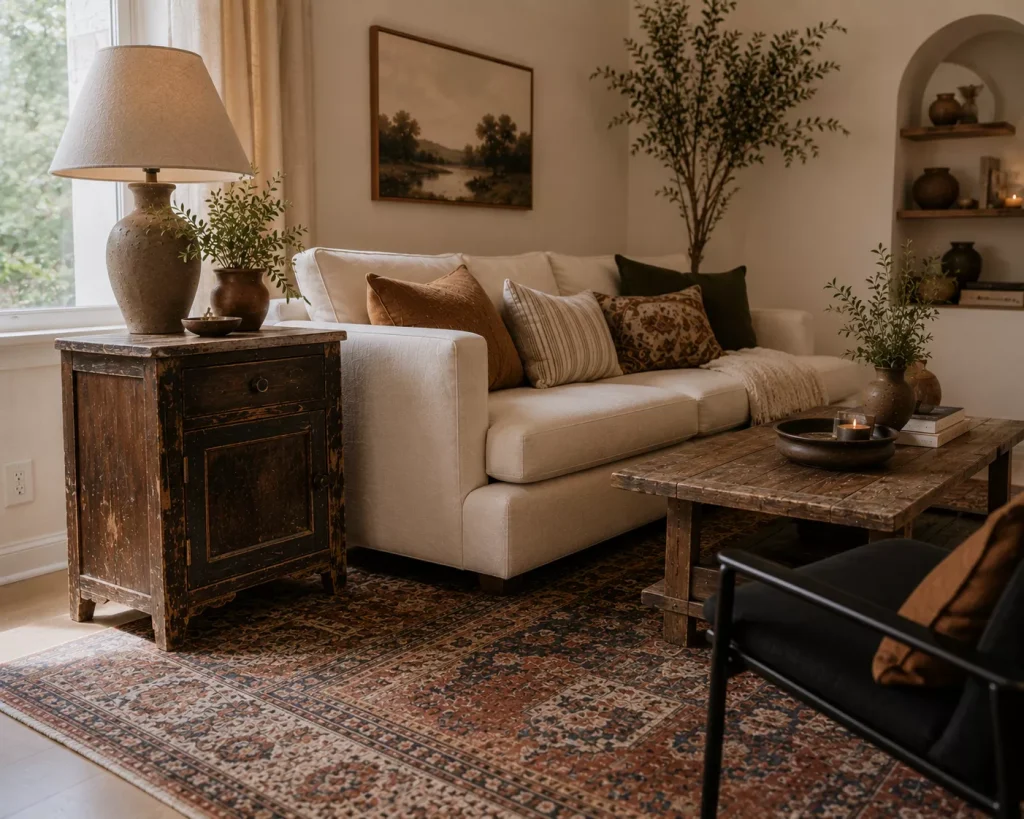
Idea 5: Add one vintage or secondhand wood piece.
This could be an old stool, small cabinet, side table, or trunk.
A little wear gives the room character.
I’d rather see one scratched old table with a good shape than a full matching set of perfect new furniture.
The trade-off is maintenance.
Older pieces may need tightening, sanding, or cleaning before use. Check drawers, surfaces, and joints carefully.
But that imperfection is often what keeps a boho living room from feeling like a furniture showroom.
4. Layer the sofa with texture, not twenty cushions
The sofa is usually the largest soft surface in the room, so it’s the natural place to bring in texture.
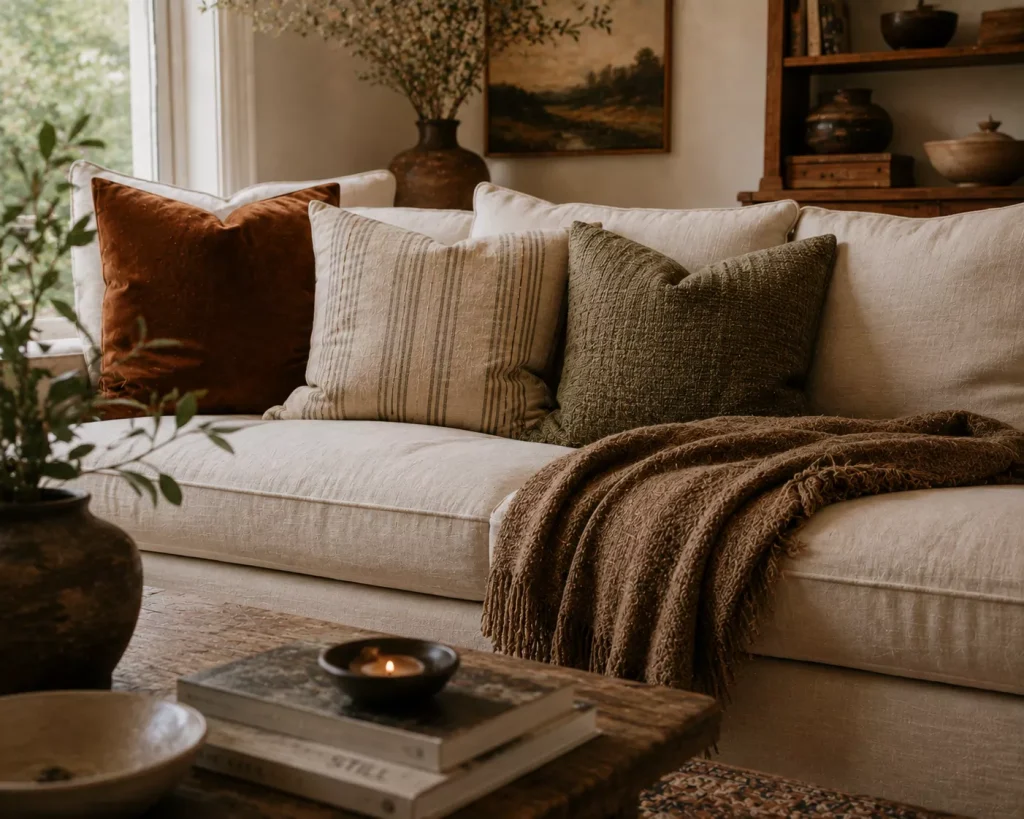
Idea 6: Mix three or four fabrics instead of multiple busy patterns.
Start with the sofa itself, perhaps linen-look fabric, cotton, leather, or a simple woven upholstery.
Then add cushions in materials such as washed linen, velvet, woven cotton, or embroidered fabric.
A cream sofa might look great with:
- one rust velvet cushion
- one striped linen cushion
- one olive woven cushion
- one soft brown throw
That’s enough.
You don’t need eight pillows lined across a three-seat sofa.
Keep one pattern in charge
If your rug has a strong pattern, keep most sofa cushions quieter.
If the rug is plain, you can be more adventurous with the textiles.
This prevents the room from becoming visually exhausting.
A common mistake is buying every cushion individually because each one looks good on its own.
Then they all arrive in the same room and start competing.
Think of the sofa as one composition, not a shelf for decorative pillows.
5. Bring in woven materials without turning the room into a theme
Rattan, cane, jute, seagrass, and wicker suit boho interiors beautifully.
But they work best as accents.
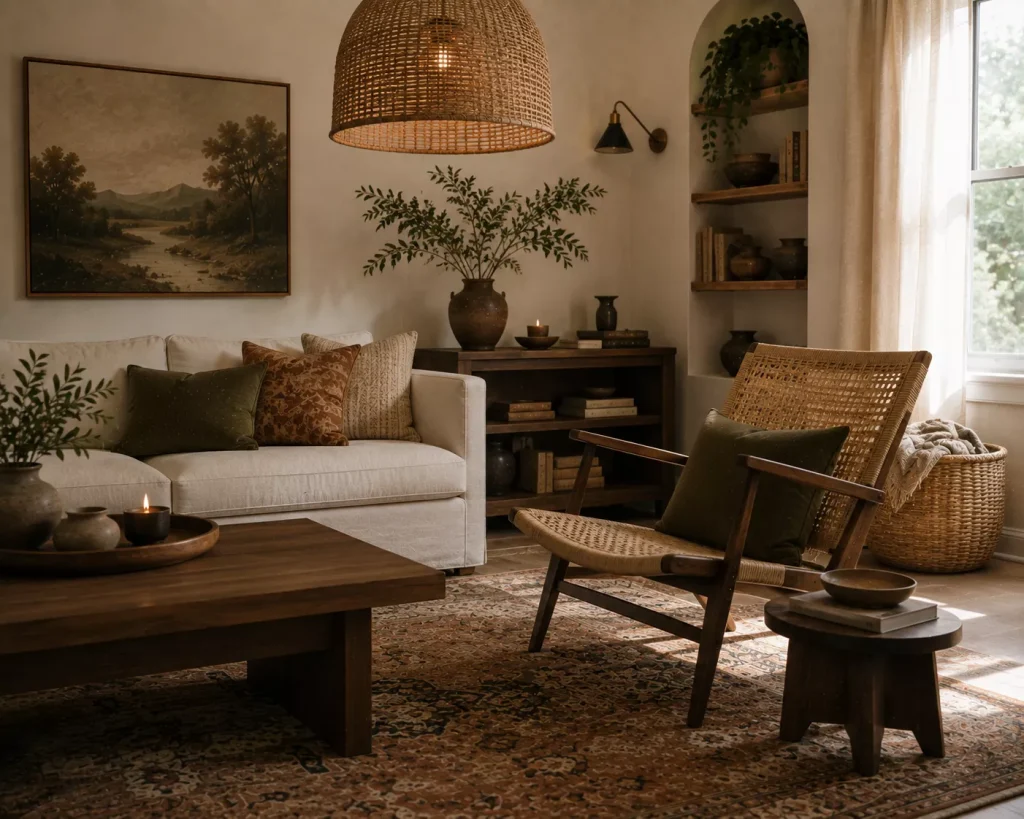
Idea 7: Choose one or two substantial woven pieces.
A cane lounge chair beside the sofa can add lightness. A jute basket can hold throws. A woven pendant can soften the ceiling.
You probably don’t need all three plus a rattan coffee table, rattan mirror, and six matching baskets.
That’s where boho starts looking like a catalog category.
Mix woven materials with smoother surfaces.
A rattan chair beside a walnut table looks more interesting because the textures contrast.
The same goes for a woven basket beneath a sleek console or a cane cabinet beside a linen sofa.
I’m also cautious with jute rugs in living rooms where people frequently sit on the floor.
They look warm and natural, but some are rough under bare feet.
A wool or cotton rug may be more comfortable if softness matters.
Real decorating includes that sort of trade-off.
Pretty isn’t enough if the material annoys you every day.
6. Add plants where they soften the architecture
Plants and boho style make sense together because greenery breaks up all those warm browns and textured surfaces.
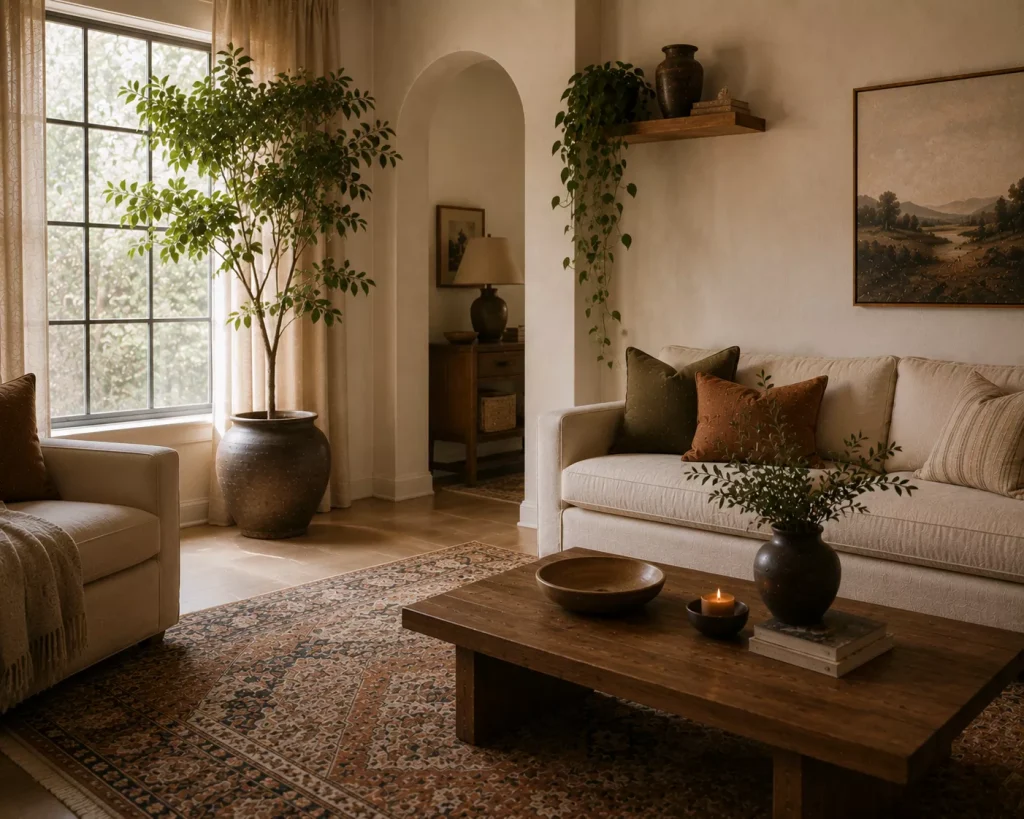
Idea 8: Use one larger plant instead of scattering tiny pots everywhere.
A healthy floor plant near a window can have more impact than seven small plants lined across a shelf.
Choose based on your actual light conditions.
A plant that needs bright light won’t suddenly negotiate because your darkest corner looks perfect on Pinterest.
Trailing plants are useful too.
A pothos or similar trailing plant on a high shelf adds movement without consuming floor space.
Idea 9: Use terracotta and ceramic pots as part of the palette.
Matte clay, stoneware, aged ceramic, and simple woven cachepots fit naturally into a boho living room.
Keep the colors fairly connected.
If you own plants in bright plastic nursery pots, place them inside decorative outer pots rather than buying an entirely new collection.
And faux greenery is allowed.
One believable artificial branch in a large clay vessel can be much better than a real plant struggling in poor light.
No plant deserves to suffer for the aesthetic.
7. Use lighting to make the room feel softer after sunset
A boho living room can look warm during the day and completely lose its charm under one harsh ceiling light.
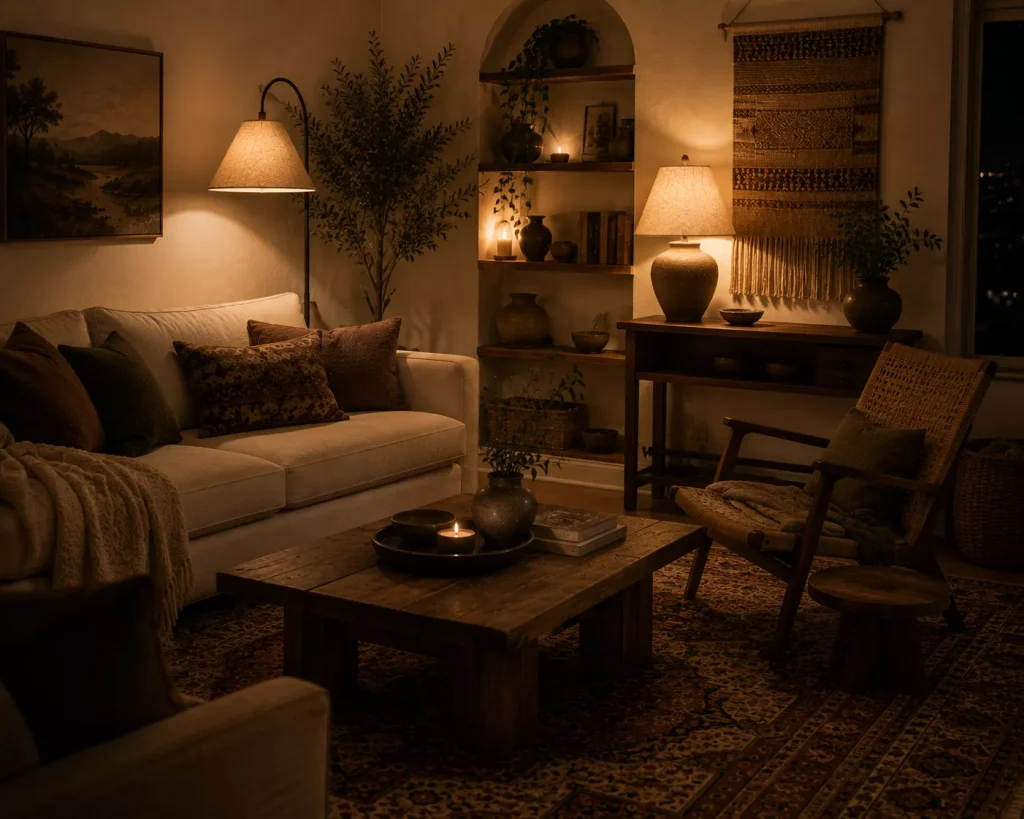
Idea 10: Layer light at different heights.
Use a floor lamp beside the sofa, a smaller lamp on a console, and perhaps one accent light on a shelf.
Warm bulbs around 2700K usually suit living rooms well.
Ceramic lamp bases, paper shades, linen shades, and aged metal fixtures work particularly well with this style.
Idea 11: Let one light fixture have personality.
A woven pendant, sculptural paper lantern, or handmade-looking ceramic lamp can become a focal point.
Just watch the scale.
A huge woven pendant can overwhelm a small apartment living room.
I once saw a modest room where the ceiling fixture nearly touched the visual line of the sofa. It made the whole space feel lower.
A light should contribute atmosphere, not behave like another piece of furniture.
For renters, plug-in sconces and rechargeable lamps can add extra layers without hardwiring.
Cords are the catch.
Use cord covers or position lamps close to outlets so the room doesn’t become a cable exhibition.
8. Make the walls feel personal, not heavily decorated
Boho walls often get overloaded.
Gallery wall. Macramé. Mirror. Shelf. Hanging basket. More art.
Eventually the wall disappears.
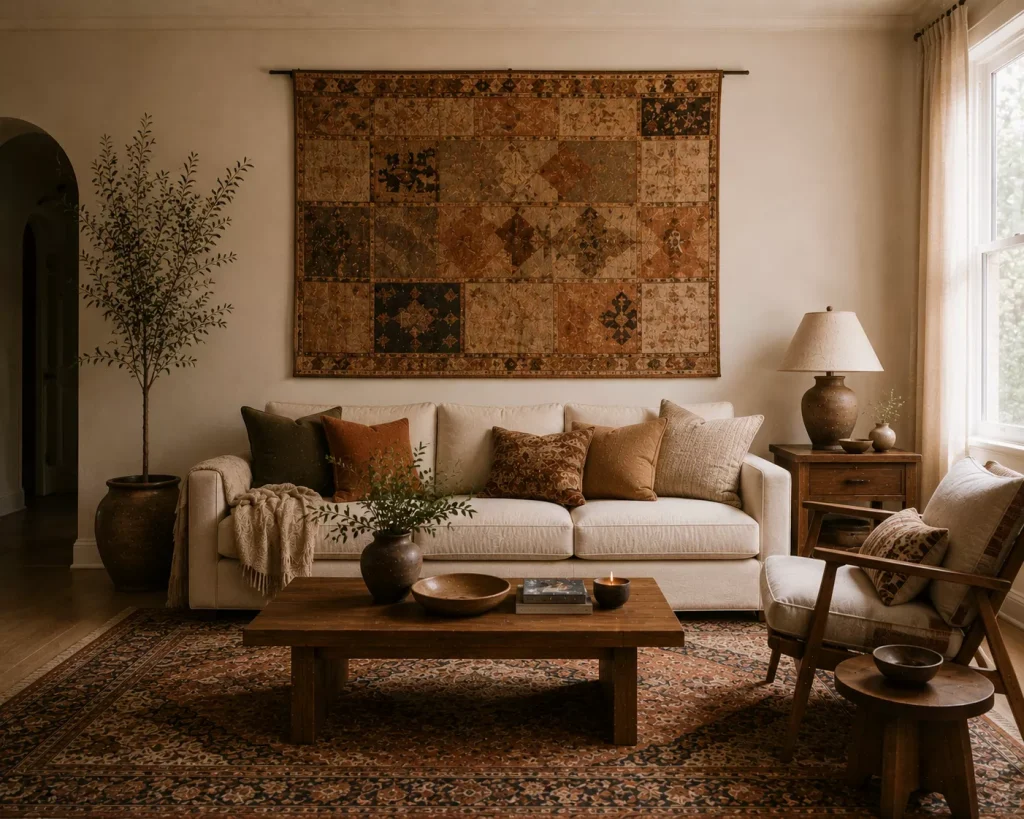
Idea 12: Choose one strong wall moment.
Over the sofa, you could use one oversized textile, a large landscape print, or a carefully arranged gallery wall.
Textiles work particularly well because they add softness.
A vintage quilt, woven panel, or embroidered cloth can create more impact than several small generic prints.
Idea 13: Mix personal art with found pieces.
Frame travel photography, old postcards, sketches, vintage prints, or artwork made by someone you know.
That personal layer matters.
A boho room should feel specific to the person living there.
I’d avoid buying matching six-print wall-art sets unless you genuinely love the images. They often create the opposite of the collected look.
For gallery walls, keep spacing around 2 to 3 inches between frames.
Mixing frame finishes can work, but repeat at least one material so the arrangement doesn’t feel random.
Walnut, black, brass, and pale oak can coexist when used with some restraint.
9. Use functional decor so the room stays livable
The best boho living room ideas still have to handle remote controls, chargers, blankets, books, and everything else people actually use.
Idea 14: Choose storage that contributes texture.
A woven basket beside the sofa can hold throws. A lidded ceramic box can hide small electronics. A wood cabinet can keep games and paperwork out of sight.
Here’s where different options work best:
| Storage choice | Best use | Main drawback |
|---|---|---|
| Large woven basket | Blankets and pillows | Open top can look messy |
| Vintage cabinet | Games, media, paperwork | Uses more floor space |
| Storage ottoman | Blankets plus extra seating | Can look bulky |
| Floating shelf | Books and display pieces | Needs wall installation |
| Decorative box | Cables and small clutter | Limited capacity |
The goal is to hide the unattractive stuff without hiding all evidence of life.
A perfectly empty living room often feels less inviting than one with a few books, a blanket, and a ceramic mug nearby.
But clutter needs boundaries.
Give everyday objects a specific place.
That’s what keeps the relaxed look from turning into actual mess.
10. Create a reading or conversation corner instead of filling every gap
Empty corners make some people nervous.
They start shopping immediately.
But a corner only needs furniture if it serves a purpose.
Idea 15: Turn one corner into a small reading or conversation zone.
A compact lounge chair, floor lamp, and tiny side table can be enough.
Choose a chair that contrasts with the sofa rather than matching it exactly.
A rust velvet chair beside a cream linen sofa can look rich. A cane chair adds visual lightness. A worn leather chair brings depth.
In a smaller room, skip the side table and use a wall-mounted shelf instead.
If you don’t read or need additional seating, leave the corner empty.
Seriously.
Negative space is useful.
The room needs places where your eye can rest.
One of the mistakes I see most often in boho interiors is filling every free spot with a stool, basket, plant, or small table because the style is associated with abundance.
Abundance works only when the room still breathes.
What should you skip in a modern boho living room?
The first thing I’d skip is anything you’re buying only because it’s labeled boho.
You don’t need obligatory pampas grass.
You don’t need three macramé wall hangings.
And you definitely don’t need tassels attached to every available textile.
The strongest boho rooms mix influences rather than repeating recognizable symbols.
Be careful with all-beige rooms too.
They photograph beautifully in strong daylight, but they can feel flat in real life. Add some darker wood, earthy red, olive, tobacco brown, or faded blue.
I’d also avoid excessive small decor.
Ten little objects rarely create more personality than one substantial piece with a story.
And don’t force symmetry.
Matching lamps and side tables can work, but a slightly uneven arrangement often feels more natural in this style.
Boho should be relaxed.
If every object has been positioned to the millimeter, you may have polished some of the charm away.
FAQ About Boho Living Rooms
What colors work best in a boho living room?
Warm white, clay, rust, olive, brown, ochre, muted blue, and burgundy all work well. Start with a calmer base and repeat two or three stronger colors throughout the room.
Can boho decor work in a small living room?
Yes. Use one large rug, a limited palette, vertical decor, and fewer substantial accessories. Avoid filling every corner with baskets, plants, and small tables.
Does boho furniture need to match?
No. Mixed wood tones, vintage pieces, and different furniture shapes often make the room more convincing. Repeat a few colors or materials to keep everything connected.
How do I make boho decor look more expensive?
Focus on scale, natural materials, lighting, and fewer decorative objects. A large rug, one good lamp, and an old wood table often look richer than a room full of inexpensive themed accessories.
Let the room become collected over time
That rental living room I mentioned at the beginning improved as soon as we stopped adding things.
The larger rug connected the seating. The old table brought some character. Deep olive gave the lighter furniture contrast, and removing several accessories finally gave the remaining pieces enough space to matter.
That’s how I’d approach these 15 boho living room ideas in your own home.
Choose one area that feels too flat or too busy.
Maybe you need more texture. Maybe you need a stronger color. Or maybe you need to remove three things before buying another one.
A good boho living room should feel relaxed, personal, and slightly imperfect.
Most of all, it should feel like nobody else could have decorated it in exactly the same way. If this style speaks to you, keep exploring with our boho bedroom ideas, cozy living room ideas, and small living room ideas for other rooms in the house.