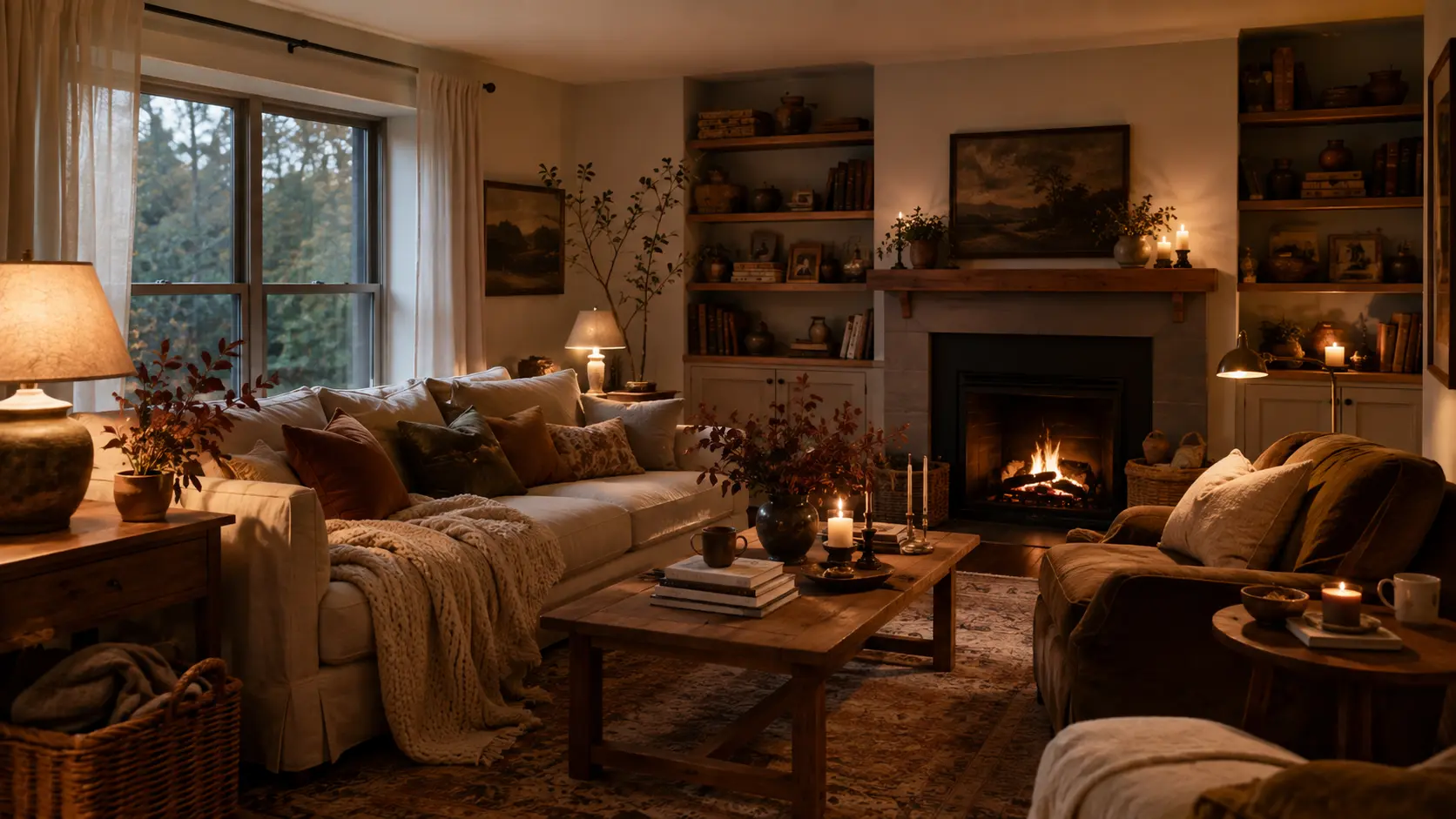
20 cozy living room ideas that make your home feel warm and inviting
A cozy living room is not created by adding a pile of blankets and lighting a few candles.
The rooms that genuinely feel warm and inviting usually have something deeper working beneath the decoration: comfortable furniture, flattering light, natural materials, colors that work together, and enough personality that the space feels like a real home rather than a showroom.
That approach fits particularly well with interior design in 2026. Current designer research points toward warmer, more tactile and individual interiors. The 1stDibs 2026 designer survey found strong interest in earthy, dramatic colors including deep browns, greens and reds, while organic modernism and vintage pieces continue to have staying power. ASID’s 2026 Trends Outlook also places changing lifestyles and well-being among the forces shaping how interiors are designed.
The good news is that creating a cozy living room rarely requires starting over. Changing the lighting, bringing in one vintage piece, improving the rug, adding warmer wood or simply rearranging the furniture can completely alter the atmosphere.
Here are 20 cozy living room ideas for creating a space that feels comfortable, beautiful and genuinely welcoming.
1. Begin With a Warm Color Palette
Color establishes the emotional temperature of a room before you notice almost anything else.
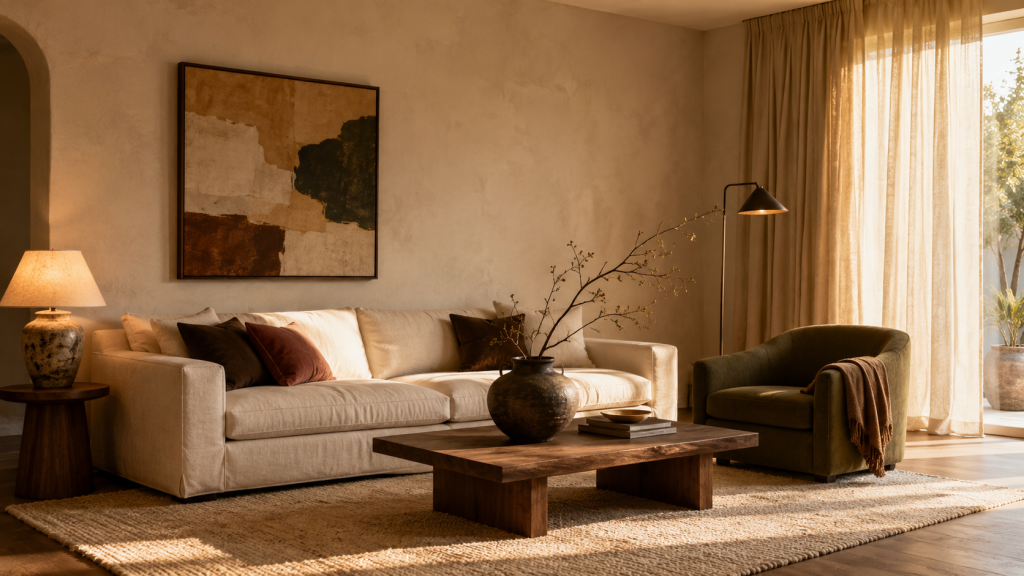
For a cozy atmosphere, move beyond stark white and icy gray toward shades with warmer, earthier undertones.
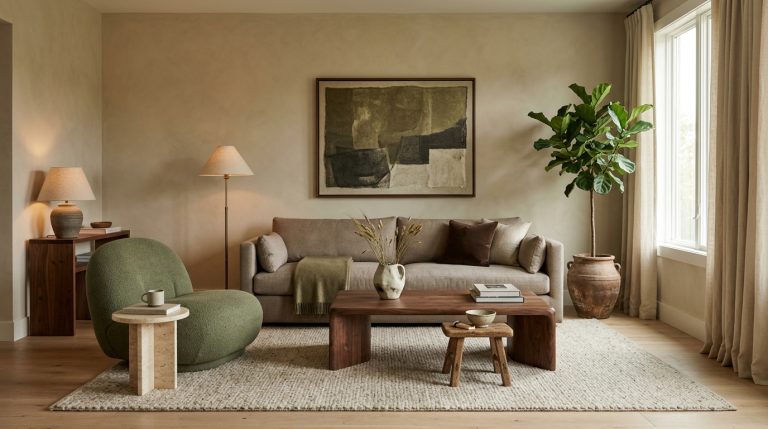
Think creamy ivory, mushroom, warm taupe, caramel, muted olive, clay, chocolate brown or dusty burgundy.
You do not need to make the whole room dark. A warm neutral background can provide enough softness while deeper colors appear through cushions, artwork, furniture and accessories.
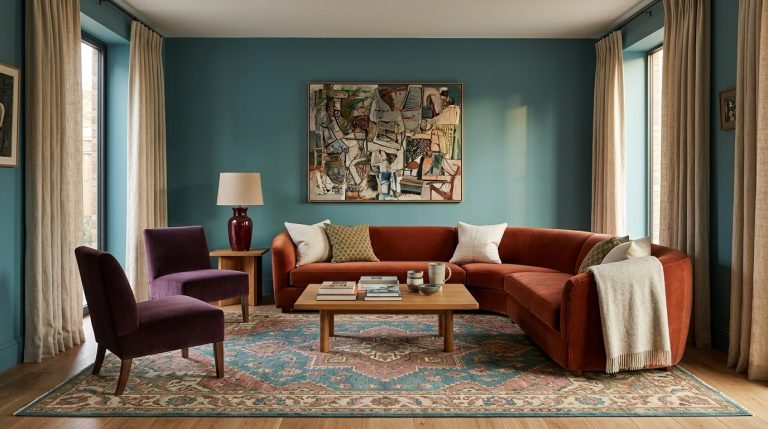
This direction is especially relevant in 2026. Designers surveyed by 1stDibs are forecasting earthy and dramatic hues, particularly deep browns, greens and reds, alongside softer colors such as butter yellow and pistachio.
Choose colors that work with your actual flooring and natural light rather than simply copying a palette from a photograph.
2. Make the Sofa Somewhere You Actually Want to Sit
A cozy living room begins with comfort.
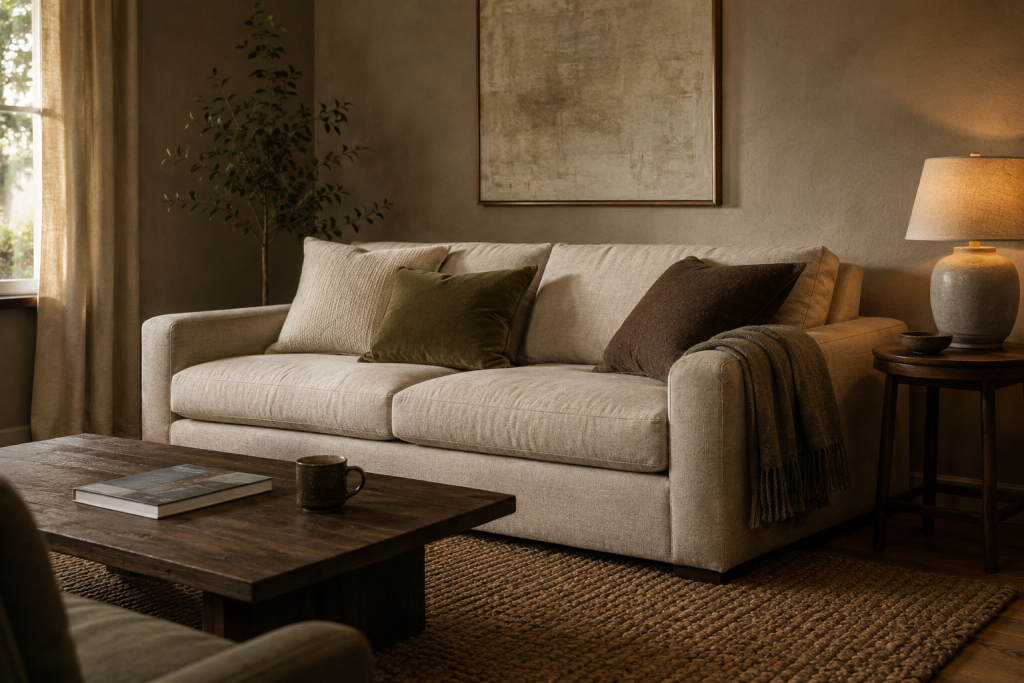
The sofa does not need to be enormous or overstuffed, but it should make sitting down feel inviting.
Look for supportive cushions, comfortable seat depth and upholstery that feels good against the skin.
Soft linen, woven cotton, velvet and textured performance fabrics can all work.
If replacing your sofa is not realistic, improve what you already have. Professional cleaning, better cushion inserts, a textured throw and two or three well-chosen cushions can change its appearance considerably.
Avoid covering the entire sofa with decorative pillows.
A cozy room should invite you to relax, not require you to remove ten cushions before you can sit down.
3. Layer Several Sources of Warm Light
Lighting can transform an ordinary living room faster than almost anything else.
One bright ceiling fixture tends to flatten the room because every surface receives similar illumination.
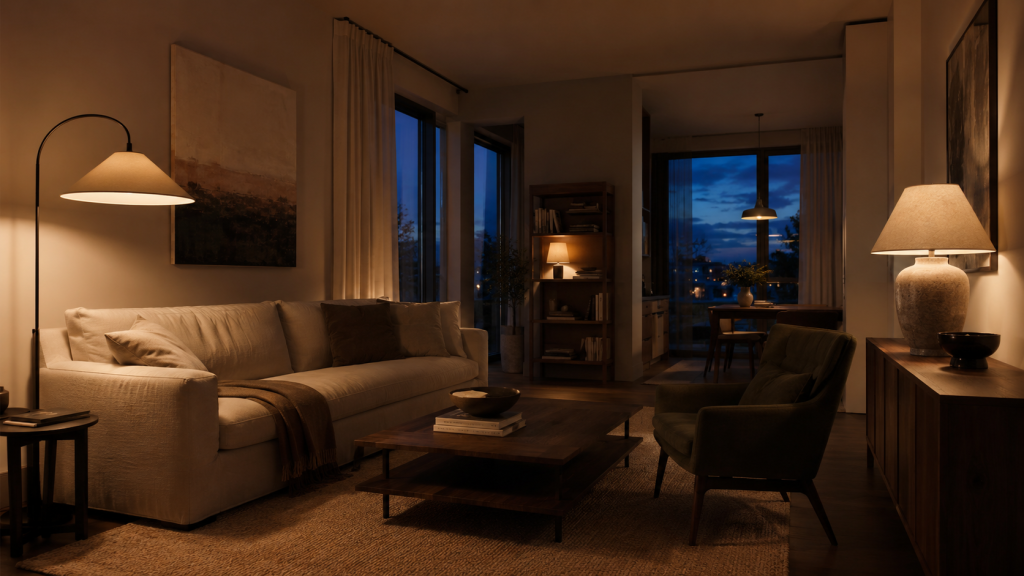
Instead, create small pools of light.
Place a floor lamp beside the sofa, a table lamp on a console and perhaps another small lamp near a bookshelf or reading chair.
The result is more intimate because different parts of the room can be illuminated independently.
This also connects with the wider emphasis on wellness in contemporary interiors. ASID has highlighted lighting and environmental comfort within the growing focus on spaces that support physical and emotional well-being.
During the evening, use warm, lower-level light rather than flooding the room with harsh brightness.
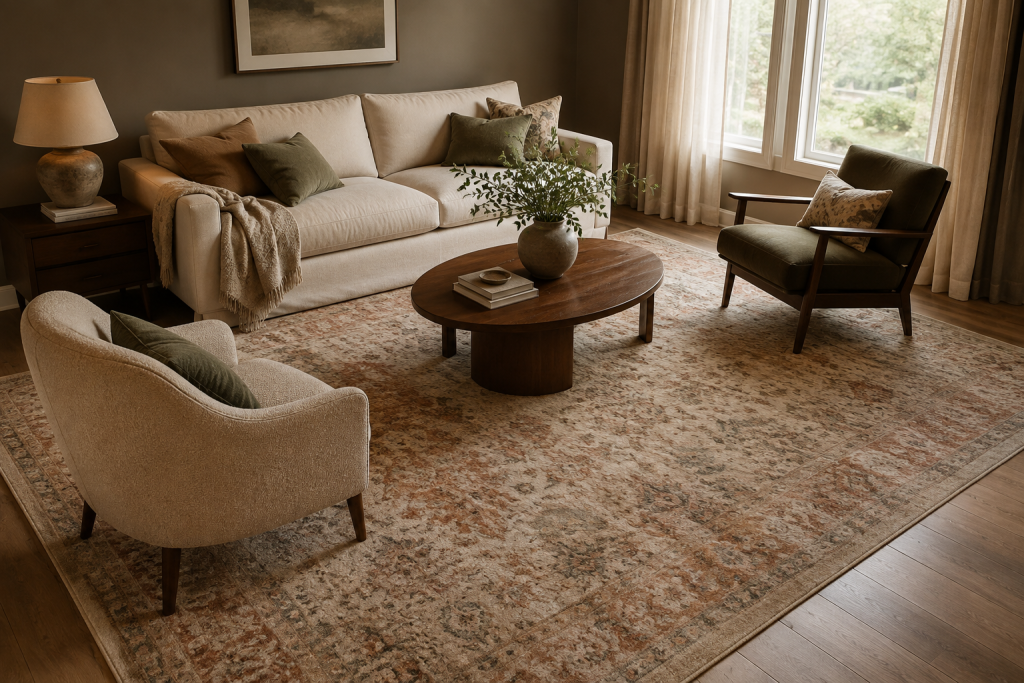
4. Add a Rug That Grounds the Seating Area
A rug provides both physical and visual warmth.
In a living room, it should help connect the sofa, chairs and tables into one cohesive arrangement.
A rug that is too small often has the opposite effect. It can make furniture look disconnected and make the room itself feel less settled.
Where possible, choose a size that allows at least the front legs of the main seating to rest on it.
Wool, wool blends, faded vintage styles and low-pile textured rugs all work especially well in cozy spaces.
Pattern does not have to be dramatic. Soft tonal variations can provide enough movement without overwhelming the room.
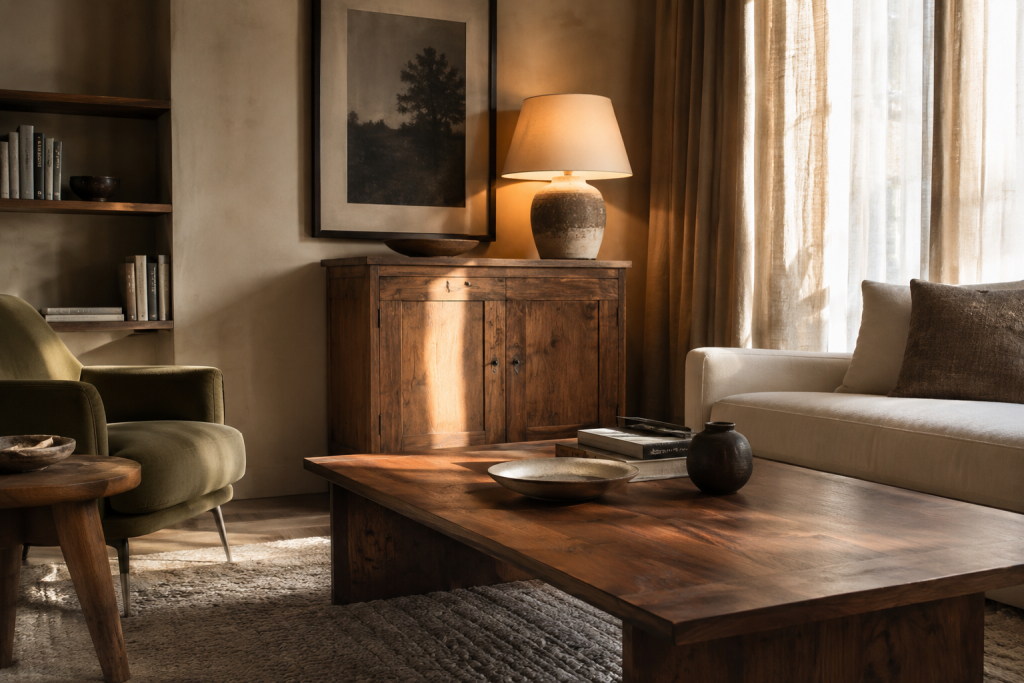
5. Introduce Natural Wood
Few materials bring warmth to a room as naturally as wood.
Current interiors are increasingly embracing richer timber tones alongside lighter woods, and this works particularly well for cozy living rooms. Warm wood provides depth and prevents neutral spaces from feeling flat.
You could introduce it through a walnut coffee table, oak side table, vintage chest, shelving or simple picture frames.
Do not worry about matching every wood exactly.
A room with slightly different but compatible wood tones often feels more natural and collected than one containing a complete matching furniture suite.
Warm timber also pairs beautifully with cream upholstery, olive, rust, burgundy and woven textiles.
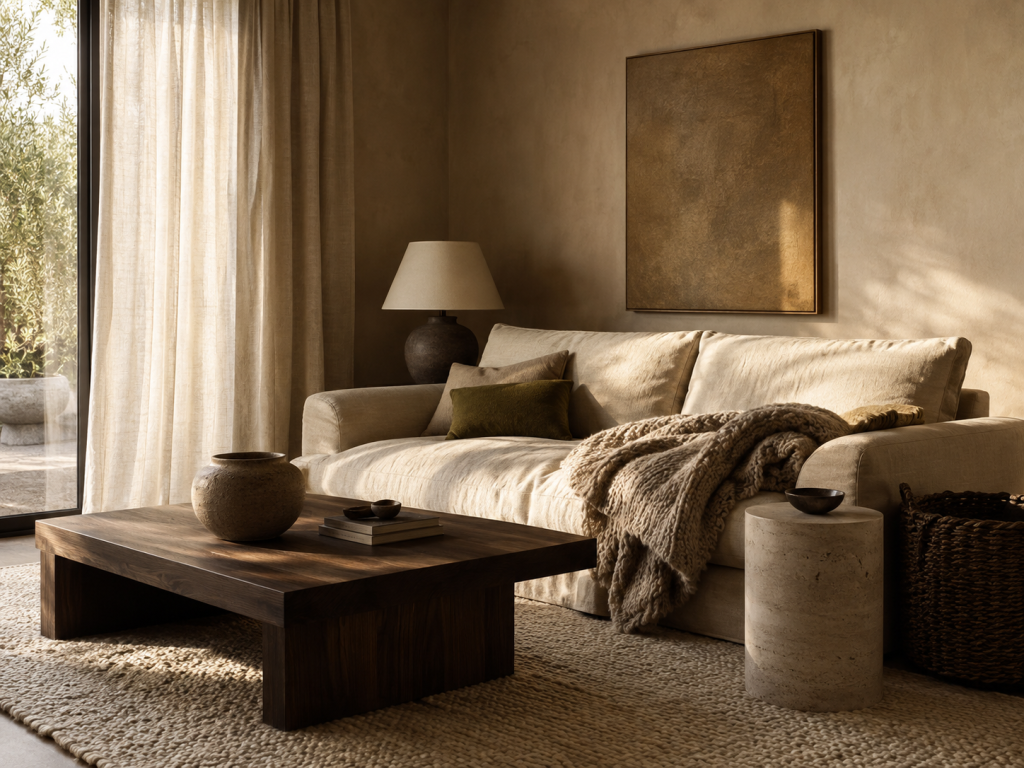
6. Bring in Texture Before Buying More Decorations
If a living room feels plain, the solution is not always more accessories.
Often it needs more tactile variety.
Current 2026 design direction strongly favors tactile materials and handcrafted-looking surfaces as a way to create warmth and depth. Houzz’s coverage of the 2026 Surface Design Show highlighted warm colors, textured finishes, handcrafted materials and dark woods as prominent directions.
You can achieve the same effect without renovating.
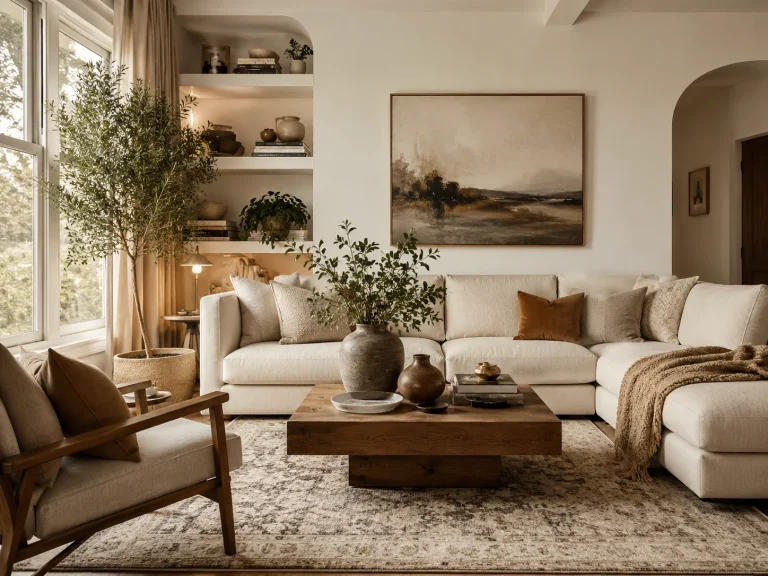
Combine a linen curtain with a wool rug, cotton upholstery, a ceramic lamp, a wooden table and a woven basket.
Even if almost everything is cream or brown, the room will feel layered because the surfaces reflect light differently.
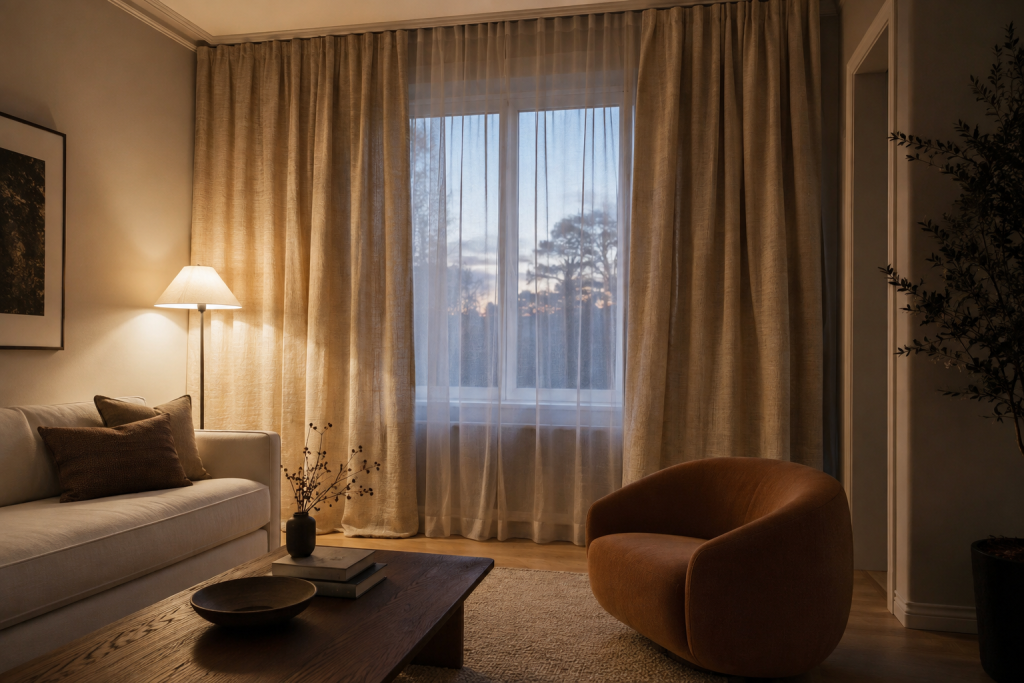
7. Hang Curtains All the Way to the Floor
Curtains instantly soften a living room.
They also reduce the amount of hard architecture visible around a window, which can make the room feel more finished.
Whenever practical, mount the curtain rod higher than the top of the window and use panels long enough to reach the floor.
Generous curtains generally feel warmer and more substantial than narrow panels hanging tightly around the glass.
For a relaxed look, try linen, cotton or softly woven fabrics.
If privacy and light control matter, layer sheer curtains with heavier outer panels.
The combination gives you soft daylight during the day and a more enveloping atmosphere in the evening.
8. Add One Vintage Piece
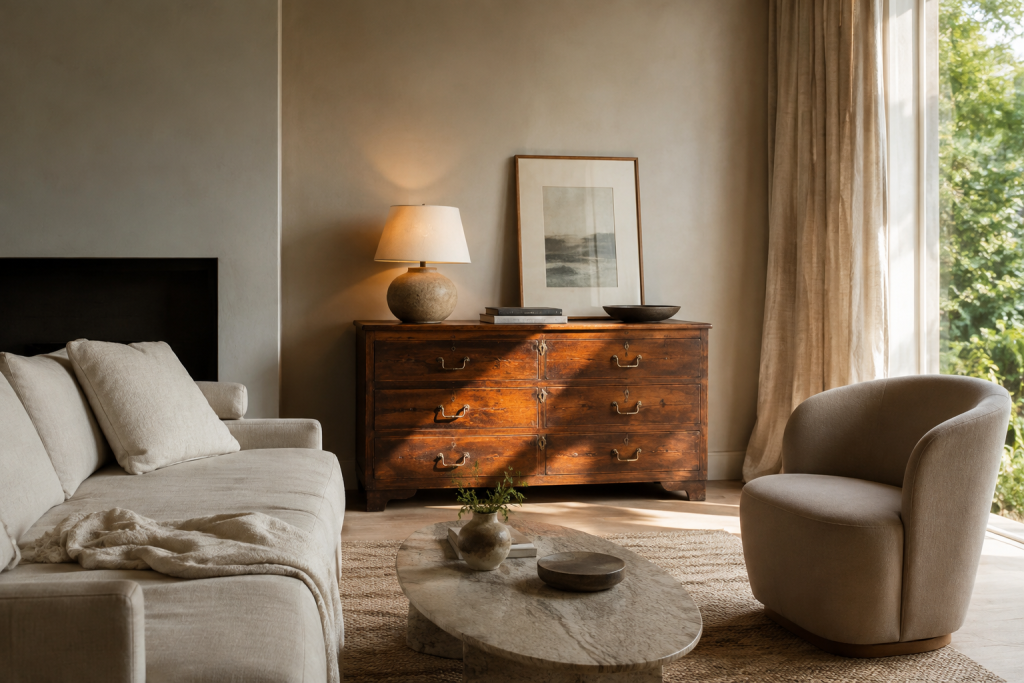
New furniture can look beautiful, but a room containing nothing except recently purchased pieces sometimes feels impersonal.
One vintage object can change that.
The 1stDibs 2026 survey continues to show substantial designer interest in vintage and antique furniture, alongside eclectic and organic-modern interiors.
Consider an old wooden side table, vintage lamp, small chest, framed mirror or characterful armchair.
Age introduces patina and irregularity—qualities that can make a room feel established rather than freshly assembled.
You do not need an antique-filled house.
One piece is enough to create contrast with newer furniture.
9. Create a Real Conversation Area
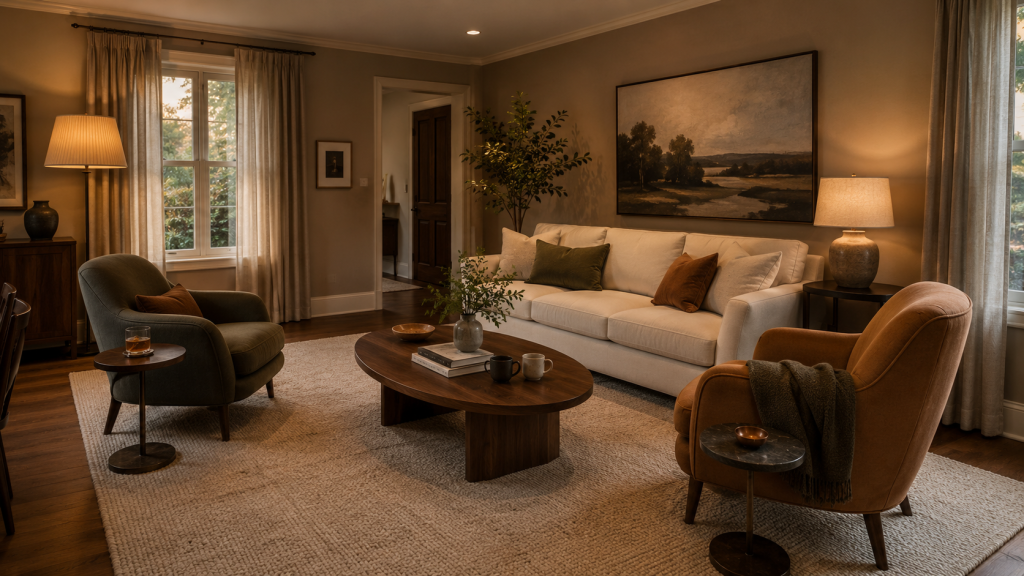
Furniture placement affects coziness as much as color.
A sofa and chairs positioned too far apart can make even a beautiful room feel formal and disconnected.
Arrange the seating so people can talk comfortably.
If space allows, angle a chair slightly toward the sofa rather than pointing everything toward the television.
Place a coffee table or side table within easy reach.
The room should encourage people to gather naturally.
This is especially important in larger living rooms, where pushing every piece of furniture against the walls can leave an awkward empty space in the center.
10. Add a Reading Corner
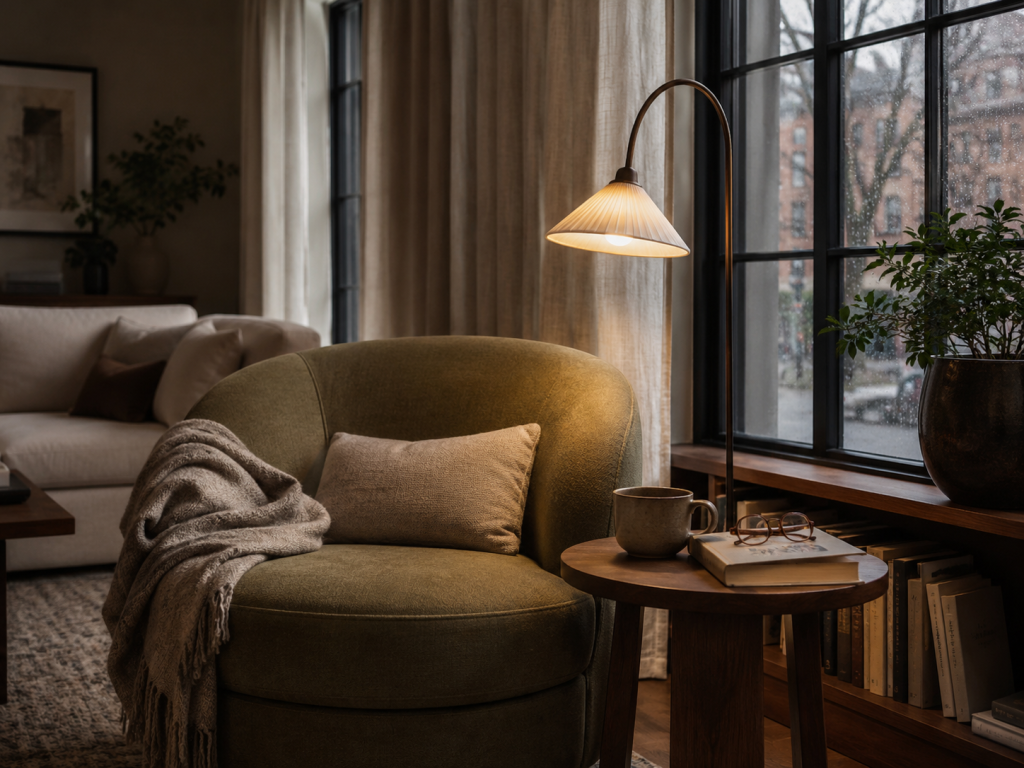
Few things communicate coziness more effectively than a place designed for reading.
You do not need a separate library.
A small corner can work beautifully with a comfortable chair, floor lamp and tiny side table.
If there is a window nearby, even better.
Keep a few books within reach and add a small cushion or throw if needed.
The important part is that the corner functions rather than simply looking decorative.
A reading chair that is too uncomfortable to spend thirty minutes in is not really a reading corner.
11. Use Darker Colors in Small Amounts
Cozy rooms often need a little visual weight.
Dark brown, deep olive, burgundy, charcoal or black can prevent a pale living room from feeling washed out.
You might introduce them through a lamp base, picture frame, side table, cushion or piece of artwork.
The current enthusiasm for chocolate brown, deep green and richer reds makes these especially relevant in 2026, but their usefulness goes beyond trend forecasting: darker elements give the eye somewhere to rest within a lighter palette.
You do not need a dramatic contrast scheme.
A few darker details are usually enough.
12. Bring Nature Indoors
Natural elements make a living room feel less manufactured.
A healthy plant, branch arrangement, bowl of seasonal foliage or vase of flowers can introduce life without requiring a major design change.
Choose plants according to the actual conditions in your home.
A large plant in one corner will often have more impact than numerous tiny pots scattered across every surface.
If maintaining plants is not practical, create the connection through wood, stone, linen, wool, rattan and botanical artwork instead.
The objective is not to turn the room into a greenhouse.
It is simply to bring a little irregularity and nature into the space.
13. Use Books as Part of the Decor
Books make a home feel lived in because they tell you something about the people who live there.
Place them on shelves, stack two or three beneath an object or keep a few on the coffee table.
Choose books you genuinely enjoy rather than buying collections based solely on spine color.
A living room feels more authentic when its objects have a purpose beyond decoration.
This also means your shelves do not need to be perfectly styled.
A mixture of books, ceramics, photographs and a little empty space usually feels more comfortable than a shelf designed to resemble a retail display.
14. Soften Straight Lines With Curved Furniture
Living rooms contain a lot of geometry.
Doors, windows, televisions, rugs, cabinets and sofas are usually rectangular.
One or two rounded elements can soften those lines.
Try an oval coffee table, rounded armchair, globe lamp, circular mirror or side table.
You do not need an entire room of curved furniture.
Use curves as contrast.
A straight sofa beside an oval coffee table, for example, immediately feels less rigid.
Soft forms also tend to make circulation around furniture easier, especially in compact rooms.
15. Create a Fireplace Feeling Without a Fireplace
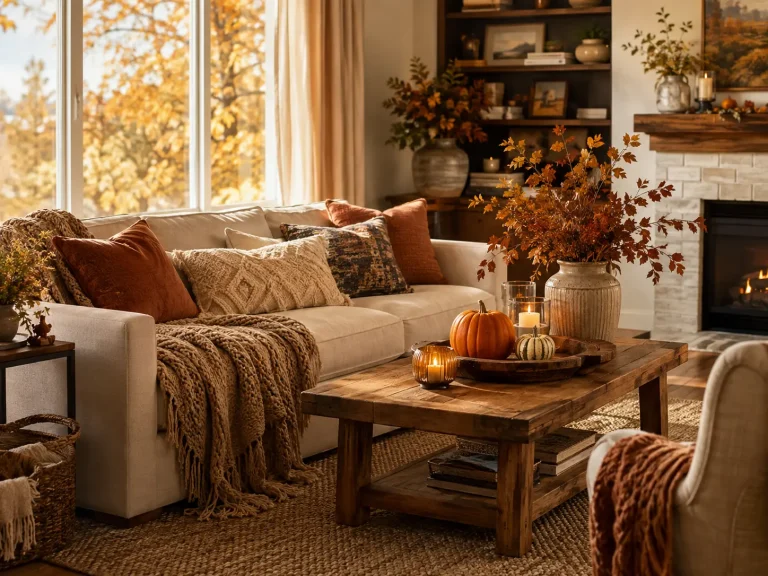
A fireplace naturally becomes a cozy focal point because it combines warmth, light and gathering.
If you do not have one, you can still create a similar visual hierarchy.
Choose one area to become the emotional center of the room.
It might contain a console, large artwork, table lamp, books and a substantial vase.
Alternatively, place two chairs around a small table near a window.
The goal is to create a composition that gives the eye somewhere to settle.
Your television does not automatically have to be the room’s only focal point.
16. Style the Coffee Table Simply
A cozy coffee table should look attractive but still be useful.
Avoid covering every inch with accessories.
A simple combination might include two books, a ceramic bowl and a small vase.
A tray can help group smaller objects such as remote controls while keeping the arrangement easy to move.
Leave enough open surface for a cup of tea, a book or something brought in by a guest.
A room feels more welcoming when the furniture can actually be used.
17. Add Handmade and Imperfect Objects
Mass-produced perfection can make a room feel slightly impersonal.
Handmade pottery, woven baskets, irregular glass, carved wood and vintage objects introduce subtle variation.
Their imperfections are part of their appeal.
Current professional design is increasingly emphasizing craftsmanship and tactile materials rather than purely smooth, uniform surfaces. Houzz’s 2026 trend reporting reflects this continued interest in handcrafted and textured design.
You do not need an entire collection.
One handmade bowl on a table can provide more character than several generic accessories.
18. Hide the Everyday Clutter
Cozy does not mean crowded.
A warm room can still feel uncomfortable when every surface is occupied by chargers, mail, remote controls, children’s toys and miscellaneous objects.
Provide easy storage.
A sideboard can conceal electronics. A basket can hold throws. An ottoman can store toys or games. Small boxes can organize chargers inside cabinets.
The easier storage is to use, the more likely the room will stay reasonably calm.
You do not need to hide everything.
Keep beautiful and meaningful objects visible; give ordinary clutter somewhere else to go.
19. Display Things That Tell Your Story
A cozy living room should not be so perfectly styled that it could belong to anybody.
Add pieces with personal meaning.
That might be a family photograph, art from a local artist, an object collected while traveling, a handmade piece, inherited furniture or a record collection.
Current interior design is increasingly open to personal expression rather than adherence to one strict aesthetic. That is reflected in the continued strength of eclecticism and vintage sourcing in the 1stDibs designer survey.
Do not display everything you own.
Choose the pieces that make the room feel more like you.
20. Let the Living Room Develop Over Time
The coziest homes rarely look as though they were completed in one shopping trip.
They develop.
A rug gets replaced when you find a better one. A vintage table appears unexpectedly. Books accumulate. Artwork changes. A handmade bowl comes home from a trip.
Allowing this process to happen prevents the room from feeling overly coordinated.
It also aligns with early 2027 color direction. Sherwin-Williams’ Rewild forecast contains 48 colors designed to be mixed and interpreted freely rather than presented as rigid preset combinations, including ten Continuity Colors intended to provide more enduring foundations.
A cozy living room should be able to evolve with you.
How to Make a Living Room Cozy Without Making It Cluttered
The easiest mistake is assuming coziness requires more things.
It does not.
Think in terms of layers rather than quantity.
A room may need a softer rug rather than another basket, warmer lighting rather than another decorative candle, or one large artwork instead of six small accessories.
Keep everyday clutter in closed storage and let the visible layer consist mostly of things that either look beautiful, have meaning or are regularly used.
If an accessory does none of those things, the room may be better without it.
Best Cozy Living Room Colors for 2026 and Beyond
There is no single cozy color palette, but warmer shades are particularly useful.
For 2026, the strongest professional signals include chocolate brown, deep green, rich reds, earthy shades and selected softer colors such as butter yellow and pistachio.
A practical living-room palette might combine warm ivory with walnut and olive, mushroom with burgundy and cream, or taupe with chocolate brown and muted blue.
Looking ahead to 2027, Sherwin-Williams’ Rewild forecast takes a broader approach, offering 48 shades intended for individual mixing rather than prescribing one narrow look.
That is useful advice even if you ignore trends completely: choose colors that create the atmosphere you want rather than trying to reproduce somebody else’s palette exactly.
Common Cozy Living Room Mistakes
The first is using too many small accessories. A room filled with candles, cushions, baskets and signs can become visually exhausting rather than inviting.
Another is relying only on overhead lighting. Warm table and floor lamps do far more for evening atmosphere.
Avoid choosing every piece from the same furniture collection. A little variation in age, material and shape creates more character.
Be careful with tiny rugs and short curtains as well. Both can make a room feel less substantial.
Finally, do not confuse coziness with darkness. Rich colors can be beautiful, but a cozy room still benefits from natural light during the day and appropriate illumination at night.
Frequently Asked Questions
How can I make my living room feel more cozy?
Start with warm lighting, comfortable seating, a properly sized rug and soft textiles. Then introduce wood, a few natural materials and personal objects. Often these foundational changes have more impact than adding extra decorations.
What colors make a living room feel warm and inviting?
Warm white, cream, mushroom, caramel, brown, olive, terracotta and burgundy can all create warmth. The best choice depends on your natural light, flooring and existing furniture.
How do I make a modern living room cozy?
Balance clean modern furniture with warmer materials. Add wood, wool, linen, curtains, lamps and one or two vintage or handmade objects. Keep the layout clean without making the room feel empty.
Can a small living room still feel cozy?
Absolutely. Compact rooms are naturally suited to intimate seating arrangements. Prioritize comfortable furniture, warm lighting and good storage so the room feels cozy rather than crowded.
Do I need a fireplace to create a cozy living room?
No. A focal point can create a similar sense of gathering. Large artwork, a beautiful console, a bookcase or an intimate seating arrangement can provide the visual center that a fireplace normally creates.
Final Thoughts
The best cozy living room ideas are not about turning your home into a picture-perfect cabin or filling every corner with soft accessories.
They are about creating comfort in layers.
Start with a sofa people genuinely enjoy sitting on. Add a rug that makes the seating feel connected. Use warm lamps in the evening. Introduce wood, linen, wool and ceramic. Bring in one vintage piece. Keep books nearby. Hide everyday clutter and leave enough empty space for the room to breathe.
Then add the personal layer.
A photograph, favorite painting, inherited table or stack of well-read books can do more for the atmosphere than a cart full of generic decor.
The strongest 2026 design signals support exactly this kind of home: warmer colors, richer natural materials, craftsmanship, vintage character and spaces shaped increasingly around human well-being and individual expression.
A truly cozy living room does not just look warm.
It makes people want to sit down, stay awhile, and feel at home.