25 Apartment Aesthetic Ideas That Make Any Space Look More Expensive—Without Trying Too Hard
Some apartments look expensive before you can identify a single expensive object in them.
The sofa may be simple. The walls may be painted rather than paneled. The dining table might even be vintage. Yet the entire space feels polished because the curtains reach the floor, the lighting is warm, the furniture has breathing room, and the materials look as though they belong together.
That is the kind of luxury worth copying.
In 2026, interior design is increasingly moving away from cold, showroom-perfect rooms toward spaces that feel tactile, personal, and collected. Houzz reports growing interest in warm colors, natural textures, curved forms, handcrafted details, and interiors that feel purposeful, while the 1stDibs designer survey shows continued enthusiasm for vintage pieces, organic modernism, chocolate brown, burgundy, and deeper greens.
None of that requires an enormous decorating budget.
The most effective apartment upgrades are often about scale, placement, color, texture, and editing. Here are 25 apartment aesthetic ideas that can make almost any space feel more refined and expensive.
1. Choose a Sophisticated Base Color
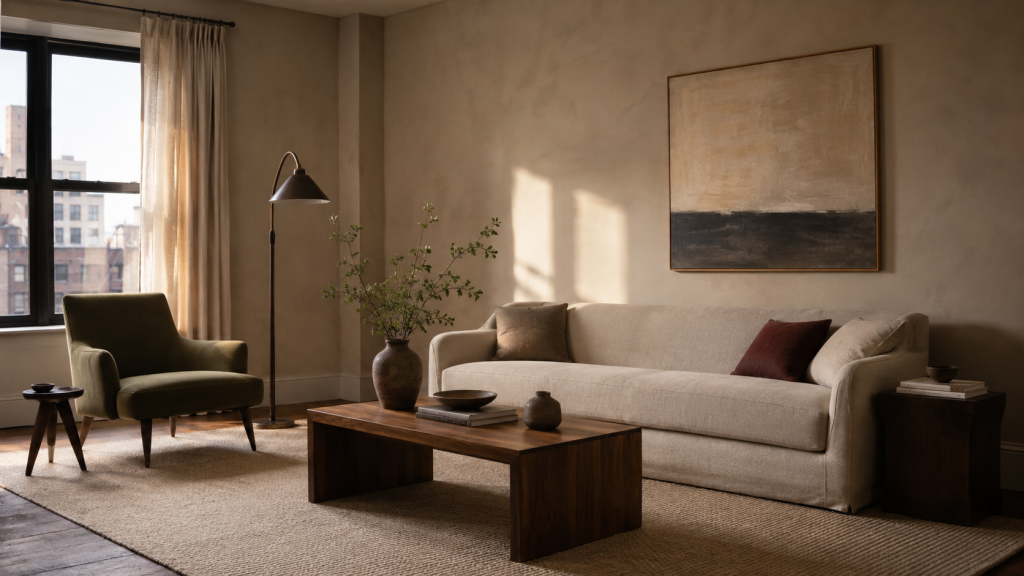
The walls create the background for everything else, so begin there.
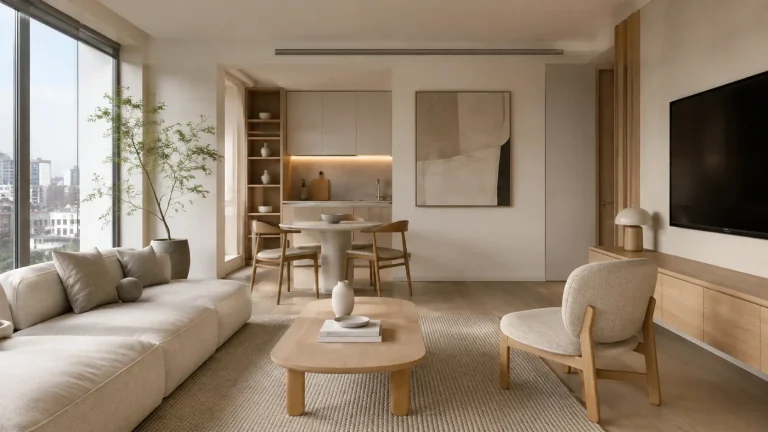
Instead of defaulting to stark white, consider warmer neutrals such as ivory, mushroom, soft taupe, pale stone, or muted greige.
These shades can make inexpensive furniture feel more considered because they create a softer, richer backdrop.
Current 2026 design direction strongly favors warmer, earthier colors rather than cold gray-heavy interiors.
Always test the color in your actual apartment. Flooring and natural light can completely change how a neutral appears.
2. Hang Your Curtains Higher
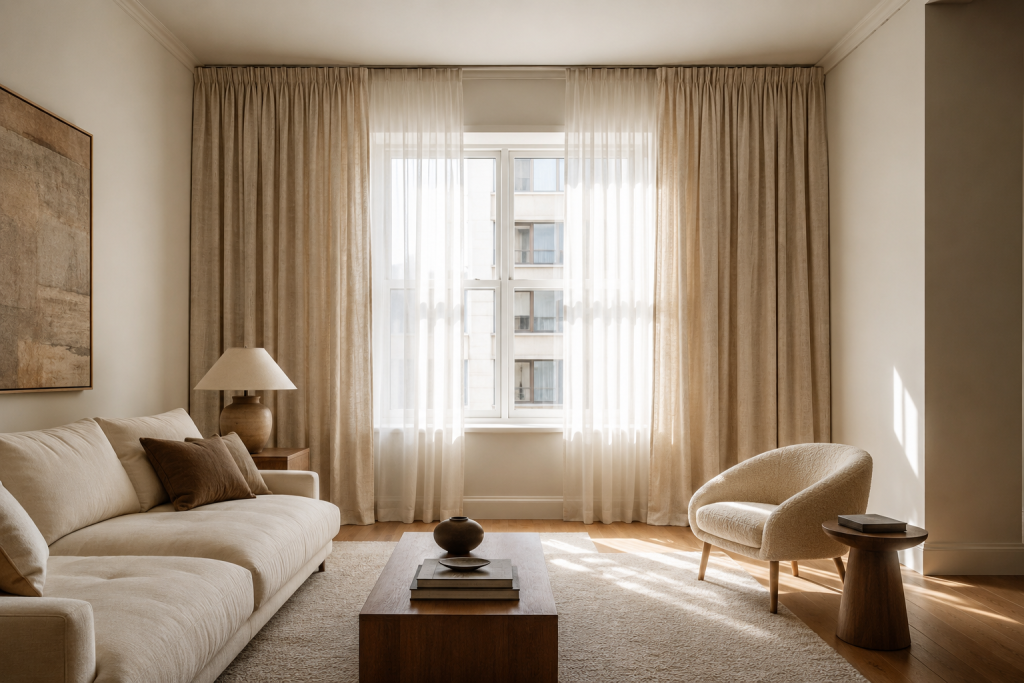
Curtains mounted immediately above a window can make the architecture look smaller.
Taking the curtain rod closer to the ceiling draws the eye upward and gives the window more presence.
Architectural Digest’s recent designer guidance specifically recommends high-mounted drapery as a way to emphasize vertical space and make compact rooms feel grander.
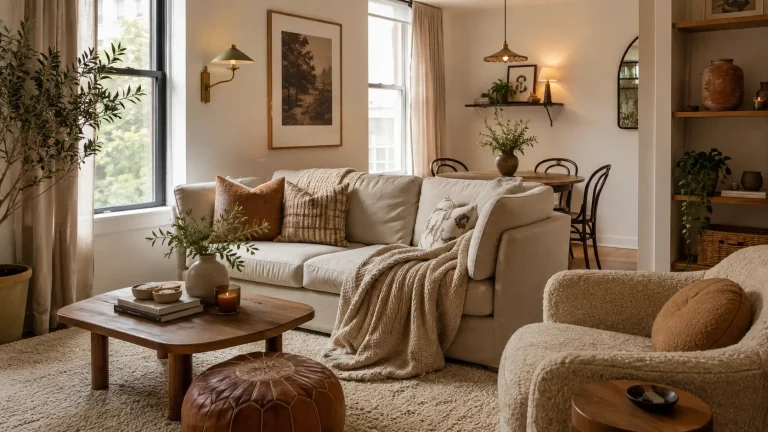
Let the panels reach the floor and, where possible, extend them beyond the sides of the window.
Even inexpensive curtains look better when the proportions are right.

3. Use More Curtain Fabric Than You Think You Need
Luxury drapery rarely hangs completely flat.
There should be enough fabric to create soft folds even when the curtains are closed.
Thin, narrow panels can make a window treatment feel unfinished regardless of the price of the fabric.
For a relaxed apartment aesthetic, try linen-look curtains in cream, oatmeal, stone, or a shade close to your wall color.
The goal is not elaborate decoration.
It is fullness.
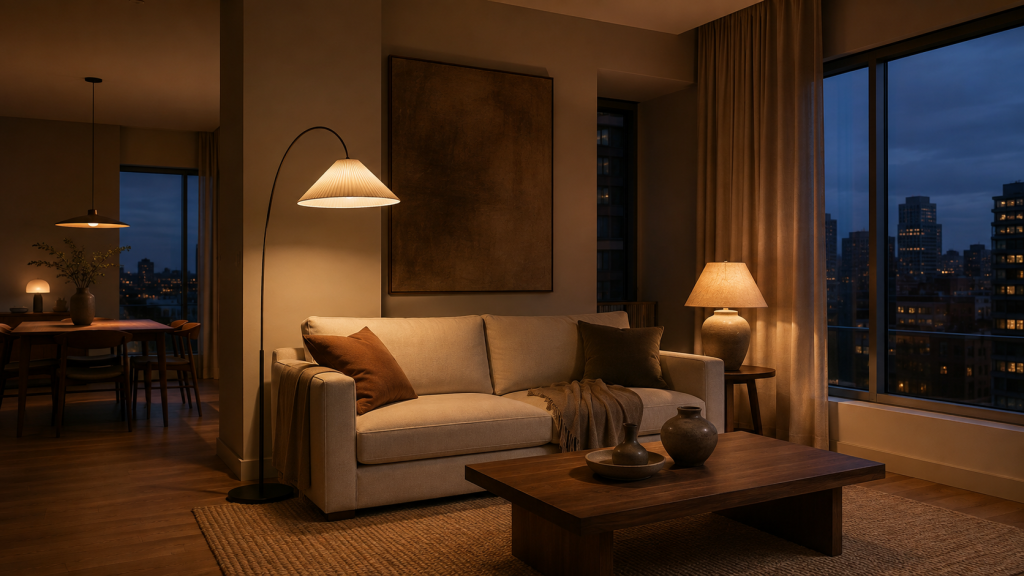
4. Upgrade the Lighting Before the Furniture
One beautiful lamp can improve an apartment more than several new accessories.
Avoid relying exclusively on the ceiling fixture supplied with the apartment.
Instead, layer:
- floor lamps
- table lamps
- wall sconces
- pendant lighting
- small accent lamps
Warm pools of light create depth at night and make ordinary surfaces look more interesting.
If you have only enough money for one upgrade, a good-looking floor or table lamp is a strong place to start.
5. Replace a Generic Lampshade
You may not need a new lamp at all.
An inexpensive base can look completely different with a larger linen, pleated, paper, or softly tapered shade.
Pay attention to proportion. A tiny shade sitting on a substantial base will make the whole piece look cheaper.
Choose shades that diffuse light pleasantly rather than exposing an aggressively bright bulb.
This is a small detail, but expensive-looking interiors are often built from small details handled properly.
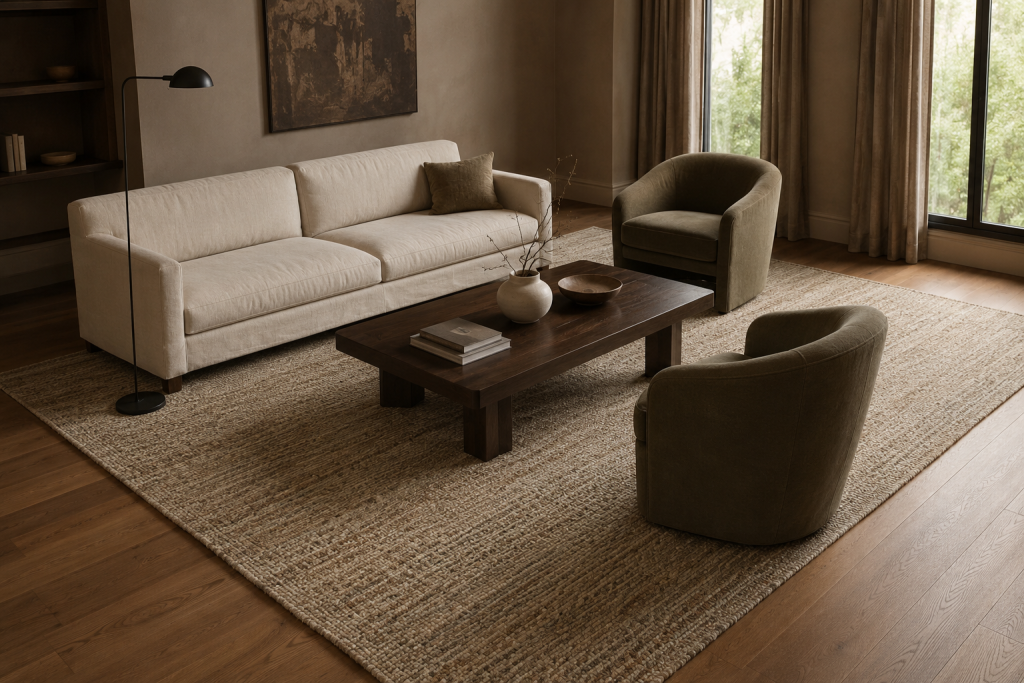
6. Use One Large Rug
A tiny rug floating beneath the coffee table makes the furniture feel disconnected.
A larger rug visually pulls the seating together and makes the room feel more substantial.
In a living area, aim to place at least the front legs of the sofa and chairs on the rug when the layout allows.
You do not need an expensive rug.
Vintage-style patterns, wool blends, flatweaves, and secondhand finds can look excellent.
Correct scale matters more than a prestigious label.
7. Introduce Real-Looking Wood
Wood brings visual weight and warmth to an apartment.
Consider a walnut side table, medium-oak dining table, vintage dresser, or dark wooden picture frame.
Houzz’s 2026 reporting highlights warm and darker woods as part of the movement toward richer, more tactile interiors.
Do not force every timber to match.
An apartment often looks more sophisticated when several related wood tones are mixed naturally.
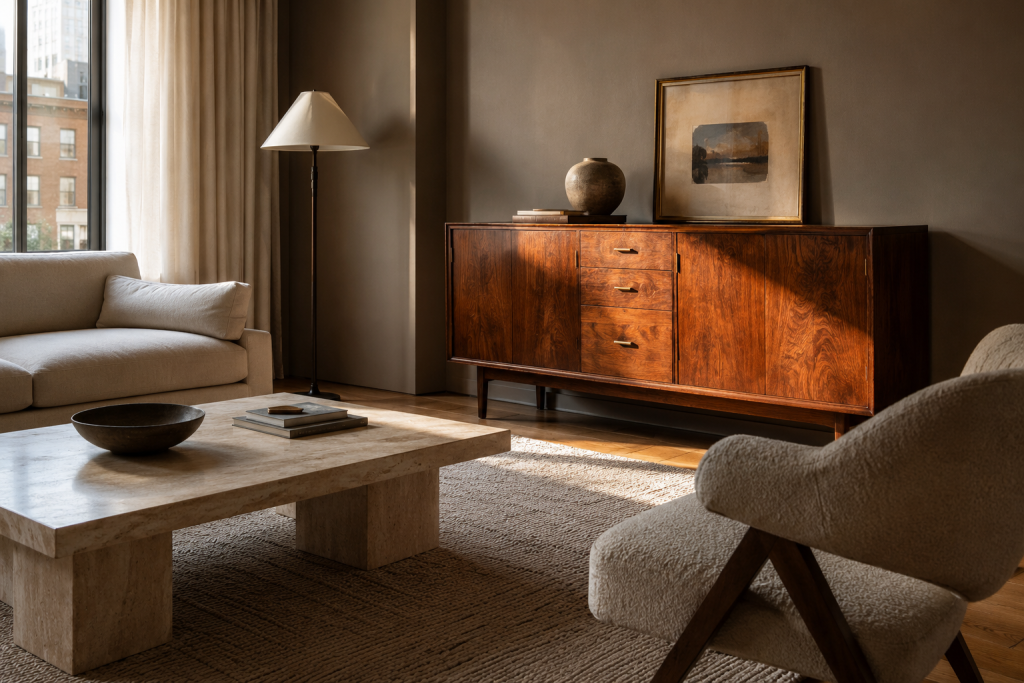
8. Buy One Vintage Piece
Nothing makes an apartment look assembled from a furniture catalog faster than buying every item from the same collection.
Add one older piece.
It might be:
- a wooden side table
- an antique mirror
- a small cabinet
- a vintage chair
- an old lamp
- a framed painting
Vintage sourcing remains highly relevant among professional designers in 2026, partly because older pieces give interiors character and individuality.
One object with history can make inexpensive newer furniture feel more intentional.
9. Stop Matching All the Furniture
A matching sofa, armchair, coffee table, end tables, and media unit can make a room feel more like a showroom package than a carefully designed home.
Instead, repeat relationships.
Your coffee table might connect to the dining chairs through wood tone. A bronze lamp may relate to a dark picture frame. Cream upholstery might echo the curtains.
The room should coordinate.
It does not need to match.
10. Choose Fewer, Larger Accessories
Ten tiny decorations usually look less expensive than three substantial ones.
Instead of filling a console with small candles, bowls, frames, and ornaments, try:
- one large lamp
- one ceramic vessel
- one piece of artwork
Scale gives decorative objects more authority.
It also creates negative space, which is essential to making a room feel calm and considered.
11. Make the Coffee Table Look Useful
An expensive-looking coffee table is not necessarily covered in styled objects.
Keep part of it clear.
Try a simple arrangement of:
- two books
- a bowl
- a small sculptural object
or
- a tray
- one vase
- a candle
Your coffee table should still have enough space for a cup of coffee.
Luxury is not about sacrificing function for decoration.
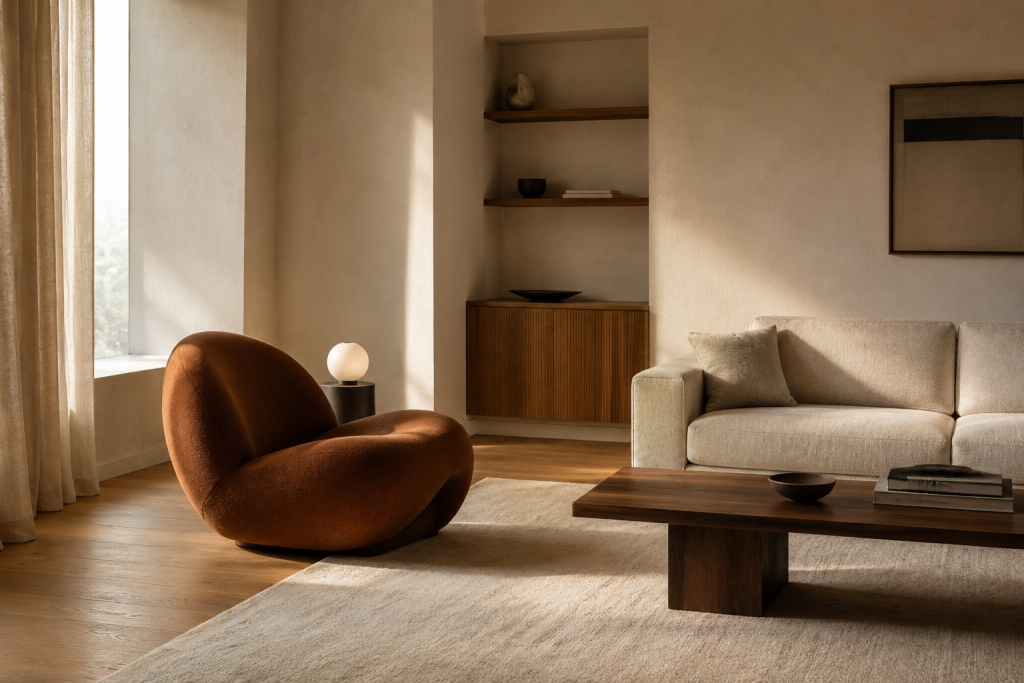
12. Add One Sculptural Shape
A room filled entirely with rectangles can feel basic.
Introduce one softer or more sculptural form:
- oval coffee table
- curved chair
- round mirror
- globe lamp
- irregular ceramic vase
- arched floor lamp
Curves and soft geometry are prominent in 2026 design searches and professional interiors, particularly when combined with tactile materials and warmer colors.
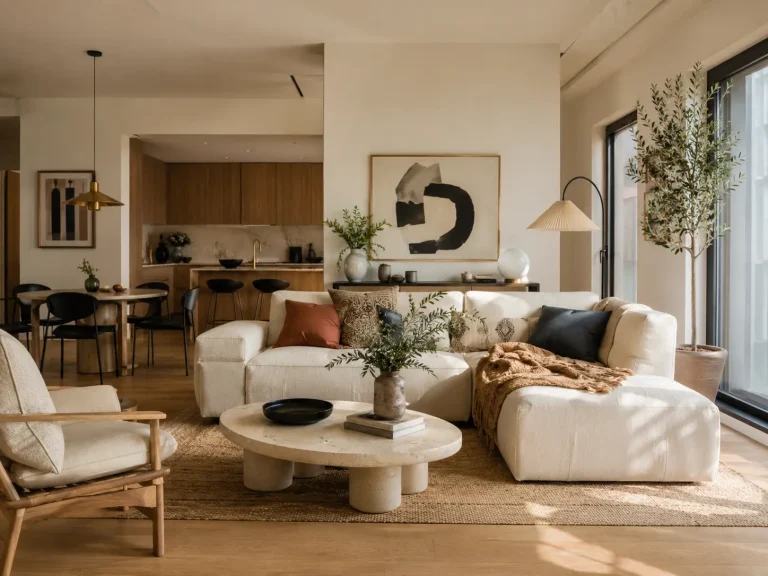
One curved object is usually enough to change the visual rhythm.
13. Display Art at the Right Scale
Artwork can instantly elevate an apartment, but scale matters.
A tiny print centered over a large sofa usually looks accidental.
One larger piece—or a deliberately composed group—creates more impact.
You do not need an expensive original.
Consider photography, vintage posters, prints, textile art, public-domain artwork, or something you created yourself.
Spend time choosing the frame and mat.
Good presentation can make modest artwork feel important.
14. Take Shelving Higher
Tall shelving draws attention upward and makes use of valuable apartment wall space.
Architectural Digest’s 2026 small-space guidance recommends vertical strategies, including shelving and storage that take advantage of wall height.
If you cannot install built-ins, use a tall freestanding bookcase with simple lines.
Keep the lower sections functional and heavier.
Allow more breathing room toward the top.
The effect can feel architectural rather than merely decorative.
15. Hide the Things Nobody Needs to See
Luxury apartments still contain routers, chargers, extension leads, cleaning supplies, paperwork, and remote controls.
They simply do not make those items part of the visual composition.
Use:
- closed cabinets
- attractive boxes
- cable management
- storage ottomans
- drawers
- baskets with lids
A recent 400-square-foot Architectural Digest apartment demonstrates how concealed storage can help a very compact space remain warm and minimal without giving up functionality.
Clutter control is one of the most affordable forms of luxury.
16. Let Some Surfaces Stay Empty
Not every console needs a vignette.
Not every wall needs art.
Not every corner needs a plant.
Empty space gives objects importance.
If every available area is occupied, the room begins to feel visually anxious.
Try removing 20 percent of the decorative items in one room and live with it for a few days.
You may discover that the pieces left behind suddenly look more expensive.
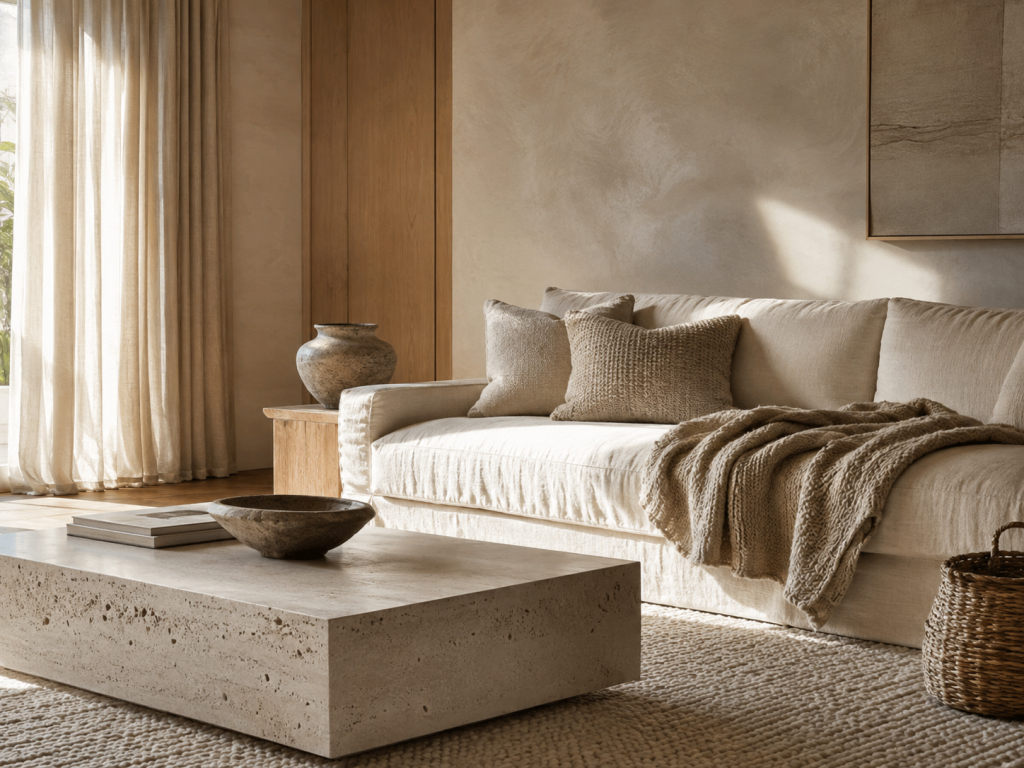
17. Mix Textures Within the Same Color Family
If you prefer neutral apartments, avoid making every neutral surface identical.
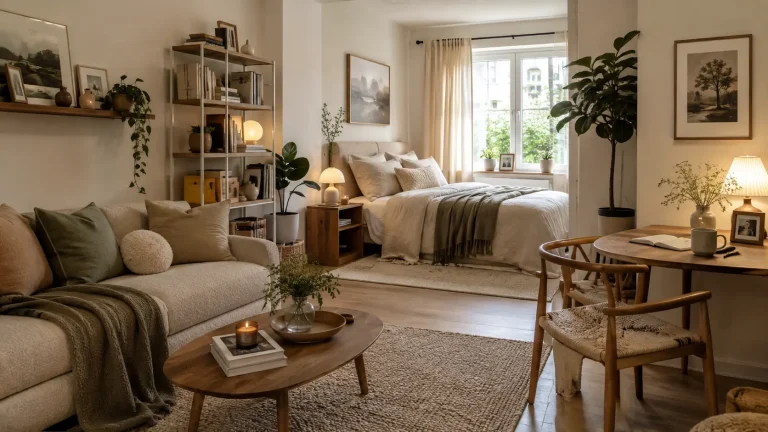
Instead, combine cream linen, oatmeal wool, pale wood, handmade ceramic, stone, and woven cotton.
Houzz’s 2026 trend coverage identifies tactile finishes and layered materials as important ways designers are adding warmth and sophistication without relying on excessive color or pattern.
Texture is what keeps beige from becoming boring.
18. Use Deeper Brown Instead of Too Much Black
Black is useful, but dark brown often feels softer and richer in residential interiors.
Try chocolate, espresso, walnut, or dark bronze in:
- furniture
- picture frames
- lamps
- cushions
- decorative objects
Chocolate brown is the leading color identified by designers in the 1stDibs 2026 survey, with burgundy and deeper greens also gaining considerable interest.
These shades can add contrast without creating the severity of pure black.
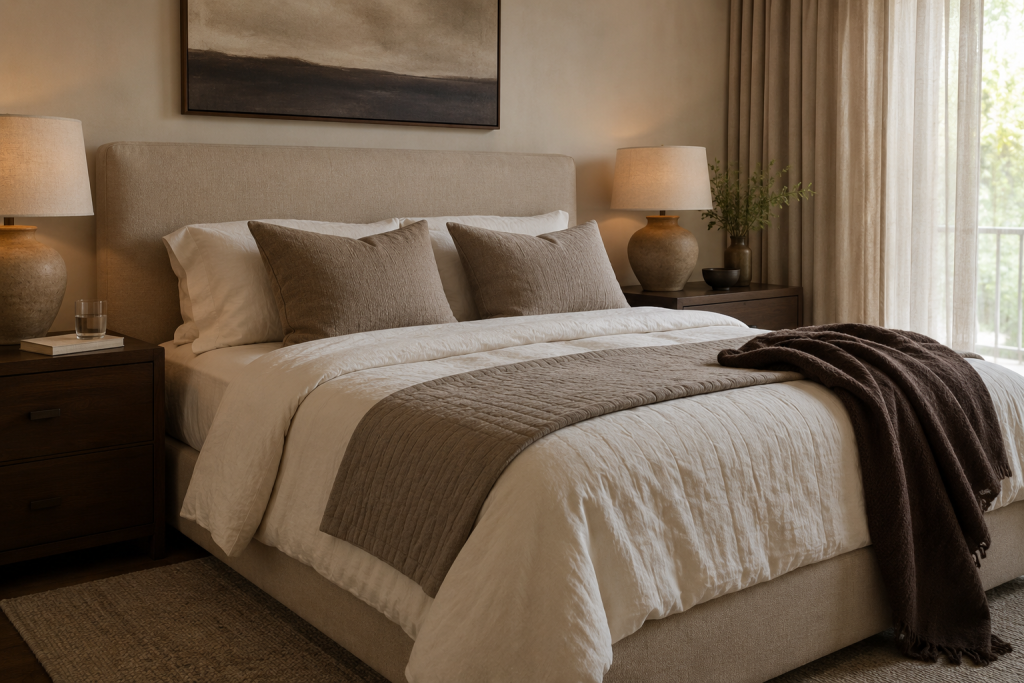
19. Style the Bed Like a Boutique Hotel—But Simpler
An expensive-looking bedroom does not require twelve cushions.
Use better layering instead.
Try:
- crisp sheets
- a duvet
- one quilt or coverlet
- two sleeping pillows
- two larger decorative pillows
- one throw
Current upholstered-bed design also emphasizes softness, tactile fabrics, and visual warmth, with linen, cotton, velvet, and bouclé appearing across contemporary bedrooms.
The bed should look generous but still easy to sleep in.
20. Replace Tiny Bedside Tables
Undersized nightstands can make a bedroom feel temporary.
Where space allows, choose something substantial enough to hold a lamp comfortably and provide useful storage.
It does not need to be sold as a nightstand.
A vintage side table, small chest, or compact cabinet can work beautifully.
Using unexpected furniture in this way also makes the room feel more collected.
21. Add Something Handmade
A small amount of imperfection makes a polished apartment feel more believable.
Look for:
- handmade pottery
- woven baskets
- carved wooden bowls
- hand-thrown lamps
- irregular glass
- textiles with visible weave
AD PRO’s 2026 forecast highlights artisanal details as part of the direction shaping luxury interiors, while Houzz similarly reports strong interest in handcrafted and tactile finishes.
You do not need many.
One good object is enough.
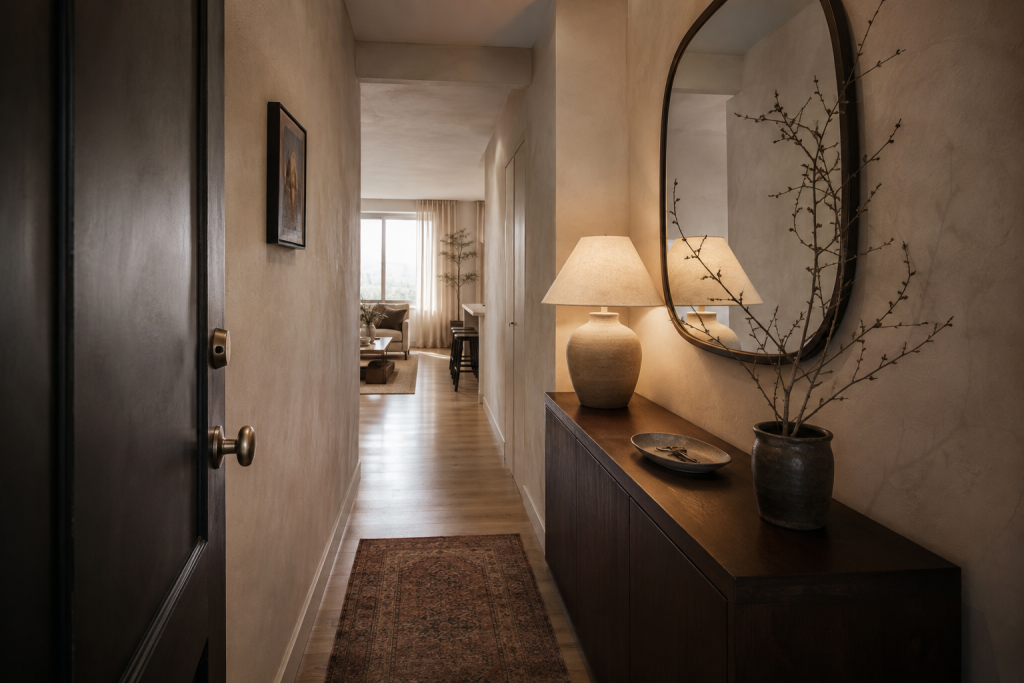
22. Create One Intentional Moment in the Entryway
The entrance establishes expectations for the rest of the apartment.
Even a narrow hallway can feel considered with:
- a slim console
- mirror
- small lamp
- tray for keys
- one artwork
If there is no space for furniture, a mirror and wall-mounted light can be enough.
Avoid turning the entrance into a dumping ground.
The first thing you see when you come home should feel calm.
23. Give Everyday Objects Better Containers
Sometimes the expensive-looking version of a room contains exactly the same objects as the ordinary version.
They are simply presented differently.
Transfer visually messy necessities into attractive containers where appropriate.
For example:
- soap into a simple dispenser
- blankets into one large basket
- keys into a ceramic tray
- kitchen utensils into one substantial vessel
- magazines into a neat holder
Do not decant things merely for appearance when doing so could create safety or identification problems.
The point is organization, not disguising everything.
24. Add Personality Instead of More “Luxury” Decor
Do not fill your apartment with imitation marble, gold objects, crystal-looking accessories, and generic designer-inspired decor just because you want it to feel expensive.
A home with personality often looks more sophisticated.
Display:
- books you actually read
- photography
- travel finds
- inherited pieces
- artwork you love
- records
- handmade objects
- meaningful photographs
The broader 2026 shift toward tactile, personal, purposeful interiors supports this idea: rooms increasingly feel less about demonstrating a prescribed aesthetic and more about reflecting the people living there.
Taste is more convincing than imitation luxury.
25. Decorate Slowly
Perhaps the most useful expensive-looking apartment idea is to stop trying to finish the apartment immediately.
Live with empty spaces.
Wait for the right lamp.
Search secondhand marketplaces for the right table.
Save for one better piece rather than buying three temporary ones.
A budget-conscious Brooklyn apartment featured by Architectural Digest demonstrates this high-low approach: secondhand and marketplace finds were combined with selective investment pieces to create a much more individual interior.
Rooms assembled slowly often develop something money cannot buy instantly: character.
What Actually Makes an Apartment Look Expensive?
It is rarely one thing.
Expensive-looking apartments tend to share a combination of:
Correct scale.
Furniture and artwork fit the architecture.
Good lighting.
The room works after sunset, not only in daylight.
Material variation.
Wood, fabric, glass, metal, ceramic, and stone create depth.
Restraint.
Not every space is filled.
Quality where it matters.
Frequently used pieces feel sturdy and comfortable.
Personal character.
The apartment does not look copied directly from a showroom.
Visual continuity.
Colors and materials reappear throughout the home.
The secret is not making everything look expensive individually.
It is making everything look as though it belongs together.
Where Should You Spend More Money?
If your budget is limited, spend more selectively.
A good sofa is worth prioritizing if you use it every day.
A mattress deserves attention because comfort matters more than appearance.
Good lighting can last through several apartments.
A quality rug may anchor an entire room.
Curtains are worth getting right when privacy, light control, or insulation are important.
For less essential pieces—side tables, decorative objects, mirrors, lamps, frames, and art—secondhand sources can be excellent.
This high-low mix often produces a more convincing home than buying everything from one price category.
Expensive-Looking Apartment Colors for 2026 and 2027
For 2026, warm and grounded colors are particularly relevant.
Chocolate brown, burgundy, deep green, warm neutrals, clay, and softer earthy shades are appearing across current designer forecasts.
You could try combinations such as:
- ivory + walnut + olive
- mushroom + chocolate + cream
- warm white + burgundy + oak
- taupe + dark bronze + dusty blue
- stone + walnut + muted green
Looking toward 2027, Sherwin-Williams’ Rewild forecast takes an unusually flexible approach, presenting 48 colors without fixed pre-curated combinations and encouraging designers to develop more individual palettes.
That is useful beyond the trend itself.
An expensive-looking home should not look as though someone followed a color formula exactly.
Apartment Decorating Mistakes That Can Make a Space Look Cheaper
Using furniture that is too small
A collection of tiny pieces often makes a room feel temporary rather than spacious.
Hanging curtains too short
Curtains should look intentional in relation to the architecture.
Using only the ceiling light
Flat illumination removes depth.
Filling every surface with decorations
More accessories do not equal more luxury.
Buying matching furniture sets
Collected rooms usually feel more sophisticated.
Using too many fake-luxury finishes
Poor imitation marble or overly shiny metallic finishes can be less convincing than simple honest materials.
Ignoring cables and everyday clutter
Visual noise quickly undermines a polished room.
Copying a trend too literally
If every object belongs to one current aesthetic, the apartment may date quickly.
Frequently Asked Questions
How can I make my apartment look expensive on a budget?
Start with changes that influence the whole room: furniture placement, paint, curtains, lighting, rug size, and clutter control. Then add a few substantial accessories or vintage pieces rather than buying many small decorations.
What colors make an apartment look expensive?
There is no single luxury palette, but warm ivory, taupe, mushroom, walnut brown, olive, burgundy, deep green, and muted blue can all feel sophisticated when used thoughtfully. Current 2026 designer research particularly favors deeper browns and earthy colors.
How can I make a rental apartment look luxurious?
Focus on changes you can take with you: curtains, lamps, rugs, artwork, mirrors, furniture, bedding, and decorative storage. Removable wall treatments may also work where your lease allows them.
Does an expensive-looking apartment need to be minimalist?
No. Minimal, eclectic, vintage, traditional, and colorful apartments can all look expensive. What matters more is proportion, material quality, editing, lighting, and cohesion.
What is the easiest apartment upgrade that looks expensive?
Lighting is one of the strongest. Adding a well-proportioned floor or table lamp and using warmer evening light can change the atmosphere immediately without altering the apartment itself.
Final Thoughts
Making an apartment look expensive is not really about convincing people that you spent more money than you did.
It is about creating the visual qualities we often associate with well-designed spaces.
Generous curtains. Correctly scaled rugs. Good lamps. Natural-looking materials. A little vintage character. Art with presence. Furniture that has enough space around it. Storage that keeps ordinary clutter under control.
And, importantly, restraint.
Current 2026 interiors are becoming warmer, more tactile, more personal, and increasingly comfortable with mixing old and new rather than pursuing one perfectly coordinated look.
That makes the most convincing apartment aesthetic surprisingly achievable.
Do not try to make everything look luxurious.
Make the whole apartment feel thoughtful.
That is usually what looks expensive in the first place. For a closer look at how to put this into practice, our designer-approved apartment decorating ideas and studio apartment decor ideas guides break it down room by room.