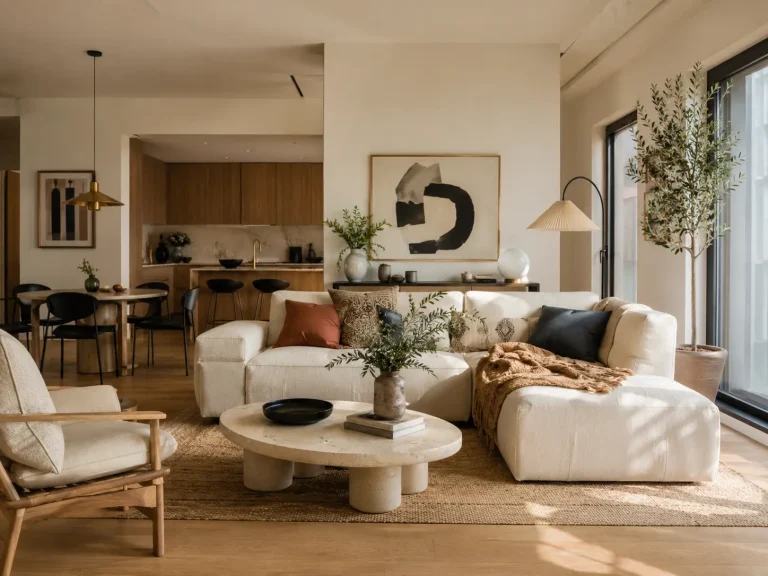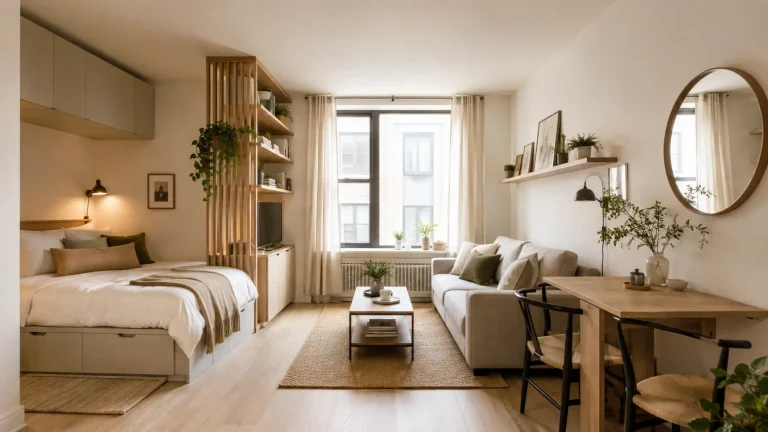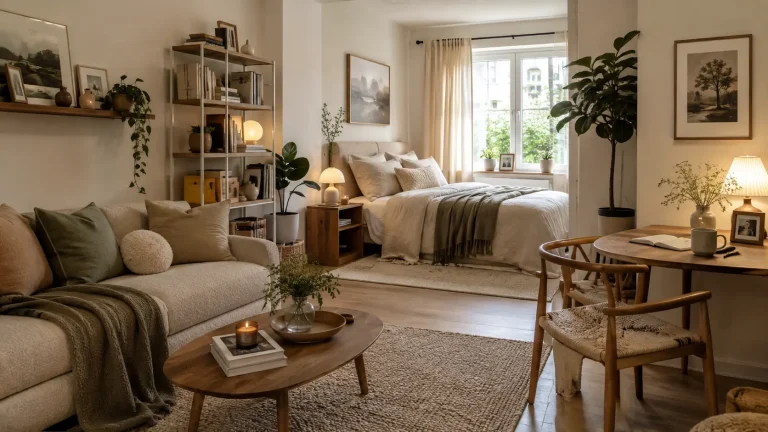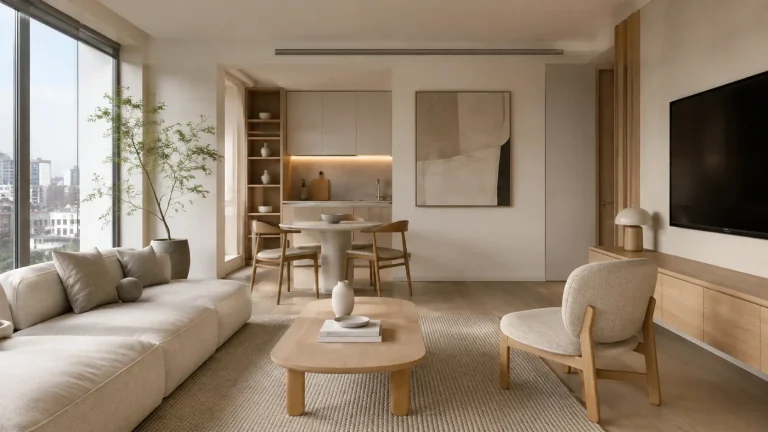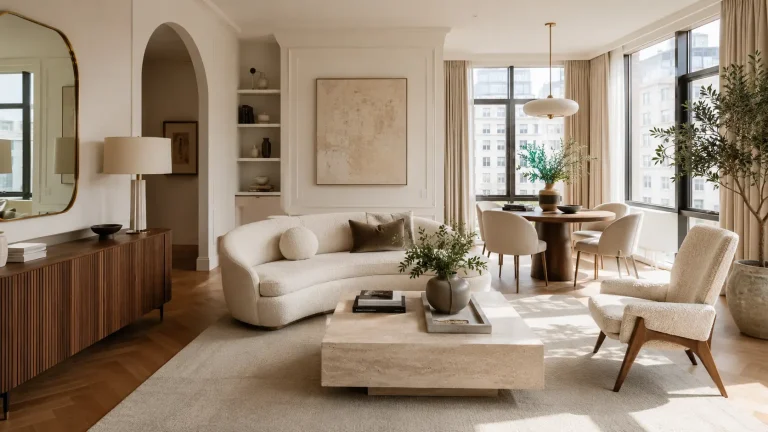
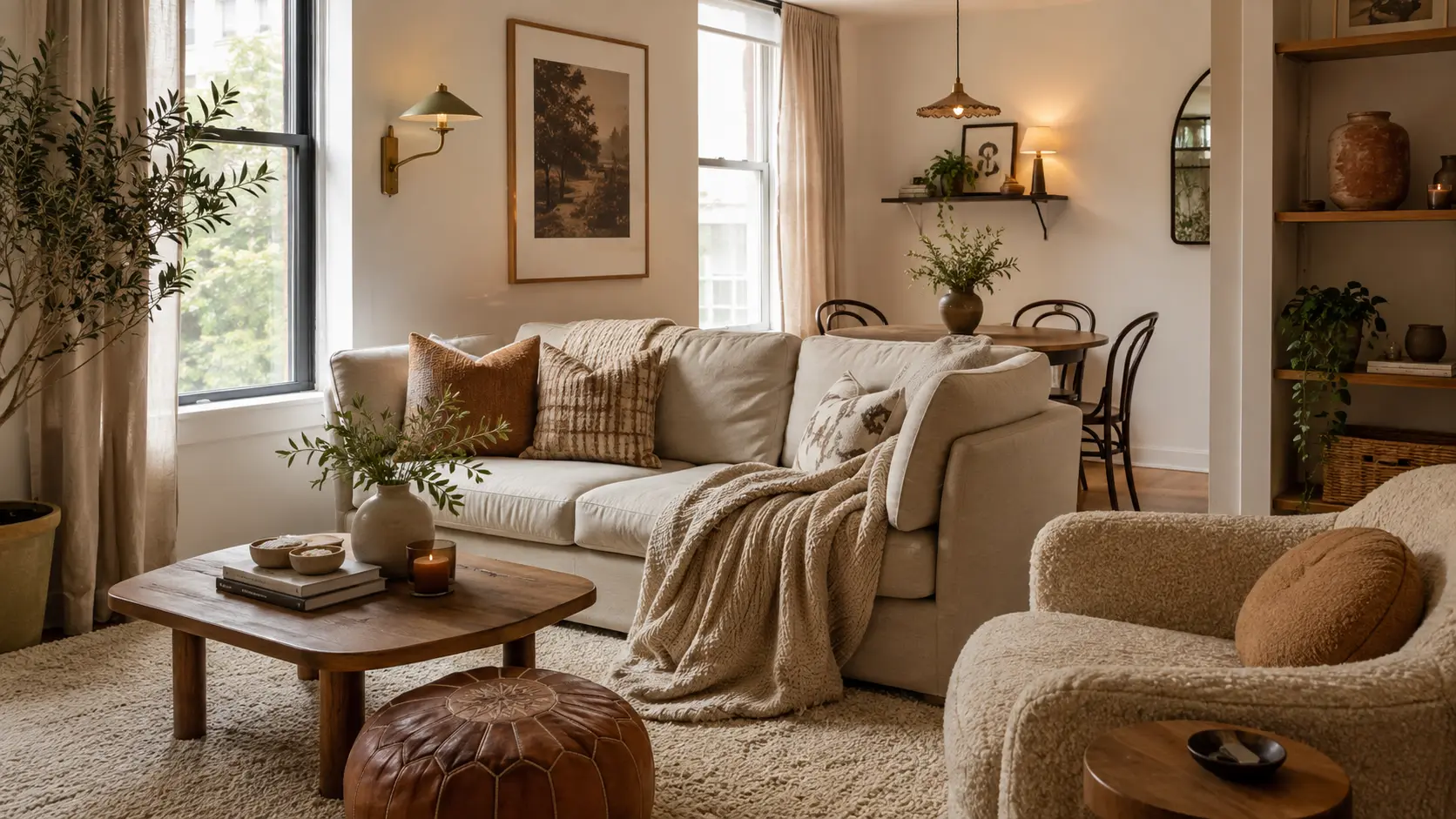
12 Cozy Apartment Aesthetic Ideas to Make Your Space Feel Warm, Stylish, and Truly Yours
A cozy apartment is not defined by square footage. Some of the most inviting homes are compact spaces where every color, lamp, textile, piece of furniture, and personal object has been chosen with care.
Creating that feeling is less about filling your apartment with “cozy” accessories and more about building layers. Warm light, comfortable textures, natural materials, thoughtful furniture placement, and objects with character can make even a simple rental feel settled and personal.
That approach feels particularly relevant in 2026. Houzz’s latest trend research shows growing interest in tactile textures, warm earthy colors, curves, nostalgic spaces, wellness, and interiors that feel personal and purposeful rather than purely minimal. (houzz.com)
Architectural Digest has also challenged some of the traditional rules surrounding small spaces. Designers increasingly argue that tiny rooms do not automatically need white walls, miniature furniture, or barely-there decor. A small apartment can handle warmth, color, pattern, substantial furniture, and personality when those elements are thoughtfully proportioned. (architecturaldigest.com)
Whether you live in a studio, a one-bedroom rental, or a compact city apartment, these 12 cozy apartment aesthetic ideas will help you create a home that looks considered while still feeling comfortable enough for everyday life.

1. Begin With a Warm, Connected Color Palette
Color is one of the fastest ways to change how an apartment feels.
For years, small spaces were often painted bright white under the assumption that white automatically makes a room look bigger. That is not always the case. Architect Sarah Jacoby told Architectural Digest that she often prefers warm, saturated shades in small rooms because they can create a more inviting atmosphere rather than leaving the space feeling cold or impersonal. (architecturaldigest.com)
For a cozy apartment, consider colors such as:
- Warm white
- Cream
- Mushroom
- Soft taupe
- Caramel
- Olive
- Muted terracotta
- Chocolate brown
- Dusty blue
- Warm gray-green
You do not need to make every wall dark or colorful. The important part is creating continuity.
For example, warm-white walls can be paired with oatmeal curtains, a caramel sofa, dark wood furniture, and muted olive cushions. The colors are different, but their undertones relate to one another.
If your apartment has an open living and dining area, carrying two or three colors from one zone into the next can make the entire home feel more connected.
This warm direction is also supported by current design research. Houzz’s 2026 reporting identifies warm, earthy color as a major emerging direction, while the 1stDibs designer survey found strong interest in chocolate brown, burgundy, deep greens, and other richer tones. (houzz.com) (1stdibs.com)
2. Use a Large Rug to Anchor the Living Area
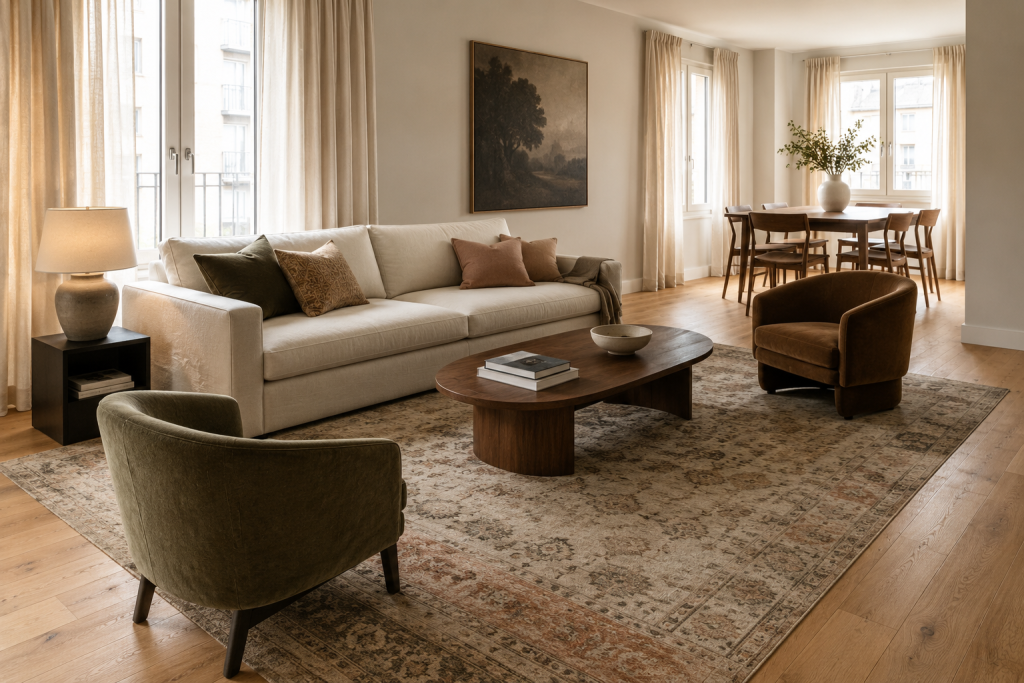
A rug does more than make the floor feel softer. In an apartment, it can establish where one functional area ends and another begins.
This is particularly useful in open-plan homes where the living room, kitchen, and dining area share the same floor.
Houzz specifically notes that a generous rug can help define a small apartment living area while maintaining a comfortable, inviting atmosphere. (houzz.com)
Avoid a rug so small that it floats beneath the coffee table without connecting to the sofa or chairs.
A more substantial rug usually makes the seating arrangement feel intentional. Ideally, at least the front legs of the main seating should sit on it.
For a cozy aesthetic, consider:
- Wool
- Wool blends
- Low-pile vintage rugs
- Soft geometric patterns
- Faded Persian-inspired designs
- Natural woven textures
Pattern can actually be useful in an apartment because it hides everyday wear better than a perfectly pale solid rug.
Choose something comfortable enough to walk on but appropriate for your lifestyle. A beautiful high-pile cream rug may not be the practical choice in a heavily used living room with pets or young children.
3. Layer Several Small Sources of Light
Lighting is one of the most important ingredients in a cozy home, and apartments often suffer because the existing lighting was chosen for basic functionality rather than atmosphere.
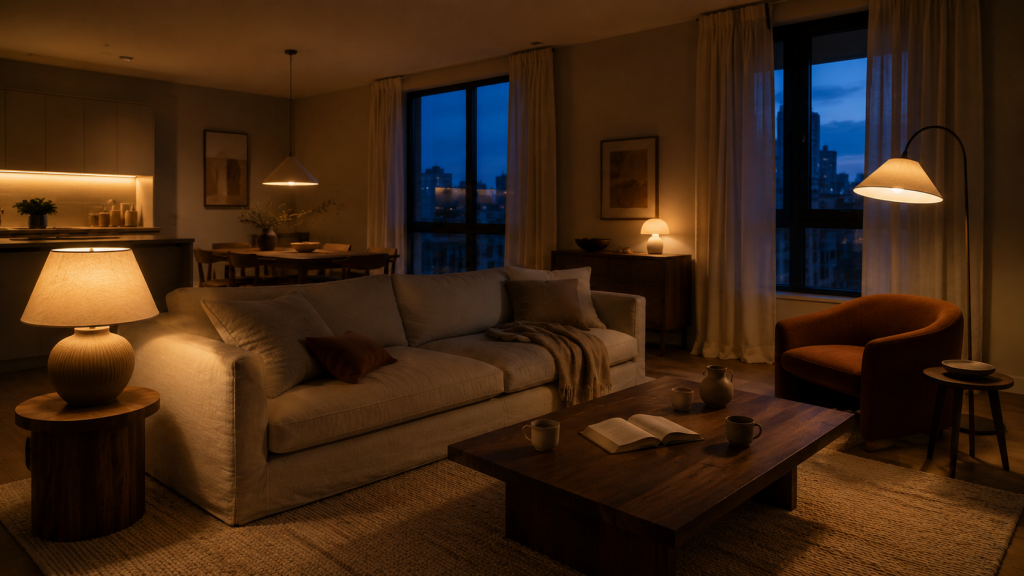
A single ceiling fixture tends to illuminate everything at the same intensity. Instead, create small pools of light throughout the room.
Use combinations such as:
- A table lamp beside the sofa
- A floor lamp near a reading chair
- A small lamp on a console
- Wall sconces
- A pendant above the dining table
- Rechargeable lamps on shelves
- Under-cabinet lighting in the kitchen
Choose warm illumination rather than harsh blue-white light for living and sleeping areas.
Think about where you spend time after sunset. The sofa needs enough light for reading. The dining table should feel warm without being dim. A bedside lamp should illuminate a book without lighting the entire room.
The goal is not simply to add more lamps. It is to give yourself control over the atmosphere.
Soft fabric, paper, frosted-glass, and ceramic shades can diffuse light gently and also function as decorative objects during the day.
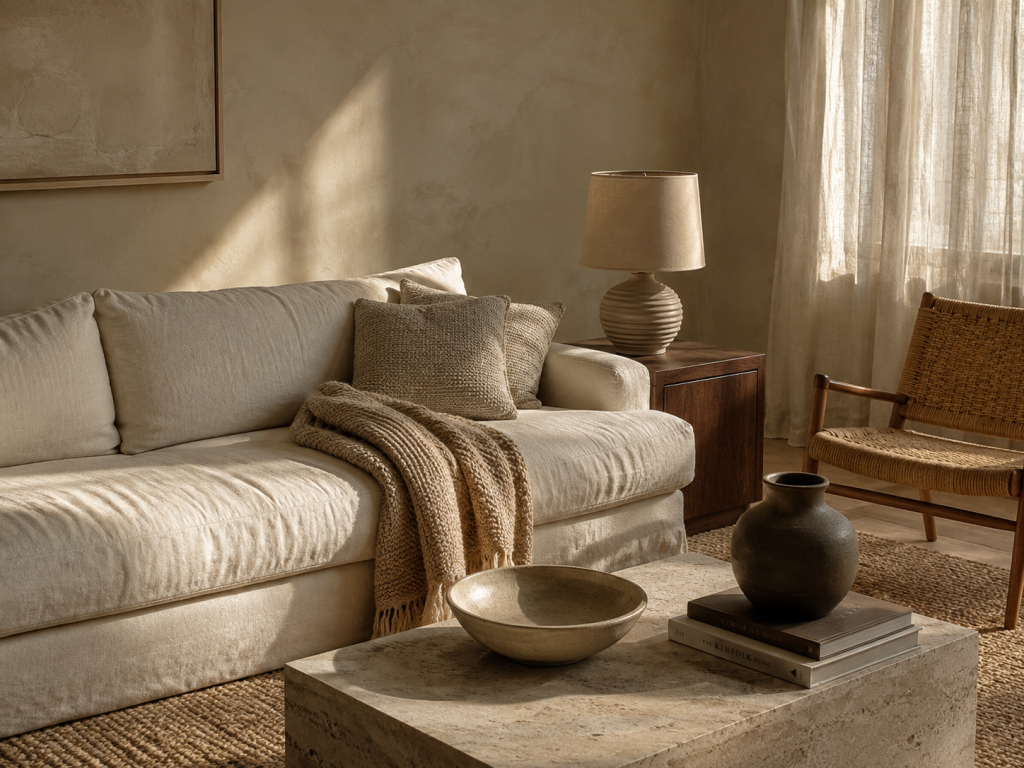
4. Add Texture Before Adding More Decor
When an apartment feels unfinished, the instinct is often to buy more decorations.
Sometimes what the room actually needs is more texture.
Houzz’s 2026 trend research shows growing interest in tactile materials, including plaster, limewash, stone, grasscloth, linen, handmade surfaces, and textured fabrics. These materials add visual depth without requiring a room to become heavily decorated. (houzz.com)
In a rental, you can achieve this without renovating.
Try combining:
- Linen curtains
- A wool rug
- Cotton cushions
- Bouclé upholstery
- Woven baskets
- Wood grain
- Ribbed ceramic lamps
- Knitted throws
- Rattan
- A textured wall hanging
Imagine a simple cream sofa against a plain wall.
Add a linen curtain, wool rug, walnut side table, woven basket, and textured throw, and suddenly the same neutral room has depth.
Texture works especially well in small apartments because it creates interest without demanding additional floor space.
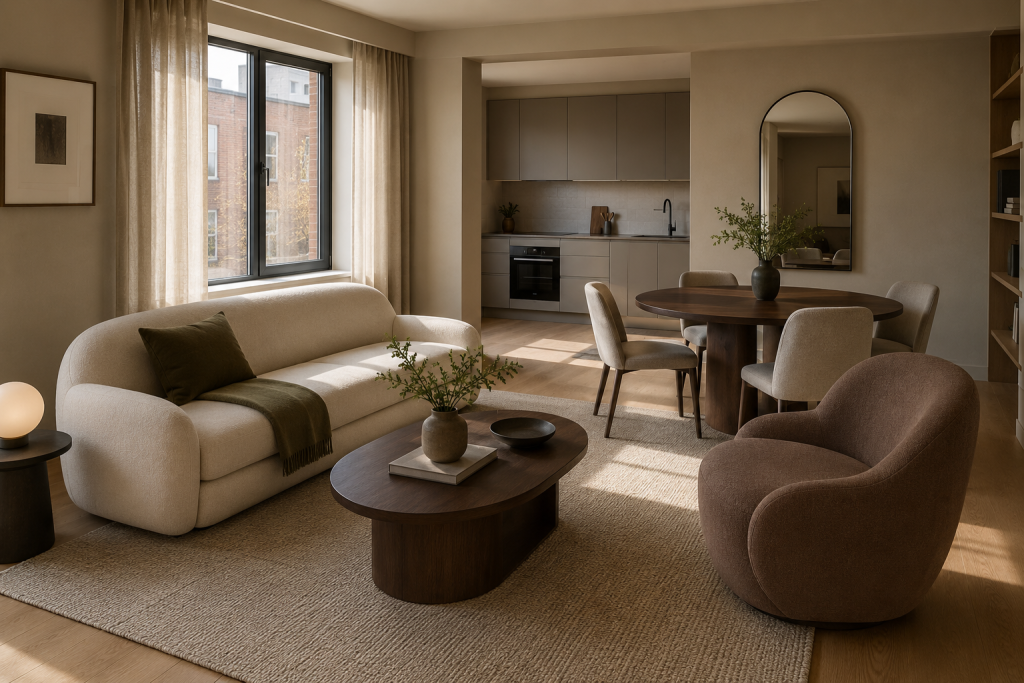
5. Choose Furniture With Soft, Rounded Shapes
Apartments contain a surprising number of rectangles: doors, windows, cabinets, televisions, tables, shelving units, and the rooms themselves.
A few curved pieces can soften all those hard lines.
Curves and soft geometry are among the design directions Houzz identifies as growing in 2026, and ELLE Decor has also highlighted the return of rounded furniture and architectural forms. (houzz.com) (elledecor.com)
You do not need a completely curved interior.
One or two elements can change the mood:
- Rounded sofa arms
- Oval coffee table
- Round dining table
- Arched mirror
- Globe lamp
- Curved armchair
- Scalloped lampshade
A round dining table is particularly useful in a compact apartment because it removes sharp corners from circulation paths and can often accommodate an extra person more easily than a rigid rectangular layout.
Keep function in mind. A sculptural chair that nobody finds comfortable will not make your apartment feel more welcoming.
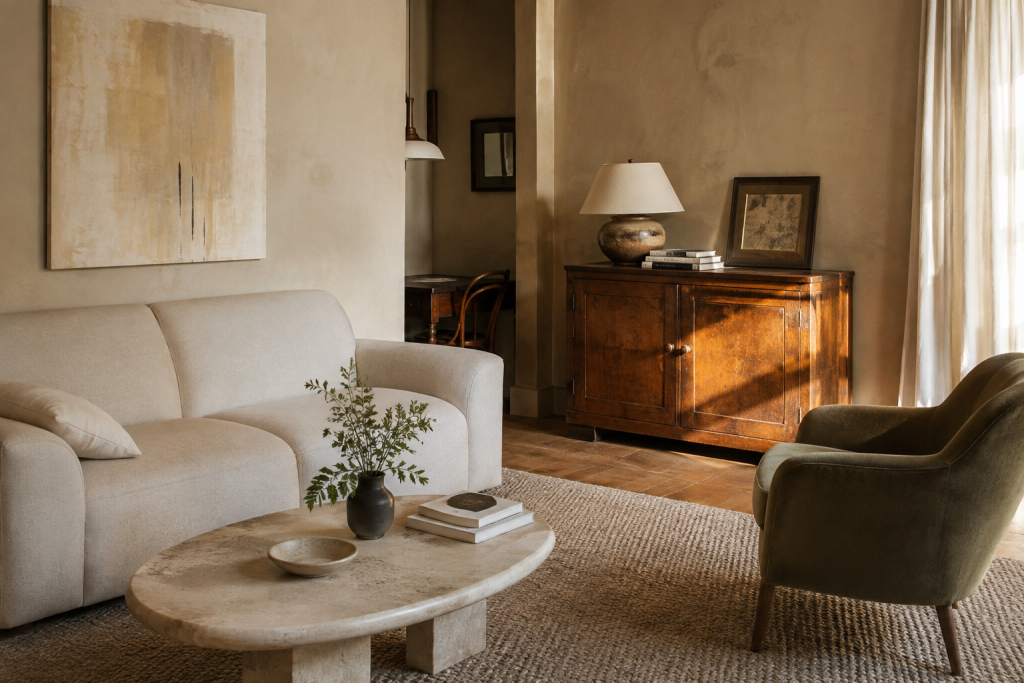
6. Mix New Furniture With Vintage Character
One of the fastest ways to make an apartment feel generic is to buy every piece from the same furniture collection.
A home develops character when objects come from different places and periods.
Vintage and antique furniture remain important in current professional interiors. In the 1stDibs 2026 designer survey, vintage sourcing remained widespread among participating designers, alongside growing enthusiasm for more eclectic and individual interiors. (1stdibs.com)
For an apartment, you only need one or two pieces.
Look for:
- A vintage wooden side table
- An old dresser
- A small cabinet
- A framed mirror
- A ceramic lamp
- A bentwood chair
- A vintage rug
- A wooden stool
These pieces introduce patina, irregularity, and history.
They can also be practical. A vintage chest can provide storage. A small stool can become a plant stand, side table, or extra seat.
Do not worry about making the apartment follow one historical style. An old wooden cabinet can look beautiful beside a simple contemporary sofa if they share a compatible color or material.
The most convincing rooms often feel collected, not purchased all at once.
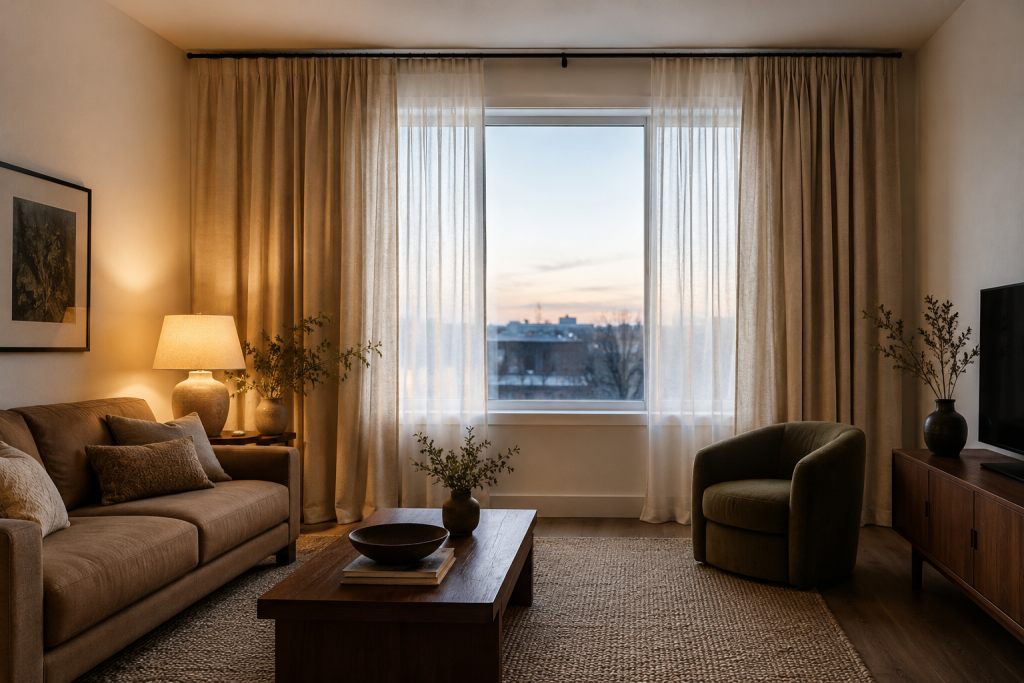
7. Take Curtains All the Way Up
One of the easiest apartment upgrades happens around the windows.
Short curtains mounted directly above the window frame can visually compress a room. Raising the rod or track closer to the ceiling draws attention upward and can make the window feel taller.
Architectural Digest’s recent designer guidance for small spaces specifically highlights vertical strategies such as high-mounted drapery as a way to emphasize height and make better use of walls. (architecturaldigest.com)
Where possible, extend the curtain rod beyond the sides of the window as well. This allows the curtains to sit beside the glass when open instead of blocking natural light.
For a cozy apartment aesthetic, linen-look or lightly textured curtains work particularly well.
Use:
- Sheer curtains for softened daylight
- Lined curtains for privacy
- Both layers when you need flexibility
Even inexpensive curtains can look more polished when they are long enough to reach the floor and wide enough to create generous folds.
If drilling is restricted by your lease, investigate tension rods, removable hardware, or renter-appropriate mounting solutions suited to your window construction.
8. Use Your Walls for Storage and Display
Small apartments have limited floor space, but the walls often remain underused.
Think vertically.
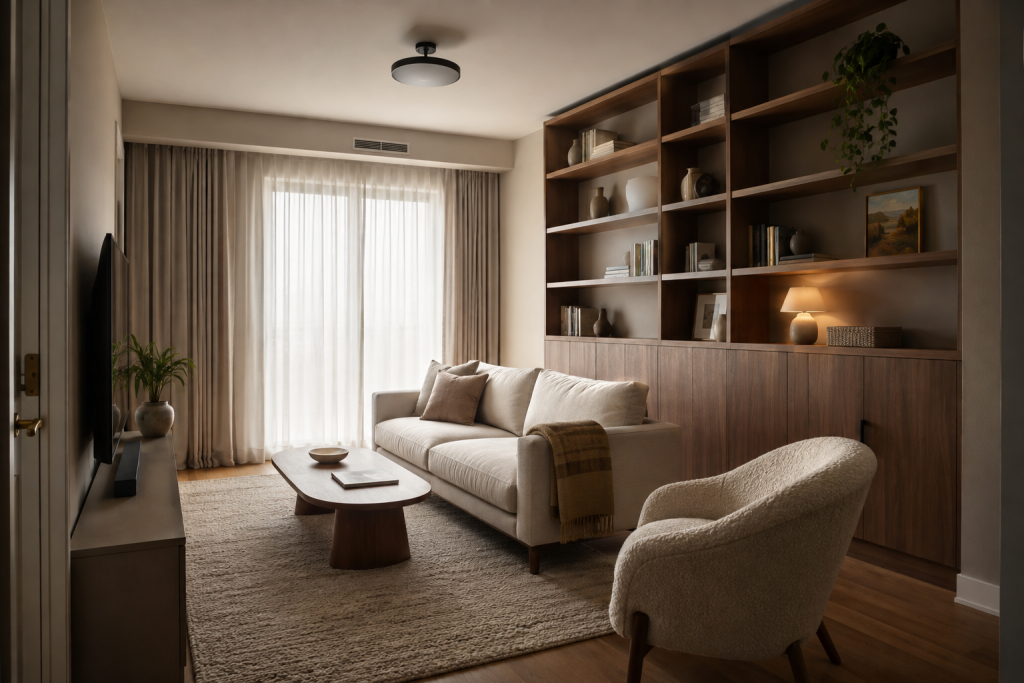
Tall shelving can store books and baskets while drawing the eye upward. Wall-mounted cabinets provide storage without consuming as much visible floor. Picture ledges allow artwork to be changed without creating a complicated gallery wall.
Architectural Digest designers recommend using vertical space intentionally in compact homes, including tall shelving, built-ins, high drapery, and artwork that shifts attention upward. (architecturaldigest.com)
A good wall arrangement can combine storage and personality.
For example, one shelving unit might contain:
- Books
- Closed storage baskets
- A table lamp
- Framed photographs
- Ceramics
- One trailing plant
Avoid filling every shelf completely.
Leaving open space around objects makes the display easier to read and keeps storage from turning into visual clutter.
Closed storage is useful for unattractive essentials. Open shelving should be reserved for objects you actually want to see.
9. Let Furniture Do More Than One Job
Multifunctional furniture is not exciting because it is “space-saving.” It is exciting when it allows a small apartment to function without feeling overcrowded.
Recent small-apartment projects featured by Architectural Digest demonstrate how integrated storage, dining functions, movable divisions, and multifunctional furniture can help compact homes use limited space more intelligently. (architecturaldigest.com)
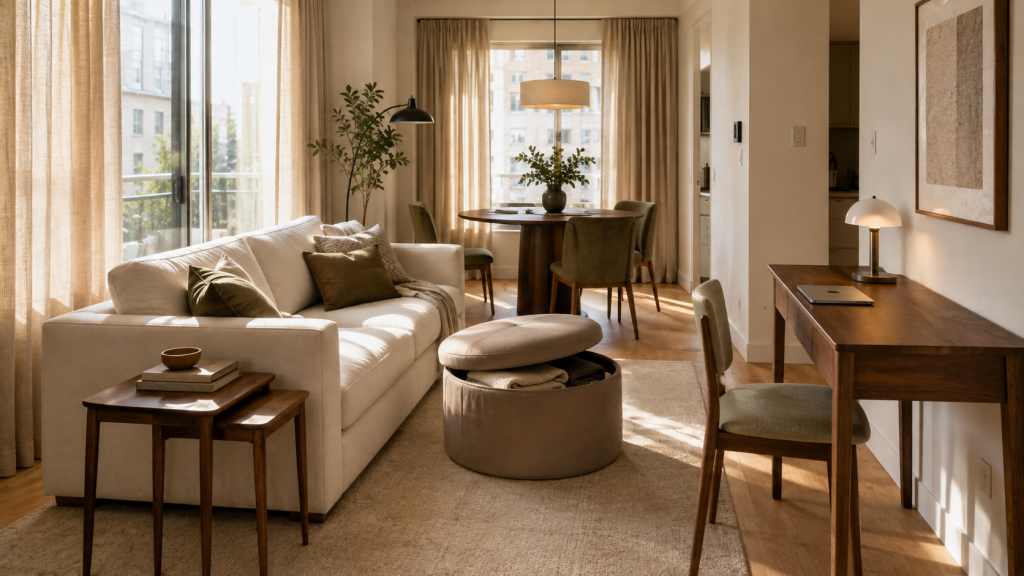
Look for furniture such as:
- Storage ottomans
- Benches with hidden storage
- Extendable dining tables
- Nesting side tables
- Desks that double as consoles
- Beds with drawers
- Coffee tables with storage
- Foldable or stackable seating
The key is avoiding furniture that performs several jobs badly.
A sofa bed is only worthwhile if it is comfortable both as a sofa and as an occasional bed. A dining table that becomes a desk should have enough depth and a sensible chair height for both uses.
Good multifunctional furniture disappears into daily life rather than constantly reminding you that your apartment is small.

10. Bring Nature Indoors in a Controlled Way
Plants can soften an apartment filled with straight lines, hard surfaces, and manufactured materials.
But more plants do not automatically create a better room.
One substantial plant can often look calmer than ten tiny pots scattered across windowsills and tables.
Consider:
- An olive-style tree in a bright room
- Pothos on shelving
- Snake plant
- Rubber plant
- Herbs near a kitchen window
- Branches in a large ceramic vase
Choose according to the real light conditions of your apartment.
You can also create a nature-connected aesthetic without living plants through wood, linen, wool, clay, stone, botanical artwork, and earth-inspired colors.
Biophilic and wellness-oriented interiors are among the directions Houzz and ASID continue to associate with contemporary residential design, reflecting a wider desire for homes that support comfort and well-being. (houzz.com) (asid.org)
11. Create Small Zones Instead of Treating the Apartment as One Room
A cozy apartment should have places for different activities, even when the floor plan is open.
You may not have separate rooms for reading, dining, working, and relaxing, but you can still create visual zones.
Use furniture placement rather than walls.
A rug can define the living area. A pendant can identify the dining table. A narrow bookcase can create a gentle boundary around a desk. A chair beside a floor lamp can become a reading corner.
In very compact apartments, curtains can also provide flexible separation. A recent Architectural Digest feature on a 484-square-foot Milan apartment showed how movable partitions, integrated storage, and a consistent palette helped maintain openness while still defining functions. (architecturaldigest.com)
The important part is not physically dividing every area.
Instead, give each activity a visual anchor.
Even an unused corner can become meaningful with one comfortable chair, a lamp, and a tiny table.
12. Finish With Things That Actually Mean Something to You
The final layer of a cozy apartment aesthetic should not come from a shopping list.
It should come from your life.
In 2026, professional design is moving noticeably toward homes with stronger personal identity. ELLE Decor reports that designers are seeing clients move beyond “safe” interiors toward spaces that communicate personality, while current Houzz research similarly points toward nostalgic and purposefully personal rooms. (elledecor.com) (houzz.com)
Instead of buying decorations simply to fill a shelf, display:
- Books you have read
- Family photographs
- Artwork you genuinely enjoy
- Handmade pottery
- Objects collected while traveling
- Records
- Framed postcards
- A favorite textile
- A piece inherited from someone
- Objects connected to your hobbies
These things prevent an apartment from looking like a staged furniture showroom.
Do not display everything at once.
A few meaningful objects surrounded by empty space feel more important than dozens of accessories competing for attention.
Your apartment should reveal something about the person living there.
What Will Make a Cozy Apartment Feel Current in 2027?
You do not need to redecorate your apartment every year, but early color forecasts can offer useful clues about where interiors are heading.
Sherwin-Williams’ 2027 Colormix forecast, Rewild, includes 48 colors ranging from grounding neutrals to richer, more expressive hues. Early 2027 reporting also points toward colors such as mossy greens, earthy reds, chalky neutrals, clay tones, and deeper jewel shades rather than a return to sterile minimalism. (sherwin-williams.com)
Valspar’s newly announced 2027 Color of the Year, Cottage Door, is a muted blue-gray designed around calm and versatility, another indication that comforting but characterful colors may continue gaining ground. (elledecor.com)
The easiest way to use these directions in an apartment is through replaceable layers:
- Cushions
- Throws
- Artwork
- Lamps
- Rugs
- Bedding
- Painted furniture
- Removable wallpaper
Treat forecasts as inspiration rather than a decorating deadline.
A comfortable apartment should still feel like yours after the trend cycle changes.
Cozy Apartment Mistakes to Avoid
Buying everything small
A compact apartment does not require miniature furniture everywhere. A properly scaled sofa or generous rug can make a room feel more settled than many undersized pieces.
Pushing every piece of furniture against the wall
Even a few inches of breathing room or a carefully angled chair can make an arrangement feel more natural.
Using only overhead lighting
Add lower light sources so the apartment feels comfortable after sunset.
Filling every available surface
A cozy room needs visual rest. Leave some tables, shelves, and walls partially empty.
Using too many unrelated colors
Small spaces usually benefit from carrying a limited palette throughout adjoining areas.
Hiding your personality to make the apartment look “minimal”
Minimalism should remove unnecessary clutter, not the things that make a home meaningful.
Choosing looks over comfort
A sculptural sofa that is miserable to sit on will never make your apartment truly cozy.
Frequently Asked Questions
How do I make my apartment look cozy?
Start with warm lighting, comfortable textiles, a generous rug, curtains, natural materials, and a coordinated color palette. Then add a few personal objects rather than filling the apartment with generic decor.
What colors make an apartment feel cozy?
Cream, warm white, taupe, mushroom, caramel, olive, terracotta, chocolate brown, muted burgundy, and soft blue-gray can all work. The right choice depends on your natural light and existing flooring.
Can a small apartment use dark colors?
Yes. Designers increasingly challenge the assumption that small rooms must always be white. Warm or saturated colors can make compact spaces feel intimate and intentional when paired with appropriate lighting. (architecturaldigest.com)
How can I make a rental apartment feel more personal?
Focus on elements you can take with you: curtains, rugs, lamps, artwork, cushions, vintage furniture, plants, removable wall treatments, and decorative storage.
How do I make an apartment cozy without making it cluttered?
Choose fewer objects with stronger texture, scale, or personal meaning. Combine open display with closed storage and leave deliberate empty space around furniture and accessories.
Final Thoughts
A cozy apartment aesthetic is not created by covering every surface with blankets, candles, and decorative objects.
The rooms that feel most inviting usually have a stronger foundation: comfortable furniture, warm light, materials that are pleasant to touch, thoughtful storage, natural elements, and colors that work together.
From there, personality matters.
Add the old side table you love. Hang the artwork that makes you stop and look. Keep your favorite books within reach. Create a reading corner even if it occupies only three feet of floor space. Use a richer wall color if bright white does not make you happy.
The strongest design direction in 2026 is not one particular sofa shape or paint shade. It is the movement toward homes that feel warmer, more tactile, more individual, and more connected to everyday life. (houzz.com)
That makes the best cozy apartment aesthetic surprisingly simple to define:
A home that looks beautiful, works for the way you live, and feels unmistakably yours. If you want more direction on getting there, our designer-approved apartment decorating ideas and minimalist apartment aesthetic guides are a great next stop.