20 Minimalist Apartment Aesthetic Ideas for a Calm, Beautiful, Clutter-Free Home
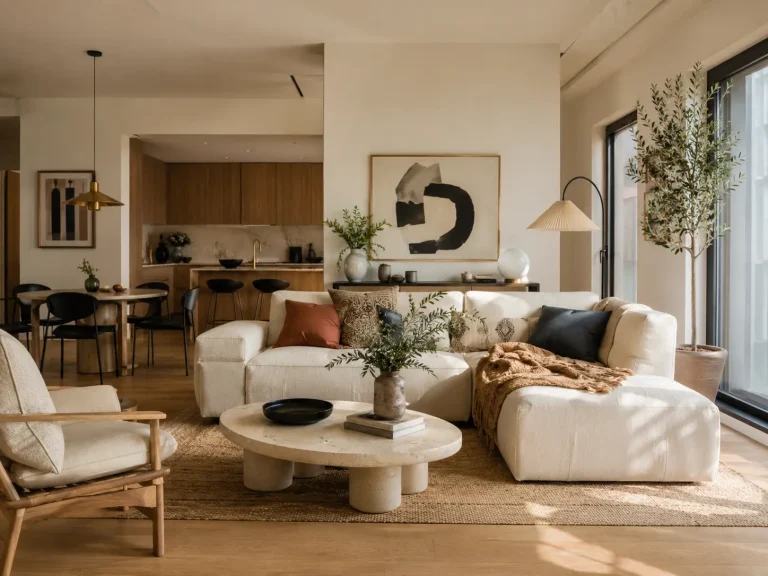
A minimalist apartment should feel calm, clear, and easy to live in. But the best minimalist homes do not feel empty or cold. They feel edited, intentional, and quietly beautiful.
That distinction matters more than ever in 2026. Minimalist interiors are shifting away from stark white rooms and overly severe styling. Current design direction points toward warmer woods, tactile materials, softer forms, wellness-focused spaces, and more personal interiors. Houzz’s 2026 trend coverage highlights warm and medium wood tones, textured finishes, and spaces that feel layered rather than sterile, while ASID’s 2026 Trends Outlook emphasizes lifestyle, wellness, sustainability, and changing expectations in the built environment. Organic modernism also continues to hold its place in the 1stDibs 2026 designer survey, suggesting that pared-back spaces still matter—but they are becoming warmer and more human. (houzz.com) (asid.org) (investors.1stdibs.com)
If you love clean spaces but do not want your apartment to look lifeless, minimalist decorating can work beautifully. The secret is to simplify with purpose, keep what supports daily life, and let a few well-chosen materials, colors, and objects do the visual work.
Here are 20 minimalist apartment aesthetic ideas that can help you create a home that feels peaceful, practical, and timeless.
1. Start With Fewer, Better Pieces
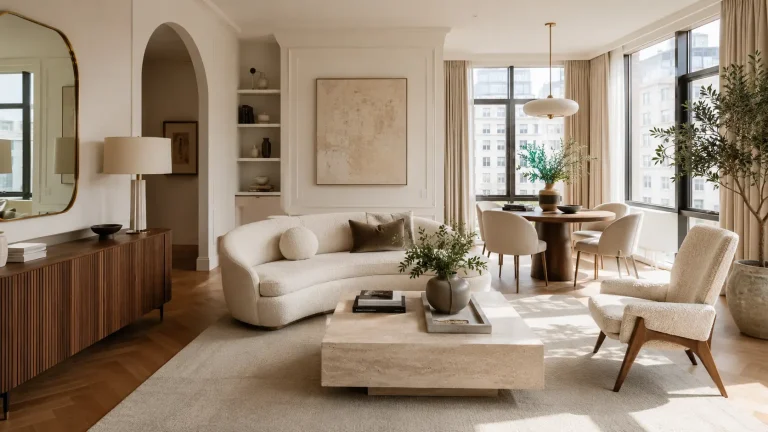
Minimalism is not about owning almost nothing. It is about making sure the furniture you do own deserves its place.
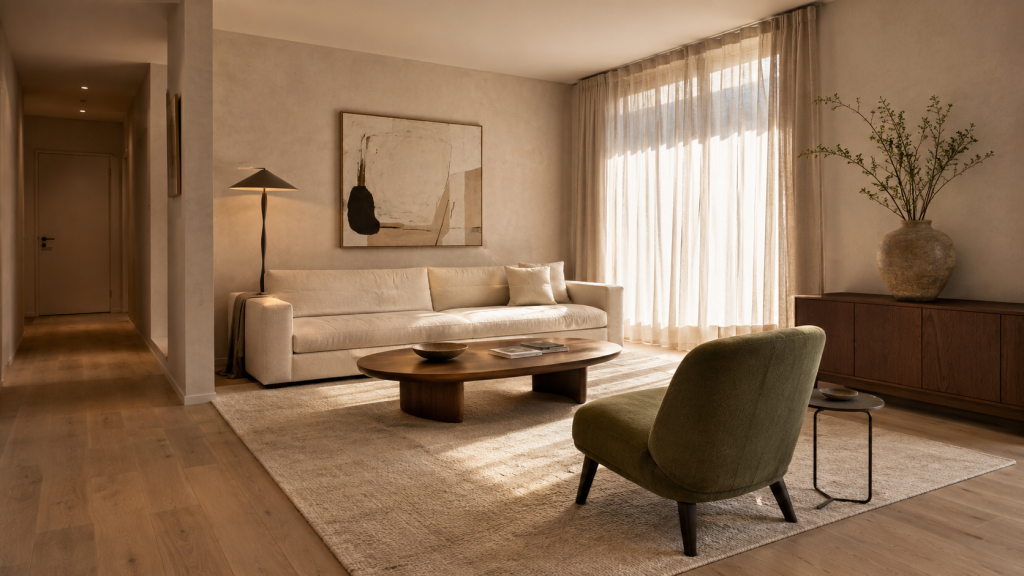
Instead of filling an apartment with many small items, focus on a few pieces that are comfortable, useful, and well proportioned. A sofa that fits the room properly, one good rug, a practical dining table, and a storage piece you actually use will create more calm than several decorative pieces bought to “complete the look.”
A minimalist room begins to feel beautiful when every major piece has a purpose.

2. Choose a Warm Neutral Foundation
Minimalist apartments often look more inviting when the background colors are soft and warm rather than bright and clinical.
Try shades like:
- warm white
- cream
- oatmeal
- mushroom
- taupe
- soft beige
- muted stone
- warm gray-green
These colors help walls, curtains, and larger furniture feel connected. They also work well with wood, ceramics, linen, and woven textures.
Minimalist does not have to mean all-white.
3. Let Natural Light Do More of the Work
A minimalist interior looks best when the room itself feels open and breathable.
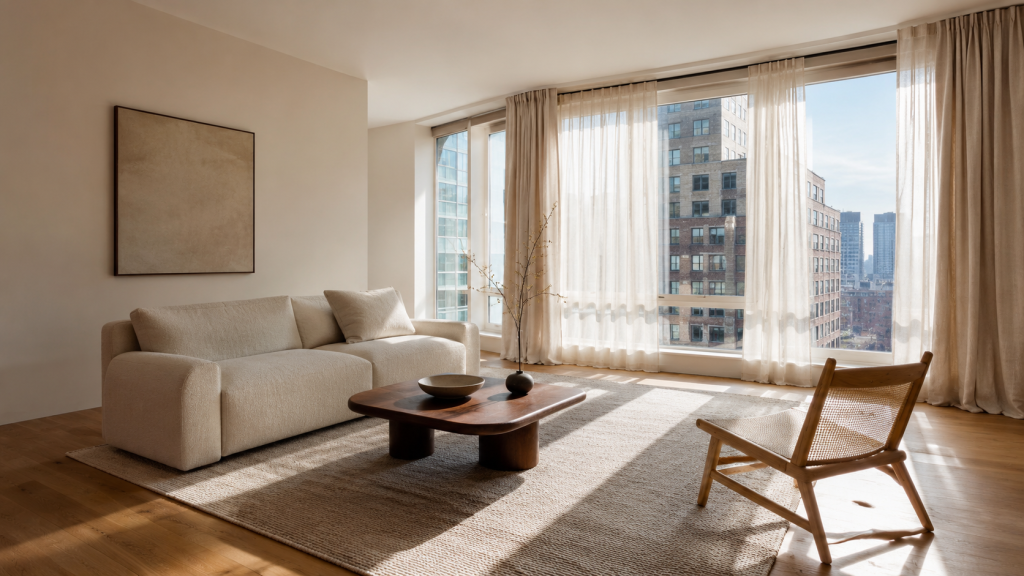
Keep windows as clear as possible during the day. Use light curtains, soft linen panels, or simple roller shades that allow daylight to move gently through the room. Heavy visual interruption around the windows can make an apartment feel smaller and busier.
When natural light is treated as part of the design, the room immediately feels calmer.
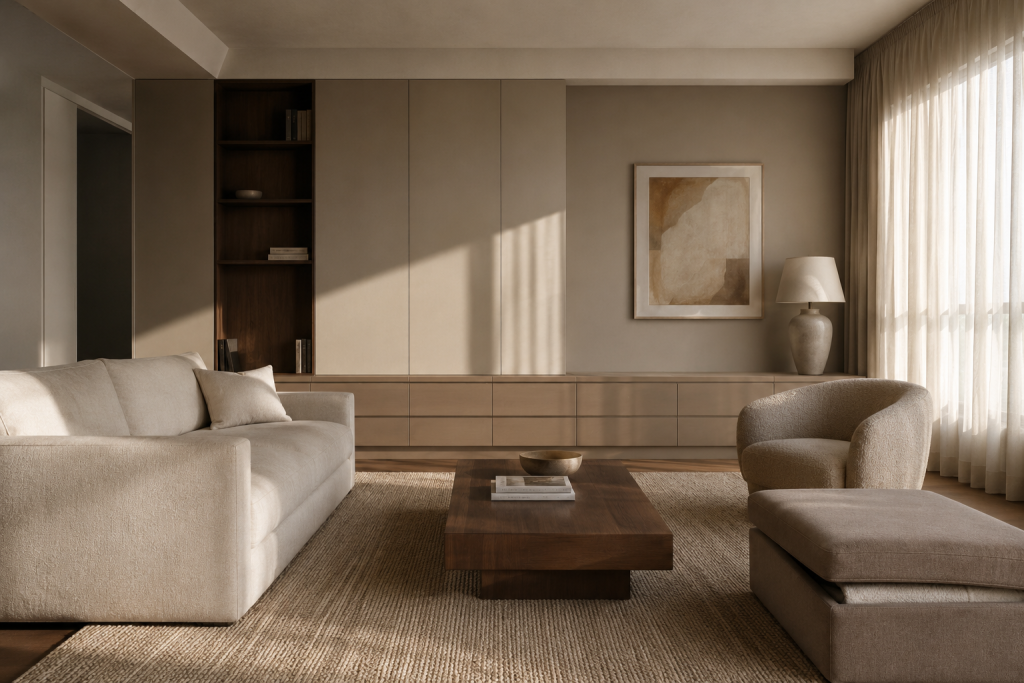
4. Use Hidden Storage Wherever Possible
A minimalist apartment usually feels successful because unnecessary visual noise is kept out of sight.
Closed storage matters.
Look for:
- sideboards
- storage beds
- wardrobes with simple fronts
- benches with storage
- ottomans with lift-up tops
- baskets for shelves
- cabinets with doors rather than everything displayed openly
You do not need to own less overnight. Sometimes the room simply needs better places to hold ordinary things.

5. Keep the Color Palette Limited
Too many unrelated colors can make even a tidy apartment feel visually busy.
A minimalist apartment often works best when two or three main colors are repeated throughout the space. For example:
- warm white + oak + black
- cream + walnut + olive
- taupe + stone + bronze
- soft gray-green + ivory + dark brown
A restrained palette creates continuity from one area to another, which is especially important in small apartments or open-plan layouts.

6. Bring in Warm and Medium Wood
One reason minimalist apartments sometimes feel cold is the absence of natural warmth.
Wood helps solve that immediately.
Houzz’s 2026 home-design coverage points to warm and medium wood tones as a major direction, while textured and handcrafted surfaces continue to gain attention. In practice, that means minimalist rooms are looking better with oak, walnut, cherry, elm, and other woods that bring depth rather than washed-out uniformity. (houzz.com)
Even one wooden coffee table, dining chair, shelf, or sideboard can make a minimal apartment feel more grounded.
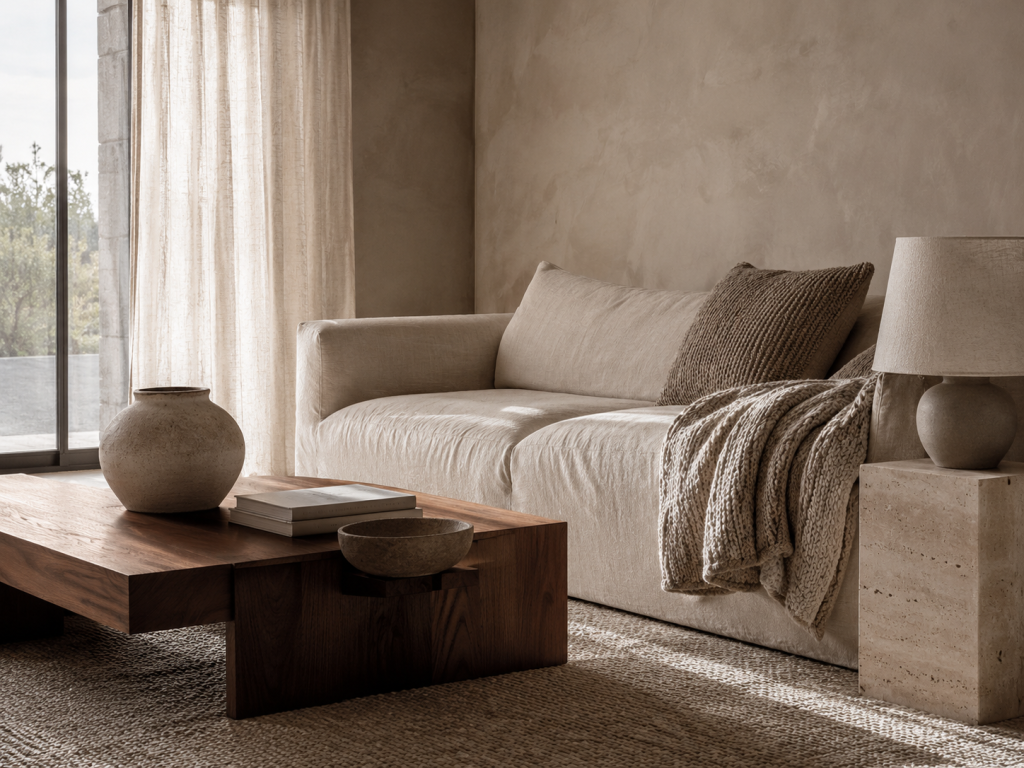
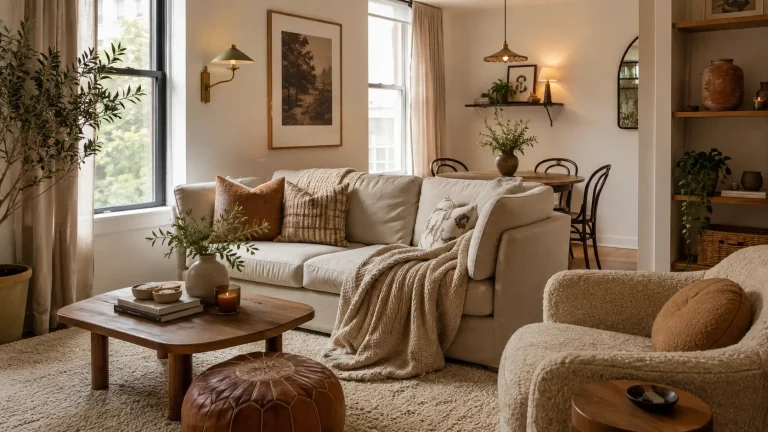
7. Use Texture Instead of More Decor
When you remove visual clutter, texture becomes much more important.
A minimalist apartment does not need many decorative objects if the room already has enough material contrast.
Try combining:
- linen curtains
- a wool rug
- cotton bedding
- a ceramic lamp
- a wood table
- a woven basket
- a stone or travertine tray
- a knitted throw
This creates interest without making the space feel crowded.
The room stays quiet, but it no longer feels flat.

8. Choose Furniture With Clean but Comfortable Lines
Minimalist furniture should be simple, but it should not feel harsh.
A sofa with soft edges, a chair with a rounded back, or a coffee table with gently curved corners can make a room feel more welcoming. Current interiors are increasingly favoring softer forms and less rigid geometry, which helps minimal spaces feel warmer and easier to live in. (houzz.com)
Minimal does not need to mean severe.
Choose pieces that still look comfortable enough to use every day.
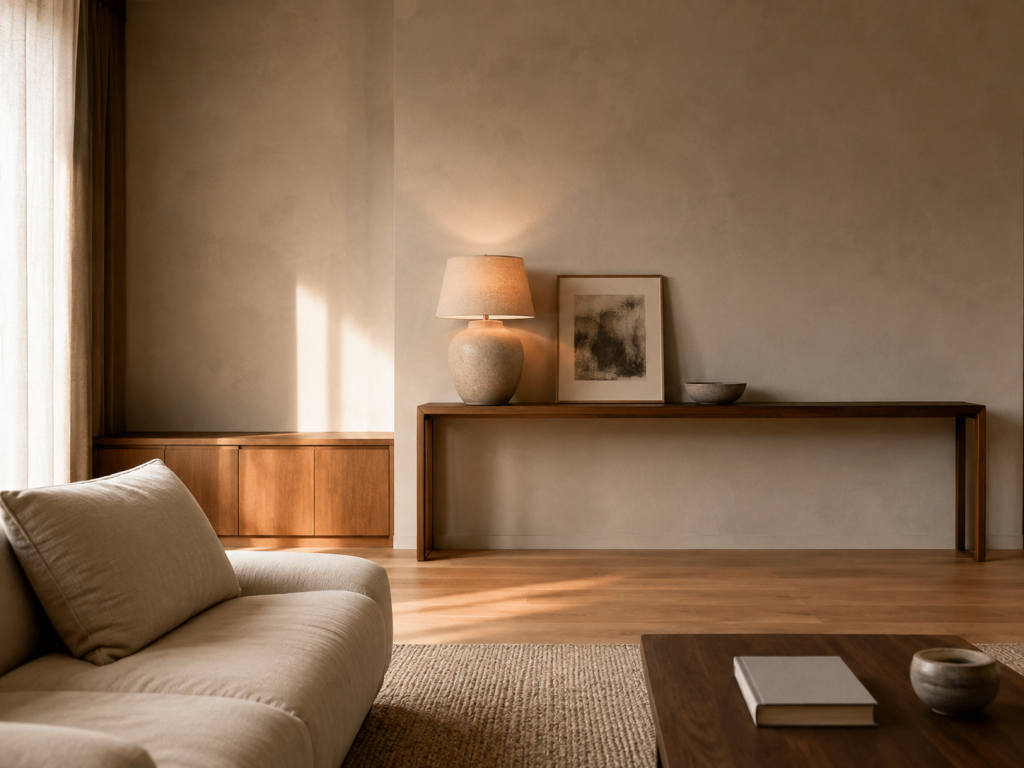
9. Leave More Empty Space on Surfaces
Minimalist styling often goes wrong when people keep adding small accessories to prove the room is “done.”
Instead, leave more breathing room.
A console may only need:
- one lamp
- one framed piece
- one ceramic bowl
A bedside table might need only a lamp, a book, and a glass of water.
Empty space is not wasted space. It is part of the visual composition.
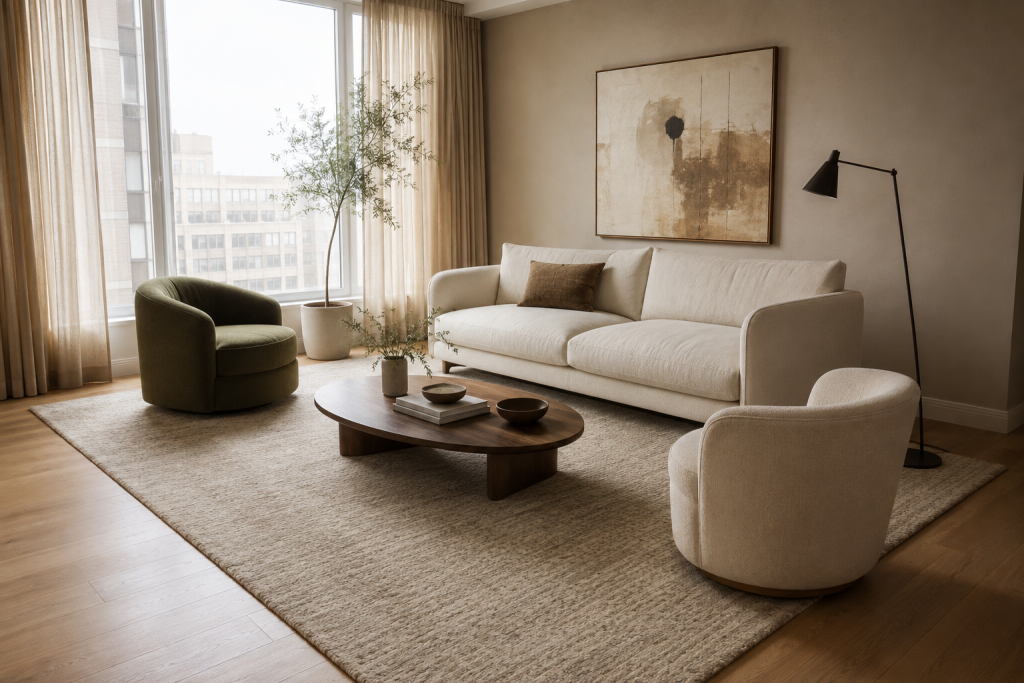
10. Use One Large Rug Instead of Several Small Ones
A large rug can make a minimalist apartment feel more cohesive and less fragmented.
Several small rugs often divide the room into too many pieces. One properly sized rug under the main seating or sleeping area creates a calmer visual field.
Choose a rug with subtle texture or a restrained pattern rather than something overly busy. Wool, flatweave, and soft geometric designs often work well in minimalist apartments.
11. Keep Open Shelving Selective
Open shelving is not automatically minimalist.
If shelves are overloaded with books, decor, candles, baskets, and random objects, they can quickly become visual clutter.
Display only what you really want to see:
- a few books
- one plant
- one ceramic object
- a framed photo
- one box for small essentials
Everything else can go into closed storage.
Minimalism is often more about editing display than owning fewer things.
12. Add Black or Dark Accents Sparingly
A light minimalist apartment sometimes needs contrast to avoid feeling washed out.
A few darker details can define the room:
- black lamp base
- dark wood frame
- charcoal cushion
- bronze hardware
- black dining chair
- dark vase
The key word is few.
You are not trying to create a high-contrast black-and-white showroom. You are just giving the eye a few anchors.
13. Make the Bedroom Feel Like a Retreat
A minimalist apartment bedroom should feel especially calm.
Keep the bed simple but layered:
- quality sheets
- one duvet or quilt
- two sleeping pillows
- one or two decorative cushions
- one soft throw
Use a limited palette and avoid overfilling the room with extra furniture. If the room is small, prioritize a good bed, proper bedside lighting, and practical storage before anything decorative.
Minimalist bedrooms work best when they support rest first.
14. Use Lighting in Layers, Not Just Overhead
One overhead light rarely creates the relaxed atmosphere a minimalist apartment needs.
Instead, use several smaller sources:
- bedside lamps
- a floor lamp
- a table lamp
- wall sconces
- a pendant over the dining table
This matters even more because wellness and emotional comfort are becoming more central to residential design thinking, according to ASID’s 2026 outlook. A room that can shift from bright daytime function to soft evening calm is simply easier to live in. (asid.org)
Minimal interiors often feel luxurious when the lighting is gentle and intentional.
15. Add One or Two Personal Objects With Meaning
Minimalist does not mean personality-free.
The best minimalist apartments still feel like they belong to someone.
Choose a few meaningful pieces:
- a photograph
- a favorite artwork
- a handmade bowl
- a small sculpture
- an inherited object
- books you truly love
- one textile from a trip
What matters is not the number of items. It is whether the objects contribute something real to the room.
One meaningful piece often says more than ten generic decorative accessories.
16. Use Mirrors to Expand Light, Not Just Decorate Walls
A mirror can be both practical and aesthetic in a minimalist apartment.
Placed well, it can reflect daylight, make a narrow area feel more open, and reduce the need for extra wall decor. A tall mirror leaning against a wall or a simple round mirror above a console can create a clean, quiet focal point.
Keep the frame restrained so the mirror supports the room rather than dominating it.
17. Simplify the Dining Area
Apartment dining areas often collect too much visual activity.
To keep a minimalist look:
- choose a simple table shape
- use chairs with clean lines
- keep the center of the table mostly clear
- use one pendant or overhead fixture
- add one bowl or vase rather than several objects
If your dining table also functions as a desk, invest in a setup that looks intentional, not improvised. Minimalism works best when multifunctional areas still feel organized.
18. Bring in One Plant Instead of Many Small Ones
Plants can soften a minimalist apartment beautifully, but too many small pots can create clutter.
One larger plant often works better than several scattered ones.
Good options include:
- snake plant
- rubber plant
- olive-style tree in bright light
- zz plant
- a single trailing plant on a shelf
This fits with the broader shift toward wellness and biophilic thinking in interiors, while still keeping the apartment visually calm. (asid.org)
Nature belongs in minimalism—but in a controlled, thoughtful way.
19. Keep Technology Less Visible
Minimalist apartments feel calmer when digital clutter is reduced.
Try to hide:
- loose charging cables
- routers
- remotes
- extra screens
- printer paper
- docking stations
- miscellaneous electronics
Use cable organizers, closed storage, or one dedicated charging zone.
The room does not need to look like nobody lives there. It just should not look as though every surface belongs to a device.
20. Let the Apartment Evolve Slowly
Minimalism becomes more convincing when the apartment is built gradually rather than rushed.
You do not need to buy everything at once.
A slower approach helps you choose better pieces, understand what the apartment actually needs, and avoid filling it with decorative placeholders. It also creates a more lasting aesthetic, because the room grows from real use rather than from trying to imitate a trend image too literally.
That idea aligns well with where interiors appear to be heading. Sherwin-Williams’ 2027 Colormix Forecast, Rewild, emphasizes flexibility and mixing rather than rigid formulas, and includes ten “Continuity Colors” designed to have longer-lasting value across many palettes. That is a useful reminder that timeless spaces usually come from adaptable foundations rather than from chasing one exact look. (sherwin-williams.com)
What Makes a Minimalist Apartment Feel Warm Instead of Cold?
Many people like the idea of minimalism but worry that it will make their home feel impersonal.
That usually happens when the room has been stripped of clutter without gaining anything in return.
A warm minimalist apartment generally includes:
- natural materials
- soft lighting
- comfortable furniture
- visible texture
- a few personal objects
- a calm color palette
- enough storage to stay organized
- empty space used intentionally
Minimalism feels cold only when it is reduced to “less” without attention to comfort.
The better goal is clarity with warmth.
Minimalist Apartment Mistakes to Avoid
Buying everything white
White can be beautiful, but an all-white apartment often needs strong texture and warmth to avoid feeling flat.
Confusing empty with calm
A room with too little furniture or no personality may feel unfinished rather than peaceful.
Using too many small storage pieces
Several little bins and organizers can sometimes create more visual clutter than one proper cabinet.
Overdecorating open shelves
Minimalist shelving should not become a place for every object you do not know where else to put.
Ignoring comfort
A minimalist chair that nobody wants to sit in is not a success.
Following one social-media version of minimalism too literally
The best minimalist apartment aesthetic should match your lifestyle, your routines, and the way you actually use your home.
Frequently Asked Questions
What is a minimalist apartment aesthetic?
A minimalist apartment aesthetic focuses on simplicity, calm, and intentional living. It usually includes fewer but better-chosen furniture pieces, restrained color palettes, clean layouts, practical storage, and minimal visual clutter.
How do I make a minimalist apartment feel cozy?
Use warm neutrals, wood, soft lighting, linen, wool, layered bedding, and a few meaningful objects. Texture and comfort are what make minimalism feel cozy rather than cold.
What colors work best for a minimalist apartment?
Warm white, cream, taupe, mushroom, soft gray-green, beige, stone, and muted earth tones tend to work very well. Black, charcoal, or dark brown can be added sparingly for contrast.
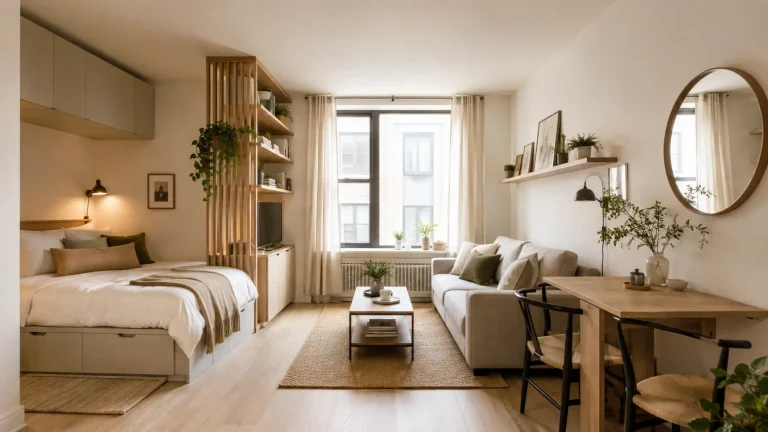
Can a small apartment still be minimalist?
Yes. In fact, minimalism often works especially well in small apartments because it reduces visual clutter and helps the layout feel more open. Good storage and well-scaled furniture are particularly important.
Will minimalist apartments still feel current in 2027?
Yes, especially the warmer, more material-focused version of minimalism. Early 2027 direction from Sherwin-Williams suggests continued flexibility, personal mixing, and long-lasting foundation colors rather than rigid trend formulas. (sherwin-williams.com)
Final Thoughts
A beautiful minimalist apartment is rarely created by removing everything at once.
It is created by choosing with care.
Keep the furniture you truly use. Build a soft and connected palette. Bring in wood, linen, wool, and ceramic. Improve storage. Let daylight and warm lamps shape the mood. Add one plant, one artwork, or one object that actually matters to you.
The most relevant lesson from 2026 interior design is that simplicity is not disappearing—but it is becoming warmer, softer, more tactile, and more personal. That makes minimalism better, not weaker. It means your apartment can feel calm without feeling empty, and refined without feeling staged. (houzz.com) (investors.1stdibs.com)
That is what makes a minimalist apartment aesthetic truly lasting:
not owning the least,
but living with what matters most.