10 Modern Living Room Ideas That Feel Fresh Now—and Never Go Out of Style
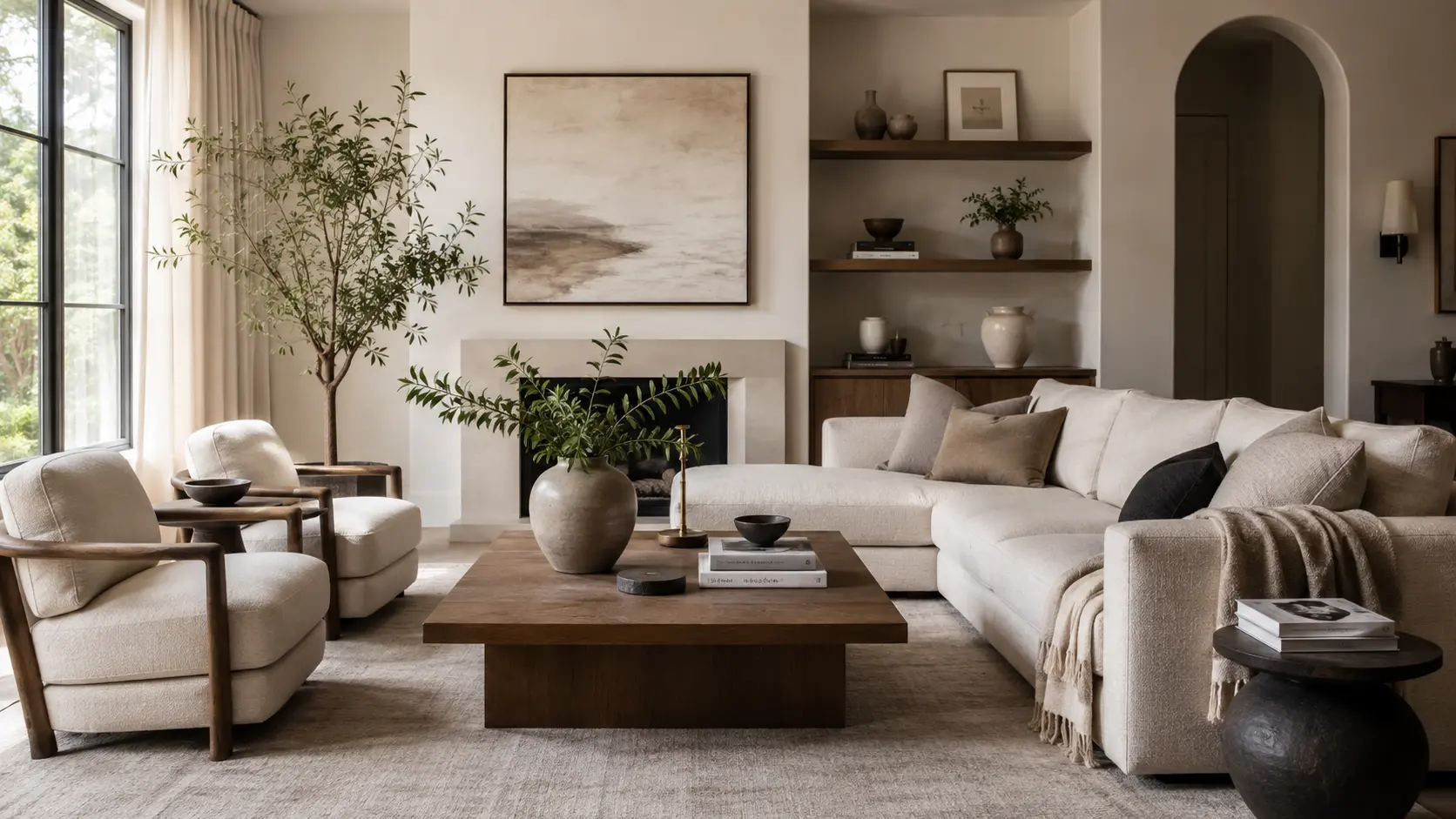
A modern living room does not have to look futuristic, minimal, or perfectly coordinated. In fact, some of the most successful modern interiors avoid obvious trends altogether.
They rely on good proportions, comfortable furniture, natural materials, thoughtful lighting, practical layouts, and a balance between clean lines and objects with character.
That distinction is especially important in 2026. Current professional design research shows interiors moving away from stark minimalism and toward warmer wood, richer materials, layered textures, softer forms, vintage pieces, and rooms that feel more personal and lived in. Houzz identifies warm and medium wood tones as a significant 2026 direction, while the latest 1stDibs designer survey found continued support for organic modernism, eclecticism, vintage sourcing, and richer colors such as chocolate brown.
These developments do not mean you need to chase every new trend. Quite the opposite.
The best modern living room ideas take what feels relevant now and combine it with design principles that have already demonstrated staying power.
Here are 10 ways to create a modern living room that feels fresh today but should still look beautiful years from now.
1. Choose Warm Minimalism Over an Empty Minimalist Room
Modern design is often associated with minimalism, but there is an important difference between a room that is thoughtfully edited and one that simply feels empty.
A timeless modern living room should have visual breathing room without sacrificing warmth.
Start with a simple foundation:
- A comfortable sofa
- One or two additional seats
- A properly sized rug
- Functional lighting
- A useful coffee or side table
- A limited number of decorative objects
Then introduce warmth through material rather than clutter.
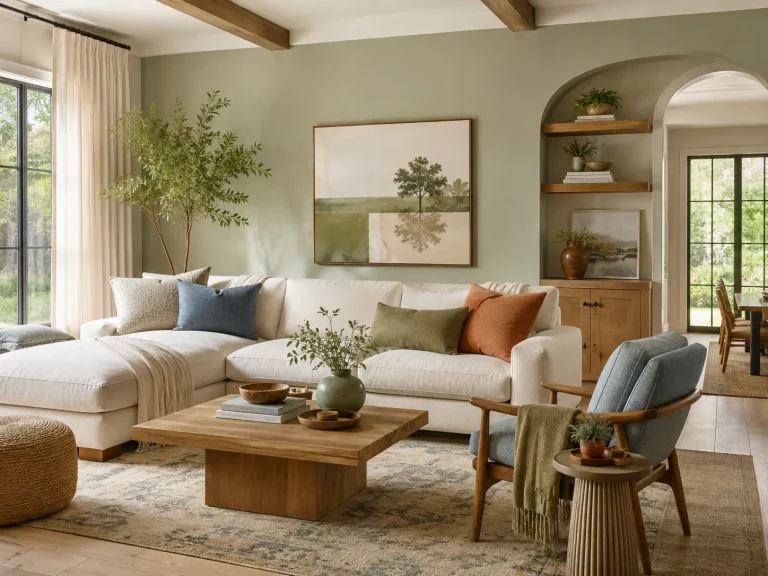
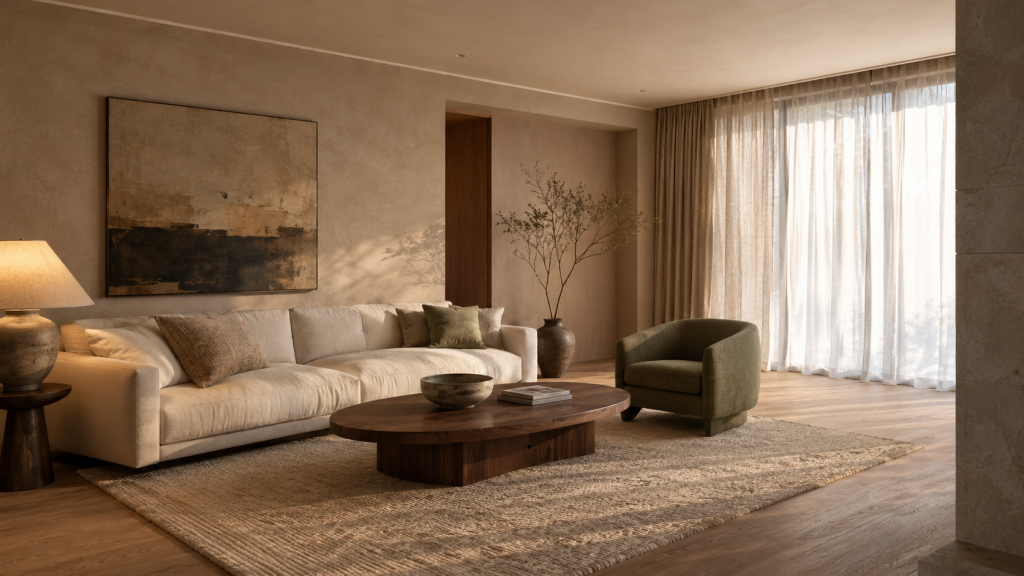
A cream sofa beside a walnut table, wool rug, linen curtains, ceramic lamp, and one piece of expressive artwork can still feel minimal, but it will not feel sterile.
This reflects a wider shift in contemporary interiors. Houzz professionals have reported less interest in stark minimalism and stronger demand for warmer palettes, natural materials, mixed textures, and collected rooms that feel individual.
The goal is not to remove personality.
It is to remove the things that do not contribute.
Before buying another accessory, ask whether the room needs another object or simply more depth through texture, color, light, or scale.
2. Invest in a Simple, Well-Proportioned Sofa
Few living-room purchases matter more than the sofa.
Trend-driven sofas can date quickly because unusual silhouettes, extreme proportions, or fashionable upholstery become strongly associated with a particular moment.
A safer long-term choice is a sofa with:
- Comfortable seat depth
- Supportive cushions
- A straightforward silhouette
- Good-quality construction
- Upholstery suited to your lifestyle
- Proportions appropriate for the room
This does not mean the sofa has to be boring.
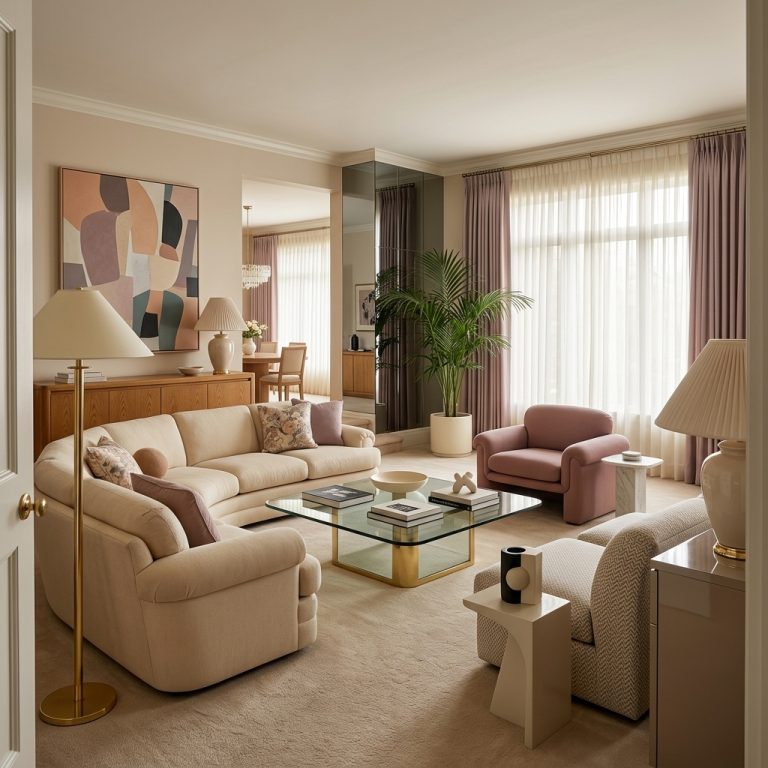
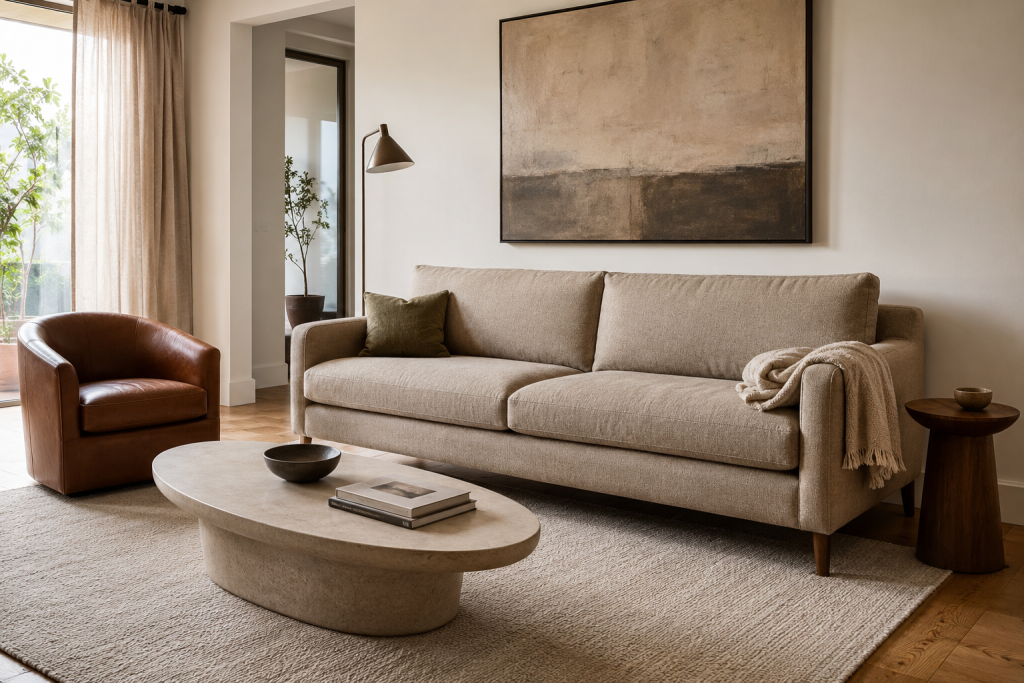
A softly rounded arm, gently curved back, textured fabric, or interesting leg can provide enough personality without turning the entire piece into a trend statement.
Neutral upholstery remains practical because it allows smaller elements to change around it. Cream, oatmeal, warm gray, taupe, tobacco, muted olive, and soft brown can all provide versatile foundations.
If you have children or pets, durability deserves as much attention as color. A room cannot feel timeless if the main piece of furniture looks worn after two years.
Before ordering, mark the sofa dimensions on the floor with removable tape.
Check the circulation path, relationship with the rug, distance from the coffee table, and sightline toward the room’s focal point.
Modern design looks effortless when the scale is correct.
3. Bring Back Warm and Medium Wood
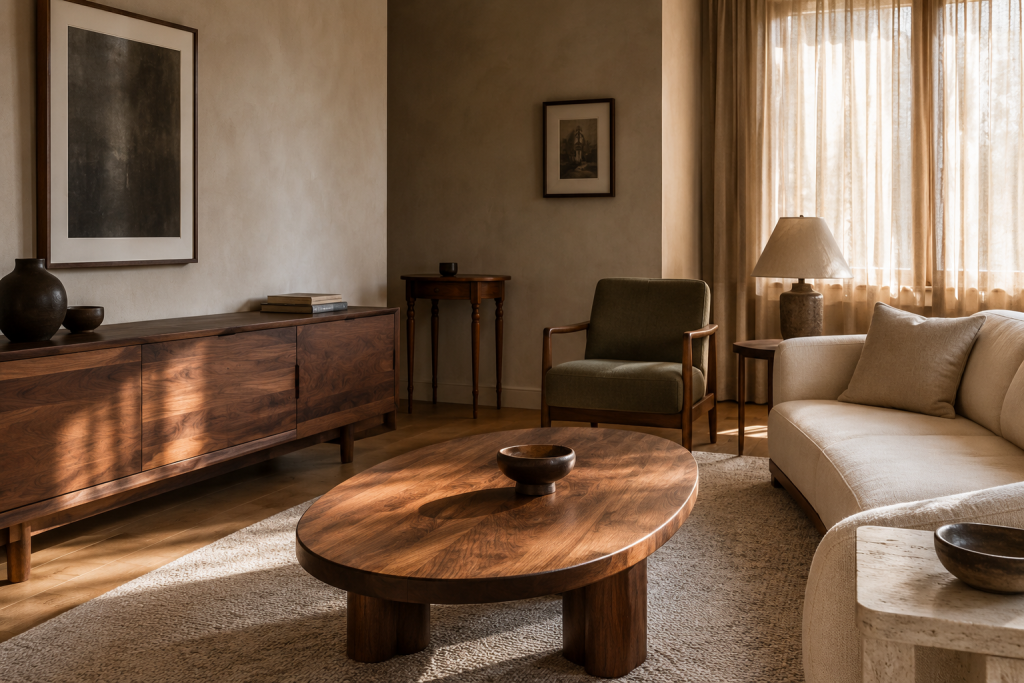
Wood is one of the easiest ways to prevent a modern living room from becoming cold.
While pale oak has dominated many contemporary interiors in recent years, 2026 design research points toward a wider range of richer timber tones.
Houzz reports growing interest in warm and medium woods including walnut, elm, hickory, cherry and deeper stains, describing them as bringing greater depth and enduring elegance to living spaces.
You do not need to replace every piece of furniture.
Introduce warmer wood through:
- Coffee tables
- Side tables
- Media cabinets
- Bookshelves
- Picture frames
- Occasional chairs
- Decorative bowls
- Vintage furniture
Walnut works particularly well with cream, olive, warm white, rust, stone, brass, and black.
Medium oak can connect contemporary furniture with more traditional architecture.
And your woods do not need to match perfectly.
A modern living room often looks more natural when several compatible tones are layered together rather than repeated identically.
For example, an oak floor can work with a darker walnut table and a vintage medium-brown cabinet if the rest of the palette connects them.
Think of wood as part of the color scheme rather than simply a furniture material.
4. Layer Natural Materials and Tactile Textures
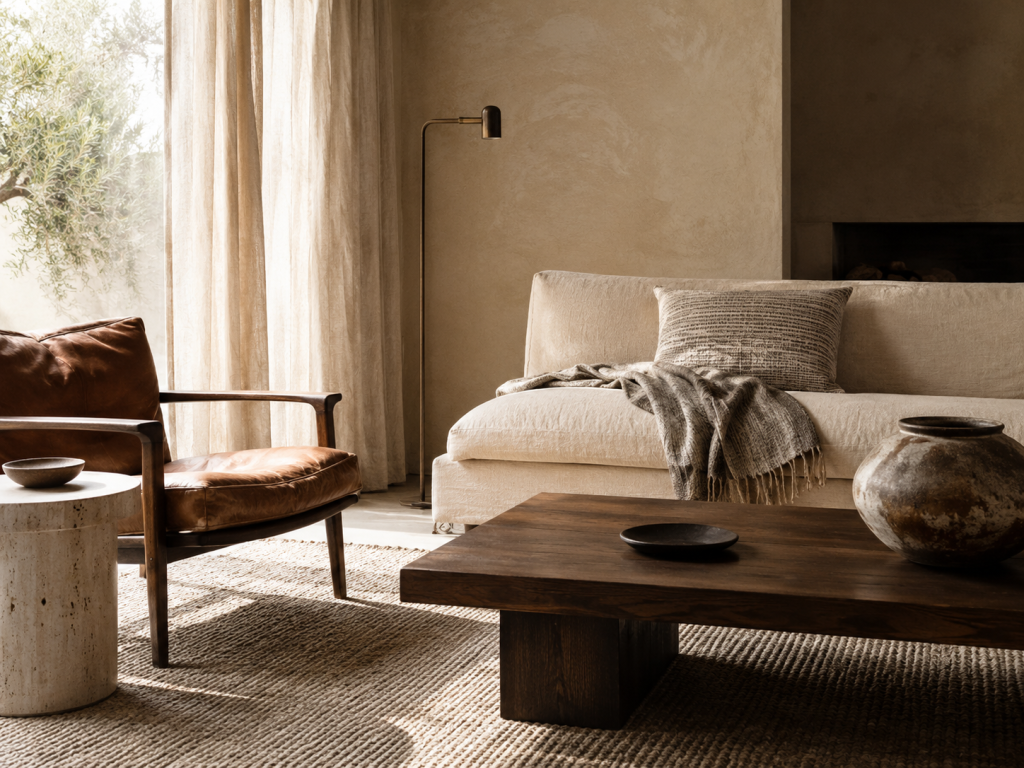
One of the most reliable ways to make a modern living room feel expensive and timeless is to vary its materials.
If every surface is smooth, new, and synthetic, the space can feel flat even when the furniture is attractive.
Instead, combine surfaces that behave differently in the light.
Consider:
- Linen
- Wool
- Cotton
- Natural wood
- Stone
- Leather
- Bouclé
- Ceramic
- Woven fiber
- Aged or brushed metal
Houzz’s 2026 trend coverage highlights increasing interest in tactile surfaces, warm colors, handcrafted materials, and dark woods, while its Maison & Objet reporting showed warm neutrals frequently combined with curved furniture and stronger accents such as deep green, ocher, and red.
You do not need every material in one room.
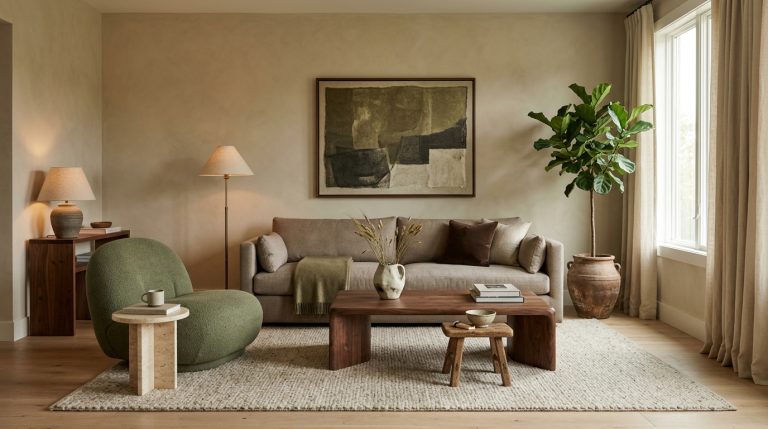
A modern space might combine a linen sofa, wool rug, walnut table, ceramic lamp, and stone side table.
The colors can remain restrained because the textures create enough visual variation.
This is one reason natural materials tend to age well: small imperfections, patina, grain, and tactile variation often become part of their appeal rather than making them look outdated.
5. Introduce Curves Without Making Everything Curved
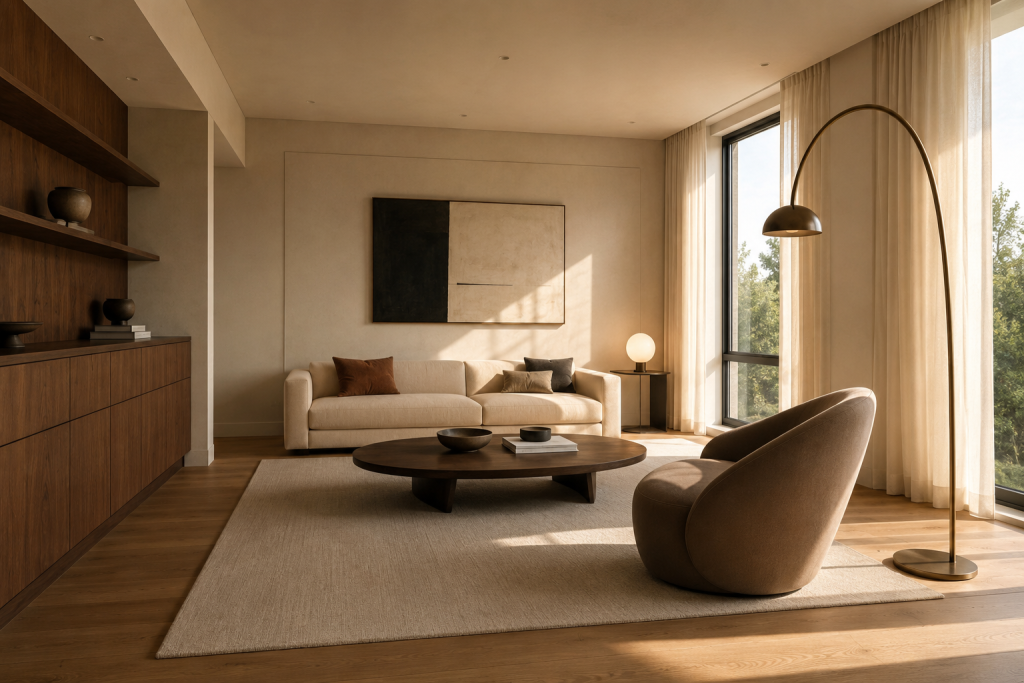
Soft curves can make a modern living room feel more welcoming.
Most rooms naturally contain strong geometry: rectangular walls, doors, windows, televisions, rugs, cabinetry, and sofas.
One or two rounded forms can interrupt those lines and create a more relaxed composition.
Current 2026 living rooms featured by Houzz use curved seating, rounded coffee tables, and organic arrangements to create intimate conversation areas while retaining a clean modern character.
Try adding:
- An oval coffee table
- Round side table
- Curved armchair
- Arched floor lamp
- Rounded sofa arm
- Circular mirror
- Globe light fixture
Avoid turning every piece into a curve.
When the sofa, chairs, tables, rug, lamps, and shelves all have dramatic organic shapes, the room may become strongly associated with one particular trend cycle.
Instead, use curves as a counterpoint.
A rectangular sofa paired with an oval coffee table creates balance. A straight media cabinet can sit beneath rounded artwork. An architectural room can feel softer with just one sculptural chair.
The timeless part is not the curve itself.
It is the contrast between soft and straight forms.
6. Build a Timeless Palette, Then Add Color With Confidence
A modern living room does not have to be beige.
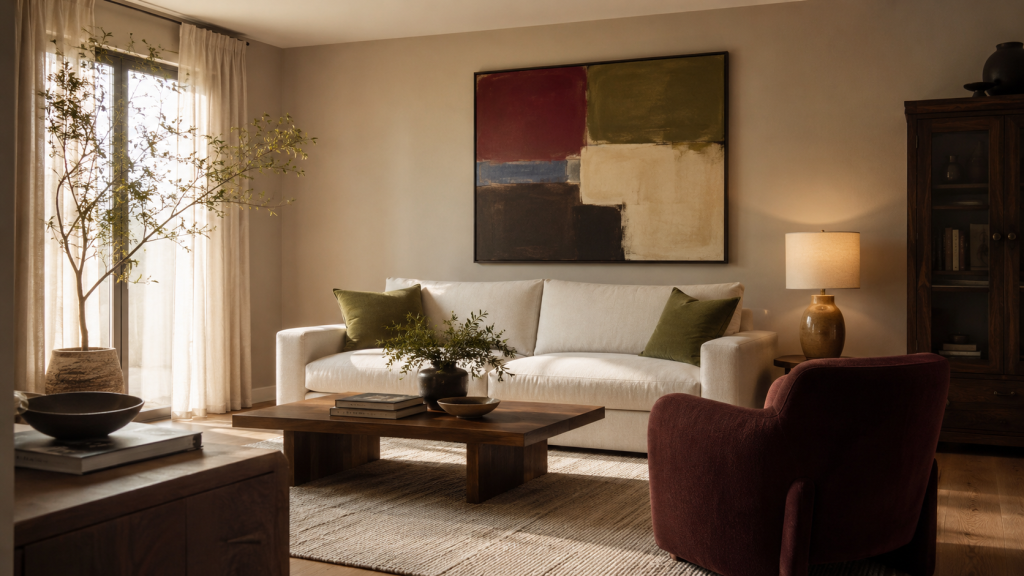
In fact, current professional design is becoming more comfortable with richer colors.
The 1stDibs 2026 survey found chocolate brown continuing as a major designer favorite, alongside interest in burgundy and softer hues such as pistachio, butter yellow, baby pink, and cornflower blue.
The safest long-term approach is to separate your palette into two layers.
Permanent colors
Use versatile shades on expensive or difficult-to-change surfaces:
- Warm white
- Mushroom
- Taupe
- Soft stone
- Natural wood
- Cream
- Muted gray-green
Flexible colors
Use stronger shades on things that are easier to change:
- Cushions
- Artwork
- Throws
- Lamps
- Occasional chairs
- Smaller rugs
- Decorative ceramics
A cream-and-walnut living room might include olive cushions this year and burgundy accents several years later without requiring new furniture.
If you love color, you can absolutely use it on the walls as well. The important question is whether you genuinely enjoy the shade—not whether a trend report has temporarily declared it fashionable.
Looking toward 2027, Sherwin-Williams’ Rewild forecast includes 48 colors spanning grounded neutrals, richer earthy tones, deeper shades, and more expressive hues. The company also identifies a set of “Continuity Colors” intended to have broader staying power.
That reinforces a useful principle: timeless does not mean colorless.
7. Mix Modern Furniture With Vintage Character
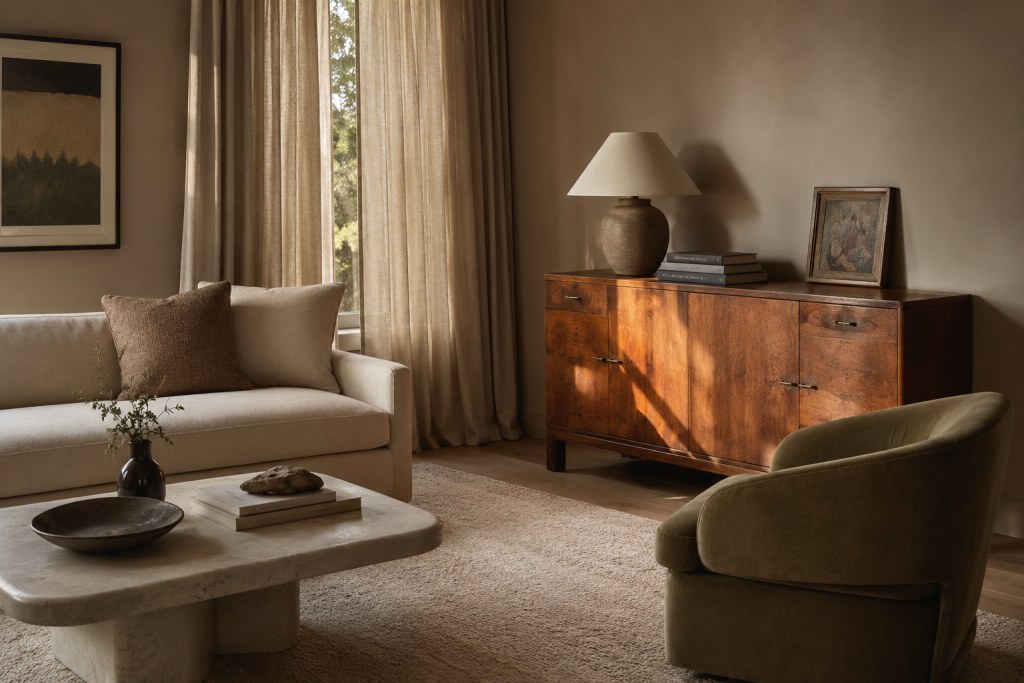
A room made entirely from new furniture can look polished, but it may also feel anonymous.
One vintage or antique piece introduces age, craftsmanship, irregularity, and history.
This is not simply a nostalgic decorating trick. Vintage sourcing remains common among professional designers, and the latest 1stDibs research shows continued enthusiasm for eclectic interiors, antiques, vintage pieces, and organic modernism.
Good candidates for a modern living room include:
- Vintage wooden cabinet
- Midcentury armchair
- Antique side table
- Old framed artwork
- Ceramic lamp
- Sculptural stool
- Vintage rug
- Small writing desk
You do not need to transform the room into a period interior.
A traditional wood cabinet can look surprisingly fresh beside a contemporary sofa. A vintage armchair can give a minimal room character. An old rug can make new furniture feel less showroom-like.
Choose pieces because of their proportions, materials, and usefulness—not simply because they are old.
The strongest modern interiors often contain tension between eras.
That tension makes them harder to date.
8. Design the Seating Around Conversation, Not the Walls
One of the most timeless living-room principles has nothing to do with furniture style.
It is layout.
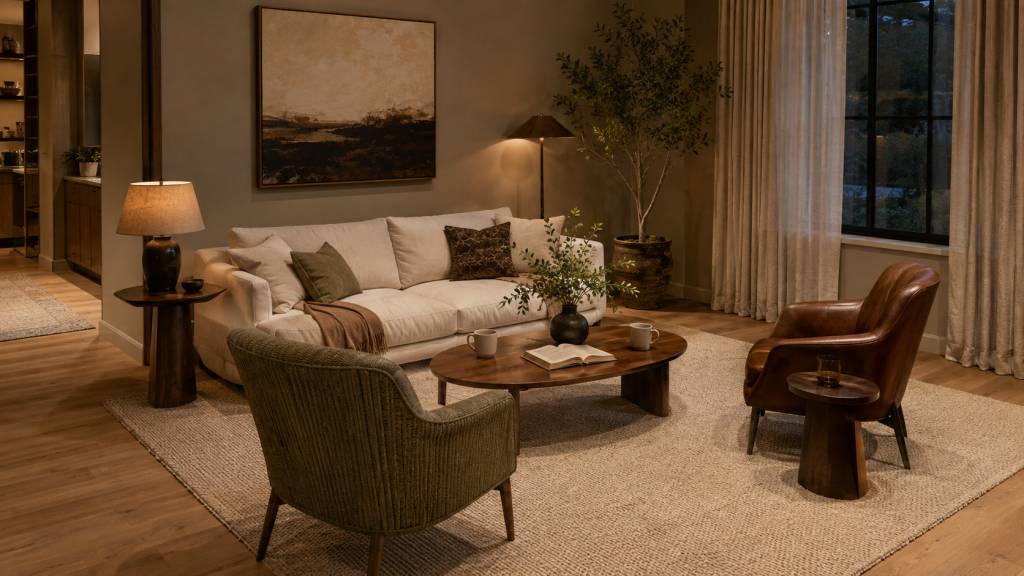
People often push every piece against the walls because it creates more open floor in the middle. In a larger room, however, that can make conversation feel awkward and leave the furniture disconnected.
Instead, organize the seating around how people actually use the room.
Ask:
- Where do people naturally gather?
- Is the coffee table reachable?
- Can two people speak comfortably without shouting across the room?
- Is there a clear walking route?
- Does every seat have a useful surface nearby?
- Is the television dominating the entire layout unnecessarily?
Informal and flexible living-room arrangements are receiving attention in 2026, and current Houzz examples emphasize intimate seating groups, flexible seating, and layouts built around gathering rather than rigid symmetry.
You can create that feeling with a sofa, two different chairs, and an occasional stool rather than buying a complete matching suite.
Slight asymmetry often feels more natural than perfect mirroring.
The most beautiful layout is ultimately the one that makes people want to sit down and stay.
9. Layer Lighting at Different Heights
Lighting is one of the easiest ways to tell whether a room was genuinely designed.
A single ceiling fixture provides illumination, but it rarely creates atmosphere on its own.
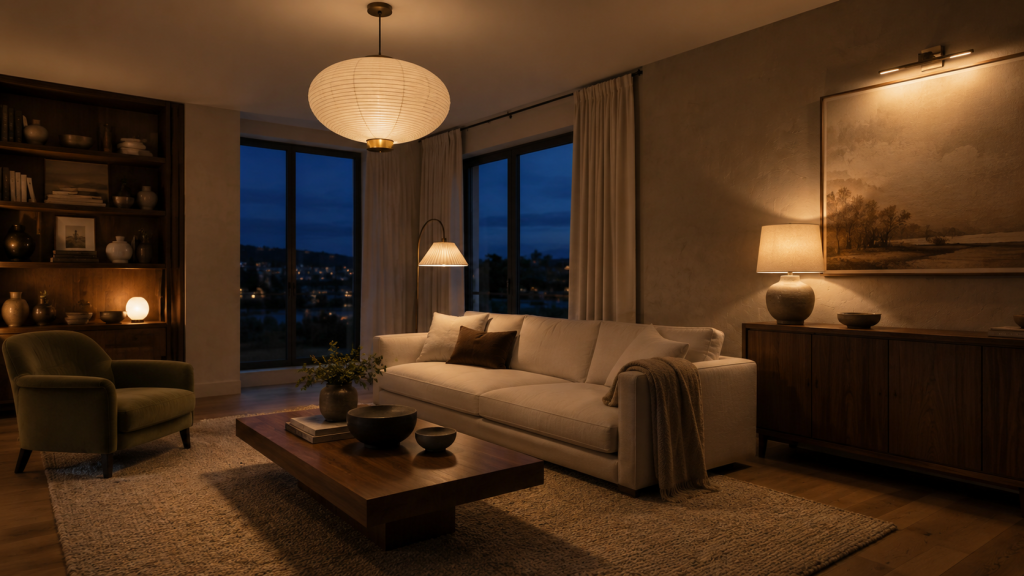
Modern living rooms benefit from several light sources serving different purposes.
Combine:
- Ceiling lighting
- Floor lamps
- Table lamps
- Wall sconces
- Picture lights
- Small accent lamps
Place them at different heights and use them selectively.
A floor lamp beside the sofa can support reading. A table lamp on a cabinet adds depth to a darker corner. A picture light can turn artwork into a focal point.
Warm light is generally more flattering in a living area during the evening than extremely cool white light.
The fixtures themselves can also introduce material and shape. Ceramic, paper, fabric, aged brass, dark metal, and glass each create a different character.
For longevity, avoid filling the room with five highly distinctive statement lights competing with one another.
Choose one fixture to lead and let the others support it.
10. Make the Room Personal Enough That It Cannot Be Copied Exactly
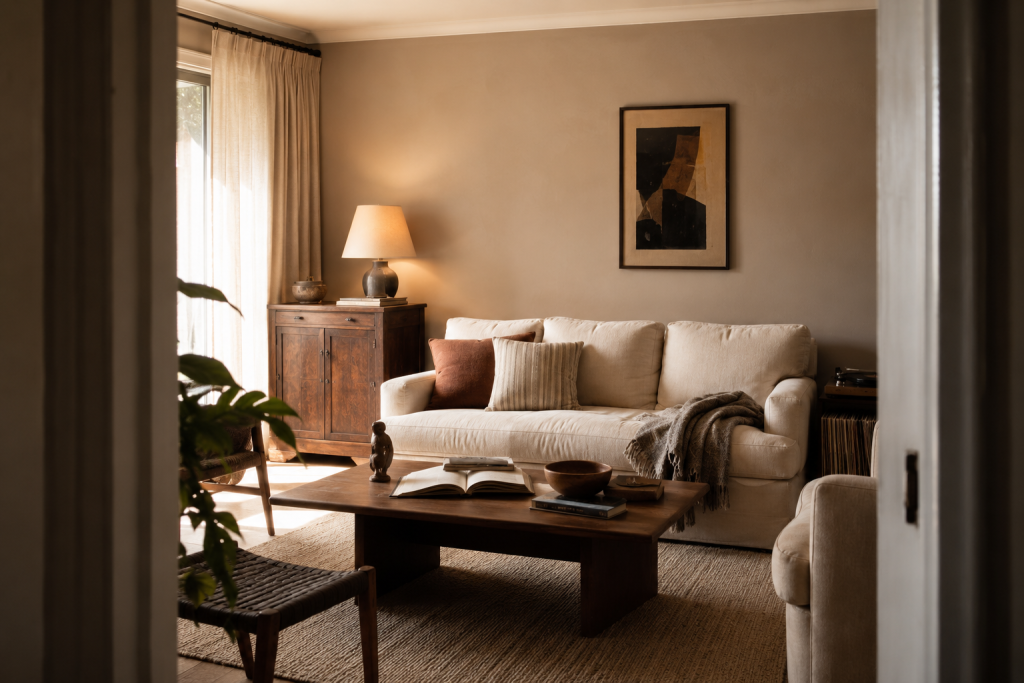
The difference between a timeless living room and a showroom often comes down to the final layer.
A showroom demonstrates products.
A home tells you something about the people who live there.
Use objects that have meaning:
- Books you actually read
- Art you genuinely enjoy
- Family photographs
- Travel finds
- Handmade ceramics
- An inherited object
- Records
- Sculptures
- Textiles
- Collections connected to a hobby
This personal direction is becoming increasingly visible in professional design. The 2026 data from Houzz and 1stDibs both point toward layered, eclectic, characterful interiors rather than strict adherence to one uniform style.
The key is editing.
Personal does not mean displaying every object you own.
Choose things worth seeing, group smaller objects deliberately, and leave enough empty space that they have room to register.
A shelf containing five interesting books, one ceramic vessel, and a photograph may feel more sophisticated than a shelf completely covered with decorative objects purchased to fill space.
Trends become dated when they are copied literally.
Personal objects rarely have that problem.
What Makes a Modern Living Room Truly Timeless?
A timeless room is not frozen in one period.
It has enough flexibility to evolve.
A good foundation usually includes:
Comfortable proportions.
Furniture fits the room and the people using it.
Quality where it matters.
Frequently used furniture is durable enough for everyday life.
Natural or convincing materials.
Wood, wool, linen, stone, ceramic, and metal tend to work across many design styles.
A controlled palette.
Colors relate to one another without everything matching.
Several types of lighting.
The room remains comfortable during the day and evening.
A mixture of eras.
Not everything was purchased at the same time.
Space for personality.
The room can change as the people living there change.
That is more valuable than trying to identify the one sofa, paint shade, or coffee table that will supposedly remain fashionable forever.
Modern Living Room Mistakes That Can Date a Space Quickly
Copying one trend too literally
If every element reflects the same popular aesthetic, the room becomes tied to that moment.
Buying a complete matching furniture set
Coordination is useful. Identical finishes, shapes, and upholstery can make the room feel less individual.
Choosing style over comfort
A beautiful chair nobody uses does not belong in a successful living room.
Using a rug that is too small
The rug should help connect the seating rather than float beneath the coffee table.
Depending only on overhead lighting
A modern living room needs atmosphere as well as general illumination.
Making the television the only focal point
Where possible, balance it with artwork, cabinetry, a fireplace, view, books, or another strong visual element.
Filling every surface
Empty space is part of the composition.
Making everything neutral because it feels “safe”
A timeless room can still contain olive, blue, burgundy, ocher, rust, or almost any color you genuinely love.
What 2027 Trends Are Worth Watching?
It is too early to describe 2027 forecasts as established trends, but current color research gives some useful signals.
Sherwin-Williams’ 2027 Rewild forecast emphasizes nostalgia, craftsmanship, stronger emotional color, and renewed connections with nature. Its 48-color collection includes richer shades alongside adaptable neutrals and ten designated Continuity Colors.
For a modern living room, the useful takeaway is not to repaint everything according to a forecast.
Instead, expect continued interest in:
- Richer earthy colors
- Nature-connected greens
- Deep browns
- Clay and mineral shades
- Craftsmanship
- Characterful furniture
- Natural materials
- Rooms that feel less digitally perfect
If you want to experiment, do it through paint, cushions, art, lamps, or smaller furniture before committing to expensive permanent changes.
Frequently Asked Questions
What is considered a modern living room in 2026?
Modern living rooms in 2026 are becoming warmer and more layered. Current professional trends include warm and medium wood, tactile natural materials, curved or softer furniture, richer colors, vintage pieces, and more personal layouts rather than stark minimalism.
What colors never go out of style in a living room?
Warm white, cream, taupe, mushroom, natural wood, muted green, soft brown, and many earth-derived colors are highly adaptable. No color is universally timeless, however; lighting, architecture, materials, and personal preference matter.
Is gray still good for a modern living room?
Yes, but warmer and more nuanced grays generally integrate more naturally with the current move toward wood, stone, earthy colors, and tactile materials than flat cool-gray schemes.
Can modern and vintage furniture work together?
Absolutely. Combining furniture from different periods can make a modern living room feel more personal and less tied to one trend. Vintage sourcing continues to be widely used by designers.
How can I modernize my living room without replacing everything?
Start with layout, lighting, paint, curtain placement, rug scale, cushions, artwork, and removing unnecessary clutter. Then replace furniture gradually only where function, condition, or proportion genuinely needs improvement.
Final Thoughts
The best modern living room ideas are not the ones that make your home look most like a trend forecast.
They are the ones that create a strong foundation and still leave room for change.
Choose a sofa because it is comfortable and well proportioned. Bring in warm wood because it adds natural depth. Use wool, linen, stone, ceramic, and other tactile materials because they make a room feel richer. Add curves where the architecture needs softness. Layer lighting so the room works after sunset. Mix something old with something new.
And leave space for the things that make the room yours.
The clearest lesson from 2026 design is that modern interiors are becoming warmer, more tactile, more collected, and more personal, while early 2027 forecasting continues to emphasize craftsmanship, nature, adaptable color, and human character.
Those ideas have lasting potential because they are not really about fashion.
They are about creating a living room that is comfortable, useful, beautiful, and capable of changing with you.
That is what truly never goes out of style.