12 coastal bedroom ideas for a Calm, Breezy Retreat
A coastal bedroom shouldn’t look like a souvenir shop beside the ocean.
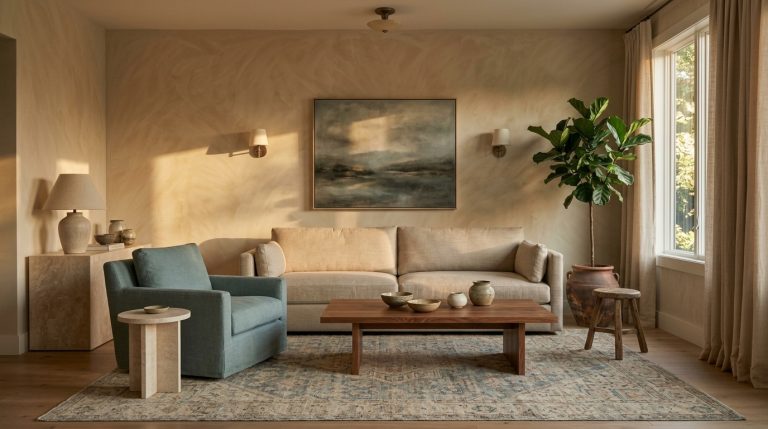
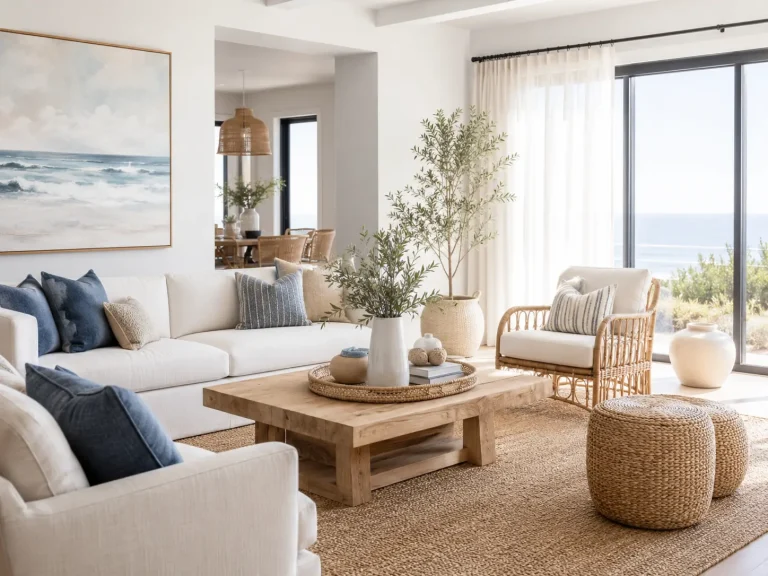
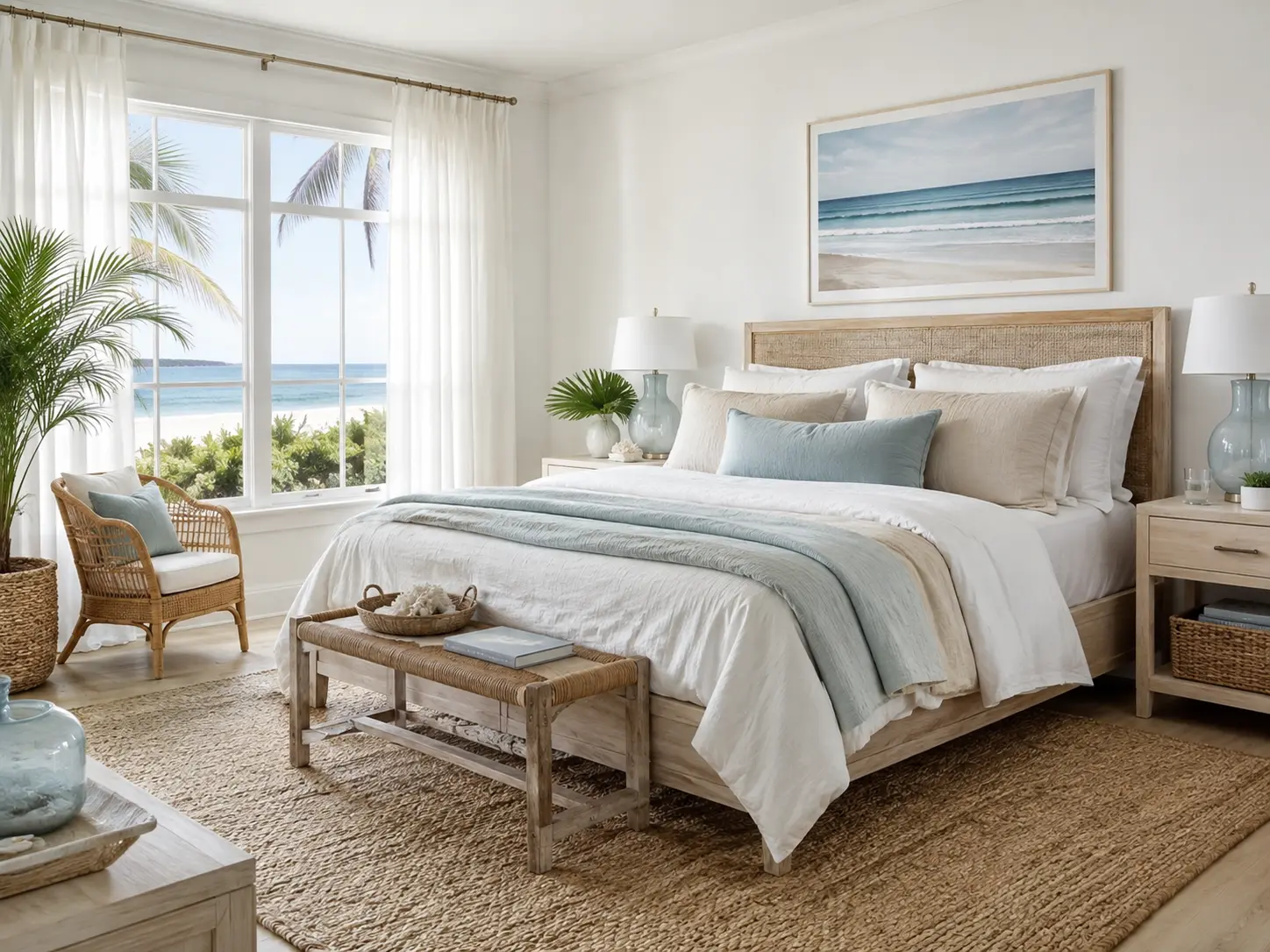
You don’t need anchor prints, bowls of seashells, rope wrapped around lamps, or navy stripes on every available textile. In fact, current coastal design is moving away from those obvious beach motifs and toward softer colors, natural materials, relaxed fabrics, and rooms that suggest the coast rather than announce it.
That’s the approach behind these 12 coastal bedroom ideas.
I once helped rethink a small bedroom that had white furniture, blue bedding, a rope mirror, and three pieces of beach-themed wall art. Technically, everything fit the theme. Yet the room felt more like a vacation rental than somebody’s home.
We removed most of the literal coastal decor and brought in warm oak, washed linen, a faded blue rug, and one oversized landscape print.
Suddenly, the room felt calmer, warmer, and far more convincing.
1. Start with sandy neutrals instead of bright white everywhere
Coastal bedrooms are often painted white because it reflects light and feels fresh.
But stark white on the walls, furniture, bedding, and curtains can quickly feel cold.
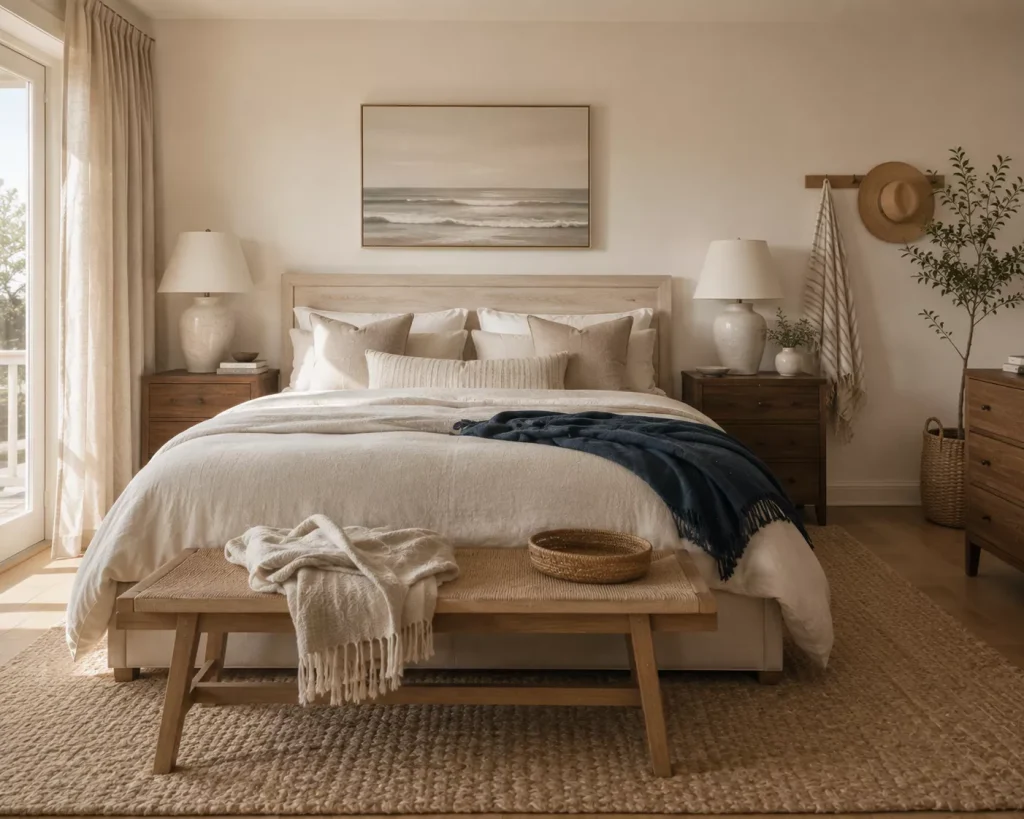
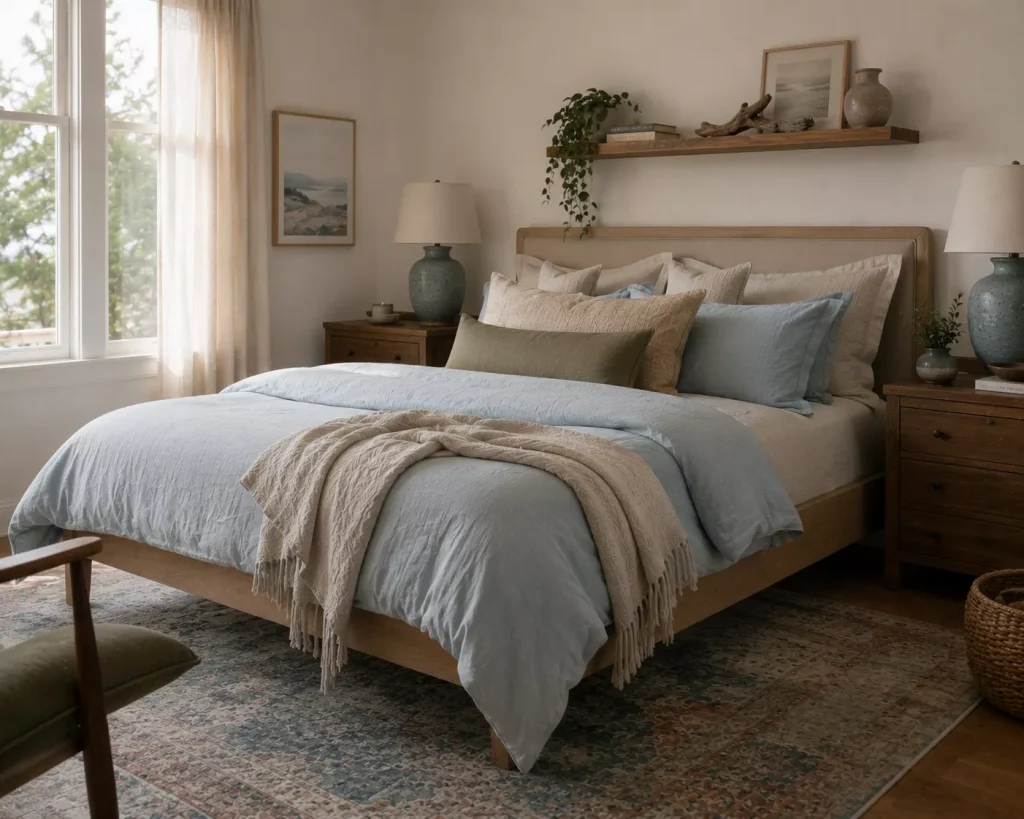
Idea 1: Build the room around warmer coastal neutrals.
Think creamy white, pale sand, warm greige, soft mushroom, flax, and light taupe.
These shades still feel airy, but they give natural wood and woven materials something warmer to sit against.
You could use creamy off-white walls with oatmeal curtains and a pale oak bed. Then bring in muted blue through bedding and artwork.
Or try sandy beige walls with white bedding and medium walnut furniture for a moodier coastal look.
Current coastal bedroom guidance also leans toward nature-derived materials and softened palettes rather than relying only on crisp blue and white.
The biggest mistake is making every surface the same pale color.
A room needs contrast.
Even one darker element, such as a walnut nightstand or deep blue throw, can stop all those soft neutrals from blending into one beige blur.
2. Use blue like an accent, not a requirement
Idea 2: Choose quieter blues inspired by water and sky.
Coastal style and blue obviously work well together. But you don’t need navy-and-white stripes to prove the point.
I prefer faded denim, dusty blue, sea-glass blue, soft blue-gray, and muted aqua.
Use them in places that are easy to change.
A pale blue duvet, striped lumbar cushion, ceramic lamp, or faded rug can bring enough coastal color into the room.
For something less expected, pair muted blue with olive green or warm brown.
That combination feels more natural than blue and white alone.
A recent coastal California home featured by House Beautiful used greens, blues, mauves, and richer tones while still maintaining a clear connection to its coastal surroundings.
That’s worth remembering.
Coastal doesn’t have to mean a strict palette.
If blue simply isn’t your color, use warm sand, sage green, faded coral, driftwood brown, and creamy white instead.
The atmosphere matters more than following a prescribed color chart.
3. Layer linen, cotton, and relaxed bedding
A coastal bed should look comfortable enough to climb into.
Not perfectly pressed.
Idea 3: Choose bedding that has a little movement and texture.
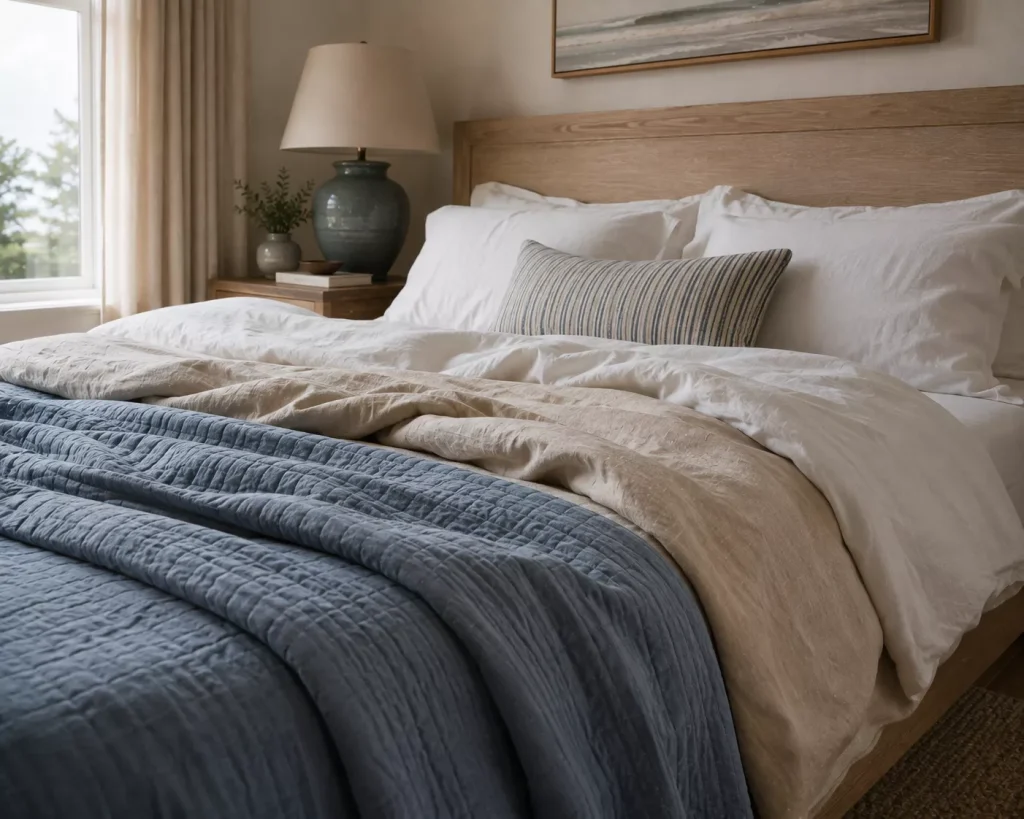
Washed linen is particularly good for this because wrinkles actually suit the material. Cotton percale also works beautifully if you prefer bedding that feels crisper.
Start with white, cream, flax, or pale blue sheets.
Then add a duvet or quilt in a slightly different tone.
A simple combination could be white sheets, an oatmeal duvet cover, a faded blue quilt, and one striped lumbar cushion.
You don’t need six decorative pillows.
Actually, I’d argue that endless pillows fight against the relaxed feeling coastal bedrooms are supposed to have.
Natural textiles and materials remain a key part of contemporary coastal bedroom design, with linen, jute, sisal, raffia, and seagrass frequently used for softness and texture.
Keep patterns loose and understated
Try narrow ticking stripes, faded botanical prints, small checks, or soft block prints.
If you use a stronger patterned quilt, keep the rug quieter.
And if the rug is already doing a lot visually, let the bedding stay simple.
The room should feel layered, not busy.
4. Bring in pale or weathered wood without making it rustic
Idea 4: Use wood to warm up all the pale colors.
Oak, ash, pine, and lightly washed wood work naturally in a coastal style bedroom.
But don’t feel trapped by pale finishes.
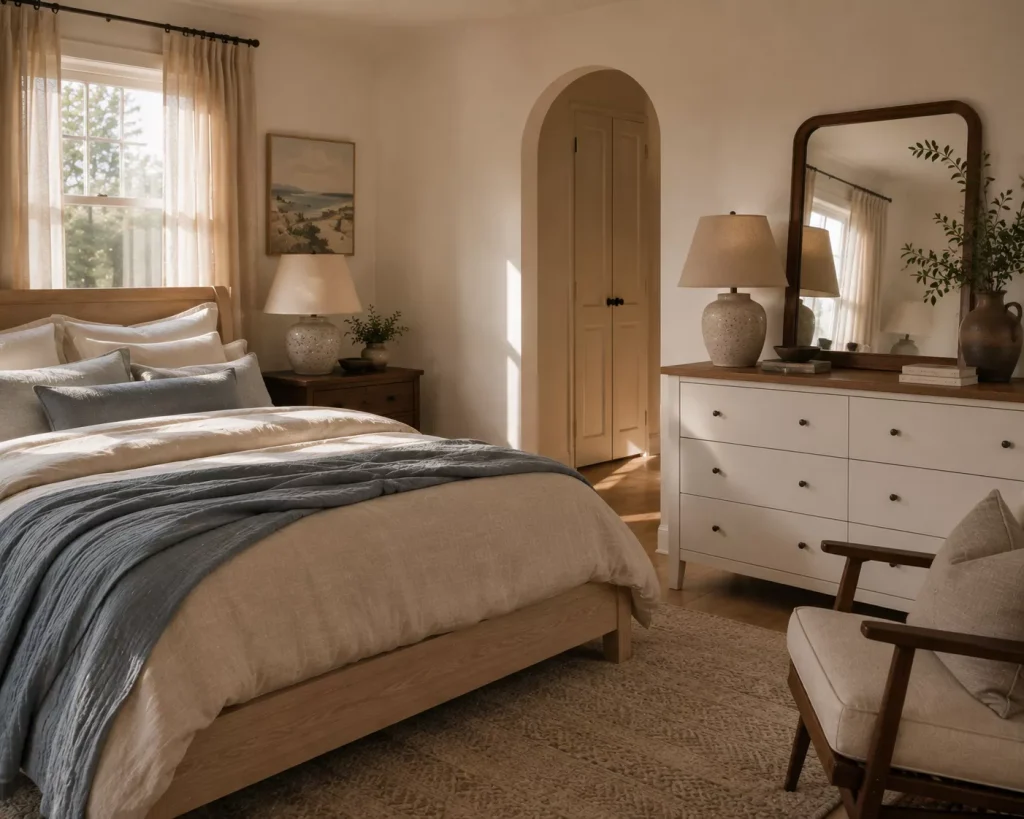
Medium walnut or slightly darker antique wood can add much-needed contrast.
I particularly like an oak bed with a darker vintage nightstand. That small mismatch prevents the room from looking like a furniture set.
Current coastal interiors often rely on natural wood alongside linen, jute, rattan, and other tactile materials rather than literal seaside accessories.
If you already own painted furniture, don’t rush to replace it.
A plain white dresser can work perfectly well.
Put a warm wood mirror above it, change shiny hardware to aged brass or black, and add a textured ceramic lamp.
The room will immediately feel less flat.
And be careful with aggressively distressed furniture.
Artificially weathered finishes can push a bedroom straight into themed beach-house territory.
Real wood grain is usually enough.
5. Choose one woven material and use it with restraint
Rattan and coastal style are close friends.
Sometimes too close.
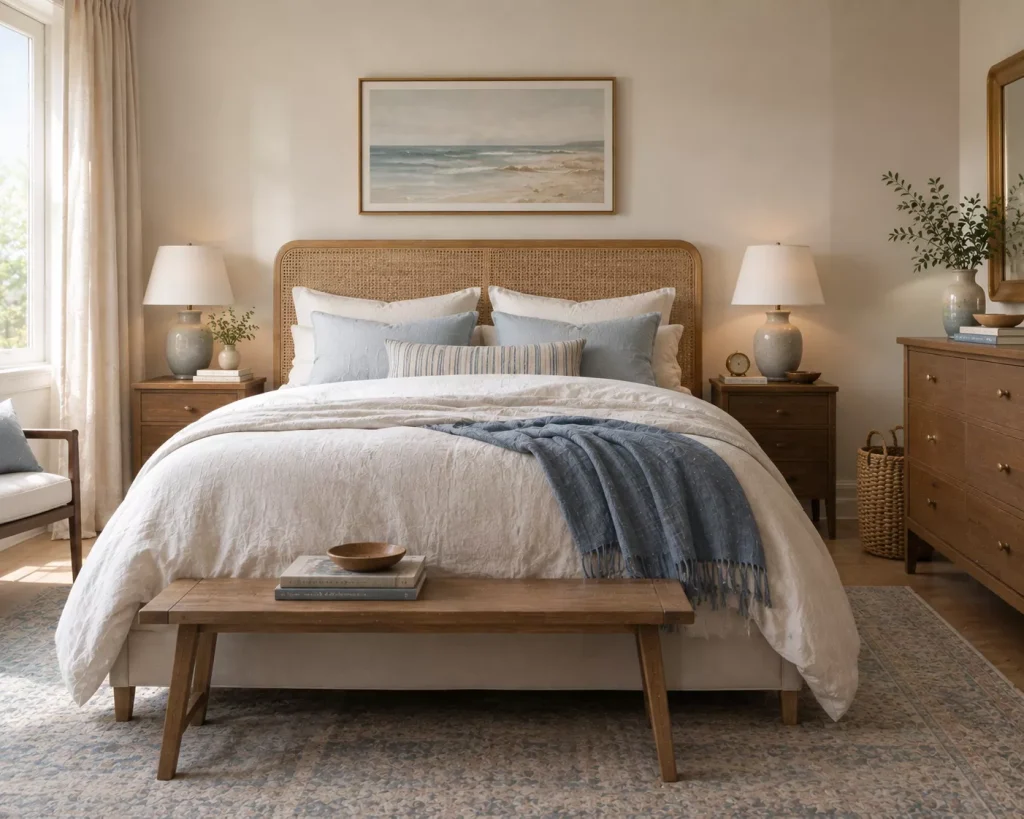
Idea 5: Bring in cane, seagrass, jute, or rattan through one or two pieces.
A cane headboard can become the main feature of the room. If you use one, you probably don’t also need rattan nightstands, a woven bench, three baskets, and a matching pendant.
Another option is to keep the bed simple and use a woven pendant above it.
Or add a seagrass basket beside the dresser for extra blankets.
Woven materials continue to feature prominently in 2026 coastal-influenced interiors because they introduce visible texture without relying on overt beach motifs.
Here’s how I’d compare a few popular choices:
| Material | Best use | Main trade-off |
|---|---|---|
| Cane | Headboards and cabinet fronts | Can feel repetitive if overused |
| Rattan | Chairs and lighting | Needs occasional dusting |
| Jute | Rugs and baskets | Rougher under bare feet |
| Seagrass | Baskets and small accents | Limited softness |
| Raffia | Lamps and wall details | More decorative than durable |
You don’t need all five.
One woven texture, repeated once or twice, usually does the job.
6. Use a substantial rug to soften the whole bedroom
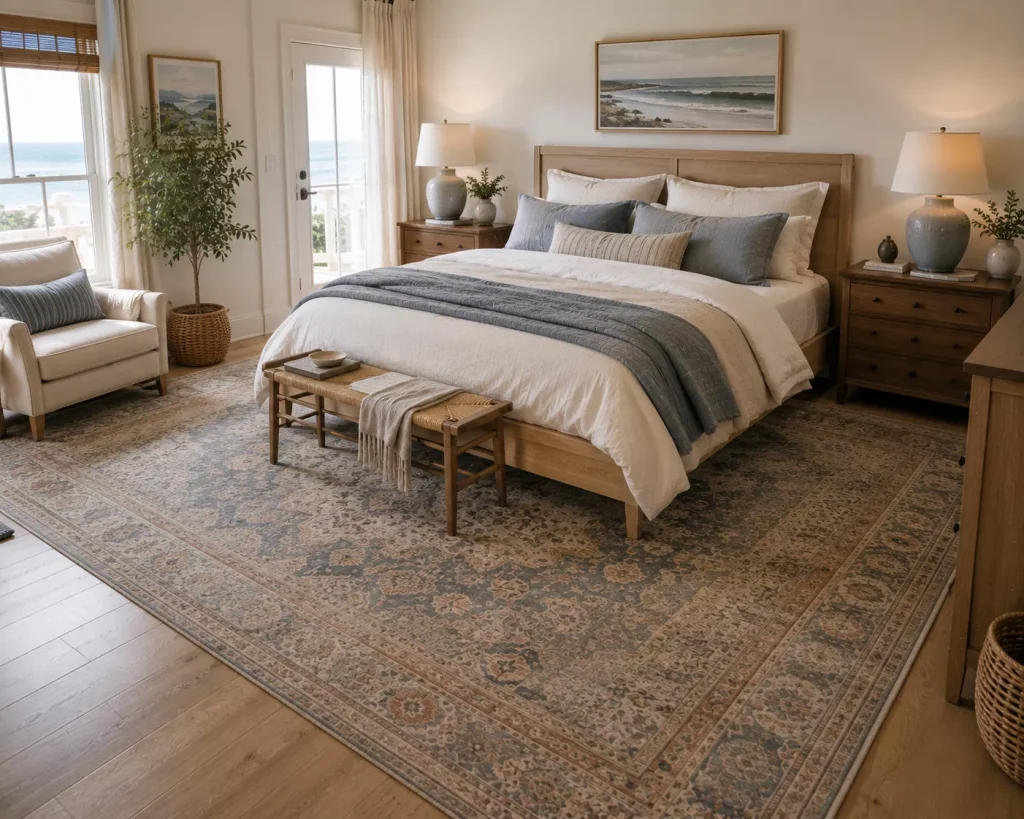
Idea 6: Put one properly sized rug underneath the bed.
This instantly gives a coastal bedroom more comfort and makes the bed feel anchored.
For a queen bed, an 8-by-10-foot rug often works well if the room has enough space.
A 6-by-9 can fit smaller bedrooms.
For a king bed, a 9-by-12 usually creates more balanced coverage.
I’d choose a low-contrast pattern rather than a plain white rug.
Try faded blue and beige, muted stripes, soft brown geometric patterns, or a vintage-inspired design with touches of rust and sea blue.
Jute is another popular choice.
It looks natural and works beautifully with pale wood.
But here’s the downside nobody mentions while admiring the photos.
Jute can feel rough under bare feet.
For a bedroom, I often prefer wool, cotton, or a jute-wool blend if comfort matters.
And yes, you can layer a rug over plain wall-to-wall carpet.
Just choose something fairly low-pile so the combination doesn’t feel bulky.
7. Let window treatments create the breezy feeling
Light matters enormously in a coastal bedroom.
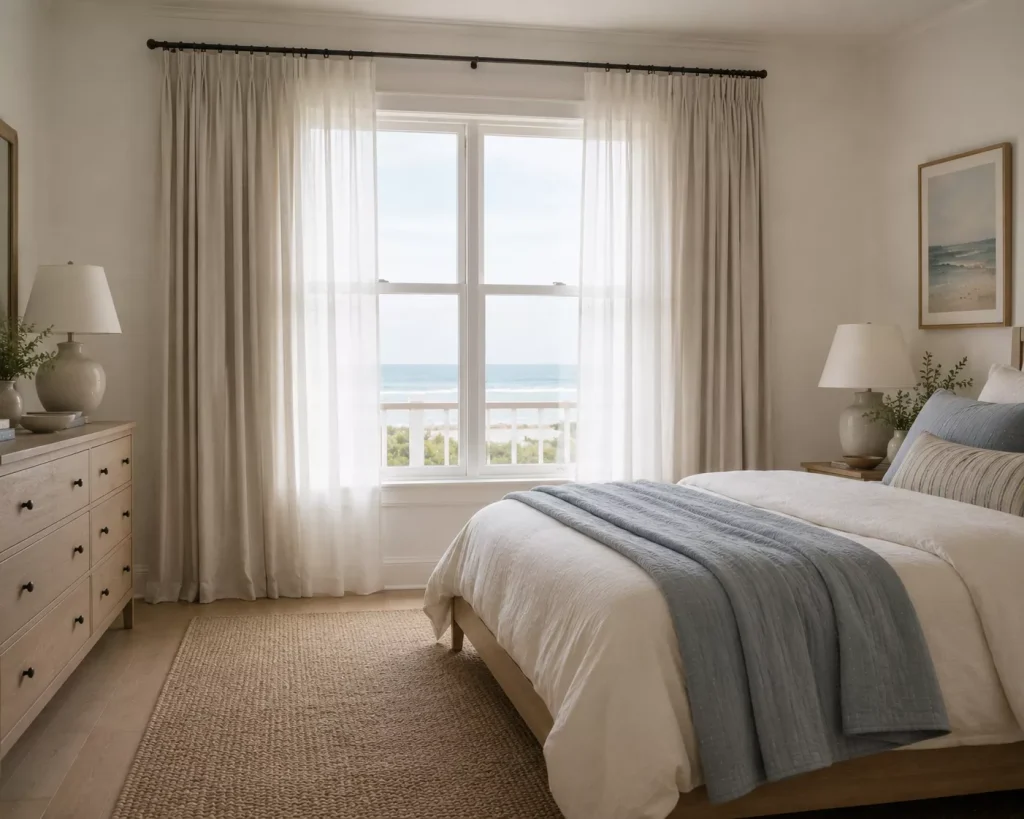
Idea 7: Use full-length curtains that soften the window without swallowing it.
Hang the rod several inches above the window frame and extend it wider than the glass where possible.
Then let the panels fall to the floor.
This helps the window appear larger and keeps the room feeling taller.
Natural light and light, airy fabrics remain central to coastal bedroom design because they reinforce the visual relationship with outdoor landscapes and open air.
Layer privacy instead of choosing heavy curtains
If you need privacy, try sheer warm-white panels with a separate blackout layer.
That gives you control.
During the day, the sheer fabric softens the light without making the room gloomy. At night, the blackout layer handles privacy and sleep.
Warm white, flax, pale sand, and muted blue work well.
I’d avoid shiny polyester curtains here.
They tend to fight against all the matte wood, linen, and woven textures.
And don’t let the fabric puddle dramatically on the floor.
A slight break is fine.
Six inches of linen collecting dust under the window is less romantic in real life.
8. Make the lighting feel warm after the sun goes down
A bedroom that looks beautiful in daylight can become surprisingly harsh at night.
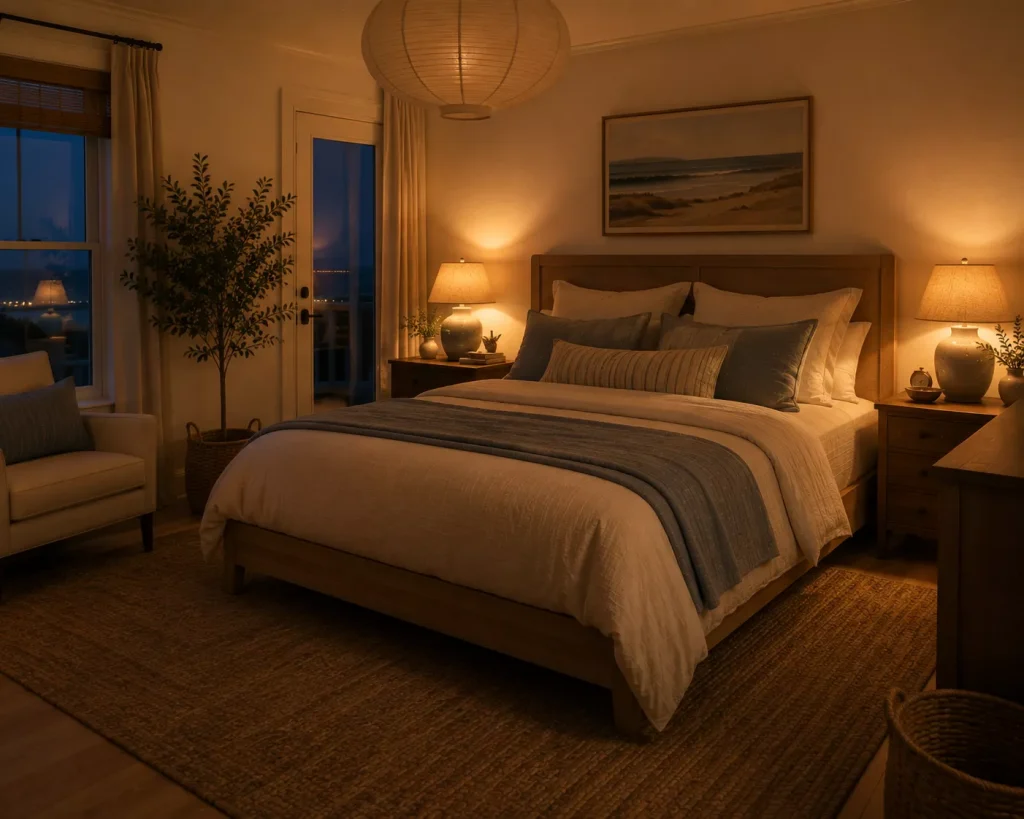
Idea 8: Build at least two lower sources of light around the bed.
Use bedside lamps, wall sconces, or a slim floor lamp.
Ceramic bases, aged brass, wood, and lightly woven shades all suit coastal bedroom decor.
Warm bulbs around 2700K usually create a softer evening atmosphere than cool white light.
Then consider the ceiling fixture.
A woven pendant can work, but it shouldn’t be enormous.
Paper lanterns are another option. Their simple shape brings softness without shouting “beach house.”
If your bedroom is small, plug-in wall sconces can free your nightstands.
That’s particularly useful for renters because you can often avoid rewiring.
The trade-off is visible cords.
Run them neatly beside the bed or use a simple paintable cord cover.
One small detail can ruin a calm wall very quickly, and dangling black wires are surprisingly talented at doing exactly that.
9. Use coastal artwork without putting the word “beach” on the wall
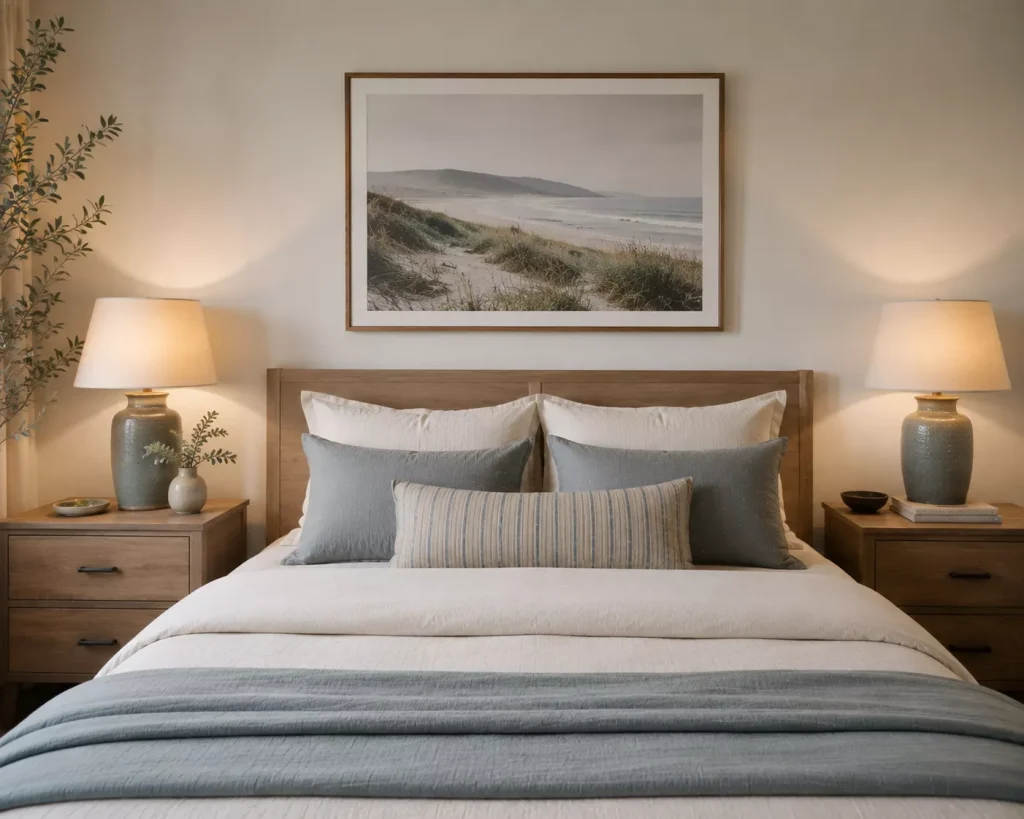
Idea 9: Suggest the landscape rather than decorating with symbols.
This is where coastal rooms often go wrong.
Seashell shadow boxes, anchor prints, wooden signs, miniature boats, and rope-covered objects can quickly make the room feel like a themed rental.
Recent designers have specifically called out excessive shells, anchors, nautical signage, rope details, and predictable blue-and-white styling as coastal clichés worth leaving behind.
Instead, use atmosphere.
Try one oversized photograph of dunes, an abstract painting in blue and clay, botanical coastal grasses, or a vintage landscape.
A woven textile can work too.
For a queen bed, artwork around 36 to 48 inches wide often has enough presence, depending on the headboard.
You can also hang two coordinated pieces.
Keep them close enough that they read as one composition.
Idea 10: Bring in one personal coastal object if it actually means something.
Maybe you found a ceramic bowl while traveling or framed a photograph from a favorite beach.
That feels personal.
Twenty generic shells purchased as a decorating set do not.
10. Mix in something unexpected so the room doesn’t feel themed
The most convincing 12 coastal bedroom ideas don’t rely entirely on coastal furniture.
Idea 11: Add one piece that belongs to another design language.
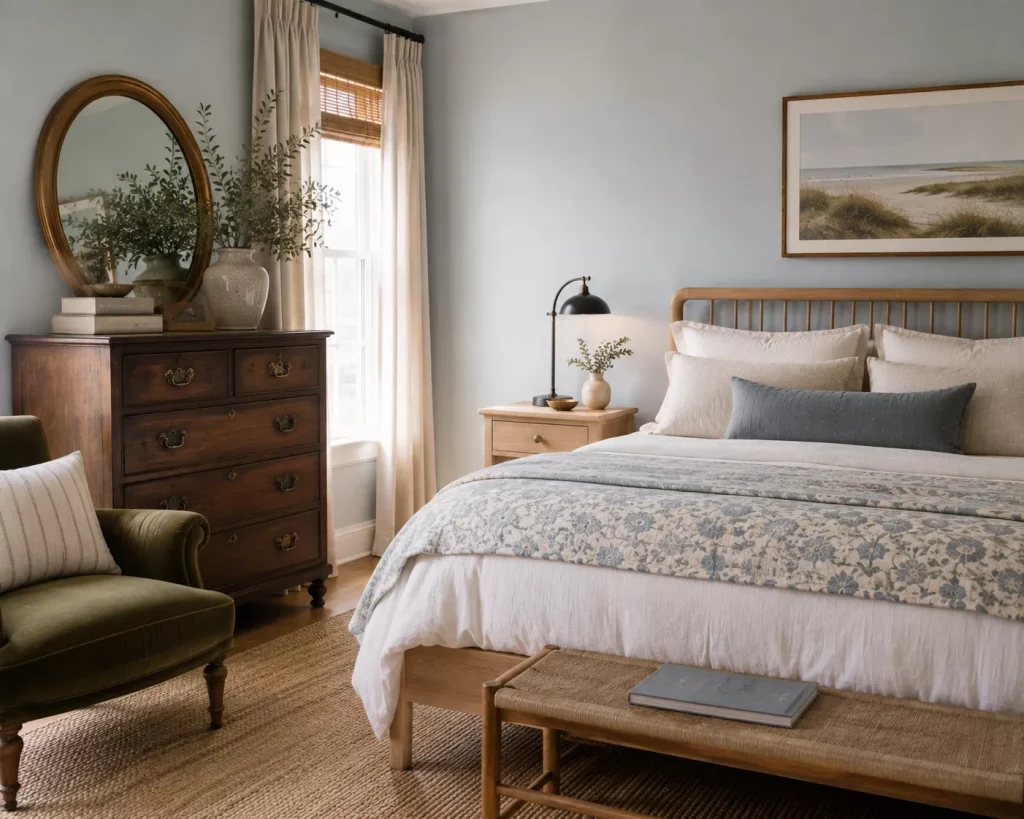
That could be an antique walnut chest, a black metal lamp, an olive velvet chair, or a slightly traditional floral quilt.
This gives the bedroom personality.
A fully coordinated coastal room can start feeling staged because every object reinforces the same message.
Unexpected pieces loosen things up.
Try a dark vintage dresser against pale blue walls.
Put an aged brass mirror above a simple white console.
Add an old wood stool beside a clean upholstered bed.
Current coastal design is increasingly interpreted through relaxed natural materials and meaningful personal objects rather than rigid themes.
The result should feel like a bedroom first.
Coastal comes afterward.
That’s the difference between inspiration and costume.
11. Keep surfaces calm and let texture do the decorating
Idea 12: Decorate less than you think you should.
Coastal bedrooms need breathing room.
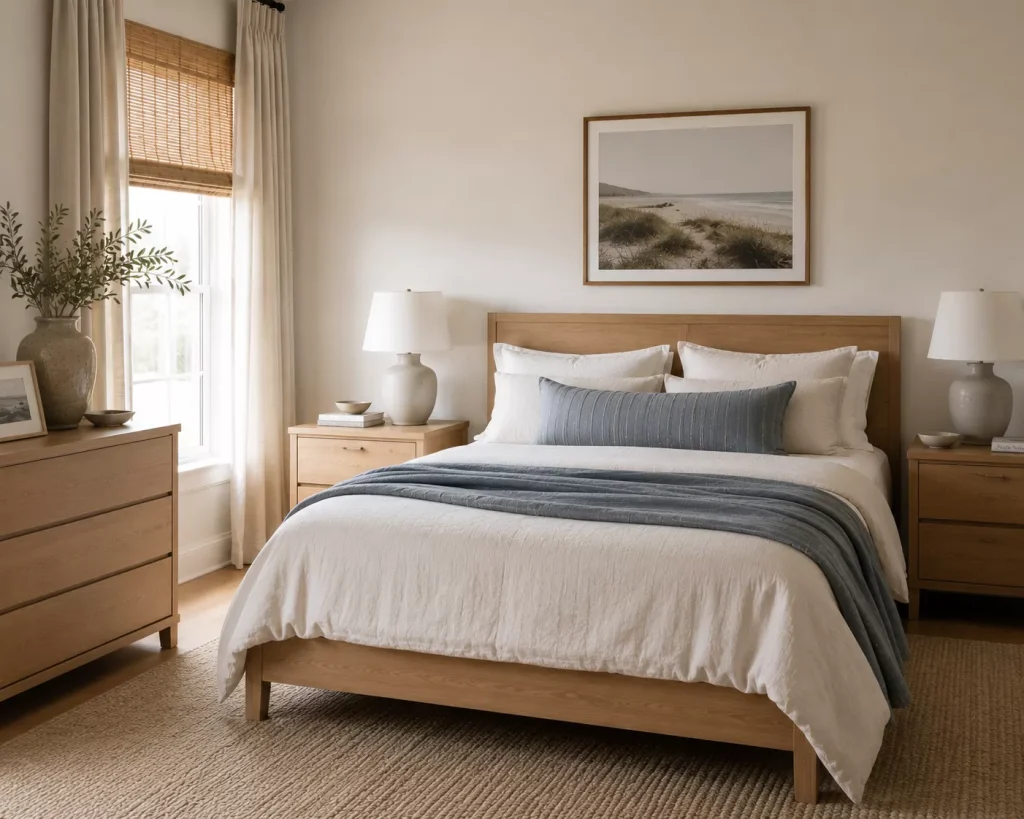
On a nightstand, try one lamp, a small dish, and your current book.
That’s enough.
On a dresser, perhaps use a large ceramic vase, a framed photograph, and a tray for everyday items.
Avoid filling every surface with decorative shells, coral shapes, candles, baskets, beads, and little bottles.
The materials should create most of the atmosphere.
Linen bedding, wood grain, a wool rug, cane, pottery, and woven curtains already bring plenty of visual interest.
You don’t need accessories layered on top of every texture.
This is also where inexpensive rooms can look surprisingly polished.
A $40 ceramic lamp given plenty of space often looks better than a dresser covered in $200 worth of small decor.
Good editing costs nothing.
What should you skip in a coastal bedroom?
Start with obvious beach clichés.
Anchor motifs, “Beach Please” signs, artificial fishing nets, rope wrapped around furniture, and piles of purchased shells rarely make a bedroom feel more sophisticated. Current 2026 coverage is similarly moving toward coastal interiors that feel natural rather than overtly themed.
I’d also skip excessive distressed wood.
One aged piece can add character. An entire room of artificially scraped furniture looks forced.
Be careful with icy gray too.
Coastal rooms tend to feel more inviting with warm white, sand, clay, pale wood, and faded blue.
And don’t overcrowd the room with decorative furniture.
A bench looks lovely at the foot of the bed only if there’s still comfortable space to walk around it.
If adding the bench means squeezing sideways to reach your dresser, the bedroom was better without it.
Try this if you’re decorating a coastal bedroom on a budget
You don’t need to replace all your furniture.
Start with the fabrics.
Swap heavy or overly dark bedding for cotton or linen-look bedding in cream, sand, or muted blue.
Then add one patterned rug.
Bring in a woven basket or ceramic lamp.
Replace several small wall decorations with one larger piece.
Finally, remove any object that feels too obviously beach-themed.
That five-step edit can change the room far more than buying an entire coastal bedroom set.
Renters can go even simpler.
Use floor-length curtains, removable wall hooks for lightweight artwork, a leaning mirror, and bedding to create most of the look.
And work with your existing furniture.
A black bed frame doesn’t prevent you from creating a coastal bedroom.
Pair it with flax linen, pale wood, dusty blue, and warm ceramics. The contrast can actually make the room more interesting.
FAQ About Coastal Bedrooms
What colors are best for a coastal bedroom?
Warm white, sand, pale blue, sea-glass green, soft taupe, and faded coral all work well. Add medium or darker wood if the room needs more contrast.
Can coastal bedroom decor work if I don’t live near the ocean?
Absolutely. Coastal style is really about relaxed materials, natural light, softened colors, and an easy atmosphere. You don’t need an ocean view or beach-themed accessories.
What is the difference between coastal and nautical decor?
Coastal decor tends to draw from natural colors, light, texture, and landscape. Nautical decor uses more recognizable maritime references such as navy stripes, anchors, rope, and sailing details.
How do I make a coastal bedroom feel cozy?
Add warmer wood, substantial bedding, a soft rug, layered lighting, and deeper accent colors. Too much white with too few textures can leave the room feeling cold.
A coastal bedroom should make you feel calmer before you even notice why.
That’s what changed in the bedroom I mentioned at the beginning. Once the rope mirror and themed artwork disappeared, the room finally had space for the materials to speak. Warm wood, linen, faded blue, and one landscape print did all the work.
Use these 12 coastal bedroom ideas the same way.
Start with the bed, because it controls so much of the room visually. Choose softer bedding, add one natural material, then remove one piece that feels too obviously “beachy.”
You don’t need to recreate a seaside cottage.
You’re trying to capture the part people actually love about being near the coast, light, ease, natural texture, and a room that gives you a little room to breathe. For more direction, our modern coastal decor ideas, boho bedroom ideas, and dream bedroom ideas guides offer a few different paths to get there.