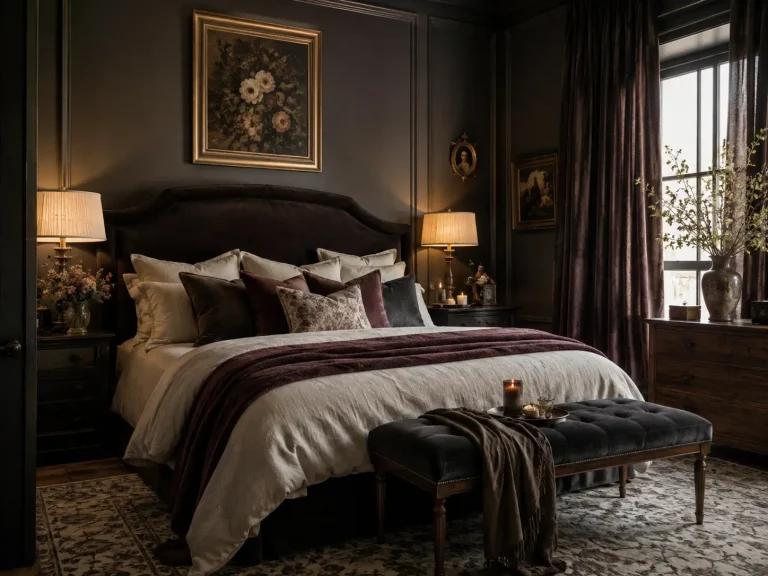
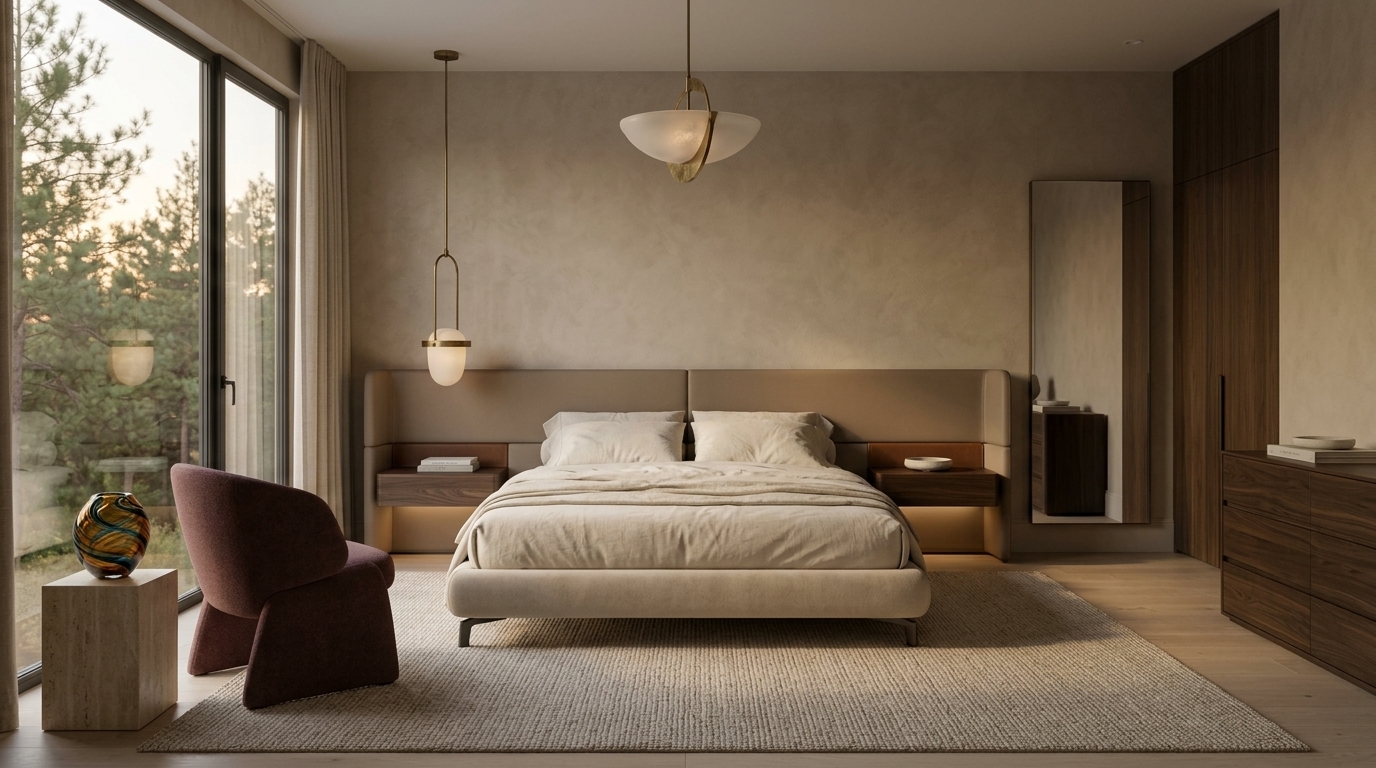
14 italian modern bedroom tips for Effortless, Refined Style
Italian modern bedrooms have a particular kind of confidence. They can contain marble, walnut, leather, lacquer, beautiful lighting, and meticulously made furniture, yet the best examples rarely feel as though they are desperately trying to prove they are luxurious.
That restraint is the part worth copying.
Contemporary Italian design is less about filling a bedroom with expensive statement pieces and more about proportion, material quality, craftsmanship, visual balance, and furniture that feels beautiful from every angle.
That direction is especially relevant in 2026. At this year’s Salone del Mobile.Milano, furniture continued moving toward apparent lightness, controlled forms, expressive materials, longevity, and craftsmanship rather than decoration for decoration’s sake. Technology is also increasingly designed to disappear into furnishings instead of becoming visually dominant, reinforcing the same restrained principles.
These 14 italian modern bedroom tips show how to create a bedroom that feels polished and sophisticated while remaining warm enough to actually sleep in.
What Makes an Italian Modern Bedroom Different?
Italian modern design is difficult to reduce to one look.
Some bedrooms are extremely architectural and minimal. Others combine dark timber, dramatic stone, leather, velvet, glossy lacquer, and sculptural lighting.
What connects them is usually quality of execution.
A simple bedside table may have beautifully resolved proportions. A bed may look almost weightless despite being generously upholstered. Storage may disappear into the architecture. A dramatic material might cover one wall rather than being repeated throughout the room.
Contemporary Italian brands provide good examples. Flexform’s current bed collection pairs sculptural or minimal upholstered headboards with visually light structures raised on refined wood or metal feet, while Poliform describes contemporary bedroom collections built around restraint rather than ornamental excess. If you prefer a related but softer material palette, the same instinct toward warm minimalism appears in organic modern bedroom design.
That gives us the first rule: think composition before decoration.
Build the Room Around One Excellent Bed

1. Choose a bed with presence, not unnecessary bulk
The bed should feel important because it is the bedroom’s largest object, not because it is enormous.
Look for:
- a low upholstered platform
- an extended headboard
- softly rounded corners
- a slim floating-looking base
- refined wood or metal feet
- beautiful leather, wool, linen, or textured upholstery
Some current Italian beds deliberately contrast substantial upholstered headboards with visually lighter bases and slender feet. Flexform, for example, uses elevated structures to create lightness, while Poliform’s Onda bed combines a curved upholstered form with fine metal supports. This raised, lighter profile shares a lot with the elevated furniture used in mid century modern bedroom design.
If your room is small, resist buying a monumental bed simply because it looks luxurious online. Luxury without proportion becomes inconvenience.
2. Let the headboard become part of the architecture
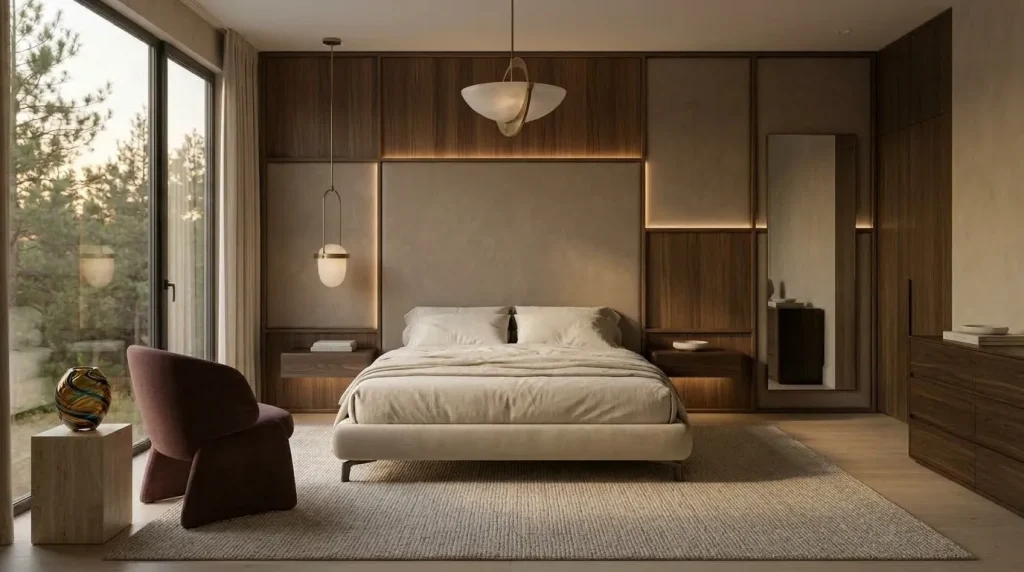
Italian bedroom design often treats the bed wall as one composed surface rather than a headboard plus separate decorative objects above the bed. Consider extending the headboard horizontally behind the nightstands.
You could use:
- upholstered panels
- walnut veneer
- ribbed timber
- leather panels
- warm plaster
- fabric-covered wall panels
A wide headboard immediately makes the bed wall feel designed as one composition. It also allows you to reduce smaller decorations elsewhere. This is one of my favorite ways to create a more expensive-looking bedroom without filling it with expensive objects, similar in spirit to the architectural approach used in these master bedroom wall decor ideas.
Use Materials Like an Italian Designer
3. Choose one beautiful wood and let it repeat quietly
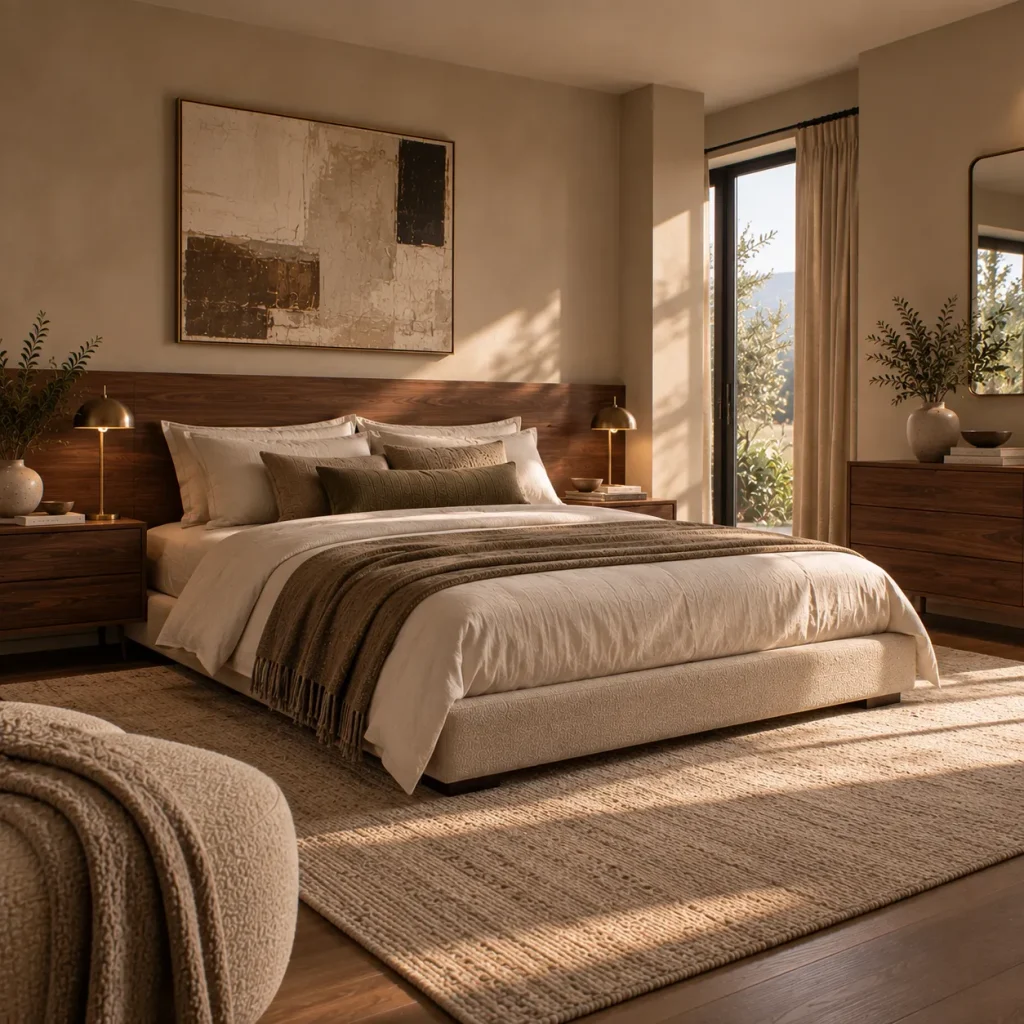
Walnut is particularly effective in Italian modern interiors because it provides richness without excessive decoration.
Dark oak, smoked oak, natural oak, and warm brown veneers can work too.
Use your chosen timber across perhaps two or three elements: a headboard panel, nightstands, and a dresser. Then stop.
Matching every wooden surface exactly can make the bedroom look like a furniture package rather than an interior placed against plaster, stone, and softer surfaces.
A slightly darker wood can also make cream bedding look dramatically more luxurious.
4. Use stone as punctuation, not wallpaper
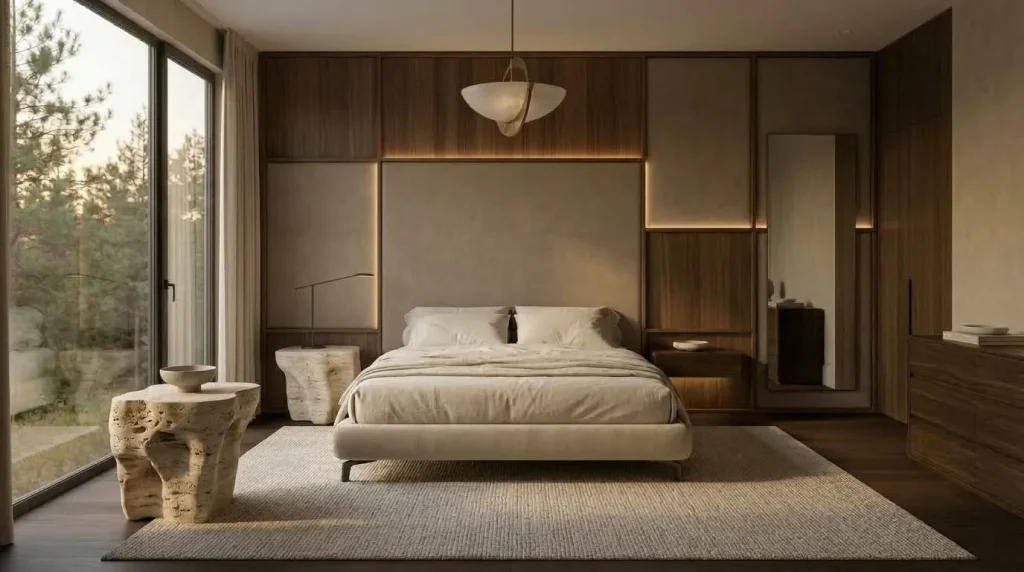
Carrara marble may be strongly associated with Italian design, but you do not need marble covering half the bedroom.
A smaller amount can have more impact.
Try a travertine bedside table, marble lamp base, stone console top, or small stone pedestal. You can also introduce stone through architecture if you already have it.
The mistake is deciding that “Italian luxury” means marble on the floor, wall, nightstands, and accessories simultaneously.
At Salone del Mobile 2026, material expression remained important, but the broader direction emphasized thoughtful relationships between surfaces rather than indiscriminate opulence. One B&B Italia installation, for instance, used marble partitions alongside fibrous rugs to create material contrast and spatial rhythm.
5. Contrast textures rather than matching them
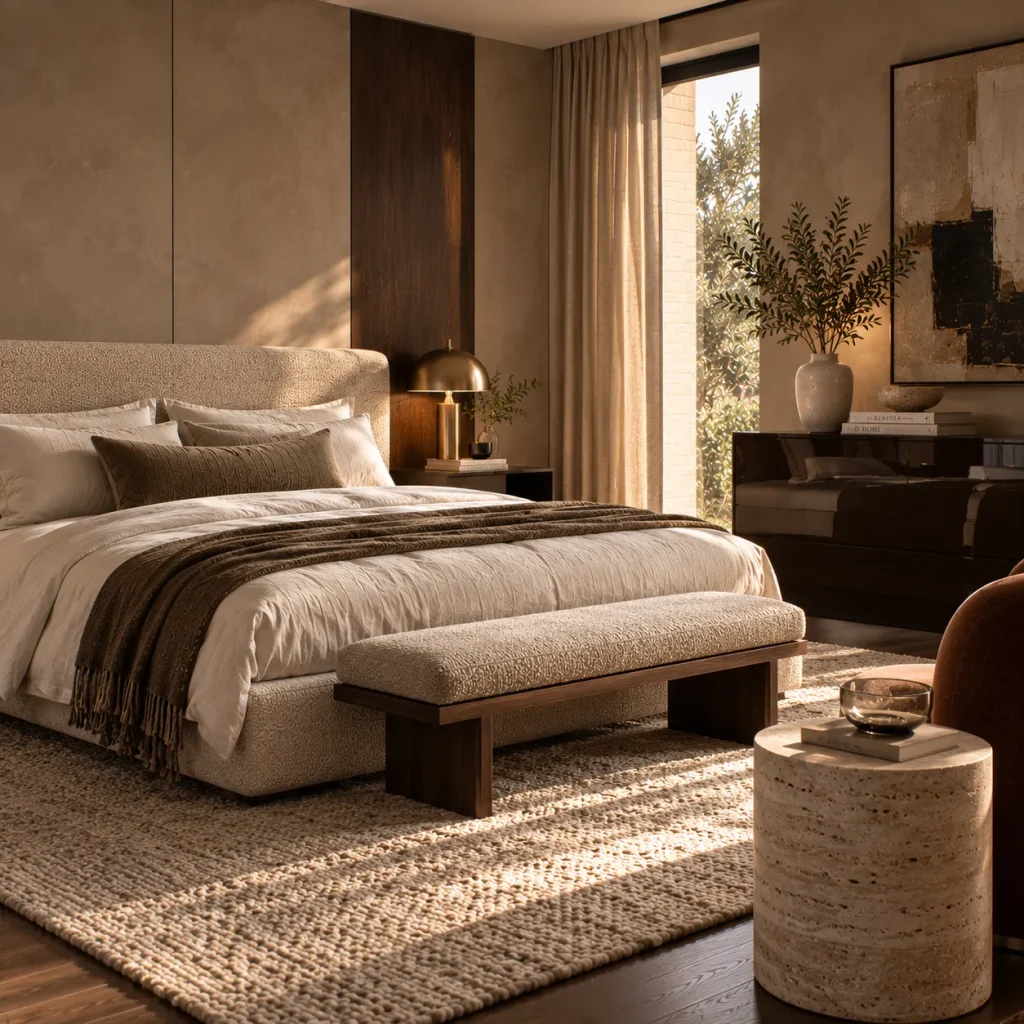
Put brushed metal next to soft upholstery. Gloss lacquer beside matte plaster. Smooth stone against a wool rug. Polished wood near crumpled linen.
Current 2026 interiors are increasingly using exactly this kind of material tension, combining raw and polished surfaces rather than keeping everything uniformly pristine.
If every surface in your bedroom is matte beige, the room can feel flat. If every surface is glossy, it can feel like a showroom. Mixing the two gives light somewhere to move.
Create a Sophisticated Italian Color Palette
6. Begin with warm architectural neutrals
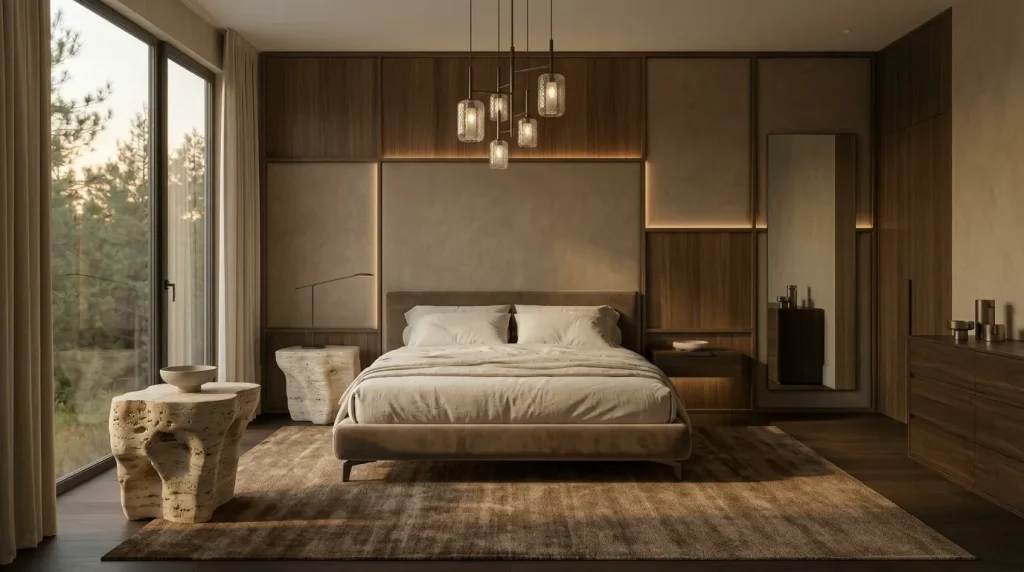
Instead of pure white, think:
- ivory
- warm stone
- parchment
- mushroom
- greige
- taupe
- tobacco
- chocolate
- soft charcoal
These shades create an ideal background for wood, stone, metal, and upholstered furniture. For more inspiration on this exact palette, these neutral bedroom ideas lean on the same warm, layered approach.
You do not need the walls to be pale either. A warm taupe or deep tobacco bedroom can feel exceptionally refined, particularly when bedding and curtains provide lighter contrast. Rich brown and darker timber can feel equally contemporary, especially now that deep wood tones are returning strongly in interiors.
7. Add one restrained jewel or earthy color
A completely neutral Italian bedroom can be beautiful. It can also be forgettable.
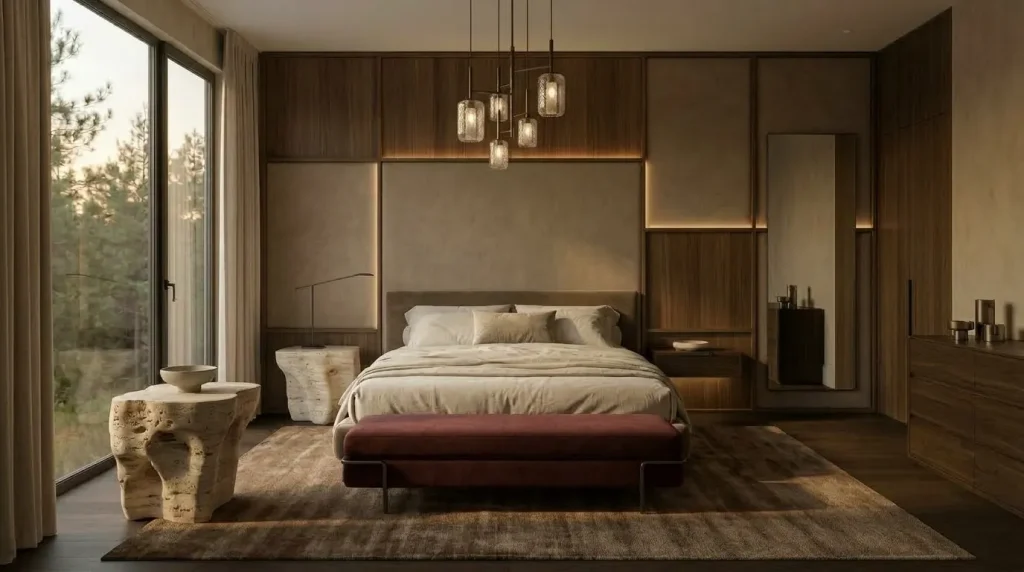
Try introducing a controlled amount of: olive, oxblood, burgundy, terracotta, deep blue, burnt orange, or muted plum.
You might use the color on an upholstered bench, single chair, throw, artwork, or headboard.
Poliform’s own contemporary bedroom collections demonstrate that Italian modern palettes need not stop at beige; finishes include moka, granata, ardesia, tortora, black, walnut, and other deeper tones.
The key is making the color feel intentional rather than distributing small matching accents everywhere.
Make Furniture Feel Visually Light
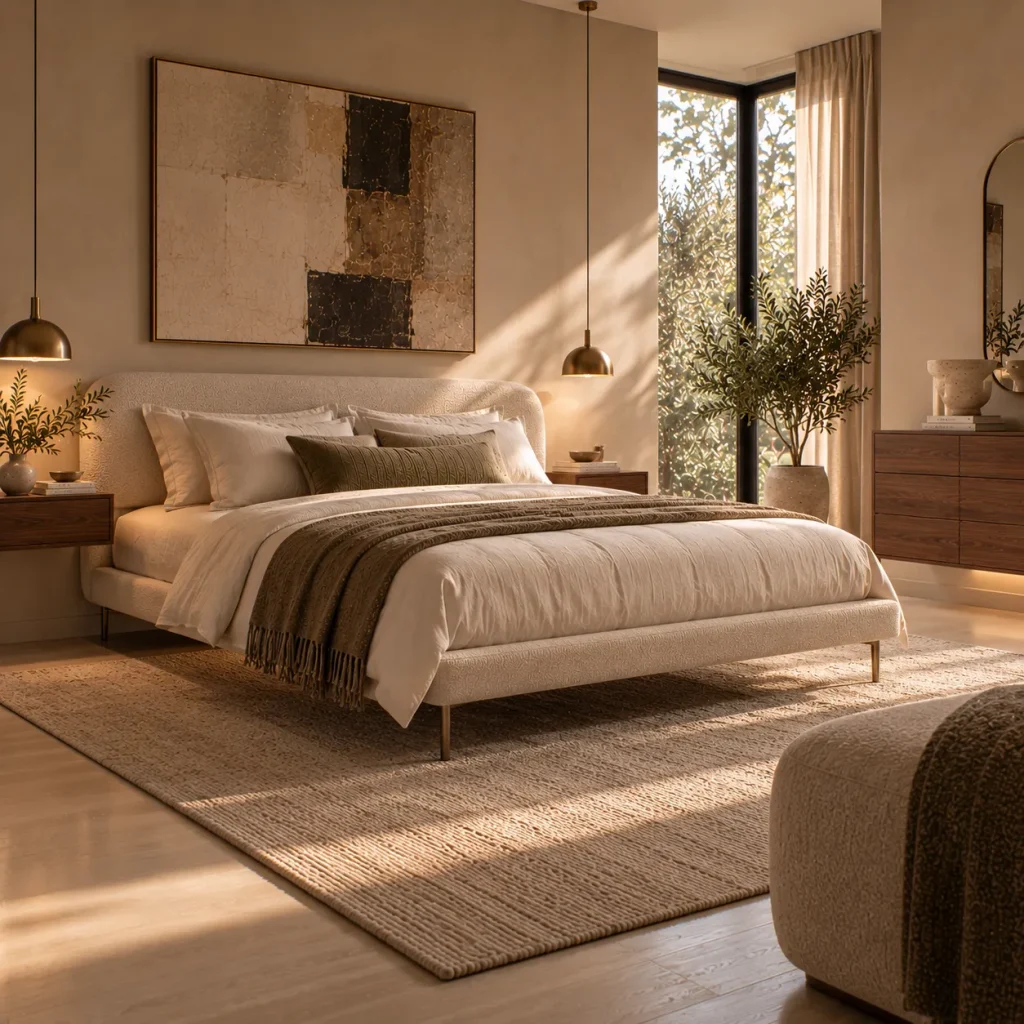
8. Raise furniture from the floor where possible
Even substantial Italian furniture often looks surprisingly light. One reason is the base.
Slim metal legs, recessed plinths, and floating-looking structures all reduce visual weight. That can be especially valuable in a modest bedroom.
You do not need everything floating, though. A low bed beside wall-mounted nightstands may already provide enough visual openness.
Modern Italian beds from Flexform frequently use refined metal feet specifically to create this lighter appearance despite generous upholstery.
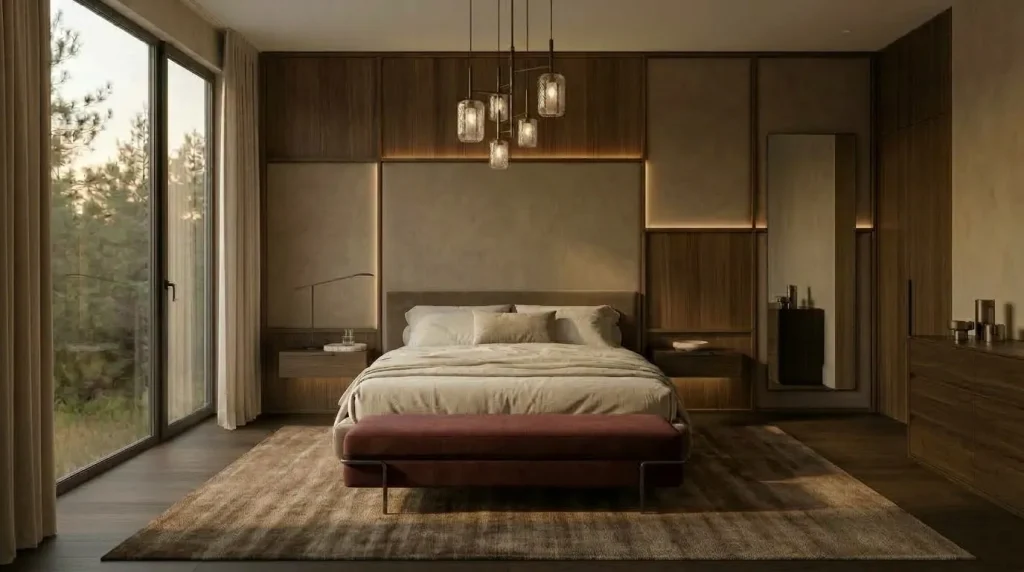
9. Make the nightstands quieter than the bed
This may sound insignificant, but oversized bedside tables can ruin the proportions of an otherwise elegant bedroom.
Choose low, relatively simple pieces. They might be: small walnut drawers, floating lacquered boxes, travertine cubes, slim round tables, or compact leather-fronted nightstands.
Let the bed remain the focal point. A designer bedroom does not require every piece to announce itself. In fact, the quieter furniture is often what allows the strongest piece to look stronger.
Treat Lighting as Sculpture
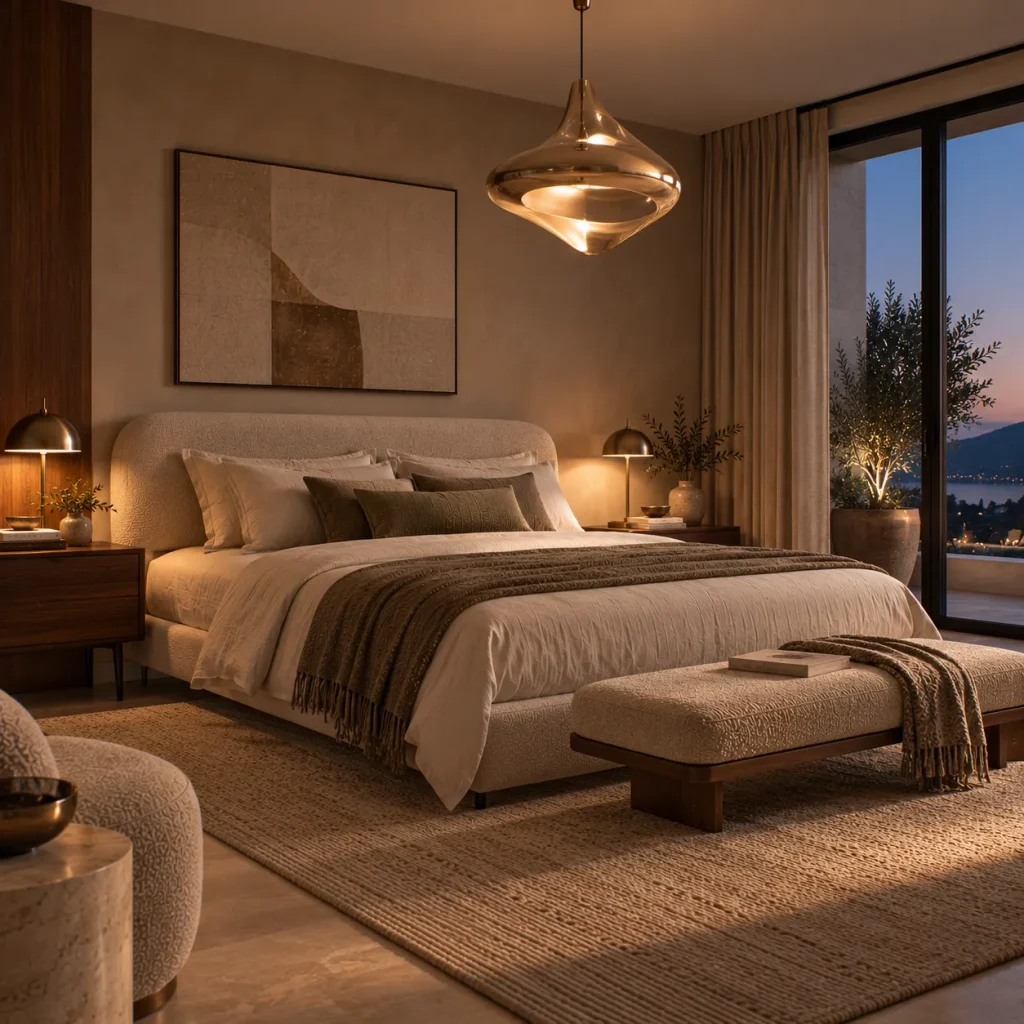
10. Use fewer, better-looking lights
Italian designers have produced some of the most recognizable lighting in design history.
Try one strong gesture: a sculptural pendant, a pair of elegant bedside sconces, or an architectural floor lamp. Then keep the remaining lighting quieter.
Warm, diffused and glare-controlled lighting also aligns with the wider 2026 design emphasis on comfort and wellbeing.
Avoid one extremely bright ceiling light doing every job.
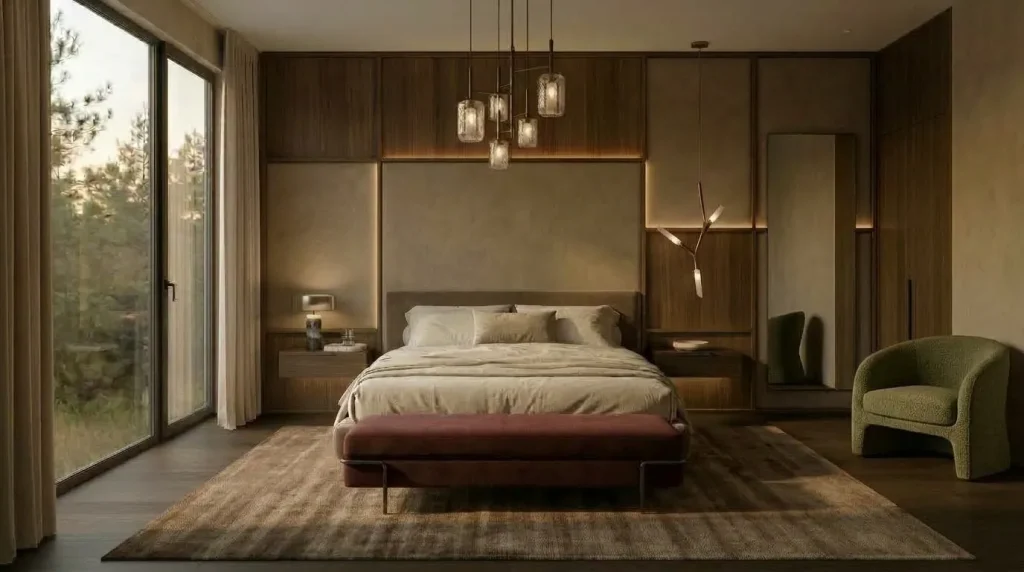
11. Use asymmetry once
Italian interiors can look highly balanced without being perfectly symmetrical.
Perhaps one side of the bed has a pendant while the other has a table lamp. Maybe a sculptural chair occupies one corner while the opposite wall remains relatively empty. Or hang an artwork slightly off the bed’s central axis.
One moment of asymmetry can keep a highly controlled bedroom from feeling sterile.
The trick is doing it deliberately. Accidental imbalance looks unfinished. Intentional imbalance creates movement.
Bring in Softness and Craftsmanship
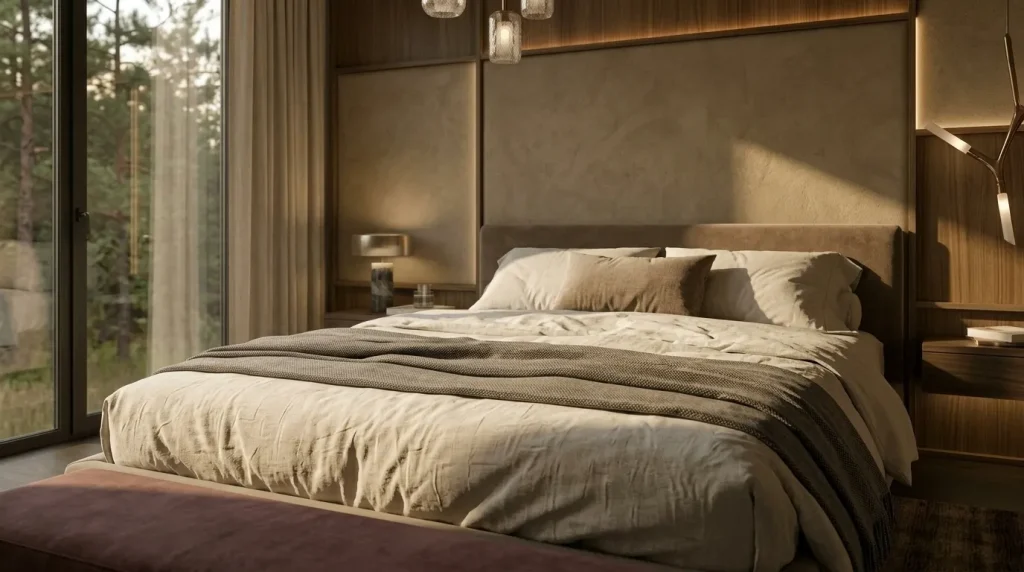
12. Dress the bed simply but beautifully
If the architecture and furniture already carry weight, keep bedding relatively simple: a generous duvet, a blanket, and perhaps a long lumbar pillow or two additional cushions.
Natural fibers are particularly appropriate.
Salone del Mobile’s coverage of contemporary bedroom textiles emphasizes cotton, linen, fine natural fibers, quality, durability, and tailoring as part of a more complete approach to bedroom design rather than treating textiles as an afterthought.
You want the bed to feel tailored but comfortable. Not untouched.
A slight crease in linen will usually look more sophisticated than ten perfectly karate-chopped cushions, the same layered comfort you’ll find in these cozy bedroom ideas.
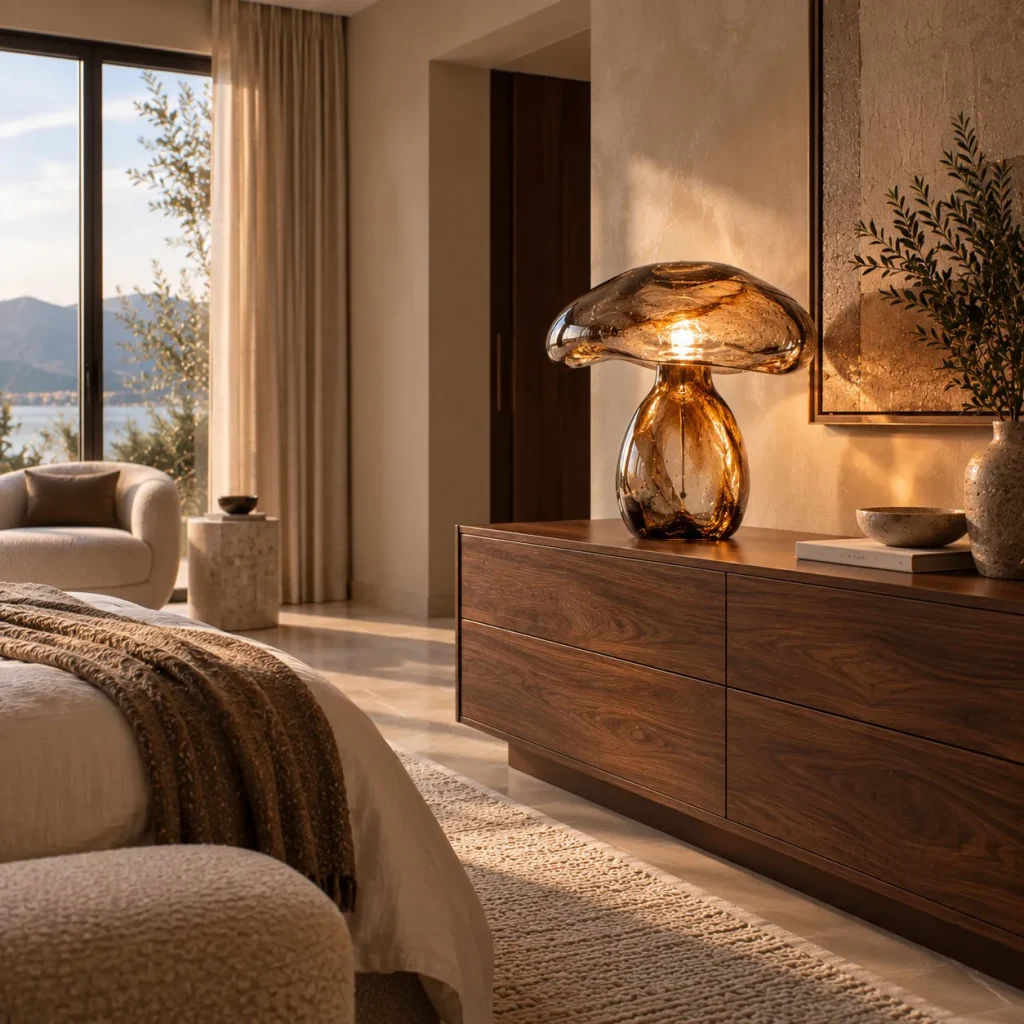
13. Add one piece showing visible craftsmanship
One handcrafted object can do more for this style than a shelf full of generic luxury accessories.
Consider: hand-thrown ceramic, Murano-style glass, carved wood, handwoven textile, leatherwork, a beautifully framed artwork, or an artisan-made lamp.
Craftsmanship was an explicit theme at Salone del Mobile 2026, where handmade processes, natural materials, local techniques, and emotional value were highlighted as an important part of Italian design that often gets lost when the style is reduced to glossy furniture.
Hide What Does Not Improve the Room
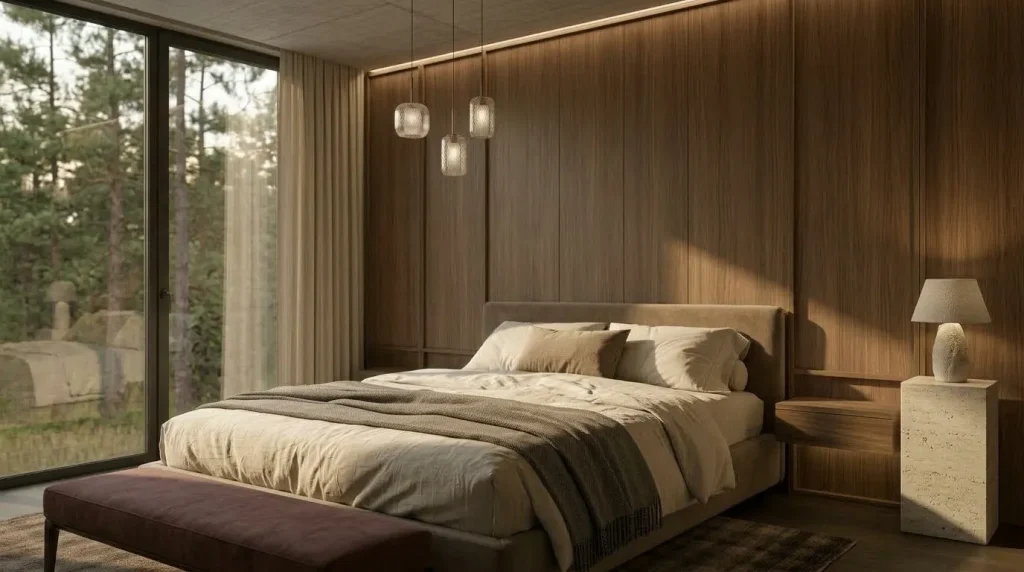
14. Integrate storage and technology quietly
One of the strongest ways to make a bedroom feel Italian-modern is simply to remove visual interruptions.
Wardrobes can run floor to ceiling. Televisions can sit within cabinetry rather than dominating a wall. Charging points can disappear inside nightstands. Cables can be routed through furniture.
Current Italian systems such as Molteni’s Hector Night are designed around modular bedroom storage that can extend floor-to-ceiling or wall-mounted while maintaining visual lightness.
And at Salone del Mobile 2026, technology was increasingly described as present but silent, improving how spaces function without defining how they look.
That is an excellent rule for bedrooms. Imagine a room where the television, chargers, router, spare bedding, and clothing all disappear behind clean cabinetry. The bed, one beautiful material, and one good lamp do most of the decorating.
Nothing about the room needs to shout “luxury.” Yet it feels luxurious because nothing unnecessary interrupts it.
Italian Modern Bedroom Mistakes to Skip
The biggest mistake is confusing Italian modern with flashy luxury.
Gold trim, mirrored furniture, shiny marble, tufted leather, crystal lighting, and designer logos are not automatically sophisticated because they are expensive. Italian modern design works better when materials and proportions carry the room.
Another mistake is buying a complete coordinated bedroom suite. A bed, two matching nightstands, matching dresser, matching mirror, and matching wardrobe can feel more like a showroom than a home. Let pieces relate without being identical.
Do not automatically make everything beige either. Walnut, tobacco, olive, burgundy, charcoal, and terracotta can all create considerably more depth.
And resist filling empty surfaces. A spectacular ceramic bowl on a walnut dresser usually has more impact than a sleek silhouette.
Italian design has always cared about function as well as form. A beautiful bed that is uncomfortable or a bedside lamp you cannot actually read under is unsuccessful design.
Try This If Your Bedroom Is…
| Your bedroom situation | Italian modern approach |
|---|---|
| Small | Low bed, raised furniture, integrated storage, fewer materials |
| Too beige | Add walnut, chocolate, olive, or burgundy |
| Cold and modern | Layer wood, leather, linen, wool, and warm lighting |
| Already luxurious but dated | Remove shiny excess and simplify the material palette |
| A rental | Invest in lighting, bedding, art, nightstands, and one excellent chair |
| Large and empty | Use an extended headboard or architectural wall treatment |
| Cluttered | Prioritize closed cabinetry and concealed technology |
| Too plain | Add one sculptural light or exceptional material |
| Too coordinated | Introduce one vintage or artisan-made piece |
The goal is not to make every bedroom look like the same Milan apartment. It is to borrow the design logic that makes those interiors convincing.
Frequently Asked Questions
What colors are used in Italian modern bedrooms?
Warm white, cream, taupe, mushroom, brown, charcoal, and natural wood tones make strong foundations. Deeper colors such as olive, burgundy, tobacco, terracotta, and dark blue can then provide richness. For a current look, favor warm, nuanced neutrals over stark white and cool gray.
Does an Italian modern bedroom need marble?
No. Stone is useful, but it is not mandatory. Walnut, oak, leather, linen, wool, glass, lacquer, metal, and ceramics can create an equally convincing Italian-inspired material palette. If you do use marble or travertine, one carefully positioned element often looks more sophisticated than repeating stone everywhere.
How can I make my bedroom look Italian modern on a smaller budget?
Focus on proportion before brand names. Choose a simple low bed, improve the lighting, use warmer bedding, remove visual clutter, find one good wooden or vintage piece, and select fewer accessories. You can borrow Italian design principles without purchasing Italian designer furniture. Good editing is free.
What to Do Next
Photograph your bedroom from the doorway and temporarily ignore all the small decor.
Look only at the bed, major furniture, materials, lighting, and empty space.
Ask yourself:
- Does the bed have enough presence?
- Are there too many competing finishes?
- Where is the visual weight?
- Can I see cables and clutter?
- Is there one beautiful material or crafted object worth noticing?
Then make one substantial improvement before buying several minor accessories. Perhaps you replace the bulky nightstands with lighter ones. Maybe you introduce walnut behind the bed. Perhaps the answer is simply better bedside lighting and cream linen bedding.
The strongest lesson behind these 14 italian modern bedroom tips is that Italian style is not created by accumulating symbols of luxury.
It comes from choosing deliberately, balancing materials carefully, respecting proportion, and allowing beautifully designed objects enough space to be appreciated. Do that well and even a relatively simple bedroom can carry the relaxed sophistication that makes modern Italian interiors so enduring.