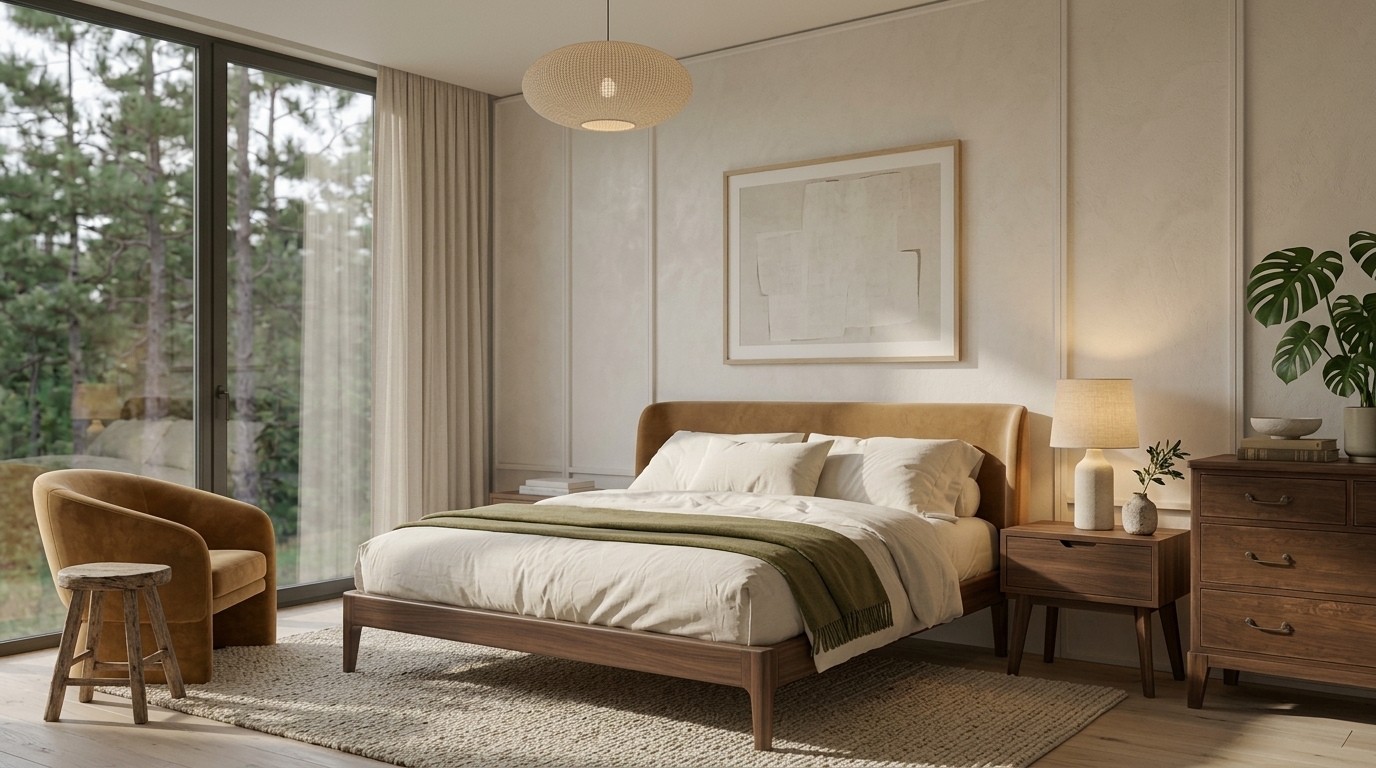
12 organic modern bedroom tips for a Warm, Naturally Calm Retreat
Organic modern bedrooms look effortless when they are done well: warm wood, soft linen, sculptural furniture, earthy color, and just enough empty space for the room to breathe.
The difficult part is that this style can easily become predictable.
A beige upholstered bed, boucle chair, pampas grass, and three cream cushions may technically fit the aesthetic, but they do not necessarily create an interesting bedroom.
Organic modern design is more nuanced than neutral minimalism. It combines the restraint and clean lines of modern design with natural materials, tactile surfaces, organic forms, craftsmanship, and imperfections borrowed from nature. Livingetc describes the style as drawing from Scandinavian minimalism, midcentury modern design, and bohemian influences while emphasizing natural materials, curves, and relaxed elegance.
And in 2026, the most convincing version feels layered and personal, with real materials and quiet craftsmanship taking priority over generic curated appearance without turning your room into another all-beige social-media copy.
These 12 organic modern bedroom tips will help you create that balance.
What Makes a Bedroom Organic Modern?
Organic modern design lives between two extremes.
On one side you have contemporary minimalism: simple shapes, uncluttered surfaces, functional furniture, and restrained decoration.
On the other you have nature: irregular texture, timber grain, stone, wool, linen, plants, handmade pottery, and colors drawn from earth and vegetation.
The room becomes interesting where those worlds overlap.
Homes & Gardens describes organic modern interiors as a balance between sleek modern lines and raw, earthy materials rather than a purely rustic or minimalist aesthetic.
That distinction matters in a bedroom.
You want enough simplicity for the space to feel restful, but enough tactile warmth that it still feels human.
Build a Warm, Quiet Foundation
1. Start with warm neutrals—not fifty shades of beige
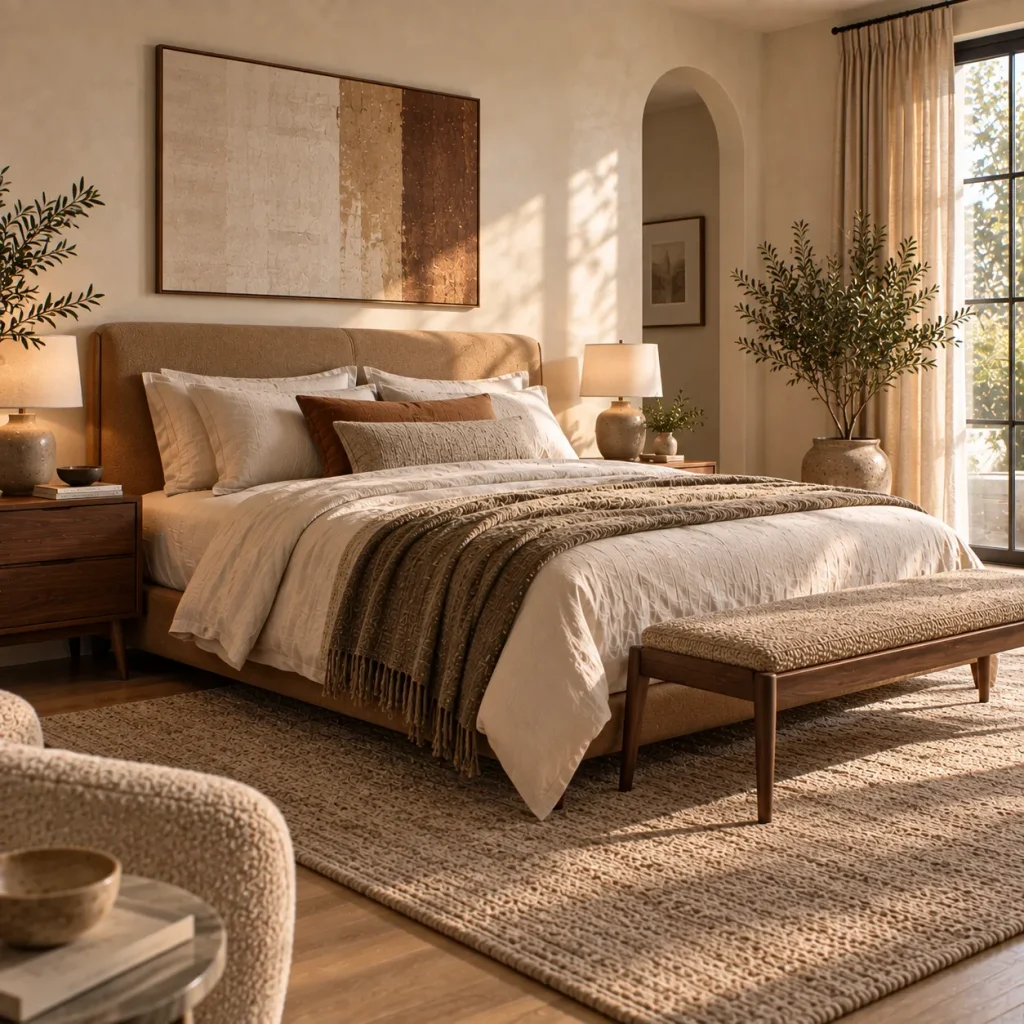
Cream, warm white, mushroom, oatmeal, taupe, putty, and soft brown make excellent foundations.
But organic modern does not require every object in the room to be beige.
In fact, one of the easiest ways to make this style look dated is to choose essentially the same pale greige for the walls, carpet, curtains, bed, rug, and bedding.
Instead, create tonal contrast.
Try warm white walls with a camel headboard, walnut nightstands, oatmeal curtains, and cream bedding.
Or use a soft clay wall with lighter linen and pale oak.
Current 2026 bedroom design is moving beyond stark minimalist palettes toward rooms that still feel calm but contain more character, texture, and individuality.
2. Add one earthy color that actually registers
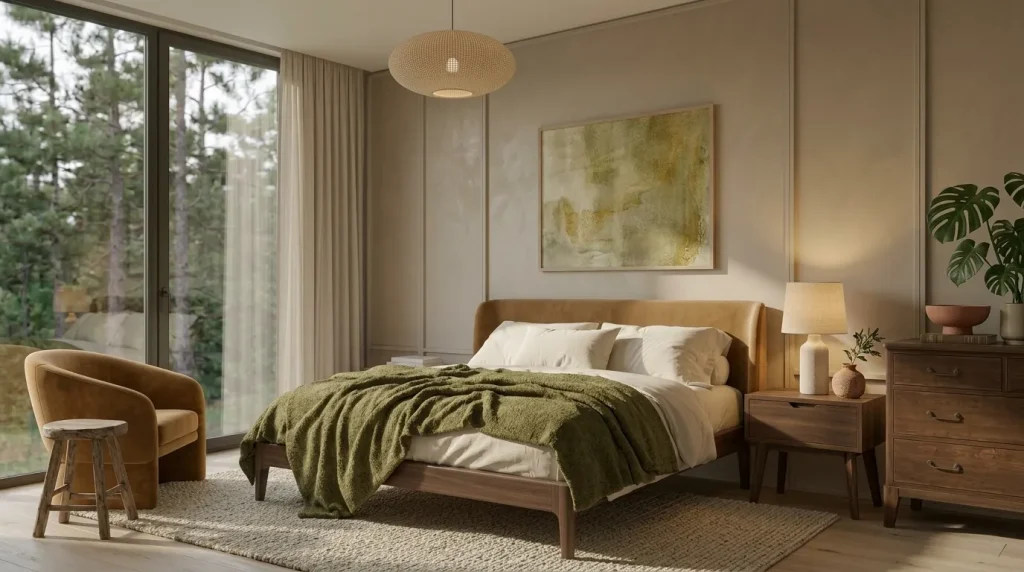
Sage, olive, chocolate brown, terracotta, muted ochre, dusty rose, tobacco, and clay can all work beautifully.
Choose one and let it appear deliberately.
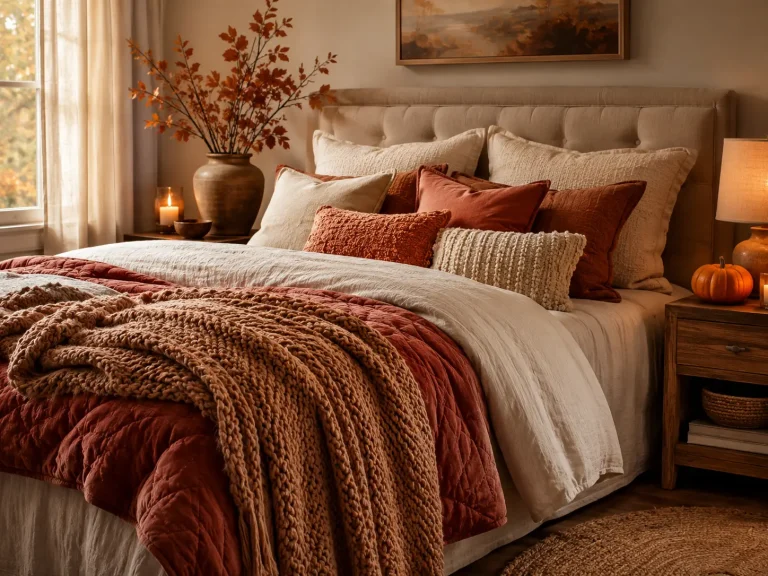
For example, a cream-and-oak bedroom might gain depth from an olive wool blanket and matching artwork. A warmer room might use a rust-colored lumbar pillow with terracotta pottery.
Chocolate brown is particularly useful because it gives organic modern rooms depth without breaking their natural palette. Rich earth tones are also becoming more prominent in 2026 interiors.
You do not need much.
The goal is simply to prevent “neutral” from becoming synonymous with “washed out.” For a deeper dive into pairing earthy tones together, our terracotta and sage bedroom tips cover this in more detail.
3. Use contrast before buying more decor
If the bedroom feels boring, accessories may not be the problem.
You may need contrast.
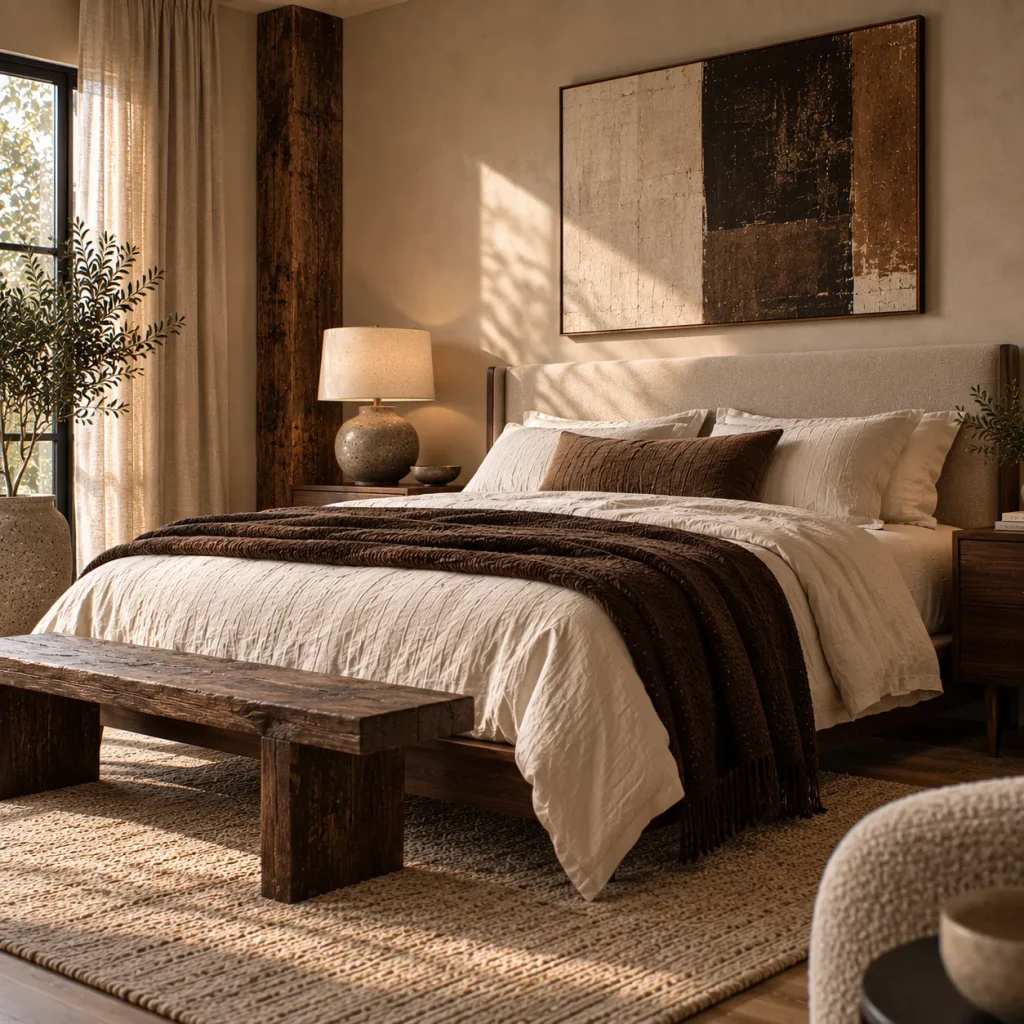
Put pale linen beside walnut.
Smooth plaster beside rough timber.
A rounded lamp beside a clean-lined nightstand.
Cream bedding against a chocolate throw.
Organic modern design depends on these relationships.
Without contrast, even expensive materials can blur into one beige mass.
Let Natural Materials Carry the Room
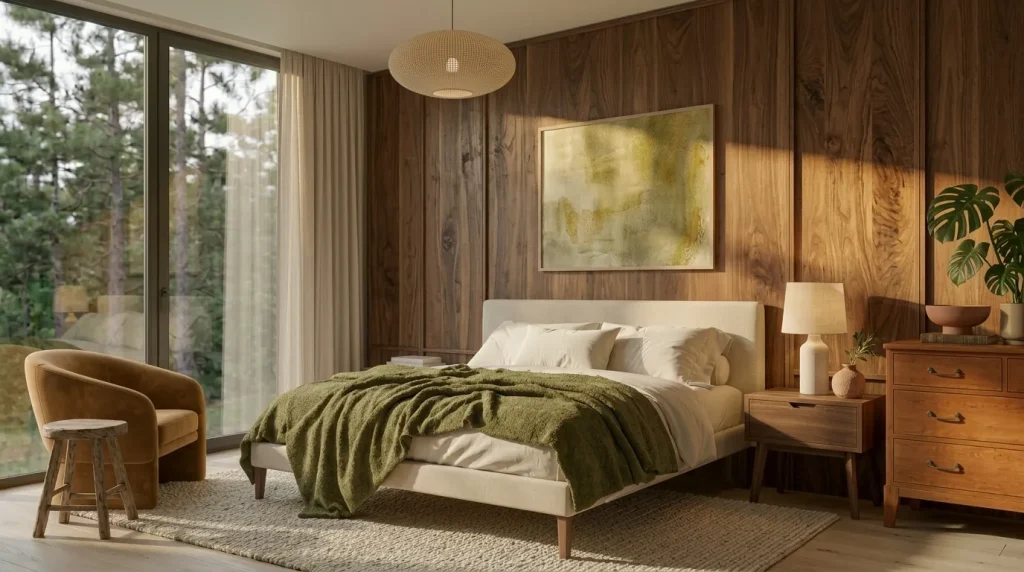
4. Make real wood one of your largest elements
If possible, use visible wood somewhere substantial—a bed frame, dresser, flooring, nightstands, ceiling beams, or paneled wall.
Warm timber is especially important because it immediately removes the clinical edge from modern architecture. Homes & Gardens has highlighted warm hardwoods as a defining ingredient in 2026 organic modern interiors for exactly this reason.
Oak works beautifully for lighter schemes.
Walnut gives the room greater depth.
Vintage pine or reclaimed wood introduces more character.
What I would avoid is buying six pieces of furniture in exactly the same wood finish.
Organic materials look more convincing when the room feels accumulated gradually rather than ordered as a matching suite.
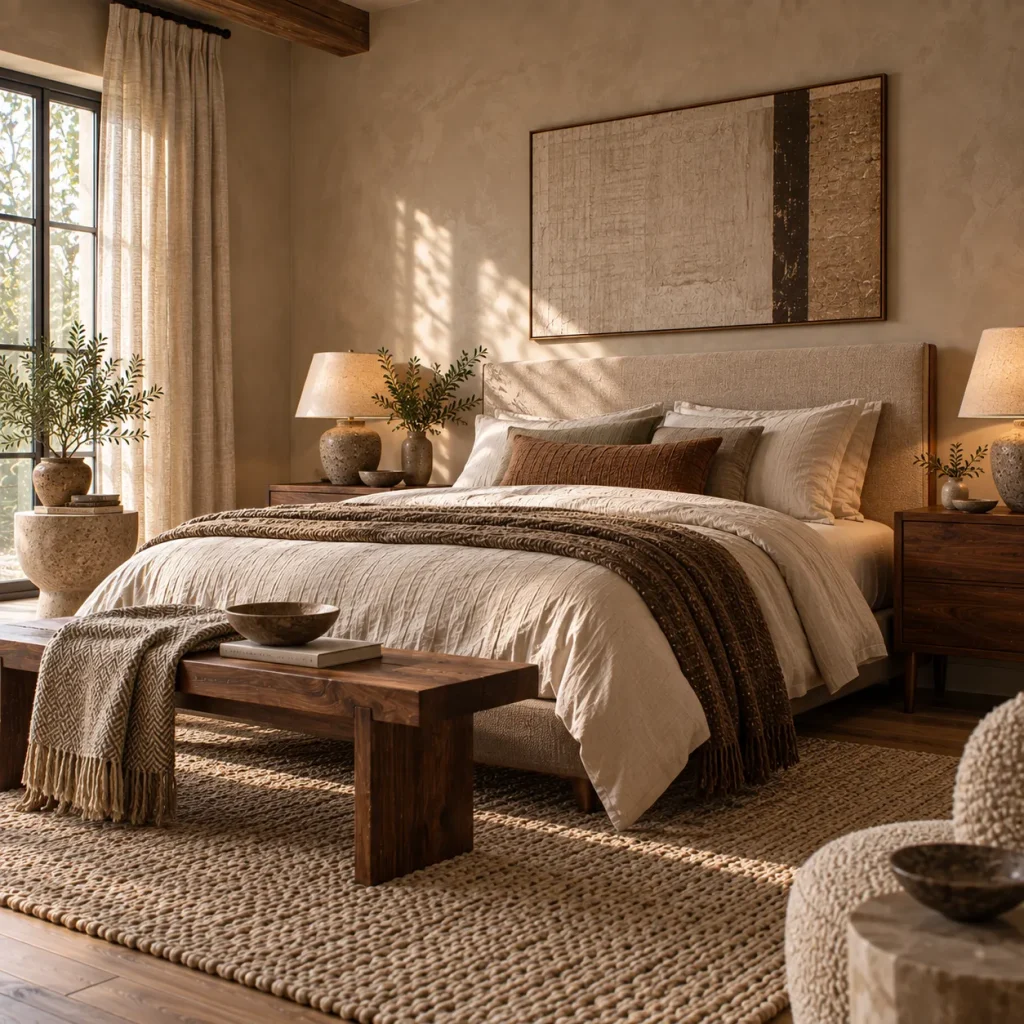
5. Mix at least three natural textures
Think beyond color.
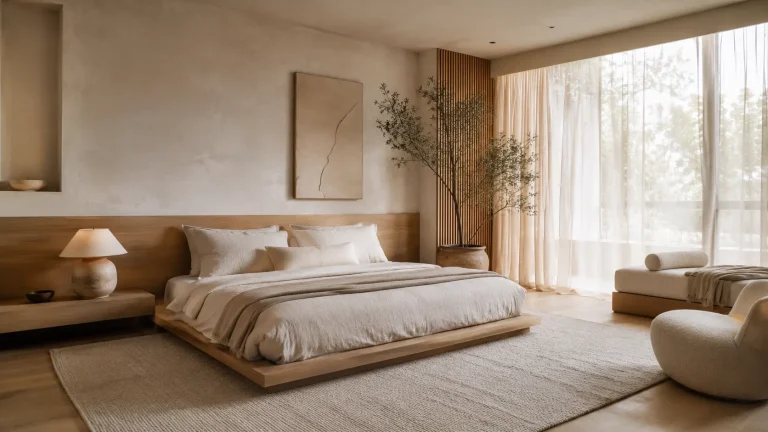
A simple combination might be linen bedding, a wool rug, and solid wood furniture.
Then perhaps add ceramic, cane, stone, cotton, or plaster.
Architectural Digest’s 2026 bedroom guidance emphasizes real wood, wool, linen, cotton, stone, and handwoven textiles in relaxed modern bedrooms because natural materiality brings warmth without requiring visual clutter.
Here is the useful rule: when your palette becomes quieter, your texture needs to become richer.
That is why a room using only cream, brown, and wood can still feel layered.
Make the Bed Soft, Simple, and Slightly Undone
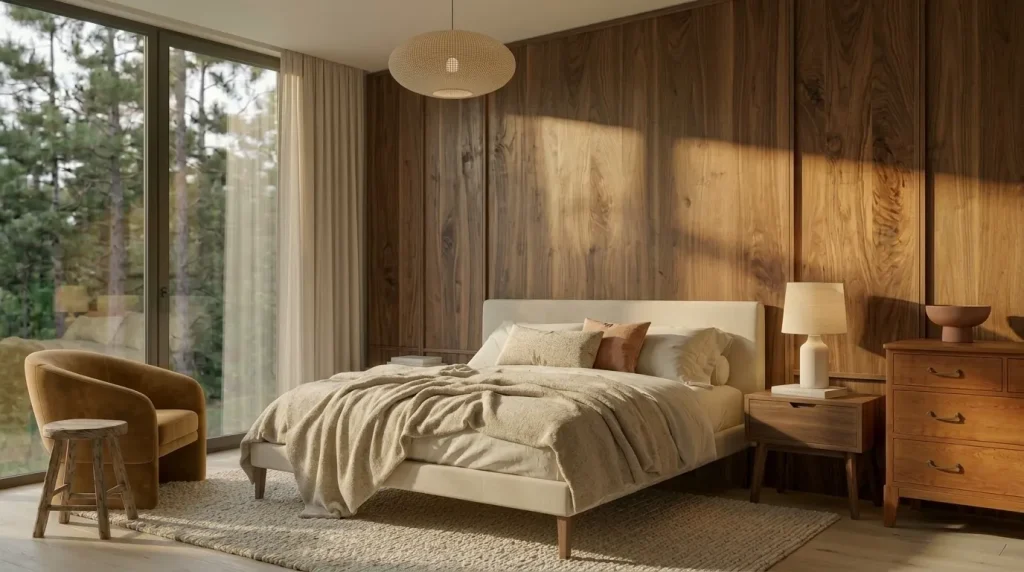
6. Layer the bed without over-styling it
You do not need nine pillows arranged in perfect descending order.
Start with good-quality sheets, add a duvet or quilt, then finish with one blanket and perhaps one or two decorative cushions.
Washed linen, cotton percale, wool, and softly quilted fabrics suit the style particularly well.
The current “analog bedroom” movement also favors breathable natural bedding, tactile layers, and a bedroom that feels restorative rather than overly staged.
I prefer a bed that looks slightly relaxed.
Let the linen wrinkle.
Allow the throw to fall somewhat casually.
That imperfection makes natural materials believable.
If every crease has been steamed out and every pillow stands at military attention, the “organic” part of organic modern starts disappearing.
Soften Modern Lines with Shape and Light
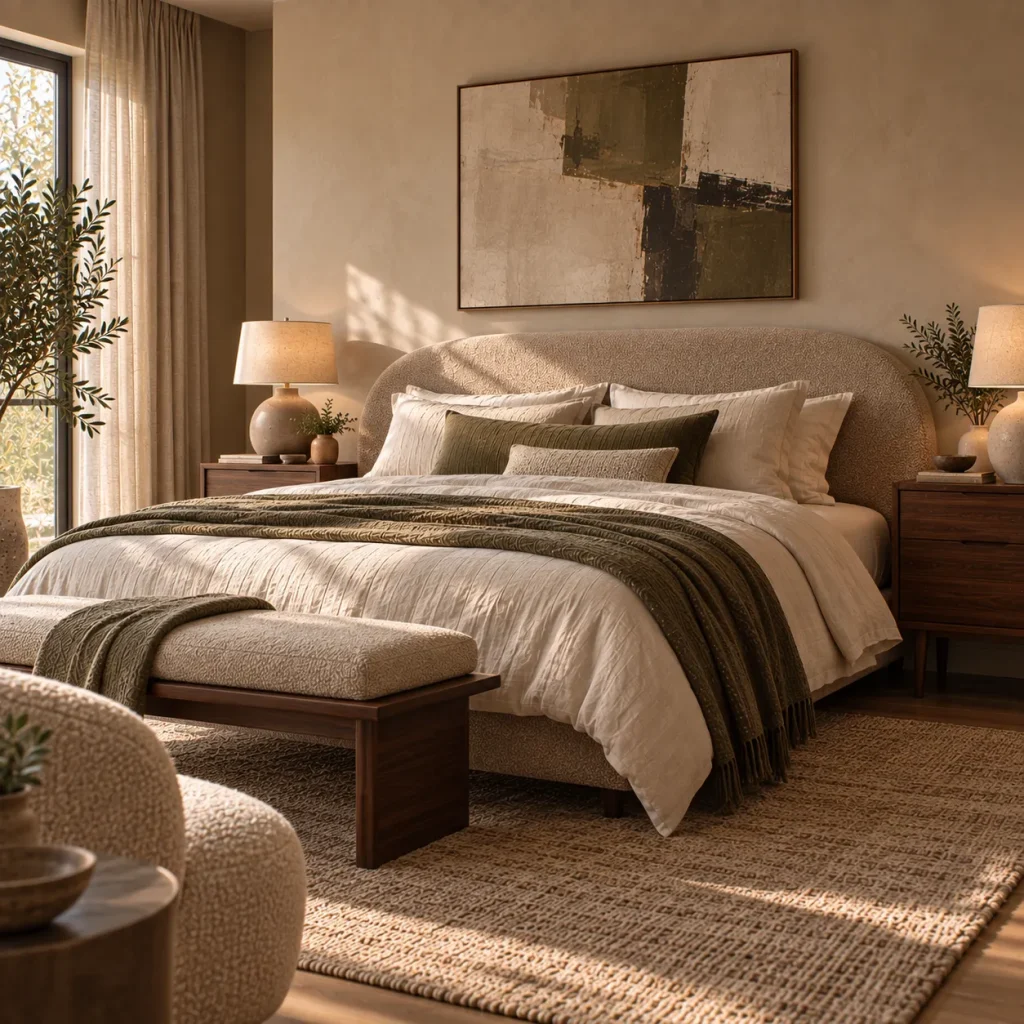
7. Introduce one or two curved forms
Organic modern rooms need clean modern structure, but they also benefit from shapes that feel less rigid.
Try a rounded upholstered headboard, oval mirror, cylindrical bedside table, curved bench, globe pendant, or softly shaped lounge chair.
Livingetc identifies gentle curves and organic forms as central to the style because they counterbalance its cleaner architectural lines.
Do not curve everything.
A room containing a rounded bed, round rug, circular nightstands, arched mirror, globe lamps, and wavy dresser starts feeling themed.
One substantial curve plus one smaller echo is usually enough.
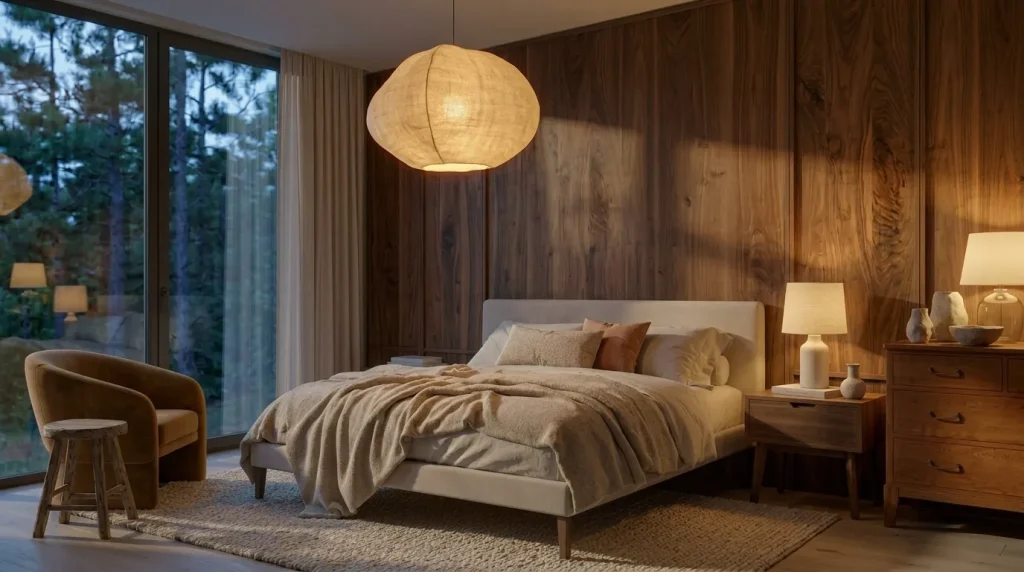
8. Use soft, layered lighting instead of one bright fixture
A warm organic bedroom should look good after sunset, not only in daylight.
Combine ambient and task lighting: a ceiling pendant or flush mount, bedside sconces or lamps, and perhaps one floor lamp or dresser lamp.
Choose shades made from paper, linen, plaster, ceramic, woven fiber, or other tactile materials where appropriate.
Modern bedrooms increasingly use sculptural lighting as part of the room’s form rather than treating fixtures as purely functional additions.
For evening use, keep the light warm and dimmable if possible.
A beautiful neutral bedroom under harsh blue-white light can instantly lose its softness.
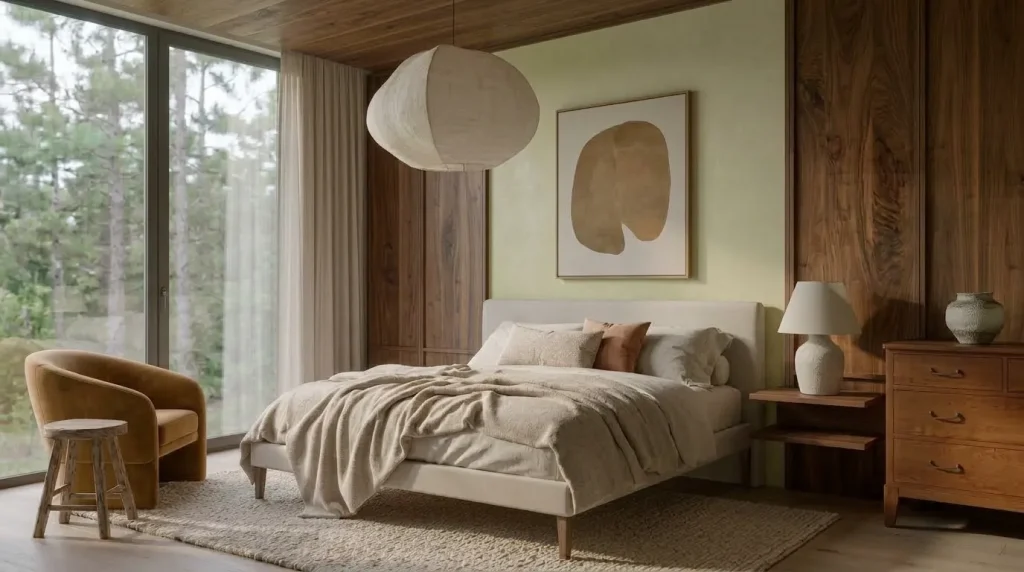
9. Leave some walls and surfaces intentionally quiet
Organic modern is not about filling every blank spot with pottery and branches.
That is an important contrarian point because social media often reduces the style to piles of decorative objects in natural materials.
Instead, let negative space contribute.
You may need only one large artwork above the bed.
A dresser may need only a lamp and one ceramic vessel.
Two substantial objects often look more intentional than eight tiny accessories.
Architectural Digest’s current minimalist-bedroom guidance makes the same broader point: restraint should still feel layered and comfortable, not empty or stark.
Add the Character That Keeps It From Looking Generic
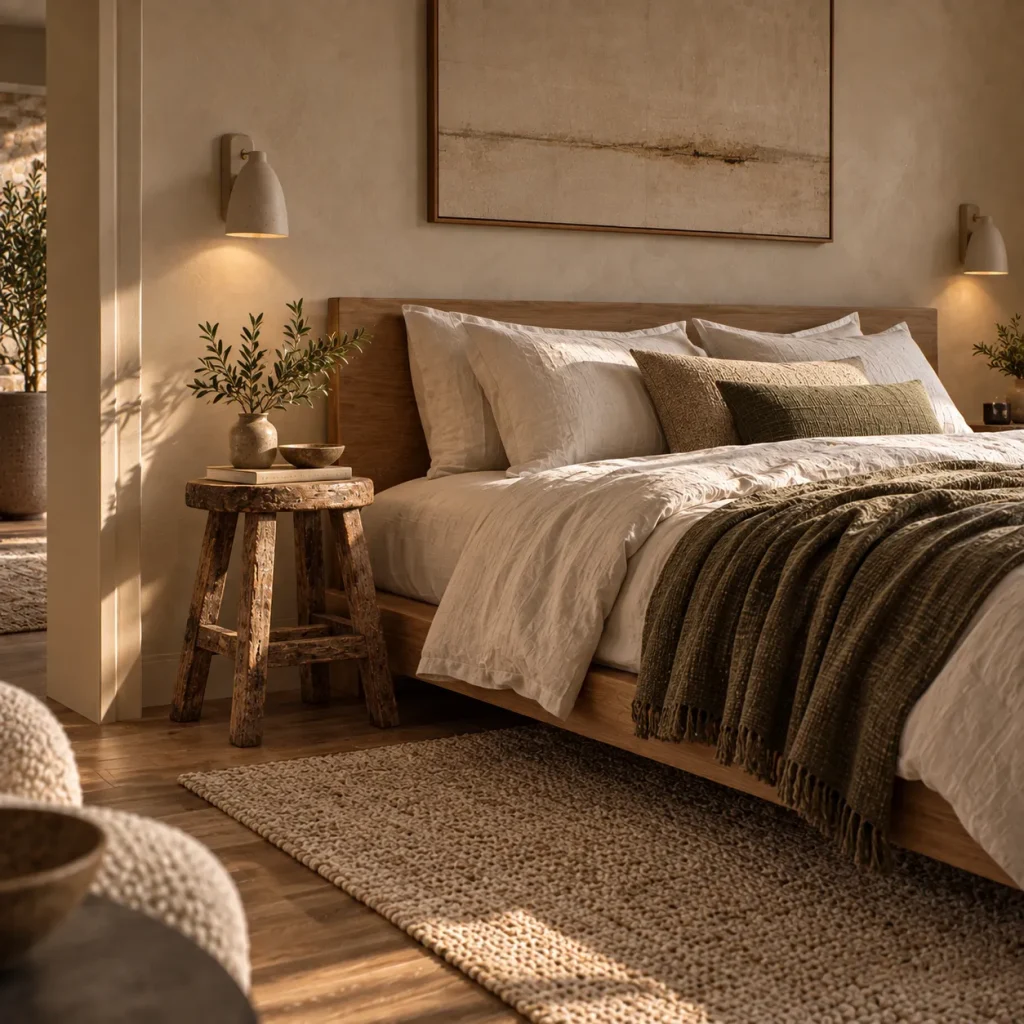
10. Bring in one genuinely imperfect piece
A handmade stool, rough ceramic pot, antique chest, vintage wooden chair, handwoven basket, or irregular stone object can change the entire room.
The slight flaws are valuable.
Organic modern rooms become convincing when not everything looks mass-produced.
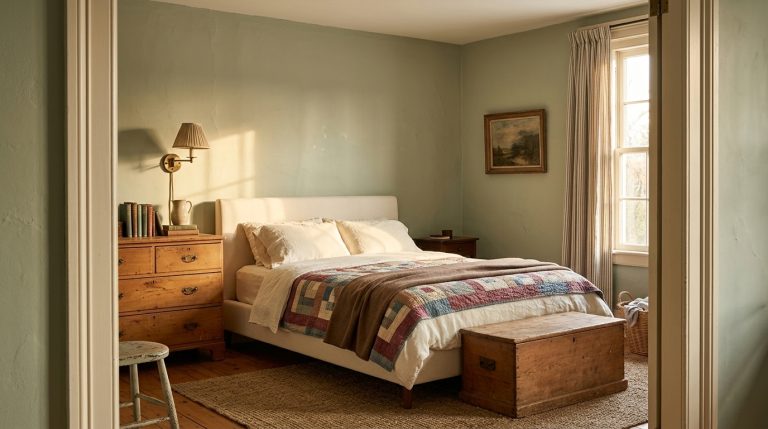
Imagine a bedroom with a beautiful new oak platform bed, cream linen bedding, and contemporary sconces. Beside the bed sits an old wooden stool you found at a market, its finish slightly worn and uneven.
That stool may cost less than almost anything else in the room—and still become the detail that gives the space its personality.
Current interiors are increasingly embracing craftsmanship and meaningful, characterful pieces as a counterpoint to overly polished rooms.
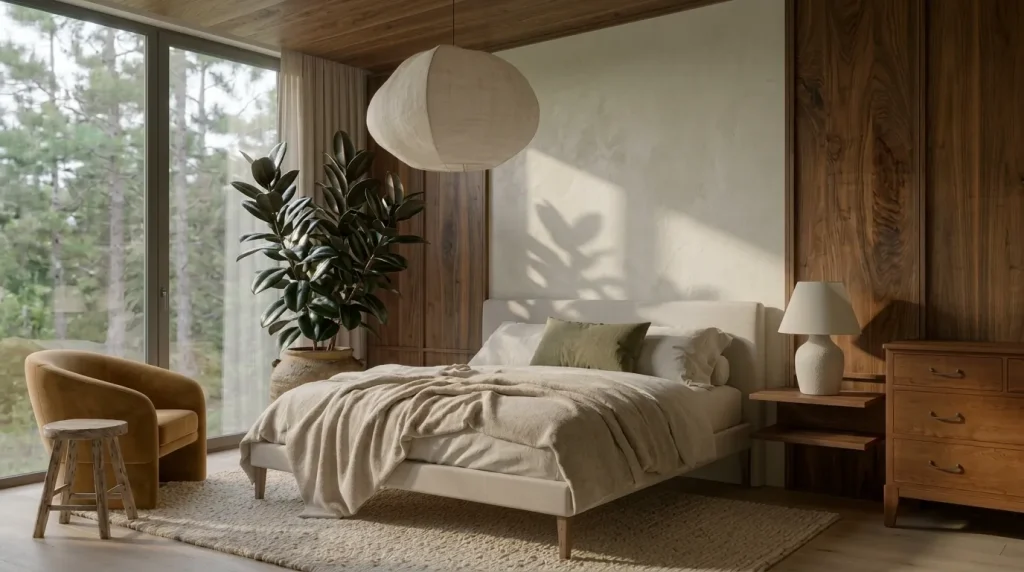
11. Use plants selectively
Yes, greenery belongs naturally in this aesthetic.
No, you do not need to turn the bedroom into a greenhouse.
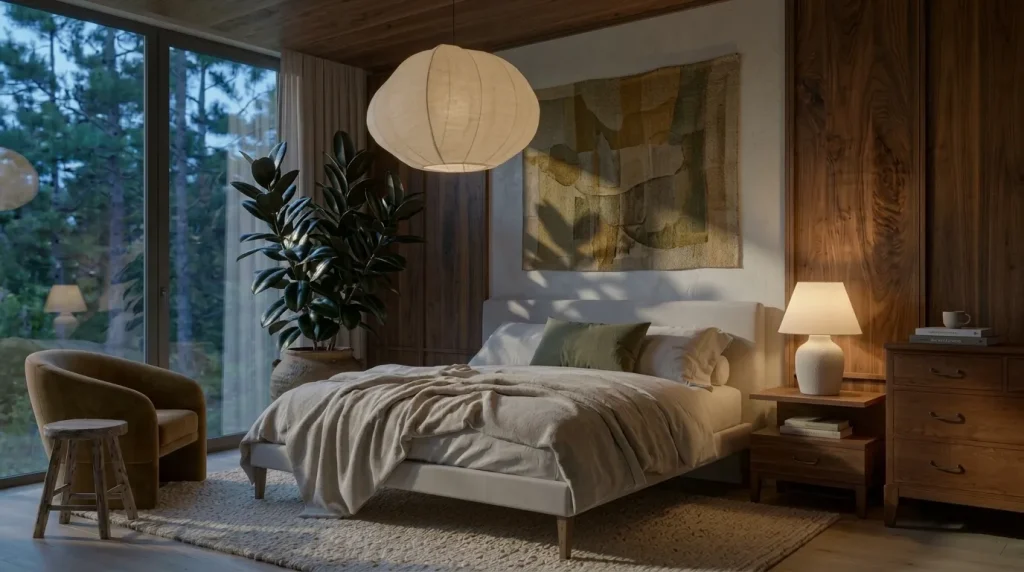
One healthy plant with an interesting silhouette—a rubber plant, olive-style tree where conditions allow, trailing plant, or sculptural foliage—can establish a connection to nature.
Choose plants according to your actual light conditions and ability to care for them rather than what photographs well.
And if your bedroom gets poor natural light, skip the struggling plant entirely.
A branch in a ceramic vessel, botanical artwork, natural timber, or landscape-inspired colors can provide the organic connection without maintaining unhappy greenery.
12. Reduce visible technology
One of the most useful updates to organic modern bedrooms has less to do with styling and more to do with atmosphere.
Hide charging cables.
Move the television elsewhere if you genuinely do not use it.
Choose a nightstand with drawers for devices.
Keep work equipment out of sight when possible.
Architectural Digest’s 2026 “analog bedroom” trend reflects a broader desire to reduce visual and psychological technology clutter in sleeping spaces and replace it with a calmer, more tactile atmosphere.
You do not have to ban your phone.
Just avoid designing the entire bedside area around glowing screens and tangled chargers.
Organic Modern Bedroom Mistakes to Skip
The first mistake is buying everything in cream.
Neutrality is part of organic modern design; sameness is not.
The second is overusing boucle. Boucle can add lovely texture, but putting it on the bed, bench, chair, ottoman, and cushions turns one material into a theme.
Another mistake is adding natural-looking accessories without investing in foundational materials. Five wicker baskets cannot compensate for a room filled with cold, mismatched surfaces.
If your budget is limited, I would prioritize the bed, wood furniture, bedding, rug, and lighting before decorative objects.
Also resist filling every surface with beige books, knot sculptures, pampas grass, and identical ceramic vases simply because they appear in organic-modern mood boards.
And do not assume all furniture needs rounded edges.
The style becomes more interesting when crisp architecture and clean lines are softened by organic shapes—not replaced entirely by them.
Try This If Your Bedroom Is…
| Your bedroom problem | Organic modern solution |
|---|---|
| Cold and modern | Add warm timber, wool, linen, and softer lighting |
| Too beige | Introduce olive, chocolate, clay, or terracotta |
| Small | Use fewer, larger pieces and preserve visible floor space |
| Dark | Choose lighter wood, warm cream walls, and layered lamps |
| Too minimalist | Add texture, one vintage piece, and handmade ceramics |
| Cluttered | Reduce small accessories and prioritize closed storage |
| A rental | Focus on bedding, lamps, rug, curtains, art, and movable wood furniture |
| Too rustic | Add cleaner furniture lines and reduce distressed finishes |
This is why I would diagnose the room before shopping.
Sometimes the answer is not “more organic decor.” It may simply need a better wood tone, deeper contrast, or fewer unnecessary objects.
Frequently Asked Questions
What colors work best in an organic modern bedroom?
Warm whites, cream, sand, mushroom, taupe, camel, and brown make excellent foundations.
Then layer muted nature-inspired colors such as sage, olive, terracotta, clay, dusty rose, ochre, or deep green.
Organic modern rooms do not have to be pale. Dark wood and chocolate brown can actually help ground an otherwise light palette. If you enjoy a calmer, more restrained version of this palette, our neutral bedroom ideas explore that direction further.
What is the difference between organic modern and Japandi?
They overlap considerably.
Both value simplicity, natural materials, craftsmanship, and calm spaces. Japandi more specifically blends Japanese design principles with Scandinavian warmth, while organic modern has broader influences from modern, midcentury, Scandinavian, and bohemian styles.
Architectural Digest describes Japandi bedrooms as airy and peaceful, emphasizing honest materials such as wood, wool, linen, and cotton. Our Scandinavian bedroom tips cover that calmer, more minimal side of the spectrum in more depth.
Organic modern can generally tolerate more sculptural curves, richer layering, and relaxed eclecticism.
Can an organic modern bedroom have dark furniture?
Yes—and sometimes it should.
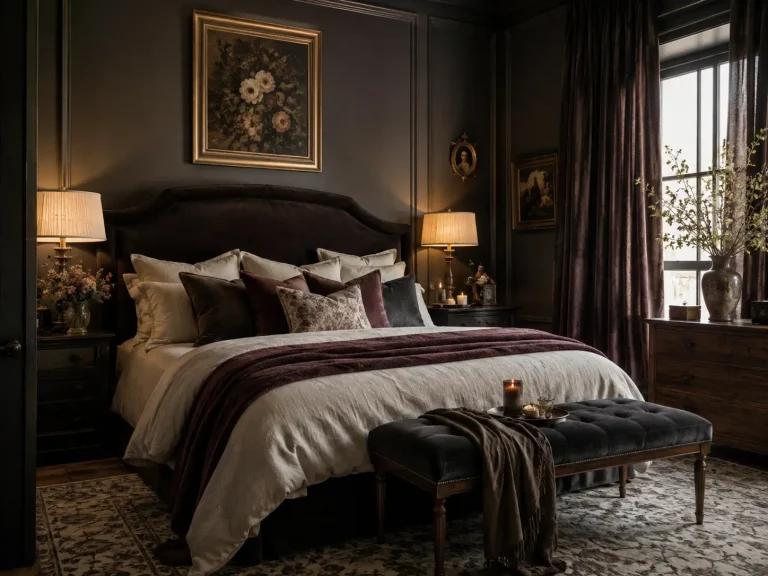
Walnut, dark oak, chocolate upholstery, or even a small black accent can provide essential contrast.
Pair darker furniture with softer materials, warm neutrals, and adequate lighting so the room remains calm rather than heavy.
What to Do Next
Do not begin by buying accessories.
Take a photograph of your bedroom and identify the largest materials already present: flooring, bed, furniture, wall color, curtains, and rug.
Then ask three questions: Where is the natural texture? Where is the contrast? Where is the visual quiet?
If you cannot answer one of them, you know what to address first.
Start with one meaningful improvement—a real wood nightstand, linen bedding, warmer wall color, wool rug, better lighting, or one vintage piece.
Then build slowly.
The strongest lesson behind these 12 organic modern bedroom tips is that the style is not really about beige furniture or fashionable accessories.
It is about balancing opposites: modern structure with natural imperfection, restraint with softness, and simplicity with enough character to make the bedroom feel like yours.
Get those relationships right, and you can create an organic modern bedroom that remains calm and contemporary without looking like everyone else’s, in the same spirit as our cozy bedroom ideas.