11 mid century modern bedroom tips That Feel Timeless, Not Retro
Mid-century modern design has an unusual advantage in the bedroom: even decades after its original heyday, its core ideas still make sense.
Low furniture keeps a room visually open. Warm timber makes minimalist shapes feel comfortable rather than clinical. Tapered legs expose more floor. Sculptural lamps provide decoration and function at the same time. And because the style values simplicity, a bedroom does not need dozens of objects to feel finished.
The challenge is avoiding a room that looks like a 1960s film set.
A walnut dresser, mustard pillow, starburst mirror, geometric rug, globe lamp, and orange chair all in one bedroom may technically reference the period, but together they can turn a design style into a theme.
The more current approach is much subtler. In 2026, interiors are leaning toward richer dark woods, patina, meaningful vintage pieces, layered materials, and confident but restrained color rather than a costume version of the era. These 11 mid century modern bedroom tips show you how to take the enduring parts of the style and create a room that feels contemporary, comfortable, and collected.
What Makes a Bedroom Mid-Century Modern?
Mid-century modern design broadly emerged during the middle decades of the 20th century and became known for straightforward forms, functionality, limited ornamentation, geometric and organic shapes, and an emphasis on materials such as wood.
In bedrooms, clean lines, geometric forms, minimal decoration, layered texture, and woods such as walnut, teak, and rosewood are recognizable elements of the style.
That does not mean you need authentic vintage furniture everywhere.
A convincing modern interpretation can combine:
- one vintage dresser
- a contemporary upholstered bed
- streamlined nightstands
- sculptural lighting
- natural wood
- one or two period-inspired colors
- simple modern bedding
In fact, mixing periods is often what keeps the room looking current. If you enjoy blending natural materials and modern shapes, the same instinct that works for an organic modern bedroom can guide how you mix vintage and contemporary mid-century pieces.
Build the Bed Around Low, Honest Lines
1. Choose a low platform bed with visible legs
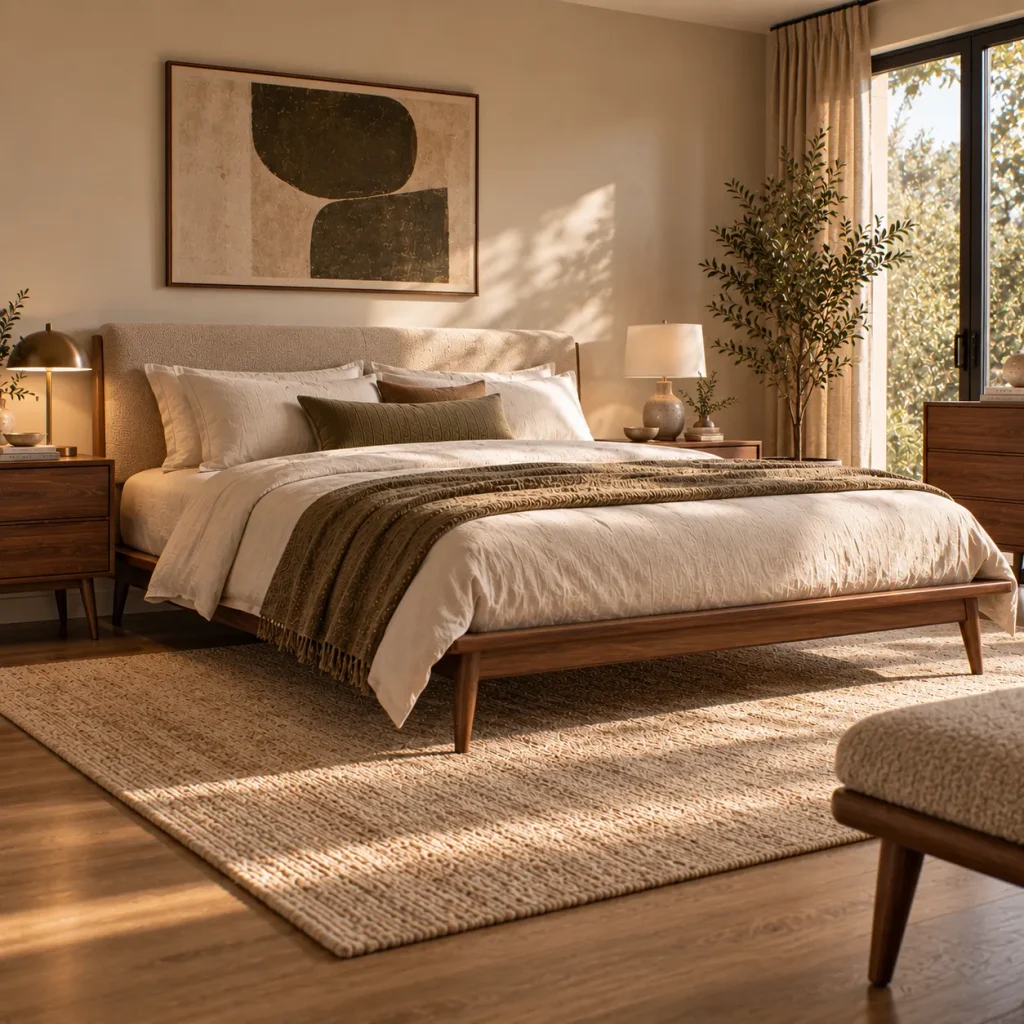
Few choices establish a mid-century mood as quickly as a low bed.
Look for a platform frame, tapered legs, slim rails, or a straightforward wooden structure rather than an oversized tufted bed with a towering headboard.
Low-slung furniture is closely associated with mid-century interiors, where practicality and uncluttered horizontal lines were central to the design language.
You do not need to put the mattress practically on the floor. The goal is simply to create a long, visually light silhouette.
In a small bedroom, a bed with visible legs can also help because seeing some floor underneath prevents the largest piece of furniture from appearing like a solid block, the same principle behind good small bedroom layouts.
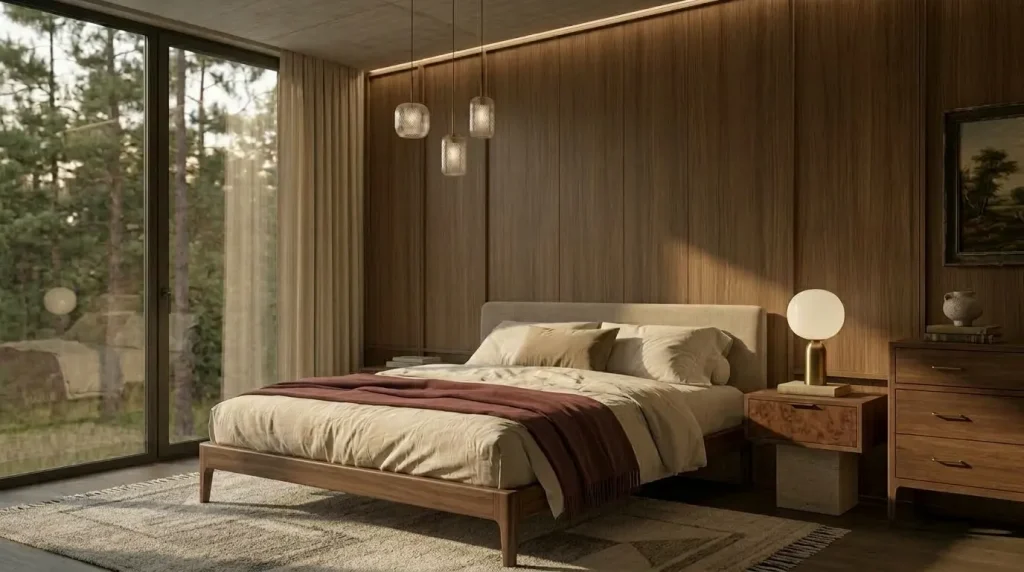
2. Let walnut or another warm wood do the heavy lifting
If you buy only one obviously mid-century element, make it a beautiful piece of wooden furniture rather than a collection of retro accessories.
Walnut is the obvious choice, but teak, oak, cherry, beech, and other warm woods can work too. Natural wood brings warmth and authenticity.
Try wood through a:
- dresser
- bed frame
- pair of nightstands
- wardrobe
- bench
- wall-mounted shelf
And do not assume every piece needs to match. A walnut dresser beside an oak bed can look more natural than buying an entire matching furniture suite. That slight variation is often what makes a bedroom feel collected.
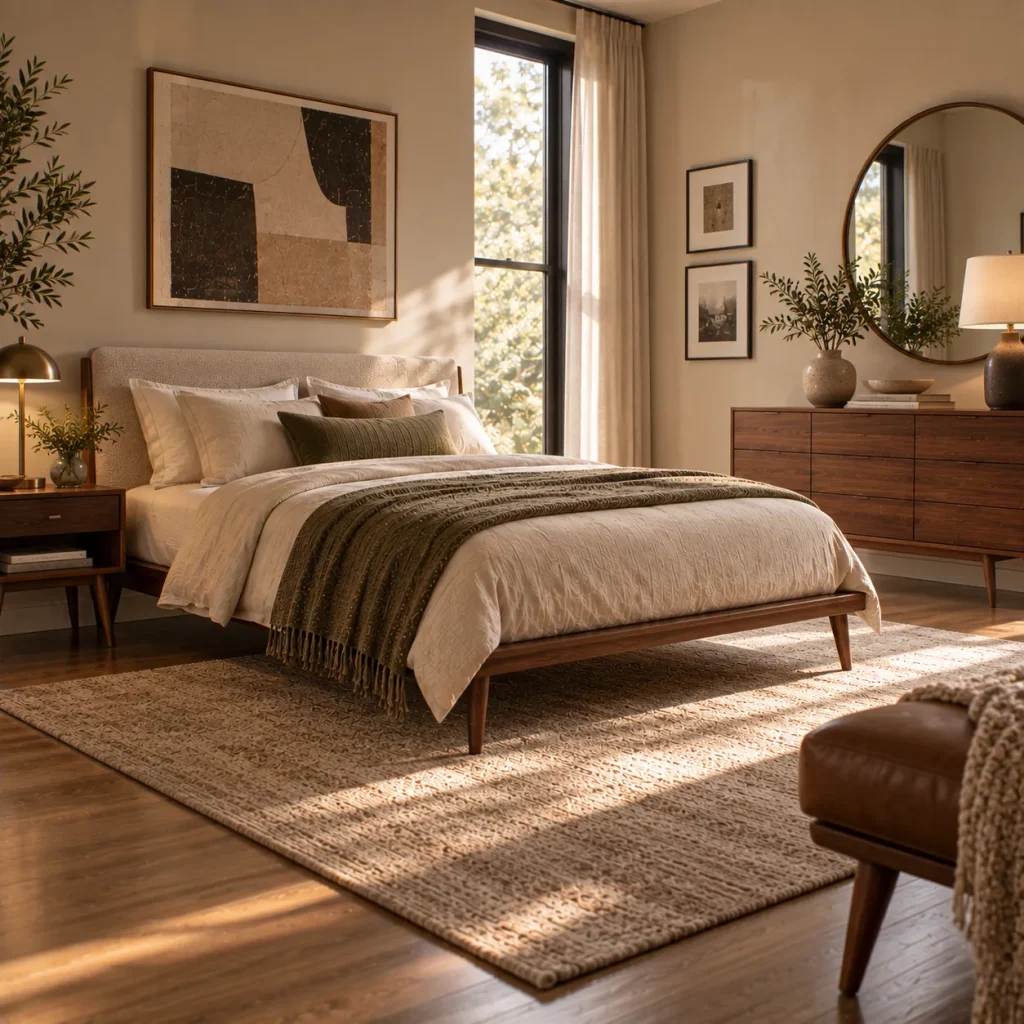
3. Look for legs, not bulky bases
One of the easiest mid-century details to borrow is the tapered leg.
Dressers, beds, benches, and bedside tables raised from the floor tend to look lighter than furniture sitting on thick plinths. This is especially useful in modest bedrooms.
It also gives you the recognizable mid-century profile without requiring an obviously retro pattern or color.
But do not insist that every piece have splayed wooden legs. One or two strong examples establish the idea. Repeating the same furniture detail around the entire room can make the styling feel like a furniture showroom.
Use Color Without Recreating the 1960s
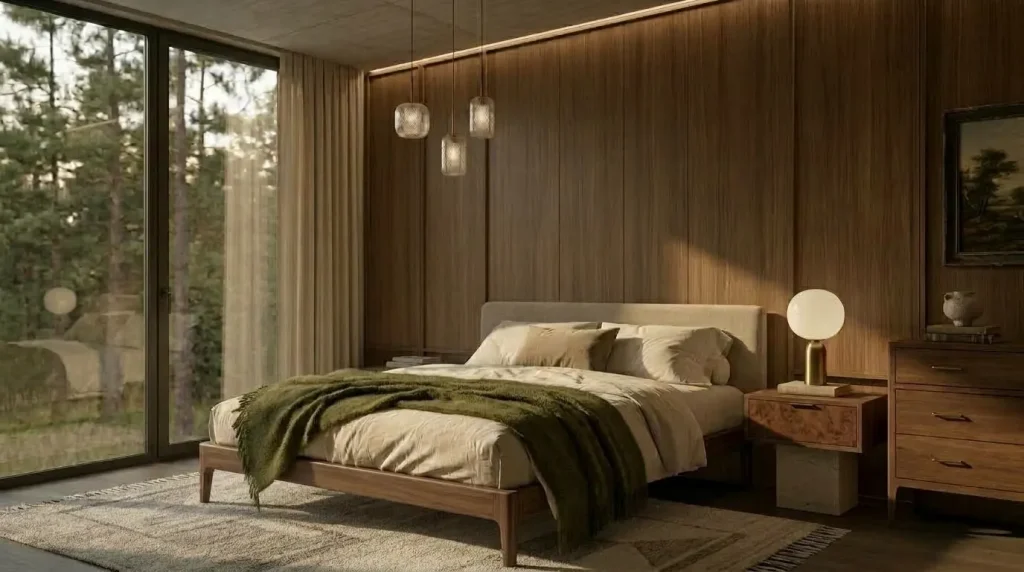
4. Reach for warm neutrals plus one confident color
Many people picture a mid-century bedroom as beige and wood only, but that undersells the color-forward vintage versions often seen online.
Historical bedrooms incorporated colors including green, blue, red, and mustard alongside wood furniture. You can borrow that confidence without recreating the entire historical palette.
Start with warm neutrals such as:
- cream
- camel
- oatmeal
- mushroom
- warm white
- brown
Then add one more definite color. Olive green is easy. Mustard works if used carefully. Burnt orange or rust adds warmth. Muted blue can cool all the wood. Burgundy gives the room a richer, less predictable direction.
The important part is restraint. A mustard throw on a cream bed beside a walnut dresser can feel sophisticated. Mustard curtains, orange bedding, avocado walls, and a geometric yellow rug may feel more costume-like. For more inspiration on confident but grounded color pairings, see these earthy bedroom colors that share the same restrained approach.
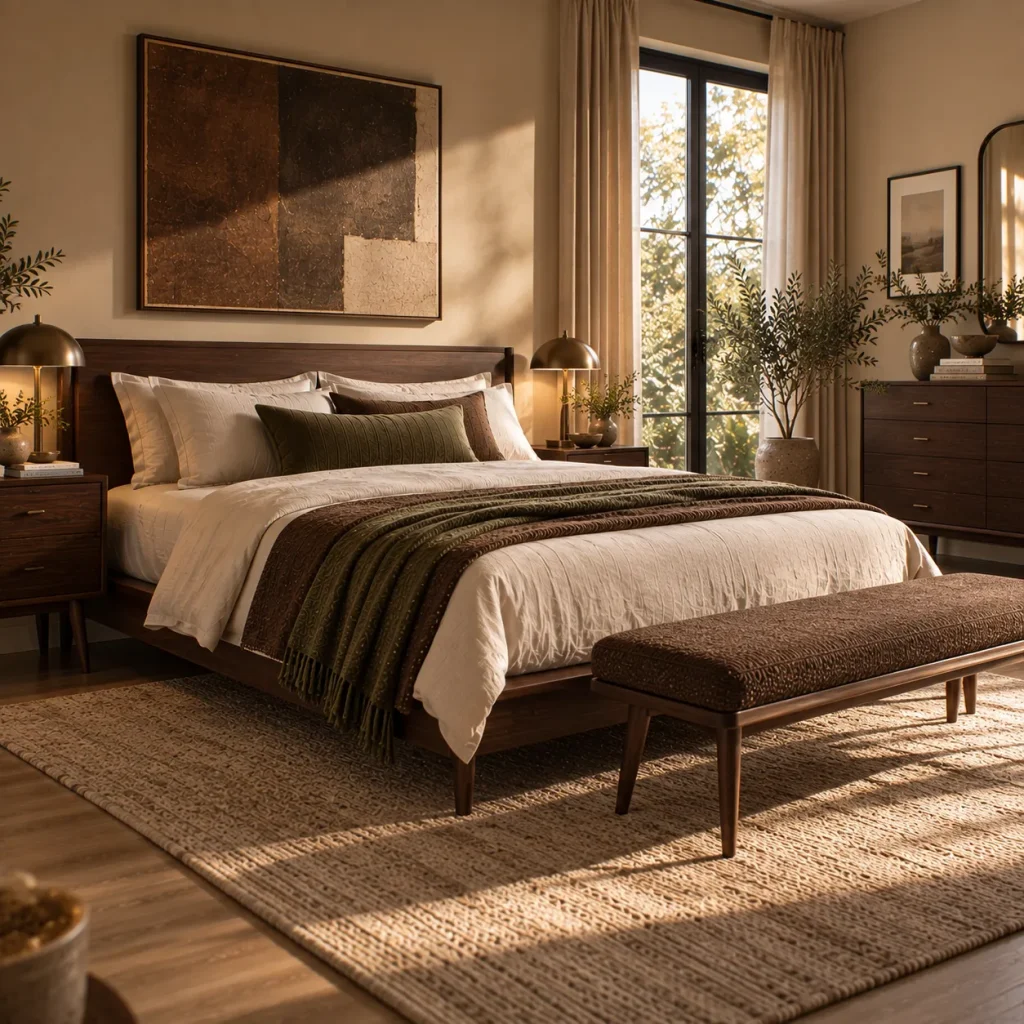
5. Use deeper brown instead of relying only on pale neutrals
Here is one current update worth borrowing: do not assume a mid-century bedroom has to be light.
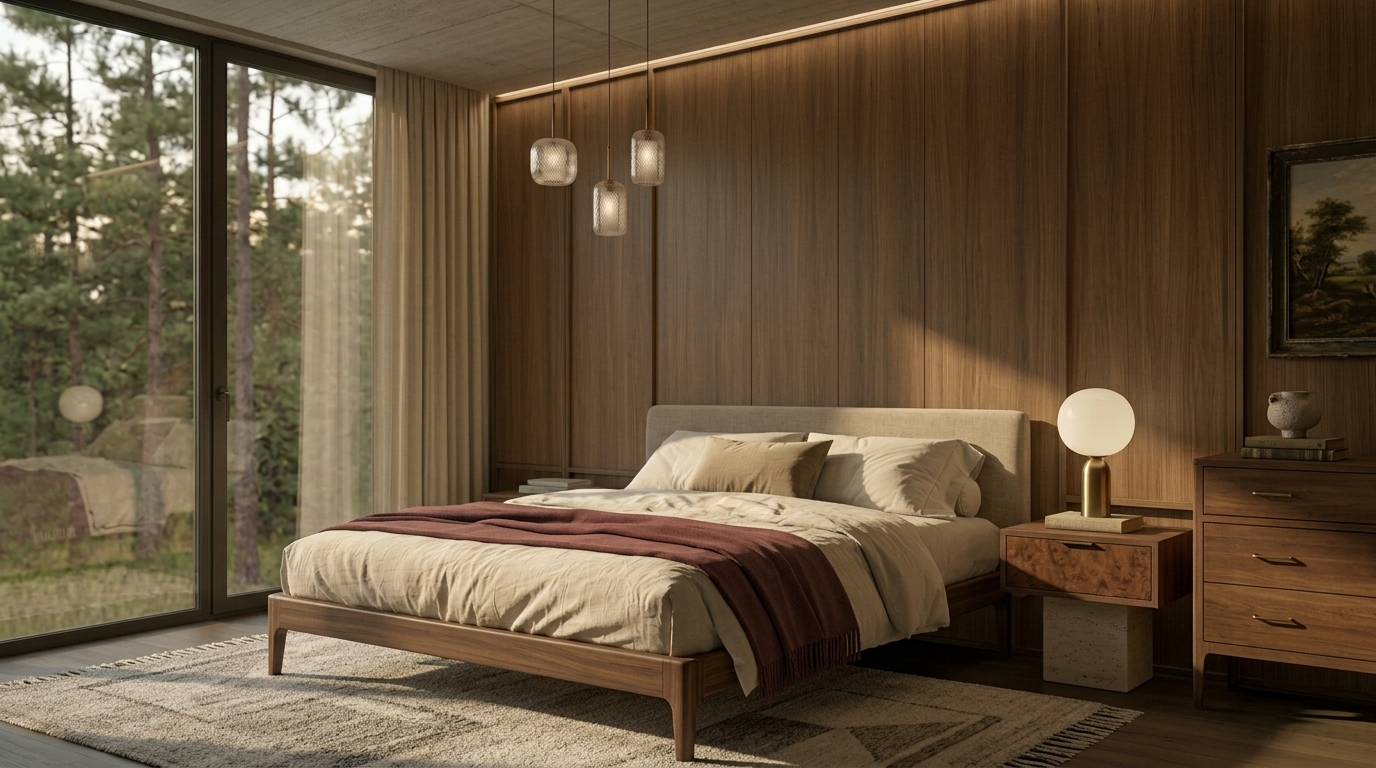
Rich walnut, espresso-toned wood, chocolate textiles, and dark brown accents are particularly popular right now, giving rooms a more grounded and established feeling.
You might use a deep walnut bed against creamy walls, then soften it with ivory linen and a muted green throw. The resulting room still feels calm, but it has far more depth than pale wood against pale beige.
Make Lighting Part of the Design

6. Choose one sculptural light fixture
Mid-century designers treated useful objects as opportunities for good form. Lighting is one of the easiest places to carry that philosophy into a bedroom.
Consider:
- globe sconces
- an angular reading lamp
- a tripod floor lamp
- a simple brass pendant
- an opal-glass bedside lamp
- a sculptural ceiling fixture
Current designers still recommend structural, architectural lighting when creating a contemporary mid-century bedroom because it adds recognizable character while remaining functional.
You do not need every fixture to reference the period. One statement light paired with quieter supporting lamps often gives the room more impact than a dramatic multi-globe chandelier combined with globe sconces everywhere.
Keep the Bedroom Soft Enough for Sleeping
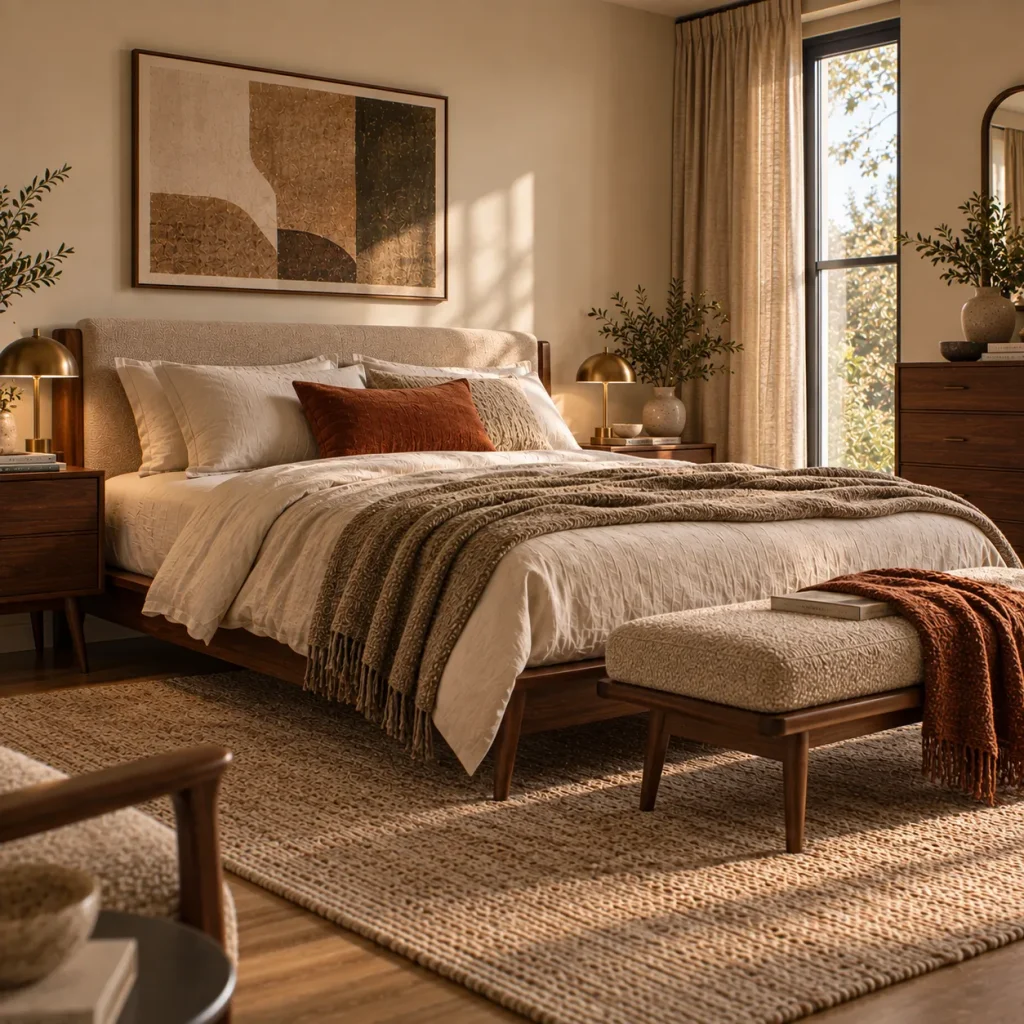
7. Layer texture over the clean furniture lines
Mid-century furniture can contain a lot of hard surfaces: wood, glass, metal, and straight architectural edges. Bedrooms need an additional layer.
Bring it through linen bedding, wool rugs, cotton quilts, velvet accents, woven curtains, or a softly upholstered headboard.
Layered texture is often recommended when adapting mid-century modern design to bedrooms so its clean lines still feel welcoming.
Imagine a low walnut bed with perfectly smooth white sheets and almost nothing else. Elegant? Possibly. Inviting? Not necessarily.
Now add an oatmeal wool blanket, slightly rumpled linen duvet, thick rug, and one rust-colored cushion. The furniture has not changed, but the room feels dramatically more comfortable, echoing the same layered comfort found in these cozy bedroom ideas. In 2026, designers report stronger demand for bedrooms that feel layered, soulful, and authentic rather than sparse and showroom-perfect.
Mix in Real History
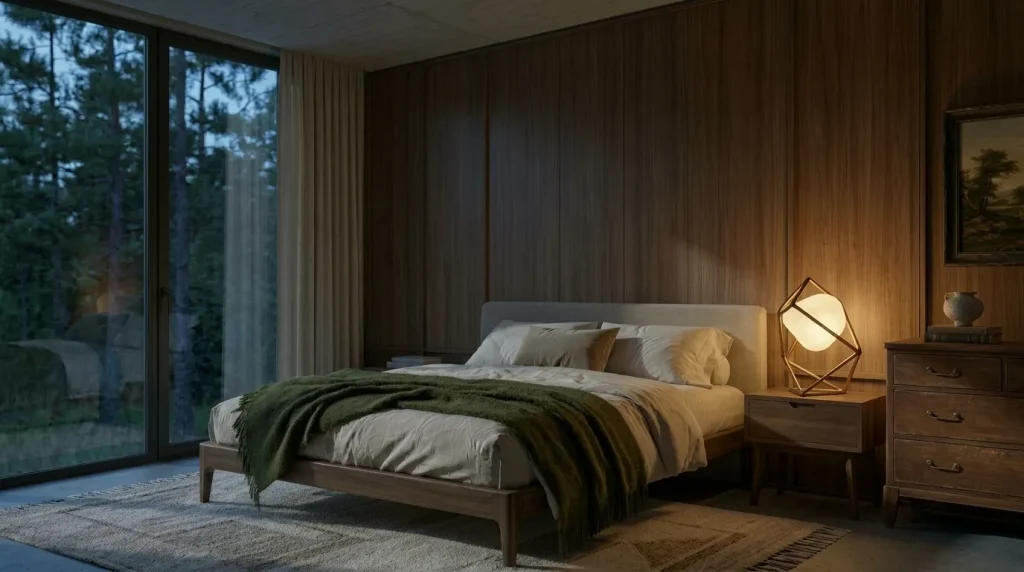
8. Bring in at least one genuine vintage piece
You do not need an original Eames chair beside a rare Danish dresser.
A vintage nightstand, bedside lamp, mirror, wooden chair, small chest, ceramic vase, or framed print can be enough to give the room history.
Current mid-century bedroom advice strongly favors curated vintage pieces because they help the style feel authentic without requiring an entire period-correct room.
Look at local antique stores, estate sales, flea markets, and secondhand marketplaces. Some pieces will show scratches or variation in their finish. That is not necessarily a problem.
Patina and designed imperfection are becoming more desirable in 2026 interiors as homeowners move away from rooms where everything appears brand-new and factory-perfect.
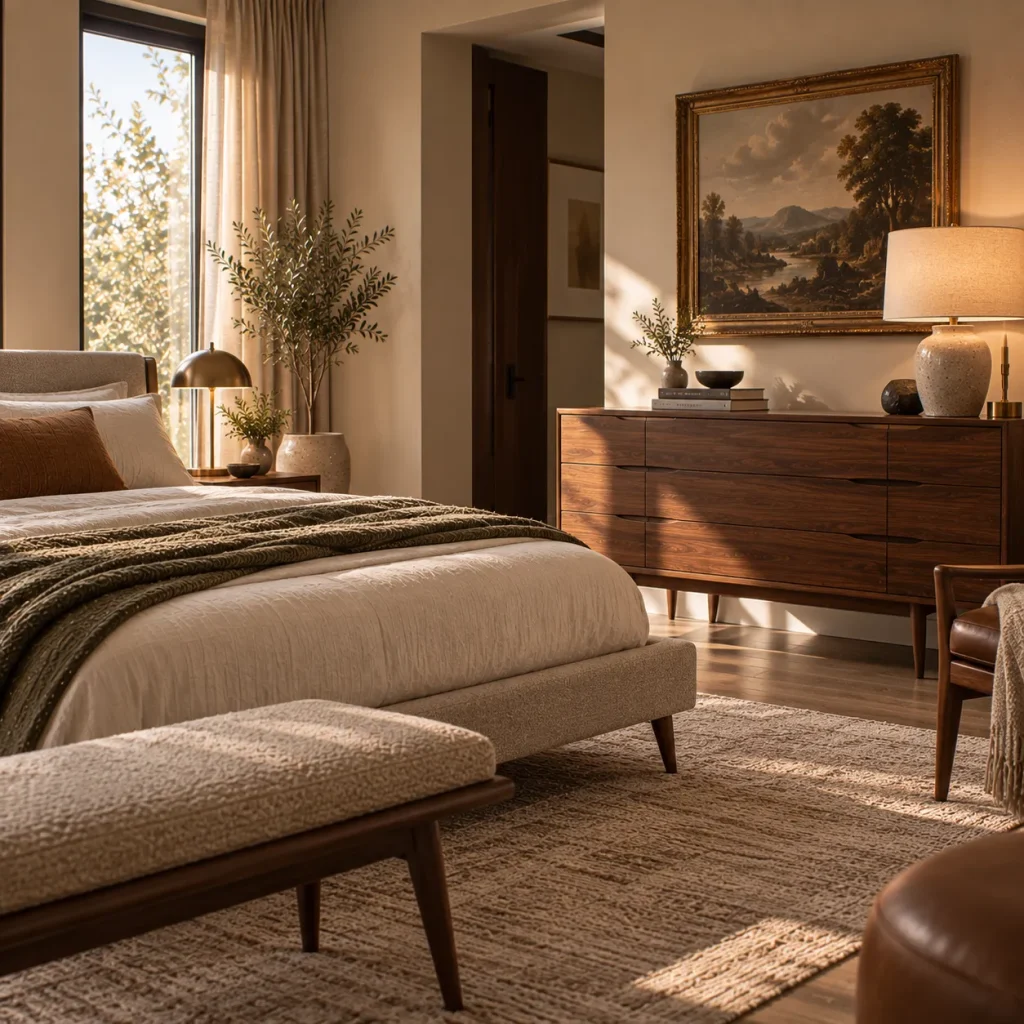
9. Deliberately include something from another era
This sounds counterintuitive, but it may be the difference between a stylish mid-century bedroom and a themed one.
Add something that is not mid-century. Perhaps an antique landscape painting, an ornate mirror, or a very modern rug.
Designer Kelly Wearstler has argued for mixing eras rather than sticking exclusively to one period, noting that combining vintage and contemporary furniture creates a more timeless result.
Imagine you find a 1960s walnut dresser you love. Instead of surrounding it with reproduction mid-century furniture, place a contemporary lamp on top and hang an older oil painting above it.
Suddenly the dresser feels like part of your bedroom rather than part of a period display. That is the goal.
Bring in Pattern Carefully
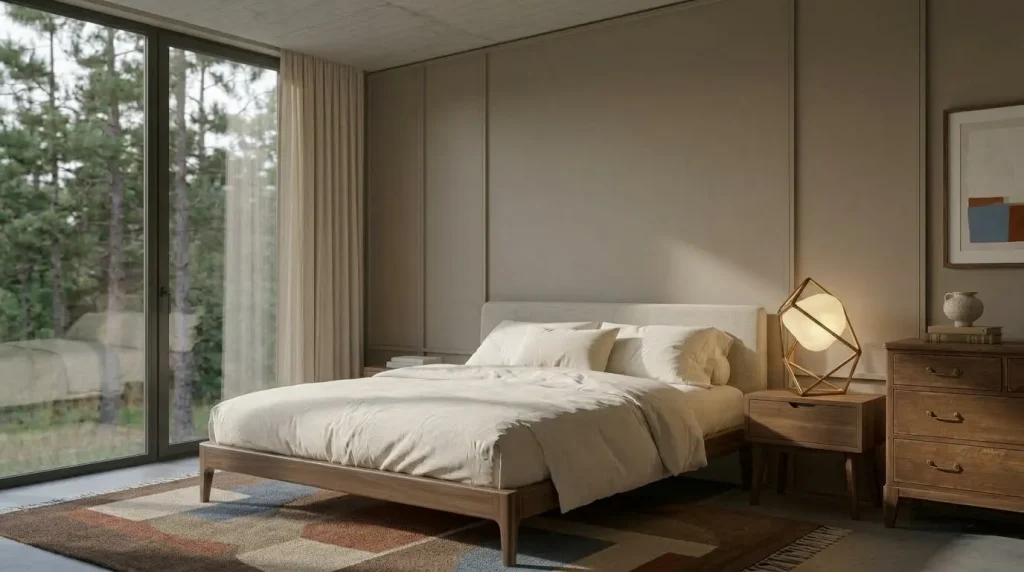
10. Use geometry as an accent, not a requirement
Geometric and abstract patterns belong naturally to mid-century design. But they are also one of the easiest ways to overdo it.
Current mid-century guidance still embraces geometric, freeform, and abstract pattern, while also recommending curves and sculptural forms to soften all the straight lines.
Try pattern through one element: a rug, cushion, throw, framed print, or upholstered bench.
Avoid having geometric wallpaper, geometric bedding, geometric artwork, and a geometric rug in the same bedroom. One strong pattern feels deliberate. Four start telling you what decade the room is supposed to represent. If you want more ideas for a single statement piece above the bed, these bedroom wall decor ideas offer plenty of restrained, sculptural options.
Let Empty Space Be Part of the Style
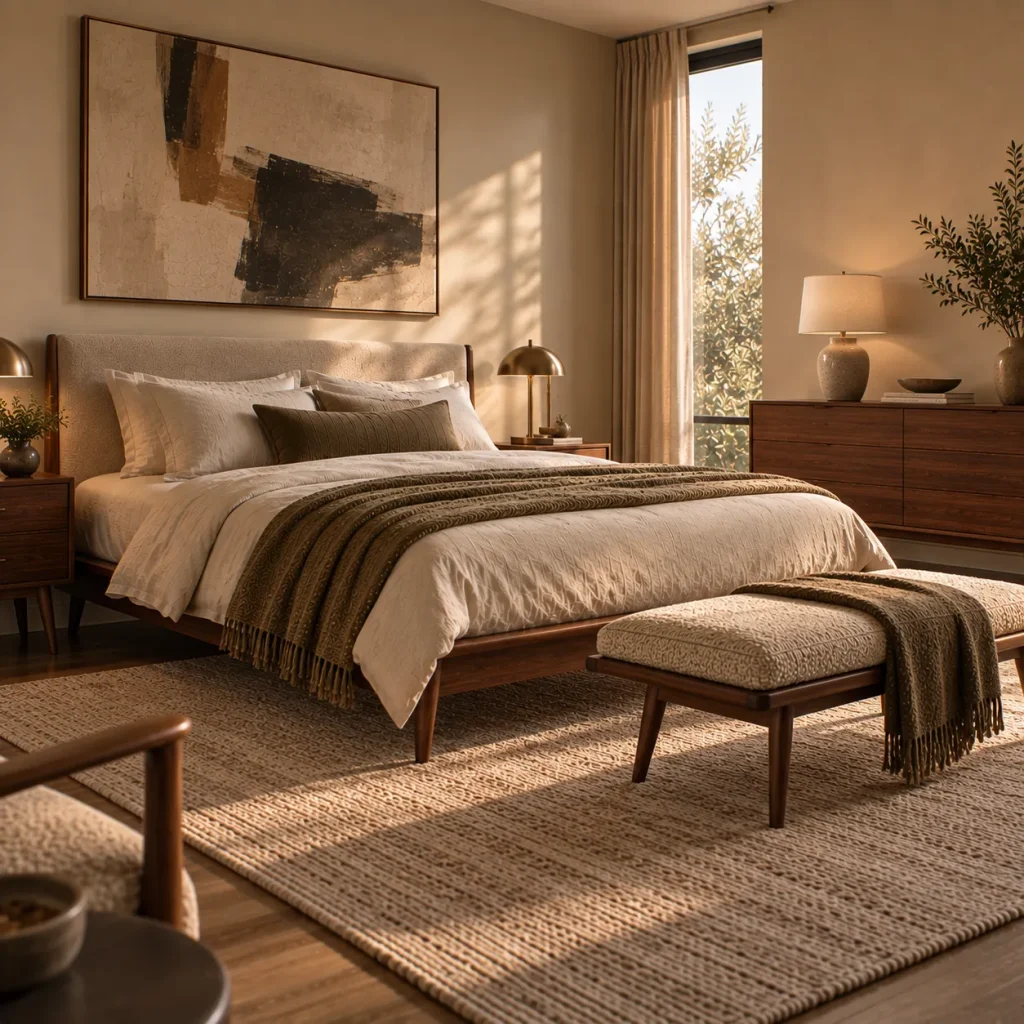
11. Edit the accessories harder than you think
Mid-century modern design became influential partly because of its emphasis on practical, uncomplicated living. Your bedroom therefore does not need decorating on every surface.
A dresser might hold one lamp, a small stack of books, and a ceramic bowl. That can be enough.
Likewise, the wall above your bed does not automatically require an elaborate gallery. One large abstract artwork or beautifully shaped headboard may provide all the visual weight you need.
The style is inherently unfussy, with clean lines and intentional forms being central to its enduring appeal. The restraint is particularly noticeable once the bed, wood, and textiles become more noticeable.
Mid-Century Modern Bedroom Mistakes to Skip
The biggest mistake is making every purchase mid-century modern.
If the bed, nightstands, dresser, lamps, rug, mirror, artwork, chair, clock, and accessories all aggressively reference the same era, the bedroom can quickly become thematic. Mix periods instead.
Another mistake is treating walnut as the only acceptable material. Mid-century designers worked with wood, metal, glass, upholstery, stone, plastics, and numerous other materials. Variety makes the room richer.
Do not automatically buy a starburst mirror either. It has become such shorthand for the style that a more understated mirror often feels fresher.
And be cautious with historically recognizable colors. Avocado green, burnt orange, mustard, and brown can be beautiful, but using all of them together may overwhelm a bedroom.
Finally, do not prioritize authenticity above comfort. If an original vintage chair is uncomfortable, you do not need to keep it just because it is rooted in functionality. Your interpretation should be too.
Try This If Your Bedroom Is…
| Your bedroom situation | Mid-century modern approach |
|---|---|
| Small | Low bed + raised furniture + minimal accessories |
| Too beige | Add olive, rust, blue, mustard, or burgundy |
| Cold and modern | Introduce walnut, wool, linen, and warm lighting |
| Dark | Use lighter walls and keep dark wood concentrated in a few pieces |
| A rental | Vintage dresser + sculptural lamps + artwork + bedding |
| Too retro | Remove themed accessories and introduce contemporary pieces |
| Too plain | Add one sculptural lamp or abstract pattern |
| Too coordinated | Mix wood tones and add one piece from another era |
| Cluttered | Reduce small decor and prioritize closed storage |
The best approach depends on what is already happening in your bedroom. If the architecture is very contemporary, vintage wood may provide enough character. If you live in an actual mid-century home, you may need fewer retro references, not more.
Frequently Asked Questions
What colors work best in a mid-century modern bedroom?
Warm neutrals make an easy foundation. Then introduce muted green, mustard, burnt orange, blue, burgundy, or another stronger color selectively. Mid-century interiors historically used considerably more color than today’s neutral interpretations suggest, so you do not have to be afraid of it.
What kind of wood is used in mid-century modern bedrooms?
Walnut and teak are two of the most recognizable choices, while oak, cherry, maple, beech, and rosewood can also fit the broader aesthetic. For a current room, worry less about finding one exact species and more about choosing furniture with attractive grain, warm color, streamlined construction, and appropriate proportions.
Can you mix mid-century modern with other styles?
Yes, and you probably should. Mid-century modern works particularly well with contemporary, Scandinavian, organic modern, minimalist, eclectic, and even selected traditional pieces. The clean forms make it surprisingly flexible. Mixing furniture from different eras is also part of what keeps a room feeling current rather than staged.
What to Do Next
Before buying anything, look around your bedroom and identify which one mid-century quality is currently missing.
Maybe you need warm wood. Maybe your bed is visually too bulky. Perhaps everything is neutral and the room needs one confident color. Or maybe the furniture already works and all you need is a sculptural bedside lamp.
Start there. Then follow a simple order:
- Get the bed and major furniture proportions right.
- Establish warm wood and your main color palette.
- Add comfortable textiles and lighting.
- Bring in one vintage or characterful piece.
- Edit the accessories before adding anything else.
The lesson behind these 11 mid century modern bedroom tips is that you do not need to recreate the past to use it well.
Take the things mid-century design got right, clean forms, functional furniture, beautiful wood, confident color, sculptural lighting, and respect for good craftsmanship, then mix them with the way you live now. That is what makes the style continue to work decades later.