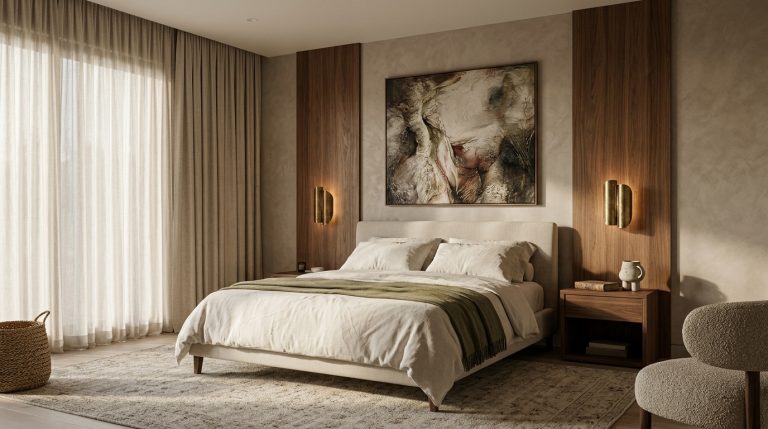
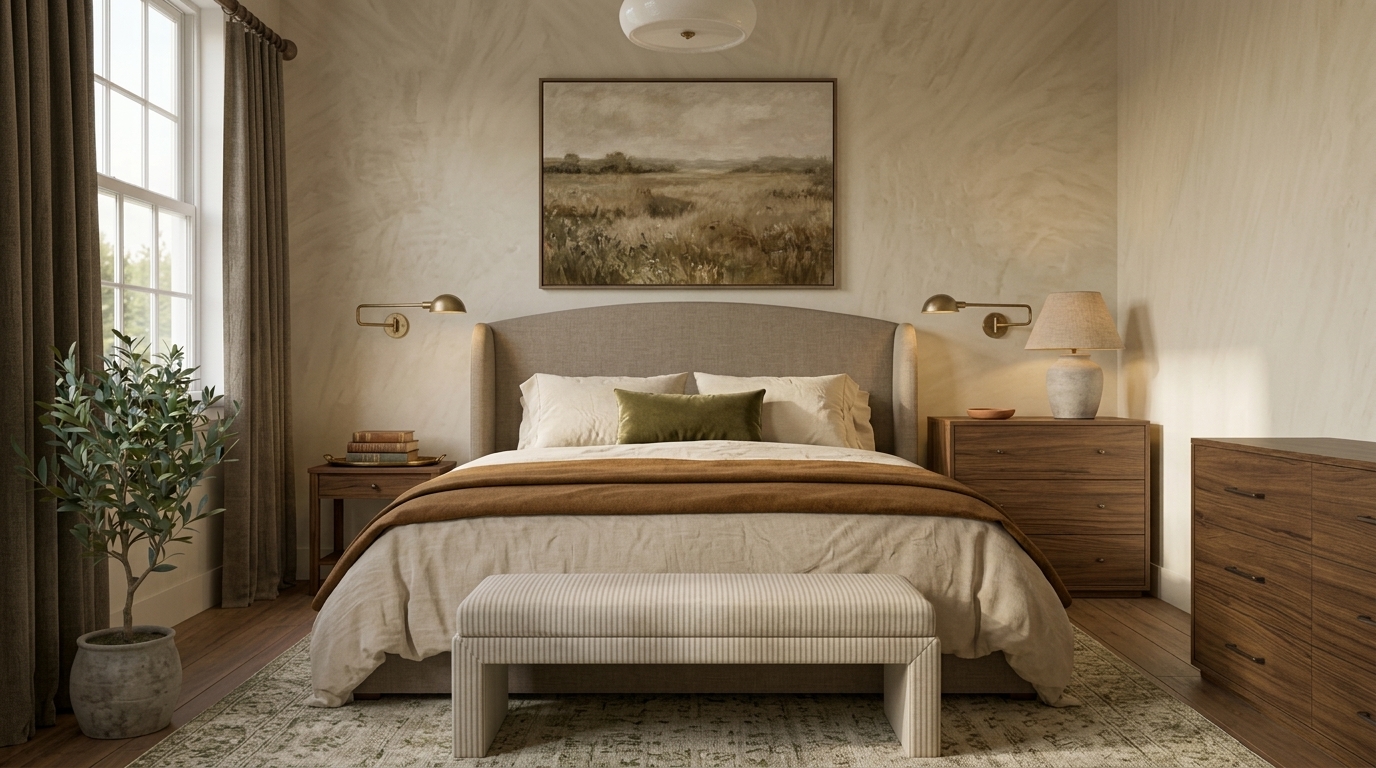
12 master bedroom decor tips for a Calm, Personal Retreat
A master bedroom can have beautiful furniture and still feel oddly unfinished. Often the problem is not a lack of decor. It is that the bed, lighting, rug, nightstands, curtains, and storage were chosen separately without one element giving the room a clear visual direction.
These 12 master bedroom decor tips focus on making the room work better before adding more accessories. In 2026, bedroom design is becoming warmer, more personal, and more tactile. Designers are using richer colors, statement headboards, layered fabrics, mixed furniture, better storage, and lower-tech sleeping spaces, a shift already visible across 14 black and white bedroom ideas.
The aim is a bedroom that feels considered from the doorway and genuinely comfortable once you are in bed.
Give the bed enough visual authority
Tip 1: Choose a headboard that can carry the room
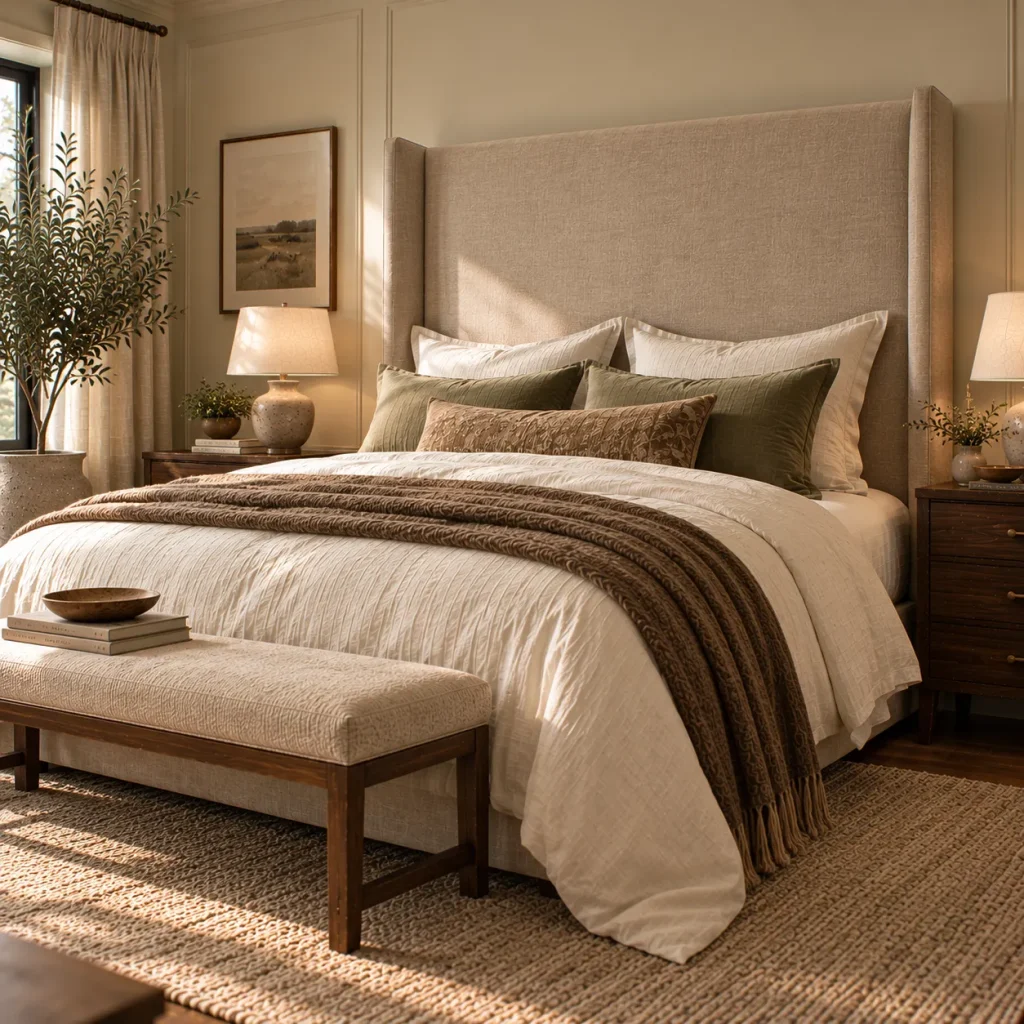
The bed is usually the largest object in a master bedroom, so let it do more decorative work. A substantial headboard can reduce the amount of artwork, cushions, and small accessories you need elsewhere. Consider linen, velvet, patterned cotton, wool-blend upholstery, or dark wood depending on your style.
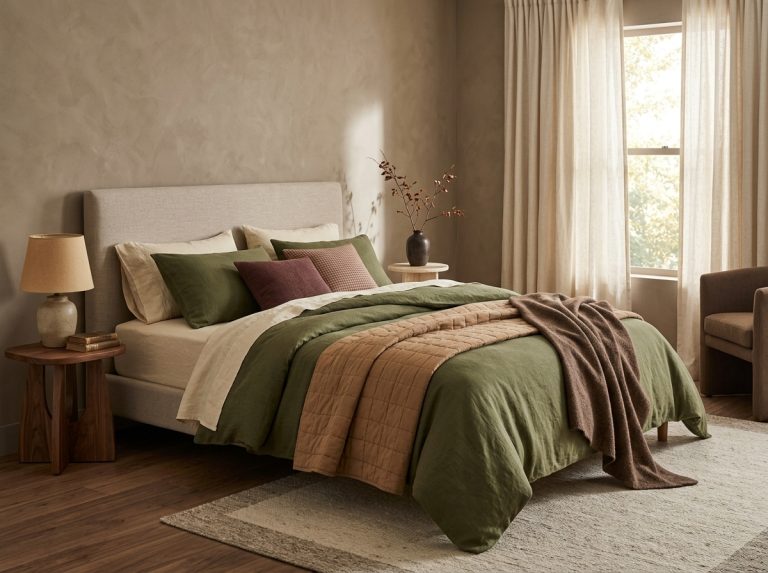
For a quieter scheme, try a tall mushroom linen headboard against warm ivory walls. For more color, consider burgundy velvet, olive upholstery, a narrow stripe, or a botanical fabric. If your room is not large, choose height rather than excessive depth.
Tip 2: Stop buying furniture that is too small for the room
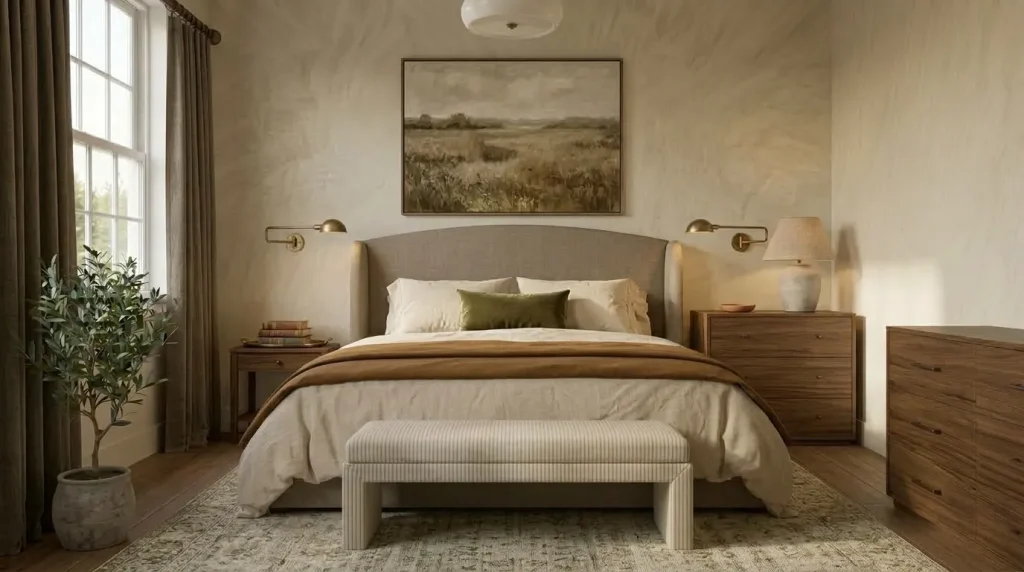
Large bedrooms often suffer from timid furniture. A narrow bed, tiny nightstands, small rug, and little artwork can make a generous room feel oddly empty rather than spacious.
Start with the bed and work outward. Where space permits, leave roughly 24 to 30 inches of comfortable circulation beside frequently used areas, then choose nightstands substantial enough to relate to the mattress and headboard. Large rooms do not need furniture pushed against every wall.
Build the palette beyond beige
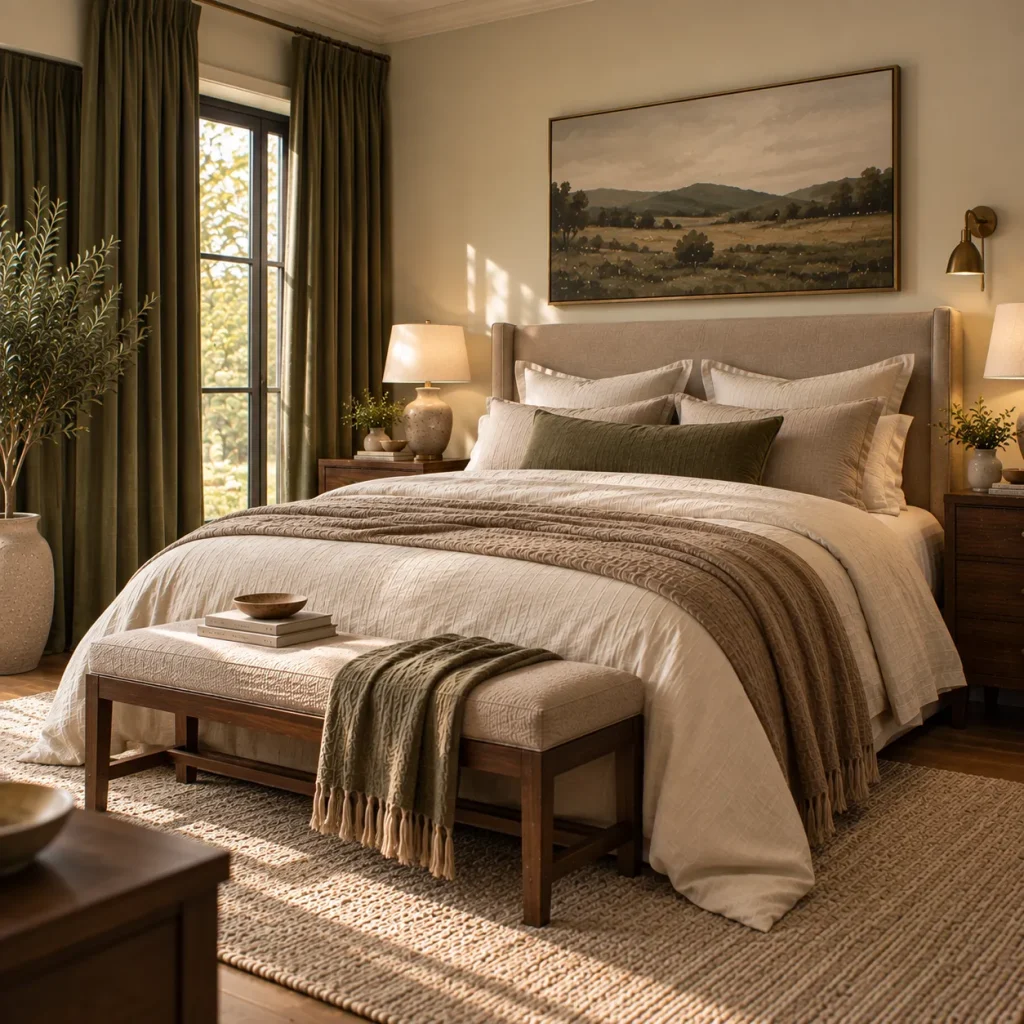
Tip 3: Choose one grounding color before selecting accessories
Do not begin a bedroom by buying cushions. Choose the color relationship first. Current 2026 bedroom palettes include warming burgundy, powder blue, earthy mauve, gray-green, smoky blue, and richer nuanced neutrals.
A useful palette might be mushroom plus chocolate plus dusty blue, warm ivory plus olive plus walnut, or burgundy plus parchment plus brass. Use one color in a meaningful area such as paint, curtains, upholstery, or bedding rather than scattering it through several tiny accessories.
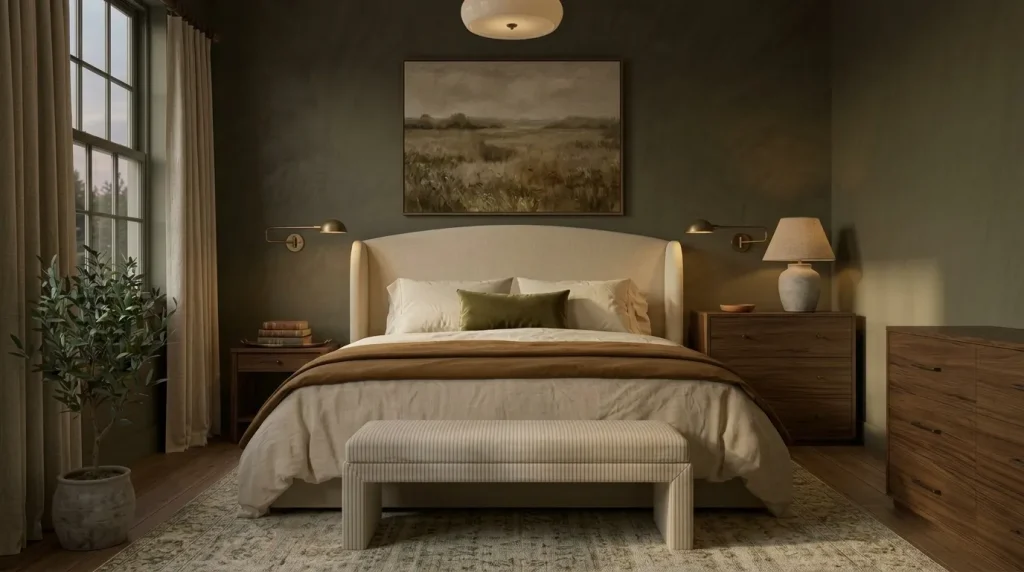
Tip 4: Use dark color if you want a more enveloping room
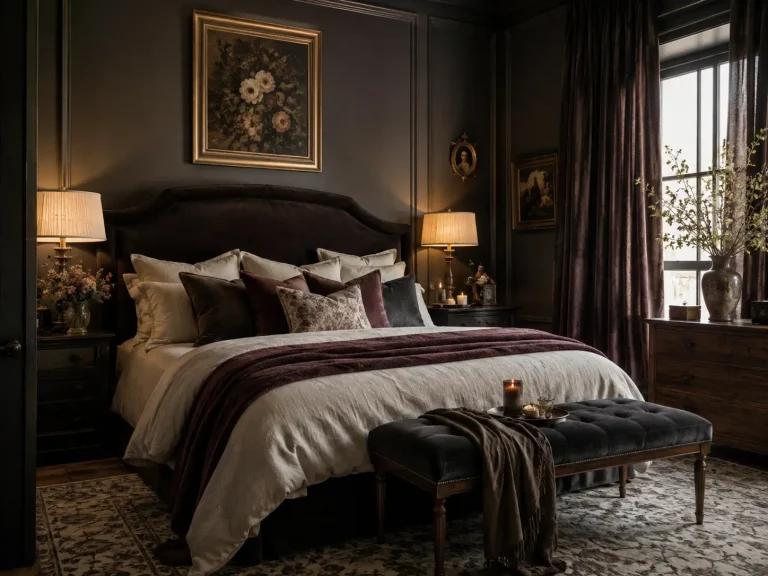
Everyone says bedrooms should be light and airy. That is only one option. Deep blue-gray, smoky olive, plum, chocolate, burgundy, and charcoal can create excellent sleeping spaces because they reduce glare and give the room visual intimacy.
If you use a dark wall color, introduce enough contrast through linen, a wool rug, pale curtains, or upholstery. Dark does not mean everything should become dark.
Make bedding tactile rather than complicated
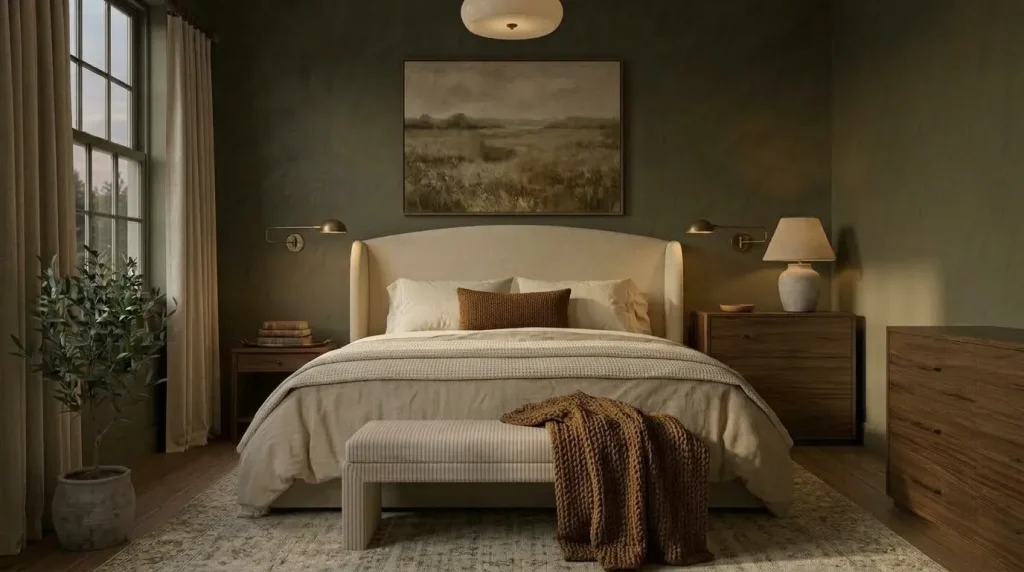
Tip 5: Layer the bed with three or four useful materials
A beautifully dressed bed does not need ten pillows. Start with good cotton or linen sheets, add a duvet, quilt, or coverlet, then introduce one heavier texture at the foot of the bed, such as wool, washed linen, velvet, or a woven blanket.
Try warm ivory sheets, mushroom bedding, and a tobacco wool throw, or use powder-blue bedding with a burgundy quilt and cream pillows. Two sleeping pillows and one or two decorative cushions are often enough.
Stop treating nightstands as a matching set
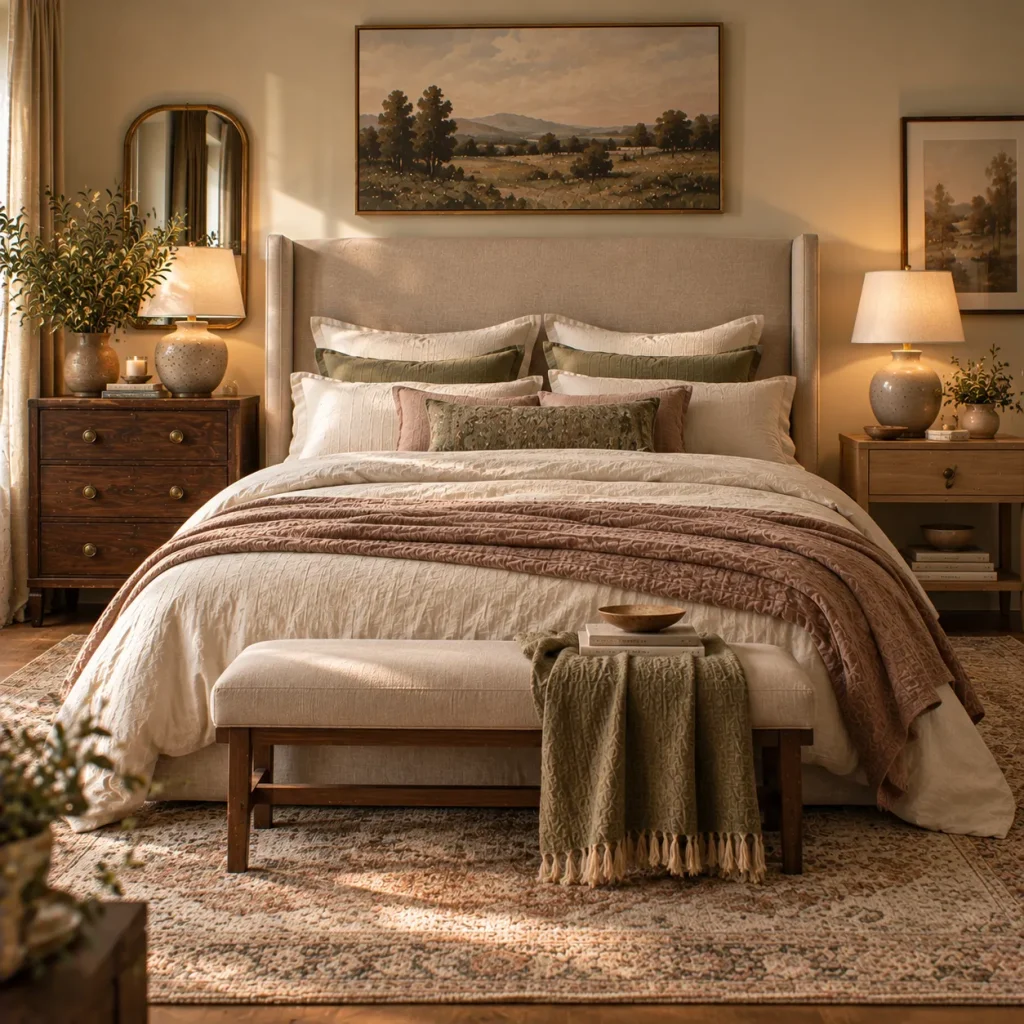
Tip 6: Mix bedside furniture with intention
Matching nightstands are perfectly fine, but they are not compulsory. Bedroom furniture in 2026 is moving away from rigid matching sets toward combinations that feel more collected and individual.
I once worked through an illustrative bedroom where the bed, dresser, nightstands, and bench all came from one matching range. Everything coordinated, yet no individual piece had much presence. Changing only one pair of nightstands to darker vintage-style tables gave the whole room more character. Matching is not the same thing as cohesion.
Give the floor enough weight
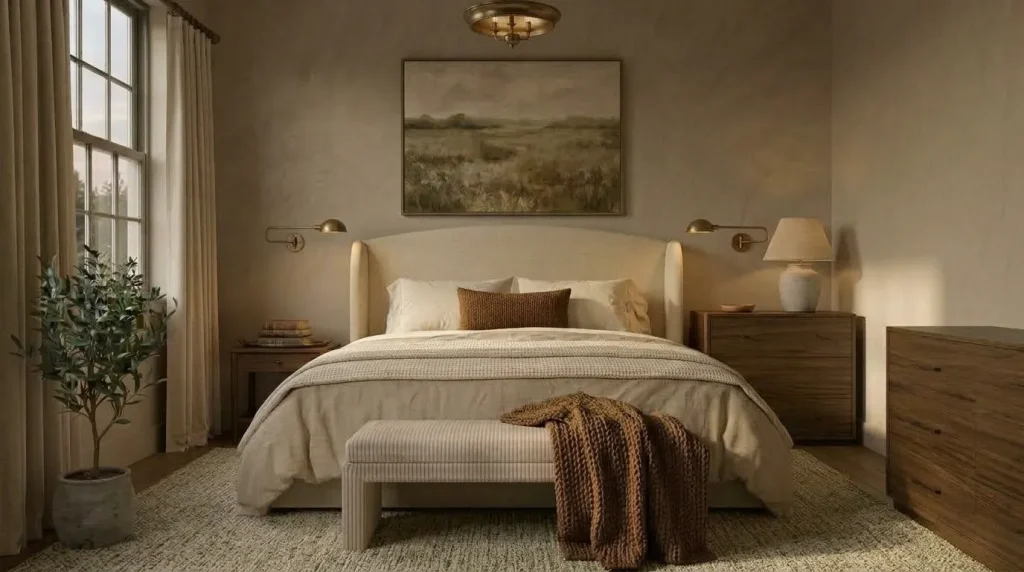
Tip 7: Use a rug that properly relates to the bed
An undersized rug can make even expensive bedroom furniture look disconnected. For a queen bed, an 8-by-10-foot rug is often a useful starting point where space allows. A king frequently needs something closer to 9-by-12 for generous coverage, an approach that pairs well with the layered, tonal floors in 10 neutral bedroom ideas.
Try wool in oatmeal, olive, tobacco, muted blue, or a faded multi-color pattern. If the room already has dark wood furniture, a lighter rug can prevent the lower half of the space from becoming visually heavy.
Design the lighting for nighttime

Tip 8: Build at least three layers of light
Bedrooms are frequently decorated during daylight and then poorly lit during the hours they are actually used. Use a ceiling fixture for general illumination, add bedside lamps or sconces for reading, then consider a dresser lamp or floor lamp if another corner needs softer light.
Fabric shades, parchment, ceramic, aged brass, bronze, and colored glass can all soften a bedroom. Keep bulb temperatures reasonably consistent.
Give the windows more presence
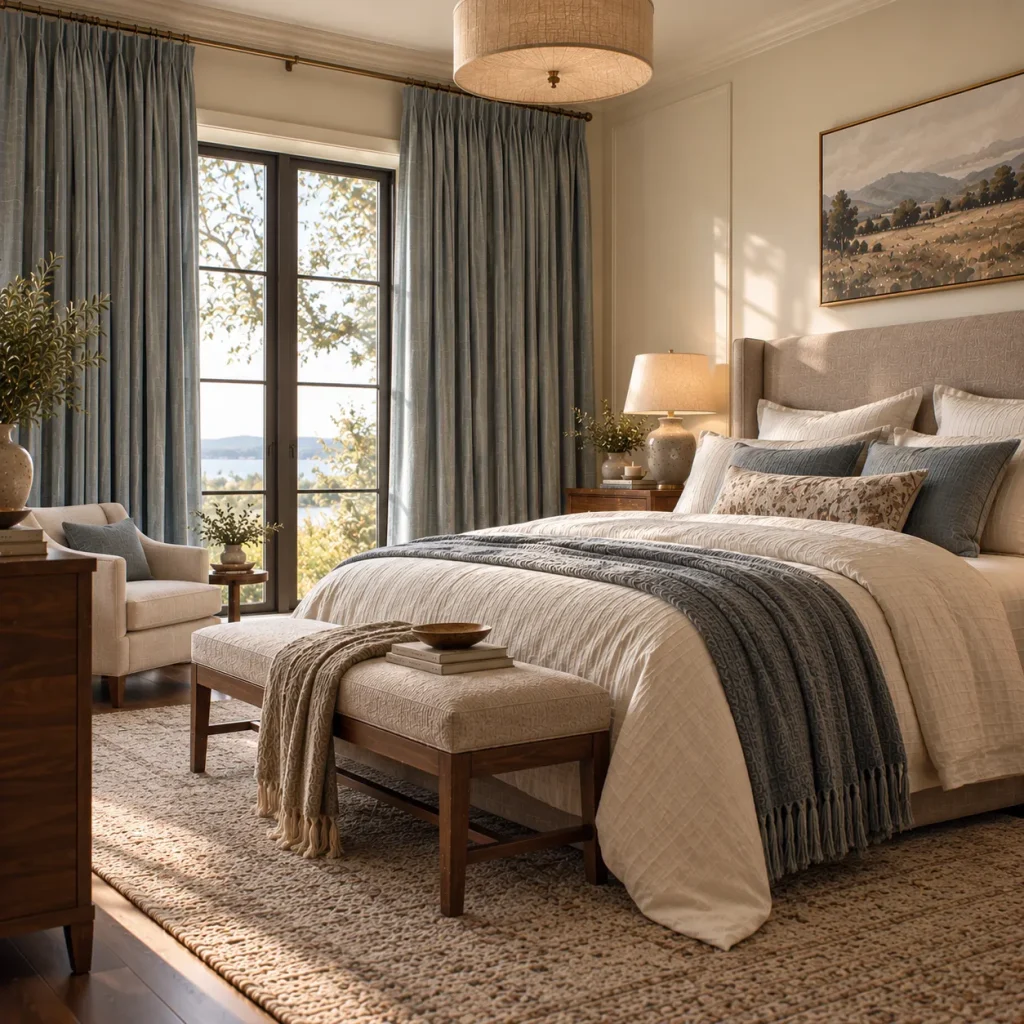
Tip 9: Hang substantial curtains at the right scale
Curtains cover a significant amount of wall area, yet they are often treated as a late-stage accessory. Where the architecture permits, hang curtains closer to the ceiling and let them reach the floor, and extend the rod beyond the window so more glass remains visible when the curtains are open.
If the walls are dark, warm ivory curtains can provide relief. With pale walls, olive, dusty blue, mushroom, or patterned curtains can give the room more depth, the same editing instinct behind 10 minimalist bedroom tips.
Give the room one personal wall
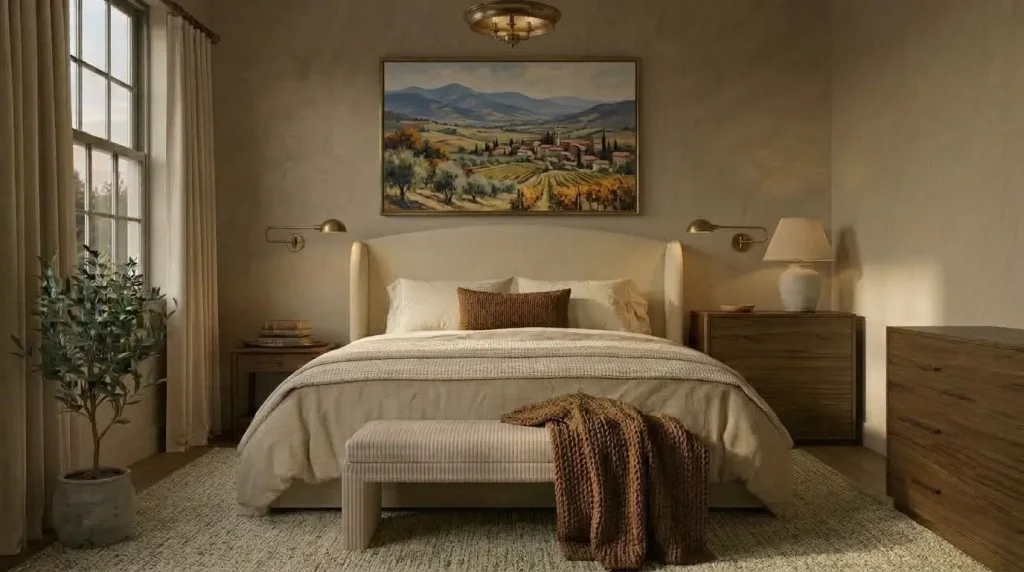
Tip 10: Use art that means more than matching the bedding
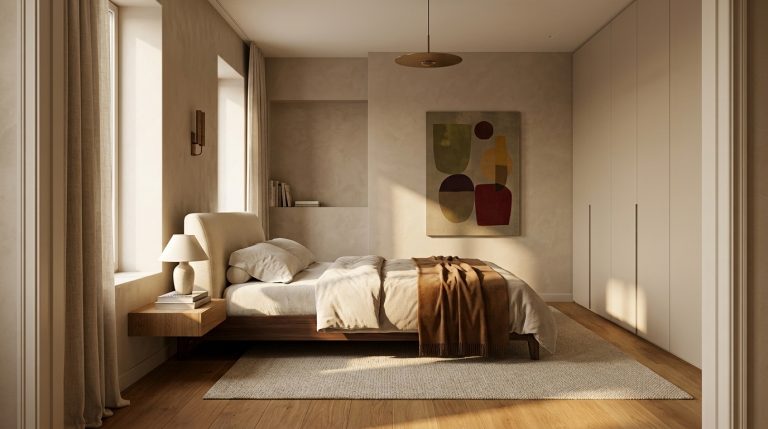
Bedrooms often end up with generic art because homeowners are afraid a stronger piece will disturb the calm. It usually does the opposite. Choose a landscape, photograph, abstract painting, textile, vintage portrait, or collection that reflects your taste.
Above a wide headboard, artwork around two-thirds of its width can be a useful starting point depending on the composition, an approach explored further in 15 creative master bedroom wall decor ideas.
Make storage visually quieter
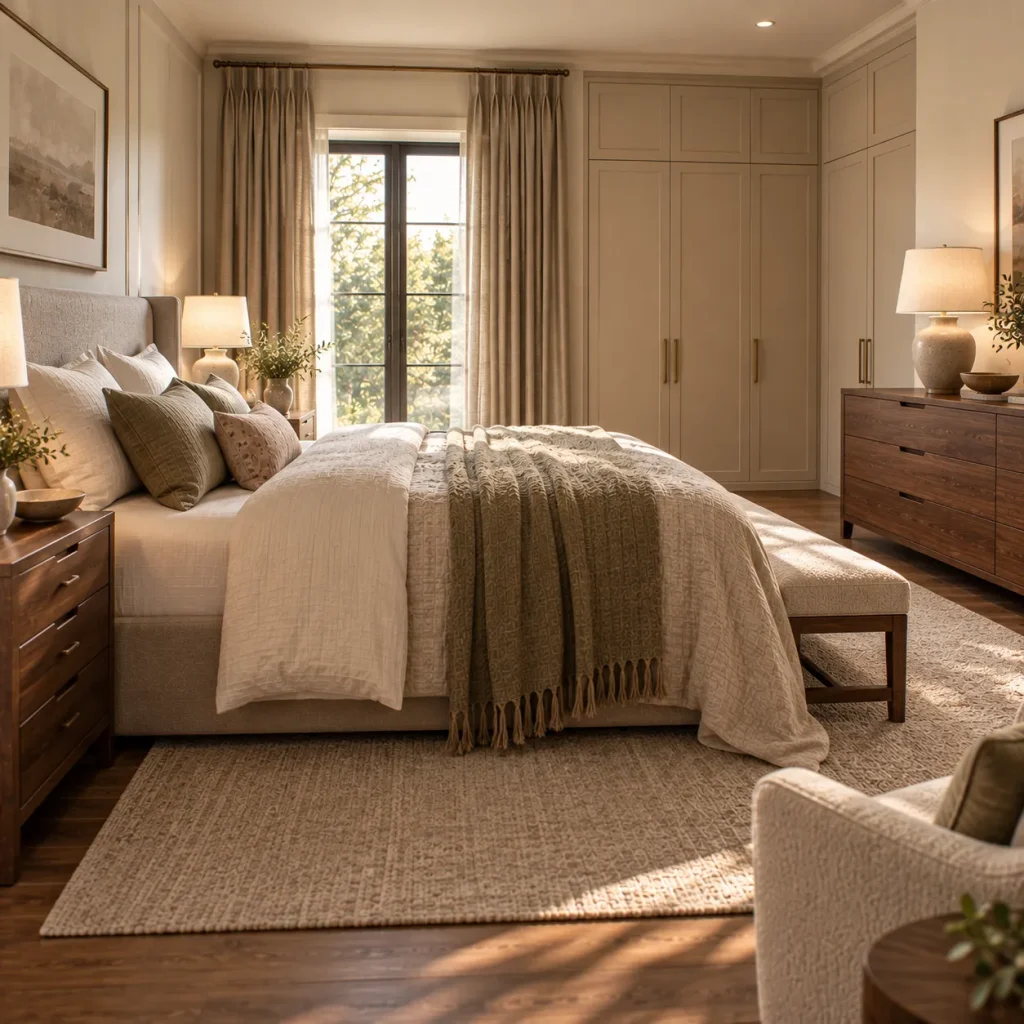
Tip 11: Hide the everyday clutter before adding decorative storage
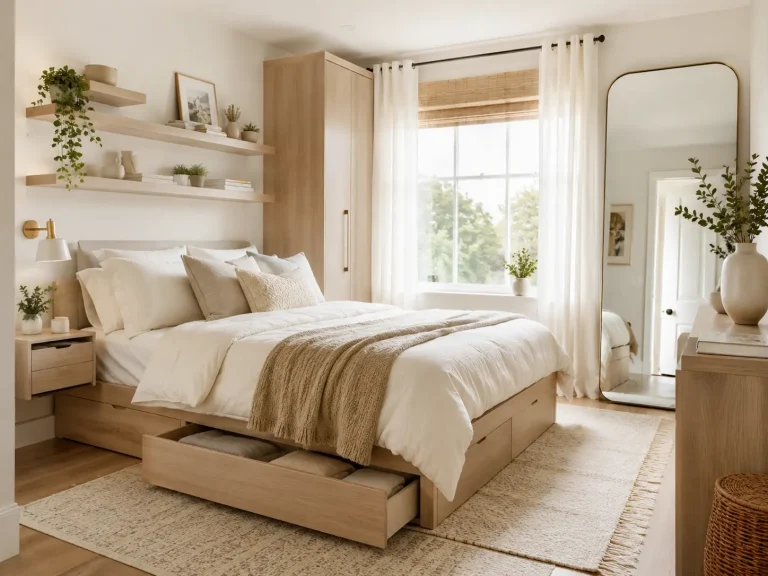
A master bedroom will not feel restful if the dresser is permanently covered in chargers, cosmetics, laundry, receipts, and clothing. Solve storage before styling. Use bedside drawers for small essentials, keep laundry contained, and organize the wardrobe around what you use most often.
More baskets do not automatically mean better organization. Closed storage is especially valuable in bedrooms because the eye has fewer objects to process before sleep.
Reduce technology where you can
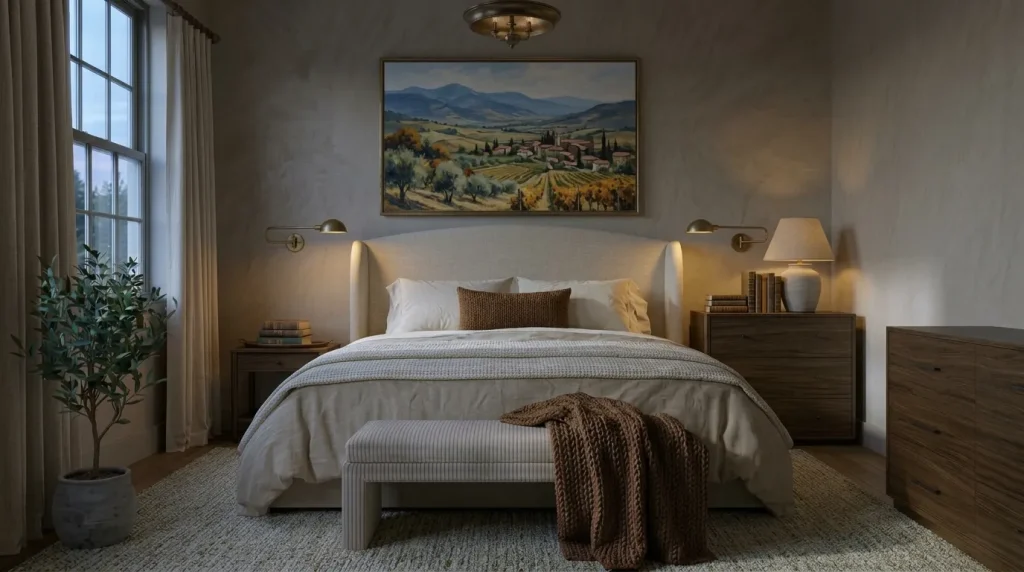
Tip 12: Make the bed the focus instead of the television
One of the more interesting 2026 bedroom changes is deliberately reducing visible technology. Designers are reporting requests for televisions to be hidden or removed, chargers concealed inside furniture, and primary bedrooms designed as more analog spaces.
Start simply. Hide charging cables inside a nightstand where practical, and position the television away from the strongest visual wall or conceal it behind cabinetry if your budget allows. Keep books beside the bed.
What should you skip in a master bedroom?
- The matching bedroom suite. A complete bed, dresser, nightstand, and bench set can make the room look more like a showroom than a personal space.
- Decorating before solving storage. Beautiful surfaces rarely stay beautiful when everyday belongings have nowhere to go.
- Tiny rugs and artwork. A larger room often needs larger visual gestures.
- Making every surface neutral. Calm does not require eliminating color.
- Trying to create a luxury hotel room exactly. Your bedroom should include your books, routines, art, storage needs, and preferences.
FAQ
What are the biggest master bedroom decor trends in 2026?
Warmer and more personal rooms are leading the year. Current trends include saturated color, statement headboards, tactile upholstery, mixed furniture, richer rugs, decorative drapery, built-in storage, and reduced visible technology.
What colors are best for a master bedroom?
Warm ivory, mushroom, olive, burgundy, dusty blue, earthy mauve, chocolate, and smoky blue all work well. Choose based on your natural light, flooring, and furniture rather than following one universal “relaxing” color.
How can I make my master bedroom look more expensive?
Improve proportion before buying luxury accessories. A larger rug, properly scaled curtains, substantial headboard, layered lighting, good bedding, and one strong artwork often create a more considered room than many decorative objects.
Does a master bedroom need a sitting area?
No. Add seating only if you have enough space and will actually use it. A reading chair or small bench can be helpful, but leaving comfortable circulation is more important than filling an empty corner.
Design the room around how you end your day
The strongest 12 master bedroom decor tips are less about decoration than hierarchy. Let the bed lead. Give it good lighting, a properly scaled rug, useful bedside surfaces, and bedding you genuinely enjoy touching.
If you make one change first, look at the bedroom tonight rather than during the day. Notice what feels too bright, cluttered, empty, or inconvenient from the bed.
A master bedroom should support the quiet routines at the beginning and end of your day. Once those routines work comfortably, the decorating becomes much easier.