14 sage green and blush bedroom tips for a Soft, Sophisticated Retreat
Sage green and blush can create an exceptionally restful bedroom, but the pairing can also become overly sweet if every surface stays pale and pastel. Sage walls, pink bedding, cream furniture, and a few gold accessories may coordinate beautifully while still leaving the room without enough depth.
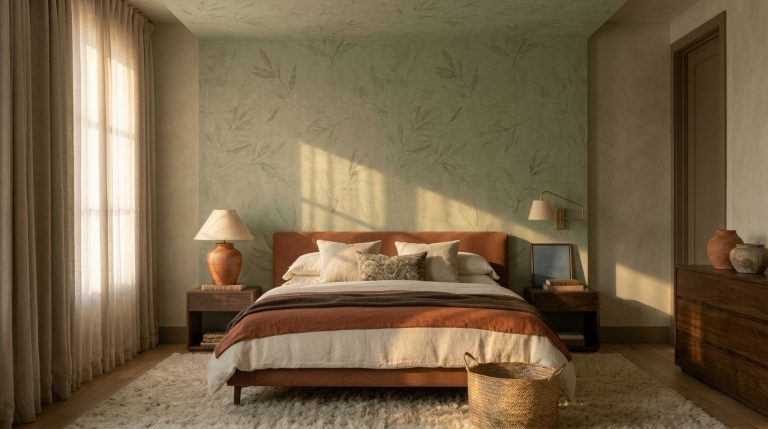
The better 14 sage green and blush bedroom tips for 2026 use warmer woods, muddy greens, dusty pinks, natural fabrics, richer accents, and controlled pattern to make the combination feel more grown-up, the same considered palette-building behind 12 master bedroom decor tips.
The key is not using more pink and green. It is choosing better versions of both and giving them something substantial to sit beside.
Get the undertones right before choosing furniture
Tip 1: Choose an earthy sage rather than a blue-gray green
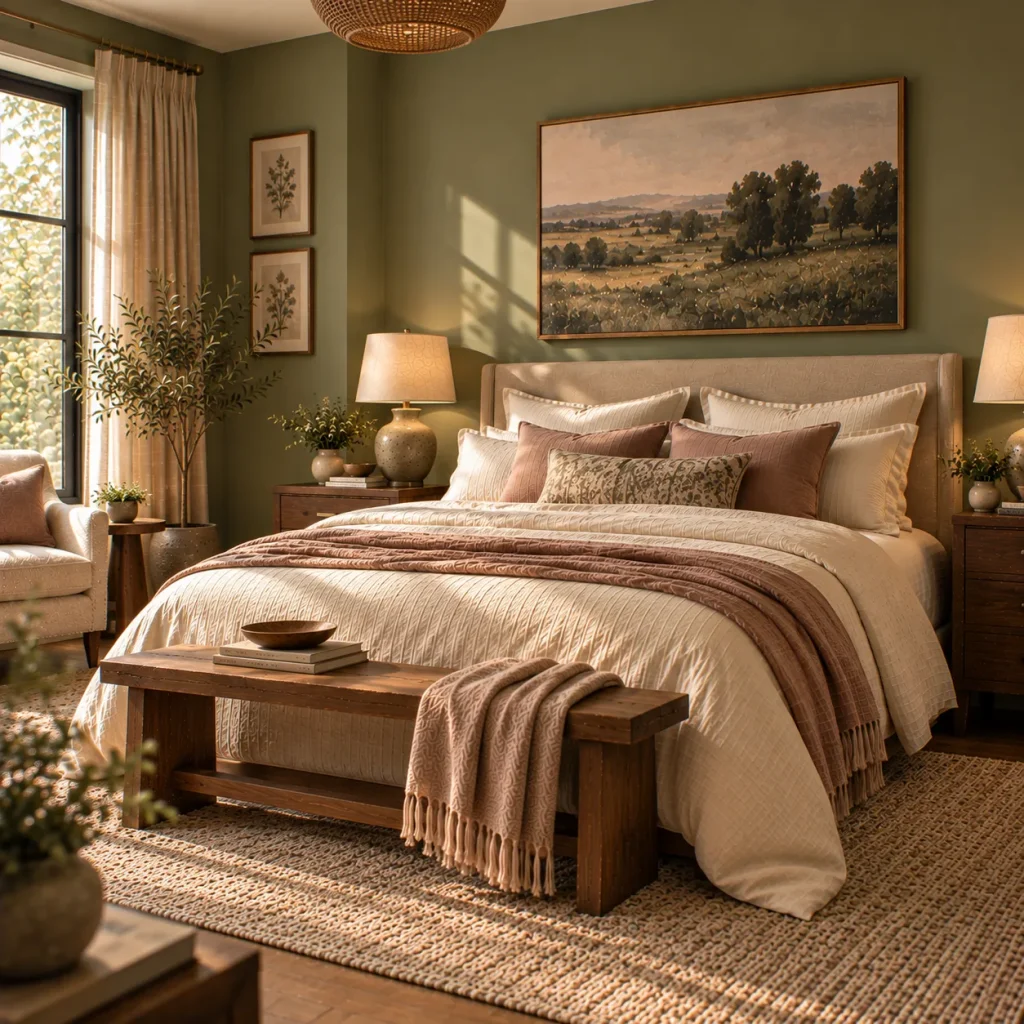
Sage can lean gray, yellow, olive, or even slightly blue. For a bedroom with blush, look for a sage with enough warmth to prevent the palette from becoming icy. Muted olive-sage, dusty herbal green, and softly yellow-based sage usually pair well with pinks that contain brown, peach, or clay undertones.
Test paint on a large sample board. Move it beside your flooring, headboard, and window. Sage can look beautifully earthy in afternoon light and noticeably grayer after sunset.

Tip 2: Use dusty blush instead of candy pink
The pink matters just as much. Look for dusty rose, plaster pink, clay pink, faded blush, or peachy rose rather than a very cool pastel. Soft pink is one of the notable bedroom colors of 2026, but designers are using warmer, plaster-like versions that behave almost like neutrals.
That warmer pink sits beautifully beside sage.
Decide which color should dominate
Tip 3: Let sage lead and blush play a supporting role
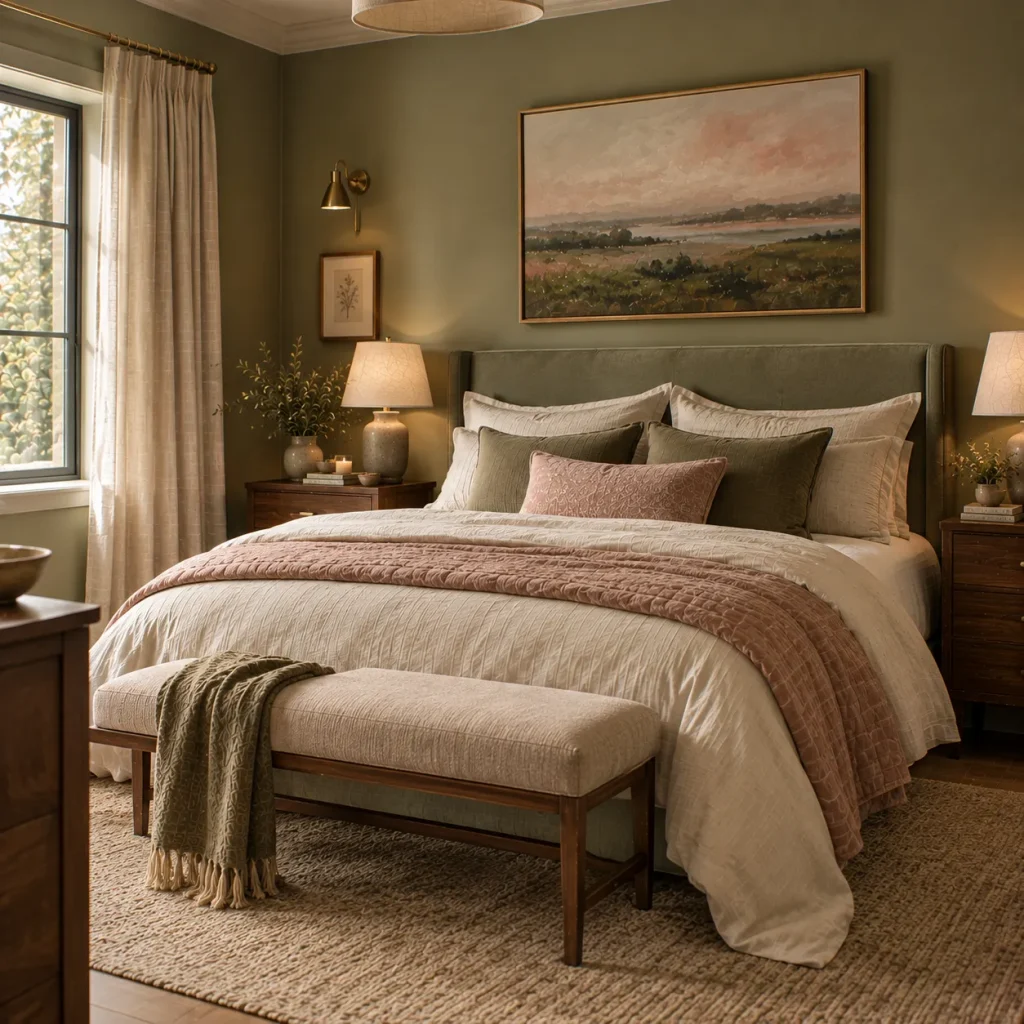
A 50-50 split can make the room look overly coordinated. Instead, choose one dominant color. For a calmer scheme, use sage on the walls or headboard and let blush appear through bedding, curtains, artwork, or one upholstered piece.
If you prefer a warmer bedroom, reverse the relationship. Use plaster-pink walls with sage upholstery or curtains.

Tip 4: Add cream or oatmeal as a visual pause
Sage and blush need a neutral between them. Warm ivory, oatmeal, parchment, mushroom, and creamy white are useful because they soften the transition without cooling the room, echoing the same palette logic found in 10 neutral bedroom ideas.
Try oatmeal bedding between a sage wall and blush headboard, or use cream curtains in a room with sage paneling and a dusty-rose quilt.
Bring in enough brown to ground the palette
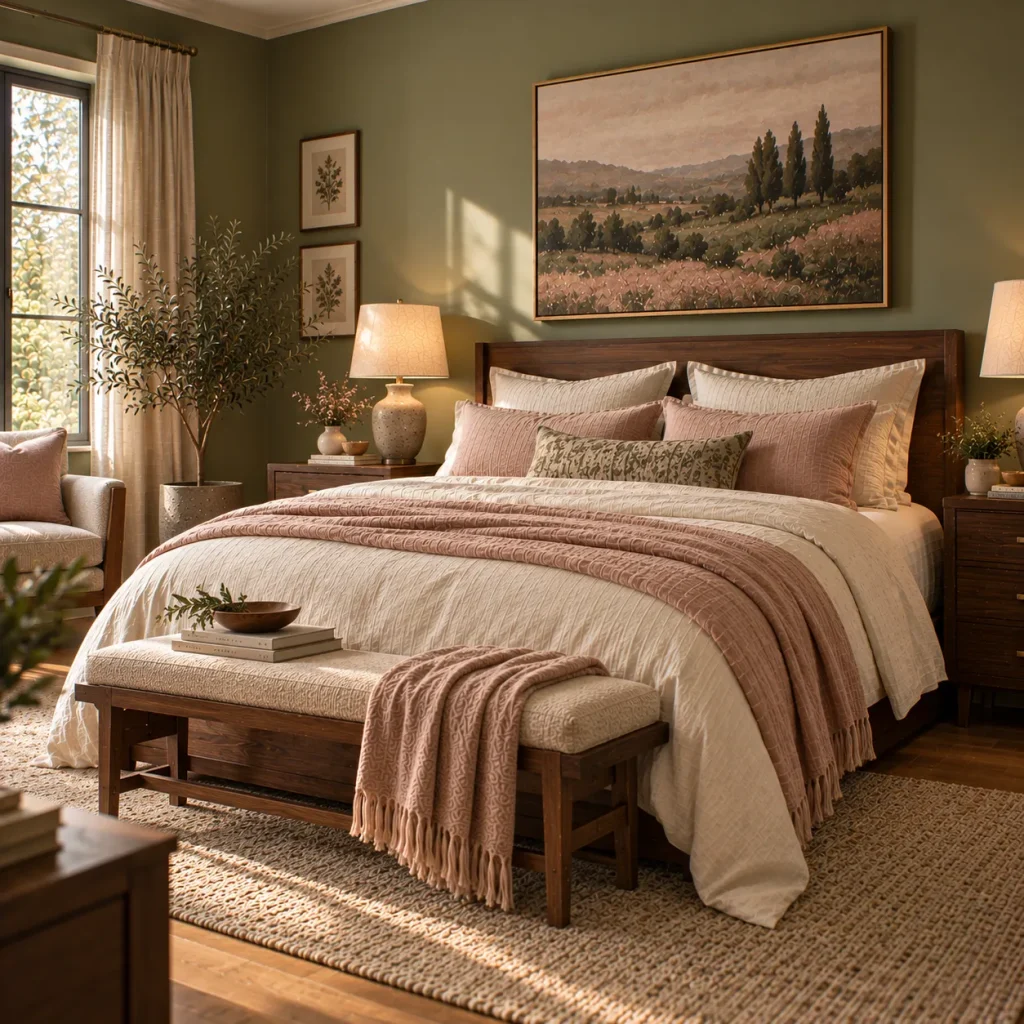
Tip 5: Pair sage and blush with walnut or medium oak
This is one of the easiest ways to make the combination feel more sophisticated. Walnut brings reddish-brown depth that complements both dusty pink and muted green. Medium oak creates a slightly lighter, more relaxed result.
One useful contradiction is that a sage-and-blush bedroom often needs more brown, not more green or pink. Without a grounding material, the palette can drift toward a nursery-like softness.

Tip 6: Add chocolate or burgundy for a deeper accent
A darker color can stop this palette from becoming predictable. Chocolate brown works almost like a neutral. Burgundy gives the room a slightly more romantic direction.
Try a chocolate wool throw across blush bedding, or use a burgundy lumbar cushion against a sage upholstered headboard. One darker accent repeated twice is often enough.
Make the bed carry the softness

Tip 7: Choose an upholstered headboard in one of the two colors
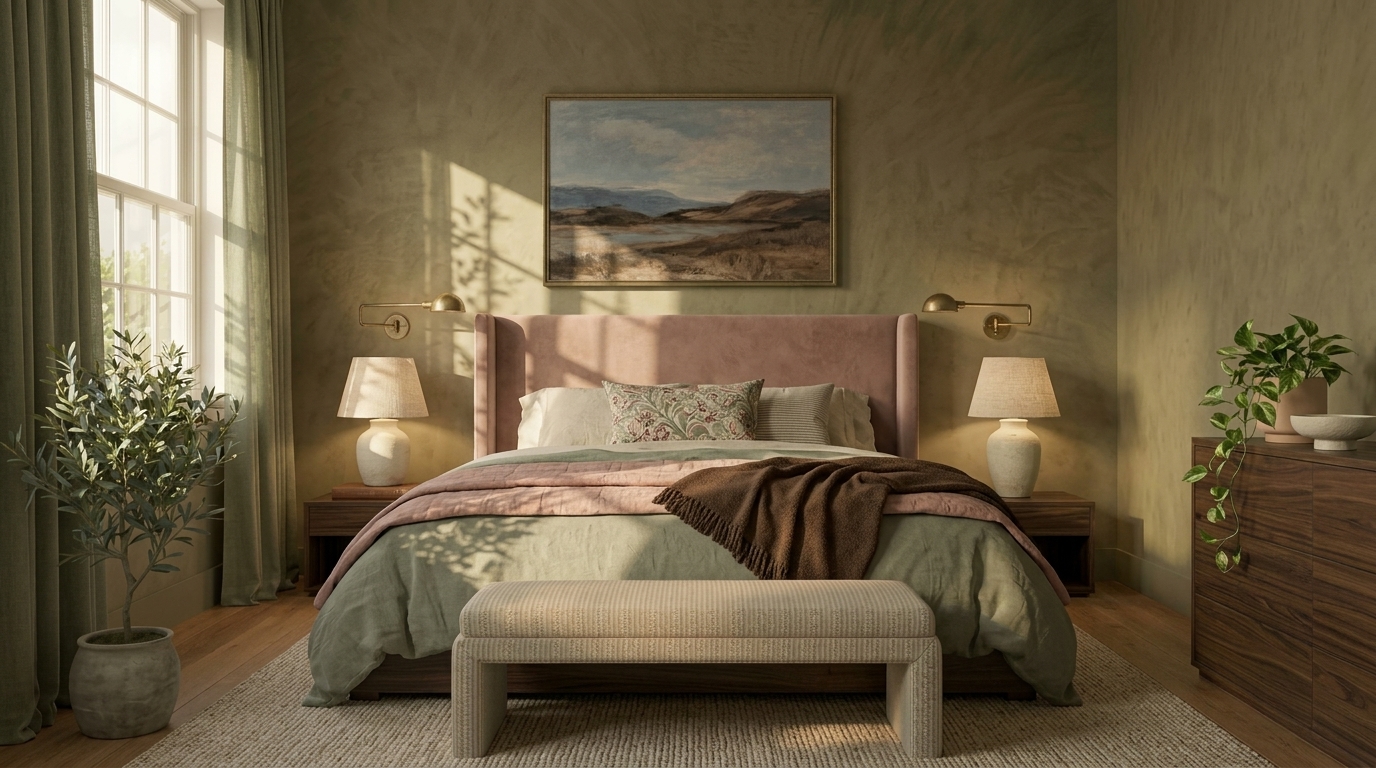
The bed is a natural place to introduce either sage or blush because upholstery softens the color. A dusty pink velvet headboard can look beautiful against muted sage walls. A sage linen headboard works well with warm blush paint.
For a small bedroom, choose height rather than a very deep upholstered frame, and avoid repeating the same color immediately behind the headboard unless there is enough tonal contrast.

Tip 8: Layer blush and sage through bedding, not matching sets
Do not buy a sage duvet, sage pillows, sage throw, and sage sheets simply because the walls are pink. Instead, build several related layers such as warm ivory sheets with a sage duvet and dusty blush quilt, or oatmeal bedding with a blush coverlet and olive cushion.
Use cotton, linen, wool, and perhaps one velvet element. Two or three pillow layers are plenty.
Use pattern to make the pairing less predictable

Tip 9: Bring in a floral that contains both colors
A patterned textile can explain why sage and blush belong together. Look for a botanical or floral containing muted green, dusty rose, cream, and perhaps burgundy or blue. Use it on a headboard, curtains, one quilt, a bench, or two cushions, but do not repeat the exact floral everywhere.
Let the pattern establish the palette, then use solids around it.

Tip 10: Add stripes to stop the room feeling overly romantic
Florals and blush can push a bedroom toward romantic styling very quickly. A stripe introduces structure. Try a narrow burgundy-and-cream ticking stripe beside sage walls, or green-and-white striped curtains with a dusty pink headboard.
I once worked through an illustrative sage-and-blush room where the wallpaper, bedding, cushions, and artwork all contained flowers. Replacing the curtains with a simple stripe made the remaining floral pattern much stronger. Variation gives softness more structure.
Let texture do some of the color work

Tip 11: Mix linen, velvet, wool, and ceramic
Sage and blush both change significantly depending on material. Sage velvet looks deeper and more luxurious than sage cotton because the pile catches light differently. Blush linen feels earthier than smooth pink satin.
Try a sage linen curtain, dusty-pink velvet headboard, oatmeal wool rug, and cream ceramic lamps. Avoid making every soft surface plush.

Tip 12: Use aged brass rather than bright gold everywhere
Sage and pink are frequently paired with gold, but bright polished gold can make the scheme feel overly decorative. Aged brass, bronze, antique gold, or even dark iron usually creates a more grounded result, an approach that pairs well with the earthy warmth of 13 terracotta and sage bedroom tips.
You do not need every handle, lamp, curtain rod, and mirror frame to match. One or two repeating finishes are enough.
Make the lighting flatter both colors
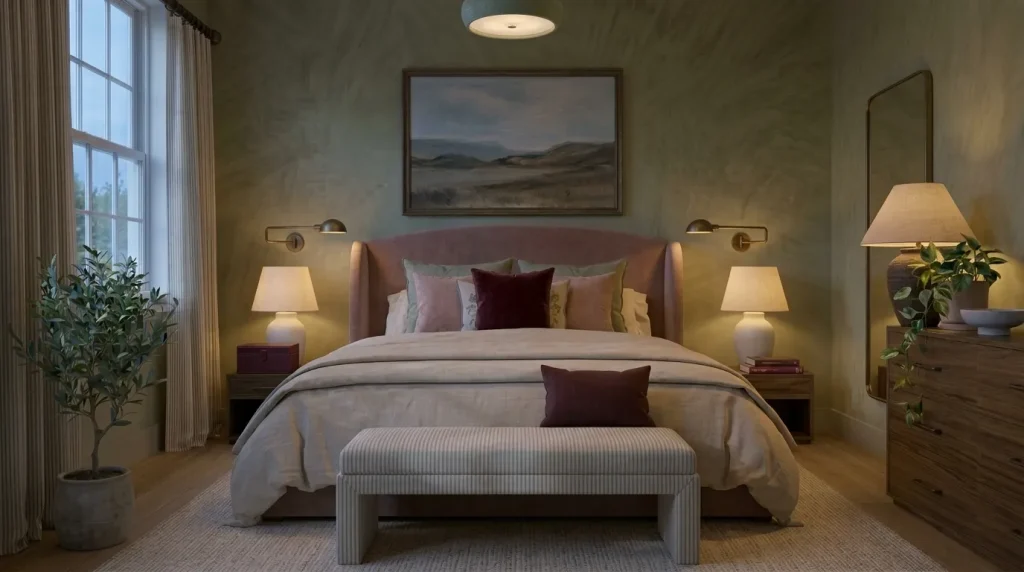
Tip 13: Use warm layered light rather than one bright ceiling bulb
Sage and blush are highly sensitive to artificial light. A cold bulb can turn sage blue-gray and make blush look almost lavender. Very warm light can push blush toward peach and make yellow-based sage appear more olive.
Use a ceiling fixture for general illumination, then add bedside lamps or sconces. A fabric or parchment shade usually gives these softer colors a flattering glow.
Give the palette something personal
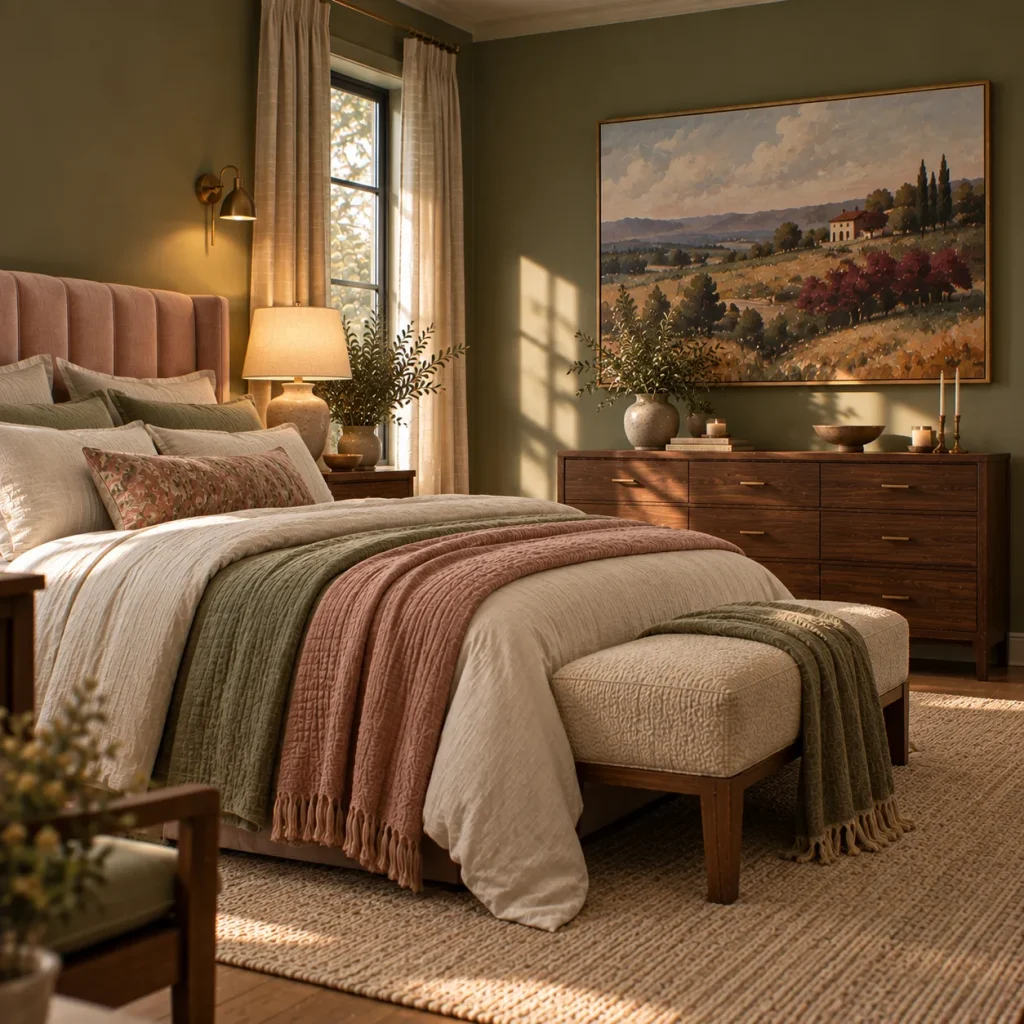
Tip 14: Add art that introduces a third color
Do not make every piece of artwork green and pink. Choose something containing another shade. Dusty blue, burgundy, chocolate, ochre, plum, or even a little black can give the bedroom more personality.
A landscape painting could bring in green naturally while adding blue sky and brown earth. One meaningful piece of art is usually more useful than a set of matching botanical prints. The same warm, collected approach shapes 12 ideas for a sage green farmhouse bedroom.
What should you skip in a sage and blush bedroom?
- Using equal amounts of both colors. Let one lead while the other supports it.
- Choosing very cool versions of both shades. Blue-gray sage and icy pink can make the bedroom feel washed out.
- Adding gold to every detail. Aged brass, walnut, ceramic, and darker accents create a richer material mix.
- Making everything floral. Combine floral pattern with stripes, solids, checks, or plain natural fabrics.
- Avoiding darker colors because the palette is supposed to be soft. Chocolate, burgundy, tobacco, and dark wood can make sage and blush look more sophisticated.
FAQ
Do sage green and blush pink work together in a bedroom?
Yes. Designers are actively using sage with blush in 2026 because the muted green grounds the warmth of soft pink. Natural materials and warm neutrals help the combination feel particularly balanced.
What wood looks best with sage green and blush?
Walnut, medium oak, aged pine, and other warm brown woods work particularly well. Darker wood gives the pale colors more visual depth, while lighter oak creates a softer country or organic look.
What other colors can I add to sage and blush?
Chocolate brown, burgundy, dusty blue, warm ivory, terracotta, navy, and muted plum can all work.
Can sage and blush work in a small bedroom?
Yes. Keep one color dominant, use a warm neutral for visual rest, and avoid filling the room with small pastel accessories.
Let the colors feel natural rather than coordinated
The strongest 14 sage green and blush bedroom tips depend on balance more than decoration. Let sage provide calm. Use blush for warmth. Then bring in walnut, cream linen, aged brass, wool, pattern, and perhaps one deeper accent so the palette has somewhere to go.
Sage and blush work beautifully because they have opposing qualities. One feels botanical and grounded. The other feels warm and soft. Keeping that contrast visible is what prevents the bedroom from becoming a pastel theme.