14 black and white bedroom ideas for a Sophisticated, Layered Retreat
Black and white bedrooms look simple on paper, but that simplicity can be unforgiving. Crisp white walls, a black bed, black nightstands, and monochrome bedding may photograph well while making the actual room feel colder than expected.
The better 14 black and white bedroom ideas for 2026 soften the contrast through warm whites, walnut, tactile textiles, pattern, vintage pieces, reflective surfaces, and better lighting — the same layered instinct behind 10 black bedroom aesthetic tips.
Black and white should establish the structure of the room. It does not need to control every single object inside it.
Decide which color should dominate
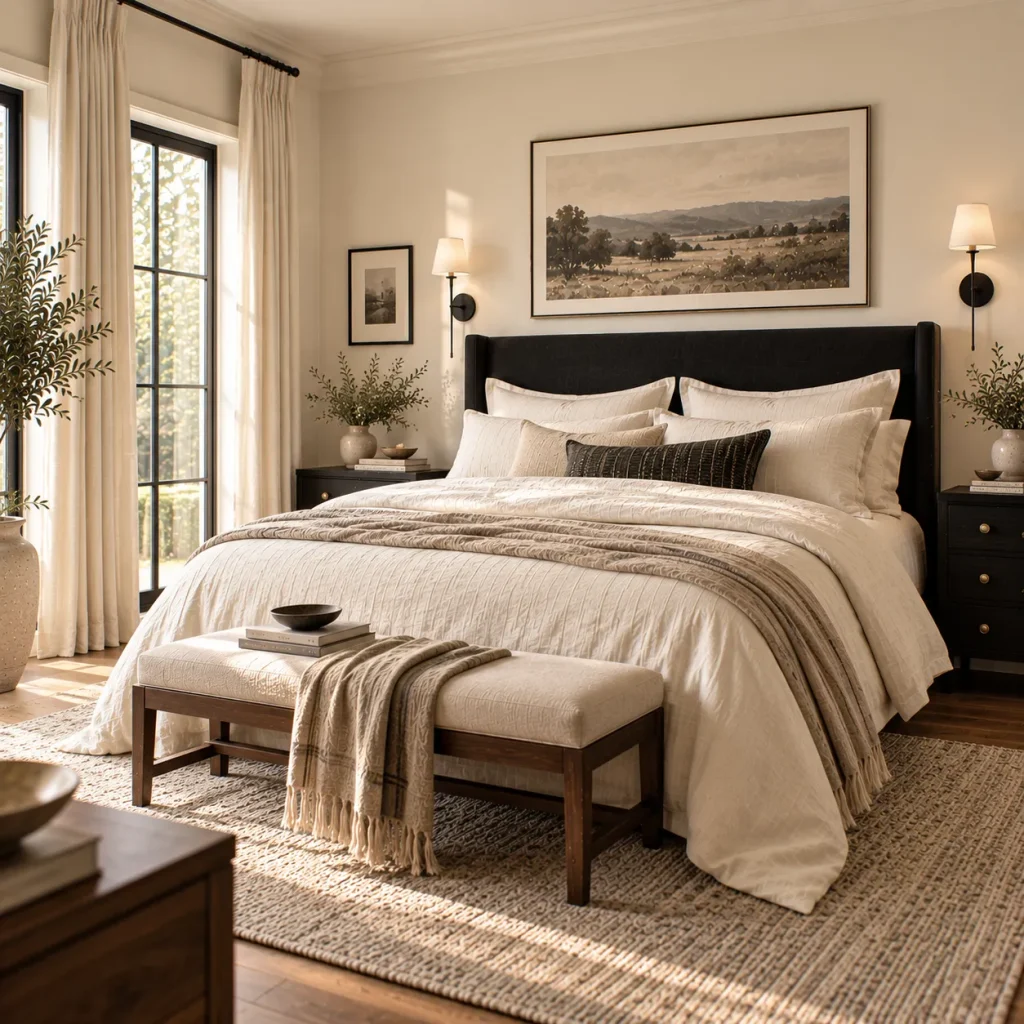
Idea 1: Use warm white as the main color and black as punctuation
For an airy bedroom, let white occupy the largest surfaces and use black more deliberately. Try warm white walls, off-white curtains, and cream bedding, then introduce black through the headboard, bedside tables, artwork frames, or sconces.
In 2026, bedroom neutrals are shifting toward creamy taupes, chalky off-whites, mushroom, stone, and warmer foundations rather than cool gray or harsh white. If your room faces north, test the paint carefully — weak daylight can make some whites look much colder than the sample suggests.

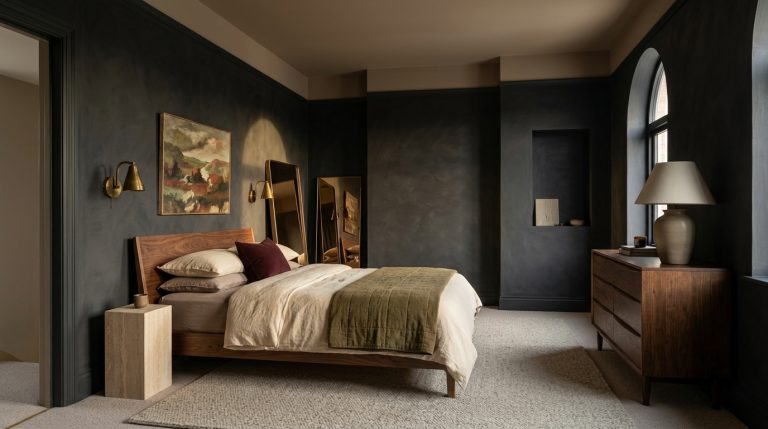
Idea 2: Reverse the formula with black walls and pale bedding
If you want something moodier, let black dominate instead. Soft-black or charcoal walls with warm ivory bedding can create a particularly restful room because the bed becomes a light island against the darker envelope.
Do not automatically paint one isolated black feature wall. Carrying a deep shade across several walls and trim can sometimes create a calmer effect because there are fewer abrupt visual breaks.
Make the bed more interesting than the palette
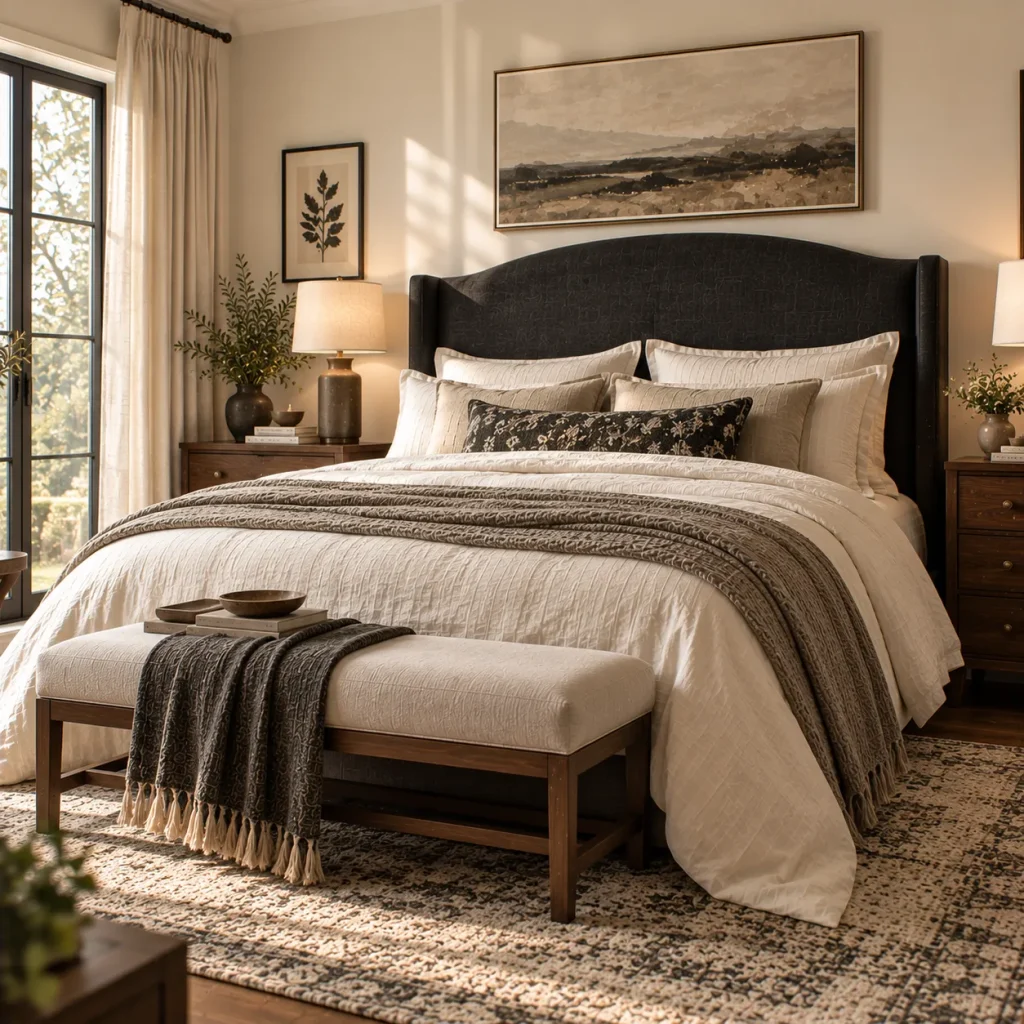
Idea 3: Choose a black upholstered headboard rather than a black metal bed
A slim black metal bed can work, but an upholstered headboard gives the palette more softness. Try black or charcoal velvet, linen, woven cotton, or a subtle black-and-cream stripe. Texture matters because black absorbs visual detail.
A taller headboard can also give the bed enough scale to carry the room without requiring much extra decor. If the bedroom is small, choose height rather than a very deep padded frame.
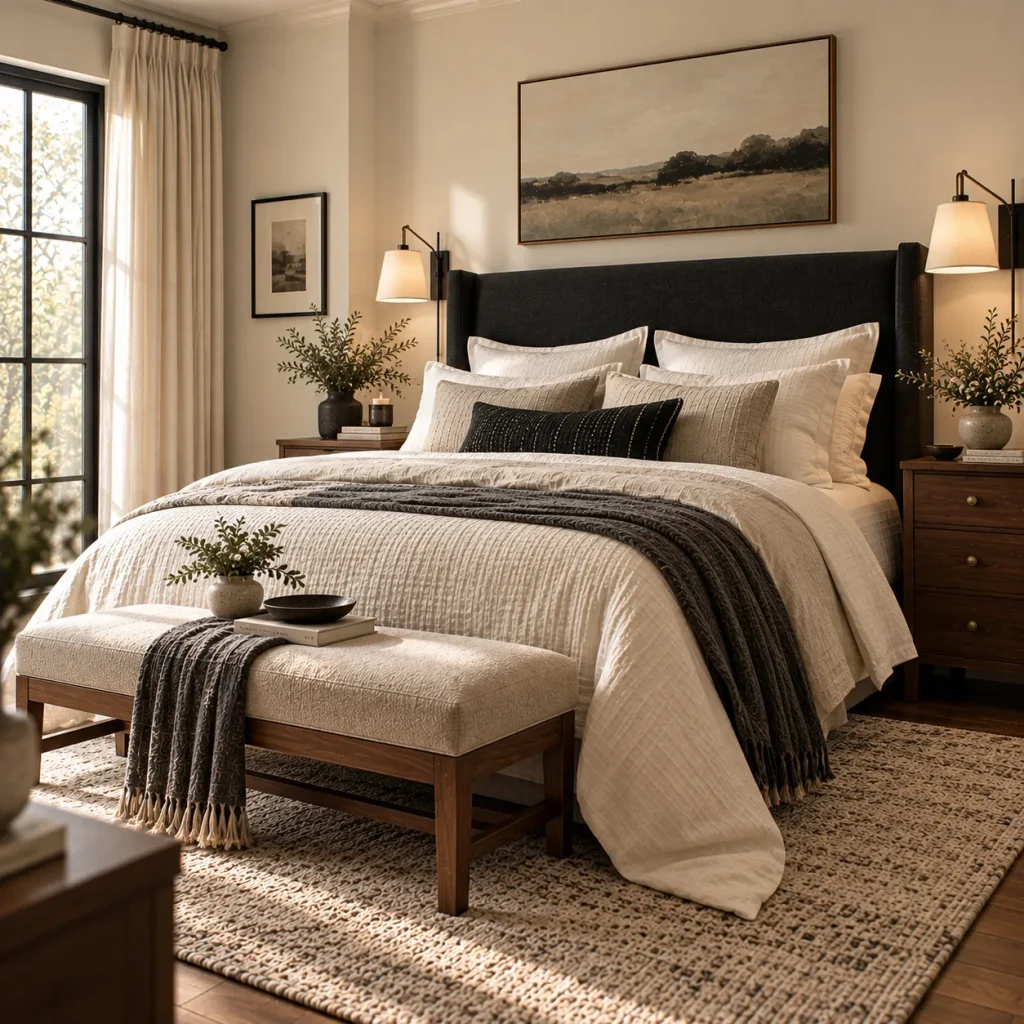
Idea 4: Keep the bedding mostly off-white, oatmeal, or cream
Pure white bedding against black can become extremely graphic. That may be exactly what you want, but warmer alternatives are often easier to live with. Try ivory sheets, an oatmeal duvet, a black lumbar cushion, and one charcoal or patterned throw.
The best monochrome bedrooms usually vary both texture and tone rather than using one absolute black and one absolute white. One useful rule is to avoid making every bedding layer equally high contrast.
Interrupt the monochrome with natural materials

Idea 5: Add walnut or dark wood
A black-and-white bedroom does not become less sophisticated because brown enters the room. In fact, wood may be exactly what the palette needs. Walnut, dark oak, mahogany, and espresso-toned timber add warmth while remaining visually strong enough to sit beside black.
Try white walls, a black headboard, walnut nightstands, and cream linen, or use black walls, an old wooden dresser, and pale bedding. Black-and-white rooms often look better when they are not strictly black and white.
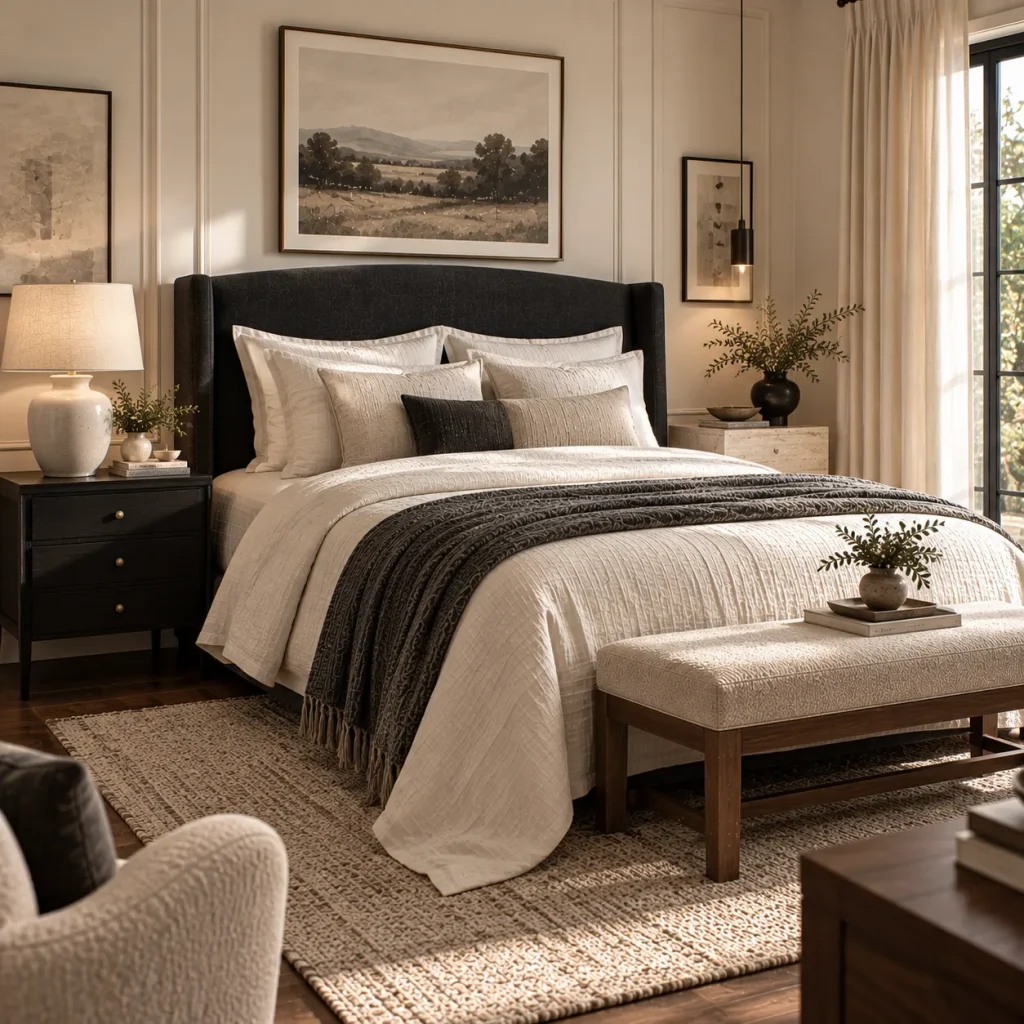
Idea 6: Add one stone or ceramic surface
Monochrome becomes more interesting when materials create subtle tonal differences. A white ceramic lamp, black stone table, honed marble top, travertine nightstand, or handmade pottery can bring another surface into the room without introducing strong color.
Try a glazed cream lamp on a matte black table, or place a pale stone nightstand against a charcoal wall. The contrast between surfaces can do the work that color normally would.
Use pattern to keep the room from feeling rigid

Idea 7: Add black-and-white stripes in one controlled place
Stripes work naturally in monochrome bedrooms because they strengthen the graphic quality without requiring another color. But use them selectively. Try striped curtains, one cushion, a bench, or a quilt rather than repeating stripes across several surfaces.
A narrow ticking stripe feels softer and more traditional. A broader stripe looks more architectural. If the room already contains strong black window frames or wall paneling, a subtle textile stripe is usually enough.

Idea 8: Bring in a patterned rug with imperfect black and cream
A perfectly geometric black-and-white rug can make an already graphic room feel severe. Instead, consider a faded Moroccan-style pattern, irregular checkerboard, broken stripe, vintage-inspired design, or wool rug where black softens into charcoal and white becomes oatmeal.
For a queen bed, an 8-by-10-foot rug is often a useful starting point where the room allows. A king may work better with a 9-by-12. A larger rug can make the sleeping area feel calmer because it connects the bed and nearby furniture, an approach worth borrowing from 10 neutral bedroom ideas.
Let black and white behave differently on the walls

Idea 9: Use black molding over white walls
You do not need to choose between completely black walls and completely white walls. Picture molding, paneling, trim, or architectural lines can introduce black with greater intention. Try warm white walls with charcoal molding, or paint lower paneling black while leaving the upper wall cream.
This works especially well in bedrooms with existing architectural detail because the dark paint emphasizes the shape rather than creating an arbitrary black rectangle.
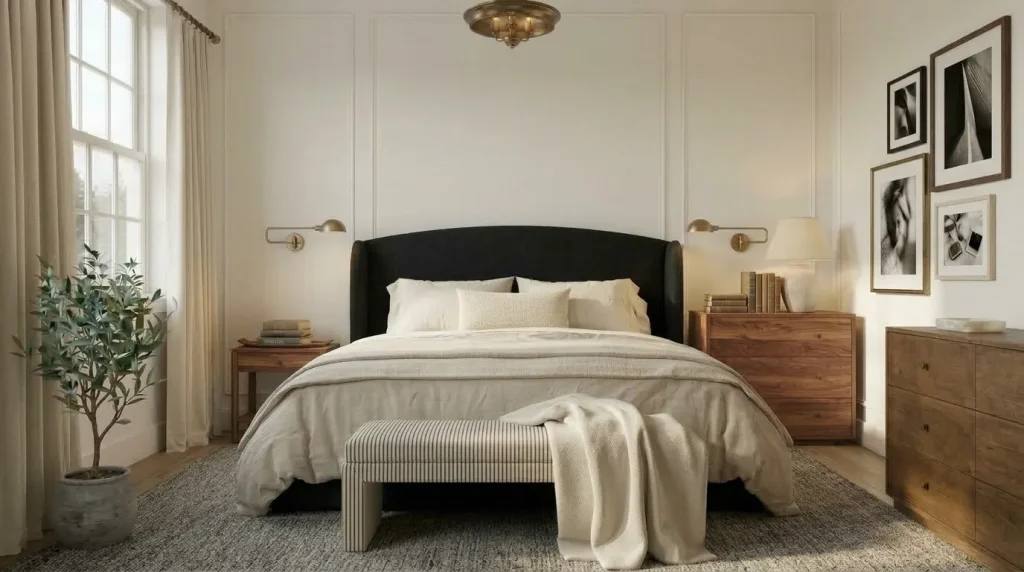
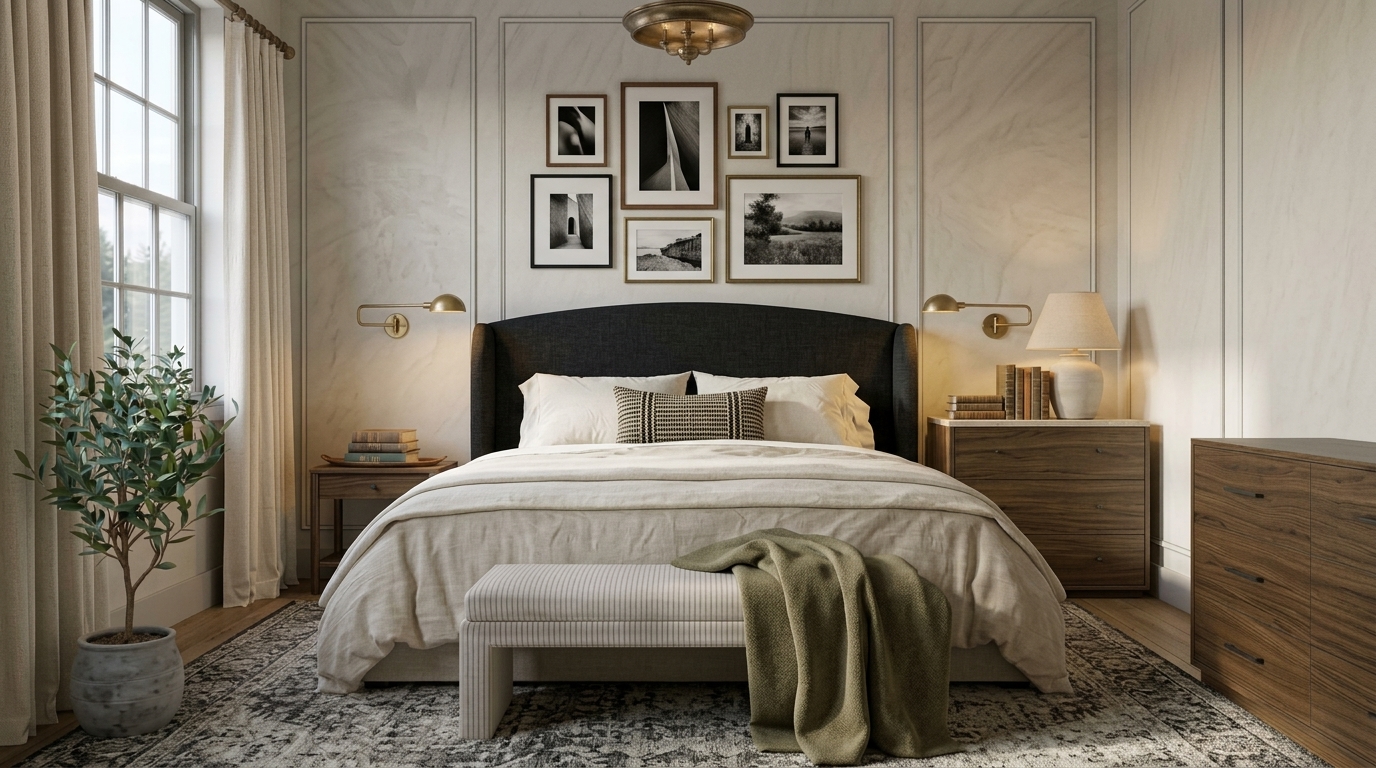
Idea 10: Hang black-and-white photography with mixed frames
Black-and-white photography is an obvious fit, but a wall of identical black frames can become overly formal. Mix dark wood, black, aged brass, and perhaps one pale frame, and use photographs with different amounts of light and shadow too.
I once worked through an illustrative monochrome bedroom where twelve identical black frames were arranged in a perfect grid. It was neat, but the room felt closer to a hotel corridor than a personal bedroom. Removing several frames and mixing in a walnut one made the collection feel much more relaxed.
Soften the contrast with shape and fabric
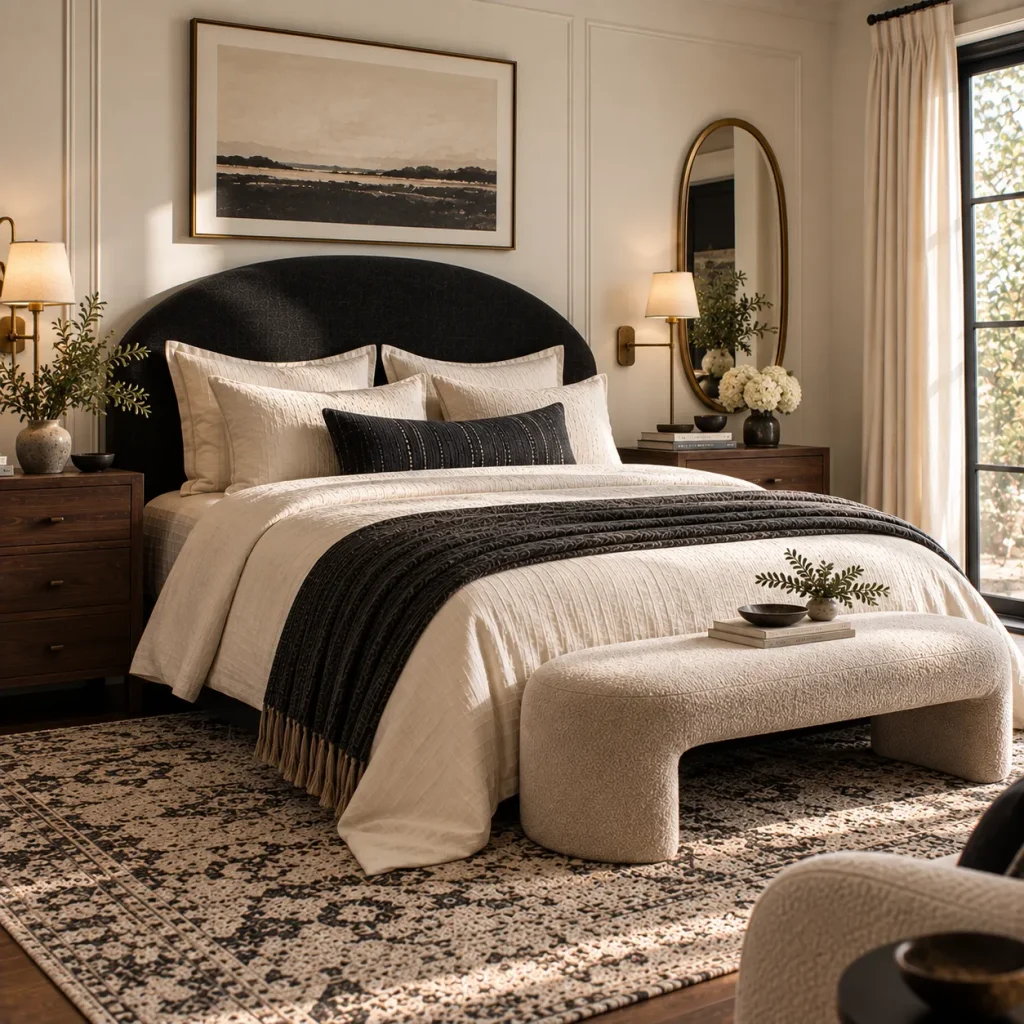
Idea 11: Use curved furniture against graphic color
Black and white naturally create hard visual edges. A curved headboard, round side table, oval mirror, barrel chair, or softly shaped lamp can interrupt those straight lines. You do not need every piece to be rounded — one curved element is often enough.
For example, a black arched headboard against warm white walls gives you strong contrast without making the bed feel severe. Shape can soften monochrome just as effectively as color.

Idea 12: Add full-length curtains with noticeable texture
Curtains cover a large portion of wall area, so they have enormous influence on a black-and-white scheme. Instead of crisp white synthetic fabric, consider warm ivory linen, off-white cotton, or a subtle black-and-cream woven stripe.
If the room already has black walls, pale curtains create vertical relief. If the walls are white, charcoal curtains can bring weight to the window side of the room, an editing instinct shared by 10 minimalist bedroom tips.
Make the lighting warmer than the color palette

Idea 13: Avoid black fixtures everywhere
A black bedroom does not require black sconces, black lamps, black curtain rods, and a black ceiling fixture. Mix the finish — try aged brass, bronze, cream ceramic, smoked glass, alabaster, or polished nickel. The finishes you choose should feel as considered as the palette itself, the same undertone-first thinking used throughout 12 tips for a grey bedroom.
Use several light sources rather than relying on one ceiling fixture. Bedside lamps or sconces handle reading, a ceiling light provides general illumination, and a dresser or floor lamp can soften a darker corner. Keep bulb temperatures reasonably consistent.
Add one thing that refuses to match

Idea 14: Break the palette with a controlled accent
Strict monochrome can be beautiful, but it can also feel impersonal. Add one color if the room needs it. Burgundy, olive, chocolate, dusty blue, tobacco, or muted rose can all work because they have enough depth to live comfortably beside black.
You do not need cushions in five different accent colors. A burgundy chair, olive blanket, or dusty-blue artwork can be enough. The accent should feel like a deliberate interruption, not the beginning of another palette.
What should you skip in a black and white bedroom?
- Using pure black and pure white everywhere. Charcoal, warm ivory, mushroom, and soft black create a more nuanced room.
- Matching black furniture sets. A black bed, dresser, nightstands, and bench can collapse into one dark mass.
- Making every accessory monochrome. Books, artwork, vintage wood, and ceramics do not need to obey the palette perfectly.
- Ignoring texture. Monochrome rooms rely heavily on linen, wool, wood, stone, ceramic, velvet, and reflective surfaces for depth.
- Cold overhead lighting. Even an excellent black-and-white palette can feel unpleasant beneath an icy ceiling bulb.
FAQ
Are black and white bedrooms still popular in 2026?
Yes, but current versions tend to rely more on texture, warm neutrals, wood, personal objects, and softer contrasts than stark monochrome alone.
How do I make a black and white bedroom feel cozy?
Use warm white instead of icy white, add natural wood, layer linen and wool, choose a generous rug, and use several warm light sources. You can also introduce a small amount of chocolate, burgundy, olive, or dusty blue.
What wood looks best in a black and white bedroom?
Walnut is particularly effective because it has enough depth to sit comfortably beside black while bringing noticeable warmth. Medium oak and darker stained woods also work.
Can a small bedroom handle black walls?
Yes. Deep color can make a small bedroom feel intentionally cocooning rather than automatically smaller. Keeping the color continuous across several surfaces can reduce visual breaks.
Keep the contrast, soften the edges
The best 14 black and white bedroom ideas preserve what makes the palette appealing in the first place: clarity, contrast, and a strong visual structure. But the room still needs warmth.
Let black sit beside walnut instead of more black. Use creamy bedding rather than sharp optic white. Bring in wool, linen, ceramic, stone, and a reflective finish so the surfaces react differently to light.
A successful monochrome bedroom should still feel good after the photographs are taken and the lights are lowered. That is where softer whites, natural materials, and thoughtful lighting make all the difference.