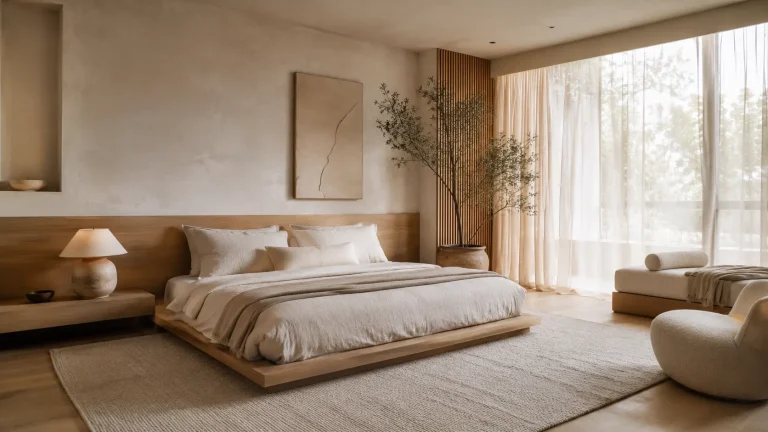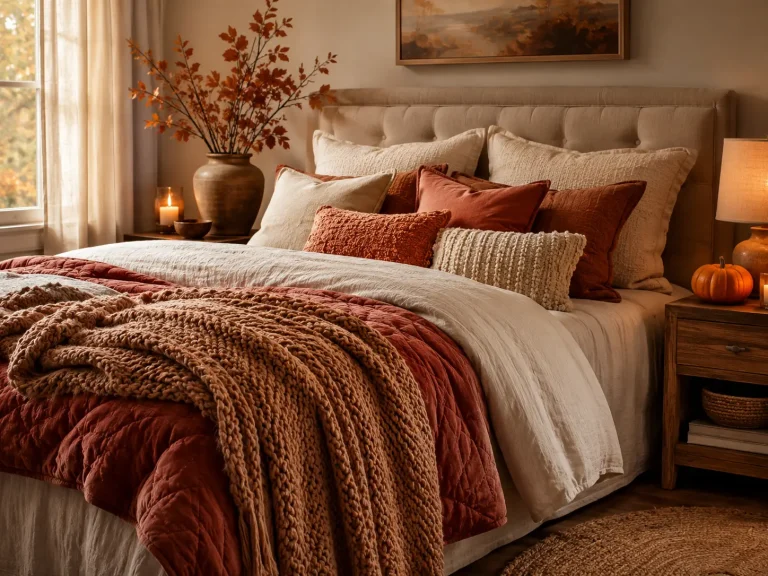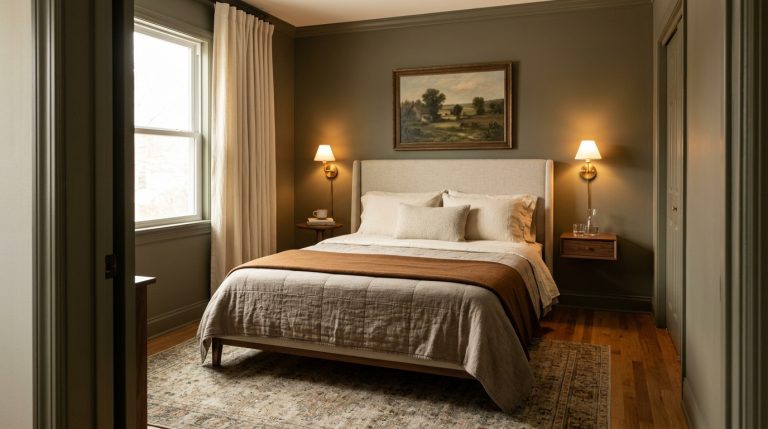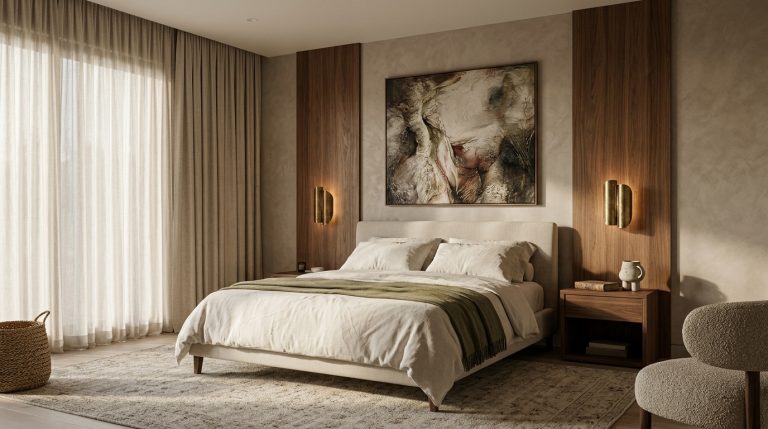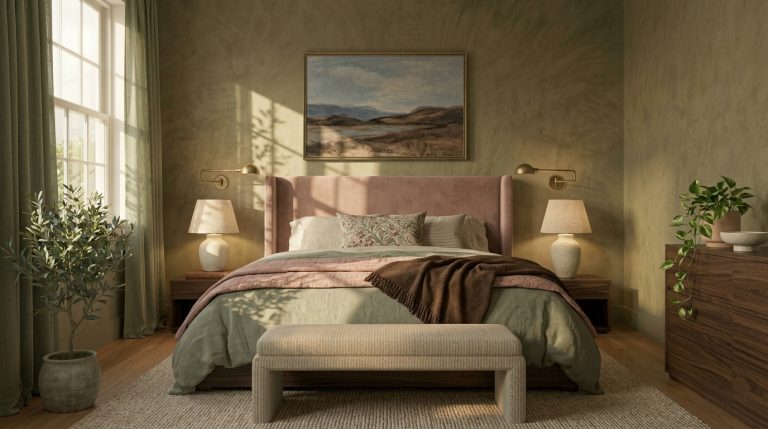
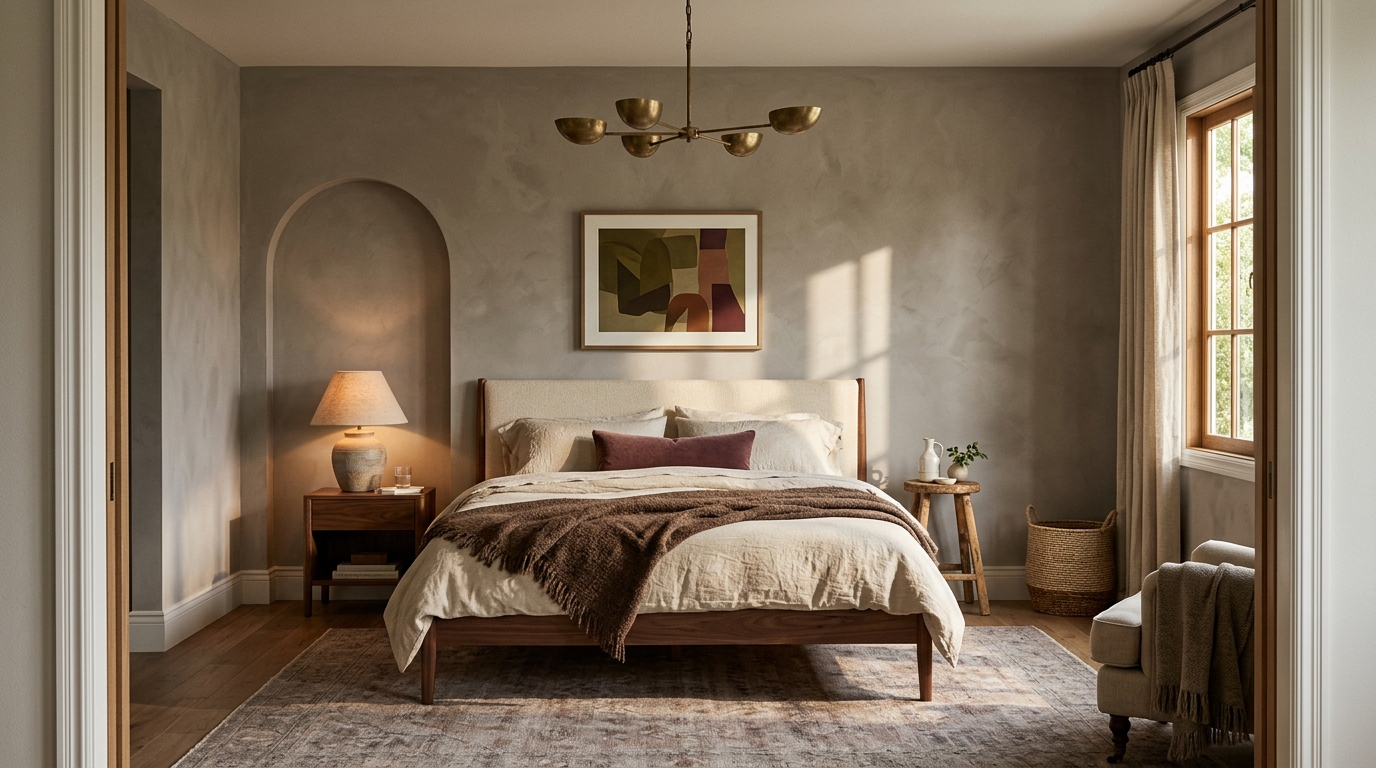
12 tips for a grey bedroom That Feels Warm, Layered, and Current
Grey bedrooms have a reputation for being calm, but the wrong grey can make a room feel strangely lifeless. Pale cool-grey walls, a silver bed, charcoal curtains, grey carpet, and white furniture may coordinate perfectly while offering almost no warmth or personality.
The better 12 tips for a grey bedroom in 2026 start by treating grey as part of a wider palette rather than the whole palette. Cool “millennial grey” has fallen from favor, but grey itself has not disappeared. Designers are shifting toward warmer greys, taupes, putty shades, grey-greens, and deeper blue-greys that sit comfortably beside wood, textiles, and richer color, in much the same way that black bedroom aesthetic tips lean on undertone and warmth rather than a single flat shade.
So there is no need to abandon a grey bedroom. You simply need to give the grey something warmer and more interesting to work with.
Choose the right kind of grey first
Tip 1: Move from cool silver-grey toward warmer undertones
The biggest difference between a dated grey bedroom and a current one is often undertone. Blue-based pale grey can become cold under weak daylight, especially beside grey flooring or white furniture. A warmer grey containing brown, beige, green, or taupe tends to feel softer.
Try putty, mushroom-grey, warm stone, taupe-grey, or a soft grey-green. Always paint a large sample and move it around the room. Check it beside the floor, bedding, headboard, and curtains in morning and evening light.
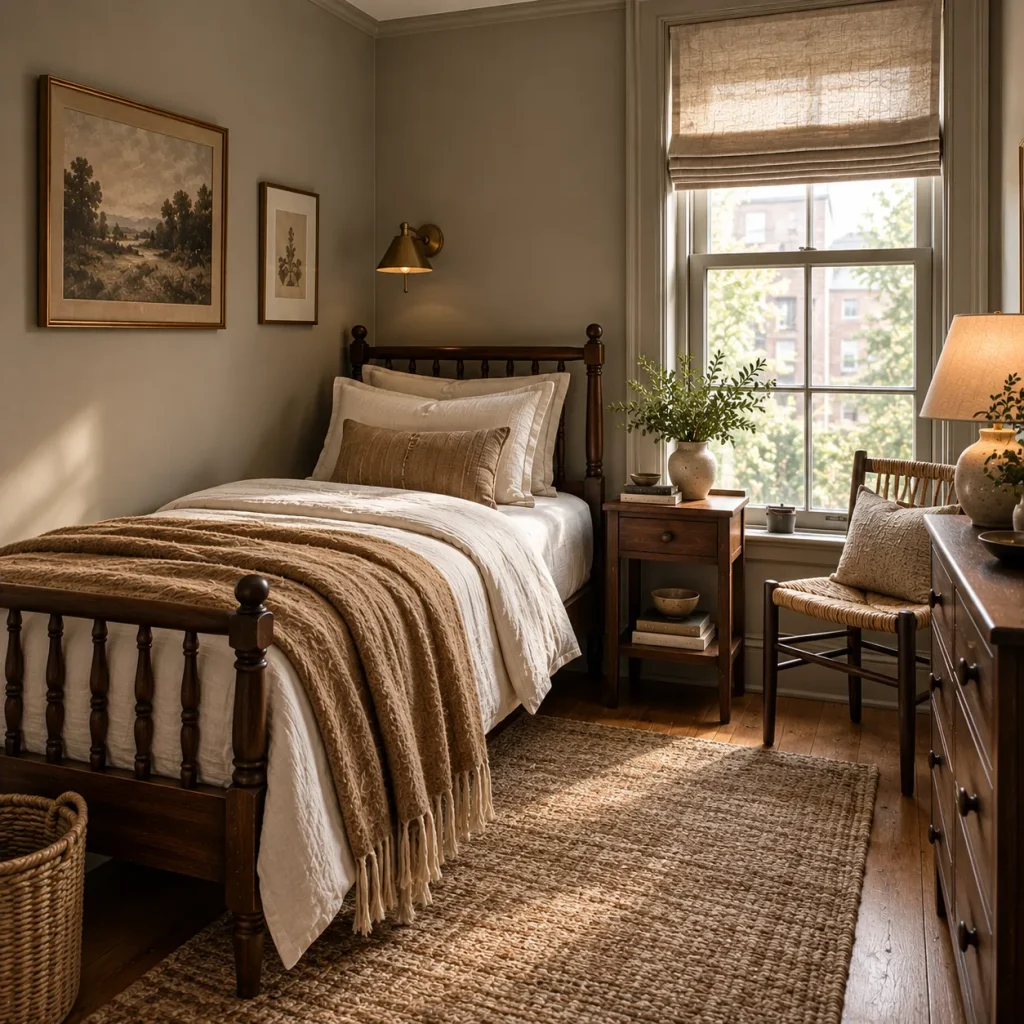
Tip 2: Consider grey-green instead of conventional grey
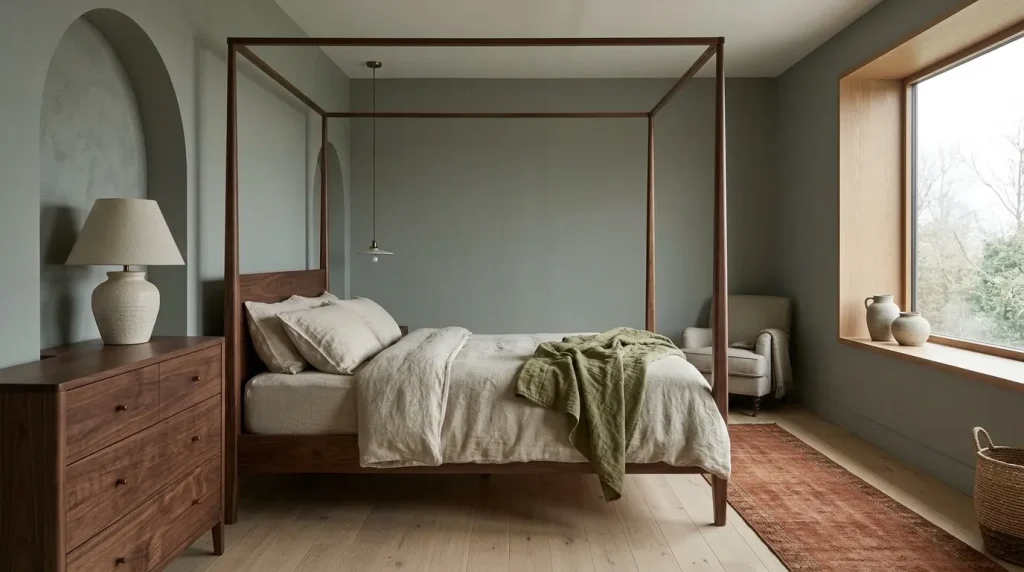
If you like grey because it feels quiet but find pure grey too flat, grey-green is one of the strongest alternatives. Muted grey-green still behaves like a neutral, yet the small amount of green gives it more connection to wood and natural textiles.
Try grey-green walls with walnut nightstands, oatmeal bedding, and an olive or rust accent. It works particularly well in rooms where you want calm without falling back on beige.
Give grey a warmer color partner
Tip 3: Pair grey with chocolate brown
Grey and black may feel like the obvious combination, but chocolate brown often creates a much richer bedroom. Try grey walls with a walnut bed, chocolate wool blanket, tobacco-colored bench, or espresso dresser.
If your bedroom currently contains grey walls, grey carpet, and white furniture, adding one substantial brown element may improve it more than repainting. One darker wood piece can stop the room from looking washed out.
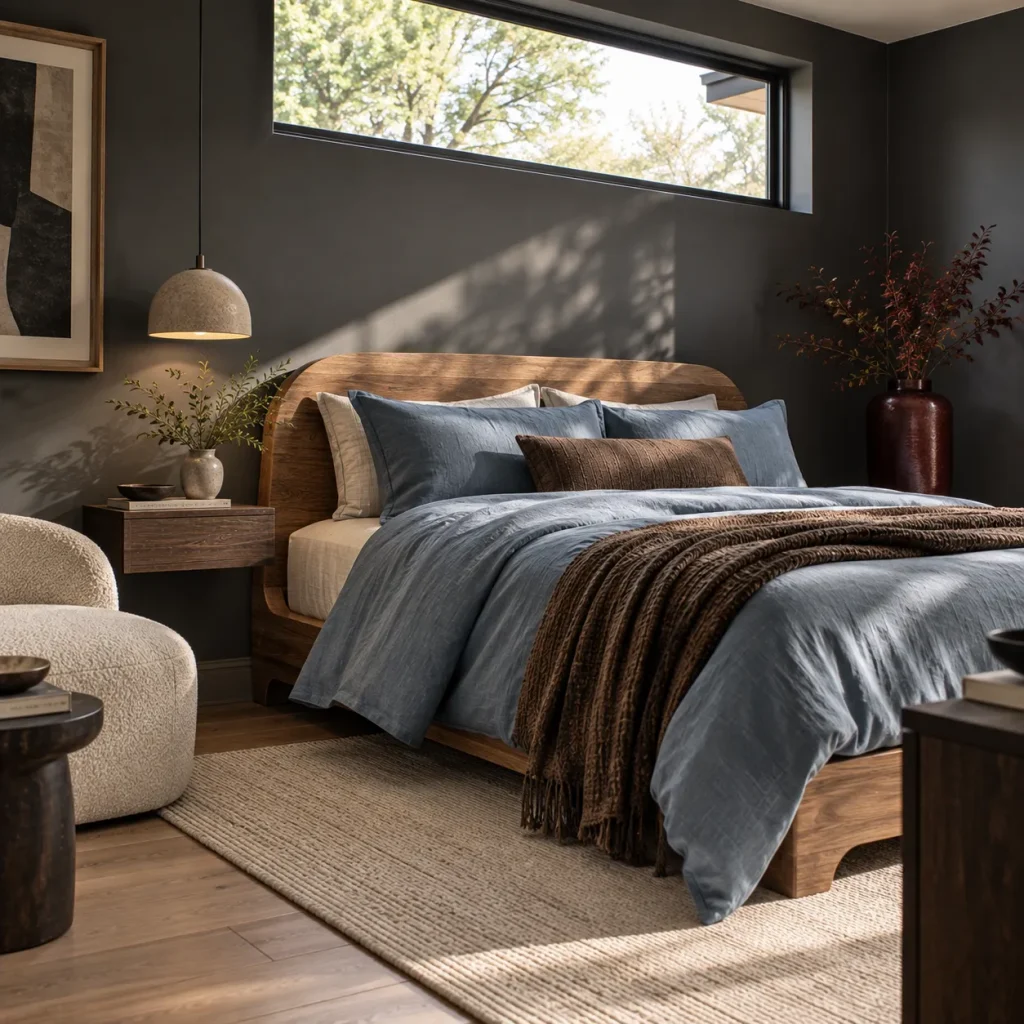
Tip 4: Add dusty blue, burgundy, or muted rose
Grey becomes much more interesting beside an actual color. Dusty blue creates a soft, slightly cooler bedroom without looking icy. Burgundy gives grey more weight. Muted rose creates warmth without turning the room sugary.
Try charcoal-grey walls with dusty blue bedding, or combine warm grey walls with a burgundy upholstered headboard. Use one of these colors in a medium-sized area rather than scattering ten tiny accents around the room.
Let the bed soften the grey
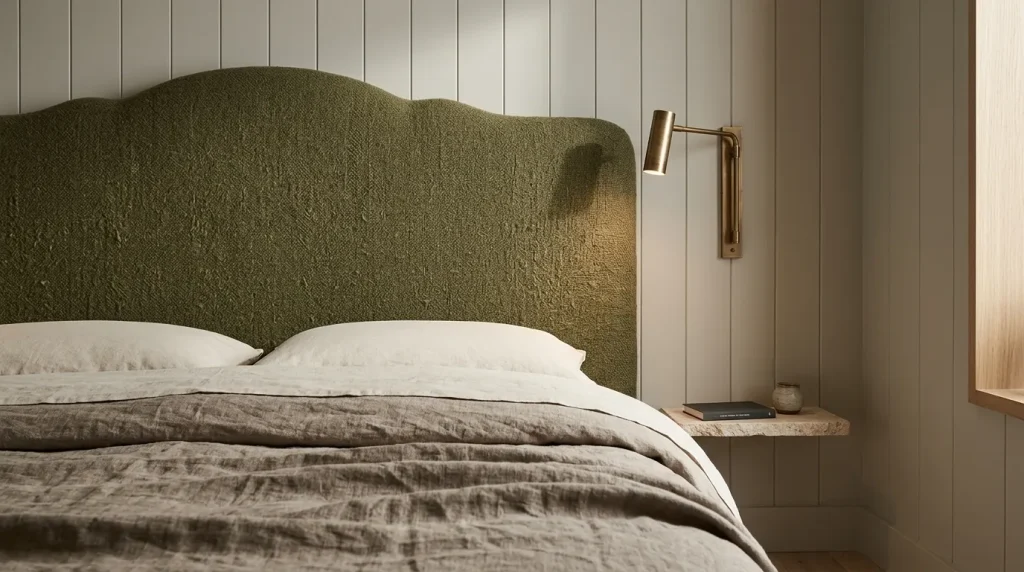
Tip 5: Choose an upholstered headboard with visible texture
Grey bedrooms need tactile materials because flat grey surfaces can quickly blend together. A linen, velvet, woven cotton, or wool-blend headboard gives the wall something softer to contrast against.
Try tobacco, olive, warm ivory, dusty blue, or burgundy upholstery instead of automatically choosing another grey. If you do want a grey headboard, choose one noticeably lighter or darker than the wall and change the texture.
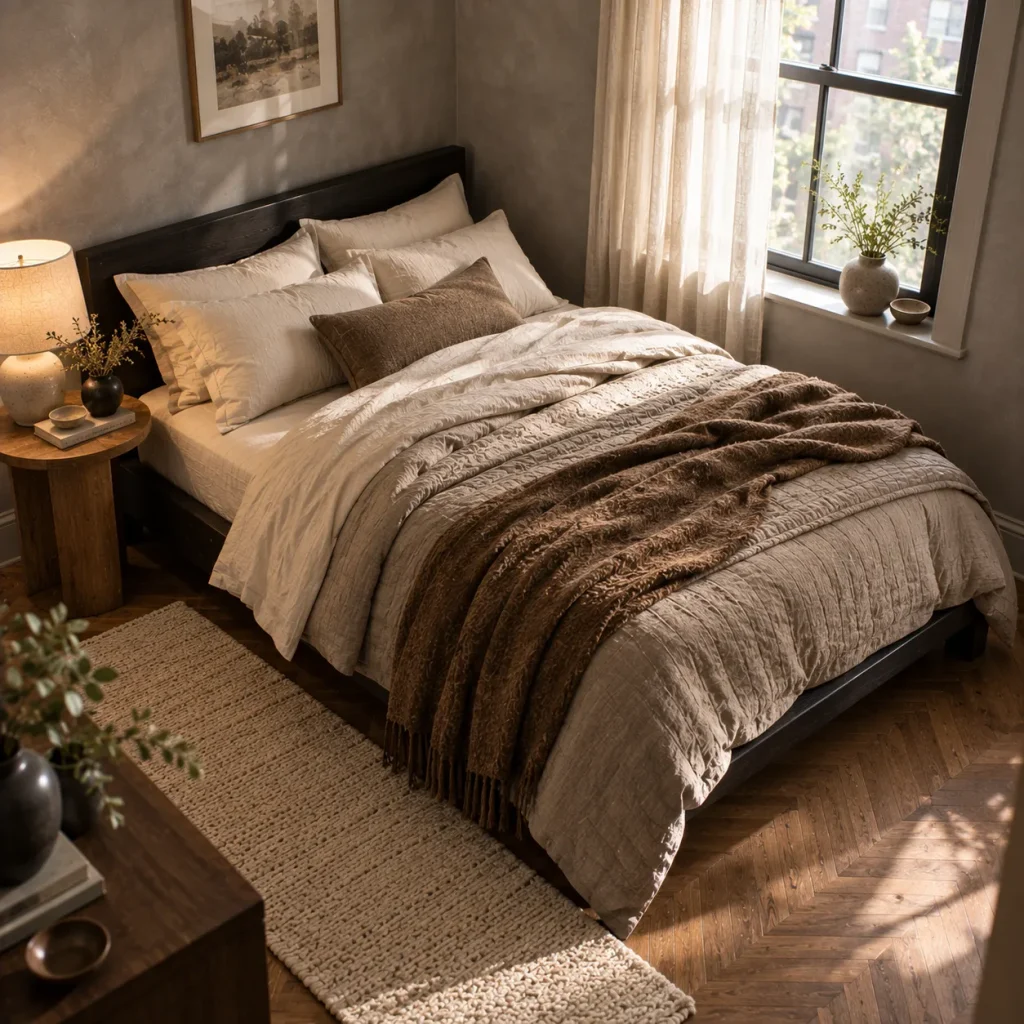
Tip 6: Layer bedding with cream and warm neutrals
Grey bedding on grey walls is rarely the best way to create a calm room. Instead, let the bed introduce warmer values. Try warm ivory sheets, an oatmeal duvet, a mushroom coverlet, and one charcoal or tobacco throw, or use dusty blue bedding against grey walls with a chocolate blanket at the foot.
I once worked through an illustrative bedroom where every fabric was a different shade of grey. Replacing only the duvet with warm ivory made the darker grey headboard and curtains suddenly visible again. Contrast does not always require bold color.
Use wood to prevent the room from feeling cold
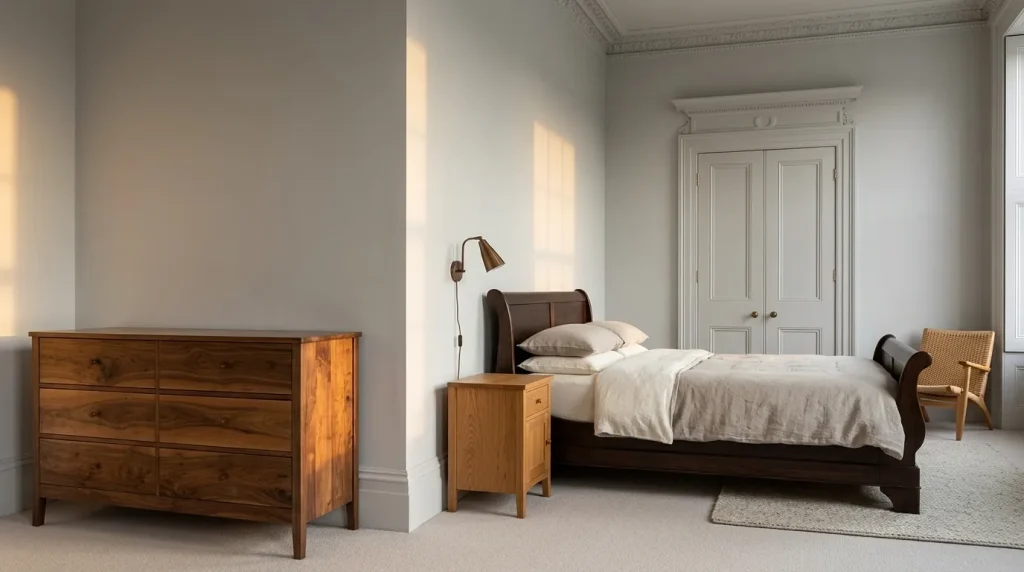
Tip 7: Mix grey with walnut, oak, or dark-stained timber
Natural wood is one of the easiest ways to rescue a cold grey bedroom. Walnut adds richness. Medium oak brings warmth without feeling heavy. Dark-stained timber creates stronger contrast in a pale grey room, and the furniture does not need to match — similar undertones matter more than identical finishes.
If your room already feels grey and flat, buying pale grey-washed wood usually makes the problem worse. Bring in visible grain and real brown instead.
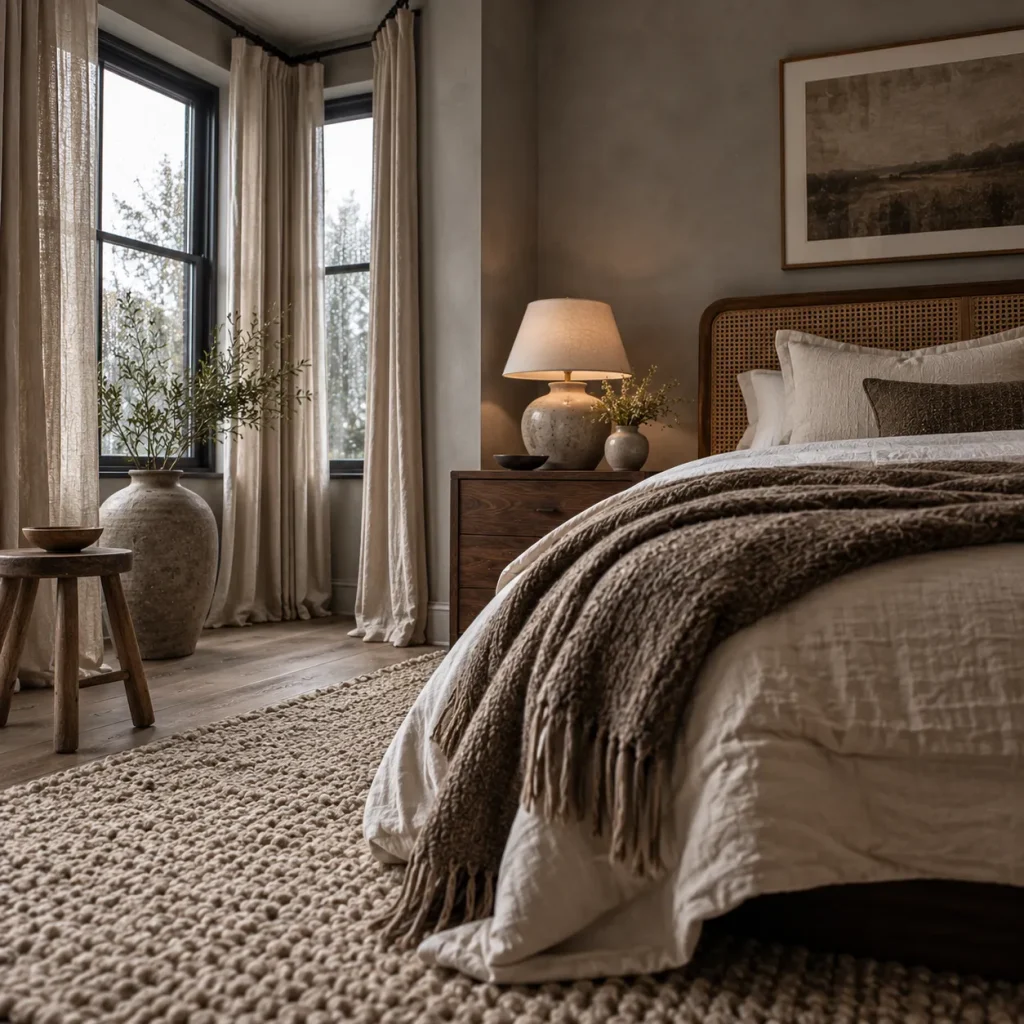
Tip 8: Combine wool, linen, ceramic, and wood
Grey can be a beautiful background when the materials around it behave differently. Try linen curtains, a wool rug, cotton bedding, walnut furniture, and a ceramic bedside lamp — the colors can remain restrained because the surfaces create their own variation.
Do not respond to a flat grey bedroom by buying five more grey cushions. Change the material first.
Make the floor part of the palette
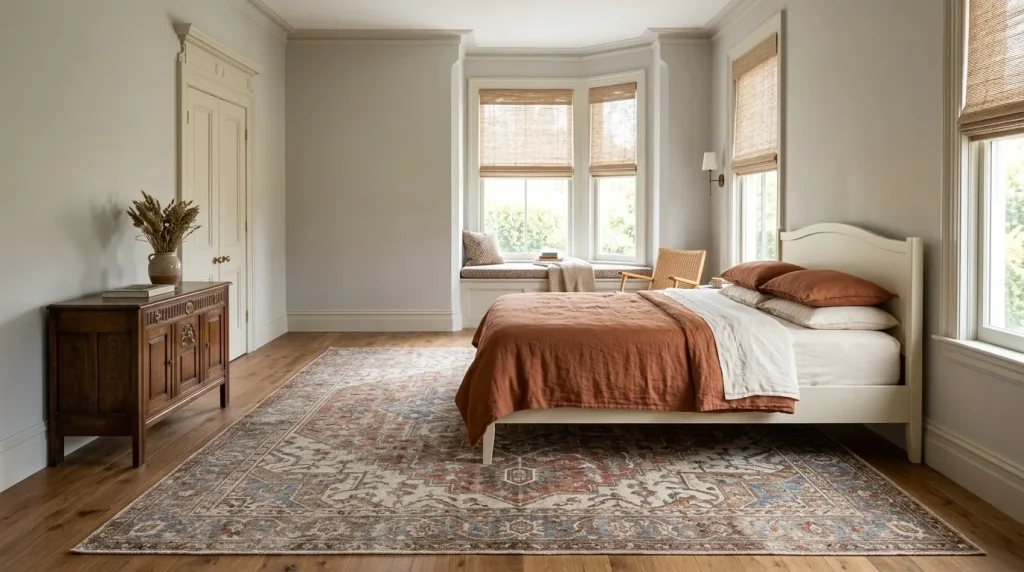
Tip 9: Choose a rug that introduces warmth
If you already have grey carpet, you may not need another rug. But with wood or hard flooring, a rug can connect the bed to the room and introduce a warmer tone. For a queen bed, an 8-by-10-foot rug is often a useful starting point, and a king may work better with 9-by-12.
Try oatmeal wool, faded rust, dusty blue, taupe, or a vintage-style rug containing several muted colors, an approach that pairs naturally with the layered, tonal palettes found across 10 neutral bedroom ideas. Avoid automatically choosing a charcoal rug simply because the walls are grey.
Use grey as an enveloping color when you want drama

Tip 10: Try deep blue-grey or charcoal across walls and trim
A grey bedroom does not have to be pale. Deep blue-grey, charcoal, and smoky graphite can create a very restful room, particularly when the color continues across trim rather than stopping at bright white borders.
Balance deeper grey with warm linen, walnut, aged brass, and a lighter rug. Sometimes a continuous darker envelope feels calmer than a high-contrast room where every wall edge is emphasized, an editing instinct shared by 10 minimalist bedroom tips.
Let your lighting warm the palette
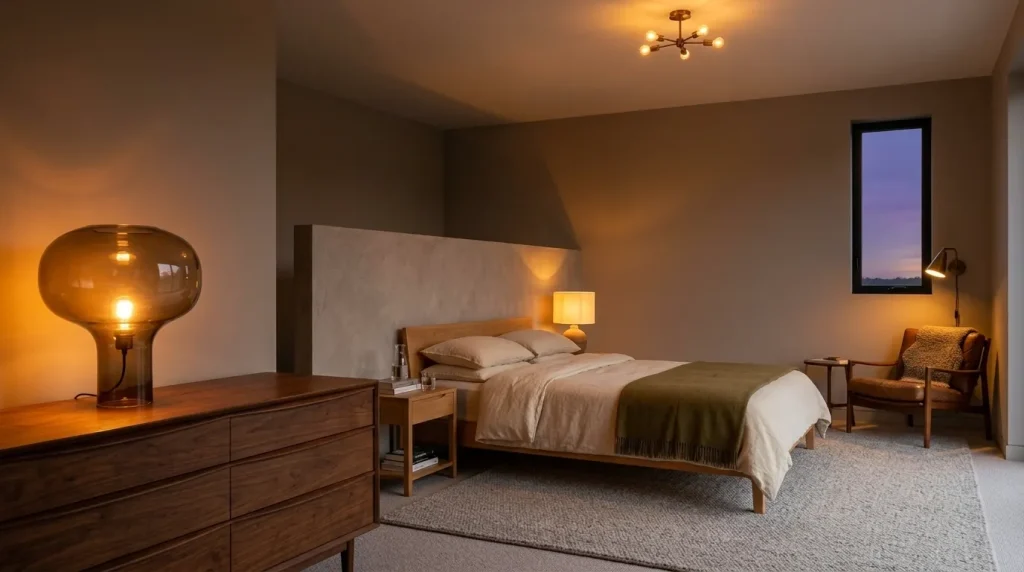
Tip 11: Use several low light sources
Grey is extremely sensitive to artificial light. A cool bulb can push warm grey toward blue and make the entire room feel harder. A warmer bedside lamp brings out beige, brown, and green undertones that may barely appear during the day.
Use a ceiling fixture for general lighting, then add bedside lamps or sconces and perhaps one dresser lamp. Fabric, parchment, ceramic, glass, aged brass, and bronze work particularly well with grey.
Give grey bedrooms more personality
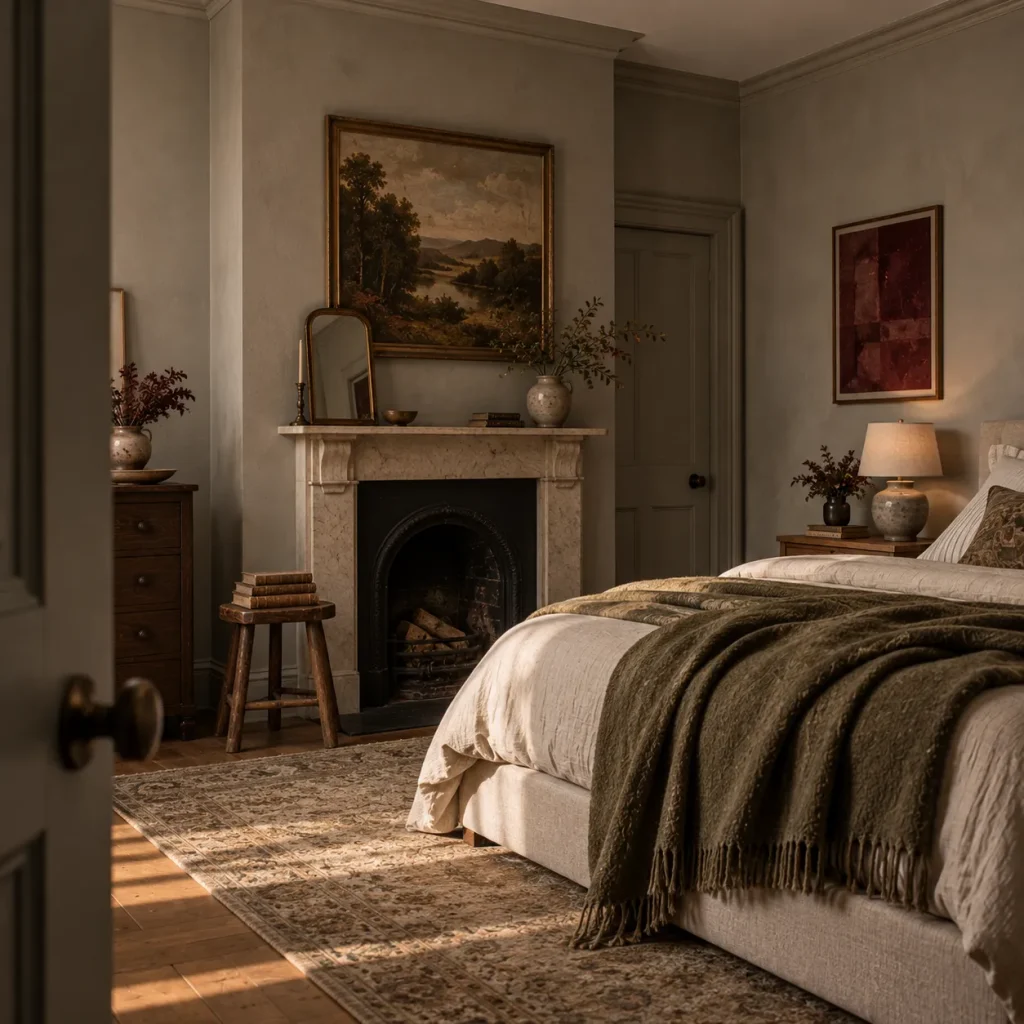
Tip 12: Add art and objects with color or age
A grey bedroom can feel impersonal when every object has been selected to match the walls. Hang a landscape with olive and brown, an abstract piece containing burgundy, a vintage portrait, botanical art, or photography with warm tones, the same grounded, earthy instinct behind 15 earthy bedroom ideas.
Add books, handmade ceramic, a vintage wooden stool, or an old brass mirror. Leave some dresser and wall space empty afterward — the goal is personality, not filling every remaining gap.
What should you skip in a grey bedroom?
- Cool grey on every surface. Grey walls, grey carpet, grey curtains, grey bedding, and silver furniture can quickly feel flat.
- Adding more black whenever the room needs contrast. Walnut, chocolate, burgundy, or olive can provide contrast with more warmth.
- Grey-washed wood everywhere. Natural oak and darker brown woods give grey rooms more character.
- Using bright white as the only supporting color. Warm ivory, parchment, mushroom, and oatmeal usually create softer transitions.
- Abandoning grey simply because trends changed. Warmer grey, grey-green, charcoal, and blue-grey can still create beautiful bedrooms.
FAQ
Is grey still good for bedrooms in 2026?
Yes, but warmer and more nuanced greys feel more current than cold pale grey. Grey-beige, taupe-grey, grey-green, blue-grey, and deeper charcoal shades are easier to combine with today’s warmer woods and richer bedroom colors.
What colors make a grey bedroom feel warmer?
Chocolate brown, warm ivory, burgundy, olive, dusty rose, camel, rust, and walnut all add warmth. Even dusty blue can work when balanced with brown wood and cream textiles.
What wood works best with grey bedroom walls?
Walnut, medium oak, dark oak, and other warm brown woods are particularly effective. Darker wood can give pale grey more depth, while warm oak prevents charcoal and blue-grey schemes from feeling too cold.
How can I update an old grey bedroom without repainting?
Change the bedding, wood tones, rug, lighting, and artwork first. Adding warm ivory textiles, walnut furniture, richer color, and aged metal can significantly update grey walls that are otherwise in good condition.
Keep the grey, but give it better company
The strongest 12 tips for a grey bedroom are not about replacing every grey surface with the newest fashionable color. Instead, improve the relationships around it.
Let walnut warm a pale grey wall. Put burgundy beside charcoal. Add cream linen to a grey bed and use ceramic or aged brass where the room contains too much metal.
Grey still works because it can be quiet enough to support stronger materials and more personal choices. What feels dated is the idea that every element in a grey bedroom should also be grey.