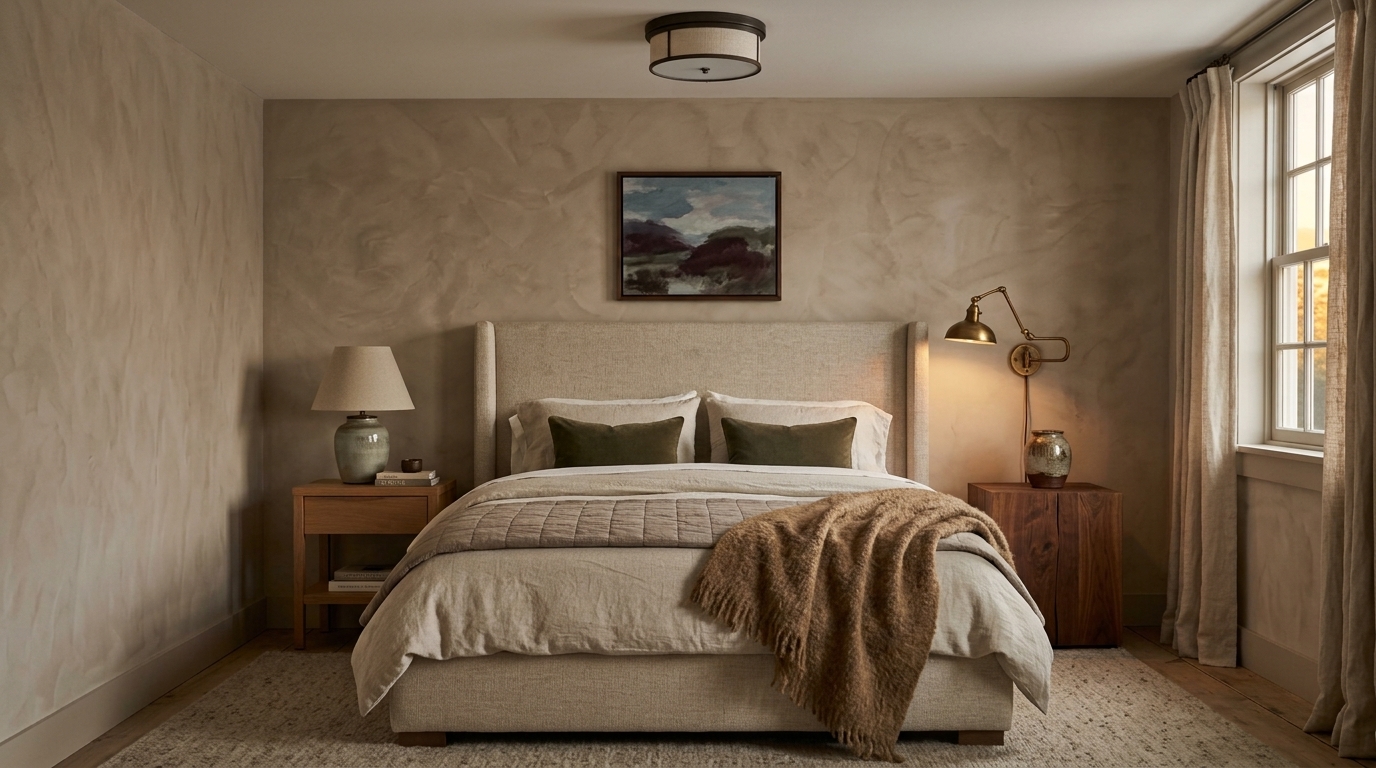
10 Neutral Bedroom Ideas for a Calm, Layered Retreat
Neutral bedrooms often fail for a surprisingly simple reason. Everything is technically calming, but the walls, bedding, carpet, curtains, and furniture sit within almost the same pale beige value. Instead of restful, the room feels unfinished.
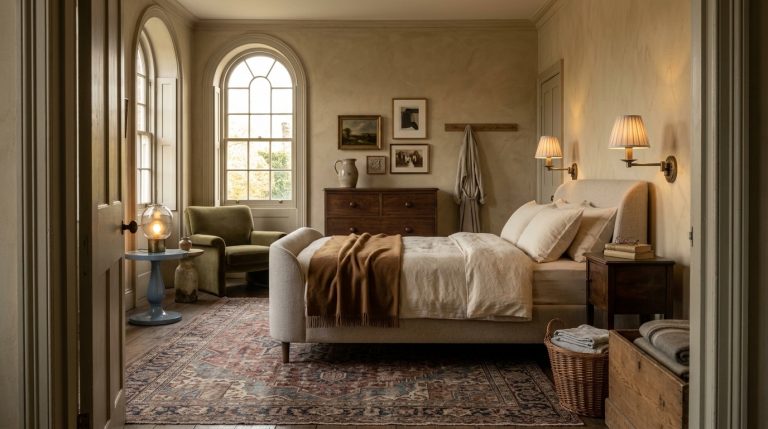
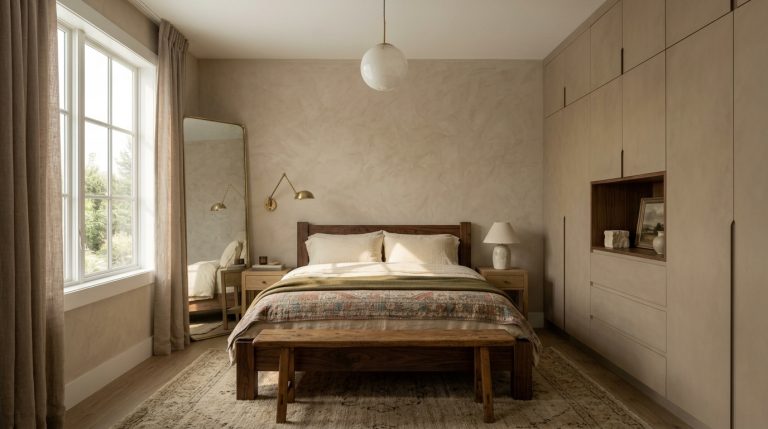
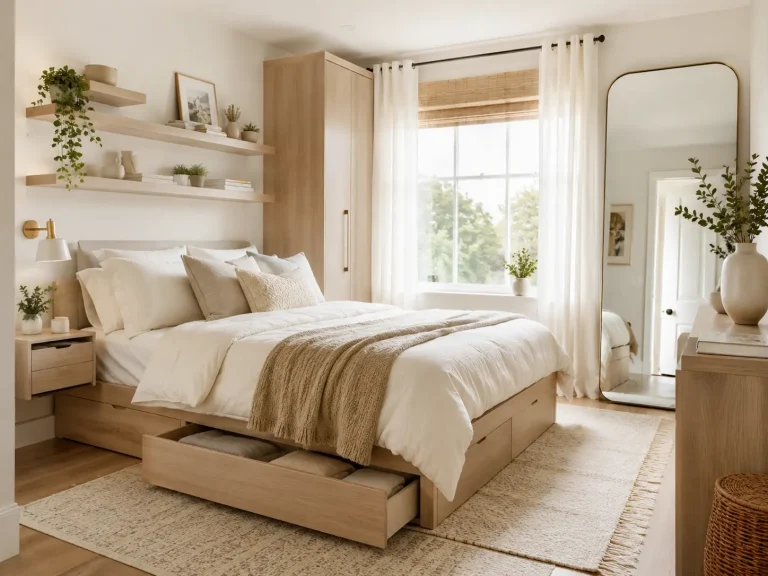
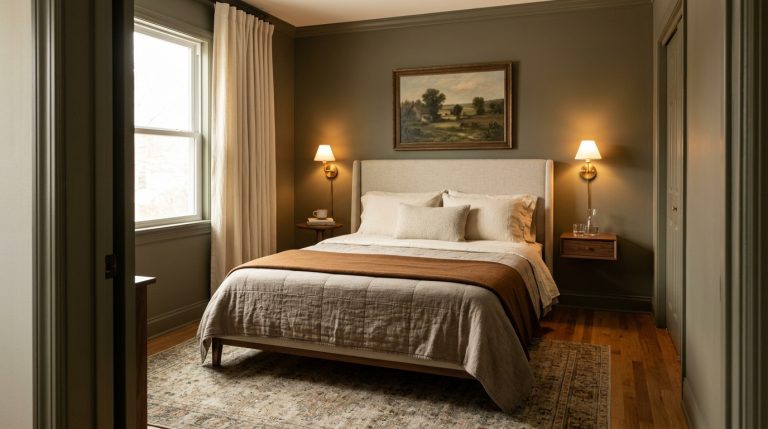
The stronger 10 neutral bedroom ideas for 2026 rely on variation rather than more decoration. Warm taupe, mushroom, caramel, chalky off-white, natural wood, upholstered beds, wool, linen, and darker brown accents are giving neutral bedrooms greater depth. Designers are also moving away from flat all-white schemes toward warmer, more enveloping rooms with stronger texture and personality.
The aim is still calm. You simply need enough contrast for the room to feel intentional.
Start with warmer, more complicated neutrals
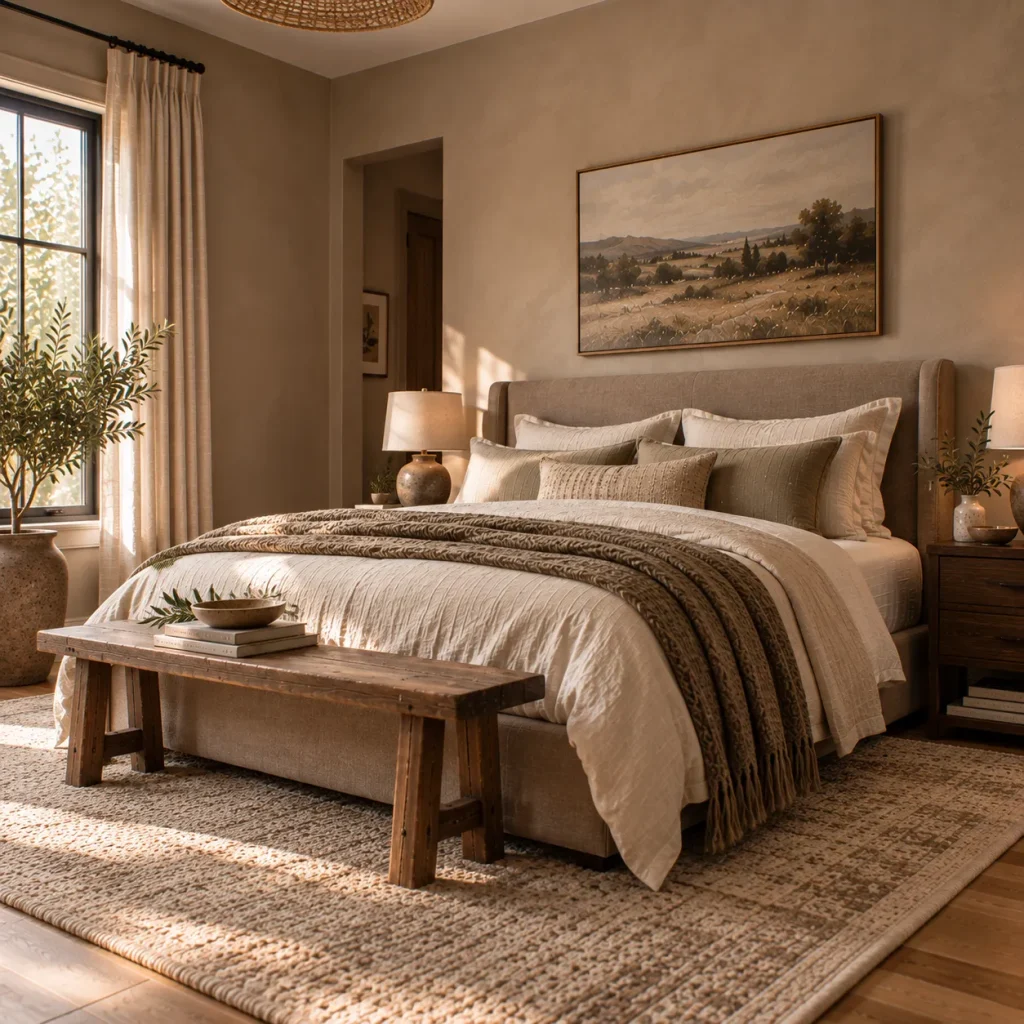
Idea 1: Replace plain beige with mushroom, taupe, or warm stone
Neutral does not describe one color. It describes a family of shades ranging from mushroom, taupe, camel, stone, putty, parchment, and soft brown.
For 2026, designers are particularly interested in warmer neutrals with depth. Homes & Gardens identifies creamy taupes, clay-toned beiges, soft caramel, mushroom, and chalky off-whites as part of the year’s updated neutral bedroom palette.
Start by looking at your flooring. Honey oak usually works better with a warm putty or creamy taupe than a gray-beige. Cooler stone floors may tolerate a slightly grayer neutral.
Paint large samples and check them in morning and evening light. Neutral undertones can shift more dramatically than people expect — see our warm neutral paint colors guide for more on this.
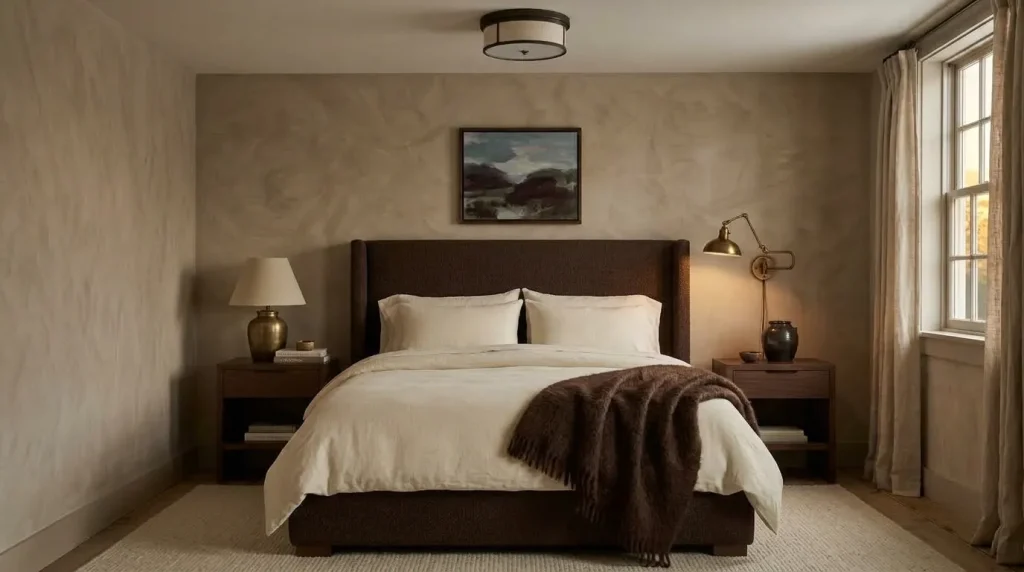
Idea 2: Use chocolate brown as your darker neutral
A neutral bedroom does not need black accents to create contrast.
Chocolate, espresso, tobacco, and deep walnut can anchor cream and beige with less harshness. A chocolate upholstered headboard, dark wood dresser, or pair of espresso nightstands may be enough.
Brown is particularly useful because it behaves almost like a neutral while giving pale fabrics more visual weight. Recent 2026 color reporting is becoming more important across interiors, alongside richer woods such as walnut and espresso oak.
Try warm ivory walls, oatmeal bedding, and a walnut bed frame. Or use mushroom walls with a chocolate headboard and pale linen curtains.
You rarely need dark brown on every piece. One or two substantial elements create a stronger result.
Let the bed carry more of the design
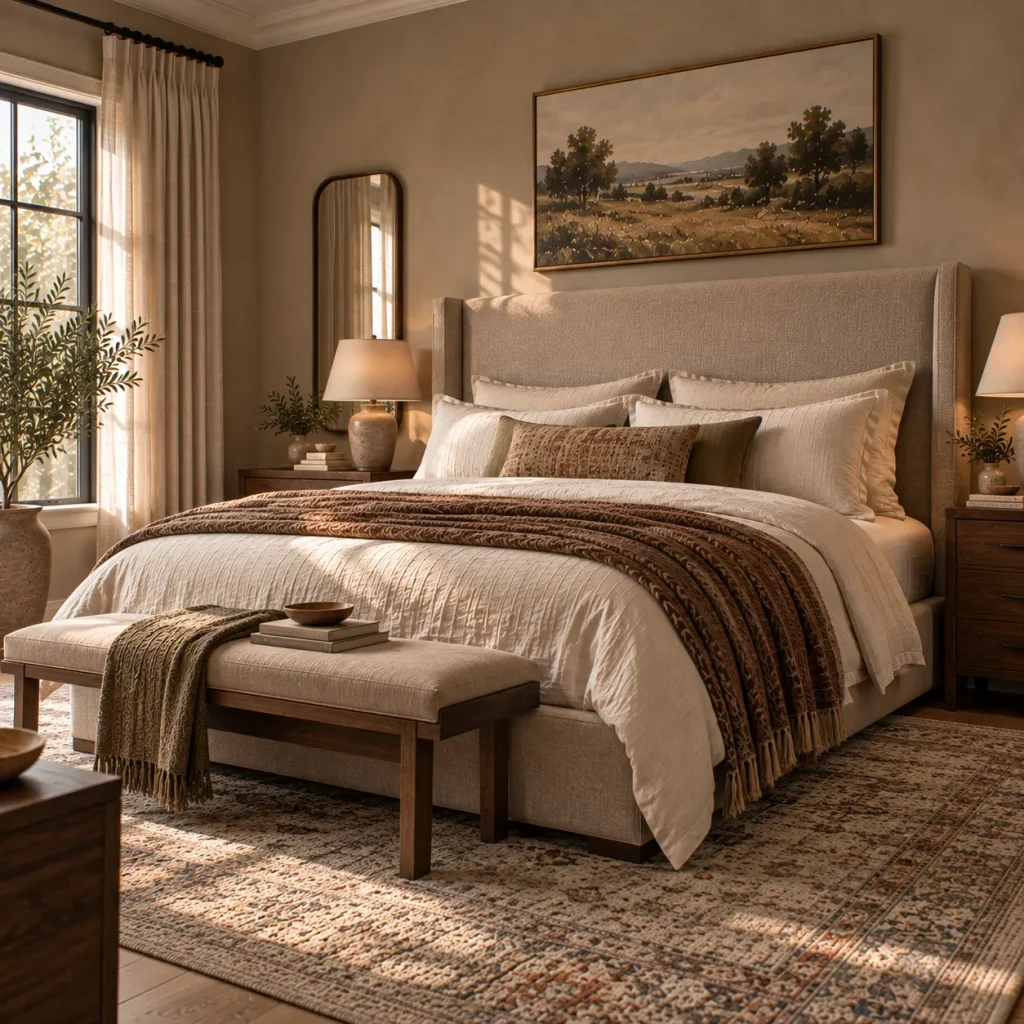
Idea 3: Choose an upholstered bed with real presence
The bed is usually the largest object in the room, so a tiny headboard can leave a neutral scheme without enough structure.
Consider a taller upholstered headboard or fully upholstered bed in linen, cotton, velvet, or a durable woven fabric. Architectural Digest’s August 2026 coverage of upholstered beds highlights linen blends, velvet, bouclé, cotton, and performance fabrics as ways to bring softness and visual warmth into bedrooms.
Current bedroom design is also moving toward a more cocooning approach, including taller headboards and upholstered surfaces that soften both the visual and acoustic character of the room.
If your room is small, the bed does not need to be bulky. Look for a relatively slim frame with a substantial headboard rather than an oversized padded surround — a principle we also cover in our minimalist bedroom ideas.
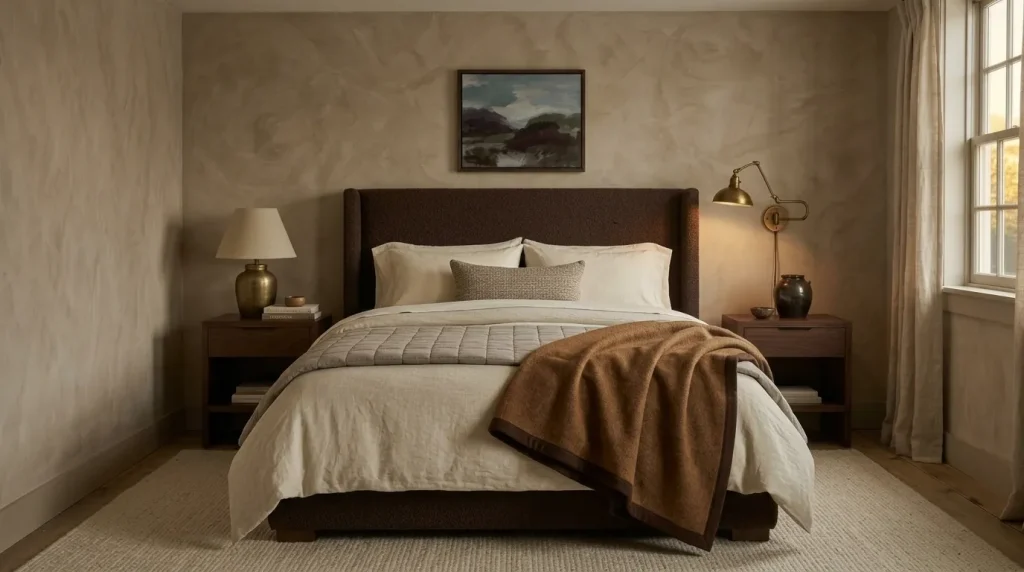
Idea 4: Layer bedding by weight, not by pillow count
A neutral bed looks more luxurious when the fabrics change, not when it carries nine decorative cushions.
Start with cotton or linen sheets. Add a duvet or coverlet, then one heavier layer at the foot of the bed, such as wool, quilted cotton, washed linen, or a textured blanket.
Use subtle tonal differences. Warm white sheets, an oatmeal duvet, mushroom coverlet, and tobacco piping can create more depth than four identical cream layers.
Small tailored details are becoming more noticeable in 2026 bedding too. Homes & Gardens has highlighted fine contrast piping as a quieter way to give plain bedding definition without relying on loud pattern.
Two sleeping pillows plus one or two decorative cushions are often enough for an everyday bed.
Bring in wood before buying more beige decor
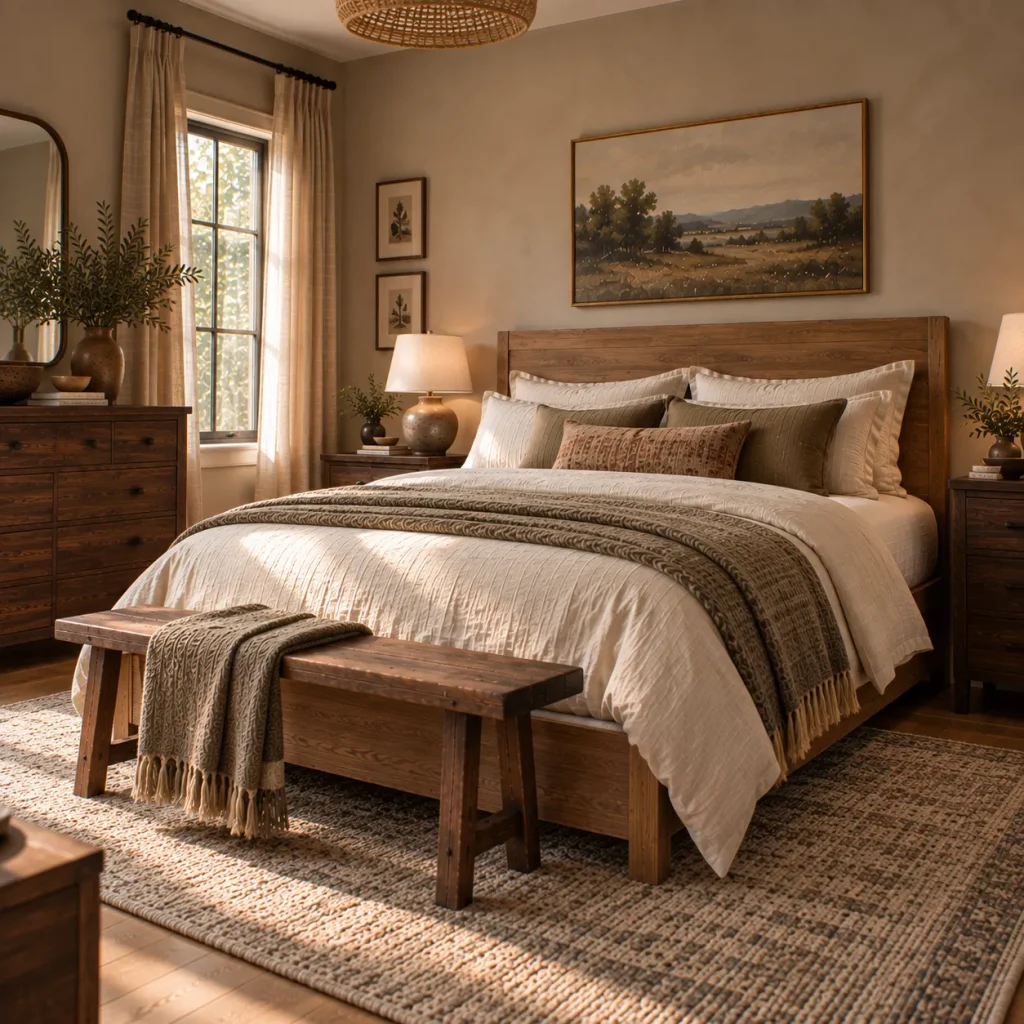
Idea 5: Mix medium and dark wood tones
Natural wood stops neutral bedrooms from becoming depending on the flooring and architecture.
Do not feel obligated to make your bed, nightstands, and dresser identical.
I once worked through an illustrative neutral bedroom where every wood surface was pale oak. The room was pleasant but strangely flat. Changing only the nightstands to dark walnut gave the pale bed and floor much clearer definition.
That kind of material contrast feels especially current in 2026, as designers move toward richer dark woods, patina, and combinations of raw and refined finishes.
If the floor is already dark, reverse the idea. Use lighter oak or painted nightstands so the furniture does not disappear into it.
Create depth with texture instead of clutter
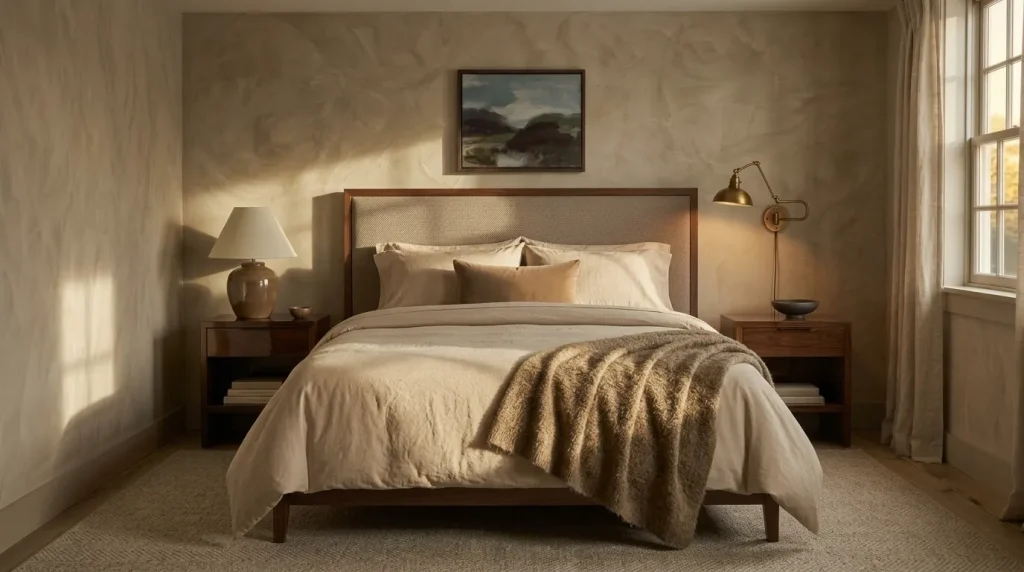
Idea 6: Use at least four noticeably different textures
A neutral palette relies heavily on touch and surface.
Try linen curtains, smooth cotton sheets, a wool rug, glazed ceramic lamps, and grained wood. Add velvet or bouclé only if the room needs another soft material.
The goal is contrast.
A cream bouclé bed, cream bouclé bench, nubby rug, and fuzzy cushions may technically contain texture, but the surfaces still behave similarly.
Current bedroom trends are emphasizing tactile, enveloping materials such as washed linen, mohair, upholstered panels, and softer finishes rather than flat minimalism.
Use one rough surface beside something smooth. A handmade ceramic lamp on a polished walnut nightstand is a simple example.
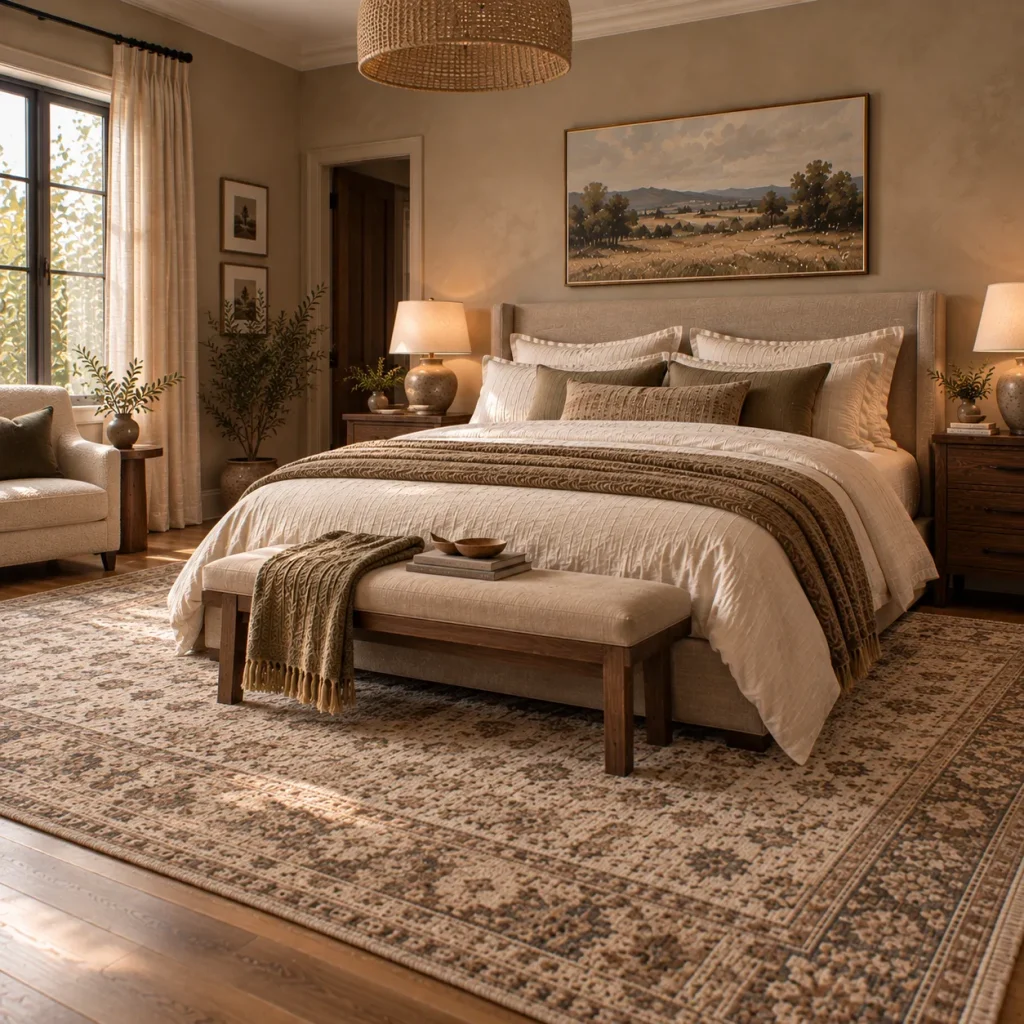
Idea 7: Choose a rug large enough to frame the bed
A small rug at the foot of the bed does little to anchor the room.
For a queen bed, an 8-by-10-foot rug is often a useful starting point if the room permits. For a king, 9-by-12 may create better coverage. Exact sizing depends on how much rug you want visible around the bed and where your nightstands sit.
You generally want enough rug extending beyond the sides that your feet land on it when you get out of bed.
Neutral does not require solid cream. Try a subtle stripe, faded geometric, warm taupe pattern, or wool rug with several tonal browns.
A little variation underfoot can prevent the lower half of the room from becoming one continuous beige field.
Add muted color without losing the neutral effect
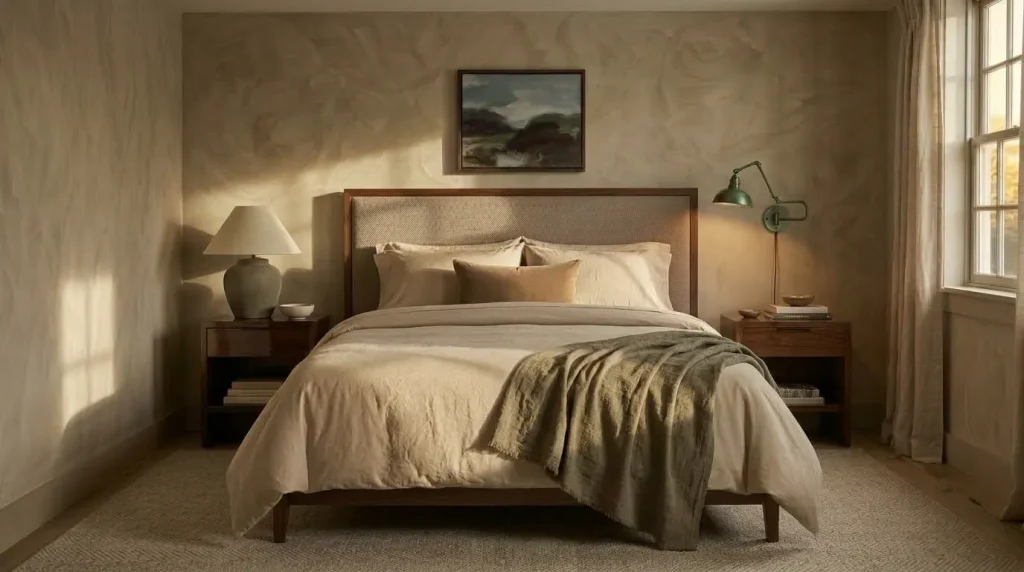
Idea 8: Treat olive, dusty rose, or soft blue as near-neutrals
A neutral bedroom can contain color.
Smoky olive, dusty rose, powder blue, muted mauve, and soft gray-green can behave quietly when their saturation is low. Current 2026 bedroom color reporting includes soft gray-greens, delicate pinks, powder blue, earthy mauve, and warming neutrals, showing how broad a restful bedroom palette can be.
Try a muted olive lamp beside mushroom walls. Add a dusty rose cushion to chocolate bedding. Use powder-blue curtains with warm white walls and walnut furniture.
One contrarian point matters here. A neutral bedroom does not become less calming because it contains color. Poor contrast and excessive decoration are more likely to disturb the visual calm than one muted blue chair.
Keep the larger palette restrained and let color appear in one or two places.
Make the lighting soft enough for the palette
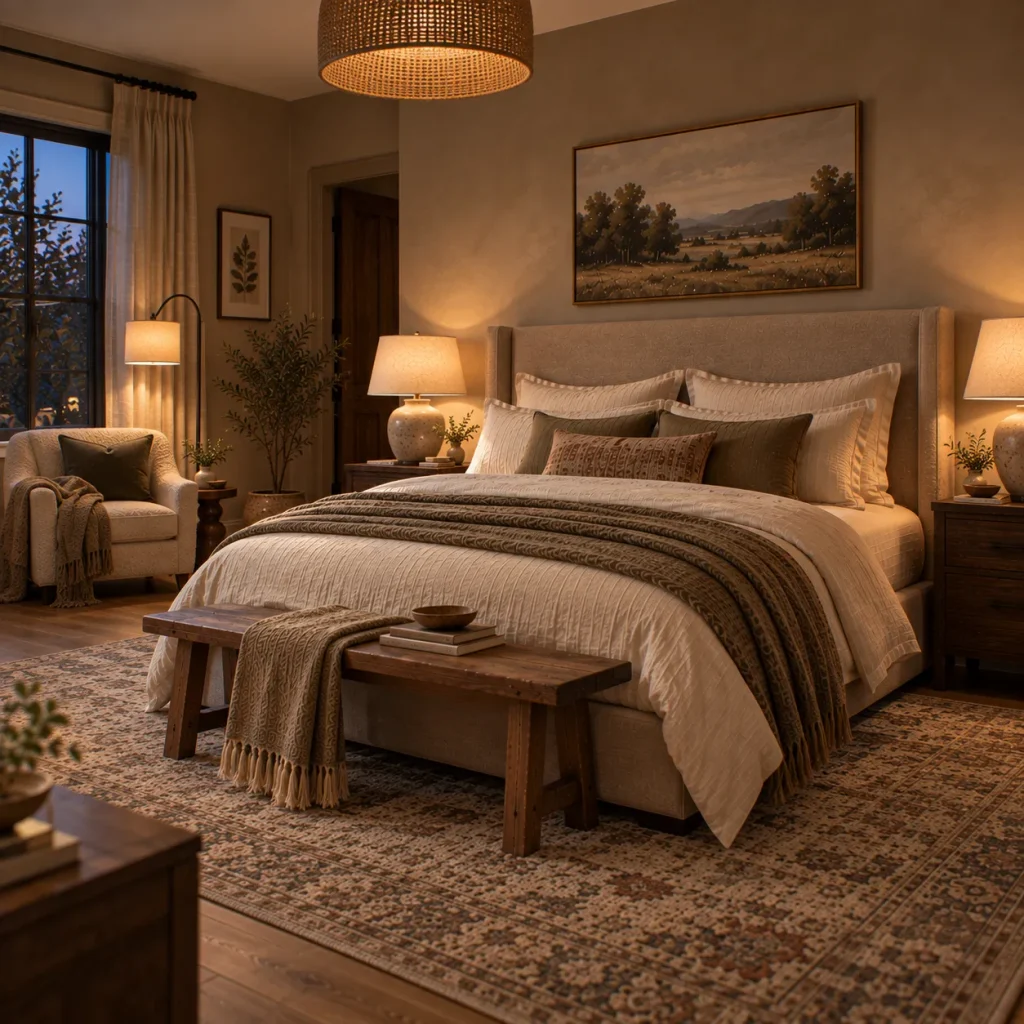
Idea 9: Build lighting around the bed, not just the ceiling
Neutral rooms depend on shadow. If the entire room is lit by one bright ceiling fixture, subtle differences between plaster, linen, wool, and wood almost disappear.
Use bedside lamps or wall sconces for lower light. Add a ceiling fixture for general illumination and, where useful, a floor lamp near a chair or dresser.
Lampshades in linen, parchment, pleated fabric, or paper soften the light and contribute another material, similar to the layered approach in our cozy bedroom ideas.
Keep scale in mind. On a substantial nightstand, a tiny lamp can look under-proportioned. The combined lamp and shade should have enough height to relate comfortably to the headboard.
And if you read in bed, choose lighting for that task first. A beautiful dim lamp that forces you to strain is not a successful bedroom light.
Give the room something personal
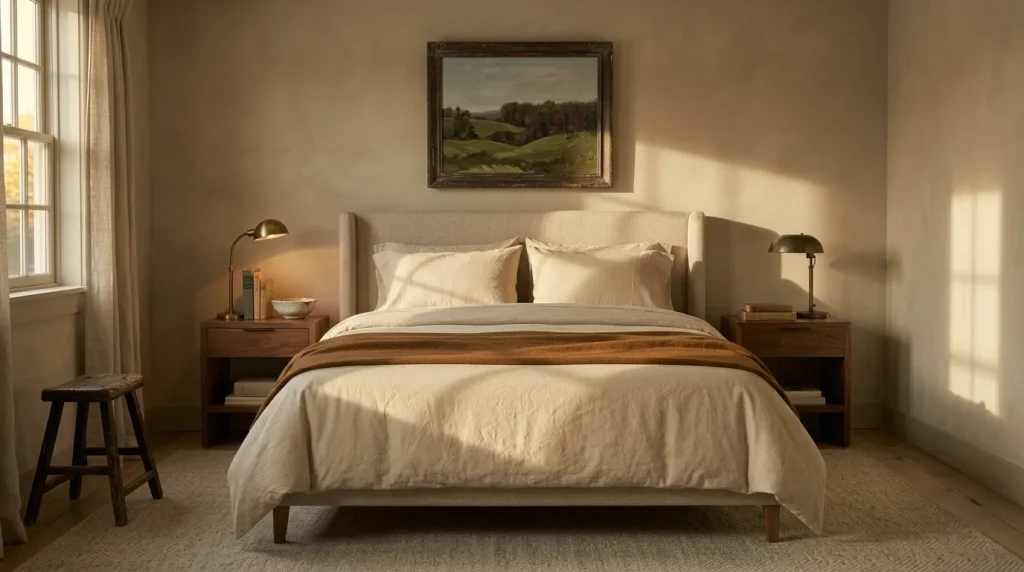
Idea 10: Add art, books, and one imperfect object
Neutral bedrooms can become impersonal when every visible object was purchased specifically to coordinate with the palette.
Keep something with character.
Hang an old drawing, landscape painting, textile, photograph, or piece of abstract art. Add books to the nightstand. Use a vintage stool, handmade ceramic bowl, aged brass lamp, or old wooden chest.
The broader 2026 interiors movement is favoring patina, designed imperfection, and personal details over sterile perfection, a mood we also explore in our modern bedroom ideas.
The art does not need to be beige.
A burgundy line, dusty blue sky, olive landscape, or dark brown frame may be exactly what the room needs.
Leave some empty surface around stronger objects. Neutral rooms benefit from breathing room, but breathing room and emptiness are not the same thing.
A practical neutral bedroom palette guide
| Main neutral | Darker anchor | Soft supporting color |
|---|---|---|
| Warm ivory | Walnut | Dusty blue |
| Mushroom | Chocolate brown | Muted rose |
| Parchment | Tobacco | Olive |
| Warm taupe | Espresso oak | Powder blue |
| Oatmeal | Dark bronze | Clay pink |
| Soft stone | Walnut | Earthy mauve |
Choose one row as a starting direction rather than combining every color in the table.
What should you skip in a neutral bedroom?
Flat all-white schemes. White can still be beautiful, but current bedroom design is moving away from uninterrupted white rooms toward warmer, more layered palettes.
Matching bedroom sets. Identical bed, nightstands, dresser, and bench can make the room feel more like a furniture display than a personal space.
Too much bouclé. One textured chair or bench is enough. Neutral rooms need contrast between materials.
Tiny rugs. An undersized rug can make the bed look disconnected from the rest of the room.
Buying beige accessories to create warmth. Warmth comes more effectively from wood, fabric, lighting, and undertones than from adding another beige vase.
Try this if your bedroom is already beige
Do not repaint first.
Start by identifying whether the room lacks contrast or texture.
If everything is pale, introduce one darker anchor such as walnut nightstands, a chocolate bench, or a deep brown headboard.
Next, change one material. Add linen curtains, wool underfoot, or a ceramic lamp instead of another fabric accessory.
Bring in one muted color, perhaps olive or dusty blue.
Finally, remove two or three decorative objects from the dresser or nightstands.
A neutral bedroom often becomes more sophisticated when you add one stronger element and subtract several weaker ones.
FAQ
What neutral bedroom colors are popular in 2026?
Warm taupe, mushroom, soft caramel, chalky off-white, warm stone, and earthy beige are particularly relevant. Designers are favoring nuanced, warmer neutrals rather than cool gray or stark white.
How do I stop a neutral bedroom from looking boring?
Vary the value and texture of the materials. Combine light upholstery with darker wood, smooth cotton with wool, matte walls with glazed ceramics, and add art or one muted color for contrast.
What colors can I add to a neutral bedroom?
Olive, dusty blue, muted rose, earthy mauve, rust, burgundy, and soft green can all work. Choose low-saturation versions if you want to preserve a calm overall palette.
Is beige still good for bedrooms in 2026?
Yes, but beige works best as part of a layered palette rather than the only color in the room. Pair it with richer wood, tactile fabrics, a lighter cream, and one deeper or muted accent.
Make the room quiet, not empty
The strongest 10 neutral bedroom ideas depend on relationships rather than a specific shade of beige.
Let a dark walnut nightstand sharpen a pale bed. Put rough linen beside smooth cotton. Use mushroom walls instead of automatic white. Add one piece of art that brings a little color back into the room.
If you make one change first, look at the bed from the doorway. It should have enough contrast with the wall, rug, and nearby furniture to feel like the visual center of the room.
A neutral bedroom should lower the volume without removing every interesting note. Once color, texture, wood, lighting, and proportion are balanced, the room can feel restful without becoming anonymous.