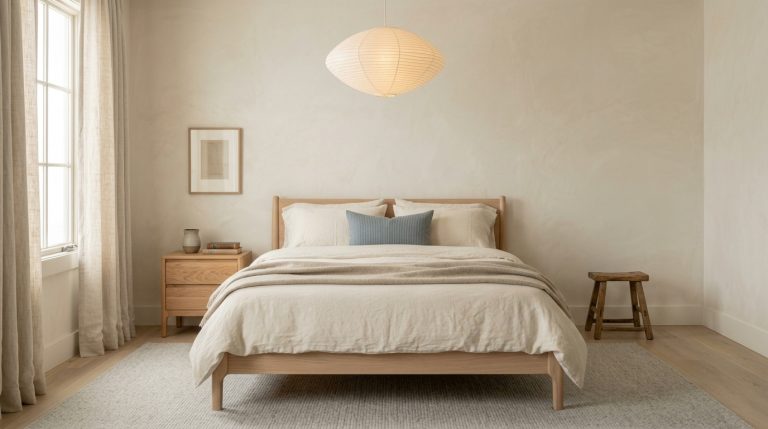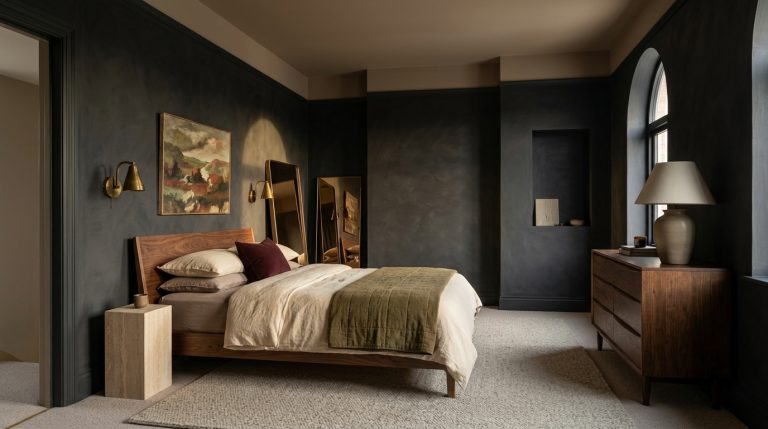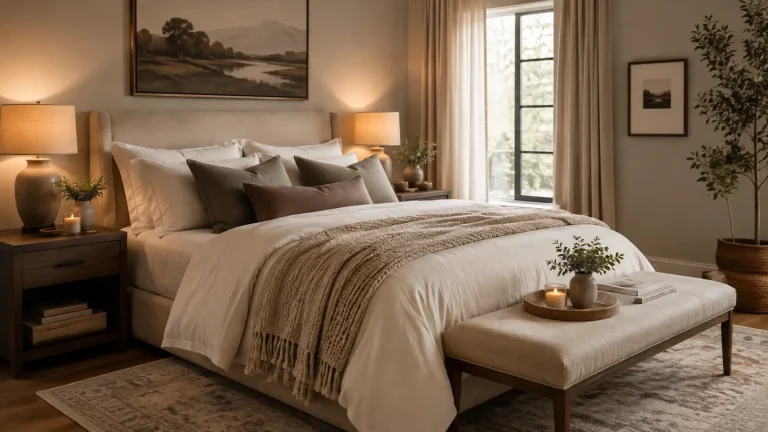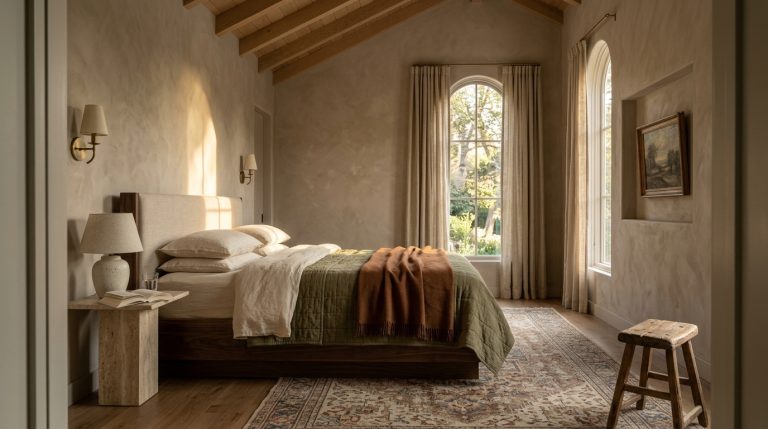
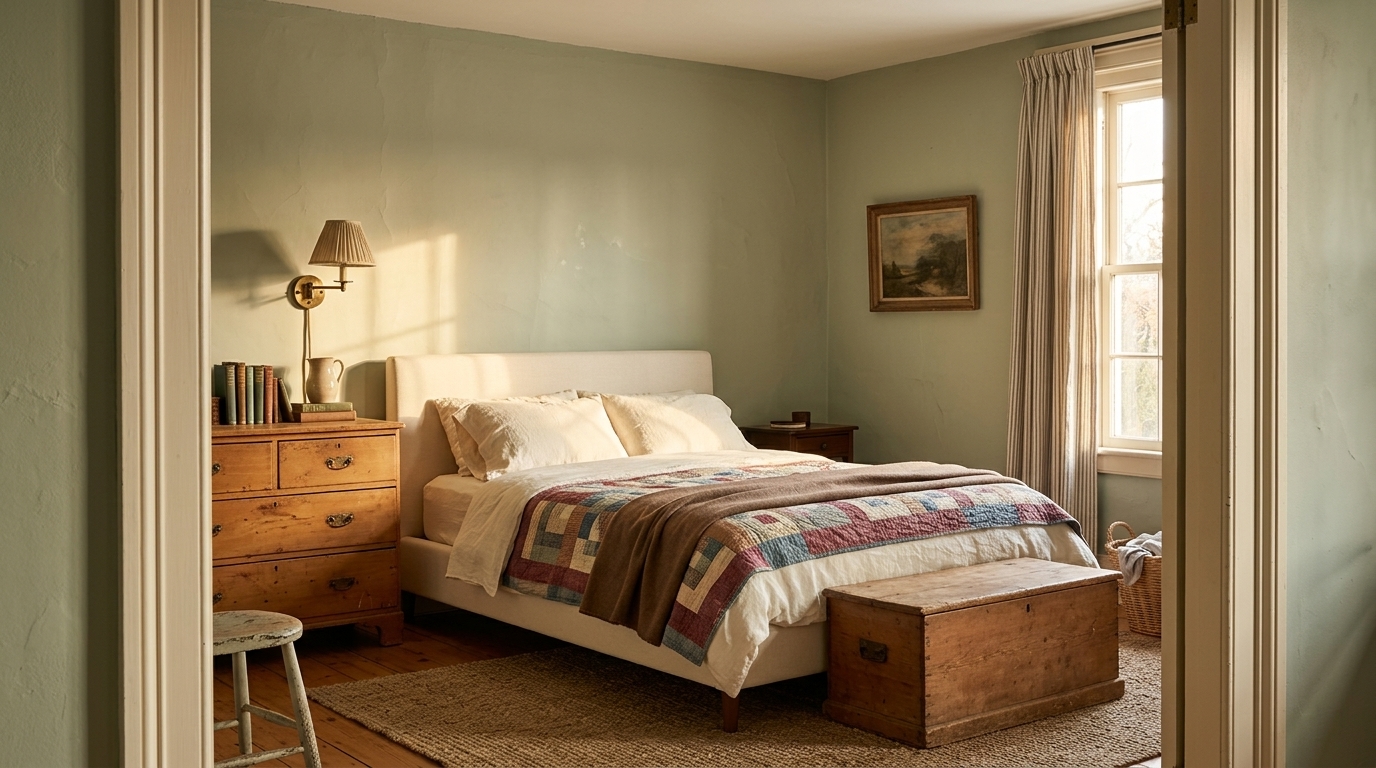
12 Vintage Farmhouse Bedroom Tips for a Warm, Collected Retreat
Vintage farmhouse bedrooms are easy to romanticize and surprisingly easy to overdo. Too much distressed wood, white shiplap, black metal, scripted signs, and matching “antique-look” furniture can make the room feel manufactured rather than genuinely old and comfortable.
The stronger 12 vintage farmhouse bedroom tips for 2026 take their cues from useful country furniture, inherited-looking textiles, faded color, natural materials, and pieces that show age honestly, in the same collected spirit as these rustic bedroom ideas. Current farmhouse design is moving away from all-white interiors and fake weathering toward richer palettes, vintage furniture, quilts, pattern, warm wood, and visible patina.
You do not need an old farmhouse to make this work. What matters is creating the sense that the bedroom developed slowly rather than arriving as a complete furniture package.
Build the room around genuinely aged furniture
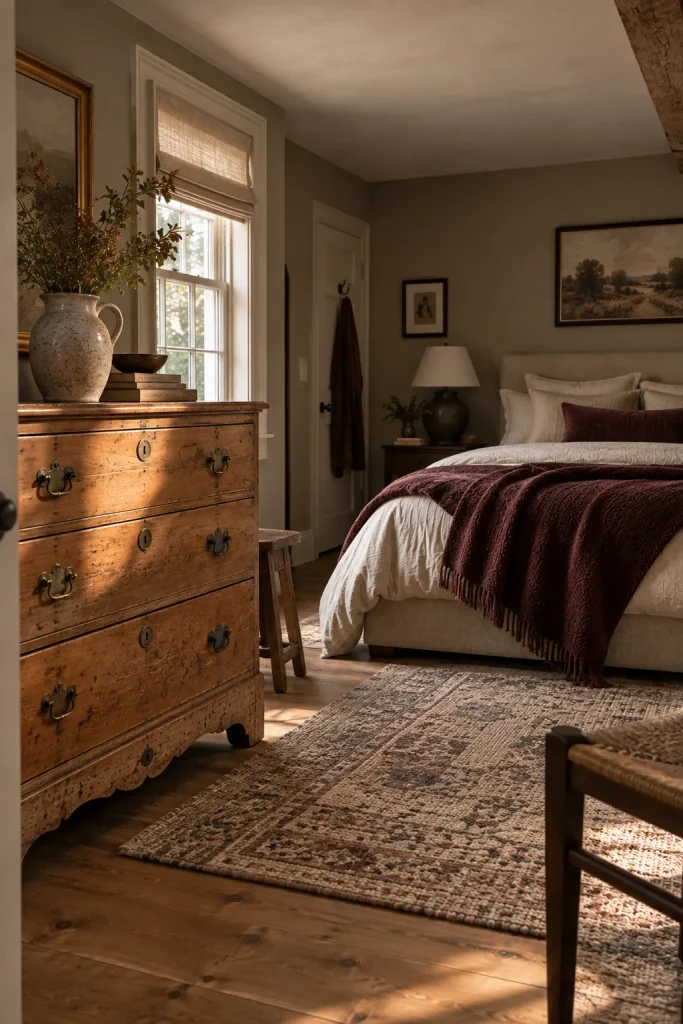
Tip 1: Start with one useful antique storage piece
If you buy or thrift one vintage item, make it something that earns its floor space.
An old chest of drawers, pine cupboard, blanket chest, or small armoire gives the room both storage and history. Designers discussing vintage interiors in 2026 are particularly recommending antique storage because it combines practicality with the character that mass-produced reproductions struggle to imitate.
Look beyond perfect condition. A few scratches, uneven coloration, replaced handles, and a softly worn top can make an old piece more convincing. What matters is that drawers work, the structure is sound, and any finish is appropriate for indoor use.
Pair an old chest with a simpler contemporary bed rather than making every furniture piece antique. That contrast keeps the bedroom from becoming a period reconstruction.
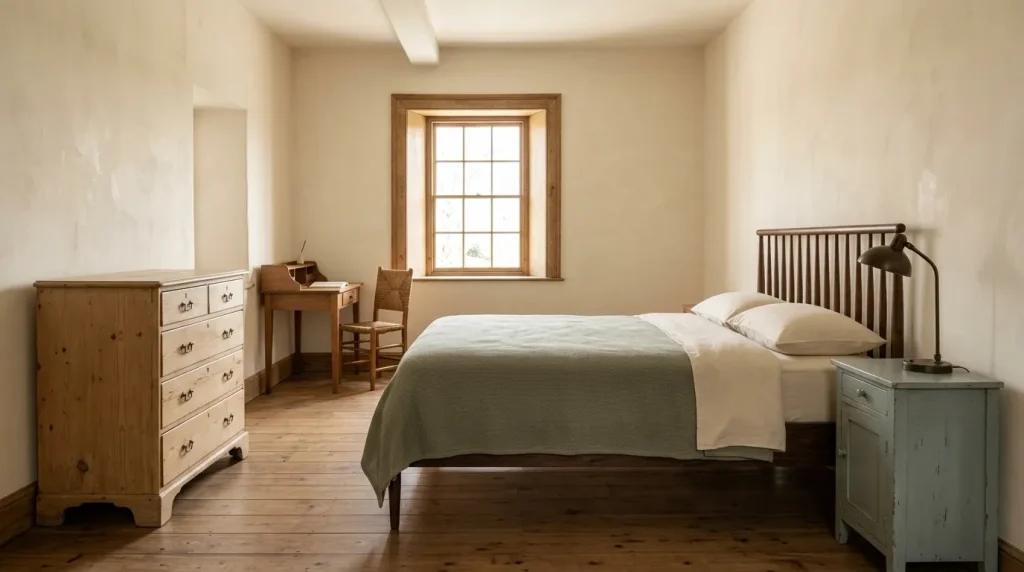
Tip 2: Mix wood tones instead of buying a matching farmhouse set
Vintage farmhouse rooms should look accumulated.
Try an old pine dresser with medium oak floors and walnut nightstands. Or place a painted bedside table beside a darker wooden bed.
Current bedroom design is moving strongly away from matching furniture suites. Designers are instead mixing woods, metals, upholstered pieces, and silhouettes to create rooms with more individuality.
I once worked through an illustrative bedroom where the bed, nightstands, dresser, and bench all had the same factory-distressed gray-brown finish. Nothing was technically wrong, but the room looked as though every piece arrived on the same delivery truck.
Changing one nightstand to an old painted table and introducing a darker wood chest made the room immediately more convincing.
Choose farmhouse colors with history
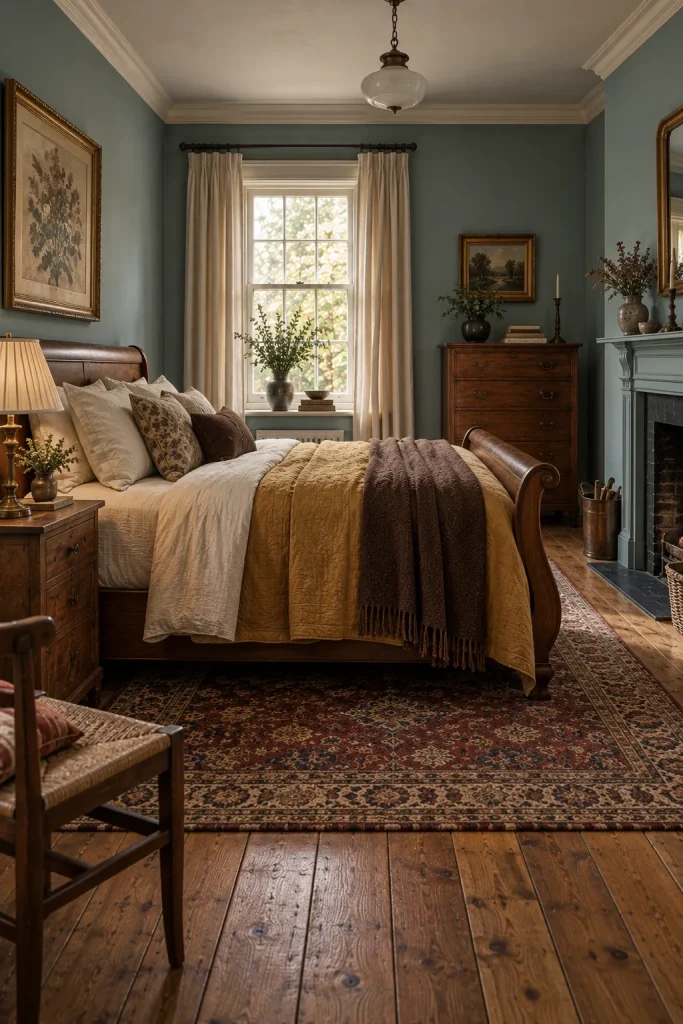
Tip 3: Move beyond farmhouse white
White still has a place in farmhouse interiors, but it should not be the automatic answer.
For 2026, designers are moving toward richer country palettes that include sage, dusty rose, duck-egg blue, muted yellow, brown, forest green, and other softened heritage colors.
Try dusty blue walls with walnut furniture. Sage paneling with warm ivory bedding. Mushroom walls with burgundy textiles. Soft yellow with aged oak. Or dusty rose with chocolate brown.
A deeper forest green can also work beautifully in a smaller bedroom, particularly with natural wood and warm lamps. Current farmhouse projects are showing that dark color can make rustic interiors feel more sophisticated rather than less authentic.
Always sample paint beside your flooring and wood furniture. Historic-looking colors are particularly sensitive to undertones.
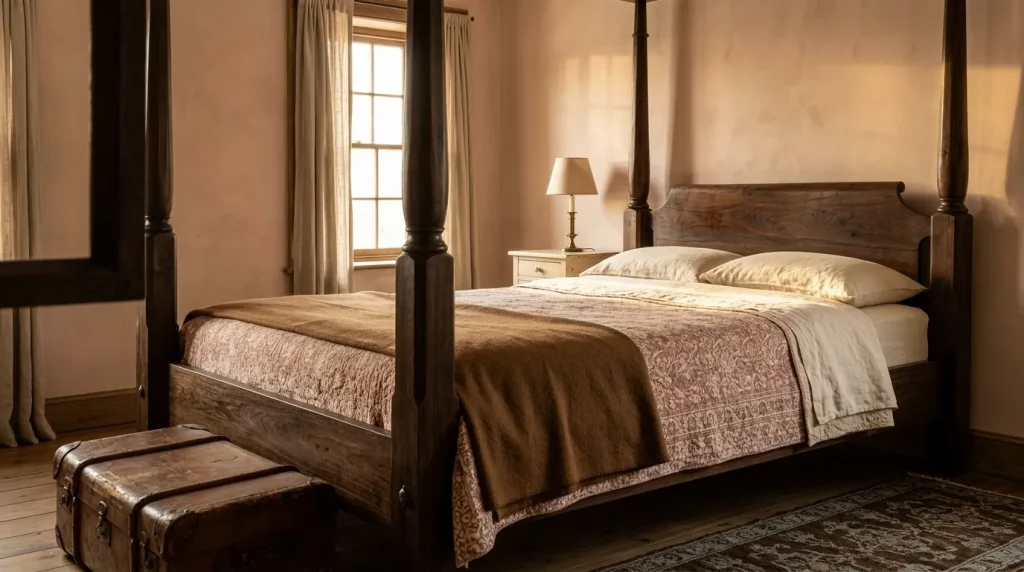
Tip 4: Use chocolate brown to make pale colors feel older
Chocolate brown is one of the most useful colors in a vintage farmhouse bedroom.
It can come from walnut furniture, a painted dresser, wool blankets, leather, picture frames, or a patterned rug.
Designers are leaning into chocolate in 2026 specifically because it creates the warm, layered quality associated with rooms that feel collected over time.
Pair it with dusty rose, sage, soft blue, cream, or muted yellow.
And do not assume black must provide every dark accent. Brown usually feels softer and more connected to country materials.
Let quilts carry the farmhouse character
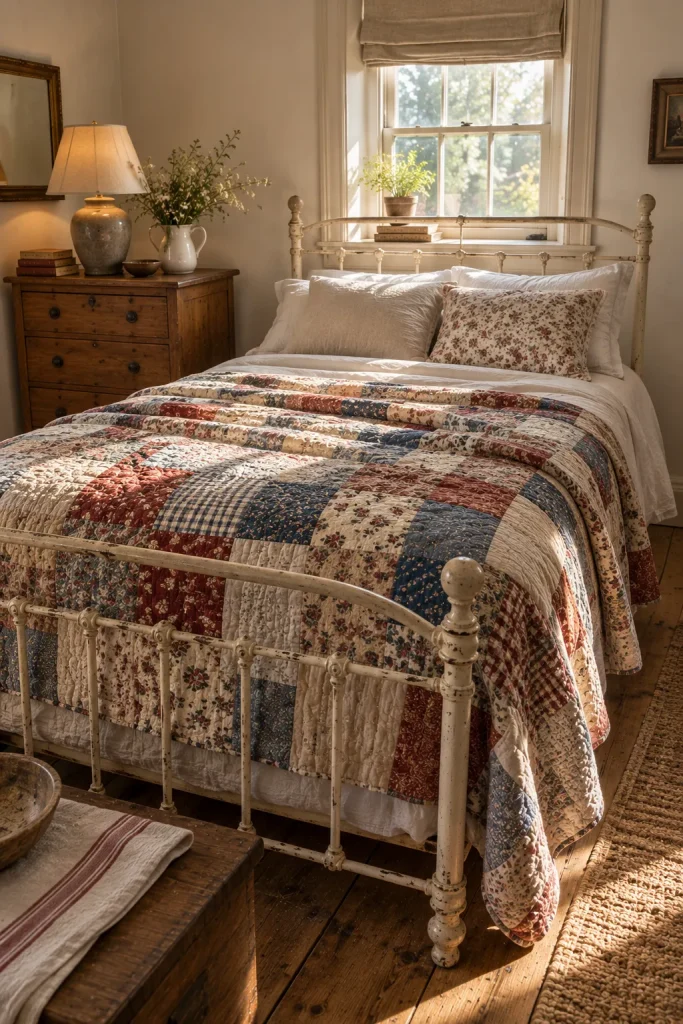
Tip 5: Put a patchwork or heritage-style quilt on the bed
A good quilt can establish vintage farmhouse character without adding any extra furniture.
Patchwork is having a noticeable revival in 2026, driven partly by the wider interest in handcrafted objects, nostalgia, and textiles with an heirloom feeling. Architectural Digest and Homes & Gardens have both highlighted its renewed presence in bedrooms this year.
Look for combinations such as red, cream, and faded blue. Or olive, mustard, and rust. Or dusty rose, sage, and ivory. Or burgundy, tobacco, and soft blue.
The quilt does not need matching shams. In fact, one of the characteristics of convincing farmhouse bedding is that stripes, checks, florals, and quilts relate without appearing purchased as a complete set. Architectural Digest’s 2026 farmhouse guidance specifically recommends this looser pattern mixing.

Tip 6: Layer the bed without making it precious
Vintage farmhouse beds should look comfortable enough to climb into.
Start with cotton or linen sheets. Add a quilt or duvet, then one heavier throw at the foot of the bed.
A useful combination might be warm white linen, a faded floral quilt, and a tobacco wool blanket.
Avoid ten decorative cushions and elaborate pillow arrangements.
The contradiction here is useful: a bedroom can look more authentically farmhouse when the bed is slightly simpler. Historically practical rooms were not designed around removing piles of cushions every evening. Let the fabric quality, pattern, and wear create the richness.
Use traditional pattern with restraint
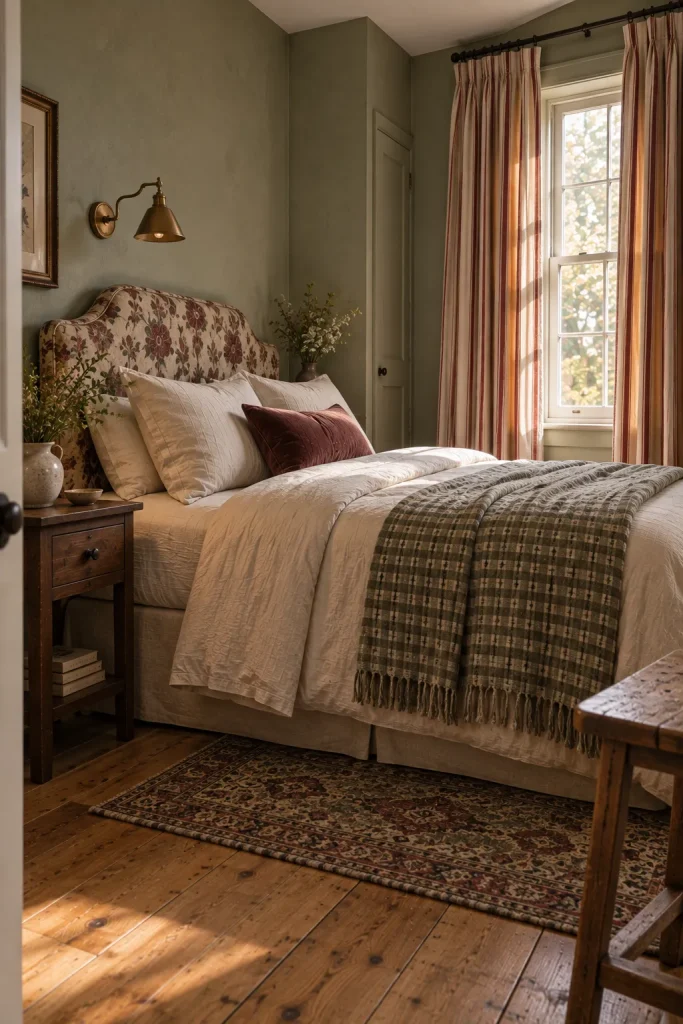
Tip 7: Mix one floral with one stripe or check
Pattern is central to a vintage farmhouse bedroom, but it works best when the designs have different scales.
Try a small floral headboard with wider ticking-stripe curtains. Or use floral wallpaper with a simple checked quilt.
Architectural Digest describes farmhouse bedrooms through layered quilts, checks, stripes, natural materials, and pieces that become better with age.
Choose a shared color to connect the patterns. If your floral includes burgundy, let burgundy reappear quietly in the stripe. If the wallpaper contains sage, repeat green in a small cushion or quilt.
Do not make every textile floral. Contrast gives individual patterns more presence.

Tip 8: Consider wallpaper beyond the headboard wall
A vintage-inspired wallpaper can make a plain bedroom feel architecturally older.
Look for ditsy florals, botanical vines, small checks, toile, faded stripes, or folk-inspired motifs.
And consider using it across the entire room rather than defaulting to one feature wall.
Wallpapered ceilings are also appearing in 2026 vintage interiors, particularly in bedrooms where continuous pattern creates a more enclosed, cozy feeling. This approach works especially well in attic rooms and bedrooms with sloped ceilings.
If both the walls and ceiling carry pattern, keep the furniture and bedding more restrained.
Add farmhouse architecture without creating a theme
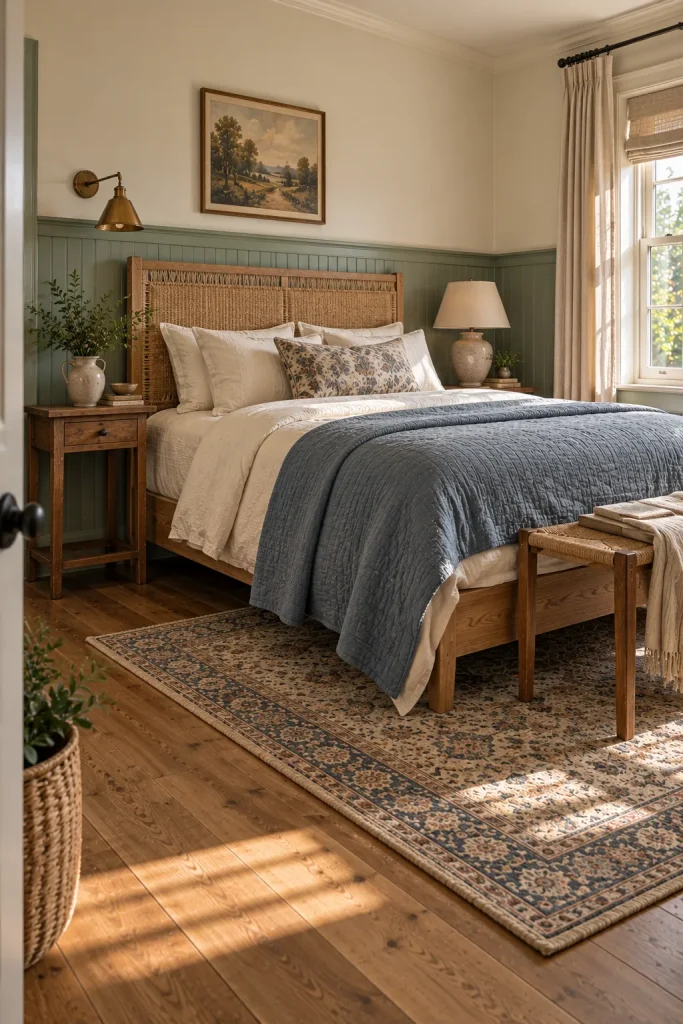
Tip 9: Use paneling or molding where it makes architectural sense
Tongue-and-groove boards, beadboard, picture molding, deeper baseboards, and simple crown molding can all support vintage farmhouse character.
But do not install random shiplap simply because the room needs to look “farmhouse.”
Current interest in historic interiors is increasingly focused on craftsmanship, architectural detail, old hardware, moldings, and materials that feel connected to actual building traditions.
In a newer home, consider half-height paneling painted sage, dusty blue, mushroom, or warm cream, similar to the paneling approach found in these sage green farmhouse bedroom ideas.
If the bedroom already has good trim, highlight what exists rather than adding another decorative layer. Architecture should explain the style quietly.
Let metal finishes look aged rather than industrial
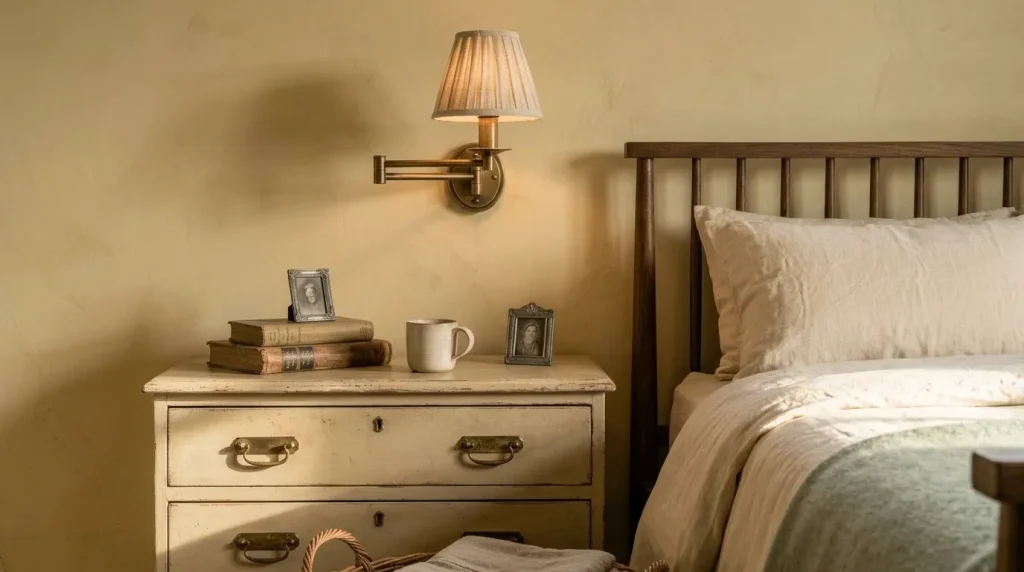
Tip 10: Replace the all-black hardware formula
Matte black became so closely connected with modern farmhouse that it can now make a room feel more 2010s than vintage.
Keep black where it genuinely works, but mix it with aged brass, bronze, iron, pewter, or old nickel.
An antique brass sconce beside a painted wooden nightstand can look softer than another black cage lamp.
Historic hardware and original brass details are also part of the broader 2026 interest in 19th-century craftsmanship.
Try a pleated fabric shade rather than an exposed Edison bulb. Farmhouse lighting does not have to look industrial to feel practical.
Decorate with objects that could have a history

Tip 11: Use old art, needlework, and photographs
Vintage farmhouse walls should feel personal rather than commercially themed.
Hang small landscapes, botanical studies, framed family photographs, embroidery, needlepoint, pressed botanicals, or old sketches.
Textile crafts such as needlework and patchwork are receiving renewed design attention in 2026 because their irregularity and handmade character work well in rooms that prioritize history and personality.
Use antique wood, aged brass, painted frames, and simple black in a controlled mix.
Avoid ordering a complete set of “vintage farmhouse prints.” One slightly faded landscape you genuinely love can contribute more than six coordinated reproductions.
And skip wooden word signs. The furniture and textiles should already tell us what kind of room this is.

Tip 12: Finish with useful objects instead of decorative filler
Country rooms were historically practical spaces, and retaining some of that practicality makes vintage farmhouse decorating more believable. The same useful, unstaged mindset works well in these farmhouse living room tips.
Place a ceramic pitcher on the dresser. Keep books beside the bed. Use an old wooden stool as a small table. Store blankets in a chest.
A woven basket can hold laundry rather than exist purely because baskets are associated with farmhouse decor.
The broader design mood of 2026 favors patina, designed imperfection, tactile materials, and personalized details over sterile styling, a restraint echoed in these eclectic bedroom tips.
So do not worry about making every surface look professionally arranged. Leave part of the dresser empty. Let the old wood show.
A practical vintage farmhouse bedroom formula
| Element | Strong choice | What to avoid |
|---|---|---|
| Walls | Sage, dusty blue, warm cream, rose | Cool gray everywhere |
| Furniture | Antique chest + mixed woods | Matching distressed set |
| Bedding | Cotton, linen, quilt, wool | Excess decorative pillows |
| Pattern | Floral + stripe or check | Several equal-strength prints |
| Metal | Brass, bronze, iron | Matte black on everything |
| Art | Landscapes, photos, needlework | Farmhouse word signs |
| Storage | Old chest or useful dresser | Decorative crates everywhere |
The strongest rooms use only a portion of these ideas. Vintage farmhouse should feel gradual rather than formulaic.
What should you skip in a vintage farmhouse bedroom?
Fake distressed furniture everywhere. Manufactured scratches rarely have the depth of wood that has actually aged.
The white, gray, and black formula. Farmhouse color is getting warmer and more expressive in 2026.
Matching bedroom suites. Mixed furniture creates the sense that the room developed over years.
Too many rustic accessories. Lanterns, crates, galvanized containers, baskets, signs, and faux antiques can turn a bedroom into a theme.
Trying to make everything old. A contemporary mattress, simple upholstered bed, or clean lamp can help genuine vintage objects look more special.
Try this if your bedroom already looks modern farmhouse
You probably do not need to start over.
First, remove the most obviously themed objects, especially word signs and decorative farmhouse accessories.
Keep the useful wood furniture.
Replace one matching piece with an antique or secondhand chest, table, or stool.
Next, add color. Sage, dusty blue, chocolate, soft yellow, or burgundy can break up an all-white scheme.
Introduce one quilt or patterned textile.
Then change one black fixture to brass, bronze, ceramic, or painted metal.
Those relatively small changes can shift a room from generic modern farmhouse toward something that feels older, softer, and much more personal.
FAQ
What makes a bedroom vintage farmhouse?
Vintage farmhouse bedrooms combine practical country materials with pieces that show age or history. Warm wood, antique storage, cotton and linen, quilts, checks, florals, vintage artwork, and aged metals are more important than decorative farmhouse symbols.
What colors work best for a vintage farmhouse bedroom?
Sage, dusty rose, duck-egg blue, soft yellow, chocolate, burgundy, warm cream, and mushroom all work well. Heritage-inspired color is becoming more noticeable in 2026 as designers move beyond farmhouse white.
How do I make farmhouse decor look genuinely vintage?
Use fewer reproduction pieces and introduce something with real age, such as an antique dresser, quilt, picture frame, lamp, or artwork. Mix that piece with simpler newer furniture rather than trying to make the entire room look old.
Are quilts popular in bedrooms in 2026?
Yes. Patchwork quilts and traditional coverlets are seeing renewed interest in 2026, particularly as interiors move toward handcrafted, nostalgic, and personally meaningful textiles.
Let the room look as though it grew over time
The strongest 12 vintage farmhouse bedroom tips all point toward the same idea: do less decorating and more collecting.
Start with one useful old piece. Give it warm wood, faded color, natural bedding, and a quilt that does not look factory coordinated. Add brass, pottery, books, or old artwork only where the room needs them.
If you change one thing first, break up the matching furniture.
A different nightstand, old chest, painted stool, or antique dresser can make the rest of the room feel less staged almost immediately.
Vintage farmhouse bedrooms are most convincing when they contain signs of real use, changing tastes, and objects acquired at different times. That gentle inconsistency is not a flaw. It is what gives the room its warmth.